Day of Firstfruits and Keeping the Sabbath Holy
Day of Firstfruits and Keeping the Sabbath Holy
Keeping the Day of Firstfruits
The Day of Firstfruits is a little known or publicized feast in our Faith Community. Firstfruits is also referred to as Yom haBikkurim (Hebrew) and the Wave Sheaf Offering. It is sandwiched into the week of Passover–Unleavened Bread and always occurs on the first-day of the week after the weekly Sabbath during the Passover–Unleavened Bread week.
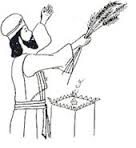
We were instructed to bring an omer of barley–the firstfruits of our spring harvest–to the Levitical Priests who would wave it before YHVH on the Day of Firstfruits.
This Gregorian Calendar year, Firstfruits took place on the first day of the week—4-8-18 according to the Observational Calendar and on the first-day of the week on 4-1-18 according to the Jewish Calculated Calendar. On the Jewish Calendar, it is noted as Pesach II and the 1st Day of the Omer.
The instructions Father gave regarding the keeping of Firstfruits is found in Leviticus 23:10-14. As with each of the Torah-instructed Feasts of YHVH, Firstfruits is rich in prophetic and spiritual application.
How Do We Keep Sabbath Holy–Is it Permissible to Have our Children Play Organized Sports on the Sabbath?
Is it permissible to have our children play organized sports on the Sabbath? Would this be a violation of Torah and of Sabbath-Keeping?
This situation and many, many others are not addressed in Torah. We must be careful not to add to or take away from Torah.
The applications related to this question goes well beyond simply allowing our children to play organized sports on the Sabbath. Torah’s silence on this and many other aspects and issues of Sabbath-keeping require us to examine:
–Our relationship with the Almighty
–What it means to keep the Sabbath Holy
–What it means to proclaim a holy convocation on the Sabbath
–What it means to do no work on the Sabbath
Why did Father make Sabbath-keeping so vague in the first place? It was likely to test our hearts and commitment to Him. It also serves as a gauge to measure the level of relationship we have with Father.
The silence of Torah on the keeping of Sabbath (as well as a great many other issues and topics) resulted in the Rabbi’s creating hundreds of rules and traditions around the keeping of Sabbath that include 39-general categories of what is required to keep Sabbath (http://www.pursuegod.org/rules-pharisees/). These 39-general categories in turn include hundreds of specific individual rules for Sabbath-keeping. These rulings and instructions are contained in the Talmud.
When addressing the concerns of the Samaritan woman at Jacob’s well regarding where YHVH had established the place of worship, He was noted as saying:
“You Samaritans worship what you do not know. We worship what we do know, because salvation is from the Jews (i.e., from the lineage of Judah and the oracles entrusted to Judah by Father as opposed to the religion of Judaism). (Continuing) But an hour is coming, and is now here, when the true worshipers will worship the Father in spirit and truth. Yes, the Father wants such people to worship Him. Yah is Spirit and those who worship Him must worship in spirit and truth” (John 4:22-24; Holmann CSB).
Thus Master foretold of a two-prong formula for worship of Yah that would be practiced under the renewed covenant: Spirit and Truth.
As it relates to Truth, our worship is founded upon Torah and the teachings of Yeshua Messiah:
Psalm 119:160—”Thy Word is true from the beginning: and every one of thy righteous judgments endureth forever” (KJV).
In terms of Spirit, our worship is founded upon having a substantive–personal–relationship with YHVH:
“And this is eternal life, that they (they being Master’s disciples which ultimately includes us)—that they know you the only true God, and Yeshua Messiah whom you have sent” (John 17:3; ESV; adjusted).
“To know” here is the Greek term “ginosko,” which means to “learn to know a person through direct personal experience, implying continuity of relationship” (Louw-Nida Lexicon). This “knowing” that Master was referring to is more than a simple cognitive awareness that God exists.
The relationship we have with Father, when coupled with His Torah—His Truth–through the agency of the Holy Spirit (i.e., the Ruach HaKodesh)–help us navigate through such questions of Sabbath-keeping.
Once we establish a true and substantive relationship with the Creator, we get to know what He approves of and what He does not approve of, even in the areas where Torah is silent.
TMTO Final Update for 2025
In this episode, we explore the recent Kenya Missions Trip with the Qumran Family Foundation (QFF), whose mission is to deliver critical resources and opportunities to Kenyan widows and orphans living in poverty. The episode highlights: Why Kenya? Unlike in the U.S.,...
Kenyan Missionary Trip 2025 Update
Title: Special Update from Kenya: The Messianic Torah Observer Host: Rod Thomas Date: September 27, 2025 Location: Migori, Kenya Summary: In this special installment of The Messianic Torah Observer, Rod Thomas provides an update on his and Hilary Qumran's missionary...
The Book of the Law vs. The Book of the Covenant – The Ten Commandments Only or the Whole of the Law?
Episode Title: Book of the Law versus Book of the Covenant: The Ten Commandments Alone or All of Torah? Date: Shabbat, August 16th, 2025 Host: Rod Thomas Greetings and Opening Remarks: Rod welcomes the listeners on a warm sunny Shabbat in the DFW area. Expresses...
Hebrews: Letter to the Drifting-Part 7 of our Melchizedek Series
This teaching installment by Rod Thomas provides an in-depth exploration of the Book of Hebrews, focusing on its connection to the Melchizedekian priesthood and the exalted role of Yahoshua HaMashiyach (Jesus the Messiah). The discussion is set against the backdrop of...
The Covenant Connection: Unveiling the Heart of the Nazarene-Messianic Faith – Part 1 in our Covenant Series
Shalom Truth-Seekers in Yeshua Messiah. This is the first installment in a series of detailed teaching on the Hebrew concept of “covenant” (or “Berit”) and its foundational role in the faith and salvation of God’s (i.e. Yehovah’s) chosen ones. In this installment we...
Does “I Will Bless Those Who Bless and Curse Those Who Curse” Apply to the Modern Nation of Israel?
As I am publishing this discussion, it is the 2nd day of the 4th Month 6025, which translates to June 28, 2025. Today I am led to discuss a key passage of Torah that has lately received a good amount of attention from the American public on the heels of the...
Messianic Reflections in the Life of Yosef Ben Yisrael- Thoughts & Reflections on Torah Reading 34
Patriarchal Sojourners of the Land Despite the Covenant Promises 37:1. Ya’achov/Jacob settles — “ye-shab” — inhabits the Land — “ha-e-retz” — of the temporary — sojourning — “ma-gor” — of his father in Canaan. Recall in Reading 33, we addressed the...
When we Look in the Mirror of Scripture we will see that we are all Jacobs-Thoughts & Reflections on Torah Reading 33
This reading is contained in Genesis/Beresheit 35:9-36:43. I've been led to title this discussion "When we Look in the Mirror of Scripture, we see we are all Jacobs." Yehovah Appears Again to Ya'achov and Reaffirms to him that He is the Son of the Covenant Our Reading...
Becoming a Kingdom of Priests in Light of the Melchizedekian Order-Part 6 of our Melchizedek Series
This is “Becoming a Kingdom of Priests in Light of the Melchizedekian Order-Part 6 of our Melchizedek Series.” Yah always intended for a royal priesthood to operate amid His set apart people. He stated his intentions when He gathered our ancient cousins at the...
Did John Baptize Yeshua into the Melchizedekian Priestly Order? Part 5 of our Melchizedek Series
Show Notes: Did John Baptize Yeshua into the Melchizedekian Priestly Order-Part 5 of our Melchizedek Series Episode Title: Did John Baptize Yeshua into the Melchizedekian Priestly Order-Part 5 of our Melchizedek Series Episode Description: In this episode, we explore...
0 Comments