
To Call Or Not Call On The Name Of The LORD
What Does it Mean?
What does it truly mean for a would-be disciple of Jesus Christ (ie., Yahoshua Messiah) to call on the Name of the L-rd? Is it simply an utterance whereby the would-be disciple utters or invokes the actual Name or Title of the Divine One? Or is it a fervent prayer whereby the disciple addresses and or ends their petition to the Divine One? Could it be an act of one who is in the midst of some life-changing event calls out to the Divine One to deliver them from or assist them in whatever situation they find themselves in?
Or maybe calling on the Name of the L-RD is something more than that of how we westerners envision calling on the Name of Someone? If so, what does calling on the Name of the L-RD actually look like.
Paul Writes Calling On The Name Of The L-RD
In my opening I read you two-key passages that speak to calling on the Name of the L-RD. For the sake of discussion let’s revisit them briefly.
The Apostle Paul writes to the Assemblies of Messianic disciples in Rome: “For ‘whoever calls on the name of the L-RD (ie., “kurios,” or Master)’ shall be saved” (Rom. 10:13; NKJV).
Master Yahoshua Warns About Calling On His Name
Yet Master warned, “Not everyone who says to me, ‘L-rd, L-rd (ie., “kurios,” or Master),’ will enter the kingdom of heaven, but only the one who does the will of my Father who is in heaven. Many will say to Me in that day, ‘L-rd, L-rd, did we not prophesy in your name, drive out demons in your name, and done many wonders in Your name?’ And then I will declare to them, ‘I never knew you; depart from Me, you who practice lawlessness!’” (Mat. 7:21-23)
Western Concepts of Calling on the Name
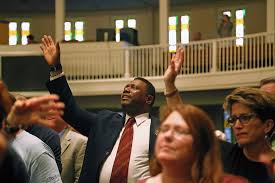
Christian and Western Concepts of what it means to call on the Name of the L-RD often do not match the Bible’s concept.
- Prayer
- Worship
- In some oration or speech or teaching
Popular Christian Concepts of Calling on the Name
Being raised in the Baptist Church and then transitioning on to charismatic and interdenominational churchianity, calling on the Name of Jesus or God or in general The L-RD, meant:
- Verbally calling out to Jesus/God/the L-RD
- Seeking deliverance, healing and salvation
- In worship
- The sinner’s prayer
- Assurances that any who called on The Name would be saved.
Sacred Names Concepts of Calling on the Name
Came upon the Sacred Names movement and they taught that calling on the Name of The L-RD meant uttering the Creator’s and the Son’s Hebrew Names.
A Conflict Regarding Calling on the Name
Everyone cites Romans 10:13, embracing the promise that if they follow theirs or the church’s or some preacher’s concept of what it means to call on the Name of the L-RD will without question result in their irrevocable salvation.
Yet Master states quite emphatically in Matthew 7 that a great many folks who have called upon His Name—so to speak—will be sorely disappointed to hear from Him that He never knew them.
There is indeed a disconnect here. Either Paul is correct or Yeshua is correct? Can both be correct?
Well, we would not question Yeshua’s instructions that not everyone who says L-RD L-RD will enter the Kingdom.
However, we will see that Paul is absolutely correct in his emphatic statement that any who calls on the Name will be saved.
Biblical Concept of Calling on the Name
We must first determine what it means Biblically to call on the Name.
There was a common practice in ancient times of invoking the name of deities for various reasons and purposes. But the practice of invoking the name in those ancient times went a bit further than our Western, churchianity concepts of invoking the name of a deity.
The first century ancients when invoking the name of an Person/entity submitted themselves to that entity’s authority.
Paul Calls on the Name of Caesar
For instance, when invoking Caesar’s name, the Roman national would submit themselves to Caesar’s authority and to the formalities and procedures that Caesar demanded of those who came before him.
We find in Acts 25 where Paul called upon the Name of Caesar when He was arrested over allegations of sedition among the Jews and throughout the world; leading a seditious religious sect (ie., the Nazarenes); desecrating the Temple and violating Jewish Law and crimes against Rome.
“So Paul said, “I stand at Caesar’s judgment seat, where I ought to be judged. To the Jews I have done no wrong, as you very well know. For if I am an offender, or have committed anything deserving of death, I do not object to dying; but if there is nothing in these things of which these men accuse me, no one can deliver me to them. I APPEAL TO CAESAR” (vss 10,11; cf. Acts 26:32; NKJV).
It so happens that the same terminology used here related to Paul appealing to Caesar is the same terminology used in “calling upon or calling on the Name of…”
The Greek For Call
To call or appeal upon in ancient Greek texts is the term “epikaleomai,” which in English means to invoke an entity for aid, worship or testimony.
In Paul’s appealing to or calling on Caesar, what was he essentially doing?
He was submitting himself to the authority of Caesar as a Roman citizen for purposes of adjudicating the legal case against him.
Not just Roman authority, but subject to Caesar’s authority.
The Name of Caesar here is crucial—for the Name carries with it more than just a recognized designation for the person.
The Greek For Name
The English term name in ancient Greek texts is the term “onoma,” which in a literal sense points to an entity’s name, but in a figurative sense, points to an entity’s authority or character.
Application of Paul’s Appeal to Caesar
This same mindset applies to would-be believers of Yahoshua Messiah calling upon His Name or upon the Name of our Heavenly Father.
The act of calling on the Name of the Savior or the Creator goes well beyond utterances of their names (which in many cases is not their name but their titles).
Submission to Authority and Obedience
In fact, it would require a complete submission to the Father or Son’s authority and obedience to their instructions and commands.
According to T. Pierce Brown (a prolific and widely read Christian writer and teacher of the 20th century), “calling on the Lord” involves obedience. According to Mr. Brown, calling on the Lord is not simply a verbal recognition of god or some verbal petition to Him (www.apologeticspress.org).
I would ask you to bear in mind that Mr. Brown was a Fundamental/Traditional Christian teacher and writer. I doubt he advocated a Torah-life style.
First Century Understanding of Calling on the Name
We find throughout the New Testament record that first century disciples of Messiah did not simply pray to Yah in an expression of His name (for indeed they did so quite regularly throughout every given day), but more so they served Yah, submitting themselves to His authority through their obedience.
When the writers of the New Testament spoke of calling on the Name of Yeshua Messiah, there was the sense of the would be disciple’s deeds and words being under Messiah’s authority. We see this illustrated in Colossians 3:17:
“And whatsoever ye do in word or deed, do all in the Name of the Lord (ie., Master) Yahoshua, giving thanks to Yah and the Father by Him” (KJV).
Sadly, most folks are taught that calling upon the Name of God or calling upon the Name of Jesus Christ is simply uttering their titles in prayer, teachings, songs of praise and worship, or in simple conversations that extol the greatness and provision of our God.
Calling on the Name and Lawlessness
But truth be told, this less than judicial explanation of the phrase has gone a long way towards fostering the living of a “lawless” Faith among Christians.
When Christians (or even Hebrew Rooters and Messianics for that matter) are told they only need to utter or reference the Name or Authority of the Lord to be saved and to be a good Christian, absent any life of obedience and repentance, the disciple is then short-changed and not given the crucial information he or she requires in order to lead a true Messiah focused life.
This erroneous understanding of what it means to call upon the Name of the L-RD is part and parcel of the “grace perversion” made popular in the last couple centuries.
What Does Calling on the Name Look Like?
All one needs to do in order to better understand what it truly means to call upon the Name of the Lord is study Acts 2:21-38.
We find in this pivotal passage of New Testament history Peter admonishing the multi-national gathering of Jews attending Shavuot (ie., Pentecost) just after the resurrection of Master Yahoshua.
By this time, the 120 or so disciples who were temporarily residing in Jerusalem as Master had commanded them, had just been immersed in the Ruach HaKodesh (ie., the Holy Spirit) on the Temple Mount and the Shavuot attendees (1,000s) were trying to make sense of what they were witnessing in the behavior of Yahoshua’s disciples (ie., their speaking in tongues).
Peter, filled with the Ruach addresses the crowd, referencing Joel’s prophecy to explain what the crowd was witnessing.
When members of the crowd were convicted in their hearts as a result of the words passionately spoken to them by Peter, they asked of Peter what was required of them to make things right with Yehovah (Act. 2:37). Peter in response to their query provides clear instructions as to what is involved in calling upon the Name of the Lord and reconciling with their Creator:
“…Repent and be baptized everyone one of you in the Name of Jesus Christ for the remission of sins and ye shall receive the gift of the Holy Ghost” (2:38; KJV).
In other words, Peter provides a two-part process for members of that multi-national crowd to follow in their efforts at calling on the Name of Yah:
- Each person needed to repent; and
- Each person needed to be baptized.
Repentance and Calling on the Name
The issue with repenting, we must keep in mind, is that there’s a lot more involved than simply seeking Father’s forgiveness of one’s sins.
Repentance also involves an abandonment of one’s former life and the taking on of the life of an disciple of Yahoshua Messiah.
Then after repentance is accomplished, the disciple was to be immersed in the Name; that is the authority and obedience of Yahoshua Messiah.
As it turns out, 3,000 souls “called upon the Name of Yahoshua HaMashiyach” in those days.
Salvation and Calling on the Name
Then there’s Romans 10:11-15, Paul addresses with the Roman assembly of Messianic Disciples the issue of salvation for both Jew and Greek. In verse 12, Shaul underscores there being no difference between the Jew and the Greek, “for the same Master over all is rich unto all that call upon Him.”
In the next verse he brings out the famous pronouncement that so many Christians hang their lawless, grace-perverted picture of salvation and living the Christian life on: “For whosoever shall call upon the Name of the L-rd (ie., kurios, the Master) shall be saved” (vs. 13; KJV).
It is in the two-succeeding verses (which by the way we never hear those lawless, grace-perverted folks mention rarely mention) that Shaul gives the prescription and requirements for calling on the Name of the L-rd:
“How then shall they call on Him in whom they have not believed? And how shall they believe in Him of whom they have not heard? And how shall they hear without a preacher? And how shall they preach, except they be sent?…” (vss. 14,15; KJV).
It is within these two key verses that Paul states the requirements for calling on the Name of the L-rd”:
(1) The would-be disciple must hear the correct teaching of Yah’s Word from a properly called and sent teacher.
(2) The would-be disciple must believe in the resurrected Messiah. Again, belief in the resurrected Messiah is not simply a cognitive understanding or acknowledgment that Yeshua our Messiah was raised from the dead.
Indeed, that is an obvious given. The problem with stopping there is that having a cognitive understanding and acknowledgment of our resurrected Messiah is “the lowest of the lowest hanging fruit.”
Knowing the Father and Calling on the Name
Knowing of Yah as opposed to knowing Yah. Having a right relationship with the Creator of the Universe. Living and walking out one’s Faith.
Father’s Torah is written on one’s heart. For the truth of the matter is that demons believe and they utter the Name of the Father and Son. The big difference between the level of belief that demons have versus the belief that so-called Christians have in Yahoshua’s work and sacrifice is that the demons tremble when this fact is brought to their attention. They react (Jam. 2:19).
Thus, belief when it is truly realized in a disciple, must be accompanied by some behavior.
To the Hebraic mindset, belief and faith are action words.
Therefore, to believe in Yahoshua requires works as the Apostle James pointed out in his epistle, 2:20: “…faith without works is dead…”
Paul’s Conversion and Calling on the Name
And then we find in the 22nd chapter of the Book of Acts where Paul, while traveling to Damascus to arrest Messianic Jews of the Way Movement, is knocked off his horse/mule/donkey, whatever, by our glorified Master. And upon coming to a semblance of senses, while still on the ground, he calls on the Name of the Master (vs. 10). We find in the succeeding verses what that calling on the name of the L-rd truly meant to Paul this particular incident:
(1) He was to get up and go to Damascus (vs. 10).
(2) Upon reaching Damascus, he was to await further instructions from someone who the Master would send him (vs. 10).
(3) He would receive his sight back (vs. 13).
(4) He was to repent (vs. 16). And
(5) he was to be baptized (vs. 16).
Old Testament Concept of Calling on the Name
This concept was not limited to the New Testament saints. We find documented in Genesis 21:33 that Abraham “called on the Name of YHVH, the everlasting God.” What did this call on YHVH entail?
(1) Obedience
(2) Worship
(3) Faithful service. (Bobby Bates, 1979; pg. 5.)
We find in Zephaniah that one’s calling on the Name of the Father was tied to one’s service; specifically tied to one’s obedience:
“For then will I turn to the people a pure language that they may all call upon the Name of the LORD, to serve Him with one consent” (3:9; KJV).
Indeed, calling on the Name of YHVH to the Hebrews of Old required their complete submission to Yah’s will.
In this prophecy, we find the promise of God’s people adopting or returning to their original, pure, clarified or brightened language that they may call (ie., qara, to proclaim or cry out) upon Father’s Name and serve Him with one (ie., echad, that is in unity; oneness) consent (ie., shekem, that is as the place or neck of burdens); more sensibly put, serve Yehovah with singleness of purpose and in one accord.
In Summary and Closing
Bottom line Saints, it’s NOT simply expressing or verbalizing “L-rd, L-rd! (Mat. 7:21) or saying a prayer that includes the names or titles of the Father and or His Son that constitutes true “calling on the Name of the L-rd.” (cf. Act. 9, 22; Rom. 10:13,14). Instead, calling on the Name of the L-RD is doing the will of the Father as Master instructed in Matthew 7.
Every Nation Will Come: Sukkot, Zechariah 14, and Yeshua Tabernacling With Us
Episode Summary Chag Sameach Sukkot, beloved of the Most High. In this installment of The Messianic Torah Observer, we turn our attention to Sukkot, aka the Feast of Tabernacles; the Feast of Booths; and the Feast of Ingathering to consider what this appointed time...
Ha’azinu and Shabbat Shuva: The Song of Moses, Teshuvah, and Yom Kippur
Ha’azinu: The Song That Knew the Future—and the Shabbat That Stands Between You and Yom Kippur Greetings, Saints of the Most High Ahlohim, and welcome to another installment of The Messianic Torah Observer. In this teaching, we turn our attention to Parashat...
The Hidden Feast: Yom Teruah, the New Moon, Hannah’s Prayer, and the Return of the King
Beloved, in this installment of The Messianic Torah Observer, we turn our attention to one of the most mysterious and prophetically charged moedim on Yehovah’s sacred calendar: Yom Teruah, the Day of the Blowing of Trumpets. It is a feast that Father commanded, yet...
How Should We Evaluate Prophetic Voices? A Biblical Framework — With Jonathan Cahn as Our Starting Point
Opening This morning — Tuesday, September 8, 2026, the 25th day of the 6th Biblical Month, conceivably four or 5 days before Yom Teruah, a significant fact-checking analysis of Jonathan Cahn's prophetic claims was published. (Reference: “What Prophecies Has Jonathan...
The King Is in the Field: Elul, Yeshua, and the Meeting Your Jewish Cousins Are Still Waiting For?
Beloved, in this installment of The Messianic Torah Observer, we step into one of the most tender and spiritually rich traditions associated with the traditional Jewish month of Elul: the teaching that the King is in the field. Our Jewish cousins have long understood...
Yeshua and Ki Teitzei: The Torah Fulfilled Through Mercy
Episode Focus In this installment of the Messianic Torah Observer, I revisit this week’s Torah Reading, Ki Teitzei, and bring it into conversation with the words of our Master Yeshua in the Sermon on the Mount. And what we discover, Saints, is that Moshe and Yeshua...
What the Greek Mindset Stole from Our Bible Reading and How We Get It Back
Beloved, this teaching is about recovering the lens we were never supposed to lose. Most of us were discipled, trained, and conditioned to read a Hebrew Bible through a Greek and Hellenistic framework, and many of us never realized that this inherited lens was shaping...
Parashat Ki Teitzei: Cursed on a Tree and the Covenant of Peace: Called to War, Comforted by God, and Drawn Near Through Messiah
Episode Overview Beloved, in this installment of The Messianic Torah Observer, we take up Parashat Ki Teitzei, one of the most commandment-rich portions in the entire annual Torah reading cycle. At first glance, Ki Teitzei may appear to be little more than a long...
Righteous Judges and True Prophets: Shoftim’s Call to a Spirit-Led Elul Generation
Righteous Judges and True Prophets: Shoftim’s Call to a Spirit-Led Elul Generation August 14, 2026 | 30th Day of the 5th Biblical Month 6026 | Parashat Shoftim "Righteous Judges and True Prophets: Shoftim's Call to a 6th Biblical Month Generation" Parashat...
UFOs, UAPs, and the Unseen Realm: A Messianic Response to a World Looking Up
Shalom and greetings, beloved Saints of the Most High. In this installment of the Messianic Torah Observer, we stepped into a subject that many in our Faith community either avoid altogether, casually dismiss, or hand over to the secular world to define for us: UFOs,...
0 Comments