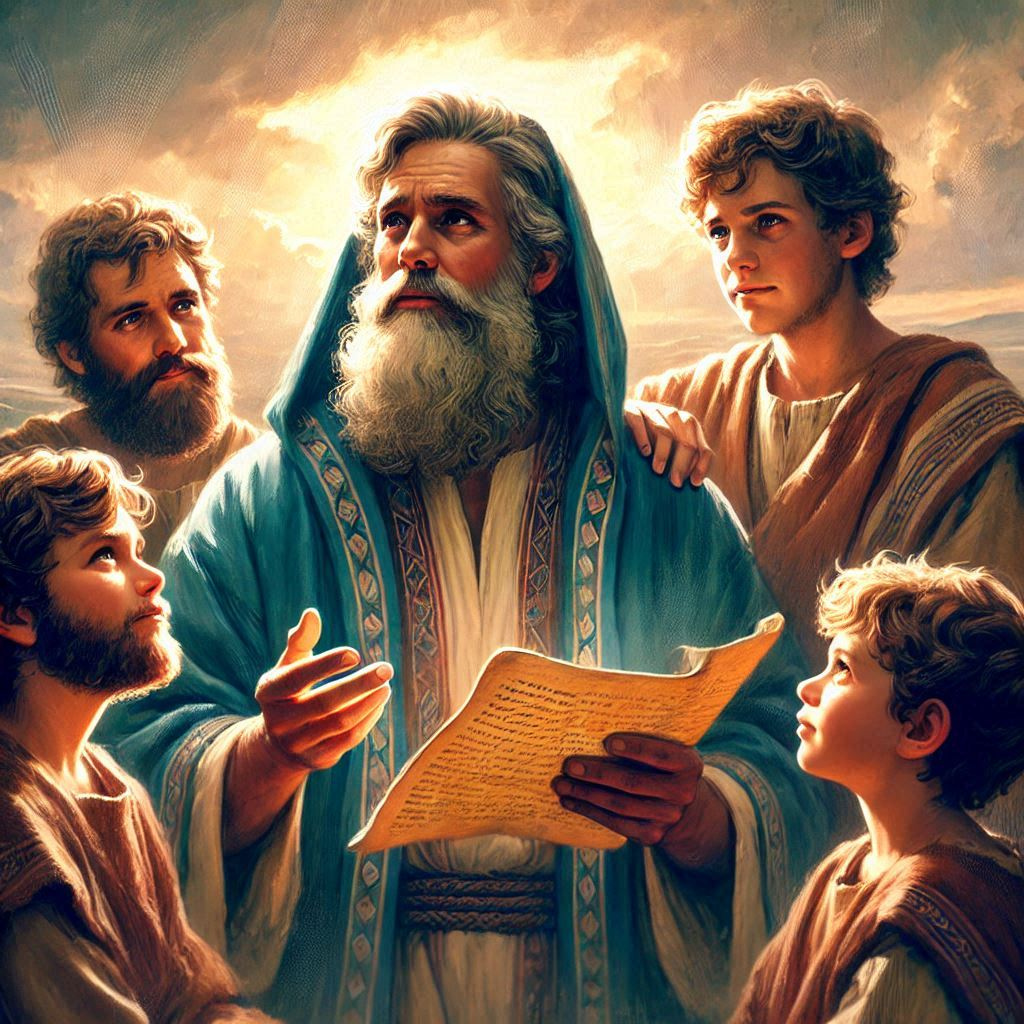
In this Torah Reading Discussion, “From Noah to Nations-Unveiling the Prophetic Journey-Thoughts and Reflections on Torah Reading 8,” we delve into the profound insights of Torah Reading 8. This study explores Genesis 9.18-10.32, Isaiah 49.1-13, and Revelation 5.1-14, highlighting pivotal moments in human history and the prophetic implications of Noah’s sons.
Noah’s sons, Shem, Ham, and Japheth, played crucial roles in restarting the human population after the flood. Their actions set the course for nations and influenced the flow of history. The paper examines the significance of Noah’s vineyard, his subsequent intoxication, and the actions of his sons, particularly Ham’s transgression and its consequences. We also explore the prophetic blessings and curses pronounced by Noah, which have far-reaching implications for the descendants of Shem, Ham, and Japheth.
The haftarah reading from Isaiah 49.1-13 and the apostolic reading from Revelation 5.1-14 provide a broader context, revealing the Plan of Salvation, Redemption, and Restoration that Yehovah would work through Shem. This includes the prophetic vision of Yehovah’s presence dwelling with the descendants of Shem and the ultimate redemption and restoration of Israel.
Please check out the audio as we go into many historical, spiritual, and halachic areas that will enhance your walk in Messiah. Shabbat Shalom beloved by the Most High Elohim.
Reference Post: Marring the Image of the Creator Yehovah Through Rebelliousness: Thoughts and Reflections on Torah Reading 4.
One Messianic’s Perspective on Tisha B’Av: What Matters and What Doesn’t Matter
Episode Title: One Messianic’s Perspective on Tisha B’Av — What Matters and What Doesn’t Matter Episode Summary: Beloved, in this second installment of our brief two-part discussion on Tisha B’Av, we consider what should and should not matter to the modern-day...
When God Says Stand Alone: The U.S. – Iranian Escalation through the Lens of the Hebrew Prophets
Opening Well, it appears the tenuous ceasefire between the U.S. and Iran has come to an inevitable end. As of this writing, the United States has expanded its military campaign against Iran’s IRGC. This go-round, the Strait of Hormuz, Hezbollah in...
From Mourning to Comfort: Our Biblical Calendar Queue for the Week of July 20–26
Episode Title From Mourning to Comfort: The Biblical Calendar Signal for the Week of July 20–26 Opening Word Greetings Saints. In this installment, we are dealing with a week on Yah’s reckoning of time that is not simply another week on a religious calendar. It is the...
Shabbat Chazon: The Sabbath God Shows You the Temple You Lost
Episode Title: Shabbat Chazon: The Sabbath God Shows You the Temple You Lost Series / Format: The Messianic Torah Observer — Messianic-Hebraic Shabbat Teaching Primary Torah Portion: Parashat Devarim — Deuteronomy 1:1–3:22 Haftarah Reading: Isaiah 1:1–27 — the vision...
Why Tisha B’Av Is the Day Yeshua Wept — And Why Every Believer Should Know It- Part 1
Why Tisha B’Av Is the Day Yeshua Wept — And Why Every Believer Should Know It Episode Type: Messianic-Hebraic Teaching | Series: Part 1 of 2 | Topic: Tisha B’Av, Yeshua’s lament over Yerushalayim, the destruction of the Temples, and the recovered discipline of...
Persia in Ezekiel 38: What the Death of Khamenei Means for Prophecy Watchers
Episode Title: Persia in Ezekiel 38: What the Death of Khamenei Means for Prophecy Watchers Episode Summary: In this installment of The Messianic Torah Observer, we take a sober, text-first look at Ezekiel 38 and the prophetic place of Persia, or modern-day Iran, in...
Every Stop Is Recorded – The 42 Stations, Yeshua’s Genealogy, and Your Desert Season
Beloved, in this installment of The Messianic Torah Observer, we slow things down and take a careful, Spirit-led look at one of those passages in Torah that many of us have either read past or simply endured: Numbers/Bemidbar 33. At first glance, this chapter may...
Parashat Mattot-Massei: Israel’s Prophetic Hour and the Narrow Places of our Generation
Shalom and welcome, beloved, to this installment of The Messianic Torah Observer. In this discussion, we find ourselves standing at a sobering prophetic intersection: the closing chapters of Bemidbar, the double Torah Reading of Mattot–Massei, the season known as Bein...
AI, Spiritual Authority, and the Image of Elohim
Episode Title AI, Spiritual Authority, and the Image of Elohim: A Messianic Torah Perspective on Artificial Intelligence Opening Thoughts Shalom and greetings, beloved of the Most High. In this installment of The Messianic Torah Observer, we step slightly outside our...
What Torah Cannot Do For Us, Part 5: The Mystery of Torahlessness
Episode Title: What Torah Cannot Do for Us: The Mystery of Lawlessness — Part 5 of the “What Torah Can and Cannot Do for Us” series. Episode Summary: Beloved, in this concluding installment, we bring this series home by putting Torah in its proper, Yah-given place in...