
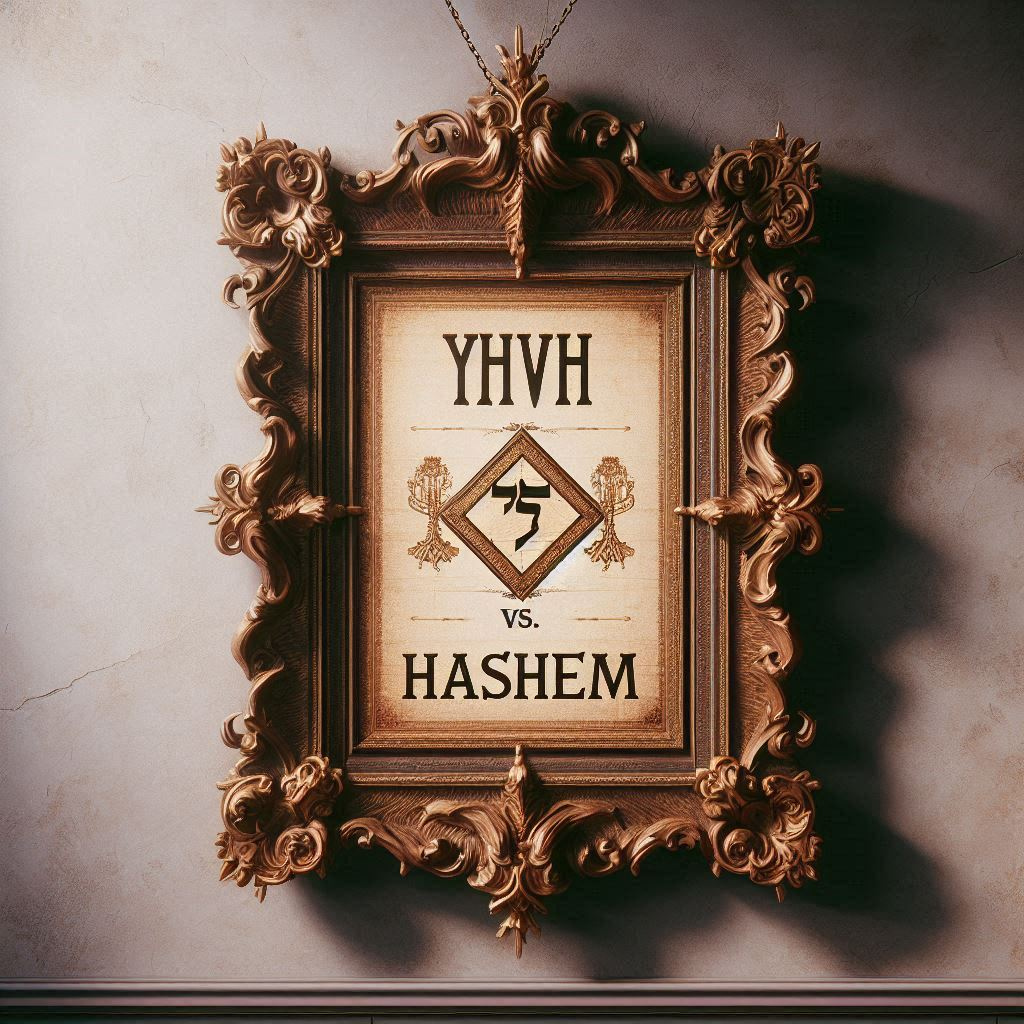
The Ineffable Name Controversy: Breaking Traditions and Unveiling Truth
Introduction: In the realm of faith, the Name of Yehovah holds profound significance. However, the tradition of not uttering or writing this sacred name has sparked controversy and debate. This blog post delves into the origins, interpretations, and implications of this practice, shedding light on the true essence of the Ineffable Name.
The Tradition of Writing “G-d”: Many Jewish communities avoid writing the full name of God, opting for “G-d” instead. This practice stems from a passage in Deuteronomy, which commands the Israelites to destroy the names of non-Israelite gods. Rabbinic interpretations extended this to mean that God’s name should not be erased, leading to the tradition of writing “G-d”1.
Rabbinic Interpretations and Misinterpretations: Rabbinic authorities, such as Rashi, interpreted the prohibition against erasing God’s name as a reason to avoid writing it altogether. This led to the practice of storing or burying Jewish literature containing the name “God” once it fell into disrepair2. However, this interpretation has been contested, as the original scriptural intent was to prevent the worship of Yehovah in the manner of pagan gods3.
The True Name of Yehovah: The Father revealed His eternal and holy name to Moses, declaring it to be remembered for all generations (Exodus 3:15). Despite this, Rabbinic authorities replaced the name Yehovah with titles and descriptors like “Adonai” and “Elohim,” effectively nullifying the Torah’s instructions regarding the use of God’s name4.
The Impact of Rabbinic Regulations: By enacting regulations against using God’s name, Rabbinic authorities transgressed Yah’s eternal Torah. This has led to a widespread practice of substituting God’s name with titles, which often have pagan origins5. This practice contradicts the scriptural mandate to declare and magnify Yehovah’s name throughout the earth6.
Conclusion: As Torah-observant disciples, it is our duty to honor and proclaim the true name of Yehovah. By doing so, we fulfill the scriptural command to declare His name to all generations. Let us break free from traditions that obscure the true essence of God’s name and embrace the profound significance of Yehovah.
For those of you who would like to explore this week’s Torah Reading 13, I invite you to read and listen to the discussion entitled “Yehovah: the God Who Sees.” (Yehovah-The God Who Sees-STAR 13)
TMTO Final Update for 2025
In this episode, we explore the recent Kenya Missions Trip with the Qumran Family Foundation (QFF), whose mission is to deliver critical resources and opportunities to Kenyan widows and orphans living in poverty. The episode highlights: Why Kenya? Unlike in the U.S.,...
Kenyan Missionary Trip 2025 Update
Title: Special Update from Kenya: The Messianic Torah Observer Host: Rod Thomas Date: September 27, 2025 Location: Migori, Kenya Summary: In this special installment of The Messianic Torah Observer, Rod Thomas provides an update on his and Hilary Qumran's missionary...
The Book of the Law vs. The Book of the Covenant – The Ten Commandments Only or the Whole of the Law?
Episode Title: Book of the Law versus Book of the Covenant: The Ten Commandments Alone or All of Torah? Date: Shabbat, August 16th, 2025 Host: Rod Thomas Greetings and Opening Remarks: Rod welcomes the listeners on a warm sunny Shabbat in the DFW area. Expresses...
Hebrews: Letter to the Drifting-Part 7 of our Melchizedek Series
This teaching installment by Rod Thomas provides an in-depth exploration of the Book of Hebrews, focusing on its connection to the Melchizedekian priesthood and the exalted role of Yahoshua HaMashiyach (Jesus the Messiah). The discussion is set against the backdrop of...
The Covenant Connection: Unveiling the Heart of the Nazarene-Messianic Faith – Part 1 in our Covenant Series
Shalom Truth-Seekers in Yeshua Messiah. This is the first installment in a series of detailed teaching on the Hebrew concept of “covenant” (or “Berit”) and its foundational role in the faith and salvation of God’s (i.e. Yehovah’s) chosen ones. In this installment we...
Does “I Will Bless Those Who Bless and Curse Those Who Curse” Apply to the Modern Nation of Israel?
As I am publishing this discussion, it is the 2nd day of the 4th Month 6025, which translates to June 28, 2025. Today I am led to discuss a key passage of Torah that has lately received a good amount of attention from the American public on the heels of the...
Messianic Reflections in the Life of Yosef Ben Yisrael- Thoughts & Reflections on Torah Reading 34
Patriarchal Sojourners of the Land Despite the Covenant Promises 37:1. Ya’achov/Jacob settles — “ye-shab” — inhabits the Land — “ha-e-retz” — of the temporary — sojourning — “ma-gor” — of his father in Canaan. Recall in Reading 33, we addressed the...
When we Look in the Mirror of Scripture we will see that we are all Jacobs-Thoughts & Reflections on Torah Reading 33
This reading is contained in Genesis/Beresheit 35:9-36:43. I've been led to title this discussion "When we Look in the Mirror of Scripture, we see we are all Jacobs." Yehovah Appears Again to Ya'achov and Reaffirms to him that He is the Son of the Covenant Our Reading...
Becoming a Kingdom of Priests in Light of the Melchizedekian Order-Part 6 of our Melchizedek Series
This is “Becoming a Kingdom of Priests in Light of the Melchizedekian Order-Part 6 of our Melchizedek Series.” Yah always intended for a royal priesthood to operate amid His set apart people. He stated his intentions when He gathered our ancient cousins at the...
Did John Baptize Yeshua into the Melchizedekian Priestly Order? Part 5 of our Melchizedek Series
Show Notes: Did John Baptize Yeshua into the Melchizedekian Priestly Order-Part 5 of our Melchizedek Series Episode Title: Did John Baptize Yeshua into the Melchizedekian Priestly Order-Part 5 of our Melchizedek Series Episode Description: In this episode, we explore...