
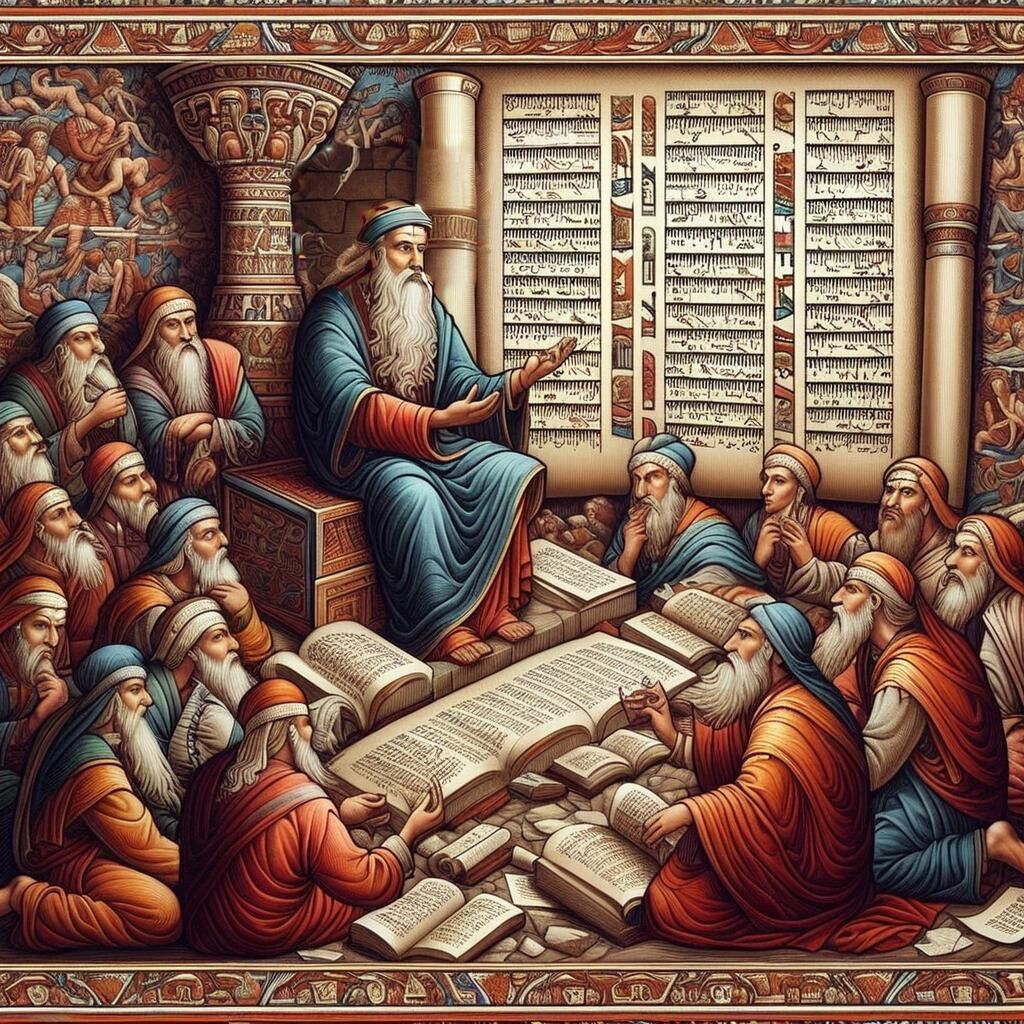
Greetings, saints of the Most High! Welcome to another installment of the Messianic Torah Observer. Today, we delve into the intriguing topic of our Melchizedekian Priestly Pedigree, focusing on Jasher’s hidden chronicles.
In Part 3, we explored the theological implications of the Avram-Melchizedek encounter, discussing the dual offices of priesthood and kingship, the blessing conferred upon Avram, the significance of tithing, and the mysterious nature of Melchizedek. We also examined various religious perspectives on Melchizedek, including those from Catholicism, Islam, and Messianic Judaism.
Jewish legend and tradition often identify Shem, Noah’s righteous son, as Avram’s Melchizedek. However, there are several issues with this theory, including the lack of canonical biblical evidence and the improbability of Shem’s lifespan overlapping with Avram’s. Despite these concerns, the book of Jasher perpetuates this connection, presenting a narrative where Shem is indeed Avram’s Melchizedek.
Jasher’s account embellishes the biblical story, referring to Melchizedek as Adonizedek and describing a community meeting with Avram, bearing bread and wine. Interestingly, Jasher omits Melchizedek’s blessing of Yehovah, a curious detail given some ancient rabbinic opinions.
The narrative continues with Shem passing his prophecy school to Eber, his great-grandson, while the Melchizedekian priesthood is conferred upon Avram. This lineage, according to Jasher, includes notable figures like Adam, Enoch, and Noah, culminating in Avram.
However, the Jasher narrative raises questions about the authenticity and accuracy of these accounts. The Melchizedekian priesthood, as described in the Torah, operates outside biological heritage lines and temple sacrificial systems, foreshadowing the Spirit and Truth worship Yeshua spoke of.
Despite the conflicts between Jasher’s and the Torah’s accounts, we can glean significant insights into our Melchizedekian priestly pedigree. Concepts of righteousness, priestly conduct, obedience, and steadfast commitment to the faith form the foundation of our priestly calling. As students of Yahoshua’s Great School of Prophecy, we are in a season of training and preparation for our future roles in the Kingdom of Yehovah.
In conclusion, while I have my reservations about Jasher’s account, it offers valuable lessons about the godly elements that make up our Melchizedekian priestly pedigree. As we continue this series, we will explore these elements further, preparing us to serve as Melchizedekian kings and priests in the coming Kingdom of Yah.
May you be most blessed, fellow saints in training. Let us embrace our calling and prepare for the roles we are destined to fulfill.
Torah Reading 48–Shofetim–Judges–Reading Outline
This week's Torah Reading is contained within Deuteronomy 16:1--21:9 and is entitled Shofetim. In English, Shofetim means Judges. If one were summarize the content of this reading I guess it could be described as a discussion of Yah's established civil...
The Righteousness of God Revealed From Faith to Faith—Its True Meaning and Reality for God’s People
Today’s discussion is entitled, “The Righteousness of God Revealed From Faith to Faith—Its True Meaning and Reality for God’s People.” Why The Church Loves This Romans 1:17 Fundamentalists; traditionalists; and evangelicals absolutely love this passage. Why? Because...
Jews Before Gentiles?
Today’s discussion is entitled, “Jews Before Gentiles? How Does that Work?” And the biblical basis for our discussion this evening is found in Romans 1:16 which reads: 16 For I am not ashamed of the gospel of Christ: for it is the power of God unto salvation...
Torah Reading 46–Ekev (Because)–A Focus on the Kingdom of God
Highlights and Comments Shalom Saints. This week's Torah Reading is entitled, "Ekev," or "Because." The portion covers Deuteronomy 7:12-11:25. I wish to share with you some of my thoughts and reflections on the many life truths that I drew from my study of this...
To Whom Do You Pray?
Who do you pray to and worship and give thanks? Yeshua? YHVH? Both? Is it Biblical to pray to and worship Yeshua as so many Christians routinely do? In this installment of the Messianic Torah Observer, we will continue our review of the Book of Romans and Paul's...
Messianic Sainthood–Paul and the Book of Romans
Paul Calls His Roman Readers Saints. What Gives? Our next challenging Pauline passage of the Book of Romans is found in chapter 1 verse 7 and it reads as such: "To all those in Rome who are loved by G-d and called to be saints: Grace to you and peace from G-d our...
Chevra Kadisha-Honoring the Jewish Dead
An Intriguing Article I recently became intrigued by an article I came across on the "My Jewish Learning" website. The article was entitled: "Chevra Kadisha or Jewish Burial Society." It was written by a Rabbi Joseph Telushkin. And yes: I do from time to time visit...
Guarding the Righteous Heart–The Breastplate of Righteousness–Paul and Hebrew Roots Series
How does the Child of Yah put on and use the Breastplate of Righteousness? Yeshua taught us how and we discuss in detail how to don and use this vital piece of spiritual armor: The Breastplate of Righteousness.
Putting on God’s Image-The Belt of Truth-Part 1 of the Armor of God Series
Ephesians 6:11-18—The Armor of Yah Famous passage of Scripture that most evangelical and fundamental Christians know and understand from a denominational standpoint. In fact, whole ministries have been launched and based upon this passage alone. And the focus seems...
Living the Life of a Priest of God–Yeshua-focused Torah Discussion–Torah Reading 91
Living the Life of a Priest of God (of Yah)--Torah Reading 91 Leviticus 21 Ezekiel 44:25-31 Luke 11:30-44 ________________________________________________________ Leviticus 21--Section Verse Study--Laws Concerning the Levitical Priests Know that you are special in...