Greetings, saints of the Most High! Welcome to another installment of the Messianic Torah Observer. Today, we delve into the intriguing topic of our Melchizedekian Priestly Pedigree, focusing on Jasher’s hidden chronicles.
In Part 3, we explored the theological implications of the Avram-Melchizedek encounter, discussing the dual offices of priesthood and kingship, the blessing conferred upon Avram, the significance of tithing, and the mysterious nature of Melchizedek. We also examined various religious perspectives on Melchizedek, including those from Catholicism, Islam, and Messianic Judaism.
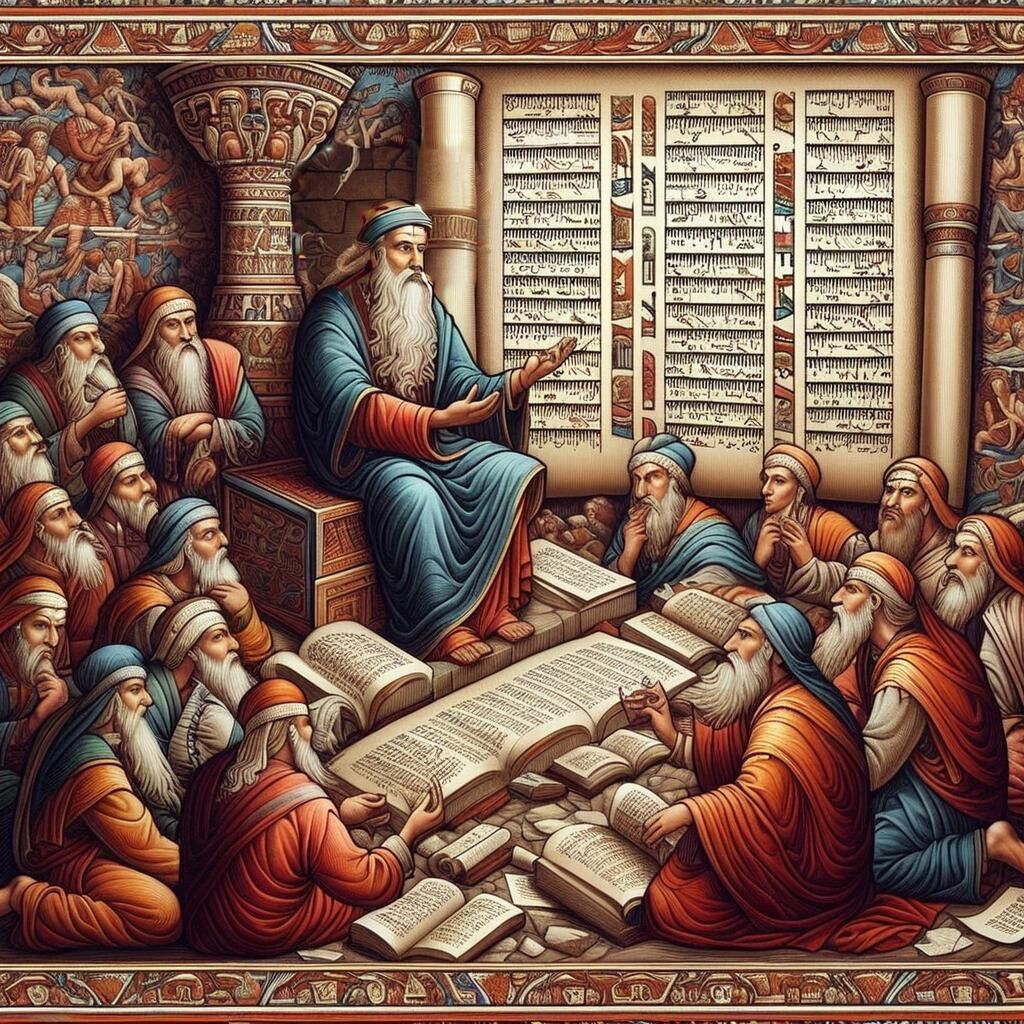
Jewish legend and tradition often identify Shem, Noah’s righteous son, as Avram’s Melchizedek. However, there are several issues with this theory, including the lack of canonical biblical evidence and the improbability of Shem’s lifespan overlapping with Avram’s. Despite these concerns, the book of Jasher perpetuates this connection, presenting a narrative where Shem is indeed Avram’s Melchizedek.
Jasher’s account embellishes the biblical story, referring to Melchizedek as Adonizedek and describing a community meeting with Avram, bearing bread and wine. Interestingly, Jasher omits Melchizedek’s blessing of Yehovah, a curious detail given some ancient rabbinic opinions.
The narrative continues with Shem passing his prophecy school to Eber, his great-grandson, while the Melchizedekian priesthood is conferred upon Avram. This lineage, according to Jasher, includes notable figures like Adam, Enoch, and Noah, culminating in Avram.
However, the Jasher narrative raises questions about the authenticity and accuracy of these accounts. The Melchizedekian priesthood, as described in the Torah, operates outside biological heritage lines and temple sacrificial systems, foreshadowing the Spirit and Truth worship Yeshua spoke of.
Despite the conflicts between Jasher’s and the Torah’s accounts, we can glean significant insights into our Melchizedekian priestly pedigree. Concepts of righteousness, priestly conduct, obedience, and steadfast commitment to the faith form the foundation of our priestly calling. As students of Yahoshua’s Great School of Prophecy, we are in a season of training and preparation for our future roles in the Kingdom of Yehovah.
In conclusion, while I have my reservations about Jasher’s account, it offers valuable lessons about the godly elements that make up our Melchizedekian priestly pedigree. As we continue this series, we will explore these elements further, preparing us to serve as Melchizedekian kings and priests in the coming Kingdom of Yah.
May you be most blessed, fellow saints in training. Let us embrace our calling and prepare for the roles we are destined to fulfill.
The Significance of the Half-Shekel Ransom Offering to Messianics Today–Reflections on Torah Reading #68
The commandment given to the Hebrews by YHVH that they give a half-shekel ransom offering at the time of census holds tremendous prophetic and spiritual significance for today’s Messianic.
Living Deceptively in the Service of God Results in Shame and Disgrace All Around–Reflections on Malachi 1:11-2:7
YHVH Outs His Chosen Ones Because the nation had despised the true worship of YHVH, YHVH Tzva'ot informed the Hebrews that their failure to properly worship Him as He had prescribed would not be ignored. Despite the people's outward deceptiveness in worship of YHVH,...
The Golden Altar of Incense–The Ministries of Yeshua Messiah and the Prayers of the Saints–Torah Reading 67
Welcome back my friend to our discussion on this week’s Torah Reading from the Triennial Torah Reading cycle. This week’s reading is found in Shemot (Exodus) 30:1-10. I’ve entitled this study: “The Golden Altar of Incense--The Heavenly Ministry of Yeshua Messiah and...
Plans for Consecrating the Levitical Priesthood and What it Means to Messianics Today
The consecration of the Levitical Priesthood as featured in this week’s Torah Reading foreshadowed the role we–Messianics-are appointed to fulfill as Melchizedekian Priests under the High Priesthood of Yeshua Messiah.
Reflections on Torah Reading 65–The Garments of the Levitical Priests
Parashah 65--"You are to order…"--Shemot 27:20-28:43 Focus Must Guide Our Study of Torah As with any study of Torah, the true disciple of Y’shua haMashiyach considers the contents contained therein from a Messianic—Yeshua-centric—Yeshua-focused perspective. How do we...
Can Messianics Attend Same-Sex Weddings and Similar Social Events?
Often we’re asked to attend same-sex weddings and similar social events. But are we permitted to attend and participate in such social activities as disciples of Yeshua Messiah? We discuss this critical issue in this installment of TMTO.
Praying in the Spirit-Part-3 of a Series on Messianic Prayer Life
Shalom Saints! In today’s post, we’re going to look at a central Truth or component to effectual prayer. And that central Truth of effectual prayer has to do with “Praying in the Spirit.”
Fashioning the Elements of the Tabernacle-Torah Reading 64 (Triennial Reading Cycle)
This week’s Torah Reading/Portion, #64, focused on the elements of the Tabernacle. We examine those elements from its Messiah/Mashiyach foreshadowing.
Hanukkah and the Torah Observant Believer in Yeshua Messiah Recast
A Recast of a Previously Published Discussion on Hanukkah and the Torah Observant Believer in Yeshua Messiah Today's installment of TMTO will be, what I will call, a "recast." It's a "recasting" or a "re-purposing" of a previous posting I did regarding Hanukkah. As...
The Book of the Covenant Versus Book of the Law Controversy–A Study of Torah Reading 62
In this study of Torah Reading 62, we examine the Book of the Law versus Book of the Covenant Controversy that has made its way through the Hebrew Roots and Messianic Community.