Greetings, saints of the Most High! Welcome to another installment of the Messianic Torah Observer. Today, we delve into the intriguing topic of our Melchizedekian Priestly Pedigree, focusing on Jasher’s hidden chronicles.
In Part 3, we explored the theological implications of the Avram-Melchizedek encounter, discussing the dual offices of priesthood and kingship, the blessing conferred upon Avram, the significance of tithing, and the mysterious nature of Melchizedek. We also examined various religious perspectives on Melchizedek, including those from Catholicism, Islam, and Messianic Judaism.
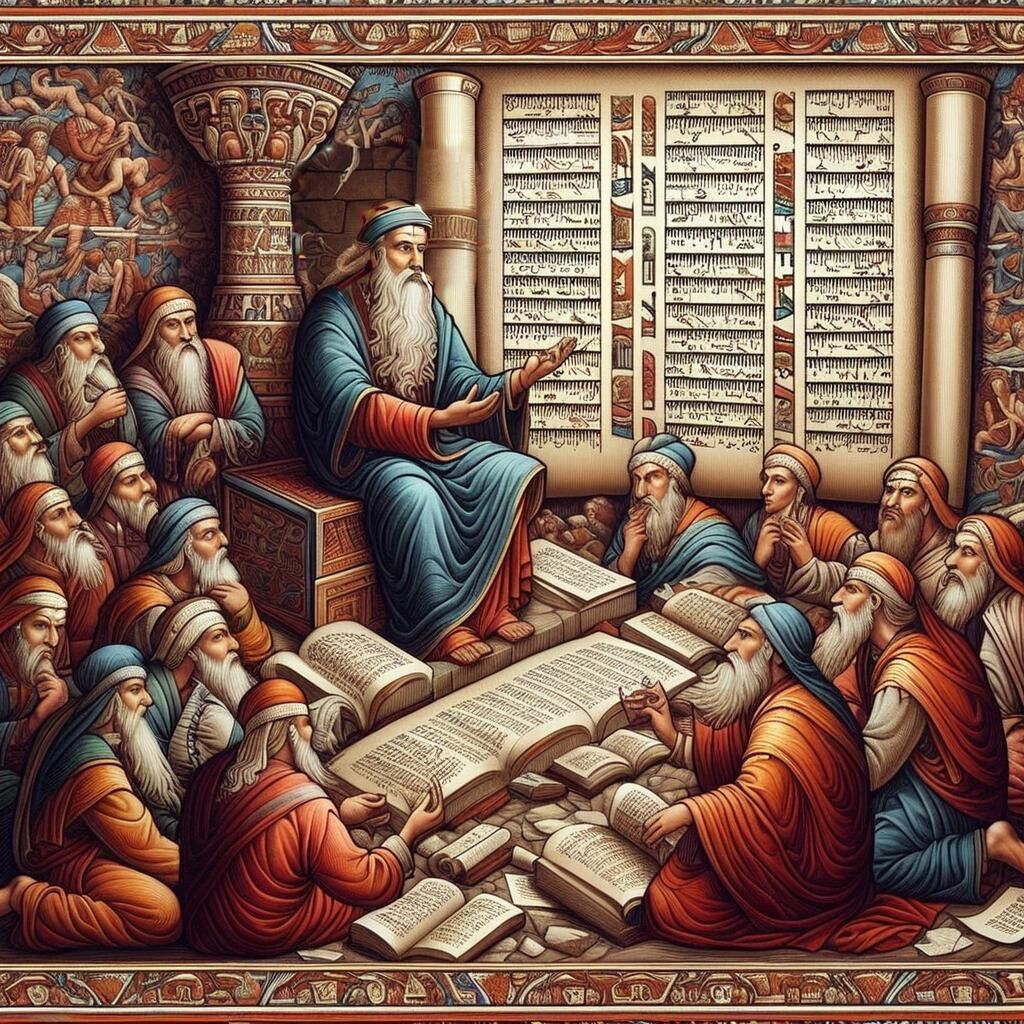
Jewish legend and tradition often identify Shem, Noah’s righteous son, as Avram’s Melchizedek. However, there are several issues with this theory, including the lack of canonical biblical evidence and the improbability of Shem’s lifespan overlapping with Avram’s. Despite these concerns, the book of Jasher perpetuates this connection, presenting a narrative where Shem is indeed Avram’s Melchizedek.
Jasher’s account embellishes the biblical story, referring to Melchizedek as Adonizedek and describing a community meeting with Avram, bearing bread and wine. Interestingly, Jasher omits Melchizedek’s blessing of Yehovah, a curious detail given some ancient rabbinic opinions.
The narrative continues with Shem passing his prophecy school to Eber, his great-grandson, while the Melchizedekian priesthood is conferred upon Avram. This lineage, according to Jasher, includes notable figures like Adam, Enoch, and Noah, culminating in Avram.
However, the Jasher narrative raises questions about the authenticity and accuracy of these accounts. The Melchizedekian priesthood, as described in the Torah, operates outside biological heritage lines and temple sacrificial systems, foreshadowing the Spirit and Truth worship Yeshua spoke of.
Despite the conflicts between Jasher’s and the Torah’s accounts, we can glean significant insights into our Melchizedekian priestly pedigree. Concepts of righteousness, priestly conduct, obedience, and steadfast commitment to the faith form the foundation of our priestly calling. As students of Yahoshua’s Great School of Prophecy, we are in a season of training and preparation for our future roles in the Kingdom of Yehovah.
In conclusion, while I have my reservations about Jasher’s account, it offers valuable lessons about the godly elements that make up our Melchizedekian priestly pedigree. As we continue this series, we will explore these elements further, preparing us to serve as Melchizedekian kings and priests in the coming Kingdom of Yah.
May you be most blessed, fellow saints in training. Let us embrace our calling and prepare for the roles we are destined to fulfill.
My Last Word on the Cepher Bible and the Divinity of Yeshua–At Least Till Next Time
Why Discuss the Cepher Bible Yet Again So I elected to do a rather quick reiteration--albeit last word on the Cepher Bible and the Divinity of Yeshua. At least, until the issue comes up, let's just say. Over the last year or so I've received a number of inquiries...
Paul on Aggadah–Part 5 of Paul and Hebrew Roots Series
Paul on Aggadah—Part 5 of the Paul and Hebrew Roots Series Let us quickly recall from Part 4 of this series that Aggadah is that unseen/invisible aspect of our lives that prompts or influences or even controls our behavior; in particular,that inward motivation, zeal,...
The Meaning Behind The Recent Dedication of an Altar in Jerusalem
If you’ve been keeping up with world news of late, you may know (or not) that the resurrected Great Sanhedrin, headquartered in Jerusalem, sanctioned a Levitical offering of a previously sacrificed lamb upon a practice altar somewhere in Jerusalem. (Yes, there really...
Paul on Halakhah and Aggadah–Part 4 of the Paul and Hebrew Roots Series
Paul on Halakhah and Aggadah Last installment, or Part 3 of this series, I introduced to you the Hebrew concept of Halakhah. In that discussion, I attempted to not only define what halakhah meant, but I also attempted to convey the significance of...
A Biographical Portrait of the Pre-Converted Paul and Halakah–Part 3 of the Paul and Hebrew Roots Series
Review of Parts 1 and 2 of this Series Over the course of the last two installments of this series, we have been laying the groundwork for assembling our portrait of the Apostle Paul prior to his conversion. In the first two-installments we discussed: Why it is...
To Fellowship Or Not Fellowship
A Nagging Question To fellowship with a group of Sabbath-Feast-keepers or not has been a question plaguing me for the last couple weeks. A couple months ago we were invited to fellowship with this group. Now, know that this is NOT a question whether to participate...
Paul-The Man Beneath the Apostleship–Part 2 of the Paul and Hebrew Roots Series
If you've not already done so, I invite you to listen to or read Part 1--Paul, the Man Beneath the Apostle, before moving in to this installment. Apparent Biblical Contradictions and Controversies Before we address the person of Paul straight-on today, I...
The Apostle Paul–Part 1-The Man Beneath the Apostleship
My Goal For This Series Thank you for joining me for Part 1 of this multi-episodic series on The Apostle Paul. This being part-one of the series, we'll lay the ground-work for understanding the man beneath the apostleship. In succeeding installments,...
Who or What is a Messianic Torah Observer?
Inquiring Minds Want to Know I've received a number of email inquiries over the last couple years from various listeners and readers asking the meaning of the title "The Messianic Torah Observer." Allow me to break this bad-boy down for you. To begin with, I...
The Fall Feasts of Yah-The Feast of Tabernacles-The Feast of Sukkot
And greeting fellow Saints of the Most High Elohim. Welcome to The Messianic Torah Observer. I'm Rod Thomas, your host. And as always, it is my sincerest hope, trust and prayer that this installment of the program finds you, your families and fellowships well and...