
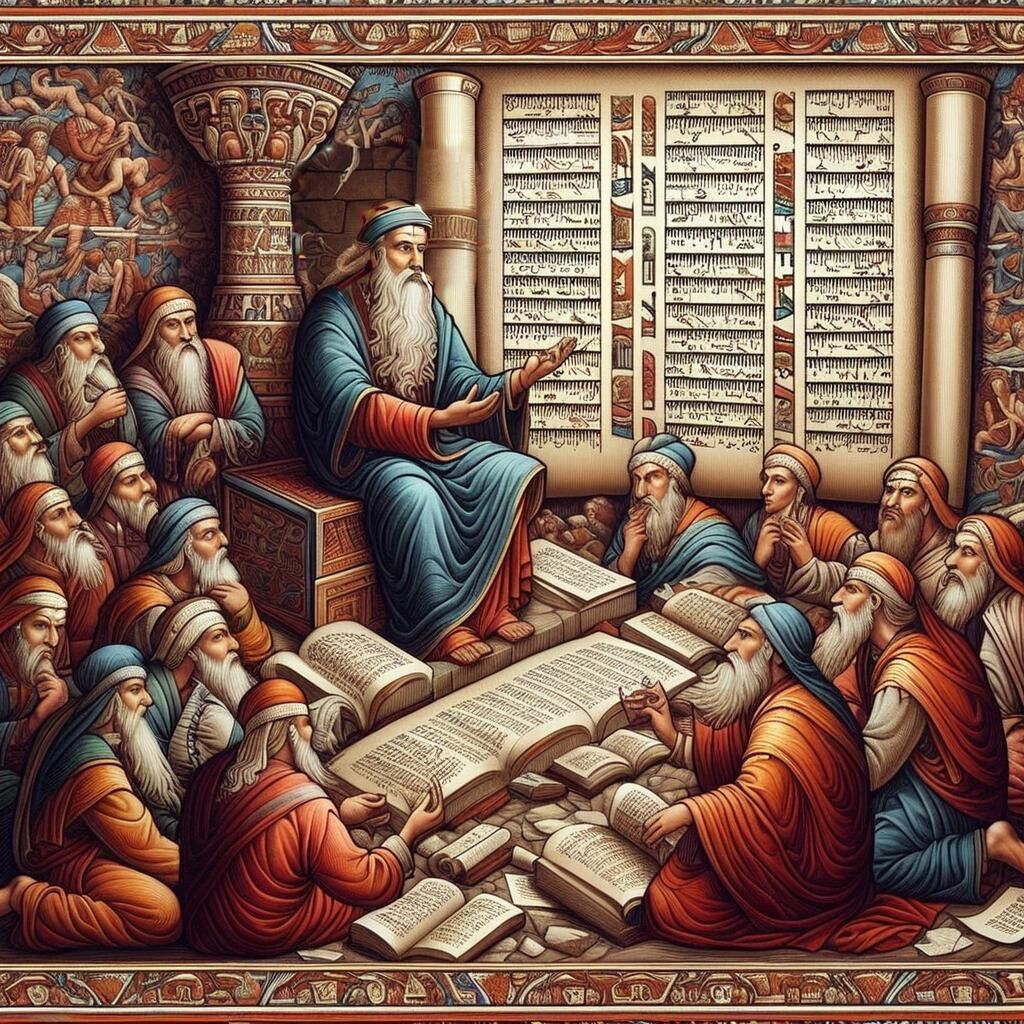
Greetings, saints of the Most High! Welcome to another installment of the Messianic Torah Observer. Today, we delve into the intriguing topic of our Melchizedekian Priestly Pedigree, focusing on Jasher’s hidden chronicles.
In Part 3, we explored the theological implications of the Avram-Melchizedek encounter, discussing the dual offices of priesthood and kingship, the blessing conferred upon Avram, the significance of tithing, and the mysterious nature of Melchizedek. We also examined various religious perspectives on Melchizedek, including those from Catholicism, Islam, and Messianic Judaism.
Jewish legend and tradition often identify Shem, Noah’s righteous son, as Avram’s Melchizedek. However, there are several issues with this theory, including the lack of canonical biblical evidence and the improbability of Shem’s lifespan overlapping with Avram’s. Despite these concerns, the book of Jasher perpetuates this connection, presenting a narrative where Shem is indeed Avram’s Melchizedek.
Jasher’s account embellishes the biblical story, referring to Melchizedek as Adonizedek and describing a community meeting with Avram, bearing bread and wine. Interestingly, Jasher omits Melchizedek’s blessing of Yehovah, a curious detail given some ancient rabbinic opinions.
The narrative continues with Shem passing his prophecy school to Eber, his great-grandson, while the Melchizedekian priesthood is conferred upon Avram. This lineage, according to Jasher, includes notable figures like Adam, Enoch, and Noah, culminating in Avram.
However, the Jasher narrative raises questions about the authenticity and accuracy of these accounts. The Melchizedekian priesthood, as described in the Torah, operates outside biological heritage lines and temple sacrificial systems, foreshadowing the Spirit and Truth worship Yeshua spoke of.
Despite the conflicts between Jasher’s and the Torah’s accounts, we can glean significant insights into our Melchizedekian priestly pedigree. Concepts of righteousness, priestly conduct, obedience, and steadfast commitment to the faith form the foundation of our priestly calling. As students of Yahoshua’s Great School of Prophecy, we are in a season of training and preparation for our future roles in the Kingdom of Yehovah.
In conclusion, while I have my reservations about Jasher’s account, it offers valuable lessons about the godly elements that make up our Melchizedekian priestly pedigree. As we continue this series, we will explore these elements further, preparing us to serve as Melchizedekian kings and priests in the coming Kingdom of Yah.
May you be most blessed, fellow saints in training. Let us embrace our calling and prepare for the roles we are destined to fulfill.
Living Under the Curse of Torah–Grace and the Law Part 7–STAR 36
Living Under the Curse of Torah Grace and the Law Part 7--STAR 36 Calendar 25th/26th day of the 8th Biblical Month--also known as Marheshwan Approaching the beginning of the 9th Biblical Month—if all goes as expected, this coming Friday at sundown, the 13th of...
Exorcism and the Torah Observant Believer in Y’shua Messiah–Torah Living Daily Challenge 25
Exorcism and the Torah Observant Believer in Y'shua Messiah Torah Living Daily Challenge 25 This morning I stumbled upon an article that got my attention. It was entitled, “The Great Exorcism Boom,” by Andrew Chestnut; dated 11/5/2015. This article was written...
Leaving Church–Torah Living Daily Challenge 24
Leaving Church Torah Living Daily Challenge 24 Article entitled: "Americans become less religious, especially young adults: poll" by Mary Wisnieswski of Reuters (11/3/2015) Americans becoming less religious--mostly among adults according to recent poll conducted by...
Righteousness and Torah–Grace and the Law Part 6–Sabbath Thoughts and Reflections 35
Righteousness and Torah Grace and Law (Part 6)--Sabbath Thoughts and Reflections 35 Calendar 17th/18th day of the 8th Biblical Month--also known as Marheshwan Next festival is Hanukkah--slated for December 8th or at the end of the 9th biblical month Hanukkah is the...
Torah Teaches Love for Humanity–Torah Living Daily Challenge–Episode 22
Torah Teaches Love for Humanity Torah Living Daily Challenge 22 Continuing on in my Torah studies this morning, I am still in Parashah 47, but in section 6. This portion of Torah addresses the very timely topic of the Shmittah. (And Shmittah has a number of...
Tithing and Torah–Torah Living Daily Challenge–Episode 21
Tithing and Torah Torah Living Daily Challenge My Torah studies brought me to Parashah 47 section 6; a portion of Torah that addresses tithing. Now I must admit that I thought I knew all there was to know about tithing until I came upon this Torah portion. As it turns...
Don’t Eat the Bacon–The Duty of Holiness (Part 2)–Torah Living Daily Challenge 19
Don't Eat the Bacon The Duty of Holiness (Part 2) You are the sons of Yahovah your God…For you are a holy people [set apart]to Yahovah your God; and Yahovah has chosen you to be a peculiar people to Himself, above all the nations on the earth. (Deuteronomy 14:1, 2)...
The Duty of Holiness (Part 1)–Torah Living Daily Challenge 18
The Duty of Holiness (Part 1) Torah Living Daily Challenge 18 You are the sons of Yahovah your God…For you are a holy people [set apart]to Yahovah your God; and Yahovah has chosen you to be a peculiar people to Himself, above all the nations on the earth. (Deuteronomy...
What is our identity and purpose? Sabbath Thoughts and Reflections 34
What is our Identity and Purpose Sabbath Thoughts and Reflections 34 Understanding our Identity--who we are as a people of Faith--is paramount for each of us to grasp Our identity defines who we are--in my line of work, one of the most important aspects of my job is...
Your Faith Might Get You Hurt–Torah Living Daily Challenge 17
Your Faith Might Get You Hurt Torah Living Daily Challenge 17 Blessed are you when people hate you and when they exclude you and revile you and spurn your name as evil on account of the Son of Man! (Luke 6:22 ESV) I came across a very disturbing articles this week,...