
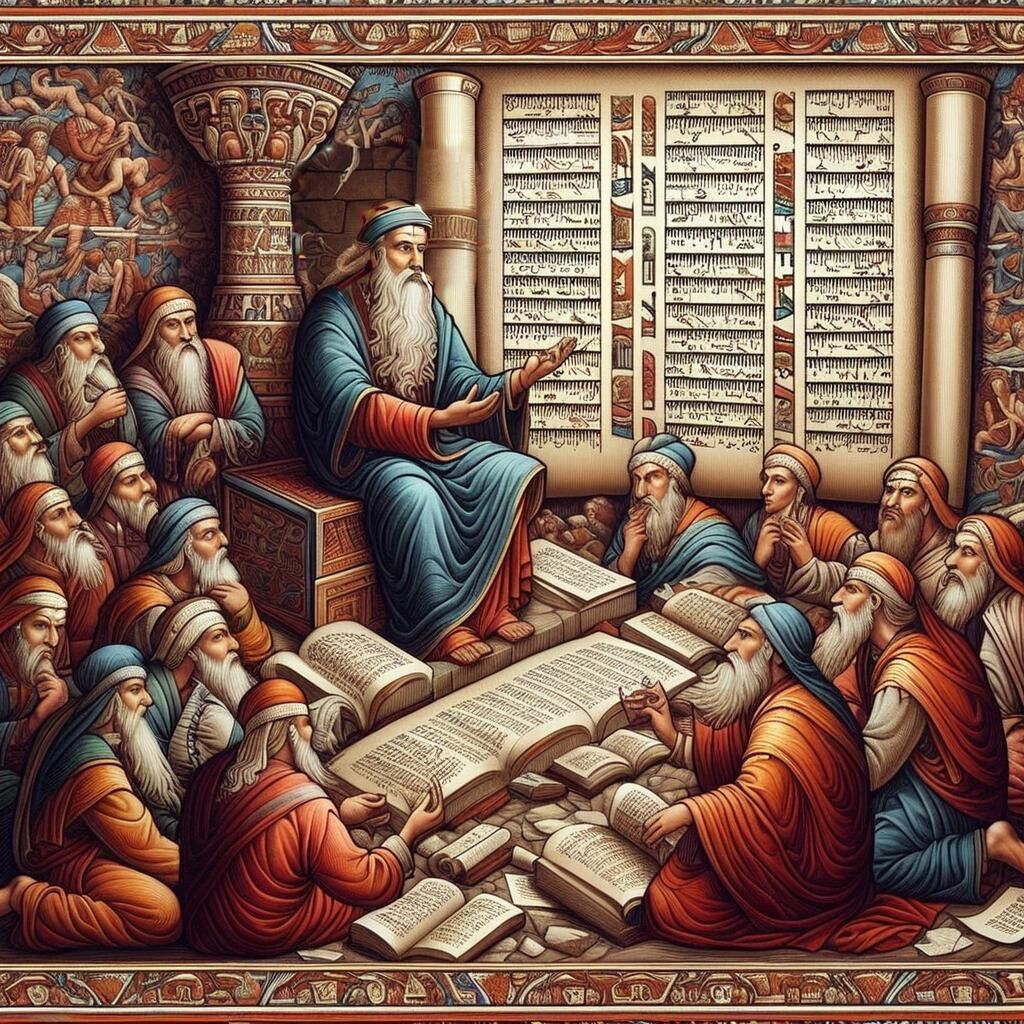
Greetings, saints of the Most High! Welcome to another installment of the Messianic Torah Observer. Today, we delve into the intriguing topic of our Melchizedekian Priestly Pedigree, focusing on Jasher’s hidden chronicles.
In Part 3, we explored the theological implications of the Avram-Melchizedek encounter, discussing the dual offices of priesthood and kingship, the blessing conferred upon Avram, the significance of tithing, and the mysterious nature of Melchizedek. We also examined various religious perspectives on Melchizedek, including those from Catholicism, Islam, and Messianic Judaism.
Jewish legend and tradition often identify Shem, Noah’s righteous son, as Avram’s Melchizedek. However, there are several issues with this theory, including the lack of canonical biblical evidence and the improbability of Shem’s lifespan overlapping with Avram’s. Despite these concerns, the book of Jasher perpetuates this connection, presenting a narrative where Shem is indeed Avram’s Melchizedek.
Jasher’s account embellishes the biblical story, referring to Melchizedek as Adonizedek and describing a community meeting with Avram, bearing bread and wine. Interestingly, Jasher omits Melchizedek’s blessing of Yehovah, a curious detail given some ancient rabbinic opinions.
The narrative continues with Shem passing his prophecy school to Eber, his great-grandson, while the Melchizedekian priesthood is conferred upon Avram. This lineage, according to Jasher, includes notable figures like Adam, Enoch, and Noah, culminating in Avram.
However, the Jasher narrative raises questions about the authenticity and accuracy of these accounts. The Melchizedekian priesthood, as described in the Torah, operates outside biological heritage lines and temple sacrificial systems, foreshadowing the Spirit and Truth worship Yeshua spoke of.
Despite the conflicts between Jasher’s and the Torah’s accounts, we can glean significant insights into our Melchizedekian priestly pedigree. Concepts of righteousness, priestly conduct, obedience, and steadfast commitment to the faith form the foundation of our priestly calling. As students of Yahoshua’s Great School of Prophecy, we are in a season of training and preparation for our future roles in the Kingdom of Yehovah.
In conclusion, while I have my reservations about Jasher’s account, it offers valuable lessons about the godly elements that make up our Melchizedekian priestly pedigree. As we continue this series, we will explore these elements further, preparing us to serve as Melchizedekian kings and priests in the coming Kingdom of Yah.
May you be most blessed, fellow saints in training. Let us embrace our calling and prepare for the roles we are destined to fulfill.
Pray for the Peace of Jerusalem–Torah Living Daily Challenge 15
Pray for the Peace of Jerusalem Greetings Why TLDC? Encourage Torah Living Y'shua Style and preparing us for the tough times ahead through pertinent and inciteful discussions on the issues and topics affecting today's Believer in Y'shua Mashiyach Useful Information...
Hitting the Default Button on our Faith–STAR 33
Hitting the Default Button on our Faith 8 ¶ Remember the sabbath day, to keep it holy. 9 Six days shalt thou labour, and do all thy work: 10 But the seventh day is the sabbath of the LORD thy God: in it thou shalt not do any work, thou, nor thy son, nor thy...
Released from the Law
Released from the Law Moving on from our lengthy discussion on Grace as taken from Ephesians 2:8 and 9, I’d like to look at another popular passage of the Bible that the anti-Torah Christian uses to condemn those of us who embrace a Torah lifestyle. Romans 6:14, and...
The Blood Moon Controversy with a Side of Smittah–STAR 31
The Blood Moon Controversy With a Side of Shmittah I. Introduction This Monday, September 28, 2015, a total lunar eclipse will be visible over Europe, the Middle East, Africa and the Americas. This event is projected to last 1-hour 11-minutes. In Israel the eclipse...
Serve the LORD–Torah Living Daily Challenge–Parashah 47 Part 6
SERVE THE LORD Torah Living Daily Challenge The 4th aspect of Moshe’s admonishment to us from verse 4 of the 13th chapter in most modern translations and verse 5 of the CJB is that we serve Yahovah. In the KJV, the term “serve” is used some 193-verses. The term...
Blood Moons–Feast of Trumpets–Grace Revisited–Part 3 of Grace and the Law Series–STAR 29
Blood Moons--Feast of Trumpets--Grace Revisited Part 3 of Grace and the Law Series Day 27 of the 6th Biblical Month, also known as the month of Elul in Jewish circles. Creator's Calendar versus the Jewish Calculated Calendar. Choose your calendar. About 3-days or less...
Listen to What the Father Says–Part-5 of Parashah 47
Listen to What the Father Says Part 5 of Parashah 47 The third aspect of Moshe’s direction to us as it relates to Yahovah preparing us to enter the Land of Promise (verse 5 of the 13th chapter of Deuteronomy—it is the 4th verse in the NAS, KJV DBY, NLT, ASV, YLT, ESV,...
By Grace are you Saved–Grace and the Law Part 2
By Grace are You Saved Part 2 of the series: Grace and the Law In part one (1) of this series entitle Grace and the Law, we critically looked at some of the key bible passages that our cousins in fundamental and charismatic churchianity (or Christianity...
Listen to What God Says–Torah Living Daily Challenge–Parashah 47 Part 5
Listen to What God Says Torah Living Daily Challenge--Parashah 47 Part 5 We are commanded to listen to what Yahovah says as recorded in Deuteronomy 13: 5. What does that look like to us living in the 21st century? 15 ¶ All the people experienced the thunder,...
By Grace are you Saved–Grace and the Law, Part 2–STAR 28
By Grace are you Saved--Part 2 of the multi-episode series on Grace and the Law Supreme Court Ruling on Gay and Lesbian Unions Blog Post We're roughly 10-days out from Yom Teruah, or Day of Trumpets, or in Jewish circles, Rosh HaShanah The Creator's...