Greetings, saints of the Most High! Welcome to another installment of the Messianic Torah Observer. Today, we delve into the intriguing topic of our Melchizedekian Priestly Pedigree, focusing on Jasher’s hidden chronicles.
In Part 3, we explored the theological implications of the Avram-Melchizedek encounter, discussing the dual offices of priesthood and kingship, the blessing conferred upon Avram, the significance of tithing, and the mysterious nature of Melchizedek. We also examined various religious perspectives on Melchizedek, including those from Catholicism, Islam, and Messianic Judaism.
Jewish legend and tradition often identify Shem, Noah’s righteous son, as Avram’s Melchizedek. However, there are several issues with this theory, including the lack of canonical biblical evidence and the improbability of Shem’s lifespan overlapping with Avram’s. Despite these concerns, the book of Jasher perpetuates this connection, presenting a narrative where Shem is indeed Avram’s Melchizedek.
Jasher’s account embellishes the biblical story, referring to Melchizedek as Adonizedek and describing a community meeting with Avram, bearing bread and wine. Interestingly, Jasher omits Melchizedek’s blessing of Yehovah, a curious detail given some ancient rabbinic opinions.
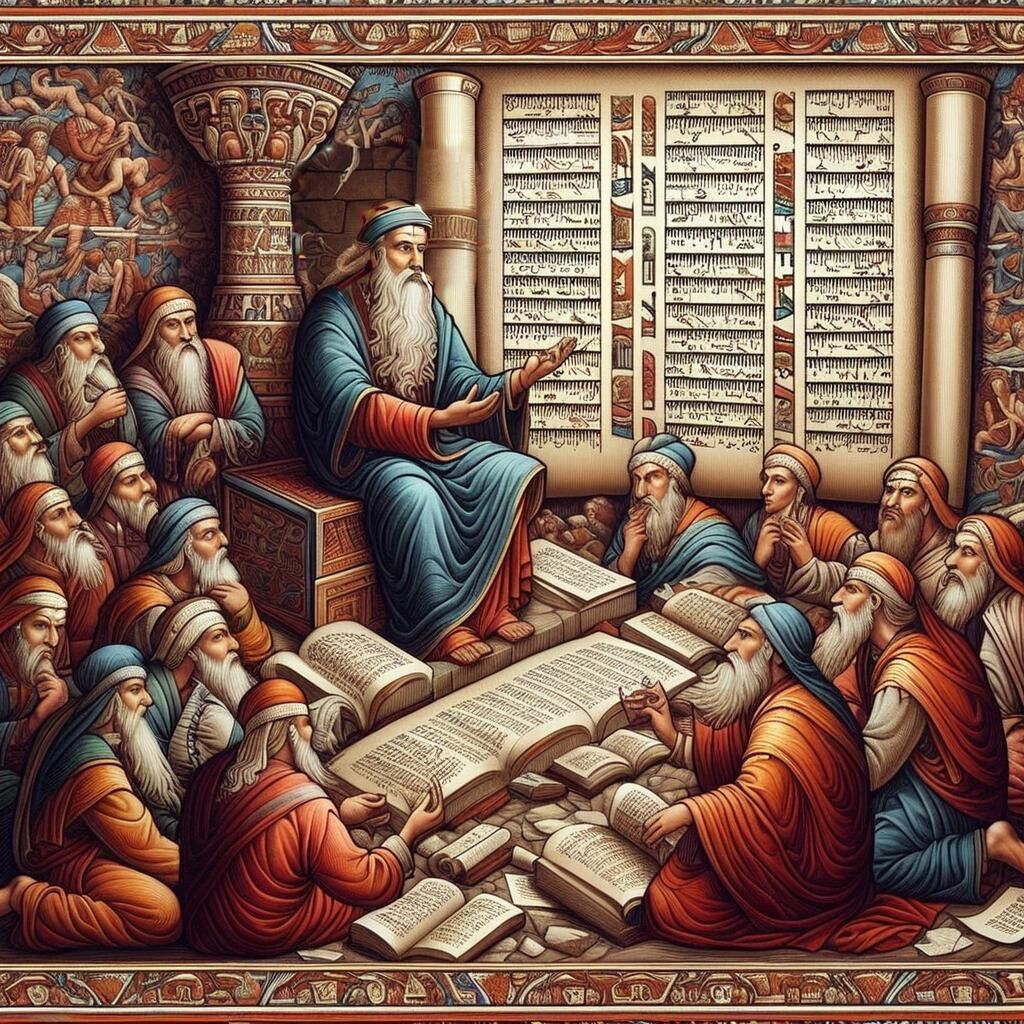
The narrative continues with Shem passing his prophecy school to Eber, his great-grandson, while the Melchizedekian priesthood is conferred upon Avram. This lineage, according to Jasher, includes notable figures like Adam, Enoch, and Noah, culminating in Avram.
However, the Jasher narrative raises questions about the authenticity and accuracy of these accounts. The Melchizedekian priesthood, as described in the Torah, operates outside biological heritage lines and temple sacrificial systems, foreshadowing the Spirit and Truth worship Yeshua spoke of.
Despite the conflicts between Jasher’s and the Torah’s accounts, we can glean significant insights into our Melchizedekian priestly pedigree. Concepts of righteousness, priestly conduct, obedience, and steadfast commitment to the faith form the foundation of our priestly calling. As students of Yahoshua’s Great School of Prophecy, we are in a season of training and preparation for our future roles in the Kingdom of Yehovah.
In conclusion, while I have my reservations about Jasher’s account, it offers valuable lessons about the godly elements that make up our Melchizedekian priestly pedigree. As we continue this series, we will explore these elements further, preparing us to serve as Melchizedekian kings and priests in the coming Kingdom of Yah.
May you be most blessed, fellow saints in training. Let us embrace our calling and prepare for the roles we are destined to fulfill.
Defeating Satan–Sabbath Thoughts & Reflections 23
Defeating Satan Matthew 4 and Luke 4 record Satan's tempting of Y'shua (Jesus) in the wilderness and how Y'shua was able to overcome those temptations. This event provides the Torah observing believer in Y'shua Messiah with an example and prescription for defeating...
The Bride of Christ (Messiah) Part 2–STAR 22
The Bride of Christ (Messiah) Part 2 is the second part of a two-part discussion between Hilary and Rod on the subject. Who or what is the Bride of Christ (Messiah)? This is the central question that demands an answer that most believers are not clear on....
The Bride of Christ–Part 1–Sabbath Thoughts and Reflections 21
What did Shaul and John mean when they made reference to the bride of Christ? Were they referring to the Church Triumphant? Were they referring to individual born again Christians? Hilary and I discuss this important element of our Faith in the first of a two-part...
Occupying Territory–Parashah 46 Part 7
Occupying Territory Deuteronomy 11:22-25 This passage brings us to the end of Parashah-46. As it has been throughout this lengthy portion, we see again Moshe's admonishment that we love Adonai our God. This concept of love in the Ancient Near East continues to be...
The Great Commandment–Torah Living Daily Challenge–Parashah 46 Part 6
The Great Commandment Deuteronomy 11:10-21 Verse 10 gave us a glimpse of the many features associated with our pending inheritance. One of those features included the fertileness of the land. Yahovah compared the fertileness of the land of Canaan compared to Egypt,...
The Messianic Declaration of Independence–Sabbath Thoughts & Reflections 20
The Messianic Declaration of Independence InfoWars on Americans' knowledge of history and Independence Day. Galatians 5:1 Matthew 23:23-34 The Opening of the Declaration of Independence When in the Course of human events, it becomes necessary for one people to...
Barna Group on Same Sex Marriage
The Barna Group Reports on Same-Sex Marriage I came upon these statistics published by the well established and respected Barna Group, regarding the recent U.S. Supreme Court ruling on same-sex marriage. I found these statistics not so surprising I must admit and it...
The Supernatural, Evil and Darkness of our Day–Torah Daily Living Challenge
Last week SCOTUS (Supreme Court of the United States) legalized same sex marriage in all 50-States of union; a week ago, a crazed, seeming racist young man shot and killed 9 men and women attending a bible study in a black-church in Charleston S.C.; last month rioters...
Willing Obedience is a True Act of Love–
Willing Obedience is a True Act of Love Deuteronomy 10:12-11:9 What does our experience tell us about Yahovah? What is our testimony? It is these exploits, these events that occurred in our lives that make us strong and ready to possess the land. We must not...
God’s Law Written on our Hearts–Parashah 46 (Part 4)
God's Law Written on our Hearts Deuteronomy 10:1-12 Moshe regales the time past when Yahovah instructed him to come up the holy mountain with two tables of hewed stone, similar to the ones that Yahovah provided in the first time. (Reference Exo. 34:1, 2) Prior to...