Greetings, saints of the Most High! Welcome to another installment of the Messianic Torah Observer. Today, we delve into the intriguing topic of our Melchizedekian Priestly Pedigree, focusing on Jasher’s hidden chronicles.
In Part 3, we explored the theological implications of the Avram-Melchizedek encounter, discussing the dual offices of priesthood and kingship, the blessing conferred upon Avram, the significance of tithing, and the mysterious nature of Melchizedek. We also examined various religious perspectives on Melchizedek, including those from Catholicism, Islam, and Messianic Judaism.
Jewish legend and tradition often identify Shem, Noah’s righteous son, as Avram’s Melchizedek. However, there are several issues with this theory, including the lack of canonical biblical evidence and the improbability of Shem’s lifespan overlapping with Avram’s. Despite these concerns, the book of Jasher perpetuates this connection, presenting a narrative where Shem is indeed Avram’s Melchizedek.
Jasher’s account embellishes the biblical story, referring to Melchizedek as Adonizedek and describing a community meeting with Avram, bearing bread and wine. Interestingly, Jasher omits Melchizedek’s blessing of Yehovah, a curious detail given some ancient rabbinic opinions.
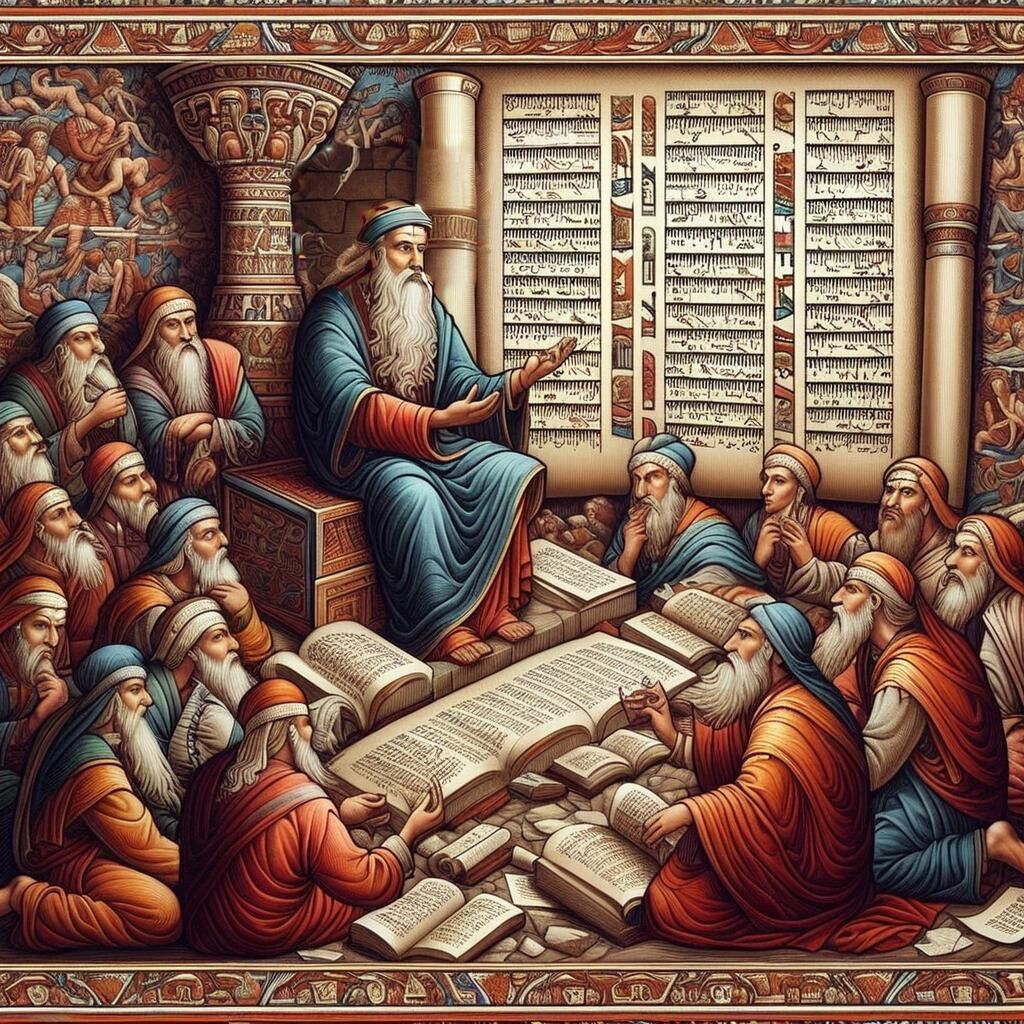
The narrative continues with Shem passing his prophecy school to Eber, his great-grandson, while the Melchizedekian priesthood is conferred upon Avram. This lineage, according to Jasher, includes notable figures like Adam, Enoch, and Noah, culminating in Avram.
However, the Jasher narrative raises questions about the authenticity and accuracy of these accounts. The Melchizedekian priesthood, as described in the Torah, operates outside biological heritage lines and temple sacrificial systems, foreshadowing the Spirit and Truth worship Yeshua spoke of.
Despite the conflicts between Jasher’s and the Torah’s accounts, we can glean significant insights into our Melchizedekian priestly pedigree. Concepts of righteousness, priestly conduct, obedience, and steadfast commitment to the faith form the foundation of our priestly calling. As students of Yahoshua’s Great School of Prophecy, we are in a season of training and preparation for our future roles in the Kingdom of Yehovah.
In conclusion, while I have my reservations about Jasher’s account, it offers valuable lessons about the godly elements that make up our Melchizedekian priestly pedigree. As we continue this series, we will explore these elements further, preparing us to serve as Melchizedekian kings and priests in the coming Kingdom of Yah.
May you be most blessed, fellow saints in training. Let us embrace our calling and prepare for the roles we are destined to fulfill.
“Tie them as symbols on your hands and bind them on your foreheads”? (Deuteronomy 6: 6-8)
What do you think YHWH (Yahweh) meant by: "Tie them as symbols on your hands and bind them on your foreheads"? Deuteronomy 6: 6 These commandments that I give you today are to be upon your hearts. 7 Impress them on your children. Talk about them when you sit at home...
The Supernatural, Evil and Darkness of our Day–STAR 19
The Supernatural, Evil and Darkness of our Day This week SCOTUS (Supreme Court of the United States) legalized same sex marriage in all 50-States of union; a week ago, a crazed, seeming racist young man shot and killed 9 men and women attending a bible study in a...
The Supernatural and Evil–Torah Living Daily Challenge
The Supernatural and Evil This month of June in the year 2015 may mark on of the worst months on record for the proliferation of evil throughout the world. Word on the street is that the Supreme Court of these United States will rule on same sex marriages sometime...
Who Do You Think You Are?-Torah Living Daily Challenge-Parashah 46 Part 3
Who Do You Think You Are? Deuteronomy 9:4-29 Verses 4-6 of part 3 of parashah 46 sort of puts us in our respective places, so to speak. Moshe reminds us thusly: "Don't think to yourself, after your God has pushed them out ahead of you (speaking of the nations...
Remembering God–Torah Living Daily Challenge (Parashah 46 Part 2)
Remembering God Deuteronomy 8:11-9:3 Part 2 of Parashah 46 (Because) reminds us to "Be careful not to forget Adonai (i.e., Yahovah) your God." (verse 11). How is it even possible to forget the Creator one could ask, at least that was the question in my mind initially....
TLDC-2–Read Torah Daily and Obey (Parashah 46 Part 1)
Deu. 7:12-8:10--Read Torah Daily and Obey Commentary Continuing my foray into Torah, I've come to this Torah portion, #46, day 1, entitled "Because." For the newbies among us, every Torah portion takes from the first verses of that portion a descriptive word that...
A Conversation with Chaim Goldman–STAR 18
Join me as I converse with Chaim Goldman of Repairing the Breach Ministries. You will be blessed.
What’s the difference between a “Greek” and a “Hebrew” mindset?
What is the difference between a Greek and Hebrew mindset? Have you ever thought about what it means when someone tells you you have a "Greek mindset?" Well, "Hebrew mindset" and the "Greek mindset" refers to the fact that there is a difference in their respective way...
What is Torah? – The condensed version!
What is Torah? Here is a condensed explanation. YHWH (God the Father) created everything, including Man. He commanded all living things - the birds, fish and animals - to "be fruitful and multiply" (Genesis 1:21-25). He gave man some rules to follow as well. That is...
Questionnaire for our Christian friends
Shalom, everyone! My name is Carmen and I love to help people become Torah observant! To help you along the way, I have made up this questionnaire for our Christian friends. Enjoy! QUICK INTRODUCTORY QUESTION: Is it really true that to gain eternal life, all we have...