
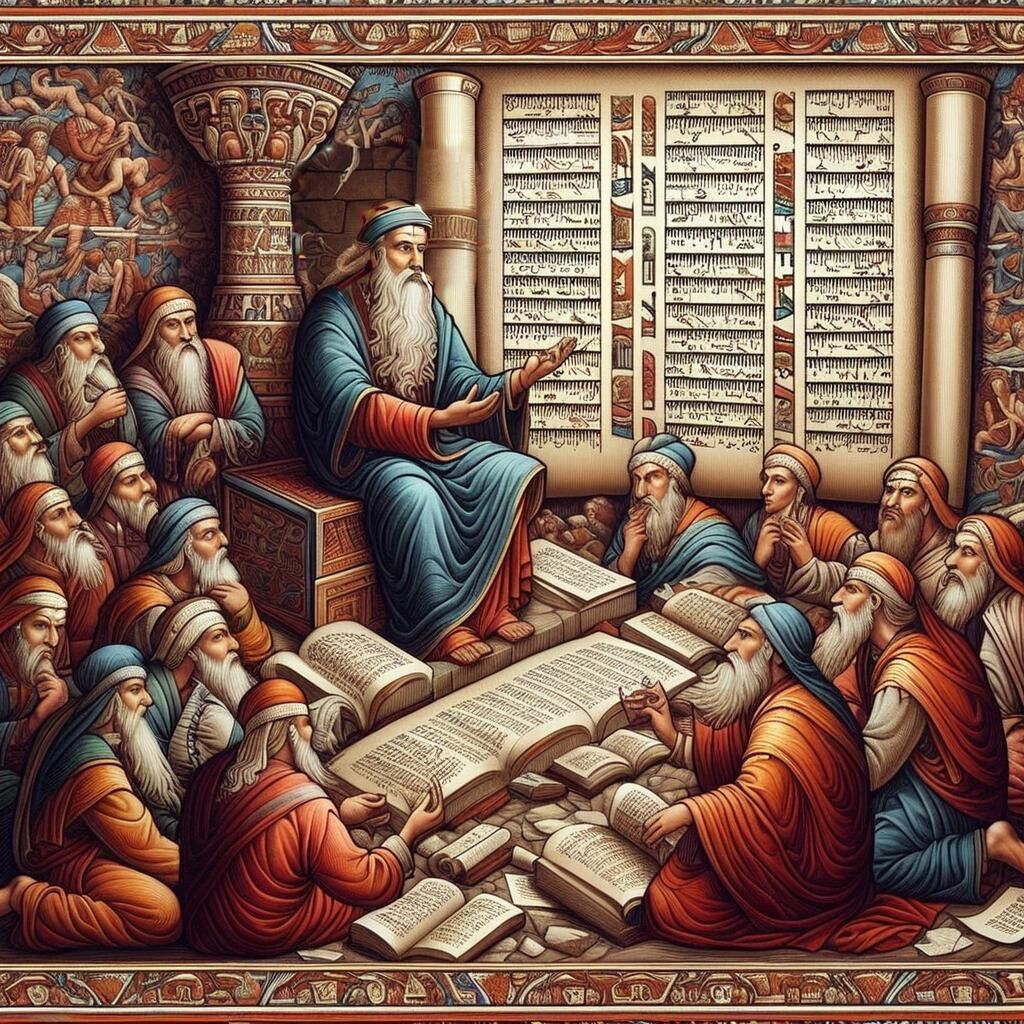
Greetings, saints of the Most High! Welcome to another installment of the Messianic Torah Observer. Today, we delve into the intriguing topic of our Melchizedekian Priestly Pedigree, focusing on Jasher’s hidden chronicles.
In Part 3, we explored the theological implications of the Avram-Melchizedek encounter, discussing the dual offices of priesthood and kingship, the blessing conferred upon Avram, the significance of tithing, and the mysterious nature of Melchizedek. We also examined various religious perspectives on Melchizedek, including those from Catholicism, Islam, and Messianic Judaism.
Jewish legend and tradition often identify Shem, Noah’s righteous son, as Avram’s Melchizedek. However, there are several issues with this theory, including the lack of canonical biblical evidence and the improbability of Shem’s lifespan overlapping with Avram’s. Despite these concerns, the book of Jasher perpetuates this connection, presenting a narrative where Shem is indeed Avram’s Melchizedek.
Jasher’s account embellishes the biblical story, referring to Melchizedek as Adonizedek and describing a community meeting with Avram, bearing bread and wine. Interestingly, Jasher omits Melchizedek’s blessing of Yehovah, a curious detail given some ancient rabbinic opinions.
The narrative continues with Shem passing his prophecy school to Eber, his great-grandson, while the Melchizedekian priesthood is conferred upon Avram. This lineage, according to Jasher, includes notable figures like Adam, Enoch, and Noah, culminating in Avram.
However, the Jasher narrative raises questions about the authenticity and accuracy of these accounts. The Melchizedekian priesthood, as described in the Torah, operates outside biological heritage lines and temple sacrificial systems, foreshadowing the Spirit and Truth worship Yeshua spoke of.
Despite the conflicts between Jasher’s and the Torah’s accounts, we can glean significant insights into our Melchizedekian priestly pedigree. Concepts of righteousness, priestly conduct, obedience, and steadfast commitment to the faith form the foundation of our priestly calling. As students of Yahoshua’s Great School of Prophecy, we are in a season of training and preparation for our future roles in the Kingdom of Yehovah.
In conclusion, while I have my reservations about Jasher’s account, it offers valuable lessons about the godly elements that make up our Melchizedekian priestly pedigree. As we continue this series, we will explore these elements further, preparing us to serve as Melchizedekian kings and priests in the coming Kingdom of Yah.
May you be most blessed, fellow saints in training. Let us embrace our calling and prepare for the roles we are destined to fulfill.
STAR 17–My Discussion with Author and Messianic Teacher Carmen Welker Part 2
Carmen Welker discusses her ministry--what The Refiner's Fire is all about and how it is impacting the Christian and Jewish communities.
STAR 16–A Discussion with Carmen Welker Part 1
STAR 16--A Discussion with Carmen Welker (Part 1) Shalom Saints! Check out Carmen's Webites and Associated Ministry: The Refiner's Fire Reality Check TV The Aramaic English New Testament
STAR 15–Understanding the Bible Part 3–A Question of Inspiration or Perspiration
Understanding the Bible Part 3—A Question of Inspiration or Perspiration What is the Bible? As it relates to the Bible, how many of you have heard the Bible described and labeled as the Holy Bible? What about the bible as the “unadulterated Word of God?” How bout...
STAR 12–Understanding the Bible Part 2 (Why Should Believers Read Their Bibles)
Understanding the Bible Part 2--Why Should Believers Read the Bible? Opening Scripture Passage: Hos 4:1-6 KJV The Moedim Conference--United in Torah--May 1-3, 2015 in San Diego, CA. Featured Guests: Psalmstress Elisha Rico Cortes--Founder Wisdom in Torah Ministries...
Torah Living 50–Understanding the Bible (Is the Church Suffering from Biblical Illiteracy?)
Introduction What is the bible? Some would contend the bible to be the “unadulterated Word of God.” Others would similarly contend that the bible is NOT the word of God per se, but rather it contains the Word of God. Others would say that it is an instruction manual...
STAR 11–Understanding the Bible or Is the Church Suffering from Biblical Illiteracy?
Understanding the Bible Part 1--Is the Church Suffering from Biblical Illiteracy? What is the bible? Some would contend the bible to be the “unadulterated Word of God.” Others would similarly contend that the bible is NOT the word of God per se, but rather it contains...
Sabbath Thoughts & Reflections 10–The Day of Firstfruits or the Wave Sheaf Offering
9 ¶ Then the LORD spoke to Moses, saying, 10 "Speak to the sons of Israel, and say to them, 'When you enter the land which I am going to give to you and areap its harvest, then you shall bring in the sheaf of the first fruits of your harvest to the priest....
Torah Living 49–The Day of Firstfruits or the Wave Sheaf Offering
Yom Bikkurim or the Day of Firstfruits This Feast of Firstfruits in Hebrew is referred to as Yom HaBikkurim (meaning the Day of the First ripe fruits of a crop) or the Day of the Wave Sheaf. On this day, the cohen (aka priests) would wave a sheaf of the first fruits...
Mentally Preparing for Passover
6 aYour boasting is not good. bDo you not know that ca little leaven leavens the whole lump of dough?7 Clean out the old leaven, that you may be a new lump, just as you are in fact unleavened. For Christ our aPassover also has been sacrificed.8 Let us therefore...
STAR 8–Preparing for Passover Mentally, Physically and Spiritually
Preparing for Passover Mentally, Physically and Spiritually Preparation is a key factor in getting the fullest possible spiritual, cognitive and physical benefit from the Feasts. Failure to adequately prepare in every aspect of our being could lead to a less-than...