Greetings, saints of the Most High! Welcome to another installment of the Messianic Torah Observer. Today, we delve into the intriguing topic of our Melchizedekian Priestly Pedigree, focusing on Jasher’s hidden chronicles.
In Part 3, we explored the theological implications of the Avram-Melchizedek encounter, discussing the dual offices of priesthood and kingship, the blessing conferred upon Avram, the significance of tithing, and the mysterious nature of Melchizedek. We also examined various religious perspectives on Melchizedek, including those from Catholicism, Islam, and Messianic Judaism.
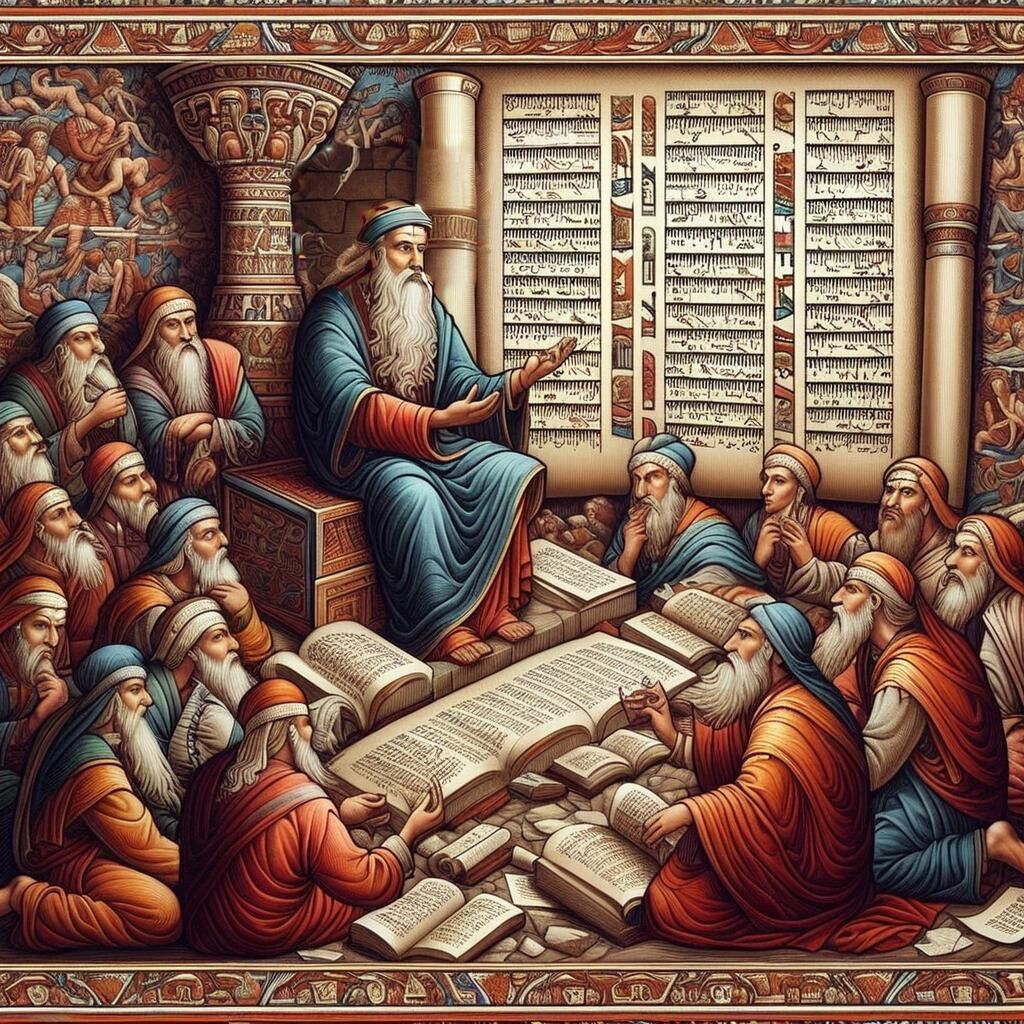
Jewish legend and tradition often identify Shem, Noah’s righteous son, as Avram’s Melchizedek. However, there are several issues with this theory, including the lack of canonical biblical evidence and the improbability of Shem’s lifespan overlapping with Avram’s. Despite these concerns, the book of Jasher perpetuates this connection, presenting a narrative where Shem is indeed Avram’s Melchizedek.
Jasher’s account embellishes the biblical story, referring to Melchizedek as Adonizedek and describing a community meeting with Avram, bearing bread and wine. Interestingly, Jasher omits Melchizedek’s blessing of Yehovah, a curious detail given some ancient rabbinic opinions.
The narrative continues with Shem passing his prophecy school to Eber, his great-grandson, while the Melchizedekian priesthood is conferred upon Avram. This lineage, according to Jasher, includes notable figures like Adam, Enoch, and Noah, culminating in Avram.
However, the Jasher narrative raises questions about the authenticity and accuracy of these accounts. The Melchizedekian priesthood, as described in the Torah, operates outside biological heritage lines and temple sacrificial systems, foreshadowing the Spirit and Truth worship Yeshua spoke of.
Despite the conflicts between Jasher’s and the Torah’s accounts, we can glean significant insights into our Melchizedekian priestly pedigree. Concepts of righteousness, priestly conduct, obedience, and steadfast commitment to the faith form the foundation of our priestly calling. As students of Yahoshua’s Great School of Prophecy, we are in a season of training and preparation for our future roles in the Kingdom of Yehovah.
In conclusion, while I have my reservations about Jasher’s account, it offers valuable lessons about the godly elements that make up our Melchizedekian priestly pedigree. As we continue this series, we will explore these elements further, preparing us to serve as Melchizedekian kings and priests in the coming Kingdom of Yah.
May you be most blessed, fellow saints in training. Let us embrace our calling and prepare for the roles we are destined to fulfill.
Because you are Obedient Part 3–Forgetting Yehovah
Picking up in Chapter 8, verse 11, we find that we are commanded not to forget Yehovah our Elohim. The passage reads: 11"Beware lest you aforget the LORD your God by not keeping His commandments and His ordinances and His statutes which I am commanding you today;...
Because you are Obedient to Torah Part 2
Picking up from the previous section of Deuteronomy 7:12-8:10: 7:12--there is a 3-part requirement related to Torah observance: (1) listen (i.e., to shama or to hear); (2) keep (i.e., to watch and preserve); and (3) obey (i.e., to do them). What we have here is a...
Because you are Obedient to Torah-Part 1
Because you are Obedient to Torah (Part 1) Greetings Saints, My Daily Torah studies took me to D'varim 7 (Deut 7). Beginning at verse 12, we find Moshe speaking to the nation of Israel from a reassuring perspective. He'd already established the need for them to keep...
Episode 6–Hilary Thomas on the Hebraic Roots of the Faith
Calendar--March 14, 2015--23rd Day of the 12th Biblical Month 6014 (aka: Adar 5775) This past week, according to Rood's "The Chronological Gospels--The Life and 70-Week Ministry of Yeshua Messiah," Yeshua travels to the city of Ephraim as found in John 11:54: "Because...
Standing Up To The Christian Bullies Part 1
Standing Up to the Christian Bullies Part 1 Commentary on "Hebrew Roots Heresy" Facebook Page One of the posts on this site rails upon Hebraic Roots advocating Christian believers being Torah Observant. This post went out of its way to insist that the New Testament...
Sabbath Thoughts 5–Standing up to the Christian Bullies Part 1
Calendar--March 8, 2015--16th Day of the 12th Biblical Month 6014 (aka: Shevat 5775) This past week, according to Rood's "The Chronological Gospels--The Life and 70-Week Ministry of Yeshua Messiah," Lazarus is raised from the dead on Purim. Recorded in John 11:17-53...
Two of Purim’s Greatest Secrets
Happy Purim! Well, here we are in the Month of March which translates to the 12th Biblical Month or the Month of Adar as recorded on the Rood “Astronomically and Agriculturally Corrected Biblical Hebrew Calendar.” At the time of this post it will be the beginning of...
Sabbath Thoughts & Reflections 4–7 Reasons Why Hebraic Roots Over Mainstream Christianity
Calendar--March 1, 2015 This past week, according to Rood's "The Chronological Gospels--The Life and 70-Week Ministry of Yeshua Messiah," Miriam and Martha sent emissaries to Yeshua to report on the dire situation of their brother Lazarus. Passage found in John...
Why Hebraic Roots–An Ongoing Debate–Post 1
Why Hebraic Roots The Messianic/Hebraic Roots of the Christian Faith focuses on what the Father truly has to say to us. Thus, in order to understand what it is the Father has to say to us, it is vital that we somehow come to a place in our lives, existence, etc.,...
Sabbath Thoughts & Reflections 3–Dealing with Naysayers
Calendar--February 21, 2015 Renewed moon was sighted over Israel--New moon sighted from Jerusalem on Feb 20, 2015 by Gil Ashendorf at 5:54pm and Devorah Levine at 5:57pm. The photo at the top of this message was taken by Devorah Levine from Jerusalem.We will be...