
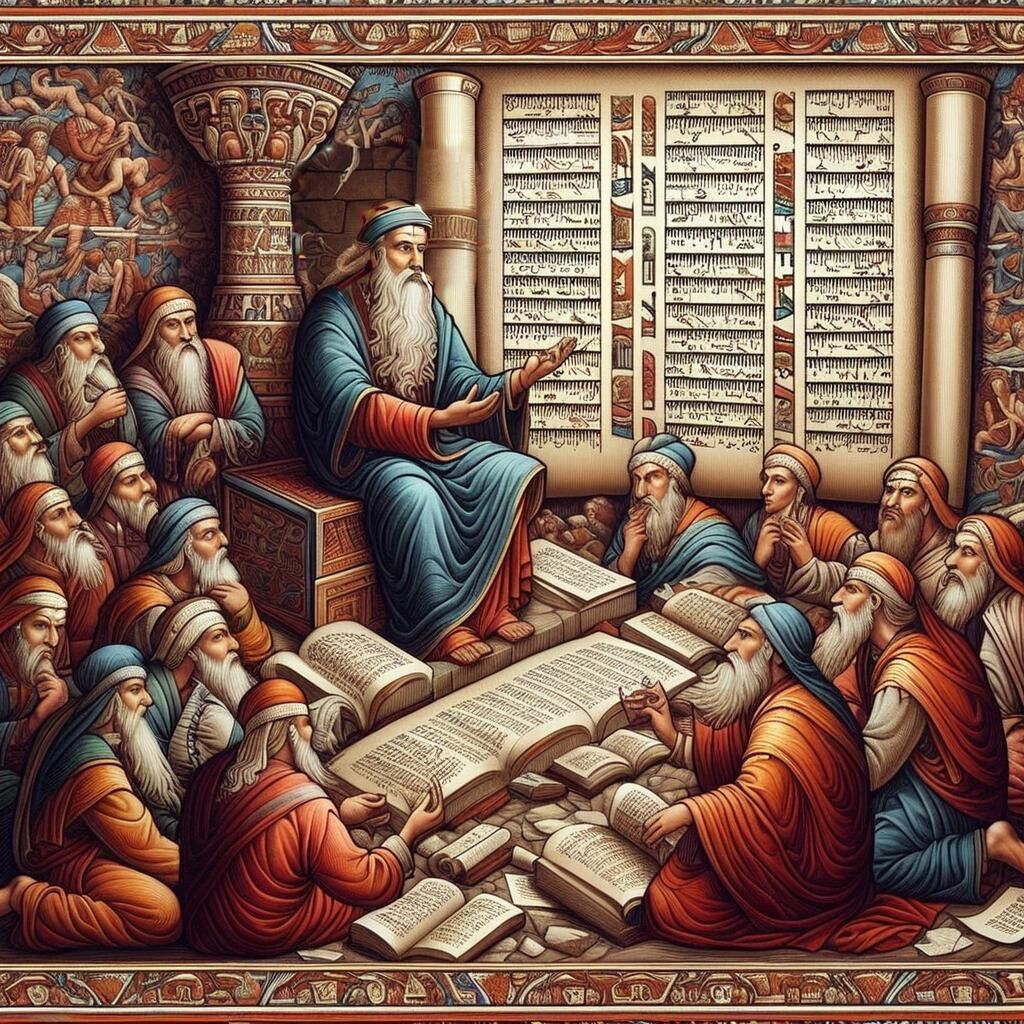
Greetings, saints of the Most High! Welcome to another installment of the Messianic Torah Observer. Today, we delve into the intriguing topic of our Melchizedekian Priestly Pedigree, focusing on Jasher’s hidden chronicles.
In Part 3, we explored the theological implications of the Avram-Melchizedek encounter, discussing the dual offices of priesthood and kingship, the blessing conferred upon Avram, the significance of tithing, and the mysterious nature of Melchizedek. We also examined various religious perspectives on Melchizedek, including those from Catholicism, Islam, and Messianic Judaism.
Jewish legend and tradition often identify Shem, Noah’s righteous son, as Avram’s Melchizedek. However, there are several issues with this theory, including the lack of canonical biblical evidence and the improbability of Shem’s lifespan overlapping with Avram’s. Despite these concerns, the book of Jasher perpetuates this connection, presenting a narrative where Shem is indeed Avram’s Melchizedek.
Jasher’s account embellishes the biblical story, referring to Melchizedek as Adonizedek and describing a community meeting with Avram, bearing bread and wine. Interestingly, Jasher omits Melchizedek’s blessing of Yehovah, a curious detail given some ancient rabbinic opinions.
The narrative continues with Shem passing his prophecy school to Eber, his great-grandson, while the Melchizedekian priesthood is conferred upon Avram. This lineage, according to Jasher, includes notable figures like Adam, Enoch, and Noah, culminating in Avram.
However, the Jasher narrative raises questions about the authenticity and accuracy of these accounts. The Melchizedekian priesthood, as described in the Torah, operates outside biological heritage lines and temple sacrificial systems, foreshadowing the Spirit and Truth worship Yeshua spoke of.
Despite the conflicts between Jasher’s and the Torah’s accounts, we can glean significant insights into our Melchizedekian priestly pedigree. Concepts of righteousness, priestly conduct, obedience, and steadfast commitment to the faith form the foundation of our priestly calling. As students of Yahoshua’s Great School of Prophecy, we are in a season of training and preparation for our future roles in the Kingdom of Yehovah.
In conclusion, while I have my reservations about Jasher’s account, it offers valuable lessons about the godly elements that make up our Melchizedekian priestly pedigree. As we continue this series, we will explore these elements further, preparing us to serve as Melchizedekian kings and priests in the coming Kingdom of Yah.
May you be most blessed, fellow saints in training. Let us embrace our calling and prepare for the roles we are destined to fulfill.
Keep and Do Torah
6 Keep [shamar-guard, observe, give heed] therefore and do [asah] them; for this is your wisdom [chokmah] and your understanding [biynah] in the sight of the nations, which shall hear all these statutes, and say, Surely this great nation is a wise and understanding...
Deuteronomy 4:2–Neither Add Nor Subtract from the Word of Yehovah
We've violated this mitzvah on so many levels in our Faith. Catholicism and protestantism alike have added to and taken away from the Word of Yehovah despite His clear admonishment to the contrary (2 Ye shall not add unto the word which I command you, neither shall ye...
Torah Living 37-Yeshua’s Earthly Family
Now the Feast of Sukkot (Tabernacles) was drawing near. Yeshua's brothers said to him, "Depart from here and go into Yehudaea that your other disciples also may see the works that you do. For there is no man that does anything in secret when he himself seeks to be...
Looking for Signs
As my practice, I began my day with prayer followed by reading Torah. I deter from Torah reading, however, when specific events contained in Rood's Chronological Gospels correspond to our Gregorian calendar date. In this case, events 114 and 115 happen to occur on...
Torah Living 34-John the Baptist (Yochanan), Christianity and Sex
My daily travels through the Torah was interrupted last week when Michael Rood's Chronological Gospels, event 100, correlated with September 14, 2014. As has become my practice, I temporarily stopped my Torah studies to examine this passage which is found in Matt....
Torah Living Daily Reflections-8-The Art of Listening (from a Hebraic/Messianic Perspective)
Continuing with my daily foray in to the Torah, we come to Deuteronomy 4:1 which reads as follows: "Now therefore hearken, O Israel, unto the statutes and unto the judgments, which I teach you, for to do them, that ye may live, and go in and possess the land which the...
Torah Living Daily Reflections 6–The Kingdom of Yehovah (of Yahweh or of God)
Continuing my daily ritual of Torah Study and incorporating Rood's Chronological Gospels as the dates correspond to the Julian calendar--specifically on August 25, 2014, I came across the passage in Matthew 13:36-43 (recorded as event 86) where Yeshua expounds for His...
Torah Living Daily Reflections 5-When Emotions Get in the Way of Service to Yehovah (Yahweh or God)
Continuing my trek through the Torah, I pick up where I'd left off--at Deuteronomy 3: 23-29. I found here a very touching and emotional passage. Despite what most scholars have to say about Deuteronomy not possibly being written by Moshe, my spirit tells me otherwise....
Torah Living Daily Reflections 4–Yehovah Your God will Fight for You-Don’t be Afraid
My daily Torah study foray took me to D'varim (aka: Deuteronomy) 3:1-22. Here Moshe continues to summarize Yisrael's conquest of the promised land in detail. By now, Moshe is 120-years old. The generation of Israelis that left Egypt in the great Exodus had all but...
Torah Living Daily Reflections 3–Following Messiah is not for Everyone
Continuing my foray into the life and 70-day ministry of Yeshua HaMashiach through Rood's Chronological Gospels, today's corresponding passage or event was found in Matthew 8:18-27 (also mark 4:35-41 and Luke 8:22-25). The passage reads as follows: "When Yeshua saw...