
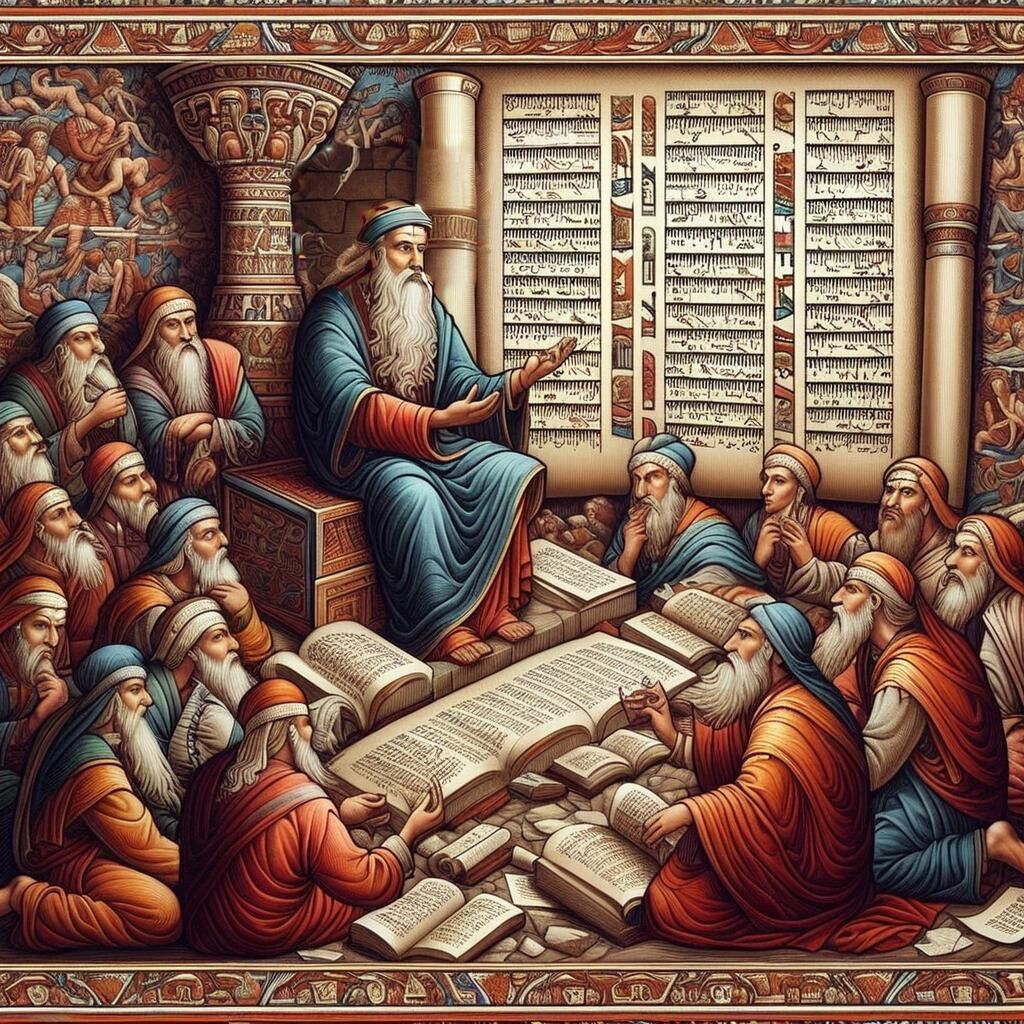
Greetings, saints of the Most High! Welcome to another installment of the Messianic Torah Observer. Today, we delve into the intriguing topic of our Melchizedekian Priestly Pedigree, focusing on Jasher’s hidden chronicles.
In Part 3, we explored the theological implications of the Avram-Melchizedek encounter, discussing the dual offices of priesthood and kingship, the blessing conferred upon Avram, the significance of tithing, and the mysterious nature of Melchizedek. We also examined various religious perspectives on Melchizedek, including those from Catholicism, Islam, and Messianic Judaism.
Jewish legend and tradition often identify Shem, Noah’s righteous son, as Avram’s Melchizedek. However, there are several issues with this theory, including the lack of canonical biblical evidence and the improbability of Shem’s lifespan overlapping with Avram’s. Despite these concerns, the book of Jasher perpetuates this connection, presenting a narrative where Shem is indeed Avram’s Melchizedek.
Jasher’s account embellishes the biblical story, referring to Melchizedek as Adonizedek and describing a community meeting with Avram, bearing bread and wine. Interestingly, Jasher omits Melchizedek’s blessing of Yehovah, a curious detail given some ancient rabbinic opinions.
The narrative continues with Shem passing his prophecy school to Eber, his great-grandson, while the Melchizedekian priesthood is conferred upon Avram. This lineage, according to Jasher, includes notable figures like Adam, Enoch, and Noah, culminating in Avram.
However, the Jasher narrative raises questions about the authenticity and accuracy of these accounts. The Melchizedekian priesthood, as described in the Torah, operates outside biological heritage lines and temple sacrificial systems, foreshadowing the Spirit and Truth worship Yeshua spoke of.
Despite the conflicts between Jasher’s and the Torah’s accounts, we can glean significant insights into our Melchizedekian priestly pedigree. Concepts of righteousness, priestly conduct, obedience, and steadfast commitment to the faith form the foundation of our priestly calling. As students of Yahoshua’s Great School of Prophecy, we are in a season of training and preparation for our future roles in the Kingdom of Yehovah.
In conclusion, while I have my reservations about Jasher’s account, it offers valuable lessons about the godly elements that make up our Melchizedekian priestly pedigree. As we continue this series, we will explore these elements further, preparing us to serve as Melchizedekian kings and priests in the coming Kingdom of Yah.
May you be most blessed, fellow saints in training. Let us embrace our calling and prepare for the roles we are destined to fulfill.
Torah Living Daily Reflections 2–Parables and Prophecy
Continuing on my in my reading of the date-sensitive, corresponding passages of the Rood Chronological Gospels, I came across an excellent example of the Master use of parable to describe the Kingdom of Heaven. I picked up right after the parable of the tares in...
Torah Living Daily Reflections 1–The Sabbath–True Torah Observance versus Our Own Preconceived Notions
A practice that I've begun following of late is incorporating the Michael Rood Chronological Gospels into my regimen of Torah Study. I do this following the Rood Astronomically & Agriculturally Corrected Biblical Hebrew Calendar and looking at the corresponding...
Torah Living 33–The Age Old Problem of New Wine in Old Wineskins
Continuing on with the inclusion of Michael Rood's Chronological Gospels and its date-sensitive corresponding passages in addition to my daily Torah studies, I came to the passage in the chronology where the Master responded to a question as to why His disciples did...
Post Sabbath Reflections for August 16–Faith, Spiritual Gifts and Personal Testimony
* Shabbat Night Live--Michael Rood and The Ark of the Covenant--Into the Wilderness * Michael continues on the subject of discovering the location of the Ark of the Covenant--sets the foundation of His coming in to the truth about the end times. He picked up from last...
A Case for Eating Out on the Sabbath or Not
A practice that I've begun following of late is incorporating the Michael Rood Chronological Gospels into my regimen of Torah Study. I do this following the Rood Astronomically & Agriculturally Corrected Biblical Hebrew Calendar and looking at the corresponding...
Torah Living Episode 28–The Israel-Arab Conflict and the Disciple of Yeshua
If you have been keeping up with news of late, you should be aware of the conflict that wages on between the Palestinian peoples and Israel. You may recall that this all started about a month ago--June 12th to be exact--when 3 Israeli teenagers were abducted by...
Vows–Where Should a Believer Stand on this Issue? (Torah Living 26)
I bet you've heard this before: I swear to God I did or didn't... How about: I solemnly swear to tell the whole truth and nothing but the truth...so help me God. Hilary tells me of this one from her youth: truth that God loves? (simply saying, are you telling the...
Torah Living 25–Freedom
Having observed (to some slight degree) the U.S. holiday of Independance Day this past 4th of July, the concept of "freedom" came to my mind. Indeed, the U.S. celebrates its freedom from British rule every 4th of July and has done so since the year 1776. We all know...
Yeshua the Light of the World (Torah Living Episode 24)
So this past Sabbath while listening to some great Messianic teachings from some of the world's best Messianic teachers, I was taken by the passage in John where the Master described Himself as being the "light of the world." John records the Master as thus: "I am the...
Demons Once Again Reveal Themselves through a Ouija Board Game
Just when the 21st century western world has relegated demons and the topic of demon possession to the primary domain of fictional books and blockbuster movies, comes a story from the “Daily Mail” that reminds the spiritual minded of us that demons and demon...