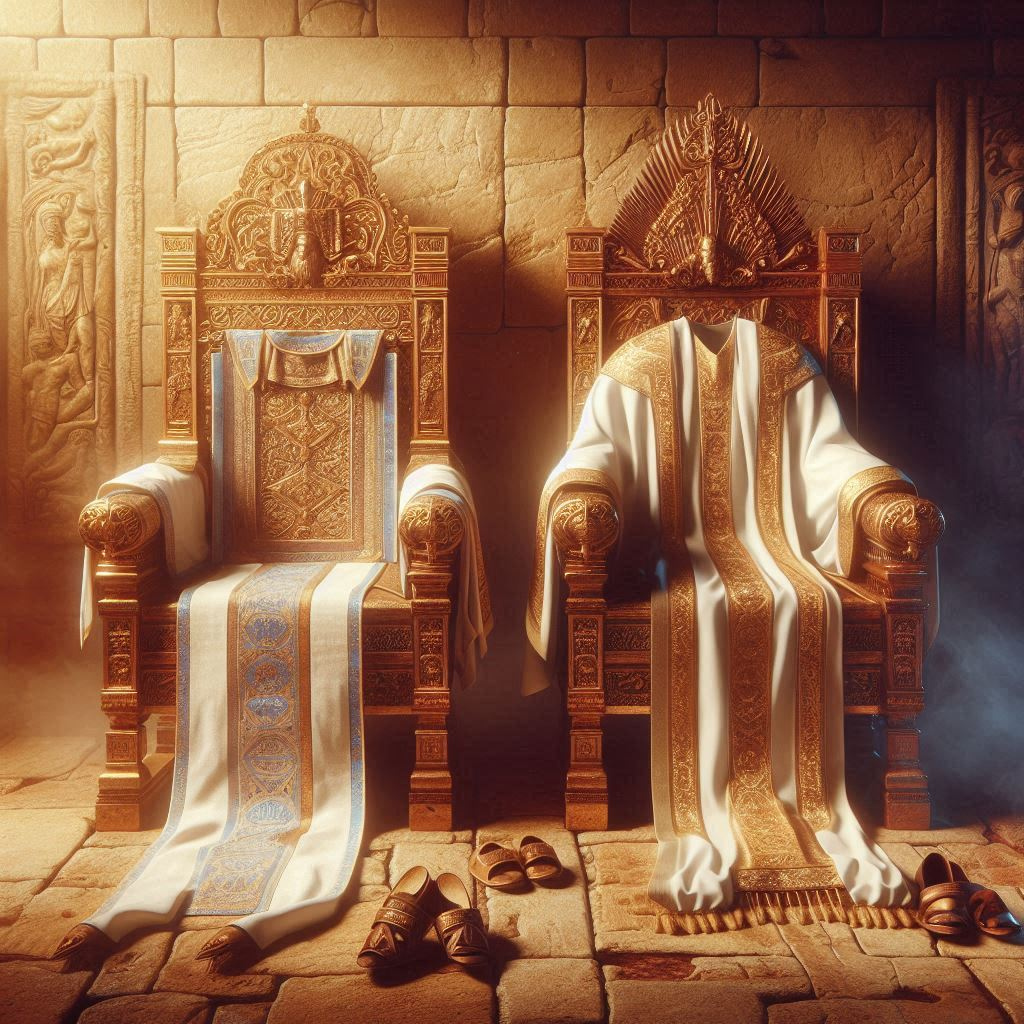
Show Notes: Did John Baptize Yeshua into the Melchizedekian Priestly Order-Part 5 of our Melchizedek SeriesEpisode Title: Did John Baptize Yeshua into the Melchizedekian Priestly Order-Part 5 of our Melchizedek Series
Episode Description: In this episode, we explore the intriguing question of whether John the Baptist baptized Yeshua into the Melchizedekian Priestly Order. Join us as we delve into historical, theological, and scriptural insights to uncover the significance of this event. This is Part 5 of our Melchizedek Series, where we continue to examine the profound implications of the Melchizedekian Order in religious history.
Key Topics Covered:
Episode Highlights:
References:
|
Is the Hebrew Roots of the Christian Faith in a State of Crisis? STAR 50
Is the Hebrew Roots of the Christian Faith in a State of Crisis? Sabbath Thoughts and Reflections Episode 50 Well, I have to tell you, I was hard-pressed and set to continue with the Purim series for this posting when I got tangled up with thoughts on the...
What do you Mean the Barley is not Aviv? Sabbath Thoughts and Reflections 49
GUARD the month of Aviyv, and keep the Pecach unto Yahovah your Elohim: for in the month of Aviyv, Yahovah your Elohim brought you forth out of Mitsrayim (that is Egypt) by night. (Deuteronomy 16:1) as I am publishing this episode, which I believe to be a very...
Purim-Haman, the Anti-Christ (aka Anti-Messiah) Cometh–STAR-48
Purim-Haman, the Anti-Christ (aka Anti-Messiah) Cometh Sabbath Thoughts and Reflections-48 Chapter 3 Verse 1 (cf. 5:11) Haman is advanced by Achashverosh to the rank, according to JFB, of vizier or prime confidential minister Achashverosh establishes Haman’s authority...
Thoughts and Reflections on Purim–Yahovah’s Providence Over the Will of Man and Satan–Sabbath Thoughts & Reflections 47
Thoughts and Reflections on Purim--Yahovah's Providence Over the Will of Man and Satan Sabbath Thoughts & Reflections 47 As I reflect and put together this episode, we find ourselves on the 11th Day of the 12th Biblical Month known to some as Adar. The next...
The Cepher Bible–A Violation of Torah? Sabbath Thoughts and Reflections 46
The Cepher Bible--A Violation of Torah? Sabbath Thoughts and Reflections Episode 46 Therefore let no one pass judgment on you in questions of food and drink, or with regard to a festival or a new moon or a Sabbath. These are a shadow of the things to come, but the...
Praying to the Man Upstairs? Really? Torah Living Daily Challenge–Episode 35
Praying to the Man Upstairs? Really? Torah Living Daily Challenge—Episode 35 As I was driving into the office this morning, I was listening to one of Southern California’s 24-7 news radio stations as I often do to get a sense of what’s happened in the world over...
Spiritual Darkness in the Desert–Sabbath Thoughts and Reflections 45
Spiritual Darkness in the Desert--Sabbath Thoughts and Reflections 45 Territorial Spirits in Las Vegas? Biblical Calendar The writer of Psalms got this principle and I believe it is only by the Ruach--the Spirit--of the Most High that he was led to write this...
A Postmortem Examination on David Jesse’s Defense of Christmas and the Top 7-Issues Most Affecting Hebrew Rooters in 2016–STAR 42
A Postmortem Examination on David Jesse's Defense of Christmas and the Top 7-Issues Most Affecting Hebrew Rooters in 2016 Sabbath Thoughts and Reflections Episode 42 Shalom and Welcome Calendar 27th day of the 10th Biblical Month which is the 9th of January, 2016...
Grace-God’s Sovereignty or Man’s Free Will–Part 11 of the Grace and the Law Series–Sabbath Thoughts and Reflections 41
Grace--God's Sovereignty or Man's Free Will Sabbath Thoughts and Reflections 41--Part 11 in the Grace and the Law Series Opening Scripture-- 12 ¶ And we beseech you, brethren, to know them which labour among you, and are over you in the Lord, and admonish you; ...
Falling into Idolatry and Paganism–Torah Living Daily Challenge 34
Falling into Idolatry and Paganism Torah Living Daily Challenge 34 Deut. 13:13-19 speaks to the destruction of those people and places that are considered heretical and that follow after pagan gods and practice paganism. We live in a secular society, far different...