
This is Thoughts and Reflections on Torah Reading Vayeshev or And He Settled: Lessons From the Life of Joseph Ben Israel. Our parshah is contained in Genesis 37:1-36, focusing on the life and story of Yosef (Joseph), son of Ya’achov (Jacob), and its prophetic and spiritual significance. It explores the patriarchal sojourning in the promised land, the familial dynamics, and the parallels between Yosef’s experiences and the life and ministry of Yahoshua Messiah (Jesus).
Patriarchal Sojourners in the Promised Land
Ya’achov settles in the land of Canaan, the land promised by Yehovah, continuing the pattern of the patriarchs sojourning in the promised land without fully possessing it, as noted in Hebrews 11:8-10. Ya’achov returns to Hebron, the home of his father Yitschaq, who never left this place.
The Story of Yosef as the Story of Ya’achov
The narrative shifts from Ya’achov to his son Yosef, whose story is central to the continuation of the covenant promises. Yehovah chose Yosef as a vessel to preserve Yisra’el, even though his brothers rejected and persecuted him. His life is a prophetic shadow of Yahoshua Messiah.
Family Dynamics and Yosef’s Role
Yosef, at 17 years old, is shepherding his brothers’ flocks and assumed to be the “Son of the Covenant.” His favored status with Ya’achov and his unique character set him apart. The Hebrew term for “tended” implies Yosef shepherded his brothers, especially those of Bilhah and Zilpah’s sons. Reuben, the eldest, though complicit in Yosef’s near enslavement, intervenes to save his life, unknowingly cooperating with Yah’s plan.
Ya’achov’s Love and the Birthright Question
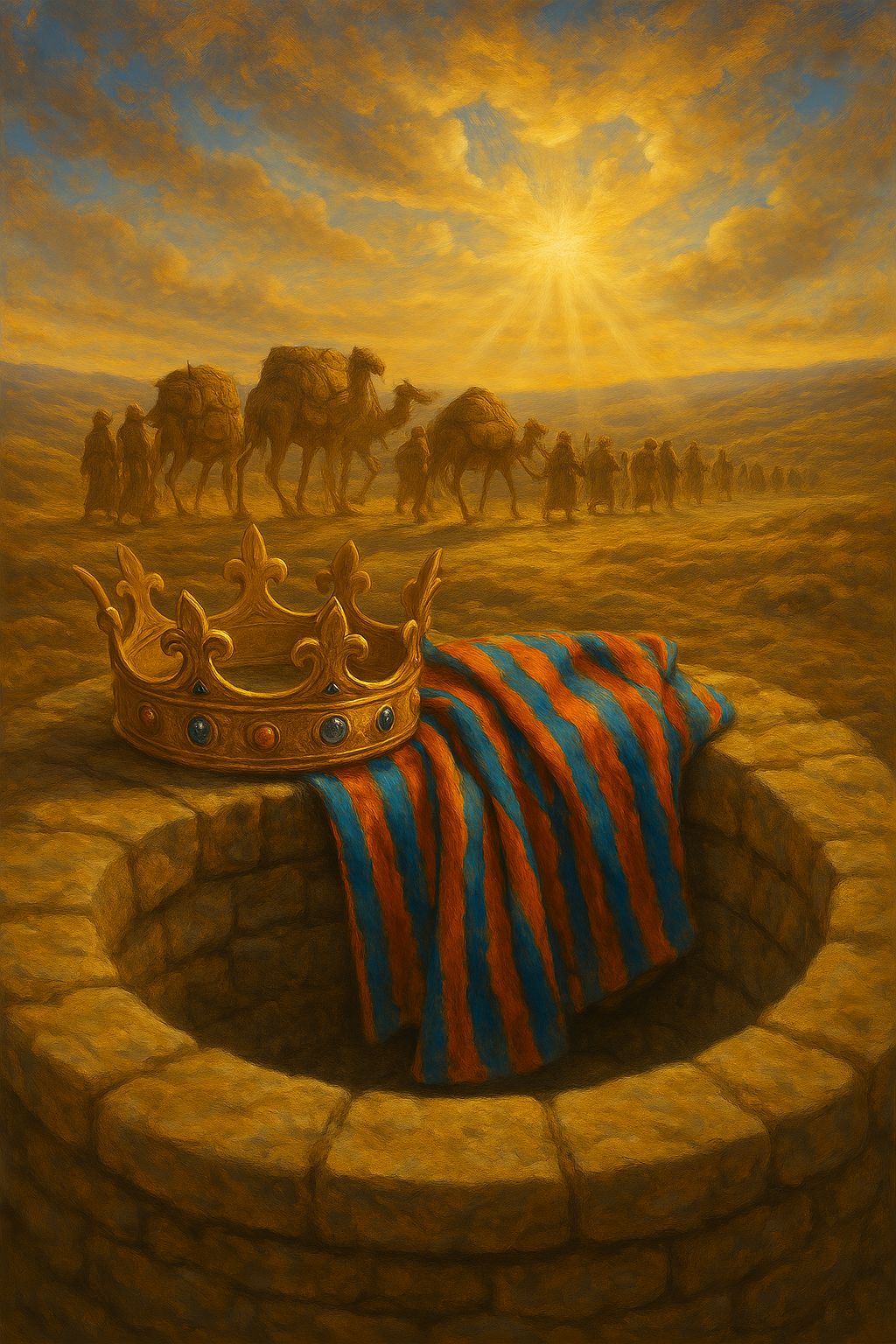
Ya’achov’s love for Yosef, his son of old age and Rachel’s firstborn, causes jealousy among the brothers. Yosef receives a special garment, the “ketonet passim,” often interpreted as a long-sleeved or multi-colored tunic symbolizing his favored status and possibly his appointment as clan leader, replacing Reuben because of his transgression.
Brothers’ Hatred and Rejection of Yosef
The brothers’ hatred stems from Ya’achov’s love for Yosef and Yosef’s role as a family tattler. Their rejection of Yosef reflects a rejection of their father and Yehovah. This familial rejection parallels how Yeshua was rejected by Judah for being beloved by His Father.
Yosef’s Prophetic Dreams and Their Impact
Yosef shares two prophetic dreams symbolizing his future authority over his brothers. The first involves sheaves of grain bowing to his sheaf, and the second depicts the sun, moon, and eleven stars bowing to him, representing his family. These dreams intensify the brothers’ hatred, though Ya’achov ponders their meaning carefully. These dreams foreshadow Yosef’s exaltation in Egypt and reflect a common ancient Near Eastern motif of paired dreams.
Preparation for Yosef’s Trials and Glorification
Like Yeshua Messiah, who foretold the hardships His disciples would face, Yosef’s journey towards exaltation involves trials and refining. Yosef’s obedience to his father’s mission parallels Yeshua’s obedience to His Heavenly Father’s will.
Yosef’s Mission to Find His Brothers
Ya’achov sends Yosef to check on his brothers pasturing in Shechem, a dangerous area with a troubled family history. Yosef’s persistence in seeking his brothers despite challenges parallels Yeshua’s mission to save the lost. A mysterious man redirects Yosef to Dothan, possibly an angelic figure, highlighting divine guidance in fulfilling Yah’s plan .
The Brothers’ Conspiracy and Reuben’s Intervention
The brothers plot to kill Yosef, but Reuben intervenes, forbidding bloodshed and planning to rescue Yosef later. Reuben’s actions reflect a complex family dynamic and his attempt to restore his first-born responsibilities despite past failings.
Yosef’s Humiliation and Sale into Slavery
When they met Yosef, the brothers stripped him of his special robe, symbolically removing his dignity, mirroring how they stripped Yeshua before crucifixion. They cast Yosef into a cistern and later sell him to Ishmaelite merchants for twenty pieces of silver. This act, intended to destroy Yosef, ultimately fulfills Yah’s plan for salvation.
The Brothers’ Deception and Ya’achov’s Grief
The brothers deceive Ya’achov by presenting Yosef’s bloodied robe, claiming a wild animal killed him. Ya’achov mourns deeply, rending his clothes and refusing to be comforted, expressing his profound loss and grief.
Yosef’s Journey in Egypt
Yosef’s sale to Potiphar, an Egyptian official, marks the beginning of his rise in Egypt and the unfolding of Yah’s providential plan.
Spiritual Reflections on Dreams and Prophecy
The document reflects on the significance of dreams as divine communication in the Hebrew tradition, noting that prophets often received messages through dreams. Yosef is a prophet whose dreams reveal Yah’s Will. The symbolism in Yosef’s dreams connects to broader prophetic imagery, including the woman clothed with the sun in Revelation 12, representing Yisra’el.
Messianic Parallels Between Yosef and Yeshua
The narrative draws extensive parallels between Yosef and Yeshua Messiah:
- Both are beloved sons of their fathers.
- Both are appointed to shepherd Yisra’el.
- Both face rejection and hatred from their brethren.
- Both suffer humiliation and are ultimately exalted.
- Both serve as instruments of salvation for Yisra’el and the nations.
- Both experiences demonstrate how divine plans prevail despite human evil.
Rod concludes this teaching by emphasizing that Torah readings like this one serve as shadows of greater spiritual realities to come and encourages readers to find further Messianic insights within the text. More so, these Words of Life from our Heavenly Father teach us about the Person and Ministries of Yahoshua HaMashiyach. And it is the Person and Ministries of Yeshua that we, Yah’s chosen and elect, must ultimately emulate if we are going to receive and enter His glorious Kingdom to come. Amein. Amein.
Why Aren’t We Keeping the Feast of Rosh Chodesh-Thoughts and Reflections on the Torah Reading for the 9th Rosh Chodesh
Greetings, Saints of the Most High! Welcome to another installment of the Messianic Torah Observer. I'm Rod Thomas, coming to you on a crisp fall afternoon in DFW. Thank you for taking the time to fellowship with me. I hope this post finds you and your loved ones well...
And God Remembered Noah — Thoughts & Reflections on Torah Reading 6 — Reboot
And God Remembered Noah This week's Torah reading, "And God Remembered Noah," is from Genesis 8:1-14, the 6th Parashah in our 3-Year Torah Reading Cycle. The Power of the Ruach In Genesis 8:1, Elohim remembered Noah and sent a wind (ruach) over...
Pleasing God-Yah in Perilous Times-Lessons From the Life of Noah-Thoughts & Reflections on Torah Reading 5 (Reboot)
Torah Reading this week is found in Genesis 6:9-7:24. It is a very familiar passage of Torah that bears a good many themes, concepts and spiritual applications. But for us today, I want us to focus on just one central theme, if you will. And that theme has to do...
Marring the Image of the Creator Yehovah Through Rebelliousness-Thoughts and Reflections on Torah Reading 4
Greeting and Introduction Greetings saints of the Most High and welcome back to another installment of the Messianic Torah Observer. I'm Rod Thomas coming to you on a beautiful fall Shabbat in the DFW. Thank you for taking the time out of your busy schedules to...
Was Eve the First Messianic and the Heart of True Worship — Thoughts & Reflections on Torah Reading 3
Greetings Saints of the Most High. I pray that you, your families, and fellowships are well and blessed. It was my intention to do, at the very least, an audio version of this teaching and discussion. However, since our return from our Kenyan missionary...
My Thoughts and Reflections on Whether Messianics/Netsarim Should Take Part in the Upcoming Electoral Process
Greetings Greetings saints of the Most High. I'm Rod Thomas coming to you from the DFW on a rather stormy first day of the week. Thank you for taking the time out of your busy schedules to fellowship with me and as always beloved, it is my hope, trust, and prayer that...
TMTO Update and Thoughts and Reflections on Kenya Missionary-Sukkot Trip
As I am posting these thoughts and reflections, it is the very last Sabbath of the 7th Biblical Month, November 2, 2024. And assuming our contacts in Israel are successful in sighting the renewed moon the evening of this post, we will enter the 8th Month of Yah's...
When Torah Becomes a Witness Against Us — My Thoughts and Reflections on Torah Reading 148
These are my thoughts and reflections on Torah Reading 148. I’ve been led to entitle this discussion: When Torah Becomes a Witness Against Us.” Our reading this week is found in Deuteronomy/Devarim 31.14-30. Key Themes and Concepts Found in our Parashah this...
Be Strong and Courageous — My Thoughts and Reflections on Torah Reading 147
Greetings saints of the Most High. Thank you for taking the time out of your busy schedules to fellowship with me here on this blessed day of rest in Yeshua Messiah. And as always, it is my hope, trust, and prayer that this installment of the Messianic Torah Observer...
Operating in Set-Apart Community Relationships — Torah Reading 142 Thoughts and Reflections
Shalom and Greetings Greetings saints of the Most High. Rod Thomas coming to you on a warm by beautiful Sabbath in the DFW. Thank you for taking the time out of your busy schedules to fellowship with me here on this blessed day of rest in Yeshua Messiah. And as always...