
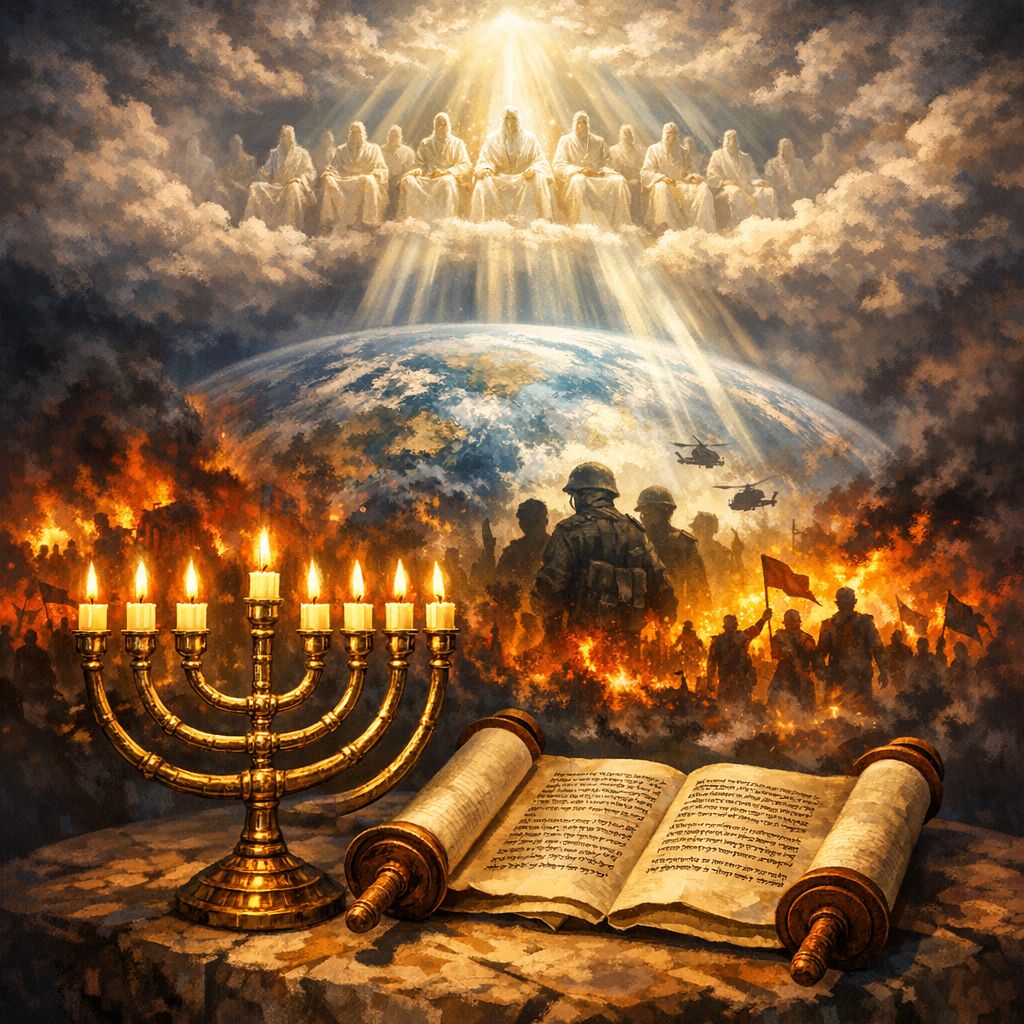
Episode Overview
Key Themes & Discussion Points
1. Living in Perilous Times
-
The episode opens with a reflection on the “Last Days” and the fulfillment of biblical prophecy regarding the moral decline of society (2 Timothy 3:1-4, Romans 3:23). Listeners are encouraged to self-examine and recognize how these ungodly traits manifest both individually and collectively.
2. The Danger of Ideological Absolutism
-
Various global systems—religious and secular—are discussed (Iran, Venezuela, radical movements in the West). The common thread is the danger that arises when any system claims moral perfection and becomes intolerant of dissent. Such systems survive on fear and collapse only when their enforcement mechanisms fail.
3. Power and Unlikely Alliances
-
The thirst for power unites disparate groups and ideologies, leading to unexpected alliances. The episode highlights how neither religion nor atheism can restrain absolute ideology, and how tragic consequences can result when individuals or groups become impervious to reason.
4. How Systems Claim and Maintain Power
-
Real-world examples illustrate how institutions (courts, media, schools, police) shift from protecting rights to enforcing ideology when a system claims absolute authority. This is seen in Iran, Venezuela, the Soviet Union, and contemporary U.S. politics.
5. Why Evil Systems Persist
-
Despite knowing right from wrong, humanity continues to support corrupt systems. Scriptural references (Romans 1:20-32) explain how people exchange truth for lies and become complicit in evil. The episode argues that regimes survive protests and leadership changes, collapsing only when their authority is removed—a power that comes from beyond human agency.
6. The Spiritual Mandate: Prayer Over Protest
-
The biblical framework is presented: God is sovereign over all authorities (Romans 13:1, Daniel 2:21; 4:17, Proverbs 8:15, John 19:11). The only lawful recourse for believers is prayer, which is described as a legal act before the Court of Heaven. Prayer is not just a plea for help but a formal petition for judgment and removal of illegitimate power.
7. Praying for Systems and Individuals
-
While believers are called to pray for individuals in authority (1 Timothy 2:1-2), the focus should also be on praying against evil systems themselves. The episode emphasizes living as “light and salt” in the world, being subject to governing authorities, and fulfilling the Great Commission.
8. Spiritual Warfare: Prayer and Fasting
-
Spiritual warfare is real and scripturally grounded (Ephesians 6:10-18). The episode encourages listeners to engage in prayer and fasting as acts of spiritual authority, citing examples from Moses (Exodus 32), Esther (Esther 4), and Daniel (Daniel 9). These acts can break the power of evil systems and bring about divine intervention.
9. Practical Implications for Believers
-
The role of the Body of Messiah is not violent overthrow but persistent prayer and fasting. Prayer aligns believers with God’s decisions, enabling justice without chaos. Listeners are invited to join in spiritual warfare, maintain personal holiness, and pray for leaders, nations, and one another.
10. Invitation to Discipleship
-
The episode closes with an invitation to enter into a covenant relationship with God through Yeshua Messiah, encouraging listeners to seek forgiveness, walk in obedience, and pursue a faith-based, Torah-honoring lifestyle.
Scriptural References
-
2 Timothy 3:1-4
-
Romans 3:23; 1:20-32; 13:1-7
-
Daniel 2:21; 4:17; 7
-
Proverbs 8:15
-
John 19:11
-
1 Timothy 2:1-2
-
Matthew 6:33; 5:13-14; 28:19-20; 16:19; 18:18
-
Ephesians 6:10-18
-
Exodus 32
-
Esther 4
-
Daniel 9
-
Psalm 2; 122:6
-
Titus 3
-
1 Peter 2
-
1 Thessalonians 5:17
-
Galatians 5:22-25
-
1 Corinthians 5:9-13
-
Luke 5:16
-
2 Corinthians 6:2
-
Isaiah 55:6-9
Action Steps & Reflection
-
Engage in prayer and fasting for the collapse of evil systems and the salvation of those in authority.
-
Maintain personal holiness and avoid unholy company.
-
Pray for leaders, nations, and fellow believers.
-
Study the Word and seek God’s Kingdom and righteousness.
-
Consider entering into a covenant relationship with God if you have not already done so.
Connect & Respond
-
For questions or further discussion, reach out via email: perceptionwp@gmail.com
-
Leave a voice message through SpeakPipe on the website: https://themessianictorahobserver.org
Closing Blessing
Did the Apostle Paul Permit the Eating of All Meats? A Messianic Examination of 1 Timothy 4:1-5
Setting the Table for our Discussion Here Today This is “Did the Apostle Paul Sanction/Permit the Eating of all Meats? A Messianic Examination of 1 Timothy 4:1-5.” Our discussion here today will serve as another installment to our massive Paul and Hebrew...
Does Torah Cause Someone to Sin More? A Messianic Examination of Romans 5:20
Goal: This is “Does Torah Cause Someone to Sin More? A Messianic Examination of Romans 5:20.” And so, our survey of the hard-to-understand—those challenging Pauline passages—takes us in today’s installment of TMTO, to Romans 5:20. And the KJV...
Finding Peace with God-Eternal Life and a Blessed Assurance
This is “Finding Peace with God—Eternal Life and a Blessed Assurance.” This is a continuation of our Paul and Hebrew Roots mega-series where we’ve been discussing some of the more challenging—hard to understand Pauline writings. And we’ve been spending most of our...
Shavuot-Pentecost 2022 in Focus–Netzari-Messianic Perspectives on the Feast of Shavuot
1. An Introductory Primer on Shavuot What is Shavuot? For the Torah Observant Believer in Yeshua Messiah, Shavuot—The Feast of Weeks—Pentecost is about the giving and receiving of YHVH’s Torah and the establishing of the marriage covenant between YHVH and the Children...
The Inapplicability of Torah–Part 3 of Where There is no Law There is no Transgression
This is “The Inapplicability of Torah.” It is the final installment to our 3-part series within a series entitled “Where There is no Law There is no Transgression.” Because I have so much content to cover today and I’m led to bring this series within a series to a...
Where There is no Law There is no Transgression-Part 2-The Role of Torah in the World
Quick Review of Part 1 Our focus passage was Romans 4:11-15 with particular emphasis on verse 15: For Torah brings wrath, because where there is no law there is no transgression [of the law]. Unfortunately, denominationalists erroneously use this and related...
Where there is no law, there is no transgression: Part-1-The Difference Between Sin and Transgression of the Law
A Continuation of Where we Left Off Today, we sort of pick up where we left off in our previous Paul and Hebrew Roots series. If you recall from our last installments to this series, the so-called Apostle to the Gentiles asserted to his Roman readers that he fully...
The Exceeding Kingdom Qualifying Righteousness That Takes us from Passover to Tabernacles-Part 2–Maintaining our Righteous Garments
Goal I will be picking up from where I left-off from Part-1 of our last discussion entitled "The Exceeding Kingdom Qualifying Righteousness That Takes us from Passover/Pesach to Tabernacles/Sukkot.” Or rather, from Babylon/the world to the Kingdom. And if by...
God Humbles Those Who He Enters into Covenant With
This is an overview of the 30th Reading of our 3-year Torah Reading Cycle. It is found in Genesis/Beresheit 31:3-32:2. I use the Hebrew names of the patriarchs throughout this post. And just to familiarize you with the names so as to not cause any confusion:...
The Exceeding Kingdom Qualifying Righteousness That Takes us from Passover to Tabernacles-Part 1
The Exceeding Kingdom Qualifying Righteousness That Takes Us from Passover to Tabernacles-Part 1 One of the many things about Passover (aka Pesach) and the Days of Unleavened Bread (aka Chag HaMatzah) that we must be mindful of as we progress through the...