
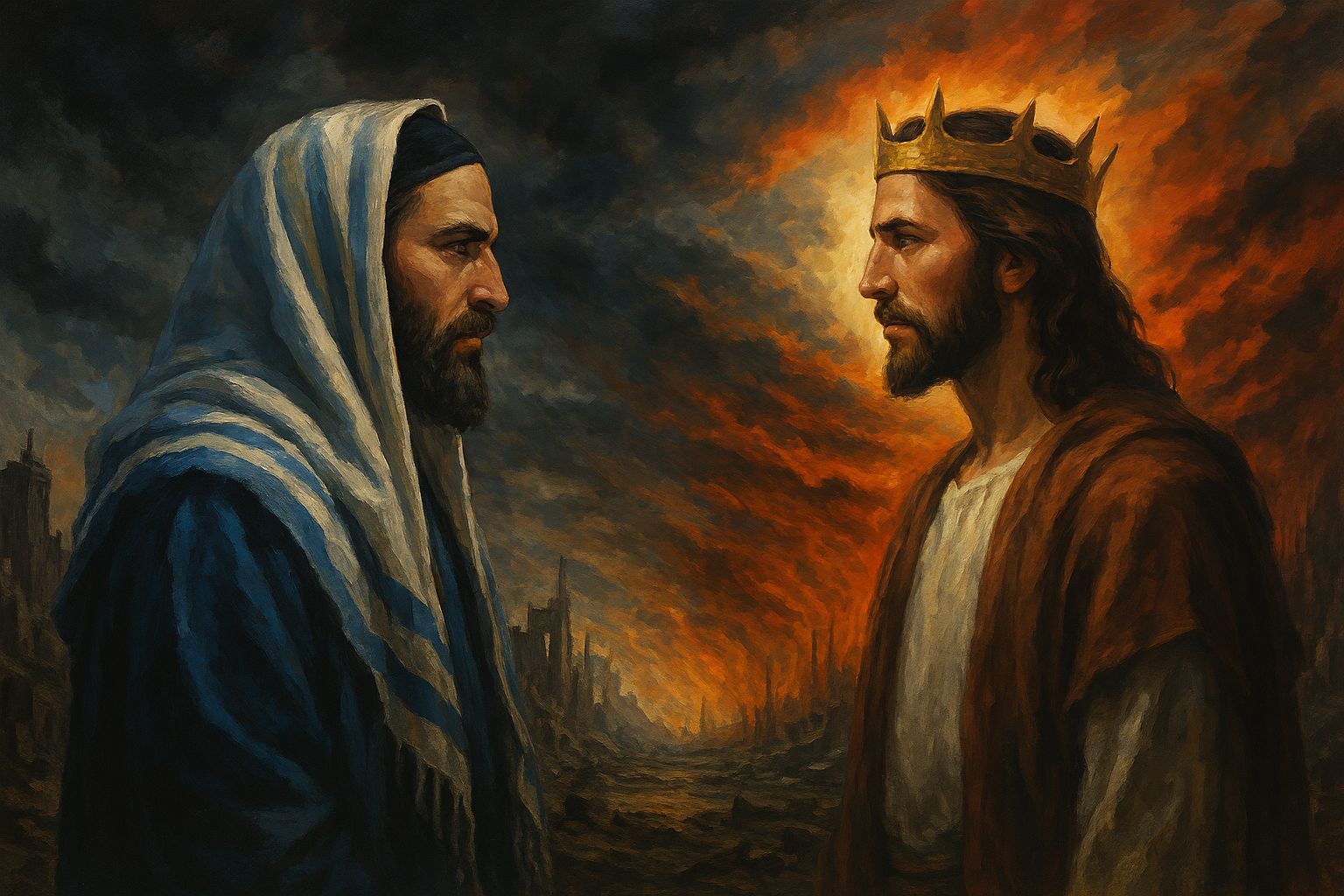
Overview
Key Topics Covered
1. Introduction and Context
-
Greetings and setting: Recorded on the 3rd Day of the 11th biblical month, 6025 (Friday, January 16, 2026).
-
Reflection on persecution, faith, and the hope found in Yeshua’s teachings (Matthew 5:10-12; Ephesians 6:18; Matthew 5:44; Luke 6:28).
2. Why Judaism Rejects Yeshua as Messiah
-
Historical grievances and theological differences.
-
The role of Rabbinic expectations and interpretations in shaping Jewish messianic beliefs (Hebrews 2:3; Romans 3:2; Romans 11:25-26; Zechariah 12:10).
3. The Three Messiahs in Jewish Thought
-
Mashiyach Nagid (Messiah the Prince)
-
Mashiyach ben Yosef (Messiah, son of Joseph)
-
Mashiyach ben David (Messiah, son of David)
-
The episode focuses on Mashiyach Nagid, with future installments to cover the other two.
4. What is Mashiyach Nagid?
-
Linguistic breakdown: “Mashiyach” means “Anointed One”; “Nagid” means “Prince” or “Leader.”
-
Scriptural foundation: Daniel 9:25-26 and its interpretations.
-
The prophecy’s implications for Jewish and Christian eschatology (1 Corinthians 13:12; Matthew 24:15-16).
5. The Meaning and Role of “Nagid”
-
“Nagid” as prince, ruler, leader, commander, or official.
-
Biblical examples: Saul, David, Solomon, Hezekiah, Abner, Azariah, and others (1 Samuel 9:16; 10:1; 13:14; 25:30; 2 Samuel 5:2; 6:21; 7:8; 1 Kings 1:35; 2 Kings 18:1; 2 Chronicles 31:13).
6. Mashiyach Nagid in Prophecy and Tradition
-
The “transitional” leader concept: Anointed but not yet king.
-
Comparison with “Melech” (King) and the Davidic Covenant (2 Samuel 7:8-16; Psalm 2:8-12; 2 Chronicles 13:5).
7. Messianic Traits and the Melchizedekian Order
-
Psalm 110 as a foundational text for the dual role of king and priest.
-
The Melchizedekian priesthood and its fulfillment in Yeshua (1 Peter 2:9; Daniel 2:44; Matthew 21:44; 1 Corinthians 15:24; Revelation 11:15).
8. Jewish Perspectives on Mashiyach Nagid
-
Views of Rashi, Ibn Ezra, and Rambam (Maimonides) on the identity and role of Mashiyach Nagid.
-
The Essenes and Qumran writings: Priestly and royal messiahs, “Prince of the Congregation” (Damascus Document, Rule of the Congregation, 11QMelchizedek).
-
Apocryphal and Talmudic references: Suffering and kingly messiahs (1 Enoch, Jubilees, Talmud).
9. Christian and Messianic Interpretations
-
Yeshua as the fulfillment of Daniel’s prophecy and the persona of Mashiyach Nagid.
-
The dual or double-fulfillment view of prophecy.
-
Jewish objections to identifying Yeshua as all three messianic figures.
10. Application and Call to Discipleship
-
The call for believers to imitate Yeshua’s character traits: suffering, triumph, priesthood, kingship, exaltation, royal lineage, and spiritual warfare (Isaiah 53; Colossians 2:15; Psalm 110; Matthew 1:1; Zechariah 14:3; 1 Peter 2:9; Revelation 20:6; 2 Corinthians 10:4-6; Ephesians 6:12-14).
-
Invitation to covenant relationship and Torah-honoring lifestyle (2 Corinthians 6:2; Isaiah 55:6-9).
References & Further Reading
Contact & Community
-
For questions or further discussion, email: perceptionwp@gmail.com
-
Leave a voice message via SpeakPipe on https://www.themessianictorahobserver.org/
Closing Blessing
Torah’s Forbidden Sexual Relationships-Yeshua-Focused Torah Studies–Torah Reading 89–Leviticus 18
This is Torah's Forbidden Sexual Relationships--Yeshua-Focused Torah Studies-Torah Reading -89--Leviticus 18 The underlying theme of our Torah Reading this Shabbat is Sanctification: Being Sanctified unto YHVH. Sanctification is that internal, spiritual...
Animal-Blood-Sacrifices–Torah Reading 88–Leviticus 17:1-16
Animal-Blood-Sacrifices Leviticus 17:1-16 Unpack this Torah Reading Verses 3-4 Prohibition against the slaughter of domesticated animals outside the Tabernacle System. The English term "kill" in Hebrew is SHACHAT {Shaw-Khat} which is rendered slaughter in...
The Book of Romans and the Gospel of God-Part 17 of the Paul and Hebrew Roots Series
Goal: This is “The Book of Romans and the Gospel of God—Part 17 of our Paul and Hebrew Roots Series.” Today we will begin our extensive study of the many challenging Book to the Romans passages by examining one of Shaul/Paul’s foundational doctrines....
The Day of Atonement-Yom Kippur-Torah Reading for 6-6-2020
Parashah 87--Leviticus 16:1-34--Day of Atonement-Yom Kippur-Torah Reading for 6-6-2020 Father Affirms and Enforces His Holiness (vss. 1 & 2) The transgression of Nadab and Abihu (Leviticus 10) led to Abba re-affirming that the Holy of Holies was not a place...
The Messianic Duty in Times of Global Crises
Given all the chaos and turmoil that is ongoing in the world today, I was led to talk to you today about duty. Specifically the Messianic duty in the midst of global chaos. Are we as Messianics required to put our two-cents towards fixing the clobal crises that are...
The Shavuot-Pentecost Connection
Two-Competing Schools of Thought Regarding Shavuot and Pentecost When we talk about Shavuot and or Pentecost there are essentially two-prevailing schools of thought and understanding. Interestingly, these two schools or lines of thought are often at odds with one...
Shavuot 2020-When is It? How Did We Arrive at the Date? Do We Still Keep It ?
Explanation for this post As I record and post this installment of TMTO we are on the 4th day of the 3rd Month of the Creator's Calendar Year according to the observational calendar and the 5th day of the Month Sivan according to the Hillel's calculated...
The Gates of Hell
The Gates of Hell Today I want to discuss the enemy’s goal to destroy and hinder the Creator's Plan of Redemption, Restoration and Salvation. It will become the purpose of this discussion to examine how the enemy was defeated by Master Yahoshua (Yeshua) Messiah and to...
The Book of Romans-To Whom Was It Written?
Our Purpose for This Post To whom was the Book of Romans Written? We know quite a bit about the author. But we may not know much about the so-called Romans or the Roman Church. Unfortunately, our understanding of who they are may be influenced by our...
The Book of Romans-What it is and What it is Not–Part 15 of the Paul and Hebrew Roots Series
In this installment we resume our Paul and Hebrew Roots Series with a brief introduction to the Book of Romans. We discuss what the Book of Romans is, and what it is not.