Clean or Unclean? The Torah's Call to Set-Apart Living. My Sabbath Thoughts and Reflections on Torah Reading Tazria-Metzorah
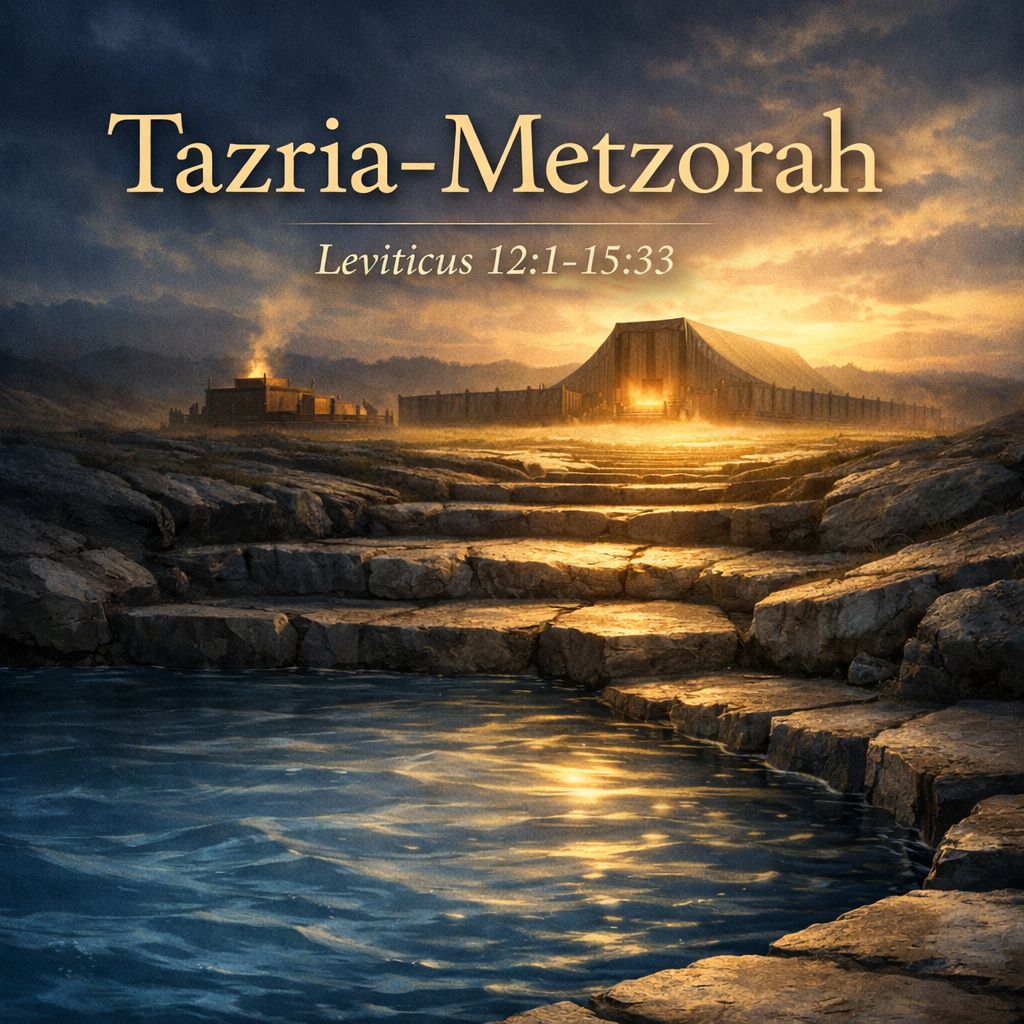
Episode: Torah Reading Tazria–Metzorah — Clean or Unclean? The Torah’s Call to Set-Apart Living
Summary: In this installment of the Messianic Torah Observer, I reflect on Torah Reading Tazria–Metzorah (Leviticus 12:1–15:33), exploring the Torah’s purity standards and how they point beyond the physical to enduring spiritual principles. Using the themes of childbirth, tzaraat (“leprosy”), and bodily flows, this teaching highlights how holiness is protected, how cleansing and restoration work, and how Yeshua refocuses defilement from external ritual concerns to the heart (Matthew 15:10–20). I close this episode with practical encouragement to pursue both physical stewardship and deeper spiritual cleanness as temples of Yehovah’s presence.
In this episode:
- Overview of Tazria–Metzorah and its three major sections (childbirth, tzaraat, bodily flows)
- Why purity standards matter: holiness, community, and access to Yehovah’s presence
- Hygienic and ritual purposes: not mutually exclusive
- The priesthood’s role: examining, diagnosing, declaring clean/unclean, mediating restoration
- Quarantine, “seventh day” separation, and “eighth day” restoration as a pattern of new beginnings
- Cleansing, atonement, and water immersion as recurring Torah themes
- How to apply “out-of-commission” Torah instructions today through spirit-and-truth principles
- Sin as the deeper parallel to impurity; protecting the set-apart community from “leaven”
- Yeshua’s teaching: defilement proceeds from the heart (Matthew 15:10–20)
- Practical encouragement: maintain the body as a temple and pursue spiritual, emotional, mental cleanness
Scripture references mentioned:
- Leviticus 12:1–8 (childbirth and purification)
- Leviticus 13:1–14:32 (tzaraat / “leprosy”)
- Leviticus 15:1–33 (bodily flows)
- Exodus 19:5–6 (treasured possession; priestly kingdom; holy nation)
- Leviticus 19:2; 1 Peter 1:16 (be holy as He is holy)
- Isaiah 55:8 (His ways/thoughts above ours)
- Matthew 5:18; Matthew 5:20 (Torah enduring; righteousness)
- Matthew 6:33 (seek first the Kingdom)
- John 4:23–24 (worship in spirit and truth)
- 1 Corinthians 6:19 (body as temple)
- Hebrews 9 (Messiah’s priestly work; atonement themes)
- 1 Corinthians 15:46 (natural first, then spiritual)
- 2 Timothy 3:16–17 (all Scripture profitable)
- Hebrews 12:1 (sin as weight; running the race)
- 1 Corinthians 5:6; Galatians 5:9 (leaven principle)
- Matthew 15:10–20 (what defiles a person)
- John 8:12; 1 John 1:7–9 (walk in the light; confession and cleansing)
- 2 Corinthians 5:21 (righteousness in Messiah)
Reflection questions:
- Where do you most often treat “cleanness” as merely external rather than a heart issue?
- What patterns of separation and restoration (“seven” then “eight”) do you see in your own walk?
- How can you pursue set-apartness in practical ways while keeping the focus on spiritual cleanness?
- Are there “leaven-like” compromises that need to be addressed for the health of your fellowship/community?
- What does it look like this week to walk in the light and practice confession and repentance?
The Fox in the Hen House–The LGBTQ Infiltration of Judeo-Christianity
Shalom beloved. I pray that this installment of The Messianic Torah Observer Journal finds you, your families, and your fellowships well and blessed. They Say that Curiosity Kills the Cat True to form, Hilary and I canvassed portions of YouTube to augment our worship...
We’re Getting Married in the Morning–Thoughts and Reflections on Torah Reading 59
Shabbat Shalom Saints of the Most High. Welcome to the second post of our The Messianic Torah Observer Journal. Today is a special day of sorts. It’s not only the Sabbath, but it is also the start of the 9th Biblical Month. Rosh Chodesh. There are no mandated Feasts...
Learning to Lean on Yeshua Messiah–Thoughts and Reflections on Torah Reading 58
Shabbat shalom beloved. We pray that you, your families, and your fellowships are well and blessed during these perilous times. Despite these being perilous times, beloved, we who are the redeemed of Yah through Yeshua Messiah, can find refuge and shalom in our...
We were Baptized into Moses in the Red Sea
Our Baptism in the Red Sea Was Illustrative of our Transformation into the People of God So, in our departure from Mitsrayim/Egypt, which was representative of a would-be child of Yah coming into a covenant relationship with Yah through the Person and Ministry of...
Walking in God’s Divine Guidance and Protection
Introduction This week’s Torah Portion/Parshah/Reading is the 56th Reading in our 3-year Torah Reading Cycle. And it is contained in the Cepher of Exodus/Shemot 13:21-15:18. It is a continuation of last week’s reading which I entitled “The Key to Knowing...
The Key to Knowing God: Remembering and Obeying
In the past two readings, which we did not cover because we were on hiatus for the Fall Feasts, Yisrael experienced or witnessed the inauguration of Pesach in the midst of the final tenth plague that resulted in the death of every Egyptian/Mitsri firstborn and the...
The Thirst-Quenching Waters of Sukkot-The Feast of Tabernacles 2022
Sukkot-The Feast of Tabernacles is the Season of our Joy True joy is an offshoot of the indwelling of the Holy Spirit or the Ruach HaQodesh in each of us. Our joy, especially as expressed through Yah's Feasts, is incomplete without the Ruach HaQodesh's influence....
Getting to the Heart of Yom Kippur–Day of Atonement 2022
Yom Kippur Just a Day of Fasting? What did Yah truly mean by His people afflicting their souls on Yom Kippur? Was He commanded us to engage in just a fast? Turns out that Abba requires more from us on Yom HaKippurim than just a full day of not eating and drinking....
The Realities of Yom Teruah 2022
Introduction to our Discussion Welcome to the Day of the Blowing of Trumpets, or better, the Blowing of Shofars 2022. And with that, we pray that you are earnestly preparing and eagerly awaiting the arrival of Yom Teruah 2022. The title of our...