
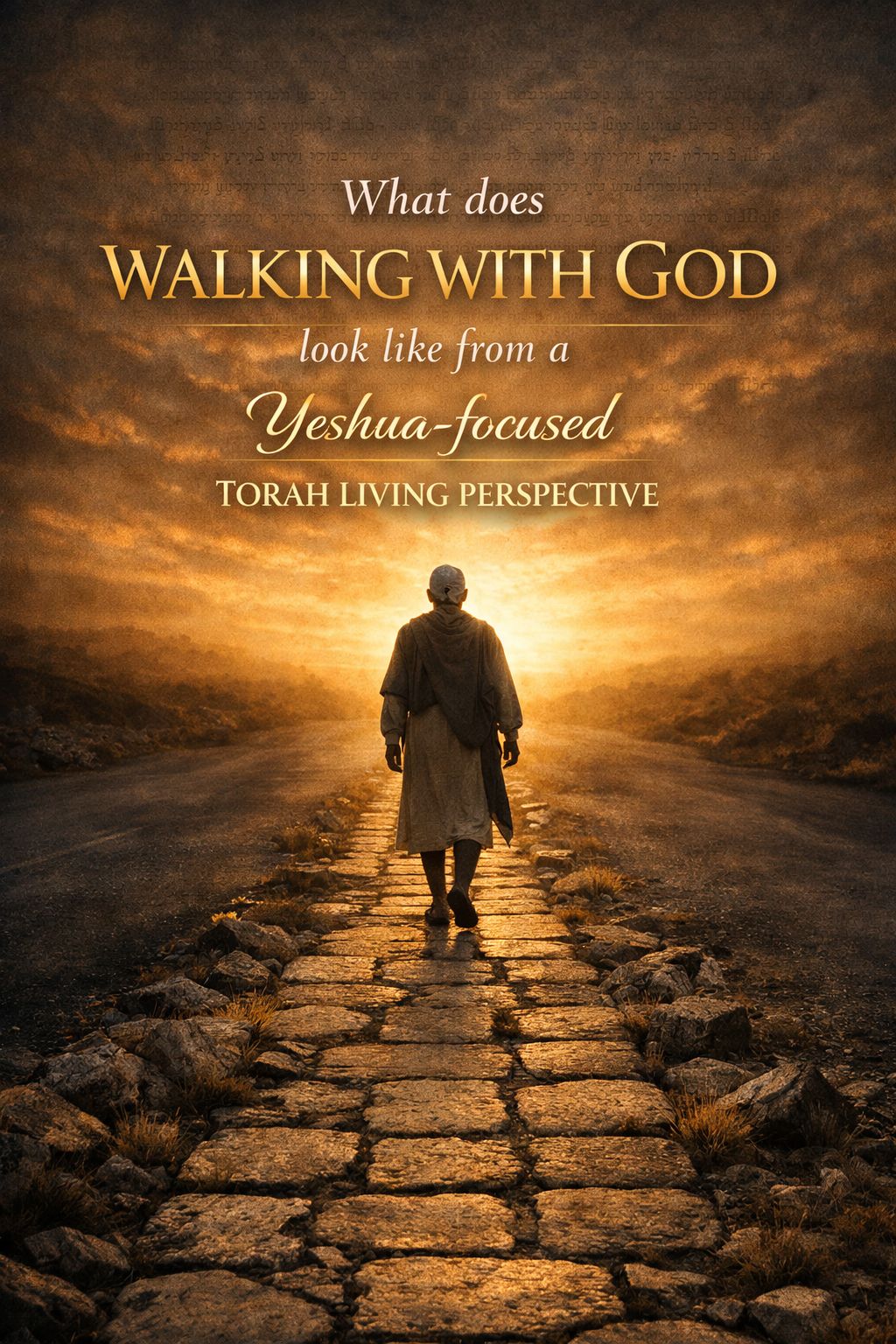
In this episode, you’ll hear
-
Why “walk with God” is more than a slogan—it is covenant communion, belonging, and exclusivity.
-
Why Scripture explicitly names only Enoch (Gen. 5:22) and Noah (Gen. 6:9) as having “walked with God,” and what their prophetic burden suggests.
-
How “walking in the light” connects to spiritual/moral purity, fellowship, and kingdom living (1 John 1; Matthew 5–7).
-
How the Hebrew concept of “walk” (yit‑hal‑lek) includes conduct/behavior and relates to halachah.
-
How moral uprightness (yashar) expresses itself in holiness (set-apartness) and the Fruit of the Spirit (Gal. 5).
-
Why the Ruach HaKodesh is essential to the walk (Rom. 8:9), and how believers avoid “quenching” the Spirit (1 Thess. 5:19).
-
Why Yeshua’s “narrow gate” teaching makes this a life-and-death discipleship issue (Matt. 7:14; 7:21–23).
Key themes
-
Covenant relationship as the foundation of the believer’s walk (belonging to YHVH through Messiah).
-
Alignment/orientation of the whole life to YHVH’s person, will, and purpose.
-
Walking in the light as fellowship, cleansing/justification, and practical kingdom living.
-
Obedience/loyalty to covenant (faithful living as a response to grace and calling).
-
Yashar (uprightness) as straight/level, genuine, forthright, holy conduct.
-
Spiritual fruit as evidence of the Spirit-led life and set-apartness.
-
Imputed vs. actionable righteousness—what is gifted by Messiah and what is lived out daily.
-
The narrow way—discipleship as a remnant path and a salvific matter.
Scripture references mentioned (for study)
-
Genesis 5:22; Genesis 6:8–9
-
Hebrews 11:5–6; Jude 14–15; 2 Peter 2:5
-
Matthew 5:3–11; Matthew 6:33; Matthew 7:14; Matthew 7:21–23; Matthew 25:41–46
-
John 4:24; John 5:17–23; John 10:30; John 1:12–13
-
Exodus 19:5; Exodus 33:11
-
Leviticus 19:2; Deuteronomy 10:12–13; Deuteronomy 32:8–9; Deuteronomy 7:6; 10:15; 14:2
-
Romans 8:9, 14–17, 20–22, 23, 29; Romans 9:4; Romans 11:20–22; Romans 14:7–8
-
1 Corinthians 3:23; 6:19–20; 1 Corinthians 6:19
-
2 Corinthians 5:7, 14–15
-
Galatians 5:16, 22–23; Ephesians 3:16; Ephesians 5:8–11
-
Philippians 2:12–13
-
1 Thessalonians 4:7–8; 1 Thessalonians 5:19
-
1 John 1:5–7
-
2 Timothy 3:16–17; Hebrews 6:4–6; Hebrews 10:26; James 2:23; James 4:4; 1 Peter 1:16
Notable quotes
-
“We’ve diminished the power behind the biblical concept of walking with the Father and with the Messiah.”
-
“Walking with Yehovah has a prophetic burden attached to it.”
-
“Walking in the light is Kingdom living.”
-
“Much of our uprightness is imputed… but much of our uprightness is also actionable.”
-
“If we are not walking with Yehovah Eloheyka, we are walking with someone else.”
Reflection / discussion questions
-
When you say “I’m walking with God,” what concrete covenant markers (relationship, obedience, fruit) are you actually describing?
-
Where do you most commonly drift out of alignment with YHVH’s will—habits, priorities, speech, relationships, or unseen thoughts?
-
What does “walking in the light” require you to bring into the open before Father and Messiah this week?
-
How do you hold together imputed righteousness in Messiah and actionable righteousness in daily life without neglecting either?
-
What does set-apartness (holiness) look like in your context—work, home, fellowship, and media consumption?
-
Which Fruit of the Spirit do you most need the Ruach HaKodesh to cultivate in you right now?
-
How does Matthew 7:21–23 challenge cultural assumptions about salvation and discipleship?
Related listening / series connections
-
Covenant Series: This episode is a stand-alone teaching that also fits within the broader Covenant Series framework.
-
Tazria–Metzora teaching on purity: Referenced for understanding purity as fellowship (with emphasis on moral/spiritual purity).
-
Sermon on the Mount (Matthew 5–7): Recommended as the clearest template for “walking in the light” and kingdom living.
Call to action
The Deep Abiding Mysteries of the Aaronic Blessing-My Thoughts and Reflections of Torah Reading 104
Greetings and Salutations Greetings, Saints of the Most High. This Rod coming to you from the DFW, thanking you for taking the time from your busy schedules to fellowship with me on this glorious Shabbat. As always, I hope, trust, and pray that this installment...
TMTO Ministry Update and My Thoughts and Reflections on Hamas’ Invasion of Israel
There are two things I wish to cover in this installment of TMTO. The first will be an update on this ministry: What's happening and what's ahead. Secondly, I want to share my thoughts and reflections on the terrible, tragic, horrific, heinous events that transpired...
Ten Things God Expects us to do for Sukkot-The Feast of Tabernacles 2023
In today's installment, I will be putting out to you what I have elected to call ten things Yehovah says in His Word that every Netsari, disciple of Yeshua Messiah, must do for Sukkot/Tabernacles. Now, some of you will be acutely aware of many of these things...
The Variegated Shadows of Yom Kippur 2023—Or When Payback is a Bear for the Enemies of God and His Set Apart People
Yom Kippur, the Holiest Day of Yah's Calendar Year Yom haKippurim is considered by many in our Faith and orthodox Judaism as the holiest day of Yah's biblical calendar year. On this holiest of days, Yah mandated His chosen ones to "afflict their...
Thoughts and Reflections on Yom Teruah-The Feast of Tabernacles 2023
This is a special TMTO post that I pray will encourage, and maybe inform you, as it relates to the imminent advent of Yom Teruah, or the Day of the Blowing of Trumpets. As you may, or may not know, we are on the very cusp of receiving this Moedim, this...
Upholding the Utter Holiness of God-My Thoughts and Reflections on Torah Reading 100
Greetings and Shabbat Shalom. It is my hope, trust, and prayer that this posting finds you, your families, and your fellowships well and blessed on this warm but blessed Sabbath in the DFW. A Short Passage with a Big Message This 100th parashah of our three-year...
God’s Priestly Armies Then and Now: Thoughts and Reflections on Torah Portion 99
Greetings on this warm Shabbat in Maryland. May this post find you, your families, and your fellowships well and bless. These are my thoughts and reflections on the 99th reading of the 3-year Torah Reading cycle. I've entitled this post "God's Priestly Army Then and...
The Power From Within-Thoughts and Reflections on Parashah 98
Greetings to you on yet another exceptionally warm Sabbath in the DFW. May this day of rest find you, your families, and your fellowships well and blessed. These are my thoughts and reflections on the 98th Torah or Parashah Reading of our 3-year reading cycle. It is...
God Brings His Children Unto Himself: My Thoughts and Reflections of Torah Reading 97
Greetings on this warm summer Shabbat in the DFW. These are my thoughts and reflections on the 97th reading of our three-year Torah Reading Cycle. It is contained within Numbers 1:1-2:13; the Haftarah in Ezekiel 47:13-23; and the Apostolic in Luke 15:1-7....
The Realities of the Messianic’s Liberty in Messiah–Thoughts and Reflections of Torah Reading 95
These are my thoughts and reflections on the 95th parashah of the 3-year Torah Reading cycle. It is contained in Leviticus/Vayiqra 25:39-26:2. I’ve entitled this discussion: The Realities of the Messianic's Liberty in Messiah--Thoughts and Reflections on Torah Reading...