|
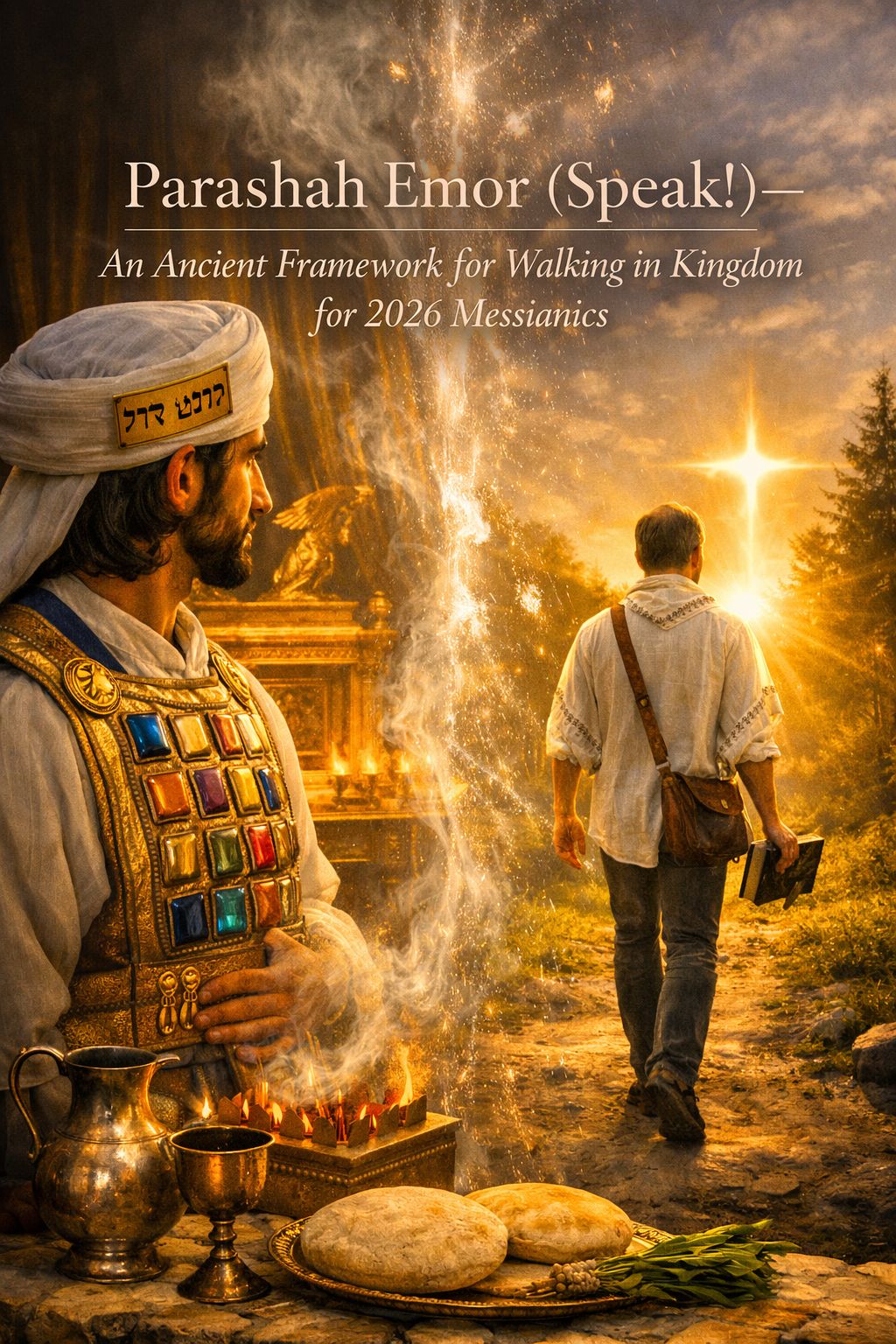
Episode summary: In this installment of The Messianic Torah Observer, we take a walk through Parashah Emor (Leviticus 21:1–24:23), highlighting the Torah’s holiness expectations for the priesthood, the danger of profaning Yehovah’s Name, and the enduring relevance of the Moedim/Feasts of Yehovah. From ritual purity and votive (qodesh) offerings to the Menorah oil, the Shewbread, and Torah principles surrounding justice, this teaching emphasizes “Spirit and Truth” applications for Kingdom living in 2026.
In this episode, you’ll learn
Key themes
Scripture focus
Moedim quick reference (as covered in Leviticus 23)
Discussion highlights
Practical takeaways for Kingdom living (2026)
Reflection questions
Resources mentioned
Call to actionIf this teaching encouraged you, consider sharing it with a friend or your fellowship, and make time this week to read Leviticus 21–24 slowly and prayerfully. Let Emor challenge you to honor the Name, elevate the quality of your worship, and embrace your priestly calling in Messiah.
|
Yom Teruah’s Greatest Truths and Mysteries (Revealed)
Yom Teruah's Greatest Truths and Mysteries (Revealed) Today I want to expand our understanding of Yom Teruah (aka The Day of the Blowing of Trumpets or simply the Day of Trumpets) from the day being just another one of the 7-annual Feasts of YHVH; just that...
Polygamy and the Bible–A Messianic Perspective
My Interest Piqued In my studies of this past week’s Torah Reading, I was drawn to Deuteronomy 21:15-17. Many modern English bibles generally entitle this passage something akin to “The Right of the Firstborn.” That being said, this short passage really is about the...
Picking Up and Moving Forward With TMTO
Update on TMTO (Special post without any fanfare and promotion)--Where we are today and where we'll be going. Discontinuing Live-Stream and Why. The failure of the Livestream. Non-committal group of individuals. Newsletter failures. Loss of focus on the original...
Torah Reading 48–Shofetim–Judges–Reading Outline
This week's Torah Reading is contained within Deuteronomy 16:1--21:9 and is entitled Shofetim. In English, Shofetim means Judges. If one were summarize the content of this reading I guess it could be described as a discussion of Yah's established civil...
The Righteousness of God Revealed From Faith to Faith—Its True Meaning and Reality for God’s People
Today’s discussion is entitled, “The Righteousness of God Revealed From Faith to Faith—Its True Meaning and Reality for God’s People.” Why The Church Loves This Romans 1:17 Fundamentalists; traditionalists; and evangelicals absolutely love this passage. Why? Because...
Jews Before Gentiles?
Today’s discussion is entitled, “Jews Before Gentiles? How Does that Work?” And the biblical basis for our discussion this evening is found in Romans 1:16 which reads: 16 For I am not ashamed of the gospel of Christ: for it is the power of God unto salvation...
Torah Reading 46–Ekev (Because)–A Focus on the Kingdom of God
Highlights and Comments Shalom Saints. This week's Torah Reading is entitled, "Ekev," or "Because." The portion covers Deuteronomy 7:12-11:25. I wish to share with you some of my thoughts and reflections on the many life truths that I drew from my study of this...
To Whom Do You Pray?
Who do you pray to and worship and give thanks? Yeshua? YHVH? Both? Is it Biblical to pray to and worship Yeshua as so many Christians routinely do? In this installment of the Messianic Torah Observer, we will continue our review of the Book of Romans and Paul's...
Messianic Sainthood–Paul and the Book of Romans
Paul Calls His Roman Readers Saints. What Gives? Our next challenging Pauline passage of the Book of Romans is found in chapter 1 verse 7 and it reads as such: "To all those in Rome who are loved by G-d and called to be saints: Grace to you and peace from G-d our...
Chevra Kadisha-Honoring the Jewish Dead
An Intriguing Article I recently became intrigued by an article I came across on the "My Jewish Learning" website. The article was entitled: "Chevra Kadisha or Jewish Burial Society." It was written by a Rabbi Joseph Telushkin. And yes: I do from time to time visit...