|
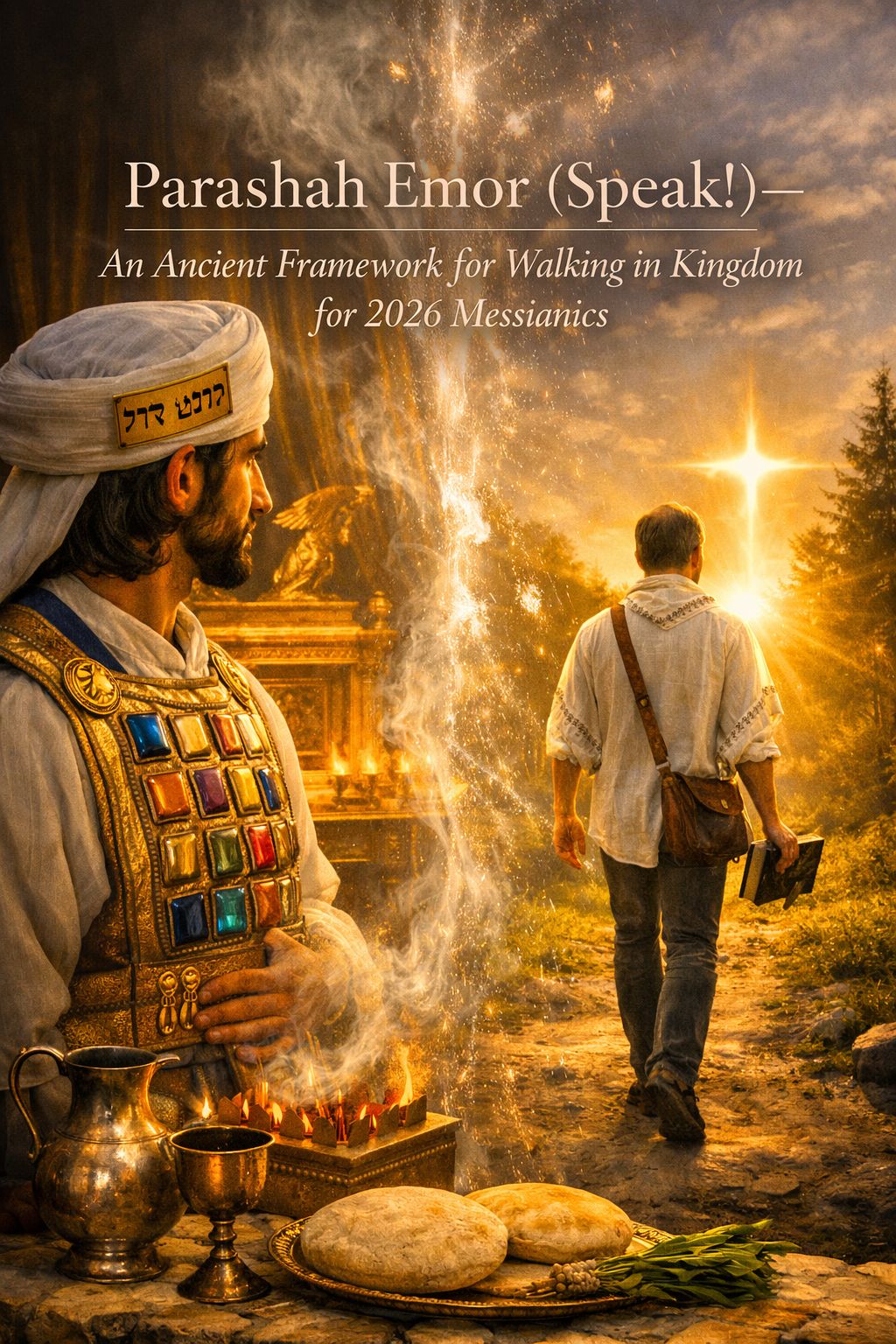
Episode summary: In this installment of The Messianic Torah Observer, we take a walk through Parashah Emor (Leviticus 21:1–24:23), highlighting the Torah’s holiness expectations for the priesthood, the danger of profaning Yehovah’s Name, and the enduring relevance of the Moedim/Feasts of Yehovah. From ritual purity and votive (qodesh) offerings to the Menorah oil, the Shewbread, and Torah principles surrounding justice, this teaching emphasizes “Spirit and Truth” applications for Kingdom living in 2026.
In this episode, you’ll learn
Key themes
Scripture focus
Moedim quick reference (as covered in Leviticus 23)
Discussion highlights
Practical takeaways for Kingdom living (2026)
Reflection questions
Resources mentioned
Call to actionIf this teaching encouraged you, consider sharing it with a friend or your fellowship, and make time this week to read Leviticus 21–24 slowly and prayerfully. Let Emor challenge you to honor the Name, elevate the quality of your worship, and embrace your priestly calling in Messiah.
|
The Shavuot-Pentecost Connection
Two-Competing Schools of Thought Regarding Shavuot and Pentecost When we talk about Shavuot and or Pentecost there are essentially two-prevailing schools of thought and understanding. Interestingly, these two schools or lines of thought are often at odds with one...
Shavuot 2020-When is It? How Did We Arrive at the Date? Do We Still Keep It ?
Explanation for this post As I record and post this installment of TMTO we are on the 4th day of the 3rd Month of the Creator's Calendar Year according to the observational calendar and the 5th day of the Month Sivan according to the Hillel's calculated...
The Gates of Hell
The Gates of Hell Today I want to discuss the enemy’s goal to destroy and hinder the Creator's Plan of Redemption, Restoration and Salvation. It will become the purpose of this discussion to examine how the enemy was defeated by Master Yahoshua (Yeshua) Messiah and to...
The Book of Romans-To Whom Was It Written?
Our Purpose for This Post To whom was the Book of Romans Written? We know quite a bit about the author. But we may not know much about the so-called Romans or the Roman Church. Unfortunately, our understanding of who they are may be influenced by our...
The Book of Romans-What it is and What it is Not–Part 15 of the Paul and Hebrew Roots Series
In this installment we resume our Paul and Hebrew Roots Series with a brief introduction to the Book of Romans. We discuss what the Book of Romans is, and what it is not.
The Niddah Laws–Still in Effect Today ?
The Question of Niddah One question that seems to pop-up a lot from members of our Faith Community has to do with the Laws related to Niddah. Are the laws of Niddah still valid for today’s Torah Observant Disciples of Yeshua Messiah? And in case you aren’t familiar...
Mark of the Beast: What Are You Going To Do When They Come For You?
The world’s power-brokers are suggesting implementing a tracking mark to distinguish those immune to the current virus from those not. Mark of the Beast? What will you do when they come for you?
The Feast of Unleavened Bread: A Ridiculously Long Week
My Struggle With Time One of the many things I struggle with in this life is the issue of time.Time is an enemy. It is often stressful. There never seems to be enough of it to go around. Time moves by so swiftly. And I often find myself fearful of wasting it; losing...
Our First Passover–An Overview of the First Passover Exodus Chapters 1 through 12
Exodus 1 70 blood relative of Jacob enter Egypt-->Joseph dies as well as the Patriarchs. Israelites grow in number. A pharaoh who did not know Joseph enslaves the Hebrews, yet the Hebrews flourish in number. Pharaoh orders every male infant be cast into the...
Sins Committed by Mistakes are Still Sins–Torah Reading 77
Vayikra 4:1-35; Ezekiel 18:1-18 Revelation 5:6-10 Unintentional Sins Unintentional sin may be better defined as acts of unfaithfulness; sins committed without knowledge; or sins resulting from carelessness (such as manslaughter that may result in the guilty person...