|
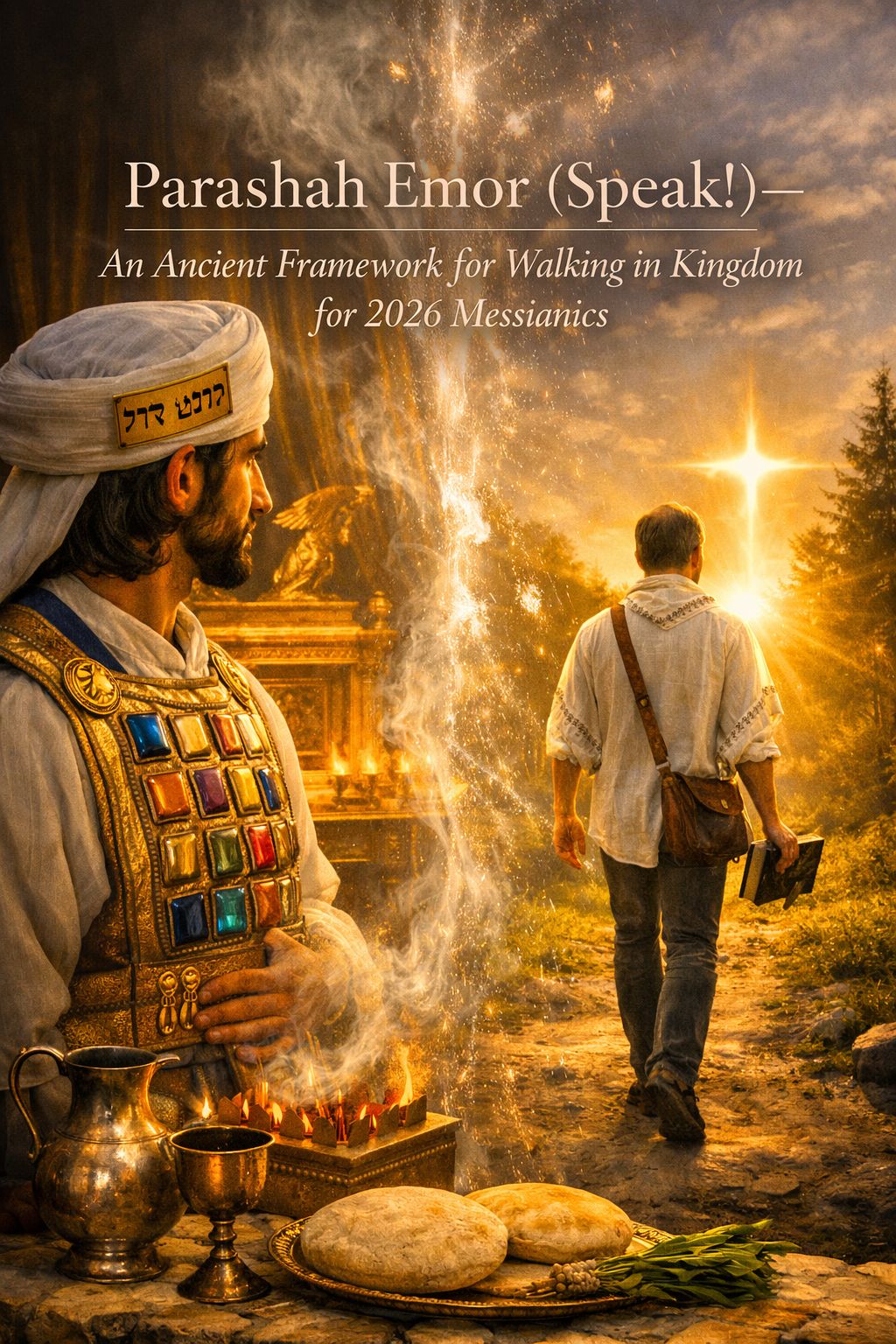
Episode summary: In this installment of The Messianic Torah Observer, we take a walk through Parashah Emor (Leviticus 21:1–24:23), highlighting the Torah’s holiness expectations for the priesthood, the danger of profaning Yehovah’s Name, and the enduring relevance of the Moedim/Feasts of Yehovah. From ritual purity and votive (qodesh) offerings to the Menorah oil, the Shewbread, and Torah principles surrounding justice, this teaching emphasizes “Spirit and Truth” applications for Kingdom living in 2026.
In this episode, you’ll learn
Key themes
Scripture focus
Moedim quick reference (as covered in Leviticus 23)
Discussion highlights
Practical takeaways for Kingdom living (2026)
Reflection questions
Resources mentioned
Call to actionIf this teaching encouraged you, consider sharing it with a friend or your fellowship, and make time this week to read Leviticus 21–24 slowly and prayerfully. Let Emor challenge you to honor the Name, elevate the quality of your worship, and embrace your priestly calling in Messiah.
|
A Little Balaam in Each of Us–Reflections on Torah Portion Balak
Can the character and principles of the prophet for profit Balaam be found in each of us. You may be surprised at what Scripture has to say about that. Welcome to The Messianic Torah observer and our reflections on Torah Portion Balak. Shalom and welcome.
Pray For The Peace of Jerusalem-Part 3 of the Love or Hate Israel Series
What does it mean to pray for the peace of Israel? We discuss also Israel in terms of her covenant-relation with God as well as her significance in end times prophecy.
Rebels in the Congregation-Reflections on Torah Portion Korah
As we examine Torah Portion Korah we learn about the potentially rebellious condition of our hearts; the importance of living holy lives; and the dangers of false teachers and their teachings to the Body of Messiah.
One Law For All–Reflections on Torah Portion Shelach Lekha
The Giver of Torah-YHVH-clearly stated that Torah was for all who would attach themselves to the commonwealth of Israel and live according to the Way He prescribed for men and women to live. Yet many within and without our Faith Community teach otherwise--that Torah...
Messianics—Modern Day Levites—Separated for Service to God—Thoughts and Reflections on Torah Portion Behaalosecha
This week’s Torah Portion-Behaalosecha-foreshadows a great many spiritual elements necessary for our service to the Kingdom of God. In a sense we are modern day Levites. We have been separated from all the nations people of the world unto God for His service. Are we up for the challenge? This is a wake-up call to the Body of Messiah to take immediate action.
Israel: To Love or Hate Her—That is the Question—Part 2–A Biblical and Personal Perspective on the Significance of Physical Israel
In this 2nd Part to our Israel: To Love or Hate Series, we continue our analysis of some the most common reasons people reject physical Israel today. As well as we consider some of the miracles said to have resulted in Israel’s deliverance from certain destruction. And lastly we consider the problems associated with the nation state of Israel. Shalom and welcome.
Burdens and Service-Thoughts and Reflections on Parashot Naso-Lift Up
Lessons of bearing burdens and service to YHVH are embodied in this week’s Torah Portion Naso. As disciples of Messiah, we are compelled to serve and bear burdens as we discuss in this post.
5-Facts About Pentecost [Shavuot] Every True Disciple of Messiah Should Know
As the Day of Pentecost (aka, Shavuot) descends upon many of us who are of Faith in the coming days, we reflectively prepare for the Day. With that preparing in mind, today I will reveal 5-things every spirit-filled disciple of Yeshua Messiah should know about Shavuot—Pentecost.
To Love Or Not Love Israel?That is the Question–Part 1
As Yeshua-focused Torah Keepers, how are we to view physical Israel? We discuss this polarizing issue from a historic, biblical and personal perspective. Shalom and welcome.
Shemittah and Jubilee-Shadows of the Rest, Redemption and Freedom We Have in Messiah
This week’s Torah Reading/Portion entitled B’Har is a message of the rest, redemption and freedom we have in Y’shua Messiah.