
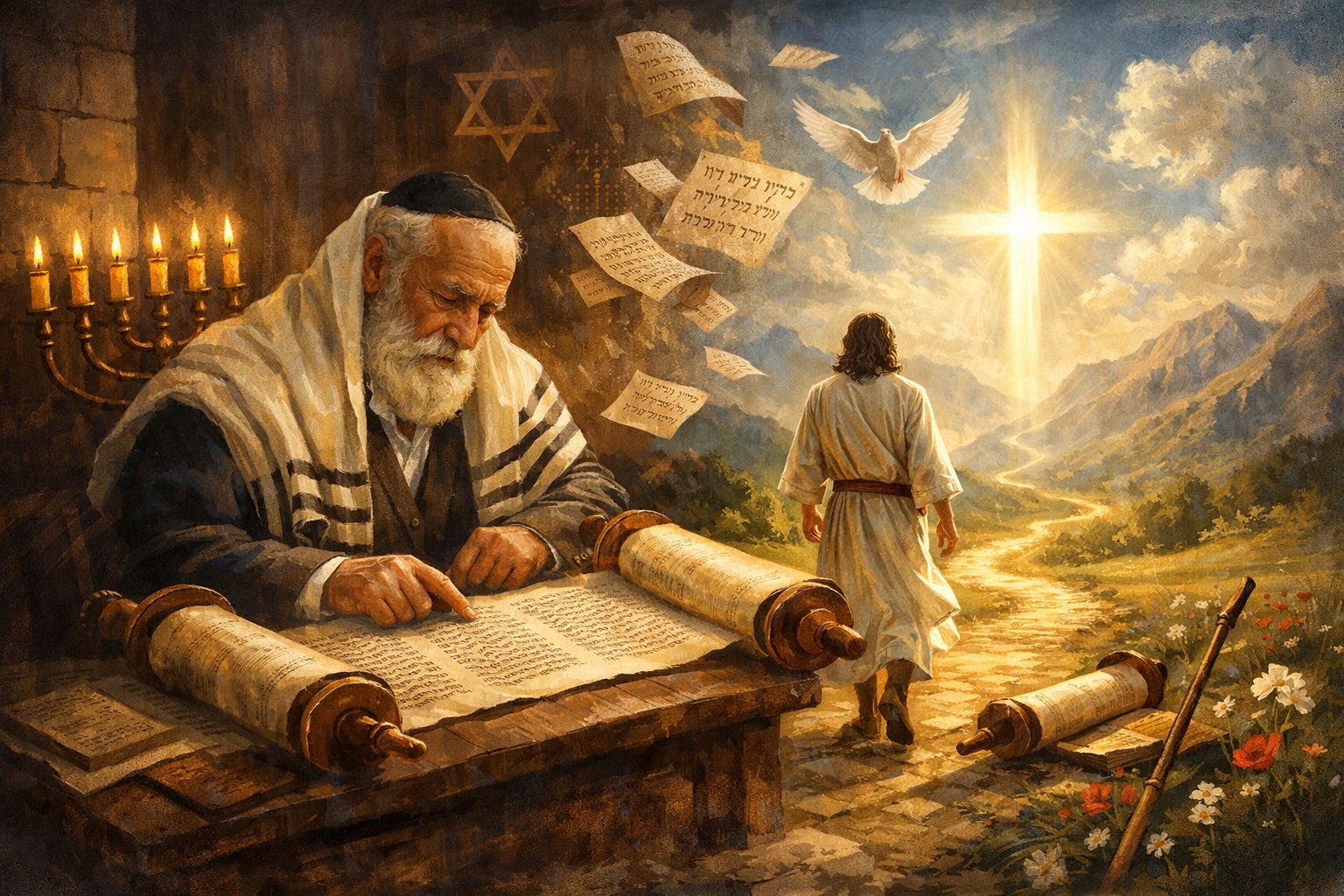
In this installment of The Messianic Torah Observer, I invite you to join me on a Yeshua-focused journey through the double Torah reading of Behar–Bechukotai found in Leviticus 25.1–27.34. Together, we reflect on the profound spiritual meaning behind Sh’mittah, Yovel/Jubilee, covenant obedience, covenant discipline, and the sacredness of our commitments unto Yah.
This Torah reading reminds us that the Land belongs to Yehovah, time belongs to Yehovah, and ultimately, we belong to Yehovah. The commandment of the Sh’mittah, or Sabbath Year, teaches us to cease from our striving and trust wholly in Yah’s provision. It calls us to acknowledge His sovereignty over the Land, over our sustenance, and over every aspect of our lives. Through this moed, we are taught rest, dependence, trust, obedience, and the proper ordering of our priorities in covenant relationship with the Creator.
We also explore the rich theology and practical meaning of Yovel, the Year of Jubilee, where release, restoration, redemption, and return take center stage. In Jubilee, property is restored, debts are reckoned in light of Yah’s justice, and those in servitude are released. These divine instructions reveal Yah’s heart for mercy, compassion, community, and covenant faithfulness. They also point us toward the greater redemptive realities that find their fullest meaning in Messiah Yeshua, who brings true rest, liberty, and restoration to His people.
In this discussion, I also examine the blessings promised to those who walk in Yah’s statutes and remain faithful to covenant. Obedience leads to peace, provision, security, fruitfulness, and the joy of Yah dwelling in the midst of His people. At the same time, Bechukotai confronts us with the sobering consequences of covenant unfaithfulness. Yah’s discipline is not arbitrary, nor is it disconnected from His love. Rather, it reflects His holiness, His jealousy over His people, and His unwavering commitment to the covenant He established with Avraham, Yitschaq, and Ya’achov.
Another important part of this reading is Leviticus 27, which addresses vows and dedications made unto Yah. Here, we consider the spiritual seriousness of our commitments and what it means to offer our resources, our time, our gifts, and our lives in service to the Kingdom. In Messiah, this has direct implications for discipleship. We are reminded that what we vow and commit unto Yah is holy, and our lives are to reflect integrity, faithfulness, and wholehearted devotion.
Throughout this episode, I encourage us all to consider what these timeless instructions teach us today as Torah-honoring disciples of Yeshua HaMashiyach. How do we trust Yah more deeply? How do we hold possessions more loosely? How do we care for those in our communities who are in need? And how do we walk faithfully in covenant while allowing the Ruach Kodesh to sanctify us into a set-apart people?
My hope is that this teaching will encourage, challenge, and edify you as you continue your own Torah journey. Behar–Bechukotai is a powerful reminder that Yah is faithful, that His covenant stands, and that His desire is for His people to walk uprightly before Him in trust, obedience, humility, and love.
In This Episode
- The meaning and purpose of Sh’mittah, the Sabbath Year
- How the cycles of sevens reveal Yah’s order, sovereignty, and purpose
- The spiritual and communal significance of Yovel/Jubilee
- Why the Land ultimately belongs to Yehovah
- Trust, provision, and covenant faith in the Sh’mittah and Jubilee
- Blessings associated with obedience to Yah’s statutes
- The consequences of covenant disobedience in Bechukotai
- Yah’s discipline as an expression of covenant integrity and holy love
- The enduring faithfulness of Yah even when His people fail
- The spiritual significance of vows and dedications in Leviticus 27
- What these Torah instructions mean for Messiah-centered discipleship today
Key Themes
- Covenant faithfulness
- Rest and trust
- Redemption and release
- Obedience and blessing
- Discipline and restoration
- Kingdom living
- Set-apart discipleship in Yeshua
Passage Covered
Leviticus 25.1–27.34
Parashot: Behar and Bechukotai
Suggested Keywords
- Behar Bechukotai
- Torah reading
- Messianic Torah Observer
- Yeshua-focused Torah Living
- Shmittah
- Shemitah
- Jubilee
- Yovel
- Leviticus 25
- Leviticus 26
- Leviticus 27
- covenant faithfulness
- Torah portion podcast
- Messianic Bible teaching
- Kingdom living
- obedience and blessing
Closing Invitation
Thank you for fellowshipping with me in this installment of The Messianic Torah Observer. I pray that this teaching blesses and strengthens your walk in Yehoshua HaMashiyach and deepens your love for Yah’s Torah and His ways.
If this discussion blessed you, I invite you to share it with others who are seeking to walk in covenant faithfulness and Truth.
Torah Portion 25–Give An Order–A Call To Worship
This week’s Torah Reading-Parashah-25–dealt with sacrifices and offerings. These were shadows of our worship of Father in Spirit and in Truth.
Let Your Women Keep Silence in the Church–Part-9 of the Paul and Hebrew Roots Series
We break down 1 Corinthians 14:34-35 to determine what Paul really meant when he instructed that the Corinthian women keep silence in the church.
Patterns of Evidence-The Moses Controversy Film Review
In this 21st installment of The Messianic Torah Observer, I review Tim Mahoney’s newest documentary, “Patterns of Evidence-The Moses Controversy.”
Thoughts and Reflections on Torah Reading Pedudei-Accounting Of
This week's Torah Reading entitled Pedudei (ie., Accounting Of) focused on worship. The reading consisted of Leviticus 1:1 to Lev. 5:6:7. The Haftorah consisted of Isaiah 43:21-44:23. Specifics of Worship That which was given to us by Abba related to worship...
TMTO-20-Endure Sound Doctrine I Will Not
Many members of the Body of Messiah will not endure sound doctrine as they are being led astray by false teachers or they themselves are teaching false doctrine. We discuss this troubling situation and provide ways to overcome the deception.
The Un-Silenced Women of Paul’s Ministry-Part 8 of the Paul and Hebrew Roots Series
Many female leaders were associated with the Apostle Paul’s ministry. We highlight some of those great first-century women of the Body of Messiah.
When Evil is Considered Good–The Hypocritical, Evil and Demented Mindset of America Today
What are the challenges facing today’s Torah Observant Disciple of Yahoshua in America Today?
The Unsilenced Women of the Bible-From Torah to the Conversion of Paul-Part 7 of the Paul and Hebrew Roots Series
The Pauline Passages of Question So as to re-establish or restate the issue at hand as it relates to Paul’s views about women in the Body and Assemblies of Messiah, the primary passage in question is as follows: “Let your women keep silence in the...
Parashat Mishpatim Judgment-Property and Love of Neighbor
This Week's Torah Reading In continuing my travels through this week's Torah Reading, I came upon Exo. 21:28-36. I found endless truths and spiritual applications that I am so happy to share with you today. The Consequences of Negligence This passage in a narrow sense...
Parashat Mishpatim Judgment-Murder-Abortions-Sanctuary
Timeliness of This Week's Torah Reading This week’s Torah Reading could not have been more timely. And I was compelled to respond in the wake of the news we’ve received over the last couple weeks regarding the legalization of late term abortions on demand. And just...