
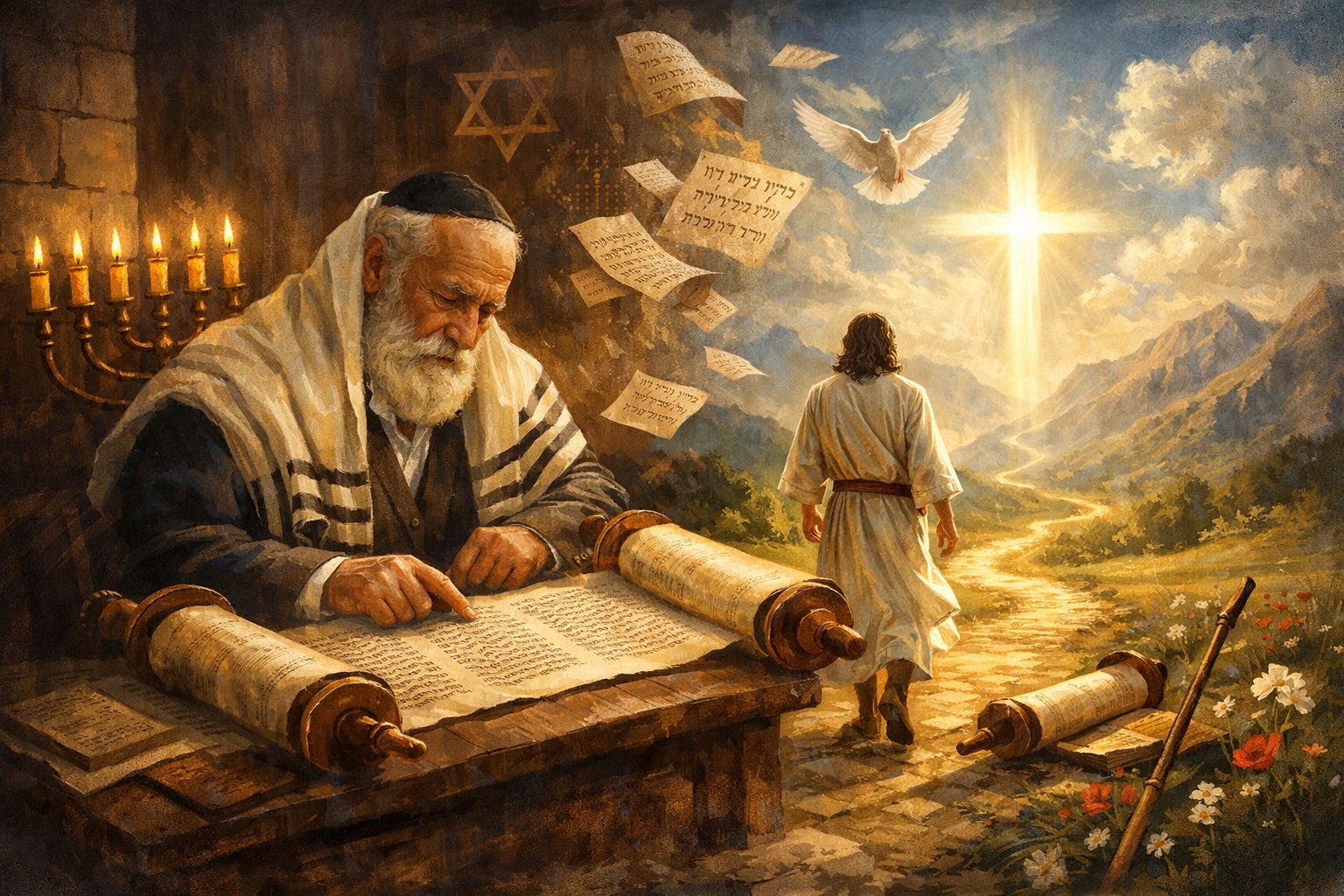
In this installment of The Messianic Torah Observer, I invite you to join me on a Yeshua-focused journey through the double Torah reading of Behar–Bechukotai found in Leviticus 25.1–27.34. Together, we reflect on the profound spiritual meaning behind Sh’mittah, Yovel/Jubilee, covenant obedience, covenant discipline, and the sacredness of our commitments unto Yah.
This Torah reading reminds us that the Land belongs to Yehovah, time belongs to Yehovah, and ultimately, we belong to Yehovah. The commandment of the Sh’mittah, or Sabbath Year, teaches us to cease from our striving and trust wholly in Yah’s provision. It calls us to acknowledge His sovereignty over the Land, over our sustenance, and over every aspect of our lives. Through this moed, we are taught rest, dependence, trust, obedience, and the proper ordering of our priorities in covenant relationship with the Creator.
We also explore the rich theology and practical meaning of Yovel, the Year of Jubilee, where release, restoration, redemption, and return take center stage. In Jubilee, property is restored, debts are reckoned in light of Yah’s justice, and those in servitude are released. These divine instructions reveal Yah’s heart for mercy, compassion, community, and covenant faithfulness. They also point us toward the greater redemptive realities that find their fullest meaning in Messiah Yeshua, who brings true rest, liberty, and restoration to His people.
In this discussion, I also examine the blessings promised to those who walk in Yah’s statutes and remain faithful to covenant. Obedience leads to peace, provision, security, fruitfulness, and the joy of Yah dwelling in the midst of His people. At the same time, Bechukotai confronts us with the sobering consequences of covenant unfaithfulness. Yah’s discipline is not arbitrary, nor is it disconnected from His love. Rather, it reflects His holiness, His jealousy over His people, and His unwavering commitment to the covenant He established with Avraham, Yitschaq, and Ya’achov.
Another important part of this reading is Leviticus 27, which addresses vows and dedications made unto Yah. Here, we consider the spiritual seriousness of our commitments and what it means to offer our resources, our time, our gifts, and our lives in service to the Kingdom. In Messiah, this has direct implications for discipleship. We are reminded that what we vow and commit unto Yah is holy, and our lives are to reflect integrity, faithfulness, and wholehearted devotion.
Throughout this episode, I encourage us all to consider what these timeless instructions teach us today as Torah-honoring disciples of Yeshua HaMashiyach. How do we trust Yah more deeply? How do we hold possessions more loosely? How do we care for those in our communities who are in need? And how do we walk faithfully in covenant while allowing the Ruach Kodesh to sanctify us into a set-apart people?
My hope is that this teaching will encourage, challenge, and edify you as you continue your own Torah journey. Behar–Bechukotai is a powerful reminder that Yah is faithful, that His covenant stands, and that His desire is for His people to walk uprightly before Him in trust, obedience, humility, and love.
In This Episode
- The meaning and purpose of Sh’mittah, the Sabbath Year
- How the cycles of sevens reveal Yah’s order, sovereignty, and purpose
- The spiritual and communal significance of Yovel/Jubilee
- Why the Land ultimately belongs to Yehovah
- Trust, provision, and covenant faith in the Sh’mittah and Jubilee
- Blessings associated with obedience to Yah’s statutes
- The consequences of covenant disobedience in Bechukotai
- Yah’s discipline as an expression of covenant integrity and holy love
- The enduring faithfulness of Yah even when His people fail
- The spiritual significance of vows and dedications in Leviticus 27
- What these Torah instructions mean for Messiah-centered discipleship today
Key Themes
- Covenant faithfulness
- Rest and trust
- Redemption and release
- Obedience and blessing
- Discipline and restoration
- Kingdom living
- Set-apart discipleship in Yeshua
Passage Covered
Leviticus 25.1–27.34
Parashot: Behar and Bechukotai
Suggested Keywords
- Behar Bechukotai
- Torah reading
- Messianic Torah Observer
- Yeshua-focused Torah Living
- Shmittah
- Shemitah
- Jubilee
- Yovel
- Leviticus 25
- Leviticus 26
- Leviticus 27
- covenant faithfulness
- Torah portion podcast
- Messianic Bible teaching
- Kingdom living
- obedience and blessing
Closing Invitation
Thank you for fellowshipping with me in this installment of The Messianic Torah Observer. I pray that this teaching blesses and strengthens your walk in Yehoshua HaMashiyach and deepens your love for Yah’s Torah and His ways.
If this discussion blessed you, I invite you to share it with others who are seeking to walk in covenant faithfulness and Truth.
Torah Living Daily Reflections-8-The Art of Listening (from a Hebraic/Messianic Perspective)
Continuing with my daily foray in to the Torah, we come to Deuteronomy 4:1 which reads as follows: "Now therefore hearken, O Israel, unto the statutes and unto the judgments, which I teach you, for to do them, that ye may live, and go in and possess the land which the...
Torah Living Daily Reflections 6–The Kingdom of Yehovah (of Yahweh or of God)
Continuing my daily ritual of Torah Study and incorporating Rood's Chronological Gospels as the dates correspond to the Julian calendar--specifically on August 25, 2014, I came across the passage in Matthew 13:36-43 (recorded as event 86) where Yeshua expounds for His...
Torah Living Daily Reflections 5-When Emotions Get in the Way of Service to Yehovah (Yahweh or God)
Continuing my trek through the Torah, I pick up where I'd left off--at Deuteronomy 3: 23-29. I found here a very touching and emotional passage. Despite what most scholars have to say about Deuteronomy not possibly being written by Moshe, my spirit tells me otherwise....
Torah Living Daily Reflections 4–Yehovah Your God will Fight for You-Don’t be Afraid
My daily Torah study foray took me to D'varim (aka: Deuteronomy) 3:1-22. Here Moshe continues to summarize Yisrael's conquest of the promised land in detail. By now, Moshe is 120-years old. The generation of Israelis that left Egypt in the great Exodus had all but...
Torah Living Daily Reflections 3–Following Messiah is not for Everyone
Continuing my foray into the life and 70-day ministry of Yeshua HaMashiach through Rood's Chronological Gospels, today's corresponding passage or event was found in Matthew 8:18-27 (also mark 4:35-41 and Luke 8:22-25). The passage reads as follows: "When Yeshua saw...
Torah Living Daily Reflections 2–Parables and Prophecy
Continuing on my in my reading of the date-sensitive, corresponding passages of the Rood Chronological Gospels, I came across an excellent example of the Master use of parable to describe the Kingdom of Heaven. I picked up right after the parable of the tares in...
Torah Living Daily Reflections 1–The Sabbath–True Torah Observance versus Our Own Preconceived Notions
A practice that I've begun following of late is incorporating the Michael Rood Chronological Gospels into my regimen of Torah Study. I do this following the Rood Astronomically & Agriculturally Corrected Biblical Hebrew Calendar and looking at the corresponding...
Torah Living 33–The Age Old Problem of New Wine in Old Wineskins
Continuing on with the inclusion of Michael Rood's Chronological Gospels and its date-sensitive corresponding passages in addition to my daily Torah studies, I came to the passage in the chronology where the Master responded to a question as to why His disciples did...
Post Sabbath Reflections for August 16–Faith, Spiritual Gifts and Personal Testimony
* Shabbat Night Live--Michael Rood and The Ark of the Covenant--Into the Wilderness * Michael continues on the subject of discovering the location of the Ark of the Covenant--sets the foundation of His coming in to the truth about the end times. He picked up from last...
A Case for Eating Out on the Sabbath or Not
A practice that I've begun following of late is incorporating the Michael Rood Chronological Gospels into my regimen of Torah Study. I do this following the Rood Astronomically & Agriculturally Corrected Biblical Hebrew Calendar and looking at the corresponding...