
Opening
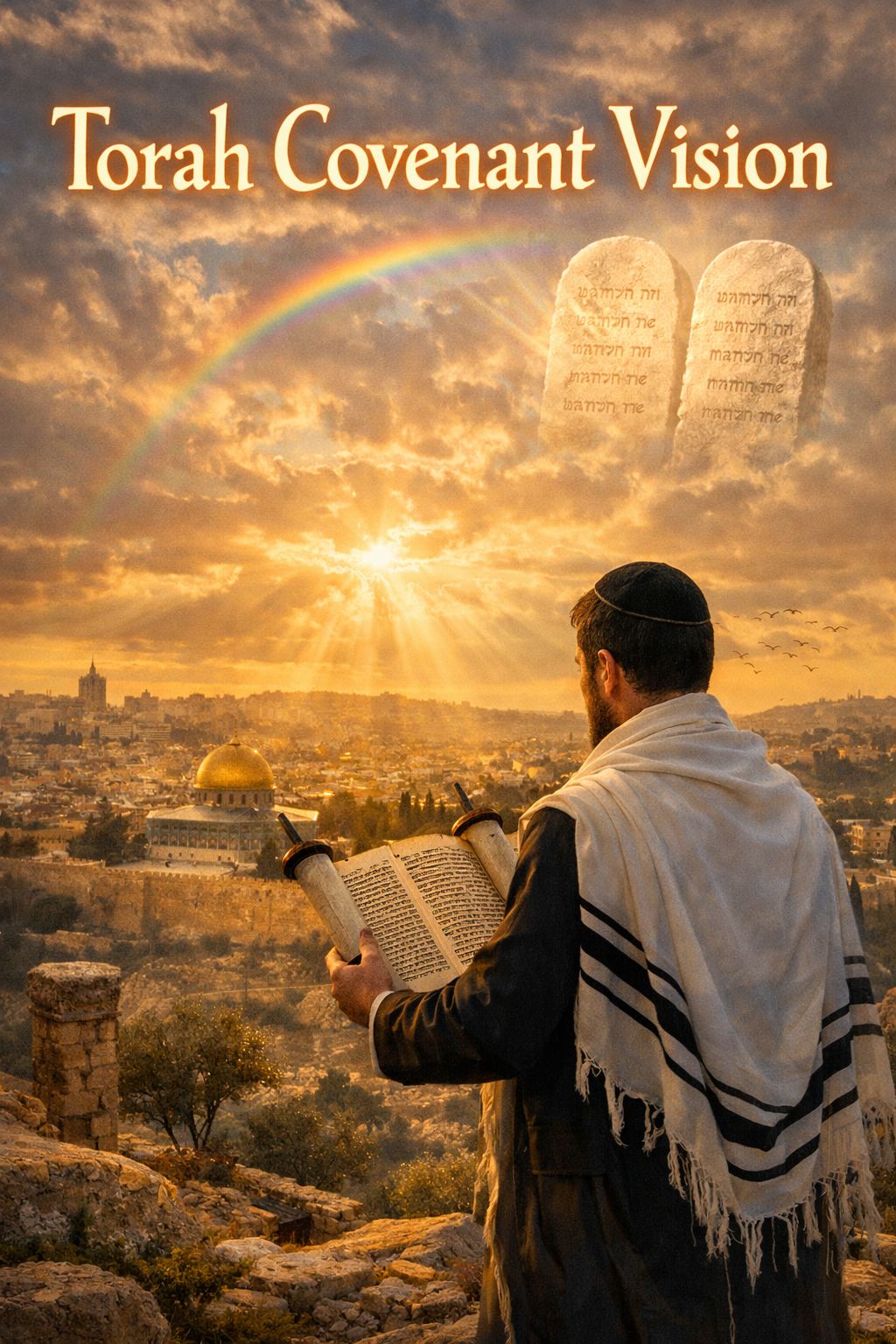
On July 13, 2026, the Israeli Knesset passed something that would have been most unlikely just a generation ago. It passed a Basic Law that formally enshrines Torah studies as a foundational value of the modern Jewish state. Consequently, this is the only explicit mention of a faith-based value enshrined in any of Israel’s twelve Basic Laws.
As it relates to the modern state of Israel and her laws, a Basic Law is a statute passed by the Knesset that carries constitutional weight to it. Israel doesn’t treat or view its “Basic Laws” as ordinary laws. They define and support the nation’s governmental structure; they stipulate the powers of the executive, legislative, and judiciary branches of its government; they define civil rights and freedoms; they express legally the identity and character of the state; and they form the core principles of the state of Israel.
Let’s be clear beloved: the modern state of Israel is secular. It was founded largely by Jewish leaders who deliberately set aside Jewish religious traditions aside. Nevertheless, Torah is partially embedded in the state’s constitutional DNA through these Basic Laws. One could conclude, then, that the modern state of Israel is a hybrid system, comprised of a secular democratic system and Jewish religious elements. But the bottom line on this status of the state’s government is that it does not possess a Torah-based constitution. In fact, the modern state of Israel doesn’t have a formal constitution.
But here’s the thing beloved: For those of us who are Torah-observant and Torah-keeping, this historic moment in the state’s history carries tremendous prophetic weight to it that screams for us to reflect on it.
The Surface Irony
The same Knesset session that enshrined Torah study as a national value also passed a companion bill at the same time that shields ultra-Orthodox men (i.e. working Rabbis and those training to become Rabbis) from mandatory military service on July 14, 2026 by a vote of 58-54. This law halts arrests of Haredi draft evaders until November 30, 2026, with an automatic extension likely due to upcoming elections.
This ruling comes at a time when the state of Israel is fighting her surrounding Muslim-based enemies on multiple fronts. The IDF Chief of Staff, Lt. General Eyal Zamir, warned publicly that the measure could cause the military to “collapse” (https://www.jpost.com/israel-news/politics-and-diplomacy/article-891368?utm_source=copilot.com; March 26, 2026). Prime Minister Netanyahu, the bill’s political sponsor, quietly absented himself from the chamber when the vote was called.
But do you see the irony here? Torah on the one hand was invoked by the actions of the Knesset. Torah was exploited by the same legislative body. And this all took place on the same night.
This is not a uniquely Israeli problem, mind you. Religious language has always been available to those who would use it for political convenience. The prophets spent considerable energy addressing this situation. Isaiah’s vision, the basis for this past Shabbat’s haftarah reading for Shabbat Chazon, opens with Yehovah saying: “What to me is the multitude of your sacrifices? I have had enough of burnt offerings… When you spread out your hands, I will hide my eyes from you… your hands are full of blood.” (Isaiah 1:11–15) If by chance you’ve not read or listened to my teaching on Shabbat Chazon, this is the link to that post for your convenience (https://www.themessianictorahobserver.org/2026/07/17/shabbat-chazon-the-sabbath-god-shows-you-the-temple-you-lost/)
Let’s face it, beloved: Torah observance that is invoked without righteous justice is simply not Torah. It is rote performance and actions wearing Torah clothing.
Yehovah Is Not Finished
Something is happening in the modern state of Israel that is larger than political jiggery-pokery. The fact that Torah and the Covenant is being publicly discussed and debated, constitutionally codified, and legislatively contested in the Knesset of the modern Jewish state is certainly of prophetic significance. Because I believe that Yehovah is working something out in the bones of the state of Israel.
Most prophetically sensitive bible readers of Ezekiel’s vision of the dry bones as recorded in Ezekiel 37 believe this passage is only about the nation’s physical restoration to the Land in 1948. But truth be told, beloved, the prophecy is about more than the nation’s physical restoration.
According to the prophecy, Israel’s bones came together and flesh came upon them. Furthermore, Ezekiel notes that “there was no breath in them” (Ezek. 37:8). Putting this into a present-day physical context: The physical nation exists, but it has no spiritual life to it. It lacks true spirituality. The ruach is still forthcoming. So, what we’re now watching is a nation state in the middle of its final restoration. Its bones have just about finished coming together. Its flesh is just about done enveloping its bones. Yet, the nation is reaching for something they don’t fully understand at this juncture of its history.
You see, beloved, Yehovah promised Yisra’el through His Prophet Ezekiel: “I will put my Spirit within you, and cause you to walk in my statutes and be careful to obey my rules.” (Ezekiel 36:27; cf. Jeremiah 31) Obviously, this is a future covenant promise. At this moment in history, the modern state of Yisra’el remains a hardened secular nation that has all but forsaken its God and its keeping of Torah. But as we read, Yah’s Torah will be written but by the Ruach haKodesh upon the hearts and in the minds of a restored Yasharal. And that’s the most exciting thing, if you ask me. Indeed, the nation is not there yet. But the fact that the state is wrestling with Torah at the constitutional or Israel’s Basic Law level suggests that wrestling has begun.
What This Means for We the Redeemed of Yehovah Through Yeshua
For we who are the chosen and elect of Yehovah through Yeshua HaMashiyach, who steadfastly hold to the conviction that Torah has not been been destroyed or made irrelevant for God’s people by the work of Yeshua Messiah, this moment in our Jewish cousins’ history offers us both vindication with responsibility. I say vindication in that speaks to the Jewish state’s ultimate identity and destiny. And that in the future it will become the center of her national life in the age of restoration, and we are witnessing this being manifested in ways that their secular political processes are reflecting.
I say responsibility because we must teach that any keeping or revering of Torah without Yeshoshua is incomplete; regardless if you are a religious Jew or a well-meaning Christian. This is not because Torah is insufficient, although we know that Torah CAN SAVE NO ONE. It’s because Yehoshua is the walking-talking Torah (John 1:14). This One is the only one in all creation qualified to open the sealed book (Rev. 5.1-10). Indeed, He is the Rabbi whose teaching elevates and makes full for us the covenant commands of His Abba (Matthew 5:17). So then, a Torah enshrined in Israel’s Basic Laws that remains disconnected from its flesh-based manifestation is a Torah that must receive its full expression and ultimate rendering to the hearts, minds, and souls of men.
Beloved, this is the prophetic moment for Messianic witness in the state of Israel. I’m not talking about condemning the imperfect way Torah is being handled in the Jewish state politically. I’m simply pointing toward HaMashiyach/the Messiah who alone can cause Torah to be lived from the inside out (Jeremiah 31).
Closing
Beloved, shout Halleluyah for Torah is back in the headlines amid what seems to be a wholesale rejection of Israel and anything having to do with Yeshua Messiah among the nation peoples of this world. Think about it: the very secular state of Israel is fighting within itself over the Torah should have in the nation. And this is something indeed to write about.
The Ahloah of Avraham, Yitschaq, and Ya’achov—the very One who spoke down His Covenant to us from the top of Mount Sinai has not lost the plot of the story He’s been writing about us since the start of Creation. Rather, He is writing a story that will end with His Torah being written on every Hebrew heart — both Jewish and Gentile alike — in the coming age of the restored Kingdom.
Until that day, beloved: let each of us teach Torah faithfully, pointing others to Yeshua with clarity and intentionality. And let us pray for the peace of Jerusalem.
Shabbat Shalom.
When Nations Tremble: The Prophetic Significance of the Unrest in the U.S., France, and Italy
🔥 When Nations Tremble: The Prophetic Significance of the Unrest in the U.S., France, and Italy A Messianic‑Hebraic Analysis of Global Birth Pangs in the 8th Biblical Month By Rod Thomas — The Messianic Torah Observer Yom Sheni — 7th Day of the 8th Biblical Month...
Mashiyach/Messiah ben David: The Convergence of Three Messianic Profiles in Yeshua
Mashiach ben David: The Convergence of Three Messianic Profiles in Yeshua Part 11 of the Melchizedek Series Greetings, beloved saints of the Most High Ahlohim. In this installment of the Messianic Torah Observer, we turn our attention to one of the most...
The Serpent’s Oldest Question: Genesis 3, October 7, and Beresheit Faith
The Serpent’s Oldest Question—and Why the World Gets to Start Over Shabbat Shalom, beloved, and welcome to another installment of the Messianic Torah Observer. In this teaching, we stand at a sobering and deeply meaningful intersection: the third anniversary of...
The Eighth Day: The Feast Nobody Leaves
Chag Sameach, beloved saints in training. In this installment of The Messianic Torah Observer, we turn our attention to Shemini Atzeret—the Eighth Day Assembly, otherwise known as the Last Great Day. It is the Feast that arrives after the seven days of Sukkot, when...
Every Nation Will Come: Sukkot, Zechariah 14, and Yeshua Tabernacling With Us
Episode Summary Chag Sameach Sukkot, beloved of the Most High. In this installment of The Messianic Torah Observer, we turn our attention to Sukkot, aka the Feast of Tabernacles; the Feast of Booths; and the Feast of Ingathering to consider what this appointed time...
Ha’azinu and Shabbat Shuva: The Song of Moses, Teshuvah, and Yom Kippur
Ha’azinu: The Song That Knew the Future—and the Shabbat That Stands Between You and Yom Kippur Greetings, Saints of the Most High Ahlohim, and welcome to another installment of The Messianic Torah Observer. In this teaching, we turn our attention to Parashat...
The Hidden Feast: Yom Teruah, the New Moon, Hannah’s Prayer, and the Return of the King
Beloved, in this installment of The Messianic Torah Observer, we turn our attention to one of the most mysterious and prophetically charged moedim on Yehovah’s sacred calendar: Yom Teruah, the Day of the Blowing of Trumpets. It is a feast that Father commanded, yet...
How Should We Evaluate Prophetic Voices? A Biblical Framework — With Jonathan Cahn as Our Starting Point
Opening This morning — Tuesday, September 8, 2026, the 25th day of the 6th Biblical Month, conceivably four or 5 days before Yom Teruah, a significant fact-checking analysis of Jonathan Cahn's prophetic claims was published. (Reference: “What Prophecies Has Jonathan...
The King Is in the Field: Elul, Yeshua, and the Meeting Your Jewish Cousins Are Still Waiting For?
Beloved, in this installment of The Messianic Torah Observer, we step into one of the most tender and spiritually rich traditions associated with the traditional Jewish month of Elul: the teaching that the King is in the field. Our Jewish cousins have long understood...
Yeshua and Ki Teitzei: The Torah Fulfilled Through Mercy
Episode Focus In this installment of the Messianic Torah Observer, I revisit this week’s Torah Reading, Ki Teitzei, and bring it into conversation with the words of our Master Yeshua in the Sermon on the Mount. And what we discover, Saints, is that Moshe and Yeshua...