by Rod Thomas | Nov 19, 2014 | Blog
Read each of these translations of Deuteronomy 6:4 and see for yourself how the Shema (incorrectly referred to by many) states the “oneness of Yehovah:”
ASV Deuteronomy 6:4 Hear, O Israel: Jehovah our God is one Jehovah:
(Deu 6:4 ASV)
CJB Deuteronomy 6:4 “Sh’ma, Yisra’el! ADONAI Eloheinu, ADONAI echad [Hear, Isra’el! ADONAI our God, ADONAI is one]; (Deu 6:4 CJB)
DBY Deuteronomy 6:4 Hear, Israel: Jehovah our God is one Jehovah;
(Deu 6:4 DBY)
GNV Deuteronomy 6:4 Heare, O Israel, The Lord our God is Lord onely,
(Deu 6:4 GNV)
KJV Deuteronomy 6:4 Hear, O Israel: The LORD our God is one LORD: (Deu 6:4 KJV)
LEE Deuteronomy 6:4 Hear, O Israel! The Lord, our God, is the One Eternal Being. (Deu 6:4 LEE)
NJB Deuteronomy 6:4 ‘Listen, Israel: Yahweh our God is the one, the only Yahweh. (Deu 6:4 NJB)
YLT Deuteronomy 6:4 ‘Hear, O Israel, Jehovah our God is one Jehovah;
(Deu 6:4 YLT)
How does anyone get 3 or 2 out of 1. Well, the only way to accomplish this task is to slice and dice the 1 into 2 or 3 pieces. That would be the human way of doing things. But when Yehovah implicitly says over and over and over that He is the only God there is and that there is NO other, why do believers feel so compelled to add another or 2 to this very simple equation?
I have a theory. Polytheism is clearly an invention of hasatan. Since there are countless demons in the world, these demons exist or take-on the identities of gods. Since we have countless demons who masquerade as gods, then it would stand to reason that we would have a ready inclination to accept the existance of a godhead composed of 2 or 3 beings. And as simple a theory as this is, I guarantee you that most evangelicals and traditional Christians will ignore this most nagging, obvious reality and insist that Jesus and the Holy Spirit are equal partners in the God-family, all 3 existing from the beginning. Yet here, in Deuteronomy 6:4 and the many other supporting passages in Deuteronomy (i.e., Deut 5:9f.; Deut 7:9; Deut 10:14ff., 20f., Deut 13:6; Deut 30:20; Deut 32:12), Yehovah is implicitly stating without any wavering or mysticism that He alone is God of all and that there is no other. Additionally, the Shema as this verse has come to be known to many Judaio-Christians throughout the world (which by the way is somewhat inaccurate since Shema means to hear, listen and obey) is in no way a precursory application or expository on the Trinity or a Binary godhead doctrine and belief. Certainly the verse as it reads in many translations, especially in the King James Version, leads one to ask: why didn’t Moshe simply say: “Hey, Yisra’el, there ain’t no other gods but Yehovah. Yehovah is all there is? There ain’t no gaggle of gods up there in heaven. Yehovah is all by Himself. So if you ever come into contact with some pagan dudes who try to convince you that Yehovah is simply one of many gods floating about in the heavens, you shut them down immediately and never have anything to do with them ever again. And oh by the way, in a few centuries, some of your descendants will try to develop a doctrine that teaches that Yehovah is really a family name for 2 or 3 other gods. Ensure that you maintain strict control over the teachings that come out of Yisra’el and whatever it takes, make sure that those distant cousins of yours know that Yehovah ain’t no trinity or binarian concept. I will, in the future, adopt a man child who will fulfill and embody my entire purpose for man. That man I will call my son and I will give him my name and give him a seat at my right-hand on my throne in heaven. He will be the first of many who I will adopt and elevate to such a status. I will start over my purpose and plan (my Word) with this one, where hasatan plotted and attempted to derail my plans for men. My Word will succeed. I AM Yehovah.”
by Rod Thomas | Nov 18, 2014 | Blog
My Torah studies brought me today to The Shema, which remains the pearl–the gem–the beacon that stands out in the whole of the Holy Writ. It certifies that Yehovah is the one and only True God of the universe. It crushes (in my mind) any doctrine that insists that God is a trinity or a binary. The Shema remains Yisra’el’s acclamation that Yehovah is the only one and there is no one other God. Allow me to site various translations of this passage:
ASV Deuteronomy 6:4 Hear, O Israel: Jehovah our God is one Jehovah:
(Deu 6:4 ASV)
CJB Deuteronomy 6:4 “Sh’ma, Yisra’el! ADONAI Eloheinu, ADONAI echad [Hear, Isra’el! ADONAI our God, ADONAI is one]; (Deu 6:4 CJB)
DBY Deuteronomy 6:4 Hear, Israel: Jehovah our God is one Jehovah;
(Deu 6:4 DBY)
GNV Deuteronomy 6:4 Heare, O Israel, The Lord our God is Lord onely,
(Deu 6:4 GNV)
KJV Deuteronomy 6:4 Hear, O Israel: The LORD our God is one LORD: (Deu 6:4 KJV)
LEE Deuteronomy 6:4 Hear, O Israel! The Lord, our God, is the One Eternal Being. (Deu 6:4 LEE)
NJB Deuteronomy 6:4 ‘Listen, Israel: Yahweh our God is the one, the only Yahweh. (Deu 6:4 NJB)
YLT Deuteronomy 6:4 ‘Hear, O Israel, Jehovah our God is one Jehovah;
(Deu 6:4 YLT)
Yet, at times I feel like a lone wolf in the spiritual wilderness when it comes to this issue. Orthodox-traditional-popular Christianity believes fully that God is either a triune or binary entity. Even some Messianics and Hebraic Roots folks contend that Jesus is God of the Old Testament who created all that has ever existed. Indeed, this great spiritual debate has existed for centuries. The primary challenger to the Shema seems to be the Apostle Yochanan who records in his gospel and epistle:
KJV John 1:1 In the beginning was the Word, and the Word was with God, and the Word was God. (Joh 1:1 KJV)
KJV 1 John 1:1 That which was from the beginning, which we have heard, which we have seen with our eyes, which we have looked upon, and our hands have handled, of the Word of life; (1Jo 1:1 KJV)
Now I do NOT believe that Yochanan believed in the pre-existence and eternal divinity of Yeshua; well not in the sense that Christianity has come to believe and teach. But I’ll touch upon the reasons why I believe Yochanan is saying something entirely different in future writings and audioblogs.
The true identities of the Father and the Son have plagued me for most of my life. Growing up in the Baptist Church, the Trinitarian concept of God was pounded in my head for years. By the time I left home and embarked upon a life of my own, I was a hard and steadfast trinitarian. In my mind there could be no other existence for God. And if by chance a question of the Shema was brought up in a discussion, opposing the godhead, any doubt could be easily explained away by debating the oneness of God from a “substance” perspective; the same approach used by the trinitarian bishops who fought against Arius at the Council of Nicea in 325 CE. And to this day, the vast majority of believers hold to one form or another of a polytheistic godhead. It wasn’t until just a few years ago (about 6-years to be more precise) that I began to question the logic of a godhead comprised of 2 or 3 equal gods, especially when one really reads this passage in Deuteronomy and understands how the Hebrew conceived of Yehovah. I then wondered to myself how the first century saints conceived of Yehovah and Yeshua; did they see Yeshua as every much Yehovah as the Father is considered Yehovah? We know that the first century saints adhered to the Hebraic Roots of the Faith and the teachings of Yeshua HaMaschiyach, so to imagine that these folks conceived of a triune or binary godhead is quite frankly: inconceivable. I consider myself to be of the Hebrew Roots of the Faith, so how can I believe in a godhead? It just doesn’t jive with the tenets of Torah and the Hebraic worldview.
Oh, I get it! Progressive revelation! Quack! I do believe that the Ruach Kodesh reveals certain things to His people through His chosen teachers in His set time throughout the ages. But one must ask one’s self: Does Yehovah change? Well the answer is no (Mal. 3:6). Thus, if the Ruach Kodesh were to reveal things to us that weren’t understood by folks in previous ages, He must do so within the framework of His “changeless” persona. And oh, by the way, don’t bother throwing at me God’s sovereignty and that He can do whatever He choses to do. That is a clever ploy of hasatan that believers for centuries have fallen for lock-stock-and barrel. Yes, Yehovah is sovereign, but He does NOT change nor does He lie! He is NOT a frail human being who would do such a thing. He remains as He has throughout all eternity. If He were to change, let’s say on a whim, then our salvation would be in jeopardy. What would prevent Him from changing His mind about us and condemn us to eternal damnation? Oh, the average Christian would bauk at that prospect I tell you. Yehovah, according to the Christian, can change His mind on anything else but He best not tamper with the Christian’s salvation!
This issue is of such great importance that I am in the process of putting together an audioblog series to address this very issue. I’m certain that I will ruffle some feathers and that is fine. It is an issue that must be addressed and a question that must be answered, otherwise we go on with our spirit lives in darkness and in lies. Have a blessed day in Messiah! Shalom!
by Rod Thomas | Nov 14, 2014 | Blog
Continuing my Torah studies, I come to Deuteronomy 5: 24 (the corresponding Complete Jewish Bible’s verse is 21). The CJB reads as follows:
and said, ‘Here, ADONAI our God has shown us his glory and his greatness! We have heard his voice coming from the fire, and we have seen today that God does speak with human beings, and they stay alive. (Deu 5:21 CJB) (cf. Deu 5:5 I stood between the LORD and you at that time, to shew you the word of the LORD: for ye were afraid by reason of the fire, and went not up into the mount;)
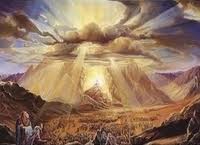
Moshe reiterated to the nation that the apparent longstanding myth that Yehovah never communicates with His creation unless He meant them harm or if He were to communicate with His creation by happenstance it would not occur without dire consequences, was indeed a big ole lie. What a trick of hasatan upon the human race that he would cajole men to distance themselves even further from their Creator out of fear that they would die if they had a personal interaction with Him.
I guess there is a 180-degree difference today whereby humans are flippant about communicating with the Creator. We see numerous examples of evangelists who make a spectacle out of communicating with the Almighty and then attempting to tap into the supernatural through self-serving works of healing, slaying folks in the spirit and speaking in ecstatic tongues. It’s as if hasatan has flipped the whole thing on its head where once humans feared God to death and avoided interacting with HIm but today we treat God as if He is like one of us. I remember attending a United Church of God service one Sabbath and one of the senior men in the congregation got up to pray and the first words out of His mouth was: “hello God.” Now, I’m not trying to be hypersensitive on this issue, but this to me was just another example of man’s ubber-familiarity with the Almighty. Churchianity has convinced us that we need to have a “personal relationship with the Lord” and we take that inference to the greatest limits.
This passage reminds us (a recurring theme throughout Torah–that of being reminded) that indeed Yehovah does communicate with His creation. The reality of the matter is that Yehovah has and continues to communicate with His creation in a number of ways. Sadly, He doesn’t always choose to do so via a burning mountain event as He did at Horeb. But He is known to communicate to His creation via dreams and visions, nature, natural events, prophets, His Word, His Ruach Kodesh, day-to-day happenstances and even direct utterances to our spirit. Have you ever heard the voice of the Almighty speak to you directly on a particular issue, clear as if it was another human being speaking to you? I’ve had such things happen to me. Sometimes I’ve heard the utterances and other times I’ve not. I think the Spirit of the Most High speaks to all of His chosen ones. Yet, obviously, most of us don’t hear Him when He speaks. The cares of life drown out the oft-times wee small voice of the Ruach Kodesh and we miss tremendous opportunities to hear what the Lord has to say to us. Sometimes we simply don’t believe that Yehovah cares enough about our individual situations to intervene and provide us instruction and direction. Thus, we falter along in this life, often heading the wrong way and sometimes even towards destruction. I’ve had this happen to me a million-times over. I tune Father out and effectively take life (that is matters) into my own hands. I’ll even admit that there have been times when I really didn’t want Yehovah’s input, out of fear that He would instruct or direct me to do something that I really didn’t want to do. In those cases, when we actually fear the direct intervention of the Almighty in our lives, we become no better than the Children of Israel at Horeb, fearing the presence of the Almighty; essentially rejecting His direct influence in our lives. It was that event–that one-time key event–that set the tone for how the Father would interact with His creation from that day forward. No longer would He manifest Himself to His people in such greatness and glory. He would henceforth interact with His people via other, less overt means. How sad! How disappointing! Oh what I wouldn’t give to have been at Horeb that day. I would venture to guess that many of you feel the same way. To experience and see Father’s unmatchable wonders and hear His voice speak directly to me His Torah would have been the capstone to my life.
I guess it goes without saying that the Children of Promise in general did not have a full understanding of who they were and their ultimate potential through Yehovah. If one were to maintain a mindset that there’s this God out there doing a whole-bunch of things that are fantastical and at times scary, and I’m this poor, unwitting soul who is being somewhat forced and thrust into these events that are completely beyond one’s control, then a Horeb event might be just a little overwhelming. But when one realizes just who they are (or who they can be) in the Lord and that Yehovah so desperately wants to have a relationship with His creation, then a Horeb event would be very much desired and invited. I long for a Horeb event in my life. I long each day to hear the voice of Yehovah speak to me in whatever form or manner He chooses for me at the time. I want to communicate with Him beyond prayer and through His Word. I want to experience His glory in every aspect of my being. How about you? Well, it’s not out of the question. I believe if we seek Him constantly with a pure and righteous heart, abandoning all other gods (be they real idols or idols that are the cares of this life) for Him and Him alone, He will manifest Himself to us in great glory. There is coming a day though, when we will see His immense glory. It will come when Yeshua, cracks the sky and gathers His chosen from the 4-corners of the earth, and assembles us together with Him on the sea of fire and glass. Then, we will begin to witness forever more, the glory of Yehovah and reclaim that opportunity that was once offered to the Children of Promise at Horeb. Come even now Lord Yeshua…Come now! Be blessed Saints.
by Rod Thomas | Nov 11, 2014 | Podcasts
My Torah studies has taken me to Deut. 4:41-5:18
Passage Outline:
* vss 41-43–Moshe establishes 3 cities of refuge (love of neighbor)
* vss 44-49–Taking and marking of the boundaries of the land of promise
* 5:1-4–Moshe reminds the people of the covenant that Yehovah made with Israel at Horeb
* vs 5-18–Moshe recites for Israel the 10-commandments
*
1. Yehovah is the only true God (love of God)
2. Prohibition against idolatry (love of God)
3. Prohibition against the misuse of Yehovah’s name (love of God)
4. Command to observe the Shabbat (love of God)
5. Command to honor one’s mother and father (love of neighbor)
6. Prohibition against murder (love of neighbor)
7. Prohibition against adultery (love of neighbor)
8. Prohibition against stealing (love of neighbor)
9. Prohibition against bearing false witness against a neighbor (love of neighbor)
10. Prohibition against coveteousness (love of neighbor)
Commentary
As a Torah observing believer in Messiah, I occasionally run into challenges as it relates to the applicability or even the prudence of believers observing and obeying Torah. In other words, the Torah is not for us today; or the Torah was nailed to the cross with Jesus and thus it is not applicable to the Christian believer today; or Jesus’ sacrifice paid the price for us so we are free from the burden of the Torah.
I recall earlier this year we Hilary and I were visited in our home by 3-Jehovah’s Witnesses. I knew from past experience that these folks would have an agenda and that agenda would be to convert us to their religion through their perspective on the Bible. (Interestingly, in times past, the JW’s would allow you to use your own Bible when they would speak to you, but this last time, they insisted on using only their Bible.) I guess by virtue of us inviting them in to our home to discuss the Bible, we too had an agenda and that was to reason with them and show them the error of their ways and the truth of Yehovah’s Word through the pages of their Bibles, devoid of religiosity. Well, that interaction did not go as planned. Sadly, by the end of our time together, we had all gotten on one another’s nerves so to speak. As I said, we each had agendas and we each were eternally and internally bent on not giving an ounce of ground to the other side in the very spirited debate that ensued. The harder they pitched their doctrine, the harder I refuted their doctrine and vice versa. So we parted with an unspoken agreement to simply go our separate ways in disagreement.
The one thing that struck me the most out of that event was the JW’s utter insistence that believers in Jehovah (oh, and you better not even say Yehovah or Yahweh or they gave you an evil glare, despite them having absolutely no idea where they actually got the name Jehovah from in the first place) must NOT ever follow the Law. The reason: because Jesus kept the Law perfectly and upon His death on the cross, believers are no longer required to keep the Law. In fact, any believer who would keep the Law would actually be violating their belief and trust in the sacrifice that Jesus made for them.
They went on to explain to me that there actually are two commandments which believers are to keep and those two are: to love the Lord God with all one’s heart, soul and mind and the second is to love one’s neighbor as one would love themselves. (ref. Matt. 22:37-29). They were adamant that these were the only commandments we were to obey since these were given to us directly by Jesus Christ. When I asked them to explain to me specifically how one is love God and neighbor (since Yeshua said that all the Law and the prophets hung or were suspended from these two commandments), all I got in return was that all you got to do is love God and neighbor. Despite my multiple attempts to get them to realize that these two commandments were simply summary commandments of the whole of the Law and that Torah went in to detail about the requirements Yehovah provided in terms of how we must show Him love, the JW’s remained deeply entrenched in the “talking points” of their religion. There was no room in their play book for rationale, reason or discussion. There was no getting from under the teachings of their religion. There was no: “hey, this is you and me talking here: what does this passage mean as you understand it, absent your religion’s talking points and teachings?” In fact, as I was reaching the pinnacle of my frustrations with the group, I pleaded with the leader of the three, that if he and his two-supporters would simply admit that their rhetoric was their denomination’s rhetoric and not of their own derived understanding, then I would respect their positions must better than I was at the time. Of course, I received no such admission. In fact, the conversation took a most bizarre turn when the leader of the group turned to a passage in one of the prophets and began to read essentially the entire chapter. The passage he read had absolutely nothing to do with anything that we’d discussed that whole time. It was strange. And when I asked him what that was all about, he could provide me no explanation.
This is what we’re up against Saints. We are a small band of individuals who have decided to abandon churchianity (i.e., the act of being churched; indoctrinated into an organization’s doctrine, belief and tradition structure–such as the Jehovah’s Witnesses and every other mainstream Christian denomination) for the true Faith once delivered. The so-call Christian world knows nothing apart from being churched, being indoctrinated into a religion that Messiah nor His chosen Apostles ever sanctioned. We, however, have been freed from the bondage of religion. Each morning that I rise from bed and enter into prayer and my Torah studies, I do so with joy and peace, knowing that I can allow Ruach HaKodesh to speak to me and reveal to me the deep things about my Father and the way of life that He desires for His chosen. I know also that His Torah is not in the least a burden. In fact, Torah is a joy. It is a challenge! It is wonderful. When I read the above noted passage, I challenged myself in terms of meeting the tenets of the commandments that were given to the people via Moshe from Yehovah. I know that in order to enter the Kingdom of Yehovah, my righteousness must exceed that of the Scribes and Pharisees (ref. Matt. 5:20). Their attempts at righteousness was aimed at strict adherence to the tenets of their religion, Judaism. They were masters at keeping the tenets of their religion. So meticulous were they in keeping even the most negligible of laws, they even devised work-arounds to ensure that they did not break any of the rules. We Messianics have been called to a higher standard of living. It’s not enough to obey the commandments and observe the applicable ordinances that are contained in the first five-books of the original covenant (i.e., old testament); it’s really about living those commandments and observing those ordinances at a level beyond simple mindless obedience. Sure, I can observe the Sabbath by simply not performing any work and reverencing the day. But it’s more about squeezing as much out of the day spiritually that I can. Am I learning about Father and what He desires of me, His child? Am I open and available to do good for someone in need on the Sabbath? Do I permit my attention to become distracted from Father by watching television or embarking on other forms of entertainment? Sure, I can not fathom ever murdering someone. But each day that I go to work and one of my employees does something to upset me, how do I respond to them; how do I feel about them; what do I think about them? Is my response Godly; my feelings about them honorable; my thoughts of them forgiving and even loving? This is what I love about the true Faith. I’m challenged to walk according to the spirit of Torah each and every day of my life.
We’ve been given a most precious gift from our Father that far exceeds anything that has ever been gifted to anyone. It will never tarnish, wear or tear. It will always be viable and relevant to our lives. It will always be there for us. It will always bring us joy and peace if we abide by its tenets. It will bring us ever closer to our Creator. Torah is that gift. May you never allow anyone to convince you that Torah is not for believers of Messiah. Devote your life to the study of Torah and the commandments of Yeshua. I have and my life has forever changed. I love Torah. More so, we as Messianics know that Yeshua HaMaschiyach took that gift that is Torah and made it even better. If all those who have come to a crossroads in their Christian lives would simply give the Hebraic Roots of the Faith a look and see for themselves the relevancy of Torah for their lives, they would never wander aimless about in their walk with Messiah ever again. We are most blessed to be Messianics. Praise Yehovah dear Saints! Shalom.
by Rod Thomas | Nov 4, 2014 | Blog
As I continue my daily Torah studies, I come to Deuteronomy 4:9-40. What follows is a summary for your reference and review, followed by commentary and application:
- vs 13–He proclaimed His covenant to you which He ordered you to obey, the Ten Words which He wrote on two stone tablets
- vs 14-Moshe taught the people laws and rulings so that they would live by them in the land of promise and avoid adopting the ways of the heathen/the religions and practices of the nations that would surround them
- vss 15-19–Moshe warns the people not to be taken by the fact that they’ve never seen Yehovah, especially when he came down to them at Horeb (reference Exo 19). Human nature often leads men to want to visualize or depict that which they’ve experienced and have come in contact with in some form of another (graven image which becomes and idol). Thus Moshe warns the people not to make unto themselves carved images of created thing and be so inclined to worship those things
- vs 20–Yehovah selected for Himself a people that He called a “people of inheritance;” and delivered them out of Egypt (what parallels are there for us today; us who have been selected for Him to be a people of inheritance, we were delivered from religion and sin–our personal Egypts)
- vss 21-24–don’t forget the covenant that Yehovah made with you–(don’t forget the covenant that Yehovah has made with us–spiritual Israelites). When we break that marriage covenant with Yehovah by abandoning the tenets of the true Faith once delivered for another Yeshua and another Yehovah–a neoplatonist conception of the Father and Maschiyach, we invoke within Him jealousy and we place ourselves in jeopardy and harm’s way
- vss 25-26–time and time again Moshe warns the people to stay true to the covenant between He and them. Indeed, the temptation to adopt the ways of the former inhabitants of the land that they would ultimately conquer and inhabit would be extremely great. But the covenant that existed between Yehovah and Israel required the people of promise to remain faithful to that covenant promise and avoid idolatry at any level and in any form. Otherwise, violations of that covenant would be grounds for them to be expelled from the land
- vss 25-31–Moshe prophecizes that the people would indeed violate the covenant with Yehovah and ultimately they would be scattered among the nations of the world, yet just a few would remain. Those who would be scattered would adopt the ways of those with whom they were led away by, turning to the ways of those people. I’ve always wondered why Yehovah continued on with His plans for Israel despite knowing that Israel would violate the covenant many times over. I don’t think we can fully understand the reasons why, but suffice to say that He is a God of promises and He promised this inheritance to Abraham, Isaac and Jacob and He would without fail deliver on that promise
-
- Yet there will come a time when Israel will return to Yehovah and Shemah Him. Yehovah will then be merciful unto them and remember the covenant which He made with them. This in the time of acharit-hayamin
- vss 32-40-Moshe admonishes the people to examine their history and why they were where they were at that time. Every step of their journey had been orchestrated by the Almighty for purposes of providing them and their progeny reminders and to ensure that they knew without a shadow of doubt that Yehovah was THE one true God. And if they would simply obey that which Yehovah taught them through Moshe, then life would go well with them and their off-spring and they would live prolonged lives in the land and be a light to the world
-
- Interesting that the focus was on their temporal existence as human beings. There was a promise ahead of them, thousands of years down the road, in which eternal life would be ultimate goal of mankind as well as being a light to the world through obedience to Torah and affiliation with Yeshua HaMaschiyach. But for now, it was only for them to live prosperous and healthy lives in the land that Yehovah provided them and be that light to the world
- What does that say about us today? We’ve now entered in to the era where our focus is more on a time when we will live with Yeshua here on earth forever and ever. Yet we are called to focus on that which we can do today to further the Kingdom of Yehovah. Yeshua said that the harvest is plentiful but the laborers are few (Luk 10:2)
Commentary and Application
What does it mean to take heed of one’s self and keep one’s soul diligently? Heed in Hebrew is “shamar” which means to guard, keep, observe. In other words, always monitor and assess one’s self. We are to constantly do this. This we are to do thoughout our lives. Make sure that we are constantly measuring ourselves in accordance to that which we’ve experienced, heard and learned. It’s so easy to slip in to things that are not of Yehovah (cf. Dt. 4:23; Rom 4:23). We must be obsessive and meticulous, perpetual in our self-awareness and self-assessments; to the point of teaching these principles to our progeny.
Matthew Henry paints a context of Moshe’s admonitions here to that of idolatry. Why? Becauise this would ultimately be the nation’s Achilles heel, as well as idolatry was especially irksome to Yehovah and would ultimately lead to harsh punishment. I like Matthew Henry’s examination of this issue of idolatry as it is here being spoken by Moshe. Henry sees the issue in two veins: (1) the creation of graven images that would not only violate the 2nd of the 10-commandments, but in the spirit of this commandment diminish or subtract from the truth that is Yehovah and shame His glory. This harkens back to the golden calf incident in Horeb as documented in the Book of Exodus. One has to seriously question the thoughts of the people who coaxed Aaron in to creating the idol after witnessing the unfathomable exhibit of Yehovah’s glory coming down from heaven on to Mount Sinai (this being the shadow picture of the Feast of Shavuot or Pentecost). That incident was done, according to Yehovah Himself, to become an indelible image in the minds of the people forever and serve as a certification that Moshe was indeed Yehovah’s elect to lead and teach the people (i.e., the people were to Shama Moshe) as well as capture the attention of the people when He, Yehovah, would shout down His commandments to the nation (Exo. 19:9). This event, the likes as has never been seen by the human since, as well as the admonishment and commandment never to make or worship before any idol (Hebrew=pecel), quickly vanished from the hearts and minds of the people as they compelled Aaron to make for them the idol of the Golden Calf. This incident so enraged Yehovah that He was set to destroy the nation and start over with Moshe alone. Israel that day was spared utter and total destruction because Moshe mediated on behalf of the people–11 And Moses besought the LORD his God, and said: ‘LORD, why doth Thy wrath wax hot against Thy people, that Thou hast brought forth out of the land of Egypt with great power and with a mighty hand? 12 Wherefore should the Egyptians speak, saying: For evil did He bring them forth, to slay them in the mountains, and to consume them from the face of the earth? Turn from Thy fierce wrath, and repent of this evil against Thy people. 13 Remember Abraham, Isaac, and Israel, Thy servants, to whom Thou didst swear by Thine own self, and saidst unto them: I will multiply your seed as the stars of heaven, and all this land that I have spoken of will I give unto your seed, and they shall inherit it for ever.’ 14 And the LORD repented of the evil which He said He would do unto His people. (Exo 32:11-14 JPS) Here, in the most glaring and beautiful manner, we see through Moshe’s actions a shadow picture of the Messiah, of Yeshua HaMaschiyach, who has since His ascension in to heaven, mediated before Yehovah on behalf of His elect. How dare we, the elect of Yehovah, assume with pompous and self-righteous assertiveness that grace has blinded the eyes of Yehovah to our idolatrous and sinful behavior. Churchianity has taught us that our sins are covered by the blood of Yeshua and thus our eternal destiny is assured and we have free license to live as our flesh dictates. This mindset dear Saints, is nothing more than spiritual idolatry, which is Matthew Henry’s second point. How Churchianity has fashioned, not only in graven images such as paintings and statutes that litter Catholic and even some protestant Churches, humanly contrived perceptions and idealizations of Yehovah and Yeshua and we, like Israel, blindly and boldly accept and structure our lives in accordance with those perceptions and idealizations. This is one of the many reasons why Torah is so vital to the Believer in Messiah. It serves as a record of the history of Israel and the many events and things that they experienced. Many of those events and things translate in to sad but sobering reminders of how depraved we as humans are, despite having a clear understanding of what Yehovah has accomplished in us through His Son, Yeshua HaMaschiyach.
I truly believe that it is the Messianic Believer’s true calling to take up Ancient Israel’s mantle and be that light to the nations. How do we do that. By living Torah. As the world sees that we are meticulously but joyously following the ways of Torah while acknowledging that Yeshua is our Redeemer that has given to us His Ruach Kodesh, we naturally become an object of curiosity to the world. Yes, many will villainize us and attempt to discredit us as simply another cult that is obtuse to the ways of popular Christianity. But eventually, if we continue in the ways of Yehovah and we show forth in our lives wonders and blessings that are not realized in Christianity or in Judaism for that matter, then the people will be drawn to the simple truth of our Faith and to Yeshua HaMaschiyach. We must not squander this opportunity. We possess the truth and a dying world desperately needs that truth. And no matter how hard and persistently the establishment of our day seeks to suppress this Message of the Kingdom of Yehovah and His righteousness, the truth will still peek through–just as sprigs of grass pop through cracks in a sidewalk or driveway, there is no way to entirely suppress the truth that comes directly from the Word of God. We don’t all have to have huge and prosperous ministries to bring that light and further the true Gospel. We simply must avail ourselves to the calling and employ of Yehovah and the Ruach as we walk daily with Messiah. It may come down to simply living to the best of our ability Torah and that alone will facilitate the work. Invariably, many will ask why we do what we do and seek to understand who and what we are. These interactions provide us the opportunity to evangelize and spread to the world the True Gospel Message. That old gospel song from the 70’s rings so ever true here: “It only takes a spark to get a fire going–then all those around are warmed by its glowing–That’s how it is with God’s love–once you experience it…you want to pass it on.” May you walk in the power and might of the Ruach Kodesh and may you and family be most blessed fellow Saints. Shalom.
