by Rod Thomas | Apr 19, 2014 | Podcasts
Overview of Good Friday
- Commemorates the crucifixion of Jesus Christ
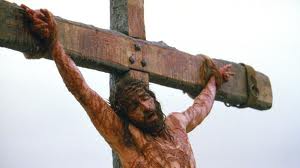
- Observed during “Holy Week” as part of the Paschal Triduum, with Friday preceding Easter Sunday
- Good Friday is otherwise known as Holy Friday, Great Friday, Black Friday, or Easter Friday
- Belief in a Friday crucifixion seems to derive from the Gospel account that details the crucifixion taking place the day before the Jewish Sabbath–Jn. 19:42
- The estimated year of the crucifixion is AD 33, although AD 34 as a date of the crucifixion was proposed by Sir Isaac Newton
- A legal, nation holiday in many countries, particularly in Western countries and in 12-U.S. states
- Unlike Easter, Good Friday does not appear to be linked to any pagan religion or religious observance
- Until the 4th century, the entirety of the Holy Week was observed on the evening before Easter. Since then, the Last Supper, crucifixion, and resurrection have been observed separately with Easter as the pivotal event
The Problems Associated with Good Friday Observance
- The Master prophesied of the time He would be in the ground; it is here that we must start–Matt. 16:21; Matt. 12:40; Matt. 17:23; cf. Jn. 1:17
- 3-days and 3-nights don’t add up in a Good Friday observance scenario, coming out to just 1.5 days, assuming He was buried late in the day on Friday and rose at sunrise on Sunday
- The crucifixion all but ignores the extreme importance of the Feasts of Yehovah as the backdrop to this event, Understanding how the Spring Feasts fall out on the Creator’s Calendar provides an easy understanding as to the very day and date of the crucifixion
- The Spring Feasts of Yehovah paint a prophetic shadow picture of the Passion of Jesus Christ (aka: Yeshua HaMoshiach)
- The most likely scenario:
- Yeshua was crucified and buried Wednesday, April 28, 28 CE
- Thursday, April 29, 28 CE, the 1st Day of Unleavened Bread=High Holy Day and High Sabbath–the disciples, the women, and the Pharisees rest
- Friday, April 30, 28 CE is the preparation day for the weekly Sabbath–the women purchase spices to embalm the body of the Messiah
- Saturday, May 1, 28 CE is the weekly Sabbath–everyone once again rests
- Sunday, May 2, 28 CE in the early morning near sunrise, Mirian meets the resurrected Savior in the garden cemetary
But wait! The 3-days, 3-nights, assuming a late Wednesday burial, mathematically takes us to a resurrection day of late Sabbath afternoon! Staying true to Yeshua’s prophecy of His death, burial, and resurrection, a sunrise Sunday resurrection then is not possible
- The Chronological Gospels-The Life and Seventy Week Ministry of Messiah, by Michael Rood–Aviv Moon Publishing, Fort Mill, SC (2013), lays this all out beautifully and with precision
Why Does Any of This Matter?
- Lent, Good Friday, and Easter are lies, not based upon the Bible, nor the Torah
- Yeshua taught we are to worship the Father in Spirit and Truth–Jn. 4:24
- Our relationship with the Father is based upon the rules Yehovah established-I Cor. 7:23
- The Father’s ways are not our ways-Isa. 55:8
- When it comes to our relationship with the Almighty, we are to follow His commandments. We are not to follow the ways of the world–Jer. 10:2. Yeshua say, if you love me, keep my commandments-Jn. 14:15; Lev. 22:31
by Rod Thomas | Apr 18, 2014 | Podcasts
1. Life’s many disappointments
A. Family
B. Relationships
C. Careers/jobs

2. The flesh wants what it wants–The heart is deceitful above all things, and desperately wicked: who can know it? (Jer 17:9 KJV)
A. Money
B. Fortune/fame
C. Success
D. Things to go our way
3. The problems associated with being discontent-discontentment and being disappointed
A. Takes our focus off the Father
B. Clouds our judgment in terms of the proper things to do
C. Brings out the worse in US-carnal nature often prevails
D. Hinders our prayers
E. Inability to see other things, benefits, possibilities
4. Not confusing righteous desire with disappointment
A. In Yehovah’ s good time
B. In Yehovah’ s purpose
C. Timing is often everything, especially when it is God ordained
5. My recent experiences with disappointment
6. What are we as believers to do?

A. Give thanks—1Thess. 5:18-In every thing give thanks, for this is the will of God in Christ Jesus concerning you…cf. Eph. 5:20-Giving thanks always for all things unto Yehovah in the name of our Lord Yeshua Hamaschiach…Give thanks is eucharisteo
B. Don’t covet–Be content-Heb. 13:5–DBY Hebrews 13:5 Let your conversation be without love of money, satisfied with your present circumstances; for *he* has said, I will not leave thee, neither will I forsake thee.
(Heb 13:5 DBY)(cf Deu. 31:8; Exo. 20:17)
C. Stay focused on Yah’ s purpose for our lives-Matt. 6:33-But seek ye first the kingdom of God and his righteousness, and all these things shall be added unto you. (Mat 6:33 DBY)
D. In whatever situation we find ourselves, blow it out the water
E. Pray!-pray without ceasing-1 Thess. 5:17; Col. 4:2; Rom. 12:12
F. Praise Him-Psm. 34:1; Heb. 13:15-…let us offer the sacrifice of praise continually to God, that is, the fruit of our lips confessing His name
by Rod Thomas | Apr 16, 2014 | Podcasts
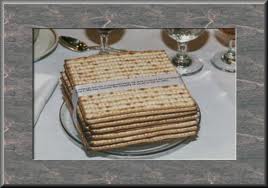
The directive to observe and the rules concerning how to observe Passover and the Feast of Unleavened Bread is recorded in Leviticus 23:4-8 (cf. Exo. 12:15; 13:6; 23:15; 34:18; Num. 28:17
- The Feast of Unleavened Bread begins on the 15th day of the Month Aviv
- Exo. 12:15 defines for us the process
- the feast lasts for 7-days
- we are to discard leaven out of our homes
- we are to eat unleavened bread (aka: matsah) throughout this 7-day perioid
- we are to bring a gift/offering when we appear before Yehovah
Passover and Unleavened Bread has traditionally been viewed as one-feast that is a joyful celebration. As it relates to the consumption of matzah during this 7-day observance, it was to serve as a remembrance of the children of Israel’s hasty departure out of the land of Egypt (reference: Deut. 16:3)
Feast=chag (khawg)-Hebrew for festival–a gathering–a pilgrimage that implies hagag, Hebrew for celebration; a day to hold or keep; a holy day.
This 7-day pilgrimage festival appears to have been filled with prayer, praised, and godly meditation.
Yeshua was diligent to keep the Passover–reference Matt. 26:17-20; Luk. 22:15; Joh. 2:13, 23. At 12-years of age Yeshua’s parents went up to Jerusalem to observe the Passover–reference: Luk. 2:41-50.
The crucifixion occurred on Passover in the year 28 CE–Matt. 26:2; Mar. 14:1,2; Joh. 18:28
Yeshua is referred to as our Passover by Paul (I Cor. 5:7) and John the Immerser.
Like Passover, Unleavened Bread provides the Believer in Messiah with a beautiful shadow picture of good things to come. Yeshua, our Passover, atoned for our sins. He was the perfect sacrifice that provided a means for us to have direct access to the Creator 24/7. As it relates to the Feast of Unleavened Bread, the process of purging sin from our lives becomes a formal, key element in the redemption plan and process. Our bodies have been likened to the Temple of Yehovah. When Solomon completed the building of the Temple, he had it dedicated to Yehovah for a period of 7-days (reference: 2 Chr. 7:9). Additional references: Lev. 23:36; Num. 7:10; 2 Chr. 30:23)
by Rod Thomas | Apr 15, 2014 | Podcasts
by Rod Thomas | Apr 9, 2014 | Blog
Greetings. Today, according to God’s calendar, is the 9th day of the Month of Aviv. Still a New Year, a new beginning for those of us who love the Lord Yehovah. According to Rood’s Gospel Chronology, in 27 CE, Yeshua, his family, and His newly selected disciples (inner circle) left Capernaum (aka: Kfar Nahum) for Jerusalem to observe Passover and Unleavened Bread (reference Leviticus 23 and John 2:13). According to the passage,
“The Passover was at hand and Yeshua went up to Yerushalayim (aka: Jerusalem).”
This passage may not get much attention to the average Christian (Gentile) Reader simply because it is sort of a commentary bridge between two or more important invents. It doesn’t take a whole lot of scholarly knowledge to understand what this verse is talking about, although possessing an understanding of the context and having a full appreciation of the Feasts of Yehovah catapults this verse to a higher level.
The King James Version’s rendering of this event reads, “And the Jews’ passover was at hand, and Jesus went up to Jerusalem…” Notice, if you would, the distant perspective the translator placed upon his rendering–“…and the Jews’ passover…” Oh how we in churchianity have so distanced ourselves from our heritage but will fight to the death to brag about the inheritance. There appears to be some misplaced or partially messed up understanding of the full matter.
No individual understood the reality of both the inheritance and the heritage we gentiles enjoy in Messiah, than the Apostle Paul. According to Paul, “For the Scripture says, no one believing on Him shall be ashamed. For there is no difference of Jew and Greek; for the same Lord (aka: Yehovah) is rich towards all that call upon Him. For every one whosoever, who shall call on the name of Yehovah, shall be saved” (Romans 10:12-Darby Translation). Certainly, there is some under-current of anti-Judaism going on here and sadly, that under-current remains even today. We’ve all but discarded the significance of the Jews to our inheritance and our heritage, and by doing so, we’ve also lost all sight of the big picture. There was something to wearing the badge of Jew, regardless whatever negative spin the satan and him minions have put upon that culture. Again, the expert here is Paul who brilliantly asserts, “For he is not a Jew who is one outwardly, neither that circumcision which is outward in flesh; but he is a Jew who is so inwardly; and circumcision, of the heart, in spirit, not in letter; whose praise is not of men, but of Yehovah” (Romans 2:28,29-Darby Translation). Indeed, being a True Jew (spiritual) is the desired outcome that the Messianic Torah Observer must aspire. And what constitutes a True Jew? It is the one who desires after the ways of Yehovah, who is obedient to His laws and ways, who is a disciple of Yeshua, and who is filled with the Holy Spirit. So many of us are so focused upon the physical manifestations of a culture of people–i.e., their traditions, habits, and appearance. Our culture, the Torah Observing Messianic Believer of Messiah, by nature has its behavioral uniqueness, but more importantly, we have that spiritual component that pushes us beyond anything that is common to human cultures. So we must not ever distance ourselves from our heritage for the sake of the intheritance. Paul explains: “Now if the first-fruit be holy, the lump also; and if the root be holy, the branches also. Now if some of the branches have been broken out, and thou, being a wild olive tree, hast been grafted in amongst them, and hast become a fellow-partaker of the root and of the fatness of the olive tree, boast not against the branches; but if thou boast, it is not thou bearest the root, but the root thee. Thou wilt say then, the branches have been broken out in order that I might be grafted in. Right: they have been broken out through unbelief, and thou standest through faith. Be not high-minded, but fear; if God indeed has not spared the natural branches; lest it might be he spare not thee either. Behold, then the goodness and severity of God: upon them who have fallen, severity; upon thee goodness of Yehovah, if thou shalt abide in goodness, since otherwise thou also wilt be cut away. And they too, if they abide not in unbelief, shall be grafted in; for Yehovah is able again to graft them in. For if thou hast been cut out of the olive tree wild by nature, and, contrary to nature hast been grafted into the good olive tree, how much rather shall they, who are according to nature be grafted into their own olive tree? For I do not wish you to be ignorant, brethren, of this m ystery, that ye may not be wise in your own conceits, that blindness in part is happened to Israel, until the fulness of the nations be come in; and so all Israel shall be saved…” (Romans 11:16-26-Darby Translation).
Praise Yehovah that we, Yehovah’s redeemed, His chosen, have been grafted into the one True Faith that was once delivered and that is Torah-based. Thus, there is no such thing as “a Jews’ passover.” Passover, like the rest of the Holy Days and observances and appointed days, belong to Yehovah! He instituted these times for a purpose and these days provide us with shadow pictures of good things to come and they prepare us for the Kingdom.
One more thing to take away from this passage: Yeshua, our Redeemer, our Lord, and Savior, was faithful to keep and obey Torah. Why do we feel that we should be any different. Oh, some would contend that Yeshua kept Torah so we don’t have to. Others will foolishly misinterpret Pauline writings and assert that we are not under the Law, and thus we are compelled to not keep Torah but rely upon Grace. Indeed, we are not under the penalty of the Law, but the Law was given by Yehovah as a means of instruction of how we are to live holy and righteous lives. Without Torah, life becomes a crap-shoot, as is typical churchianity today, where everyone lives according to how he or she see fit.
These days of the Spring Feast have such richness and the shadow pictures that are awaiting each True Believer to view are simply precious beyond understanding. May you be richly blessed this Spring Feast season.