by Rod Thomas | Sep 15, 2023 | Blog, Podcasts
This is a special TMTO post that I pray will encourage, and maybe inform you, as it relates to the imminent advent of Yom Teruah, or the Day of the Blowing of Trumpets.
As you may, or may not know, we are on the very cusp of receiving this Moedim, this set-apart day, this feast day that Yah has instructed HIs set-apart ones to keep, guard, honor, and celebrate.
Many Torah observant brethren will be keeping Yom Teruah or the Feast of Trumpets this coming S-turday, September 16th, in accordance with the rabbinic, calculated calendar. However, those of us who keep the Creator’s observational calendar, are waiting with “baited breath,” so to speak, to learn from searchers in the Land of Yisra’el, the results of their search for the renewed moon. (For those of you who are unfamiliar with the difference between the two prominent calendars kept by members of our beloved faith, I would humbly encourage you to read my post entitled: “Why I Keep the Torah (Observational) Calendar and not the Other Popular Messianic Calendars.”
And let me just say, if you are led to keep the rabbinic, calculated calendar, I do not disparage you for doing so. That’s between you and Yehovah. We are all on collective and individual journeys in this wonderful faith of ours, which means that we may be at different places in our respective walks with Yah. Thus, we await our Master’s illustrious return when He will bring us into final unity whereby we worship Yehovah as one united man or body.
But as for today’s post, I was led to forego my regular, weekly blog posting of my Thoughts and Reflections on this week’s Torah Reading, for an unpacking of the passage that instructs Yah’s people to keep Yom Teruah: Leviticus 23:23-25, which reads:
23 Then Yahweh spoke to Moses, saying, 24 “Speak to the ⌊Israelites⌋, saying, ‘In the seventh month, on the first day of the month, ⌊you must have⌋ a rest period, a remembrance of the trumpet blast, a holy assembly. 25 You must not do ⌊any regular work⌋, and you shall present an offering made by fire to Yahweh.’ ” W. Hall Harris III et al., eds., The Lexham English Bible (Bellingham, WA: Lexham Press, 2012), Le 23:23–25.
Let’s Unpack this key passage that defines what and when Yom Teruah is:
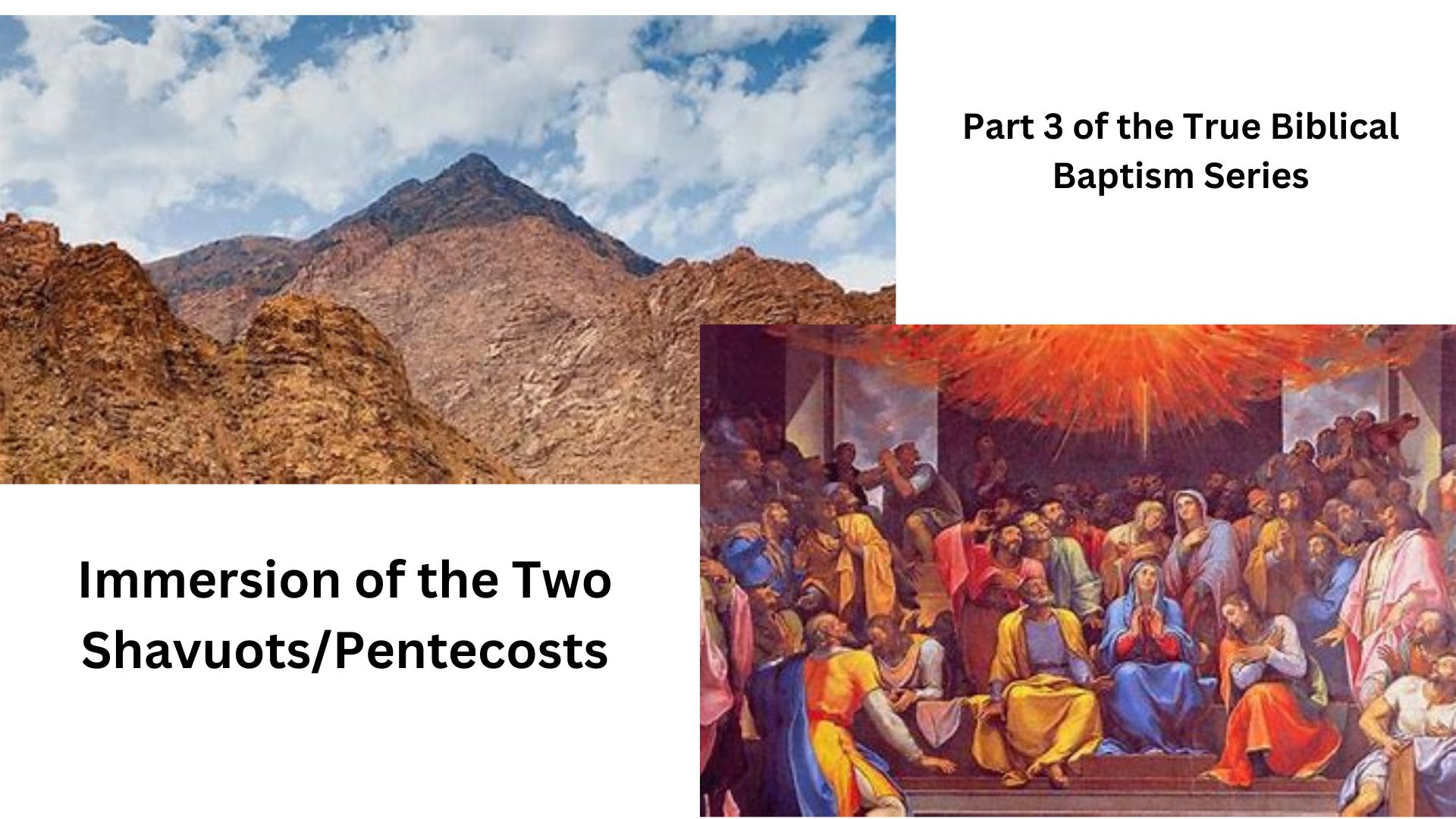
(23) Then YHVH spoke to Moshe saying…That is, YHVH “ye-dab-ber” or spoke to Moshe during one of His times on Mount Sinai with the Creator.
The verb, “ye-dab-ber” is a verb that consists of an imitative base with an original meaning of “to buzz/hum,” such as common to a bee. In this context, we have Moshe receiving a download from YHVH, which paints a prophetic shadow picture of the disciples sitting at Master Yeshua’s feet and receiving His righteous teachings on that mountain/hillside (famously referred to as the Sermon on the Mount as found in Matthew 5-8).
(24) “Speak (i.e., “ye-dab-ber”) to the Yisra’elites or children of Yisra’el, saying…
That being: “ye-dab-ber” to the sons (i.e., “bene”) or descendants of Yisra’el that which I’m about to pass on to you. It’s likely that Moshe would have been taking notes or writing down everything that the Father was saying to Him.
In the seventh month…
That being, in the “se-bi-i” or 7th “Chodesh” or month.
…on the first day of the month…
That being, on the “e’had” or “echad” of the “Chodesh” (implying the first day of the month).
…you must have a rest period…
That being, on the “e’had” of the “se-bi-i” “Chodesh,” “yih-ye(h)” or it shall come to pass a “sab-ba-ton” or a sabbath. Sabbaton, a noun, denotes a day of complete rest, referring back to the very first Shabbat recorded in the scripture of Genesis 2:2: “And on the seventh day Elohiym ended His work (i.e., His mela’kah, His occupation or work) which He had made (i.e., ‘asah, or which He had fashioned), and He rested (i.e., “sabbath;” He rested) on the seventh day (i.e., Yehovah “se-bi-i” “Yom”) from all His work (or “mela’kah”) from all His work which He had made.
Thus, whenever we come upon the term “Shabbat” or “sabbath” in the holy writ, it denotes a day of rest or cessation from one’s normal occupation or work.
Continuing:
…a remembrance of the trumpet blast…
That being, on this sabbath or day of rest, it is to be “zik-ron” (or, a memorial; remembrance; a reminder) of “teruah” (that being,תְּרוּעָה f.n. 1 shout, cry, alarm. 2 a succession of tremulous notes of the ‘shofar’ or trumpet. Ernest Klein, “תְּרוּעָה,” ed. Baruch Sarel, A Comprehensive Etymological Dictionary of the Hebrew Language for Readers of English (Jerusalem: Carta Jerusalem; The University of Haifa, 1987), 717.).
The term teruah in this context denotes shofar and or trumpet blasts.
So, given the time constraints of this passage, what is Yehovah referring to as it relates to a “teruah” that He is requiring bene Yisra’el to “zik-ron” or remember/memorialize? Why of course Yah’s magnificent revelation from Mount Sinai:
16 And it came to pass on the third day in the morning, that there were thunders and lightnings, and a thick cloud upon the mount, and the voice of the trumpet (i.e., “kole shofar”) exceeding loud; so that all the people that was in the camp trembled. (Exo 19:16 KJV)
On that historic day, when Yehovah revealed Himself to His bride-to-be, Yisra’el, the revelation of Himself to Yisra’el was accompanied by various sights and sounds. The most notable of these sights and sounds, at least in the mind of Yah, was the exceeding loud voice of the shofar. And it is this event that Yah instructed Moshe to ensure that bene Yisra’el remembered on the first day of the 7th month.
Continuing.
…an holy convocation.
That being, this memorial/zik-ron of teruah/blasts of the shofar/trumpet was to be unto bene Yisra’el a “miqra kodesh” or a set-apart “calling together; even a reading.
You may come across some that teach that a convocation as used here denotes that of some kind of rehearsal. But this English term denotes that which is “practiced” or that which is of a “trial performance” for purposes of a later public performance (wikipedia dictionary). In my humble opinion, what Yah is instructing Moshe to do here is to establish in the hearts and minds of bene Yisra’el, that on the first day of every 7th month, they are to assemble themselves (whatever that assembly looked like and looks like today) and remember the day that He revealed Himself to Yisra’el, accompanied by exceedingly loud “teruah” or trumpet/shofar blasts. The only aspect of this commandment where I could conceivably concede some form of a rehearsal is that bene Yisra’el would memorialize the day with the blowing of shofars.
In terms of the “miqra kodesh/qara’,” they would be inextricably linked to the weekly and annual sabbaths or the Moedim of Yah. This phrase, Holy Convocation as used in many English translations of the Books of Leviticus/Vayiqra and Numbers/Bemidbar, it concerns “the proper celebration of the appointed festivals that God commanded the Israelites to celebrate, including the regular Sabbath observance (Lev 23:3)”. Specifically, a holy convocation is required for:
- The Feast of Matzah or Unleavened Bread (Exodus 12:16; Leviticus 21:7-8; Numbers 28:18, 25).
- Shavuot or Feast of Weeks or Pentecost (Leviticus 23:21; Numbers 28:26).
- Yom Teruah or the Day of the Blowing of Trumpets (Leviticus 23:24; Numbers 29:1).
- Yom Kippurim or the Day of Atonements (Leviticus 23:27; Numbers 29:27).
- Sukkot or the Feast of Tabernacles (Leviticus 23:35-36; Numbers 29:12).
What is unique or special about these commanded holy convocations on these set-apart days is that it was to involve worship (generally marked by sacrifices unto Yehovah) and celebration/festive times that involved the entire nation; an abstention from work; and a reading of Torah.
The reading of Torah is featured in Nehemiah 8 where it is recorded that Judah, having recently been freed from Babylonian captivity, on Yom Teruah, Ezra (a Hebrew scribe read to the assembled nation the Book of the Law or Torah (vss. 1-12). If you haven’t read this passage, I would humbly encourage you to do so. It is one of the most touching passages of the Tanakh involving our ancient Hebrew cousins in unison and in obedient teshuvah, that I’ve ever had the blessing to read.
Continuing.
(25) You must not do any regular work…
On this set-apart day, bene Yisra’el was to perform no “mela-ket” or trade, business, work, and so forth. It generally referred to abstaining from one’s occupation on this set-apart day. The extreme orthodox rabbis over the centuries took this and similar commandments to an extreme, banning virtually all physical activities on such days. But their fence around Torah served only to imprison the folks they had ecclesiastical oversight. For the spirit of this instruction, that no regular or servile work be done on this set-apart day, was not in any sense an abstention from all physical activities. Rather, it was to be a day of rest and refreshment from the activities and work of the previous six days.
Look, Yom Teruah and the other set-apart days (including His weekly Shabbat) were specific times that Yah’s chosen ones are required by Yah to stop that which they do in their everyday life and come together to be with their Elohiym. These times were meant to be special to Yehovah’s people. These were to be times of Yah coming to love on and be with His children. From a marriage standpoint, it would be likened to the husband scheduling for his bride a day-date or a date-night. It was to be a special time for both Yehovah and His bride Yisra’el. To miss these times of convocation, for whatever reason or at any level, was to essentially “stand our Husband up,” which Yah does not take too kindly to.
Continuing.
…and you shall present an offering made by fire to Yehovah.
That is, on this set apart day, bene Yisra’el will be required to “qarab” or “come or draw near or approach.” In what sense was bene Yisra’el to come or draw near or approach Him? They were to render unto Yehovah a burnt offering, otherwise referred to as an “‘ishshah.”
Now, there are a couple of things we must bear in mind when we consider what Abba is referring to as an expectation for an “‘ishshah” from His set-apart people. First and foremost, especially as it relates to this Moedim or feast day: Yah commissioned just three (3) pilgrimage feasts for Yisra’el: (1) The Feast of Matzah or Unleavened Bread; (2) Shavuot or Pentecost; and (3) Sukkot. Yom Teruah is not included in these three pilgrimage feasts, which meant that an individual who was not in the local vicinity of the Tabernacle or Temple, would either have to journey there in order for him to render unto Yah his personal “‘ishshah” or burnt offering. Yah prohibited individual Yisra’elites from rendering personal or individual burnt offerings outside the Tabernacle or Temple proper where proper administration by the Levitical Priest would ensure the acceptance of one’s offering.
Since Yom Teruah was not a pilgrimage feast, it fell exclusively to the Levitical Priests headquartered at the Tabernacle to render the proper “ishshah” or burnt offerings. And Yah provided the particulars of those sacrifices in Numbers 29:
“ ‘On the seventh month, on the first day of the month, you will have a holy convocation; ⌊you will not do any regular work⌋. It will be a day for you of blowing trumpets. 2 You will offer a burnt offering as a fragrance of appeasement for Yahweh: one bull, one ram, and seven male lambs ⌊in their first year⌋; they will be without defect. 3 Their grain offering will be finely milled flour mixed with oil: three-tenths for the bull, two-tenths for the ram; 4 and one-tenth for each of the seven male lambs; 5 with one male goat for a sin offering, to make atonement for you, 6 in addition to the burnt offering of the new moon and its grain offering, the continual burnt offering and its grain offering, and their libations, according to their stipulations, as a fragrance of appeasement by fire for Yahweh. (W. Hall Harris III et al., eds., The Lexham English Bible (Bellingham, WA: Lexham Press, 2012), Nu 29:1–6.
Since Yom Teruah fell exclusively on the first day of the 7th month, in addition to the Feast Day burnt offering requirements, the Levitical Priests were required to offer a Rosh Chodesh (NOT a Rosh Hashanah) offering (Numbers 29:6).
Thus, it fell to the non-Levite to keep all of the other stipulated requirements of the set-apart day such as participating in a local holy convocation; abstaining from his/her regular, weekly activities and work; and blowing in celebration his shofar.
As it relates to us who are modern, engrafted Yisra’elites, we are compelled to do accordingly in spirit and in truth:
1. Keep Yom Teruah on its appointed day of Yah’s sacred calendar year, which is the first day of the 7th Chodesh or 7th month. The question that we all must answer for ourselves and for Yah is, which calendar will we comply with?
2. Abstain from those activities that we do during the other six (6) days of our week. That abstention from the regular week’s activities includes not engaging in any servile or regular work.
We remember that historic event where Yah revealed Himself to our ancient Hebrew cousins from Mount Sinai, accompanied by the exceeding blasts of a shofar or trumpet. It is also a wonderful opportunity to consider the prophetic shadow picture that this historic event holds for the new covenant Messianic, and how the Apostle brilliantly framed the next great revelation from heaven involving the return of Yahoshua HaMashiyach: 16 For the Lord himself shall descend from heaven with a shout, with the voice of the archangel, and with the trump of God: and the dead in Christ shall rise first: 17 Then we which are alive and remain shall be caught up together with them in the clouds, to meet the Lord in the air: and so shall we ever be with the Lord. 18 Wherefore comfort one another with these words. (1Th 4:16-18 KJV) This is our blessed hope that should be front and center in our hearts and minds when we receive and celebrate Yom Teruah. We earnestly await a repeat of that teruah and our being gathered to be with our King. Thus, we blow our shofars (if we have them) throughout the day in remembrance/zikron of that event and that future event. If we don’t have a shofar, we can instead make a joyful noise unto Yehovah through the means we have available to us on that day. The beauty of the term “teruah” is that it can also refer to the making of a joyful noise or celebratory shouts unto Yehovah. So, let us not miss the opportunity to make that joyful noise unto Yehovah.
3. We participate in a holy convocation or miqra kodesh. For many of us, that miqra kodesh will be in the form of a physical, live fellowship or worship service with other like-minded brethren. For the rest of us, that holy convocation may take the form of a family gathering or watching or participating in an online service or teaching, especially given that many of us are not privy to a physical assembly or fellowship. Either way, we allow the Holy Spirit (aka, the Ruach HaKodesh) that is operating in each of us, to guide and lead us to the convocation that He has set aside for us, bearing in mind, that that convocation may or may not be as we envisioned it would be.
4. If we haven’t already, we need to ensure that we have the day off from work (that is if we are currently employed). Chances are that for those of us who keep the observational calendar, Yom Teruah will fall either on the first day of next week (i.e., S-nday the 17th), or the second day of next week (i.e., M-nday the 18th). Either case, we need to be ready to receive the day mentally, physically, and above all spiritually. Yah deserves our full attention on this set-apart day, regardless of which day it actually falls on.
5. And lastly, we will have to have some form of offering prepared to offer Yehovah. Many of us will send financial offerings to those ministries that feed us or so forth.
The other form of offering that we should all be prepared to render unto Yah is that of praises unto Yehovah. The writer of Hebrews described this form of offering as sacrifices of praise to Yehovah, which directly involves the fruit of our lips giving thanks to His Name. Doing good among those whom Yehovah has placed in our path, not neglecting to share that which we have with any who is in need (13:15-16). The writer asserts that it is these types of offerings that please our Heavenly Father when they come from the heart.
In the event that you want to learn more about this set-apart day–this Moedim–this Feast of the LORD, I would humbly encourage to go on over to themessianictorahobserver.org, type in the search bar (i.e., that magnifying glass looking thing, located in the top menu panel), and type in “Yom Teruah” and you will set some of the teachings and commentaries I posted over the last few years on this important day.
Beloved, there is no better time–no more important time in human history–that we who are called by His Name should be “teruah’ing,” it’s in the here and now. These are indeed perilous times, eerily similar to the times the Apostle prophesied of his young protege at the time, the Evangelist Timotheus. He described these days accordingly:
in the last days perilous times shall come.
2 For men shall be lovers of their own selves, covetous, boasters, proud, blasphemers, disobedient to parents, unthankful, unholy,
3 Without natural affection, trucebreakers, false accusers, incontinent, fierce, despisers of those that are good,
4 Traitors, heady, highminded, lovers of pleasures more than lovers of God;
5 Having a form of godliness, but denying the power thereof: from such turn away.
6 For of this sort are they which creep into houses, and lead captive silly women laden with sins, led away with divers lusts,
7 Ever learning, and never able to come to the knowledge of the truth. (2Ti 3:1-7 KJV)
So my prayer, hope, and trust for all of us during this and the upcoming holy/set-apart days is that we not only keep them on their appointed days, but keep them with as much gusto, joy, solemnity, and anticipation as we can muster.
Have a blessed and meaningful Yom Teruah. Until next time. Shalom. Take care.
by Rod Thomas | Sep 8, 2023 | Blog
Greetings and Shabbat Shalom. It is my hope, trust, and prayer that this posting finds you, your families, and your fellowships well and blessed on this warm but blessed Sabbath in the DFW.
A Short Passage with a Big Message
This 100th parashah of our three-year Torah-reading cycle is the shortest reading of them all. It is contained in Numbers/Bemidbar 4:17-20, and I’ve given this discussion the title of “Better Safe Than Sorry.” Why the so-called sages of old pass down such a short reading is not certain. Nevertheless, despite the abbreviated nature of this reading, the message it must deliver is clear: Yah’s sovereignty and holiness reign as supreme principles among His set-apart people. And regardless of how strange or unfair His ways may appear to us at times, He has from the beginning made the rules, and He will forever make the rules, and His ways will always rule. Yah decides the workings of His set-apart nations, including what jobs people will have, what privileges will be given and denied, when and where, and how things are going to go.
God Makes Distinctions for His Set-Apart People
In the reading that is before us this Shabbat, Yah makes a distinction between the Aharonic Priests (i.e., their purpose, rule, function, and privileges) and the general Levitical priests, in particular, the Kohathites. So important was this distinction that it was effectively a matter of life and death.
Because the Aharonic Priests were the most privileged family of the Tribe of Levi (i.e., they had prescribed direct access to the Tabernacle and its holy elements), Yah placed responsibility for the Kohathites’ wellbeing and safety in their hands. The Aharonic Priests assigned their Kohathite brethren precise duties and responsibilities that, when carried out according to Yehovah’s instructions, would ensure their safety and well-being. In fact, all the Levites received their marching orders from Aharon and Sons. This was the set-up Yah put in place in accordance with His plan and will. Later on in this book, Moshe records an incident where a Kohathite by the name of Korach, jealous of Moshe’s and Aharon’s privileged roles as given by Yehovah, will challenge their authority and privilege. Yah did not take too kindly to Korach’s rebellious act, which resulted in his and the deaths of some 250+ souls (Numbers/Bemidbar 16).
God Gives His People Assignments and Tasks That They are Obliged to Carry Out
Two previous readings ago, we learned that Yah had tasked the Kohathites (i.e., the descendants of Kohath, a son of Levi, with physically transporting the Ark of the Covenant, along with all of the Tabernacle furnishings whenever the nation broke camp and moved on to another location. Despite appearances, the Kohathites enjoyed a privilege that succeeded that of their Gershomite and Merari brethren. The Kohathites were privileged to carry the holy things of Yah when the nation broke camp and journeyed on, whereas their Gershomite and Merari brethren transported the lesser objects of the Tabernacle on carts (Numbers/Bemidbar 7).
Yah-Given Privileges are Often Despised by His People
Man’s carnal nature despises what it perceives as unwarranted privilege. But in the Kingdom of Yah, privilege and sacred responsibility must be accepted as falling within the exclusive purview of the Most High. Thus, it falls to the members of the Faith Community to recognize that Yah is in charge and that they serve Yah best by simply doing that which Yah has assigned to them with all their heart, mind, strength, and soul and be happy and feel blessed in their Yah given assignments. To harbor resentment or to challenge Yah’s status quo or set-up is indicative of rebellion against the Almighty. And we all know where the sin of rebellion originated from, don’t we? In fact, Yah equates rebellion to the sin of idolatry.
The Scourge of Rebellion is Idolatry in God’s Eyes
Addressing King Saul’s rebelliousness, Samuel said:
(22) “Is there as much delight for Yehovah in burnt offerings and sacrifices as there is in obeying Yehovah? Look! To obey is better than sacrifice; to give heed than the fat of rams. (23) For rebellion is like the sin of divination; arrogance is like iniquity and idolatry. Because you have rejected the word of Yehovah, He has rejected you from being king” (1 Samuel 15; LEB).
Thus, rebellion is not a crime directed at others per se. More so, it is a sin or transgression against Yehovah. The penalty that is meted out against the rebellious is generally severe, as we will in the coming weeks read regarding Korach.
The Kohathites-An Example of Submissiveness Obedience that Must Respect God’s Holiness and Sovereignty
The Kohathites, numbering some 2,750 men who were of qualified age, were not Aaronic (aka, Aharonic) priests. Thus, they were prohibited from seeing and directly touching the Holy elements of the Tabernacle at the risk of death. Consequently, it fell to Aaron/Aharon and Sons to personally disassemble the Tabernacle enclosures and curtain, using them to cover those holy Tabernacle furnishings and elements. And so, it always stood to reason that a hardworking, devoted Kohathite could potentially come upon the Ark or any of the other furnishings before Aaron and Sons had prepared it and find himself in dire harm’s way.
Yah is compassionate and does not want to leave to chance that an innocent Kohathite doing his job stumbles upon one of the Holy Things of the Tabernacle that he should not have seen or touched and thus is subject to death. Yah put into place precepts to prevent inadvertent unauthorized access to the holy things of Yah. In other words, Yah tells Moshe and Aharon to take steps to ensure that the Kohathites, while doing their assigned tasks, are not cut off before Yehovah. Further, it says to us, as well as it said to Moshe and Aharon, that it is the ones who know better that are responsible for keeping their brother (and sister) from falling into judgment and punishment. In that sense, we are indeed our brother’s keeper.
God’s Persistent Utter Holiness
Yehovah established His uncompromising holiness with the nation at the beginning of His interactions with Israel (aka Yisra’el) at the foot of Mount Sinai (Exodus/Shemot 19). The nation was not permitted to cross the threshold of Mount Sinai under penalty of summary execution. Only Moshe, at this point in the nation’s history, would be permitted to cross that threshold and enter Yehovah’s presence.
After the Golden Calf incident, Yehovah established the Levitical Priestly-Tabernacle system that provided the sacred infrastructure by which Yehovah’s presence would dwell in the midst of the nation. But before that system could get fully up and running, two of Aaron’s/Aharon’s sons, Nadab and Abihu, transgressed the holy boundary lines Yah established to separate the common from the sacred when they “offered strange fire before Yehovah, which He commanded them not” (Leviticus/Vayiqra 10:1-5).
Then we have the reality of the High Priest (aka, the Cohen HaGadol) being permitted to enter the Holy of Holies (aka, the most sacred space) only when certain criteria are met by the High Priest, and he was permitted to enter the sacred space only on Yom Kippurim (Hebrews 9:7). In celebration of the ratification of the covenant between Yah and His bride Yisra’el, the 70-elders of Yisra’el were permitted to go only so far up Mount Sinai and be in Yah’s indirect presence, while Moshe was permitted to continue up the mountain to be in Yah’s direct presence (Exodus/Shemote 24:9-11). We find recorded in 2 Samuel 6 where a Levite by the name of Uzzah was struck down by Yah when, in his feeble attempt to steady the Ark of the Covenant that was being transported to the City of David on an oxen-pulled cart, he reached out and touched the ark. However, in a completely opposite situation involving the transporting of the Ark, when the Philistines returned the stolen Ark back to the nation, they did not suffer any loss of life despite their paganistic mishandling of it. This story happens to be our Haftarah reading for this Sabbath found in 1 Samuel 6:10-16. Here, the disparity in treatment of the Yisra’elites who transgressed Yah’s holiness and the pagan Philistines who openly defiled the holy Ark cannot be mistaken. The takeaway is simply this: Yah has different expectations for His chosen ones, and He does not hesitate to chasten those whom He loves (Hebrews 12:6). Yah did not have any expectations for the Philistines regarding their respecting and upholding His holiness. But Yah indeed has expressed expectations for Yisra’el to uphold His holiness at all costs.
God’s Expectation for His People is that They Uphold His Holiness
This is one of the greatest lessons that we who are called by His Name must always keep at the forefront of our hearts, minds, and souls. The world is not expected to honor and uphold the Name and holiness of their Creator. They are outside of Yah’s will. This, however, is not to say that they will not be held accountable by Yehovah in the Judgment, for they most certainly will have to give an account for their rebelliousness. We, on the other hand, are expected to uphold, honor, and obey Yah’s holiness at every turn. It falls to us to be cognizant of Yah’s righteousness at all times and never take His holiness for granted, as so many so-called believers do. Indeed, there is no mystery as to why so many in this beloved faith of ours are experiencing and suffering through illnesses, financial hardships, relationship problems, and so forth. It’s most likely due, at least to a lesser or greater extent, to their insensitivity to Yah’s holiness and sovereignty.
You see, when we honor Him, He honors us.
Continuing.
Because of the sensitive nature of the Kohathites’ assigned tasks/duties, they were always on the cusp of violating the sacredness of the holy things, either through negligence or ignorance. It is conceivable that the Kohathites could be wiped out as a member of the Levites altogether if certain precepts were enacted. Thus, Yah laid the responsibility for ensuring the safety of the Kohathites upon the shoulders of Aharon and Sons (vss. 19).
God’s People Must Learn to Understand and Uphold His Holiness
It may be extremely difficult for most of us 21st-century Westerners to understand and accept the inherent risks that the Kohathites faced just in the course of their assigned duties. For some of us, it may seem a bit overkill to think someone would die because someone inadvertently saw or touched one of the Tabernacle’s holy elements. To a lesser or greater degree, this is one of several reasons that many people in the world dismiss the so-called “God of the Old Testament” as a callous, unforgiving, murderous Being. I recall my boss, who identified herself as a devout Christian, once declared to me that she much preferred the God of the New Testament over the God of the Old Testament for the stated reasons. But Yah’s holiness is a concept that most people do not fully understand.
Tim Hegg, in his commentary on the Book of Numbers, describes Yah’s holiness as Yah’s “utter holiness” (“Studies in the Torah-Numbers,” pg. 35). He continues: “God’s holiness is a consuming fire that cannot be quenched. He must be satisfied by holiness that matches His own” (ibid).
At some point, humanity will come to realize that despite Yah’s immense and unfathomable love that He has for His creation, He will not compromise His own holiness and righteousness. Thus, Yah will always be compelled, by His holy and righteous nature, to deal with sin, regardless of how harsh and unfair our foolish minds think and our souls feel about it. And thank Yah that He has and will remain the same throughout eternity (Hebrews 13:8). As Hegg so astutely states: “For if God can act outside of His character, He ceases to be the true God of the Bible” (ibid).
Upholding God’s Holiness Requires Uncompromising Obedience to His Will and Purpose
Thus, it falls to us, as Yah’s chosen ones, to submit to His perfect will and purpose. And not submit to His will and purpose in a begrudging manner and mindset. But do so in a spirit of true fidelity with the Creator of heaven and earth, knowing that you are part of the greatest endeavor and movement in all of creation history. Regardless of what we’ve been assigned to do, such that it may not be appealing and notable to the world’s eyes, let us be mindful that our purpose and goal in this life is to serve Yehovah and to please Him. And in so doing, we will find peace, joy, and wholeness in this and the life to come.
Shabbat Shalom, Shavu’atov, take care. Until next time.
by Rod Thomas | Sep 1, 2023 | Blog
Greetings on this warm Shabbat in Maryland. May this post find you, your families, and your fellowships well and bless.
These are my thoughts and reflections on the 99th reading of the 3-year Torah Reading cycle. I’ve entitled this post “God’s Priestly Army Then and Now.” It is found in Numbers/Bemidbar 3:14-4:16.
The Scene in Which our Torah Reading Takes Place
Today’s scene of our reading is that of the Sinai Desert as opposed to Mount Sinai, where the events of Exodus and Leviticus took place. This was 14 months after the nation’s Exodus out of Egypt.
Moses Instructed to Conduct a Head Count of the Tribe of Levi
Yah instructs Moshe to conduct a census or head-count of the Tribe of Levi in accordance with the tribe’s families/fathers/clans.
It must be understood that the Levitical census/numbering Moshe was commanded to conduct was for the purpose of facilitating Tabernacle operations. All Levite males from a month old and upwards were included in this census. Compare this headcount to that of the 12-non-Levitical tribes, where only the males aged 20 years and up were counted for purposes of manning the nation’s army (Num. 1:3). There’s that concept of “purpose” that is interwoven throughout the whole of scripture.
Oh oh! The Numbers Don’t Seem to Match
Yehovah intended for the number of Levites whose exclusive purpose was to minister to the Aharonic Priests to match the number of firstborn non-Levite Yisraelites.
It turns out that 22,000 male Levites were counted in the census (3:39, 43; cf. 26:62). This number became important in that the number of firstborns of the other non-Levite tribes totaled 22,273 or 273 more non-Levites than Levites.
Recall that Yehovah sanctified unto Himself all the firstborn of Yisra’el immediately after the 10th and final plague against Egypt; the plague that claimed the life of every Egyptian firstborn (Exo. 12:29-32; 13:1-2; 22:29-30; 34:19-20). Yah, in fact, referred to Yisra’el as His firstborn among all the world’s nations (Exo. 4:22; 22:29-30). Thus, it would stand to reason that the original plan for the nation was for every firstborn male of Yisra’el to serve in some priestly capacity, but Yehovah altered that plan. Recall that Yah enacted this plan change in our previous reading (Reading 98), and He likely did so in response to the Golden Calf Incident (Exodus/Shemote 32).
The Critical Concept of Redemption Foreshadowed
As we move into 3:40 and beyond, we get to what I believe to be the heart of the reading. Yah instructs Moshe to “muster” (aka, paqah) every firstborn (“bekor”) non-Levite male by name. Every male Levite, one month and above, was counted separately and was devoted to Yehovah (3:41). The number of Levites was then compared to the number of non-Levite firstborn males. And it turns out that the number of non-Levite firstborn males exceeded the number of Levite males by 273. Yehovah required that the 273 difference in number be ransomed (“padah”) by the 273 non-Levite firstborns who lacked a Levite counterpart.
The Hebrew term “padah” a Hebrew verb, means to redeem or buy back (Baruch A. Levine; AB-Numbers 3:44-55). This is where we come into the understanding of the “Redemption of the Firstborn.” The ESV Study Bible commentary on 3:40-51 states that “the census showed there were 273 fewer Levites than firstborn males in the other tribes. To redeem these 273 Israelites who had no Levite to take their place, five shekels per person had to be paid.”
This concept of redeeming the firstborn and redeeming Yisra’el as a whole traces its origin back roughly 14 months prior to this census when Yah redeemed Yisra’el from her bitter servitude in Egypt. In order to free her from her taskmasters (i.e., the human Egyptians and the elohiym of Egypt), a price had to be paid for their freedom (Mic. 6:4). Thus, every firstborn of Egypt was sacrificed in exchange for the firstborn of Yisra’el. That sacrifice earned the Hebrews their freedom. In exchange, Yah initially determined that He would lay claim to all Hebrew firstborns. However, as we mentioned previously, Yah claimed unto Himself the Levites instead of the nation’s firstborns, thus prompting the redemption of the general Hebrew firstborn through the 5-shekel redemption that we see recorded here in our reading today. Five shekels of silver (weighing approximately 11-13 grams per shekel, or 5 shekels totaling 2 ounces equally 57 grams) was the price Yah determined was required to cover the deficit number of Levite males. Thus, the 1,365 shekels collected from the 273 extra Hebrew firstborn males were given to Aharon and Sons, no doubt for the upkeep of the Tabernacle (3:50-51).
Redemption is best understood from the perspective of one set free from an obligation he/she owes for a set price. And, of course, we find examples of incidents and spiritual principles related to this concept of redemption. The most obvious examples of redemption are found in the Exodus story proper and the Passion of our Master Yahoshua Messiah.
Can you see the prophetic shadow picture embedded in this historical event whereby the Levites replaced the redemption of Yisra’el’s firstborn?
I believe that Abba chose to do things this way, or why the discrepancy mattered to Him is no concern of ours. He established the redemption of the Hebrew firstborn to fulfill a purpose important to Him and His great plan of redemption, salvation, and restoration. However, there is the prophetic shadow picture embedded within this section that Abba desires His human creation to come to understand. Mashiyach paid the redemption price for any who would come to enter into a covenant relationship with Yehovah:
“For even the Son of Man did not come to be served, but to serve, and to give His life as a ransom for many” (Mark 10:45; LEB).
“…in whom (Yeshua) we have redemption through His blood, the forgiveness of sins…” (Eph. 1:7; LEB).
(13) For if the blood of goats and bulls and the ashes of a young cow sprinkled on those who are defiled sanctify them from the ritual purity of the flesh, (14) how much more will the blood of Mashiyach, who through the eternal Spirit offered Himself without blemish to Yehovah, cleanse our consciences from dead works to serve the living God (i.e., as foreshadowed in the redemption of the firstborn)? (15) And because of this, He is the mediator of a new covenant, in order that, because a death has taken place for the redemption of transgressions committed during the first covenant (i.e., the golden calf and other incidents), those who are the called may receive the promise of the eternal inheritance (Heb. 9; LEB modified).
Yah Positions His Priestly Army for Service
Moses and Aharon and Sons were positioned before the Tabernacle to the east (3:38). (The Tabernacle’s entrance always faced east.) These were responsible for guarding the “miqdash”–the holy place or sanctuary–“for the Yisra’elites” (3:38; LEB). The wording of this had nothing to do with protecting the sanctuary from unqualified intruders, but rather, protecting the Yisra’elites from Yah’s righteous and holy wrath when they or any other unqualified soul violated the “sacred space” (1:53; Faithlife Study Bible Commentary). The commentary continues: “The Levites were to camp around the Tabernacle as a buffer between the other 11 tribes and the space dedicated to the service of Yehovah. This was a preventative measure against the kind of tragedy that can happen when that which is common comes into contact–either intentionally or unintentionally with that which is holy. Such an offense often brought immediate death to the offenders, regardless of intent, as recorded in Leviticus 10 and 2 Samuel 6:5-15. Yah instructed that anyone not qualified to enter the Divine Presence would be put to death (3:38).
Yah Separates the Kohathites for Service
Moving into chapter 4 of our reading, we come to Yah instructing Moshe and Aharon to conduct another census. This census would involve counting the Kohathite males who were 30 to 50 years of age (vss. 2-3). Kohath was a son of Levi, and thus, his direct descendants would be referred to as Kohathites.
Yah tasked the Kohathites to handle the holy things of the Tabernacles (i.e., specifically, the transporting of the elements and implements of the Tabernacle).
Verses 4:5-15 entail the process by which the Tabernacle was dismantled. Only Aharon and Sons were permitted to dismantle and prep the Ark of the Covenant and the furnishings of the Tabernacle for transport. It then fell to the Kohathites to physically transport the properly packed Tabernacle elements. Neither the Kohathites nor any other non-Aharonic priest could participate in the dismantling and unpacking of the Tabernacle implements and elements. To do so would result in their death.
This delineation of tasks by Yehovah would lead to a future confrontation between members of the Kohathite clan, Moshe and Aharon, over assigned tasks and privileged roles within the Levitical community. But this teaches us, in the interim, that Yah assigns each of His children specific tasks in the great work of redemption. Some tasks that Yah assigns to certain individuals may not appear glamorous or desirable to most individuals, such as in the case of the Kohathites, when compared to others who are given more notable, privileged, or desirable tasks, such as Moshe, Aharon, and Sons. But this doesn’t mean that the more menial task assignments aren’t important, for every assignment in the great work of redemption is important. Yah does not favor those to whom He has assigned the more desirable assignments over those to whom He has assigned the less desirable assignments. Every member of the Body is valuable to the Work. The only difference is that everyone has assigned purposes and functions that must be enacted in order for the work to get done as Yah so ordains.
Case in point: It’s easy to venerate those in teaching, preaching, and leading positions in the body while looking down or being less appreciative of those in support roles in the Body of Messiah. Indeed, everyone has a purpose and function in the Body of Mashiyach. Unfortunately, too many folks feel that if they are not out there preaching, teaching, and leading masses of people in ministry, they have no role or purpose to fill. However, the truth of the matter is that Yehovah has a purpose and function for each and every one of His chosen ones. And it is up to us to petition the Father to reveal that purpose and function. Some of us may find out what that purpose and function is based on where the Father has us situated in the Body at certain times in our walk with Messiah. He may have us serving as laborers in an assembly or as support staff. He may have us serving as helpers or exhorters or members of the worship team, and so forth. Yah will use our talents and experiences to place us as integral, functional members of the Body, and it’s up to us to walk in that purpose and function until the time that Yah moves us to some other function and purpose. In fact, every soul in the Body benefits from the work, function, and purpose that the members of the Body fulfill (see the Apostolic Reading for this week’s parashah), regardless of role, purpose, and function. Thus, when we all joyfully abide and operate in our calling and function in the set-apart framework He has created, the Body functions and accomplishes its Messiah-given mandates in the world.
The Father’s Priestly Armies Then and Now
The Aharonic Priesthood would thus serve a redemptive function on behalf of the nation, in a prophetic shadowing of the dual redemptive role that our Master Yeshua serves on our behalf. Yahoshua intercedes on our behalf as the only authorized High Priest of the Melchizedekian Priestly order, as well as He Himself became our atoning sacrifice that was holy and acceptable to Yah.
Yah’s apportionment of the Tabernacle’s operational priestly duties would ensure that every aspect of the nation’s interaction with Yah would always take place decently and orderly.
Every Levite had a job to do. No job was insignificant. Thus, solemn and steadfast obedience and performance of everyone’s assigned duties would ensure that Yah’s will was and is accomplished.
The one who loves Yehovah and His instructions in righteousness cannot help but be reminded of the Apostle Kefa’s/Peter’s writing, which is a direct reflection of Exodus/Shemote 19:5-6:
“But you are a chosen race (i.e., “genos,” a nation; a people; even a kind or class of people), a royal priesthood, a holy nation, a people for God’s possession, so that you may proclaim the virtues of the One who called you out of darkness, into His marvelous light” (LEB).
The conditional, covenantal promise that Yah made to our ancient wandering cousins was prefaced with, “You will be” a nation of priests if you keep the terms of the covenant that I am about to cut with you (Exodus 19:5-6). Here, Kefa is emphatically conferring onto his readers the title of royal priest and so forth in the here and now. There is an interesting contrast between the two passages.
But what is the difference between those who would serve as priests under the Levitical-Aharonic priesthood and those new covenant Messianic-Netsari believers whom Kefa calls royal priests? Are Nesarim-Messianic-new covenant believers the modern-day replacements of the Levitical priests of old, as so many in denominationalism believe and teach? And the answer to this question is no, at least not in a literal sense. Just because the Levitical Priesthood has, for this time, been shelved doesn’t mean that we, as a set-apart people, outright replaced them. Let us not forget that the Levitical Priesthood served within the context of the nation of Yisra’el. We must also bear in mind that the priesthood that Yahoshua haMashiyach serves as high priest in the heavenly Mishkan is the Melchizedekian priesthood, different from the Levitical.
This brings us home to the broader points of our discussion in relation to Kefa’s statement: Because of our indelibly linked relationship with our Melchizedian Cohen haGadol, we are, in essence, vicariously speaking, a race or nation of priests. This reality comes about as a result of Yah’s renewed covenant. Thus, Yeshua serves as the universal, Melchizedian High Priest, and we, by virtue of our calling and assignments as Yeshua’s disciples, serve Him. And in our serving Him, we are effectively functioning in the capacity of priests. We serve Him by producing good fruit, imaging Yah in this world, making disciples of all the nation peoples of the earth, through our obedience to Yah’s instructions in righteous living, and through our sacrifices of praise and petitions unto Yah on behalf of others. Indeed, if we take our roles in Yah’s armies seriously, as we should, our hands, like our Levitical priestly counterparts, “will be full” of service and authority.
This understanding parallels the conditional covenant promise of Leviticus 19. It was originally intended that Yisra’el’s covenant relationship with Yah, through her obedience to His instructions in righteousness and her being the light to a dark world, would achieve royal priestly status as a nation. Both iterations of the royal priesthood are actively founded upon a covenant relationship with the Almighty. There can be no true priesthood without an obedient covenant relationship with Yehovah. Our covenant relationship today is fully made possible by the Person and ministries of Yeshua Messiah, our High Priest. Our priestly endeavors are meant to not only minister to our High Priest but also minister to the world.
Our Haftarah Reading
Yehovah is sovereign, and it is He who determines how things are going to go. No one else overrides Him, and it is our responsibility to recognize just who and what He is and walk in that reality.
Our Apostolic Reading
And he himself gave some as apostles and some as prophets and some as evangelists and some as pastors and teachers for the equipping of the saints, for the work of the ministry, for building up the body of Christ, until we all reach the unity of the faith and the knowledge of the Son of God, to a mature man, to a measure of the maturity of the fullness of Christ, so that we may no longer be infants, tossed about by waves and carried about by every wind of teaching, by the trickery of people, by craftiness with reference to the scheming of deceit. But speaking the truth in love, we are to grow into him with reference to all things, who is the head, Christ, from whom the whole body, joined together and held together by every supporting ligament, according to the working by measure of each single part, the growth of the body makes for the building up of itself in love. (Eph. 4:11-16; LEB)
Shabbat Shalom–Shavu’atov–Blessings unto you, your families, and fellowships. Take care.
by Rod Thomas | Aug 26, 2023 | Blog
Greetings to you on yet another exceptionally warm Sabbath in the DFW. May this day of rest find you, your families, and your fellowships well and blessed.
These are my thoughts and reflections on the 98th Torah or Parashah Reading of our 3-year reading cycle. It is contained in Numbers 2:14-3:13, and it picks up where we left off in last week’s reading (97) with the commissioned numbering or census of the ancient Hebrew tribes.
The Numbering of the Tribes Also Involved Their Positioning According to Yah’s Plan and Purpose
The numbering or census of the tribes was not just an enumerating of the able-bodied men of Yisra’el who could fight on behalf of the ancient nation. More so, this enumeration involved positioning and ordering the tribes to operate and achieve their intended purpose within the plan and will of Yah. Thus, as Yah ordered the tribes’ positioning in the camp around His Tabernacle, so was the order by which each tribe would proceed onward in the nation’s journeys whenever and wherever Yah’s cloud pillar would lead.
The Tribes’ Positions
As just mentioned, the tribes were positioned around the Tabernacle, and the orientation of the tribes was as follows:
- To the East of the Tabernacle and the first to move when camp broke were the tribes of Judah, Issachar, and Zebulun.
- To the South of the Tabernacle and second to depart when camp broke were the tribes of Reuben, Simeon, and Gad.
- Central to the tribes’ positioning in the camp was the Tent of Meeting/the Tabernacle with the Levites. These would follow the eastern and southern tribes when camp broke.
- To the West of the Tabernacle and the third to move when camp broke were the tribes of Ephraim, Manasseh, and Benjamin.
- And to the North of the Tabernacle and the fourth to move when camp broke were the tribes of Dan, Asher, and Naphtali.
The Tribes Themselves: Why are 13 Tribes Listed?
The Patriarch Jacob/Ya’achov had twelve sons. Joseph/Yosef was one of the twelve sons of Ya’achov, yet as we can see, there is no tribe bearing his name listed. Well, it turns out that Yosef/Joseph was replaced–sort of–by his two sons, Manasseh and Ephraim, by Yosef’s dad, Ya’achov, just prior to Ya’achov passing in Egypt/Mitsraim (Genesis/Beresheit 48).
Then we find here in our reading today at 2:33 where Yah commanded Moshe and Aharon not to include the Tribe of Levi in the general census/numbering. Later in this reading, and even into next week’s reading, the Levites would be enumerated and given a specific set of tasks and duties.
The Levites
Aharon, who Yah chose to be the nation’s High Priest/Cohen haGadol. It would be exclusively through the Aharonic/Aaronic line that the high priesthood would be established and operate.
Aharon had four sons who would serve their father as priests operating out of the Tabernacle during Ahaon’s lifetime. These were Nadab, Abihu, Eleazar, and Ithamar. Yah commanded that only through Aharon’s line would the High Priest be selected and serve.
Nadab and Abihu, however, tragically died by Yah’s hand as a response to their rendering unto Him “strange fire before Yehovah” (3:4; Leviticus/Vayiqra 10:1-2). This left just Eleazar and Ithamar to serve as priests under Aharon.
We find in 3:5-10 that Yah charged Moshe as it related to Aharon’s and the remainder of the tribe of Levi’s duties. It would come to pass that the purpose of the tribe of Levi would be to support Aharon as the Cohen haGadol and to facilitate Tabernacle operations. And it is here in this section of our reading today that the census of the tribe of Levi begins.
Unlike the 12 tribes previously referred to in our reading, the tribe of Levi was parsed into two classes. Each class of Levite was assigned unique duties that were associated with Tabernacle operations and the sacred work of atonement.
A common misconception held by some is that all Levites were priests. However, just because one descended from the Patriarch Levi didn’t necessarily mean he was a priest with direct access to the Tabernacle. In fact, only Aharon and his direct descendants could serve as priests or cohanim operating out of the Tabernacle (3:1-4).
Aharon and Moshe were descended from Levi’s son, Kohath (see Genesis/Beresheit 46:11; Exodus/Shemote 6:16-25). However, Yah placed the mantle of High Priest upon Aharon and his direct descendants.
Yah positioned Aharon and Sons just East of the Tabernacle within the overall camp configuration. As chosen and anointed priests of Yah, these men were tasked with creating or establishing a barrier or guard in front of the Tabernacle’s entrance (3:38). Only Aharon and his sons were sanctioned by Yah to serve as high priests and internal operators of the Tabernacle.
It should be clearly understood, however, that Aharon was the “man” as it related to the whole of the tribe of Levi (3:9). Aharon’s sons answered and ministered to him, while the Levites who were not directly descended from him answered and ministered to both Aharon and Sons (3:10).
As a whole, the Levites were tasked with (1) guarding access to the Tabernacle from those not qualified to have access to it and (2) ministering to Aharon and Sons and directly supporting Tabernacle/Tent of Meeting operations, such as transporting, dismantling, and assembling the Tabernacle.
The Levitical Priesthood Replaced Yisra’el Firstborn
Initially, Yah claimed unto Himself all Hebrew firstborn males (Exodus/Shemote 13). This situation came about in response to the final plague in Egypt/Mitsraim when all of Egypt’s firstborn males were killed by the Destroyer (Exodus/Shemote 12). Some Bible teachers have asserted that the Hebrew firstborn would have served as priests unto Yehovah, as Yah had not, to this point, assigned the Levites to serve in this capacity on behalf of the nation. However, after the Gold Calf incident, Yah altered this set-up by claiming the Tribe of Levi as His own in place of the Hebrew firstborn sons (Exodus 32:25-29).
Yah Dwells in the Midst of the Nation
As the tribes were situated/positioned when encamped, so were they situated and positioned when the nation moved.
Yah’s presence was always in the very midst/heart of the Body Yisra’el.
Unlike the secular and carnal counterparts of ancient Yisra’el, the centralization of the Divine Presence within Body Yisra’el served exclusively as the nation’s physical and spiritual power source. The centralization of the Tabernacle, representative of Yah’s presence in the midst of the nation, was not surrounded on every side for the purpose of being a rampart of protection for the Almighty against his enemies. Yehovah, above any Being, requires no protection. Rather, the centralization of the Tabernacle within the Body Yisra’el protected the nation from her enemies from the inside out. Thus, Yah protected Yisra’el, not always by annihilating her enemies outright, but rather, Yah protected the nation by providing her the wherewithal to not only stand against the wiles, slings, and arrows of her enemies but also to reign victorious over them in the event of battle. This, then, is the reason, in great part, behind the census that is recorded in the first 3/5 of our reading here today.
Of this reality, Torah scholar, teacher, and prolific writer Tim Hegg penned:
As long as Isra’el maintained her faith in God, and gave Him the central focus of her existence, she would be victorious. Only when she looked outside, to other nations, seeking their protection, did she fall prey to her enemies (Commentary on Numbers; pg. 21).
The Spiritual Applications Associated with Our Reading
The spiritual applications of this principle of Yehovah’s indwelling presence in the nation cannot be overstated. As is so true about even the most mundane of our Torah readings, we must always remember the Apostle’s teaching:
But it is not the spiritual that is first but the natural, and then the spiritual. (1Co 15:46 ESV)
One can glean/draw tremendous spiritual relevance from this historical account that will serve the Kingdom-bound Netzer well in his/her walk-in Messiah. For Yah indeed dwells within His chosen ones. He, in fact, takes up residence within the very bodies of His chosen ones once he/she enters into a covenant relationship with Him:
Or don’t you know that your body is a temple for the Ruach HaKodesh who lives inside you, whom you received from God? The fact is, you don’t belong to yourselves; (1Co 6:19 CJB)
Thus, as with the ancient Hebrew nation, the indwelling presence provides the Netzer with the power to withstand and overcome any and all things that the world throws at him/her. Thus, the basis of the Apostle’s teaching regarding the “Whole Armor of God” (Ephesians 6).
Central to the indwelling Divine Presence to Yah’s set-apart people is the function, role, mission, and purpose of the Levitical Priesthood.
At the apex of the Levitical Priesthood’s existence stood the High Priest (aka, the Cohen haGadol). He, of course, prefigured our present and eternally reigning High Priest/Cohen haGadol, Yeshua ha Mashiach, who presently operates out of the Heavenly Mishkan/Temple, interceding on our behalf before the Creator of the Universe (Hebrews 7:25; 9:11).
Like Aharon, whose sons would succeed him as high priests, the coveted position being passed down through generations of Aharon’s descendants, Yeshua’s spiritual descendants will also receive coveted positions in the Kingdom of Yah (aka, the Malchut Elohim) as kings and priests unto Yehovah (Revelation 1:4-6; 5:9-10).
Another key aspect of the Cohen haGadol is the exclusive access He was granted to Yah’s presence in the Tabernacle. This exclusive access to His Divine Presence facilitated atonement for the nation’s sins through the annual Yom Kippurim (the Day of the Atonements) ceremony and sacrifices. For it would be through the Cohen ha Gadol and his office that peace would be made between Yah and Yisra'[el through the atonement he facilitated.
So, when we fast forward some 1,500 or so years later, this prophetic shadow picture that the Levitical High Priestly office painted would be manifested in the Person and ministries of Yeshua Messiah. Yeshua would be, and so He still remains, the only means by which peace is to be made between Yehovah and humanity: through His personal atoning sacrifice (John 3:16).
The Aharonic Cohen ha Gadol was granted the partial title (my wording) of “the anointed” (Exodus 29:29; Leviticus 6:20; Numbers 3:3). Indeed, Aharon and any of his descendants who would ascend to the high priestly office would be ceremonially anointed with a set-apart oil that would lavishly be poured upon his head (Exodus 29:7; Leviticus 8:12). His then anointed moniker would be that of haMashiyach or the anointed one. The same moniker and title of our Master Yeshua. Master Yeshua was anointed, not with the set-apart oil that Aharon and his descendants were anointed with. Rather, He was anointed with the oil of the Holy Spirit (i.e., the Ruach haKadosh) (Luke 3:22; 4:1).
The whole point as it relates to this, the previous, and the next couple of parashah readings is to spotlight for us the essential concept/understanding that Yehovah has and continues to earnestly seek to dwell with His human creation. But in order for this to take place, Yah requires order, structure, Torah, faith, love, and obedience to rule the day, all in accordance with His precise, holy, and righteous ways. And ultimately, Yah will dwell with His human creation for the rest of eternity on the new earth and new heaven (Revelation 21).
The Netzer’s secret weapon, then, is the indwelling, Divine Presence, power, and authority that aids in his/her overcoming the world and delivers him/her from the clutches of the evil one. Yeshua, being filled to overflowing of the Divine Presence, overcame the world and so can we:
I have said these things to you, that in me you may have peace. In the world you will have tribulation. But take heart; I have overcome the world.”
(Joh 16:33 ESV)
So I say to you in closing, beloved: Whatever it is that you may be going through on this Shabbat, take heart. You have the wherewithal to overcome whatever that thing is. I encourage you to stop looking outwardly for your deliverance but rather to look inwardly to that Divine Presence that will most certainly bring about your deliverance and victory.
Until next time, I bid you Shabbat Shalom, Shavu’atov, take care.
by Rod Thomas | Aug 19, 2023 | Blog
Greetings on this warm summer Shabbat in the DFW.
These are my thoughts and reflections on the 97th reading of our three-year Torah Reading Cycle. It is contained within Numbers 1:1-2:13; the Haftarah in Ezekiel 47:13-23; and the Apostolic in Luke 15:1-7. Combined, these readings led me to entitle this post: God Brings His Children unto Himself.
Our Torah Reading
This week’s Torah reading begins our journey through the Cepher/Book of Numbers/Bemidbar. Bemidbar means “In the Wilderness,” and it is drawn from the first words of chapter one, verse one. Unlike Leviticus/Vayiqra, which is primarily legislative in nature, Numbers/Bemidbar is like Exodus/Shemot in that it is a mixture of history and instructions in righteousness.
At first blush, this is one of those readings that most bible readers gloss over because it involves numbers, tribes, and the Hebrew names of people whom we will not hear much about beyond this passage.
But for the one who pushes through this type of text and allows the Ruach to speak to him/her, he/she will see Yah’s plan of salvation, restoration, and redemption take shape before their eyes.
Having completed a full year as a free people, Yah begins to organize the nation into an ordered, living organism. One of the first tasks in organizing the people into tribes and their placements in the camp and when traveling was to number the men who were 20 years of age and in a physical state to serve in Yisra’el’s army. Aaron and Moses were tasked with this monumental assignment (1:1-2) along with a representative, otherwise referred to as “princes of the tribes” (1:4, 16).
Yah, being the loving and compassionate God/Elohim that He is, exempted those males under 20 years and those who were physically impaired from having to serve in the nation’s military (1:3).
In total, the fighting men of Yisra’el, as counted in this census, amounted to 603,550 (1:46).
Now, many have doubted the validity of this census because back in Exodus, chapters 12 and 38, the same number of souls were documented to have exited Egypt/Mitsrayim. And this being the second year of their journey, we know that many souls had already died along the way. So, how can the number remain the same a year later?
Messianic Torah teacher and author Tim Hegg offers a most likely explanation. He suggests that when the tribes exited Egypt and the fighting-age males were numbered, the total sum in the above-cited passages of Exodus included the Levites. When we carefully examine the tribes that were counted, we see that the Levites were indeed not included in the census (1:50). The Levites’ sole responsibility was the care, running, and transport of Yah’s Tabernacle (1:51).
And so, how did the number arrived at in this census total the exact number of souls that departed Egypt? Quite simply, this: Yah is amazing, and His mysteries are unfathomable. Only He could make such a thing happen.
So, after completing the census, Moses, Aaron, and the 12 tribal princes positioned the tribes. This position would directly affect where each tribe would be positioned when the nation was camped, as well as where each tribe would be positioned when the nation would commence and go about their wilderness journeys (1:52-2:13). Interestingly, the 12 tribes when in camp, were situated roundabout the Tabernacle, with the Tabernacle and the Levites being dead center in the camp (1:53).
The specificity of why Yah placed each tribe where He placed them around His Tabernacle is a mystery. Yah did not reveal the whys and wherefores of His setup. But leave it to the Rabbinic sages to come up with an explanation.
Hegg records Ramban’s explanation, which I’ll quote here for you. I found this to be quite interesting as well as enlightening:
“Judah is on the east, the place from which the light comes each day, for Judah is the tribe of the Messiah. Ramban designates Issachar as the tribe of the Torah since tradition says Issachar produced scribes. Zebulun was known as a tribe of wealth. Thus, Zebulun supports those who study Torah, and Torah leads to the Messiah. Reuben symbolizes repentance (Gen. 35:22). Gad symbolizes strength while Simeon needed atonement. It was therefore fitting that Simeon be flanked by repentance and strength. Ephraim, Manasseh, and Benjamin together represented strength, necessary for the harsh weather that enters the Land from the West. The strength represented by these tribes is a necessary companion to Torah (Judah) and repentance (Beuben). The north is symbolic of darkness, as is Dan, who allowed idolatry in the north under Jeroboam. To offset the darkness God gave Asher (known for olive oil) and Naftali, given a special blessing by Moses: (cf. Deu. 33:23) (Studies in the Torah-Numbers; pg. 18).
Ideally, and we’ll get into this more in our discussion of the Haftarah portion of this week’s reading, the stranger or sojourner would dwell within whichever tribal section they personally identified with. They were to be treated as a native-born Yisra’elite was treated, subject to Torah: “One law shall be to him that is homeborn, and unto the stranger that sojourneth among you” (Exo. 12:43).
Our Haftarah Reading
The land allocation in this renewed land distribution will include “strangers that sojourn” with the descendants of the 12 tribes. Back in the day, the so-called “resident alien…was not allowed to own land and was commended to the legal protection of the full citizen” (Zimmerili, Walther: Ezekiel 2: A Commentary on the Book of the Prophet Ezekiel). Thus, the prophet here in our Haftarah reading is instructing his kinsmen who would be returning to their land at the end of their Babylonian Captivity, in the very spirit of Torah whereby the sojourner who has chosen to enjoin him/herself to the commonwealth of Yisrael would be given the full rights of citizenship that included land ownership as well.
Unfortunately, bigotry on both sides of this equation has led to a temporary disruption of this grand plan. The Hebrews, after the Assyrian and Babylonian devastations, became consolidated such that the only descendants of Avraham to be considered children of Yah are those of the tribe of Judah. But this paradigm excludes the other 11 tribes entirely, creating in and of itself a religious and cultural bias that has reigned over the Land and all of the Abrahamic peoples for millennia.
Then we have the other side of this equation, in the form of so-called Christians, who look disparagingly upon their Jewish cousins. These, because their cousins reject Yeshua as their Messiah, have all but dismissed them as having any remaining claim to Yah’s covenant promises and the coming Kingdom of Yah (aka, Dominion and Replacement Theologies).
But scripture is quite clear on these issues. Yehovah made a covenant with Avraham, which covers all of his descendants down through the ages. Not just Jews (i.e., of the Tribe of Judah), mind you, but also the other eleven tribes that were strewn throughout the world.
In his attempt to better unify the Roman Messianic Jewish assembly members with their growing Gentile Messianic counterparts, Paul goes right to the heart of the renewed covenant. And it is at the heart of the renewed covenant that and Yah’s desire that all of humanity-both biological Hebrew and Gentile alike–come into the great adoption of souls that will be His children.
Paul said that there is neither Jew nor Greek, male nor female, in the Body of Mashiyach. But that does not mean that Yah does not apply any significance to the biological tribes of Yisra’el. These certainly do still matter to Yehovah as He still has a covenant promise to fulfill. And we know that Yah never reneges on His promises. What this does mean, however, is that the Gentile (aka the Ger) is, through the auspices of the renewed covenant, brought near unto Yehovah. And Yehovah has effectively grafted each Gentile into the commonwealth of His nation, Yisra’el. He/she is joined filthy with his/her counterpart, the Hebrews. Thus, the Jew-Hebrew-Ger/Gentile is made into a unified family of Yehovah. Thus, there is no need for us to worry about the Jewish (i.e., the religious) mandates that have been held over the heads of any who would desire to join the family of Yehovah for millennia. As Gentiles/Ger, we do not have to become or act like Jews in order to be a member of Yah’s set-apart people. We become what Yah has destined His chosen ones to be: Members of His family, His child, through the Person and Ministries of Yeshua Messiah.
This reality is critical for anyone entering a covenant relationship with Yah to understand. For Yah never made any covenants with Christians. Thus, the only way to enjoy the benefits of Yah’s covenant promises is through Yeshua Messiah and walk in the true Faith once delivered.
Our Apostolic Reading
Our apostolic reading aligns with that of the Haftarah reading, whereby Yah uses the Parable of the Lost Sheep to make a key spiritual point to His nemeses, the Scribes and Pharisees, for this passage documents Yeshua’s response to the Scribes’ and Pharisees’ criticism of Him socializing with those deemed as the less-desirable ones of the Jewish community (e.g., publicans/tax collectors such as Matthew and sinners).
Religious Jewish arrogance and prejudice prohibited religious Jews from having anything whatsoever to do with such classes of people. As we’ve learned, religious Jews were also forbidden from associating with Gentiles, short of those who went through the rigors of proselytization. Recall the story of Peter/Kefa and Cornelius. When meeting Cornelius at his home, Kefa reminds Cornelius, a God-fearer: “You yourselves know how unlawful it is for a Jew to associate with or to visit anyone of another nation, but Yah has shown me that I should not call any person common or unclean” (Acts 10:28; ESV). Then there’s the Samaritan woman at Jacob’s Well who asked Yeshua: “How is it that thou, being a Jew, askest drink of me, which am a woman of Samaria? For the Jews have no dealings with the Samaritans” (Joh. 4:9; KJV). And so forth.
But Yehovah, being ever so faithful to His covenant promises, is Personally seeing to it that the Gentile has the divine opportunity to become a member of His set-apart, eternal family. In his comprehensive letter to the Roman Messianics, the Apostle explains to both Messianic Jews and converted Gentiles of the assembly that the Gentiles, like wild olive branches, are being grafted into the olive tree that is believing Yisra’el (Rom. 11:14-24). Why is Yah doing this, according to Paul? He tells his readers: “For I would not, brethren, that ye should be ignorant of this mystery, lest ye should be wise in your own conceits; that blindness in part is happened to Yisra’el until the fullness of the Gentiles be come in” (Rom. 11:25; KJV).
Praise Yah from Whom all blessings flow! Once again, but this time, with circumcised hearts, Yah’s set-apart people are being numbered and ordered in preparation to enter the Promised Land as our cousins of old were in the Sinai desert. And this time, we, who were once olive branches, are being intricately and beautifully and lovingly engrafted into the commonwealth of Yisra’el, even among her individual tribes (reference Revelation 12). Therefore, let us rejoice that Yah chose us to enter in and draw near unto Him, that we may be a member of His glorious family that He founded from the foundation of the world.
Shabbat Shalom–Shavu’atov–Blessings unto you, your families, and fellowships. Take care.