The Heart of True Worship-STAR-3-A Messianic Discussion of Genesis 4:1-26

by Rod Thomas | The Messianic Torah Observer's Sabbath Thoughts & Reflections


Today’s discussion is entitled: “The Very Heart of True Worship;” it is a Messianic Discussion of the 3rd Parashah in the 3-year Torah Reading Cycle. Our discussion text for this Shabbat will be Genesis 4:1-26.


I will be reading and commenting from the Robert Alter Translation of Torah (”The Five Books of Moshe”).


In terms of a backdrop to our Reading, we must consider the fact that man’s fall certainly damaged the intimate relationship he had with the Creator while in the Garden. It is unclear precisely what form that damaged relationship took after the couple was banished or exiled from the Garden, or even, from Yehovah’s immediate presence.


(4:1)  And the human knew Eve his woman and she conceived and bore Cain, and she said, “I have got me a man with YHVH.”


Let us take note of the statement:


“I have got me a man with Yehovah.” Robert Alter, in his translation of this verse, comments that here we find Eve’s imagining her role in creating a man in partnership with Yehovah. No doubt reflecting back to her and her husband’s origins being that of Yehovah. In essence, all creation traces back to Yehovah.


From a rabbinic standpoint, the “I have gotten a man with the help of Yehovah” is believed by some to be an expression of Eve’s rejoicing over her being reconciled to her husband, Adam.


The thinking here is that Adam and Eve had become estranged as a result of the tragic events of the Garden. Some in rabbinic Judaism contend that Adam wholly blamed Eve for the couple’s banishment from the Garden. That being so, Eve then believes that through the birth of Cain, she essentially has regained her once estranged husband.


As cute as this perspective may be, there’s nothing in our text to prove such musings. Is this musing a possibility. Well, I guess all things considered, it may. But I don’t think so. I think the text as rendered is suggestive of Eve celebrating the birth of her sons, she being the first woman in all of history to experience the miracle of birth, one has to imagine that she would have to say something profound in response to this momentous event. And indeed, she most certainly did.


The Ancient Book of Jubilees


(4:1)  At the time of this story, Adam and Eve had 3-children: Cain, Abel and Awan.


(4:2)  And she bore as well his brother Abel, and Abel became a herder of sheep while Cain was a tiller of the soil.


“Abel” in Hebrew means “a breath” according to a rabbinic source I consulted (Hertz). The significance of the Hebrew name here seems to play upon the brief, premature, flash-in-the-pan life which will be that of Abel; his life so prematurely ended at the hands of his brother Cain.


Now, some contend that Cain, being the elder son, was trained in tilling the soil by his father. In other words, Cain learned the family business—I know, somewhat of an overstatement, but it does seem to fit the norms of ancient Hebrew family customs.


Abel on the other hand, was given the less physically taxing task of caring for the family’s livestock. We should take this for what it’s worth.


According to Josephus, the name Cain means possession, and Abel means sorrow. The text notes that Abel was a lover of righteousness and believed Yehovah was always with him. Abel excelled in virtue.


Cain, on the other hand, is described as “very wicked” and “wholly intent on getting.”


(4:3)  And it happened in the course of time that Cain brought from the fruit of the soil an offering to YHVH.


We have here the first mention—the first documented demonstration of worship. Seems as though the brothers’ offerings were that of thanksgiving, although the specifics are lacking in our text.


(4:4)  And Abel too had brought from the choice firstlings of his flock, and YHVH regarded Abel and his offering,


Abel’s “firstling of his flock and of the fat therein” is suggestive of Abel rendering unto Yehovah in thanksgiving, the very best of his flock. The fat, even in this early period of human history, was esteemed as the best part of the animal.


Abba’s “respect unto Abel” denotes that Abba accepted Abel’s offering.


The Ancient Book of Jasher


The sons, Cain and Abel, brought before Yehovah “approximating offerings” from their labors. I’ve not been able to ascertain what exactly an “approximating offering” is, but it seems to be somewhat tied to the timing of the agricultural season or seasons. So I guess we can surmise that the offerings Cain and Abel rendered unto Yehovah were timed around the growing season, maybe spring.


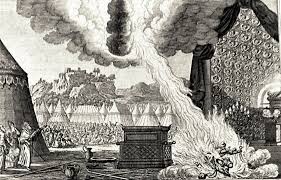
But the text goes on to detail that Elohim turned and inclined unto Abel’s offering, consuming his offering with a fire from heaven.


(4:5)  but He did not regard Cain and his offering, and Cain was very incensed, and his face fell.


Cain’s offering, on the other hand was rejected by Yehovah. And J. Hertz contends the reason for Yehovah’s rejection of Cain’s offering was due to the evil condition of Cain’s heart, as opposed to his offering being that of produce or the fruit from his tilling, which I wholeheartedly agree with. This seems evident by the context and content of Yehovah’s warning to Cain just after His rejection of his offering. Cain’s spirit was not right before Yehovah, and thus Yah rejected His offering.


This being the case, what does that say to us today about our worship of Him in connection to the condition of our hearts? I say it says something pretty significant. We’ll get into that in the practical halachah and closing remarks portion of this discussion.


Ancient Book of Jasher


Yehovh did not turn nor incline towards Cain’s offering because “he (Cain) had brought from the inferior fruit of the ground before Yehovah.”


_______________________________________________________


Many people of Faith have over the centuries gotten hung-up on the occupations of Cain and Abel, especially as those occupations directly affected the brothers’ respective offerings or worship. It is unclear as to why Abba chose to have Moshe declare the brothers’ occupation and the substance of each one’s offering and worship. Could there have been a issue with the content or substance of Cain’s offering? I guess it’s possible.


But at the end of the day, the issue at the core of Cain’s offering being rejected by Yehovah, has to do with the state of Cain’s heart versus that of Abel’s heart. Certainly, if by chance Cain’s offering was rejected because he violated Yah’s requirement that offerings or sacrifices be that of animals, the very crux of the rejection still traces back to the state of Cain’s heart. For when one willfully violates the Creator’s commandments and chooses to do things their way, they are in possession of an uncircumcised heart—a will that is resistant to giving way to the Will and Ways of the Creator.


The other thing to consider here as it relates to the consistency of each brother’s offering is the emphasis the text makes on Abel’s offering consisting of the “firstlings of his flock and from their choicest,”—that being a point of the quality of Abel’s offering, which also translates into the quality of Abel’s worship. Conversely, the quality of Cain’s offering, and by extension the quality of Cain’s worship is muted in the text, which in and of itself is telling. I believe we can safely conclude that Abel’s offering and worship was superior to that of Cain’s, although the superiority may have had nothing to do with the acceptance or rejection of one or the other’s offering and worship.


Again, it would appear, just from the forthcoming calling out of Cain by Yehovah for his negative demeanor in response to his offering being rejected, the issue at hand is the state of Cain’s heart in connection with his worship of Elohim.


Messianic author and teacher Tim Hegg suggests that Abel’s gift or offering or worship was superior to that of Cain’s because Abel brought forth worship that came from a right heart. Cain’s inferior offering or worship, on the other hand, came from a faulty, maybe even corrupt heart. Hegg goes even further to suggest that Cain was simply going through the mechanical motions of worship, absent a circumcised heart, while Abel worshipped Yehovah from a sincere and thankful heart.


This to me makes sense since it is inconceivable or unlikely that these were the brothers’ first and only offerings unto Yehovah. It seems more likely the brothers were reared in the proper method of worship, most likely by their father Adam, who himself received the revelation of worship directly or indirectly from Yehovah.


(4:6)  And Yehovah said to Cain: “Why are you incensed, and why is your face fallen?


(4:7)  For whether you offer well, or whether you do not, at the tent flap sin crouches and for you is its longing but you will rule over it.”


“Shall it not be lifted up,” according to Hertz is associated with Cain’s fallen countenance: His dejected, disappointed attitude over Yah’s rejection of His offering. Yehovah immediately recognized the evil that obviously resided within Cain—Cain’s evil heart, as mentioned in the previous two verses discussion. And thus, Yehovah offers Cain a spiritual lifeline, so to speak, in an attempt to head-off or “arrest” Cain’s downward spiritual spiral.


For that which was brewing or at work within Cain would only lead to sin. So, we see manifested here before us another example of Yehovah’s grace and love for His human creation. Clearly, Abba could have simply left Cain to his own devices and allowed him to sink into the spiritually evil abyss he was teetering atop of, or just terminated Cain’s life. But Yah offered Cain a Way out, as He does all of humanity. This is the essence of, and a foreshadow of Yehovah’s Plan of Salvation. Yah says to humanity, look, you are destined for destruction. I have a solution to your impending doom. Hearken unto My still small voice and receive the salvation I’m offering before it’s too late.


Now, another perspective of the phrase “shall it be lifted up” that Hertz brings up is from the perspective of the “it” being Cain’s offering. In other words, if Cain did well—if he behaved as he should—then his offering would be accepted by Yehovah, or rather, his offering would be “lifted up.”


Yehovah, though, warns Cain that his harboring whatever was at work inside him—that which one text described as vexing to him—threatened to rule him and lead him to sin.


I have to at this juncture of our discussion wonder whether or not this was another test for humanity. Were the hearts of these two men, in particular Cain, being tested here? We’ve discussed on this forum many times that our Elohim is a searcher of the heart, as well as He tests those who would be His. And Avraham is a prime example of this reality. Abba Himself asserts this fact:


“(9) The heart is more deceitful than all else and is desperately sick; who can understand it? (10) I, Yehovah, search the heart; I test the mind; even to give to each man according to his ways; according to the results of his deeds” (Jer. 17:9-10; NASB).


Was Yah searching the heart and testing the mind of Cain? According to this critical passage of holy writ, it most certainly was a possibility.


Nevertheless, as it was in the garden with Adam and Eve, humanity was granted freewill—the wherewithal to choose how they will deal with their inner struggles and temptations. In this, the temptation is, because Yehovah rejected Cain’s sacrifice, Cain gives in to his innate desire for vengeance or revenge.


(4:8)  And Cain said to Abel his brother, “Let us go out to the field.” And when they were in the field, Cain rose against Abel his brother and killed him.


Robert Alter notes in his translation that the phrase, “Let us go out to the field” is missing in the Masoretic Text (I.e., the Hebrew text passed down to us by the Masoretes—Palestinian Jewish Scribes–of around 1,000 A.D. Their text is the framework by which most Authorized Versions of our so-called Old Testament Bibles have been translated). This statement, however, is apparently found in the Greek, Syriac and Aramaic texts.


As we will see, this statement contradicts with at least one extra-biblical reference of this incident.


The fact that Cain lures his brother to a place that is likely remote from the family home, the text describing the place as “the field,” is indicative of the level of planning or premeditation Cain undertook. From the evidence presented in the text, Cain was determined to fully carry out this tragic, heinous act. There was no turning back it would seem.


Ancient Book of Jasher


The text next denotes that Cain sought a pretext to slay him (I.e., Abel) because Yehovah did not accept his offering. Seems Cain’s argument should have been with Yehovah as opposed to his brother who had only done that which he was supposed to do.


Where did or how were or who planted that seed within Cain that would lead to or cause Cain to seek pretext to murder his brother? We’re talking premeditated murder here. Seems as though Cain had within him an iniquitous predisposition that caused or led to him (1) offering an inferior offering unto Yehovah—doing things his way as opposed to doing things Yah’s way; and (2) jealously, having the wherewithal to contemplate murdering his brother–assuming, that is, Jasher’s rendering of the incident has a semblance of truth attached to it.


Would we be safe assigning hasatan a role in this murder; in Cain’s internal work-up to his brother’s murder? Did another agent of the enemy somehow get to Cain and ignite in him a flame of rebellion and murder? Genesis of course gives no such information of this. But we do know our Master referred to hasatan as being “a murderer from the beginning” (Joh. 8:44). What did Master mean by that? Did Yahoshua tie Abel’s murder to hasatan, or to the fact that because of him, all of humanity is subject to death? Just some thoughts.


(1:18)  The text notes that one day Abel’s flock passed over a portion of Cain’s freshly plowed field, causing Cain much upset. Was this the pretext Cain sought after his offering was refused by Yehovah?


(1:18-24)  Well, Cain and Abel engage in a verbal dispute over this situation, with the text going into some detail as to the content of their argument.


(1:27)  Well, the verbal dispute leads to Cain’s assaulting Abel. But the text goes into some detail about the emotional state of Cain in the moments after he slew his brother. The text describes Cain as sorely regretting having killed his brother, such that he was “sadly grieved, and he wept over him (Abel’s body) and it vexed him exceedingly.”


(4:9)  And Yehovah said to Cain, “Where is Abel your brother?” And he said, “I do no know. Am I my brother’s keeper?”


Yehovah’s questioning of Cain, like that of His questioning of his father Adam, is indicative, not of Yehovah’s ignorance as to what transpired, but likely the questioning was done to provide the human the opportunity to repent; to confess; even to teshuva. But in either case, no confession; no repentance; no teshuva was forthcoming, was there? Only misleading rankers by each offender, in a feeble attempt to throw the Almighty off script—off topic—to pass the buck if you will.


(4:10) And He (YHVH) said, “What have you done? Listen! Your brother’s blood cries out to Me from the soil.


  1. Hertz points out that Yehovah describes—identifies—Abel to Cain no less than 6-times over 4-verses of this passage, as his brother, no doubt in part to emphasize to Cain the heinous nature of his transgression: You killed your brother!


The personification of Abel’s blood, in that Yah declares to Cain that it cries out from the ground unto Yehovah, is an introduction into human understanding, the concept of vengeance. In other words, according to Yehovah, Abel’s blood cried out to Him to avenge Abel’s death. And so, Cain is found guilty by the Court of Heaven of his crime, and it falls to the Creator of all, to pass judgment, as Abel’s blood cries out from the ground for justice.


The Ancient Book of Jubilees


(4:3)  Abel’s blood is recorded to have cried from the ground up to heaven because Cain slew him.


Question: Does the blood of the slain innocent even today cry up to heaven?


(4:11) And so, cursed shall you be by the soil that gaped with its mouth to take your brother’s blood from your hand.


(4:12) If you till the soil, it will no longer give you its strength. A restless wanderer shall you be on the earth.”


Here we find that Cain is, in a sense, subjected to a repeat of that which his father was condemned to: a life of drudgery, having to till soil that produced more thorns and thistles than produce. For no longer would the earth yield a bounty as it did in the Garden.


Furthermore, there’s the sense of both being indefinitely separated from Yehovah, more so Cain than Adam, as a result of their transgressions. However, Cain’s exile seems more specific: He is condemned to being a wanderer, and then in verse 12, the narrator, Moshe, details “And Cain went out from Yehovah’s presence…”


But here’s a major difference between the separation from Yehovah that Adam was relegated to, and the separation that Cain was relegated to. It appears that the first family retained some semblance of relationship with the Creator. (No doubt anything close to what it was in Garden, but certainly their relationship with Yehovah wasn’t completely severed.)


We know that the text declares Yehovah regarded Abel’s offering. How that regarding of Abel’s offering manifested, we have no indication here. We will see in at least one extra-biblical source, how that “regarding of Abel’s offering” manifested.


But suffice to say, if Yehovah had completely severed relationship with the first family, He would not have involved Himself in Abel’s offering. Furthermore, we will find mention of Cain “departing from Yehovah’s presence,” suggesting to me that Yah was still very active in the lives of the first family. Just some thoughts and reflections going on here.


Alter’s translation highlights the irony of Cain’s transgression and the punishment Cain received from Yah: The very soil that “gaped with its mouth” to take his brother’s blood from Cain’s hand, would be the very instrument used to punish the tiller by trade, Cain (vs. 11).


And to add to his misery, Cain would never be at peace. He would be a wanderer throughout his lifetime; even a fugitive, which is interesting, since we will find when we get to verse 17 here in our focus passage, that after the birth of his son Enoch, Cain built a city that he named after his son. Now, if Cain was condemned to being a wanderer or a fugitive for an indeterminate time frame, his building a city (some resources described that city as a fortified or walled city) would naturally imply that he at some point took up homesteading; at least to some lesser or great extent. I came across at least one extra-biblical source that suggested Cain settled down in the latter parts of his life and found peace, building and dwelling in at one or more of the cities he built.


Clearly, the answer to this conundrum is not to be found in our focus passage. But suffice to draw from our text that Cain’s separation from Elohim led him and his posterity down the road to destruction. For we will find that those who departed from the presence of Yehovah devolved into lives of seemingly irredeemable evil. And of course that makes total sense. When one removes themselves from the reality of the light of Yah’s Torah and His beautiful, life-giving presence, the only other reality one is to be exposed to is the darkness of chaos, evil and lawlessness. Separation from Yah is the worst state of existence any human has or will ever endure, and it would seem, from the confines of our text, that Cain experienced that terrible reality.


Unfortunately, far too many folks in this world today are experiencing, not just a present day separation from the Creator of the Universe, but if they don’t get their act together, they’re looking at eternal separation from their Creator. Yet, there comes a point in those who’ve lived in that separated state that they’re turned over to a reprobate mind, as noted by Shaul in his letter to the Messianic Assemblies at Rome:


“(18) For the wrath of Elohim from heaven is revealed against all the iniquity and wickedness of men who hold the truth in iniquity (19) because a knowledge of Elohim is manifest in them; for Elohim has manifested it in them. (20) For, from the foundations of the world, the hidden things of Elohim are seen by the mind in the things he created, even His eternal power and divinity, so that they might be without excuse (21) because they knew Elohim and did not glory Him and give thanks to Him as Elohim, but became vain in their imaginings and their unwise heart and was darkened. (22) And, while they thought within themselves that they were wise, they became fools. (23) And they changed the glory of the incorruptible Elohim into a likeness to the image of a corruptible man, and into the likeness of birds, and four-legged animals and reptiles on the earth. (24) For this cause, Elohim gave them up to fill the lust of their hearts, to dishonor their bodies with them. (25) And they changed the truth of Elohim into a lie, and worshipped and served the created things, much more than the Creator of them, to whom belong glory and blessing, forever and ever: Amen…(28) And as they did not determine with themselves to know Elohim, Elohim gave them over to a vain mind; that they might do what they should not” (Rom. 1:18-28; AENT).


Indeed, this is what Cain and his descendants had to look forward to. And even today, we have generations of souls who are imitators of Cain. Oh, these may not have murdered their brothers or sisters, but through their deceptive and desperately wicked hearts, they’ve bought into the Kingdom of Darkness, lock-stock-and barrel, where murder of the innocents (the poor; the discarded of society; the unborn; the innocent is commonplace. These are in their own right, wanderers and fugitives in the very lands they claim as their homes. Little do they realize, having their hearts seared and made numb to the Truth of the Gospel and their desperate need of a savior, that they will face certain wrath, judgment and punishment. And certainly, wrath and punishment would soon come upon the world of Cain’s era, when Yah would bring about a flood to destroy the evil that had overtaken His once “me’-od tov” creation.


And to add to his misery, Cain would never be at peace. Alter renders the passage pertaining to this state: “A restless wanderer…on the earth.” How many people do we know, or for that matter, how many of us are as Cain here: Restless wanderers on the earth; going through the motions of living Yah’s Ways, but when Yah or circumstances reveals the heart of these individuals, they are as Shaul described to Timothy:


“(1) But know this: that in the latter days hard times will come: (2) and men will be lovers to themselves and lovers of money, boasters, proud, revilers, unyielding towards their own people., deniers of grace, wicked, (3) unloving, addicted to irreconcilable malicious gossips, ferocious, haters of the good, (4) treacherous, rash, inflated, attached to pleasure more than to the love of Elohim, (5) having a form of respect for Elohim but wide from the power of Elohim. Them who are such, repel from you” (2 Tim. 3:1-5; AENT).


Wherever Cain would eventually wander in his life, no matter how skilled he’d become at tilling, the soil would remain barren to him and refuse to bring forth its bounty. He and his wife, now wanderers, would no doubt be forced to forage for their food. It would be this act of foraging for their food that Cain would be forced to put his trust in Yehovah to provide him his sustenance. For Cain no longer had any means by which to provide for his family, since his skills at tilling were fundamentally taken from him.


You see, humanity is always going to do things Yehovah’s Way, or humanity’s going to do it Yehovah’s Way. Oh, it may seem to Cain at first that he didn’t need Yehovah (as is the thinking of most humans). But in the end, it turns out that he would absolutely need Yehovah, one way or the other.


Ancient Book of Jubilees


(4:4)  Yehovah made Cain a fugitive on the earth because of his brother’s blood.


(4:13) And Cain said to Yehovah, “My punishment is too great to bear.


Cain not only had to contend with the physical penalties of his transgression, but also the guilt that was no doubt seared into his conscience. This punishment, Cain declared, was too great for him to bear.


Along that line, the Jasher account goes to great lengths to underscore and bring out the intense grief Cain experienced after he murdered his brother.


The Ancient Book of Jasher


(1:28) The text details the interaction Cain has with Yehovah over the incident with Abel. Most interestingly, the writer touches on Yehovah bringing up to Cain a couple of his eternal attributes, which would lend to Yehovah’s qualifications to pass and execute judgment on Cain:


  1. Yehovah is a reader and judge of the heart of man.


  1. Yehovah is omniscient (I.e., He is all knowing and all seeing) and omnipresent.


Yehovah, as part of his sentence/judgment against Cain, curses the ground on which Cain would till for his food. Therefore, Cain could no longer be a tiller, but a wanderer—better, a forager.


(4:14) Now that You have driven me this day from the soil and I must hide from Your presence, I shall be a restless wanderer on the earth and whoever finds me will kill me.”


There’s a sense here that Cain, prior to his murdering his brother, found great comfort and peace in being in the “presence of Yehovah” when he dwelt in his father’s home, or in his dwelling in Eden. There’s a sense that his banishment would remove the protections he enjoyed living in the presence of, or being near Yehovah. That protection, Cain noted, would be effectively removed as a result of his banishment. This situation is referred to in rabbinic circles as a “forfeiture of divine protection.”


This spiritual reality is realized in Yehovah declaring that He would hide his face from Yisra’el in the day the people would “arise and play the harlot with the strange gods of the land, into the midst of which they were going;” forsaking Yehovah and breaking the covenant He had made with them (Deu. 31:16-18).


This is a reality that we all must be diligent to avoid at all costs, especially in these perilous times. When we turn our hearts away from Yehovah our Elohim, we run the risk of losing or forfeiting the divine protection He has placed over us. So we must always be vigilant to guard our hearts, and we do that most effectively when we willingly endeavor to die to self.


So, Cain somehow had the foresight to be concerned for his safety. He feared being killed by an “avenger of blood.” This part of the story paints for us a shadow picture of Yehovah making provisions for the manslayer (Num. 35).


In essence, Cain was crying out to Yehovah for a place or means of refuge to escape potential avengers of Abel. Where would he, the 3rd human to come into existence, learn or know about murder; vengeance; divine protection; and such? These are rather advanced concepts that were somehow planted in the mind of Cain, especially given that there were at the time, just two other souls alive on the planet. Somehow, Cain realized that there would come a time in the future when the population of the world would be such that men would take up causes such as vengeance and come after him. Clearly, this would be something to happen only in the distant future.


(4:15) And Yehovah said to him, “Therefore whoever kills Cain shall suffer sevenfold vengeance.” And Yehovah set a mark upon Cain so that whoever found him would not slay him.


The “mark” that was rendered unto Cain by Yehovah was more that of a mark of protection, than that of a stigma that Cain would be resigned to carried upon his body till he died. Many over the centuries have sought to spiritualize this mark, but sometimes, that which is foreign to our modern day, western sensibilities, are best left to its natural understanding.


The establishment of the mark upon Cain that would warn any who would seek to avenge the murder of Abel, served to strike fear in the hearts of men that they themselves would receive a far greater set of punishments from Yehovah than was meted out to Cain if they succeeded in killing Cain.


Some in rabbinic circles say that Cain was a repentant sinner, and thus he was afforded by Yah the mercy he received, in the form of this mark. But this to me is pure prairie jibberish at best. Nothing in this text suggests that Cain repented of his transgression. Now, as I’ve always asserted, if the text is silent on a matter, does that silence say a thing one way or another? No, it doesn’t. I will concede that silence in biblical texts leave room for contemplation and discussion. But certainly it is ill-advised for us to take advantage of the silence in order to put forth a doctrine that cannot be proved. It can be misleading and create confusion. It’s best at times to allow the text to speak for itself.


(4:16) And Cain went out from Yehovah’s presence and dwelled in the land of Nod east of Eden.


Interestingly, the Hebraic cognate with Nod (that is, the term of interest having an attached meaning) is the term used for “wanderer” from verse 12 of our passage here. Coincidence or intentional?


Hertz interprets Cain’s removal from the presence of Yehovah as evidence that Eden was a special place. As I mentioned in our last Torah Reading Discussion entitled, “Who is to Blame for the Sins of the World-Adam or Eve,” I believe Eden, especially the Garden located within Eden proper, was an exclusive extension of Yehovah’s Kingdom here on earth. For I’ve always held that wherever Yehovah dwells, there we find His Kingdom. And so, if Yehovah’s Spirit (His Ruach) dwells within us, we can rest assured that the Kingdom of Yehovah is in us, as our Master taught (Luk. 17:21). Josephus, who I would describe as an estranged rabbi, contends here that Cain slew his brother in response to Yehovah viewing Cain’s offering as an “invention of a covetous man” that was “gotten by forcing the ground.” Abel’s offering, conversely, came from “naturally of its own accord.”


We find in 1 John 3:12, Yochanan provides a counter explanation to Josephus’ rabbinic thinking for Cain’s murder of Abel:


“…Cain, who was of that wicked one, and slew his brother. And therefore slew he him? Because his own works were evil, and his brother’s righteousness” (KJV).


Yochanan contrasts Abel’s sense of righteousness to Cain’s sense of evil, and it was evil-lasciviousness—iniquity—that drove Cain to murder his brother. More so, an iniquitous spirit and heart.


Josephus—Antiquity of the Jews


Josephus’ text takes an interesting turn by quoting Yehovah in the midst of His questioning Cain’s evil act against his brother:


“I wonder at thee, that thou knowest not what is become of a man whom thou thyself has destroyed.” (More a statement by Yehovah regarding Cain’s evil intent and actions, is it not?)


And it is because of this conundrum, according to Josephus, that Yehovah did not carry out the death penalty against Cain, but instead condemned him to be accursed in the earth—a fugitive.


The text states that Yehovah casted Cain out of the land along with his unnamed wife.


The Ancient Book of Jasher


(1:33)  The text, as was mentioned in Genesis, stresses that Cain “went out from the presence of Yehovah, from the place where he was…” And thus, Cain dwelled in the land toward the east of Eden, he and all belonging to him.


(4:17) And Cain knew his wife and she conceived and bore Enoch. Then he became the builder of a city and called the name of the city, like his son’s name, Enoch.


Hertz casts doubt as to the physical identity of Cain’s wife, citing that incest is abhorrent to the Jew and that it violates Yehovah’s Torah (Lev. 28:9). Indeed, incest is prohibited in Torah. But it would seem that Yehovah permitted what we know today as incest to take place in the early stages of human history in order to establish the human population. And later on, as the number of humans grew in the earth Yehovah prohibited the practice (Lev. 18:7-15).


Now, if we believe the biblical narrative to be true—that the first humans to ever exist were Adam and Eve, then there is no other conceivable answer to this conundrum. Cain had to have married his sister. The extra-biblical texts of Jasher and Jubilees both affirm this understanding.


This is one of those instances I would assert, where the bible’s silence on an issue can easily be understood, as there is no other explanation. Some have postulated the thinking that Yehovah created another set or sets of humans apart from Adam and Eve. Our bibles, nor do any of the extra-biblical writings support such a contention. And I get how hard it must be for some to swallow the fact that Cain and Seth both married their sisters, but that’s because we have a healthy bias against incest. But we must recognize that Yehovah often works within the framework of what He has in place in order to fulfill His Will in the earth. This same principle is seen in the practice of polygamy: Yehovah established marriage to be between one man and one woman. However, He permitted polygamy to be practiced by His people for a defined period of time in human history.


At the end of the day, we can rest assured that the Creator knows what He’s doing. Yehovah commanded the first couple and their progeny to be fruitful and multiply. Why would Father give a commandment without the means by which to fulfill that commandment? Just food for thought.


Josephus—Antiquity of the Jews


Josephus goes on to attribute Cain with the proliferation of evil in the world at that time; the violent accumulation of personal wealth which he encouraged his acquaintances to do likewise, making him a great, although wicked, leader of wicked men in the earth at that time. An inventor of weights and measures. And it was on account of this that Cain was able to coax the world “into cunning craftiness.” And it was also from this that he established fortified, walled cities.


The Ancient Book of Jubilees


(4:9)  Question: Where did Cain get his wife from. Genesis speaks about Cain knowing his wife and the two rearing children?


According to the text, a second daughter was born unto Adam and Eve, and she was named Azura. Cain took his sister Awan to wife. Ultimately Chavah gave birth to 9 more sons according to this text.


People of Faith have severe difficult buying into the fact that Cain and Seth married their sisters. I recognize that there seems to be a built in aversion to what we referred to today as incestuous relationships. However, if we believe the Genesis account to be true, which leads to us believing that Yah made Adam and Eve, and no other beings are mentioned, then based upon the accounting we have, the only logical conclusion we can draw is that Cain and Seth married their sisters. And we have extra-biblical references to sort of back-up that thinking. Nevertheless, many folks within and outside our Faith community find it difficult to access such thinking. And so, these will come up with strange, extra-biblical solutions to their conundrum such as Yehovah created other people besides Adam and Eve, and those people produced female children that Cain and Seth married and produced children with.


(4:25) And Adam again knew his wife and she bore a son and called his name Seth, as to say, “Elohim has granted me other seed in place of Abel, for Cain has killed him.”


Adam and Chavah lost 2-sons that day. And so, when they bore Seth, Adam referred to him as a “second seed unto them on the earth instead of Abel.”


(4:26) As for Seth, to him, too, a son was born, and he called his name Enosh. It was then that the name of Yehovah was first invoked.


Ancient Book of Jubilees


(4:11)  Seth took his sister Azura to wife.


Practical Messianic Halachah


Yehovah’s acceptance of Abel’s worship and rejection of Cain’s worship is described from the perspective of Him “giving regard to Abel and his offering, but to Cain and his offering He did not give regard.”


The Hebraic terminology used here is fascinating and when understood, opens up vistas of spiritual meaning and insight. The Hebrew terms for “to give regard” is “sha’ah.” “Sha’ ah” means to “turn and give one’s attention” to something. It is obvious that we turn to and give our attention to something that is interesting or important to us. Yehovah would seem to be no different from us here. He obviously found something of interest in Abel’s worship that caused Him to turn towards Abel and give his offering His undivided attention, which translates into Yah accepting Abel’s worship. Conversely, Yah did not turn or give credence to Cain’s worship, but instead, gave serious examination to Cain’s disposition and behavior.


If this thing about worship is really about the condition of the worshiper’s heart, this all makes complete sense and holds tremendous importance to Yah’s elect. Because the truth of the matter is that Yehovah recognizes the one with a right heart (Psa. 34:18; 51:17; Isa. 57:15).


Hegg further points out a substantive understanding that Yehovah does not deal with humanity in a “capricious way” (I.e., Yah doesn’t just make stuff up to hit humanity over the head with on the fly). It seems pretty evident from Yah’s calling Cain out after He rejects Cain’s offering, that Cain knew exactly what the problem was with his worship.


This is a critical piece of information that must be understood by Yah’s people. When Yah takes issue with us, He is not capricious towards us. We invariably know what the problem is. Granted, we may not know precisely the nitty gritty of the problem, but we will invariably have a general sense of what we’re doing wrong. That’s why it is so important that we constantly seek Yah’s leading when we pray: That we ask Him to reveal to us those areas in our lives that need fixing so that our covenant relationship with Him is not impeded.


One of the main reasons we were created was to worship Yehovah. If our worship is rejected by Yehovah for whatever reason, we by default fail in our created purpose (Mat. 15:8-9). And we don’t want anything to do with that, do we? That makes for a wasted existence.


More so, we must petition the Father to search our heart, as King David described in Psalm 139:23-24:


“(23) Search me, O Elohim, and know my heart. Try me and know my anxious thoughts, (24) and see if there be any hurtful way in me. And lead me in the everlasting way” (NASB).


One cannot truly be in covenant relationship without inviting Yehovah to conduct a perpetual heart examination and any needed surgery to keep him/her in right relationship with the Eternal. For many folks within and without our Faith Community are faking it and going through the motions of serving and walking out their Faith, no doubt similar to the life of Cain. These are no doubt having their worship routinely rejected by Abba. But these, instead of confronting the problem headlong and seeking to have their situation corrected through corrective heart surgery, too often choose to turn a blind eye to their spiritual depravity and hope for the best in the end. Y’shua made it clear that he will summarily dismiss such individuals from Him and His millennial kingdom, stating that He never knew them (Mat. 7:21-23). My God, that is indeed an edict none of us should ever want to hear.


Yah’s grace is extended down to us. As He did with Cain, He’s throwing us a lifeline, through His Word and His Spirit. His Word points us to Yahoshua and our need for a savior (Rom. 10:4—the end of Torah is Messiah…), while His Ruach convicts and corrects us (Joh. 16:8—and when He (the Holy Spirit) comes He will convict the world concerning sin and concerning righteousness and concerning judgment). This is, of course, all contingent upon us allowing these divine resources—Yehovah’s powerful grace—to work on our behalf.

____________________________________________________________________________


One of the fundamental themes of this Torah Reading has to do with True, Yehovah-honoring worship.


What is true, Yehovah-honoring worship? I’m talking about the worship that gets Abba’s attention; worship that touches the Creator’s heart such that He turns towards our offerings and He accepts it with pleasure.


Today, worship is all about a church’s or fellowship’s Praise and Worship offerings, with some churches producing each Sunday, concert-level performances to this end. In these cases, it’s more about performance and eliciting some emotional responses from the group’s attendees. From the attendees’ perspective, it’s often all about the experience: Escapism; happiness; excitement; community; together; having a spiritual high.


Years ago, before all the gospel and praise and worship performances took center-stage in denominationalism, worship was simpler. It involved the church attendees participating, such as in the singing of hymns and the recitation of prayers. It was up to the attendee to involve themselves in the worship activity, as opposed to what it has become today: Being entertained; at least in most cases.


True biblical worship is an abandonment of self and a full surrendering to the sovereignty, holiness, and majesty of the Creator of the Universe. It is in fact a true acknowledgment of this reality.


Back in the day of the patriarchs, true worship involved solemn acts of reverence in the form of prostrating one’s self before Elohim; offering sacrifices; reciting and expressing reverence of Elohim in the form of psalms and prayers. The focus was entirely on the greatness of Yehovah; being thankful for His provision and safety; to seek forgiveness of one’s transgressions and to pledge allegiance to the Creator’s Way of life.


The writer declared:


“Come, let us worship and bow down. Let us kneel before Yehovah our Maker” (Psa. 95:6).


Worship was a display of one bending their will to the Will of Yehovah.


I invite you to listen to or read our post on this subject of worship entitled “Where Do You Worship Yehovah” if you are interested in finding out more about biblical worship.


Over time, worship devolved into rote, mechanical halachah that was devoid of the worshiper’s heart bending to the Will of the Eternal. Father exclaimed that He was not accepting and appreciative of such contrived efforts at worship of Him. Indeed, Yehovah required of His people to worship Him in the exacting way He prescribed. But the worship He prescribed for His people to perform meant absolutely nothing if His people’s hearts were not properly circumcised.


Of this, the writer declared:


“For You do not delight in sacrifice, otherwise I would give it. You are not pleased with burnt offering. (17) A broken and a contrite heart, O Elohim, You will not despise” (Psa. 51:16-17; NASB).


Abba stated through His prophet:


“For I delight in loyalty rather than sacrifice, and in knowledge of Elohim rather than burnt offerings” (Hos. 6:6; NASB).


So, as far as Abba is concerned, worship of Him is not about rote, mechanical Torah-keeping, although keeping Torah is extremely important. For Abba, worship of Him is about bending our Will to His; it’s about loving Him and loving our neighbor; it’s about dying to self and imaging Him in the earth.


Our Master, Yahoshua Messiah, informed the Samaritan Woman at ya’achov’s Well, when the woman pressed Him as to where Yah’s people must worship Him (I.e., that rote, mechanical keeping of Torah was at the forefront of the ancients’ minds), that the time was imminent when the people of Elohim would worship Yehovah in Spirit and in Truth.


The worship of a child of Yah that is in Spirit is essentially him or her being led by the Father’s Ruach haKodesh, in their reverencing and serving of Yehovah.


The worship of a child of Yah that is in Truth is essentially him or her walking out their Faith; in their obedience of Faith; in their being in true covenant relationship with Yehovah. In so doing, the elect’s day-to-day walk in Mashiyach becomes that of perpetual worship unto Yehovah.


Both elements of worship require that an elect’s heart be circumcised pursuant to Yehovah’s instructions in righteousness, as rendered in Deuteronomy 30:6 and Jeremiah 4:4.


The Apostle Shaul expounded and expanded upon this critical aspect and element of the elect’s walk in Mashiyach when he wrote:


“(28) For he is not a Jew who is so in what is external (alone): nor is that (only physical) circumcision, which is visible in the flesh. (29) But he is a Jew who is so in what is hidden: and circumcision is that of the heart, in the spirit, and not in the letter, whose praise is not from men, but from Elohim” (Rom. 2:28-29; AENT).


Without a circumcised heart, one’s worship of the Eternal becomes more about us, than it is about Yehovah. How so? Because again, the [uncircumcised] heart of humanity is deceptive and desperately wicked; it is diametrically opposed to the Ways of the Almighty (Jer. 17:9; Isa. 55:8).


But when we enter into an obedient covenant relationship with Yehovah, His Ruach haKodesh, takes our heart, even our will, and chips away the stony layers of it to expose the naked flesh therein. Whereby, He may then inscribe His Torah upon that fleshy table of the surrendered soul’s heart (Jer. 31:31; Heb. 8:6-13).


I believe Yah rejected Cain’s offering because Cain’s heart was not right. Cain quite conceivably possessed a rebellious heart and disposition that somehow resisted the Creator’s Will and even Purpose. It no doubt put Him at odds with the Creator.


Now, a great many contend that Cain’s offering was rejected by Yehovah because he failed to render a blood sacrifice unto Yehovah. He instead rendered unto Yehovah the fruits of his tilling labors.


I don’t know whether or not this is true; it’s possible I would imagine. Yah does not reveal clearly the reason why he rejected Cain’s offering. All I know is that Cain’s heart was not right and Abba knew it, as He called Cain out about it before Cain committed the murder. I don’t believe the issue here is about the form in which the sacrifice took. I believe it has to do with the state of the worshiper’s heart here. Abel’s heart was apparently right before Yehovah, while Cain’s heart was not.


The simple fact that Cain would carry out that which he did is evidence enough for me that he had a heart problem.


We can learn from the example of Cain even today. For I submit to you that we cannot truly worship our Elohim and expect Him to accept our worship and praise if our hearts aren’t right. Scripture tells us that Yah turns His undivided attention to those who possess a broken spirit; a broken and contrite heart (Psa. 34:18; 51:17; Isa. 66:2). (I invite you to listen to our read our post entitled “A Broken Heart and Contrite Spirit Gets God’s Attention—STAR 67” to gain a more in-depth understanding of the relationship that exists between the state of one’s heart and their relationship with Yehovah.)


Beloved, if we truly seek to have our worship and our spiritual offerings accepted by Yah, we must endeavor to get our hearts right with the Eternal. It begins with our dying to self and surrendering fully to His Will. And so, we in effect must bring our hearts to Him so that He can inscribe His Torah on it. And if we are successful doing that, Yah will take care of the rest and before we know it, our worship of Yehovah will be where it’s supposed to be because our worship will be led by the Ruach haKodesh, and our walk will reflect our covenant relationship with Yehovah, such that we image Him in all the earth!

Why Aren’t We Wearing Tzitzits or Fringes?

38 "Speak to the sons of Israel, and tell them that they shall make for themselves atassels on the corners of their garments throughout their generations, and that they shall put on the tassel of each corner a cord of blue. 39 "It shall be a tassel for you 1to look at...

read more

Hebrew Roots Worshiping God in Spirit and in Truth

Hebrew Roots Worshiping God in Spirit and in Truth Let's reflect upon the topic of worshiping Abba in Spirit and in Truth as it relates to our Hebrew Roots Faith. This will be part 3 of my multi-episode series on operating and walking out this walk in the Spirit. If...

read more

Who is to Blame for the Sin of the World? Adam or Eve?” STAR-2-A Discussion of Genesis 2:4-3:24

INTRODUCTION

This is Sabbath Thoughts and Reflections 2—A Discussion of Genesis 2:4-3:24—Parashah 2 in our 3-year Torah Reading Cycle. Since the rabbis did not have a hand in naming the individual Torah Readings in the 3-year Reading Cycles, for the sake of reference, I’ve named this discussion: “Who is to Blame for the Sins of the World? Adam or Eve?”


There’s a lot of content to draw from this reading. So much so that a full in-depth study of this passage would take hours upon hours to conduct. There’s just so much. In-depth study of each passage/verse would entail one looking at each of the various concepts; topics; issues; conducting word studies; examining the Hebrew wording; lexiconal studies; etc. Our purpose here today is not to conduct an in-depth study of this Torah Reading, but rather, conduct an overview of what happened here during the early days of humanity.


Indeed, this reading contains a number of themes that we could spend countless hours discussing. But for our purposes, we want to only touch upon just a handful of salient points of interests in our discussion from which you may be led to conduct your own in-depth study.


The other thing I need to point out before we launch into today’s discussion is that we must always keep in mind that each of our Torah Readings ultimately point us to our Master Yahoshua HaMashiyach. Thus, whenever we discuss and study Torah, we should be compelled to look beyond the rote and see Mashiyach’s ultimate purpose and work on behalf of humanity. This is one of the things that separates us from our Jewish cousins when it comes to our focus of Torah.


I will be reading from the Robert Alter Translation of Torah.


2:4This is the tale (some English translations render tale as generations) of the heavens and the earth when they were created (or rather, this is how the heavens and the earth came to be).


Generations=towledah {to-led-aw}=course of history. History=CJB; story=NAB; NIV, NAS, NET=account; YLT=births


Something to consider here at the outset of our reading is: From whom did Moshe receive this accounting of creation? Obviously, Moshe was not present to witness the Creation that he was inspired to record by the Ruach of Elohim. Which leaves the answer being: From the Words of Yehovah (Heb. 11:3). YHVH certified Moshe and we by faith believe this account.


2.5—On the day YHVH Elohim made earth and heavens, no shrub of the field being yet on the earth and no plant of the field yet sprouted, for YHVH Elohim had not cause rain to fall on the earth and there was no human to till the soil,


It is suggested here that Yah created/recreated the earth to be tended to by his human creation.


2.6and wetness would well from the earth to water all the surface of the soil,


2.7YHVH Elohim fashioned the human, humus from the soil (I.e., “human,” from the soil, “ ‘adamah”), and blew into his nostrils the breath of life, and the human became a living creature.


Yehovah formed (yatsar as opposed to ‘asah, which means to make) Adam (or man) from the soil of the ground.


YHVH breathed into Adam’s nostrils the breath of life, and man became a living soul/creature/being/person.


The Targum Onkelos renders=breathed upon Adam’s face the breath of lives, and it became in Adam a discoursing (a speaking) spirit.


The Targum Onkelos is the official Aramaic translation to/of Torah. It is accepted as an authoritative translation of Torah and thought to have been written in the early 2nd century C.E. The content of this work stems back to Ezra’s time. However, it was later forgotten by the Jewish nation. It was re-recorded by Onkelos, a famous convert to Judaism (~35-120 C.E.).


Interestingly, we find in Jasher–1:2—Elohim forms man from the ground, blows into him the breath of life, and man becomes a living soul that is endowed with speech.


So, there’s this underlying emphasis in the Jewish mind that Adam is a formed being who is gifted with speech.


Part and parcel of Adam being the imager of YHVH was his imputed speaking or discoursing spirit. The concept of imaging YHVH stems back to our STAR 1 discussion of Genesis 1:26-27.


From the “mean materials” of the earth the Creator was able to form a truly remarkable human structure that the Psalmist described aptly:


I will give thanks unto thee; For I am fearfully and wonderfully made: Wonderful are thy works; And that my soul knoweth right well. (Psa 139:14 ASV)


From the moist ground man was formed by Yehovah. The passage at this early juncture of our reading sets the stage for what would become one of Adam’s created purposes or divinely ordained tasks. Yah makes man from the moist soil of Eden and relocates him to the Garden which is in Eden proper. It is there in the Garden that Yah tasks the man to tend/till/dress and guard the Garden (2:15).


2:8And YHVH Elohim planted a garden in Eden, to the east, and He placed there the human He had fashioned.


So, it appears evident from this verse that Yehovah did not create or form Adam in the Garden of Eve. Yah in fact established, or as the text is interpreted in most English translations Yah planted a garden in Eden. The Garden was a self-contained place in Eden. The actual physical location of Eden has been a subject of great controversy and mystery for centuries and many self-professing scholars and experts have persuaded many that they indeed know the location of Eden or the Garden. But the truth of the matter is that no one truly knows where Eden is, if it is in fact a place that still exists here on earth. It does seem evident, however, that the Garden where Yehovah placed the man and his woman, was a place where Yehovah would train, commune and even test His human creation. I would go so far as to propose that the Garden of Eden, if not the whole or portions of Eden proper, hosted a manifestation of the Kingdom of Elohim. For where Yehovah’s presence dwells, there we find His Kingdom. For we find Yehovah is described as walking in the garden in the cool of the evening to commune with Adam in 3:8. Nevertheless, it is safe to presume that Eden existed at some point in the vast regions of Mesopotamia. And the interesting thing about Eden likely existing in Mesopotamia is that ancient Babylon also existed in that region of the world. Clearly, the enemy is about counterfeiting the works of Yehovah wherever they possibly can. For if Eden was conceivably an extension of Yehovah’s Kingdom here on earth, Babylon, located in the same general region of the world, would be the earthly birthplace and headquarters of the Kingdom of Darkness. I just found that to be interesting.


In the Ancient Book of Jubilees–There is a sense of the garden being a holy place; a dwelling place of Yehovah. Thus, only the pure could enter and remain (3:13). There is also a sense that certain angels were given instructional charge over the couple in the Garden (3:16).


2:9—And YHVH Elohim caused to sprout from the soil every tree lovely to look at and good for food, and the tree of life was in the midst of the garden, and the tree of knowledge, good and evil.


The only thing we’re told about the Garden in terms of its composition is that it hosted every type of tree that was pleasant to look at and that bore good fruit, as well as the centrally grown trees of “The Tree of Life,” and the “Tree of the Knowledge of Good and Evil.” And like so many of the elements surrounding this story, the spiritual significance of these two trees could certainly occupy our minds for a number of discussions. But we’ll save that discussion for another time Abba willing. I will say, however, that the Tree of the Knowledge of Good and Evil could be viewed as a test element for Yah’s human creation. The one thing we know about our Elohim is that He often tests those who would be His. He tested Avraham a number of times throughout Avraham’s lifetime; as well as Abba tested Yisra’el throughout her wilderness sojourning.


Now, I get it that some take umbrage with the thought that Yah tests His human creation. Well, from a humanistic standpoint, it of course would appear that when Yah puts His human creation to a test He is setting her up for failure. But that’s not the case at all. To begin with, we know that Yehovah is sovereign, and He is privy to deal with His creation anyway that His holy and righteous character leads Him. Secondly, Yah respects humanity’s freewill. He will not force Him or His Ways on His human creation. So, He gives humanity the freedom of choosing whether or not they will adhere to His instructions and keep His Ways.


Thirdly, Yah provides His human creation the opportunity to prove its allegiance—its obedience to and total dependence upon Him and His Ways. And in so doing, Yah will graciously engage His human creation in a relationship. The process by which Father certifies whether an individual is suited to enter into a relationship with Him is by searching their heart and ascertaining their intent: Jeremiah 11:20; 17:10; 20:12; Rom. 8:27; 1 Sam. 16:7; Psa. 139:23. In the case of Adam and Eve and the Tree of the Knowledge of Good and Evil, the couple was faced with an easy choice: To stay within the confines of the relationship they enjoyed with the Almighty, or seek to alter the parameters of that relationship. Turns out that the serpent (aka, the nachash) had figured out that the couple would most certainly entertain becoming something other than that which Yehovah had originally established in and for them (e.g., abandoning their created purpose as imagers of Yehovah in the earth). They chose to be like the gods (i.e., the angels or demigods of the earth). And thus, their (and by extension all unconverted humanity’s) hearts are not suitable for the covenant relationship Yehovah seeks to have with them.


In the midst of the Garden, the Creator established two trees: (1) The Tree of Life, and (2) The Tree of the Knowledge of Good and Evil. (Interestingly, the Targum Onkelos renders the title of these trees as the Tree of Lives and the Tree of whose fruit they who eat know between good and evil. The LXX renders the second tree as the tree of learning the knowledge of good and evil.) As our story progresses, it would seem that these two trees, in the midst of a Garden that was filled to overflowing with every conceivable and inconceivable food for the couple to enjoy and subsist on, would serve as elements to test the spiritual resolve of the couple (I.e., the obedience of the couple; the couple’s willingness to remain entirely dependent upon Yehovah as their sustainer and sovereign).


I often wonder whether the Tree of Life provided the couple the means by which they would be physically sustained indefinitely. If so, this would clearly support the contention that humanity was not designed in its physical form to live forever without the nutrients provided by the Tree of Life. In other words, it was Yehovah that would provide the couple indefinite life through this tree if they remained in covenant relationship with Him. For their life was not inherent in their being—in their make-up.


Interestingly, one of the great prophesies found in the Book of Revelation entails of this same Tree of Life in the World Tomorrow, providing sustenance and healing to the nations; a feature of the New Jerusalem (Rev. 2:7; 22:2, 14).


2:10Now, a river runs out of Eden to water the garden and from there splits off into four streams.


2:11The name of the first is Pishon, the one that winds through the whole land of Havilah, where there is gold.


2:12And the gold of that land is goodly, bdellium is there, and lapis lazuli.


2:13And the name of the second river is Gihon, the one that winds through all the land of Cush.


2:14—And the name of the third river is Tigris, the one that goes to the east of Ashur.


2:15—And YHVH Elohim took the human and set him down in the garden of Eden to till it and watch it.


Here we read of Yehovah placing Adam in the Garden. There is a hint of the Garden being a sacred place—a set-apart place in the earth. I would go so far as to suggest that the Garden at that time was an iteration or manifestation of the Kingdom of Yehovah. It’s conceivable that it was here that Adam learned specifically how Yehovah was to be worshiped and communicated with by His human creation. Some commentators have suggested that Adam was a priest unto Yehovah in the Garden. (Something to think about.)


So, in addition to His tending/dressing/tilling and guarding of the Garden, I would suggest that Adam and Eve (aka Chavah) would have engaged in worship of Yehovah accordingly.


The other thing to bear in mind here is that the Garden belonged to Yehovah, not to the man and his woman, despite their being given dominion of the rest of creation (Gen. 13:10; Eze. 28:13).


2:16—And YHVH Elohim commanded the human, saying, “From every fruit of the garden you may surely eat.


2:17But from the tree of knowledge, good and evil, you shall not eat, for on the day you eat from it, you are doomed to die.”


The first recorded Torah commandment given to humanity with a prescribed penalty (which turns out to be the prescribed penalty for all sin), which is of course death—both physical and spiritual death.


2:18—And YHVH Elohim said, “It is not good for the human to be alone, I shall make him a sustainer beside him.” (The phrase Alter uses as “sustainer beside him” is from the Hebrew phrase “ ‘ezer kenegdo”, which denotes more accurately a counterpart that comes alongside the man to actively work with him as well as work on his behalf.)


2:19—And YHVH Elohim fashioned from the soil each beast of the field and each fowl of the heavens and brought each to the human to see what he would call it, and whatever the human called a living creature, that was its name. (Take note the importance Abba places on naming and names.)


2:20—And the human called names of all the cattle and to the fowl of the heavens and to all the beasts of the field, but for the human no sustainer beside him was found. (Note how Alter’s translation emphasizes not just the naming of the animal creation, but also the fact that Yehovah had made His animal creation to exist in pairs or groups. The “sustainer beside him” is repeated once again to emphasize the reality that the man was alone without a sustainer beside him at this stage of creation.)


2:21And YHVH Elohim cast a deep slumber on the human, and he slept, and He took one of his ribs and closed over the flesh where it had been,


Here’s something to ponder: Why did Yehovah use a rib from the man to build the woman? Many have surmised and speculated. But the text does not provide any clear answer to this question.


2:22—and YHVH Elohim built the rib He had taken from the human into a woman and He brought her to the human. (Note that YHVH, as He did with the man, fashioned, or built the woman. Humanity was the one element of the Eternal’s creation that He personally formed and fashioned. It stands to reason that man is uber special to the Creator.


A special note as it relates to this verse: We find in The Ancient Book of Jubilees–3:8—that Eve was formed in the 2nd week of Creation history.


2:23And the human said: “This one at last, bone of my bones and flesh of my flesh, This one shall be called Woman, for from man was this one taken.”


The bringing together of the man and his woman in the Garden was viewed by our Master as the divine institution of marriage (Mat. 19:4-5; Eph. 5:28) [Reference my teaching on marriage and divorce series].


The formation of the woman comes about during and in response to the animal naming project that the Creator gave to Adam to perform. It is the first time during this creation period that Father recognized something was amiss; that “it was not good” for man to be alone. Recall that throughout the creation week, Abba recognized that His creation/re-creation was “tov,” or good. And on the sixth day of creation, after He had made man, the Creator acknowledged that His creation up to this point was “me-od tov,” or “very good.” In other words, everything that Yehovah created/re-created was as it should be; it was in its proper place and fulfilling its respective, created purpose; and this would include Adam. Indeed, order had displaced the chaos of Genesis 1:1-3.


However, we see here that Father recognized that Adam was not able to complete His divinely given purpose alone (2:17-18). The man in fact required an equal partner, or as the KJV describes or titles, a “help-meet.”


Thus, the woman was formed from the rib of the man. And when the Creator brings the woman to Adam, he responds with poetic approval. For it was provided unto him by Yehovah, from this point moving forward, a being with whom He could engage in discourse; with whom he could be at oneness with; with whom he could work with to keep and guard the Garden; with whom He could worship Yehovah in ways that he alone could not achieve (reference my post on Biblical Marriage).


2:24Therefore does a man leave his father and his mother and cling to his wife and they become one flesh.


2:25And the two of them were naked, the human and his woman, and they were not ashamed.(Note the fact that the text emphasizes to us that the two were both naked and neither of them were ashamed, highlights the innocence and purity that existed in humanity at this pre-fall juncture of human history. Like young children who are not conscious of their nakedness at bath time for instance, the purity and innocence of little children is the state of being that Yahoshua is calling us back to in order for us to be admitted into the Kingdom of Heaven (Mat. 18:3). I’m not talking about nakedness, but the innocence and purity that children bring to our lives. We are thusly called to Teshuva: Back to that place of innocence our first parents had in the Garden before their fall.


Yehovah declares that is was not good for Adam, the man, to be alone. And we see here at this juncture of our reading that Yehovah is an Elohim of completeness. Adam initially was not paired with a like being, as was the animal creation. It’s possible Yehovah up to this point was preparing the man for proper social interaction with his soon coming help-meet. It’s not entirely clear in the text.


The Targum Onkelos of this passage describes Adam/ the man as having or possessing a “discoursing spirit”—a character trait that yearns for interaction and social connectedness; companionship. The man no doubt observed the animal creation in terms of companionship within the framework of their respective species. The man’s discoursing spirit facilitates his naming and classifying/cataloging the animal creation. Then when the woman is brought to him, he would be prepared to have meaningful interactions with her, no doubt just as He had with the Creator in the cool of each day. I guess the only question I have to this theory is: How would Eve have been prepared for her side of that social interaction with Adam? Did she come into their marriage relationship inherently possessing that interactive ability; or would Adam have had to teach her how to interact and communicate with not only him, but Elohim. Seems this is a likely possibility. But again, we can only surmise from what we have before us in our text.


3:1—Now, the serpent was most cunning of all the beasts of the field that YHVH Elohim had made. And he said to the woman, “Thought Elohim said, you shall not eat from any tree of the garden—”


This creature, materially a serpent according to the text, has the capacity to converse with Eve. Whether or not Yah’s animal creation at the time had the capacity to converse with Yah’s human creation is not evident in this text. However, in the Ancient Book of Jubilees, there is mention that Yah’s animal creation possessed the ability to speak (Ancient Book of Jubilees 3:28). I won’t mention any more on that, other than to say that it would seem this creature was the instrument of a higher spiritual power, most likely that of hasatan; Lucifer (Joh. 8:44; 1 Joh. 3:8; Rev. 20:2). I believe this is the most important thing as it relates to the serpent as we move further along in our discussion.


We certainly see the same MO (motus operandi) of the enemy being employed here in our text, as was repeated in his tempting of our Master in the Judean wilderness—Matthew 4:3: The asking of a question that challenges the integrity and veracity of the Word(s) of Yehovah. Since Yehovah had fashioned just the two-humans, unlike the form the tempter took to test our Master in the Judean wilderness–he (hasatan) had few options to manifest himself as, which no doubt led to his choosing to use the most cunning—the most subtle, in the Hebrew “ ‘aruwm”—of Yah’s creatures to effect the deception.


Given that Yehovah is all knowing, He would have known this would or was going to happen. He in fact allowed it to happen; the using of a member of His animal creation to effect the transgression.


The crafty serpent directly approached Chavah as opposed to Adam. Why? Most likely due to the woman’s diminished sophistication. For all we know, the serpent may have previously attempted to sway the man but was unsuccessful. We just don’t know, other than the fact that he successfully beguiled the woman. (As a dear friend of mine in the Faith is so fond of saying, “we don’t know what we don’t know.”)


The serpent brings into question the Creator’s righteousness—The Creator’s intent—The Creator’s integrity. Isn’t that how the enemy works even today in each of our lives? Does he not set out to convince us that that which we desire for ourselves that is contrary to Yehovah’s will for us is okay for us to have because in the end, Yehovah is going to give us a free pass into the Kingdom, right? He seeks to convince us that we deserve that thing we lust for; the evil behaviors and baggage we cling to; the evil thoughts and feelings we keep going back to; the bad relationships and enterprises that we seek to enter into and maintain and that beset us; that if we are to be truly happy in this life, we must rely on ourselves and have those contrary things that prop up our depraved lives. For life in Messiah, according to the voice of the enemy, is truly not a happy one. And so, the enemy targets those weak points in each of us that cause us to be susceptible to his and his seeds’ wiles—their tactics—their methodia. That’s why Shaul taught his Ephesian readers to put on the whole of Yehovah’s armor so that we may effectively ward off the attacks of the enemy (Eph. 6:10).


3:2—And the woman said to the serpent, “From the fruit of the garden’s trees we may eat, (Alter’s translation gives a sense of a statement being put forth by the serpent to the woman that the woman effectively cuts off in mid-sentence. It’s as if the woman wanted to correct the serpent right at the start of the questioning, as if she was correcting the serpent’s understanding of the situation. This would give credence to her understanding of Yehovah’s commandment surrounding that tree. Or does it?)


3:3—But from the fruit of the tree in the midst of the garden Elohim has said, ‘You shall not eat from it and you shall die.’” (Many commentators have gone to great lengths to point out that the woman added to Yah’s commandment, which we know from Torah, is a no-no in and of itself. If this is indeed the case, the woman was already dead, as she would be proved wrong by the serpent in short order.)


Could Chavah (aka Eve) have had a diminished understanding of the prohibition surrounding the Tree of the Knowledge of Good and Evil; that there may have been some altered understanding, such that she believed the tree and its fruit were deleterious (even physically poisonous) to the wellbeing of the couple? Remember that she described the prohibition or commandment in such a global sense, that they weren’t even able to “touch the tree lest they die.” Such a thing does not change the fact that the couple was prohibited from eating of the fruit of that tree in the first place. But the text does lend to a sense that Eve possessed a diminished understanding of the tree and its prohibition; or at the very least, since Adam had been around longer than she, he knew more than her about the tree and prohibition surrounding it.


And so, in my mind, it stands to reason that the serpent demonstrated to her that the tree was physically safe for her to partake of its fruit. And we can see how a diminished understanding to the prohibition could certainly lead to her transgressing the command, albeit, more accurately, she being deceived. Which by extension offers us the lesson that our understanding of Yehovah’s instructions in righteousness might be lacking in some areas and places in our respective walks. But we are still responsible for adhering to that which we know to be true; to stay the course until such time we are informed of Yehovah otherwise.


3:4And the serpent said to the woman, “You shall not be doomed to die.


Seems to me that Eve possessed some degree of an understanding of what it would mean for them—or any human for that matter—to die.


It seems rational to conclude that in order for the couple to understand the implications of transgressing the commandment not to eat of the forbidden tree, they would surely have to understand what it meant to die. So, at some point, it would seem that the couple was taught this concept of death and dying, either by Yehovah Himself or a messenger—an angel maybe. Knowing the consequences of transgressing this commandment would certainly put to the test the couple’s hearts and their loyalty to their Creator. And for the couple to risk everything they possessed by transgressing the Almighty’s commandment regarding the Tree, we will see here in the next in a couple verses that Eve (and possibly Adam) developed a level of trust in the serpent. It’s quite conceivable, at least to me, that this creature was a regular guest or visitor of the Garden. The serpent no doubt had studied and gained an understanding of its target–what drove them; what inspired them; what they knew and what they did not know. I would venture to even submit that the creature had regular conversations with the couple leading up to this point in the story. Indeed, there’s a lot of information we don’t have here. And for all we know, this leaving certain bits of information out of the text was intentional on the part of our Elohim.


3:5—For Elohim knows that on the day you eat of it your eyes will be opened and you will become as gods knowing good and evil.” (Who are these gods the serpent is referring to here? Is it possible that these so-called gods were elohim or angels that the couple routinely saw transiting about the Garden from time-to-time? If indeed the Garden was an extension of the Kingdom of Elohim, the transiting of these beings were likely a source of great curiosity for Eve. So, it stands to reason that Eve understood what the serpent was trying to sell to her by virtue of her knowing what gods were. And when the opportunity was put forth to her to be like them simply by taking of the forbidden fruit, it was no doubt a done deal in her heart and mind.)


The enemy assures his victim that she and her husband would not be punished as the Creator had warned—the serpent basically calling the Creator a bold-faced liar—and more so, the serpent entices the woman by extolling the benefits they as a couple would enjoy if they partook of the forbidden fruit; such that their eyes would be opened and they would be like the elohim or the gods (conceivably the angels the couple no doubt became used to seeing during their time in the Garden).


3:6And the woman saw that the tree was good for eating and that it was lust to the eyes (desirable) and the tree was lovely to look at, and she took of its fruit and ate, and she also gave to her man, and he ate.


Yah did not, as the serpent erroneously put forth to Eve, set out to keep the so-called knowledge of the gods (I.e., elohim) from the couple. Obviously, knowing what we know of the character of our Creator, this illusive knowledge would come to the couple and their descendants in due time as Yah saw fit to do so. But at this juncture of human history, it was not Yah’s will for that information to be had by the couple, nor was it hasatan’s to give.


Interestingly, it was the belief and warped position of certain first-century Jewish Gnostic sects, that Eve was the heroine of humanity, and thus she was to be worshiped as a goddess of sorts. For Eve, according to these gnostics, was able to see through the Creator’s deceptive ways with the serpent’s help (I.e., Yehovah sought to withhold the knowledge of the universe from His human creation out of jealousy and fear). These contended that such knowledge rightfully belonged to humanity. This evil doctrine was obviously a nascent—an early form of “humanism” (I.e., the worship and exaltation of humanity).


The Ancient Book of Jubilees’ accounting of the beguiling of Eve is somewhat restrictive, focused on Eve as the reason for the season. The serpent approached her and tricked or beguiled her into transgressing Yah’s instruction. She ate and saw she was naked, covered her nakedness, and she afterwards gives Adam the forbidden fruit, which he ultimately eats, realizes he’s naked, sews himself an apron of fig leaves and covers his nakedness (3:21-24).


3:7—And the eyes of the two were opened, and they knew they were naked, and they sewed fig leaves and made themselves loincloths. (Question: Did the fruit cause some biological reaction within the couple to cause their eyes to be opened to the fact that they were naked and that they were in a heap of trouble? Some contend this to be the case, while others like me are not so sure. The text does not in any way provide an answer to this probing question.)


Here’s something to ponder: Was this Garden experiment more a test for Eve or for Adam? Because obviously Eve was not as sophisticated as Adam. She was in what I would describe a vulnerable state. She was prime for being deceived; beguiled. That being the case, it could be said that she ended up being a steppingstone by which Adam would transgress the commandment of Yehovah. Hasatan will use the very people in our lives to cause us to fall; to slip up. From time-to-time we may find ourselves in a vulnerable position where the people we know and love the most are used by the enemy to trip us up and lead us to yield to a temptation and transgress Abba’s instructions in righteousness. Thus, I believe the target in this case was Adam, more than Eve. It was Adam that transgressed Yehovah’s commandment, whereas Eve was deceived (1 Tim. 2:13-14).


I would think it is something to consider the relationships we have in our lives and what significance we place in those relationships in comparison to our relationship with Yehovah. It was Master who told His followers that if they weren’t willing or able to give up competing relationships in their lives (priority-wise) to follow Him, then they would be unfit to be His disciples (Luk. 14:26).


Now, Master wasn’t saying to abandon spousal and family relationships. We cannot walk away from our marriages or close families because we’ve entered into a covenant relationship with the Almighty, unless we are faced with extreme situations that threaten our peace and our walk with Messiah (1 Cor. 7:15). Father still holds us responsible for fulfilling our family obligations. And this is not just fulfilling those obligations begrudgingly. We must fulfill those obligations with sincere loving kindness (Col. 3:19; Tit. 2:4). We have to learn to biblically prioritize how we walk out those relationships in association with our relationship with Yah. You see, we have a problem when we put human relationships ahead of our relationship with Father and our Master, whereby those human relationship become priority in our lives. We’re required to give up everything for Yehovah and our Master Yeshua, while at the same time loving and taking care of our families. If we are walking in a biblically-based marriage or family relationship, our covenant relationship with Yehovah will have us die to self, such that we seek to love and serve Yehovah first and foremost, and then also seek to love and serve our family members in accordance with Yah’s Ways. We cannot allow, however, our family members to dictate to us how we serve, worship, and obey our Elohim.


This story shows us that Adam elected to put His woman before Yehovah. His doing so led to dire results, not just for Adam and Eve, but also for the whole of humanity. We men must learn from Adam’s transgression and listen to and obey Yehovah. None of this is to say that we shouldn’t serve our spouses or parents or whoever as is our responsibility as Godly-husbands and Children of Yah. But when a loved one demands we not do something Yehovah has directed us to do, we must learn to lovingly handle that situation and do that which we’ve been instructed to do by the Eternal.


3:8—And they heard the sound of YHVH Elohim walking about in the garden in the evening breeze, and the human and his woman hid from YHVH Elohim in the midst of the trees of the garden.


3:9—And YHVH Elohim called to the human and said to him, “Where are you?”


3:10And he said, “I heard Your sound in the garden and I was afraid, for I was naked, and I hid.” (Note here that the man did not confess nor ask for immediate forgiveness of his transgression. He instead framed a convoluted admission that there existed a problem: that he was afraid being found by the Creator without clothing—being found naked.)


3:11From the tree I commanded you not to eat have you eaten?”


3:12—And the human said, “The woman whom you gave by me, she gave me from the tree, and I ate.” (Note here the blame game is learned and played. Was this an effect of the forbidden fruit?)


The pair gave the Creator an evasive confession of their transgression. There was no true repentance of their transgression. Instead, when the Eternal questions the pair for purposes of fully unpacking the details of their transgression, the evasive confession turns into a blame-game.


The man blames Yehovah—”the woman you gave me…” (3:12). Interestingly, Adam was willing to save his own neck by throwing his beloved under the proverbial bus: She’s the one who caused me to violate your commandment. We see clearly spelled out here that Adam was not inclined to come to the defense of his woman, by taking responsibility for his role in the transgression.


3:13And YHVH Elohim said to the woman, “What is this you have done? And the woman said, “The serpent beguiled me and I ate.”


Conversely, the woman turns and blames the serpent who apparently was too arrogant or foolish to flee the scene before the Poh Poh arrived.


The physical creature that was the serpent was consigned to a perpetually loathsome state on the earth; no doubt a significant reduction from the elevated original state of being, to a state of crawling/slithering about on the ground and poetically, eating the dust of the earth upon which it moved. The spiritual entity that fueled the physical serpent to perpetrate the deed against Eve would ultimately lose his exalted and powerful state and die like humans, through the agency of the seed of the very subject of his assault—the seed of the woman that would bruise its head (cf. Psa. 82:7).


3:15—Enmity will I set between you and the woman, between your seed and hers. He will boot your head and you will bite his heel.”


There would arise a particularly nasty war between the enemy (hasatan) and the woman. No doubt women throughout the whole of human history have had to especially endure perpetual tribulation at the hands of men (some of whom actually use this passage and text to justify their heinous and evil treatment of women). And let me also include children in this equation—the woman’s seed—are the two classes of humanity that are most pursued, attacked and assaulted and tribulated against by the serpent (the nachash) and his seed (both the spiritual and human). The penultimate seed in this prophecy is of course Yahoshua Messiah and those who would, through Mashiyach, become sons of the Most High (reference the dragon being enraged in the end times and setting out to destroy the woman and her seed—Revelation 12:17).


The enemy, ignorant of the precise details of the Eternal’s Plan for Salvation, Redemption and Restoration, would bruise—afflict Mashiyach’s physical body (at the execution stake), but ultimately the seed of the woman (haMashiyach) prevails/conquers death and the grave by the agency of the Creator’s Rauch HaKodesh—that same powerful agency that brought order out of chaos and re-created the earth and all therein. And once and for all the seed of the woman will defeat the enemy and humanity will be restored to the state and purpose in which it was originally created for (Rev. 20:10)! Praise Yah!


3:16—To the woman He said, “I will terribly sharpen your birth pangs, in pain shall you bear children. And for your man shall be your longing, and he shall rule over you.”


This signaled an end to the man’s pleasurable tilling and tending duties in the Garden, and the beginning of a laborious, arduous, and even painful life of turmoil; the man having to battle against thorns and thistles in order to grow and gather enough food to sustain him and his family. And this penalty would persist until the time when man would return to that which he was made—the ground.


At that time, Adam and Eve began the moderately slow, be certain process of dying. Interestingly, the Ancient Book of Jubilees gives an interesting perspective on this. The writer notes that 1,000-years is as a day to Yehovah and the court of heaven, and vice versa. Well, turns out that Adam died at the age of 930, just 70-years shy of 1,000-years, or rather, a day in Yehovah’s eyes (Jubilees 4:29-30; Gen. 5:5). And so, it turns out that Yehovah was right on the money when He described the couple’s death as being in the day they partook of the forbidden fruit that they would surely die (2:17). They were, thereafter, denied access to the Tree of Life, which if they had access, would have resulted in a whole host of issues and concerns that extend beyond the confines of our discussion here today.


It is here, however, that we have before us, a foretaste of Yehovah’s saving grace: The promise of the Mashiyach that would restore all of creation to its original state, with humankind being restored to the “cool of the day fellowship and relationship with the Creator of the Universe.”


The one who was deceived and who introduced sin and death to the human equation, would ultimately bring forth reconciliation and whole life to humanity (1 Tim. 2:15).


3:17—And to the human He said, “Because you listened to the voice of your wife and ate from the tree that I commanded you, ‘You shall not eat from it,’ cursed be the soil for your sake, with pangs shall you eat from it all the days of your life.


3:18—Thorn and thistle shall it sprout for you and you shall eat the plants of the  field. (Note here that Abba was effectively establishing a vegan diet to humanity until such time that He would reverse His prohibition on the consumption of meat (Gen. 9:3). It is quite conceivable that Abba needed the population of clean animals that could be consumed as food by His human creation to multiply to adequate levels before giving the couple and their descendants the go ahead to start eating meat. Just a thought.)


3:19By the sweat of your brow shall you eat bread till you return to the soil, for from there were you taken, for dust you are and to dust shall you return.” (Note: a sobering reminder of whence we all come. A stark contrast to the translated body we will receive when our Master returns and establishes His Millennial Kingdom here on earth. We will be like Him (Rom. 8:29; 2 Cor. 3:18; Phi. 3:21; Col. 3:4; 1 Joh. 3:2)


3:20And the human called his woman’s name Eve, for she was the mother of all that lives.


Thus, as she would ultimately be the mother of the life-giver, Yahoshua Messiah, these would be those who would become sons of Yehovah and enter into life everlasting.


3:21And YHVH Elohim made skin coats for the human and his woman, and He clothed them.


3:22And YHVH Elohim said, “Now that the human has become like one of us, knowing good and evil, he may reach out and take as well from the tree of life and live forever.” (Note here the fascination Father had with his human creation’s capacity to imagine and do. There was genuine concern that the couple would develop enough sophistication to know they had to partake of the Tree of Life to stave off death. The thought of humanity living forever in their depraved state is the epitome of the return of chaos to the world.)


3:23—And YHVH Elohim sent him from the garden of Eden to till the soil from which he had been taken.


3:24And He drove out the human and set up east of the garden of Eden the cherubim and the flame of the whirling sword to guard the way to the tree of life. (Note: Yehovah employed one of His Cherubim to do the job that Adam failed to do, which was to guard the Garden.)


These being the same species of creatures that guard Yehovah’s heavenly throne (Eze. 10).


Overview Thoughts and Reflections


One of the central themes of this Torah Reading has to do with “willing dependence.” Independence is a by-product of the human heart: The earnest desire to be independent of Yehovah; willing and able to make its own decisions and its own way. This is common to the sinful mind, heart and soul. The pursuit of independence by Yehovah’s human creation flies contrary to the purpose by which Yehovah created us. We cannot fulfill our original purpose as imagers of Yehovah in the earth if we are bent upon being independent.


It is a common practice for us to train our children, for instance, to become independent of us, their parents, so that they may survive and make a way for themselves in the world and not be dependent upon us as their providers and sustainers. This is indeed a Hebraic concept that is endorsed by Yehovah:


The writer of Proverbs counseled that one train up their children in the way they should go so that when they become adults, they will not depart from that way (Pro. 22:6).


The Hebrew way of training up one’s child is holistic in nature: You train the child in the family trade/business/skills/etc. (e.g., the apostle Shaul was trained in his family’s trade of making goat-hair tents-Act. 18:1-3) in association with daily training in Torah and the ways of the True Faith once delivered. What this holistic approach to training children would ultimately lead to is a child that would grow up being able to engage in a career that would provide income for his/her family, all the while cognizant that one’s sustenance and increase (I.e., income) comes only from the one who grants him/her the strength/power to make wealth (Deu. 8:18).


We see manifested in Yehovah’s punishment and edicts handed down to the fallen couple, His mercy and His righteous judgment. As it related to Yah’s righteous judgment, Yah sentenced the man and his descendants to work for their sustenance—I.e., by the sweat of his brow would man physically subsist/live—until they died. The mercy of Yah is manifested in His (1) not outright killing the couple for their transgression; (2) providing a means by which they could sustain themselves outside the garden; and (3) a way back to the relationship the couple enjoyed in the Garden with the Creator, which would ultimately be accomplished through the personal ministry of Y’shua HaMashiyach.


In each of these manifestations of Yehovah’s mercy, and even in his righteous judgment, Yah would provide Adam and his descendants the perpetual reminder that their lives are always dependent upon Him. Humanity in and of itself is incapable of sustaining itself (Psa. 121:2).


Idolatry at its core seeks to disassociate humanity from its connection—its dependent relationship with the Creator, and redirect that dependency and repurpose that relationship with something or someone else. In the case of Adam and Eve, that dependency would be upon themselves—being wise and knowledgeable as the gods—the demigods (I.e., elohim). The relationship, by necessity, would also have to change with the change in dependency. The relationship would be one that would no longer be one of a Father and His Son, but one of equal beings; equal partners; independent partners if you will. Worship would transition from that of the Creator of the Universe to that of humanity; worship of self; to that of worship of knowledge; to that of worship of other entities.


The other problem associated with the couple’s transgression was the introduction of and acceptance of the falsehood that Yehovah is a liar; that He is deceptive; that He does not have the best interest of His human creation at heart. And this is part and parcel of the great lie that leads to humanism and paganism: The belief that Yehovah is holding something back from us and that that which He has declared will not come to pass. (Recall that we talked about this in our post “Let God be True and Every Man a Liar—A Messianic Discussion of Romans 3:3-4—this underlying belief in sinful man that Yah is not faithful nor is He Just and Righteous in His Ways.) This my friends is part and parcel of the very core of idolatry that so many have fallen for over the centuries. And this is why, in great part, we have denominationalism: The belief that man knows better than Yehovah, and thus man determines how He will worship the Eternal and how our relationship with the Almighty will look.


Thus, Adam became humanity’s representative in the earth. Interestingly, responsibility for sin in the world rests at the feet of Adam. Shaul informed the Roman Messianics that death came to humanity through the one man Adam, but life potentially comes to humanity through the one man Y’shua Messiah (Rom. 5:12-21). Therefore, it is Adam who ultimately holds responsibility for humanity’s depravity and desperate need for a savior.


Now, why was Eve not given the dubious distinction of being the progenitor of the human condition? I see it in light of Shaul’s clarity of Chavah (aka Eve) being deceived (aka, having been beguiled) by the serpent’s craftiness. I likened this perspective to the scenario whereby many seniors today fall victim to certain scams and financial schemes and are bilked of their life’s savings. Younger, more savvy individuals do not fall for these scammers’ schemes. Generally, the seniors that fall for such schemes aren’t sophisticated or knowledgeable enough of certain false business practices to ward off such criminals. So, these are prime for being beguiled or deceived by these crafty scammers. Conversely, the younger, more sophisticated population are aware of the risks associated with the scammers’ proposals and will generally resist the temptation to partake in their schemes. However, there are, from time-to-time, those of the more sophisticated lot who, for reasons usually associated with greed, will hedge their bets and go in with the scammers.


Now, we know that Adam was created first, then later came Eve. Shaul stated that Eve was deceived, not Adam (1 Tim. 2:14). It would seem safe to conclude that Adam was at least at a journeyman’s level of competency as it relates to understanding the full extent of Yehovah’s commandment regarding the Tree of the Knowledge of Good and Evil, while Eve could be described as being at an apprentice-level of competency. Thus, the fullest responsibility for the transgression, or at the very least, knowing better, falls to Adam. Again, Eve fell victim to the serpent’s craftiness. Adam, on the other hand, was not deceived (2 Cor. 11:3). He was just stupid. Yehovah rightly accused and convicted Adam for listening to his woman over that of the Words of Yehovah, His Creator (3:17).


The deception of Eve consisted of a small handful of elements: seeing that the forbidden fruit was actually good to eat; the forbidden fruit was appealing to the senses; and the forbidden fruit would ultimately make her as wise as the gods or elohim.


Adam’s transgression comes on the heel of Eve offering the forbidden fruit to him and then him eating that fruit. Turns out that Adam was present (”imah”) at the time the serpent was spinning his deceptive trap at Eve (3:6). Yet, Adam apparently remained silent, nor did he fulfill his Yah-given duty of guarding the Garden—maybe guarding the Garden from intruders like the serpent here. Ultimately, Adam capitulated and took of the forbidden fruit. Whether or not the man put up any resistance to any of this is not at all mentioned in the text.  But suffice to say, something within him (I.e., his heart) was not circumcised enough to resist his woman’s agenda that he eat of the fruit, or to obey Yehovah over the instructions of his woman.


Yehovah no doubt knew what had transpired between the serpent and the first-couple. Yet Yehovah came searching for the couple, no doubt as He customarily did, in as the text describes, the cool of the day (3:8). Clearly, this act on the part of our Elohim has so many facets and tremendous spiritual implications associated with it. The fact that Yehovah came in search of the couple, not in an aggressive, but rather in a loving manner speaks volumes to the love that Yehovah has for His human creation. Certainly, the Creator could have spoken and put an end to humanity the moment the couple partook of the forbidden fruit, but He didn’t. Instead, the Eternal came with opportunity in hand. He came and offered the couple an opportunity to explain what, why and how. In essence, the Almighty came to the fallen couple with the opportunity for redemption.


Soon thereafter, Yehovah slays an innocent animal and clothes the couple with suitable attire to cover their nakedness. This act, in and of itself, of course, speaks untold volumes in what I would describe as a prophetic shadow-picture of the sacrifice that our Master Yahoshua HaMashiyach would eventually make on behalf of fallen humanity; whose sacrifice—whose blood—would cleanse us from all unrighteousness, covering us so that we would not face the ultimate penalty for sin which is death (1 Joh. 1:9; Rom. 6:23). Despite the first Adam’s disobedience resulting in the depraved human condition, the last Adam’s obedience results in redemption and salvation and restoration for humanity (Rom. 5:19). And then in the Eternal’s passing of judgment upon each party of the crime, He prophecizes that although the woman being deceived launched this whole human depravity thing, humanity’s salvation would come via a woman’s conceiving/conception of Mashiyach (3:15). That same Mashiyach in addition to restoring humanity to its proper, original place of “me-od tov,” His ministry will destroy the serpent, the serpent’s seed and the serpents anti-Elohim agenda once and for all. Praise Yah!


The transgression in the Garden by the first couple resulted in a perpetual disruption of two levels of relationships: (1) The relationship humans would have with the Creator of the Universe; and (2) the relationship men would have with their wives. Indeed, with the fall, the chaos that existed at the start of creation, returned with a vengeance. And just like we saw played out in the creation overview of chapter one, only Yehovah can return order to these elements of chaos.


Sin is at the heart of the relational chaos that ensued when the first couple partook of the forbidden fruit. The beautiful, intimate relationship the first couple enjoyed with Yehovah—and we can only speculate as to the depths and heights that relationship took during the couple’s time in the Garden, was terminated. Sin would always get in the way and even inhibit such a relationship in the future. Because the heart of man is deceptive and desperately wicked (Jer. 17:9), Yehovah cannot and will not have that degree of relationship with human beings. It is only through the personal ministry of Yahoshua HaMashiyach that that level of relationship is at all possible.


Also, the intimate, pure and righteous relationship the man and the woman enjoyed as a married couple was also perpetually damaged. Even in the seemingly best, most healthy marriages, there always exists some degree of strife. Issues of control and domination are always being played out and combated in one way or another. The man and the woman, in order to enjoy that original marriage oneness, must overcome their selves; they must in effect die to self, whereby they are willing to serve Yehovah first and foremost, and then serve their mate without concern for themselves. That dying to self comes only through Yehovah’s Ruach HaKodesh operating in each of us.


In Mashiyach we become new creations and are privileged to walk in the newness of life (Rom. 6:4; 2 Cor. 5:17; Gal. 6:15). Thus, in Mashiyach, selfish, controlling and fearful agendas are removed and a sold-out couple in Mashiyach can worship Yehovah as one, and in a manner that as individuals, they could never achieve. Their individual and combined love for Yehovah and for one another will be beyond that of human understanding (Eph. 3:19).


Why Aren’t We Wearing Tzitzits or Fringes?

38 "Speak to the sons of Israel, and tell them that they shall make for themselves atassels on the corners of their garments throughout their generations, and that they shall put on the tassel of each corner a cord of blue. 39 "It shall be a tassel for you 1to look at...

read more

Hebrew Roots Worshiping God in Spirit and in Truth

Hebrew Roots Worshiping God in Spirit and in Truth Let's reflect upon the topic of worshiping Abba in Spirit and in Truth as it relates to our Hebrew Roots Faith. This will be part 3 of my multi-episode series on operating and walking out this walk in the Spirit. If...

read more

The Call to True Biblical Repentance is to Teshuva

by Rod Thomas | The Messianic Torah Observer-Sermon Delivered to Sabbath-Keepers During Sukkot 2021


A Question of Kingdom Preparedness

This was a teaching I delivered to a Sabbath-keeping group online this past Sukkot. I’ve entitled it “The Call to True Biblical Repentance is to Teshuva.”  This teaching is actually the firstfruits, if you will, of an overall project I’m working on related to Kingdom Preparedness.

The truth of the matter is this: There is NO open, smooth highway to the Kingdom. In fact, our Master described the journey one must take to reach His glorious Kingdom as consisting of a narrow gate and an arduous pathway that only just a few will ever find (Mat. 7:13-14).

 Only a Few Will Be Prepared to Receive the Kingdom

The realities of Kingdom Preparedness that trouble me the most is that little addendum to Yahoshua’s description here that stipulates only a few will ever find the path and gateway to the Kingdom. Master said few ever find the path and gateway to life-to the Kingdom. So, what exactly does that mean? Is the path and gateway to the Kingdom consistent with the path and gateway we have either been led to believe exists, or we have deluded ourselves into believing exists?

The Example of Caleb and Joshua and the 120 Disciples of Yeshua Messiah

As it relates to this thinking—this understanding—that only a few will enter the Kingdom of Yehovah, we have the sobering example of Caleb and Joshua. If we liken the Promise Land—Canaan—Yisra’el–to the coming Kingdom of Yehovah, Scripture tells us that of the vast mixed multitude of adults that left Egypt under Moses’ leadership—some estimate that number to be 2 million or more—only Caleb and Joshua made it into the Promised Land (Num. 14:30). Just 2 people made it in. Not even Moses made it in.

And then we have the case of Yeshua. Scripture tells us that of the scores—the throngs—the multitudes that followed Yeshua during His 70-day ministry, only 120 disciples remained after His ascension.

Only a Remnant will Enter the Kingdom of Yehovah

And so Yah’s true set-apart people who will be Kingdom Ready will be few in number—a remnant actually. So few in number is this remnant that even Yeshua questioned: “when the Son of Man comes will He find faith on the earth” (Luk. 18:8). This remnant , and we’re seeing this happening already today throughout the world, will be deemed enemies of this world system. And it is this precious remnant that our Master is coming back for when He returns to establish His Kingdom. Master is not returning for an organization or an entity, but a people who are prepared to receive Him and His Kingdom; a people who the Apostle Paul described as being without spot or wrinkle; that is holy and without blemish (Eph. 5:27). And it is this remnant that will be prepared to receive Yehovah’s Kingdom when it comes.

 Only by Being Kingdom Prepared Will One Enter Yehovah’s Kingdom

How will these handful of holy ones get to a place in their walk where they will be without spot and blemish—essentially Kingdom Ready; where they, like the 5 wise virgins of our Master’s parable, will be prepared to receive the bridegroom in the middle of the night, having their lamps properly trimmed and filled with oil (Mat. 25:1-13). How will these reach the level of Kingdom Readiness that Yehovah requires of those who will inherit the Kingdom?

The actions of both the fundamental and Hebrew Roots/Messianic churches, in preparing their adherents to receive the Kingdom of Yah, is not consistent with stark reality of the Gospel record.

As it relates to those whom He will admit into His Kingdom, Master stated:

“By their fruits you will know them. (21) Not every one that says to Me, ‘Lord!’ shall enter into the kingdom of heaven; but He that does the WILL of the Father in heaven; (don’t lose sight of the WILL of the Father, for it may not entirely be as we perceive it to be, or at the very least, not as the Churches would lead us to perceive it to be); (22) Many will say to Me in the day of judgment, ‘Lord! Lord! Have we not prophesied in your Name, and in your Name have cast out demons, and in your Name done many wonderful works? (23) Then I will pronounce the verdict, ‘I never knew (yada in the Hebrew denotes that of a close, intimate relationship with someone)! Depart from Me, you violator of the Torah—you worker of iniquity” (Mat. 7:20-23; Rood).


Indeed, those that find themselves denied entry into the Kingdom by the righteous judge, Yeshua, will not have been in a proper state of Kingdom Preparedness. Why would people who have committed themselves to the work of the Kingdom be denied entry into the Kingdom? In Yeshua’s statement to those whom He denies entry into the Kingdom, we surprisingly find that He does not call these individuals liars, does He? No. He in fact concedes that these will have done significant work for the Kingdom of Yehovah. But the problem—the reason for not allowing these to enter the Kingdom is that these failed to do the WILL OF THE FATHER. And because these failed to do the WILL OF THE FATHER, Master declares to them that He never knew them—He never had a true and substantive relationship—He never “yada’d” them—He never had an intimate relationship with them, nor they Him. The Master labels these individuals as workers of iniquity.

 The Will of the Father

So, getting back to the billion-dollar question here in this critical passage of the Gospel record: What then is the will of Yehovah? And so our Master provides the answer to this question in Matthew 18:11-14:


“(11) The Son of Man has come to save that which was lost…(14) Even so, it is not the WILL OF YOUR FATHER in heaven that one of these little ones should perish” (Rood).


So the will of the Father is that every soul be saved. However, for one to be saved, that soul must do as Y’shua commands. Yeshua was sent to save that which was lost. This being the case, He has provided specific instructions to facilitate that salvation—that entry into the Kingdom of Yehovah.

 The Will of the Creator is for Humanity to Repent and Believe the Gospel

So, what then was Y’shua’s commandments or instructions to us for salvation and entry into the Kingdom? It was for us to repent and believe the gospel.

The various organizational churches of this world view and understand the English term “repent” as used here by our Master, pretty much along the lines of the English dictionary definition:


“To feel or express sincere regret or remorse about one’s wrongdoing or sin.” The term carries with it feelings of remorse; regret; of being sorry for something one has done; wishing that one hadn’t done a certain thing.


So, I ask you: Is this definition of repentance consistent with the instructions that Yeshua gave to those of us who would endeavor to receive salvation and enter the Kingdom of Yehovah? And the answer to that question is not entirely; or our English definition of repent only partly sums up what our Master expects from us.

 What is the Repentance Yeshua Called us To?

The fullness of what Yeshua meant by repent or repentance is best understood, not by its ancient Greek expression that was translated into Elizabethan English over 400-years ago, but by its Hebrew rendering. (And this is why it is so important that we stop pooh poohing the use of Hebrew terminology, names and Torah commandments in the churches of God, because we all too often short-change ourselves in understanding just what the Eternal expects from us by relying only on the English wording of our bibles, which is all too often missing something in its translation.)

Turns out that what John and Yeshua were actually calling the people to do out there in the Judean wilderness, was to Teshuva.

 Defining Teshuva

The Hebrew understanding of repentance is “Teshuva.” And teshuva derives its meaning from its root word “Shuv (Gen. 3:19).” “Shuv” denotes a turning back.” Now, classical Christian understanding of repentance is that a would-be believer turns away from their sins and turns to Jesus.

But the Hebrew understanding of repentance is that of a “return back” to the way of existence that our Creator Yehovah always intended for His human creation; a return to humanity’s original, undefiled state, which He declared at the time of creation to be “me’od tov”—very good, for Adam was made in Yehovah’s likeness, possessing Yah’s attributes. And because Yehovah declared His human creation “me’od tov,” very good, Adam would be the prototype by which all Adam’s descendants would exist, imaging in all their ways, Yehovah in all the earth.

We know, of course, that Adam transgressed Yehovah’s commandment in the Garden of Eden. And thus, humanity became subject to the effects and penalty of sin, which is death. Humankind no longer imaged Yehovah in the earth, but instead, imaged hasatan. But Father, willing that no soul perish, sent His beloved Son, whom the Apostle Paul referred to as the “last Adam” to permanently deal with humanity’s sin issue. And in so doing, providing humanity a pathway “back” to where Yehovah always intended His human creation to exist: In His perfect, righteous and holy image—Be Ye Holy as I Am Holy (Lev. 20:7; 1 Pet. 1:15-16).

Teshuvah Transcends the Guilt-Ridden Mind

But teshuva transcends one’s guilt-ridden state of mind to that of a “personal decision.” It is a decision on the would be elect’s part to turn from the path they were presently on (which Hilary dubs as turning away from one’s personal gospel), and turning back toward Yehovah’s ways—turning back to the state in which we fulfilled our purpose as imagers of Yehovah in the earth (which is Yah’s gospel).

Teshuva must consist of a change in how we think. As imagers of Yehovah, we are to think/we are perceive the things of this world as Yehovah thinks and perceives them. We are to feel and act as Yehovah feels and acts.

 Teshuva is a Transformative Action on our Part

Teshuva is a transformative act. It’s a move towards existing/towards being the way Yehovah originally intended his human creation to be: pure; innocent; righteous—mo’ed tov—fulfilling our original purpose. (Remember Y’shua stated, if we do not become as little children, we will not inherit or enter the Kingdom of Heaven.) So teshuva demands that we turn back and walk out our original purpose, in a state of holiness, righteousness; in purity of heart; glorifying our Father in heaven in the process.

The highlight for the set-apart soul that teshuva’s is that they enter and maintain an obedient covenant relationship with the Creator of the Universe.

What is Yah Requiring of Those Who Would Be His Elect?

Beloved, what is Yehovah requiring of us so that we may receive His Kingdom? Is it feast-keeping; sabbath-keeping; eating clean? Or is it something more?

Yeshua touched upon this in His famous Sermon on the Mount:


“(23) Woe to you, sages and Prushim (Pharisees), you hypocrites! You pay tithe of mint and anise and cumin, but you have omitted the weightier matters of the law: Judgment, mercy, and faith. These tithes you ought to have done, but you should not have left the other undone. (24) You blind chairs! You strain at a gnat and swallow a camel. (25) You [have a hundred regulations on how to clean the surface of a cup and platter], but just under the surface you yourselves are full of extortion and excess. (26) You blind Prushim (pharisee), cleanse first the inside of the cup and platter, that the outside may also be clean” (Mat. 23:23-26; Rood).


And then in the next verse (verse 27), Yahoshua likened these Jewish religious leaders as “white-washed sepulchers” that appear beautiful on the outside, but inside they are full of bones of the dead and uncleanness.

This is a perfect example of the inward cleaning that true teshuva requires of any who would seek to inherit the Kingdom of Yehovah. At its very core, teshuva is about the heart; it’s about operating in Kingdom with a pure, just, righteous and circumcised heart. The prophet Jeremiah described the uncircumcised heart as “deceitful and desperately wicked” (Jer. 17:9). But Yeshua informed us that only the pure of heart will see Yehovah” (Mat. 5:8). So, unless one’s teshuva includes having his/her heart circumcised, he/she will not inherit the Kingdom.

 Teshuva is not About Joining a Church

Teshuvah is not so much about joining the Church-attending the feast-eating clean-not working on Shabbat-getting dunked in a baptismal pool once in our lifetime. The Teshuvah our Father is calling us to through His Son Y’shua, is a return to the ancient path:

Jeremiah 6:16- 16 Thus saith the LORD, Stand ye in the ways, and see, and ask for the old paths, where is the good way, and walk therein, and ye shall find rest for your souls. (Jer 6:16 KJV)

 Teshuva is Personal and it Hits Each Person Where they Live

Yochanan’s and Y’shua’s teshuvah hit the people right where they were: If you were rich, you were encouraged to sell your riches and follow Yeshua. If you were a publican, you were instructed not to cheat the people. If you were a soldier, you were instructed not to mistreat people and be content with your wages. To stop sinning. To let the dead bury the dead and follow Yeshua.

Never once did Yeshua and John call the lost sheep to keep the weekly Sabbaths; the feast of Tabernacles; to eat clean. Why didn’t Yeshua and John specifically call the people to do these things? Because the people were already doing these things. Yeshua’s and John’s audience were generally Torah-practicing Jews. So, the two were not calling the Lost Sheep to do the very things they were already doing. The Teshuvah these were requiring of the people was an individualistic/personal teshuvah. It was a call to die to self; to put off the old man/old woman and walk in the newness of life. It was a call that focused on eliminating the worldly, spiritual baggage that every individual carried around with them. And thus, every person who John and Yeshua called to Teshuva were hit right where they lived, targeting those things in their lives that would prevent them from entering the Kingdom of Yehovah.

 Teshuva is Also About Heart

The Teshuvah Yochanan and Master required of the people focused on the state of the peoples’ hearts. Both realized that in general, people will honor Yehovah with their lips and appear to draw close to Him through rote commandment keeping. But the problem remained: Their hearts of the Lost Sheep were far from Him (Mat. 15:8; Isa. 29:13).


Beloved, I will submit to you today, that we cannot have a true Sukkot-a true Feast of Tabernacles without true biblical teshuva. To keep the Feast of Tabernacles absent a true and sincere teshuva on our part, results in our wasting 8-days of our life performing rote commandment-keeping. Yes, Abba desires to convocated with us during His set-apart days. But more than anything else, He desires to tabernacle with us in Spirit and in Truth. The Apostle wrote that we were purchased with a price and that our bodies were in fact supposed to be temples of Elohim-of Yehovah. But we know that Yehovah will not take up residence along with filth, sin and iniquity. He instead requires a pure—an undefiled dwelling place which teshuva is in great part, intended to provide. Halleluyah.

Faithfully

Rod

Why Aren’t We Wearing Tzitzits or Fringes?

38 "Speak to the sons of Israel, and tell them that they shall make for themselves atassels on the corners of their garments throughout their generations, and that they shall put on the tassel of each corner a cord of blue. 39 "It shall be a tassel for you 1to look at...

read more

Hebrew Roots Worshiping God in Spirit and in Truth

Hebrew Roots Worshiping God in Spirit and in Truth Let's reflect upon the topic of worshiping Abba in Spirit and in Truth as it relates to our Hebrew Roots Faith. This will be part 3 of my multi-episode series on operating and walking out this walk in the Spirit. If...

read more

Made in the Image of God-Sabbath Thoughts & Reflections on Genesis 1:1-2:3

“In the beginning Yehovah created…” appears to be a subordinate or supportive statement as opposed to an independent clause. Assuming subordinate/supportive is accurate, the clause is better rendered: “When Yehovah began to create the heavens and the earth…”


The Robert Alter English Translation of Torah assumes this subordinate/supportive rendering: “When God began to create heaven and earth, and the earth then was “welter and waste” (or “tohu wabohu” or “emptiness or futility”) and darkness was over the dee and God’s breath “hovering” (Yehovah’s ruach, like an eagle tending her young, moved about or over the chaos, rapidly, back and forth) over the waters…”


The purpose of the opening passage of Torah is to reveal/introduce Yehovah to the reader. Here in this passage one is introduced to the Creator who singly turns chaos into order. Extra-biblical, pagan-based writings also capture this sense from a perspective of a creator battling a god-like creature that is referred to as both chaos and the behemoth.


The creation was also about Yehovah making distinctions and separating that which had become mixed into single elements, best described as chaos. Darkness is separated from light; form is brought into being from formlessness; the firmament is established in the midst of water; dry land is formed in the midst of the separated water; life is created out of lifelessness.


Earth at the beginning of our passage is described as formless and void, indicating something unmentioned in our text, that is part and parcel of the chaos. Conventional, natural thinking might lead one to conclude that Yehovah started out His creative endeavor by creating earth in this stated chaotic state, but such thinking contradicts what we know about the Creator’s character. Yehovah is a Being of complete order and integrity. It is thus fitting and sensible to consider this passage more of an overview of Yehovah bringing about beautiful, perfect order out of utter chaos and disorder. How the chaos came about is a subject/topic of tremendous debate and unending speculation. Nevertheless, regardless how many letters exists before the names of such speculators, the text in no way, form or fashion reveals how this chaos came about. I believe this to be one of those areas of scriptural truths that Abba has chosen not to reveal to His human creation. As I have said many times on this program, there are some things that belong to man, but there are also a great many things that belong exclusively to Yehovah. There’s absolutely nothing wrong with speculating. But speculating becomes problematic when the various conclusions that arise from the speculation are thereafter treated as biblical truth.


One of the greatest principles this passage teaches those of us who are the Elect of Yehovah is that Yehovah demands distinction and separation in His creative order. Yehovah, in fact, abhors hybridization. Hybridization is a corruption of the creative order that was brought about the fallen ones (i.e., the Watchers of Enoch fame) and later on by humanity.


We’re talking mixing of species; types; things; religion. And because Father is this way, we are required to be the same way. It falls to us to learn and understand that which pleases Yehovah and that which displeases Him. We must learn to distinguish between that which is good from the bad; that which is holy from the profane.


One of the greatest examples of this critical topic of distinction in Yehovah’s creative order is found in the distinction that Father placed between the Sabbath/7th Day and the other 6 Days of Creation Week. Yehovah sanctified/blessed the 7th Day, an act He did not do for any of the other days of Creation Week. Thus the 7th Day would ultimately become a covenant-sign between Yehovah and His chosen ones. Unfortunately, much of the world outside of Judaism and our Hebraic Faith Community find themselves incapable of making this critical distinction between the days of the week. We who are chosen of Yehovah are blessed to have been granted eyes to see this fundamental distinction between the days of the week.


The Sabbath is Yehovah’s gift to His chosen ones. And this passage is a revelation of this reality. The Sabbath, like so many other sacred things, points us to Mashiyach. For in Mashiyach the chosen one finds rest and forgiveness of his/her sins. Master revealed that Sabbath was made for humankind, not humankind for the Sabbath (Mar. 2:27).


Humanity, specifically Adam, would be created in Yehovah’s image (1:26). Adam and Eve carried or bore similarities or characteristics of the Creator. Thus the concept of man being made in Yehovah’s image. We’ll discuss more about this in just a moment.


The phrase “let us…” is believed by a great many in denominationalism, and not too few Messianics, to be indicative of Yehovah’s consultation with the trinity in His creative venture. Hebraists tend to side with Yehovah consulting or working with the angelic host during this juncture of Creation. (I tend to favor the Hebraic thinking over that of the trinitarian thinking, primarily because of Job 38:7. We find in Job 38:7 Yehovah questioning Job as to his presence when the foundations of the earth were established by Yehovah and the morning stars sang and the sons of Elohim shouted for joy. Extra-biblical sources such as the Book of Jubilee I believe, talk about the angels being created on Day 1 of Creation Week–Jubilee 2:1-4.) Still, other theorists chalk the “let us” statement is an old statement of majesty that is often tied to Kings of old making and establishing edicts and such–let us do such and such a thing; let us see you; etc.


Regardless, both theories are fraught with problems. It is safe to conclude, in a general sense, that this question of who the “us” were is one of those mysteries that cannot be fully understood until Father deems it time to reveal to us.


Now, the term “image” or “likeness” that is used to describe the make-up of Adam and Eve–both being made in Yehovah’s likeness or image–in a Hebraic manner of speaking, bears a couple significant implications:


  1. Taking into account the term is often used to refer to that which is “carved” or “sculpted,” such as relates to idols (cf. Num. 33:52; 1 Sam. 6:5, 11), one could conclude that Adam bore some level of resemblance to His Creator. Adam looked like Yehovah in one way or another. But how is this possible given the fact that Yehovah is invisible. Our Master described Yehovah as a Spirit (Joh. 4:24) Who must be worshiped in Spirit and in Truth. This being the case, the idea of man looking like His Creator probably extends beyond the visual.
  2. The term image or likeness can denote “model” or “shape,” whereby Adam being formed in Yehovah’s likeness or image, would serve as Yehovah’s representative in the earth. Messianic author and teacher Dr. Tim Hegg, describes Adam as Yehovah’s “viceroy” in the earth.
  3. Adam possibly denotes a distinct outline of Yehovah in one form or another. But how can this be when Yehovah is, again, a spirit?

I tend to side with Hegg’s “viceroy” angle, especially in light of the chaos that was rendered to the earth by an unrevealed force of some sort. That chaos rendering force, assuming my assertion is accurate, clearly would have NOT have had Yehovah’s image/or would have imaged Yehovah on the earth if it set out to bring about the chaos to Yehovah’s creation that it did. But even this angle/theory falls flat when we consider that the chaos creating force would not have existed before creation. Yet another area of mystery.


Humanity bearing Yehovah’s image in the earth, would ideally right the wrong that led to earth’s chaotic state. Humanity was purposed to bear Yehovah’s image–reflect Yah’s image as he/she ruled /reigned on the earth. The creation is evidence, or a testimonial of Yehovah’s power and wisdom. Humanity was designed to fulfill the purpose of imaging Yehovah in the earth. This was Adam and Eve’s purpose –“me-‘od tov.” Humankind would be the primary creative concern of Yehovah on this planet. It could be said that every other element of creation was created for humankind. Even the Sabbath was set-aside for Yehovah’s people.


Humanity’s purpose is to image Yehovah in the earth. (I’ve spoken at length about this in previous postings of this program.) Humanity finds and fulfills her divine purpose as God-imagers when she enters into and maintains an obedient, covenant relationship with the Eternal. Clearly, being made in Yehovah’s image factors in an understanding that one possesses talents, intellect and other inherent abilities that are characteristic of Yehovah Creator. Those imputed character traits were gifted to Adam and Eve, and by extension, Adam and Eve’s descendants, to facilitate their role as imagers of Yehovah in the earth. Again, by extension, our gifts are meant to enhance and facilitate our imaging of Yehovah in the earth in our day.


The human heart is the “seat” of its intellect/volition/imaging. The human soul is the unique element of the person: the person’s talents; abilities and such. Humanity is purposed then to be the Creator’s collective and individual/unique imaging agents in the earth, created to glorify Yehovah.  Sin, unfortunately, inhibits or diminishes humanity’s imaging purpose. Sin essentially causes humanity to forfeit her purpose in the earth. Instead of imaging the Eternal in the earth, sin causes humanity to image its father, hasatan, as well as to promote herself, which is humanism.


Humanity’s intended imaging of Yehovah in the earth is such a fundamental focus of His that He enacted capital punishment for murder (Gen. 9:6). For murder serves, in essence, to erase or eliminate Yehovah’s image on this earthly plane.


This whole imaging paradigm that underscores this week’s Torah Reading comes only through a true and substantive relationship between Yehovah and His imagers. Without such a relationship, humanity is incapable of fulfilling their intended purpose. We were made to be Sons of Elohim. Praise Yehovah. Through Mashiyach’s personal ministry, we are becoming/being made into Yehovah’s Sons.


Yahoshua was described by Shaul as the “Last Adam.” We know that Shaul also described Yahoshua as the image of the invisible Elohim and the firstborn of every creature (Col. 1:15-17). Of that imaging relationship, Master declared that He and Father are “echad” (i.e., one) (Joh. 10:30). Truly, Master fulfilled His divine purpose at every intended level. But first and foremost, He showed us how Yehovah purposed His chosen ones to reflect or image Him in the world. As disciples of Mashiyach, we are required to imitate–image our master in every conceivable way. In so doing, we naturally begin to image Yehovah, our Creator, and fulfill our created purpose in the earth.

Why Aren’t We Wearing Tzitzits or Fringes?

38 "Speak to the sons of Israel, and tell them that they shall make for themselves atassels on the corners of their garments throughout their generations, and that they shall put on the tassel of each corner a cord of blue. 39 "It shall be a tassel for you 1to look at...

read more

[If] The Law Does Not Save—[Then] What Good Is It–A Messianic Discussion of Romans 3:9-20

Goal

Today’s installment of The Messianic Torah Observer is entitled: “[If] The Law Does Not Save—[Then] What Good Is It–A Messianic Discussion of Romans 3:9-20.”

Our goal for today’s discussion is to draw from the Apostle Paul’s letter to the first-century Roman Messianics, an accurate, biblically-based understanding of how our Creator views humanity.

Attention

Why is this important?

It’s important because, much of what the apostle writes and bases his Y’shua Messiah taught doctrine on is on the fundamental premise that humanity is in a desperate situation that requires the Creator’s direct intervention. And because humanity is in such a dire situation, it is incapable of resolving its issue with a holy, righteous and just God on its own accord and by its own resources. Humanity requires the Creator’s help in order to escape that which is coming upon her: judgment; wrath; punishment (Rom. 1). And so, the only escape for humanity is by way of the provision that the Creator established for humanity; otherwise, all bets are off. There is no other option or hope for humanity.

So, what we will find in our focus passage here today is the apostle finally pulling away from the rhetorical diatribe he’d based much of his teachings on over the course of the previous one-plus chapters, and his drilling down on the true plight of humanity in the eyes of the Creator; the purpose and role of Torah for humanity; and humanity’s desperate need for a savior.

Bottom line: The Mystery of Iniquity that is alive and at work in the world even today, even in the Body of Christ/Messiah, is blinding much of humanity and even those who profess to be children of the Most High, of the Creator’s coming judgment and wrath to be poured out upon them. Unfortunately, much of humanity possesses a skewed understanding of their plight, reasoning within themselves that they are somehow immune or will be given a pass when time for Yah’s wrath, judgment and punishment comes around. Many rationalize within themselves that deep down, they are really good and that God is going to give them a pass. Others rationalize that their keeping of Torah will guarantee them salvation and even admittance to the Malchut Elohim (that being, the Kingdom of God).

But the apostle here in our focus passage, lays out for his Roman Messianic audience the case that in Yehovah’s purview—his sight—His perspective—the central, fundamental premise that no human is good on this planet (good being, no one possesses right standing before Yehovah based upon anything that they’ve done in their lives, regardless how moral those actions are interpreted to be by the world’s standards). For humankind is inherently evil-wicked-sinful, and nothing apart from Yehovah’s provision contained in His Great Plan of Salvation, Restoration and Redemption can change that. Not even Torah-keeping.

And this point is most important my friends. We have a lot of folks within our faith community keeping Torah—to a lesser or greater extent—rationalizing within themselves that by their keeping of Torah, God is going to save them. In other words, many erroneously believe that by their keeping the feast-days and the weekly Sabbaths; eating clean; wearing Jewish/Rabbinic-type garb/attire; reciting Jewish liturgies and prayers; religiously reading the prescribed Torah-Portions each week, etc., that they are actively purchasing their salvation from God. Many of these, as the apostle Paul describes, possess a form of Godliness, but are entirely disconnected from Elohim—they don’t possess a true and substantive relationship with the Creator (2 Tim. 3:5). These continue in sin; their hearts and lives are not changed; they are not in right-standing with the Holy and Righteous One.

Need

And this is the critical, foundational point that Shaul is attempting to convey to His audience here: contextually taking into account all that was written in the previous two, plus chapters, that one’s Jewishness or seeming moral, good living is going to save you. Yah sets the standards for righteousness, which no man or woman on their own accord can meet. Period. No matter how hard one tries to meet those exacting strict standards, because of the inherent nature and character of people, it is impossible to meet Yah’s standards.

Recall two installments ago, that we discussed in depth what the apostle meant by his explosive statement that “Yah is true yet every man is a liar.”

And folks, this is the critical point that I pray we all leave this discussion with. Torah-keeping is a requirement for all Yah’s people. However, first and foremost, in order to be in right-standing with the Almighty, the would-be elect must enter into a trusting faith-based relationship with Yehovah. Torah-keeping is secondary. For without a true, substantive relationship with the Almighty, one’s Torah-keeping is worthless.

I’m reminded of Master’s prophetic declaration:


 21 Not every one that saith unto me, Lord, Lord, shall enter into the kingdom of heaven; but he that doeth the will of my Father which is in heaven.  22 Many will say to me in that day, Lord, Lord, have we not prophesied in thy name? and in thy name have cast out devils? and in thy name done many wonderful works?  23 And then will I profess unto them, I never knew you (I never had an intimate relationship with you, neither you Me): depart from me, ye that work iniquity.  (Mat 7:21-23 KJV)


And so, what we will find as we progress further along in our discussions of Shaul and his letter to the Messianic Assembly of Rome, is that the apostle is aggressively  pointing his readers to establishing such a relationship with the Almighty by turning their lives completely over to Him; abandoning their old sinful ways; dying to self; sticking with the gospel that Yeshua Messiah and he taught and preached; and allowing the Ruach Kodesh to begin its good work—its righteous work—in their life. And that’s why, in great part, the apostle steered his readers’ focus away from rote-commandment keeping and converting to Judaism. To Shaul, commandment-keeping or converting to Judaism without their dying to self and eschewing their former sinful lives was a pointless endeavor. They were in essence no better than the unconverted souls of humanity. For relying on one’s commandment-keeping or one’s Jewishness for salvation was entirely a fool’s errand.

Satisfaction of the need

The good news to be had from all of this my dear friend is that we who are in and maintain a faithful, obedient covenant relationship with the Creator of the Universe, through the personal ministries of Y’shua HaMashiyach will escape the judgment, punishment and wrath the apostle mentioned a couple times in a previous section of this letter.

For we joyously find five (5) chapters ahead in this letter the following confirmation of this:


There is therefore now no condemnation to them which are in Christ Jesus, who walk not after the flesh, but after the Spirit.  2 For the law of the Spirit of life in Christ Jesus hath made me free from the law of sin and death.  3 For what the law could not do, in that it was weak through the flesh, God sending his own Son in the likeness of sinful flesh, and for sin, condemned sin in the flesh:  4 That the righteousness of the law might be fulfilled in us, who walk not after the flesh, but after the Spirit. (Rom 8:1-4 KJV)


So let us rejoice in this reality and as Shaul counseled, work out our Faith ever so more, in much fear and trembling, knowing all that was and continues to be at stake (Psa. 2:11; 2 Cor. 7:15; Eph. 6:5; Phi. 2:12).

But you may be thinking to yourself: If I am no longer subject to condemnation because I am in Mashiyach Y’shua, why should I care about any of what Shaul is writing here in this passage regarding the dire situation of corrupt humanity? I mean, we who are in Mashiyach are being saved because of the grace Yah has extended unto us and by our being in obedient covenant relationship with Him.

Well, quite frankly, aren’t we our brother’s keeper to a lesser or greater extent? I mean, Master not only instructed us to seek the Kingdom and Yah’s righteousness for ourselves, but He also commissioned us to go into all the world and make for Him disciples (Mat. 28:19; Mar.. 16:15-16; Luk. 21:8); to work the works of Yehovah while it is still day (Joh. 9:4); to love our neighbor as we love ourselves (Lev. 19:18; Mat. 5:43; 19:19; 22:39; Mar. 12:31-33; Luk. 10:27).

I’m afraid that far too many of us have forgotten these and other mantles of love and caring that our Master placed upon us. Far too many of us are so consumed with our own spiritual situations that we have little to no concern for others who are in desperate need of the provision that Father put in place to address their situations. Indeed, it is time and it is imperative that we live up to our chosen status in the Kingdom of Yehovah in every way. Let us take what the apostle has written here to heart and do that which Father has instructed us to do.

Visualization

Our focus passage here today can be viewed as a continuation of the foundational premises to our faith that we established in the previous installment: That being every man is a liar (sinner; unfaithful; unbelieving) in stark contrast to Yehovah always being true to His Words; being righteous, faithful and just.

Now, another premise to our faith that will be prominently featured throughout our focus passage is the understanding that prior to our coming to Faith, we were citizens of the Kingdom of Darkness—1 Cor. 12:2; Gal. 4:8; Eph. 2:1-3. We were in fact slaves to sin. But praise Yah, He has redeemed us and we are presently in the process of being delivered from Yah’s coming wrath and judgment. 

So with that, let’s get into our focus passage for today.

Given that our passage is 12-verses long, instead of reading the entire passage first and then

coming back to address each verse individually, let’s examine each verse one at a time in its written order.

___________________________________________________________________________

  1. What then? Are we better than they? Not at all; for we have already charged that both Jews and Greeks are all under sin… 

In chapter 1 of Romans, Shaul surveyed the rebellious nature of non-Jewish humanity. Then in chapter 2, the apostle describes the similar sinfulness and rebelliousness of his kinsmen. And here in chapter 3, Shaul brings both Jew and Gentile together as being under sin—slaves to sin—under the power of sin—”pantas huph’ hamartian.” J.K. McKee aptly refers to this situation as a “universal condition not limited to any sector” of humanity.

The apostle includes himself in this equation by denoting “we,” suggesting that he too can justly be labeled a guilty sinner (at least one point in his life, as annotated by J.K. McKee).

Shaul no doubt has in mind, as he heavily draws from various passages of Tanach to convey to his Roman Messianic readers, the point that all of humanity (with the exception of the redeemed of Elohim) are citizens of the Kingdom of Darkness. In particular, Job 25:4 and 4 Ezr. 7:22-24 attest to this fundamental, foundational premise of our Faith. 

We should also take note that this verse must be studied within context of the original rhetorical question the apostle posed in verse 1 of this 3rd chapter which reads: “What advantage then hath the Jew? or what is the profit of circumcision? (Rom 3:1 ASV)

And we find the apostle’s answer to this question in the next verse: “Much [in] every way: first of all, that they were entrusted with the oracles of God. (Rom 3:2 ASV)

But there is a bigger answer to verse one’s question than one might conclude from just a casual read of the apostle’s verse 2 answer. That answer transcends—extends beyond the scope of Yisra’el’s culture, historic and heritage. That bigger answer is spiritual in nature, incorporating within the central themes the apostle previously addressed in this letter: those themes and concepts being judgment; wrath; righteousness; faithfulness; justification and iniquity.

Granted, it’s indeed notable that the Hebrew nation stands head and shoulders above the rest of the nation peoples of the world because she was entrusted with Yah’s oracles—His Torah. And because of this, the Jew is to be recognized and respected.

But beyond this entrusting of Yah’s oracles, in particular, as it relates to the spiritual, the question Shaul is now rhetorically asking his readers is: Given what I mentioned previously regarding the Jewish advantage, is the Jew then better than or superior to any other nation peoples of the earth? Does Yisra’el, by virtue of her possessing Yah’s oracles, enjoy privileged, righteous standing before the holy, righteous and  just Creator of the Universe? Is she by virtue of her Jewishness (listen or read our discussion series entitled: “A Question of One’s Jewishness, Parts 1-4”) guaranteed salvation and a place in the World Tomorrow? And the answer to these questions is provided by the apostle here in verse 9: essentially No! Not at all! Both Jew and Greek are under sin. And that state of being under sin has at least two (2) elements attached to it: (1) the Jew and the Gentile both being slaves to sin or slaves to the Kingdom of Darkness; and (2) by virtue of their being slaves to sin and subjects or citizens of the Kingdom of Darkness, the Jew and the Gentile being subject to Yah’s impending wrath, punishment and judgment.

Thus, in Shaul’s excellent rationalization of the true state of all humanity, that includes both Jew and Gentile, sin is in fact, the universal equalizer of the whole of humanity. For all have sinned and fallen short of the glory of Yah—Rom. 3:23. A central premise of our Faith is the simple fact that sin touches and condemns every rational soul on this planet who has ever lived.

Therefore, it must be understood that all of unconverted, unredeemed humanity is a slave to sin. Consequently, one’s Jewishness; one’s religiosity, does NOT make one immune to sin nor does it save one from Yah’s judgment, wrath and punishment. Shaul definitively declares a central premise to our Faith in Romans 3:23 that “All have sinned and come short of Yah’s glory.”

From here, over the next nine (9) verses, the apostle brilliantly draws from a number of Tanach passages to support these central, fundamental principles that both Jew and Gentile alike are indeed “under sin.”

__________________________________________________________________________

  1. As it is written, ‘There is none righteous, not even one…(NASB) 

Here we find Shaul drawing from Psalm 14:1 and 53:2 to support for his contention that all of unredeemed/unconverted humanity is “under sin.”

The apostle recites here a central premise here that: “There is none righteous, no, not one.” The English term “righteous” as used here in the Greek is “dik’-ah-yos;” which means to observe divine laws; keeping the commands of Yah. It would then stand to reason that unconverted humanity in one form or another inherently rejects and resists Yah’s righteousness—the only true righteousness that exists. And so, any so-called righteousness that humanity claims exists in this world which is outside of Yehovah’s righteousness, is straight-up humanism—self-derived—self-interest—righteousness that is incompatible with Abba’s righteousness.

Stern’s Complete Jewish Bible translates this verse as “no one seeks YHVH,” and this is despite rational human beings possessing inherent understanding that Yehovah exists and a general knowledge of right from wrong (Rom. 1:22-28; Psa. 14:2-3).

The question of one’s righteousness (that being a right-standing before a holy Elohim; being justified), according to Shaul, is answered by a faith-based, imputed righteousness that we will later see, is not based upon the elect’s “works of the Law” (vs. 19-20). The elect’s faith that leads him/her to enter a covenant relationship with the Eternal compels him/her to halachah Torah—to do works of Torah—to walk out his/her faith with fear and trembling.

And so, under the auspices of the renewed covenant, Torah is thereby inscribed upon the fleshly table of the elect’s heart, which causes him/her to lovingly walk in obedient, covenant relationship with the Almighty. But the elect’s right-standing is an imputed one first and foremost, in response to an elect’s faith in Y’shua Messiah—in response to a would-be elect’s acknowledgment that he/she is in desperate need of a savior because the reality is that any righteousness they may have once thought they possessed is as “filthy rags” in the sight of a holy, righteous and just Elohim (Isa. 64:6).

Left alone, no human being is capable within him/herself of achieving right-standing (that being righteous) before our holy, just and righteous Elohim. Consequently, any human who finds themselves NOT in right-standing before Yehovah is then subject to judgment and condemnation.

This standard of imputed, faith-based righteousness applies to both Jew and Gentile alike. And so, staying within the context of Shaul’s letter here, there are no exceptions to this critical spiritual principle. Simply being Jewish—taking on the ways of Judaism—or becoming a proselyte—or for that matter, being born a Jew, won’t cut it in terms of one being found in right-standing before Yehovah. It’s just the way it is. Yah, from the very beginning of time, established the only criteria for righteousness—that being the righteousness that comes through a faith-based covenant relationship with the Almighty—the central element of that relationship consisting of a trusting faith in Yehovah to deliver an individual from judgment through His Son, Y’shua HaMashiyach’s atoning sacrifice and the Great Plan of Salvation, Restoration and Redemption.

Shaul is stating here in this verse what I see as a very deep, fundamental premise of the True Faith once delivered; not just an observation; that being, no one is (1) righteous on their own accord, and (2) no one is capable on their own to live, behave, or walk in righteousness; or as some English translations put it, “no one is good.

So when Shaul writes here about no one being righteous, he’s referring to one’s right-standing before a holy, righteous and just God. In a more general, yet more somber reality, the apostle is essentially concluding that both Jew and Gentile—all humanity for that matter—stands guilty before Yah and is thus subject to His wrath, punishment and judgment.

Now, it must be mentioned and recognized at this juncture that this concept—this premise of all unconverted, unredeemed humanity being slaves to sin and one’s adherence to and keeping of Torah being insufficient to put one in right-standing before Yehovah because the works of the Law do not get rid of sin, is not a revelation that is exclusive of Shaul and the Psalms. Although not widely known by most, the so-called sages grapples with this universal concept of the dire state of sinful humanity (b. Sanhedrin 101a).

_________________________________________________________________________

11-12.  There is none who understands; there is none who seeks for God; all have turned aside, together they have become useless. There is none who does good. There is not even one. (NASB) 

Doesn’t this scream loudly of Shaul’s quotation back in verse 4: …let God be true, but every man a liar; as it is written, That thou mightest be justified in thy sayings, and mightest overcome when thou art judged. (Rom 3:4 KJV)

The Greek term for “understands” the apostle supposedly used here is “sunion,” the root of which, as Messianic Commentator and Teacher Dr. Tim Hegg notes, is “suniein,” which turns out to be more a reference to spiritual—faith-based—moral understanding than general cognitive understanding about things of this world. This form of understanding in the Hebrew is “sachal,” which curry meanings that include “understanding” and “acts of insight, devotion and piety.” And when we bring all of these concepts together, we get a sense of what a true, biblically-based life of faith is supposed to look like to lesser or greater extent.

The apostle borrows from the support passages of Psalm 14:2-3 and 13:2-3 (LXX), both of which paint an even grimmer portrait of the human condition from the perspective of him/her not having the interest or inclination to seek after Yah or rather, seek after the things and ways of Yehovah, but rather of pursuing his/her own interests and ways; going after their own hearts desires and inclinations; such that all of unredeemed humanity is turned aside (Exo. 33:7; 2 Chr. 15:12-15; Ezr. 8:22; Psm. 9:10; 24:6; 27:8; Pro. 28:5; Isa. 9:13; 31:1; 51:1; 55:6; Jer. 29:13; Zep. 1:6).

The English term “useless” or “worthless” that is used here is supposed to denote a condition of utter corruption and depravity. Recall the earlier cited passage of our particular righteousness being as filthy rags in the sight of Yehovah.

And thus, Shaul summons all these elements together to reinforce a fundamental premise that is important for all of us to understand; that no one individual is good. From Yah’s perspective, it’s not a question of whether or not people have the capacity to act and behave in moral ways from time-to-time. But rather, no one individual on their own, because of their corrupt nature, is right or is capable of being in right-standing before our holy, righteous and just Elohim.

Ecclesiastes 7:20 supports this whole contention:

There is not a just man on earth that doeth good and sinneth not (KJV).

____________________________________________________________________

  1. Their throat is an open grave. With their tongues they keep deceiving. The poison of asps is under their lips…(NASB) 

This verse appears to be a compilation of Psalm 5:10; 140:3[4].

The sense of what the apostle appears to be conveying here is that the deceptive nature of humanity is often manifested in the speech and talk of the unconverted; so much so that he/she is incapable of controlling their tongues.

Ya’achov, the half-brother of Master Y’shua drew upon this reality in his general epistle when wrote:

If someone thinks he is religious yet does not bridle his tongue, and so deceives his heart, his religion is futile. (Jam 1:26 NET) 

Thus, there is a sense here that Man’s mouth—or rather, humanity’s speech is always evil—perpetually spewing deceptions and evils and death. Not so much from the perspective of every single word that is uttered from a person is UnGodly. But rather, it’s the intention or hidden meaning contained in humanity’s words.

It was our Master who put this whole concept of the tongue into its proper perspective and I must say that His teaching here on this issue was simply brilliant:

10 And he called the multitude, and said unto them, Hear, and understand: 11 Not that which goeth into the mouth defileth a man; but that which cometh out of the mouth, this defileth a man. 12 Then came his disciples, and said unto him, Knowest  thou that the Pharisees were offended, after they heard this saying? 13 But he answered and said, Every plant, which my heavenly Father hath not planted, shall be rooted up. 14 Let them alone: they be blind leaders of the blind. And if the blind lead the blind, both shall fall into the ditch. 15 Then answered Peter and said unto him, Declare unto us this parable. 16 And Jesus said, Are ye also yet without understanding? 17 Do not ye yet understand, that whatsoever entereth in at the mouth goeth into the belly, and is cast out into the draught? 18 But those things which proceed out of the mouth come forth from the heart; and they defile the man.  19 For out of the heart proceed evil thoughts, murders, adulteries, fornications, thefts, false witness, blasphemies: 20 These are the things which defile a man: but to eat with unwashen hands defileth not a man. (Mat 15:10-20 KJV) 

So here we have it: It’s not so much the perpetual utterances of a person that’s the problem here. It is, in fact, the uncircumcised, evil, wicked, adulterous, murderous and blasphemous heart of the unredeemed that’ the problem is derived. For it goes right back to the central, core understanding that the heart of humankind is desperately wicked (Jer. 17:9).

Therefore, it is safe to conclude that in order for one to be found in right-standing before Yehovah, they must possess a circumcised heart that allows for Yehovah to write upon it His Torah:

31 Behold, the days come, saith the LORD, that I will make a new covenant with the house of Israel, and with the house of Judah: 32 Not according to the covenant that I made with their fathers in the day that I took them by the hand to bring them out of the land of Egypt; which my covenant they brake, although I was an husband unto them, saith the LORD: 33 But this shall be the covenant that I will make with the house of Israel; After those days, saith the LORD, I will put my law in their inward parts, and write it in their hearts; and will be their God, and they shall be my people. 34 And they shall teach no more every man his neighbour, and every man his brother, saying, Know the LORD: for they shall all know me, from the least of them unto the greatest of them, saith the LORD: for I will forgive their iniquity, and I will remember their sin no more  (I.e., being in right standing with the Eternal. (Jer 31:31-34 KJV)

______________________________________________________________________

14-18.  Whose mouth is full of cursing and bitterness. Their feet are swift to shed blood. Destruction and misery are in their paths. And the path of peace have they not known. There is no fear of God before their eyes. (NASB) 

These verses appear to be a compilation of Psalm 10:7; 9:28 (LXX); Isaiah 59:7-8a; and Psalm 36:2.

Here Shaul continues to paint for his Roman Messianic readers a true, but sad portrait of depraved humanity, this time from the perspective of his/her perpetually evil intentions and actions. When people go through difficult or trying times in their lives, the real condition and nature of their heart is often revealed in the things that come out of their mouths. It is not uncommon for people going through “stuff” to utter nasty and ungodly things, which the writings describe as “cursings and bitterness.”

It appears that the Hebraic/Messianic understanding of “feet that are swift to shed blood” is not so much describing souls that rush out to inflict physical harm upon others, as much as inflicting internal harm upon others by way of slander; gossip; and evil speech (Hegg; pg. 68). And the purpose fueling such intrinsic behavior is of course to diminish; “tear down” and “destroy” others through the utterance of ungodly speech.

Humans do not know the way of peace (shalom in CJB). The English term “know(n)” as used here in the Greek is “ginosko,” which relates to an intimate knowledge of something, often likened unto the intimate knowledge a husband and wife possesses one of the other. The English term “peace,” as used here in the Greek is “i-ray’-nay,” which refers to a holistic wellness one is ideally supposed to possess and experience. The Hebrew equivalent of this term is of course “shalom.” Isa. 59:7-8—Y’shua came to lead us to true shalom (Luk. 1:79). 

Such intrinsic ungodliness is devoid of peace. It is humanistic in nature as humanism serves to edify and build-up self. And that edifying and building up of self is often accomplished at the expense of and by the destroying of others who we perceive in one form or another as some type of threat to us. When there’s no perceived threat, but the desire is there to tear down someone, that’s just being straight-up hateful.

Thus, humanity finds itself in an internal war and struggle to find peace at all costs. And those costs often come at the expense of others. Sadly, because humanity inherently functions this way, that internal peace he/she struggles ever so much to achieve for themselves, is never to be truly manifested in their lives. For true peace—true “shalom” comes only through an obedient covenant relationship with the Eternal, made possible by and through Y’shua HaMashiyach and the indwelling work of Yah’s Ruach HaKodesh.

Mankind has no inherent fear of Yehovah. The English term “fear,” as used here is the Greek term “phobos,” which refers to a reverence one has for one’s Elohim. The Hebrew equivalent is “yare’,” which refers to a fear; a reverence; the honor; the respect one has for their Elohim.

Sadly, the apostle concludes, humanity is inherently devoid of any fear of the Great I Am. And of course, there are a litany of Tanach passages to support this contention (Job 4:6; 28:28; Psa. 19:9; 111:10; Pro. 1:7; 8:13; 10:27; 14:26-27; 15:16; 16:6).

______________________________________________________________________________

  1. Now we know that whatever the Torah says, it speaks to those who are under [the] Torah, that every mouth may be closed, and all the world may become accountable to God…(NASB) 

Another central premise to our Faith can be drawn from this verse (19), and that has to do with Torah being inclusive—or better, consistent of the Pentateuch, the Prophets and the Writings: essentially the whole of Tanach (1 Cor. 14:21; Joh. 10:34; 15:25). This can be surmised from the context of our focus passage, as we’ve just witnessed the apostle’s use of various Tanach passages to support his point that humanity is inherently corrupt and in desperate need of a savior. Thus, both our Master and Shaul viewed the whole of Tanach as Torah.

Now, it must be understood that there is a significant mistranslation of “en to nomo” here. For most English translations render “en to nomo” as “under the law.” However, the proper interpretation is “in [the] law” (YLT), “within the Law” (LITV), “inside the Law” (Moffat NT), or “within the Torah” (TLV). Therefore, when properly rendered, the first half of the verse carries with it an entirely different meaning than it traditionally carries with it when the mistranslation is allowed to stand. For the apostle is not pointing at those who are subject to the “universal penalty of Torah” as a result of their being judged by a holy, just and righteous Elohim within the framework of Torah. And that penalty, by the way, is essentially death. (Refer to our discussion entitled: “What Did Paul Mean by Being Under the Law.”) But rather, the apostle is more accurately describing those souls who possess or who “decisively sit within the sphere of influence of [God’s] Torah” (J.K. McKee; Romans for the Practical Messianic).

As an interesting aside, Shaul’s use of en nomo(n) in this verse—that being, “within Law”—”those having Law”—”those within Law or Torah”—is consistent with how it is used in 2:12:

“for as many as without law did sin (generally speaking Gentiles), without law also shall perish, and as many as did sin in law (generally speaking the Hebrew/Jew that was entrusted with Torah by Yehovah), through law shall be judged,” (Rom 2:12 YLT). 

When this verse is read in context with the previous 9 verses of our focus text in mind, we can safely conclude that Shaul had in mind the whole of the Tanach when he presumably used the Greek term nomo(s)/nomo(n) or Law, as opposed to having just the Pentateuch or the five (5) Books of Moshe in mind. Well, this being the case, we 21st-century Messianics have a unique opportunity to reorient or refocus our understanding—or our perception of the Bible—to that of the whole—the whole of Scripture. And yes, I would even dare to suggest Torah consist not just of the whole Tanach, but also the Brit HaDashah (popularly referred to as the New Testament by denominationalists).

Now, I must give my dear friend and brother in the Faith, Messianic Torah Teacher, Robert Bills, credit for first introducing me to this concept of the whole Bible as Torah. For I was always under the false impression (if you will) that the Torah was the Torah (I.e., the five (5) Books of Moses), the Prophets were the Prophets, the writings were the writings, and of course, the Brit HaDashah stood alone and was not to be viewed as Scripture, and certainly not Torah.  But I am ever so thankful to Abba that He sees fit to introduce into my walk with Mashiyach Truth-bearing emissaries from time-to-time whose teachings significantly enhance my overall spiritual journey. In this case, seeing the Bible from an entirely different perspective helps solidify in our hearts, minds and souls the reality that Yah’s holy instructions in righteousness consists of an unbroken scarlet strand of Truth, hope, righteousness, faithfulness and holiness that begins and ends with Y’shua our Mashiyach—our Creator’s Word that was made flesh and dwelt among us and whose ministry purchased our redemption and made us Kingdom eligible to the glory, majesty and honor of Yehovah, King of the Universe. Praise Him!

So with all this in mind, we can reconstruct the apostle’s words in such a manner that provides us a more accurate understanding of the purpose and significance of Torah to the Truth-seeking man/woman of Yehovah:

“We know that as many things as the law (let’s say Tanach/Torah) says, to those “en nomo”—to those in—to those with or having Torah/Tanach—that it (Torah/Tanach) naturally alerts the Jew (and by extension the proselyte and the Torah-practicing non-Jew) that he/she is a condemned sinner.” 

So in context, as far as Shaul was concerned, the “en nomon” Jew/proselyte/what have you, should recognize better than any other peoples of the human race, the universality of sinful man. And because of this derived understanding the Jew/Hebrew will be held accountable especially for his/her sin in light of his/her rejection of Y’shua as his/her Messiah. Why? Because the Hebrew was the first of humanity to possess Yah’s revealed truth in the form of Torah. These will be judged, as Shaul described earlier in this letter, within the framework of Torah. Conversely, pagan humanity, citizens of the kingdom of darkness, are also condemned for transgressing the Creator’s standards of righteousness. These will be judged, as Shaul described earlier in his letter, outside the framework of Torah. (To better understand what is meant by one being judged within and outside the framework of Torah, you are invited to listen to or read our discussion series entitled: “What Did Paul Mean by Being Under the Law.) And thus, as the apostle points out in verse nine (9), the Jew is no better than the rest of humanity when it comes to their being subject to Yah’s wrath and judgment for sin.

So I ask you: What does this which Shaul is writing to the Roman Messianics about say about the fundamentalists/orthodox/denominationalists who vehemently oppose walking in obedient covenant relationship with Yehovah? I mean, do they not also possess knowledge of Torah? Are these not “en nomo(s)/nomo(n)” just like their Jewish counterparts, making them especially subject to judgment or even wrath?

Again, all this would have run contrary to the orthodox, Rabbinic conventional wisdom of Shaul’s day. Recall back in our “A Question of One’s Jewishness” series within a series, we talked about the religious Jew placing his faith in his possession of Torah; He essentially believed that because of his Jewishness, which included having possession of Torah, that he was guaranteed a place in the Malchut Elohim (m. Sanhedrin 10:1). However, Shaul corrected this nasty error in chapter 2 of this letter. And then, using various snippets from Tanach, Shaul brilliantly paints an accurate portrait of the depraved state of humanity here in verses 3-18. Thus, all of these principles that the apostle enumerates in his writing here serve to drive home the point that the resultant condemnation that is derived from these Tanach passages first and foremost apply to Shaul’s kinsmen, the Hebrew (aka, in Shaul’s day, the Jew); and then from there, the rest of humanity.

Thus, all of unconverted humanity (Jew and Gentile alike) is subject to judgment, punishment and divine wrath, and no amount of Torah-keeping or even midrashing  will save or deliver us from this coming onslaught (Gal. 2:16). In fact, one’s only escape from condemnation is spelled out by the apostle later on in this very same letter accordingly:

There is therefore now no condemnation to them which are in Christ Jesus, who walk not after the flesh, but after the Spirit. (And how is this accomplished? By entering into and maintaining an obedient covenant relationship with the Creator of the Universe.) Continuing: 2 For the law of the Spirit of life in Christ Jesus hath made me free from the law of sin and death3 For what the law could not do, in that it was weak through the flesh, God sending his own Son in the likeness of sinful flesh, and for sin, condemned sin in the flesh: 4 That the righteousness of the law might be fulfilled in us, who walk not after the flesh, but after the Spirit. (Rom 8:1-4 KJV) 

The phrase “that every mouth may be closed” seems to convey a sense of the guilt to be found in both Jew and Gentile alike and the warranted judgment that both groups will be subject to. This comes despite Yisra’el being chosen by Yehovah to safeguard, and most importantly, walk out His lively oracles in the midst of a desperately corrupt world. For Yisra’el in general failed to do with those oracles what she was supposed to and thus, she (absent the true covenant walking remnant) is as guilty, if not more so, than her Gentile counterparts and is subject to Yah’s pending wrath, punishment and judgment. The phrase, “that every mouth may be closed” is simply another way of expressing the reality that no human, be they Jew or Gentile, when judgment time comes, will have a valid excuse for not believing in Yehovah and turning to and walking in His Ways. The guilty verdict that will inevitably be rendered upon all humanity will be righteously and justly arrived at by the righteous Judge and King.

Recall from our survey of Romans 1 and 2 the apostle emphatically stating to his Roman Messianic readers that all of what we’re discussing here in today’s focus passage is part and parcel of his gospel (2:16). And it is this aspect of his gospel that he assures his readers that no one will have an excuse when the guilty verdict is passed upon them by the holy, just and righteous Judge (1:20-2:1).

And thus we have before us the likely meaning by Shaul’s statement “and all the world (or rather, humanity) may become accountable to God.”

___________________________________________________________________________

  1. Because by the works of the Torah no flesh will be justified in His sight; for through the Torah comes the knowledge of sin. (NASB) 

It can be safely deduced that Shaul was referencing Psalm 143:2 in this verse, absent the common preparatory phrase “it is written:”

And enter not into judgment with thy servant, for in thy sight shall no man living be justified. (Psa 143:2 LXA) 

The phrase “works of the Law” (in the Greek, “ex ergon nomou”) as used here in this verse is found in several other places in the apostle’s writings: Romans 2:15; 3:28; Galatians 2:16 (3-times in one verse); 3:2, 5, 10.

And so we have before us another set of fundamental or foundational premises of our Faith are introduced by Shaul here in verse 20: (1) “works of the Law” (”ergon nomou) and (2) “justification.” Biblically speaking; Hebraically-speaking, what do these concepts mean and how do we apply them to our walk with Mashiyach, if at all? From a solidly conservative perspective, “works of the Law” would denote our keeping of, or our halachah of Torah. And as it would stand within context of the verse, that keeping of or halachah of Torah cannot or will not save us or provide us salvation. Now, many within the Messianic and Hebrew Roots Communities, I’m guessing operating out of some kind of anti-Torah fear, have alternatively defined “works of Law” as “legalism.” “Legalism” is a technical way of  perverting the proper halachah or walking out of Torah through the enactment of an established set of rules or laws (e.g., the Oral Law; Talmudic teachings, traditions and laws) that are disassociated from one’s faith in and love for Yehovah and His Messiah and the working of Ruach HaKodesh in his/her life.

Interestingly, Messianic author and commentator J. K. McKee highlights in his book, “Romans for the Practical Messianic,” a Dead Sea Scrolls Document that seems to lay out for its readers a set of strict, sectarian rules or laws (or halachah if you will)—that the writer(s) of this document stipulate:

When performed these ‘works of law’ (those works being the writers’ set of unique rules and laws) would [result in the reader] being blessed and considered righteous by Elohim” (this being in specific reference to the “Club Rules of the Qumran Community). These strict Qumran rules were established to distinguish the adherents or keeper of these sectarian laws and rules from any Gentiles, or for that matter, any other Jewish sect. These so-called works of the law marked those who kept and walked them out as members of their particular Jewish sect. And the leader(s) of this sect believed these laws and rules constituted the lifestyle every member of the Qumran Community had to live by in order for them to be justified—in right standing before the Eternal. Consequently, it should also be understood that most, if not all, of first-century Jewish sects possessed their own unique set of halachic rules and laws and traditions that for their particular group of adherents, served as the method by which their members could achieve righteous standing before God. 

The implications of such sectarian laws, rules and traditions for the first-century Jew were huge in light of what Shaul was stipulating about Torah—that Torah’s purpose was to define what sin is to humanity and what Yehovah required of His people in response to this universal sin revelation—was huge. That being, when one would look at what Shaul had to say about Torah in light of what certain orthodox, sectarian Jews believed Torah represented to them, would most certainly result in quite a bit of spiritual confusion and conflict within the body of Jewish Messianics. For the sectarian Jew coming into Faith, their keeping of Torah—even legalistic Torah-keeping—resulted in him/her being justified—being found righteous before Yehovah Elohim.

But here comes Shaul here in our focus passage to set the spiritual record straight regarding the Law—be it Torah or any sectarian rules, laws or traditions: That Torah served to not only reveal or define what sin is to fallen humanity, but to show humanity just how universal the sin problem really was—affecting both Jew and Gentile alike–and that because of humanity’s desperate state, Torah naturally reveals humanity’s dire need for a savior. Thus, no one is saved or justified by Torah-keeping or “works of the Law” in the apostle’s vernacular.

And so, a proper understanding of “works of the Law” or “ergon nomou” is rendered by Sterns Complete Jewish Bible:

“For in His (Yah’s) sight no one alive will be considered righteous on the ground of legalistic observance of Torah commands, because what Torah really does is show people how sinful they are” (3:20; CJB). 

Now, it should come as no surprise that denominationalism has over the years placed a lot of misguided attention on this phrase, often misinterpreting and misapplying it to lend support to their anti-Torah teachings and agendas. And so we have it today, just the very mention of “works of the Law” or “works of Torah” carry with it negative connotations. However, even here in verse 20, Shaul’s declaration that “by the works of Torah no flesh will be justified in His sight” is not a negative statement. It’s simply a declaration of a fundamental, foundational premise and principle of our Faith, which denominationalism has failed to properly piece together as it relates to our keeping of Torah. For we know (as I along with other set-apart brethren have tirelessly taught for years) that we do not walk in Torah—we do not honor Torah—for salvific-purposes. We in fact acknowledge the reality and fundamental fact that keeping Torah can in no way save anyone. No one is justified by Torah-keeping. But unfortunately, the denominationalists refuse to understand that we keep/honor/walk out Torah because it’s the right thing to do; Father requires it for purposes of His chosen ones remaining in a true and substantive relationship with Him and to prove the state of their respective hearts and wills to submit to the way of life that the Creator established for His human creation. Nevertheless, only the blood of Y’shua can bring a person into right standing before our holy and righteous and just Creator and Father. There are absolutely no exceptions to this rule, regardless how pure one’s intentions may be in their Torah-walk. As Tim Hegg so eloquently states:

“Thus, even those whose lives conform to the Torah cannot, in that obedience, manufacture the righteousness needed to measure up to God’s holy standards and be declared without guilt (justified)” (Paul’s Epistle to the Romans; pg. 70). 

Action

Now that we’ve given serious discussion to the true purpose of Torah in relation to the whole of humanity as well as in relation to Yah’s elect, we are then in a better position to defend and contend for the True Faith once delivered. For the vast majority of what we’ll call religious folks strongly believe and teach that no well-meaning Christian or denominationalist should be keeping Torah. And to add insult to injury, these same folks finger Paul as the guy who told the religious world to avoid Torah at all costs.

As the Mystery of Iniquity continues to head to an undeniable crescendo in our day such that the spiritual lines separating us who are of Yah’s set-apart remnant (I.e., those who are walking steadfastly in an obedient covenant relationship with the Almighty) from our wayward cousins in Judaism and Denominationalism—as that line separating our two camps becomes ever so distinct and glaring, more and more our profession and Obedience of Faith is going to be sorely tested. And we are going to be compelled to do that which the Apostle Kefa counseled his readers to do:

but treat the Messiah as holy, as Lord in your hearts; while remaining always ready to give a reasoned answer to anyone who asks you to explain the hope you have in you- yet with humility and fear, 16 keeping your conscience clear, so that when you are spoken against, those who abuse the good behavior flowing from your union with the Messiah may be put to shame. (1Pe 3:15 CJB) 

I’ve said this countless times throughout the history of this program. And that which I’ve said has never been more pertinent and true than it is today beloved:

It’s time to get “studied up; prayed-up; and fast-up” for the onslaught that is just ahead of us. 

Beloved, it’s not time to fret or go crazy and off the deep end in response to what we’re seeing and hearing around us. For at the end of the day, the blessed assurance we who are Yah’s elect have is that our Elohim is still on the throne. And He’s going to make things right, just the way they’re supposed to be. And as for us, let us end today’s fellowship discussion with the sage words of Rav Shaul, written to the Messianic Community in Galatia:

7 Be not deceived; God is not mocked: for whatsoever a man soweth, that shall he also reap.8 For he that soweth to his flesh shall of the flesh reap corruption; but he that soweth to the Spirit shall of the Spirit reap life everlasting. 9 And let us not be weary in well doing: for in due season we shall reap, if we faint not.10 As we have therefore opportunity, let us do good unto all men, especially unto them who are of the household of faith. (Gal 6:7-10 KJV) 

Abba willing, we will pick-up here where we’ve left off in our next installment of this Paul and Hebrew Roots series. So until that time, and as always, “may you be most blessed, fellow saints in training. Shavu’ot. Blessings. Take care.

Why Aren’t We Wearing Tzitzits or Fringes?

38 "Speak to the sons of Israel, and tell them that they shall make for themselves atassels on the corners of their garments throughout their generations, and that they shall put on the tassel of each corner a cord of blue. 39 "It shall be a tassel for you 1to look at...

read more