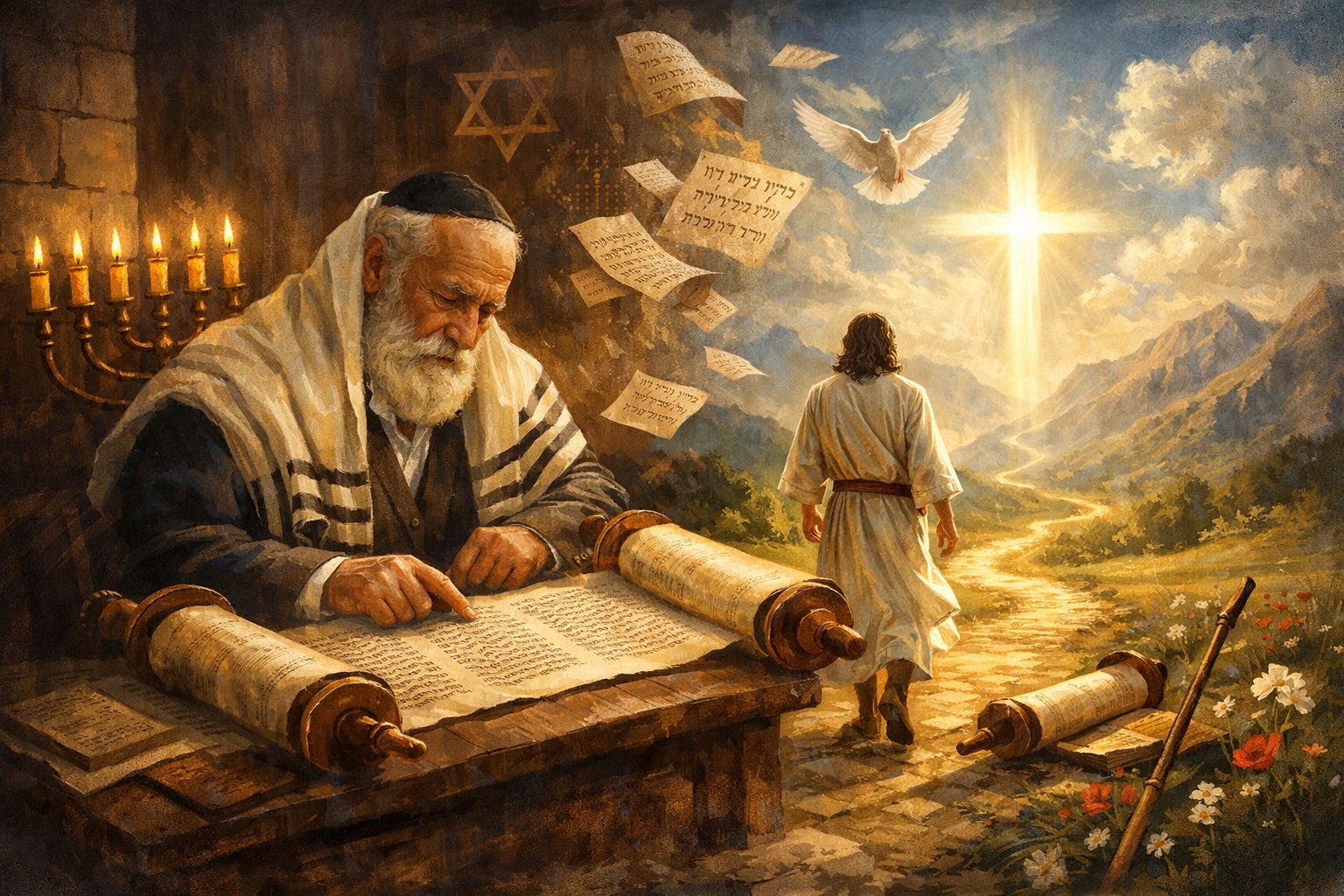
True Biblical Worship According to the Original Covenant-Part 1 of our True Biblical Worship Series

Show Notes: True Biblical Worship According to the Original Covenant – Part 1

Episode Title: True Biblical Worship According to the Original Covenant – Part 1
Host: Rod Thomas
Date: April 19, 2025
Description: In this episode of the Messianic Torah Observer, Rod Thomas delves into the profound teachings on true biblical worship according to the original covenant. Recorded on a rainy but warm Shabbat morning in DFW, Rod shares insights from a recent Google-Meet study delivered to Torah-honoring brethren in Nairobi, Kenya. This teaching explores the significance of worship in the Messianic Torah Observer lifestyle, including the Feast of Unleavened Bread and the Day of Firstfruits.
Key Points:
  • Introduction to the topic of true biblical worship and its importance in the Messianic Torah Observer lifestyle1.
  • Examination of traditional understandings of worship across various religious practices2.
  • Detailed discussion on the biblical principles of worship, including the Hebrew term “shachah” and its significance3.
  • Insights into the original covenant perspectives on worship, including the physical and actionable forms of worship4.
  • Exploration of the appointed times for worship according to Yah’s sacred calendar5.
  • Emphasis on the fear of Yehovah as the basis of true biblical worship6.
  • Closing remarks and preview of Part 2, which will focus on worship from a Yeshua-centric perspective.


Call to Action: Visit [http://themessianictorahobserver.org](http://themessianictorahobserver.org) for more teachings on Yah’s set apart days and other Hebraic topics. Stay tuned for Part 2 of this teaching series, where Rod will explore worship in spirit and truth.
Closing: Rod Thomas wishes listeners a blessed rest of their Shabbat, a meaningful Feast of Unleavened Bread, and a powerfully blessed Day of Firstfruits. Until next time, Shalom, shalom.

Offering Unblemished Animal Sacrifices – Idolatry and Paganism Warrants Capital Punishment – God’s Choice of King to Reign Over Us-Thoughts & Reflections on Torah Reading 139

This is the 139th Reading of our 3-year Torah Reading cycle that is found in Deuteronomy/Devarim 17:1-20. It is a continuation of Reading 138 (the previous week's reading). I've entitled this teaching: "Offering Unblemished Animal Sacrifices-Idolatry and Paganism...

read more

Waking-up From the Slumber-Feast of Tabernacles 2024-Kenya

Join Rod Thomas in this enlightening episode of the Messianic Torah Observer as he discusses the significance of the upcoming Spring Feasts, including Passover and the Feast of Unleavened Bread. Dive deep into the spiritual implications of these sacred times, exploring the importance of ridding our homes of leaven and embracing the symbolism of matzah. Rod also shares a powerful teaching titled “Waking Up from Our Slumber: The Feast of Tabernacles and Our Kingdom Readiness,” originally delivered to a Kenyan assembly. This teaching emphasizes the urgency for believers to awaken spiritually and fulfill their divine purpose. Tune in for a meaningful exploration of faith, community, and the call to action in our walk with Yeshua.

Website: themessianictorahobserver.org

  1. Introduction to the Spring Feasts
  2. Significance of Passover and Unleavened Bread
  3. Teaching: Waking Up from Our Slumber
  4. Spiritual Complacency and Its Dangers
  5. Fulfilling Our Purpose in Yeshua
  6. Conclusion and Call to Action

Learning to Leave Well Enough Alone-Thoughts and Reflections on Torah Reading 24

Podcast Episode: Learning to Leave Well Enough Alone – Thoughts and Reflections on Torah Reading 24

In this episode of the Messianic Torah Observer, Rod Thomas delves into Torah Reading 24, titled “Learning to Leave Well Enough Alone.” Rod reflects on Genesis/Beresheit 26:12-35, where Yehovah reaffirms His covenant with Isaac/Yitschaq, promising blessings, land, and descendants. Despite Isaac’s obedience and prosperity, he faces challenges from the Philistines, who envy his success and fill the wells his father Abraham had dug. Isaac’s journey of re-digging and naming these wells symbolizes his faith and connection to his father’s legacy.

Rod discusses the significance of wells in biblical times, not just as sources of water but as markers of territorial claims, divine provision, and social gathering places. Naming wells was a way to commemorate agreements, establish ownership, and symbolize divine blessings. Isaac’s encounters with the Philistines over wells highlight the importance of peace and trust in Yehovah’s promises.

Rod encourages listeners to reflect on their own spiritual wells and how they respond to adversity. He emphasizes the importance of seeking peace, trusting in Yehovah’s covenant promises, and walking in faith and obedience. The episode concludes with a reminder to remain steadfast in our faith and trust in Yehovah’s blessings, even in the face of challenges.

Key Takeaways:

  • Yehovah’s covenant promises to Isaac/Yitschaq.
  • The significance of wells in biblical times.
  • Isaac’s journey of re-digging and naming wells.
  • The importance of peace and trust in Yehovah’s promises.
  • Reflecting on our own spiritual wells and responding to adversity.

Scripture References:

  • Genesis/Beresheit 26:12-35
  • Numbers 23:19
  • Ephesians 2:12-16
  • Romans 11:17
  • Luke 14:25-35
  • Matthew 5:10-12
  • Matthew 6:19-20
  • Romans 12:14-21

Tune in to this insightful episode and deepen your understanding of Torah Reading 24 and its relevance to our covenant relationship with Yehovah.

The Two Afflictions That Get God’s Attention

Messianic Torah Observer Podcast Episode: The Two Afflictions That Get God’s Attention

Host: Rod Thomas

Date: April 3, 2025

Episode Summary: In this episode, Rod Thomas shares his thoughts ahead of the spring feast and discusses the significance of Yom Kippur, the Day of Atonement. Rod reflects on his experience delivering a teaching to orphaned students and Sabbath-keeping brethren in Kenya last year. Despite technical difficulties with the recording, he has optimized it to the best of his ability and hopes it will bless listeners as much as it blessed him in preparing and delivering it.

Key Points:

  • Introduction: Rod welcomes listeners and expresses his hope that this episode finds them well and blessed. He mentions the upcoming spring feast of YHVH and invites listeners to visit the Messianic Torah Observer website for more information on the dates of the spring feast.
  • Teaching on Yom Kippur: Rod explains the significance of Yom Kippur, one of the fall feasts of Yah, and shares his experience delivering a teaching on this topic in Kenya. He discusses the concept of afflicting the soul and the importance of fasting and self-denial to get God’s attention.
  • Biblical References: Rod references the story of Esther and Isaiah 58 to illustrate the true meaning of affliction and fasting. He emphasizes that God wants more from us than just not eating for a day; He wants us to stand against wickedness, seek deliverance from bondage, and care for the oppressed.
  • Dying to Self: Rod explains the concept of dying to self and the importance of denying oneself of things that do not please God. He encourages listeners to examine their hearts and seek to please God over their own desires.
  • Conclusion: Rod concludes the episode by reminding listeners that true affliction of the soul goes beyond discomfort and involves a deep commitment to God’s will. He encourages listeners to afflict their souls in a way that gets God’s attention in a good way and prepares them for the Kingdom of God.

Call to Action: Rod invites listeners to support the Kumran Family Foundation, a nonprofit organization dedicated to addressing the needs of widows and orphans in Kenya. He encourages listeners to visit the foundation’s website and consider making a donation to help with ongoing projects, including building a school to teach widows basic job skills.

Closing Remarks: Rod thanks listeners for their time and fellowship and bids them a happy and blessed Rosh Hashanah and Month of Aviv. He looks forward to the next installment of the Messianic Torah Observer podcast.

Shabbat HaChodesh-the Sabbath Before Biblical Rosh HaShannah 2025

Greetings and Introductions

Greetings saints of the Most High. Welcome to another installment of the Messianic Torah Observer. Rod Thomas coming to you on a beautiful spring midweek day here in the DFW. I want to thank you for taking the time out of your busy schedules to fellowship with me. And as always beloved, it is my hope, trust, and prayer that this installment of TMTO finds you, your families, and your fellowships well and blessed.

As I am publishing this discussion, it is the 26th day of the 12th month on Yah’s sacred calendar year, which translates to March 27, 2025. In terms of where we are in relation to Abba Yah’s reckoning of time, we are literally a day, maybe two, from Biblical Rosh HaShannah—the Messianic/Netsari/Nazarene New Year—Aviv 1. Which is a very important time on the Creator’s Calendar. For Biblical Rosh Hashanah, as most of you are aware, establishes and marks the dates for the mandated Feasts of Yah during this upcoming Biblical Calendar Year. If we get the date for Biblical Rosh HaShannah wrong, we will inevitably get the dates for Yah’s upcoming Feasts wrong, and that is not a thing we should want to happen.

Our Torah and Haftorah Reading in Light of Where we are on the Calendar

According to Jewish Tradition, this is a special Shabbat. It is special for two reasons. First, it’s special because of where it falls out on Yah’s sacred calendar. And second, it’s special because of what it represents and means to Yah’s chosen ones.

To our Rabbinic Jewish cousins, this Sabbath is referred to as Shabbat HaChodesh, or the Sabbath Before Aviv 1 or Before Biblical Rosh HaShannah. (Consequently, you’ll never hear our Jewish cousins refer to Aviv 1 as Rosh HaShannah because the Rabbis changed the head of the year to the first day of the 7th Month (aka Yom Teruah/Feast of Trumpets), which of course is contrary to the instructions given to us by Abba Yah).

So, calendar-wise, this is the Shabbat that immediately precedes or that occurs before Biblical Rosh HaShannah or Aviv 1. The so-called Jewish sages spotlighted this particular Sabbath in order to prepare the peoples’ hearts and minds to receive Nisan 1 (i.e. Aviv 1) and the upcoming Spring Feasts of Pesach/Passover and Feast of Unleavened Bread. So, in order to accomplish this preparatory act, Exodus/Shemote 12:1-10 is added to the Shabbat Torah reading/parashah regimen for this particular Sabbath. Additionally, a Haftarah Reading of Ezekiel 45:16-46:18 is added to this Sabbath’s parashah regimen as well.


Although not a holy day apart from it being a weekly Sabbath day, it is a very important date on the Biblical Calendar, especially for those of us who keep Yah’s set-apart Moedim (aka the Feasts of the LORD). It is an important Sabbath because it alerts us as to the imminent arrival of the Biblical Rosh HaShannah (aka Aviv 1). As of this posting, qualified searchers in the Land of Yisra’el have identified sufficient Aviv barley that could have been used for our Wave Sheaf Offerings on Yom HaBikkurim (i.e. the Day of Firstfruits and Wave Sheaf Offering that occurs amid the Feast of Unleavened Bread) if we had an operating Tabernacle or Temple in Jerusalem). This being the case, all that remains to establish Biblical Rosh HaShannah or Aviv 1 is for our intrepid searchers to sight the renewed moon over the Land of Yisrael. Abba willing, this is expected to take place on Sunday, March 30, 2025. Assuming the searchers are successful in sighting the renewed moon that evening, our Yah’s Rosh HaShannah will begin at sundown on Sunday, March 30, 2025, and we will celebrate the day on Monday, March 31, 2025. If atmospheric conditions prevent our searchers from sighting the renewed moon on Sunday, March 30, 2025, then by default, Rosh HaShannah or Aviv 1 will begin at sundown on Monday, March 31, 2025, and we’ll celebrate the day on Tuesday, April 1, 2025.

Now, it should be known that neither Shabbat HaChodesh nor Aviv 1 or Biblical Rosh HaShannah are considered moedim of Yehovah. They are not set apart days (i.e. moedim or mandated Feast Days), so to speak. Shabbat HaChodesh, because it is a weekly Sabbath, is to be treated as any weekly Sabbath. It is a no workday of course and a day of rest. Biblical Rosh HaShannah is not a moedim or set apart day of Yehovah, although we are commanded by Yehovah to do:

16 Observe (i.e. “shamar”; to keep; to watch over; to guard) the month of Abib, and you shall keep the Passover to Yahweh your God, for in the month of Abib Yahweh your God brought you out from Egypt by night.[1]

Beloved, this is not a request, nor is it a suggestion. So passionate is Father that His people get His appointed times marked and firmly established for the coming year, He commanded us to “shamar” the month of the Aviv. Our English rendering of the Hebrew term “shamar” is misleading. It falsely conveys the sense that Yehovah simply wants His chosen ones to consider the month of the Aviv. But Yehovah requires His chosen ones to ensure that Rosh HaShannah is firmly established and that all the set apart days contained within the Month of the Aviv are properly established and kept by them. So, despite Biblical Rosh HaShannah or Aviv 1 not being a mandated Feast of Yehovah, it is a day of commanded observance; of guarding; of remembrance; of keeping. Like any Rosh Chodesh or Renewed Moon Day, it should be met:

  • With blasts from the Shofar or shouts of praise unto Yehovah if a shofar is not available.
  • With sincere reverence towards our Ahlohim, for He is good and merciful and we are undeserved.
  • With seeking of Yah’s will for our lives in the coming days and the coming new year.
  • With deep introspection—looking back over the year that is passing into memory and conduct an honest assessment of how we did in terms of doing what we’ve been assigned by our Master to do, considering the missed opportunities to serve, the times we rebelled against Yah’s will, the things we did we know we shouldn’t have, and seeking His forgiveness.
  • With a commitment to walking in our purpose better than last year.
  • And gaining an understanding of the sacred times of Yah that will come upon us in the coming days.

I’m led to not taking up too much of your time for this post. But I would like to read the assigned Torah reading for this Sabbath in honor of Shabbat HaChodesh and to briefly discuss what the Month of the Aviv 2025 looks like in terms of dates.

And the Shabbat HaChodesh Reading is: 

12 And Yahweh said to Moses and to Aaron in the land of Egypt (i.e. we were in bitter bondage under our Egyptian taskmasters and the gods of Egypt), saying, “This month will be the beginning of months; it will be for you the first of the months of the year (i.e. this will be our Rosh HaShannah; we are being given a new calendar where Yehovah determines the times and dates we are to meet with Him). Speak to all the community of Israel, saying, ‘On the tenth of this month (i.e. Aviv 10), they will each take for themselves a lamb for the family, a lamb for the household. And if the household is too small for a lamb, he and the neighbor nearest to his house will take one according to the number of persons; you will count out portions of the lamb according to how much each one can eat. The lamb for you must be a male, without defect, in its first year; you will take it from the sheep or from the goats. “You will keep it until the fourteenth day of this month (i.e. until Pesach or Passover Day), and all the assembly of the community of Israel will slaughter it at twilight. And they will take some of the blood and put it on the two doorposts and on the lintel on the houses in which they eat it. And they will eat the meat on this night; they will eat it fire-roasted and with unleavened bread on bitter herbs. You must not eat any of it raw or boiled, boiled in the water, but rather roasted with fire, its head with its legs and with its inner parts. 10 And you must not leave any of it until morning; anything left from it until morning you must burn in the fire. [2]

We who are chosen of Mashiyach—chosen of Yeshua Messiah—recognize in this critical passage of Torah, the shadow picture that is contained therein. The whole month of the Aviv is a loving portrait of the earthly ministry of Yeshua Messiah. Our Jewish cousins are not privy to this wonderful understanding because, as the Apostle wrote,

25 For I would not, brethren, that ye should be ignorant of this mystery, lest ye should be wise in your own conceits; that blindness in part is happened to Israel, until the fulness of the Gentiles be come in.[3]

And so, our Jewish cousins keep Passover—Yah bless them — out of a sense of religious duty, but they remain blind as to the real meaning behind and importance of Passover, not just to them, but to all humanity. And in this reality, the Apostle wrote:

Purge out therefore the old leaven, that ye may be a new lump, as ye are unleavened. For even Christ our passover is sacrificed for us: Therefore let us keep the feast, not with old leaven, neither with the leaven of malice and wickedness; but with the unleavened bread of sincerity and truth.[4]


 And so, Shabbat HaChodesh reminds us we must guard—we must “shamar”—the Month of the Aviv, despite the many cares of this life that may hinder our doing so. We do so first and foremost by marking the day of Rosh HaShannah, which, depending on our searchers’ success in sighting the renewed moon over Yisra’el will begin at sundown on Sunday, March 30, 2025, with the day of course being Monday, March 31st.

Which brings us to two scenarios:

  1. Scenario one: If searchers sight the renewed moon on Sunday evening, March 30th, we will celebrate Biblical Rosh HaShannah as commanded by Torah, in Spirit and in Truth. We cannot reasonably take in a Pesach Lamb into our home in preparation of slaughtering it on Pesach because we do not have an operating Tabernacle or Temple. But again, we honor this period of selecting the Lamb of Yah on the 10th Day of the Month of Aviv, which will be Wednesday, April 9th, by remembering what Yeshua our Master has done for us and what He means to our covenant relationship with the Creator of the Universe. Also, during this time, we begin removing the leaven from our homes in obedience to Torah, so that by the first Day of the Feast of Unleavened Bread, our dwellings are completely devoid of Unleavened Bread. Then on the evening of Sunday, April 13, we honor Pesach or Passover. (And I will not go into how we should keep Passover in this discussion since I’ve done several teachings on this subject throughout the years. I would invite you to read and listen to those teachings as you are so led.) And then at sundown on Sunday, April 13, we begin the seven-day Feast of Unleavened Bread, with the first day, Monday, April 14 and the last day, Sunday, April 20th, being set apart days where we are instructed by Yah to take part in holy convocations and not work. And remember that we find the timing of these days in Leviticus 23, our go-to-passage for all things having to do with the annual Feasts of Yehovah.
  2. For scenario two: If for whatever reason our searchers are unsuccessful in their efforts to sight the renewed moon on Sunday evening, March 30, then by default, Biblical Rosh HaShannah for us will begin for us at sundown on Monday, March 31st. From there, our scenario two Pesach or Passover will be on the evening of Monday, the 14th of April, with the first day of Unleavened beginning that same evening at sunset, and the seven-day Feast being from Tuesday, April 15, ending on Monday, April 21st.


Concluding Thoughts on Shabbat HaChodesh

It seems that each preceding Shabbat HaChodesh has held great significance considering the evil and pressing state of world affairs. This year, more than at any previous time, the world and its institutions and systems and people are being shaken at levels previously unimagined. It almost seems that the enemy and the kingdom of darkness have been loosed upon the world to do as much damage and harm as possible. And those who do not have a solid rock upon which to stand find themselves sinking in the muck, mire, and sand of this corrupt world.

We who are of Yeshua Messiah and who are in a covenant relationship with the God of Avraham, Yitschaq, and Ya’achov, though we are forced to live in this world, are not required to be of this world. In fact, the Apostle instructed that we, Yah’s elect, not conform to these ways of this world, but rather, that we be not conformed to this world: but be ye transformed by the renewing of your mind, that ye may prove what is that good, and acceptable, and perfect, will of God. [5]

The sacred times of Yehovah provide us with the wherewithal and opportunity to effect that transformation of mind such that we come into sync with the Creator of the Universe while the rest of the world flounders about and plunge themselves into an abyss of condemnation. We have been called out from the billions of people in this world to live in Yehovah’s Reality; thereby offering a lifeline to those who seek redemption and salvation and restoration. And it seems good to me that there is no time better than now to lose ourselves in Yehovah’s Reality such that we fulfill the duty of man, which is to fear Yehovah and to keep His commandments (Ecc 12:13). Clearly, the world has nothing to offer us but a short-lived satisfying of this flesh in exchange for eternal separation from Yehovah.  

And so, as the Apostle admonished his Corinthian readers, may we Purge out therefore the old leaven, that ye may be a new lump, as ye are unleavened. For even Christ our passover is sacrificed for us: Therefore let us keep the feast, not with old leaven, neither with the leaven of malice and wickedness; but with the unleavened bread of sincerity and truth.[6]

Happy Shabbat HaChodesh and Happy Rosh HaShannah. Until next time, beloved, take care.


[1] W. Hall Harris III et al., eds., The Lexham English Bible (Bellingham, WA: Lexham Press, 2012), Dt 16.

[2] W. Hall Harris III et al., eds., The Lexham English Bible (Bellingham, WA: Lexham Press, 2012), Ex 12:1–10.

[3] The Holy Bible: King James Version, Electronic Edition of the 1900 Authorized Version. (Bellingham, WA: Logos Research Systems, Inc., 2009), Ro 11:25.

[4] The Holy Bible: King James Version, Electronic Edition of the 1900 Authorized Version. (Bellingham, WA: Logos Research Systems, Inc., 2009), 1 Co 5:7–8.

[5] The Holy Bible: King James Version, Electronic Edition of the 1900 Authorized Version. (Bellingham, WA: Logos Research Systems, Inc., 2009), Ro 12:2.

[6] The Holy Bible: King James Version, Electronic Edition of the 1900 Authorized Version. (Bellingham, WA: Logos Research Systems, Inc., 2009), 1 Co 5:7–8.