Day of Firstfruits and Keeping the Sabbath Holy

Day of Firstfruits and Keeping the Sabbath Holy

Day of Firstfruits and Keeping the Sabbath Holy

by Rod & Hilary Thomas | Sabbath Thoughts and Reflections

Keeping the Day of Firstfruits

The Day of Firstfruits is a little known or publicized feast in our Faith Community. Firstfruits is also referred to as Yom haBikkurim (Hebrew) and the Wave Sheaf Offering. It is sandwiched into the week of Passover–Unleavened Bread and always occurs on the first-day of the week after the weekly Sabbath during the Passover–Unleavened Bread week.

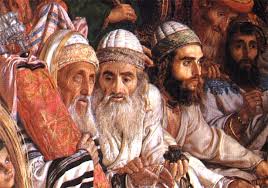
Image of a Levitical Priest waving an omer of barley before YHVH

We were instructed to bring an omer of barley–the firstfruits of our spring harvest–to the Levitical Priests who would wave it before YHVH on the Day of Firstfruits.

This Gregorian Calendar year, Firstfruits took place on the first day of the week—4-8-18 according to the Observational Calendar and on the first-day of the week on 4-1-18 according to the Jewish Calculated Calendar. On the Jewish Calendar, it is noted as Pesach II and the 1st Day of the Omer.

The instructions Father gave regarding the keeping of Firstfruits is found in Leviticus 23:10-14. As with each of the Torah-instructed Feasts of YHVH, Firstfruits is rich in prophetic and spiritual application.

How Do We Keep Sabbath Holy–Is it Permissible to Have our Children Play Organized Sports on the Sabbath?

Is it permissible to have our children play organized sports on the Sabbath? Would this be a violation of Torah and of Sabbath-Keeping?

This situation and many, many others are not addressed in Torah. We must be careful not to add to or take away from Torah.

The applications related to this question goes well beyond simply allowing our children to play organized sports on the Sabbath. Torah’s silence on this and many other aspects and issues of Sabbath-keeping require us to examine:

–Our relationship with the Almighty

–What it means to keep the Sabbath Holy

–What it means to proclaim a holy convocation on the Sabbath

–What it means to do no work on the Sabbath

Why did Father make Sabbath-keeping so vague in the first place? It was likely to test our hearts and commitment to Him. It also serves as a gauge to measure the level of relationship we have with Father.

The silence of Torah on the keeping of Sabbath (as well as a great many other issues and topics) resulted in the Rabbi’s creating hundreds of rules and traditions around the keeping of Sabbath that include 39-general categories of what is required to keep Sabbath (http://www.pursuegod.org/rules-pharisees/). These 39-general categories  in turn include hundreds of specific individual rules for Sabbath-keeping. These rulings and instructions are contained in the Talmud.

When addressing the concerns of the Samaritan woman at Jacob’s well regarding where YHVH had established the place of worship, He was noted as saying:

“You Samaritans worship what you do not know. We worship what we do know, because salvation is from the Jews (i.e., from the lineage of Judah and the oracles entrusted to Judah by Father as opposed to the religion of Judaism). (Continuing) But an hour is coming, and is now here, when the true worshipers will worship the Father in spirit and truth. Yes, the Father wants such people to worship Him. Yah is Spirit and those who worship Him must worship in spirit and truth” (John 4:22-24; Holmann CSB).

Thus Master foretold of a two-prong formula for worship of Yah that would be practiced under the renewed covenant: Spirit and Truth.

As it relates to Truth, our worship is founded upon Torah and the teachings of Yeshua Messiah:

Psalm 119:160—”Thy Word is true from the beginning: and every one of thy righteous judgments endureth forever” (KJV).

In terms of Spirit, our worship is founded upon having a substantive–personal–relationship with YHVH:

“And this is eternal life, that they (they being Master’s disciples which ultimately includes us)—that they know you the only true God, and Yeshua Messiah whom you have sent” (John 17:3; ESV; adjusted).

To know” here is the Greek term “ginosko,” which means to “learn to know a person through direct personal experience, implying continuity of relationship” (Louw-Nida Lexicon). This “knowing” that Master was referring to is more than a simple cognitive awareness that God exists.

The relationship we have with Father, when coupled with His Torah—His Truth–through the agency of the Holy Spirit (i.e., the Ruach HaKodesh)–help us navigate through such questions of Sabbath-keeping.

Once we establish a true and substantive relationship with the Creator, we get to know what He approves of and what He does not approve of, even in the areas where Torah is silent.

No Results Found

The page you requested could not be found. Try refining your search, or use the navigation above to locate the post.

Our First Passover–A Survey of Exodus 12 and 13 and How it Applies to Us Today

Our First Passover–A Survey of Exodus 12 and 13 and How it Applies to Us Today

Our First Passover--A Survey of Exodus 12 and 13 and How it Applies to Us Today

by Rod Thomas--The Messianic Torah Observer | Sabbath Thoughts and Reflections

Passover Like All Feasts are Shadows of “Good Things to Come”

Passover and the Feast of Unleavened Bread, embodied and explained to us in Father’s Torah, was aptly described by the writer of the Book of Hebrews as “Shadows of Good Things to Come:”

Hebrews 10:1—Since the law has only a shadow of the good things to come and not the actual form of those realities, it can never perfect the worshipers by the same sacrifices they continually offer year after year (CSB).


Colossians 2:16—Therefore, don’t let anyone judge you in regard to food and drink or in the matter of a festival or a new moon or a Sabbath day. These are a shadow of what was to come, the substance is the Messiah (CSB).


When is Passover to Take Place?


Passover occurs only during the Month (Hebrew=Chodesh=New Moon) of the Aviv. Aviv is to be the beginning/head (Hebrew) of Months (Chodesh) for us. It is to be the first (Hebrew=Rishon) month of the year.


Rabbinic Judaism is at Odds with this Instruction


It should be noted that the Rabbis (e.g., B. Jacob) contend that the intent of this passage was not to make the Month of the Aviv in the spring the New Year. Instead, it was to be the autumn. To Judaism, the Month of the Aviv was to serve only as a memorial to “Jewish Freedom” from Egypt.


But not all Rabbis saw this as B. Jacob saw it. In the Babylonian Talmud, Vol. 2—Eruvin, Sheqalim, Roshashanah—supports Aviv as the head of the year.


Selecting a Proper Lamb


We were instructed to select a lamb (Hebrew=she) of the flock (could be goat or sheep) per household/family (Hebrew=Mishpachah). The lamb was to fit the size of family that could consume it within one night. Thus, a small family would partner with another family and share the lamb.


Selecting an acceptable lamb was the focal point of Pesach (Passover). There were two requirements in the selection process:


  • Unblemished (Hebrew=tamim=complete; sound).
  • Tamim is only applied to the state of sacrificial animals
  • Faultless; without defect (Leviticus 22:18-21)
  • Defected animals will not be acceptable
  • Of the first year—within the first-year of the animal’s birth.

Some believe that this age marked a level of innocence that made it ideal for sacrifice. (But there is prophetic meaning.)


What Were We to Do with the Select Lamb?

Passover Lamb

Which Lamb will you select today for your Paschal Lamb? This is key to a successful keeping of Passover.

We were to keep the Lamb till the 14th day of the Month of the Aviv. The entire congregation were to kill their select animals at dusk; twilight.


When is dusk or twilight? According to Talmud (Jewish Oral Tradition), it was between when the heat of the sun begins to decrease (~3 P.M.) and sunset.


From a historic perspective, Josephus wrote in his Wars 6.9.3:


In the time of Cestius, the sacrifices were made from the 9th to the 11th hour (i.e., 3 P.M. to 5 P.M.). Some 256,500 lambs were sacrificed for 2,700,200 persons.


We were instructed to apply the blood of our sacrifice to the doorposts and lintels of our homes and roast the lamb with fire (out of haste) that night. We were to eat the flesh—the paschal lamb–with unleavened bread (Hebrew=matzoth which is the plural of Matzah—also called the bread of affliction—Deut. 16:3) and bitter herbs (Hebrew=merorim which is plural of maror) to symbolize the bitterness of our Egyptian bondage.


We were not to eat the lamb raw. Pagan nations would eat their sacrifices raw, contrary to that which we were instructed here. Our lamb was to remain whole during the roasting process. Nothing of our lamb was to remain till morning. We were to burn any residue not consumed by morning. Why? Because this was to be NO ordinary meal to be consumed leisurely and then discarded disrespectfully.


Passover is a Shadow of our Redemption—Good Things to Come


Our unblemished lamb is none other than Yeshua HaMaschiyach.


John 1:29—Yochanan Ben Zechariah remarked of Yeshua: Behold the Lamb of Yah that takes away the sin of the world…


I Cor. 5:7—Get rid of the old hametz so that you can be a new batch of dough, because in reality you are unleavened. For our Pesach lamb, the Messiah, has been sacrificed.


What Qualified Yeshua to be Our Paschal Lamb—Our Passover?


He was unblemished—Yah only accepts the very best. Unblemished is being without sin—perfect in all His ways.


Heb. 9:28—So also the Messiah, having been offered once to bear the sins of many will appear a second time, not to deal with sin, but to deliver those who are eagerly waiting for Him (CJB).


Sin Is a really big deal to Father and He requires holiness and perfection in order to have a viable relationship with Him. Messiah Yeshua fit that bill perfectly and paid the price for our sin. Thus we have the opportunity to escape eternal death.


2 Cor. 5:21—For He hath made Him to be sin for us, who knew NO sin; that we might be made the righteousness of Yah in Him (KJV).


Heb. 7:26—For such a high priest became us, who is holy, harmless, undefiled, separate from sinners and made higher than the heavens (KJV)


I Pet. 2:22—Who did no sin, neither was guile found in His mouth (KJV) cf. Isa. 53:7


Heb. 4:15—For we do not have a high priest who is unable to sympathize with our weaknesses, but One who has been tested in every way as we are, yet without sin (CSB).


Our Master was of the first year.


Luke 3:23—Yeshua was about 30-years old when He began His public ministry…(CJB)


We find spiritual and prophetic parallels regarding the first-year aspect of qualifying to be the Passover Lamb in Num. 4:1-3, 21-23, 29-30. Age 30 was when Levitical Priests began serving in the Temple.


Those who are obedient and properly apply the blood of Messiah to their lives escape eternal death. Yeshua knocks on the door of each man’s heart.


Consider Rev. 3:14-22 where we find that Laodicea’s wealth made her lax and she lost her commitment and zeal for Messiah. Messiah wants to be a the sole focus of our entire life. Thus, the very lamb that takes away the sins of the world stands just outside the doors of our lives and asks to come in and sup with us (verse 20).


How Were We to Carry Out Passover


We were to consume the paschal lamb in haste and in a watchful manner. We were to have our loins girded. (I believe this would apply only to this first passover in Egypt.) Furthermore we were to be ready at a moment’s notice to hit the road as our salvation drew nigh!


The focus for this and succeeding Pesachs/Passovers would be:


  • The lamb
  • The blood
  • The unleavened bread


We were reminded that Pesach was Father’s Passover: thus a Passover unto YHVH. The Paschal sacrifice is to honor YHVH.


Passover is derived from the verb “Pasach” which means to: passover; protect; deliver.


Reminders and Applications


We were reminded that Abba’s plague(s) against the Egyptians was “against all the gods of Egypt.” The objects of Egyptian worship tended to center upon the firstborn of man and beast. Thus all firstborn of Egypt were struck down. Every Egyptian deity was represented by some beast and Yah spared not one.


Father proclaims His sovereignty in judging the gods of Egypt by stating: “I am YHVH!”


Abba instructs that the blood of the sacrificed lamb/kid upon the doorposts and lintels of our homes would serve as a token for us. Abba always seals His covenants with blood. This passover event was a covenant although Yah did not expressly spell this out. Thus, here Abba’s covenant with us—to protect us from the Angel of Destruction—would be sealed and insured by the blood when properly applied that night.


What was this covenant? Abba stipulated that He would spare us and our families from the Angel of Destruction when He saw the blood properly applied to our homes’ doorways.


We were to eat unleavened bread for 7-complete days, including eating it with the Pesach meal. This was in force from the 14th at evening to the 21st at evening. (For us today: 4/1/18 through 4/8/18).


Leaven and What it Means

Matzah

Leaven symbolizes sin. Unleavened Bread is a shadow of the redemption plan and the elimination of sin from our lives.

Leaven is symbolic of corruption, passion and sin. As it applies to the Feast of Unleavened Bread (Matzah), he/she who for whatever reason consumes leaven bread during this week will be cut-off from Israel (i.e., cast out from the congregation of Israel).


How does this apply today in the Body of Messiah?


The Feast of Unleavened Bread Requirements


We were instructed to convene a holy convocation (Hebrew=miqra=public meeting; a rehearsal; a public reading) on the 1st and 7th day. No manner of work is to be done on these holy days with the exception of food preparation. No leaven is to be found in any of our dwellings. This instruction applies to any place an Israelite will dwell or call home at the time of Pesach.


NOTE 1: True freedom comes only when we eliminate leaven (sin) from our lives. It is a process of sanctification; correction; repentance; obedience and dying to self.


NOTE 2: This passage serves to prove (in a sense) that what many of us refer to as the Last Supper/Holy Communion/The Lord’s Supper was NOT the Passover meal. Master was the Passover Lamb who was crucified on the execution stake on the afternoon Passover.


NOTE 3: Leaven is analogous to sin. Sin has no place in the Body of Messiah. As Abba instructed that leaven not be found in our homes, He also instructed that leaven not be found in the entire community. Thus sin cannot be tolerated in the Body of Messiah. It must be quickly dealt with because “…a little leaven leaventh the whole lump” (Gal. 5:9).


Identity—Identity—Identity


We must constantly ask the question of ourselves: who are we and to whom do we belong?

If we identify ourselves as Israelites and we’ve chosen to obey Father’s Torah and to be disciples of Yeshua, then Passover and Unleavened Bread keeping applies to us (Rom. 11:17-24). This is NOT a Jewish thing! This is a Hebrew thing!


Application of the Paschal Lamb to the Doorposts and Lintels of Our Homes with Hyssop


We were instructed to apply the blood of our selected, unblemished, of the 1st-year lamb/kid to the doorposts and lintels of our dwellings using “hyssop.”


Hyssop when used in a bunch acts as a sponge when taking on liquid—such as blood.


John 19:28—”After this Yeshua knowing that all things had already been accomplished, to fulfill the scripture said, ‘I am thirsty.’ A jar full of sour wine (vinegar) was standing there; so they put a sponge full of the sour wine upon a branch of hyssop and brought it up to His mouth. Therefore when Yeshua had received the sour wine He said, ‘It is finished!’ And He bowed His head and gave up His spirit” (NASB).


Hyssop is symbolic of spiritual purification from sin. As a substance used in Torah, hyssop has detersive, cleansing and medicinal properties. Leviticus 14:6,7 and Num. 19:18 both define the use of hyssop for purification purposes.


Psalm 51:7—”Purge me with hyssop and I will be clean. Wash me and I will be whiter than snow” (KJV).


The Destroyer Will Be Stopped


When Abba sees that we were obedient in applying the blood of the Paschal Lamb to the doorposts and lintels of our homes, He will NOT allow the “destroyer” to enter our homes and destroy us.


This “destroyer” makes a series of appearances throughout the Tanach: 2 Sam. 24:16; 2 Kin. 19:35; I Chron. 21:15,16; Act. 12:23.


Have We Properly Applied the Blood of the Lamb to our Lives?


Have we properly applied the blood of our selected Lamb to the doorposts and lintels of our lives so that we may be spared the eternal ravages of Father’s “destroyer?”


Food for Thought: Someday, in the World Tomorrow, the “destroyer” is going to be put out of work! Praise Yah!


Any Doubts that We as Torah Observant Believers in Yeshua Messiah Should Keep Passover and Unleavened Bread?


If there is any question whether Torah Observant Believers in Yeshua Messiah are to keep Passover and Unleavened Bread, this verse should sufficiently answer those concerns:


“And you shall observe this event as an ordinance for you and your children forever.”


Again—Identity-Identity-Identity


Our First Passover in Egypt was Also a Look to the Future


We were to especially prepare ourselves to keep Passover and Unleavened Bread in the Promised Land. Deut. 4:5, 12 and 16:5-8 provide us with an unfolding of this Feast which transitioned over time to that of a individualized/family-centric observance to that of a congregational observance. Josh. 5:10-12 records that we celebrated our first Pesach/Unleavened Bread in the Land of Promise.


Passover/Unleavened Bread Given In Part for Feast Celebration


Psa. 105:44,45 records that one of the reasons Abba gave us the Land is so that we may observe His statutes and keep His Torah in perfect harmony with Yehovah our Elohim. Our 40-years wandering in the wilderness served as training and preparation for when we would enter the Land of Promise. Upon entering the Land, we would be united and ready to serve Abba to the fullest extent of His Torah possible.


In one sense we are like our wandering forefathers: as we wander in the wilderness of our 21st centuries lives, we are training and preparing to enter Father’s eternal Kingdom where we will keep His moedim/His Feasts with Him in attendance.


Passing on the Significance of Passover to our Children


Although each of us was instructed to keep Passover, we were also instructed and made responsible for passing on these instructions to our children. This training of our children as it relates to Passover and Unleavened Bread is not a transferable responsibility.


The Destruction of the Firstborn of Egypt


All the firstborn of Egypt, including livestock, were slain. Prophetic justice plays out here, for we see that a previous Pharoah ordered the execution of Hebrew firstborn children during the time of Moses’ birth (Exo. 1:8-22).


We were hurried out of Egypt by night—thus the admonishment by Moses that we take the Pesach in a watchful/vigilant/expecting temperament. Our former Egyptian overlords were concerned that after this last plague, the next shoe to drop would be the total annihilation of all Egypt (vs. 33).


Our hurried departure necessitated the making of “unleavened bread” (vs. 33,34) which served as part of our Pesach meal and our food during our journey to Mount Sinai.


We ravaged the immense wealth of Egypt. This ravaging was facilitated by our having curried favor with our Egyptian taskmasters (vs. 36). This serves to teach us that although we may be persecuted by the world, Father has a way of granting us favor with the peoples of the world.


We Were a Mixed Multitude Leaving out of Egypt


We numbered some 600,000 men (heads of households) which scholars have indicated totaled upwards of 2-million souls when one factors in women and children exiting Egypt on this Night to be Most Remembered (cf. Num. 1:46).


We were a mixed multitude that some scholars say included non-Israelite slaves and prisoners of war.

These souls would prove troublesome for Moses and our overall assembly in the days, weeks and years to come (cf. Num. 11:4,5).


Even today within the Body of Messiah, we are composed of a “mixed multitude,” some of which are not true Israelites.

Master likened them as “tares”…whom we are required to live with until such a time that Master separates them from those of us who are true Israelites.


We brought with us a great many domesticated animals for sacrifice and food (vs. 38).


We began our Exodus on what has become known to us as the 1st day of Unleavened Bread.


A Night to be Much Remembered


This fateful night in Egypt which led directly to our departure out of Egypt was to be, what Torah describes as: A NIGHT OF WATCHING (JPS/ESV); A NIGHT OF VIGIL (CSB/NIV); A NIGHT TO BE MUCH OBSERVED (NASB/ASV/KJV). Watching/Observed—Hebrew=“shimmurim”=of celebration; vigilance

Pesach is to be a time of watching—better rendered: A TIME OF REFLECTION AND ANTICIPATION because of Abba’s timely redemption and grace!


Specific Rules for Keeping Passover


Non-Israelites are not to partake in Passover (vs. 43). (Identity again!) Our bought and paid-for servants, as long as they are circumcised, however, may partake in Passover (vs. 44). This is because these souls become members of our family who will by consequence become extended members of the congregation/commonwealth of Israel.


We were to be circumcised. Circumcision (a hot button topic) is a requirement to take Pesach according to Torah. It is non-negotiable; an identity issue once again. Nevertheless, there’s more than just identity and direct obedience required here.


There are two required circumcisions in order to partake in Passover:


  • One of the heart (Deut. 10:16; 30:6).
  • Physical circumcision which serves as a sign between that we (males) are of Israel.


Furthermore, temporary residents and hired servants are prohibited from partaking (vs. 45).


We were instructed to keep Pesach as a family and unified community (vss. 46, 47).


Any non-Israeli who desires to be a part of the true community of Yah is to be circumcised and to fully adopt the ways of Yah before partaking (vs. 48).


One Torah for All


Torah applies equally to both biological Israelis (not just Jews) and foreigners and new-comers to the Faith (vs. 49). Thus, the Rabbinic concept of Noahide Laws applying to Gentiles who wish to adopt a Jewish lifestyle are herein is quashed. There is one Torah for all! Period.


Israelite Firstborn


We were instructed to consecrate (Hebrew=qadash=sanctify; dedicate; hallow; be holy; to be separated) our firstborn unto YHVH.


All firstborn of Israel—human and animal—belong to Yah—Num. 3:13; 8:16; 18:15; cf., Luk. 2:23).


How many of us have taken this instruction seriously in our lives and in our home? This is emblematic of our status in the Kingdom of Yah:


Heb. 12:22—”…to the great assembly and ekklesia of the firstborn who are enrolled in heaven…”


Rom. 8:29–Yeshua is the firstborn among many brethren. We have been predestined to become conformed to the image of Yeshua.


Firstborn is an important concept that has wide-reaching implications throughout various areas of our Faith Community and throughout Torah.


Passover is a Sign


Father instructs that Passover/Pesach/Unleavened Bread is to serve as a sign to us (vs. 9) likened unto a sign on our hands and between our eyes. Judaism interprets this verse to mean that Jews are to adorn Tephillin/Phylacteries and recite associated Meditations from the Authorized Prayer Book.


Matthew records Yeshua making mention of this tradition in Matthew 23:5 whereby the Pharisees made much to do about their phylacteries as visual indications of their self-righteousness.


Tephillin/Phylacteries are small boxes containing tiny scrolls worn by devout Jews on their arms and foreheads during times of meditation. The scrolls contain 4-sections of Torah that are then placed in these small boxes. The Rabbis have issued rules on the wearing of these devices to include not wearing adorning them on Sabbaths/Festivals; not at night; to be worn from the age of 13 (barmitzvah).


This is a Rabbinic construct that may not be accurate or what Father originally intended as an interpretation for the Passover being as a sign on one’s arm and between one’s eyes. Another interpretation to be considered is that

This verse instructs us to embrace the full revelation and commandment to keep Passover to the fullest extent possible such that it is fully and clearly manifested in everything we physically do in our day-to-day lives (our hands) as well as manifested in our every thought, desire and intention (between our eyes). Our entire being is to be subjected to the service of Yah and the Kingdom.


Closing Thoughts and Reflections on our First Passover


We were commanded by Yah to keep Passover/Unleavened Bread forever.


Yeshua Messiah is the goal of Torah:


Rom. 10:4—For the goal at which the Torah aims is the Messiah who offers righteousness to everyone who trusts.


Yeshua is our example—He kept Passover and so did His disciples.


Yeshua offers us righteousness if we keep His commandments. Father demands righteousness in order for us to have a viable relationship with Him.


Therefore, first and foremost, Passover is about Yeshua Messiah. Easter and Christmas are NOT about Yeshua. They are about another Christ.


Secondarily Passover must be kept by every Israelite. Who are we? Are we Israelites? If so, we must keep Passover and Unleavened Bread.


Thirdly, there is one Torah for all—native-born-Jew—male—female—non-Jew—black, white, Asian, Hispanic—Torah applies to one and all.


Have a blessed Passover and Unleavened Bread


No Results Found

The page you requested could not be found. Try refining your search, or use the navigation above to locate the post.

Select Your Passover Lamb

Select Your Passover Lamb

I’m Reminded

I’m reminded when looking over our copy of the Hebrew Observational Calendar that today is the day that we would select the unblemished animal of the first-year that would serve as our paschal lamb.

Choosing a Lamb Today

Certainly, today, the vast majority of us who keep Passover would not consider actually taking a lamb or kid into our homes for four-days in anticipation of slaying and consuming it during a passover observance. I say this despite knowing that several members of our Faith Community make this very thing a yearly practice, which I find a bit bizarre since both Apostles Shaul (Paul) and Peter (Kefa) rightly taught that Yahoshua our Messiah is our Pesach (i.e., our Passover) (cf., I Corinthians 5:7 and I Peter 1:19 respectively). Thus there is no longer any spiritual reason to slay a lamb for Passover. Yahoshua paid the price for our reconciliation with the Creator of the Universe and our salvation once and for all.

The Literal vs. Spiritual

I get that some folks in our Community are literalists and choose to leave nothing to chance regarding their personal keeping of Pesach; or for that matter, the keeping of the whole of Torah. Indeed, Shaul (Paul) with great wisdom counseled that “each of us must be convinced in our own minds” regarding the various elements of our Faith (Romans 14:5). Thus, I can cast no judgment or criticism towards those who choose to take this very literal path of Pesach celebration. More power and blessings to them…that is, as long as they do not insist that the Body out of obedience to their version of Torah must follow their lead.

The Spiritual Arm of Choosing a Lamb

However, as it relates to this particular day of this Month of the Aviv—this being the 10th day according to the Hebrew Observational Calendar—I’m really focusing on the spiritual aspects of this instruction that was given to us during our very last days in Egypt. And yes, I realize that some question the whole “spiritualization” of Torah that I tend to do quite often, choosing instead, to view all aspects of Torah-keeping from a literal perspective. While I honestly do embrace the study and keeping of Torah from a literal perspective overall—with a handful of exceptions (those being a topic for another day)—I am more inclined to lean upon the instructions of our Master Yahoshua Messiah in my studies and keeping of Torah. Master proclaimed to the Samaritan woman at Jacob’s well:


“But an hour is coming, and is now here, when the true worshipers will worship the Father in spirit and truth. Yes, the Father wants such people to worship Him. God (Yah) is spirit, and those who worship Him must worship in spirit and truth” (John 4:23,24; CSB).


Keeping Passover in Spirit and Truth

Personally, I would like to think that I am one of those people who worship Abba in spirit and truth, just as Abba desires of all His chosen ones. So yes, I tend to view Torah first from a spiritual—Messiah-centric perspective and then from a literal perspective. This would probably give some of my readers pause for concern, but we must consider how Paul’s teachings put Torah into its proper perspective for us Torah Observant Believers in Yeshua Messiah when He wrote to the Roman Assembly of Messianic Believers:


“ For the goal at which the Torah aims is the Messiah, who offers righteousness to everyone who trust” (Romans 10:4; CJB).


Messiah is the Goal of Torah

So if our Master is the goal—or the “telos”–the fulfillment; the culmination; the utmost; the outcome—of Torah, it behooves us to factor Him into every page of Torah we read; every Feast/Festival we keep and observe and celebrate; every teaching we give and listen to. Otherwise, we run the inevitable risk of being mechanical Torah-keepers and deniers of Messiah, which I would summit that so many of us have succumb to.

So Which Lamb Will We Choose Today?

The Passover Lamb Selection

Which Lamb will you select today for your Paschal Lamb? This is key to a successful keeping of Passover.

Thus, the question I am asking you today is the same question I asked myself this morning: which lamb are you going to choose for your Pesach this year? And I suppose that some of you reading this post may be confused or even put-off by this question. And that’s okay. You see, when we are questioned about certain aspects of our Faith and those questions challenge us, make us uncomfortable, or even annoy us, we are forced to make a stand or take a position on that matter. And my challenge to each of us today—on this 14th day of the Month of the Aviv—is to choose the proper lamb for our Pesach observance, keeping and celebration.

Keeping Passover Individually

Indeed, we were instructed by Abba to keep the Passover unto Yehovah our Elohim (Deuteronomy 16:1). That instruction is obviously non-negotiable. No doubt, many of us will participate in a full-on Jewish Passover Seder this year along with all the traditions and trappings that tend to go along with it. That’s one end of the spectrum. The other end of the Pesach spectrum is simply acknowledging the day with maybe a passing scripture reading and prayer. Again, how any of us celebrates or keeps Passover is between Father and us as individuals. Yes, it would be nice if we all could agree upon one way to celebrate the day, but that is not likely going to happen anytime soon. The Body of Messiah has been tasked with actually working this thing out (Colossians 2:16,17). However, we have not reached that point as a unified Body and my hope and prayer is that someday we will get there.


Nevertheless, until that time, it falls to us as individuals and families to establish how we will keep Torah—specifically as it relates to this post—how we will keep Passover. I say first and foremost, we must look to Yeshua our Messiah and Father’s precious Holy Spirit (i.e, Ruach HaKodesh) for direction. And then Guard the Month of the Aviv with all diligence, faith, zeal, love, solemnity and hope that we can muster.

Yeshua is Our Passover

Yes, Yeshua is the Paschal Lamb that we must choose for our Pesach today. He offers Himself up to us freely and lovingly and it’s up to each of us to take Him into our lives—especially during these holy days. Master had the Apostle John write to the seven-churches (i.e., ekklessias) of the apocalypse):


“Listen! I stand at the door and knock. If anyone hears My voice and opens the door, I will come in to him and have dinner with him, and he with Me. The victor: I will give him the right to sit with Me on My throne, just as I also won the victory and sat down with My Father on His throne” (Revelation 3:20, 21; CSB).

We’ve Chosen Yeshua as our Paschal Lamb

We’ve decided to select Yahoshua again this year as my Paschal Lamb. And yes, we will be inviting Yeshua into our home and into our hearts, minds and souls this Passover to sup with us and we with Him. His sacrifice will be the focus of our observance. The renewed covenant He facilitated will be the covenant that we will embrace and dwell upon. His commandments we will lovingly keep. Abba Father we will jealously give praise, honor and glorify to.


Will you join me in selecting Him—Yahoshua HaMashiyach–to be your Paschal Lamb today?


May you have a blessed and meaningful Pesach season.


Warmest and blessed Shalom.


No Results Found

The page you requested could not be found. Try refining your search, or use the navigation above to locate the post.

Observing and Guarding the Month of Aviv–How to Observe and Guard the Month of Aviv

Observing and Guarding the Month of Aviv–How to Observe and Guard the Month of Aviv

Observing and Guarding the Month of Aviv--How to Observe and Guard the Month of Aviv

by Rod and Hilary Thomas | Sabbath Thoughts and Reflections

Torah Instruction to Guard

  In Deuteronomy 16:1-3 Abba instructed us to “observe (i.e., shamar—guard) the Month of the Aviv,” and keep the Passover unto YHVH our Elohim.” Because in the Month of the Aviv YHVH brought us forth out of Egypt by night.  

What are we talking about here?

  In order to guard the Month of the Aviv we have to do some things:   1. We must know what it means to guard—from a Hebraic perspective. One must ask, does this guarding even make sense to us in the 21st-century West?   2. We must know that the Month of the Aviv is and when it occurs. This then becomes a calendar issue.   3. We must know what is required of us in the guarding of the Month of the Aviv. We must understand how we are to go about guarding/keeping the Month of the Aviv; not from man’s perspective, but from the Creator’s perspective.   Let’s look at each of these in some detail.  

1. Understand/Know what it means to guard/observe

  Deuteronomy 16:1 contains the instruction that we are to guard—to shamar—the Month of the Aviv.   The Google definition for guard is to watch over in order to protect or control.   The Hebrew definition for guard is to hedge about a thing as with thorns; with additional clarifications of protecting; to keep; to mark; to preserve; to wait for; to watch. Sadly, most of us focus solely on the Passover Seder. Yet we see here that we are commanded to do what? We are commanded to guard The Month of the Aviv.   Rabbinic Judaism has taken this instruction (and others like it) to place a hedge around the Month of Aviv (and thus all of the Creator’s Feasts) as authority to manipulate and control the Feasts of YHVH contained therein. Thus they have changed the instructions of YHVH and made them of no effect by their traditions and ordinances and rules (Matthew 15:3-6).   We are instructed to guard/keep the Month as opposed to just one Feast Day. Strangely, most commentaries (on both side of the aisle—Christian and Judaism) fail to mention this powerful commandment. They bypass the command to guard the Month and go straight on over to “keeping just the Passover.” In terms of Christianity, it’s keeping Easter. However, we’ve been called to do better and to obey the instructions of YHVH.
The Calculated Jewish Calendar

The Calculated Jewish Calendar was developed by the Sanhedrin in 359 C.E. and is based on mathematical calculations.

Father instructed:  
“Therefore shall ye keep my commandments, and do them: I am Yehovah” (Leviticus 22:31; ASV).
  Father exclaimed:  
“Oh that there were such a heart in them, that they would fear me, and keep all my commandments always, that it might be well with them, and with their children forever!” (Deuteronomy 5:29; ASV).
  Our Master addressed this same issue when He instructed:  
“If ye love me, ye will keep my commandments” (John 14:15; ASV).
  The Apostle John took this concept even further when he wrote:  
“And hereby we do know that we know Him, if we keep His commandments. He that saith, I know Him, and keepeth not His commandments, is a liar, and the Truth is not in Him” (I John 2:3,4; KJV).
  Thus we are instructed to guard the entire Month of the Aviv.  

2. Know what the Month of Aviv is and when it occurs—a calendar issue.

  Father instructed us:  
“This month shall be to you the beginning of months; it shall be the first month of the year for you” (Exodus 12:2; QBE).
  Which month is Father referring to here? He clarifies in Exodus 13:4:  
“On this day in the Month of Aviv, you are about to go forth” (NASB).
  We see here that Abba is declaring that the Month of the Aviv is where our new Year begins. It is our New Year!
Hebrew Calendar

The Hebrew Calendar is based upon the sighting of aviv barley and sighting the renewed moon in the land of Israel.

Thus Father has established with us His reckoning of time. He has established with us His calendar that we are to “shamar.” In this, we must bear in mind that we followed a pagan calendar during our sojourn in Egypt for centuries. Father was stopping that practice and now establishing His own calendar for us to follow. Do you see any spiritual and life parallels here? I say that our accepting Father’s calendar is part of our sanctification: that which sets us apart from the rest of the world.   Therefore, Father in this command is telling us that this is going to be the month that not only establishes the beginning of our annual calendar, but also marks our freedom from captivity and the start of a new life for us. Can you see the amazing spiritual and prophetic parallels here?   So what’s the deal with the Month of the Aviv? Aviv is a term that describes the condition—the state of maturation—of the barley crop in the Land of Israel. Thus Aviv denotes a specific harvest season—the spring harvest season. Can you recognize the tremendous spiritual and prophetic applications portrayed here as well?
Aviv Barley

The maturation of the barley in the land of Israel is essential to determining when the sacred calendar year begins.

The term “Aviv” (or Abib as used in most authorized English translations) means: fresh, young barley ears, barley; the month of ear-forming; of greening of crop; of growing green Abib that takes place exclusively during our spring time here in the west. The term “Abib” is used 6 times in the authorized versions of our Bible.
Renewed Moon

Sighting of the renewed moon signals the start of each month of the sacred calendar year.

  Why is the maturity of the barley in the Land important? Well, to begin with, Father says so. But the other things is that we needed the barley to be aviv so that it may be offered by the priests on Yom HaBikurim—the Day of Firstfruits as described in Leviticus 23:11-15. The prophetic and spiritual implications of this are nothing short of amazing and spectacular.   By knowing the state of the barley harvest in the Land, Father has given us the key to knowing when His year is to begin. From there, all we need to recognize then is when the new month begins. Torah tells us that each new month begins with the sighting of the renewed/new moon, which is the appearing of the first sliver of of the moon.   Thus Abba’s calendar is an agriculturally—celestial—based method for us to be in sync with His reckoning of time and to know when His Feasts are to be kept by us. This system of reckoning handed down to us by Father is not based upon traditions or calculations. Father set His order of the heavens and the earth to not only glorify Him, but also to provide a clear understanding of when His moedim occur. Father declared:  
“Let there be lights in the expanse of the heavens to separate the day from the night, and let them be for signs and for seasons and for days and years…” (Genesis 1:14; NASB).
  The Torah Observant Believer in Yeshua Messiah must make key decisions as it relates to this time of year: whether to recognize who they are and to whom they belong. In determining who they are and to whom they belong, he or she must determine who they will obey: Torah or religion; Yah or man; truth or tradition.   Most Messianics adhere to the Rabbinic/Jewish calculated calendar. The rabbis changed the head of the year (Rosh Hashanah) from the 1st day of the month of the Aviv to the 1st of the Babylonian month Tishri, which is the 7th month. The focus shift was from that of the sacred start of the calendar year to the commercial start of the calendar year.   Consequently, several changes have been made to adjust Abba’s Feast days and assign guidelines for Feast observance through this calendar. The state of the barley and the sighting of the renewed moon has been entirely eliminated from consideration through the implementation of this calendar.   So enamored has Judaism become over this calendar that one Jewish scholar remarked about the calendar’s “mathematical exactness” (Hertz).   One should note also that Babylonian names were assigned to each month whereas in Torah, the only month assigned a title or name was the first month—the Month of the Aviv.   Please understand dear saint: this is in no way meant to be or appear anti-Semitic. I am using Torah and the rest of scripture to paint as real and fair a portrait of the current calendrical situation as possible.   Our western—Gregorian Calendar of course factors in Catholic/pagan-based horror-days and is based, like the Rabbinic Calculated Calendar, on precise mathematical calculations. There is no concern whatsoever for the Creator’s reckoning of time as stipulated in Father’s Torah. The Gregorian New Year begins, not in the spring of each year as Father requires, but in the middle of winter, on January 1st. Needless to say, this New Year celebration is filled with debauchery and is absent the solemnity that the Aviv Month observance is filled with. All in all, the Creator is intentionally and completely factored out of the celebration.   As Torah Observant Believers in Yeshua Messiah, we must pick a calendar. Sticking with the Gregorian Calendar will NOT put us in sync with Father’s reckoning of time simply because Father is not in the least factored into its development. The calculated Jewish Calendar on the other hand puts us under control of the Sanhedrin’s and Hillel’s reckoning of time that is based upon religion. The one thing that should be at the forefront of everyone’s mind here is: did we come out of religion only to find ourselves in religion all over again? The observational calendar puts us in sync with Father’s reckoning of time simply because it is Torah and faith-based.   I guess it comes down to determining within each of us: how important is it to each of us to be in sync with Father and on time for His set apart days?  

3. Know/understand what is required in terms of guarding the Month of the Aviv

  So how do we actually guard or keep the Month of the Aviv as commanded by Father in His Torah?   The answer to this bottomline question is found in Exodus, chapters 12 and 13; Leviticus chapter 23; and Deuteronomy chapter 16. We must keep in mind that we’re talking about keeping a season/keeping a month, as opposed to just a single night. Father knew we would reduce the significance of His command to guard the Month; thus He especially wanted to make this clear to us in Deuteronomy 16.   Thus we are instructed to celebrate the Passover. Now, if we take the time to actually read Torah in context, we will clearly see that Passover is not just one night’s dinner celebration. It’s much more than that dear friend.   We are instructed to sacrifice the Passover Lamb, which Master took care of for us on Calvary’s execution stake. So there is no longer any need to worry about that particular task. Certainly, there’s nothing with having a nice lamb meal on Passover night with friends and family. However, we have no business sacrificing lambs as so many in our Faith have made a tradition of during each year.   We are instructed to keep the Passover meal, which can include a traditional Passover Seder, but more importantly, Master encouraged us to keep the sacred traditions of eating the bread and wine and washing one another’s feet as He demonstrated and outlined for us in Matthew 14; John 13; and I Corinthians 11.   We are instructed to eat Unleavened Bread over the course of the 7-days that immediately follow the Passover Day. Thus, we are to rid our homes and dwellings of all leaven. Leaven during the Month of Aviv, symbolizes sin and the Feast of Unleavened Bread is rich in prophetic and spiritual symbolism and application.   Of the Feast of Unleavened Bread, Paul wrote to the Assembly of Messianic Believers in Corinth:  
“Purge out therefore the old leaven, that ye may be a new lump, as ye are unleavened. For even Messiah our passover is sacrificed for us. Therefore, let us keep the feast, not with old leaven, neither with the leaven of malice and wickedness, but with the unleavened bread of sincerity and truth” (I Corinthians 5:7,8; KJV; adjusted).
  We are also instructed to celebrate Yom HaBikurim which is the Day of Firstfruits. This day provides us an opportunity to thank Father for His provision and blessings throughout the winter months and thank Him for the spring harvest (Leviticus 23:10-16). Today, it provides us an opportunity to give of our increase to the work of the Gospel. Needless to say, the spiritual and prophetic symbolism and applications here are spectacular as well.   Furthermore, we are to teach our children the significance of the season/month (Exodus 12:26). This month offers us the opportunity to redeem our firstborn children and dedicate them to Yehovah (Exodus 12:2-13). How many of us have taken the time to teach and train up our children, and then offer them—pray and anoint them—unto Yehovah our Elohim?  

Closing Thoughts

  In closing, when we look at guarding the Month of the Aviv, we must actually prepare ourselves to keep the month. It will require that we be zealous and non-compromising in our commitment and practices related to the month and its associated festivals. We must be teachable and obedient to Father’s Holy Spirit so that we are in-sync with Father’s timing and the lessons He’s trying to teach us. We must have in place the proper logistics and even finances to ensure that we are good to go through the month’s activities. We must be Johnny on the Spot to have the time set aside for observing the Month as Father’s has instructed. For those of us who work, it will require that we secure time off for work during key days of the festival.   Thus, it behooves us as we prepare to guard the Month of the Aviv, to pray and study, study and study.   Each of us must be convinced within ourselves that we are doing what Father would have us do. Paul stated to the Assembly of Messianic Believers in Rome:  
“One man esteemeth one day above another; another esteemeth every day alike. Let every man be fully persuaded in his own mind” (Romans 14:5; KJV).
  It is vital that each of us establishes, fosters and maintains as deep a relationship with Abba as we possibly can and then seek Father’s Holy Spirit to lead us and guide our guarding of the Month of the Aviv.   I’ve just given you the framework upon which to build your own guarding of the Month of the Aviv. It now falls to each of us to put drywall and finishing touches to our guarding of the Month of the Aviv.   Have a blessed and happy New Year.    

No Results Found

The page you requested could not be found. Try refining your search, or use the navigation above to locate the post.

Torah Portions and the Body of Christ (Messiah)

Torah Portions and the Body of Christ (Messiah)

Torah Portions and the Body of Christ (Messiah)

by Rod Thomas--The Messianic Torah Observer | Sabbath Thoughts and Reflections

My Love and Concern of Torah Portions

I personally love the Torah Portions system for a number of reasons, including reasons associated with connecting with other like-minded Messianic believers who appreciate the Torah Portion system as well. Certainly, there are few things in our Hebrew Roots/Messianic Community that provide us as much needed common ground than the weekly Torah Portions.

The problem I personally have with Torah Portions, however, is the often extreme emphasis that so many members of our Faith Community place on Torah Portions. What I mean is simply this: far too many of us focus our spiritual energies each week in successfully completing that week’s established Torah Portion without giving the required equal if not greater attention to aggressively seeking out Father’s will for us that week. Seeking Father’s will becomes secondary if not tertiary and so forth down the priority list of our week at the expense of getting through those set Torah Portions.

What Are Torah Portions Any Way?

Torah Portions

Are Torah Portions relevant to the Body of Christ (Messiah)?

The Torah Portions system is simply a manmade method of organized Torah reading. According to chabad.org, the custom of completing a weekly public reading of Torah every year seems to have gotten its start in Babylon during the Talmudic Era. It was during this period that Torah was divided into 54-sections referred to in Judaism as Parshiyot, which handily facilitates the completion of a yearly cycle through the reading of one Parshah each week.

Are Torah Portions the End All To Be All?

Now, this is all well and beautiful and even quite useful to those of us who love and live Torah each and every day of our lives and throughout our daily walk with Messiah. The concern I have come to appreciate regarding Torah Portions by so many of us is that we stand to reach a point where we begin to treat the Torah Portion system as the “end all to be all.” In other words, Torah becomes subservient to the Torah Portion System. In effect, there is almost an inherent potential for one to worship the Torah Portion system instead of the God who gave us Torah. We build up this thinking in our minds and hearts that we gotta get through this Torah Portion at this particular time. In so approaching our studies of Torah from this skewed angle, we run the risk of forgetting or ignoring altogether the reason why Torah exist and is active in our lives.

Consider the following:

Remember the former things long past, For I am God (El, the Almighty One), and there is no other, I am God (Elohim), and there is no one like Me, declaring the end from the beginning. And from ancient times things which have not been done, saying, ‘My purpose will be established, and I will accomplish all My good pleasure (Isaiah 46:10; NASB).

So here Father is telling us in a very majestic way that He sees all things from a universal perspective—nothing goes to waste; nothing is a happenstance; things go according to plan and according to His purpose and good pleasure. We, on the other end, if we are to get the most out of our Torah studies, must stop looking at Torah as simple, ancient writings that are either direct, rote commandments that we must follow; or writings that we are obliged to read specific passages of Torah because that’s what the Torah Portions system tells us to read for that specific week. Thus we stand in a place of danger when we fail to simply treat our walk through the Scriptures from a standpoint of following rote and prescribed bible reading formats.

A Proper Perspective for Torah Portions is Needed

Please don’t get me wrong here: I love Torah portions and I have for most of my Hebrew Roots life followed them on and off. However, I feel that way too many of us revere Torah portions so much that Torah Portions become the object of our worship, and not as it should be, the God of Abraham, Isaac and Jacob. Our focus is only on completing the Torah portion for that specific day or for that specific week; yet we fail to focus on the message that Father is trying to get across to us in that portion. Or we fail to focus on whatever else that Father is trying to get across to us at any given time.

Here’s a news flash: Yes, it’s okay to not complete a Torah Portion, especially when Father may be requiring our attention on something else that is not part of the Torah Portion for that period of time. That’s why I mentioned just now that I’ve followed Torah Portions throughout much of my Torah life off and on because I go through seasons when Father leads me to focus on something outside of the weekly portion.

The LORD of hosts (YHVH tsaba) has sworn saying, ‘Surely, just as I have intended so it has happened, and just as I have planned so it will stand…(Isaiah 14:24; NASB).

What is Torah Related to Torah Portions?

What is Torah to us? This is the billion dollar question that we must not be afraid to ask ourselves and ask our Heavenly Father. It was the writer of the Book of Hebrews who described Torah accordingly:

For the Torah has in it a shadow of the good things to come, but not the actual manifestation of the originals. Therefore, it can never, by means of the same sacrifices repeated endlessly year after year, bring to the goal those who approach the Holy Place to offer them (Hebrews 10:1; CJB).

Thus the Torah must be seen and treated more than simple stories and commandments and instructions that we apportion off and read at predetermined times of the year. Torah is alive, active and most certainly relevant to us in this present age. It has been described being sharper than any two-edged sword capable of penetrating and dividing that juncture where one’s soul meets its spirit; where one’s joints meets its marrow; and is capable of delving into the inner reflections and attitudes of one’s heart (Hebrews 4:12). Such an entity must then never be limited to mere Torah portions lest we grossly limit Father’s ability to work a work within us at a time and place of His choosing.

A Concern of Being Isolated From the Body

The other thing that must be kept in mind here is that each of us has been called by Father into His Eternal Kingdom. A Kingdom is composed of a King, a throne, a realm, workers for the throne, soldiers, a system of commerce, and of course citizens. Our calling into the Kingdom has been for Father’s expressed purpose and not our own. Thus it is not a thing that we should walk out this walk as disciples of Messiah and citizens of the Kingdom of Yehovah, holed up in isolation, away from the Body of Messiah, bound to systems that we believe will make us righteous through an artificial accumulation of knowledge that we convince ourselves is within the Eternal’s perfect plan and will for us.

Therefore, we must not limit ourselves to a life of one-on-one with the Father and dismiss the rest of the world. One-on-one with Father is an absolute must from time to time. Knowledge is also critical, but if it is not used appropriately and in accordance with the leading of the Holy Spirit, it will simply accumulate within us and before you know it, we become puffed up and judgmental of others whom we may feel are less knowledgeable and spiritual than we are.

Indeed, I have come across many Messianic Believers in the course of my walk with Messiah who have decided that they will not involve themselves with the Body in terms of fellowships, attending teachings, participating in forums and conferences and the like. These folks tend to have had some type or types of negative experiences with members of the Body of Messiah that caused them to adopt their staunch isolationist attitude and practice. And you know what, I get it. I really do get it as I was like that; I had a similar mindset whereby I did not want to deal with people. So I simply didn’t deal with people in our Faith Community. Over time, when circumstances brought me into the presence of brethren in the Faith, I did not know how to behave; I was uncomfortable around the brethren; when having to be around the brethren, I became worked up and tense; I looked for ways of maneuvering my way out of conversations and interactions with brethren; I actually began to despise being around brethren. Why? Not because I disliked them, but because I had lost the joy of dwelling in unity with brethren simply because I had had some missteps with brethren in the past (Psalm 133:1).

I’ve since come to learn that this is not the way to be and that I could no longer delude myself into thinking that my self-imposed isolation with the Father was actually appreciated and approved of by the Almighty. We are individual members of a single Body. As an individual member, we function the way Father would have us function only when operating within the overall workings of the whole Body.

The Balance Between Our Relationship with Father and with the Body of Christ (Messiah)

I guess it comes down to a rather natural spiritual inclination whereby at some point we convince ourselves that Father only desires us to focus on the one-on-one relationship we have with Him. Indeed, it does make sense when you think about it. Torah is pretty explicit about the overarching importance of loving the Father and having and maintaining that unshakable relationship with Him and Him alone. Indeed, it is the embodiment of the Shema of Deuteronomy 6:5 whereby have been instructed that we are to love YHVH our Elohim with all our heart and soul and might. It’s pretty clear.

However, there is the other Torah commandment found in Leviticus 19:18 that so many of us fail to recall or even consider. We are instructed to love our neighbor as ourself.

The Shema and the Levitical passage of “love thy neighbor” go hand-in-hand it would seem. Let us not forget Master Yahoshua’s response to the question: Rabbi, which is the greatest and most important commandment in Torah (Matthew 22:36)? Master’s response was absolutely in alignment with Torah when He is recorded to have said: You shall love Yah your Elohim with all your heart, soul and mind (Matthew 22:37). But Master did not stop there. He went on to add: The second is like it. That you are to love your neighbor as yourself (Matthew 22:39).

Most of us fail to refer back to Master Yahoshua when delving into immense richness of Torah or the other writings of the Tanakh. It’s as if we have an aversion to Master or something. I’ve said it before and I’ll say it again: we have a tendency to focus solely on Torah: Torah, Torah, Torah.

The Aim and Goal of Torah is Always Yeshua Messiah

Indeed, Torah is our constitution—there’s no doubt about it. However, Torah’s present purpose and relevance to the Body of Messiah is to school us and define for us what sin is. Ultimately, the end goal of Torah is Yeshua Messiah. We can’t place Yahoshua on the shelf for safekeeping and personal convenience, then spend the remainder of our entire journey focused on Torah. I mean: at some point we got to do something with the information we’ve gained from all the study of Torah. We have to produce something. We have to earn our keep. Master taught repeatedly throughout His ministry here on earth about the bearing of good fruit. That analogy of bearing good fruit goes beyond being a good little Messianic. It extends into the realm of being an active worker in the Kingdom of God. Ultimately in His parables related to fruit bearing, those that do not bear good fruit are removed or taken out.

If anything, Torah must be the ultimate example for us as it relates to living in this world. We have been empowered by Father’s precious Holy Spirit so that we may live and walk out Torah in the midst of this perverted and evil world. But we gotta walk and operate in the world for Torah to be of any true use.

I’m reminded of a saying growing up in the Baptist Church of my youth related to those of the Baptist Faith who were disengaged from the Body and operated alone. They were described as being so heavenly minded that they were of no earthly good.

When we lose sight of this vital reality and we focus solely on Torah, like Torah Portions, we run the risk of worshiping Torah and not the God who gave it.

Being Engaged with the Body of Christ (Messiah) is a Must for Every Believer

And that’s why it is vitally—critically important that we actively engage the Body of Messiah and not become alien and too removed from the Body of Messiah and the world. The writer of Hebrews brilliantly touched upon the need for us to be actively engaged in the Body of Messiah through the assembling of ourselves together (Hebrews 10:25). And as it relates to being engaged with the world, Master instructed us to let our light so shine before men so that they may see our good works and glorify our Father who is in heaven (Matthew 5:16).

The Apostle Paul actually touched upon this very issue in his brilliantly penned letter to the Assembly of Messianic Believers in Corinth when he wrote:

If the whole body were an eye, where would the hearing be? If the whole were hearing, where would the sense of smell be? But now God (Yah) has placed the members, each one of them, in the body just as He desired. If they were all one member, where would the body be? But now there are many members, but one body. And the eye cannot say to the hand, “I have no need of you”; or again the head to the feet, “I have no need of you.” On the contrary, it is much truer that the members of the body which seem to be weaker are necessary and those members of the body which we deem less honorable, on these we bestow more abundant honor, and our less presentable members become much more presentable. Whereas our more presentable members have no need of it. But God (Yah) has so composed the body, giving more abundant honor to that member which lacked so that there may be no division in the body, but that the members may have the same care for one another (I Corinthians 12:17-25; NASB).

Parashah 22–Building the Sanctuary

I have to tell you, this passage of I Corinthians ties in so well with this week’s Torah Portion. Father’s Spirit moved and stirred within me so much over the course of this week as I read through, studied, researched and meditated on this passage of Torah.

I see this Parashah broken into 3-general sections, all three of which come together to form a most poignant and powerful message for the Body of Messiah. The sections are broken down as such:

  • Section I: Moshe assembles the whole assembly and briefs them on the construction of the sanctuary.
  • Section II: The assembly operating as a whole employ the Holy Spirit derived gifts and talents of individual members of the assembly to construct the sanctuary/tabernacle and all the associated implements.
  • And Section III: With the elements and implements being expertly fashioned according to Father’s plans, the sanctuary/tabernacle is set up by Moses and Father accepts it and His presence descends upon it.

For the short time remaining in this installment, I’d like to quickly reflect upon some of the wonderful truths contained in this portion.

Moses Gathers Us Together for the Construction Process and Freewill Offering

In section one where Moses assembles the whole assembly and briefs us on the construction of the sanctuary, once again Moses stresses the sanctity and relevance of the Sabbath: that it is to be a holy day; a day of complete rest in honor of Him; and any who would be found working on the day would be subject to death. Moses added one other prohibition related to the Sabbath: we were not to kindle or ignite a fire on the Sabbath.

Many people have latched on to this prohibition against kindling a fire on the Sabbath. The overall prevailing interpretation of this seems to be that we are not to cook on the Sabbath—this of course is a standard ruling that has been given by the rabbis. And you know what: I won’t argue with that. Indeed, Father gave us 6-days to do all our work. Thus, we have ample opportunity to get all our work done—including preparing meals for Sabbath–in those 6-days and leave the 7th day totally to Him. So not cooking on the Sabbath could conceivably be what this instruction was pertaining to.

But here’s another way of looking at this. Recall that I am a stickler on context. I find it very interesting that Father places these instructions related to the Sabbath right here in the midst of our gathering around Moses to receive instructions on constructing the elements and implements of the sanctuary. Okay. So stay with me on this if you will.

Could it be that Moses is giving us this monumental project to complete which would employ the talents and labor of many members of the Body and Father wanted once again to stress the importance of keeping the Sabbath? Could it be that despite the importance given to this project by Father that He wanted to ensure that we did not neglect to honor the Sabbath? Could it be that Father knows us and understands that we just might take advantage of this project and work on it during the Sabbath under the guise that it is a project given to us by Father to perform? And could it be that the prohibition against kindling a fire on the Sabbath was to address those of us in the Body who rely on fires to smelt and work metals in constructing the elements of the sanctuary so that we would not fire up our kilns or furnaces under the excuse that it was for the constructing of the sanctuary elements?

Just a contextual thought.

So moving forward, Father through Moses gives us the instructions on constructing the elements and implements of the sanctuary. In so doing, we were invited to give of our wealth to this most auspicious project: jewelry; linen; skins; leather; precious metals and stones; fine woods; and fabrics. I submit that this is one of the first—if not the first—examples of God’s people giving freewill offerings for Father’s service.

The obvious takeaway here of course is the importance of giving for the work of the Gospel and the Kingdom. Now I understand that a great many members of our Faith Community have elected to not tithe or give offerings to the various mediums that provide them spiritual nourishment or that are out there doing the work of the Gospel. Many have cited the fact that we cannot tithe as Torah stipulates because we are no longer an agrarian people and the Temple along with its services have been eliminated. Indeed, we can no longer tithe and give offerings as depicted and instructed in Torah. However, we must remember that Torah continues to school us on proper Kingdom living and it provides for us a vital example of how we are to behave within the Body and in the world, even today.

As seen in this section of this Torah Portion, the free giving of our increase to the work of the Kingdom is an essential expectation of every member of the Body. Father freely gives of Himself to us and He expects the same from us. Yet many of us choose to ignore this and other examples of giving for whatever reason. Father loves a cheerful giver (2 Corinthians 9:7) and the work of the Kingdom and Gospel requires that we step up and freely give in support of the work. And please don’t get me wrong on this: I’m not saying this for any financial gain of my own. I’m simply stating a fact that deep down in each of our hearts, we know that giving freely to the work of the Gospel and Kingdom is an expected and essential aspect of walk with Messiah.

So we’ve been shown and given an example and it then becomes our responsibility to follow suit.

The Construction of the Sanctuary–The Members of the Body Working as One

Then we get into the second section of this Torah Portion whereby the whole assembly comes together and through the leadership and talents and gifts of key members of our Assembly, we commence construction of the implements and elements of the sanctuary.

The Construction of the Tabernacle

The Construction of the Tabernacle teaches us how the Body of Messiah is supposed to work.

There are some very telling and poignant aspects of this section that we should pay particular attention to. The first aspect is that Father singled out certain individuals in the Body whom He described as being filled with His Holy Spirit in relation to wisdom, understanding and knowledge of artisanry. Who says that the Holy Spirit was not in operation in the Old Testament?

It was Moses’ leadership that brought these skilled artisans together, along with other individuals who would graciously volunteer their labors and talents to this great project. The goods freely given by the whole assembly to this construction project were transferred to the artisans so that they could construct the elements and implements of the sanctuary as instructed. This brings up the second aspect which involves the overwhelming response of the people of God to the call to give. So responsive were the people to the instruction to give, Moses had to tell us to stop the giving. What an amazing example. What does that say about us today? Are we willing to give over and above that which is needed for the work of the Gospel and Kingdom? I’m not referring only to money, but also to labor; skills; experience; resources; prayer; and other support that we should be excited to contribute when the opportunities present themselves.

This concerted effort to build the sanctuary, led by the talented and gifted of our Assembly who were fueled by the power of the Holy Spirit, is clearly emblematic of how the Body of Messiah must function today in the Great Work of the Gospel and the Kingdom. Father in His providence, grace and omniscience, has placed within the Body of Messiah talents, gifts and ministries for the equipping of the saints for the work of service and to the building up of the Body of Messiah (Ephesians 4:11, 12). Paul goes on to describe to the Messianic Assembly of Believers in Corinth, the variety of gifts that Father has placed in the Body of Messiah through the working of His Holy Spirit (hmmm, seems to match exactly what we’re seeing here in this week’s Torah Portion):

4 Now there are diversities of gifts, but the same Spirit.5 And there are differences of administrations, but the same Lord (Master).1 6 And there are diversities of operations, but it is the same God which worketh all in all. 7 But the manifestation of the Spirit is given to every man to profit withal. 8 For to one is given by the Spirit the word of wisdom; to another the word of knowledge by the same Spirit; 9 To another faith by the same Spirit; to another the gifts  of healing by the same Spirit; 10 To another the working of miracles; to another prophecy; to another discerning of spirits; to another divers kinds of tongues; to another the interpretation of tongues: 11 But all these worketh that one and the selfsame Spirit, dividing to every man severally as he will. 12 For as the body is one, and hath many members, and all the members of that one body, being many, are one body: so also is Christ. 13 For by one Spirit  are we all baptized into one body, whether we be Jews or Gentiles, whether we be bond or free; and have been all made to drink into one Spirit.1 14 For the body is not one member, but many. (1Co 12:4-14 KJV)

As I mentioned at the outset of this content section, it is imperative that we avail ourselves to the Body of Messiah and the Work of the Gospel. We cannot isolate ourselves and think we are doing anyone or ourselves any good. We are missing out on great things that Father has set aside for us in the Body of Messiah.

The other aspect that I wish to reflect upon is the value of the materials employed in the construction of the elements and implements of the sanctuary as well as the concerted monumental effort it took to build the sanctuary.

We clearly see the concerted monumental undertaking involved in the construction of the sanctuary as well as the high quality of materials used to construct the elements and implements of the sanctuary, all of which are incalculable; or to steal a phrase from American Express: priceless! This is emblematic of the concerted monumental effort expended by those who have gone on before us and those who toil in the fields today to bring us the Gospel and turn our hearts, eyes, hearts and souls to the God of Abraham, Isaac and Jacob. The costs of their sacrifices is incalculable. If when we read the various accounts of that in which God’s people had to endure on our account and for our benefit and we’re not brought to tears, then we must have constitutions of rock and steel. If you want a good cry and appreciation for the price that has been paid for our having the freedom and opportunity to live the life of Torah that so many of us enjoy today, simply read the Gospel accountings of Master’s sacrifice on the cross—symbolized in the upcoming Passover celebration next month. Then I would encourage you to pick up a copy of Foxes Book of Martyrs. Friend, after reading Foxes Book of Martyrs, you just may come away with a renewed appreciation of what it took to bring us to where we are today in the Body of Messiah.

Father’s Presence Dwelling in the Sanctuary and in Us

The final section of this Torah Portion addresses the actual set-up of the sanctuary after all the construction of the elements had been completed. I found it fascinating that Moses himself, although seemingly having not been directly involved in the actual fashioning of the sanctuary elements and implements, set up the Tabernacle according to that which Father had revealed or shown Him. It would seem that after Moses had completed the set-up, Father was pleased with the outcome. In other words, we got it right. This was evidenced by Father’s presence descending upon and dwelling in the sanctuary.

Closing Thoughts and Reflections

With the sanctuary and temple both a thing of the past, under the renewed covenant, our bodies have been appointed to house Father’s presence. When we take all that we’ve seen illustrated in this and previous Torah Portions and apply the inherent principles to our lives, we learn that our becoming—our evolving—into proper dwelling places for Abba Father is an involved and expensive process. We must never take for granted what goes in to making us as individual members of the Body of Messiah Yehovah’s Temples. And that’s one of the biggest reasons Father gave us as a gift and resource the overall Body of Messiah. It is up to us to be molded and fashioned in to the image of our Master Yahoshua. Then it is up to us to present ourselves—our gifts, resources, talents and efforts—to the work of the Gospel and the Kingdom. We’ve not been called to sit on our individual or collective duffs and collect knowledge that we have no intention of ever using for the work. No. We build up our knowledge each week through our studies and meditations. Then we make ourselves freely available to serve Father as He so directs.

These are some of the things that we should strive to gain from our Torah Studies and not fall into the rut of mechanically running through set systems of readings just so we can say within ourselves or to others that we’ve completed them. If and when we do use such systems such as Torah Portions, let us use them for purposes of seeing what changes Father wants us to make in our lives; where Father wants to send us; what Father wants us to do for the work of the Gospel and Kingdom; and how we should represent Him in and to the nations of this world.

No Results Found

The page you requested could not be found. Try refining your search, or use the navigation above to locate the post.