No Results Found
The page you requested could not be found. Try refining your search, or use the navigation above to locate the post.

Organizations establish standards by which its members’ job performances are judged. There are set standards and job performance levels that separate an average from an exceptional worker. A member’s job performance when compared to those standards may determine that member’s standing in the organization; advancement opportunities in that organization; and even the amount that member will be paid. Those members who find themselves rated as exceptional employees tend to be rewarded with higher responsibilities, privileges and salaries within the organization. Unlike any other human organization or activity, YHVH established the standards by which our performance will ultimately be judged by our Master, Yahoshua Messiah. Our positions and privileges in the Kingdom of YHVH will depend upon how we measure up to those basic, and most importantly, exceptional expectations. In this post, we focus on the exceptional life to be lived by disciples of Yahoshua, using the expectations that were modeled for us by our Master Yeshua and the expectations that were established for members of the Levitical Priesthood in Leviticus 21: 1-22:16. In so doing, the true disciple of Yahoshua HaMashiyach is expected to live a life beyond the norm.
YHVH provided us the standards by which we are expected to live. Those expectations are encapsulated in His eternal Torah and through the teachings and example of Yahoshua Messiah. As with any human organization, there are basic standards and expectations, as well as exceptional standards and expectations. The basic standards YHVH established for day-to-day living are embedded in Torah–the first-five books of the Old Testament. The exceptional standards and expectations established by YHVH were delivered to and modeled for us by His Son, Yahoshua our Messiah. I believe we also see exceptional expectations and standards that were given by YHVH to the Levitical Priesthood. Those exceptional standards and expectations offer us, in a sense, a shadow picture of the exceptionally high standards that Yeshua requires of all of His disciples.
One-fifth of Torah is dedicated to the rigorous, exceptional standards and expectations that YHVH established for the Levitical Priesthood. At the time these instructions were handed down to us, very little of those priestly expectations and requirements applied to the average Israelite. Those standards were established specifically for the Levitical Priesthood. The Levitical Priests were expected to meet, not just the basic, core, rote-mechanical standards and expectations of Torah that applied to every Israeli male. They were expected and required, in addition, to meet exacting, ritual-holiness-cleanliness standards that exceeded the universal standard, basic instructions of Torah. Failure to meet both the standard and exceptional standards and expectations disqualified a Levite from serving in the sanctuary and serving the nation.
I contend that we who are Torah Observant Believers in Yahoshua Messiah are now, and in the future, expected to not only meet all applicable Torah instructions (i.e., commandments), but also every applicable aspect of Torah that is over and above each rote-mechanical aspect of Torah (e.g., not only are we to not commit adultery or fornication, but we are not to look upon another member of the opposite sex who is not our spouse in a lustful manner).
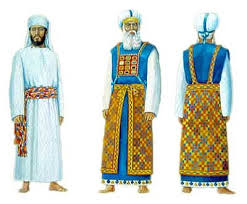
The expectations and standards set for a Levitical Priest was beyond the basic standards for men by Torah.
It is about living a life that is above and beyond the NORM. This is about living and exceptionally righteous life. I would submit to you that failure to meet both the basic and those exacting, exceptional standards and expectations will adversely affect our role and inclusion in the Kingdom of YHVH.
Many outside of our Faith Community adamantly contend that Torah was created and implemented for the Jews. These maintain that the Jews failed to keep Torah and thus forfeited their opportunity for salvation and that Christians have replaced the Jews in God’s great plan of salvation for mankind. Is this an true line of thought and teaching? Well, when Torah was given to us during our sojourn in the Sinai Desert, and even after we entered the Land of Promise, the bible clearly indicates that all 12-tribes of Israel were subject to Torah. By the first half-of the 6th-century B.C., 10 of our 12-tribes had become scattered by the Assyrians leaving only the tribes of Judah and Levi. Today, the identities and locations of those scattered 10-tribes of Israel are lost to the memory of world history. Interestingly, during the time our Master, Yahoshua and His handpicked disciples walked, taught and preached on this earth, the identities and locations of those 10-tribes was well known to the Jews of the Ancient Near East (Matthew 10:6; 15:24; 9:36; Jeremiah 50:6). Scholars who have attempted to identify some of the lost “Sheep of Israel;” or rather the misnomer “Lost 10-Tribes of Israel,” have found archaeological evidence that is scattered throughout the eastern and western world that many of the scattered peoples have kept Torah to a lesser or fuller extent throughout the ages.
The Pharisaical religious establishment has successfully duped the world into thinking that Torah (and the Land of Promise) was given only to the Jewish nation. Christianity then took this Jewish-only mindset and understanding a few steps further by hijacking and corrupting the concept and doctrines of “grace.” Christianity teaches the “Law” was for those evil Jews who will suffer for their refusal to play by God’s rules, but we Christians are under grace and not required to keep one jot or tittle of the “Law.” By default, the Christian worldview has separated would-be disciples in Yeshua Messiah (thought of mainly as Gentiles) from their naturalized Israeli heritage and Faith that is based upon Torah. Therefore, the hijacked doctrine of grace has unceremoniously completely eliminated Torah as a life-expectation and requirement for any would-be disciple of Jesus Christ (i.e., Yeshua Messiah). This doctrine is not only false, it is also the vehicle by which countless well-intended, sincere, but grossly misinformed souls will NOT be admitted to the Kingdom of YHVH in the World Tomorrow.
None of this is to say, in the least, that a would-be disciple of Jesus Christ (i.e., Yeshua Messiah) receives admittance to the Kingdom of YHVH or eternal life by keeping Torah. To the contrary, eternal life and admittance into the Kingdom is a gift of YHVH that was won and will be delivered as a result of the atoning sacrifice of Yahoshua on the execution stake on that fateful Passover Day on or around 28 C.E. Nevertheless, for the true Disciple of Yeshua HaMashiyach, Torah stands as YHVH’s house rules that every disciple is expected to honor, keep and obey as applicable under the Renewed Covenant.
Abba passed on to Moses (i.e., Moshe) and Aaron (i.e., Aharon) and Aaron’s posterity, the exceptional standards and expectations that would be required in order for the males in Aaron’s lineage to serve the nation of Israel. As we can see throughout the book (i.e., the Cepher) of Leviticus, these standards and expectations were often rigid and were overall, over and above the baseline instructions given for every Israeli male. It was these exceptional expectations and standards set the would-be Levitical Priest apart from the rest of the nation in the manner of:
When reading through and studying Leviticus and the Levitical Priesthood, it is important to keep the following in mind:
Yahoshua has made us to be a kingdom of priests to His Elohim and Father (Revelation 1:6; 5:10). As priests of the Most High, the examples given in Torah relating to the required ritual cleanliness of every Levitical Priests 24-hours a day, 7-days a week, should serve as a reminder to us of our Master’s expectations for us. When these expectations and requirements are understood through the doctrines and teachings of Yeshua our Messiah, we should come to realize how important our personal and spiritual cleanliness is to YHVH. Father requires that we be “holy as He is holy” (I Peter 1:15, 16). That requirement has not changed in the least, despite the Torah naysayers that teach a perverted grace doctrine that inputs upon a Christian believer perpetual cleanliness and holiness. What this perversion is actually saying to the world is that all you need to do to inherit eternal life and have a relationship with the Creator of the Universe is ask Jesus Christ into your heart. Upon asking Jesus Christ into one’s heart, then grace takes over and your eternal life ticket is punched. You can live anyway you choose to live because God’s grace inputs perpetual righteousness to us and we become “holy” by default, forever.
This perverted version of grace is so far from Truth that it’s not even funny. We are required to “be” holy–to live holy lives; to live a life that is beyond the norm of all humanity, or even Christianity for that matter. The Apostle Peter wrote:
Gird up the loins of your mind (Greek for mind is Anazunomi, which means to prepare one’s mind for action); be sober; and hope to the end for for the grace that is to be brought unto you at the revelation of Yeshua Messiah. As obedient children, not fashioning yourselves according to the former lusts in your ignorance, but as He which hath called you is holy, so be ye holy in all manner of conversation; because it is written: “Be ye holy; for I am holy” (I Peter 1:13-16; cf. Leviticus 20:7; KJV).
Thus, we are not to defile ourselves or become spiritually and physically tainted by the things of this world, which when given over to, serves to blunt our service and effectiveness as priests of YHVH. By default, then, we are to die to self (reference Romans 6:2, 11; 2 Timothy 2:11).
Like the Levitical Priests of old, the standards by which we are to live are higher than most people will ever aspire or conceive to meet. Those lofty, but doable standards and expectations, affect how we conduct every aspect of our lives:
An entire book (i.e., cepher) of Torah was dedicated to instructions for the Levitical Priesthood. The requirement for exacting ritual purity and cleanliness in order for any priest to serve the nation in the community and in the sanctuary cannot be understated. YHVH requires, without exception, cleanliness and purity in order for any to worship and commune with Him. The priestly ritual instructions were primarily in place to allow the priests to serve in the sanctuary and in worship of YHVH. The sanctuary was the place where YHVH’s presence rested. Thus, in order to approach the sanctuary (as a non-priest) and the inner sanctum (as a priest), one had to be in a state of ritual cleanliness.
Although the sanctuary no longer exists, Father still requires that each of us be in a state of cleanliness and purity when we come before Him in worship, prayer and service. We have a baseline cleanliness afforded to us by the shed blood of Yahoshua HaMashiyach. There are, however, ongoing things in our lives that cause us to be impure and unclean that we must constantly be cognitive of and constantly address. Such impurity and filth hinders our worship, walk and witness and service to YHVH and His Kingdom. Intentional and perpetual and unresolved uncleanness (i.e., sin, unholy behavior and habits, improper thoughts and feelings and a lawless life) will adversely impact and hinder, (1) our personal relationship with the Most High Elohim; (2) our service to the Kingdom of YHVH and our Faith Community; and (3) our present and future standing in the Kingdom of YHVH. Yeshua revealed:
“For I say to you that unless your righteousness surpasses that of the scribes and pharisees, you will not enter the Kingdom of Heaven (Matthew 5:20; NASB).
Many will say to me in that day, :Master, Master, have we not prophesied in they Name? And in thy Name, have cast out devils? And in thy Name done many wonderful works?” And then will I profess unto them, “I never knew you: depart from me, ye that work iniquity” (Matthew 7:22, 23).
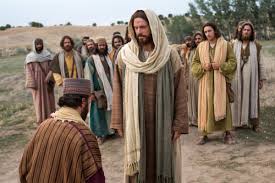
The story of the rich man and Yeshua is an excellent example of the high expectations set for disciples of Yeshua.
Master set the bar high for true discipleship. The sad, sorry and tired adage that so many so-called people of faith like to say, that God knows their heart, just doesn’t fly when one truly considers Master’s true discipleship standards and expectations. For it will be upon that great, end time revealing of the Sons of the Most High, that Yahoshua will separate those who are righteous from those who are unrighteous, and unfortunately for many, there will be no excuse accepted.
Master prophesied:
When the Son of Man shall come in His glory and all the holy angels with Him, then shall He sit upon the throne of His glory. And before Him shall be gathered all nations. And He shall separate them one from another, as a shepherd divideth His sheep from the goats. And He shall set the sheep on His right hand, but the goats on the left. Then shall the King say unto them on His right hand, “Come ye blessed of my Father, inherit the Kingdom prepared for you from the foundation of the world…Then shall say also unto them on the left hand, depart from me, ye cursed into everlasting fire, prepared for the devil and his angels” (Matthew 25:31-41).
Our Master set the bar high for true discipleship and service, just as Father set the bar high for Levitical Priesthood service. Are we then to follow the example of the Levitical Priests, per se? Well, no. The fact of the matter is that we follow exclusively the example of Yeshua HaMashiyach, our Master. The exceptional standards of the Levitical Priests are excellent shadow pictures of the standards and expectations that Master requires of us who are His disciples; we who are being made into a Kingdom of priests unto YHVH; conforming to the image of Yahoshua Messiah.
Faithfully,
Shalom and warmest blessings to you, your family and fellowship.
The page you requested could not be found. Try refining your search, or use the navigation above to locate the post.
Is Biblical Illiteracy behind the Anti-Hebrew Roots Agenda these days. In this post I reflect upon a recent experience I had on Facebook that suggested to me that Biblical Illiteracy may, in part, be behind the animus Christians have towards our Hebrew Roots/Messianic Community.
I happened upon a Facebook page today, the sole purpose of which, was to demonstrate via the Holy Scriptures, just how dangerous Hebrew Roots is to the world.
Aside from the dozens of other religions and movements (both religious and secular) in existence throughout the world today that one would naturally reason are of an existential threat to mainstream Christianity, I found it quite unnerving that the Facebook page owner would focus his ire upon our small, but harmless community. I mean, it’s one thing to post an article or two about one or more things germane to Hebrew Roots that you take exception to, but it’s an entirely different level of disdain one would have towards Hebrew Roots in order for them to dedicate an entire Facebook page badmouthing our Community. The sad part to this is that the page’s owner did not provide his readers with any content that would help them live the life abundant. The only thing the page owner provided was a warning–over and over and throughout the whole of his very robust page–of how heretical our Faith Community is to the world.
Biblical Illiteracy may behind the animus Christians have towards Hebrew Roots Community.
Look, I get it: there are always going to be haters of the True Faith once delivered out there. Clearly, it would have been so much easier for me to ignore such content.
The problem I saw with this page, however, is not an innocuous one if you ask me. The problem is actually bigger problem than we might think it to be. The owner of the “hate on Hebrew Rooters” page went to great lengths to look up and use bible passages to spew his disdain towards our community; our lifestyle; and our beliefs. And after reading a handful of postings on his page, I could clearly see how millions of potential Christian readers would be misled and manipulated and be denied the Truth as a result of their own Biblical illiteracy.
As I’ve mentioned and written about quite extensively over the course of the last several years we’ve ministered to the Body of Messiah via this website, Biblical illiteracy is an epidemic in Christianity. People, such as the owner of this anti-Hebrew Roots Facebook page, are either wittingly or unwittingly leveraging the blight of Biblical illiteracy to their advantage. These individuals are counting on their readers to not have the wherewithal to conduct serious, Spirit-led and administered, in-depth study of the Holy Bible in order to make up their own minds as to what is Truth and what is not. Such individuals are, essentially, practicing witchcraft. Whenever you take something of value to individuals and manipulate it such that it has an effect that will get those individuals to do what you want to them to do, you are practicing witchcraft in my book.
The chasm that exists between our community and our cousins in Christianity is based in great part on Biblical illiteracy.
Case in point: the page owner’s most recent posting targeted our beliefs in the efficacy of the Torah-based food instructions (i.e., Laws). The writer used the passage in Mark 7 where it is recorded that Master defended Him and His disciples’ practices of not following the Rabbinic-based tradition of ceremonially washing one’s hands before they eat. In this particular incident, Master was going up against a handful of Rabbinic Jewish leaders. Master railed against the Rabbinic Jewish leaders in their adherence to Talmudic practices that they themselves help elevated to the level–even surpassing in many respects–Torah. Master summarized His position on such man-made traditions that carried the authority of Torah with them, by saying to the group that, washing one’s hands in accordance to any man-made manner as a requirement of the overall set of God-given instructions, does not in any way eliminate one from being inwardly defiled and unclean. Master went on to say that that which comes out of, or from within an individual is the very thing that actually defiles that individual–such as hatred, envy, strife, covetousness, anger, etc. Failure to ceremonially wash one’s hands as stipulated by the Rabbis of old would not in any regard cause one to be defiled. That defilement would come about only in the eyes of the Rabbinic traditionalists; certainly not in the eyes of YHVH.
Now, this passage, in effect, had nothing whatsoever to do with the consumption of food–be it YHVH sanctioned or non-sanctioned foods. It was all about traditions trumping the rule of Torah. The writer of the post using this passage of Mark, however, failed entirely to discuss and use this passage via its truest context. Instead, the writer misinterpreted the passage–either intentionally or unintentionally–I’d probably think it was unintentionally; the writer being another likely victim of Biblical illiteracy himself. Regardless, what the writer has done through his ignorance is mislead and manipulate individuals into hating on Hebrew Rooters. I would go even further and submit that this writer may have succeeded in creating a stumbling block for countless Truth-seekers in finally finding the True Faith once delivered to the first centuries saints.
I thought initially to just move on and not pay the page any mind. (Oh, by the way, the Facebook page is entitled Hebrew Roots Heresy. I don’t necessarily recommend you check it out for yourself. I only wish to put this point that I am about to make into its proper context by referencing the actual page, if you will.) But I felt led to respectfully and lovingly correct the false writings of the page’s owner. In so doing and upon reflection, as bought and paid-for Torah Observant Believers in Yahsohua Messiah, it falls to each of us to in some way correct the scourge of Biblical illiteracy in the world. We have been called to make disciples for Master Yeshua of the nation peoples of this world. In order to do that, we must work to end Biblical illiteracy. Failure to do so will result in a failure to complete our mandated roles in the Great Commission.
But first,. we must eliminate Biblical illiteracy in our own Community, which seems to be a bigger problem than one might ever concede. The reason we have so much variation in our Faith Community today is because so many of our members refuse to read their Bibles. Many members elect to glob on to so-called Hebrew Roots teachers who feed them “processed content” that these bad teachers have taken and manipulated for their own purposes in many cases. If the the True Body of Messiah is well versed in their Bibles and are in alignment with the Holy Spirit that is operating within them, they will not fall victim to the inaccurate and false teachings that are unfortunately circulating throughout our Faith Community.
I have a love and passion for the lost and truth seekers of this world. In general, these are the individuals that we have been called to serve. Thus, I pledge to take on this mantle and work towards reducing the scourge of Biblical illiteracy in this world. The first place to start, of course, is to accurately put out through this blog and podcast program, that which Master Yahoshua taught and modeled for us. To that end, we can then begin to move forward to helping remove the blinders that the enemy has placed over the eyes and minds of the peoples of this world to the True Gospel Message and the benefits of an abundant life of Torah Living. It’s going to take fervent prayer, fasting and a major move of the Holy Spirit to effectively tackle this beast.
I invite you to join with me in this effort by seeking Father’s will for your life in this endeavor. Thus, I encourage you to seek of Father how you will serve His kingdom and fulfill your role in Master’s Great Commission.
Let us with great zeal and leading of the Holy Spirit (i.e., the Ruach haKodesh) go forth and do that which Father has given us to do.
Faithfully Submitted,
Shalom
The page you requested could not be found. Try refining your search, or use the navigation above to locate the post.
By virtue of our role as disciples of Yahoshua Messiah (Jesus Christ), we are called to be a united and unified body of believers in every respect. Just as Master was united with His Father, we too must be united with the Father, our Master and with one another in the Body of Christ (Messiah). This is a call for unity in the Body of Messiah.
We have recently stumbled upon some quiet calls for uniting or unifying with our cousins in Christianity (aka, churchianity).
I believe Father is going to do a great work on the earth that will ultimately bring Messianics, Christians, the Lost Sheep of Israel and Jews together as One Body in Messiah (Joel 2) In the interim, we as Torah Observant Believers in Yahoshua Messiah must stay true to our Faith’s Constitution—Torah—and to the teachings of Yeshua our Master. We must not compromise our beliefs and convictions surrounding our Faith (Deut. 5:32; 17:20). That being said, I believe also that we must be careful to not be so willing to hook up with those who do not support the tenets of our Faith.
Paul wrote to the Assembly of Messianic Believers in Corinth:
“Be ye not unequally yoked together with unbelievers: for what fellowship hath righteousness with unrighteousness? And what communion hath light with darkness” (2 Corinthians 6:14)?
There is no secret—no mystery—that our Faith Community is divided along several lines. Those new to Torah Living, however, are faced with horrendous challenges in sorting out how to walk out their Faith. Thus, the underlying tragedy we have lingering about within our Faith Community is a gross lack of unity.

While some call for unity between Christians and Messianics, there needs to be unity within the Hebrew Roots Community first and foremost.
Unity is a recurring theme throughout the bible as it relates to the unique character of the Creator’s chosen people. The writer of Psalm 133:1 suggested that the ideal society under YHVH and His Torah is fostered in great part by YHVH’s children dwelling together in unity.
Love for one another becomes the binding agent that brings about that unity (Heb. 13:1).
The ideal unified and united society we’re actually referring to today is none other than the Body of Messiah that consists of Torah Observant Disciples of Yahoshua.
It was while Master was contending with the “rabbinic Jewish religious leaders” on the Temple Mount in Jerusalem, sometime around Hanukkah, possibly 27 C.E., in responding to those leaders’ demands that He reveal to them whether or not He was the long anticipated Messiah that Master exclaimed:
“…the works that I do in my Father’s name bear witness of me. But you do not believe because you are not among my sheep. My sheep hear my voice and I know them, and they follow me. I will give them eternal life and they shall never perish. Neither shall any man pluck them out of my hand. My Father, which gave them me, is is greater than all and no man is able to pluck them out of my Father’s hand. I AND MY FATHER ARE ONE” (John 10:25-30; Rood).
The English term “one” in this and similar passages of the Gospel record is the Greek term “eis.” The Thayer’s Greek Lexicon defines “eis” as being “united” most closely; that being united in will and spirit. Thus, Master’s proclamation to the Jewish leaders on the Temple Mount that day was that He and the Creator of the Universe, whom He identified as His Father, were united.
Our Master taught what was expressly given to Him by His/our Father. Master did only what His/our Father instructed Him to do. Yahoshua thought and saw things (that being their respective worldviews) the exact way Father sees them. The love they shared was beyond human description and understanding.
Both sides of their relationship was in perfect harmony and was completely united and unified.
In like manner, Master desires that we as individual members of His Body of disciples would be unified and united with He and Father.
As Master’s Passion loomed just beyond the dawn of the next day, He prayed with and for His disciples in the Kidron Valley on their way to Gethsemane. Master prayed:
“I do not pray only for these alone, but for those also who shall believe in me through their word, THAT THEY ALL MAY BE ONE. As you, Father, are in me, and I in you, I pray that they also may be one in us and that the world may believe that you have sent me. I have given them the glory that you gave to me so that they may be made perfect in one—and that the world may know that you have sent me and have loved them as you have loved me. Father, I will that they also, whom you have given me, be with me where I am so that they may behold my glory, which you have given me before the foundation of the world. O righteous Father, the world has not know you, but I have known you and these now know that you have sent me. I have declared your name to them and will declare it so that the love wherewith you have loved me may be in them and I in them” (John 17:20-26; Rood).
The writer of Psalm 86 prayed that Father teach him His ways so that he would obediently walk in Torah. In so fulfilling that prayer, he would be fully united with and by default, committed to YHVH (Psalm 86:11).
It was always Abba’s intention that each of us would be united in Him by singleness of heart and Truth—the Way–that is Torah; and that we would fear Him and live good lives (Jer. 32:39). That singleness of Way or Truth was taught and modeled for us by Yeshua our Master.
We must endeavor to be united with Yeshua our Master.
We have chosen a life whereby we are supposed to be dead to sin. Sin is defined as “a violation of Torah” (I John 3:4; cf. Rom. 4:15). Thus, we have become united with our Master through our death to sin and through our walking in the newness of life (Rom. 6:1-7).
The Apostle Paul begins his discussion on the topic of unity in the Body (the 4th chapter of Ephesians) by sort of calling the Ephesian assembly members to get their acts together as individuals and to walk out their chosen Faith in a manner worthy of the calling that each of them had received (verse 1). In particular, Paul called out the necessity in exercising:
Then Paul encourages the Ephesian disciples to preserve the unity of their assembly through the bond of shalom (i.e., peace) (verse 3). He then reminds them of a central element of the True Faith: that there is One Body and One Spirit; One Master and One Faith; One baptism; One God and Father of all who is over all and through all and in all (verses 4 through 6).
Within the framework of the unified and united Body of Messiah, the Father in His infinite wisdom gave offices:
This offices were given for the equipping of the Body for the work of service and the building up of the Body such that the Assembly would attain unity of Faith and knowledge of the Son of YHVH.
Going back to the prayer that Master prayed the evening before His Passion, one of the last requests He made of His Father was that we be one (i.e., “eis”), as being united in spirit (i.e., will and purpose). It stands to reason that our unity of spirit (i.e., of will) also includes the Holy Spirit (i.e., the Ruach HaKodesh). This unity in spirit and in the Holy Spirit should in theory and in reality be our Faith Community’s badge of honor. It should also be the thing that draws people to us; to incite curiosity and desire to be affiliated with such a cohesive community.
The Holy Spirit dwelling in us, coupled with a common mindset (i.e., the Mind of Messiah) serves as a natural unifier and uniting agent (John 17:22).
Our unity of Spirit consists of:
In bringing all the various members of this united and unified body together, Father in His infinite wisdom provides operational control through the work of the Holy Spirit. The Holy Spirit operates throughout the Body of Messiah and produces members who exercise various talents and gifts that are designed to help strengthen this unity of Body we’ve been reflecting upon.
Those ministries, talents and gifts that are exercised by members of the united/unified Body of Messiah include (Rom. 12 and I Cor. 12):
Additionally, Father provided the Body the means of being self-sustaining and perpetually united and unified. He did all this for His purpose and glory (I Cor. 12:18).
No member of this united, unified, unique, multi-talented and gifted Body is insignificant or inconsequential. Whether weak, strong or medium strength member, each has their place in the Body of Messiah (I Cor. 12:22). Every level of membership is important and no one is to esteem themselves above another (Phil. 2:3).
So if one member suffers, all the members of the Body suffer with him/her; if one member is honored, all the members rejoice with him/her (1Co 12:26 CSB).
Therefore, there should be no lack or need among us as a united Body. Did you know that in Torah, Father made provision for the poor, widows, orphans and the priests of the congregation? Do we see this care for the needy within our Body exercised today as much as it should be seen among a Torah-keeping people that are married to their Messiah?
In the World Tomorrow, this amazing unified and united Body will be composed of:
All destined to be “one Body in Messiah” (Rom. 12:5).
Faithfully Yours in Yahoshua our Master and Messiah.
Shalom
The page you requested could not be found. Try refining your search, or use the navigation above to locate the post.
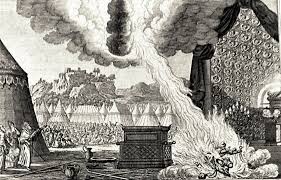
I was profoundly moved by the section of this week’s Torah portion that recorded what on the surface seemed the very harsh and violent encounter we had with YHVH. It was Parashah 26: Sh’mini, Eight and I wish to briefly reflect upon Leviticus 9:22-10:11. In this story we can see how the introduction of traditions and practices not sanctioned by the Almighty can eclipse and ultimately nullify Torah as taught to us by Master Yahoshua.
Aharon and his sons (the select priests of Yah) were in the process of being trained in the ways of Yah as it related to conducting acceptable sin and burnt offerings to our Elohim (Lev. 9:6-21). Initially, it appeared as though the training went quite well as the presence of YHVH appeared to us all (Lev. 9:22, 23).
“Fire came forth from the presence of YHVH, consuming the burnt offering and the fat on the altar” (Lev. 9:24).
This demonstration of acceptance on the part of Yah resulted in our crying out in one loud voice and falling to the ground on our faces. Can you imagine some 1.5-million of us shouting aloud (whether in stark fear or in fearful adoration) before Yah in the Sinai desert as we witnessed this awesome event? The sight of the Father consuming our sacrifice coupled with our response to this must have been an indescribable sight indeed.
However, the brilliance of this event was eclipsed by the foolishness of a couple of Aharon’s sons, Nadav and Avihu. Nadav and Avihu, for whatever reason, took it upon themselves to create their own method of YHVH worship by, what Torah describes as,
“…offering strange or unauthorized fire before YHVH, which Father had not instructed” (Lev. 10:1).
This seemingly innocent and innocuous stunt on the part of Nadav and Avihu cost them their lives. The same fire that consumed our sacrifice consumed them, resulting in their summary execution, right before our very eyes (Lev. 10:2).
Consequently, Moshe instructed Aharon and his two remaining sons to not display any semblance of mourning, but to remain at their post at the Tent of Meeting. We as a nation, however, were permitted to mourn their deaths, but Aharon would have to remain resolute in his purpose and position as Yah’s Cohen Gadol as he was not permitted to mourn or react to his sons’ sudden and violent deaths.
To our western sensibilities, this historical story on the surface may appear terrible and completely senseless, especially on the part of YHVH. Certainly this story and others like it have been the alleged reason for many in our modern, so-called enlightened, western society, to reject YHVH. I recall hearing about and reading stories of individuals who categorically reject the so-called “God of the Old Testament” because He appeared to them to be this cold, callous and violent God. To these: how could anyone in their right mind choose to worship such an entity?
The sudden and violent deaths of Nadav and Avihu are indeed senseless, but senseless from what perspective? Our so-called civilized, western-moral values were shaped over the centuries by men who took the teachings of Yeshua and blindly fashioned them into the fundamental and foundational supports for modern humanism.
Google dictionary defines humanism as:
“An outlook or system of thought attaching prime importance to human rather than divine or supernatural matters. Humanist beliefs stress the potential value and goodness of human beings, emphasize common human needs and seek solely rational ways of solving human problems.”
Notice the first sentence of this definition: attaching prime importance to human rather than divine matters.
Notice that God is nowhere to be found in this concept.
When we take Father’s perspective and sensibilities out of our “worldview” equation (if you will), we end up with a rather irrelevant worldview. Father’s worldview is the only thing that matters and the only thing that must matter if we are intent upon having any substantive relationship with the Most High. This is why denominationalism has fallen short in its purpose of being the True Faith once delivered. Denominationalism has taken select love-based teachings of Jesus Christ and made it the foundation upon which sola gratia was established. This sola gratia and “all you need is love” set of doctrines has gone a long way towards misrepresenting the True Person of YHVH and the true purpose and intent of Torah. Furthermore, this marginalizing, or better, demonizing of YHVH and His Torah, has resulted in the introduction of Humanism into the True Faith once delivered (Jude 4). Essentially, humanism has replaced the True Faith once delivered.
As strange and ridiculous as this may sound, the deaths of Nadav and Avihu were in a sense Abba’s grace being shed upon us and the future of the Body of Messiah. Essentially, if Abba were to have allowed the introduction of unauthorized worship practices into the ritual that He established through Moses’ instructions, over time, those unauthorized worship practices would lead to even more and worsening practices that would ultimately nullify Father’s overall instructions.
By Father taking swift and decisive actions to nip in the bud the introduction of unauthorized teachings, practices and traditions into His Torah, we have available to us today the best representation possible, in His inspired Word—the Bible, what He expects of us as His chosen ones. That is, if we choose to consider the unadulterated Word and instruction of Torah as our instruction. Otherwise, we are prone to turn to the teachings, doctrines and traditions of men, the primary example seen during the ministry of our Master being Rabbinic Judaism. We see very clearly in Rabbinic Judaism that man made traditions, doctrines and teachings serve only to nullify the instructions of our Creator. Master highlighted this crucial truth when He was confronted by the religious leaders over His disciples not following the ceremonial traditions and instructions of the so-called sages:
“Then the Pharisees and scribes asked Him, Why walk not thy disciples according to the tradition of the elders, but eat bread with unwashen hands? He answered and said unto them, Well hath Esaias prophesied of you hypocrites, as it is written, This people honoureth me with their lips, but their heart is far from me. Howbeit in vain do they worship me, teaching for doctrines the commandments of men. For laying aside the commandment of YHVH, ye hold the tradition of men, as the washing of pots and cups: and many other such like things ye do. And He said unto them, Full well ye reject the commandment of YHVH, that ye may keep your own tradition” (Mark 7:5; KJV).
What Avihu and Nadav were attempting to do in a great sense was a foreshadow or precursor of what ultimately Yeshua had to deal with during the time of His earthly ministry. And to a great extent, this is what we are having to navigate through ourselves as we attempt to walk out this Faith of ours in the midst of so many teachings, doctrines and traditions that serve only to nullify the Torah of YHVH.
Whenever we come upon doctrines, traditions and teachings that urge us to go beyond what Father instructed us to do in His Torah, we really need to weigh and closely examine those things through the lens and weight of His eternal Word. If those doctrines, teachings and traditions are perhaps of pagan origin, then we need to run away from those types of worship and practices. I truly believe that what Nadav and Avihu were attempting to do was to introduce pagan rituals and practices into Father’s explicit worship rites. This could be why Abba responded to their offering so swiftly and violently.
Indeed, many in our 21st century western society see this incident as senseless and unwarranted on the part of Father, and thus, this plays into their rejection of Him and His Torah. Many contend that Father is a violent and war-mongering God who seeks nothing but to kill and destroy. (Interestingly, aren’t these the same descriptors we use to describe hasatan?)
Whereas there was a time when western cultures accepted the whole of the Bible as containing the Words of God, in recent decades, our so-called enlightened modern society has rejected the Person whom they identify as the God of the Old Testament for these stated reasons.
Well, if we view Father through the lenses of our corrupt nature, as strange as this may sound, yes, one would certainly see YHVH as a heartless, murderous and callous tyrant.
Interestingly, when we consider our Master’s (the Person who many refer to as the God of the New Testament who replaces the God of the Old Testament) perception of His Father and our Creator, He seems to not possess the same understanding of Him as most secular society does.
Of His Father, Master stated:
“…I am going away so that the world may know that I love the Father. Just as the Father commanded Me, so I do” (John 14:31; Holman CSB).
Now for someone who preached and spoke so much about love—love of Yah and for one’s fellow man—it doesn’t make sense that He would actually love the same Person who so many see as monstrous. Something just doesn’t jive here.
I submit that the Master’s love of Father was of such an indescribable degree was because Master sees and knows His Father for what He truly is. Master sees Father as the Holy Sovereign of heaven and earth:
“…if you will indeed obey my voice and keep my covenant, you shall be my treasured possession among all peoples, for ALL THE EARTH IS MINE” (Exodus 19:5; ESV).
“For the earth is YHVH’s and the fullness thereof” (I Corinthians 10:26; KJV)
So the truth of the matter is that Father has full authority to do whatever He chooses to do in heaven and on the earth because ALL THE EARTH BELONGS TO HIM as well as all that is contained within both those realms.
But still some will contend that what Father did here in this passage was senseless and cruel and that certainly, Father could have found another way. Well, we must also understand this one crucial thing about Father before we start imposing our sense of morality (our Humanism) upon Him. Of Himself, Father revealed:
“For my thoughts are not your thoughts, neither are your ways (i.e., my “derek” or manner) my ways, saith YHVH. For as the heavens are higher than the earth, so are my ways (i.e., my manners) higher than your ways and my thoughts than your thoughts” (Isaiah 55:9, 10; KJV).
Therefore, no matter high and mighty we may see ourselves; no matter how far we believe we’ve arrived; we can never measure up to Father’s level of thinking nor match His ways of doing things.
Unless…we adopt and possess the Mind of Christ (i.e., the Mind of Messiah) (I Corinthians 2:16). If we get to that place in our lives where we possess and exercise the Mind of Messiah, then we will begin to understand more and more of why Father does what He does. When we start possessing the Mind of Messiah, then we begin to think more along the same lines as our Heavenly Father does.
Well, you may question: how does having the mind of Messiah (i.e., Christ) cause us to understand why Father does the things He does or think along the same lines that He thinks? It’s simple. Master stated the reason:
“I and my Father are one” (John 10:30; KJV).
We must understand that although Yeshua and Father are two distinct Beings that reside in the throne room of heaven, they are one; that is, they are “eis,” that is united closely in will and in spirit and purpose (Thayer’s Greek Lexicon).
May we grow in our Faith and love of Father and His Son such that we become one with them. In so doing, we will begin to understand the ways of our Heavenly Father and appreciate all that He has, does and will do for us.
The page you requested could not be found. Try refining your search, or use the navigation above to locate the post.
The Day of Firstfruits is a little known or publicized feast in our Faith Community. Firstfruits is also referred to as Yom haBikkurim (Hebrew) and the Wave Sheaf Offering. It is sandwiched into the week of Passover–Unleavened Bread and always occurs on the first-day of the week after the weekly Sabbath during the Passover–Unleavened Bread week.
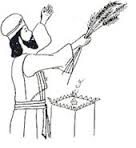
We were instructed to bring an omer of barley–the firstfruits of our spring harvest–to the Levitical Priests who would wave it before YHVH on the Day of Firstfruits.
This Gregorian Calendar year, Firstfruits took place on the first day of the week—4-8-18 according to the Observational Calendar and on the first-day of the week on 4-1-18 according to the Jewish Calculated Calendar. On the Jewish Calendar, it is noted as Pesach II and the 1st Day of the Omer.
The instructions Father gave regarding the keeping of Firstfruits is found in Leviticus 23:10-14. As with each of the Torah-instructed Feasts of YHVH, Firstfruits is rich in prophetic and spiritual application.
Is it permissible to have our children play organized sports on the Sabbath? Would this be a violation of Torah and of Sabbath-Keeping?
This situation and many, many others are not addressed in Torah. We must be careful not to add to or take away from Torah.
The applications related to this question goes well beyond simply allowing our children to play organized sports on the Sabbath. Torah’s silence on this and many other aspects and issues of Sabbath-keeping require us to examine:
–Our relationship with the Almighty
–What it means to keep the Sabbath Holy
–What it means to proclaim a holy convocation on the Sabbath
–What it means to do no work on the Sabbath
Why did Father make Sabbath-keeping so vague in the first place? It was likely to test our hearts and commitment to Him. It also serves as a gauge to measure the level of relationship we have with Father.
The silence of Torah on the keeping of Sabbath (as well as a great many other issues and topics) resulted in the Rabbi’s creating hundreds of rules and traditions around the keeping of Sabbath that include 39-general categories of what is required to keep Sabbath (http://www.pursuegod.org/rules-pharisees/). These 39-general categories in turn include hundreds of specific individual rules for Sabbath-keeping. These rulings and instructions are contained in the Talmud.
When addressing the concerns of the Samaritan woman at Jacob’s well regarding where YHVH had established the place of worship, He was noted as saying:
“You Samaritans worship what you do not know. We worship what we do know, because salvation is from the Jews (i.e., from the lineage of Judah and the oracles entrusted to Judah by Father as opposed to the religion of Judaism). (Continuing) But an hour is coming, and is now here, when the true worshipers will worship the Father in spirit and truth. Yes, the Father wants such people to worship Him. Yah is Spirit and those who worship Him must worship in spirit and truth” (John 4:22-24; Holmann CSB).
Thus Master foretold of a two-prong formula for worship of Yah that would be practiced under the renewed covenant: Spirit and Truth.
As it relates to Truth, our worship is founded upon Torah and the teachings of Yeshua Messiah:
Psalm 119:160—”Thy Word is true from the beginning: and every one of thy righteous judgments endureth forever” (KJV).
In terms of Spirit, our worship is founded upon having a substantive–personal–relationship with YHVH:
“And this is eternal life, that they (they being Master’s disciples which ultimately includes us)—that they know you the only true God, and Yeshua Messiah whom you have sent” (John 17:3; ESV; adjusted).
“To know” here is the Greek term “ginosko,” which means to “learn to know a person through direct personal experience, implying continuity of relationship” (Louw-Nida Lexicon). This “knowing” that Master was referring to is more than a simple cognitive awareness that God exists.
The relationship we have with Father, when coupled with His Torah—His Truth–through the agency of the Holy Spirit (i.e., the Ruach HaKodesh)–help us navigate through such questions of Sabbath-keeping.
Once we establish a true and substantive relationship with the Creator, we get to know what He approves of and what He does not approve of, even in the areas where Torah is silent.
The page you requested could not be found. Try refining your search, or use the navigation above to locate the post.