No Results Found
The page you requested could not be found. Try refining your search, or use the navigation above to locate the post.
In keeping with our renewed aim to include a question and answer session in Sabbath Thoughts and Reflection installments, I reviewed my list of questions and came to this question: When Messiah returns, are we going to heaven or are we staying here on earth?
I felt this was an excellent question that so many Torah Observant Believers in Yeshua Messiah have, especially coming in to the Hebrew Roots Faith from fundamental and charismatic Christianity. Unfortunately, or fortunately—depending on how you look at it—as I sat down to answer the question using scripture as the basis for my thesis, I found that I could not answer this question with appropriate proofs in just a short amount of time. It soon became clear to me that this question would have to be the primary focus-content of this installment of Sabbath Thoughts and Reflections.
Therefore, I would say that you prepare yourselves for a somewhat lengthy dissertation on the subject and maybe take some notes as I will be referencing a ton of biblical passages to support my contentions.
Without going too much into the belief systems that exist around this question, most of us are aware of the wide acceptance among Christians and even some Hebrew Rooters that born-again believers in Yeshua will, upon Messiah’s return, be raptured up to heaven where they will dwell with Messiah for all eternity.
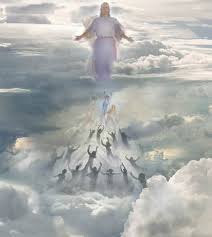
Does the Bible support believers going to heaven or remaining on the earth when Yeshua returns?
The irony in all this is that, despite the overwhelming, gross lack of any biblical evidence supporting heaven being the destination of the saved, most Christians and some Hebrew Rooters truly believe the bible supports the heaven claim. This belief is so strong that it’s intricately woven into prayers, countless sermons, songs of worship and in evangelistic witnessing practices where potential converts are promised a free ticket to heaven if they simply say the sinners’ prayer and give their hearts to Jesus Christ.
In order for us to accurately determine the ultimate future abode of the true children of Yahovah/Yahuah/Yahweh our Elohim—that is, whether or not they will be raptured and go eternally up to heaven and hang out with the angels and live in lavishly adorned mansions and such; or remain here on earth in a renewed paradise that Master will ultimately turn over to His Father—I believe we must establish 3-things:
1. Our purpose as Children of the Most High Elohim and as disciples of Yeshua Messiah.
2. Our true identities in Yeshua Messiah. And…
3. An understanding of the Gospel of the Kingdom of Yahovah and the Renewed Covenant.
Without a firm understanding of these 3-crucial pieces of information, any scenario, especially the raptured to heaven scenario, are easy ones for any would be believer in Messiah to swallow.
I will concede that Christianity’s fairy-tale of a perfect heavenly abode as believers’ ultimate destination sounds so inviting to the human heart and mind that may have grown especially weary of this world.
When we think of heaven, thoughts of pristine streets of gold, lights shining 24/7, natural and unimaginable beauty all around, angels scurrying about their eternal tasks and singing in impromptu choirs, saints of old hanging out on park benches telling any who will listen their story of times long ago, the opportunity to stare into the face of Jesus Christ for all eternity, and ole earth along with her many ills and pains and troubles, all but a distant and vanishing memory easily resonates with any who wants eternal peace, love and joy. It’s over yonder where the rolls are called and the sweet by and by’s are dreamily played out before us in an unending refrain; where we reunite with once dead loved ones and relive those good times. No more crying, sickness, evil, and most importantly, no more death.
Heaven then is of course a more desirable destination than earth. I mean, who wants to remain here on earth. Any believer of course with half a brain and sense about them would choose to believe in a heavenly destination over that of earth. And add to that the thought that our dearly beloved who have died and gone on before us: heaven offers us a slight respite from the pain that death places upon the human psyche. We all want to believe that our dearly departed loved ones are anxiously awaiting our arrival in some far distant, but loving and beautiful place.
The heaven scenario helps in part dispel the hard reality that when humans die, they are dead—that they cease to exist—that their spirit is withdrawn from their bodies and their bodies/souls simply return to the dust from whence it came. There’s no coming back from death. And everyone who has ever lived and who is currently living, if Master tarries, has an appointment with death.
Unfortunately, death has a very painful sting and its power is absolute. Death is no respecter of person. Death is no respecter of time and only in the rarest of circumstances, it is never fair.
Thus the only hope that one has as it relates to each soul’s appointment with death is that the Creator of the Universe will reunite every believer’s withdrawn spirit with a new body (since the old body will ultimately decay and fade away). This is the hope of every believer in Yeshua Messiah and it is supported by scripture. The question, then, becomes one of: once spirits are reunited with renewed and translated bodies, where will the believer spend eternity? I truly believe the bible gives us a clear answer to this question.
As I just mentioned, in order to fully ascertain the destination of true believers in Yeshua Messiah and not be taken by pagan-fairy tales of the role being called up yonder, we must understanding what our purpose is as children of the Most High Elohim; understand our identity as Torah Observant Believers of Yeshua Messiah; and understand the Gospel of the Kingdom of Yahovah and the Renewed Covenant.
Now, there’s no way I can expound upon all 3 of these elements of understanding in the time I have remaining in this installment. Each of these elements, in and of themselves, can easily be the focus-content of a number of installments of Sabbath Thoughts and Reflections.
So to avoid getting bogged down in a reflection on these 3-elements of understanding, permit me to provide a quick, but simple explanation of each.
1. Our purpose as it relates to being children of the Most High Elohim is found in our identities and in the broader understanding of the Kingdom of Yahovah and the Renewed Covenant. When we were carried out of Egypt as if on eagles’ wings and we settled at the base of Mount Sinai, we were given a purpose: we were to be unto Yahovah, our redeemer, a kingdom of priests and an holy nation (Exodus 19:6). Sadly, we never fully realized that purpose. However, Father’s plan for mankind included a redo of this purpose for His select people. This very same purpose will be carried through in the world tomorrow, whereby we will be a kingdom of priests and a holy people unto Yahovah our Elohim (Revelation 1:6; 5:10; and 20:6).
Now let me ask you this: if we’re slated to live in heaven for all eternity when Messiah returns, what purpose would there be in us being a kingdom of priests in heaven? Who would we be interceding for as priests and what priestly duties in heaven would we be doing? Let’s just chew upon that for a moment.
2. Our identity as children of the Most High Elohim is that of sheer and absolute royalty. We are nothing less than children of Yahovah—citizens of heaven (Luke 20:36; Romans 8:16; 31; Galatians 3:26; I John 3:10). (Now don’t get confused by the moniker “citizen of heaven.” Just because your diplomatic documents identify you as a citizen of heaven, it doesn’t mean that you physically reside in heaven. What it really means is that your authority and purpose comes from heaven. Your abode, however, is earth.)
The whole concept of having and raising children is built around the concept of a set of parents reproducing themselves. The same principle somewhat holds true here: We have a heavenly Father who seeks to produce a race of beings that are made in His image—that is, having the same attributes that He possesses.
Adam was made in Yahovah’s image (Genesis 1:26, 27; 9:6). Contrary to traditional thinking, every person who descended from Adam was made in their parents’ image, not in the image of Yahovah. Adam was made perfect in all aspects of his being—He was like His creator in all attributive respects. Yet Adam fell. Since the fall, the only man to be made in the image of Yahovah—which is perfect in all aspects–is the 2nd Adam, Yeshua Messiah. Master Yeshua, Yah’s Son, successfully filled the prescription of being the perfect man and upon His death, burial and resurrection, He was deemed the first fruits of Abba’s human creation (I Corinthians 15:23). From there, all those who follow in Yeshua’s footsteps become sons and daughters of Yahovah our Elohim. And as we grow in the Faith through the agency of the Holy Spirit, we progressively conform to the splitting image of Yeshua our Master and we ultimately become a member of Yahovah’s family.
Now, the pathway to being a child of Yahovah was severed by the fall of Adam #1, who was created perfect and in the image of the Creator. Thus we were not the children of Yahovah, but children of darkness (Ephesians 5:8).
The 2nd Adam came to establish the pathway by which the descendants of Adam 1 could ultimately become Yahovah’s children. You see, Father has started everything on this earth all over again, and we are simply the middle rungs of His ladder leading to an ultimate restoration of all things here on earth. It began here on earth and will end here on earth. Heaven was never in the picture as it relates to mankind, especially mankind becoming children of the Creator.
3. The Kingdom of Yahovah is the whole kit and caboodle as it relates to the restoration of creation back to the way Father always intended it to be. It is the establishing of a literal kingdom here on earth whereby Yeshua will head the restoration methods and select members of His family will be given key roles in assisting Him in that 1,000-year restoration project. It’s a vast undertaking that will actually employ some of us to help make this restoration successful and wonderful.
And the way all this happens is by Father writing His way of life, no longer on tablets of stone whereby man’s sinful nature prevents him/her from living it, but instead Yahovah’s prescribed way of life is intrinsically implanted in the very fibers of our being through the work of His Holy Spirit (Hebrews 8). Thus, we conform to the image of His Son Yeshua Messiah, and we begin to fulfill the purpose that was originally set before us: being a holy people and a nation of priests unto Yahovah our Elohim. Heaven has nothing to do with this scenario, apart from it being the current dwelling place of our Creator and our Master Yeshua, the angels, the 24-elders and the beasts that inhabit the throne room of Yahovah.
There’s astoundingly good news that grossly overshadows the Greek-mythological construct of Christianity’s contrived paradigm of heaven as the ultimate destination for Christian believers. If one can grasp, to the fullest extent possible, the things that we now know about our purpose, identity and the Kingdom of Yahovah, then the whole concept of heaven being a believer’s ultimate destination becomes not only child’s folly. I will further submit to you that the false gospel of believers residing eternally in heaven, from a humanistic standpoint, is less desirable than the truth of the Kingdom of Yahovah being established here on earth and God’s elect reigning with Yeshua from Jerusalem.
Somehow we must get beyond this contrived notion that earth must be foreign to those of us who call Yahovah our God and Yeshua our Saviour and Master. Earth was, is, and always will be the abode of humans—in whatever form he/she may take, be it flesh and blood or spiritual. Have there been or are there humans now residing in heaven? Personally, I believe the answer is yes and no. Yes, I believe Father may have afforded a select group of humans a place in heaven; and I’m specifically referring to the 24-elders that are seated about the throne of Yahovah (Revelation 4:4, 10; 5:8,14: 11:16; 19:4). The authorized versions of the Bible mention this group of beings some 6-times in the Book of Revelation. I personally believe these individuals to be human beings, but human beings who have been translated into spirit beings, and that’s the “no” aspect to my answer to the question of whether humans have and are now residing in heaven. These unique beings are in the presence of Yahovah 24/7 and likely have been so for centuries of time, and thus they could not exist as humans as we know humans to exist today. These would have to exist in some form suitable for dwelling in the presence of Yahovah for centuries of time.
But keep in mind: nowhere do we read in the Revelation account about loved-ones residing in heaven.
I guess one could argue that when any human is privileged to be in the direct presence of Yahovah, time, space and life as we know it, stands still. We know that Moses was called up to the Mountain of Yah where He lived, communed and worshiped the Creator, for extended periods of time.
There’s also that passage where Moses was called up to the presence of Yahovah along with Aaron, Nadab, Abihu and some 70-elders of Israel (Exodus 24). I would encourage you to read this amazing passage when you get the chance, for here we read where we as a people agreed to the terms of the covenant that Father laid out before us. After the covenant was ratified with blood, Father called up to Himself representatives of our nation to commune with Him on His Holy Mountain, to be in His presence. (Look, Father absolutely loves to hang out with His kids—He’s truly a Father in every sense of the title and descriptor.)
As I just mentioned, before this auspicious event, the covenant was ratified with sacrifices and the sprinkling of blood upon us (verses 5-8) and we unanimously agreed to the covenant and to obey Yahovah our Elohim. It was after this ceremony that Father invited Moses and His cabinet (if you will) up the mountain to commune with Him (verse 9) and all who attended saw the glory of the Most High and lived to tell about it.
You see, it was a well known and believed fact that humans who for whatever reason saw a manifestation of Yahovah would suffer instant death. There are a number of passages attesting to this belief throughout scripture, to include Genesis 16:13; 32:30; especially 33:20, where Father Himself certified that no man will ever see His face and live.
Continuing on: many on both sides of the aisle have fingered folks like Enoch, Moses and Elijah as potential candidates for human existence in heaven. I’ve read the pros and cons of this argument and I have to say that for me, the jury is still out on whether or not any of or all 3 of these heroes of the Tanakh have ever or are presently residing in heaven. Certainly, our Father is sovereign and All Powerful, and He can do whatever He chooses to do within the realm of His established holiness and righteousness (i.e., He will do whatever He chooses to do without violating His own rules of holiness and righteousness—Isaiah 55:8,9).
We could get into endless debate as to who and what the 24-elders are. Yet Father has chosen not to reveal their identity to us beyond simply they being 24-elders. There are some things that belong to our Father that is frankly none of our business. It was when we were dwelling in Moab and rededicating ourselves to the broken covenant, just prior to our entering the land of promise and our sojourn in the desert some 40-years, that Moses reaffirmed the covenant and reminded us the following:
“The secret things belong to Yahovah our Elohim, but the things that are revealed belong to us and our children forever, that we may do all the words of this Torah (Deuteronomy 29:29; ASV corrected).”
And it was when Master’s handpicked disciples had gathered with Him on the Mount of Olives on the day of His ascension that Master responded to a question regarding the timing of the establishing of the Kingdom of Yahovah—NOT IN HEAVEN BUT HERE ON EARTH. Master shut down the speculation pretty quickly with the following admonishment:
“…It is not for you to know the times and epochs which the Father has fixed by His own authority (Acts 1:7; NAS).”
We clearly see here that Master never adjusted His disciples’ thinking on this issue. Earth had always been the destination and location of the coming Kingdom of Yahovah. Period. Master could have very easily set the record straight and moved the discussion to heaven as THE destination and location of the Kingdom of Yahovah.
Nevertheless, the future abode of humans seems to be something that Father did not keep to Himself. In fact, Father, through the teachings of Yeshua our Master, His prophets of old and the Apostle Paul, firmly established a future for believers in Yeshua Messiah on this earth. None of these individuals ever so much as hinted of a time when man would ultimately reside in heaven. In fact, our very own Master, Himself, spoke of His own return to earth where He Himself would reside and establish the Kingdom of His Father.
Despite numerous biblical passages to the contrary, fundamental, charismatic Christianity, and dare I say many Hebrew Roots and Messianic believers, maintain that the destiny of Yahovah’s elect is heaven proper.
Like so many of you, I, growing up in the Baptist Church of my youth, vividly recall hearing sermons and singing songs during Sunday worship services, that heralded a time in the future when we would reunite with long lost loved ones who proceeded us in death; who had gone on to heaven, where we’d all walk the streets of gold, sing in the hallelujah choir and gaze into the face of Jesus for all eternity.
I will admit, those heaven-based sermons and songs were joyous and comforting thoughts for the countless souls who had heavy hearts, weighed down by the cares of a hard life and the deaths of loved ones. It just felt good to believe in such a thing. It became quite obvious that Christ would rapture us from this earthly plane and take us to be with Him in heaven for all eternity. Did He not tell us that He was going to prepare a place for us; and that in His Father’s house was many mansions; and that where He went there we would be also? Besides, the earth holds so much pain. No one in their right spiritual mind would want to remain here on earth for an eternity. Earth was just not a good place.
Yet I always found it quite interesting that no one, in their right mind, wanted to die; no one wanted to depart this world and go off to heaven, that is unto such a time that there would be no hope and that death was imminent and inevitable. Or for that matter, no one wanted their loved ones to die either. Not that Christians would have a suicide mindset, but with all the focus on going to the most desirous place ever to exist, why were we so earth-bent in our mindset and behavior and fought death with every fiber of our being.
We spin and toil for the things of this life and we do everything we possibly can to sustain our lives here on earth (i.e., when it comes to medicine and the trappings of life). It would seem to me that we would not fear death and even look forward to leaving this earthly plane for heaven. Right? Yet this is far from the conventional behaviors and mindsets of most every Christian believer who has ever lived.
Nevertheless, all this is beside the point: Scripture does not in any way support heaven as the future destination of humans, plain and simple.
Every ancient and present day culture and religion, have varying and similar concepts of heaven being the ultimate destination of righteous people. I could spend hours expounding upon this aspect of heaven alone (which I find quite fascinating), but I will force myself to stay on topic and address the question at hand: will we go to heaven or remain on earth after the end of days? I’ve pretty much given you my definitive answer already—those of us who are of Yahovah, are destined to reside here on earth with our Master once He comes and establishes the Kingdom of His Father, to be headquartered in Jerusalem.
However, before presenting scriptural proofs of this claim, allow me to expound briefly upon the erroneous concept of being raptured up to heaven to reside with Jesus Christ for all eternity.
The concept of heaven being the ultimate abode of saved humans did not originate with Christ’s resurrection and the first century church. In fact, the concept of humans earning a home in some heavenly abode for living a goodly prescribed life goes way back to the ancient mystery religions of Babylon, Egypt and Greece. Interestingly, all 3-ancient cultures’ concepts of humans going off to heaven after living the prescribed good life, have striking similarities, with of course, a few variations.
Consequently, bits and parts of each of these cultural and religious concepts of heaven were brought with us out of Egypt during our Exodus; add to those Babylonian concepts of heaven held by the surrounding nations; and after residing in the land of promise and enduring both Babylonian and Greek dominance, it was a natural inevitability that such concepts of heaven would be infused into our Hebrew-based culture (e.g., the Bosom of Abraham and the story of the Rich Man and Lazarus) and ultimately Christian doctrine and beliefs.
Samuele Bacchiocchi, PhD., renown 7th Day Adventist scholar, did a phenomenal work on the subject of popular Christian Beliefs that may or may not be based on the Bible, including the subject of the afterlife. If you are interested in reading this piece, drop me an email and I’ll happily forward a PDF copy to you to review at your convenience.
Many would point to Paul’s revelation recorded in the 4th chapter of I Thessalonians as “proof-positive” that believers will, at some point in the end times, be raptured from this earth, up to heaven, to live with Jesus Christ for all eternity. But is this famous passage truly saying what so many millions of Christian and Messianics are hoping that it’s saying? Let’s take a quick look at this passage and break it down a little to see exactly what Paul is and is not saying.
Now this is one of Paul’s many “I would not have you to be ignorant…” passages that ironically, so many simply gloss over and leave after reading it, still ignorant of what Paul is trying to get across to us. So let’s start, for context sake, at verse 13, and the passage reads:
“But I do not want you to be ignorant, brothers, concerning those who are asleep, that you would not sorrow as others who have no hope. For if we believe that Yahoshua died and was raised again, so also those who sleep in Yahoshua will Yahovah bring with Him. For we say this to you by the word of Yahovah, that we who are alive and remain until the coming of the Savior will by no means precede those who are asleep. For Yahoshua Himself will descend from heaven with a shout, with the voice of the malak gadol (i.e., the archangel), and with the trumpet of Yahovah. And the dead in Messiah will be raised first, then we who are alive and remain will be caught up together with them in the clouds, to meet Yahoshua in the air; and so will we ever be with Yahoshua (I Thess. 4:13-17; Book of Yahweh, adjusted).”
This revelation is addressing the First Resurrection and what some famously call the Great Rapture. I’m not opposed, as many in our community, to the term “rapture.” Indeed, a snatching away of some sort, as the term suggests, is clearly indicated by this passage, specifically verses 16 and 17.
But the central verse that seems to get most “destination heaven” believers excited is verse 17 which speaks of the dead in Messiah along with the living who will be translated in a moment and in a twinkling of an eye (I Corinthians 15:52). In this verse, the Apostle Paul states that the translated living will be caught up together with the newly resurrected dead in Messiah and thus will ever be with Yahoshua. However, what most folks fail to read, closely that is, is the specifics of where the raptured souls will be caught up to: that being, the clouds, where they have an appointment to meet in the air and begin their eternal dwelling with the Master. Many believe this moment in time to be the “Great Marriage Supper of the Lamb,” where resurrected and translated saints come together and commune with their Master after a long separation (Revelation 19:9). Here the saints celebrate their marriage to Master Yahoshua for a brief season in anticipation of Messiah’s triumphant return to the earth to establish His Millennial Kingdom and restore paradise lost.
What this passage did not say was that the translated and resurrected saints would meet with Master and then go on up to heaven to remain there for all eternity. The fact that Paul says that we will remain with Yeshua simply means that we will always be with Yeshua our Master from that time forward—that the time for separation has come to an end—that the bridegroom has come and we, Master’s bride, will be united with Him and begin our life together with Him forever.
You can’t squeeze heaven as the ultimate destination of translated and resurrected men and women from this passage if you are true to what is contextually written.
So at this juncture, let us turn to some biblical passages that support earth being the ultimate destination of the saints when Master returns and that, in my mind, debunk the long-taught and believed doctrines and teachings that heaven is the ultimate, eternal destination of the resurrected and translated saints in the end times. What follows are what I consider to be scriptural proof passages that support the belief that we who are Messiah’s will have an amazing, indescribable and extremely productive life here on earth, serving and co-reigning with our older brother and King, Yeshua HaMashiyach.
John 6:22-45—here we find the story of crowds of people that had previously been fed miraculously by Master, now seeking after him, not to learn about the Kingdom of Yah, but to fetch another meal. Yet in His explanation to them about the True Bread in which they should be seeking, Master gives us a glimpse into the end times in which He will raise up those who are His—none who are His will be lost—in the last days. Then Master references a passage from the Prophet Isaiah where it is prophesied that Yahovah will teach us who are His and peace will be our lot (Isaiah 54:13). Peace comes to those who truly Shema to our God’s commandments (Isaiah 48:18; Psalm 119:165).
The way to visualize this whole scenario is from a family standpoint. Father has from the beginning yearned to have a family that He can call His own; formed and fashioned in His image. As any good Father, Yahovah finds great pleasure and joy in teaching His sons and daughters. Such will be our lot in the Kingdom, whereby He will teach us His ways and we will prosper and grow and become truly His children. I have to say, in all of the sermons, songs and commentaries that I heard in my youth about going to heaven, I never heard anything mentioned about being taught the ways of Yahovah.
Romans 8:18-30–It is imperative that we first understand who and what we are before we can truly appreciate where our physical destinies will be in the world tomorrow. We are sons and daughters of Yahovah—we are the children that Father always desired to have when He first created Adam. Adam failed and we lost our pedigree in a sense. But the second Adam re-established the opportunity for regaining that pedigree. Thus, those of us who are of His, we are children of the Most High and He is our Father. There’s coming a time when the earth will be released from its corrupt state upon the revealing of the sons and daughters of Yahovah. All of creation over millennia was allowed to devolve to its current state in anticipation of the appearing of the children of Yahovah. As the ages pass, all of creation groans and suffers as if in the throws of birth pains, awaiting those of us who will have been reborn and conformed to the image of Yeshua our Master.
Hebrews 2:10–The Suffering Messiah’s mission when He walked this earth was to open that narrow gate and establish the way by which many sons and daughters of Yahovah would be produced. Recall that originally, this was supposed to happen through the first Adam. But when Adam failed to lead a line of children that would be sons and daughters of the Most High, Father required the 2nd Adam to pick up where the 1st Adam failed.
Rev. 19:11-16—here we read of Yeshua returning to the earth, this time, as the conquering King—wearing a robe that has been dipped in blood, riding a white horse, wearing a crown—Who comes to right that which is wrong and set in place the Kingdom of the Most High Elohim (vss. 11-15). Accompanying Him is an army of beings arrayed in white robes riding white horses (vs. 14). (I would submit to you that those beings accompanying Master wearing white robes are the Saints of the Most High—Yah’s children—Master’s royal cabinet.) Yeshua will have written a name on His vesture that describes Him as King of Kings and Lord of Lords (vs. 16). Here we see evidence that He is returning to the earth and will usurp authority over all rulers and nations of the earth. This visit to earth will be unlike Master’s first, for this time Master will return as the conquering king that He is and rule this planet with a rod of iron. Paradise lost—Paradise will be restored!
Luke 19:11-27—Rood’s Chronology places the telling of this parable of the Nobleman about a week prior to His crucifixion, which makes total sense given the context of the story. Master’s disciples indeed felt excitement over what was taking place in the ministry and anticipation of the advent of the of Kingdom of Yahovah was palpable. Thus the Spirit led Master to address this elephant in the room, so to speak, through the telling of this vivid parable. The Nobleman, according to the story, left money with his servants and told them to occupy till He returned from His trip to a far away country. (The money–i.e., pounds as the story describes) represents the Gospel of the Kingdom/Master’s teachings, which has great value. The Nobleman goes away on His trip. In the interim, the Nobleman’s citizens rebel and demand that He no longer serve as their master. The Nobleman eventually returns to his realm and calls in His servants so that they may give an account of the funds that their Master left behind for them to work with. Each servant gave his accounting of how he managed the funds that were entrusted to him by the master. The servants reaped varying rewards on the funds entrusted to them, prompting the Nobleman to bestow upon each honorable responsibilities commensurate with their handling of the entrusted funds (i.e., the Gospel and teachings of Yeshua). The story does mention one servant that did nothing with the funds entrusted to him and in response the Nobleman stripped that money from him and gave it to the servant that produced the most return for the entrusted funds. No added honorable responsibilities were applied to the negligent servant. Those citizens that rebelled against the Nobleman were rounded up and destroyed.
This parable is a brilliant adaptation to the coming millennial kingdom. Here we see that the Master returns to His original realm, seeks an accounting of what His servants had done, bestows unto them appropriate rewards and added responsibilities, and destroys those who rebelled against Him—these being aptly named by some as the incorrigibles. The storyline here does not speak of the Nobleman’s servants being called to the far-off country (a symbol of heaven) to give an accounting of the funds (that being the Gospel) and be awarded responsibilities. The Nobleman returned to His original realm (a symbol of earth). The servants remained in the original realm (earth) and were given responsibilities in that realm to govern on behalf of their master.
Acts 1:4-11—Here we see, weeks after Master’s resurrection, that He gathers His disciples on the Mount of Olives and instructs them on what He required of them while He was gone (i.e., gone to that far off country—that being heaven). They were to essentially, (1) wait there in Jerusalem for the “promise of the Father which they had heard from Him” (and that being the administration of the Holy Spirit); and (2) be His witnesses in Jerusalem, all of Judea, Samaria and the uttermost parts of the Earth. Someone asked Master if He would establish His Kingdom there in Jerusalem at that time. Of course we know that Master corrected them by answering that it was none of their business as to when Father would restore the Kingdom and that it was their job to do what He was instructing them to do. This simple, short story, contains a powerful indication that Father was planning on restoring the Kingdom here on earth. Nothing was spoken to the disciples about their going up to heaven to hang out with Master for all eternity. Nothing. In fact, once Master ascended into heaven, a pair of likely Messengers (i.e., angels) informed the disciples that
“this same Yeshua who was just taken up from you into heaven, shall return in the same way that you saw Him go.”
Hebrews 8 is an overview of the Renewed Covenant. The Renewed Covenant in great part will be the spiritual re-igniting of the covenant that Father attempted to establish with us at the base of Mount Sinai. The original covenant was that Father would be our God if we obeyed His commandments. We failed to keep His commandments, resulting in the breaking of that initial covenant. This new covenant, although I believe it has already begun in great earnest, will come to its full manifestation in the world tomorrow, when physical Israel will experience the scales dropping from their eyes, they realizing the error of their ways and turning to Yeshua as their Messiah, and Father instead of simply giving them His Torah in writing, this time, inscribing Torah on their inward parts. This time, Torah-keeping will be guaranteed. All indications are that this ultimate renewal of the covenant will take place here on earth, specifically in the Land of Israel, amongst both houses of Israel.
Now, I will concede that some teach that this turning of physical Israel to Yeshua and back to Torah will occur prior to Master’s return to earth to establish His millennial kingdom. It’s highly possible I suppose, but I’m more inclined to think this will happen once Master is revealed to physical Israel upon His return. Revelation 1:7 records:
“Behold, He (speaking of Yeshua Messiah) is coming with clouds; and every eye will see Him, and those also who pierced Him. And all kindreds of the earth will mourn because of Him (Book of Yahweh).” And then we find in a companion verse, Zechariah 12:9-11, the following: “In that day I will seek to destroy all the nations which come against Yerusalem. And I will pour upon the house of David and upon the inhabitants of Yerusalem, the spirit of compassion and supplication when they look up to Him Whom they have pierced. They will mourn for Him, as one mourns for his only son, and will be in bitterness for Him, as one who is in bitterness for his firtborn. In that day there will be a great mourning in Yerusalem, like the mourning of Hadad-Rimmon in the Medgiddo Valley (Book of Yahweh).”
Revelation 11:15-18–This passage addresses the famous blowing of the 7th Trumpet that an angel in heaven will sound at the end of days. Rood’s Chronology places this event right at the time of the first resurrection and the rewarding of the saints. The key verse to focus on as it relates to our discussion of earth being the ultimate destination of the saints, is found in verse 15 which reads:
“The seventh angel sounded, and there were great voices in heaven saying, ‘The kingdoms of this world are become the kingdoms of the Almighty, and of His Messiah; and He shall reign forever and ever.’”
I want you to look specifically at what the voices in heaven were saying: that the kingdoms of this world have become the kingdoms of the Almighty. If all this was to culminate and end with the saints going to heaven, how do the kingdoms of this earth become the kingdoms of the Almighty and His Messiah? The only kingdom we know that exists in heaven is of course that belonging to Yahovah and His Messiah. However, if we expand our minds and look at what is being said here, we will quickly realize that the focus is really on the reality of the broken and evil kingdoms of this world of ours that Father and Yeshua will abruptly overtake and replace with their government.
I have to say, doesn’t this all make more sense when you factor in the thinking that Father created this world for man, and the world that He created for man was perfect and man was to have responsible dominion over it (Genesis 1:26-28). Man forfeited the title deed to this world, which effectively went to hasatan, and ever since, man and hasatan have destroyed that which Father gifted to man. Thus, it falls to Father and Messiah to strip that title deed from hasatan and restore the earth to her former glory. And the saints of the Most High will play an intricate role in that transition. Lots of work to do. Now I ask you: does this scenario not sound more sensible and even more exciting than that of a heaven scenario? Maybe those who would rather just sit around and do nothing for all eternity would prefer the heaven scenario. Those of us who crave nothing more than to serve the Creator and His Messiah for all eternity, however, should find the scripturally-based earth scenario much more appealing and sensible. Of course, I’m not saying that this is a matter of preference or sensibility. I’m simply saying that as we move through this discussion, the earth bound scenario is better supported by the biblical record than that of the heaven bound scenario.
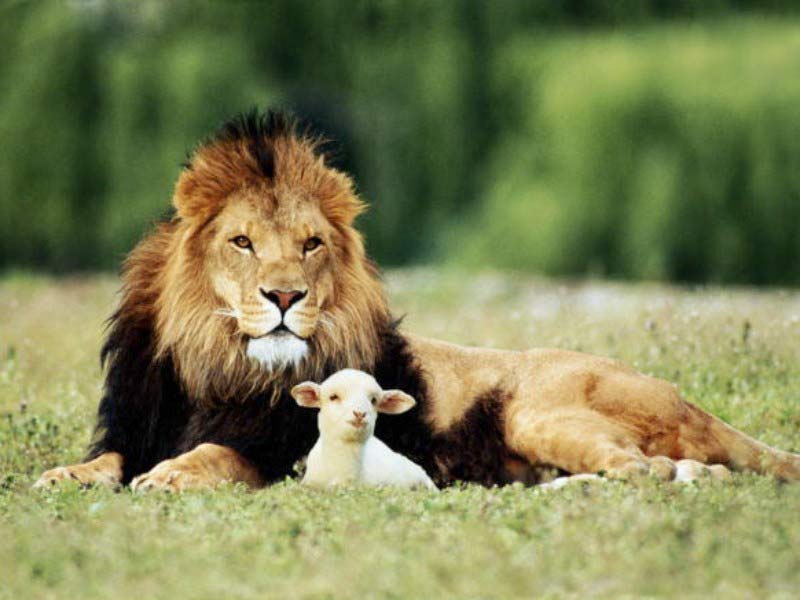
Paradise Lost-Paradise will be restored.
Micah 4 speaks of the world tomorrow where Torah will flow from the mountain of the house of Yahovah and Jerusalem. In the world tomorrow, peoples of the nations of the world will flock to the mountain of Yahovah and the House of Elohim and be taught Torah. The peoples of the nations of this world will be judged and rebuked. War will be but a distant memory as swords are beat into plowshares and spears into pruninghooks (verse 4). Prosperity and complete peace will be the norm for every obedient citizen of the world (verse 5).
Daniel 7—The great Prophet Daniel foretold of a time when the saints would be persecuted and tribulated against by hasatan and his ilk. But glory be to Yahovah our Elohim, Father will give to the saints judgment against their tribulators as well as He will give to them the Kingdom. All of the kingdoms of this earth will have to fall under the subjection of the Kingdom of Yahovah and the saints will play a key role in the restoration of all things.
Jude 1:14; Revelation 20:4-6—reveals that some saints will be given thrones to sit upon with authority to judge the peoples and nations of this world. In particular, verse 4 reads:
“…and they lived and reigned with Messiah a thousand years.”
But then verse 5 of this passage addresses the issue of those who are not part of the first resurrection, which reads:
“But the rest of the dead lived not again until the thousand years were finished. This is the first resurrection (speaking of the saints operating in the Kingdom of Yahovah during the Millennial reign)! Blessed and holy is he who has part in the first resurrection. The second death has no power over them. They shall be priests of Yahovah and of Messiah. And they shall reign with Him a thousand years.”
And just to affirm that all this will take place upon the earth, I will refer you to Revelation 5:7—10, which reads: “And He came and took the scroll out of the right hand of Him Who sat upon the throne. And when He had taken the scroll, the four living creatures and twenty-four elders fell down before the Lamb, each one of them having a harp, and golden bowls full of incense, which are the prayers of the saints. And they sang a new song, saying: ‘You are worthy to take the scroll, and to open its seals; for You were slain and have redeemed us to Yahweh by Your blood out of every tribe, and language, and people, and nation; and have made us kings and priests to your Father; and we will reign upon the earth.’” Again, mankind NOT reigning as kings and priests in heaven, but reigning as kings and priests on earth.
Zephaniah 3:9 seems to suggest that the world will finally return to the speaking of a single language. We will see a reversal of the confounding of the languages at the tower of Babel. One can only assume that that one language will be some form of Hebrew, at least that’s what I believe.
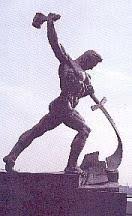
In the world tomorrow there will be no more war. Peace will reign over all.
The page you requested could not be found. Try refining your search, or use the navigation above to locate the post.
Thanksgiving and the Torah-Keeping Believer in Yeshua Messiah.
In this installment, we reflect upon Torah-Keeping Believers in Yeshua celebrating Thanksgiving: Is it a terrible reminder of genocide that New World Settlers brought upon Native American Indigenous Peoples, or a day that believers should not keep, but instead stick to the mandated Feast of the LORD?
This week while perusing one of my Facebook streams, I came across what I felt to be a very good question posed by one of my friends and followers. The gentleman, who is renown for asking simple but often controversial questions to our Facebook group, simply asked if we celebrate Thanksgiving or not. Interestingly, he did not ask for a reason for our yes or no answers.
I typically gloss over his questions because they garner so many varied and often weird responses, but this go-round, I was interested in reading what the responses would be. I was shocked to see that he had accumulated some 70+ responses. Curious to see why so many folks responded to what seemed to me to be an innocuous question, I clicked comments to see why so many folks had answered. To me, I couldn’t imagine why anyone would have a problem with Thanksgiving. I mean, of all the American holidays, why would any Hebrew Rooter/Messianic scoff at any day dedicated to giving thanks (ideally to the Creator) for all that He’s provided and done for us?
Turns out, it did not take me very long to find a flurry of negative responses to this gentleman’s simple question. Some respondents took to a vitriolic rant against the celebration of Thanksgiving, while a few folks actually stuck to the gentleman’s question and simply answered yes or no.
Now bear in mind that most, if not all, of the respondents appeared to be self-professing Hebrew Rooters/Messianics; so the negative responses were primarily posted from a Faith perspective.
What do I mean by the negative responses to the question were posted from a Faith perspective?
Although I did not read all 70-some-odd responses, I read a great many of them before I, frankly, got fed up with the insanity of some of the negative answers. Some of the responses were laced with a sense of self-righteous indignation over the celebration of the holiday, while others were infused with an obsessively legalistic-draconian perspective that tied their position directly to Torah.
The negative responses related to whether Hebrew Rooters/Messianics should celebrate Thanksgiving tended to fall into two-general categories:
Now, the tenor of those expressing these negative attitudes towards Thanksgiving carried with them one of harshness and exclusivity. In all honesty, the judgmental and self-righteous naysayers were outnumbered by the pro-Thanksgiving crowd. Those who expressed harshness and exclusivity in their responses against Thanksgiving, seemed to be coming from a self-righteous and judgmental place. They came across as, “how can or why should any well knowing and well meaning believer celebrate a holiday that is tainted with the blood of murdered Native American Indigenous people; and how can you observe anything other than the Torah instructed Feasts of the LORD?”
I have to tell you, at first I was somewhat taken aback by some of these negative responses. However, after a couple days of reflection, I pulled back on my uneasiness over their negative responses.
You’ve probably figured out where I stand as it relates to members of our Faith Community celebrating or observing Thanksgiving, but in case you haven’t, plainly stated: we (i.e., my family and I) celebrate and observe Thanksgiving and have happily done so throughout our time in the Faith. My attitude towards the keeping of Thanksgiving did not change when I transitioned into Hebrew Roots. In fact, my attitude regarding the relevance of Thanksgiving has only strengthened during my time in the Faith. The way I see it, dear friend, is: if the world has set aside a day to give thanks for all that we have; that the nations’ leaders at some point saw fit to set aside a day of the year where we somehow acknowledge that our increase and sustenance comes from a greater, higher power; for the love of God and country, why would we NOT celebrate Thanksgiving? The Apostle Paul admonished that we should in everything give thanks…(I Thessalonians 5:18) Besides, what better time than Thanksgiving to be with family and friends and to give thanks to our Father in Heaven for all that He’s done for us?
Let me just say that my family and I do not keep or celebrate Thanksgiving as a memorial to the Pilgrims and Puritans who supposedly landed in Plymouth Rock Massachusetts and celebrated a bountiful harvest in 1621. Truth be told, the true origins of Thanksgiving are not all based upon that legendary feast that was held by the Pilgrims and the Native American Indians who aided them through a harsh period of time during their settlement here in the New World. The first Pilgrim-Native American Thanksgiving may or may not be factual. However, most Americans may be shocked to learn that Thanksgiving had been observed by peoples of Faith throughout much of Europe, well before the Pilgrims landed at Plymouth Rock. It is clear that the Pilgrim and Puritans brought their Faith-based tradition of Days of Fasting and Days of Thanksgiving with them and then continued those traditions upon their settling into the New World.
Nevertheless, Thanksgiving is NOT specific to the United States and the Pilgrim settlers and the ensuing genocide of Native American Indians. Thanksgiving has always been a holiday that is celebrated and observed among many nations of the world, to include Australia, Canada, Grenada, Liberia, The Netherlands, the Philippines, Saint Lucia, Judaism (seen more as secular than religious), Germany, Japan, and the United Kingdom. Granted, the dates for these various regional celebrations fall outside the United State’s tradition of the 4th Thursday of every November, but the fact remains that Thanksgiving is NOT an American invention.

Is Thanksgiving about Pilgrims and Native Americans, or something more?
So the argument that Thanksgiving pays tribute to the genocide of Native American Indians is baseless and is set on a principle that falls well outside the true meaning of the day. Indeed, this nation’s genocide of her Native-Indigenous population, like slavery and other such atrocities, is a sorrowful dark mark in her history. There’s no doubt about it. Regardless, such terrible periods in this nation’s history should not cause us to lose sight of truth, reason and reality. Such attitudes are bred in the autoclaves of liberal thinking that serves only to dissuade others from the Truth, informed and honest thought.
Bottom Line: the Thanksgiving holiday we celebrate in this country has nothing to do with the genocide of Native Americans.
What about the celebration of holidays and traditions that fall outside the 7-mandated Feasts of Yahovah: should Torah-Keeping Believers in Yeshua Messiah avail themselves to celebrating such holidays as Thanksgiving? The simple response to that question is: where in Torah did Father instruct us to NOT celebrate such holidays? The instructions were that we must never follow after the ways of pagan nations; not to imitate or seek after the worship of pagan deities; nor to speak about these false gods.
Now, when we consider secular and quasi-religious holidays such as Thanksgiving, the litmus test that we employ should rule out any associated paganism. I honestly cannot find any associated paganism in Thanksgiving. Again, it’s just that simple.
Some might interject into this discussion: well, why is it not okay to celebrate and keep Christmas and Easter; aren’t they celebrations and memorials of the birth, death and resurrection, respectively speaking, of our Lord and Saviour Jesus Christ? My response to that question is a question: says who? Who says that Christmas and Easter are true commemorations and memorials to the birth, death and resurrection of Jesus Christ?
Well, maybe these holidays commemorate those things for their Christ, but not my Messiah. And we could spend many additional hours discussing reasons why Christmas and Easter are not valid memorials and holidays that honor our Messiah, but I’m not going to torture you with that today. Bottom line my friends, Christmas and Easter have, and will forever, be intricately linked to paganism; plain and simple. And as hard as some might try, I don’t see Thanksgiving in the same light that I see Christmas and Easter.
My position as it relates to Torah Observant Believers in Yeshua Messiah celebrating Christmas and Easter is that doing so would constitute a violation of Torah in a very strong sense. Nevertheless, if any believer chooses to keep Christmas and Easter, that’s entirely between them and Father. As the old folks used to say when I was growing up: “I don’t have a heaven or hell to put them in.” So who am, then, to judge any who chooses to celebrate any one or all of these holidays?
I have to say that I have, over the last year or so, undergone a rather significant internal shift in my perspective of the people of Yahovah. I will confess that I was throughout much of my time in Hebrew Roots, quite judgmental and I did not tolerate those who lived and operated outside my preconceived, defined righteousness box that I had erected in my pea brain, early on in my walk with Messiah.
I’ve come to learn, painfully so I might add, that it’s a full time job just keeping my own behind in line and walk this walk as best I can, with a lot of help from the Holy Spirit. I don’t have time to focus on what you might or might not be doing.
This Faith Community of ours is filled with a huge variety of understandings, practices and teachings, many of which I do not at all agree with. And if I were to keep slicing away at every conceivable connection I could have with members of our community on the basis that I don’t agree with their brand of Hebrew Roots, then at some point down the road, I’ll be standing alone; because I’ll tell you, if we are honest with ourselves and with one another, we are never going to agree on every single issue and aspect of our Faith. It’s just not going to happen.
Indeed, there are certain fundamental elements of the Hebrew Roots Faith that we must all agree with in order for this thing to operate as Father has established:
These and a few others are essential elements of our Faith that define who we are as a unique Faith Community. Those deeper aspects of our Faith that include how we are to keep the Feast Days and questions on the divinity of Master Yeshua are certainly topics and issues that at some point must be discussed in the Body, but they are not foundational to Hebrew Roots and the Messianic Community; and if we differ in how we go about dealing with these, not-so essential elements, we certainly can still fellowship and glorify Father together.
And this is what I’ve come to learn and understand and embrace in my walk with Messiah. I have no authority to judge anyone as it relates to how they walk out this Faith of ours. First and foremost, I just need to worry about me and my walk. Secondarily, I also need to be of ready-help to any who would come to me for assistance or guidance. I will always avail myself to give any who asks a reason for the hope that is in me with meekness and fear (I Peter 3:15). This is one of the main reasons I do this podcast program. We put content out as it relates to our understanding of the Faith, and then it’s up to the body of listeners to determine what to do with that content.
The lesson to be had with this whole discussion around whether Torah Observant Believers in Yeshua should celebrate or observe Thanksgiving, is one of: what does the Holy Spirit tell us (as a Body and as individuals) to do about Thanksgiving, and other such holidays? Is our perspective and practices related to Thanksgiving based upon what Father has spoken to us about it; or is it based upon our own personal convictions and sense of righteousness? If we are opposed to the observance of Thanksgiving and we’re a Torah Observant Believer, how do we view our brothers and sisters who do keep Thanksgiving? How do we see them? Do we see them as having not reached our level of understanding? Or maybe we simply see them as Yeshua would see them: as brothers and sisters who choose to keep Thanksgiving?
A spirit of judgment can be a terrible things to possess, and a most difficult thing to dispossess oneself of.
The biological brother of our Master, James, brilliantly wrote of this type of thing:
Speak not evil one of another, brethren. He that speaketh evil of his brother and judgeth his brother, speaketh evil of the law and judgeth the law: but if thou judge the law, thou art not a doer of the law, but a judge. There is one lawgiver, who is able to save and to destroy: who art thou that judgest another (James 4:11,12; KJV)?
In his addressing the overbearing Judaizers of the Roman Assembly of Messianic Believers on the divisive issue of meats that may (or may not have) been sacrificed to pagan gods and idols, the Apostle Paul expounded in great length on the whole issue of judging one another. The entire chapter of Romans 14 addresses this issue of judging, so I will just condense the chapter and highlight the pertinent parts. It reads:
Now as for a person whose trust (i.e., faith) is weak, welcome him—but not to get into arguments over opinions. One person has the trust that will allow him to eat anything, while another whose trust is weak eats only vegetables. The one who eats anything must not look down on the one who abstains (bear in mind this is not Paul condoning the eating of foods that are forbidden by Torah—only those foods that are potential foods sacrificed to idols); CONTINUING–and the abstainer must not pass judgment on the one who eats anything, because God has accepted him…One person considers some days more holy than others, while someone else regards them as being all alike. What is important is for each to be fully convinced in his own mind. He who observes a day as special does so to honor the Lord. Also he who eats anything, eats to honor the Lord, since he gives thanks to God…You then, why do you pass judgment on your brother? Or why do you look down on your brother? For all of us will stand before God’s judgment seat; since it is written in the Tanakh, “As I live, says Adonai, every knee will bend before me, and every tongue will publicly acknowledge God.” So then, every one of us will have to give an account of himself to God. Therefore, let’s stop passing judgment on each other! Instead, make this one judgment-not to put a stumbling block or a snare in a brother’s way. So then, let us pursue the things that make for shalom and mutual upbuilding. Don’t tear down God’s work for the sake of food. True enough, all things are clean; but it is wrong for anybody by his eating to cause someone to fall away. What is good is not to eat meat or drink wine or do anything that causes your brother to stumble. The belief you hold about such things, keep between yourself and God. Happy the person who is free of self-condemnation when he approves of something! But the doubter comes under condemnation if he eats, because his action is not based on trust. And anything not based on trust is a sin (Romans 14:1-23; CJB).
So none of us should be ashamed to keep Thanksgiving if we are so led by the Holy Spirit to do so. Likewise, if the Spirit has led us to abstain from the keeping of Thanksgiving, then it behooves us to not squander the day, but to use the day, as we would any day that Father gives us that we do not work, but glorify and honor Him. He alone deserves our praise and our thanksgiving. For we serve a great God who has blessed and kept us.
In closing, let me just say that, regardless what position each of us takes on the issue of Thanksgiving, let us base our position in Spirit and in Truth and give our God the glory. And regardless which side of the coin we land upon, let us have warm and blessed feelings towards one another and look forward to the next opportunity where we may fellowship and worship our Elohim.
Blessings to you. If you are observing a day of Thanks this week, have a blessed Thanksgiving. If you are not, have a wonderful day off in Yeshua Messiah. Take care, until next time.
The page you requested could not be found. Try refining your search, or use the navigation above to locate the post.
Do you truly understand your call and purpose? Maybe you’re a new to the Hebrew Roots/Messianic Faith and you have no idea where to go from here. Or maybe you’ve been in the Faith for a while but have failed to understand just what your call and or purpose is in the Body and the Kingdom of Yahovah. A wilderness experience just might be your key to understanding your call and purpose.

What is your purpose?
I am often dismayed by the sheer number of souls who transition over and into the True Faith that was once delivered, even after enduring much personal internal and external hardship; only to become stalled and to stagnate, never fulfilling their purpose in the Kingdom of Yahovah. Many soon after coming in to Hebrew Roots and the Messianic Faith, having at first entered with the greatest zeal and hopes and dreams to do great things for the Kingdom, soon find themselves mired in uncertainty and frustration. Their uncertainties and frustrations seem centered upon a lack of understanding. That lack of understanding is in realizing what their purpose is supposed to be in the Body of Messiah and the Kingdom of Yahovah.
Those who experience such feelings and perspective cite a desire to DO SOMETHING; to get out there and make a difference in their world. The only problem facing these sincere and very well-meaning brothers and sisters is that they just don’t know what it is they are supposed to do to make that difference happen.
It is a fair bet that most of us come into this Faith of ours with a deep-seeded desire to be relevant: relevant not just to our God, but also to our Faith Community and to those within our circle of influence (e.g., our family members, friends and co-workers).
Far too few of us recognize the value of embarking upon, what I choose to call, a “wilderness experience” before setting out to understand what our purpose and calling is to be. A wilderness experience in my mind is one in which we find solitude and separation from the world in which we physically live; and in that solitude and separation, connect with the Creator of the Universe and sit at the feet of our Master to learn. That hard and fast established connection with the Creator, in association with tutelage of the Faith from our Master Yeshua, serves to set our spiritual feet on the firmest of foundation and prepare us for that purpose and calling that many of us are so desperate to realize and embark upon.
Our Master went through an intense “wilderness experience” where He not only connected with Father in a way that we can only hope to begin to understand, but also certified Himself worthy of His calling to be our redeemer and to strip the title deed of this world from the clutches of our age-old enemy hasatan. Master came out of that wilderness experience fully prepared and purposed to do the will of His Father. (Reference: Matthew 4; Luke 4; Mark 1)
Our forefathers went through a wilderness experience that proved trying and troublesome, not only to us as a nation of people called out to be a kingdom of priest to the world for the Creator of the Universe, but proved trying and troublesome for our Creator who determined to establish and work His plan of salvation and redemption through us as a chosen nation. We came out of that wilderness experience after a generational purge, fully schooled and purposed to take the land that Father had parceled out for us. Along the way, during that wilderness experience, we broke the covenant that Father had established with us and we also broke the heart of the Father. Yet Father was gracious and merciful to us and maintained us as a people who had been given His instructions for life. Fortunately for the world, He did not abandon His plan to redeem us from the penalty of eternal death and He stilled worked that plan of salvation out through our ragtag existence. (Reference: Exodus; Leviticus; Numbers; Deuteronomy; and Joshua)
The Pharisee Saul was called to a wilderness experience where he too sat at the feet of our Master Yeshua (spiritually speaking of course and based upon his statement to the Messianic Assembly of believers in Galatia—Galatians 1:15-17; Acts 9). It can only be presumed that Paul learned of the Kingdom of Yahovah and of the purpose Father had for him in the work of the Gospel during the time of his wilderness experience which seems to had lasted some 3-years in Arabia; this taking place before his return to Damascus and officially beginning his ministry. All indications are that Paul was Master’s true pick to replace Judas as His 12th disciple/apostle. Paul would likely have failed in his ministry if he had not undergone that time in Arabia.
A note of interest: some have suggested that Paul spent his wilderness experience, at least in part, at Mount Sinai, which more and more evidence seems to suggest is actually in Arabia. Also it should be mentioned that the Acts 9 account of Paul’s conversion leaves out any mention of Paul in sojourning in Arabia, suggesting instead that Paul, upon receiving his sight and eating some food after days of fasting, straight-way went out preaching the Gospel of the Kingdom to the Gentiles. It’s likely that Luke intentionally left out mention of Paul’s time in Arabia for purposes of condensing the story and getting straight to the topic of Paul’s ministry beginnings.
None of this is to say that everyone who comes into the Hebrew Roots/Messianic Faith must undergo a so-called wilderness experience. Nevertheless, if we approach the Holy Scriptures from a perspective that it has the great potential of providing for us a road map for life, then the example set for us by our Master and the heavy hitters of our Faith, then may we may find our purpose and calling if we embark upon a wilderness experience.
Certainly I do not mean to imply that one actually picks up, leave family and job and home, and go out to some remote part of the world to hang out and connect with the Father and learn from the feet of Master Yahoshua. Certainly, there have been some in history who have been called to do just this very thing. Yet what I would suggest is more of a time away from the cares of this life: away from smartphones; computers even; televisions; children if we have them and we can get away from them for a time; away from ringing door bells and responsibilities and chores—and simply immerse ourselves in the Word of God; pray; fast; meditate and seek Father’s face. For one, at any given time, to actually hear the often “still-small voice” of the Creator, we have to find a quiet place where our soul, heart and mind may connect with Father through the agency of the Holy Spirit (aka, the Ruach HaKodesh).

Focus exclusively on the Creator during your wilderness.
I would suggest a bifurcated approach to scripture study that includes Torah and the Gospels—the biblical foundations of our Faith. Several good translations of the Bible are a necessity, especially if you are new to this Faith (e.g., the KJV, NAS, ESV and the CJB to name just a few). A defined course of study that is put out by a specific teacher or organization is not necessary. Allow the Holy Spirit to teach you. Read each book through in its entirety, not just select verses, preferably in one setting, but if time restricts, read as much of the book in the alloted time and then pick up where you left us when you resume. Take notes as needed and as prompted by the Spirit to do so. Highlight key passages in the course of your journey through each book. From time to time during your journey, review those key passages. Don’t be afraid to tap commentary on difficult passages, but do not rest your final determination and understanding of difficult passages upon the work of any one man or organization. Allow the Holy Spirit to confirm the teaching in your heart and spirit. Most bible resources today appeal to a fundamental Christian and orthodox Jewish mindset that often runs contrary to the tenets of Hebrew Roots and the Messianic Faith. So be ever on-guard for the agenda of the writers.
Pray, pray and pray. Throughout your wilderness experience, don’t forget to pray. Pray when you feel like praying. When you don’t feel like praying, push through that veil and pray anyway. Be specific and intentional in your prayers. Pray with complete conviction, faith believing that you are getting through to the Creator of the Universe and that He will perform the good work in you and affirm your calling and purpose in Yeshua our Messiah.
Meditate. Take time away from the reading and study during your wilderness experience and consider walking and talking to Father; converse with Him from your heart as you would your best and dearest friend. Don’t hesitate to pour your heart out to Him and beseech Him to reveal Himself to you in a powerful and profound way.
Consider fasting for a day or two, but do so as you are led by the Holy Spirit to do so. Far too many of us go through the motions of fasting without ever involving Father in the act and in our purpose. Fasting must never be a “going through the motions” or some exercise of self-righteousness that we have launched into in a vain attempt to earn our salvation. If He’s not in the center of our fast, then the effort is doom to be nothing more than a day of going without food and hydration. Recall that our Master fasted in His wilderness experience some 40-days. This is a feat that should inspire us, not to imitate (for doing so could be permanently injurious to one’s health), but to realize the power and relevance of the fast as it relates to our wilderness experience. As our bodies grow weak from lack of food and hydration over the course of our fast, our faith and our spirits are strengthened and we can better hear the “still-small voice” of our Creator.
As you are inspired and grow as a result of your wilderness experience, write down your thoughts in a journal of some sort. Share your thoughts and learning with others on your select social media platforms. That which you may learn and gain from your wilderness experience may be of invaluable help to someone seeking Truth and understanding and who may be going through a rough-go at it in their walk with Messiah. Not to mention that we are called to a kingdom of priests and one cannot fulfill this calling unless they share and do.
Give glory to the Father through song and music and spontaneous sacrifices of praise. Seek of the Father a greater unction of His Holy Spirit; that He may fill you to overflowing and instill in you the gift of speaking in tongues, according to His purpose and glory. I have found that nothing helps push through the veil of troubles and difficulties than defaulting form time to time in speaking to and praising Father in tongues of praise and intercession. At times when I have no words to say to Him, I simply pray and praise Him in tongues. There is a cleansing and purity of purpose in such an endeavor that far too many in our Faith Community have shied away from for various and sundry reasons.
In all, put Father first and foremost in your thoughts, feelings and purpose and you will ultimately realize your call and purpose as you emerge forth from your wilderness experience.
Do not give in to the enemy’s ploys to railroad the success of your wilderness experience. He will, as he attempted to do to our Master in the wilderness, enter your mind and play upon your fears and weaknesses.
Keep your mind set on Him at all times during your wilderness experience and you will emerge victorious.
Faithfully, Your’s in Yeshua Messiah
In this installment we reflect upon a recent Zachary Bauer posting related to folks leaving Hebrew Roots after being lured by doctrines of seducing spirits.
I was quite taken aback after viewing a Zachary Bauer YouTube video this past weekend, to learn that folks are leaving Hebrew Roots. These individuals were not leaving Hebrew Roots in the classic sense of leaving a group or organization as we see happening in Fundamental Christianity today (see Barna 2011 survey). Turns out that these folks are leaving our Faith through a change, or what could be considered, a complete reversal of belief in certain core aspects of Hebrew Roots and the Messianic Faith.

Zachary Bauer hosts a YouTube program called New2Torah.
Zachary Bauer reported that he had recently received correspondences from or had had communications with certain individuals, claiming to have been formar Hebrew Rooter and Messianics. These individuals informed him that they had determined, convinced by the teachings of certain “wolves in sheep’s clothing” and shysters (my word choice), that either the keeping of Torah is improper for believers in Messiah or that Yeshua is not The True Messiah.
Now,it’s hard for me to justify why I am in such a mournful state after hearing such news from a well-respected and well-informed leader in our community. I guess it comes down to the difficulty that I have processing how any individual could at one time arrive at The Truth, and then reject The Truth after hearing information that is contrary to what they claimed to have once received and accepted.
Since my coming into this Faith, roughly a decade and a half ago, I have been exposed to all manner of teachings and belief systems that have over the course of time called Hebrew Roots and the Messianic Community their home. Some of those teachings have been completely off-kilter and anti-Torah, anti-biblical, anti-Messiah, racist, hateful, and just outright wrong. Despite hearing such teachings, often delivered by some talented orators and presenters, when time for the “spiritual smell test arrived,” I had no problem rejecting the teaching, shaking the dust off my shoes and moving on in my biblically-centered walk with Messiah. I can honestly say that since converting to Hebrew Roots and the Messianic Movement, I have never wavered nor questioned the tenets of our Faith.
I know of others in our Faith Community who have had similar experiences as I just described who did essentially the same thing I did when they applied the “spiritual smell test” to those unsavory teachings and half-baked belief systems.
Yet of late, I’m hearing more and more about former Hebrew Rooters who are happily leaving the True Faith once delivered after receiving and accepting so-called “new” knowledge; revelation; and teachings that not only betray the tents of our Faith, but I would go so far as to deem heretical.
Zachary Bauer went on to describe the situation and explain that many members of our Faith community are being subjected to wolves that are operating out there in our midst; preying upon the less spiritually grounded of our community.
Bauer’s impassioned post reminded us that our Master warned us that this very thing would take place and that there’s little that we can do to prevent such occurrences.
As Zachary’s video continued, I scrolled down the comments section of his YouTube post and was bothered to find comments from some who criticized him for not detailing for his listeners how to convince these departing believers that they were making the greatest mistake of their lives. Zachary lamented in his monologue as well how he had received criticism for his seeming ambivalence towards those individuals who were leaving the Faith.
Let me just say that I found no fault whatsoever with the way Zachary Bauer handled this situation nor in the fact that he did not track down these departing individuals and attempt to convince them to stay in the Faith.
We cannot convince anyone to convert to this Faith of ours, nor can we convince anyone to stay committed to a Faith that they were never chosen to be a part of in the first place. This is not the order that Father established for admission of souls into the Kingdom. No eloquence of speech or persuasive manner will alter the minds and hearts of potential candidates for the Kingdom of Elohim.
Now, I realize that this truth may not resonate with our compassionate sensibilities as caring Torah Observant Believers in Yeshua Messiah. Indeed, we would want nothing more than for everyone that we care dearly about to become vibrant and happy members of the Body of Messiah and of the Kingdom of Yahovah. Unfortunately, this is not how Father set this thing up to be. Truth be told, it comes down to our having to trust the wisdom, providence and purpose of our Heavenly Father.
Many instances are given in the Holy Writ where God’s anointed warned us that there would be, disappointingly so, some who would at first, seem to have been devoted members of our Faith community, who we later learn were never truly invested or grounded in the Body of Messiah.
19 They went out from us, but they were not of us; for if they had been of us, they would no doubt have continued with us: but they went out, that they might be made manifest that they were not all of us. (1Jo 2:19 KJV)
Act 20:30 Also of your own selves shall men arise, speaking perverse things, to draw away disciples after them.
1Co 11:19 For there must be also heresies among you, that they which are approved may be made manifest among you.
Deu 13:13 Certain men, the children of Belial, are gone out from among you, and have withdrawn the inhabitants of their city, saying, Let us go and serve other gods, which ye have not known;
The question that should be asked of those who would criticize Bauer’s inactions or his seeming heartless stance toward those who choose to leave the Faith for whatever stated and unstated reasons is: why would you want anyone to be strong-armed into either coming in to or remaining in the Kingdom of Yahovah and Body of Messiah?
Keep in mind that we are not talking about defending the Faith and giving every individual who asks an answer as it relates to why we believe what we believe and why we do what we do. We are compelled to treat our Master Yeshua as holy, and with gentleness and respect and with a good conscience, be ever so ready to defend our beloved Faith (1 Peter 3:15). However, that’s not at all what we are talking about here. Zachary was not asked by these departing souls whether or not their new-found understanding and revelation was biblical. These individuals were simply informing him that they no longer held to the beliefs central to the Hebrew Roots and Messianic Faith.
Have you ever been strong armed into doing something that you did not genuinely want to do? Or for that matter, have you known of individuals who have been coaxed into committing to an endeavor of which they had not been originally invested? The general outcome, with few exceptions, is that the efforts expended by those coaxed into participating in the endeavor is pathetic, pitiful at best. In fact, the lives of those who are forced to endure the strong armed ones’ whining and miserableness are made all the more burdensome and even perilous. Besides, how fair is it to force someone to give up the life they wish to live for the life that you have chosen to live?
Let’s look at this from a secular standpoint and maybe this will help to shed some perspective on this critical issue. In this country, every citizen that works or receives an income of some sort is required to pay income taxes. I would submit that no worker, be they the lowliest fast food worker or the corporate elitist, relishes paying taxes to the government. Yet each year citizen workers of this country endure the self-deprecating exercise of filing their income taxes and having to pay money out to a government that only abuses and misuses those funds; that is, unless they are able to find loopholes in the system that would aid them in not paying out those taxes. Everyone dreads paying taxes unless they know for a fact that they will reap a massive return of their withholdings. Nevertheless, is it no wonder why there is so much widespread cheating and endless searching by citizen workers to avoid paying out taxes to the government? The citizen worker, out of a viable fear of being punished by the government, is forced to do something that they do not wish to do, and therefore, they will do whatever they can to avoid giving up their hard-earned moneys to the power brokers in Washington and their local and state leaders, in more ways than one.
I believe the same sentiment holds true when we seek to strong arm souls into the Kingdom of Yahovah. Any who would be admitted to and remain in the Body of Messiah and the Kingdom of Yahovah must pay a steep price. The price to be paid, if one is truly invested in converting and coming in to the True Faith, is a full and complete change in his/her heart, mind and soul. The true Torah Observant Believer in Messiah must give up the life they once knew, and likely held dear, for a life unlike any the world at large will ever understand and truly know. If the convert is true to their profession of Faith, they will stand out like a sore thumb in the secular world. They may be ostracized and brutally criticized by members of their family; they may endure long periods of loneliness and isolation. The true convert must say no to things that they once said yes to with great pleasure and acceptance. Conversely, they must say yes to Father but no to the world.
Entrance into the Kingdom and Body of Messiah is not something that should ever be taken lightly by the would-be believer; nor should such a commitment be forced upon anyone. For one, their commitment to the Faith has nothing to do with our commitment. And two, as disciples and members of the Body of Messiah, we are only tasked with being disciples and discipling those whom Father sends; teaching them to observe all things that Master taught us. Does that discipling aspect of our journey require us to act as gatekeepers of the Faith—determining who to admit and who to let out? Absolutely not. Again, our human sensibilities may say otherwise, but the Kingdom of Yahovah does not operate based upon our human sensibilities. May seem cold and callous, but it really is not. It is God’s way over our way.
Abba’s plan of salvation factors in those who are not going to be a part of His eternal Kingdom and the Body of Messiah. In fact, the Apostle Paul reveals to us in his cepher to the Assembly of Messianic Believers in Rome, that Father gives those who reject Him and His ways, and who persist in their ways “worthless ways of thinking” (Romans 1:28; Stern, CJB).
So then, how must we address this situation of individuals who are rejecting and turning away from the tenets of the True Faith once delivered?
Well, I would say that we need not address it at all. Master did all the addressing on this matter that is required. Consider the following Gospel passage where Master is recorded to have addressed Jewish synagogue goers of Kfar Nahum (i.e., Capernaum) about the Kingdom of Yahovah when He was challenged by a handful of attendees:
What shall we do that we might work the works of Yahovah? Yeshua answered and said to them, ‘This is the work of Yahovah, that you believe in Him whom He has sent’ They replied, ‘What sign will you show us then, so that we may see and believe in you? What miraculous work will you do? Our fathers did eat manna in the desert, as it is written, ‘Moses gave them bread from heaven to eat.’
Let’s stop briefly at this juncture of the story. Are there not significant parallels being played out in this story with those who would today be convinced to either come in to the Body or even stay in the Body? You see, Master was being challenged to produce solid proof that what He was teaching and preaching about was indeed true; and that He should prove those things with some sort of sign or wonder.
In the natural world, the human psyche often has to be convinced that a matter is true in order to internalize it and adhere to it. Generally, we believe things are so by proofs that are manifested and supported by our five natural senses of sight, hearing, taste, feel and smell. If we walk out of our homes and see on the horizon smoke, smell something burning and hear the sounds of fire engine sirens, we will feel pretty certain that a fire is nearby.
Bear in mind that we also factor into our decision-making whether to believe a thing or not our knowledge base and life experiences.
Thus, if the issue in question is certified by any one or a combination of our natural senses, knowledge base and life experiences, then we will normally accept those things as valid and true; unless those verified things are somehow challenged by opposing known and established facts that we’ve tucked safely away in our psyche. Case in point: we may see what would appear to be a murder being committed on a movie or television screen, but we know that that murder did not occur because the actor or actress that was shown to be murdered on the screen was known to have cashed that very hefty check he or she made and received a Best Acting Award for being in that movie.
This verifying of things as true or not through our natural senses, knowledge base and experiences, are of the established natural order. And there is nothing wrong with how this order plays out in our lives and how we make determinations of things being true or not in our lives. Father set this order in operation within us for our safety, health, wellbeing and so on.
Nevertheless, when we move from such natural things on over to the spiritual, the natural order no longer applies. In the case of Zachary Bauer and the convincing of souls to come in or stay in the Faith, there is a process that must take place that in some respects defies the natural order. That process involves the intervention of the Holy Spirit in the heart and mind of the would be believer. Master expounds on this as we continue with the above cited passage out of the Gospels:
“Yeshua said to them (those demanding that He show them a sign so that they will believe), ‘TRUTH I say to you, Moses did not give you the bread from heaven, but my Father, and He now give you the true bread from heaven. For the bread of Yahovah is He who comes down from heaven and gives life to the world.’ Then they said to Him, ‘Master, give us more and more of this bread.’ Yeshua said, ‘I am the bread of life. He that comes to me shall never hunger, and He that believes in me shall never thirst. But I also say to you that you have seen me, and yet believe not. All that the Father gives me shall come to me, and he who comes to me I will in no wise cast out. For I came down from heaven, not to do my own will, but the will of Him who sent me. And this is the Father’s will who has sent me: that of all whom He has given me I should lose none, but should raise them up again at the last day…No man can come to Me except the Father, which is has sent me, draw him, and I will raise him up at the last day…The words that I speak to you are spirit, and they are life. But there are some of you who will not and cannot believe.’ (For Yeshua knew from the beginning who they were that believed not, and who should betray Him.) Then He said, ‘That is why I said to you that no man can come to me, except it is given to Him by my Father.’ From that time many of His disciples went away and walked with Him no more. Then Yeshua asked the twelve, ‘Will you also go away?’ Shimon Kefa answered Him, ‘Master, to whom shall we go? You have the words of eternal life, and we believe and are sure that you are that Messiah, the Son of the living Elohim.’” (John 6:28-66; Rood’s Chronology of the Gospel Record)
It took a rather long time for me to be convinced of this reality: that being only the Father can bring a bona fide, would be disciple into the Body of Messiah and into the Kingdom. Thus, I have stopped trying to convince people that this Faith of ours is THE TRUTH that they must hearken to and live. Instead, I have taken on the stance of planting and watering the seeds of the Word, but allowing the Father to bring about the germination and growth that leads a convert into the Body and the Kingdom. Otherwise, my efforts are contrary to that of the teachings of my Master.
Paul brilliantly expounded upon this whole issue of conversion and maintaining the body when he wrote the following to the Messianic Assembly of Believers in Corinth:
Who then is Shaul, and who is Apollos? But ministers by whom you believed, just as Yahweh gave to each one? I planted, Apollos watered, but Yahweh gave the increase. So then, he who plants is not anything, neither is he who waters, but IT IS YAHWEH WHO GIVES THE INCREASE. Now he who plants and he who waters are one, and each one will receive his own reward according to his own labor (I Corinthians 3:5-8; The Book of Yahweh).
I say: let us not get worked up by news of those who have departed from the foundational elements of our Faith, nor by those who refuse to accept the Truth of the Gospel of the Kingdom and the Faith once delivered. Their ultimate destination, though it should be our concern, is really NOT our concern. These individuals’ fate are in the providential hands of our Creator. Instead of worrying and consternating over those resisting ones, let us pray and intercede on behalf for them; make ourselves accessible to them if they have any questions; and leave it to our God to do the work that He has started.
Father will build the increase to our Faith Community and ultimately to His eternal Kingdom. It is not for us to worry how He will do this and to insert ourselves into the mix. We simply must plant and water and allow Yah to germinate and grow that seed within His chosen ones.
Everything on this planet is now being shaken with a tensity and frequency unseen in our time. Governments, economies, families, societies, entertainment, religion, and yes, even our Faith Community. As the days of human existence grows dim and begins to devolve towards ever increasing chaos and ultimate, complete takeover by the evil one, lawlessness will abound and the love of many will grow cold. There will be a falling away from the Faith as more and more believers’ professions are challenged by heresies and the increasing cares and infringements of this life. Where it may have once been a safe haven for some, our Faith for some will seem a hindrance and relic of days long ago. For all we know, our numbers may dwindle to just a small, precious few—the small flock our Master spoke of, but that’s entirely okay. It is okay because our God and our Master are still seated upon their thrones in heaven and Father’s great plan of redemption will not be voided by the works of hasatan, halleluyah!
Eventually, our Jewish cousins will do a 180 and turn fully back to Yahovah and become tremendous disciples of Yahoshua our Messiah and Redeemer. Father will bring us who are of True Nation of Israel out of every nation of this world, to Jerusalem and Messiah will establish His illustrious millennial reign over the peoples and nations of this world. Peace will reign and Torah will be established as the world’s sole constitution and way of life.
As troublesome as such things may be to us, these are times of great hope. Knowledge of Yahovah and our Master Yeshua abounds and is readily accessible for any who would seek it out. Yes, people are departing from the tenets of the True Faith once delivered for doctrines of devils, but truth be told, more and more people are waking up to the True Faith once delivered as well. These are indeed exciting times. Yet these are times where we as a faith community must rally around one another and certify and uphold the pure and undefiled foundational elements of what it means to be a Spirit Filled Torah Observant Believer in Yeshua Messiah.
Let us stand firm in our convictions, neither turning to the right or left, ever so ready to give any who would seek of us a reason for the hope that is in us, and let us glorify and uplift the eternal Name of our God until Master Yeshua returns.
I did some snooping, or should I say, Shoobing, to try and find some information on one of the main leaders Zachary Bauer had identified as putting out such doctrines of seducing spirits within the Body of Messiah. I learned that one individual in particular, a Mr. Scott Shoob, apparently has put out written material that many who have read or heard his materials are stating that he denies the Messiahship of our Master Yahoshua. I have personally NOT read nor heard any of his teachings, and quite frankly, am not the least interested in doing so.
Now, a lot of us may find ourselves in an uproar over the shanaghans of such teachers and their spurious doctrines, but again, this is all expected and even addressed by the Apostles of Old.
People have been denying the Messiahship and person of our Master Yeshua from virtually day one. The bigger problem I personally have with these wayward purveyors of anti-Biblical and anti-Messiah rhetoric, along with their followers, is that they tend to be aggressive and quite rambunctious when operating in and around the Body of Messiah. These are not above inciting discord in the Body of Messiah and setting spiritual fires within the hearts and minds of some of the less grounded of our Community. Their actions occasionally, as we see happening even today, cause our less rooted brothers and sisters to question the foundations of our Faith.
Father has, in this dispensation, made provision for folks to believe and follow whatever doctrine appeals to them. Yet it falls to the most grounded of our community to “guard” the essentials of the Faith. Over and over throughout the whole of the Holy Writ, we are told to “guard,” that is to “keep” (which in Hebrew it is “mishmereth” and in the Greek it is “tereyo”):
Guard/Keep the Word of God (Luke 8:15; 11:8)
Guard/Keep the teachings of our Messiah, Yeshua (John 8:51,52; 14:15, 23; 15:10,20)
Guard/Keep Father’s Feasts (I Corinthians 5:8; all of Torah)
Guard/Keep the Unity of the Spirit (Ephesians 4:3; Jude 1:21)
Guard/Keep ourselves unspotted from the world (James 1:27; I John 5:21)
Guard/Keep God’s commandments (I John 2:3, 22; 5:2; Revelation 12:17; 14:12; all of Torah)
For me, the concern then becomes, not one of convincing those in our community who have been mislead to rethink their path, but one of us being able to stay on point and not allow the enemy to continue to bring disharmony into the Body of Messiah.
Thus it behooves us to be ever more set in our resolve to “keep;” to “guard” the very foundations of our Faith. That’s not to say that we, as individuals and as a collective Body of Believers in Yeshua Messiah are to never examine how we’re doing in our walk with Messiah. Are we:
Properly keeping/guarding Father’s Torah according to Father’s written instructions? Not according to someone’s “private” interpretations as we see happening in greater frequency and numbers (2 Peter 1:20).
Following and living out the instructions of our Master Yeshua HaMashiyach.
Doing our part in the Great Commission.
Producing the fruits that Master Yahoshua instructed us to produce.
Safeguarding against heretical, anti-Biblical, anti-Torah, anti-Messiah belief systems and teachings that serve to separate us from Truth and purity of the Gospel and the Kingdom of Yahovah.
Serving the members of the Body of Messiah with our gifts and talents.
We recently met up with a Hebrew Roots based couple last week, who we did not know personally prior to the meeting, but we had heard of via a YouTube video that they were featured in. Upon meeting them, we exchanged information as it related to our profession of Faith and what ministries we followed and so forth. When it came time for the couple we were conversing with to tell us of their ministry preferences, I was slightly taken aback by the mention of one ministry in particular they strictly adhered to, with the comment that they as a couple had moved beyond the fundamental tenets of the Hebrew Roots Faith. In other words, the ministry they were now closely following was bringing to the select few, new knowledge and revelation that somehow put them into a higher plain of holiness—understanding—spiritual savoir faire—I don’t know.
We thought these folks, based upon what little we’ve come to know about them through watching their YouTube video, were well rooted in the foundations of our Faith. Turns out that they may be suffering from “itching ears syndrome;” an ailment that seems to be plaguing so many in our Faith Community these days. What I mean by “itching ears syndrome” is simply that which the Apostle Paul counseled the Evangelist Timothy:
Preach the word, be instant in season, out of season; reprove (i.e., refute), rebuke, exhort with all longsuffering and doctrine. For the time will come when they will not endure sound doctrine; but after their own lusts shall heap to themselves teachers, having itching ears; and they shall turn away their ears from the truth, and shall be turned unto fables (2 Timothy 4:3,4; KJV).
It is what it is my friends. Challenges to the tenets and foundations of our Faith—the True Faith once delivered—whether they be external or internal challenges will abound and plague us till the time our Master cracks the sky and orders His angels to collect us from the four-corners of the earth. That is an indisputable fact of Faith reality.
As crazy as this may sound, some days I feel as though that such internal and external challenges to our Faith are the least of our worries. I believe our greatest problems lies within the realm of the spirit, whereby our adversary hasatan, is ramping up his military operation against the saints.
Knowing his time is growing shorter by the day, hasatan, as he’s done in the past, is setting up for a full frontal assault against the Body of Messiah, and I am concerned that some of us may not be up to meet that assault.
Hasatan means business, and he aims to wipe us out.
Although not Hebrew Roots, just a couple weeks ago, a young man entered a Sutherland Springs Texas Baptist Church and murdered some 26-parishioners in cold blood.

The Sutherland Springs Texas Church Massacre was not about guns but about an attack on people of Faith.
Massive attempts by liberal elements of our government and society to turn this horrible tragedy into a national referendum for “gun confiscation,” does not in the least hide the ominous truth that this event was a full-frontal attack on Faith. It just so happened, tragically so, that this attack was perpetrated against fundamental Christians and not members of our Hebrew Roots/Messianic Community. Truth be told, it’s just a matter of time before such an attack could potentially be levied against one or more of our Hebrew Roots/Messianic fellowships.
Nevertheless, this is not a Christian versus Messianic situation. There is a much broader agenda being played out here that we must be cognizant of as a people of Faith.
Dear saints, let us not be, as Paul customarily cited in many of his epistles, ignorant of what is going on about us and what is going to happen to us in the future. Our government and elements of the social order—so to speak—would have the world believe that the Sutherland Texas Church Massacre (as it has infamously become referred to in the press) was all about a troubled, lone gunman who seized upon an opportunity to abuse the freedoms that the U.S. Constitution affords to her citizens to bare and possess firearms, and infringe upon that freedom to harm innocent people. It just so happens that the innocent people who were harmed were no-doubt well meaning Christian believers enjoying their Constitutional Freedom of assembling to worship their God in a way and manner that seemed fitting to them and their established religion.
Make no mistake, that attack was leveled against people of Faith. (I told you earlier that everything that can be shaken is being shaken these days, and that includes Faith.) I have tried to nail down some statistics on church killings of recent years, but hit a brick wall. There were a handful of articles written just around the time of the Sutherland Texas massacre, and those pieces attempted to downplay the significance of such murders—yes, believe it or not. One article in particular, written by Francie Diep, of the Pacific Standard, on November 6, 2017, asserted that, “Church shootings are becoming much more common, yet the existing data suggests churches aren’t more or less vulnerable to gun violence than other publicly accessible spaces.”
Certainly, if one has an agenda that is not in alignment with Truth, but more geared to social reform and even enacting gun confiscation laws, then of course, church murders by the numbers will seem relatively insignificant. The truth of the matter, regardless of numbers and agendas is, that such murders of people of Faith portend of a much darker time ahead when, like the Body of Messianic Believers of the first-century C.E., our beloved Faith and the true Body of Messiah will face an existential threat to our very existence. My purpose here is not to alarm or trouble you, but to simply alert us all to the fact that hasatan is on the prowl and he means business; he means business now, and he definitely will mean big business tomorrow.
So what’s a Messianic to do with all that I’ve laid out before us today?
The Apostle Peter wrote a most brilliant piece in his first general epistle addressing in great part some of these issues that we are, and will be soon facing, as a Body. He write:
Therefore, humble yourselves under the mighty hand of God, so that at the right time He may lift you up. Throw all your anxieties upon Him, because He cares about you. Stay sober, stay alert! Your enemy, the Adversary, stalks about like a roaring lion looking for someone to devour. (Do we fret or hide our heads in the sand? Not at all saints. Peter admonishes…) Stand against him, firm in your trust, knowing that your brothers throughout the world are going through the same kinds of suffering. You will have to suffer only a little while; after that, Yah, who full of grace, the one who called you to His eternal glory in union with the Messiah, will Himself restore, establish and strengthen you and make you firm. To Him be the power forever and ever. Amein (I Peter 5:6-11; CJB)
Saints, everything is going to be alright. It’s gonna get rockier as the days grow darker. Many more of us are going to leave the Body and the Kingdom in pursuit of “fables” and “myths.” Sadly, many of us may face martyrdom at the hands of the evil one. Nevertheless, our beloved and older brother, Yeshua HaMashiyach gave us a wonderful hope that we would be wise to keep in the back of our minds as we continue our walk with Him. He said:
He that shall endure unto the end, the same shall be saved (Matthew 24:13; KJV).
And what awaits us who endure and who refuse to waver and who earnestly and tirelessly await His appearing?
You have made them to be a kingdom and priests to our God, and they shall reign on the earth…Then I saw thrones, and they sat on them, and judgment was given to them. And I saw the souls of those who had been beheaded because of their testimony of Yeshua and because of the word of Yahovah, and those who had not worshiped the beast or his image, and had not received the mark on their forehead and on their hand; and they came to life and reigned with Messiah for a thousand years…Blessed and holy is the one who has a part in the first resurrection; over these the second death has no power, but they will be priests of Yah and of Messiah and will reign with Him for a thousand years (Revelation 5:10; 20:4,6; NAS).
Be well and blessed fellow saints. Warmest Shalom.
The page you requested could not be found. Try refining your search, or use the navigation above to locate the post.
The term or title Netsari and Netsarim have been making and floating about the Hebrew Roots/Messianic Faith Community for a few years now, slowly catching in popularity and distinction.
The reason I use Netsari and Netsarim to refer to us as a community of Torah Observant Believers in Yeshua Messiah is because it is an apt, cool, highly-descriptive, spiritually rich, Messiah-centric and powerful “one-word” title and descriptor that identifies who and what we are.
I’ve spoken in past installments of this program about society’s insistence and innate need to classify or label groups and individuals. So to sort of satisfy that social need, I’ve adopted the term Netsarim to describe us. I try to limit the use of the term to describe us simply because 99% of the population of the world (my guess only) has no idea what a Netsari or Netsarim even is.
The other thing about Netsari and Netsarim that is appealing to me is that the term hasn’t been overly used or tainted by some of the damaging fringe elements of our Community. Most people outside our community consider us as a strange sect of Jews because we’ve elected to keep Torah, or as renegade Christians who have fallen from grace because we’ve chosen to keep Torah. So the western world finds it challenging to categorize us or put us in a defined, established Faith-based box. And the descriptors and terms Hebrew Roots and Messianic only confused the situation because few understanding these terms.
So the common titles and terms to classify us as a Faith Community have become, in my opinion, watered down and somewhat confusing, although I will continue to refer to us by these well used and known descriptors.
Within our Faith circles, however, I sometimes prefer a descriptor and title for us that provides more of an intimate and exclusive rendering and revelation of who and what we are as a Body of Believers.
So what is the deal with the term Netsarim that I believe makes it so intimate and exclusive within our Faith Community? What does Netsarim mean and where did we get it from?
Believe it or not, Netsarim and Netsari are derivations of a Scriptural name that we all should know: Nazareth and Nazarene (www.wikipedia.org/wiki/nazareth). The term Nazarene is found only once in the KJV, while Nazareth is found some 29 times in the authorized versions.

The City of Nazareth
Nazareth was of course our Master’s earthy home town—it was the town in which He grew up in.
The town of Nazareth is named after an agricultural term that is not so familiar to us in the west, although I clearly see an example of this term being played out in my backyard, much to my dismay.
You see, the root of Nazareth is Netzer. A netzer in Hebrew and middle east agricultural terms refers to a branch that springs from a well-established tree (mostly referring to an olive tree, some of which are extensive, large and live for centuries). The unique thing about this branch is that it does not spring or sprout from the main tree, instead springs or sprouts somewhere distant from the main or originating tree. That branch, if left to grown and thrive, will become a secondary tree some distance from its parent or the main tree.

Olive Tree and Netsar
As I mentioned, there is a species of tree that is native to our Southern California region that imitates this process of sprouting up branches from a main source, resulting in multiple trees all over our yard. This species of tree is pervasive and damaging. The main tree as well as its extensions (or netzers) have damaged the wall surrounding our property in many places. You might say, just cut the problem ones down. Well, that works for a time, but after a couple years, we end up having another extension growing and doing equal damage elsewhere in the yard. It’s a never ending battle I’m afraid.
But I digress.
So what does the term Netzer have to do with us as disciples of Yeshua Messiah. We find in the Book of Isaiah prophetic reference to:
“…a rod that would come forth out of the stem of Jesse (father of King David), and a Branch that would grow out of His roots. And the Spirit of Yahovah would rest upon Him; the Spirit of wisdom and understanding; the Spirit of counsel and might; the Spirit of knowledge and the fear of Yahovah. And shall make Him of quick understanding in the fear of Yahovah; and He shall not judge after the sight of His eyes, neither reprove after the hearing of His ears: but with righteousness shall He judge the poor, and reprove with equity for the meek of the earth: and He would smite the earth with the rod of His mouth and with the breath of His lips will He slay the wicked. And righteousness would be the girdle of His loins and faithfulness the girdle of His reins (Isaiah 11:1-5; KJV).”
Sound like anyone we know?
Let’s look a little deeper into the history here. We know from Scripture that King David’s home was Bethlehem (I Samuel 16). As David’s family grew and prospered, and sometime after David died, some members of his family appeared to have settled in Nazareth. Some scholars place the timing of this family relocation around the time of the Greek occupation of Israel (Chronological Gospels, Michael Rood). The family and descendants of King David never lost or gave up their identity, as evidence in our Master’s documented earthly genealogy with Mary his biological mother and Joseph His adopted father both being descendants of King David (Matthew and Luke).
Upon these distant relatives of King David relocating and settling in the region that ultimately became their new home, they named the town as such, according to Michael Rood, “…in recognition of their identity as a “shoot” springing forth from the original root of the tree of Jesse at a distant place and time.” (Reference The Chronological Gospels, Michael Rood)
Fast forward to the time of the birth of our Master. Recall that Mary and Joseph were compelled to journey to Bethlehem to register for the Roman census because their ancestral home was that of King David’s, that being the city of Bethlehem. Master was, according to the Gospel account, born in the city of David. It appears likely that He resided there with His parents for the better part of a year until such time that Herod the Great threatened His life; forcing the family to flee to Egypt for safety (Matthew 2:13-18).
After Herod’s death a short time later, Master and His family returned to Judea and ultimately resettled in Nazareth, fulfilling in great part the prophecy of Isaiah 11.
The Isaiah prophecy describes our Master as a “righteous branch” (in Hebrew, a “tzemach”) that springs from the truck of David. The unique and glorious spin to this agricultural paradigm is that our Master’s advent into this world came at a time and distance from that of His ancient ancestor King David. The other parallel should also be evident—David’s family settling in Nazareth from Bethlehem several centuries after David’s reign.
As disciples of Yeshua Messiah, we are the branches of that righteous rod that sprung up from the root of Jesse some 2,000-years ago. We exist and thrive and operate at a time and place different from that of our Master’s time here on earth. Like Mary and Joseph, we as grafted in Israelites and Hebrews, possess a tremendous heritage that affords us all the privileges and authority of our predecessors (Romans 11:17-24).
In so many respects, as imitators of our Master, we are Netsars. Netsari denotes a single individual; Netsarim denotes of course a group or community or even the true Body of Messiah.
If you are like me, you should be touched by the full meaning and application of the title and descriptor: Netsari/Netsarim. Reflect and ponder on the full meaning of this descriptor and title; let it sink in and empower your walk with Messiah. We are Netsarim and we have a unique calling and heritage that separates us from the rest of the world. May we walk in the power, might and authority of this reality and may we be blessed as we explore the fullness of the title and descriptor: Netsarim and Netsari.
This past week marked the 500th birthday or anniversary of the great “Protestant Reformation.” That’s right. Just calm down; I know most of you are probably disappointed—probably a little broken up—maybe a little teary-eyed even that you missed all the festivities. Oh wait: there weren’t much in the way of festivities to mark this great historic event.
I was, however, able to pull up a small handful of articles this past week that highlighted this event:
A German website—dw.com—posted an article entitled “Germany marks 500th anniversary of Protestant Reformation in Wittenberg;” reported on gatherings by certain German leaders in ceremonies throughout the country commemorating the reformation that originated in the city of Wittenberg in 1517.
As you may or may not know, Martin Luther, a 16th century Wittenberg Catholic Monk, initiated the Protestant Reformation when he allegedly posted his famous 95-theses on the door of Wittenberg Castle Church on the 31st of October, 1517. I say allegedly because of late, a certain sect of scholars are challenging the validity of that story, which we will not debate here today.

Martin Luther allegedly nailed his 95 theses to these doors in 1517.
Nevertheless, it is universally accepted that Martin Luther was indeed the flame that ignited the process that ultimately became the Protestant Reformation. We’ll reflect upon this aspect of the Reformation in just a bit, but for now let’s continue on with this past week’s acknowledgments of the anniversary day.
Lutheranreformation.org posted a video on its website entitled “The Luther Mile,” whereby the president of this organization traced Martin Luther’s footsteps. (I will admit, however, that I did not watch the video. Just saying.)
Time Magazine’s website—time.com—reported on the various festivities around the world commemorating the day. The article reported that the hub of the celebrations were to be held in Germany where “Reformation Day,” has been somewhat of a sanctioned state holiday for many years (did you know that such a day existed? I didn’t). With this in mind, this being THE 500th anniversary of the reformation, the day would be observed as a national holiday. German Chancellor Angela Merkel led much of the day’s ceremonial observances.
Aside from Germany, there wasn’t much in the way of global attention for Reformation Day 2017. The article concluded with a sobering reminder that “For some people, this anniversary may be the first they’ve heard of Luther and the Reformation;” and indeed it likely was. Not only are Christians as a whole (and to a great extent, Hebrew Rooters) biblically challenged, they are equally challenged when it comes to Church History as well.
Now, I realize that most will take exception to this. Let’s face it, Church History is not as attractive a subject matter as, say, some of the latest and greatest “itchy ears” teachings from the latest and greatest Hebrew Roots/Messianic teachers. And if we dare bring our Fundamental Christian cousins into the discussion, many just don’t have the desire to understand anything about their Faith other than “Jesus and Him crucified.” Indeed, I am speaking from experience my friend.
The problem I see with ignoring church history is that we as a vibrant and emerging Faith Community, if we’re not careful, are destined to repeat the mistakes made by the Christian Church. Not only are we at risk of repeating the mistakes of Christianity (that would, by the way be easily identified by gaining even a modest understanding of Church History), we fail to gain a clear understanding of the origins and basis of some of the central and fundamental beliefs and doctrines of Protestantism. It stands to reason that the more we know about Christianity and her history, the better equipped we become to carry out our mission in the Great Commission.
The Barna Group, a Fundamental Christian think-tank that samples and analyzes data on various topics and issues pertinent to the Christian Faith, recently found that roughly 33% of American Evangelicals were ignorant of what the Protestant Reformation was about, leaving roughly a third having a little knowledge of the event and the rest sampled having what they believe to be a comprehensive understanding the reformation. The interesting finding of this study, however, was that 86% of those sampled felt the reformation was justified, but then 56% of those same sampled felt the event was divisive.
I’m not entirely sure what was actually meant by the reformation being divisive as the article did not elaborate. Did those who deemed the reformation divisive see the event as regrettable? I don’t know. Given that so many today, both within and outside the Faith Community, have become hypersensitive to any actions that may be perceived as offensive and divisive, one can only surmise what was meant by this statement. Certainly, the actions taken by Martin Luther were decisive and meant to divide; or for that matter, incite serious dialogue to address the many problems that 16th century Catholicism had become well known for in the western world.
By the time Luther ignited the flame that would usher in the Protestant Reformation in 1517, the Catholic Church had emerged as the absolute ruling power over the western world. Despite her dominance, the Church and the Vatican had many detractors who dreamed that someday the Church would abandon some of her self-serving and foolish ways.
History suggests that Luther was not the only one in 16th-century Europe desiring to see the Holy Roman Catholic Church make changes moral, institutional and doctrinal changes. It is known that some within the Church’s hierarchy had become disillusioned by her hubris and hypocrisy.
To add fuel to this all consuming fire, many western royals and nobles had become uncomfortable with the political environment that the Vatican arrogantly Lorded over Europe’s royal families, whereby these royal families, out of fear of being ex-communicated or militarily challenged by the Church, were forced to subjugate themselves and their citizens to the authority of the Vatican and the Church hierarchy.
The increase in literacy and mass communication, facilitated by the invention and use of the Gutenberg Printing Press, enticed many common westerners to question the efficacy and relevance of the Church.
Aside from doctrinal and political tensions, the cracks in the facade that was 16th Century Catholicism was made worse by the Church’s brazen adoption of lifestyles that some scholars described as opulent. While the Pope and his cardinals, bishops and priests were supposed to portray a life that imitated that of Christ and the saints of old, they were living large as any of the most wealthy and powerful kings of known history. These Church leaders lacked or wanted for anything. Some even sported women (and men) and properties on the side, which we know was a violation of the vows of poverty and celibacy that every Catholic priest is supposed to take and adhere to as fundamental requirements of their profession of Faith and service to the Church of Christ.
And if violations of the so-called vows of celibacy and poverty weren’t enough to spark the fires of reform, the Vatican enacted various non-biblical—pagan inspired traditions and practices within the Church that served only to fatten the Church’s coffers and add yet another layer of control over the people. The most incendiary of these practices was the selling of indulgences and offices in the Church which frustrated Luther to no end and became the premise of his 95-these.
So what were the primary issues that are believed to have started the Protestant Reformation?
1. The Catholic Church had adopted a number of rituals and celebrations that served to “bind the people to its ministrations,” this according to Robert Freeman, author of “The Protestant Reformation.” These rituals and celebrations were not only intended to control the masses, but also to generate and maintain a cash cow for the Vatican. Recall that I just mentioned the selling of indulgences in the Catholic Church of the 16th century. We’ll touch briefly upon this issue momentarily.
2. The Catholic Church hierarchy, essentially from the top down, had become “lax and corrupt.” (Reference again Freeman) It was widely known at the time that many of the Church officials had become wealthy off the backs of the laity, counter to the so-called “vows of poverty” that each Catholic priest was required to give upon their acceptance into the service of the Church. It was also known that certain of the Church’s officials working out of the Vatican in Rome were flagrantly breaking their so-called vows of celibacy and possessed a good number of concubines. Thus, the whole construct of the Catholic priesthood and bishopric being Christlike in how they conducted their lives was nothing more than a grand facade which Freeman described as “Caesar-like arrogance.” Both insiders and outsiders of the Church knew about and saw this happening, and this had an undesired alienation effect upon a great many 16th century European citizens.
3. The Vatican and its Papacy had grossly departed from its original premise of being the seat of the Vicar of Christ to that of a powerful and vibrant business. The Vatican routinely sold offices and positions within the Church hierarchy to the highest bidder. The one financial misdeed receiving the greatest attention, especially from Martin Luther, was of course the “selling of indulgences” which involved the bestowing of “grants of the remission of sins,” which was ultimately based upon the payments parishioners agreed to make to the Church. In other words, if a loved one had died and was feared to be in purgatory or even hell, that loved one could conveniently receive freedom from purgatory or hell and be ushered straight into heaven simply by the relative of that loved one making a substantial donation to the Church or to certain power brokers within the Church. The Church was able to get away with this insane practice because the Vatican asserted and maintained the Pope’s absolute power to stand in the place of Christ here on earth; and by virtue of this holy privilege, the pope and his charges had the absolute authority to forgive sin. And who in their right mind in 16th century Europe, under the vise grip of the Roman Catholic Church, would challenge such authority?

The selling of Indulgences prompted Luther to post his 95 theses.
It was this practice and abuse of the laity above all that prompted Luther’s ire towards the practices of his beloved Roman Catholic Church. As I just mentioned, it was this obscene practice of selling indulgences that drove Luther to draft his 95-theses and allegedly nail them to Wittenberg Castle Church’s front door. This flagrant act, as it would be understood in 1517, was in reality a symbolic act of calling the Bishop of Wittenburg out for debate on the authority of the Catholic Church to do the things it was known to be doing without any regard for the rule of Scripture and human reason.
Martin Luther’s actions essentially challenged the extent of the Pope’s and his church’s authority on several levels. The Catholic Church’s founding position was that the Pope stood in the place of Christ on earth and thus had absolute authority to do anything she purposed to do; even when those purposes opposed the Bible. Luther’s challenge, then, went to the heart of papal authority. Consequently, by calling the Church out in such a public manner, Luther placed himself, as well as all who would support and follow him, in harm’s way.
On a number of occasions Luther was ordered to report to headquarters in Rome to explain himself and recant his challenge. Fortunate for Luther, his actions appealed to the sensibilities of certain members of the local nobility and even certain elements of the church hierarchy, and thus he was miraculously afforded protection.
Luther’s notoriety stems primarily from his groundbreaking nailing of the 95 theses on Wittenberg Castle Church’s front doors. However, truth be told, the nailing of his 95-theses on the Church’s door only kindled the flame to the Protestant Reformation. In ensuing years, Luther authored a number of additional challenges to Roman Catholic Church and Papal authority that grew and spread the reformation throughout the whole of Europe. Needless to say, Luther, his supporters and protectors remained, for a number of years, the bane of the Vatican’s existence.
More than Luther’s widely published challenges, the Church’s greatest problem was found in the relative rapid spread of anti-Catholic sentiment throughout Europe that led to calls from within and outside the Church to completely reform the Roman Catholic Church.
This rebellion ultimately culminated in a series of wars that was based upon the Vatican’s so-called “Counter-Reformation” that was aimed at eradicating Protestantism, and as Freeman describes, “reclaim the souls that had been lost to Protestantism.”
Tapping her extreme wealth, resources, influence and reach, the Vatican launched the what some scholars have labeled as the Roman Inquisition in 1542 (note this is roughly 25-years after Luther posted his theses in Wittenberg). The so-called Roman Inquisition was patterned after the Spanish Inquisition of prior years. Simply put, Rome embarked upon a heavy-handed scheme to track down and destroy any whom they considered to be “heretics,” which essentially meant any person or groups that appeared to be part of this pesky Protestant Reformation. Rome was effectively demanding a pound of flesh from the reformers and all challengers (be they real or perceived) to her authority.
In the midst of the terror that Rome launched against Europe’s reformers in the mid-16th century, the Vatican actually stepped back and critically examined herself and sought to implement internal reforms that included: formal training of her priests; forbidding concubinage by members of the priesthood; the abolishment of the practices of selling offices; and the redirecting of more funds to relieving the poverty of the Church’s poor. Much of these and other reforms were meliorated by the newly formed Jesuit Order that was composed of men who were fiercely loyal to the Pope; zealous for the fundamental ways and traditions of the Church; and who fearlessly went on to facilitate the spread of Catholicism to the Far East and on to Latin America.
As it relates to the incendiary practice of selling indulgences, the Catholic Church did officially outlaw the practice in 1567. However, according to Google, the practice continued, as such, through the giving of charitable contributions to the Church, combined with certain specified acts, would go a long way to earning one an indulgence. Oh, by the way, “there is a limit of one plenary indulgence per sinner per day.” (reference: Google—are indulgences still sold today?) It should be mentioned, however, that the Catholic Church’s official position on the whole topic of indulgences is that “the Catholic Church does not now nor has it ever approved the sale of indulgences…This practice is utterly opposed to the Catholic Church’s teaching on indulgences, and it cannot be regarded as a teaching or practice in the Church.” (Aaaaameeeen.) (reference: https://www.catholic.com/qa/does-the-catholic-church-still-sell-indulgence)
Back to the Roman Catholic Church’s “counter reformation,” which actually blossomed into a series of wars that extended over into the middle of the 17th century before peace was finally established and Protestantism was allowed to flourish, un-harassed by the Church. Truth be told, the Protestant Reformation did not take place on October 31, 1517 as the story of Martin Luther nailing his 95-theses to the doors of Wittenberg Church might lead us to believe. The reformation was actually 130-years in the making, resulting in the loss of thousands of lives and the restructuring of nations and rulerships on the European continent.
The effects of the Protestant Reformation extend well beyond the birthing of a new religion or faith from the womb of Catholicism. When one clearly understands the extent of power that the Catholic Church had over much of the western world prior to the reformation, only then can he or she understand the huge impact it had on the entire world. In other words, the reformation impacted not just the realm of religion, but it also profoundly impacted the whole of western secular society.
The Reformation brought into question the preeminence or sovereignty of any one man or organization over the souls of men and women. Thus, the Reformation caused a refocusing, if you will; from that of the organization being the end all to be all, to that of the individual being the end purpose of religion and Faith; from ordinances and sacraments to the individual soul; from a traditions-base to a scripture-base.
The Reformation changed the way we view nation states. Whereas before the Reformation, the state was subordinate to the Church. This core structure of The Church and The Papacy persisted unchallenged for some 8-centuries. The Reformation summarily reversed roughly a millennium of Catholic supremacy over the nations of western Europe. It was this reversal of politics that inspired the creation and implementation of the First Amendment to the U.S. Constitution—that being the separation of Church and State.
Capitalism received fertile ground upon which to better the plight of nation state citizens and eliminate the horrendous scourge of feudalism that existed during the Dark Ages.
Science was able to emerge from the dark cellar in which she dwelt for the 8-centuries that the Catholic Church inhibited the masses from discovering Truth for themselves.

Martin Luther Maybe Not the Pariah Most of us See him As
At this juncture, having reflected upon the Protestant Reformation in a broad sense, I would now like to briefly reflect upon the person of Martin Luther and how his actions in spurring the Protestant Reformation helped deliver our Faith—the Hebrew Roots/Messianic Faith–from the bonds of the Holy Roman Catholic Church. And if you think this a far-fetched statement, consider the plight of the Waldenses of the 12th to 13th centuries who were all but wiped out by the Church for their reformist beliefs and way of life at the time of the Protestant Reformation. Granted, little is truly known about this courageous sect of believers as just about all of their written documents were deemed heretical by the Church and destroyed without remorse. All we do know about them comes from the Catholic Church, unfortunately. Therefore, much of the information that we now have could very likely have been misrepresented and tampered with by the Church. But all indications are that, although not classically Hebrew Roots or Messianic in their theology, the Waldenses Community was the closest we have record, of a people, who aspired to live as the first-century Body of Believers in Yeshua Messiah. These dear souls were summarily and systematically wiped out by the Roman Catholic Church because they rejected the Church’s and the Papacy’s authority over their Bibles and their lives.
My position on Martin Luther is not in line with the thinking of some in our Faith Community. I’ve heard anti-Luther teachings that labeled him a heretic; an avowed Catholic till the day he died who was against the True Faith once delivered; and other less than flattering labels.
But based upon my rather limited research into the Protestant Reformation and Martin Luther, the person, I see Martin Luther as somewhat of an emancipator. I believe that if Martin Luther, and those who followed behind him and his work, had not stopped the Catholic Church in her corrupt tracks, and the Catholic Church had been allowed to exist in the state she existed for the better part of a millennium, Hebrew Roots/The Messianic Faith would have been summarily crushed, if not under total and complete subjection and control of Catholicism, maybe even to this day. The Protestant Reformation served to free us from the scourge of forced religion (which was once Catholicism), just as the True Faith of the first-century freed many from religion (which was once Judaism). For me, Martin Luther broke the back of Roman Catholicism and freed the masses from forced religion.
Consider: prior to the Reformation, no one was permitted to possess a copy of the Scriptures and of course, illiteracy was common to all but the elite of society. The only religious gathering permitted was in a sanctioned Catholic Church. All tithes and offerings belonged to the Church. Thus, everything and anything that the masses learned about Christianity came from the processed and repackaged dogma and pagan-derived traditions of the Vatican. So you see, one’s Faith was controlled by men and an institution, something that the author and finisher of our Faith never intended, and even forbade us to put tradition before Truth.
Master railed against the Pharisees and Scribes over this very thing, which is recorded in Mark, chapter 7. It reads:
“Then came together unto Him the Pharisees and certain of the scribes, which came from Jerusalem. And when they saw some of His disciples eat bread with defiled, that is to say, with unwashen, hands, they found fault. For the Pharisees, and all the Jews, except they wash their hands oft, eat not, holding the tradition of the elders. And when they come from the market, except they wash, they eat not. And many other things there be, which they have received to hold, as the washing of cups, and pots, brasen vessels, and of tables. Then the Pharisees and scribes asked Him, Why walk not they disciples according to the tradition of the elders, but eat bread with unwashen hands? He (Yeshua) answered and said unto them, Well hath Esaias (i.e., Isaiah) prophecied of you hypocrites, as it is written, This people honoureth me with their lips, but their heart is far from me.”
Where was Master getting this from? From Isaiah 29, where the prophet wrote, speaking against the Nation of Judah:
“Forasmuch as this people draw near me with their mouth, and with their lips do honour me, but have removed their heart far from me, and their fear toward me is taught by the precept of men: Therefore, behold, I will proceed to do a marvellous work among this people, even a marvellous work and a wonder: for the wisdom of their wise men shall perish, and the understanding of their prudent men shall be hid. Woe unto them that seek deep to hide their counsel from Yahovah, and their works are in the dark, and they say, Who seeth us? And who knoweth us? Surely your turning of things upside down shall be esteemed as the potter’s clay: for shall the work say of him that made it, He made me not? Or shall the thing framed say of him that framed it, He had no understanding (Isaiah 29:13-16; KJV).“
The Catholic Church, launched by Roman Emperor Constantine, paved the way for the Assembly of Messiah to adopt traditions that would all but replace the instructions of our Creator and God. History does indeed repeat itself. Master continued:
“For Moeses said, Honour thy father and thy mother; and, Whoso curseth father or mother, let him die the death: But ye say, If a man shall say to his father or mother, It is Corban (that is, a gift to be offered), that is to say, a gift, by whatsoever thou mightest be profited by me; he shall be free. And ye suffer him no more to do ought for his father or his mother; Making the Word of Yah of none effect through your tradition, which ye have delivered: and many such like things do ye (Mark 7:3-13; KJV).”
I can only speculate how much blood is on the hands of the popes and the leaders of the Roman Catholic Church through the centuries; for their indiscriminate warring against those who would, if not for the overbearing traditions and doctrines of the Roman Catholic Church, who to the best of their ability, follow the God of Abraham, Isaac and Jacob. How many souls has that institution led away from the Truth, but instead delivered unto them a gospel of damnation? How can anyone have but respect for the man Martin Luther; for the work that he did to break the hold of the great satan over the souls of men? Oh, Martin Luther may not have been a Hebrew Rooter or Messianic, that’s for sure, but he darn well knew right from wrong, and he set out to right the wrong that he saw playing out before him in the only way he knew how. That in and of itself should serve as a lesson to us all today: when we see wrong being perpetrated with impunity around us, do we simply turn a blind eye and go with the status quo? Or do we stand for what’s right and speak Truth, regardless the consequences we might face in doing so?
Martin Luther reintroduced the essential concept of the individual man or woman, through the atoning work of Messiah, establishing a personal relationship with the Creator of the Universe. Prior to the reformation and Luther, the individual had to establish a relationship with the Church in order to be connected in some sanctioned way to God. Every man’s salvation was seen to rest entirely with the Church and its Sacraments and Traditions. (Of course we know better than this; but perceptions have that nasty tendency of becoming reality if not altered or proved wrong.)
This whole relationship paradigm that Luther sought to challenge Rome with shifted the discussion from one of man-made religious authority and sacraments, to that of Faith and Justification and Grace. Faith, justification and grace are fundamental elements of, not just Protestant Christianity, but Hebrew Roots as well. Luther’s refusal to accept the Pope’s and the Church’s claim over the souls of men ignited a flame within him that of course, in a series of succeeding acts and events, led to a more biblically-based understanding of salvation and faith, absent the keeping of Torah and a true understanding of the person and work of Yahoshua HaMashiyach.
Let me just say here, that none of what I’ve mentioned here in favor of Martin Luther and the Protestant Reformation, justifies or explains some of the spurious doctrines and beliefs that Martin Luther and cohorts such as John Calvin espoused—much of which were carried over into what we know today as the Lutheran Faith and Calvinism. But I would stand on that age old argument of “do we as a body throw this baby out with the bathwater? I would of course say absolutely not.
Is it possible? Is it even remotely possible, oh ye who are vehemently anti-Luther and anti-Protestant, that Father in His infinite wisdom and providence used Luther and Protestantism to lay the fertile ground that would re-introduce to this world, His True Faith that was once delivered to the first century saints? Just a thought.
Now, some in our Faith Community, and rightfully so, have expressed concerns that the Catholic Church is quietly working behind the world stage to put an end to the Protestant Reformation. It has been reported on a number of websites that this current Pope, Pope Francis, has made it one of his papacy’s missions to dissolve the Protestant Reformation and bring all the Protesters back under the wing of the Catholic Church.
I’ve read a few articles over the last couple years that told of Pope Francis having been in secret (and some not-so-secret) meetings with Protestant Leaders, discussing terms of a possible reunification of the Catholic Church and Protestant Denominations. Certainly a monumental undertaking to say the least. However, all indications seem to suggest that many of these assumed Protestant Church leaders are favorable to such a reunification.
I watched a video a couples years ago where Pope Francis addressed an Evangelical Protestant Conference, where he all but demanded that the Protestant Faith return to Mother Catholic Church. It should be mentioned that the attendees of this conference, after the Pope’s address, entered into a time of rejoicing and affirmation at the prospects of such a proposed reunification.
Other stories of signed agreements between the Vatican and certain Protestant Leaders have been bantered about on YouTube and various private websites. These alleged signed agreements are said to be documents that lay the groundwork to an eventual dissolution of the Protestant Reformation of 1517 and a return of the Protesting Church to the Catholic Church, planned for sometime around the 500th Anniversary of the Protestant Reformation. Oh, this year!
I will say that since seeing these videos and reading the articles about a proposed reunification of both Churches a couple years ago, I’ve not seen any follow-up to this story. So needless to say, when the 500th Anniversary hit this past week, I was anxious to see if anything would be reported about such a reunification.
Alas, I found nothing!! Not one new article or even a hint that all these once reported concerns of a reunification of Catholicism and Protestantism in 2017 would happen this year.
I do not want you to think that I am somehow desirous of such a thing occurring, because truth be told, if such a reunification were to actually take place, I fear that the end would not be too far off. Not only would the end not be too far off, in my opinion, if such a thing were to happen, both our Faith Movement and Community would be all the more challenged and isolated.
I don’t want to get into the specifics of such a scenario in this installment of Thoughts and Reflections. What I really want us to reflect on is how the Protestant Reformation helped or harmed our Faith Community and Movement. Then I would like us to reflect on how we must view and treat Protestantism: do we shun it and turn our back on it as so many in our Faith Community advocate? Or do we embrace Protestantism as a sort of wayward cousin with expressed love and compassion and offer them a lifeline and pathway to Truth and a life of true discipleship?
Whether we choose to believe it or not, we are inextricably linked to Protestantism, just as much as we are inextricably linked to Judaism. Obviously, both religions categorically reject us as a Faith Community—Judaism for identifying with Yeshua as THE Messiah; and Protestantism for our adoption and keeping of Torah.
Nevertheless, Protestantism is going through a New Reformation that is already marginalizing her as a viable World Faith Religion. Like Judaism and Catholicism in so many ways, Protestantism has lost her way. She has forsaken her self-adorned role of rescuing souls and getting people saved, and has today taken to a role that is primarily geared towards “social engineering.” It’s no longer about pointing people to Christ and establishing a viable relationship with the undisputed Creator of the Universe. It is now focused on making herself relevant to society and community; to fashioning the Protestant Church into some form of all inclusive organization; it has devolved to subjugating the primacy of the Bible over the lives of her members to that of elevating man-made ideals and principles that best fit the preferences and conveniences of members of the community and society. Protestantism has become a religion that is in so many senses political and idealistic. It has become a thriving and burgeoning business that exists through the expert use of production and entertainment. All this and so much more I’m afraid. Yet Protestantism is hemorrhaging members at a rapid pace. (Reference: Barna Group, 2011 study) The reasons cited in that study range from perceptions that Christianity has become shallow to Christianity does not offer them much in the way of meaning in their busy and complicated lives. In a 2016 post, The Christian Post reported that some 3,500 people leave the Church every day. (Reference: https://www.christianpost.com/news/3500-people-leave-the-church-every-day-139631)
And you know what the most concerning aspect of all this is? It’s the realization that our Faith Community is following right behind and in the shoes of our Protestant cousins.
So many of us are into social reforms, politics, compromising on the tenets of the Faith and selling the Word of God for personal gain. It seems as though that every month there arises a new sect or denomination of Hebrew Roots believers who have adopted a new and unconventional spin on what it means to be a Torah Observant Believer in Yeshua Messiah. I fear, like that which has happened to Protestantism, Catholicism and Judaism, we as a Faith Community and Movement may be gradually losing our way.
Now that’s not to say that Catholicism ever had the right way, because they never did. Catholicism ultimately uprooted Hebrew Roots because shysters were allowed to infiltrate the Body of Messiah–sometime just after the death of the Apostle John–and introduce a Gospel, a Messiah, a Creator, and a Faith that was unlike, in every respect, that which was delivered to the first century Messianic Believers. And for whatever reason, the 2nd century Body of Believers began to compromise on the Truth and allowed the trash that the shysters brought in to the Body to take root and grow in influence to the point that we didn’t know whether we were coming or going.
So instead of turning to Scripture to find our way back, we turned to more men, in the hopes that they, being smarter and wiser than us, might get us back on track. But that getting back on track never came. We simply stayed on that train, heading the opposite direction in life, until we were hopelessly unable to find our way back. By the time we reached that point of no return, we had surrendered everything to these men and their Church: our families, hopes, dreams, lives, our very souls were all turned over to them. Thus, history repeated itself yet again—our God became men and their institutions. And this remained the case for some 800 or so years; until a low-level Monk by the name of Martin Luther came on the scene, and reminded us that there was once a time—many—many-years prior—where we possessed the divine opportunity to establish a personal relationship with the Creator of the Universe; the process of linking up with the Creator would involve no one else but us as the individual and our Creator.
And although we may have some uneasiness with some of Luther’s beliefs and perspectives, I believe we are in debt to this man and the movement that he ignited. Where would we be today if not for the Protestant Reformation and Martin Luther?
Then we have the Reformation’s end product: Protestantism—a behemoth of a religion composed of some 30,000 denominations; in many ways doctrinally separate from her mother the Roman Catholic Church, but still hanging on to her apron-strings through the practice of certain traditions and beliefs.
This being the case, should we as a Faith Community, abandon our Protestant cousins by not making ourselves accessible to them as the means for finding the True Faith once delivered?
Absolutely not. Consider the story of Master and the Samaritan woman. If Master had followed convention and rejected the Samaritans, He would not have introduced the Gospel of the Kingdom to the Samaritan Community of His day (John 4). If Paul and the other apostles had followed convention and rejected the Gentile peoples of the surrounding region, the Gospel of the Kingdom would have not reached around the world and ultimately us today.
Who knows the extent of the harvest that awaits us in the great field that is Protestantism today. Assuming that the Christian Church is losing members even today, many of those former Protestants will be looking for a place in which to rest their weary souls, and certainly this Faith of ours fills that prescription to a “t.” In fact, while blindness in part remains in effect for our other cousins the Jews, pending the scales being dropped from their eyes through the miraculous revealing of Yeshua as their Messiah (Romans 11:25), I would be so bold to contend that our discipleship efforts must, in great part, be aimed at the Truth-Seeking Protestant. And certainly, the harvest is plenteous and ready for the laborers (Matthew 9:37).
The page you requested could not be found. Try refining your search, or use the navigation above to locate the post.