No Results Found
The page you requested could not be found. Try refining your search, or use the navigation above to locate the post.

Thoughts and Reflections Part 1: Closing Thoughts on the Issue of Controlling Our Emotions
I just want to put forth some closing thoughts on emotions and the problems that emotions can cause us in walking and living out this walk.
Episodes 87 through 90, I reflected heavily upon how churchianity and religion and traditions play upon and influence our emotions and the likely result of this is a blurring of the Truth; a refocus on self as opposed to Yahuah our Elohim; a painting a bad witness of us before the world; and of course, taking us off course and distracting us from the work of the Gospel.
I spent a great amount of time in those episodes reflecting on the negative aspects of emotions and I just wanted to tie things up and make things clear as to where I truly stand on this issue of emotions and the effect emotions can have on our walk with Messiah.
I truly believe that our God-given set of emotions should serve to glorify our Father in heaven and not hinder our work and walk in the Faith. I believe that our Faith in general is not nor should it be influenced by our emotions: with one exception! Love! Love (assuming you include love as an emotion in your repertoire of emotions) is the one emotion that Father and our Master Yeshua encourages us to exercise beyond and more than any other. It’s about love for Him (Deuteronomy 6:5) and for one another (Leviticus 19:18) as stipulated and expounded upon in Torah, the Gospels and the Epistles. As a desired emotion, love is mentioned in one form or another some 310-times in the King James Version of the Bible.
And how does one love Abba? By keeping His Torah and following His instructions. The Complete Jewish Bible translation defines love for our Creator as this:
CJB 1 John 5:3 For loving God means obeying his commands. Moreover, his commands are not burdensome, (1Jo 5:3 CJB)
And if there is a question as to whether loving Father is demonstrated in our keeping His Torah, we simply must go to Exodus 20:6 and Deuteronomy 7:9:
Exo 20:6 And shewing mercy unto thousands of them that love me, and keep my commandments.
ASV Deuteronomy 7:9 Know therefore that Jehovah thy God, he is God, the faithful God, who keepeth covenant and lovingkindness with them that love him and keep his commandments to a thousand generations, (Deu 7:9 ASV)
How do we love one another? By following the provisions for living with one another as outlined in Father’s Torah. The earthly brother of our Master, James, writes:
NAU James 2:8 If, however, you aare fulfilling the 1royal law according to the Scripture, “bYOU SHALL LOVE YOUR NEIGHBOR AS YOURSELF,” you are doing well; which is a New Testament reference to Leviticus 19:18, which reads: ASV Leviticus 19:18 Thou shalt not take vengeance, nor bear any grudge against the children of thy people; but thou shalt love thy neighbor as thyself: I am Jehovah.
If we are disciplined in our keeping of Torah and that discipline is based upon a deep, abiding heartfelt desire to please Father (not please ourselves and strive for some level of self-righteousness as found in most religions of the world) and to be of service to Abba and one another, then we will be successful in showing forth the love of Yahovah to a lost and dying world.
Thoughts and Reflections Part 2—Witnessing our Faith to Non-Hebrew Roots Believers
Witnessing to non-Hebrew Roots believers in the traditional and fundamental sectors of Christianity is not the same as traditional and fundamental Christians witnessing to non-Christians.
The average, John and Jane in western society, has some knowledge of the Christian Faith. These same individuals have absolutely no understanding or knowledge of the Hebrew Roots of the Christian Faith.
For that matter, the average fundamental and traditional Christian has an understanding of Judaism, the Bible and Bible history, the characters of the Bible, something called the Law and of course Jesus Christ. However, these individuals in most cases have been conditioned and trained to reject the essential elements of our Hebrew Roots Faith.
For that matter, the average Catholic has been trained that if it ain’t sanctioned by the Vatican, it ain’t going to be listened to nor will any such talk on our part regarding our Faith will be given much in the way of thought or discussion. For the most part, the average Catholic knows about as much of their Bible as their archdiocese has invested in their individual training. Otherwise, the authority of the papacy, Catholic traditions and religion (i.e., the masses; the hail Marys; the rosaries; the signs of the cross; the confessions; the communions; they all supersede even the written elements of the Catholic Bible.
And then there’s Judaism: the average orthodox or reformed Jew has been conditioned and trained to reject Yeshua or Jesus as the Messiah and to practice the tenets of Rabbinic Law—not Yah’s Torah—but manmade laws.
We cannot debate these individuals for they based their arguments on the teachings and doctrines of their denomination and or religion, while we attempt to argue against their traditions and beliefs and teachings using the unfiltered Word of Yahuah. The two—denominationalism versus Hebrew Roots–cannot co-exist and there’s seldom common ground upon which to build fair and honest discourse.
This has always challenged me as a Torah Observant Believer in Yeshua Messiah who loves his Faith with all his heart and mind and soul and wants to share it with this lost and dying world. Yet almost every effort to share this Faith with the uninitiated ends in utter and total failure for the previous stated reasons.
So I considered what the disciples did in order to get the True Gospel message out to the world in the first century. Well, the inner circle of disciples turned apostles sought out and witnessed to the lost sheep of the House of Israel, while Paul sought out the Goyim (i.e., the Gentiles) initially by hitting the various regional Jewish synagogues and establishing a foothold in the Jewish community. The apostles were able to exploit the common-ground of the Tanakh to reason with potential converts. From there, any Gentiles who would consider a Hebrew lifestyle could easily transition in from their prior pagan-based life. Paul was uniquely qualified to bridge the gap between Jew and Gentile because of his Pharisaic background and his Roman citizenship.
Add to this formula the powerful workings of the Holy Spirit that led to powerful, supernatural manifestations throughout the Mediterranean and Middle East regions at the time, the harvest was indeed plentiful and the Church grew exponentially.
Today, things are a bit more complex and opportunities for effective Hebrew Roots witnessing are few and far between, again, for the previous stated reasons. Add to this conundrum the lack of the Ruach Kodesh (i.e., the Holy Spirit) operating within and without the Hebrew Roots community (my opinion), there are no powerful manifestations that we can point to get potential converts’ attention.
Where are the healings, the prophecies, the great Spirit-charged words that pierce at the very heart of would be converts to our beloved Faith? I’ll tell you where they are: they are no where to be found in most cases. We as a community have in general rejected the work of the Holy Spirit in our lives and in our Faith Community. And without that essential piece tool in our spiritual tool belt (speaking of the workings of the Holy Spirit), we are left with showing forth the love of Yahovah through our uncompromising Torah living; prayer; fasting; and being ready to give every man an answer who desires to know the reason why we do what we do and believe what we believe.
I guess it wouldn’t hurt to seek the workings of the Ruach Kodesh (i.e., Holy Spirit) in our lives and in our witnessing opportunities. This is how it was done back in the day and it would stand to reason this is how it can and maybe should be done today.
But the 8th and 12th chapters of Zechariah speak to a time—likely after or near the time when the nation of Israel will be attached by the nations of the world—and there will come a time of the outpouring of the Holy Spirit coming upon the whole House of Israel. And it appears that maybe it will be at that time when the peoples of the world see the great wonders of deliverance and a fresh, complete makeover of the people of our God such that the nations of this world will seek out a Hebrew and befriend him/her so that they may learn the ways of this Faith that we currently practice.
I certainly won’t presume to predict when and how all this will transpire, but I have a trusting faith that it is going to happen. Maybe it won’t be until such a time as outlined and predicted by Zechariah that the True Gospel will be widely heard and embraced by a great many peoples of the earth and Israel. Right now, there seems to be just a remnant of us who are commissioned to carry on the True Faith once delivered to the first century saints. Sort of caretakers of the True Faith once delivered. Until such a time when Abba deems it time to pour out His Ruach (i.e., His Spirit) upon all flesh and bring both houses of Israel back together again, we just might have to be content with doing the best we can and witness to this evil and dying world through a life of Torah-Yeshua-style and telling people about the true Gospel.
What a glorious future awaits us.
Thoughts and Reflections Part-3—That Keeping the Law Thing is Just Too Hard
Last first day of the week, I happened upon a sermon delivered by a Baptist minister, who preached about Christian obedience. And let me just say here that it was not my idea to go to this Baptist Church to hear a Baptist minister deliver a Baptist message. It just so happened that that was the way things worked out for me on that day. But what else it new.
Needless to say, despite my dismay over being in a Baptist Church service, my ears perked up when this minister got up in the pulpit to deliver her message and announced the subject of her sermon; that of being an obedient…I guess, Baptist?
Any how, she started off her message seemingly on the right track, where she decried the need for every believer to be obedient to God/Jesus Christ and His Word.
It wasn’t too much further along in the message that the wheels on the bus came off and the bus we were riding started to careen off course, heading for certain doom.
Soon the classic talking points of churchianity were tossed out to the congregation like trinkets down in New Orleans during Mardi Gras:
She then threw out a new one that I’d not heard before: the commandments delivered to us by Jesus Christ during the Sermon on the Mount are too numerous to keep track of and to live.
As she brought the sermon home to a much welcomed end (at least as far as I was concerned), the solution to the conundrum of being obedient to God and His Word without falling from grace, avoiding legalism, and being incapable of keeping the Law in the first place, is simple: have a proper attitude toward God and His Word. In other words, according to this minister, if you have a loving, good attitude toward God, that fulfills any need or thought of being obedient to Him and His Word.
When it comes to the Believer in Yeshua Messiah being able to keep Torah, there is no evidence whatsoever in the Bible to suggest that it is impossible to keep it. To the contrary: Abba in His very own Torah informs us that Torah is very doable and we are not to think otherwise. I love this passage of Torah which states:
7ADONAI your God will put all these curses on your enemies, on those who hated and persecuted you;
8 but you will return and pay attention to what ADONAI says and obey all his mitzvot which I am giving you today.
9 Then ADONAI your God will give you more than enough in everything you set out to do – the fruit of your body, the fruit of your livestock, and the fruit of your land will all do well; for ADONAI will once again rejoice to see you do well, just as he rejoiced in your ancestors.
10 “However, all this will happen only if you pay attention to what ADONAI your God says, so that you obey his mitzvot and regulations which are written in this book of the Torah, if you turn to ADONAI your God with all your heart and all your being.
11 For this mitzvah which I am giving you today is not too hard for you, it is not beyond your reach.
12 It isn’t in the sky, so that you need to ask, ‘Who will go up into the sky for us, bring it to us and make us hear it, so that we can obey it?’
13 Likewise, it isn’t beyond the sea, so that you need to ask, ‘Who will cross the sea for us, bring it to us and make us hear it, so that we can obey it?’
14 On the contrary, the word is very close to you – in your mouth, even in your heart; therefore, you can do it!
(Deu 30:7-14 CJB)
So who gave the Church the right to call my God a liar? My Father says right here that His instructions are not too hard for us.
Michael Rood brilliantly teaches that it can be kept perfectly and for that matter, it is not difficult to keep at all: don’t murder anyone; don’t steal; don’t change the boundaries of you neighbors’ property to benefit you; don’t violate the food laws and the sabbath; keep the feast days; don’t adulterate or fornicate; love Abba with our whole being; don’t covet; etc. What’s so darn hard about any of this?
It sickens me to hear such blatantly false teachings from churchianity, and of course, the masses are happily eating these teachings up. Of course they are: because the Church is by default giving them express permission to live outside of the church grounds anyway the member damn well pleases, just as long as they: oh, I forgot to include this tidbit—just as long as the member obeys the pastor and the ministers and the leadership of the church and of course gives up the money.
The trick, as we in Hebrew Roots understand it, is to not fall prey to a rote mechanical keeping of Torah, which Churchianity understands as legalism and keeping “The Law.” That aspect of keeping Torah is actually quite easy. There are examples throughout the whole of scripture where Hebrews lived Torah blamelessly. This clearly suggests to me that Torah is not impossible to keep.
The challenging aspect, however, to Torah keeping and living is the spiritual aspect of Torah-keeping and living. Such Torah-keeping and living is involves the heart and soul and mind. Its keeping Torah the exact way Yeshua our Master lived and taught it to us.
We may find it quite easy to not commit adultery,but do we (us fellows) ogle woman and lust after women that are not our wives. In the Kingdom, ogling and lusting after women is an equal sin to actually going out and committing the actual acts of fornication and adultery. Same thing of course applies to the sisters.
Are we held in bondage to pornography? Do we watch questionable movies and view racy entertainment? We may not physically go out and steal something belonging to a brother or sister, but we may lust or covet after that thing and that, according to Master, is the same thing as stealing.
Indeed, we could go on and on about the spiritual aspects of Torah-keeping and living and living Torah the way Master taught; that is indeed a challenge and churchianity is somewhat spot on as it relates to the difficulty, if not impossibility of us being capable of keeping the Law. Indeed, for us to live Torah as Master taught, we must tap the power and authority of the Ruach Kodesh (i.e., the Holy Spirit) and let it operate completely in our lives. In so doing, it then becomes quite possible to keep and live Torah at Yeshua’s established level.
Oh, Rabbinic Law if also difficult to keep, but it can be done with proper training. This is the trap that so many new converts to this Faith of ours find themselves in: Rabbinic-based, Messianic Judaism. This sect of our Faith, although they accept Yeshua as their Messiah, their focus is almost entirely upon rote obedience to Rabbinic Laws and traditions.
The Church has it only partially correct: keeping Torah at the level established by Master is certainly a challenge, but it most certainly can be done with the help of the Ruach Kodesh (i.e, the Holy Spirit). It then behooves us to not let such a thing come out of our mouths—that being the impossibility of keeping Torah. Instead, let the joy of keeping Torah the way Master taught and modeled be all the rave in our hearts, minds, souls and in our fellowships. Obedience to the Creator is not an attitude dear Baptist minister. On the contrary, it is outright obedience—it’s hearing and doing (Deuteronomy 6:4,5)—to the commandments of our Master and our Heavenly Father. Stop the lying and stop leading so many folks down a path towards destruction.

Thoughts and Reflections-Part-4—When Did Tithing Become Such a Burden?
I recently entered into a conversation the other day with a dear soul who expressed her frustrations with individuals who rushed to file their income taxes each January for purposes of taking their charitable deductions and gaining a refund. I was sort of taken aback by the intensity of the concern she expressed. This individual’s reason for having such frustrations with anyone who chose take the deduction on their income taxes on their giving to Faith-based organizations charitable organizations was: “Where is the people sacrifice?”
Now I’ve heard this concern expressed by some in the past and I initially I understood their position, although I typically had all of our charitable giving deducted. Although I understood these individuals’ position on this issue, my question in return was: How does not deducting one’s charitable gifts from one’s income taxes make for a sacrifice?
Well, prior to this event, I really never gave the issue much in the way of gray matter. However, this go round, I decided to inquire what a true sacrifice would be in terms of giving tithes and offerings.
Another popular anecdotal expression that came to mind in the midst of toying with this concept of sacrificing is the concept of a “sacrifice of praise.” And whenever I heard this expression in a fellowship or church service setting, my mind automatically would conjure up images of hardship and difficulties associated with praising our Elohim. Why would there be a hardship or difficulty associated with praising our God?
The western concept of sacrifice denotes a loss or that of a major inconvenience. Thus, filtering the concept of sacrificing and giving an offering or tithes or not deducting those offerings and tithes from our income taxes, I soon began toying with the concept of hardship being associated with the process of giving. Again, that’s the mistake that we all make when discussing the issues and topics associated with our Faith Community. Should we view the giving of tithes and offerings and even the offering up of praises to Father as an imposition; a hardship; a loss?
When the bible was made available to the lay folk back in the days of the reformation, that gifting if you will, came with a cost: because now the unlearned was left to fend for themselves in terms of gaining a true understanding of what the scriptures were actually saying to us about many things contained therein. So naturally, not having a firm understanding of the Hebrew foundations of Christianity, the Church defaulted to westernizing the scriptures for purposes of making it relevant to the masses.
For whatever reason, the church triumphant has completely stripped the understanding away a true understanding of the concept of what it means to offer a sacrifice. She has applied to this and virtually every other biblical concept a westernized/Greek bend that has her members, in the case of “sacrifices,” experiencing some kind of loss or great imposition whenever they give offerings or their tithes to the Church. Giving that which Father explicitly declared belonged to Him, now tithes and offerings have become horrendous burdens and losses to her members, and we instead of turning our hearts and minds and joy toward Him in our giving, we turn the focus over onto us with an attitude that we are somehow choosing to endure hardship in our giving. Woe is me. Woe is me. I guess little Chuck won’t get that $200 pair of Nike’s this month that he wanted. I guess Suzie won’t get that iPhone 7 that she’s been pestering me about. No, we gotta show God that we mean business by doing without and showing Him how much it hurts us. Isn’t that a show of self-induced piety and ascetism? Talk about legalism.
But what does the Bible truly mean when it talks about sacrifices and sacrificing? Instead of looking at this from a western perspective, maybe it’s time to look at this thing from a Hebrew perspective.
A sacrifice in terms of giving is plain and simply “an offering.” There are no emotions attached to it. It is a joyous obligation that everyone of us who chooses to give does so without any thought of any hardship that will come out of not having that money to spend on whatever.
According to Vine’s Complete Expository Dictionary, sacrifice (zebach in Hb.) since the Temple ceased to exist, its use has been greatly reduced in modern times. It is used 162-times in the Hebrew OT and in all periods. The animals to be offered were given over to the attending priest who then offered it to God on the members’ behalf. The purpose was to create communion between God and man and to perpetuate within the members’ souls the understanding that without the shedding of blood there is no forgiveness of sins (Lev. 17:11; Heb. 9:22). Each sacrifice was offered in accordance with Levitical expectations and standards.
In terms of Biblical sacrifices, the Torah described the following:
So when we talk about sacrificing in our giving and in our praise, it should be remembered that a true sacrifice is simply an offering. Those offerings of praise and giving for whatever purposes, is now supposed to be a joyous occasion that places the focus upon Father, and away from us. There must not be any imposition or difficulty implied in our giving. If we can’t get past such things when giving, then maybe we should not give at all. Just a thought.
The zebach was not a burnt offering (‘olah), nor sin offering (chatta’t)
Thoughts and Reflections Part 5—Does Father Honor Our Prayers Over Forbidden Foods?
One of the craziest things that I’ve experienced since being here in the south these last 3-months, was this prevailing thinking that if I pray over foods that I know I shouldn’t be eating, then God will somehow make it okay, and even healthy for me to consume. I guess I had heard this crazy concept before growing up in the Baptist Church of my youth, but I never really paid it much attention until now.
A dear soul recently told me that she was allergic to shell fish, but she absolutely loved to eat them. So when I asked her why she would place herself in harm’s way by eating them, even though she loved them so. Her reply was that all she needed to do is pray over such things and God would make it okay for her or anyone else to consume.
Now I also heard this same mindset from another dear soul earlier in my stay here, who said that praying over foods that were bad for us somehow blessed the food and placed those dangerous and even forbidden delectables into the healthy food realm.
I wondered where such thinking came from and low and behold, I think I located it in the Bible.
KJV 1 Timothy 4:1 Now the Spirit speaketh expressly, that in the latter times some shall depart from the faith, giving heed to seducing spirits, and doctrines of devils; 2 Speaking lies in hypocrisy; having their conscience seared with a hot iron; 3 Forbidding to marry, and commanding to abstain from meats, which God hath created to be received with thanksgiving of them which believe and know the truth. 4 For every creature of God is good, and nothing to be refused, if it be received with thanksgiving: 5 For it is sanctified by the word of God and prayer. 6 If thou put the brethren in remembrance of these things, thou shalt be a good minister of Jesus Christ, nourished up in the words of faith and of good doctrine, whereunto thou hast attained. 7 But refuse profane and old wives’ fables, and exercise thyself rather unto godliness. 8 For bodily exercise profiteth little: but godliness is profitable unto all things, having promise of the life that now is, and of that which is to come.1 9 This is a faithful saying and worthy of all acceptation. (1Ti 4:1-9 KJV)
So what was Paul (i.e., Shaul), actually saying here to Timothy? Was he saying that the people of God are free to eat whatever they want, just as long as they pray over it and maybe cite a scripture over it?
Contextual criticism demands that, at the very least, we consider previous passages, chapters and even the whole book to gain an understanding of what the author was actually trying to say. In this case, we have a lot of issues attached to this passage:
With all that is going on here in this passage, and when we take into account that passage in Acts where Peter has the vision of the animals forbidden to be consumed as food, descending down from heaven on a sheet, Peter being told to slaughter and eat, and then the Church Triumphant in her perceived authority sanctioning the consumption of all things—be they forbidden or sanctioned by Torah—all because this vision by Peter is taken out of context (reference Acts 10).
And here we have another example in 1 Timothy 4:1-9, where the Church Triumphant has elected to ignore context as a means of understanding what the author is truly saying to us; what Abba is trying to truly get across to us.
Everything created by Yahovah is good (i.e., Genesis creation in which everything Yah created was deemed by Him to be good), yet not everything created by God is food. Yet Christianity has joyously used these two passages as proof positives of the abolition of the dietary laws (Acts 0:11-19; Galatians 2:12) Nothing is contained in the Word of our Creator nor does any prayers offered over forbidden foods change the status of that which Father has prohibited or declared improper. However, that which Abba has declared acceptable is sanctified through His commandments and our prayers.
Our Father is not schizophrenic nor is He double-minded. Why would He at one moment forbid the eating of certain things, and then at another moment tell us it’s okay. I get it: Jesus’ sacrifice on the cross has done away with Father’s original rules governing Father’s requirements for His people. Fortunately, we have been awakened to this falsehood. Sadly, however, the Church continues to believe the rhetoric of seducing spirits and doctrines of devils as Paul wrote to Timothy. This passage in Timothy, by the way, is speaking to that annoying trend of Judaizers going about the body at the time of Paul’s writing, whereby they were postulating falsehoods and causing members of the Body to doubt their profession of Faith without adhering to Judaism and religion. I will not rehash what was going on in the background here, apart from saying that that which Father sanctioned as food in His Torah was to be enjoyed and consumed by His people and no one’s admission into the True Faith once delivered is dependent upon his/her adherence to man-made laws and traditions.
So no dear soul: you are being played as a fool by the enemy. No such thing exists as it relates to making one’s plate of crabs, shrimp, pork chops, fat back, bacon, scallops, or whatever, sanctified and permissible to eat. It is a lie from the pit of hell and should be rejected at all costs.
Closing Thoughts and Reflections
My trust and prayer that you got something out of this fellowship moment. It was not my intent to teach or preach or create doctrine, but to simply make mention of the things and issues and topics that I have been blessed to have observed and lived through. As the title suggests, these are simply my thoughts and reflections.
May they glorify Abba in heaven and urge you to continue on in your walk with Messiah; that you continue to seek out higher heights; deeper depths. That you and your families and fellowships will be immensely blessed as you walk out this journey with Master and with other Spirit Filled Torah Observant Believers in Yeshua our Messiah.
May you have a blessed and productive week in Yeshua Messiah.
Until next time, Shavuatov. Take care.
Shabbat Shalom fellow saints in training. Greetings and blessings to you on this day that Yahuah our Elohim has made—one that we were admonished by the psalmist to be glad and rejoice in it. This is especially so given that the Sabbath is a most sacred day to us Torah Observant Believers in Yeshua Messiah. This 7th day was the only day of the 7 days of our week that was blessed and sanctified by Father and we have been commanded by Abba to maintain its holiness (Genesis 2:3 and Exodus 20:8 respectively). And how do we keep it holy? Well, the best place to start is to treat the day unlike any of the other 6-days of our week by not participating in any servile labors and to set our focus squarely upon Him and His Word. The lighting of candles, citing of rote prayers and the serving of traditional meals are not commanded of us to do. Thus, it is between each of us as individuals and Yahovah our Elohim to flesh our the mechanics of how we observe and honor Sabbath. Regardless, let us guard this gift of the Sabbath with zeal, love, peace and obedience.
In case you are new to this podcast series, allow me to introduce myself: I’m Rod Thomas, your Sabbath Thoughts and Reflections partner and fellow disciple of Yahoshua our Messiah. Whether you are a veteran Torah Observant Believer in Yeshua or not, you are welcome here. All I ask is that you share these moments with me with an open heart, mind and spirit and whatever is presented here, that you take it in the spirit that it’s delivered and that you do your own research, prayer and meditation on the content herein.
As always, it is my hope, trust and prayer that this episode of Sabbath Thoughts and Reflections finds you, your families, and fellowships well and blessed.
Well, how goes it? How was your week? It is my hope and heartfelt desire that if you went through any hardships, trials or tribulations this past week, that your deliverance and healing is on its way. As I’ve said countless times on this program, this is an arduous journey that we’ve embarked upon as disciples of Yeshua and when you add to that difficult walk the cares and trials of this life, there can be moments in time when we simply want to throw in the towel; that we want to walk away from it all and find a corner or hole somewhere other than where we are at the moment and just let the world pass us by.
The enemy has studied and analyzed each and everyone of us and he knows our vulnerabilities. He is not above exploiting those weaknesses of ours to further his kingdom goals. I’ve come across a number of dear brothers and sisters over the course of the last couple weeks who are going through stuff: debilitating and consuming illnesses; financial struggles; family strife; depression; confusion and uncertainty. Why is this stuff happening to us in the midst of everything else that is going on in the world? Well, the Spirit (i.e., Father’s Ruach) clearly wants us to be aware of the ploys and tactics of hasatan that we not be fooled or taken off our established spiritual course. You see, if the serpent can distract us with stuff, then our effectiveness as workers in the Kingdom of Yahuah will have been successfully compromised.
Father’s plan for mankind includes us as essential workers in His fields, working the waiting harvest; fulfilling Master’s Great Commission (reference Matthew 28:19, 20). No, contrary to traditional/fundamental Christianity, we’ve not been commissioned to go out and get people saved nor teach and preach a gospel about the death, burial and resurrection of Master Yahoshua. Instead, we’ve been commissioned to go out and make disciples for Master and to teach them all that He’s taught us. And when we become beset by the cares of this world, our effectiveness in that Greatest of Commissions is severely diminished. Somehow, some way, we must not allow our lives to be waylaid by the enemy and the primary way we accomplish this is by our maintaining a steadfast vigilance; developing and maintaining a complete reliance upon the provision and guidance of Father; and obedience to His Word.
On this subject, the Apostle Peter (i.e., Kepha) wrote in his first letter to the first-century saints: “Submit yourselves to those who are elders. Yes, all (i.e., all of you) be subject one to the other, and be clothed with humility; for Yahweh resists the proud, but gives mercy to the humble. Therefore, humble yourselves under the mighty hand of Yahweh, in order that He may exalt you in due time; casting all your care upon Him, for He cares for you. Be sober, be vigilant; because your adversary the devil, walks about like a roaring lion, seeking whom she may devour; resist her by remaining firm in the faith, knowing that the same afflictions are fully endured by your brothers in the world. But may all merciful Yahweh Himself—Who has called us to His eternal glory in Yahshua Messiah, after you have suffered a while—perfect, establish, strengthen and settle you (I Peter 5:5-11, The Book of Yahweh)”
Saints, troubles are going to beset us, it’s just a fact of our spiritual life. But we’ve been given a method of overcoming troubles and that is humbling ourselves before our Creator through a strict regimen of obedience and honor; remain vigilant and knowledgeable of the ways hasatan goes about tripping us up; resist the tugs and pulls of hasatan and not give him one inch in our lives; and then casting our cares upon Him and trusting Him to deal with those issues on our behalf.
This is just as much a lesson on trusting in the Almighty for me as it hopefully is for you.

Part-1-Microchipping and the Mark of the Beast
Have you all seen the articles that have been written regarding microchipping that is being reported in the various news media around this country?
Over the last couple weeks, I’ve heard and read stories of companies that are pushing and even requiring their employees to be chipped—that is, to have a microchip placed in their bodies for purposes of tracking them and allowing them access to various electronic systems in their company’s facilities.
The troubling thing here is not that microchipping of people is actually being done out there in the world today (for we knew this was coming a long time ago and that for years it has become an expectation in our society to microchip our pets), but that mainstream media is not picking up on stories of companies and entities that are now microchipping their employees as common practice and not sounding an alarm to their readers and listeners to beware of this coming trend. This is something that the world needs to be made aware of, especially members of our Faith Community and Fundamental/Evangelical Christianity who subscribe to the concepts of freedom, truth, Faith and righteousness. Seems that the press is too concerned these days with what President Trump is doing at any given moment; so much so that they are missing and even intentionally bypassing stories of existential importance like the ones I’m about to speak briefly to you about.
In an article written 8/2/2017 by InfoWars Steve Watson entitled, “Creepy: Wisconsin Tech Company Parties After Implanting Employees with Microchips—Citing Need to Control Our Employees,” Watson reported that Wisconsin company “Three Square Market” got consent from her 41-employees to have RFID chips (i.e., Radio Frequency Identification chips) implanted in their hands. Company spokespersons cited a need to give their employees access and control of certain electronic devices and doors to various spaces in the company’s facility.
The company wanted to make it clear that the chipping of Three Square Market employees was purely voluntary. And isn’t that the way the introduction of most technologies and innovations are introduced to the public; that the implementation of such things are initially voluntary with a focus on communicating to the public how and why these products are going to greatly benefit society in the end.
This company cites that microchipping would conceivably be used to identify and even track people by law enforcement personnel as well as entities with a need to know who you are and what your business is in the place that you are found by them at any given moment.
So I thought to myself: well, that’s somewhat disconcerting, but knowing what I know about scripture and the high probability that the mark of the beast as mentioned in Revelation 13:16,17 could actually be implanted microchips, I will certainly not fall for such a shenanigans when microchipping goes full blown mainstream.
Well, that was the sentiment I had until I came across an article posted on qpolitical.com entitled, “NBC Warns All Americans Will Be Microchipped in 3-Years.” The unnamed author gives commentary on the Mark of the Beast and possible connections to that mark being that of microchips. However, I found that the real meat is found in the last two paragraphs of the article. The author rightly says that the government is quietly preparing the public to accept the implantation of microchips in every citizen of this nation.
The article goes on to describe how once the benefits of the new technology is sold to the public by our governments and you then get a few carefree individuals to partake in the technology implementation, all it takes is one major catastrophe like 911 to set the public into panic which in turn would cause the public to demand their government do something to protect her citizens. (Remember how 911 gave birth to the TSA because we demanded that our government protect us and assure us that another 911 would never occur. And it was not long before we citizens gave over total and complete control of our basic human rights to these goons who take great pleasure in demeaning and disrespecting the traveling public.) For the next such catastrophe, our government has an easy solution to address the problem—microchip every citizen of the United States.
The microchipping of every soul in the world becomes no longer a question of “what if” but of “when;” and according to this article we are just 3-years out from the microchipping of every U.S. citizen. It is a fair bet that the rest of the world will not be too far behind in their implementation of microchipping their citizens, if not that they beat the U.S. to the punch and begin microchipping their folks first.
Is microchipping the infamous Mark of the Beast? I don’t rightly know, but it certainly seems suspiciously so right about now, doesn’t it? Our Faith Community as well as Churchianity as a whole, has gone round and about on this question of just what is the Mark of the Beast. For years the prevailing theory of what the Mark of the Beast would be was something akin to what we’re talking about here—at the very least it was surmised to be something like a bar-code that would be imprinted on the hands and heads of every individual in the world in the end times.
Recently a new theory began to emerge throughout many Faith Communities that the Mark of the Beast would not be microchips or bar-codes as originally postulated; instead, the Mark of the Beast would be a written or stenciled form of Allah on the persons of this world and that Islam would control the citizens of this world and by not having this mark, one would be prohibited in buying or selling or working or whatever; that the world’s citizens would have to give over their independence and life to the tenets of Islam or die. And given all that has gone on the last couple years, especially in Europe with the refugee crisis and in the middle east with the Syrian and Iraqi conflicts involving ISIS, this current line of thinking seemed quite compelling to me. In fact, I watched a teaching series by Hebrew Roots teacher Rico Cortes entitled, “Is Islam the Beast?”, aired on the Hebrew Roots Network (i.e., HRN), in which Mr. Cortes’ presented a very compelling argument in favor of the Mark of the Beast being that of Islam.
Regardless which of these theories turns out to be true in the end (or for that matter, maybe it will be a combination of the two), there is no getting around the profound concern that we all should have as it relates to microchipping. At the very least, this thing when fully implemented and foisted upon the citizens of the world, will certainly be a tool to effectively control us and ultimately take our focus away from Yahuah our Elohim.
Let us stay informed, well and blessed as we continue on in this journey. Let us know with the greatest of shalom that our Father remains on the throne and that we have nothing to fear—as long as we stay within the confines of His perfect will.
Part-2-Wars and Rumours of Wars
6 And ye shall hear of wars and rumours of wars: see that ye be not troubled: for all these things must come to pass, but the end is not yet.
7 For nation shall rise against nation, and kingdom against kingdom: (Mat 24:6-7 KJV)
Have you all been keeping up with the disturbing exchange of inflammatory rhetoric between the United States and North Korea the last week or so? The news media is certainly making much to do about these exchanges, choosing to focus more and criticize President Trump’s eyebrow raising statements related to this crisis.
While addressing reporters’ questions at a news conference in New Jersey this past Tuesday, President Trump stated that North Korea’s threats to use nuclear weapons on the United States would be met with “fire and fury,” the likes of which this world has never seen before. This statement from the president came in response to reports produced by various U.S. intelligence agencies that North Korea possesses miniature warheads that could fit atop some of her ICBM (Intercontinental Ballistic Missiles) and after a few successful test missile launches by North Korea’s military.
Then it was reported yesterday that China is threatening to stop the U.S. if she preemptively strikes North Korea, but that she would stay out of the way if the U.S. were to respond to a first-strike by North Korea on U.S. territories. China also called both sides—the U.S. and North Korea—to remain calm during this crisis.
China is taking the above position for a few reasons: (1) China is North Korea’s primary ally and trading partner and does not want to see any harm come to that relationship. (2) China does not want to see an immigration crisis emerge from a potential war between the U.S. and North Korea nor does China want to see a reunified Korea (i.e., North and South become officially reunited). Both an immigration crisis and reunification of the two Koreas would place tremendous stress upon China and her political and economic systems. Yet China seems to not have enough sway with her trading partner and ally to rein in North Korea’s aggressiveness towards the United States and that creates a problem for the entire world to have to deal with.
North Korea made matters worse this past Thursday by stating her intentions of using Guam as a test target of her nuclear missile program in coming days and weeks. Thus, the U.S. administration is hard pressed to find a military solution to this problem, and there is extremely high risks ramifications associated with any potential U.S. military response. The most glaring risk associated with any potential strike against North Korea’s missile arsenal is a full blown retaliatory military strike or invasion of South Korea by the North.
Having served as a reservist and participated in a couple of Korean military exercises in the 90’s, I can attest to the horrendous problems associated with a Northern strike and invasion of the South—untold lives would be lost and the threat of the conflict spreading beyond the confines of the Korean peninsula to other nations in the region is a certainty. Clearly this Korean conflict has the potential to be a world war igniter and no one wants that—well, with the exception of the military-industrial complex, but that’s a debate for another time and place.
Nevertheless, we were taught by Master that as we draw nearer towards the end times, there would be an uptick in the number and intensity of wars. Where such wars and rumours of wars would take place was not revealed to us by Master. All that Master would say to us is that these things such as we are currently witnessing on the world stage today, are things that must come to pass. He instructed us to not be troubled by such news and to understand that such occurrences are simply means to an end—literally.
As scary and troubling as news like the North Korean conflict may appear to us these days, these things serve as guideposts; landmarks; opportunistic markers for us to take advantage of as we continue on our walk and journey with Yeshua our Messiah. I believe it behooves us to be acutely aware of all that is going on about us and to process these things into their proper Biblical and spiritual perspectives so that we stay focused on the tasks set before us and not be easily distracted.
Thus, let us stay focused, prayed up, fasted up, studied up and understanding of the things that are going on about us at any given time. It is up to us to remain Master’s steadfast servants and disciples.

Part-3-Holiness and Righteousness-Inputted or Practiced
This past week I came across a FaceBook post, along with that posts’ various responses, related to the question of one’s holiness and righteousness and whether or not one should be obedient to Torah. The writer of the post simply posted a commentary on the efficacy and validity of obeying and honoring the food laws and that post of his was met with a great deal of criticism and challenge.
Now the poster of the commentary I believe is an established and learned Torah Observant Believer in Yeshua Messiah and his intentions in posting the commentary was strictly to edify and encourage the Body of Messiah to not abandon this area of Torah—that being the instructions given to us by Yahovah relating to what He has deemed as food and what He has deemed as not food. I personally found his commentary to be sound as it relates to my understanding of this aspect of Torah.
The poster’s commentary was met, as I said, with a great deal of criticism and challenge by individuals who I have no idea as to their religious affiliation or Faith Communities. Nevertheless, what was being posted in opposition to this brother’s commentary was nothing short of the standard talking points and retorts to general keeping of Torah and how any thought of believers keeping any aspect of the Law was indicative of that individual’s fall from grace.
I felt bad for this fellow who I believe exercised nothing but noble intentions. So I came to his defense and stated in my often verbose way that that which the man is stating is spot on and instead of members of this FaceBook community criticizing and maligning this gentleman for doing what he as a believer was led by the Spirit to do, consider what the Bible has to say on the subject and not argue their denomination’s stance on the subject.
Much of the opposing side’s arguments against the poster’s food Laws comment involved the concept of holiness and righteousness. The contesters’ positions on the subject of the food laws and whether believers in Yeshua (really believers in Jesus) should continue to honor our Elohim by abstaining from consuming foods that were banned by Father centered upon the doctrines of “grace.”
Liberal, churchianity, as we all know, strongly feel that Torah was done away with upon the death, burial and resurrection of our Master 2,000-years ago. That doing away with the “Law” by the work of the Master was replaced by “grace,” which many have taken upon themselves to fashion into a belief that all righteousness and holiness is inputted—that is granted or bestowed upon us. Thus, there is no reason or purpose in continuing to observe and obey Torah, or as the Church likes to refer to Torah, the Law.
But the truth of the matter is that the Bible makes it clear that we are to be holy. Abba stipulated in His Torah that we are to be holy as He is holy (reference Leviticus 20:7). So as to not incur the criticism of those who would say that Christ had not done away with Torah or the Law when this portion of Leviticus was written, the same sentiment of being holy was spoken and written of by both apostles Paul (Shaul) and Peter (Kefa): that as Spirit-Filled-Torah Observant Believers in Yeshua Messiah, from the foundations of the world, we were called to be holy in love (Ephesians 1:4); that we be obedient children who do not conform to the former lusts we had when we lived in ignorance (I Peter 1:14-16). Where is this imputed holiness that churchianity demands that we hang our spiritual hats upon so that we can toss Torah into the scrapheap of history? Not in there now is it?
In terms of righteousness, Paul (Shaul) and James (Ya’achov) taught that Abraham’s faith was of such a high caliber that Father imputed righteousness unto him. Nevertheless, there is no one individual in and of themselves who is righteous according to the writer Paul (Romans 3:10), and the prophet Isaiah goes so far as to insinuate that that which we deem as righteousness when compared to the requirements of righteousness as dictated to us by Father, is as filthy rags (Isaiah 64:6). Thus righteousness, according to such individuals, as part of the plan of salvation, has been imputed to us. However, for us to exist and live holy and righteous lives, it becomes a must for every Torah Observant Believer in Yeshua Messiah. Peter (Kefa) wrote that we must die to sin and live righteous lives (I Peter 2:24). In other words, we cannot on our own achieve an acceptable level of righteousness to match the requirements of our Heavenly Father. Thus Father, through the agency and work of His Son, Yahoshua Messiah, we were given right standing before Him—that is, righteousness was imputed unto us. This was a gift of the Father to us. Therefore, as a response to that imputed righteousness, we are to tap into Torah as our instruction manual and walk out this walk as Father has prescribed and in so doing we live righteous, holy lives. The Holy Spirit (the Ruach Kodesh) empowers and enables us to live righteous and holy lives in the midst of a perverse and evil world.
Thus when it comes down to something in Torah as simple as eating pork or any other prohibited items deemed not food by the Almighty, it behooves us under the auspices of living holy and acceptable lives unto the service of Yahovah our Elohim, to be obedient to the instructions of Yahuah.
In coming in to this Faith, we gave up our independence and became bond slaves unto the Almighty. Thus we are not our own (I Corinthian 6:19). Whenever I read or hear of anyone saying that we can eat swine, dog, cat, buzzard, shrimp, possum, or any other forbidden items, I understand them to say to all of us in the clearest and loudest of voices, that they belong to themselves and not to Yahovah our Elohim. For Master admonished those of us who belong to the Father and who are His disciples, “ If you love me you will keep my commandments” (John 14:15; 2 John 1:6).
Maybe some of us should keep our thoughts to ourselves and not be so quick to reveal our true selves and intentions. Just saying.
Part-4-Controlling our Emotions for the Work of the Kingdom
In episodes 88 and 89 of Sabbath Thoughts and Reflections, I touched upon a very important topic and issue to me and that has to do with emotions and how emotions when exploited and improperly displayed can blind us to Truth and steer us off course in the work of the Gospel.
I drew a great deal of my content in these two episodes from my recent experiences having newly arrived here in North Carolina and re-experiencing the Baptist Church of my youth with all her traditions and practices. In these episodes I spoke to a common practice employed by the church of exploiting and manipulating members’ emotions for various and sundry reasons. I also touched upon how some emotions, when sparked, can bring out a side of us that would not be pleasing to Father and that makes for a bad witness for the sake of the Gospel.
Bottom line, our emotions can be problematic and a hindrance to us in the work of the Gospel and in our day-to-day walk with Messiah, if we do not somehow, get control of them. Envy, anger, hatred, fear, self-loathing and the like, are emotions that can often manifest within us and cause us to be blown off spiritual course.
So my thing this week, as I pondered this issue further is to figure out, through Yah’s Word, how we get firm control over our emotions.
When I first began researching this, I came straight away to the 5th chapter of Paul’s letter to the Galatian Assemblies of Believers. Now Galatians has to be one of the most feared books in the Brit HaDashah (the New Testament) to Messianics, for this is the stronghold book of the anti-Torah crowds of churchianity. But we are not here to discuss whether or not the Book of Galatians contains proof positives that we are not to obey Torah. What we are here for today is to consider ways to get a hold of our emotions
As it turns out, Paul’s letter to the Galatian Assemblies, is believed to have been written in great part by him for purposes of directly addressing the insidious activities of embedded Judaizers in the various Galatian Assembly. Whether it was a single offender or a handful of them, Paul (Shaul), identified a problem that needed addressing by him as the assembly’s spiritual leader.
The specific issue facing the Galatian assemblies appears to be the issue of whether or not it was required of all male converts to the Faith once delivered to be circumcised in order for them to enter into the Faith Community and to be saved. We know that Shaul was addressing a precise issue in his letter here and it was that one issue that was confusing the members of these communities and that issue was circumcision. However, churchianity has taken that specific issue that was being addressed by Paul to develop and spread an anti-Torah agenda to the entire Body of Messiah and they are using Paul’s brilliant prose contained in this letter as the instrument by which they will further their anti-Torah agenda.
For my purposes here today, however, I wish to reflect upon the concept of temperance, which means self-control. Temperance is a behavior that is mentioned as being a “Fruit of the Spirit.” The larger concept of the Fruit of the Spirit is contained in the 5th Chapter of Galatians and they are as follows: 22 But the fruit of the Spirit is love, joy, peace, longsuffering (patience), gentleness, goodness, faith, 23 Meekness (humility), temperance (self-control): against such there is no law. (Gal 5:22-23 KJV)
When we talk about being Spirit Filled Torah Observant Believers in Yeshua Messiah, the Fruit of the Spirit, these 9 or so fruits (if you will), become expected byproducts of our obedience and honoring of Torah as Yeshua modeled and taught. Why? Because we perfect love for Father and love for one another that we as True Believers and Followers of Yeshua HaMashiyach have been commanded to possess and exercise. Allow me to comment briefly on each of these fruits:
Galatians 5, verses 19-21 lists unGodly behaviors that should not be named among the true people of Yahuah. Paul warns that the exercising of these behaviors, and I should mention a few of these behaviors are considered emotions; that the exercising of these behaviors places us in the terrible position of eventually not having the opportunity of sharing in the Kingdom of Yahovah.
Yet so many of us go about each day of our lives, being emotional about so many things, and actually making a spiritual fool of ourselves. In so doing, we sully our witness as disciples of Yeshua Messiah and slowly but surely lose our place in the coming Kingdom of Yahovah.
Folks, this is serious stuff. If we are constantly envious of others; if we are always bitter and angry and disgusted of others, and we allow our emotions to consume us to the point that we are no longer any good to the cause of the Kingdom, then we can say goodbye to the bright future that was promised to us in the world tomorrow by Master Yahushua. We have to get a hold of our emotions and practice temperance—self-control—and that is facilitated in great part by the working of the Holy Spirit (i.e., the Ruach Kodesh) in our lives (verses 22 and 23).
Paul reminds us in verse 24 of the same 5th chapter, that if we have truly become Yahushua’s disciples; that we’ve forsaken our old master—self and hasatan—if we are truly Master Yeshua’s disciple, then we should have left our old natures at the spiritual door when we signed up to serve. In verse 26 of the same 5th chapter, Shaul counsels us that if we’ve not done so, that we abandoned those things–those habits and emotions that hinder our walk in Messiah.
I know that this may seem like an impossible task, but gaining control over those troublesome emotions I have found is doable if we are willing to give it all up for the work of the Gospel of the Kingdom and for the love of Yeshua our Messiah.
So I’ve taken the liberty of sketching out a personal plan of action to deal with my emotions that I hope will somehow aid you in your journey towards achieving complete control of your emotions.
A more encapsulated method for controlling my emotions is by seeking the Kingdom of Yah first and foremost in my life along with seeking out His righteousness. In so doing, everything else of any concern will otherwise fall right into its proper place, including any needed control of my emotions or other troublesome behaviors.


Part-5-Closing Thoughts and Reflections
This Sabbath Thoughts and Reflections episode was more a lesson to me than a lesson to anyone else. Yet it is my heartfelt hope, trust and prayer that the content of this episode will be of some eternal spiritual use to you as you walk this narrow arduous path with Yeshua Messiah.
As I’ve said in so many previous episodes of this program, we are all on individual journeys with Messiah, but we are also a body—a living breathing body that happens to be also on a journey with Mashiyach. Whatever I can do to help edify and exhort the Body of Messiah as I explore these topics and issues of relevance to our Faith is in accordance with my obedience to Messiah and my good pleasure as I serve the Kingdom of Yahovah.
As we embark upon a new week and ask Father for the strength to make it through to the next Sabbath, I ask Father to let not His precious Holy Spirit leave us; that His Spirit abide in us ever so strongly such that our way is made clear and our obedient efforts remain effective and true. The funny thing is that I, like all of you hopefully, have the Spirit dwelling within me and thus I have available to me all the strength and authority required to overcome my old nature and to control my emotions. I just need to get out of the way and allow the Spirit to work His work in me unimpeded. Unfortunately, a great deal of the time I don’t get out of the Ruach’s way or I end up second guessing or even ignoring the leading of the Ruach when I most need Him in my life. Again, it’s that temperance—that self-control—that comes into play here.
May you walk in the power and might of His Holy Spirit this week. Until next time, may you be most blessed fellow saints in training. Shavuatov. Warmest shalom. This is Rod signing out.
The page you requested could not be found. Try refining your search, or use the navigation above to locate the post.
Part-1–The Rule of Emotions Over the Lives of Certain Christians
In following up with my last Sabbath Thoughts and Reflections post (episode 88—”When Tradition Overrides Truth and Reason”), I explored how some of the traditions of the church (namely the modern Southern Baptist Church) seemed to override and supersede many biblical truths and in some cases even commonsense and spiritual reasoning. I reflected upon the things that I had witnessed that transpired in and around the passing of one of my close, dear family members and how many of the traditions and practices of the Baptist Church related to the passing of members of the Baptist Community are not in any way biblically-based and that some of those things defied what I would say is general reasoning. These things—these traditions and practices–are part and parcel of my upbringing in the Baptist Church of my youth and at the time of my upbringing, I of course, bought into all of these traditions and practices lock-stock-and barrel without question. Why would one question such sketchy traditions and practices when members of the Baptist Community have been taught from birth to not question the ways and things of the Church because those ways and things were biblical and had always been. Questioning the traditions and practices of the Church was tantamount to questioning God Himself, and everyone knows that one does not question God—for the Church and God are essentially one and both are sovereign and authoritative.
In many parts of this community, the pastors, ministers, evangelists, and teachers of the church are believed to hear directly from God and Jesus Christ and what they say and do is relatively infallible. Thus those anti-biblical traditions and practices remain entrenched in the fabric of the Baptist Church Community to this day.
I must mention one thing that I did witness throughout the course of this journey of mine related to the Baptist Community: there are a small handful of members of this community that are becoming more and more emboldened to question many of those established practices and traditions. This I found to be a relatively positive thing, for when one is able to move beyond the fear of questioning why he or she do the things he or she does or believe the things that are taught in one’s chosen Faith they’ve taken the first step in establishing their journey on the path towards finding Truth—that is, if finding Truth is important to that individual. Indeed, I have come across many folks during my stay here who are in absolutely no rush to find Truth, or for that matter, to establish a true and substantive relationship with the Creator of the Universe. For these individuals, it is more important to maintain traditions, practices and culture than to find and live out Truth and have a personal relationship with the Almighty. Nevertheless, I am encouraged that there appears to be that remnant that is actually reading their bibles and who are beginning to perceive that the things that they once held as sacred in the Church may not be as sacred as they’d always been taught or have believed them to be.
In my reflections on some of the traditions of the Baptist Church of my youth (mainly centered around death and eternal life), I touched upon how some of these traditions and practices that I observed seemed to target the emotions of the members of Baptist Faith Community. I found this focus and targeting of emotions to be such a powerful and prominent thing that I have been led to reflect upon it in this episode of Sabbath Thoughts and Reflections. It is clear to me, dear Saints of the Most High, that human emotions have such massive potential to be exploited by people and things that may be good and holy and beneficial, just as they can be exploited by people and things that are bad, evil and damaging to us.
Clearly, the enemy from the very beginning identified the power that emotions can and do have over us as human beings. This is of course not to say that emotions are a bad thing: on the contrary, I believe that our emotions were implanted in us by our Creator and they were given to us for purposes that would glorify and honor Yahweh/Yahovah/Yahuah—as strange as that may seem.
Part-2–Just What Are Emotions Anyway?
Google defines emotions as that of “a natural instinctive state of mind deriving from one’s circumstances, mood, or relationships with others.” They are described as feelings and sentiments. They are instinctive and intuitive and are separate from reasoning and knowledge.
In episode 88 of this program I mentioned that traditions and many of the practices of the Baptist Church played heavily upon the emotions of the members of the community, which I believe in great part has blinded the members from Truth and distracted them from sound reasoning. Now, this reality does not only apply to the Baptist Church; it applies to any denomination, faith or religion in existence today. The difference between them, us and the world is that Abba’s grace was extended to us such that we received the True Gospel and committed to walk according to the covenant and provisions set forth in His Torah.
So it’s not that these well meaning, precious believers in Jesus Christ are bad people; on the contrary, they are simply blinded to the Truth and it will take an outright act of Yahovah to loosen the scales from their eyes just as happened to Shaul (i.e., Paul) on that Damascus road shortly after the ascension of our beloved Master (i.e., reference Acts 9).
But back to emotions. The definition contends that emotions are natural and instinctive feelings and sentiments that are derived from one’s circumstances, moods and relationships with others. The traditions and practices of churchianity certainly attach themselves to members’ emotions and they work effectively to keep members of the denominational community in spiritual bondage.
Question: Why do so many people in this community go to church every Sunday? What are they looking for?
Well, there are a number of reasons why members of this community go to church each week, but the primary reasons I believe are to get an emotional fix for the week ahead and get an emotional release from past, present and perceived future challenges and problems. They want to feel better about themselves and their life’s situations. So they want their souls to be stirred and their fears allayed. Mind you, there is no obvious stated desire to learn the ways of their Creator. It’s all about having their emotions tickled and manipulated and I would submit that many of these folks are addicted to having their emotions tickled and manipulated. Thus, the point of attending church each week is all about them as individual members of their Faith Community and God is relegated to a secondary and even a tertiary place in the reasoning matrix of their minds and souls.
The other primary reason why these individuals attend church each week is because the local culture requires it. Many individuals attend churches down here each week because that is what you do every first-day of the week—you go to church—it’s the proper thing to do. Again, God is found nowhere in their decision-making matrix for attending.
Now, I came across a few lists of emotions on the internet and most of the listed emotions are pretty obvious. There seems to be three-general lists that are regarded in the realm of psychology: “Plutchik’s Wheel of Emotions;” “Aristotle’s Rhetoric;” and Darwin’s, “The Expressions of the Emotions in Man and Animals.” Many of the individual emotions found on these three-lists are repeated on these respective lists. I will not burden you by mentioning and exploring all of the emotions from these three-lists, but I would like to explore just two of these emotions that denominational churchianity seems to target most. Unfortunately the fallout from the exploitation of these emotions sadly impedes the True Gospel message from reaching the ears of the members of the Church Community.
Part-3–Joy—The Fun Emotion—Right
The first emotion that I’ve seen exploited is “joy.” Certain church traditions and practices target the members’ desire to feel better about their present life situation. Thus the preaching and singing is fashioned to incite joy in the members.
I came across 155-verses in the KJV (i.e., King James Version) where joy is mentioned.
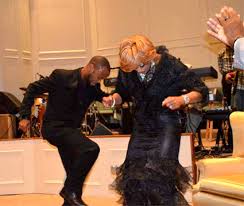
Joy denotes “gladness,” “exaltation,” and “rejoicing.” And if you’ve never had the experience of attending charismatic Christian denomination services, you’ve missed something that is distinctively American and generally of African American origin. Joy, exaltation and rejoicing is part-and-parcel of charismatic church services. There is customarily a feeling of exuberance and happiness that spreads throughout the congregation like a wildfire as a result of the heart-pounding, soul-stirring music and forceful preaching that is expertly dispensed by some very talented and motivated individuals.
Clearly, joy is a welcomed and revered emotion in this setting. The healthy-minded individual would prefer to be joyful than sad, grief-stricken or in despair. Thus the leaders of denominational churchianity realize this and they seize upon every opportunity during such church gatherings to elicit joy from their members for various and sundry reasons to include dropping a few more dollars into the offering plates. The methods employed by the singers and preachers to bring about joy among members of their congregations are generally centered around well-crafted promises to members that everything in their members’ lives is going to be alright—one way or another—and that there is coming a day when they will live out eternity in the happiest place in existence—heaven. The problem with this situation is that 9-times out of 10, the story lines that are being put forth to these members as a means to elicit joy, are not based on biblical Truths and or sound reason. Promises that members are going to heaven and that things are going to be alright in the morning, regardless how bad those things might be at the moment; regardless the lawlessness that reigns in the members’ lives; regardless the lack of obedience to Yahovah’s instructions defy commonsense and established biblical principles.
I guess it is preferable to hear about happy and fun things than to hear of stark truths that require us to conform to Father’s instructions and not our own. The joy that comes from true service to Father lasts throughout one’s earthly life—as opposed to joy that is based upon lies and misinterpretations.
Although joy is not mentioned in Torah, joy is mentioned throughout the remainder of the Tanakh (i.e., the Old Testament) and the writers firmly suggests that true joy is had by the people of Yahuah who focus their attention upon Father. In other words, joy that is centered on the individual and what that individual is going to get from God is not of Abba, but biblically-based joy is focused on Yahuah our Elohim exclusively and it is that exclusive focus on the Creator of the Universe that pays dividends to the worshiper whereby they receive a happiness and joy that the world can not fully and truly comprehend.
For us Spirit-Filled Torah Observant Believers in Yeshua Messiah, obedience to Abba’s way of life as stipulated in His perfect Torah, brings about a joy that is indescribable—certainly contrary to the understanding of the secular world and denominational churchianity. These entities see any adherence to Torah as bondage and legalistic drudgery. But the truth of the matter is that observance and obedience to Torah—Torah observance from the heart that is done by the Believer in Yeshua because he or she truly loves the Father and wants to please Him at every opportunity—brings about true everlasting joy. Reliance upon the protection, provision and spiritual guidance of Yahuah our Elohim brings about joy. Knowing that we are Abbah’s chosen and that we have a special purpose in His plan for mankind brings about joy. Our joy is not born on lies and scriptural misinterpretations.
Just a simple perusal of the 155 or so verses where joy is found in the Holy Writ strongly suggests that joy—true joy—comes from Yahweh, our Elohim. True joy does not come from man nor does it come from convenient man-centered circumstances such as stirring Church services. That joy is fleeting at best and is easily diminished and even destroyed once reality kicks in.
As it relates to our responsibility in this joy thing, it certainly does not fall upon a reliance of man to bring us joy. Instead, the Prophet Habakkuk, suggests that we rejoice and find joy in the God of our salivation (Habakkuk 3:18). Furthermore, one’s joy should not be contingent upon the preaching and singing of the Church, but instead, it must flow from Yahuah our Elohim to us and from us outward to Yahuah. Shaul (i.e., Paul) wrote that we should rejoice in Yahovah always (reference Philippians 4:4), regardless what is going on in our lives at any given time. This is certainly not an easy thing to do and it stands to reason why so many Christians default and turn to the Church to find joy. We humans love to take paths of least resistance don’t we?
I am working each day to be joyful in the things of Yahuah and my Master. It is that joy that we have within us through our obedience and relationship with the Most High that wins the spiritual battles that each of us must fight in each day.
Part-4–Fear—The Darkest Emotion
The fact that joy and other emotions are not given much parchment space in Torah tells me that being a Spirit Filled Torah Observant Believer in Yeshua Messiah is not—should not—be influenced by his or her emotions. Emotions when they are activated have a tendency to turn one’s focus to self and away from the Almighty and that just doesn’t end well for anybody now does it? No it does not.
That’s not to say that we, then, exist as lifeless, one-dimensional creatures that portray our beloved Faith as appealing as a root-canal to the outside world. The joy that we naturally receive from honoring and pleasing Abba will sufficiently fuel the essential Gospel message to an evil, dying world, to turn from lawlessness to Yahovah’s way of life and to lean not to the Church’s understanding.
The second emotion that comes readily to mind when we speak of the Church along with her traditions and practices and the influence that they have over the emotions of her members and the community is fear.
I would venture to guess that fear has probably been the most exploited of emotions in all of Church history. The one thing that generally incites fear in members of the Church is the tradition and doctrine of heaven and hell—that is, if you are saved, you go to heaven; if you are not saved, you burn for an eternity in hell. No one wants to spend an eternity burning in the fires of hell, especially if you’ve been taught since birth these traditions and doctrines. Using such erroneous teachings by leaders of the Church that are devoid of any Biblical support, is tantamount to witchcraft. It is essentially a ploy to control the members of the Church Community and Master taught against that.
Fear of eternal damnation then becomes a powerful motivator for the members of the community to “straighten up and fly right;” and it doesn’t hurt the Church’s bottom line either as people will give a little more to the organization to ensure that their fears of going straight to hell are allayed. It then becomes a practice of buying one’s salvation from the Church.
Back in the day, the Universal Church (i.e., the Catholic Church) used fear of being excommunicated from the Church or denying certain individuals communion to keep the people in check.
There are some 395-verses in the KJV where the term fear is mentioned in one form or another. In some instances, fear is used to denote a concern that something or someone is a threat to one’s wellbeing. In other instances, fear is used to denote more of a reverence and high regard for our God or some individual of influence and power.
The common theme that plays out throughout most of the Bible is one of not exercising fear of men or things from the perspective that one has concern for his or her wellbeing. Scripture teaches that our God will protect, provide and rescue us from any potential problems we may encounter in life. This of course requires that the individual in question is obedient to Yahuah our Elohim and that he or she is completely reliant and subservient to Him and Him alone.
The second part of the biblical concept of fear has to do with reverence and high regard for our God and it is Him that we are to honor and fear in like manner.
Yet the Church Triumphant, instead of training and teaching her parishioners how to fear God through Torah observance, chooses to teach her people to fear what will happen to them if they don’t say a sinner’s pray; join the rolls of the Church; give offerings and tithes; and attend Church every Sunday. Father has stipulated in the tenets of His perfect Torah how He wishes to be treated as our Sovereign. Man has chosen to step in and usurp the authority of Scripture and tell man what and how they are to fear both man and our God.
In the 25th chapter of Leviticus, Father instructs us to treat one another fairly, according to the provisions set forth in His Torah, such that no individual should ever fear harm from another. The only Being to be feared, more so from a reverence standpoint, but also from the standpoint of being concerned that we might cross Him by violating His Torah is Yah. There are instances strewn throughout Torah where Abba instructed us not to fear the enemy but instead rely upon His strong arm to protect and deliver (cf. Deuteronomy 1:21 and others). We see an example in Torah where the nations once feared us because of our God (Numbers and Deuteronomy). Further along in the Book of Revelation we see that two mighty men of Yahuah will bring the fear of God back to the nations of this earth (Revelations 11:11).
Bottom line: fear has a proper place in the lives of God’s people and it is not up to man to exploit this essential emotion for purposes of furthering the ambitions of the Church. If anyone should be fearful it is those who profess to know the Creator of the Universe and who have vowed to teach and preach the Truth, but who, instead, have chosen to replace Yahovah’s authority over their members’ lives with that of the Church and to seek personal gain in the form of influence and power over the people. These individuals have a very dark and miserable future ahead of them if they do not teshuvah–that is turn to Yah’s way of life for mankind.
I pray for those confused and encumbered souls in Churchianity who have succumbed to fear and given their lives over to the influences of denominationalism. These are victims of hasatan and slaves to religion who don’t know any better. It is up to us to somehow get out into the rippened fields and work and tell the Truth to these enslaved souls.
I have decided to answer the call and challenge denominationalism as Yahuah my Elohim leads and directs. It is one thing for me to stay within the relatively safe confines of Torah Observant Believers in Yeshua Messiah fellowship, but is that truly fulfilling the great commission of Master Yahoshua as recorded in Matthew 28:19. This is exactly what Master did when He walked the dusty highways and byways of Judea and surrounding provinces—he taught and preached the True Gospel message with power and authority to imprisoned souls. He didn’t keep that message exclusively within the confines of His inner circle, nor did His handpicked disciples who became the great Apostles of Yeshua Messiah. They went out into a hostile Jewish environment and delivered the Gospel.
So many of us fear going out into the highways and byways of the world and enacting the Great Commission as instructed. Instead, many of us stay only within the safe confines of our fellowships or to ourselves. That’s not what we’ve been commissioned to do and I personally am fearful that I stand to miss that precious opportunity to do what Master has instructed me—us–to do. Time is quickly passing us by and eventually each of us is going to have to give an account for that which Master has appointed us to. I reflect upon the parable of the talents as recorded in Matthew 25. We have each been given a set of unique gifts and opportunities that more times than naught have been left unused and not worked. That’s not something that we can afford to squander. Master is counting on us to do that which we agreed to do when we signed up for this journey.
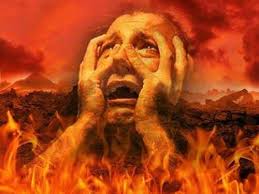
Part-5–The Rule of Emotions in the Hebrew Roots Community
Far too many of us erroneously believe that simply filling our heads with the latest and greatest Torah tidbits—minutia—the net result of going deep; of digging; of splitting scriptural atoms—far too many of us believe that we are effectively doing the will of Master Yahoshua. Some of us who fall into this realm ultimately come to a place in our walk where we abandon the teachings and example of Master and dive headlong into Judaistic, religiosity; and we engage in pointless babble and debate that does not serve the Kingdom of Yahuah at all. What does the accumulation of too much knowledge do? It puffs up (reference I Corinthians 8:1). The Apostle Paul (i.e., Shaul) suggested that instead of valuing head knowledge as it relates to Torah, it is better to exercise charity.
Emotions not only harm our cousins in churchianity, they also create havoc in the Hebrew Roots Community. Our community has some of the most angry, bitter, sad, disgusted, envious, shameful, grief-stricken and hateful people you could ever find in any religious circle outside of radical Islam. It is truly a sad situation to behold.
Simply consider FaceBook where we have so many Hebrew Roots-based communities in existence, and the members of these various communities are constantly at war with one another. We tend to wear our Faith on our sleeves in such communities and it doesn’t take much to fire some of us up over some of the most innocuous issues and topics. Just a few months ago, I had one brother who I had been FaceBook friends with for well over a year, swapping varying and frequent posts on various issues and topics related to our Faith, who out of the blue berated me for using the title “God” in one of my posts. I mean he lit into me and ceremoniously unbefriended me in FaceBook public—so to speak. I had another so-called brother in the Faith call me a heretic and heathen in FaceBook public because I did not agree with his posted Lunar Sabbath ideas. And still, there are countless others in our Faith who have been beaten down by other members of our beloved Faith for the goofiest of things.
As supposed Spirit Filled Torah Observant Believers in Yeshua Messiah, we should not in the least be influenced by our emotions. If anything and if one considers love to be an emotion (which Aristotle considered it to be), then that is the one emotion that we should constantly be displaying towards one another. We can never love Father and one another enough.
Our Faith Community cannot stand the coming storm of the end times if we are slaves to our emotions. It’s quite clear to me: if we fear; if we are always angry; if we are constantly sad and disgusted; if we are envious of others those who have this and that and we don’t; if we have low self-esteem, then we are essentially setting ourselves up for spiritual and even physical failure.
You see, the carnal world doesn’t have time to deal with all our insecurities and lack of integrity. The world is secure in their way of life and if we are trying to show the world that what we have is better than what they currently have, yet we are living contrary to the acclamation that Abba’s way is the one true path to the life abundant, then we will be made to appear as fools in the eyes of the nations.
Part-6–Closing Thoughts and Reflections
I don’t know about you, but I do not want to fail Master. I don’t want to finish this life that Abba has given me and not accomplish something of eternal significance. There are many things that can stymie the accomplishment of Yah’s will for our lives. I hope I have competently shown in this post, the negative influence that emotions have over our lives and how they have the potential to impede Abba’s will in our lives.
One of the things that every Believer is wanting to hear when they stand before the King is “well done thy good and faithful servant; you have been faithful over a few things; I will make you ruler over many things; enter into the joy of the Master (reference: Matthew 25:21-23).” If we allow emotions to rule over our lives, there is a good chance that many of us will not hear these words from the Master, but instead hear “depart from me you worker of lawlessness (reference Luke 13:27).” Now that is something to genuinely fear.
I personally have a problem controlling some of my emotions. I am not afraid to admit this. I don’t want you to think that I am an emotional basket case because that is certainly not me. But I must confess that I have need of the Spirit (i.e., the Ruach) to mold me into image of Master Yahoshua such that I am able to control my emotions better and that they do not interfere in my day-to-day walk with Master. I don’t wish to lack in anything in this Faith. I am in this for the long haul and in this to win it. I seek to see this thing to its perfect end so that I can hear my Savior say to me well done good and faithful servent.
The page you requested could not be found. Try refining your search, or use the navigation above to locate the post.
KJV Mark 7:1 Then came together unto him the Pharisees, and certain of the scribes, which came from Jerusalem.
2 And when they saw some of his disciples eat bread with defiled, that is to say, with unwashen, hands, they found fault.1
3 For the Pharisees, and all the Jews, except they wash their hands oft, eat not, holding the tradition of the elders.1
4 And when they come from the market, except they wash, they eat not. And many other things there be, which they have received to hold, as the washing of cups, and pots, brasen vessels, and of tables.1
5 Then the Pharisees and scribes asked him, Why walk not thy disciples according to the tradition of the elders, but eat bread with unwashen hands?
6 He answered and said unto them, Well hath Esaias prophesied of you hypocrites, as it is written, This people honoureth me with their lips, but their heart is far from me.
7 Howbeit in vain do they worship me, teaching for doctrines the commandments of men.
8 For laying aside the commandment of God, ye hold the tradition of men, as the washing of pots and cups: and many other such like things ye do.
9 And he said unto them, Full well ye reject the commandment of God, that ye may keep your own tradition.1
(Mar 7:1-9 KJV)
This is Sabbath Thoughts and Reflections—episode 88—When Tradition Overrides Truth and Reason—Shalom and Welcome.
Part-1-When Tradition Overrides Truth and Reason
If you by chance listened to or read the previous two or so episodes of this program, you may recall that I had embarked upon a new chapter in my life and that is relocating to the extreme opposite end of the country to care for my ailing folks. I also mentioned in the previous episode that one of those family members had actually passed away, now going on two-weeks ago. Needless to say, it was quite a jolt to my family and I, especially to me, not expecting the death to occur at all. Things took such a quick turn for the worse within a very abbreviated period of time such that I could not catch my breath before my loved one’s passing became a reality. I was not devastated over the loss, but I was profoundly affected and I have since had my time of mourning and grief and am looking to move forward in life, within the Will of Yahuah my Elohim, carrying with me the memories of my lost loved one.
The loss of my loved one, as sudden and profound as it was to me personally, it did not devastate me as I thought that it might. It did not take long for me to have peace about about the loss, even shortly after learning that he had taken his last breath during the early hours of two-Sunday mornings. The only regret I have was that I was not there physically by his side when he transitioned from this life.
Contrary to the statements and multitude of emotional pronouncements made by various members of the family and friends upon learning of the passing, I of course knew that my loved one’s soul had not gone up to heaven or that he had entered the glory of Jesus Christ. This was the traditional belief of the Baptist Church of my youth: that when one dies, if they have said the sinner’s prayer and are members of the local church and have been baptized in Jesus’ name and live a moderately holy and righteous life (whatever that actually means to individuals in the church), they are destined for heaven and the glory that is Jesus Christ. Of course, those who had not said the sinner’s prayer, who had not affiliated with the local church, had not been baptized and who had continued throughout their lives to live unrighteously (whatever that actually means to individuals in the church), would be destined to spend an eternity in hell. Yet, in all the years that I spent in the Baptist Church of my youth, and despite all of the funerals that I had attended over the course of those years, I had never heard a eulogy or passing words from family and friends condemning such to hell. Even the most ardent anti-church, anti-religion folks were happily assigned to spend eternity in heaven. I am not sure how that could be, given the foundational teachings and doctrines related to heaven and hell in the Baptist Church, but everyone seems to be getting a free pass to heaven and of course, they are said to have fought the good fight and ran that tough race that leads to eternity in heaven, regardless how they lived their life on this planet, or how much they rejected the things of God throughout their lives.
And we’re just talking about the deceased loved one; the ones left behind and how they process and react to the passing is another story altogether. Having been absent from the Baptist Church with all her trappings for 30+-years, I had not thought much about the traditions of the Baptist Church, especially the traditions that encapsulate death and dying. Having been suddenly reintroduced to many of those traditions at the passing of my family member, I found myself catapulted back to a time of innocence when I readily accepted all the things that I was now witnessing transpire in front of me; the traditions; the trappings; the practices; the talk about death and dying. And all these traditions, trappings, practices and talking carry with them the power and authority of the Holy Scriptures and the Baptist Church—or so everyone seems to think.
As I was watching and experiencing all these things transpire before me over the course of a week, I found myself utterly amazed that I had once bought into these things lock-stock-and barrel. And there I was, sitting off to the side, and watching and listening, as these traditions took center-stage and people were tightly embracing and exploiting them to their greatest potential—all seeming to incite and tickle and manipulate the emotions of all in attendance. Indeed, at the end of the proverbial day, it all came down to emotions—everything was based upon emotions. Unfortunately, reason and truth were left outside in the heat of the day, never once being invited in to help bring us mourners to a place of peace and hope and love in Yeshua Messiah. It was an eye-opener for me; yet more so, it was an invaluable experience that showed me just how monolithic and all encompassing traditions were in this region of the country. For no where in the Holy Writ could one find, not even remotely find, the things that the pastors, ministers, teachers and laity were putting forth to the family during their hour of grief. Yet the things that these individuals were serving up to the family and friends of our dearly departed, carried with them the same, if not greater, authority than that which is recorded in the Bible.

Judge Not Lest Ye Be Judged
Before I continue, I wish to make it perfectly clear that this reflection is in no way an indictment or judgment against Baptist Christians. Most of the individuals who I witnessed as being part and parcel of the traditions displayed in response to my loved one’s death are well meaning and sincere individuals who happen to be sincerely misguided and blind to the errors of their ways. These various practices and traditions have been passed down from generation to generation and for all practical intents and purposes, these traditions and practices are all they know. They have been trained not to question denominational authority (namely the bishops, pastors and ministers) in any perceived theological matters.
Thus, with this belief and tradition of not questioning the teachings and beliefs of the church, add to that the perceived primacy of the church’s leadership on all things related to the Baptist faith, the folks who are part and parcel of these practices and traditions are essentially in bondage to their religion: it’s just that simple and obvious to me. The tragedy in all this is that few to none of the laity are interested in cracking open the dusty and yellowed pages of their bibles to actually read and understand “thus says Yahuah.” Apart from general laziness, one wonders why, given the importance of church life to the majority of citizens in this region of the country, why does the average lay member refuse to read and or study their bibles? Well, the answer is relatively obvious: the lay members have been trained from virtually birth, that one must have a teacher (namely the Pastor or a minister) to explain the bible to them in order for them to understand what the Creator of the Universe is saying to His people.
Hmmm, this sounds so familiar, doesn’t it? Did not the universal church (i.e., the Roman Catholic Church) during her infancy and even into her adolescence and young adulthood, forbid the laity from reading their bibles; teaching them instead, that all they will ever need to know about things of the faith will be revealed and taught to them by the church leadership? Although nowhere near the dire straits that members of the universal church found themselves facing if they were caught with a copy of the scriptures in their possession back in the day, today, one may possess several copies and translations and or iterations of the Holy Writ, but the church for all intents and purposes discourages her members from reading their bibles outside the doors of their communities’ sanctuaries. Oh, the church may host bible studies and Sunday School classes each week, but the bible passages being studied during those sessions are canvased over with denominational commentary and instructions; so much so that the actual bible passage in question is just a very small side note to the whole study.
So then, it seems pretty obvious to me that there is a firmly ingrained system in full operation here, as there is no doubt a very similar system operating in hundreds if not thousands of communities throughout the Bible-belt and around the nation. Denominational religion fosters traditions that cannot be easily challenged and certainly not overturned, even when truth and reason clearly trumps the viability and sanctity of the dozens of traditions and practices of these churches.
Therefore, who am I to judge or spiritually indict anyone for following the traditions and practices and belief system of their chosen religion, especially in the Baptist Church of my youth? Master taught that making judgments of others is not the job of the Torah Observant Believer in Yeshua Messiah, contrary to what so many in our Faith community practice. Master taught: KJV Matthew 7:1 Judge not, that ye be not judged. 2 For with what judgment ye judge, ye shall be judged: and with what measure ye mete, it shall be measured to you again. 3 And why beholdest thou the mote that is in thy brother’s eye, but considerest not the beam that is in thine own eye?
4 Or how wilt thou say to thy brother, Let me pull out the mote out of thine eye; and, behold, a beam is in thine own eye? 5 Thou hypocrite, first cast out the beam out of thine own eye; and then shalt thou see clearly to cast out the mote out of thy brother’s eye. (Mat 7:1-5 KJV)
Thus I am convicted to watch my thoughts, words and heart as it relates to the cultural traditions of the people that I grew up around and even participated in. It was by the grace of Abba that the True Gospel message was revealed to me and that the Ruach HaKodesh moved within me to open my eyes and heart to accept those truths. Otherwise, I could just as well be embracing the many traditions and practices of the dear folks that I am now living amongst here in the Southeastern U.S. And let me just say: these are truly dear and genuine (in most cases) people who in many ways, put some of us to shame as it relates to their zeal for their Faith and their love for one another and the god they worship. Despite their lack of understanding of the truth as recorded in our bible and delivered to us by Father’s appointed ones, the lives they live—absent their sinful ways, just like us—speaks volumes about the caliber of individuals they are. I just think in the most wishful and hopeful of ways, that if these individuals were in the position to hear and accept the true Gospel message, oh what mighty warriors would the Kingdom of Yahuah gain!
Tradtions that Snuff Out the Truth
The very thing that came to my mind in the midst of my observing the various traditions and practices of the church and the people in this community, reacting to the passing of my loved one, is the passage of the Brit HaDashah where Master was confronted with a similar reality of traditions that stifle and snuff out Truth, was the event where He confronted the sages and Pharisees over their assigning primacy of tradition over that of Torah.
Yeshua here confronts the so-called sages and Pharisees about their traditions and practices that snuff out the Truth of Torah and the ways of the Creator. Rood’s Chronology places this event on the high-holy day of the Feast of Trumpets (sometime around 9/21/27) in Kfar Nahum. Of course this would seem most appropriate in terms of timing, assuming Rood’s Chronology is accurate, because Trumpets is a reminder of Yahuah verbally delivering Torah to us as we stood at the base of Mount Sinai.
As we stood there, huddled together, trembling at the sights and sounds transpiring before our uninitiated eyes and ears and souls, and knowing from the very depths of our being, that we were having an undeniable encounter with the Creator of the Universe, it became clear that our acceptance of Yahovah’s ways—His Torah—His instructions—was an all or nothing contract that was signed in blood (Exodus 24:8). With that covenant and instruction came also the understanding that we were not to add to or subtract from Abba’s instructions and commandments and that we were simply to trust Him and do according to His Word without question and without compromise. And looking ahead in the future, as Rood writes: “…the Almighty promised to send The Prophet in the future to show us the true path.” (Rood, Chronological Gospels)
The passage reads: “Then sages and Prushim, which were from Yerushalayim, came to Yahoshua saying, ‘Why do your disciples transgress the takanot of antiquity (i.e., the traditions of the elders in the authorized versions), because they do not wash their hands when they eat bread?’ Yahoshua answered them, ‘Why do you transgress the commandment of Yahovah by your takanot (i.e., for the sake of your traditions you bypass the commandments of Yahuah)? For Yahovah commanded, saying, ‘Honor your father and mother, and he that curses father or mother shall be put to death.’ But you say, ‘Whoever shall say to his father or mother that whatever support they might have received from him is corban [a gift dedicated to the Temple], he is free [from his responsibility to care for his parents].’ In so doing, he does not care for his father or his mother. Thus, you have made the commandment of Yahovah of no effect by your takanot. You hypocrites! Well did Yeshayahu prophecy of you, saying, ‘These people draw near to me with their mouth and honor me with their lips, but their heart is far from me. But in vain do they worship me, teaching for doctrines the commandments of men (reference: Isaiah 29:13).’” (Matthew 15:1-9, Rood’s Chronology)
The companion passage to this is found in Mark 7, with the added flavor of verse 9, “With full knowledge you reject the commandment of Yahovah that you may keep your man-made takanot.” (Rood’s Chronology) Here, Master was insinuating that these so-called experts of Torah and of course the Talmud knew very well that they were not following and teaching Torah but instead takanot—tradition-man made laws, all which they extolled with the same authority if not greater authority than Torah.
Indeed, the Pharisees of Churchianity haven’t changed much apart from their established systems of worship and belief systems, for they still wreak havoc upon the millions of followers that have entrusted unto them their very souls. For many of the church leaders have gone through formal training in various seminaries and have been taught church history and have no doubt read through the bible a few times, yet they continue to prop up the traditions and practices of the Baptist Church: Sunday worship; rejection of Torah; and the doctrines surrounding death and dying just to name a few. Yet the people, the worshipers and lay-folks, are fully asleep at the wheel and not in a spiritual and intellectual position to read their bibles from a contextual, historical and literal sense such that the light of Yahuah’s Word shines down upon them and completely turns their worlds upside down.
It can happen. It has happened to each and everyone of us. It takes the planting of the seeds of the true Gospel and a move of the Holy Spirit to topple the traditions of men and free the people from the bondage of religiosity.
Now the things that readily came to mind as I observed and watched the people in the community and of the church rally around members of my family, were varied yet consistent and common amongst all in attendance. Allow me to mention and comment on just a few of those traditions and practices that defy scripture and the instructions of Father:

Closing Thoughts and Reflections
Now this is certainly not intended to be an exhaustive treatment of the many traditions and practices of the Baptist Church and her members and how those traditions and practices and doctrines override truth and reason. Such a thing would go into hours of discourse and discussion and I would still not fully exhaust the subject or do the subject full justice. I simply wanted to highlight a few of the more prominent traditions and practices that I recognized seemed to override truth and reason. I invite you to consider some of the things that I have mentioned here and maybe compare and contrast them with the things that you have experienced and witnessed in your life prior to coming in to the Truth or even during your current walk with Messiah.
So then, what? What am I to do with the things that I have mentioned here in this episode of Sabbath Thoughts and Reflections? Why does any of this matter? Certainly some would feel and suggest that the people I described in this post have made their spiritual beds, let them lay in them. Others may see a shake the dust from your feet and move on to the the next opportunity type situation here and why give any further thought to the matter or these people.
I see things a little different. I see opportunity. I see an opportunity to share my Faith with the people of this community despite the massive opposition and traditions and beliefs and practices that are sure to cause me a great deal of grief. Indeed, I anticipate that there will come a great number of those shake the dust from your feet moments throughout my sharing opportunities, but I fear that I cannot exist in this environment and not somehow show the True Messiah in me through uncompromising Spirit-Filled Torah Living the way Master taught us and seizing upon teaching opportunities as the Ruach presents the opportunities. What seeing these traditions being practiced and manifested before me these last few weeks has prompted me to do is to delve deeper into the Word of Yahovah—deeper than I have ever done before. I am intending to spiritually equip myself for the work of the Kingdom while it is still day (John 9:4).
Prior to relocating here, my life in Southern California as a Netsarim was pretty cut and dry: I associated only with fellow Netsarim and I tried to carry myself as a Netsarim during the course of my workdays. My ways did not clash with those around me for the most part. Now, being here in the liberal bible belt (and yes, I did say liberal bible belt because people here have very liberal political leanings despite those liberal leanings being in conflict with the ways of Yahovah—I simply chalk this up to culture and tradition) where the citizens here reject Torah and the True Gospel and tightly hold to their traditions, I am faced with having to be perfect in my walk and ready at every turn to give an explanation to any who would ask me about my Faith and why I do the things I do and believe what I believe. Peter, in his first general epistle wrote of such an existence: 8 Finally, be ye all of one mind, having compassion one of another, love as brethren, be pitiful, be courteous:1 9 Not rendering evil for evil, or railing for railing: but contrariwise blessing; knowing that ye are thereunto called, that ye should inherit a blessing. 10 For he that will love life, and see good days, let him refrain his tongue from evil, and his lips that they speak no guile: 11 Let him eschew evil, and do good; let him seek peace, and ensue it. 12 For the eyes of the Lord are over the righteous, and his ears are open unto their prayers: but the face of the Lord is against them that do evil.1 13 And who is he that will harm you, if ye be followers of that which is good? 14 But and if ye suffer for righteousness’ sake, happy are ye: and be not afraid of their terror, neither be troubled; 15 But sanctify the Lord God in your hearts: and be ready always to give an answer to every man that asketh you a reason of the hope that is in you with meekness and fear:1 16 Having a good conscience; that, whereas they speak evil of you, as of evildoers, they may be ashamed that falsely accuse your good conversation in Christ. 17 For it is better, if the will of God be so, that ye suffer for well doing, than for evil doing. (1Pe 3:8-17 KJV)
It is my hope that these thoughts and reflections will bring us closer together as fellow Netsarim and that my experiences and observations will be of help to someone who is in some type of spiritual need. Again, I do not pretend to have all the answers nor am I a Torah expert or teacher: I’m simply a Netsarim just like you trying to live and do the Will of our Father and looking forward to that blessed hope. Shaul wrote to his evangelist apprentice Timothy: 13 Looking for that blessed hope, and the glorious appearing of the great God and our Saviour Jesus Christ;1 14 Who gave himself for us, that he might redeem us from all iniquity, and purify unto himself a peculiar people, zealous of good works. 15 These things speak, and exhort, and rebuke with all authority. Let no man despise thee. (Tit 2:13-15 KJV)
Have a blessed and powerful week in Messiah—walk in the power and might of His Ruach HaKodesh and Abba willing, let us fellowship at the next Sabbath Thoughts and Reflections. Shavuatov. Shalom.
The page you requested could not be found. Try refining your search, or use the navigation above to locate the post.
A Case for Holiness
As I was conducting my Torah studies week-before-last, I came to Exodus, chapter 19.
This of course, is a well-known passage of Torah to our community, for it is the place that marks that point in our history that we officially received our Creator’s perfect Law.
We had just arrived at the base of Mount Sinai, just three-months prior, having been freed from our Egyptian taskmasters. Upon our arrival, Father summoned Mosheh to the top of the mountain and it was at this point in our history that Abba laid out the terms of the contract to Mosheh that we would either agree to abide by or reject; the option being entirely ours. It was not a one-way contractual agreement such that we were being forced to become Yahovah’s children. Well, Yah has always worked that way has He not? He has always been the God of choice—choose ye today whom you shall serve(Joshua 24:15).
It is certainly easy to recall that when we were in Mitsrayim (i.e., the land of Egypt), we did not have a choice when it came to serving our Egyptian taskmasters, but here, at the foot of Mount Sinai, we were being exposed to a taste of true freedom where we had the option of saying yes to serving the Creator or no to serving Him.
When I think about this whole thing and reflect upon how we must have felt or viewed things collectively and individually as they were transpiring before us. I can not help but think that most of our mixed company coming out of Egypt had no idea what was in store for us.
Abba was not quick to show us His plan but sought to prove us worthy at every step leading up to the revealing of His plan to us.
I would imagine that many of us believed that we would simply be freed from bondage by this mysterious God who would lead us to a land of great opportunities where we could live out our days as we so chose; similar to the mindset that many in churchianity and even our Hebrew Roots community possess today.
Instead, Sinai for us was a precursor of that narrow gate and straight way that Father swore would lead us to a life that just three months prior, was unimaginable. Life would not be easy for us under the terms of the agreement that Abba was laying out before Mosheh and ultimately before us as a nation. Nevertheless, if we could see beyond and live the nuts and bolts of that agreement without compromise (because Abba is a jealous God and He does not share His glory and authority with any other supposed god or power over our set-apart lives), we would reap the unfathomable benefits of being the Creator of the Universe’s chosen, prized possessions in all the earth. Imagine that!
Of the billions of people who have ever lived on this planet, we stand as the Creator’s chosen few. What an amazing truth.
As we proceed through the chapter, we come to two places where Father severely warns Mosheh and ultimately us as a body, that we are not to invade the established boundaries of the mountain, lest we suffer termination with extreme prejudice—that is, execution by stone and or arrow. The verses where this admonishment is found in verses 12 and 13; 21 through 23.
This admonishment by Yahuah has always intrigued me, given that in chapter 20 of Exodus, it was revealed that when we saw the thunder and the lightning and heard that ear-piercing shofar and saw the mountain in such an infernal state, we stood trembling at a distance from the mountain (verse 18). We even told Mosheh to speak to Yahovah on our behalf because we were outright terrified of our Father’s manifested presence before us.
Let us be honest about this thing here: this was the first-time we’d been formally introduced to Yahovah. Yes, we saw His power and might and authority magnificently manifested in Egypt an along our journey to Sinai, but we’d never had a face-to-face, let’s talk and explain the situation, type meeting with Yahuah, our Redeemer until this time in our history. What happens when one goes out to meet someone special for the first-time? Well, he or she puts their best foot forward. Indeed, Abbah instructed us to prepare ourselves for that meeting by washing and purifying ourselves and readying our hearts and minds. We were to put our best foot forward at this meeting. Yahuah came to our meeting in his great splendor; dressed to impress.
I guess this is a far cry from how we view and treat the presence of our Father today. In many cases, that fear that we had towards Father has been replaced with outright irreverence and disregard by so many, but for now I wish to focus on why Father admonished us to not invade the boundaries of the mountain when He obviously knew that we would not.
So I guess I am mystified that our omniscient Father would pose such a stern warning to Mosheh knowing that we would by no stretch of the imagination violate the boundaries of the mountain. My first inclination was that, hey, Father was just making a rule that we, His children, would have to obey and I went with that for a long time. Yet with this latest read, that curiosity once again hit me like a ton of bricks that I just could not dig myself from under. To me, this admonishment by Abba to Mosheh had to be more than a simple “don’t violate the boundaries of My mountain because I said so.” One thing I am certain of is that our Creator does nothing without a reason. Now some of those reasons may not be readily apparent, or for that matter, not available to us for whatever reason and I want to resist engaging in eisigesis (i.e., reading into the text) for purposes of surmising a reason why. Nevertheless, I will take slight liberty and reflect upon a potential reason for Father prohibiting us from broaching the boundaries of the mountain. Hey, this is Sabbath Thoughts and Reflections by the way.
Apart from Yahuah giving the command (twice given) and us simply obeying it because Father said so and because we did not want to die violating the command, I would submit that Father was intending to teach us a lesson here. I believe that Father gave Mosheh this admonishment for purposes of establishing boundaries between the common and the holy. That’s right, I believe that Yahovah wanted to make it perfectly clear to us that He is our God and our Creator and that which He deems holy we are not to treat as we would everything else in our life or within our sphere of existence. I envision Father saying: “Today, I am establishing a clear line of demarcation that I will expect you to respect and observe; and I am going to make that line of demarcation very clear to you; and for that matter, very easy for you to respect and observe. I know that you will be too terrified to cross the boundaries that I am setting up before you, but I also want you to know that wherever My presence rests and wherever I place My Name, you will respect those places and things or face dire consequences. In this case, you cross over and touch the mountain, you die.”
Separating the common from the holy: now that is a concept that has lost a lot of meaning and respect by us humans over the centuries. As it relates to this particular story and situation, we had just arrived in town (i.e., Sinai), having just a couple months ago, beat-feet out of Egypt and trekking across the desert and we were a green, snotty-nosed, mixed-lot of souls who obviously did not know the things of our God. In fact, we came out of pagan-Egypt with all her idols and false gods and we knew nothing of true holiness. Evil (as in paganism) only begets evil and nothing good ever comes out of evil. Thus, we knew nothing apart from that which we were exposed to in Egypt; years spent in abject servitude and bondage.
In the midst of our servitude and bondage, we picked up paganism, whorshipping the gods of our Egyptian over-lords. When we fled Egypt on eagles’ wings, we did not know anything about Yahovah, the Creator of the Universe, apart from Word being handed down about Him being the God of our father’s Avraham, Yitsak and Yaachob. Obviously this was the case because we quickly returned to the worship of the golden calf when Mosheh went up the mountain for an extended period of time soon after this Sinai encounter (Exodus 32).
Definition of Holy
That which was dedicated to God was conceived of as entering the sphere of the “holy.” This included the various elements of Levitical worship called “holy things” in Lev 5:15-16, the produce of the land (Lev 19:24), personal property (Lev 27:28), and spoils obtained in military action (Josh 6:19). The sacrifices that were to be eaten only by the priests were denominated “holy” by virtue of their absolute dedication to the sphere of the sacred as represented by the priesthood (Lev 19:8).
While the realm of the holy was conceptually distinct from the world with its imperfections, it could nevertheless operate within the world as long as its integrity was strictly maintained. The maintenance of the integrity of the “holy” was a function of the Israelite cultus. The holy God came to man in redeeming love within the context of regulations and proscriptions that were designed to maintain the purity of holiness the characterized God’s essential nature. Even before the establishment of the Levitical system, this principle was recognized (see Exo 3:5). (TWOT Lexicon)
Essentially, that which Yahovah/Yahuah/Yahweh, the Creator of the Universe, has declared sacred or holy, special to Him and His operations, is holy. Otherwise, anything not declared sacred or holy or special to Him is man’s mess; in some cases, it is hasatan’s mess and is essentially profane. God knows how much of hasatan’s mess is mixed in with that which Father has set apart as special and holy and that is not only problematic, it is a no-no.
Yet millions hang on to a religion that is a mixture of the profane and that which is supposed to be holy according to our God, out of a fear and respect for their denomination, faith community, culture and traditions. Unfortunately, Yah does not care for such behavior and His Messiah will ultimately put an end to it all.
Holiness According to the Bible
Yahovah established with us “right off the bat” an uncompromising “holiness factor” that He insisted be honored and observed by us at all times. There was no question as to what was holy/sacred/set-apart then, and for all intents and purposes, there should be no confusion on this subject as it relates to our understanding and observance of the holy things of Yahuah our Elohim today.
Yet I would submit to and ask you: have we not forsaken that “holiness factor” in our Faith Community today? I mean: in certain sects of fundamental churchianity, especially in some of the fundamental Christian sects that I was exposed to growing up, holiness was more of a “man-made factor” than a “God-ordained factor” or biblically supported factor. Outside of the Christian sects that I was exposed to growing up, there was always the Catholics who worked the heck of this holiness thing. Virtually everything related to Catholic edifices and houses of worship, their masses and their various relics strewn around the world, was assigned by the powers to be at the Vatican, a holiness factor. In terms of the Christian sects I grew up around, the holiness factor was assigned to pulpits, traditions, doctrines, preachers, pastors and ministers.
Looking back at this stuff from my current station in life and filtering most things through my Netsarim worldview or lenses, I clearly see that none of these things that were deemed holy were deemed holy by Abba or the bible; in fact, everyone of them was deemed holy by men, plain and simple; and who is man to assign a holiness factor to anything without the Father’s permission or direction? Yet, is that not the way things work in the mundane, common world: man determines what is what and who is who and damn God and His Scriptures for man believes he runs the show here? Oh how it must insult the Creator to know and see that man is running the show (running it badly I might add) that He established and set in operation.
Even in some segments of our Hebrew Roots Community, we have crossed that line from God-ordained holiness over into man-made holiness. Case in point: Torah worship; sacred names; the Talmud; and certain practices and traditions that are germane to Judaism; and members of our community who are tied to these sects will almost go to fisticuffs over these things that they and their sects deem as holy. Yet when it comes down to the things that Father has actually deemed as holy, many in our Faith have crossed over those boundaries and profaned the established things of Yahovah that are truly holy such as Sabbath-keeping; the Feast Days; our perfectly lived Torah-observant lives; the ways of Yahovah; our Master Yeshua Messiah (yes, believe it or not, we have many in our Community who are Yeshua-haters); and the list goes on as delineated in Scripture.
What is Holy to Father?
So needless to say, I went on a search through the Word for that which Abba has deemed holy. It would stand to reason that Father would reveal to us that which He considered and demanded that we observe as holy.
Well, I was taken aback to find that Father has set apart unto Himself a rather broad and large number of things that He has deemed holy. Some of those things no longer are in existence and thus the holiness factor would not be applicable in this day and age. Certainly there are other things that remain as holy elements to our Faith and I have come to conclude these things demand that we honor and respect them as holy unto Yahovah our Elohim.
Allow me to mention some of them; and know that this is not an exhaustive list.
Considerations
Again, this list that I have provided is not intended to be an exhaustive listing of that which Father has deemed holy or that which the writers of the Holy Writ were inspired by the Ruach Kodesh to deem as holy. Instead, I see this list as a primer of sorts, that gave me a sense of the great many things that Father has ordained as holy unto Him.
I also came across some considerations as it relates to this holiness factor that I saw as important to pass on.
To begin with, that which Abba has deemed as holy is not to be worshiped by us as Yahweh’s chosen people. Unfortunately, our Faith community is populated by individuals who have taken on religion to the full extent of the meaning, the most prominent of our lot being those who practice Judaism. Many worship the implements of our Faith that are deemed Holy by Father such as the Torah, the Names of our Creator, tzitzits, the Temple (albeit the temple no longer exists, people worship the land of Israel), and even worship some of our Hebrew Roots leaders. Although Abba set before us a list of the things that He deems as holy, not once did He ever command us to worship these implements. Yet it seems hardwired within man to worship those sacred elements of their chosen religion and Faith. Certainly, there is an inherent temptation to worship that which is set apart, but Yahuah our Elohim is the only being that is to be worshiped by us.
The other thing is our holiness: Father requires that we be holy as He is holy and by far, that delineation is mentioned more times than any other element of our Faith. Over and over we are reminded that we are holy unto Father and that we are to be holy in all our ways.
This issue is driven home a great deal in Leviticus 20: 7,8 where we are reminded that our principles, affections and aims must be holy (Matthew Henry Commentary on the Bible). Matthew Henry continues on as it relates to this passage: “We must then cleanse ourselves from all the pollutions of sin, consecrate ourselves to the service and honour of God, and conform ourselves in everything to His holy will and image…(This is part of the sanctification process). In all our actions and in the whole course of our conversation…” (must be obedient to Torah (i.e., you shall keep my statutes).
It then becomes the criteria by which we are then sanctified when we honour and obey Abba’s Torah. Yet we lack the ability to keep Torah to the extent and manner that Father desires, unless we have the Ruach Kodesh working within us (which we should have)—that His Ruach (i.e., His Spirit) writes His Torah upon our hearts and in our minds (Hebrews 8:10; cf. Jeremiah 31:33). In order for this process to work within us as potentially Abba’s holy people, we must have a cleaned up and purified Temple/Tabernacles that can house the Ruach Kodesh and allow Him to operate within us effectively.
So one reflects: why must we go to such a great extent as it relates to the holiness that Father requires of us? (1) Yahuah our Elohim commands it of us; (2) we want to please our Heavenly Father; and (3) to bring glory to His Holy Name.
Of this concern, Matthew Henry comments: “Yahovah (corrected) sanctifies us through special privileges, laws and favours,” all of which are designed to bring us to that special, “peculiar people” status that Father so desires us to be in this world, as well as bring us to the place where we become Yahovah’s special possession. Henry continues: “ Yahovah’s people are, must be, persons of distinction. Yahovah has distinguished us by His holy covenant” (corrected).
Of this same issue, according to Gill’s Bible Commentary, we are to sanctify ourselves by abstaining from all idolatrous practices and then we are to observe Abba’s Torah. In doing such, we become a holy, set apart people from all others in the world in the manner of our conversation and worship.
Yet many self-professing Netsarim are very open to profane and disgusting converation, even castigating those of us who take exception to their practices and talk. Why are they like that? I have read where some feel that it is just words and that their use of profanity is an organic form of expression that would make no difference to God. Really? The common world freely uses profanity as a means of communicating at all levels and on various things. If we are supposed to be holy in all areas of our existence, why would our conversation (that is our vocabulary) not be included in that holiness factor?
As I have mentioned in prior episodes of Sabbath Thoughts and Reflections, the holiness factor requires a “dying to self” as alluded to in Matthew 16:24,25; Mark 8:34,35; Luke 14:27. It becomes the critical decision that we all must make of deciding upon which side of this thing we are going to settle upon and if we decide that Yahovah’s way is the way we want to go, it then becomes the very difficult process of letting go of the things of this life that do not mesh with the things of Yahovah and then walk out our Faith and our salvation in “fear and trembling” (Philippians 2:12); relying upon Yahovah’s Ruach HaKodesh to empower us to stay within the confines of that narrow way.
Oh how I can attest that this is definitely not an easy thing to pick-up and do. Nevertheless, it absolutely must be done, more sooner than later, by each of us. As we have so clearly seen in the passages discussing the holiness factor, especially those elements of the holiness factor that apply specifically to us as individual Netsarim, Abba requires we be holy as He is holy.
In chapter 20, verse 26 of Leviticus, Father once again reiterates His requirement that we be Holy, more so that that holiness factor will have led to Him actually “setting us apart from the nations of the world to be His special possession.” Despite all the protests and teachings to the contrary, we cannot be His special possession unless we are holy.
The page you requested could not be found. Try refining your search, or use the navigation above to locate the post.
Closing Thoughts and Reflections
Given the extensive treatment of the concept of holiness in the Holy Writ, it is safe to conclude that holiness is not only an important concept to our Father, it must also be an important concept for us—His Children–to understand, discern, guard and of course observe with all the reverence we can muster.
Why? For a few reasons: that which is important to Father must naturally be of importance to us. If we dare call ourselves Children of Yahovah/Yahweh/Yahuah, yet we profane that which Father has deemed holy, we stand the risk of offending Him, marginalizing His Torah and sullying our witness and distinct purpose in this world.
Take for instance the Sabbath, which Father sanctified and separated it as holy and special from the other six-days of the week: when we treat the day as we treat any other day, we have by default violated Abba’s established holiness provision for the day and falsely demonstrated to a profane world that the day is just like any other day. I would submit that the same mindset applies to our observance of Torah, although our observance must be profoundly tempered by the Holy Spirit actively operating in our lives.
I am not in the least advocating Torah worship or any such religiosity that would obviously be a prescription for disaster. What I am advocating, however, is Teshuvah—a heart-felt, zealous, intelligent, uncompromising return to to the ways of our Creator as He originally intended and as our Master taught and modeled for us.
As we grow in the imagine and likeness of our Master, individually and collectively, I look forward, with the greatest of expectations, to being that holy thing that Father has so desperately sought of His people. What an amazing journey we have embarked upon; what an amazing God we serve.
So let us press forward towards that mark of the prize of the high calling of Yahuah in Yeshua HaMashiyach (Philippians 3:14). With the aid of the Ruach Kodesh, bang out and apply this holiness factor in every aspect of our being so that we become that peculiar, holy nation of priests—special possessions of Yah—holy and acceptable to Him—and effectively fulfilling His perfect will in the earth.
Until next time, fellow saints in training, may you be most blessed. Shalom. Shavuatov. Take care.