by Rod Thomas | Nov 11, 2015 | Podcasts
[podcast src=”https://html5-player.libsyn.com/embed/episode/id/3942165/height/360/width/480/theme/standard/direction/no/autoplay/no/autonext/no/thumbnail/yes/preload/no/no_addthis/no/” height=”360″ width=”480″]
The Feasts of the Lord and our Priorities
Where is God’s Dwelling Place Part 1 (TLDC 27)
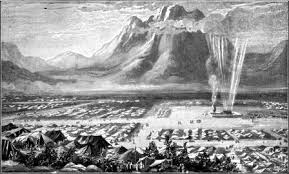
My Torah studies this morning brought me to the last section of Parashah 47 which consists of Deuteronomy 15:19-16:17. This section was a familiar refrain on the theme that we were to appear before Father at the appointed place “of His habitation”—that is, the place that Yahovah chose to dwell and place His name. And this was to take place 3-times a year: (1) during the Festival of Matzah or Feast of Unleavened Bread; (2) on the Festival of Shavu’ot or Pentecost; and (3) during the Festival of Sukkot or Feast of Tabernacles. These are three of the seven annual Feasts—moedim—appointed times of Yahovah our Elohim that are called by some, the pilgrimage feasts or festivals. Now, it’s very important to note that Father provided us strict instructions that He repeated several times throughout His Torah as it related to our coming—our gathering—our journeying to the place that He would choose to dwell and place His name, and do so at specific times of the year that He, in His infinite wisdom and purpose, established as far back as the creation: “And Yahovah said, ‘Let there be lights in the expanse of the heavens to separate the day from the night. And let them be for signs and for seasons, and for days and years…” (Genesis 1:14) Apart from lighting our world and sparing us from perpetual darkness, the sun and moon were to serve as markers—specifically seasonal markers-for us throughout each year. Yet somehow, mankind has forgotten and all but rejected this simple fact—that He has placed in the heavens his system for reckoning time. Instead of us turning to Father’s reckoning of time, we have given our lives over to man’s reckoning of time that I believe has resulted in us losing yet another vital connection to our Creator. Unfortunately, we have been under man’s reckoning of time for so many centuries and countless generations that it has become extremely challenging and in some sense, impossible, to re-establish and adhere to Father’s reckoning of time. However, some of us in the Hebrew Roots community, despite criticism by many in even our own community, have turned to Yahovah’s ancient reckoning of time, that assists us in forming yet another fine connection with Abba Father. If you’d like more information on how you can connect to Father through His calendar, please contact me at perceptionwp@gmail.com.
Now, my attention was drawn, in this portion of Torah, more to what Father meant when He stated several times throughout, “in the place Yahovah shall choose, you and your household” (15:20); “in the place which Yahovah shall choose to cause His name to dwell there” (16:2); “but at the place which Yahovah your God shall choose to cause His name to dwell in” (16:6); “And you shall shall rejoice before Yahovah your God, you and your man-servant, and your maid-servant, and the Levite that is within your gates, and the stranger, and the fatherless, and the widow, that are in your midst, in the place which Yahovah your God shall choose to cause His name to dwell there” (16:11); “Seven days shall you keep a feast unto Yahovah your God in the place which Yahovah shall choose” (16:15). I counted five-times throughout this portion where Father stipulates that we were to celebrate His festivals and keep His appointed times at the place where He determines to be His dwelling place; the place where He chooses to place His name. This spoke something very profound to me: that Yahovah yearned so much for us, His chosen people—His possession (although we were failing miserably to measure up to His expect ions as a chosen people at every turn), to come and gather together at one place at set times during the sacred year, and to celebrate Father—the Creator of the universe—in our midst. Father, despite the ramblings of certain pagan thinkers who believed that the Creator of all wanted nothing to do with His creation and chose to remain distant and unreachable to His creation, Father wanted, and has always wanted such a relationship with His creation-with man-the jewel of the whole of His creation-that He established from the foundation of creation, a calendar and then instructions to us on where and when we would meet Him and celebrate and worship and honor Him. I see in this nothing short of Hilary and I, now that all our children have grown into adults and are out on their own, independent in the world, setting certain times throughout the year that we have them come to our home and be with us, their parents, and we celebrate and love and be with each other. These times are precious to us as we only get this opportunity to hang with them, if you will, ever-so-often. And so it was with us back in the day: when we were about to enter the land of promise, that Father re-established His calendar and instructed us to fashion our lives around the times of the year, where we would pack our bags and gather our sacrifices and offerings and head to the dwelling place of Yahovah and worship, honor and celebrate before our One true King. Obviously Yahovah took this whole coming together at His appointed times at His appointed place very seriously. So much so that He repeated in this portion alone, five times, that we were to go to His dwelling place to worship.
Another unique aspect of this whole thing for me is that Father was designating and choosing the places that He would have us meet Him and establish as His dwelling place. We, His creation, had no say in the location and times of meeting. What a most profound concept that is all but lost in man’s thinking; and that has to do with man-us-always determining what, where and when, as it relates to our relationship and worship of Father. We have lost perspective. We have lost priority. We have become disobedient and dumb and numb to this simple concept of: I am your God, you are my people-come before me at the times that I have appointed and worship and celebrate before me. Instead, we’ve developed our own system of righteousness whereby we now dictate to Father the when, where and what of our worship and relationship with Father. Granted, those dwelling places that Father established, are no longer accessible nor do they exist; so we are extremely limited as to where—although we will get into the where in succeeding episodes of Torah Living Daily Challenge, as there still exists a where that so many of us overlook or are ignorant to.
But for now, we still have the when and what. Father, in His infinite grace, mercy and purpose, has provided us the wherewithal that we may known when we are to come together and celebrate and worship Him throughout the sacred calendar year. The Challenge today my friends is: do we make the proper preparations to meet and keep those times?
Each year, January 1st, we set resolutions and plan out our year. In those plans, we consider vacations that we want to take. Some of us establish dates for those vacations and we begin making travel and lodging plans for those vacation dates. How many of us, however, instead of pulling up the Gregorian calendar and mapping out vacations for family visits or other pleasurable destinations, look at the Creator’s Calendar in conjunction with our western calendars, and map out time to observe those ancient moedim-Yahovah’s feast days, first? How many of us put Yahovah first in our lives? Is this simple exercise, plotting out and planning for time away, to celebrate Yahovah’s feast days, before we map out and plan any other vacations and days off from work, a good start? Most of us have already taken the step of insisting that our lives come to a halt each week on the 7th day of the week—the Sabbath. How about those Feasts of Yahovah? Are we willing to exercise the same commitment that we give to the weekly Sabbath?
I certainly get that with the Temple being gone and all and the emphasis being moved away from the material edifices that were once the Temple in Jerusalem and Tabernacle in the Wilderness and in Shiloh over to our bodies being the dwelling place of Yahovah (1 Corinthians 6:19). However, our observance of these sacred annual moedim has not changed—it’s just that we don’t go to the Temple with our sacrifices and offerings and party accouterments as we once did when the Temple stood and Yah dwelt there in the Holy of Hollies. But most of these appointed times require us to not do any work on those sacred days and if we follow the spirit of these feasts, we might even consider getting out of our silos and going to meet with like-minded brothers and sisters in the Faith in celebration and honor of these holy days of Yahovah. It just frustrates me to meet brothers and sisters in the Faith who have absolutely no interest in coming together and convocating on these sacred holidays. Most of us don’t. Even during the most popular of the feasts days: Sukkot/Tabernacles, many of us will simply put our feet up in our homes and could give a hoot about anyone else but ourselves. Oh, we’ll just set up a Sukkah in our back yard and go out and hang out in the Sukkah each day of the week-long feast. We just don’t want to be bothered with packing up and going to where the action is. Yeah, we can’t congregate at the temple anymore, but we can certainly meet up together where the Spirit of Yahovah directs us to be. Master instructed: “For where two or three are gathered together in my name, there am I in the midst of them.” (Matthew 18:20) Some of us are just too full of ourselves to want to fellowship with others of like mind in the Faith. Others of us are too introverted (as I tend to be but am working on defeating that spiritual condition) to fellowship with others of like mind in the Faith at a feast celebration. But the Apostle Paul, assuming him to be the author of the book of Hebrews, wrote: “Let us hold fast the profession of our faith without wavering; (for he is faithful that promised;) and let us consider one another to provoke unto love and to good works: not forsaking the assembling of ourselves together, as the manner of some is; but exhorting one another and so much the more, as ye see the day approaching.” (Hebrews 10:23-25) Clearly, the writing is admonishing us to think not just about ourselves when it comes to fellowship, but think of those with whom we may bless with our presence and admonishments and exhortations during these special times of gathering each year. And as we approach the end times, these opportunities may very well come to an abrupt halt at some point in the future. Thus it behooves us from a spiritual, emotional and psychological standpoint to not forsake the assembling of ourselves together as is the manner of some. For when we come together to celebrate before Yahovah and honor our Father, we grow and we bless one another with the spiritual gifts we bring to the forum. A wise person wrote: “Iron sharpeneth iron; so a man sharpeneth the countenance of his friend.” (Proverbs 27:15)
So I ask you in this Torah Living Daily Challenge: what are your priorities when it comes to the appointed times—the feasts of Yahovah? Do we put Yah first? Or do we put ourselves first? It’s not always easy to do. But when we overcome those hang-ups that prevent us from setting out and putting everything on the line for Yahovah and His perfect purpose for each of our lives: beautiful and amazing things happen; not just to and for us; but also for those who Father places in our lives during those appointed times.
Until next time, may you be most blessed fellow saints in training: Shalom.
by Rod Thomas | Nov 9, 2015 | Podcasts
Opinions Matter Only So Much
Torah Living Daily Challenge 26
The other day, I found myself in an awkward situation, which I surmise is not uncommon to many of us in the Hebraic Roots. And I would venture to say that, with the advent and popularity of social media, which many of us are unfortunately entrenched and in bondage to, such awkward situations tend to occur more times than not.
While perusing postings from individuals who I’ve befriended and those who befriended me on Facebook, I came upon a post that asked everyone for their opinion regarding the viability or trustworthiness of Andrew Gabriel Roth’s Aramaic English New Testament—which I happen to have a copy of in my library and which I reference from time to time. I of course felt it necessary to post, in response, my opinion on this Bible. Suffice to say, I gave a favorable nod to this Bible, making sure that I was giving only my opinion and trying not to come across as an expert on the subject giving a definitive endorsement. Frankly, I could care less whether or not anyone reading my response agreed with my positive opinion of Roth’s New Testament or not. I happened to give some supportive information why I liked this Bible and left it at that.
Well, I soon received a retort or challenge to my opinion or posting. It happened to be from a somewhat well known Hebrew Roots teacher and gospel singer who I had the privilege to know personally and to have fellowshipped with on a few occasions. Simply put, she challenged my positive views on this Bible, siding with the negative position of a Karaite Jewish scholar (who happens to be well known in certain sectors of our Hebrew Roots community, although He rejects Y’shua as Messiah) who had strong opposition to Roth’s publication. Bottom line, this individual who opposed my view on this Bible, stated that her friend who was this Karaite Jewish scholar, said the Aramaic English New Testament is not a trustworthy Bible and thus, it is not to be used or referenced. In other words, it’s a bad book because my friend said so. So don’t read it; don’t reference it; throw it away; discard it; don’t think about it; your opinion of this book is outright wrong and you know what Rod, you’re wrong; blah, blah, blah.
Really? Okay. I then gave her additional reasons why I felt this Bible was a viable resource and asked her if she had passed along her Karaite Jewish scholar friend’s concerns to Andrew Gabriel Roth so that he would have the opportunity to defend his work. By now, this had turned into a low-level argument through social media that I found to be quite disconcerting and it was infringing on my peace of mind. Fortunately she also recognized that this was going nowhere and that a senseless and rather pointless argument was quickly developing and she abruptly put a stop to it by stating emphatically that her Karaite Jewish scholar friend said the book was a bad book and thus we are not to use it.
So this exchange gave me cause to pause and rationalize a few things. Certainly I had concerns over my use of social media and how such negative discourses can easily materialize at the drop of hat. Secondly, it caused me to rationalize this whole thing about “opinions” and the “authority” we tend to give people in the Hebrew Roots community.
Since coming into Hebrew Roots, I’ve had more than my share of run-ins with members of our community that take teachings and positions and doctrines being taught by certain people that they’ve elevated as leaders and experts in the Faith, and placed these people and their teachings and positions and doctrines in a position of primacy and ultimate authority. It is this type of activity and practices that takes us full circle in our Faith, bringing us right back where many of us first started: that being religion. Religion is simply defined as an organized collections of beliefs, cultural systems and world views that relate humanity to an order of existence. The problem with religion, however, is that Yahovah and Y’shua take a back seat as being the focus of people’s lives. It’s those established world views and cultural systems and beliefs that become the focus. Organizations become the focus. In this particular situation that I just cited, it becomes one man and his teachings and positions on subjects that become the focus. We peons, who are the ultimate consumers of religion, are forbidden to have an opinion of our own nor are we actually permitted to come to conclusions about a subject on our own as a result of research and study that we’ve personally conducted on whatever issue is the point of discussion. As it relates to this particular situation, my views and my understanding of the Aramaic English New Testament by Andrew Roth is for all intents and purposes prohibited from being disclosed to anyone because an individual that we’ve elevated as the authority on an issue says we have to think the way he instructs us to think. There is no room for debate here. My friend, who challenged me on this issue, essentially was reminding me of my place and setting me straight.
Now, I’m all for respecting those who Father has put into our midst as teachers, scholars and the like. These individuals, for the most part, have been given truth by the Spirit, to pass on to us. It is their responsibility to pass on that truth and in turn, it is our responsibility to examine the information that is provided to us and make a decision as to whether we accept the information as provided or reject it. In most cases, today, those individuals who have been given positions of authority and instruction over us, operate in areas of gray. What I mean by this is that much of what is being taught or postulated by these teachers and instructors and scholars is based upon research that they’ve done and as a result of that research, they derive or come up with an opinion that they pass on to us. I’m talking about things that these teachers and scholars put forth to us that are not directly from the pages of the Bible, for there are foundational things contained in the Bible that are not opinion based. Father says, the wages for sin is death. There is no debate. There is no opinion needed. Master said to us, seek first the kingdom of Yahovah and His righteousness. Again, there is no opinion to be found here. These and other such passages of the Bible are teachings and instruction directly from Father and Master. Those among us who teach these and other similar passages of the Bible need not pose or put forth an opinion for the teaching is direct and to the point. However, there may be nuances of such teachings that fall withing the opinion arena that these teachers and scholars must then contemplate and pose their conclusions to us. For example, how would one actually seek the kingdom of Yahovah? In this case, an opinion is warranted. Those opinions may be researched based, or may come in part as revelation from the Holy Spirit. It then behooves us as Torah Observant Believers in Y’shua Messiah to become Berean-like (Acts 17) and “…search the scriptures daily whether these [opinions] are so.” Our search of scripture may not provide us the answers we need to aptly respond to the stated opinions, but at the end of the day, we have 3-choices: agree with the posed opinion; disagree with the posed opinion; or not have an opinion on the subject. Becoming Berean-like in how we approach teachings and positions on things of our Faith, is how we become grounded in our Faith and avoid being caught up in religion.
Listen, I came out of religion over a decade ago and left behind this whole authority and don’t you dare question the teachings and opinions of certain people in that religion. But I found that this type of situation still exists in Hebrew Roots. Much of what we do and believe and see in our Faith is based upon that which is contained in our Bible. Also, a great deal of what we do and believe and see in our Faith is based upon the opinions and understanding of those who we’ve given authority over us as our teachers. So and so said we must do this. So and so says that this isn’t true so reject it. And we fall hard for this trick of the devil. We have this inherent need to have someone other than Father over us; to teach, guide and instruct us. We’re too lazy or too scared to do our own research and arrive at our own conclusion about this thing or that in our Faith.
Now don’t get me wrong. I often value and rely upon the opinions of those who I believe Father has placed in our midst as teachers and scholars. I value their opinions. I don’t value them as the end all to be all. I don’t value them as my Master—I have but one Master and His name is Y’shua. I have but one Father, and His name is Yahovah. The individuals that the Spirit has placed in our midst that provide teaching instruction are there to feed us and be a resource for us; not to be our Masters. These individuals are just as fallible as we are and we must resist the urge to elevate people to a level of “worship” (if you will) or “lordship” over us.
Opinions matter—but they matter only so much. I try my best in these postings to provide you with “thus sayeth Yahovah.” But there are many times when I give you my opinion. I would hope and pray that you take the opinions that I am giving you and weigh those opinions within the context of your understanding of Scripture and the teaching and leading of the Holy Spirit. Paul was renown for giving his opinion on many things throughout the scope of his many epistles. Yet people tend to take what Paul is saying—that is Paul’s position or opinion–at times as being the actual reiteration of the Words of Yahovah. These passages reflect the opinion and teachings of Paul, they are not Yahovah’s words. And to Paul’s credit, it is in these passages that he stipulates that the thing he is commenting upon is his opinion or his position. And I get that Paul was a chosen apostle of Y’shua and with that comes a tremendous amount of authority that we are compelled to respect and honor. However, we must be cognizant that Paul and the other men who would be apostles, were men who had to make hard decisions and address issues that were ongoing in the Faith, based upon their understanding of the situation and their understanding of Scripture. There was not always a clear answer to a particular situation, at least not from the pages of Torah or the prophets or writings. Therefore, it was left up to each apostle’s experience and knowledge base to draft an opinion on the issue at hand.
One of the most famous passages of Pauline writing deals with Paul contending that women not teach nor exercise authority over a man. (Reference 1 Timothy 2:12) How many of us have grown up in or attended churches where those organizations practiced or indoctrinated its members into an anti-woman teaching and authority mindset? Certainly, Paul had reasons in support of his position regarding women operating in the Body. But at the end of the day, it was Paul’s position and not necessarily Father’s position. Paul states: “But I…do not allow a woman to teach or exercise authority over a man, but to remain quiet.” (NAS) Probably as it relates to the situations ongoing in some of the assemblies that Timothy was overseeing at the time this epistle was written, Paul’s opinions on women teaching and having positions of authority in the assembly, was wise and valuable. But then, what about today? Does or should his opinion aptly apply to all assemblies and fellowships? How many fellowships and assemblies who hold on to Paul’s opinion and position on women teaching and having positions of authority in the Body, are missing out on the valuable contributions that the women in these assemblies have to offer? The first stop I made in my journey coming into Hebrew Roots was to affiliate with the United Church of God. The United Church of God staunchly held to this Pauline passage and it was one of the essential doctrines of United. I got to know many of the women in United and was humbly honored and grew to respect their knowledge and experience. These women were not permitted to participate in the church services nor where they allowed to teach even other women. I believe this to be a terrible waste of resource and this doctrine was clearly a source of much disappointment and even resentment among the women of United. Yet the congregations were dying out and there was no growth or life in the church. I attribute the United demise, in great part, to a lack of vision and misunderstanding that the doctrine against woman teaching and having authority in the church is an opinion or personal perspective and advice to a young minister of the gospel. Here’s what I do in that situation. Take it or leave it, is essentially what Paul was saying in this passage of Timothy.
So, again, opinions matter. But we must take opinions from those we respect with a grain of salt, so to speak, and use them in context and form our own opinions based upon a healthy balance of study, prayer, fasting, revelation and faith.
What do they say: opinions are a dime a dozen…because everyone has one?
May you be most blessed fellow saints in training. Shalom.
by Rod Thomas | Nov 9, 2015 | Podcasts
Living Under the Curse of Torah
Grace and the Law Part 7–STAR 36
Calendar
- 25th/26th day of the 8th Biblical Month–also known as Marheshwan
- Approaching the beginning of the 9th Biblical Month—if all goes as expected, this coming Friday at sundown, the 13th of November, will be the start of the 9th Biblical Month—also known as Kislev
- Next festival is Hanukkah–slated for December 8th or at the end of the 9th biblical month
- Hanukkah is the Festival of Re-dedication related to the story of the Maccabees
- Not one of the 7-mandated Feasts of Yahovah
- Hanukkah at Rood International—The Mountain of God–slated for December 11th–13th—about 20-seats left
- http://www.hanukkahconference.com/
- Speakers include
- Egyptologist and Chronologist Dr. David Rohl (Spain) and primary focus of the documentary Patterns of Evidence-Exodus—Tim Mahoney’s profound documentary on his personal crisis of Faith that led to him searching for the truth of about the Exodus
- http://www.patternsofevidence.com/en/
- Jim and Penny Caldwell—the discoverers of the Real Mount Sinai and featured in the Michael Rood documentary “The Real Mount Sinai
- http://bookstore.aroodawakening.tv/
- Drs. Mike and Jenny Wilkins—Integrative Medicine Experts
Torah Living Daily Challenge
- Week-day challenges derived from my personal torah studies and current news events that have some impact (directly or indirectly) on us and our Faith
- Check it out
- Daily dose of challenge/admonishment/encouragement/information
- Good response/comments/feedback/testimonials
- Fellowshipping
- We’ve begun a home fellowship in Orange County California
- If you reside in the Orange County area and would like to learn more about our fellowship, please email me at perceptionwp@gmail.com
Living Under the Curse of Torah? Grace and the Law Part 7
In last week’s Sabbath Thoughts and Reflections, we tackle another seeming anti-Torah passage of the Apostle Paul’s that we took from Galatians 2:21, where we examined the relationship between Torah and righteousness. If you’ve not already done so, I would humbly encourage you to listen to that episode which is Sabbath Thoughts and Reflections, episode 35, Righteousness and Torah. If you are accessing The Messianic Torah Observer website, I will place the link to that show here in the show notes for convenience (https://www.themessianictorahobserver.org/2015/11/02/righteousness-and-torah/).
In that episode, which is the 6th installment of our Grace and the Law series, we concluded that Paul was NOT discarding Torah at the expense of one’s righteousness and justification before Yahovah. On the contrary, we concluded that one’s justification and righteousness before Yahovah comes only through the work and sacrifice of Y’shua Messiah. It is through Y’shua that we are made righteous and are justified before Yahovah and our sins are forever atoned for. This fact and this understanding must be first and foremost in the Torah Observant Believer in Y’shua Messiah’s heart, mind and soul. It is Y’shua who provided the opportunity for each of us to establish a true and lasting relationship with the Creator of the Universe, for without Y’shua, there is no hope. There exists a gulf between us and Yahovah. That gulf is a direct result of sin. Sin separates us from Father, and despite one’s obedience and honoring of Torah, which we attempted to do but more times than not failed, sin is a glaring issue that had to be dealt with once and for all. “For the wages of sin is death” (Reference Romans 6:23)—not only physical death, but eternal death as well; never to be heard from again. Worse yet, there was a perpetual strain to the relationship that we could have with Yahovah. Thus, it is the curse that we inherited from Adam such that “…by one man sin entered into the world and death by sin and so death passed upon all men, for that all have sinned.” (Reference Romans 5:12) However, Paul taught us that despite this cataclysmic event that caused all of mankind to receive a “death sentence,” even before he or she is born, there was a greater event that occurred on April 28, 28 C.E. (Rood’s Chronological Gospels) that the world as a whole has but a marginal understanding and knowledge of. That event was a “check mate” move that provided a means by which man could live eternally and have a true and lasting relationship with the Creator of the Universe.
From there, it befalls upon The Torah Observant Believer in Messiah—for that matter, any who would choose life and establish a true and eternal relationship with the Creator of the Universe—to “tereo” —keep—the commandments—keep Torah. Master instructed someone who approached Him with that most profound of questions to ever enter into the minds and imaginations of men: “what good thing shall I do that I may have eternal life?” (Reference Matthew 19:14) Master responded with: “keep the commandments.” (Reference verse 17) When the inquirer had quickly queried Master as to which of the commandments he needed to keep in order to achieve that life everlasting, Master quickly summarized in a broad sense, the sum of the commandments. (Reference verses 18 and 19) When Master had concluded his summary listing, the inquiring fellow took an assessment of the list and responded that he had been diligent to keep the entirety of the commandments from his youth (verse 20). However, we find from the mouth of our Master in response to this gentleman’s overall inquiry that the piece-de-resistance, if you will, to this whole equation as it relates to eternal life and establishing a viable relationship with Father is following—that is to become a disciple—of Y’shua Messiah. (Reference verse 21)
Becoming a disciple of Y’shua Messiah means giving up all for Him and His way of life. Being obedient to His teachings and instructions. Imitating Him. Ultimately conforming to His image. Consequently, it means leaving behind all that one holds dear and precious and fixing one’s focus upon Him and His ways. Not an easy thing to do. For doing so clearly establishes a line of demarcation in the world: those that are His and those that are not. There is no middle ground as it relates to following Master, as churchianity would seem to suggest—coming just as one is and simply saying the sinner’s prayer and having an emotional, cognitive response to a “call to repentance.” In that equation, there is no call to discipleship. There is rarely no call to leave everything for the cause of Y’shua Messiah.
As it related to this inquiring individual, it would appear that he held some amount of wealth that was important to him. Master saw this aspect of his being and challenged him to abandon that which was near and dear to him, as He does to all of us who would attempt to answer the call. Unfortunately, this individual was hard-pressed to abandon his possessions for a life devoted to Y’shua Messiah and the Gospel. Today, churchianity offers us the opportunity to hang on to those things that we hold near and dear first and foremost, and then follow Jesus Christ as a part-time endeavor—if you will. In fact, I would submit that most of us fall into this category, even in the Hebraic Roots. We have little problem compromising the Sabbath by shopping and dining out on this holy day. We have no problem forsaking fellowshipping because it is just too much to deal with at the end of a busy work week. We having no problem forsaking the mandated Feasts of Yahovah each year. Sure, we can’t keep the Feasts as originally given to us because the Temple has gone away, but we don’t even honor the spirit and purpose of the Feasts. Many of us will even work on a mandated Feast day. We won’t find gatherings or sacred convocations to attend on these appointed days. We will give primary preference to family and personal vacations than the Feasts of Yahovah each year. Then there is the issue of reading our Bibles and learning about Father and the ways of our Master, which most of us find no time in our lives to devote to this central requirement of the Faith. Yet, we say we’ve committed our lives to following Y’shua Messiah and obeying His Torah—but our lives don’t tend to show that we’ve sold-out, that we’ve given up everything for this journey. At least for this individual who questioned the Master, he opted out of the offer to follow Y’shua.
Granted, many throughout history have abandoned secular life for the so-called “cause of Christ.” I don’t pretend to second guess these individuals’ sincerity and conviction. But looking at this from the perspective of the true Faith once delivered, most of these individuals left their lives; their possessions; their human relationships, for their chosen religion—not for Y’shua Messiah. I would imagine that a great many who have taken this journey of forsaking their secular lives for the “cause of Christ,” believe they have done so in good faith. But at the end of the day, these individuals answer to a hierarchy of men and a denomination or organization first and foremost. Some answer to other things such as the almighty dollar or fame and notoriety. While others answer to the enemy unwittingly.
I said all of this in summary of last week’s episode on Righteousness and Torah because we need to have a clear understanding of righteousness and its relationship to Torah. Torah does not make us righteous. As you can hopefully tell from this monologue of sorts, our efforts to be obedient and true to Torah or the “cause/call of Christ”—of Messiah even—does not make us righteous. Father requires us to be righteous, yet our meager efforts through obedience to Torah, Judaism, denominationalism, and the like, in reality, serve to steer us in a specific direction: if to Torah, our obedience steers us towards a life that is pleasing to Yahovah; a life of righteousness—although our obedience doesn’t make us righteous; our obedience steers us towards living holy and righteous lives and maintaining a proper and viable relationship with Yahovah.
So this week, let’s look at another seeming anti-Torah passage of Paul’s, which is found in the third chapter of Galatians. And let me just say this before moving on with our examination of this passage. The whole reason for this series on Grace and the Law is for us to gain a clear understanding and proper perspective of how Torah should fit in a true believer’s life. Secondly, for us to be able to defend why we practice our Faith the way we do. We are an enigma to fundamental churchianity and judaism, thus we must be able to defend why we live and believe the way we do when we are questioned by others, both inside and outside our Faith.
Many in Hebraic Roots would have us avoid entirely, any such discourse or defense of our Faith, sighting 2 Timothy 2:23 as the reason for their avoidances to questions and challenges from others who are unfamiliar with the truth of our Faith. As I’ve said in many of our Torah Living Daily Challenge episodes, we need to be studied up, so that we may “…be prepared to make a defense to anyone who asks us for a reason for the hope that is in us…” (Reference 1 Peter 3:15)
So my hope is that we don’t take these discussions too lightly and that we know and understand within our being that which energizes and drives us in our quest—that is our walk with Y’shua Messiah.
Now back to Paul’s letter to the Galatian assembly. The passage in question is found in chapter 3, verse 10 which reads as follows: “For as many as are of the works of the Law are under a curse; for it is written, Cursed is everyone who does not abide by all things written in the book of the law, to perform them.” (NAS) The English Standard Version reads: “For all who rely on works of the law are under a curse; for it is written, “Cursed be everyone who does not abide by all things written in the Book of the Law, and do them.” Please note that the corresponding reference to Paul’s statement here is found in Deuteronomy 27:26 which reads: Cursed be he that confirmeth not all the words of this law to do them. And all the people shall say, Amen. (KJV)
A simple, plain read of this passage would say the following to the uninitiated: Those of us who choose to obey Torah, we are under a curse. Never mind that most people who read this passage of Paul’s will ever take the time to read this passage in context, nor stop and find out where Paul got this information from—that is what he means by “for it is written.” Again, many problem passages can be properly dealt with by simply looking at things in context and researching where we find other supportive passages for the statement or passage in question, in other parts of the Bible. As it relates to Galatians 3:10, the passage of Torah that Paul is referencing is found in Deuteronomy 27:26.
It is here in Deuteronomy that we find clarity as it relates to the relationship that exists between curses and Torah. It is in chapter 28 of this same book of Torah that we learn of the relationship that exists between blessings and Torah. There is a life and death relationship associated with one’s obedience or disobedience to Torah. This is Hebrew Roots 101, is it not? But Paul seems to suggest in his letter to the Galatian assembly, that those who are Torah observant may be under a curse. Sort of a reversal of what Torah teaches, right?
Is this indeed what Paul is actually saying. Are we cursed as a result of our honoring and obedience to Torah, as so many outside our Faith contend? Or is this one of those Pauline passages that Peter wrote about where he contends: “…just as our beloved brother Paul also wrote to you according to the wisdom given him as he does in all his letters, speaking in them of these matters. There are some things in them that are hard to understand, which the ignorant and unstable twist to their own destruction, as they do the other Scriptures.” (Reference 2 Peter 3:16) I would contend that it’s the latter of course. I base this initially upon my understanding of the place of Torah in a believer’s life and the fact that our Master instructed us to keep Torah, as we touched upon earlier in this discussion. But we need to have biblical support for our belief that Paul is not condemning believers who obey and honor Torah. So we will next look at this passage from a historical and book and chapter context (in that we step back and read previous verses to get a sense of where Paul was coming from when he reached verse 10).
We know from last week’s posting that Paul was addressing the activity of Judaizers who were operating in the Galatian assembly. We found that the Galatian assembly was made up of a descent number of Jewish believers in Y’shua Messiah who felt compelled to prey upon the Gentile members and insist that they adopt Judaism in order to become a part of the body of Messiah and the Galatian congregation. Thus, these Jewish Galatian believers were completely altering and superseding the true gospel message and replacing it with religion—with Judaism. These Judaisers insisted that the Galatian gentile believers completely adopt Judaism in all its instructions and traditions. One thing’s for sure: when we begin to place our entire belief system in a religion, we find that we take our focus off of Father and the work of Y’shua Messiah. Thus the focus of Judaizers in the Galatian assembly and in other assemblies that Paul oversaw, was to indoctrinate gentile believers to work for their salvation. The default thinking that accompanies Judaism as well as other religions is that we can achieve righteousness and become justified before Yahovah by strict obedience to our religion’s laws and traditions and teaching. And this is what Paul was battling against: the denial of the work of Y’shua Messiah and Faith in that atoning sacrifice, through blind obedience to religion. Sadly, it would seem that many Galatian gentile believers gave in to the Judaizers and went over to Judaism, although they likely maintained their identity as Messianics. These I guess we could refer to as Messianic Jews. These that gave into the prodding of the Galatians Jews to adopt Judaism were just as guilty as the Judaizer, for they were abandoning the principles and the true Gospel message that Paul had originally taught them. So Paul was not only addressing the Galatian Judaizers, but also those who adopted Judaism within the Galatian assembly. For all intents and purposes, Paul was addressing the whole of the Galatian assembly.
Having established the contentious religious situation taking place in the Galatian assembly that Paul was addressing in this epistle, let’s step back and look at this passage from a chapter contextual perspective. Let’s pick it up beginning at verse 1 of chapter 3. We see right off the bat in verse 1 that Paul is scolding the Galatian assembly, calling or addressing them as foolish, and questioning what got into them to change what was originally put in place by his ministry. Paul recognized that the work of Y’shua Messiah had all but been replaced by religion—by Judaism (verse 1).
So we now enter into an investigative but corrective inquiry of the Galatian assembly’s choice to replace the gospel with Judaism by Paul. In verse 2, Paul places before the Galatian assembly a crucial question as to how they came about receiving the Holy Spirit. Paul asks: “did you receive the Spirit by legalistic observance (i.e., by works) of Torah, or was it received through their faith in Y’shua Messiah. Now we know that the gift of the Holy Spirit had been poured out on Gentile and Jew alike in the course of the Gospel message being delivered and accepted by believers of the first century church. (Reference Acts 10:44-47) There are 3-places in the book of Acts where the speaking in tongues was a manifestation of believers receiving the Holy Spirit. Certainly, there were other manifested signs that believers had received the Holy Spirit and the Spirit was received on Gentile and Jew alike. The giving of the Holy Spirit was the guarantee or deposit of their “inheritance” of and inclusion in the Faith (reference Ephesians 1:14), devoid of adherence or obedience to a set of laws, ordinances, precepts and commandments. It couldn’t have been, because gentiles did not observe the law nor did they observe Judaism. Entrance into the Faith was free to all who would accept the grace of Yahovah: open to both Jew and Gentile. (Reference Romans 1:16) So Paul is asking the Galatians, “what would make you think that your acquiring or adopting of the one true Faith was based upon religion?” For there was no requirement for one to be a Jew in order to be a part of the One Faith nor to receive the gift of the Holy Spirit.
I found it very interesting that this same Galatian mindset exists even today in Churchianity. I love what Andrew Roth has to say as it relates to verse 2 in his Aramaic English New Testament: “The point is that it doesn’t matter whether it’s Jewish or Christian tradition that makes void the Word of Yahovah (YHWH) in favor of one’s own “works of Torah” ! Christians who think they are exempt from this rebuke are only fooling themselves. Those who attend church on Sun-Day, erect Tammuz (Christmas) trees, paint Ishtar (Easter eggs), or follow other pagan rituals have heaped up on their own “works of Torah” (religious works) unto themselves. Did these receive the Spirit by attending church meetings? Believing in a theology? Being part of a local religious status quo? “ (AENT) Think about it: everyone’s hands is dirty in this folks; be we Jew or Christian.
So Paul brings this questioning home in verse 3: so you’ve then elected or chosen to now, after receiving the Faith and the indwelling of the Holy Spirit, to seek to earn Father’s favor and righteousness through legalism and the Law. The wording of verse 3 in the King James seems a bit cumbersome. I prefer the wording of Stern’s Complete Jewish Bible: “Are you that stupid? Having begun with the Spirit’s power, do you think that you can reach the goal under your own power?” (CJB) In other words, do you really think you can get to where you need to be in your walk with Y’shua Messiah through your own efforts—through the keeping of the Law? Of Torah? So many of us have fallen for the trap of becoming so Torah focused that we ignore the need and work of the Holy Spirit in our lives and adopt a belief and practice of Torah being THE means by which we reach our goal in the Faith—to be sons and daughters of Yahovah—to reign with Him for all eternity—to be His kings and priests in the world. Torah and Judaism won’t get us there friends and this is what Paul was trying to get across to the Galatian assembly. Our own efforts, regardless how noble they may seem to us, just doesn’t cut it when it comes to measuring up to the goal of our Faith.
In verse 4, Paul basically guilts the Galatians into correcting their behavior by reminding them that they’ve come a long way and they are now throwing all that has happened in their Faith’s journey away. Coming into the true Faith once delivered, comes at a price. For most of us, there is a great amount or degree of suffering that comes from following Y’shua Messiah, and it appears that the Galatians were not exempt from such suffering. One can only imagine that many of the Galatian Jewish believers were abandoned by their families and friends; some probably lost jobs, social standing and possessions as a result of their transition in to the Faith. The Galatian gentiles probably experienced the same thing: that of losing and giving up everything for their newly found Faith. Many of us today, in Hebraic Roots, have been rejected by family; had our jobs compromised or lost; given up conveniences and a secure way of life in secular society and in some cases, even in Christianity, because we adopted this same Faith that Paul is talking about to the Galatian assembly. And when we turn away from the foundation of our Faith, which is faith in Y’shua Messiah, for legalism—which often translates into Judaism for many of us—then as Paul states: “our suffering certainly will have been for nothing.” (verse 4, CJB)
In verse 5, as we move closer to the passage in question (verse 10), Paul seems to question the Galatian assembly in a reasoning manner. He asks the Galatians: does Yahovah work miracles in their midst because they are obedient to Torah; to Judaistic traditions and statutes; or legalism? Or does Yahovah’s Spirit operate in response to their faith. The works of the Holy Spirit are manifested in response to our faith and conviction. Healings and other manifestations of the Holy Spirit do take place in nominal churchianity, whether we choose to believe it or not. And one may ask, why does this happen when those guys don’t keep Torah? Clearly, the Spirit works in an environment of faith and trust in Y’shua Messiah. The works of the Spirit does not rely or require at all the works of the Law. It’s faith. And it’s that lack of faith—that lack of focus on faith in Y’shua Messiah—and that emphasis solely upon Torah observance that I believe is the reason why manifestations of the Ruach Kodesh (the Holy Spirit) is so rare and mostly absent in our Faith. We tend to reject the workings of the Spirit as Hebrew Roots folks because we see it as being of a sole propriety to churchianity. But as we can clearly see here, the working of the Holy Spirit was part and parcel of the first century church. So why do we in Hebrew Roots seek to turn to Judaism and leave behind the true Faith once delivered.
I see the next two verses, 6 and 7, as being primarily posed to the Jewish Galatian believers who no doubt took great pride in their Abrahamic lineage. Paul points out that Abraham’s faith in Yahovah was inputted unto him for righteousness. This fact comes directly from Torah and is found in Genesis 15:6 which states: “And he (speaking about Abraham) believed in Yahovah and He (speaking about Yahovah) counted it to him for righteousness.” (KJV) So it wasn’t Abraham’s obedience to Father’s Laws (that actually did exist and was obeyed by Abraham despite Abraham living many centuries before Moses and the giving of the Law at Mount Sinai event) that made him righteous before Father, but Abraham’s faith in Yahovah made him righteous. And it is this same exact principle that applies to us today: our Faith makes us righteous before Father, not our obedience to Torah. We don’t obey Torah in order to achieve righteousness: we obey and honor Torah because we love Yahovah and we want to please our Father in heaven. We obey and honor Torah because in doing so, we enjoy blessings and we live a life that is pleasing to Yahovah. So our Faith in the work of Y’shua Messiah and in our Father that not only makes us righteous before Father—and Father requires without equivocation righteousness in order to establish a true relationship with us and for us to have eternal life—but also engrafts us into the lineage of Abraham, with the blessings and benefits that come with that engrafting and adoption. We are become true sons and daughters of Abraham because of our faith, not because we follow Torah or Judaism. Abraham stood for more than flesh and blood existence. Abraham stood for an eternal and spiritual reality that has unfortunately escaped most Jews throughout the centuries.
So moving on to verse 8, we see a brilliant progression in Paul’s argument in favor of faith first, over obedience to the Law, especially as it relates to the gentile. Paul, the brilliant Torah scholar that he was, evoked Torah as the foundation of his argument that the gentile was destined from early on to come into Yahovah’s family through the example and lineage of Abraham. (Reference Genesis 12:3; 18:18; 22:18) The gentile would be grafted into Yahovah’s family as a result of Abraham’s faith first, followed by his obedience. And let me just say: I am in no way nullifying the critical importance of obedience to Yahovah’s Word. For it is recorded in Genesis 22:18—And in thy seed (talking about Abraham) shall all the nations of the earth be blessed; because thou hast obeyed my voice.” (KJV) So obedience remains a necessity. But first and foremost, faith is the basis upon which our righteousness rests and this is what Paul was trying to get across in part to the Galatians—that it was Abraham’s faith that resulted in the gentiles coming into the family of Yahovah. (Reference verse 8)
So then we finally get to the point of the matter here friends: verse 9, Paul corrects the misconceptions and missteps of the Galatians by instructing them that one’s faith (in Y’shua Messiah) places them in the same place—the same spiritual situation—that Abraham was in and that being one’s faith in Y’shua—one’s faith in Yahovah, results in righteousness being inputted unto him or her. Plain and simple.
But then we get to verse 10, although most translations cite it as the start of a new section or topic in that chapter, and we read here that Paul is saying that “For as many as are of the works of the law are under the curse…” This is a tough verse that seems to place a nail in the coffin of all those who are Torah Observant Believers in Y’shua Messiah. But is this in fact the case? Is Paul actually saying that Torah observance is done away with?
No. The King James rendering, like in many other places of Paul’s writings, is cumbersome if you ask me. The English Standard Version and the Complete Jewish Bible to me provide excellent renderings that better clarify Paul’s point and remove a lot of the misconceptions and ambiguity that is found in the KJV. The ESV reads: “For all who RELY on works of the law are under a curse…,” while the CJB reads: “For everyone who depends on legalistic observance of Torah commands lives under a curse…”
Before Y’shua, one’s physical and spiritual security was founded in Torah observance. If one were to obey Torah, he or she would be blessed in this life. If one were to disobey Torah, he or she would be cursed in this life. Those were the two choices facing a human being on this planet. Father explained to us: “See, I have set before you today life and good, death and evil. If you obey the commandments of Yahovah your Elohim that I command you today, by loving Yahovah your Elohim, by walking in His ways and by keeping His commandments and His statutes and His rules, then you shall live and multiply, and Yahovah your Elohim will bless you in the land that you are entering to take possession of it. But if your heart turns away, and you will not hear, but are drawn away to worship other gods and serve them, I declare to you today, that you shall surely perish. You shall not live long in the land that you are going over the Jordan to enter and possess. I call heaven and earth to witness against you today, that I have set before you life and death, blessing and curse. Therefore, choose life, that you and your offspring may live.” (Deuteronomy 30:15-19) This was the agreement we had with Father: He would provide for us in every conceivable way if we obeyed His Torah. But Father would reject us and cause us to die if we disobeyed Torah. This was a life or death situation as it related to our obedience to Torah. We were not deemed righteous before Father, even if we were impeccable in our keeping of Torah. The only way we were deemed righteous before Father was through our absolute and undying faith in Him. We still did not possess eternal life because of that nagging problem sin that prevented us from appearing righteous and justified before Father. Then along came Y’shua and took care of that nagging sin problem. It is because of Y’shua’s atoning sacrifice that we are deemed righteous and our sins are atoned for. But it is when we get our priorities mixed up and we associate our righteousness before Yahovah through the keeping of Torah, that we are cursed. If we depend upon our obedience of Torah to be declared righteous by Yahovah, we are doomed; we are cursed. (Reference: Stearn’s Complete Jewish Bible Commentary of the New Testament) Then if we take a couple of small steps forward and look over at verses 11-13, we receive a finalized perspective on this issue: “…it is evident that no one comes to be declared righteous by Yahovah through trying to obey the Torah since the person who is righteous will live his/her life by trust/faith. Furthermore, the Torah is not based on trust but on the idea that the one who does these things—strict obedience to Torah—will attain life through them. Y’shua Messiah redeemed us from the curse, which consist in having to live under Torah.” (Stearn)
Because we can’t keep Torah perfectly—that is keep Torah Y’shua-style perfectly—the way Yahovah always intended for us to, we need help. Otherwise, we would always be under the curse of Torah in that we’d be on a merry-go-round that never went anywhere. There is no out. There is no end-game. But Y’shua Messiah helped bridge that gap and provided us the means to keep Torah as Yahovah always intended us to. But most importantly, His sacrifice resulted in us being declared righteous and placed us in a fair position—a safe default position if you will–to begin and maintain a relationship with the Creator of the universe and to have the hope of eternal life. Left to our own devices, we would always find ourselves trying to achieve Father’s desired righteousness, which can never be done through our works alone. Thus we are forever cursed without a true faith in Y’shua Messiah.
No, Paul was not condemning Torah observance by the believer in Y’shua Messiah. On the contrary. Paul was condemning Torah observance for misconceived purposes of achieving righteousness and eternal life. That was the curse that Paul was speaking to: the misconception that obedience to Torah leads to righteousness and eternal life. It doesn’t.
I hope that this discussion has been helpful to you as it has been for me, in understanding how Torah can be a curse to the Torah Observer. The key though rests in the full title that you will often here me use and that is Torah Observant Believer in Y’shua Messiah. That is the key and that is why I’ve adopted this title to describe who I am and what I believe and stand for in the Hebrew Roots movement and community. First and foremost, it is belief in Y’shua Messiah, followed by observance of Torah as the way of life that I’ve chosen.
Until next time, may Yahovah bless you and keep you; may Yahovah lift up His countenance unto you; may Yahovah be gracious unto you and grant you shalom. Shavu’a tov and may you be most blessed fellow saints in training.
by Rod Thomas | Nov 6, 2015 | Podcasts
Exorcism and the Torah Observant Believer in Y’shua Messiah
Torah Living Daily Challenge 25
This morning I stumbled upon an article that got my attention. It was entitled, “The Great Exorcism Boom,” by Andrew Chestnut; dated 11/5/2015. This article was written for the Catholic Herald. So two things caught my eye here: an online magazine article written in the Catholic Herald and the topic of the article is “exorcism.” How could I possibly pass that article by?
Of the great exorcism boom, Mr. Chestnut wrote: “From Manila to Mexico City, Catholic priests are leading a new and sometimes spectacular crusade against demonic possession.” Well, my initial reaction upon reading this opening statement was: “Right—here we go again about the Catholics waging spiritual warfare in the poor regions of the world. I had actually read an article on Catholic priests conducting exorcisms in the Republic of the Congo on little children and I recall being appalled by the recklessness of both priests and the parents of these poor unfortunate children alike. Frankly, I found this practice—Catholic priests willy-nilly exorcising innocent Congolese children, if indeed they were actually exorcising demons as they claim–to be outright evil. The children discussed in this article were victims of a corrupt culture and social structure that seeks to rid families of the perceived burden of providing for another mouth to feed in terribly impoverished nation. Most of these children were ultimately discarded and abandoned by their parents to the community streets. The Catholic priests, whom I would conceive to be educated and knowledgeable about people, were a huge and disappointing part of this national problem and war against children. These priests I hold totally responsible for what happens to these innocent children and they will have to answer for their sins and their crimes against these little ones who have no one to speak up and protect them against the evils of this world. These so-called priests will have to answer to Yahovah at some future point in time.

Demon Possession
So when I began reading Mr. Chestnut’s article, I highly expected to read another revelation about the ineptness and criminal nature of the Catholic priesthood in the poorest regions of the world. Well, I was wrong. Mr. Chestnut’s article provided an overview of a current trend that is ongoing in Catholicism and that is exorcisms being performed on tormented individuals and entire nations. That’s right, I did in fact say, exorcisms being performed on entire nations.
The article sighted that Catholic priests in Mexico, which is the 2nd largest Catholic nation in the world, recently exorcised that nation’s demons. This exorcism was performed in secret in the city of San Luis Potosi. The Catholic leadership in Mexico recognized the need for exorcism as a result of the horrendous violence that has gripped Mexico as a result of the drug trade that has become part and parcel of that nation’s black market system the last several years if not decades.
This Mexican exorcism is just one example of a so-called boom in exorcism that is taking place throughout the world, primarily within the the realm of Catholicism. The article goes on to sight that “a cadre of exorcists now specialize in performing exorcisms on parishioners” with a significant increase in demand for exorcism services being seen worldwide. This boom seems to have gone somewhat viral and mainstream in the aftermath of Pope Francis’ exorcism of a Mexican parishioner in a wheelchair 2-years ago. This event was captured on video and has been widely viewed on various video forums throughout the world. Thus, there seems to be a rise in “liberation” or exorcism ministries in Catholicism as the Catholics attempt to compete with Christian pentecostal and charismatic ministries for control or maybe better stated, for authority over this sector of spiritualism and religion. Certainly, exorcisms in general throughout the centuries have been primarily conducted by Catholic priests. Certainly, charismatic Christian sects have dabbled in spiritual warfare for decades and have received quite a bit of “street cred” if you will, as it relates to exorcisms. But Catholics have always looked at the problem of demon possession as something that they are uniquely qualified and responsible for addressing throughout this world, whether it’s true or not. Suffice to say, there appears to be some kind of “boom” as this article labels it, in the exorcism business these days.
Interestingly, there actually exists a conflict within Catholicism between Catholic-lay-leaders and Catholic bishops, who see unsanctioned exorcisms as a threat to their ecclesiastical authority. Thus, some Catholic bishops have denounced the practice of exorcism in a general sense, sighting what they call as “irregularities” with exorcisms by lay-Catholic leaders, and a statement to the effect that says, “exorcisms can only be performed by priests with proper episcopal consent.” Interesting perspective, huh; that you have to be one of the “fellas” or in the Catholic hierarchical inner circle in order to do what Jesus Christ taught His disciples to do without any restrictions. Sounds like these Catholic bishops have some “control issues.” Any way, there appears to be a quiet war being waged in Catholicism over who should conduct exorcisms.
Now, I have my own feelings about Catholicism in general, and those feelings naturally casts a dim view on “so-called exorcisms” being conducted or performed by Catholics. Catholicism is steeped in paganism and idolatry. And we know that paganism and idolatry have always been the portals to demon possessions in the world throughout the centuries. So I ask you, how can devils cast our devils? Just asking. I don’t want to get too much into the legitimacy of Catholic based exorcisms as it is not the point of this Torah Living Daily Challenge.
Interesting also, when Catholic priests or lay-leaders were asked why so much demon possession activity in places like Mexico, their response was that The Devil is hard at work and he uses such vices as soap operas and drinking to exact His demonic possessions upon mankind in places such as Mexico. Okay, I guess that’s a good an answer as one would expect from Catholicism. Hey, I try not to be bias, but there are certain things in this world—certain religious and Faith-based things in this world that I just don’t condone and Catholicism is one. But like most constructs in this world—be they governmental or religious—Father uses them to fulfill His perfect purpose. I don’t claim to know what that purpose is, but Catholicism is and will serve some purpose in this world as Father’s master plan moves forward to it’s heart-pounding end.
So putting Catholicism aside and getting to the point of this challenge today, I want to briefly discuss with you what are known to be some characteristics that are common to demon-possession. Biblically, we find the bulk of these traits in Matthew 9:32, 33; 12:22; 17:18; Mark 5:1-20; 7:26-30; Luke 4:33-36; 22:3 and Acts 16:16-18. I’ll admit, I did not dig up and research each of these passages as it relates to demon possession. I actually came across this definitive compilation of Bible passages related to demon possession from www.gotquestions.org/demon-possession.html.
Summarily, demon possessions are characterized by the following:
- Physical ailments such as dumbness, epilepsy and blindness
- Evil deeds conducted by the possessed, popularly seen in the character of Judas Iscariot, who betrayed Y’shua
- Foretelling abilities—that is, being able to tell about an event or having knowledge of a situation when one would absolutely have no access to that privileged information
- Supernatural strength
- Dwelling in nasty, sub-human conditions
- Depression—being vexed—1 Samuel 16:14, 15; 18:10, 11, 19:9, 10
- Unexplained or unexpected personality changes
- Immodesty or overt promiscuity
- Antisocial behavior—well, I hope this is not a major indicator of demon possession. I tend to exhibit anti-social behavior at times—of which Father is working with me on—okay-don’t judge. So I don’t buy too much into this one, unless we’re talking about extreme antisocial behavior, and in that case, maybe there are physical or psychological issues at work more so than spiritual influences
We in the west, for the most part—unless you are affiliated with certain sectors of our society that are more in tune with demonic activity, such as common to certain areas of the Southeast and Gulf-Coast of the United States and the Caribbean, we tend to be blind to satanic activity. But I can intellectually attest that satanic activity is quite commonplace in every town, city, county, state and nation of this world. Demon possession is real and we in the Hebraic Roots community tend to insulate ourselves from things of the spirit. In fact, we run away from things of the spirit. Now, when I say “things of the spirit,” I’m not necessarily talking about things related to the Holy Spirit per se, although we tend to not want to have anything to do with the Holy Spirit either. But, as it relates to things of the spirit, I’m talking in general terms, the spirit realm. We just don’t want to have anything to do with the spirit realm. And to a great extent, I can certainly understand that. The spirit realm is a dangerous place, especially for the uninitiated of our Faith. Most of us are familiar with the story of the 7-sons of Sceva that is recorded in Acts 19. The Sceva boys got themselves in a little hot water with a demon or two, trying to cast or exorcise them or it out of a possessed individual. So we know there are indeed dangers associated with casting evil spirits out of possessed people, especially when one is ill-prepared spiritually and mentally to deal with them.
The inhabitants of the world in general, are susceptible to demon possession, simply by virtue of so many people opening themselves to sin and evil; owning pagan or heathen idols; or possessing occult materials. But we as disciples of Y’shua haMashiyach, are pretty much mandated to make ourselves accessible to the world for purposes of conducting spiritual warfare. And please, don’t get me wrong, I am not saying that we are mandated to go out into the world and seek out every demon possessed individual we can find and exorcise them. On the contrary: I’m talking about having the responsibility as disciples of Y’shua Messiah, to imitate Him. And we know as studied up disciples of Y’shua, that our Master demonstrated casting out demons from those who for whatever reason may come to us for opportunistic deliverance; such that Yahovah ultimately receives the glory. He charged His disciples to go forth and expel demons and encouraged them by telling them (and us) that they (that we) will do even greater things than He did—John 14:12. We learned that some exorcisms require much prayer and fasting—this coming on the heels of the return of our Master’s disciples who set out on an evangelistic mission and coming upon very difficult or challenging possessions that they were ill-prepared to successfully exorcise—Mark 9:17-29. So these and other passages of the Bible clearly indicate that we are required to make ourselves available to wage and conduct spiritual warfare whenever such an occasion comes our way. And the question then arises: are we prepared to conduct said spiritual warfare? Are we capable and prepared to cast out demons from a tormented soul who is seeking deliverance. We are tasked by our Master to do as He and His disciples did. For exorcism is actually the domain of Torah Observant Believers in Y’shua Messiah—NOT Catholics, I’m sorry to deliver that news to you. Yes, yes it is. And don’t roll your eyes or give me the hand or blow me off on this dear saint. Hear me out—no, hear Master out on this. Casting out demons is one of our identifying traits as Torah Observant Believers in Y’shua Messiah. Master stated:
Go ye into all the world, and preach the gospel to every creature. 16 He that believeth and is baptized shall be saved; but he that believeth not shall be damned. 17 And these signs shall follow them that believe; In my name shall they cast out devils; they shall speak with new tongues; 18 They shall take up serpents; and if they drink any deadly thing, it shall not hurt them; they shall lay hands on the sick, and they shall recover. (Mar 16:15-18 KJV)
So I pose the question—and trust me, I’m included in this—why aren’t such exploits being manifested in Hebraic Roots? Why aren’t these signs following us—casting out devils; speaking in new tongues; healing the sick through the laying on of hands? I’ll tell you why. One of the biggest reasons why these signs are not being manifested in the Hebraic Roots today is because the Christian pentecostals and charismatics have been successfully performing exorcisms since their inception and many of us, having once been a part of these Christian sects, have left that life for the Hebraic Roots as a result of being called to the true Faith once delivered. And it is for this reasons—being called out of these organizations–that we left these communities. Wanting to have nothing to do with our former Christian lives, many of us by default reject the casting out of devils, the speaking in tongues and the healing of the sick through the laying on of hands. But it would seem, regardless how negatively we look at and judge our misguided cousins in the charismatic and pentecostal realm, they at least got this aspect of their spiritual life right. They are doing what we have been tasked to do by our Master, yet we have a problem accepting these serious and important tasks. I’m sorry to throw this on you, but we don’t have am option. Well, we do, but we don’t. If we strive to be like our Master, then we are compelled to accept these traits and tasks as mentioned by Master and recorded in Mark 16.
Now is the time for us to get prayed up, fasted up, studied up and spiritually readied to perform such exploits as casting out evil spirits from those unfortunate souls that may come our way. We got work ahead of us to do fellow saints. I’m right there with you. Let’s get to work and prepare ourselves for the battle ahead. Until next time, I bid you Shalom and may you be most blessed fellow saints in training.
by Rod Thomas | Nov 4, 2015 | Podcasts
Leaving Church
Torah Living Daily Challenge 24
- Article entitled: “Americans become less religious, especially young adults: poll” by Mary Wisnieswski of Reuters (11/3/2015)
- Americans becoming less religious–mostly among adults according to recent poll conducted by the Pew Research Center on Religious Landscape Study
-
- Drop in church attendance
- Drop in prayer
- Drop in belief in God
- 89% of American believe in God in 2014, down from 92% in 2007
- 63% Americans believe God exists absolutely in 2014, down from 71% in 2007
- 39% of young people pray daily and attend church, compared to 67% of adults born between 1928-1945
- Still 77% Americans identify with a religion
-
- of the 77%, 2/3 say they pray daily and sight their religion as important to them
- Democrats are predominantly non-affiliated with a religion compared to Republicans
-
- 38% of Republicans consider themselves to be evangelical Protestants
- Catholics make up 21% of each party
- Religious folks are considered not intelligent in part because they do not believe in global warming
- The Real Reason So Many Christians Are Leaving Church by Jennifer LeClaire (5/18/2015) seems to confirm Ms. Wisnieswski’s Article and the reason provided is as follows:
“These statistics should alarm every Christian in America, yet they should serve to motivate every pastor and Christian to greater biblical obedience,” Rohrer says. “In the early church, Christians ‘turned the world upside down’ because their faith in Jesus Christ had been put to the test and they experienced firsthand the transformative impacts of the gospel and unconquerable power of the truth of God’s Word. Our nation is in desperate need of pastors and Christians with the early church’s passion.”
“The decline in Christianity in America is a call not simply for Americans to return to church but for the church itself to return to God’s Word,” Rohrer continues. “We know from research that too many pastors are not preaching the whole counsel of God’s Word as it relates to societal issues, holy living and true discipleship. Therefore, many Americans are leaving the church because the church has left the authority of Scripture. It’s past time for pastors to take a stand for obedience to biblical truth if we are to see God’s blessing return to our nation.”
- How encouraging and refreshing to have this type of feedback and commentary which suggests that Fundamental Churchianity in certain sectors is waking up to the truth about Christianity and the need to return to the Hebraic Roots of our Faith
- Our challenge is to encourage this sentiment through evangelism and fellowship
-
- Home Churches
- Fellowships
- Social Media
- Too many of us in the Hebraic Roots community are allowing grass to grow beneath our feet
-
- we accumulate vast amounts of knowledge and understanding about Torah and the Bible, but we don’t do anything with it
- There’s a bumper crop of souls coming on-line today, who are prime to receive the true Gospel and become Torah Observant Believers in Y’shua Messiah
- Matthew 9:37,38
37 Then saith he unto his disciples, The harvest truly is plenteous, but the labourers are few; 38 Pray ye therefore the Lord of the harvest, that he will send forth labourers into his harvest.
(Mat 9:37-10:1 KJV)
- Now is the time for Torah Observant Believers in Y’shua Messiah act as we are at a cross-roads: we are coming close to at time when we will begin to lose our freedom to practice and live out our Faith without fear of persecution; and as the trend becomes that of a Post Christian America taking center stage in the world
Thousands of former Christians are leaving their churches each year. What’s a Torah Observant Believer in Y’shua Messiah to do?
Music by Dan O Music