No Results Found
The page you requested could not be found. Try refining your search, or use the navigation above to locate the post.
This is probably one the most frequently asked questions that I have received over the years, and to be honest, there is no true right answer to the question.
I do believe that there is a wrong way to go about witnessing or telling non-Torah Keepers about our Faith, and that entails beating the non-Torah-Keeper over the head with the Bible/Torah in an attempt to force them to see things our way. Beating non-believers over the head with the Word of God simply does not work. No one likes to be beat with the Word of God. When a Torah-keeping believer uses God’s Word in an attempt to force a non-Torah-keeper to agree with the believer’s perspective and belief, the non-believer is forced to take a defensive stance to defend against the “beat down.” It is an inevitable natural defense mechanism that most I employ when facing aggressive opposition.
Seems clear to me that Master never forced Himself on anyone. Who in their right mind would wish for anyone to come into the True Faith Once Delivered “kicking and screaming?” The ideal convert to our Faith is one who ultimately becomes profoundly convinced in their heart, mind and soul that our Faith is based upon Truth that they have been searching for their entire life.
There is no secret that Christianity, as a whole, generally rejects the keeping of what they popularly refer to as The Law.
Most Christian rejection of Torah is derived from their mishandled, mismanaged, misinterpreted and misunderstanding of the writings of the Apostle Paul.
I believe that Torah-Keeping Believers in Yeshua Messiah are prone to commit a critical error when they convince themselves that they can somehow overturn centuries of ingrained anti-Torah indoctrination. The Protestant Church has been building upon the hijacked doctrines of “grace” for centuries (viz., since Calvin and Luther). The “grace” doctrines, of course, were put in place after Protestant leaders called out the Catholic Church for their abuse of the two-part biblical principle of faith and works that the Apostle James so brilliantly wrote about in his foundational general leter.
The protestant reformers, in response to the abuses of the Catholic Church related to the concept of works and faith, turned a cold shoulder to James and fully embraced the “grace-heavy” writings of the Apostle Paul. This turning to the writings and teachings of Paul was not done with any firm understanding of the delicate balance that Paul was actually placing on grace, works and the law. The grace agenda over the years overshadowed and ultimately replaced works and the law as crucial elements of Christian life. Prior to the Protestant Reformation, the Catholic Church had already forced the removal of Torah-keeping as a critical element of the Christian life. Ultimately, the doctrine of “sola gratia”–grace only–became the Christian ethos, finally conquering and destroying the delicate balance of grace-faith-works-Torah that was once the government of our Faith.
As an aside, did you know that the Book of James almost did not make it in to our present day canon of scripture because he categorically endorsed this delicate balance?
Think not that I am come to abolish the Law or the Prophets; I did not come to abolish but to fulfill (Matthew 5:17; NAS).
There are no convincing words that we can speak; no single proof-positive Bible verse that we can reference; no physical, natural or even spiritual demonstrations that we can perform that will stop a Christian dead in their tracks and force them to repent and convert to the True Faith once delivered.
It took the Damascus Road Event to convince Paul that he was on the wrong path of life (Acts 9). Literally, the scales had to drop from Paul’s eyes before he would see the error of his ways. His was a dramatic and powerful conversion and a poignant touchstone for any Messianic Believer who would share their Faith with non-Believers.
Paul’s Damascus Road Experience, taken in conjunction with the experiences of myself and others who have made the transition over to Hebrew Roots, strongly hints that witnessing alone will not effect change in non-Believers. Does every conversion require a Damascus Road level event take place to effect the conversion? No. Nevertheless, I would suggest that some form of “change agent” must be employed to effect the change, and that change agent is God’s Spirit.
Paul wrote the following to the Corinthian Assembly of Believers:
After all, what is Apollos? What is Sha’ul (viz., Paul)? Only servants through whom you came to trust. Indeed, it was the Lord who brought you to trust through one of us or through another. I planted, Apollos watered, but it was God who made it grow (I Corinthians 3:5,6; CJB).
Here we see from Paul’s writing that it falls to the Father to effect a change in the non-Believer; all we can do is to make the initial delivery of the Word to the initiate.
The Word of God (Yahovah) has throughout the New Testament been so wonderfully and aptly likened unto “seed” that is to be planted among the nations of the world. No farmer or gardners, regardless how talented and experienced they may be in cultivating their preferred plants, can in and of themselves cause their seeds to germinate and grow. It falls to the wonders of nature–the provisions of Almighty God (our Elohim) to effect the growth. The same thinking must be applied when we consider delivering the Word of God to non-Believers, especially non-Torah keepers.
I would contend that much of our problems as it relates to effective Hebrew Roots/Messianic evangelism is rooted in a gross misunderstanding of the “Great Commission.” Protestant Christianity effectively took the clear directive of our Master Yeshua’s commission to make for Him disciples of the nations (i.e., of the peoples of the earth) and turned it into global program to get people into heaven.
Indeed, the disciples were tasked by Master Yahoshua (a.k.a., Jesus Christ) to baptize and make disciples of every creed, race and nationality of people on the earth. The would-be discples were to then be taught by those same discples soon turned apostles the things that Master taught them while He sojourned among them (Matthew 28:19,20; NAS). Contrary to mainstream Christian understanding of the Great Commission, these disciples we were NOT tasked by Master to go out and get people saved. I would therefore contend that it is this gross misunderstanding of the Great Commission that has resulted in our ineffective and feeble attempts at evangelism.
This concept of discipleship by its very nature violently defies and flies in the face of the “grace only” crowds of Christianity; for by its very nature the term denotes an established process by which one is made to follow, conform and imitate the Master. Discipleship is work-intensive; it is not passive as tradition would lead us to believe. More so, and this may be the most troublesome aspect of the equation to Christians, discipleship requires full acceptance and obedience to Torah. Why? Because Yeshua Messiah (a.k.a., Jesus Christ) kept Torah perfectly. If the intiate is to conform to the image of his or her master, by the very nature of the concept of discipleship, he or she MUST follow and obey the very principles followed, obeyed and taught by the Master. What principles then did Yeshua Messiah follow, obey and teach? Those principles–every last one of them–were key elements of Torah!
Here’s the next shoe to drop in this soliloquy: a master chooses his disciples; disciples do not choose their master. The record bears that Yeshua handpicked every one of His disciples.
Yeshua possessed many disciples during His earthly ministry (Luke 10). Most Christians fail to grasp the reality of this because the church’s focus has always been on Master’s inner core of 12, each of whom (with the exception of Judas Iscariot) ultimately went on to become the great apostles who built upon the work that Master initiated (Matthew 10; Luke 9; Mark 6). Master Yahoshua chose who would be His disciples who had certain qualities that would qualify them for the arduous work of delivering the true Gospel to the nations of the world. He had stringent and uncompromising standards that most would-be disciples could not meet (reference the story of the rich young man as recorded in Matthew 19; the man who wanted to be a disciple but wanted first to bury his father in Luke 9; the one who would be a disciple but who wanted first to go and bid farewell to his friends and family before embarking on the journey in Luke 9).
If we take this classic concept of a first-century master and his disciples and we step back and look at this question of witnessing to non-believers in the 21st-century, we should see the “Great Commission” in an entirely different light. The quest of every current disciple of Yeshua HaMashiyach (a.k.a., Jesus Christ) must change from beating the bushes to feret out unwilling, unwitting, unassuming and scripturally ignorant non-Believers to planting and watering the seed–the Word of our Elohim (a.k.a., God)–and stepping aside for our heavenly Father to ignite the flames of change in those who He chooses.
The seeds (viz., the Word of the Most High God) of change, so to speak, cannot be indescriminately scattered amongst the peoples of the world. The seeds of change must be guarded maintained in our hearts, minds, souls and spirits, ever-so-ready for the good-ground that Father makes available to us. Unfortunately, we do not come by good-ground so easily. I would go so far as to say that good-ground must come to us, and if we make ourselves accessible and available to Father, He will faithfully bring that good ground to us, albeit at some of the most unexpected times.
From my personal experience and study, the most effective means by which to receive that good ground is simply by living and walking out our Faith as the Holy Spirit facilitates. This make include: faithfully and meticulously keeping Torah the way Master Yeshua modeled for us; showing love and compassion to all people, regardless their respective stations in life. When we live our lives openly and transparently this way, we are showing forth light before men such that they see our good works and end up glorifying our Father which is in heaven (Matthew 5:16).
Remember the classic Kevin Costner movie, “Field of Dreams?” What was the pivotal saying that came out of that movie that has been burned into popular culture: “If you build it, they will come?”
Building upon the firm foundation which is our Master and Saviour will naturally bring that good ground to us so that we may do our required part of the Great Commission.
When the world sees how we live and talk, it naturally awakens curiosity, especially in those who are genuinely seeking Truth and understanding. Torah-living was ingeniously designed by Father to serve as a beacon, whereby men are drawn from all parts of the world to query and understand what we are all about.
It is through this paradigm that good ground is brought to us such that we may plant and water the seeds of the Word of the Most High.
We should bear in mind, Master promised that when the time comes to share our Faith with non-Believers, He would have the Comforter work with within us so that we can effectively deliver the Good News:
But the Helper, the Holy Spirit, whom the Father will send in my name, He will teach you all things and bring to your remembrance all that I have said to you (John 15:26).
So the thinking is that our living provides the light by which good, fertile ground is made available for inplantation and watering of the Word of Truth. Given that we become the planters and waters, we must “always be prepared to give every man an answer who ask of us a reason of the hope that is in us with gentleness and respect (I Peter 3:15).”
Father provides many obvious and not-so-obvious opportunities to share our Faith with others:
Then there is the working of the Holy Spirit that should be factored in to our evangelical efforts.
Master Yahoshua, often before He preached and taught the masses, provided a demonstration of the power and authority of the Holy Spirit that was operating in Him. Yeshua healed the sick, delivered people from oppressive spirits; raised the dead; and fed the hungry. If we are at such a maturity level in our walk with Messiah that the power and might of the Holy Spirit (aka the Ruach HaKodesh) is actively operating such that people are being healed and delivered through our direct interventions, then such manifestations of the Spirit will naturally open the door and provide powerful opportunities to share the Faith with non-believers.
Here are 7-things to consider when making ourselves available to disciple non-Torah keepers:
1. Study, study, study in preparation for discipleship opportunities.
2. Get close to Father by allowing His Spirit to be the dominant and guiding spirit in our lives. Adopt the Mind of Messiah—think as He thought; behave as He behaved (I Corinthians 2:16).
3. Pray that Father uses us in the work of the Gospel and in the making of new disciples for Yeshua Messiah (I Thessalonians 5:17; Ephesians 6:18).
4. Give first before seeking to reap a harvest of new souls for Messiah. In other words, bear good fruit—do good—let your light shine before men such that our Father in heaven is glorified (Colossians 1:10).
5. Walk out this Faith with perfection and zeal (Philippians 3:14,15). Friends, this is like being in professional athletics—there is a lot of preparation involved; practice; honing our skills and our spiritual bodies such that Father can get the best use of us as He sends us forth to make disciples for Master Yahoshua.
6. Be transparent and approachable. The biggest problem I see manifested in our Faith Community in this regard is the high, mighty and haughty demeanor of so messianics. Why are so many messianics this way? I believe it can be attributed, in great part, to the over–accumulation of Biblical knowledge which Paul warns has the potential of puffing one up (I Corinthians 8:1). It is truly a sad thing to see, especially on social media: individuals genuinely seeking Truth that are brutalized by the more knowledgeable of our Community. The knowledge put forth by such individuals is devoid of compassion, justice and love. And so many of these pompous know-it-alls hide cowardly behind their knowledge, afraid to reveal their weaknesses as disciples of Messiah and fearful of being vulnerable to others themselves.
7. Lastly, understand that it’s all about Him, and not at all about us.
Happy discipling!
Why discuss the Feast of Tabernacles 2017 after its passing? To recap Tabernacles from an experiential perspective with the aim of better observance and keeping of Tabernacles in the coming years.
In past years, Hilary and I have always planned in advance to keep the Feast of Tabernacles with other like-minded Torah Observant Believers in Messiah. This year we did not hook up with a group of believers as in years past.
Instead, we packed up and checked into a local hotel where we observed the 8-day festival together as husband and wife, away from home.
Feast of Tabernacles is one of 3-pilgrimage Feasts of our Elohim—the other 2-being The Feast of Unleavened Bread (a.k.a. Feast of Matzah) and Pentecost (aka Shavuot).
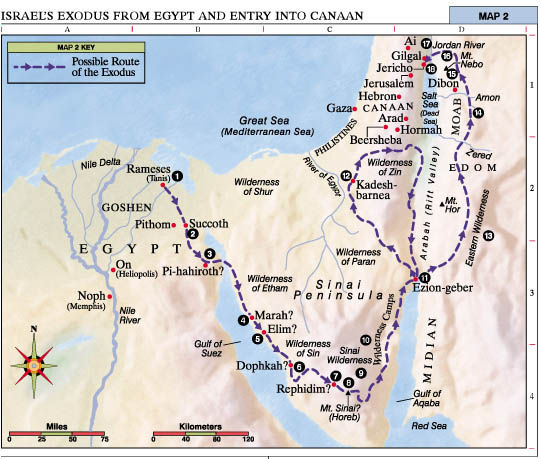
Within the Hebrew Roots and Messianic Communities, it is the custom of many to vacate our homes during the 8-day celebration of Taberncles. The practice of vacating our homes and dwelling in some form of temporary abode (Hebrew–Sukkah) for the duration of the Feast week is meant to commemorate our sojourn in the Sinai Desert and our dwelling in tents/booths/sukkahs (Leviticus 23:43).
Father instructed us, as recorded in Leviticus 23:42,43, to construct Sukkahs or Booths and dwell in them during the 8-Day celebration as a memorial that He
“…made the children of Israel to dwell in booths when He brought them out of the land of Egypt.”
Each year, many in our Faith Community erect temporary dwellings that they occupy during the entire week of Tabernacles. Others in our community dwell simple modern day tents. Still others dwell in their RV’s and other such temporary, but more modern, mobile dwellings.
In previous Tabernacles Hilary and I have taken a rather conservative approach to this time-honored Torah instruction by dwelling in hotels during the Feast week. Some have humorously named this practice “The Feast of Hotels.”
A great many in our Faith Community do not vacate their homes nor do they occupy temporary dwellings the Feast week. (If you fall into this category, don’t fear, this is a no-judging zone!)
Some brethren are unable to vacate their homes for the 8-day celebration period for various and sundry reasons. Those of us who desire to take up the command to dwell in booths–temporary dwelling–but for whatever reason can’t, it behooves us to work it out with Father that He provide the opportunity and means to do so.
It falls to every believer to work out their own salvation with fear and trembling (Psalm 2:11; Philippians 2:12). Those of community who do not regard this command as valid are certainly free to do so. It falls upon the Body of Messiah to not render judgment against these individuals.
Paul wrote to the Roman Assembly of Believers:
Now as for a person whose trust is weak, welcome him—but not to get into arguments over opinions. One person has the trust that will allow him to eat anything, while another whose trust is weak eats only vegetables. The one who eats anything must not look down on the one who abstains; and the abstainer must not pass judgment on the one who eats anything, because God has accepted him—who are you to pass judgment on someone else’s servant? It is before his own master that he will stand or fall; and the fact is that he will stand, because the Lord is able to make him stand. One person considers some days more holy than others, while someone else regards them as being all alike. What is important is for each to be fully convinced in his own mind (Romans 14:1-5; CJB).
(I would caution all who would suggest that Paul is sanctioning complete and utter lawlessness reign within the Body of Messiah here. I believe Paul in this passage is assuming that we have enough of our wits about us to recognize that we must be obedient to Torah; how every respective believer goes about obeying specific Torah commands, though, must become a thing between the individual and our Heavenly Father.)
If you’ve not done so in the past and find that you want to begin keeping this commandment, maybe the best way to start by simply erecting a makeshift Sukkah somewhere permissible on your property. You can dwell in this makeshift ediface during the day and then retire at night within the safe confines of your home. If your makeshift sukkah is of such that you can dwell in it at night, by all means do so. There are actually Sukkah kits that you can purchase through on-line vendors.
Abba said to us over and over throughout His Torah that these are His Feasts—His appointed times spread out in His yearly calendar–to commune with us, His children. If Father is willing and desires to meet with us–His people—His special possession—His kingdom of priests unto the world–during 7-at these set apart times of the year, who are we then to not keep of His set-apart days?
Consider this heart-tugging challenge from Moses’ predecessor, Joshua:
Now therefore fear Yahovah/Yahweh/Yahuah and serve Him in sincerity (sincerity in the Hebrew being “tamiym,” meaning completely; wholly; entirely; with the YLT putting as serving Yah in “perfection;” the Septuagint as serving Father in “righteousness.”)—continuing–serving Him in sincerity and truth (truth in the Hebrew here is “emeth,” meaning firmness; faithfulness; with the LXX suggesting serving Father in justice; the NET serving Him with integrity; and the NIV taking both sincerity and truth and summing them together as serving Father with all faithfulness)—continuing–thus serving Him in sincerity and truth; and put away the gods which your fathers served on the other side of the flood, and in Egypt; and serve ye Yahovah. And if it seem evil unto you to serve Yahovah—that is if you disagree with me; if it seems bad to you or displeasing to you all that I have said here—I say choose you this day whom ye will serve; whether the gods which your fathers served on the other side of the flood or the gods of the Amorites in whose land ye dwell: but as for me and my house, we will serve Yahovah/Yahweh/Yahuah (Joshua 24:14,15; KJV)!
I do not pretend to be a Joshua calling any believer out as it relates to how they observe or honor the Feasts of Yahovah/Yahuah/Yahweh. All I am suggesting is that we “up our game,” at least just a bit; and serve our Elohim with the zeal and commitment to serve that we once had. Yes, honor our “first love! (Revelation 2:4)”
Father is calling unto Himself a people (Deuteronomy 7:6) who will not allow “self” to get in the way of their relationship with the Creator of the Universe.
In the course of my studies of the Word of God during the Feast Week, I spent a great amount of time reading and meditating on the specific protocols Father laid out to us regarding the Feast of Tabernacles. My focus was not on the prophetic significance of Tabernacles this go-round, but to, instead, flesh out what Father expected of us during the Feast week. It became clear to me that many of us fail to keep the fundamental ordinances of Tabernacles as Father outlined in His Torah.

Because the Temple no longer exists, it is virtually impossible to keep many of the ordinances of Tabernacles today.
The Feast of Tabernacles, as given to us in Torah, was heavily Temple-centric, making the rote “keeping” of this amazing feast somewhat challenging, if not impossible, for today’s Torah Observant Believer in Yeshua Messiah.
Given that the Temple and all her operations ceased to exist between 68-70 C.E., along with the priesthood changing from the Levitical to the Melekzedek (aka, Melchizedec) priesthood, we are no longer expected to observe Tabernacles in Jerusalem . The physical Temple has been replaced by the temple of our human bodies (reference I Corinthians 3:16; 6:16,19; cf. John 2:21).
Does this reality nullify our mandate to keep these Feasts? How then do we reconcile Leviticus 23:41, which reads as follows:
You shall celebrate it as a feast [The Feast of Sukkot/Tabernacles/Booths/Ingathering] for seven-days in the year. It is a statute forever throughout your generations; you shall celebrate it in the 7th month (Leviticus 23:41; ESV)?
The Apostle John records the following prophecy that Master delivered to the Samaritan woman at Jacob’s Well:
The hour cometh, when ye shall neighter in this mountain nor yet at Jerusalem, worship the Father…(let’s stop here for a moment! With the destruction of the Temple and elimination of the Levitical priesthood, have we Messianics not fulfilled this propehcy, at least in part by our present-day observance of the Feast of our Elohim?) Continuing–Ye worship ye know not what; we know what we worship, for salvation is of the Jews. But the hour cometh, and now is, when the true worshippers shall worship the Father in spirit and in truth: for the Father seeketh such to worship Him. God is a Spirit: and they that worship Him must worship HIm in spirit and in truth (John 4:21,24; KJV).
So then the question that is naturally to be asked: how do we worship Father during the Feast of Tabernacles? I think Master pretty much summed this up for us in this stated passage: we worship Father in spirit and truth! Our bodies, having replaced the Jerusalem Temple as the hub of worship, now become the fulcrum of all proper worship in the spirit. Father’s Spirit dwelling within these bodies of ours brings us grand opportunities as His children up close and personal–more so than our predecessors ever imagined.
Thus, we worship Abba Father during the Feast in songs of praise, adoration and thanksgiving; the blowing of shofars; prayer and meditation; the reading of His Word; fellowshiping with the brethren; and listening to teachings delivered by Yahovah’s anointed.
The other forms of worship, being spiritually and truth based, take the form of giving and doing good. We of course have the opportunity during the feast of giving of financial tithes and offerings–the standard form of giving in this day and age. Offerings given during Tabernacles may also take the form of giving of our skills, talents and strength as most feast gatherings tend to be operationally and administratively labor intensive (e.g., set-up; preparations; music; childcare; logistics; food preparation and serving; teaching; and the like–assuming our celebrations are with a sizeable group). Worship through giving place one of the biggest roles in our Tabernacles observance.
Leviticus 23 is the go-to passage of Torah that lays out Father’s requirements of us regarding His seven-mandated Feasts and the Weekly Sabbath. Deuteronomy 16, Numbers 29 and Exodus 23 and 34 all sort of fill in the celebration details that Leviticus 23 might leave out.
Let’s glean from these key passages some of Father’s key expectations of us as it relates to the proper keeping of the Feast of Tabernacles.
The first thing we should consider is Father’s commandment that we keep the Feast of Tabernacles as a permanent requirement of our citizenship in God’s Kingdom.
How series is Father in terms of requiring us to keep this Feast, even in the 21st-century? Considering the following passage from Zechariah:
Then everyone who survives of all the nations that have come against Jerusalem shall go up year after year to worship the King, the LORD of host—Yahovah Tzva’ot—and to keep the Feast of Booths. And if any of the families of the earth do not go up to Jerusalem to worship the King, Yahovah Tzva’ot, there will be no rain on them. And if the family of Egypt does not go up and present themselves, then on them there shall be no rain; there shall be the plague with which Yahovah/Yahweh/Yahuah afflicts the nations that do not go up to keep the Feast of Booths. (Recall that the Feast of Booths is synonymous with Feast of Tabernacles and Sukkot.)—Continuing–This shall be the punishment to Egypt and the punishment to all the nations that do not go up to keep the Feast of Booths. And on that day there shall be inscribed on the bells of the horses, Holy to Yahovah. And the pots in the house of Yahovah shall be as the bowls before the altar. And every pot in Jerusalem and Judah shall be holy to Yahovah Tzva’ot; and all who sacrifice will come and take of them and boil in them. And there will no longer be a Canaanite in the house of Yahovah Tzva’ot in that day (Zechariah 14:16; ESV).
If Father is intent on withholding rain from those nations that fail to keep Tabernacles in the world tomorrow, which would no doubt result in famine and other natural hardships, does it not make sense that He would expect His chosen to keep this Feast today? In fact, Father explicitly commanded that this Feast is to be kept by us as a statute forever in our generations (Leviticus 23:41).
We are to participate in a Holy Convocation. The Hebrew term for convocation is “Miqra,” which refers to a “public meeting,” and it also could be seen as that of a “public rehearsal” of some type.
Leviticus 23:33-43 instructs us to participate in a Holy Convocation on the first and 8th Day of Tabernacles.
Our present society does not sanction the keeping of this Feast. Christianity rejects Torah and thus rejects the keeping of Father’s annual Feasts, including Tabernacles. Thus it falls to each of us to keep Tabernacles as best we can while living in a society that is relatively hostile to the observance of the Feasts of our Elohim.
The challenge, as we’ve previously mentioned, for many of us is finding a gathering where we may observe Tabernacles in a way that, to the best of our understanding and ability to replicate, would serve as a holy convocation. Some of us are privileged to live near local Messianic congregations or fellowships that observe/celebrate Tabernacles on an annual basis. Others of us are blessed and privileged to have the means by which to travel and convocate with gatherings during Tabernacles that are at a good distance from our homes.
Still, others of us are not so fortunate to be able to convocate with fellow Torah Observant Believers in Yeshua Messiah during the Feast of Tabernacles, much less on the weekly Sabbath for various and sundry reasons. This presents quite a problem our Faith Community.
Fortunate thing for us living in the 21st century west is that we have technology that can connect us to others in our community. Albeit such opportunities are limited, those of us with the technological means and know how have opportunities to participate in holy convocations on-line during the Feast of Tabernacles. Many Messianic groups and fellowships simulcast their celebrations and observances on the internet every Tabernacles. It then becomes of matter of searching these groups out and establishing the connection.
Lastly, there are some in our Faith Community who, because of health and financial reasons, are unable to participate in person in holy convocations during Tabernacles. If our community were closer and more in tune with the Spirit of Torah and the acute needs of the Body, the Community would take care of making it possible for those who do not have the means to travel and participate in the Tabernacles’ convocation and various events during feast week. Unfortunately, our community is not there yet. Let us be hopeful that we will get there some day.
On the first and 8th day of the Tabernacles celebration, we are instructed to do no ordinary or servile work (Leviticus 23:35,36).
Father gives us advance notice of when His Feasts and the weekly Sabbaths hit. Thus, as intelligent human beings, we have the wherewithal to prepare ahead of time to ensure that we do not violate Torah in respects to work prohibitions during Tabernacles. It amazes me how so many of us leave the weekly Sabbaths and the High Days of the Feasts to chance and wait to the day of to get things done or find we have to do prohibited work. Individually and as a Faith Community, we have to do better; and that better starts with us as individuals along with our commitment to please and obey our heavenly Father.
This ordinance is somewhat challenging for us today given that the Jerusalem Temple and the Levitical Priesthood are no longer in operation.
It then falls to the Body of Messiah, under the guidance of the Holy Spirit, to define what “an offering made by fire to Adonai should consist of” during the Feast of Tabernacles. Father instructs us to make such an offering each day of Tabernacles.
I insinuated earlier in this post that offerings and sacrifices can extend beyond the giving of money-based tithes and offerings and over to the giving of praise and thanksgiving to Abba Father and the doing of good works. Of course, how we ultimately enact this specific command is subject to what Father and His Spirit leads each of us individually to do.
We reflected upon this ordinance earlier in this post.
Father requires that we rejoice (the Hebrew for rejoice is “Samach,” which means to brighten up—to be gleeful) before Him by bringing with us to whatever assembly we end up in: choice fruits; palm fronds; and thick leafy-trees and willow boughs (Leviticus 23:40). How many of us actually keep this commandment, or at least make an attempt to keep it?
This manner of rejoicing is to be done for the entire seven-days of Tabernacles. Along with the items we been instructed to bring to the celebration, we are instructed to proclaim this Feast as a holy convocation by name. In what form should such a proclamation be made? The primary form of proclamation seems best delivered through the reading and recitation of Father’s Word-His Torah (Leviticus 23:37).
The bottom line in all that we’ve reflected upon here in this segment is that every self-professing, Spirit-Filled Torah Observant Believer in Yeshua Messiah is expected and required by Father, to keep the Feast of Tabernacles. Much of our keeping of this beautiful and joyous feast is to be done with the spirit of the Feast in mind, given that the Temple and the Levitical Priesthood are no longer in operation. Regardless the specifics as to what we can and can not realistically do as it relates to Tabernacles today, we must make the best effort we possibly can to keep the feast. We absolutely cannot treat Tabernacles as a anecdote; an inactive relic of our predecessors; or as simply an idealistic Jewish holiday with grand prophetic significance. No. We must keep Tabernacles and do the best we possibly can to not only keep the spirit of the feast, but to fulfill as best we can the specific elements of the feast given to us by our Heavenly Father.
Is it was permissible, by Torah, to travel on the Sabbath?
The concept of restricting one’s travel on the Sabbath, of course, seems directly tied to the prohibition against performing work on the Sabbath (Leviticus 23:3).
For some in our Community, as well as in some orthodox Jewish sects, walking or using mechanical conveyance on the Sabbath is considered work.
So let use reason together. When we can reasonably extract from the purpose of our travel on the Sabbath–such that we eliminate any obvious or hidden intentions to perform work–and if the purpose of our travels are to fulfill the spirit of Sabbath and Torah, then travel on the Sabbath would seem reasonable and justified.
When a specific need for travel on the Sabbath comes up, we should ask ourselves, is the trip necessary. Certainly, if travel is needed to attend a holy convocation on Sabbath, then travel in this case would seem quite reasonable.
If , on the other hand, a specific trip on the Sabbath was for the purpose of simply going to the mall and shopping or just hanging out; grabbing an ice cream; meeting up with some ole buddies; or just going out for a drive, or the like, then the whole spirit behind Sabbath being a holy convocation day is lost.
Then there’s travel that involves the working of others on our behalf to get us from point A to point B. When we contract with others to take us from point A to point B, such as airlines, buses, ships, taxis, trains and the like on the Sabbath, we begin to broach the prohibition against work on the Sabbath. Deuteronomy 5:14 makes it pretty clear that we are not to have anyone in our employ or under our influence effect work either on our behalf or within the confines of our property.
One could argue that if an emergency were to require us to travel on Sabbath, would that still be a violation of Torah. I would say yes, and no; it depends. If the emergency were to come upon us so suddenly that we are unable to make provisions for travel outside the Sabbath (e.g., rendering aid or attending to the needs of a sick family member or helping a friend in dire need), then certainly one could argue that the spirit of Torah remains intact in our contracting with commercial conveyance to effect our travel.
On the other hand, if we have been given discretionary time to effect travel to attend to an emergency and we have the means of traveling outside the Sabbath, then it would behoove us to make every effort to keep Sabbath and travel outside the Sabbath.
If there is ever a question of travel on Sabbath, it would behoove the Spirit-Filled Torah Observant Believer in Yeshua Messiah to consider the following:
1. Always seek to keep the Sabbath holy. Consider how our travel will affect keeping the Sabbath holy.
2. We must avoid any travel that would be construed or considered as work.
3. We must make every effort to participate in a holy convocation.
4. If we must contract conveyance on the Sabbath, the spirit of Torah and the Sabbath must be factored in to the transaction.
5. We must always ask ourselves: will our travel on the Sabbath hinder our keeping the Sabbath holy and would our travel be considered as work (i.e., servile or menial)? Can we accomplish our travels outside the time frame of the Sabbath if our travels do not involve our going to a holy convocation or to do some good on the Sabbath? It’s always good to plan ahead. We know each and every week when the Sabbath is going to hit. So preparation (typically and traditionally on the 6th day) provides us the opportunity to take care of any need to travel on the Sabbath; again, unless the travel on the Sabbath involves a holy convocation or going to do some good on the Sabbath.
Consider sharing your personal thoughts & reflections of Feast of Tabernacles 2017 with other Messianic Torah Observers such as yourself. Bless others with your experiences and understanding. Shalom.
The page you requested could not be found. Try refining your search, or use the navigation above to locate the post.
We have brethren in our Faith Community who are seeking Truth and want to understand when and what Yom Kippur is and how to properly observe and celebrate the day.
As mature Torah Observant Believers in Yeshua Messiah, we are compelled to remind ourselves of the meaning and purpose of the day and prepare ourselves (emotionally, intellectually, spiritually and even physically).
Permit me to approach this briefly from a personal perspective and from the perspective of one who has folks who will listen to this program and need and desire to know how to make the day relevant to them as a 21st-century Messianic Believer.
Yom Kippur—Hebrew for Day of Atonement—is considered by most in our community (and I would tend to agree as well) as the holiest day of the Father’s sacred calendar year. For this is a day to commemorate and reflect upon our need for a savior. More specifically, reflect upon sin and the influence of sin on our relationship with the Creator of the Universe.
Another aspect of the day is that it is a day to reflect upon the sin of the nation and to seek forgiveness and atonement (at-one-ment) for violations of Torah.
The entire chapter of Leviticus 16 addresses the Day of Atonement. There was a sequence of events and actions that were to be followed and all those events and actions are rich in meaning and prophecy.
The bottom line elements of The Day of Atonement are as follows:
Most Jews believe that Yom Kippur is the most solemn and sacred time of the calendar year.
It is a time of great introspection and reflection on one’s life. It is a time where the Jew deals with their guilt and shame and takes actions to address those guilts and shames by seeking forgiveness from those they’ve offended or wronged and from God. (This process of introspection and reflection actually takes place over the entire 10-days leading from Trumpets to the Day of Atonement—traditionally referred to as the 10-days of awe.
At least one popular Hebrew Roots teacher has applied significant prophetic meaning to these 10-days of Awe.
The following are Jewish general practices of Yom Kippur:
What follows is based solely upon my opinion which is based upon my personal study of Scripture, prayer, meditation and years of personal experience related to the Feasts of Yahovah and Yom Kippur.
At the very least, we must observe the day as a special Sabbath—mainly, no work and a day dedicated to focusing upon Father and our relationship with Him.
Additionally, we must consider what it means to afflict our souls and how we will convocate. These two aspects or elements of the Scriptural undergirding of the day must be worked out between us as individuals and with our Father.
The Temple is no longer with us. We are now the Temple of Yahweh (I Corinthians 3:16,17).
The offerings and the application of the blood to the mercy seat in the Holy of Holies in the Temple have been replaced by Master Yeshua who ceremonially accomplished this once and for all upon His ascension to heaven just after His crucifixion and resurrection. Hebrews 10:1-12. Thus presenting an offering made by fire is not truly possible. Such offerings for us today take on a meaning that must be reconciled between us as individuals and Yahovah our Elohim.
Some give financial offerings and tithes to their assigned congregations and favorite Messianic ministries. Some take a more spiritual bend (to which I tend to personally agree), whereby sacrifices of praise are offered—that is, the fruit of our lips giving praise to His Name (Hebrews 13:15).
In terms of afflicting our souls, I believe it should be a “complete fast” as suggested in Isaiah 58:3-6 and Acts 27:9. I believe it could go even further than a fast, whereby we deny ourselves anything that we desire or feel we need for that day. (What that may be is again, between us as individuals and our heavenly Father.)
The Feasts of Yahweh (the Moedim of our Elohim) are divinely appointed times of the sacred calendar year (Abba’s calendar) where He from the beginning determined to meet and commune with us (Genesis 1:14 and Leviticus 23:4). They also serve as a yearly reminder of the things of our God (throughout the whole of Torah it talks about memorial).
Additionally, the Feasts of Yahweh seem to brilliantly paint for the Torah Observant Believer in Yeshua Messiah, Father’s Plan of Salvation. Hebrews 9:28-10:1 (READ) strongly suggests this.
At least one prominent Messianic/Hebrew Roots teacher ties the Day of Atonement to the Great Tribulation and the destruction of Israel and Jerusalem.
Many tie The Day of Atonement with the prophetic event of Revelation 20:2,3 (READ) when hasatan will be eliminated and the world is freed from his deceiving influences. Then the Word of Yahovah will be proclaimed upon the earth and men will once and for all realize Truth without being deceived by the enemy. This is certainly a brilliant comparison to the ceremony involving the scapegoat being taken from the midst of the people and dragged out to the desert forever (Leviticus 16:7-10).
I do not presume to tell you how you should celebrate, observe or honor Yom Kippur (Day of Atonement). It must be a thing between you and Yahovah. What I will say, however, is that we must honor the day, at the very least.
Presuming that we elect to honor the day, I believe that our efforts must transcend any and all taught or suggested rote/mechanically prescribed ideals and traditions and beliefs.
As well intending people of our Elohim, we tend to fall into this belief that we need to be told how to do—how to observe—what not to do—how best to do it—when it comes to the things of Yahuah; especially when it comes to the Feasts of Yahuah.
Why do we do this? Why do we acquiesce to the directions and prodding of those whom we hold up as paragons of our Faith Community as if they are Yeshua or Moses? I believe we do it because we genuinely want to do it right and we don’t want to make mistakes. We genuinely want to please our Elohim. Thus we seek direction on how to do it right and how to please our Elohim.
The truth of the matter is, however, that we have it within each of us to please Father without having to resort to the prescriptions of other people as relates to pleasing Father and observing His holy days. Such prescriptions are purview of religion. Religion’s role in the earth is to control the people and dictate to them how they are supposed to live.
I decided in my walk with Messiah to reject religion with all her trappings and traditions. Religion by her very nature is anti-Torah; anti-Elohim and anti-Messiah. Religion offers no place for the true worship of Yahovah and the working of the Holy Spirit (i.e., the Ruach Kodesh) in every aspect of the believer’s life. Why? Because the controllers of religion make the rules and dictate to the members how, when, where, why and everything in between. Religion then becomes man-centric as opposed to Elohim-centric.
The one thing I would not like us to do on this solemn, most sacred day of the Creator’s calendar year, is to acquiesce to the constructs of religion to direct our observance and honoring of the day. Instead, let us acquiesce to the leading of the Spirit to direct our observance and honoring of the day; with Torah as the foundation upon which we construct and put into practice our actions for the day.
No, I’m not saying that we go rogue and leave our observance of the day to chance and do whatever it is that we think is best to do. No. I’m saying, let us turn the day over to Father: His Word and His Ruach HaKodesh. Then and only then will be please our Father in heaven and observe the day properly.
In confronting the Judaizers, who were aggressively attempting to gain total control of the Messianic Assembly of Believers in Colossae, the Apostle Paul (i.e., Shaul) profoundly instructed:
16 Let no man therefore judge you in meat, or in drink, or in respect of an holyday, or of the new moon, or of the sabbath days:1 17 Which are a shadow of things to come; but the body is of Christ. 18 Let no man beguile you of your reward in a voluntary humility and worshipping of angels, intruding into those things which he hath not seen, vainly puffed up by his fleshly mind,1 19 And not holding the Head, from which all the body by joints and bands having nourishment ministered, and knit together, increaseth with the increase of God. 20 Wherefore if ye be dead with Christ from the rudiments of the world, why, as though living in the world, are ye subject to ordinances,1 21 (Touch not; taste not; handle not; 22 Which all are to perish with the using;) after the commandments and doctrines of men? 23 Which things have indeed a shew of wisdom in will worship, and humility, and neglecting of the body; not in any honour to the satisfying of the flesh.1 (Col 2:16-3:1 KJV)
Now, churchianity would use this passage to support her claim that the Law was done away with. However, we who are in Messiah know the truth of this matter. Shaul was setting the plumb-line here and communicating to the Colossian Assembly that they are no longer men and women practicing the religion of Judaism. Instead, the assembly of believers were now dead to their dead religion with all her trappings and man-made traditions. Like the Colossian assembly members, we now belong to Messiah. Our worship of Yahuah is based upon our trusting faith in Messiah and is executed through the leading and agency of the Holy Spirit (i.e., the Ruach Kodesh).
Master informed the Samaritan Woman at the well:
21 Jesus saith unto her, Woman, believe me, the hour cometh, when ye shall neither in this mountain, nor yet at Jerusalem, worship the Father. 22 Ye worship ye know not what: we know what we worship: for salvation is of the Jews. 23 But the hour cometh, and now is, when the true worshippers shall worship the Father in spirit and in truth: for the Father seeketh such to worship him. 24 God is a Spirit: and they that worship him must worship him in spirit and in truth. (Joh 4:21-24 KJV)
I say, on this Day of Atonement, that we worship our Creator in Spirit and in Truth. Do that which is pleasing to Father. Let our hearts and minds be turned fully toward Him and His ways.
It is my sincerest hope, trust and prayer, that you have a spirit-filled—blessed and meaningful day and that we all come out on the other side of this moed, better than when we began it.
Shabbat Shalom. Have a blessed Day of Atonement/Yom Kippur. Shavuatov. Until next time.
The page you requested could not be found. Try refining your search, or use the navigation above to locate the post.
The Calender:
Commentary: The World is Falling Apart and Coming to an End
Although the Day of Trumpets is supposed to be a joyous moed—a feast day—a divine appointment—it comes at a very challenging and sad time in our history:
Then add to all of this natural and manmade turmoil, we have opportunists who have taken it upon themselves to deem the 23rd of September, 2017, as either the end of the world day; the day that Jesus Christ returns to the earth; the day the world’s economies collapse; or the day that Planet X strikes this planet in one big extinction level catastrophe. One prominent Hebrew Roots teacher predicts that the Ark of the Covenant will be found at this time as either the end product of an existential war the world wages against Israel or leading up to such an existential war.
Allow me to give you my humble perspective on the current state of world events, based upon my understanding of our Master’s prophecies and the Apostle Paul’s teachings and predictions.
I believe we must synchronize our understanding of the above mentioned current events with the teachings and predictions of our Master Yahoshua HaMashiyach:
As Yeshua sat on the Mount of Olives, four of His disciples [Kefa, Yaakov, Yochanan, and Andrew] came to Him privately, saying, “Tell us, when will these things be and what will be the sign of your coming, and the events at the end <sunelia> of the age?” And Yeshua answered and said to them, “TAKE HEED THAT NO MAN DECEIVE YOU! Many will come in my name, acknowledging that I am Messiah, yet they will deceive many. You will hear of wars and threats of wars—do not be terrorized. All these things must come to pass, but the very end <telios> is not yet. Nation shall rise against nation, and kingdom shall rise against kingdom. There will be famines, and pestilences, and earthquakes in many places. All these are just the beginning of the birth pangs. Then they will deliver you up to be afflicted and they shall kill you. You will be hated of all nations because of me. At that time many will be caught in the snare [that has been set by false teachers] and then they will hate one another and betray one another. Many false teachers shall rise up [among the believers] and they will mislead many. Because those who are without Torah will multiply, the love of many will grow cold. But those who endure to the very end <telios> shall indeed be saved. This Gospel of the Kingdom shall be preached throughout the entire world for a witness to all nations.The end <telios> will come when you see the abomination of desolation spoken of by Daniel the prophet, stand in the holy place. (Whoever reads, let him understand!) Then let those who are in Yehudaea flee to the mountains. Let him which is on the housetop not come down to take anything out of his house. Neither let him which is in the field return back to take his clothes. Woe to those who are with child and to those who give suck in those days. Pray that your flight is not in the winter, neither on the Sabbath. For then [when you see the abomination of desolation] there will be great tribulation such as was not since the beginning of the world to this time, no, nor ever shall be. Unless those days are shortened, there would no flesh be saved—but for the elect’s sake those days shall be shortened. (Matthew 24:3-22; Rood’s Chronology)
I also believe Shaul was given an understanding and proper perspective of such times as we are living as made evident in this passage:
I don’t think the sufferings we are going through now are even worth comparing with the glory that will be revealed to us in the future. The creation waits eagerly for the sons of God to be revealed; for the creation was made subject to frustration—not willingly, but because of the one who subjected it. But it was given a reliable hope that it too would be set free from its bondage to decay and would enjoy the freedom accompanying the glory that God’s children will have. We know that until now, the whold creation has been groaning as with the pains of childbirth; and not only it, but we ourselves who have the firstfruits of the Spirit, groan inwardly as we continue waiting eagerly to be made sons—that is, to have our whole bodies redeemed and set free. (Romans 8:18-23; CJB)
So let us not get caught up in all the hubbub floating about, both within and without our Faith Community. If we believe the Bible to contain the God-breathed Words of Yahovah our Elohim, then we should have absolute confidence that the things we are seeing manifested before us are destined to happen and they are not indicative of the end of the world. There are just a few prophetic loose ends that must first be tied up for the return of Master and the end comes.
Our time then should be spent equipping ourselves for the times ahead; prayer; fasts; doing our part in the great commission; living Torah to the best of our abilities; studying; loving; being the best people we can possibly be on this planet—preparing the way for our Master’s Kingdom.
Day of Trumpets—Yom Teruah—Rosh Hashanah—Subject to God or to the Rabbis?
The Day of Trumpets is defined in Exodus 19, Leviticus 23 and Numbers 29
The Bible records key events that occurred on this Sacred-Holy-Feast Day
Judaism’s Treatment of Yom Teruah—provides a stark example of how the traditions of man have the potential of nullifying the power and effectiveness of the Word and the worship of Yahovah our Elohim.
Then came to Jesus scribes and Pharisees, which were of Jerusalem, saying,
2 Why do thy disciples transgress the tradition of the elders? for they wash not their hands when they eat bread.
3 But he answered and said unto them, Why do ye also transgress the commandment of God by your tradition?
4 For God commanded, saying, Honour thy father and mother: and, He that curseth father or mother, let him die the death.
5 But ye say, Whosoever shall say to his father or his mother, It is a gift, by whatsoever thou mightest be profited by me;
6 And honour not his father or his mother, he shall be free. Thus have ye made the commandment of God of none effect by your tradition.
7 Ye hypocrites, well did Esaias prophesy of you, saying,
8 This people draweth nigh unto me with their mouth, and honoureth me with their lips; but their heart is far from me.
9 But in vain they do worship me, teaching for doctrines the commandments of men. (Mat 15:1-9 KJV)
At least one Hebrew Roots teacher has taught that we (the Hebrew Roots and Christian communities) must allow Judaism to interpret their scriptures (i.e., the Tanakh) while the Christians interpret their scriptures (i.e., the Brit Hadashah). A wise thing to do?
Renamed Rosh Hashanah, Yom Teruah for the Jews signals “the opening of the economic year” (The Jewish Encyclopedia). The Rabbis took from the Torah the instructions on The Regnal Year (i.e., the 7th year)—recently getting a lot of press in certain Christian and Hebrew Roots circles relating to the Shmita and Jubilee years—Leviticus 25:9. The Rabbis teach that the Levitical Year places the beginning of the Sabbatical-year in the autumn on the 10th-day of the 7th-month of Tishri (Tishri being a Babylonian name for the 7th month). Father only named one month—the Month of the Abib—the rest were numbered only.
Abba was very clear, as recorded in Exodus 12:2; 13:4, that the month of the Abib would be the beginning of months and the first months for us. “This system of dating the New Year is that which was adopted by the Semites generally while other peoples, as the Greeks and Persians, began the year in spring, both methods of reckoning being primarily agricultural and based on the seasons of seed-time and harvest” (The Jewish Encyclopedia). Rabbinic understanding of Yom Teruah, as we will see further, is based upon a twisting of Torah and the prophets, claiming that the beginning of the Biblical calendar year had always, from the beginning, been in the autumn of the Hebrew sacred calendar year. This is based upon the aforementioned treatment of the Regnal—Jubilee—years.
From there it is believed that the beginning of the flood occurred on the 17th-day of the 2nd-month, which would coincide better with the rainy season in the land (Genesis 7:11; Josephus, Ant. I. 3, 3). Additionally, the Rabbis provided for the synchronization of the 25th-year of Nabopolassar and the Battle of Carchemish and the 1st-year of Nebuchadrezzar and the Babylonian year reckoned from spring (Jeremiah 25:1; 46:7). This would permit the 2nd-half of the Hebrew year to correspond to the 1st-half of the Babylonian year. Oh, and we should not forget that the prophet Ezekiel’s vision occurred in the month of Tishri (Ezek. 40:1).
The Rabbis surmised that Babylonian influences (i.e., their year commencing in the spring of the sacred calendar year), resulted in a split in understanding when the Hebrew year was to begin. Rabbis acknowledge, however, that there is sufficient Biblical proof for the reckoning of the year commencing at the vernal equinox (which occurs in the spring of the year), for which they cite 2 Sam. 11; 1 Kings 20:22,26; and 2 Chron. 36:10.These passages speak to the commencement of military campaigns which would sensibly begin in the spring of a year as opposed to the fall, leading in to winter.
Rabbis question whether the commandments related to Passover are pre-exilic. Many believe that Passover is a post-exilic “practice” (i.e., post-6th-century BC) and because of heavy Babylonian influences, Nisan (another Babylonian name, this one for the first month) ultimately superseded Tishri as the 1st of the year.
The Rabbis contend that the Festival of the New Year continued to be observed in the autumn of the year in Tishri. The Rabbis further contend that although Moshe (i.e., Moses) appointed Nisan (really Abib) as the first month of the sacred festivals, he preserved the original order of the months for buying and selling and other financial transactions. Thus the Rabbis conveniently cleaved into two the calendar year heads: the Ecclesiastical Year beginning in the Spring of the Year (Nisan) and the Civil Year beginning in the Fall of the Year (Tishri).
This whole thing of assigning the beginning of the year to the Fall Day of Trumpets was seemingly finalized in 312 BC when the Seleucidan calendar set the beginning of the year in autumn, while the Palestinian Jews continued to reckon the beginning of the calendar year in the Spring.
To make matters even worse, the Rabbis decided to cleave the calendar into 4-heads of the year that would be based upon varying standpoints:
Talmudic Understanding of Trumpets
Servants were formally freed on Rosh Hashanah (based upon Lev. 25:9), although they are physically released on the Day of Atonement (10-days later). Additionally, there was a restoration of fields to their former/original owners (based upon Ezek. 40:1).
Jewish Tradition for Trumpets
Day of Trumpets is regarded as the most solemn day of the sacred calendar year next to Yom Kippur (reference Lev. 23:24; Neh. 8:9). It is regarded as a day of “mishpat,” judgment, of “the God of Jacob,” which indicates the character of Rosh Hashanah.
It is a day in which all the inhabitants of the world pass for judgment before the Creator. In that passing before the Creator to be judged, 3-books are opened: (A) the wicked (these are blotted out of the book of the living); (B) the righteous (these are sealed to live eternally); and (C) the intermediate class (these are not utterly wicked, but these have 10-days of respite to live and repent by Yom Kippur and become righteous or else).
Other traditions include:
Master was the walking, talking, the living Torah—The Word of Yahovah. So He was quite aware of what the Pharisees and Scribes and all the Jewish religious leaders had and were doing to corrupt His Father’s Torah. He railed against that and in effect, that is what got Him killed—although that move by the religious leaders was for our eternal benefit.
In Deuteronomy 4:1-9, Father admonished us NOT TO ADD TO OR SUBTRACT FROM HIS WORD! (verse 2). Father demanded that we listen and do the statutes and rules given us by Him (verse 1).
Father promised that if we simply stuck with Him and stayed the course and walked out this thing the way He outlined it for us, we would live (verse 3).
Oh some will contend that we needed the Rabbis to interpret the Word of God for us—that Father’s Torah and way of life for man requires special individuals to make it understandable and to tell us how we are to understand the Word of God. Father did not mince words—He said:
10 If thou shalt hearken unto the voice of the LORD thy God, to keep his commandments and his statutes which are written in this book of the law, and if thou turn unto the LORD thy God with all thine heart, and with all thy soul.
11 For this commandment which I command thee this day, it is not hidden from thee, neither is it far off.
12 It is not in heaven, that thou shouldest say, Who shall go up for us to heaven, and bring it unto us, that we may hear it, and do it?
13 Neither is it beyond the sea, that thou shouldest say, Who shall go over the sea for us, and bring it unto us, that we may hear it, and do it?
14 But the word is very nigh unto thee, in thy mouth, and in thy heart, that thou mayest do it.
15 See, I have set before thee this day life and good, and death and evil;
16 In that I command thee this day to love the LORD thy God, to walk in his ways, and to keep his commandments and his statutes and his judgments, that thou mayest live and multiply: and the LORD thy God shall bless thee in the land whither thou goest to possess it.
17 But if thine heart turn away, so that thou wilt not hear, but shalt be drawn away, and worship other gods, and serve them;
18 I denounce unto you this day, that ye shall surely perish, and that ye shall not prolong your days upon the land, whither thou passest over Jordan to go to possess it.
19 I call heaven and earth to record this day against you, that I have set before you life and death, blessing and cursing: therefore choose life, that both thou and thy seed may live:
20 That thou mayest love the LORD thy God, and that thou mayest obey his voice, and that thou mayest cleave unto him: for he is thy life, and the length of thy days: that thou mayest dwell in the land which the LORD sware unto thy fathers, to Abraham, to Isaac, and to Jacob, to give them. (Deu 30:10-20 KJV)
That which we received at Synai we are to take and behave (i.e., obey) accordingly and we were to carry on those instructions when we entered the Land of Promise (verse 5). Because of our steadfast obedience and reverence of Torah, we would be a beacon to the world, and seen as a people of wisdom and understanding (verse 6).
Father required that we (1) be careful; (2) watch our lives; (3) not forget that which we experienced and witnessed and allow them to vanish from our hearts; (4) and teach those things that we experienced, witnessed and heard and were taught to our children and grandchildren.
Closing Thoughts and Reflections
Yom Teruah—Day of Trumpets–is a day that holds great historical and prophetic significance. It would be foolish for any would be Torah Observant Believer in Yeshua Messiah to sully and marginalize those significances and the command to observe/celebrate the day by giving credence and practice to the traditions of men (in this case the Rabbis and sages).
Hasatan has a plan to destroy Father’s Torah and to prevent us from realizing our eternal purpose in the world and to the Kingdom of Yahuah.
Let us stand fast on the promises and commandments of our Heavenly Father and be about seeking out the Kingdom of Yahovah and His righteousness.
Have a blessed Day of Trumpets—in that which Father commanded and in the Spirit of Yeshua our Master.
The page you requested could not be found. Try refining your search, or use the navigation above to locate the post.
The Cares of Life—For Some a Daily Challenge; For Others A Frequent Distraction
From a general, let’s say, secular standpoint, the cares of life (or cares of this world as interpreted by some Bible translations) are the many elements of everyday living that consume and occupy much of our focus. I would say that jobs, careers, children, relationships; issues and things of everyday life that crop-up out of nowhere like car repairs, illnesses, financial problems, the daily grind of tasks and responsibilities, all fit the bill for what I mean when I refer to the cares of modern-day 21st century life.
The cares of this world, or the cares of this life, are those things—those events, conditions, activities and aspects of life–that “choke-out” the delivered Word of our Elohim that should be operating in each of our lives and that cause us to be “unfruitful.”
The Spirit that is dwelling within each of us tells us that we must not allow the cares of this world to overtake, control or hinder our walk with Messiah. Nevertheless, the cares of life have disproportionately more occasion than naught to overtake, control and hinder our walk with Messiah; and that’s just not the way our life in Messiah should ever be. Unfortunately, the vast majority of us are too tied and influenced by our flesh to not be a constant victim to the cares of this world. What did Master say: “the spirit is willing but the flesh is weak (Matthew 26:41)?”
The Cares of Life Embodied in the Parable of the Sower
The concept of the cares of life is in great part embodied in “The Parable of the Sower.” Although primarily addressing the various states of would-be believers in receipt of the delivered Word of Yahuah, I believe that the principles contained in this parable certainly apply to our topic at hand.
Consider the parable of the sower:
The same day went Yahoshua out of the house, and sat by the sea side.
2 And great multitudes were gathered together unto him, so that he went into a ship, and sat; and the whole multitude stood on the shore.
3 And he spake many things unto them in parables, saying, Behold, a sower went forth to sow;
4 And when he sowed, some seeds fell by the way side, and the fowls came and devoured them up:
5 Some fell upon stony places, where they had not much earth: and forthwith they sprung up, because they had no deepness of earth:
6 And when the sun was up, they were scorched; and because they had no root, they withered away.
7 And some fell among thorns; and the thorns sprung up, and choked them:
8 But other fell into good ground, and brought forth fruit, some an hundredfold, some sixtyfold, some thirtyfold.
9 Who hath ears to hear, let him hear. (Mat 13:1-9 KJV)
Verse 7 of this passage provides us a slight glimpse into the detrimental nature of the cares of life. Master contends, as we will more clearly see explained in verse 22, that the cares of this life have the natural tendency of “choking-out” the spiritual life of a would-be believer. Let’s continue reading:
18 Hear ye therefore the parable of the sower.
19 When any one heareth the word of the kingdom, and understandeth it not, then cometh the wicked one, and catcheth away that which was sown in his heart. This is he which received seed by the way side.
20 But he that received the seed into stony places, the same is he that heareth the word, and anon with joy receiveth it;
21 Yet hath he not root in himself, but dureth for a while: for when tribulation or persecution ariseth because of the word, by and by he is offended.1
22 He also that received seed among the thorns is he that heareth the word; and the care of this world, and the deceitfulness of riches, choke the word, and he becometh unfruitful.
23 But he that received seed into the good ground is he that heareth the word, and understandeth it; which also beareth fruit, and bringeth forth, some an hundredfold, some sixty, some thirty.
(Mat 13:18-23 KJV)
Clearly Master understood how the cares of this life or of this world can adversely affect the life of any would be believer or disciple of His.
So in what forms and influences do the cares of life take?
Is it no wonder why so many of us in the Faith suffer so many problems and are constantly marginalized and made ineffective by these situations? Individually and collectively, these are focus and time consuming elements.
The Cares of Life and the Sermon on the Mount
The concept of the cares of this world or the cares of life and how it detracts from our daily focus and walk is gloriously touched upon, although not mentioned by name by our Master, in the famously named: Sermon on the Mount. Although taught extensively in the Sunday Schools and pulpits of our Christian denominational past, most of us remember or focus on the very first portion of this amazing teaching where Master goes through the list of kingdom traits: meekness, poorness of spirit, humbleness, teachableness, righteousness, mercifulness, peacemakers and purity of heart; all essential traits for the disciple of Messiah. Nevertheless, possessing and living out such traits are easily overshadowed by the cares of this life. And I believe that Master inherently knew this; He knew the audience that sat before Him on that hillside; He knew the lifestyles and the difficulties and hardships that the average Palestinian Jew of the first-century faced each day of their lives: widespread poverty; political and military oppression from the Romans and a corrupt Herodian governorship; oppression from their religion, Judaism; and of course every conceivable socio-economic ill and corruption one could or would expect in any bustling city or state. Life was amazingly difficult for the average Palestinian Jew and our 21st-century life challenges would easily pale in comparison.
Sakari Häkkinen is a professor of New Testament Studies at the University of Pretoria, South Africa. As it relates to the socio-economic system of the first-century Palestinian Jew, he writes in his research paper entitled: Poverty in the first-century Galilee:
The social and economic policy of the Roman Empire could well be summarised in a phrase: ‘the Roman system of inequality’ (Garnsey & Saller 1987:125).1 Governing the entire Mediterranean world, Rome maintained its domination through judicial institutions developing legislation concerning property ownership and labour control – and through the use of brutal force. The whole system was based heavily on the inequality of people, which was thought to be either natural or at least inevitable, in order to secure peace and stability in the society.
For the Roman State, the provinces were a main source of revenue through taxes. A small number of Romans made large fortunes as provincial governors, tax collectors and moneylenders in the provinces, in the imperial service under the emperors. There were rich Romans who acquired extensive domains in the provinces, which they normally held as absentee landlords (Finley 1999:158). Most of the population of the empire lived either in rural areas or small towns. Only 10% – 15% of the population lived in cities that had more than 10 000 inhabitants. This means that some 80% – 90% got their living from agriculture and that any large-scale commercial or manufacturing activity was rare. There was no middle class at all. The majority of people in an agrarian society like the Roman Empire were peasants, living in villages that surrounded a city. The ancient city was largely parasitic on its surrounding villages. Cities extracted agricultural surpluses through taxes and rents. The benefits they supplied were cultic services and administration (Kloppenborg Verbin 2000:234).2
Interestingly enough, Yeshua, the brilliant teacher and Master that He is, addressed this socio-economic quagmire head-on:
24 No one can be slave to two masters; for he will either hate the first and love the second, or scorn the second and be loyal to the first. You can’t be a slave to both God and money.
25 “Therefore, I tell you, don’t worry about your life – what you will eat or drink; or about your body – what you will wear. Isn’t life more than food and the body more than clothing?
26 Look at the birds flying about! They neither plant nor harvest, nor do they gather food into barns; yet your heavenly Father feeds them. Aren’t you worth more than they are?
27 Can any of you by worrying add a single hour to his life?
28 “And why be anxious about clothing? Think about the fields of wild irises, and how they grow. They neither work nor spin thread,
29 yet I tell you that not even Shlomo in all his glory was clothed as beautifully as one of these.
30 If this is how God clothes grass in the field – which is here today and gone tomorrow, thrown in an oven – won’t he much more clothe you? What little trust you have!
31 “So don’t be anxious, asking, ‘What will we eat?,’ ‘What will we drink?’ or ‘How will we be clothed?’
32 For it is the pagans who set their hearts on all these things. Your heavenly Father knows you need them all.
33 But seek first his Kingdom and his righteousness, and all these things will be given to you as well.
34 Don’t worry about tomorrow – tomorrow will worry about itself! Today has enough tsuris (i.e., problems; challenges) already!
(Mat 6:24-34 CJB)
The Difficulties in Gaining Control of the Cares of Life
I would not be so presumptuous to suggest that Spirit-Filled Torah Observant Believers in Yeshua will not go through stuff or experience the deleterious effects that the cares of this world can have on Father’s elect. We all experience such things and we, depending upon what level of spiritual maturity we find ourselves, handle the situations accordingly or consistent with our level of spiritual maturity.
Nevertheless, we should be compelled to learn and grow from our clashes with the cares of life. For if we continue day-after-day, month-after-month, and year-after-year to allow the cares of life to overtake us and compromise our effectiveness as Yeshua’s disciples, it would seem that we may “have a problem Houston.”
The Weakness of the Flesh Dictates How We Deal with Life
Consider for a moment this nugget—this construct of truth if you will. The cares of life, although seemingly pervasive and at times overwhelming, are fluid and in many cases fleeting. They’re here today and gone tomorrow. Nevertheless, along comes another issue or element to consume us and we find ourselves back in the same rut yet again. The carnival ride of life—of this world—generally has no time and place whereby we can get off and get our feet back on solid ground. Indeed, off to the side, there is a door marked in big red letters—EXIT—but we tend to get so caught up with the intensity of the ride we are on—that is the overwhelming nature of the experience that has imprisoned our thoughts, hearts and bodies–that we’re too “afraid” (for lack of a better descriptor) to simply demand to be let off that ride/experience and then take the exit that leads back to our life in Messiah.
Yet the pursuit of money, careers, fame and fortune often leads to temptations, perversions and personal and spiritual destruction. This of course is not to say that we should not work hard to provide for our families. Our efforts to advance in life must be managed by Father—He will provide for all our needs according to His riches in glory by Yeshua Messiah (Phillipians 4:19.)
Caustic and troublesome relationships will consume and rob us of our joy. Yes, I’m talking about troublesome marriages and other family relationships. Somehow those things must be moderated and subjugated to the will of Father. The longer we allow those relationships to eclipse our focus on Him and consume our spirit, the harder it it is to recover. I’m speaking from experience here. Unhealthy relationships are poisonous and detrimental to one’s walk with Messiah. They must somehow be dealt with.
Politics, financial difficulties, health concerns: they all must be dealt with once and for all through prayer and fasting (Matthew 17:21).
Think about it: the specific cares that you and I may be dealing with today will likely become non-issues and forgotten in the days, months and years ahead. Everything that we worry over and stress about will inevitably come to its proper end in due time. Half the time we don’t even have control over those cares in the first place. Yet at the end of the day, Yahuah remains the only eternal constant in the universe. Somehow we have to be able to put life into its proper perspective and not allow the troublesome things, issues and people in life to get in the way of our eternal destiny and calling. Again, we inherently know this to be Truth, yet so many of us are incapable of actually realizing and living this thing out as we know that it should be. Thus it stands to reason that the one thing that hinders us from living out this Truth and putting life into its proper perspective is the weakness of our flesh. Our spirit-woman or man tells us: you can do this; you can overcome, but our carnal nature tells our spirit that life is just too difficult and impossible to overcome.
Who can forget the Garden of Gethsemane scene where Master was enduring the greatest internal struggles of His earthly life and ministry: He was dealing with the reality of His impending ignominious torture and death and His humanity had begun to overshadow His Spirit. His companions had all but checked out over by the way, succumbing to the weaknesses of their flesh and falling fast asleep, leaving Master to languish in his internal struggles all alone. Yes, even Master had to deal with the cares of this world in one form or another. The passage reads:
36 Then cometh Jesus with them unto a place called Gethsemane, and saith unto the disciples, Sit ye here, while I go and pray yonder.
37 And he took with him Peter and the two sons of Zebedee, and began to be sorrowful and very heavy.
38 Then saith he unto them, My soul is exceeding sorrowful, even unto death: tarry ye here, and watch with me.
39 And he went a little further, and fell on his face, and prayed, saying, O my Father, if it be possible, let this cup pass from me: nevertheless not as I will, but as thou wilt.
40 And he cometh unto the disciples, and findeth them asleep, and saith unto Peter, What, could ye not watch with me one hour?
41 Watch and pray, that ye enter not into temptation: the spirit indeed is willing, but the flesh is weak.
(Mat 26:36-41 KJV)
Master overcame his struggle simply by turning it over to the will of His Father. He said: “nevertheless, not as I will, but as you will.”
The example painted by the disciples: they succumbed to their flesh and slept when their Master needed their support the most.
The Cares of Life and Operating in the Spirit
Sometimes we just don’t want to face the reality of our flesh and subjugate it to the will of our Father. Is it a question of faith? Or is it a question of us feeling more comfortable living out our present situation than relegating those cares to the will and control of Father? I know that many times, when I’m going through the slings and arrows of life, I feel as though I can handle the situation better than Father can—which is a stupid thing to feel, but do not our actions reveal the reality of our spirit—whatever spirit we are working under at the moment?
Operating in the Spirit is an entirely new and uncertain realm for most of us. We can’t see, smell, taste or hear in this realm. Our natural senses do not comfortably serve us in the spirit realm as they do in the carnal realm.
Yet, in order for us to overcome the adverse affects of this world and of life in general, we absolutely must make that transition from the carnal to the spiritual, with the ultimate aim of the Spirit realm being the default realm that we choose to operate in.
A decision has to be made at some point in our walk: will it be about Him or will it be about me? We all know what the correct answer must be: it must be about Him. Ultimately our purpose in the whole scheme of things is to deny self and set out on that march—that race—that journey—that transcends any of the great adventures of man throughout history. The cares of this life cannot impede this journey; for this is a calling that transcends those cares. And you know what: when we are able to properly deal with the cares of life through the Holy Spirit (i.e., the Ruach Kodesh) operating in our lives, we become exceptional husbands, wives, fathers, children, bosses, employees, neighbors and people. I desperately want that for my life.
Paul wrote:
2 Beware of dogs, beware of evil workers, beware of the concision (i.e., the mutilators; the false circumcisers).
3 For we are the circumcision, which worship God in the spirit, and rejoice in Christ Jesus, and have no confidence in the flesh.
4 Though I might also have confidence in the flesh. If any other man thinketh that he hath whereof he might trust in the flesh, I more:
5 Circumcised the eighth day, of the stock of Israel, of the tribe of Benjamin, an Hebrew of the Hebrews; as touching the law, a Pharisee;
6 Concerning zeal, persecuting the church; touching the righteousness which is in the law, blameless.
7 But what things were gain to me, those I counted loss for Christ.
8 Yea doubtless, and I count all things but loss for the excellency of the knowledge of Christ Jesus my Lord: for whom I have suffered the loss of all things, and do count them but dung, that I may win Christ,
9 And be found in him, not having mine own righteousness, which is of the law, but that which is through the faith of Christ, the righteousness which is of God by faith:
10 That I may know him, and the power of his resurrection, and the fellowship of his sufferings, being made conformable unto his death;
11 If by any means I might attain unto the resurrection of the dead.
12 Not as though I had already attained, either were already perfect: but I follow after, if that I may apprehend that for which also I am apprehended of Christ Jesus.
13 Brethren, I count not myself to have apprehended: but this one thing I do, forgetting those things which are behind, and reaching forth unto those things which are before,
14 I press toward the mark for the prize of the high calling of God in Christ Jesus.
15 Let us therefore, as many as be perfect, be thus minded: and if in any thing ye be otherwise minded, God shall reveal even this unto you.
16 Nevertheless, whereto we have already attained, let us walk by the same rule, let us mind the same thing.
(Phi 3:2-16 KJV)
How Do We Overcome the Cares of Life
So I asked myself: how do I overcome this thing? How do I overcome the cares of this life? It’s one thing to know and understand that I must pray, fast and power through life, but it’s an entirely different thing to actually live this out and not succumb to this fleshly tendency to allow the cares take over. There must be an overriding fix to this perpetual problem; some secret but powerful method to overcoming life’s many challenges; to staying focused; to defaulting to living in the Spirit as opposed to living in the flesh. What is that? What could that be?
As I searched the Bible for answers to these questions, the Spirit led me to what I believe to be the answer (or at least a potential answer): that being adopting, maintaining and exercising “The Mind of Messiah.”
The Mind of Messiah—A Must for Overcoming the Cares of Life
The “Mind of Messiah” (in the KJV, “Mind of Christ) is a concept found but one place in the Bible, at the end of a dissertation on the subject of “wisdom,” by the Apostle Paul. The passage reads:
6 Howbeit we speak wisdom among them that are perfect: yet not the wisdom of this world, nor of the princes of this world, that come to nought:
7 But we speak the wisdom of God in a mystery, even the hidden wisdom, which God ordained before the world unto our glory:
8 Which none of the princes of this world knew: for had they known it, they would not have crucified the Lord of glory.
9 But as it is written, Eye hath not seen, nor ear heard, neither have entered into the heart of man, the things which God hath prepared for them that love him.
10 But God hath revealed them unto us by his Spirit: for the Spirit searcheth all things, yea, the deep things of God.
11 For what man knoweth the things of a man, save the spirit of man which is in him? even so the things of God knoweth no man, but the Spirit of God.
12 Now we have received, not the spirit of the world, but the spirit which is of God; that we might know the things that are freely given to us of God.
13 Which things also we speak, not in the words which man’s wisdom teacheth, but which the Holy Ghost teacheth; comparing spiritual things with spiritual.
14 But the natural man receiveth not the things of the Spirit of God: for they are foolishness unto him: neither can he know them, because they are spiritually discerned.
15 But he that is spiritual judgeth all things, yet he himself is judged of no man.1
16 For who hath known the mind of the Lord, that he may instruct him? But we have the mind of Christ.1
(1Co 2:6-16 KJV)
Concepts such as wisdom, the wisdom of God, the world tomorrow, the spirit of this world, the Spirit of God, man’s wisdom, spiritual things, the natural man, spiritual discernment, and of course, the mind of Messiah are essential to our spiritual wellbeing and our ability to overcome the cares of life.
Closing Thoughts and Reflections
The concept of adopting, maintaining and exercising a “Mind of Messiah” is not a concept that I would dare to explore and reflect upon during the remaining moments of this episode—the content is just too vast and important for me to rush through it. So what I would like to do is stop here and pick this topic up next episode—Abba willing. That way I can cover more ground without extending the length of time for this episode further, as well as it will provide me a few days to allow my spirit to connect and understand this concept even better than I already do.
The page you requested could not be found. Try refining your search, or use the navigation above to locate the post.
Thoughts and Reflections Part 1: The Great Book Known as the Bible
The Bible–The Holy Writ–The Word–The Word of God–The Sword–The 66-Special–The Book–The Good Book: these and many more are the descriptors and titles of arguably the most famous and well known book in the history of literature.
To the world at large, the Bible is a book containing ancient writings of dead idealists who got together to compose writings to convince the world of the existence of God–the Creator of the Universe. These folks believe the book to be a book of positive affirmations and a compilation of the best examples of writing pros known to mankind. They believe the Bible to be fabled history, but also a book that offers mankind an idealistic image of what man should and could be if he were to simply give him/herself over to this God and His Son, Jesus Christ. To these individuals, the Bible offers little to no value to the world’s human population.
To secular scholars, the Bible is simply another literary compilation of ancient writings that have little to no relevance to this world apart from its ancient near east historical placement. To these folks, as it relates to its literary place in the world, it ranks with ancient writings such as the Iliad, Homer, the Koran and various Hindi writings. To these individuals, the Bible only has literary significance and should not be taken seriously as any sort of life instruction .
To the 30,000 or so Christian denominations; the various and sundry Catholic sects and Jews, the Bible is the foundation of their Faith. To most, the Bible is the principle vehicle by which God/Jesus Christ communicates with His people. To many, it is an instruction manual; the Faith’s primary record of its history; a devotional tool; a discipleship resource; a source of profound hope and trust; the glue that binds the members of the Faith community together.
To those of us in Hebrew Roots, or as I prefer to call us, Spirit Filled Torah Observant Believers in Yeshua Messiah, the Bible is our Creator’s instruction manual for living the way He has always intended man to live. Indeed, within this instruction manual, we find the summation of our trust and hope in Yahoshua Messiah; we find our heritage and strength; we find lessons to be learned to prevent us from falling from grace; we find Truth; we find peace; we find clues to our amazing future.
With that said, the Bible also is different things to various people in our Faith. It means all that I’ve just mentioned, but it also has unique appeal and understanding to each of us as we go through our day-to-day walk with Master Yahoshua. I guess it comes down to how much we actually tap this amazing resource and tool: if we dive into its boundless pages each day we live, then this book means everything to us; if we reach for it on rare ocassions for whatever reason, its significance to us is debatable. If we never open the covers of our Bible, then certainly the Bible becomes nothing more than an asterick; a semi-colon; or at best, a footnote in our spiritual journey. The Bible is a pretty good gauge as it relates to how we perceive and live out this walk of ours. If the Bible is indeed that foundational and primary resource to our Faith and walk, then it must be tapped constantly with great intensity, anticipation and hope. Otherwise, it becomes as any other book on our dusty shelves.
For me, the Bible is the one printed resource that I tap on a daily basis; often multipe times in a day. It calls to me throughout the day and beckons me to explore its vast depths and mysteries. It serves as my daily medicine regimen, correcting me when I’m wrong and encouraging me when I’m down. It educates me. In a synergistic manner with the Holy Spirit, it connects me with the Creator of the Universe in a way that is not understood by carnal man. It fills my thirst for righteousness. It instructs me on what it means to be a true disciple of Yeshua Messiah. It sets me apart from the 7-Billion people on this planet that may or may not know Father. The Bible is the calling card that connects me with other like-minded believers in Yeshua Messiah. It serves as a reminder that no matter how tough things get down here, Master can identify and provide the blessed assurance that if I stay the course and run the race set before me, there is a prize at the end that awaits me and my fellow Torah Observant Believers in Yahoshua Messiah.
Most of us realize that the main disagreement that exists between Torah Observant Believers and Fundamental/Charismatic/Traditional Christians is the efficacy and application of “The Law” for Gentile believers. Essentially, Christianity teaches that the “Law” was done away with once Jesus Christ was crucified and resurrected from the dead. Many place their belief in this assertion on a skewed understanding and misinterpretation of Colossians 2:14, that they insist proves that the Law was nailed to the cross along with Jesus. In nailing the Law to the cross, a new era of “freedom in Christ” emerged whereby the would be Christian was no longer subject to the extensive laundry lists of the do’s and don’ts of the Bible.
Sadly, this is the attitude that millions of would be believers in Messiah (more so Christ) hold regarding Torah: that it is a list of do’s and don’ts. Of course, no one likes being told what to do, even if the person telling us what to do is the Cretor of the Universe and the giver of the Law.
There are many problems associated with such a skewed understanding of the Law/Torah. The one that I wish to reflect upon in this episode of Sabbath Thoughts and Reflections has to do with the erroneous perception that the Bible is simply a list of do’s and don’ts for the would be believer; that our God is a terrible and tyranical Being who despises His creation (i.e., man) and demands that they do this and do that; that He demands strict and uncompromising obedience (which He does but not in such a crude, unloving and harsh manner) .
The Bible is in no way this magical 8-ball of answers to every question man has related to his or her present condition. In fact, the Bible is not the mystical book that tradition has assigned it, although I truly believe the Bible to be of divine origin.
Paul (i.e., Shaul) described the Bible as being given to mankind by the Creator of the Universe and that it is a valuable resource in leading every man and woman to Truth; that it is effective in correcting man’s behavior and showing him/her the right direction he/she should go; and lastly that being a disciple of the True Messiah, we have been tasked with bearing good fruit and living righteous lives. In order to accomplish this, the Bible is an apt resource for equiping any who would be of Yeshua HaMashiyach’s chosen (1 Timothy 3:16, 17; CJB with my embellishments). Nowhere in this passage did Paul indicate that the Bible should be looked at and treated as a book of answers. More so, Paul sees the Bible as “an instruction” manual.
Because we tend to not fully grasp the full meaning and purpose of the Bible, we tend to treat the Bible as a “spiritual Google,” where by we search out specific answers to our modern day problems and challenges. As much as it would be a lovely thing to have at one’s disposal, I do not believe the Father desired His Word to be used in such a fashion. I believe He gave us His instructions upon which we would build our lives and walk accordingly. If we simply follow these instructions, the rest will naturally fall into place: that is, our modern day issues and challenges would become non-issues and non-challenges.
A dear sister recently asked what the Bible had to say about “shacking up” (that is living unmarried) with a fella. To her credit, she didn’t want any denominational perspectives and no personal opinions on this issue. All she wanted was chapter and verse. Needless to say, there appears to be no such content to be found in the pages of our Bible as it relates to the question of shacking up. There are passages that suggests to us that shacking up is not a thing that Spirit-Filled Torah Observant Believers in Yeshua Messiah should be doing, but there are no “thou shall not hook up and live together as an unmarried couple” passages to be found in the Holy Writ.
I don’t mean to beat up on this sister, or anyone who looks to the Bible in such a manner. Nevertheless, I truly believe that if we truly have the Ruach of Yah dwelling within us, we should have a pretty good idea what is pleasing to Father and what is not.
Unfortunately, this is a common practice among many members of both fundamental Chritianity and Hebrew Roots communities. These individuals, instead of walking out their Faith in accordance with the Torah-based principles as taught to us by Master, use the Word to spell out to them almost verbatim what they can and can’t do in their day-to-day lives. Can I cook on the Sabbath? Can I worship alone on the Sabbath? Can I stay in a hotel during Sukkot or do I have to live outdoors in a Sukkah? Can I socialize with members of the opposite sex during fellowship? Can I put gas in my car on the Sabbath? Do I have to conduct a pilgrimage to Jerusalem in order to properly observe the Feasts of Yah? Can I use the title God when addressing the Creator of the universe? Must I grow a beard if I’m a male in our Faith? And what we find when we seek to answer for ourselves these and countless other such questions is that the Bible in more situations than not does not have the specific answers to our specific questions.
So in the absence of answers to such probing and specific questions, what many do is create their own answers devoid of living out the life that scripture spells out for us. Yet the truth of the matter is that the answers to such questions will never be found in the Bible. They were never supposed to be found there in the first place. For Father gave us all that we needed to know to live according to the way He wants us to live. Anything else that pops up that is unclear in scripture then becomes a thing that should be rationalized in light of scripture and the leading of the Holy Spirit. We can never live the instructions contained in our Bibles without the guidance of the Holy Spirit; for without the Holy Spirit, we become no different than our forefathers who go about mechanically living out their religion. It becomes robotic and those individuals who go about living such a mechanical lifestyle end up being tossed about the waves and winds of life. There’s never going to be an answer good enough–there’s always going to be “but what if’s” and “but what about’s.” We’re human. We’ve unfortunately evolved into such a way of thinking and living.
If we can simply learn our Bibles; live out that which is spelled out before us in the pages of our Bibles; and leave the rest up to the guidance and instructions of the Holy Spirit, we will be alright.
Paul wrote to Timothy: “Timothy my son, do the best you can (in the KJV, it is famously written–“study to shew theyself approved-Christianity has wrongly interpreted the word spoodadzo to mean study of the scriptures, which is not at all correct. Spoodadzo means to be dilligent or endeavor) to present yourself to Yahuah/Yahweh/Yahovah as someone worthy of His approval; and in so doing, we will not have any need to be ashamed of the life we’ve lived.” (2 Timothy 2:14,15; my paraphrasing of the KJV)
It’s one thing to confer with Scripture on life’s issues; it’s entirely another to rely upon Scripture to tell us what in life should be obvious. If we feel funny about the thing we’re thinking to do and we aren’t sure if doing that thing would be sanctioned by Father, then we should know right off the bat the answer to our question.
The culture, timeframe and geography in which the bible was written 9-times outta 10 does not afford us a keen match as it relates to our particular 21st-century life issues. Sure, there’s nothing new under the sun as Solomon once wrote, but much of what is contained in scripture is not going to be a verbatim rehashing of our modern 21st century lifestyle. So we gotta know the mind of God in conjunction with the specific instructions outlined in His Torah in order to live the best life we can in Yeshua Measiah.
Thoughts and Reflections Part-3–What is the Bible Anyway?
With the exception of the Torah (i.e., the first-five-books of the Tanakh/the Old Testament), the Bible is a compilation of inspired writings. I separate the Torah from the rest of the Bible, not to insinuate that Torah is uninspired; on the contrary, I believe that Torah was communicated directly from the mouth of Yahweh/Yahovah/Yahuah to Moses as Israel’s constitution; the manual that defines righteous living and leads to an unparalleled relationship between the Creator and His people. The remainder of the Holy Writ came about as men (i.e., the authors) were moved to write by the Holy Spirit; to write about the events that were transpiring before them; to write about the things that they saw with their very own eyes and heard with their very own ears; to write about their feelings, thoughts and fears; and to write that which Father desired be communicated to the select reader.
The Bible as we have it today is a compilation of some 66-books (i.e., cephers and letters): some of these cephers are prophetic writings that foretell of things that were to happen to us as we lived in the land of promise as well as things that are to happen to us in the Last Days; some of these cephers were composed of songs and poems; some of these cephers were historical in nature and served to document the history of our people (i.e., the Hebrew nation) in perpetuity; some of these cephers were letters written to specific individuals, addressing specific issues and questions that were posed to the writer. Although the Bible has been known from time-to-time to resonate with us as a people and as individuals, and to speak to our souls in very profound ways (which I would identify more as a gift to us by the Creator at the time we need His touch the most), the thing we have today that we call the Bible is a repository and collection of ancient writings that served (and for that matter, can serve today) specific and diverse purposes for its readers. Again, the Bible is not this mysterious 8-ball that gives us magical answers to the questions we have for Father at any given hour of the day. More so, it is a training manual; a guide to Truth; a behavior corrector; a history book; and an equipping resource guide.
Nevertheless, I have had to go out of my way to keep in mind what the Bible is when I go about studying and researching in its pages. When we neglect having a True understanding of what the Bible is and what it is supposed to be used for, we invariably find ourselves misusing it; misinterpreting its content; damaging our relationship with the Most High; and leading others down a wrong path.
Yes, I believe with my whole heart that the Bible is Yahuah/Yahweh/Yahovah breathed; but it is also a product of man. Do I believe the Bible to be the Word of God? Well, I believe the Bible contains the Words and thoughts and love of God for all of mankind, especially for His chosen people. I believe for us to gain the greatest benefit we could possibly get from our Bibles, we must view and use the Bible from an entirety perspective (i.e., the Bible as a whole instead of scriptural soundbites that so many of us often hang our spiritual hats upon and develop these doctrines and beliefs that are rarely based upon any Biblical truth or reason). I believe that we must view the Bible from the perspective of the Creator of the Universe desiring to eternally connect with the jewel of His creation: mankind and that the bridge between man and Creator is our Master Yeshua Messiah. Everything in the Bible points us to the second-Adam: Yahoshua HaMashiyach.
As an aside to all this, many of us in Hebrew Roots spend the vast majority of our time in Torah and our focus is upon fulfilling the ceremonial and moral elements of the Law. Over time, we inadvertently write Yeshua out of the Bible and instead of living Torah the way Master taught us to, we live Torah in rote manner–striving to relive Torah the way our forefathers did in Synai and in the Land. Many of us eventually learn to become, what I’ve chosen to call them, Yeshua-haters. These individuals take on a pharisaical-like mentality and lifestyle that they somehow fool themselves into thinking, will earn themselves eternal life, devoid of anything having to do with Master Yeshua.
Then there is the New Testament, or as known in our circles, the Brit HaDashah, which so many in all faith community treat as do’s and don’ts answer books. The fact of the matter is that the Gospels, written by Matthew, Mark, Luke and John, serves as our history book about the ministry of Master Yahoshua and the Holy Spirit, as well as it serves as our instruction manual related to our being His loyal disciples who have been tasked with fulfilling His Commission (Matthew 28:19,20)–and I would include the Book of Acts in the Gospels and maybe even the Book of Revelation.
Then there are the epistles or letters from Jude, James, John, Peter and of course Paul, which have been used by denominational Christianity to develop doctrinal structures within the body. The fact of the matter is that these are letters, written by men–apostles–to specific individuals, addressing specific issues and topics. It just so happens that these letters have been preserved, codified and translated for our benefit. Thus, in effect, when we open one of these letters, referred to in the Bible as books, we are essentially snooping in on a private communique that the author had originally posted to specific individuals related to issues and topics that he chose to address. Consequently, when we read one of these epistles–books–letters–we must always keep in mind what it is we are reading and thus it would behoove us to take specific passages within proper context.
All too often we spot a verse or two, and build an understanding about spiritual things without taking into account the whole of the conversation or discourse. Look how Christianity built around a couple verses, the doctrines of “grace” and the understanding that the Law was done away with. If those same individuals who took liberties to snag these scriptural soundbites and build around them vast and emcompassing doctrines would have studied the whole of the texts from the standpoint of contextual criticism and true Biblical scholarship, I believe it’s a fair bet that we wouldn’t have 30,000-plus Christian denonimations in existence today, for the truth of the matters in questions would be clearly evident and things such as Sunday worship, eating of uncleaned food and whether it is cool for Believers in Messiah to keep Torah would no longer be in question.
The quintessential passage of Bible that describes what the Bible is and what purpose it serves in the body of Messiah is of course found in 2 Timothy. Paul wrote:
14 But continue thou in the things which thou hast learned and hast been assured of, knowing of whom thou hast learned them;
15 And that from a child thou hast known the holy scriptures, which are able to make thee wise unto salvation through faith which is in Christ Jesus.
16 All scripture is given by inspiration of God, and is profitable for doctrine, for reproof, for correction, for instruction in righteousness:
17 That the man of God may be perfect, throughly furnished unto all good works.1 (2Ti 3:14-17 KJV)
Paul’s prolific brilliance shines exceptionally forth here as he summarizes for his young apprentice the purpose of scripture. We must bear in mind that at the time of this writing, scripture was the Old Testament writings–the Tanakh. So here he is specifically speaking to Timothy on the purpose of the Torah, the prophets and the writings. So much is contained in these 4-verses that one could spend hours exploring and pondering their significance to any Spirit-Filled Torah Observant Believer in Yeshua Messiah.
Although the Bible is the ultimate instruction manual, every believer must be cognizant of its origin, the culture in which the writers of the books of the bible lived, the purpose for which each book was written, the meaning of words and phrases, and the effectiveness and accuracy of the translations we are using. Reading and understanding the Bible requires work on our part, and those who are willing to invest the time and energy to explore its great spiritual riches will come out on top everytime–these will be the most well centered and grounded and not be blown about by every wind and doctrine. Far too many of us have given only a passing read to the Bible. Far too many of us have only punched the pages of our Bibles to see if we can get away with something we know very well is wrong. Far too many of us have relied upon preachers, teachings, pastors, evangelists and deominations to tell us what the Bible says, when the truth of the matter is, that anyone of us who has access to a Bible, some basic Bible helps and tools, a willing and obedient heart and mind, and the Holy Spirit dwelling within, can know what Father is revealing in His word to us. As much as I respect scholarship and the accomplishment of some of our Faith leaders, which Father will on ocassion use to provide us with information that may not be readily available to us at the time, nothing trumps sitting down with a cup of coffee or tea and diving into the pages of one’s Bible to learn “what sayeth Yahuah/Yahweh/Yahovah. Father has no problem telling us what He wants from us and what He expects from us through the pages of His Bible. Churchianity has programed us to believe that we simple lay folk are incapable of effectively studying the Word of Yah. Nothing can be further from the truth.
If we are unable to receive that which we are searching for in the Bible, it behooves us to turn to the Holy Spirit and allow Him to, in Father’s perfect time, reveal those truths to us. He may send someone to us with the answers to the questions we seek. He may involve us in a situation where the answers to our questions will become quite evident. He may lead us to other areas of scripture that will illuminate within us that Truth that we are seeking.
The Bible–our go-to spiritual Google? Not hardly. A simple laundry list of do’s and don’ts? It certainly tells us what things are permissible and what are not in terms of living life Abba’s way, but it is not a simple do’s and don’ts list that we are to mechanically follow. Torah is supposed to be written on our hearts and minds and we should not focus on the rote, mechanical applications of the Word, but living lives that are pleasing to Father and provide an effective and righteous witness to the world around us. If we but take the time to read the Bible–the whole thing–multiple times through–and apply those principles to our day-to-day walk with Messiah, we will be apt workman approved of God needing not to be ashamed.
Thoughts and Reflections Part 4: The Bottom-Line to the Question of Do’s and Don’ts as Related to the Bible
I have always felt that anyone who would become a disciple of Yeshua our Master, before they were left to forge out on their own and walk out their Faith, that they first be equipped. Some organizations within our Faith Community, like the Church of God splinters, provide their initiates a great amount of teachings and valuable content to help them get acquainted with their new found Faith and walk with Messiah. The problem is that the teachings and content they offer are specific to Church of God doctrine and mindset and is not entirely based upon a literal, contextual and Spirit-led dispensing of the Truth. So any who would venture into a Church of God congregation to begin their walk with Messiah, would find themselves being indoctrinated into a Church of God body. The fact of the matter is that these are not being discipled into the true Body of Messiah. I’m not trying to bad mouth the Churches of God. I myself began my Torah Observant life in the United Church of God. That experience, which lasted roughly two-years was a positive one that introduced me to foundational tenets of the Hebrew Roots Faith. Certainly not a place one would spend the remainder of his/her life if they are truly desirous in fulfilling their unique role in the Great Commission and walking out their Faith profession in the power and authority of the Holy Spirit.
Please know that I am in no way looking to badmouth the Churches of God–I love them and the people who attend these congregations are wonderful, sincere folks. Unfortunately, I truly believe that the vast majority of Church of God attendees may be too comfortable in their set-church lives to move beyond the walls of that community and achieve the great things that Father has in store for everyone of His beloved children. The point of my bringing up the Churches of God in the first place is the element of doctrine and indoctrination that pervades these communities. The same thing seems to be true as it relates to certain Messianic Jewish communities where members are taught Judaism first and foremost, and then maybe some of the teachings of Master Yeshua. These and other such communities endeavor to provide their followers laundry lists of do’s and don’ts that carry the weight and authority of scripture. Most of these communities, again, are devoid of anything having to do with the Holy Spirit.
Bottomline dear friend, the Bible is not, nor should it ever be treated or seen as a grab-bag of answers to questions related to our day-to-day living. I concede that there is nothing wrong with punching the pages of one’s Bible to see what Father has to say to us on a particular topic or issue. Absolutely, the Bible is the absolute best resource we have to put us in sync with Father’s will for us as His special possession and kingdom of priests. The problem comes, unfortunately, when we ignore the things in Torah and the teachings of Yeshua in the first place, but choose instead to follow our own pathways to righteousness while using the Bible as a means to that end.
Abba has given us all we need to know to live according to the way that He wants His children to live. If we simply employ the commonsense that He has given each of us; come to Him in prayer and meditation with a pure heart; search the scriptures with an open mind to receive that which Father wishes to reveal to us; and give heed to the leading of His Holy Spirit that will guide us into all understanding and give us the wherewithal to walk out our Faith perfectly in the midst of this perverse and dying world.
The brilliant and prolific apostle Paul wrote to the Corinthian assembly:
For, brothers, I don’t want you to miss the significance of what happened to our fathers. All of them were guided by the pillar of cloud, and they all passed through the sea,
2 and in connection with the cloud and with the sea they all immersed themselves into Moshe,
3 also they all ate the same food from the Spirit,
4 and they all drank the same drink from the Spirit – for they drank from a Spirit-sent Rock which followed them, and that Rock was the Messiah.
5 Yet with the majority of them God was not pleased, so their bodies were strewn across the desert.
6 Now these things took place as prefigurative historical events, warning us not to set our hearts on evil things as they did.
7 Don’t be idolaters, as some of them were – as the Tanakh puts it, “The people sat down to eat and drink, then got up to indulge in revelry.”
8 And let us not engage in sexual immorality, as some of them did, with the consequence that 23,000 died in a single day.
9 And let us not put the Messiah to the test, as some of them did, and were destroyed by snakes.
10 And don’t grumble, as some of them did, and were destroyed by the Destroying Angel.
11 These things happened to them as prefigurative historical events, and they were written down as a warning to us who are living in the acharit-hayamim (i.e., the end of the ages). (1Co 10:1-11 CJB)
Thus our Bibles serve, according to Paul, as a warning–given the examples lived out by our forefathers in the desert and in the land of promise–a warning to live according to His prescribed ways and methods so that we may flourish and be a blessing and please Him. It would seem as we read the Bible and the Spirit speaks to us where we live at the moment–see what happened to our forefathers because of their insolence and stiffneckness. Don’t let it happen to us. Do the opposite. And how do we go about successfully living out this Faith? Through the example and teachings of our loving and blessed Master Yahoshua HaMashiyach.
Paul further wrote related to the use of scripture in governing our lives, this time to the Roman Assembly of believers:
So we who are strong have a duty to bear the weaknesses of those who are not strong, rather than please ourselves.
2 Each of us should please his neighbor and act for his good, thus building him up.
3 For even the Messiah did not please himself; rather, as the Tanakh says, ‘The insults of those insulting you fell on me.’
4 For everything written in the past was written to teach us, so that with the encouragement of the Tanakh we might patiently hold on to our hope. (Rom 15:1-4 CJB)
Thus the Bible serves as an instruction manual that teaches us how to live so that we “might patiently hold on to our hope” –that is, keep a positive spiritual perspective on life; enjoy life to its fullest; serve one another and act for their good and work towards edifying and building up one another in righteousness; to remain strong so that we may bear the weaknesses of those in our Faith Community who are struggling; to imitate Yeshua our Messiah and not take the things of this life too personal and do the best that each of us possibly can. That’s all that we can do. As far as Father is concerned, that’s all that He’s asking of us.
However, in order to fulfill these expectations, we must fully grasp the purpose and reality of what the Bible is and use it in the spirit and fulness in which it was given to us. Indeed, the Bible is not to be worshiped as so many of us tend to do, delving into the mystical elements that define much of Kaballah and Jewish mysticism. No, the Bible is our roadmap to righteous living and instruction manual that ultimately connects us with the Creator of the Universe.
I hope, trust and pray that this episode of Sabbath Thoughts and Reflections has been a blessing to you, as much as it has been a blessing to me to ponder and reflect upon this subject of the Bible. Keep on keeping on, despite all the things that are going on around us in this nation and in the world today. Don’t focus on those things if you can help it for we have other matters to tend to. For Paul wrote to Timothy:
Thou therefore, my son, be strong in the grace that is in Christ Jesus.
2 And the things that thou hast heard of me among many witnesses, the same commit thou to faithful men, who shall be able to teach others also.1
3 Thou therefore endure hardness, as a good soldier of Jesus Christ.
4 No man that warreth entangleth himself with the affairs of this life; that he may please him who hath chosen him to be a soldier. (2Ti 2:1-4 KJV)
Let us therefore strive for higher heights and deeper depths in Yeshua Messiah so that we may successfully be that kingdom of priest to the world that Father has assigned us to be.
Certainly, if you are reading this transcript or listening to this episode online, leave a comment in the comment box that follows this post if you are so led. Otherwise, you can connect with me either on Facebook, Instagram and Twitter. I’m here for and with you. Stay well and blessed fellow Saint.
Until next time, I bid you warmest and loving shalom.
The page you requested could not be found. Try refining your search, or use the navigation above to locate the post.