No Results Found
The page you requested could not be found. Try refining your search, or use the navigation above to locate the post.

Many of us have a hard time grasping the things of YHVH. There seems to be impediments to our receiving, understanding and applying the things of our Faith. Indeed, there are many impediments that we could explore. However, for this post we will consider those impediments that block our understanding of the Bible and thus applying the Word of YHVH to our lives.
Despite having ready access to modern technology, most of still suffer serious time drains in our lives. Our daily schedules are more often than not, filled to overflowing. We have very little time to fit Bible reading and study into our daily lives. By the end of a busy day we are generally exhausted and lack the physical and psychological energy to read, much less, study our bibles.
The problem is not limited to our having full schedules: many of us simply do not value regular study of Scripture enough to factor it into our day-to-day lives. The other thing we must be cognizant and on-guard of is the effect that the kingdom of darkness can have on our successfully finding time to study Scripture.
Abba communicates with us primarily through His Word. When we don’t properly read and study the Bible, we miss that which Father has to tell us.
Most of us lack knowledge of the vital cultural, historic and linguistic background upon which the Bible was written. This lack of knowledge not only creates confusion but also forces us to interpret the Bible through our western ideals and understanding or through established denominational constructs.
The other thing related to an inherent lack of knowledge of biblical culture, history and linguistics is that many of us simply lack an understanding of what the Bible truly is. The Bible is a compilation of inspired, ancient writings that is unlike any other literary work from the past or in existence. It is life; it is spiritual; it contains the Words of the Creator of the Universe and so much more. When we don’t internalize these truths about the Bible before we engage in any reading or study of it, we cannot and will not truly understand it.
Life unfortunately happens to each of us. Life impediments such as family concerns, finances, job challenges, relationship conflicts and so many others, choke out the revealing and our ability to understand and process the Word of YHVH in our lives.
In addition to having a lack of cultural, historical and linguistic biblical knowledge to aid in our reading and study of Scripture, many of us face major challenges in finding teachers of Faith who rightly divide the Word of Truth. The story of the Ethiopian high-official (wrongly interpreted as eunuch in Acts 8) is a prime example of why having Godly teachers is vital to our spiritual growth and understanding of the Bible at various times in our walk.
Each of us brings with us excess, carry-on baggage, so to speak, when we come into Faith. Such things as religious traditions, doctrines and understandings; racial and cultural experiences and worldviews; political leanings and preferences; past and abiding sins; spiritual strongholds; habits; questionable mannerisms; anger; hatred; socio-economic biases; and the list goes on. This load of carry-on baggage, so to speak, serves to cover-over, hide and drown out the still-small voice of YHVH as He speaks to us through His Word.
Many of us become dependent upon man-made constructs to make up for our deficiencies in bible reading and study. In so doing, we run the risk of boxing ourselves into mechanical systems that may not allow for the movement and direction of the Holy Spirit in our reading and studies which is essential to any understanding and application of the Word in our lives.
The other thing to keep in mind is that commentaries, when indiscriminately used, may be misleading and cause us to go off-track in our understanding of Scripture. This is generally because the commentators are expounding upon the Scriptures based on their pre-conceived denominational worldviews.
The key to overcoming these and other impediments to our understanding of Scripture and the ways of YHVH and the Faith is to take a full and honest assessment of where we are in our walk and search for Truth. In so doing, we should aim to identify the areas in our walk–such as those impediments mentioned above–that adversely impact our ability to discern and process Truth.
What follows are solutions to the various impediments that prevent us from understanding our Bibles and applying the Word of Truth to our day-to-day walk with Yahoshua Messiah.
Solution #1. Approach bible study and reading with an intent and purpose to hear from YHVH.
It is also important to adopt a proper mindset (purity of heart and mind and soul; hungry for Truth; lacking any guile) when studying and reading Scripture. Must somehow put the baggage that impedes our understanding in their proper perspective, if not discard the baggage if it is not of YHVH.
Solution #2. Seek the leading of the Holy Spirit to guide our study and reading of Scripture. This may require fervent prayer leading up to the study and even after.
Solution #3. Seek out Godly, anointed teachers and teaching to help us bridge the gap of biblical knowledge and understanding. This too will require prayer and seeking the direction and will of the Father.
Solution #4. Let us empty ourselves of the things from our previous lives. In other words, seek the assistance of the Holy Spirit to divest us of those cultural, experiential, biases, sins, strongholds, Ungodly perceptions and opinions that cloud and block our minds from receiving Truth
Solution #5. Seek out others who have successfully walked this thing out and learn how they overcame such impediments.
Solution #6. Let us prioritize our days and make sure that scripture reading and study is factored into each day’s schedule.
Set aside time for study and learning each day. The week Sabbaths are a good place to start. Teaching our children Scripture on a regular basis is also paramount to our spiritual well-being. Torah requires that we train up our children in the ways of YHVH. This is our God-given responsibility.
That which we have learned, we are to share the information with others. One way of doing so is by posting what we learn on social media. It is important that we factor in that which we learn, otherwise, it will be factored out of us, eventually.
Solution #7. Seek out and maintain a substantive relationship with the Father. This is the most important thing we must do in this life. Everything else pales in comparison. When we put Father first, everything associated with our walk falls right in line. We don’t want to treat our relationship with Father lightly. The amount of time we give to our relationship with Father ensures how well we do in growing in and walking out this Faith. Scripture is one of Father’s primary means by which Father communicates with us.
Solution #8. Learn to properly study and read Scripture. Learn to read and study Scripture in proper context. Exegesis (pull out from the text that which Father has given) versus eisegesis (reading into the meaning of the text, which is likely going to be influenced by the excess, carry-on baggage we refuse to let go of. Also, let us make a concerted effort to learn the history, linguistic elements and culture that surrounds the passages and texts in question.
Solution #9. Acquire well-researched Bibles and Bible resources.
Solution #10. Let us resist the urge to be too independent in our study of Scripture. We should not be insistent upon studying alone; that is leaning to our own understanding of Scripture. We do need teachers and teachings to fill in the gaps of our biblical knowledge from time-to-time. It is important that every new believer coming in to Faith be discipled and we must be open to disciple others.
Solution #11. Let us be voracious consumers of the Word as we see described in the persons of the Bereans as recorded in Acts 17:10-12.
Faithfully
Hilary Thomas
The page you requested could not be found. Try refining your search, or use the navigation above to locate the post.
“Paul, a bond-servant of Christ (i.e., Messiah) Yeshua, called as an apostle, set apart for the gospel of God (i.e., Yah)…” (Romans 1:1; NASB). Other translations defer to using the term “servant,” such as the KJV. But when you actually look at the Greek texts, the term used is “doulos.”

Paul proclaimed himself a slave of Messiah. Can we honestly say that about ourselves today?
For the Torah Observant Believer in Yeshua Messiah, Shavuot—The Feast of Weeks—Pentecost is about the giving and receiving of YHVH’s Torah and the establishing of the marriage covenant between YHVH and the Children of Israel. The Feast of Weeks is about the re-establishment of a broken covenant through the grace of YHVH and the outpouring of His Holy Spirit to aid fallen man in their keeping of the Creator’s instructions. Pentecost is about life and the establishing of the Body of Messiah through the atoning sacrifice of Yeshua Messiah and the infilling of the Holy Spirit.
Shavuot is one of the seven-annual one of the 3-pilgrimage Feasts of YHVH. The instructions related to its keeping is found in the 23rd chapter of Leviticus. However, the origin of this set-apart day is founded upon the story behind the Creator’s giving of the commandments to the mixed multitude at the base of Mount Sinai as recorded in Exodus 19 through 24.
As the story goes, a mixed-multitude of souls, composed of the 12-tribes of Israel and various nationals from other nations, had escaped Egyptian-bondage roughly 50-days prior their settling at the base of Mount Sinai. YHVH, the Creator of the Universe, who bore this mixed multitude (with some estimates as high as 2 to 3-million souls) on eagles’ wings (Exodus 19:4) and brought them unto Himself. It was here and at this time that Father proposed a covenant between He and the Children of Israel that would be the shadow picture of an even greater covenant iteration in the years to come.
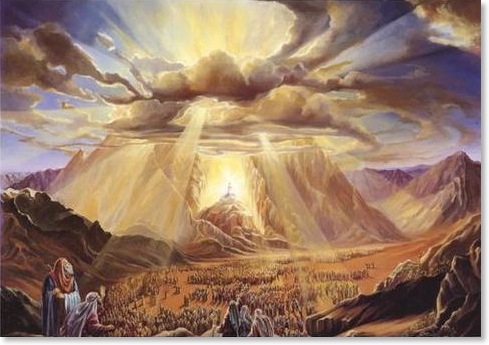
The first Shavuot was likely the day Israel received the Commandments of YHVH.
The 50-day trek from Egypt to Sinai foreshadowed the 50-day or 7-Sabbath Count (traditionally referred to as the Counting of the Omer) that begins at Wave Sheaf (i.e., Firstfruits) and culminates at Shavuot, also known as The Feast of Weeks and Pentecost in the Greek. (Read or listen to our discussion on the Day of Firstfruits.)
We find in Exodus 19 that Father proposes the establishment of a Covenant between He and Israel, whereby He would be Israel’s God and Israel would be His special and favored people above all the nation-people of the world (i.e., their Elohim) if they would hear His voice and obey His instructions (i.e., His commands). The Children of Israel agreed to the terns of this covenant and on that fateful day, at the foot of Mount Sinai, YHVH, in the midst of fire, lightening, smoke and loud shofar blowing, spoke His commandments directly to the people. Although the people were terrified by this indescribable manifestation, even to the point of demanding that YHVH speak exclusively through Moses to them so as to not repeat this terrifying manifestation, the covenant was ratified by the sprinkling of blood upon the written contract and upon the people.

More and more evidence is emerging that supports the real Mount Sinai being in Arabia.
A covenant is an official, established agreement between 2 or more interested parties. A blood covenant, which is what the Sinai Covenant was, required that both parties swear to abide by the terms of the contract. YHVH, because He is Creator and Elohim, certified His agreement to abide by the terms of the covenant (i.e., He would be the nation’s God and the people would reap the benefits of being a special possession of YHVH), simply by stating His Name—I am YHVH. Israel’s certification to abide by the terms of the contract was embodied in the nation’s collective, verbal affirmation that they would obey YHVH’s instructions and not worship or follow any other god. Thus, the contract—the covenant—was ratified and sealed by the sprinkling of blood upon the written contract and the people.
For all intents and purposes: this very first Shavuot was a marriage. This was a marriage between YHVH and the nation of Israel.
It was only but a short time after the ratification of the marriage agreement between Israel and YHVH that the people broke the covenant.
Because this was a blood covenant, if either party were to violate the terms of the contract, their life would be required of them. It goes without saying that YHVH could not—would not—violate the terms of the covenant. Israel, on the other hand, because they failed to have the Spirit of YHVH and His Torah (i.e., YHVH’s instructions) implanted in their hearts, returned to the worship of their Egyptian god (i.e., the Golden Calf) while Moses was attending to sacred business on the Holy Mountain (Exodus 32).
Despite the nation breaking the Sinai Covenant, the Almighty continued to honor the covenant. Israel cheated on her spouse YHVH. Yet YHVH did not put Israel, His bride away immediately; at least not until many centuries later when Israel delved so deep into idolatry that they could no longer hear the voice of YHVH and had completely turned their back upon their Elohim. That’s when YHVH divorced His bride Israel and the nation was left to suffer through a severe fracturing of the nation into two, followed by several usurpations, exiles and captivities at the hands of pagan nations and rulers.
The Father knew that His people would break the marriage covenant from the very beginning. Thus, He set into motion a plan that would re-invigorate that broken covenant and re-establish the nation of Israel (both Houses of Israel—Judah and Israel) back to her favored state as His chosen people. This re-established covenant would be the Sinai Covenant on steroids. For not only would the Father bring back the original covenant to be followed by a reconstituted nation of Israel, it would be extended to the nation peoples of the world if they too agreed to the terms of the agreement. But Father did not stop there. Knowing the inherent problems His people originally had keeping His instructions, He would give His children the help they needed to keep His instructions and to ensure their success in staying in covenant with Him. This He would accomplished through the outpouring of His Holy Spirit upon His elect. Thus the Creator of the Universe’s presence would be within each one of His chosen people, and that Holy Spirit would inscribe Torah—Abba’s instructions—upon each and every heart and mind.
Of this New Covenant, the Prophet Jeremiah wrote:
“Behold, days are coming, declares YHVH, when I will make a new covenant with the house of Israel and with the house of Judah. Not like the covenant which I made with their fathers in the day I took them by the hand to bring them out of the land of Egypt. My covenant which they broke, although I was a husband to them, declares YHVH. But this is the covenant which I will make with the house of Israel after those days, declares YHVH. I will put My law within them and on their heart I will write it; and I will be their God, and they shall be my people” (Jeremiah 31:31-33; NASB).
This prophecy was confirmed by the Prophet Ezekiel who wrote:
“And I will give them one heart, and put a new spirit within them. And I will take the heart of stone out of their flesh and givem them a heart of flesh that they may walk in My statutes and keep MY ordinances and do them. Then they will be My people, and I shall be their God” (Ezekiel 11:19, 20).
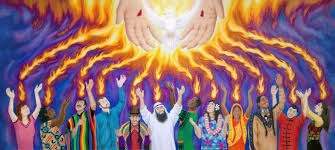
The giving of Torah at Mount Sinai was a shadow picture of the Day of Pentecost when YHVH’s Holy Spirit was poured out upon the disciples of Yeshua.
Although the New (or Renewed) Covenant has not been fully enacted, we saw the down-payment of it played out on the Temple Mount on Shavuot, just 10-days after Yahoshua commissioned His disciples on the Mount of Olives and then ascended up on high. On that fateful day, Pentecost 28 C.E., the Holy Spirit (i.e., the Ruach HaKodesh) was poured out upon the disciples of Yeshua who were attending Shavuot, gathered on the Temple Mount (Acts 2). This was the fulfillment of the “shadow picture” of the very first Shavuot at Mount Sinai. At the first Shavuot, YHVH gave the Children of Israel His Torah—His instructions—His commandments. On the Day of Pentecost in 28 C.E., YHVH gave the Children of Israel (i.e., the disciples of Yeshua HaMashiyach) His Holy Spirit. Thus we see how Torah became fully manifested and is Spirit within the people YHVH. At the time of the first Shavuot, 3,000 souls perished because Israel chose to break the covenant. At the time of Pentecost on the Temple Mount, 3,000-souls entered the Body of Messiah and into life eternal.
Shavuot remains relevant to every Torah Observant Believer in Messiah today. Beyond the fact that we are commanded by YHVH to keep Shavuot (Leviticus 23:21, 22), we gain invaluable and crucial understanding of the New (Renewed) Covenant that Messianics are now privileged to be under. Shavuot is important in reminding Messianic Believers of the importance of keeping Torah and being in a right-relationship with the Creator of the Universe. Shavuot also serves as a prompt for every Torah Observant Believer to seek the leading and guidance of the Holy Spirit in their lives such that they live lives of their chosen status as Kings and Priests of YHVH Elohim. And Shavuot teaches the Messianic Believer that just mechanically keeping Torah is not to secure their place in the Kingdom of YHVH. Torah is Father’s house-rules that help us maintain a substantive relationship with Him. Admission into the Kingdom of YHVH is gained through the shed blood of YHVH, for salvation is a gift from Yah. YHVH’s Holy Spirit aids the believer in his/her keeping of the Creator’s house-rules in the midst of his/her living in this corrupt and dying world.
Shavuot then is about living the life that the Creator of the Universe always had in mind for His chosen people. Shavuot is living life in the Spirit.
The keeping of Shavuot by today’s Torah Observant Believer in Yeshua Messiah is pretty simple. We find in Leviticus 23: 21 that Messianics are to:
With the Temple in Jerusalem no longer in existence, Messianics can not truly keep Shavuot as one of the 3-pilgrimage Feasts of YHVH and as instructed in Torah (Exodus 23:14-17; Deuteronomy 16:16). However, under the auspices of the renewed covenant, the believers’ bodies have replaced the Temple proper as the dwelling place of YHVH (1 Corinthians 3:16; 6:19). Thus, wherever 2 or 3 have gathered together in their Master’s Name, there He will be in their midst (Matthew 18:20).
Thus every Torah Observant Believer in Yahoshua Messiah is obliged to keep Shavuot in Spirit and in Truth. The actual method for keeping the Feast of Weeks is strictly between the individual believer and YHVH (Colossians 2:16, 17; Romans 14:5).
Faithfully,
Rod and Hilary
The page you requested could not be found. Try refining your search, or use the navigation above to locate the post.
The question has been posed and sadly has been incorrectly answered some: Are we obliged to keep Unleavened Bread, The Feast of Weeks (i.e., Pentecost or Shavuot) and Feast of Booths (i.e., Tabernacles or Sukkot) in the Land of Israel (namely Jerusalem), in obedience to Deuteronomy 16:16?
This past week, I visited one of our Facebook feeds and happened upon a rather robust exchange by several Hebrew Roots/Messianic friends regarding the three (3) Pilgrimage Feasts and the Torah instruction to celebrate those feasts in Israel./Jerusalem. The exchange apparently began with one rather forceful individual telling her Facebook friends that they were required by Torah to keep the three (3) Pilgrimage Feasts in the Land of Israel each year. Failure to do so, would of course, be a violation of Torah. This individual provided a few chapters and verses where Father instructed us to keep Unleavened Bread, Shavuot (Feast of Weeks) and Sukkot (Tabernacles) at the place where He would cause His Name to be placed (Deuteronomy 14, 16; 26:2); essentially to keep these feasts where Father’s presence would be among us. Wherever the Father instructed His Tabernacle to be erected once we entered the Land of Promise (e.g., Shiloh), and ultimately where His Temple would be established by King Solomon is where His presence was established and we were to keep these three (3) Pilgrimage Feasts at that location.
Needless to say, the exchange was somewhat contentious. At one point in the feed, the individual who started the whole discussion about Torah-mandated Pilgrimages to Israel by 21st century observers for these three Feasts, maligned a very popular and respected Hebrew Roots/Messianic teacher. That teacher somehow entered the discussion and you could easily tell by the words he posted that he was devastated by some of the negative things that individual was saying about him. This teacher tried to defend his reputation, but when the discussion began to focus more on him personally and on his teachings than on the actual topic of discussion, he gracefully bowed out of the conversation.
The thing that hurt me the most about this exchange were the people, no doubt new or inexperience to Torah-keeping, who were devastated to think that they may have been violating Torah by not making the pilgrimage to Israel during those Feasts. Many lamented that they could not possibly afford to travel to Israel with their families three (3) times each calendar year and pay for 16 or more days of lodging and food. The individual who started the conversation suggested possible cost saving-options for making the Pilgrimage more affordable, but like the Pharisees of Yeshua’s day still insisted that it was every believe’rs responsibility, regardless of their personal situation, to make these trips each year without fail.
Many participants in this discussion went to great lengths to prove to this individual that she was taking the pilgrimage instruction out of context, citing obvious facts that the Temple and its services are no longer in existence and that our bodies have become the Temple of YHVH today. But true to many in our Faith Community who read Torah without proper discipleship; without the teaching and leading of the Holy Spirit; and without Yeshua as their example for proper Torah Living, there was no reasoning or humiliation to be found in this individual. It was truly a sad thing to witness.
Deuteronomy 16:16 reads as follows:
Three times in a year shall all thy males appear before the LORD thy God in the place which he shall choose; in the feast of unleavened bread, and in the feast of weeks, and in the feast of tabernacles: and they shall not appear before the LORD empty: (Deu 16:16 KJV)
If you are interested, companion verses to this passage include: Exodus 23:14, 22, 23 and 17.
It goes without saying that the last place Father chose to have these 3 feasts kept by us was in Jerusalem. That was where His Temple was erected and the place where His presence dwelt. Thus in this passage, Father commanded us to appear before Him–His presence–for these 3 key feasts or moedim.
So what’s the deal here? The instruction for us to conduct 3-pilgrimages to the seat of His presence (i.e., the sanctuary in Shiloh and then the Temple in Jerusalem) each biblical calendar year is clear. But there are some mitigating factors that come into play here that we must take into account when deciding to keep these 3 feasts according to the literal way it is recorded in Torah.
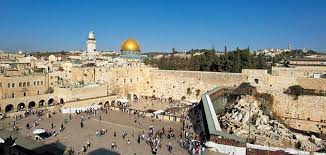
Are Messianics obligated to make pilgrimages to Jerusalem for the Feasts of Yehovah?
For starters, it is common knowledge that the Temple was destroyed by Roman General Titus in 68 C.E.. Josephus documents this tremendous event in “War,” 6.4.5-6.4.7. Ezekiel records seeing the glory and presence of YHVH leave the Temple in Ezekiel chapters 8 through 11; this prior to the temple’s destruction and the people taken into captivity. Temple worship and Father’s presence in our midst was the fulcrum upon which this instruction was given and required. Both of these elements are now missing and not present in the Land of Israel.
Yeshua must be our exclusive example for proper Torah-Living. There is no one else who we should imitate. The Spirit of YHVH rested upon Yeshua as recorded in the 11th Chapter of Isaiah and confirmed by Master in Luke 4:18. Father’s Spirit rests upon He whom the Father chooses to have His presence rest. Generally speaking, that individual who has the Spirit resting within and on them must be of a pure heart (Matthew 5:8) and a clean, undefiled heart and soul (Psalm 24:3-5). We saw the physical manifestation of this in the workings of the Tabernacle whereby every individual who would come to the sanctuary for worship was required to be ceremonially clean while the sanctuary and the attending priests were to be in a perpetual state of cleanliness and purity. Have you heard about the current state of modern Israel? The modern State of Israel is a far cry from being in any semblance of cleanliness. Certainly, the Father’s presence is not resting upon the Land today. Indeed, I believe with my whole heart that Father’s watchful eye and protective hand remains over Israel even today (Deuteronomy 11:11, 12; Psalm 121:4). But to simply take the original Torah instruction to keep each of the three (3) pilgrimage feasts in Israel without keeping full truth of the instruction as it applies today, is in my book, adding to, or maybe even, taking away from Father’s Torah.
Faithfully
___________________________________________________________________________________________________________
When we consider the Torah instruction related to the Shemitah (or the Sabbatical Year) and the Jubilee Year that was given to Moses (i.e., Moshe) on Mount Sinai, which he then passed down to us, I was compelled to reflect upon the significance these two great observances have to our modern Hebrew Roots Community. It turns out that last Sabbath’s Torah Portion–Parashah 32–entitled B’Har, or “On Mount,” dealt with this very subject. The section of this portion that speaks to the Shemitah and the Jubilee is contained in Leviticus 25:1-26:46 and Deuteronomy 15:2-10. It must be mentioned, however, that without the corresponding Brit haDashah reading, found in Luke 4:16-21, the relevance of these two great observances to Torah Observant Believers in Yeshua could easily become lost in rote, blind obedience to an instruction that has sadly become widely misunderstood and improperly kept by 21st century Messianics and Jews the world over.
Have you noticed how popular Jewish names, concepts, words and even teachings have become of late in many sectors of Christianity today? There was a time, not too long ago, that anyone who would bring up anything of a Jewish nature in any Christian discussion or teaching, that individual would more than likely receive the stink eye by anyone who happened to be in hearing range. But today, it’s become a rather theologically sound practice to infuse Jewish terms, names and concepts into Christian sermons and teachings. Or dare I say, Hebrew terms, names and concepts? For as encouraging as this popularity in many things Jewish may appear to some of us, the true Hebrew Roots message is more times than naught overlooked by these individuals who seek to popularize Hebraism to Christianity.
Johnathan Cahn and others were instrumental in introducing Shemitah to mainstream Christianity and Hebrew Roots communities.
I am reminded while reflecting upon this popular wave of Hebraism that seems to have taken Christianity by storm, of the well known Messianic Jewish personality, Jonathan Cahn, who is considered formally a Messianic Jewish Rabbi. Let me take you back just a couple years ago. If you recall, it appears that many Messianic and Jewish communities in one form or another observed Shemitah from September 2014 to September 2015. During this same period we had a series of, what many Hebraic Roots and Christian teachers called Blood Moon sightings. The combination of these two events seemed to create quite a hubbub throughout both Christian and Messianic circles. And it was during this time frame that teachers and preachers such as Jonathan Cahn climbed the rapid ladder of financial success, so to speak, by capitalizing on the Torah instructions surrounding the Shemitah. Sadly, the true message and relevance of Shemitah was lost in all the hubbub and excitement.
Being transparent, I did not read any of Mr. Cahn’s books or listen to any of his teachings on the Shemitah and Blood Moons. What I did see was the huge impact that these Hebraic Roots teachers and preachers had on both communities. If you recall, the primary focus of Cahn and teachers like him was to warn of pending doom and gloom to come upon the inhabitants of Israel and the whole earth because the nations have violated Torah’s Shemitah instructions. Bear in mind, such a pronouncement is pure speculation and frankly not biblical since Shemitah only pertains to the people living in the Land of Israel. It should also be mentioned that no one truly knows when the Shemitah and Jubilee are supposed to occur. The Shemitah and Jubilee time frames were forever lost to the memory of the Jewish people after the destruction of Herod’s Temple in 68 C.E. and after the Sanhedrin was disbanded and exiled in 359 C.E.
I would give those Jews living in the land of Israel who attempted to keep the Shemitah credit for at least trying to obey Torah, despite the rabbis having no true knowledge of when Shemitah was to occur.
There are a couple problems with this whole Shemitah instruction as it relates to the modern Hebrew Roots/Messianic Community.
For Truth-seekers, the Shemitah and Jubilee are about Sabbath Rests, Faith, Miracles, Restoration and Redemption.
To begin with and as I stated earlier, no one truly knows when the Shemitah year is supposed to occur. The Orthodox Jewish website www.chabad.org projects the next Shemitah year cycle to be 9/7/2021 through 09/25/2022. Now, where the rabbis got those dates from, I have no idea. My guess is that they believe they have the authority to determine Father’s appointed times, as they have shown similarly in their adjusting the beginning of the biblical calendar year from Nisan 1 (i.e., Aviv 1) to Tishri 1 (i.e., the 7th month). The problem with anyone tinkering and moving around Abba’s appointed times is that He told us not to. Father instructed:
What thing soever I command you, observe to do it: thou shalt not add thereto, nor diminish from it. (Deu 12:32 KJV)
Is rabbinic authority challenging this commandment when they establish when the Shemitah and other set-apart days occur during His biblical calendar year? If not, then it certainly seems that they are getting close in my opinion.
The other thing is the application of the Shemitah. In other words, does the Shemitah have universal application to all Torah Observers scattered throughout our 21st century world? And the answer to this rather loaded question is: yes and no. Let’s think about this for a bit.
I was blessed to have come upon the Shemitah instructions in last week’s Torah Portion: Parashah 32, B’Har (On Mount), Leviticus 25:1-26:46. Upon studying this section, I was reminded of that period between 2014 through 2015 when both the Christian and Hebrew Roots worlds were smitten, essentially obsessed, over Shemitah. It seemed as though everyone wanted a piece of Shemitah. The Christians wanted to somehow link to Shemitah because of a popular curiosity associated with Jewish things and multiple teachings that circulated throughout Christendom that violations of the Shemitah commands in Torah would result in worldwide death and destruction.
I guess it’s only fair to say that Hebrew Rooters came out in droves wanting a piece of Shemitah because observance of Shemitah was a Torah instruction given to us by YHVH; among other reasons I would imagine. So, many of us felt compelled to literally observe it. Therefore, if we owned and operated a farm, we did not work the farm that entire year that was designated as the Shemitah. Then we were moved to forgive any debt that was owed to us, if indeed we held any debt. In all honesty, however, I heard very little about debt forgiveness during that period.
I understand that in the Modern State of Israel proper, many farmers actually observed the Shemitah and did not work their lands that year. For all intents and purposes, it was somewhat of a heady and enlightening time to say the least.
Which brings me to that yes and no answer to the loaded question I proposed to you just a bit ago regarding the application of Shemitah to the 21st century Torah Observers who are scattered throughout the world. I already mentioned that no one today truly knows when Shemitah is to occur. Anyone who says they do, is not being truthful–or just misinformed maybe. Anyone who says that it doesn’t matter and that we should just start observing Shemitah whenever the urge hits us is frankly adding to Torah. The clock for Shemitah began the year we entered the land of promise. While we sojourned in the Sinai Desert, we did not keep Shemitah. In fact, YHVH instructed Moshe while Moshe was on Mount Sinai to tell the people of Isra’el: “When you enter the land I am giving you, the land itself is to observe a Shabbat rest for YHVH” (Leviticus 25:1; CJB). And from there YHVH goes on to delineate the essential elements of Shemitah.
Therefore, it is clearly stipulated in this section of Torah that Shemitah observance is specifically tied to the Land of Israel. In other words, Shemitah is not applied to, tied to, or to be practiced anywhere else on the planet. To do so would be bordering on adding to Torah which Father strictly prohibited (Deuteronomy 4:2; 12:32).
I get that many of us in Hebrew Roots desire to live Torah perfectly and to the absolute best of our abilities. So some of us tend to be zealous in our keeping of Torah. Our zeal for Torah, however, must not override our sense of reason and understanding. I mean, it’s one thing to keep Father’s Feasts and the weekly Sabbath and the Food Laws which are universal in their applicability–that is, there are no but’s or what if’s associated with them. We are to obey them without question and employing a modicum of zeal in keeping them can go a long way towards solidifying our relationship with the Almighty.
When it comes to other Torah instructions such as Shemitah and Jubilee and Messianics making pilgrimage feasts to Israel and sacrificing lambs on Passover (and these are stories for another time), we must consider context and understand to whom these instructions were originally given to and then determine how they would apply to us today. Many such Torah commandments applied strictly to the Land of Promise or to Temple worship. Thus it goes without saying that before one goes off half-cocked to keep specific Torah instructions such as Shemitah on your Virginia homestead, or embark on a pilgrimage to Israel to keep the feast because required us to keep the three (3) Feasts of Unleavened Bread, Shavuot and Tabernacles/Sukkot at the place where He placed His Name, we must first determine if those specific instructions apply to us today.
In the case of Shemitah, the instructions given in Leviticus 25 clearly tell us that this instruction applies to those of us living in the Land of Promise. Furthermore, if we were to live in the Modern State of Israel today, we still would not know when Shemitah is to take place, apart from the made up dates given by the rabbis. So no: we do not keep Shemitah outside of the Land of Promise and no, we do not know when Shemitah is supposed to actually take place.
Now, is it a crime for someone living outside of Israel to exercise Shemitah principles when it comes to their farm land? No. In fact, it’s a fantastic principle to follow. However, in following Shemitah principles outside of the Land, one must be very careful not to elevate that practice to Torah-level authority. In other words, one should not demand that others do likewise as if their refusal to do so would violate Torah because it would not violate Torah. You know how some of us can be when it comes to certain Torah instructions?
We must be ever so care to ensure that we honor and keep Torah in proper context and have a firm understanding as to why we are keeping the instruction and to what end we are keeping the instruction. The problem with keeping and living Torah out of context is that we will ultimately end up adding our own personal spin to Torah (which we’ve been instructed not to do). If not for ourselves in terms of how we keep Torah, let us always be cognizant of the young and impressionable of our Community. So many of our newbie jump out of the frying pan of religion, only to be caught up into the fire of religion yet again.
The other think we should be aware of is that when we go out of our way to keep and practice Torah outside its truest context, we essentially feed into our Christian cousins’ accusations that we are all legalistic in our Faith-keeping and that we are attempting to purchase our salvation by works of the Law. Well, I’ve never been afraid to be called legalistic; I tend to see that as somewhat of a badge of honor, if the accusation is being made within the context of my being obedient to Torah as we are meant to keep it (e.g., keeping the weekly Sabbath, the annual Feasts of YHVH and the food instructions). But when we as a veteran Torah Observer insist and teach others to practice Torah out of context, then the legalistic allegations may not be too much of a stretch. We saw true legalistic religion practiced by the Pharisees of Master Yeshua’s day. This band of controlling religious leaders erected a religion around Torah and in so doing, enslaved the Jews of Yahoshua’s day, and one could argue, Jews through the last couple millennia.
I would be less inclined to believe that true Hebrew Rooters/Messianics are keeping Torah for purposes of purchasing their salvation and place in the Kingdom of YHVH. Virtually everyone I know who keeps Torah in our Faith Community does so because they realize that Torah has not been done away as pop-Christianity has teaches. On the contrary, we keep Torah in its proper context because wish to please our Heavenly Father by being obedient to His instructions. There will always be some in our Faith Community who will insist on erecting personal walls around Torah and creating traditions and practices that ultimately trumps the authority of Torah, such as we saw happen with Rabbinic Judaism. When we give into the adding and subtracting of Torah we run the risk of losing perspective and before you know it, Master Yahoshua and His teachings go out the door; we become Pharisaical in our worldview; and do indeed take on a belief system that we are purchasing our salvation and place in the Kingdom of YHVH.
This is human nature when it collides with Torah. That is why it is so important to die to self and allow the Holy Spirit–the Ruach HaKodesh–to fully operate in our lives. When we allow the Holy Spirit to take over, there is no risk of behaving contrary to Torah. The Holy Spirit is the Spirit of Truth that rested upon our Savior and that our Master promised us (John 14:17; 15:26).
Master promised us that He would have His Father send us His Comforter and The Comforter is also the Spirit of Truth that will guide us into all truth (John 16:13).
I submit to you here today that if our community–individually and collectively speaking–were to make it a practice to fast and pray that Father grant us a greater unction of the power and authority of His Holy Spirit, our keeping of Torah would be much more meaningful and spot. Our obedience to Torah would be more in line with the example Yeshua provided us and would better glorify our Father in heaven.
So what then must a Torah Observant Believe in Yeshua Messiah take away from the Shemitah and Jubilee instruction if in deed we do not know when these set-apart days to occur and we live outside the Land of Israel (or in the Land of Israel for that matter)? What is the Spirit and Truth of Shemitah and Jubilee?
The grander point to keeping any commandments, especially Feasts of YHVH and set-apart days such as the Shemitah and the Jubilee years, is the worship and glorifying of YHVH our Elohim. In other words, it’s all about Father. He must always be the focus of our obedience and keeping of His instructions, with an eye on Yahoshua our Messiah, who is the end–the bottom line–the end goal if you will–of Torah for righteousness to everyone of us in our Faith Community (Romans 10:4).

Although the concept of Shemitah is universally brilliant, the Shemitah instructions applies only to the land of Israel.
The Shemitah and its grand sister year, the Jubilee Year, when they were passed down to us by the Almighty through Moses, taught us to respect the Land that Father gave to us by invoking a period of rest for the land for an entire year. In that time, we were to not work the land, which included no planting, pruning or harvesting of crops and produce. What were we to do for food during that Sabbatical Year period we asked? Well, we were to trust and rely upon the providence and provision of our Heavenly Father. As the land was allowed to rest all those months, it would produce food on its own. We were to then live off that spontaneous produce, if you will, as well as live off of any provisions we held from the previous harvest period to sustain us. Speaking of the previous harvests, Abba would miraculously increase our harvests from the previous years (Leviticus 25:19, 20).
Thus we were being taught to live by Faith in the Almighty’s provision and providence.
The other lessons were being taught was discipline and obedience. Discipline would come into play as an outcropping (no pun intended) of our Faith in Father’s provision. The natural tendency would be to turn to the work of our own hands to provide for our sustenance. So we would ignore Father’s commandment to let the land rest every Sabbatical Year and work the land in order to provide food for our families, which history bears out that we actually did do. As a result of our disobedience and lack of discipline in honoring the Shemitah, we were taken into Babylonian Captivity equivalent to the number of Shemitah Years we ignored (reference II Chronicles 36:21; II Kings 17 and 25).
The Shemitah also taught us about forgiveness of debt (Deuteronomy 15:2-10), which lesson was a precursor to the forgiveness for sins that we would receive from YHVH because of the sacrificial work of Yeshua on the execution stake.
The Shemitah taught us about the importance of Sabbatical rest, whereby we turn our attention away from the day-to-day grind of everyday life–in the case of Shemitah, the grind of farming, and turn our hearts and minds and souls to YHVH our Elohim. We of course see this embodied in the weekly Sabbath rest and in Father’s holy Feasts that we enjoy. There are times in Father’s calendar when he simply wants us to stop what we’re doing and give Him our full attention and adoration.
The Shemitah also taught us of the importance and sacredness of the Land. Torah reveals to us that YHVH cares for the Land of Canaan and His eyes are always on it all the time (Deuteronomy 11:12). Now, that’s not to say that the Jews, or for that matter, any one of us should worship the Land of Israel. The only person we are to worship is YHVH our Elohim. The point is that it must become common knowledge for us that Father has a special attachment to the Land that He has given to us His children.
The companion year of the Jubilee, which also involves the Land, serves to teach us the principles of redemption and restoration. Torah teaches us that during the Jubilee–which occurred every 50-years–that being once every 7-Shemitahs–all owned property (i.e., farm land exclusively) was to be returned to the original owner (Leviticus 15:23-28). Essentially, land could not be permanently sold. Thus, in the event that we lost our family-inherited land–for whatever reason, and we were unable to redeem it or purchase it back from the new owner leading up to the Jubilee Year–we would have the family land restored to us in full by the grace and providence and provision that the Almighty factored into His Torah. I know, doesn’t make any sense to our western sensibilities–that being, once you sell your land and the new owner take possession of that land, they should be able to keep and do whatever they want with that land. But that’s not the way Father sees things. Father’s grace is amazing and fortunately, He writes the rules. Unfortunately, men like to come in the midst and re-write Father’s rules.
Thus the concepts of redemption and restoration, which are embodied in the Jubilee Year, foreshadowed Father’s Plan of Salvation, the Gospel of the Kingdom of YHVH, and in the mission and teachings of our Master Yeshua Messiah.
These are just some of the things that we are to take away and apply to our lives as it relates to the Shemitah and the Jubilee. It’s not about forcing a keeping of Shemitah or Jubilee which truth be told, we cannot properly do. It is, however, about Yeshua’s work on the execution stake to free us from religion and the scourge of sin and rescue us from eternal death. It is about trusting Father to meet our day-to-day needs. It’s about living disciplined and obedient Torah-based lives. It’s about loving and watching out for one another. It’s about loving, serving, honoring and worshiping the Creator of the Universe.
The page you requested could not be found. Try refining your search, or use the navigation above to locate the post.
Organizations establish standards by which its members’ job performances are judged. There are set standards and job performance levels that separate an average from an exceptional worker. A member’s job performance when compared to those standards may determine that member’s standing in the organization; advancement opportunities in that organization; and even the amount that member will be paid. Those members who find themselves rated as exceptional employees tend to be rewarded with higher responsibilities, privileges and salaries within the organization. Unlike any other human organization or activity, YHVH established the standards by which our performance will ultimately be judged by our Master, Yahoshua Messiah. Our positions and privileges in the Kingdom of YHVH will depend upon how we measure up to those basic, and most importantly, exceptional expectations. In this post, we focus on the exceptional life to be lived by disciples of Yahoshua, using the expectations that were modeled for us by our Master Yeshua and the expectations that were established for members of the Levitical Priesthood in Leviticus 21: 1-22:16. In so doing, the true disciple of Yahoshua HaMashiyach is expected to live a life beyond the norm.
YHVH provided us the standards by which we are expected to live. Those expectations are encapsulated in His eternal Torah and through the teachings and example of Yahoshua Messiah. As with any human organization, there are basic standards and expectations, as well as exceptional standards and expectations. The basic standards YHVH established for day-to-day living are embedded in Torah–the first-five books of the Old Testament. The exceptional standards and expectations established by YHVH were delivered to and modeled for us by His Son, Yahoshua our Messiah. I believe we also see exceptional expectations and standards that were given by YHVH to the Levitical Priesthood. Those exceptional standards and expectations offer us, in a sense, a shadow picture of the exceptionally high standards that Yeshua requires of all of His disciples.
One-fifth of Torah is dedicated to the rigorous, exceptional standards and expectations that YHVH established for the Levitical Priesthood. At the time these instructions were handed down to us, very little of those priestly expectations and requirements applied to the average Israelite. Those standards were established specifically for the Levitical Priesthood. The Levitical Priests were expected to meet, not just the basic, core, rote-mechanical standards and expectations of Torah that applied to every Israeli male. They were expected and required, in addition, to meet exacting, ritual-holiness-cleanliness standards that exceeded the universal standard, basic instructions of Torah. Failure to meet both the standard and exceptional standards and expectations disqualified a Levite from serving in the sanctuary and serving the nation.
I contend that we who are Torah Observant Believers in Yahoshua Messiah are now, and in the future, expected to not only meet all applicable Torah instructions (i.e., commandments), but also every applicable aspect of Torah that is over and above each rote-mechanical aspect of Torah (e.g., not only are we to not commit adultery or fornication, but we are not to look upon another member of the opposite sex who is not our spouse in a lustful manner).
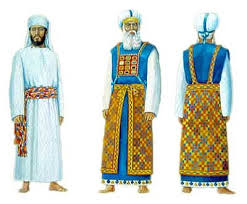
The expectations and standards set for a Levitical Priest was beyond the basic standards for men by Torah.
It is about living a life that is above and beyond the NORM. This is about living and exceptionally righteous life. I would submit to you that failure to meet both the basic and those exacting, exceptional standards and expectations will adversely affect our role and inclusion in the Kingdom of YHVH.
Many outside of our Faith Community adamantly contend that Torah was created and implemented for the Jews. These maintain that the Jews failed to keep Torah and thus forfeited their opportunity for salvation and that Christians have replaced the Jews in God’s great plan of salvation for mankind. Is this an true line of thought and teaching? Well, when Torah was given to us during our sojourn in the Sinai Desert, and even after we entered the Land of Promise, the bible clearly indicates that all 12-tribes of Israel were subject to Torah. By the first half-of the 6th-century B.C., 10 of our 12-tribes had become scattered by the Assyrians leaving only the tribes of Judah and Levi. Today, the identities and locations of those scattered 10-tribes of Israel are lost to the memory of world history. Interestingly, during the time our Master, Yahoshua and His handpicked disciples walked, taught and preached on this earth, the identities and locations of those 10-tribes was well known to the Jews of the Ancient Near East (Matthew 10:6; 15:24; 9:36; Jeremiah 50:6). Scholars who have attempted to identify some of the lost “Sheep of Israel;” or rather the misnomer “Lost 10-Tribes of Israel,” have found archaeological evidence that is scattered throughout the eastern and western world that many of the scattered peoples have kept Torah to a lesser or fuller extent throughout the ages.
The Pharisaical religious establishment has successfully duped the world into thinking that Torah (and the Land of Promise) was given only to the Jewish nation. Christianity then took this Jewish-only mindset and understanding a few steps further by hijacking and corrupting the concept and doctrines of “grace.” Christianity teaches the “Law” was for those evil Jews who will suffer for their refusal to play by God’s rules, but we Christians are under grace and not required to keep one jot or tittle of the “Law.” By default, the Christian worldview has separated would-be disciples in Yeshua Messiah (thought of mainly as Gentiles) from their naturalized Israeli heritage and Faith that is based upon Torah. Therefore, the hijacked doctrine of grace has unceremoniously completely eliminated Torah as a life-expectation and requirement for any would-be disciple of Jesus Christ (i.e., Yeshua Messiah). This doctrine is not only false, it is also the vehicle by which countless well-intended, sincere, but grossly misinformed souls will NOT be admitted to the Kingdom of YHVH in the World Tomorrow.
None of this is to say, in the least, that a would-be disciple of Jesus Christ (i.e., Yeshua Messiah) receives admittance to the Kingdom of YHVH or eternal life by keeping Torah. To the contrary, eternal life and admittance into the Kingdom is a gift of YHVH that was won and will be delivered as a result of the atoning sacrifice of Yahoshua on the execution stake on that fateful Passover Day on or around 28 C.E. Nevertheless, for the true Disciple of Yeshua HaMashiyach, Torah stands as YHVH’s house rules that every disciple is expected to honor, keep and obey as applicable under the Renewed Covenant.
Abba passed on to Moses (i.e., Moshe) and Aaron (i.e., Aharon) and Aaron’s posterity, the exceptional standards and expectations that would be required in order for the males in Aaron’s lineage to serve the nation of Israel. As we can see throughout the book (i.e., the Cepher) of Leviticus, these standards and expectations were often rigid and were overall, over and above the baseline instructions given for every Israeli male. It was these exceptional expectations and standards set the would-be Levitical Priest apart from the rest of the nation in the manner of:
When reading through and studying Leviticus and the Levitical Priesthood, it is important to keep the following in mind:
Yahoshua has made us to be a kingdom of priests to His Elohim and Father (Revelation 1:6; 5:10). As priests of the Most High, the examples given in Torah relating to the required ritual cleanliness of every Levitical Priests 24-hours a day, 7-days a week, should serve as a reminder to us of our Master’s expectations for us. When these expectations and requirements are understood through the doctrines and teachings of Yeshua our Messiah, we should come to realize how important our personal and spiritual cleanliness is to YHVH. Father requires that we be “holy as He is holy” (I Peter 1:15, 16). That requirement has not changed in the least, despite the Torah naysayers that teach a perverted grace doctrine that inputs upon a Christian believer perpetual cleanliness and holiness. What this perversion is actually saying to the world is that all you need to do to inherit eternal life and have a relationship with the Creator of the Universe is ask Jesus Christ into your heart. Upon asking Jesus Christ into one’s heart, then grace takes over and your eternal life ticket is punched. You can live anyway you choose to live because God’s grace inputs perpetual righteousness to us and we become “holy” by default, forever.
This perverted version of grace is so far from Truth that it’s not even funny. We are required to “be” holy–to live holy lives; to live a life that is beyond the norm of all humanity, or even Christianity for that matter. The Apostle Peter wrote:
Gird up the loins of your mind (Greek for mind is Anazunomi, which means to prepare one’s mind for action); be sober; and hope to the end for for the grace that is to be brought unto you at the revelation of Yeshua Messiah. As obedient children, not fashioning yourselves according to the former lusts in your ignorance, but as He which hath called you is holy, so be ye holy in all manner of conversation; because it is written: “Be ye holy; for I am holy” (I Peter 1:13-16; cf. Leviticus 20:7; KJV).
Thus, we are not to defile ourselves or become spiritually and physically tainted by the things of this world, which when given over to, serves to blunt our service and effectiveness as priests of YHVH. By default, then, we are to die to self (reference Romans 6:2, 11; 2 Timothy 2:11).
Like the Levitical Priests of old, the standards by which we are to live are higher than most people will ever aspire or conceive to meet. Those lofty, but doable standards and expectations, affect how we conduct every aspect of our lives:
An entire book (i.e., cepher) of Torah was dedicated to instructions for the Levitical Priesthood. The requirement for exacting ritual purity and cleanliness in order for any priest to serve the nation in the community and in the sanctuary cannot be understated. YHVH requires, without exception, cleanliness and purity in order for any to worship and commune with Him. The priestly ritual instructions were primarily in place to allow the priests to serve in the sanctuary and in worship of YHVH. The sanctuary was the place where YHVH’s presence rested. Thus, in order to approach the sanctuary (as a non-priest) and the inner sanctum (as a priest), one had to be in a state of ritual cleanliness.
Although the sanctuary no longer exists, Father still requires that each of us be in a state of cleanliness and purity when we come before Him in worship, prayer and service. We have a baseline cleanliness afforded to us by the shed blood of Yahoshua HaMashiyach. There are, however, ongoing things in our lives that cause us to be impure and unclean that we must constantly be cognitive of and constantly address. Such impurity and filth hinders our worship, walk and witness and service to YHVH and His Kingdom. Intentional and perpetual and unresolved uncleanness (i.e., sin, unholy behavior and habits, improper thoughts and feelings and a lawless life) will adversely impact and hinder, (1) our personal relationship with the Most High Elohim; (2) our service to the Kingdom of YHVH and our Faith Community; and (3) our present and future standing in the Kingdom of YHVH. Yeshua revealed:
“For I say to you that unless your righteousness surpasses that of the scribes and pharisees, you will not enter the Kingdom of Heaven (Matthew 5:20; NASB).
Many will say to me in that day, :Master, Master, have we not prophesied in they Name? And in thy Name, have cast out devils? And in thy Name done many wonderful works?” And then will I profess unto them, “I never knew you: depart from me, ye that work iniquity” (Matthew 7:22, 23).
The story of the rich man and Yeshua is an excellent example of the high expectations set for disciples of Yeshua.
Master set the bar high for true discipleship. The sad, sorry and tired adage that so many so-called people of faith like to say, that God knows their heart, just doesn’t fly when one truly considers Master’s true discipleship standards and expectations. For it will be upon that great, end time revealing of the Sons of the Most High, that Yahoshua will separate those who are righteous from those who are unrighteous, and unfortunately for many, there will be no excuse accepted.
Master prophesied:
When the Son of Man shall come in His glory and all the holy angels with Him, then shall He sit upon the throne of His glory. And before Him shall be gathered all nations. And He shall separate them one from another, as a shepherd divideth His sheep from the goats. And He shall set the sheep on His right hand, but the goats on the left. Then shall the King say unto them on His right hand, “Come ye blessed of my Father, inherit the Kingdom prepared for you from the foundation of the world…Then shall say also unto them on the left hand, depart from me, ye cursed into everlasting fire, prepared for the devil and his angels” (Matthew 25:31-41).
Our Master set the bar high for true discipleship and service, just as Father set the bar high for Levitical Priesthood service. Are we then to follow the example of the Levitical Priests, per se? Well, no. The fact of the matter is that we follow exclusively the example of Yeshua HaMashiyach, our Master. The exceptional standards of the Levitical Priests are excellent shadow pictures of the standards and expectations that Master requires of us who are His disciples; we who are being made into a Kingdom of priests unto YHVH; conforming to the image of Yahoshua Messiah.
Faithfully,
Shalom and warmest blessings to you, your family and fellowship.
The page you requested could not be found. Try refining your search, or use the navigation above to locate the post.