Paul-Emancipator or Subjugator of Women-Part 6 of the Paul and Hebrew Roots Series

Paul: Emancipator or Subjugator of Women-Part 6 of the Paul and Hebrew Roots Series

by Rod Thomas | The Messianic Torah Observer

This is Part 6 of our multi-episodic series on Paul and Hebrew Roots. This installment is entitled: “Paul: Emancipator or Subjugator of Women.”

I Corinthians 14:34, 35, and 1 Timothy 2:11,12 have long challenged my sensibilities and understanding of how women are to be viewed and treated in the Body of Messiah.

Would you allow to read these passages to you once more? I know that I read them in the introduction. But Paul writes in 1 Corinthians 14:34,35:

“Let your women keep silence in the churches (ie., ekklesias): for it is not permitted unto them to speak; but they are commanded to be under obedience, as also saith the law.”

And then in 1 Timothy 2:11,12 he writes:

“Let the woman learn in silence with all subjection. But I suffer not a woman to teach, nor to usurp authority over the man, but to be in silence.”

How These Passages Played Out In My Early Years

I grew up in the Southern Baptist Church. During those formative years, I was exposed to the practical manifestation of a plain reading and understanding of these crucial Pauline passages.

Thus women were not permitted to be preachers or ministers, nor were they permitted to hold leadership roles in the church.

Changing Times, But Still Little Improvement


Over the last several decades there has been a softening of this tradition and doctrine in the Baptist Church as a whole. However, overall women holding leadership and teaching positions in the Southern Baptist Church are a clear minority. One can only imagine that the number of women holding and exercising leadership positions in the Hebrew Roots/Messianic Communities is as bad, if not worse.

More Women Than Men, But Less Women Leaders

This is all the more interesting to me given what we know of the number of women practicing their Christian and Hebrew Roots Faith today, when compared to their male counterparts.

According to the “Pew Research Center,” in an article they published on March 22, 2016, entitled “The Gender Gap in Religion Around the World:”

Globally, women are more likely to affiliate with a religious faith; women attend more worship services more often than men in predominantly Christian countries (greater than 7% more); more women than men pray daily (greater than 10% more).

I have no data to support the ratio between women to men in our Hebrew Roots/Messianic communities. Nevertheless, according to a March 13, 2014 article entitled “The Rise of the Hebrew Roots Movement,” (a hit piece against our beloved Faith I should note) journalist Menachem Kaiser estimated there were some 200,000 to 300,000 Messianics worldwide at the time he wrote his article. Add to this my personal observations having attended a number of Hebrew Roots and Messianic events, the women in attendance at these events outnumbered the men. Yet I rarely, if ever, saw women leading the proceedings, teaching, or ministering at these events.

More Statistics

But returning to mainstream Christianity for a moment (since there’s a lot more hard data to reference than in Hebrew Roots) in Barna Group’s “The State of pastors 2017: Leading in Complexity,” dated January 26, 2017:

One of every 11 Protestant pastors is a woman—triple as many as 25-years ago, yet women often lead smaller congregations than men.”

Why The Disparity?

Interestingly, this Barna article suggests the reason for the disparity is due to the unreasonably high expectations western society places on women as a whole to perform in the workplace.

But I would bet you dollars to a doughnut that the real reason (or let’s say the overwhelming reason) for the low numbers of women church leaders in the world today is due to an ancient The misogynistic mindset that has dominated much of the world since the fall, along with a twisted understanding of these two Pauline passages of 1st Corinthians 14 and 1st Timothy 2.

Whose To Blame?

Please bear in mind that I am not laying the blame for the disparity that exists in women to men holding leadership roles in the Body of Messiah/Christ solely on the shoulders of the males that make up the Faiths. The mindset that women should not be in positions of authority in the Body of Christ/Messiah seems to not only rest with a number of men, but with a great many women as well.

Historical Reasons

Christian researchers have determined that long-held misogynistic views and mistreatment of women can be traced back to ancient Greece.

These, and other, misogynistic views and ill-treatments of women found their way into Rabbinic Judaism, and by the close of the Apostolic age, into what we call today Christianity.

Greek Philosophy To Blame?

In fact, it was Socrates (c. 470-399 BCE) who coined the phrase for women being “the weaker sex.” Socrates went so far as to contend that being born a women was a divine punishment. He was quoted as saying, “Do you know anything at all practiced among mankind in which in all these respects the male sex is not far better than the female” (Plato, Timaeus, translated by H.D.P. Lee, Baltimore: Penguin, 1965; 24A-C, 90C, 91A).

Socrates perspectives on women were of course handed down to his equally famous pupil Plato (c. 427-347 BCE), and then on to Aristotle (384-322 BCE). Aristotle, for instance, held that it was barbaric for a Greek man NOT to distinguish between a wife and a slave. And ultimately, according to John Temple Bristow in his book entitled, “What Paul really Said About Women,” “Aristotle laid a lasting philosophical foundation for the notion that females are inferior to males.” Thus it could be thought that he helped formalize the practice of sexual discrimination and inequality. And it was this arm of Greek philosophy that Post-Apostolic Christianity infused into their interpretation and understanding of some of Paul’s writings and teachings regarding women and women’s roles/functions in the Body of Messiah/Christ.

Greek Anti-Women Sentiments Filter Into Christianity

So it seems that this Greek derived, anti-woman mindset infiltrated Christianity and became firmly established in the minds and writings of the so-called Church Fathers and church leaders. Is it so hard then to see how Christianity and even Hebrew Roots to a greater or lesser extent, interpret these rather eye-raising Pauline passages in such an anti-woman fashion?

Problems With Paul’s Writings

A plain read of these passages doesn’t seem to give us much in the way of interpretative wiggle room. Clearly, as it is interpreted, Paul is emphatically instructing the Corinthian Assembly to not allow the women in their midst to speak. And to add insult to injury, so to speak, Paul asserts that the women’s silence was mandated by law.

So I ask you: What imagery and feelings do these passages of I Corinthians and I Timothy stir in you? How do you view Paul in light of what he has written here? Was he a brilliant misogynist? Was he channeling his former Pharisee days when he no doubt managed various local synagogues with a firm hand, ensuring that men and women were separated and women were not allowed to speak or be heard in those supposed hallowed halls?

Or maybe these passages are examples of what Paul’s apostolic colleague Peter described as “hard to be understood” which unfortunately many folks within and without the Body of Messiah—both men and women—”wrest—twist—as they do also the other scriptures, unto their own destruction?”

Questions To Answer


A few questions about these passages should naturally haunt the astute student of Scripture:

1. What women is Paul referring to here? The Corinthian Assembly women? Or any women of the assemblies he oversaw?

2. What authority was Paul giving his instructions from? He states quite emphatically that “it is NOT permitted unto them to speak.” Is Paul speaking from his authority as an Apostle or from some other established authority within or without the Body of Messiah?

3. Was it not this same Paul who elsewhere in his writings penned: “There is neither Jew nor Greek, there is neither bond nor free, there is neither male nor female: for ye are all one in Christ Jesus.” Does this passage not present a conflict to these two passages?

4. Did not Paul claim to have been taught the Gospel of the Kingdom directly from Yahoshua Messiah? Would it seem reasonable then to conclude that Paul received these instructions from Y’shua, who Himself had many female disciples who went on to become leaders in the Body of Messiah. Oh yes.

And 5. Did not Luke throughout portions of his writing, the Book of Acts,as well as Paul in his various epistles, document examples of the mighty works and exploits of a number of Messianic women teachers, preachers, deacons, prayer warriors, assembly leaders, financiers and at least one apostle?

A Dichotomy Exists Here On The Subject of Women Leadership In The Body Of Messiah

So what do we make of any of this—this dichotomy of attitudes towards women in the Body of Messiah by Paul?

In one vane, the Great Apostle to the Gentles asserts that women are to be seen and not heard in the churches—the ekklesias—the assemblies that he established and oversaw—some would go so far as to say the Churches of God as a whole.

And then in another vane he asserts that men and women are equal in Messiah—such that there are no restrictive roles for men and women in assemblies or Churches of God.

Clearly, the dichotomy that exists between these two sentiments is so extreme, unless Paul is indeed schizophrenic or moody in his oversight of the assemblies he established. For one day he’s extolling the greatness of the women leaders of the Body of Messiah who could not have been silent or dependent upon their husband to teach them the Gospel of the Kingdom. Then on another day telling those same women to go sit in a corner and be quiet for a minute.

Was Paul Assigning Subjugated Roles To Women Of The Body?

I recently came across a popular teaching on these passages that was put out by a Sabbath and Feast keeping congregation (ie., I wouldn’t necessarily classify them as Hebrew Roots or Messianic per se). The pastor of the congregation put forth that these Pauline passages requiring women be silent in the assemblies is really about women being restricted to certain roles in the “church.” Those roles, according to the pastor, are basically limited to teaching other women and children, and maybe rare discussions with men who are ignorant of certain aspects of the Faith, just as long as the interaction/discussion is supervised and done in private…or whatever. Furthermore, if the women have any questions about anything that comes out of the church proceedings, the answers to those questions must be given by the women’s’ husbands.

Women Not Being Assigned Subjugated Roles

If one is willing to treat these texts accordingly and in context, one cannot but help see that Paul was in no way addressing roles of women in the Body of Messiah. He didn’t need to. Those roles had already been in operation for years by the time Paul wrote these letters.

In fact, both he and Luke covered those roles in their respective writings: women were knowingly and publicly filling leadership roles in every known area of the Work of the Gospel and in the Body of Messiah.

Contextually Paul Trying To Establish Order

Contextually speaking, Paul was trying to establish order out of chaos in the Corinthian Messianic assembly.

Certain individuals in the assembly were causing disruptions during assembly gatherings and Paul as the assembly’s overseer was trying to establish order in the assembly. Thus Paul, in these passages, was explaining to his readers what Godly behavior in the assembly and during the assembly proceedings looked like.

The Importance Of Godly Wisdom When Examining Paul’s Writings

When dealing with these and other difficult and seeming contradictory passages of Paul, it is imperative that we seek after Godly wisdom. And I fear that maybe this is what’s lacking in our Faith Community these days.

We have no end of men in line anxious to tell us what to believe and follow. But at the end of the day, it doesn’t matter one bit what these men say about a matter: it’s what Abba has to say about it. For when we possess Godly wisdom, when a matter is put forth to us, we will ultimately through the leading of the Holy Spirit (ie., Father’s Ruach HaKodesh) be able to discern Truth from error, misinformation and even lies.

Regarding True Wisdom that comes only from YHVH, Paul wrote:

“After all, is there anyone who knows the qualities of anyone except his own spirit, within him; and in the same way, nobody knows the qualities of God except the Spirit of God. Now, the Spirit we have received is not the spirit of the world but God’s own Spirit, so that we may understand the lavish gifts God has given us. And these are what we speak of, not in the terms learnt from human philosophy, but in terms learnt from the Spirit, fitting spiritual language to spiritual things. The natural person has no room for the gifts of God’s Spirit; to him they are folly; he cannot recognize them, because their value can be assessed only in the Spirit. The spiritual person, on the other hand, can assess the value of everything, and that person’s value cannot be assessed by anybody else. For who has ever known the mind of the Lord? Who has ever been His adviser? But we are those who have the mind of Christ”—that is the mind of Messiah (1 Cor. 2:11-16; NJB).

A Heart Check Is In Order

So then, what am I saying here? Simply this: as we delve into the eternal riches of Scripture, it is incumbent upon us to first assess the state of our hearts. Again, we keep coming around to aggadah being that central thing that governs our entire walk of Faith. Consequently, it will be the state and location of our hearts that will determine our ability to receive and then walk out Truth.

Secondly, let us lean on the Ruach HaKodesh such that Truth is revealed to us in a meaningful and powerful way. Let us not lean to our own understanding (Pro. 3:5).

Therefore, if our hearts are where they’re supposed to be and we are relying upon the leading and guidance of the Ruach HaKodesh (ie., Yah’s Holy Spirit), then we will find and live out the Truth of the matter, and that includes the Truth about Paul’s views of women in the Faith and in the assemblies.

What Does This Have To Do With Hebrew Roots?

Some of you may be wondering why this subject is so important to Torah Observant Disciples of Yahoshua Messiah? If you’re a man, why should you even care? If you’re a woman and you’re not a member of organized religion or of a church or fellowship or assembly, why should you care?

Well, here’s my thoughts on this.

Understanding what Paul really meant in his more controversial and challenging passages will better help us understand the Gospel message that was given to him by Master Y’shua.

There are women within and without our Faith Community who are being told their role in the Body of Messiah is to only raise and teach their children and mentor younger women. It stands to reason that these precious women of Faith are possibly being duped. Was this seeming silencing of women part of the all inclusive Gospel of the Kingdom message that our Master brought us? Maybe, just maybe, you may be used of YHVH to deliver Truth to someone who is in need of receiving it; someone who needs to be freed from the shackles of religion.

All Hands On Deck!

In the dark days ahead, leading to the End of Days and the Tribulation, we’re going to need every person on deck, so to speak. That means, we’re going to need men, women and children out there in the trenches teaching and preaching the Gospel of the Kingdom to a lost and dying world. There won’t be any time for misinformation and doctrinal foolishness. Master expects all of us to be working and exercising the gifts that He has lavishly bestowed upon His Body. We do not have the luxury of allowing modern day Pharisees who are knowingly (or for that matter unknowingly) stuck in the Greek, Stoic, Rabbinic Judaism mindsets of yesteryear to influence our Work in the Gospel of the Kingdom and our individual places in the Body of Messiah. We all have jobs to do and regardless if you’re a man or woman, Father has bestowed upon you gifts and expectations that you will use those gift for the furthering of the Kingdom and the edification of the Body of Messiah.

Women Have An Obligation To Fulfill Their Calling In Messiah

I know some of you out there have been in the Faith for some time, especially those of you who are women. What I have to say to you is: don’t let anyone tell you that you don’t have a ministry in the Body of Messiah because you’re a woman; or you’ve not been in the Faith long enough; or for whatever reason. Your gender in no way affects your call.

My friend, I’m here to tell you today: Get up off your behind and get to stepping. I don’t care if you’re a woman or a man: if you have a call on your life to teach, preach, prophesy, minister, establish or lead a fellowship, start a podcast or YouTube channel, write a book, start or lead a prayer group, what have you—you best gitter done.

The Parable of the Talents

Master gave us the parable of the talents where He described a man who traveled into a far country. And before departing out on His trip, He called in His servants and gave each a certain number of talents (Mat. 25:14-46). And while this man was away conducting His business, His servants went about putting those talents to work, with the exception of one servant who for whatever reason chose to do nothing with the talents given him by his Master.

Upon the servants’ Master’s return, He calls His servants in unto Himself and demands they each give an account of what they did with the talents He gave them. Each servant gave a good report of what they did with the talents that were given to them and how they made those talents increase their Master’s bottom line. However, the one servant who chose to do nothing with the talent given him revealed that he, out of fear and ignorance, hid the talent—adding nothing to his Master’s bottom line.

You know the rest of the story: the servants who put the talents given them to work and produced increases for their Master’s kingdom were rewarded, while the servant who hid the talent given him was sorely punished.

What shall you do with the talents the Master has given you?

Act Now!

What we will find in the next installments of this series is that people in the First Century Body of Messiah did not allow grass to grow underneath them—ESPECIALLY THE WOMEN. The gifts and callings that these great women of Yah received were aggressively put to use and worked during the first century and we are the beneficiaries of their work.

Emancipation Subjugation of Women By Paul

Was Paul an Emancipator or Subjugator of Women in the Body of Messiah?

No, Paul was NOT telling the women of the Corinthian Assembly of Messianic Disciples of Yahoshua to prettily sit off to the side in the Body of Messiah while the men evangelized the world. He wasn’t establishing roles for women, for women had already been filling leadership roles in the Body of Messiah for a few years by the time first-Corinthians was written. Shaul vehemently taught that gender was irrelevant in the Body of Messiah.


So what are you gonna do with this essential information? This admonishment?

I’ve said this countless times before and I don’t mind saying it again: It’s all about Him and not one bit about us. None of this is about our comfort zones; our gender; our level of education; our circle of friends; our positions in church hierarchies; our station in life; or our past. For Yahoshua and then Paul employed women from every sector of society to be ministers, preachers, teachers, prophets, administrators, patrons and even apostles. And neither meant for women to be silent or idle.

Indeed, Paul was an emancipator of women in the work of the Gospel and in the Body of Messiah.

May you walk in the power and might of Yah’s Holy Spirit (ie., His Ruach HaKodesh) and may you and your families be well and blessed. I bid you a warm and blessed Shalom.

My Last Word on the Cepher Bible and the Divinity of Yeshua–At Least Till Next Time

My Last Word on the Cepher Bible and the Divinity of Yeshua-At Least Till Next Time

by Rod Thomas | The Messianic Torah Observer

Why Discuss the Cepher Bible Yet Again

So I elected to do a rather quick reiteration–albeit last word on the Cepher Bible and the Divinity of Yeshua. At least, until the issue comes up, let’s just say.
Over the last year or so I’ve received a number of inquiries about my position(s) on the Cepher.


The Cepher Bible

The Cepher Bible I feel has some significant problems attached to it that I feel detracts from its accurate usefulness.

Over the last year or so I have received multiple hits on the website by Cepher inquiring minds. 


Questions about my thoughts on the Cepher and about Philippians 2:10,11. 


But set Christ (ie., Messiah) apart as Lord (ie., Master) in your hearts and always be ready to give an an answer to anyone who asks about the hope you possess. Yet do it with courtesy and respect, keeping a good conscience, so that those who slander your good conduct in Messiah (ie., Christ) may be put to shame when they accuse you (1 Pet. 3:15,16; NET).  

2 Reasons I Don’t Recommend The Cepher Bible


Practical usefulness of Cepher is sorely lacking.
 
  • The Cepher is a bulky book. 


  • The Bible uses 1611 KJV Elizabethan English. 


  • There is an over-emphasis on Hebrew names of people, places and things. 


  • The Cepher uses or provides no cross-references. 


  • If you don’t have tabs, you could spend an unreasonable amount of time searching for a particular passage. 


  • The translators and editors took great liberties in their translation of the text. Philippians 2:11,12 is an prime example of such liberties. 


I originally purchased the Bible for its advertised accuracy, which I found was not necessarily there. 


The Cepher lacks commentary and references to explain translation, which forces the reader to rely exclusively on the integrity of the Cepher organization. 


Positives of the Cepher


The Cepher contains the apocryphal OT books, including the books of Jasher, Enoch and Jubilees.


The Cepher is a well bound hardback book with quality paper. 


It has a handsome appearance.


My stance on the Divinity of Yeshua Messiah–Is Yeshua and YHVH one and the same Being?


I believe that Yeshua Messiah is NOT YHVH. 


Yeshua Messiah was and is a Created Being. For me, this does not mean that Yeshua did not pre-exist the creation of the earth and heaven. We know the Angels were existed before the Creation.

Which stands to says also that I do not believe Yeshua is the Illusive Angel of the LORD (YHVH). 

There is no Biblical support for Yeshua being YHVH and such a belief defies Hebraic understanding of the Person of YHVH despite what many in our Faith Community say to the contrary. 


Yeshua Himself never described or identified Himself as YHVH, although He did identify Himself as the Messiah and the Son of Yehovah, along with some other titles such as the Bread of Life and the Good Shepherd. 


I won’t rehearse fully why I don’t believe Yeshua is YHVH–having done a series on the divinity of Yeshua which you are invited to listen to or read at your leisure. However, here is a quick run-down of some of my reasons: 


  • YHVH cannot die.
  • The Creator said Himself that He cannot be tempted.
  • Abba declared that He is the Creator of the Universe and there is none other. He never declared Himself as being Y’shua Messiah.
  • Yeshua said He received His instructions from His Heavenly Father.
  • Our Master prayed to His heavenly Father.
  • Yeshua Messiah never identified Himself as YHVH–the Most important proof.
All alleged scriptural proofs offered by those who hold to YHVH and Yeshua being one and the same Person/Being are shaky at best and are built upon certain placement of punctuation and order of words in the received, sacred texts. 


Belief in Y’shua being YHVH/YHWH by anyone in our Faith Community is in no way a relationship impediment. In fact, most of the folks I personally know in our Faith Community believe opposite what I believe. Nevertheless, I respect their belief and understanding of the divinity of Yeshua. 


Any further questions on this issue in terms of my personal understanding or belief on this any any other issue I am happy to discuss via email.


Paul on Aggadah–Part 5 of Paul and Hebrew Roots Series

Paul on Aggadah–Part 5 of Paul and Hebrew Roots Series

Paul on Aggadah--Part 5 of Paul and Hebrew Roots Series

by Rod Thomas | The Messianic Torah Observer

Paul on Aggadah—Part 5 of the Paul and Hebrew Roots Series

Let us quickly recall from Part 4 of this series that Aggadah is that unseen/invisible aspect of our lives that prompts or influences or even controls our behavior; in particular,that inward motivation, zeal, commitment or love that causes us to walk out our Faith in a certain way. In short, aggadah is really more about matters of the heart than anything else.

Conversely, the walk (the behavior) that results from aggadah is that visible/seen aspect of our lives that others can see if they so desire.

The Hebrew Root Word For Aggadah is Agricultural in Nature

Let’s briefly look at the Hebrew Root word for aggadah as it may shed some clarifying light on the wider meaning of the term. The root word from which aggadah derives is Aleph–Gimmel–Dalet–Hey.

As with so many things in our Hebrew Roots Faith, this root form of aggadah has an agricultural meaning attached to it. The root word means something that is ripened and comes to its intended form. Thus when applied to one’s life of Faith, the root form of aggadah has to do with a nascent fruit (maybe best seen as a seed or bud) that ripens and ultimately matures into a ripe fruit.

Another way to look at this thing is that the fruit is the halakhah; the seed is the aggadah.

Aggadah From a Practical Perspective

Practically speaking, aggadah is that thing—be it inspiration; uncompromising love and reverence for the Creator; whatever–that moves us to live righteous, obedient lives. When the heart ain’t feeling right about the Faith, it’s a fair bet that our walk isn’t going to be right either. One will likely live a less than righteous life and be less likely to properly keep the Creator’s instructions as He intended them to be kept. It’s just human nature.

Recall that old, but sage saying: “Home is where the heart is.” I used to think that saying was just about the love of family and home by someone who was for whatever reason separated from their folks. But when we apply this saying to aggadah, then this wise saying adds a whole new dimension to this essential concept.

Aggadah–It’s a Heart Thing

Aggadah and Heart

Having a right heart is at the center of aggadah.

If our hearts desire after that which is not of God—that is, anything that may be carnal, then we invariably will make our homes in that carnal realm, metaphorically speaking. It is only natural for one to behave in accordance to the leading of one’s heart. If our hearts are tuned to holy, pure and righteous things, our behavior will follow suit such that we will be holy, pure and righteous in our behavior.


If our hearts are tuned to carnality—lust; hatred; idolatry;; adultery; fornication; anger; envy; foolishness and strife just to name a few, our behavior will naturally fall in line with such things. That is, we will behave carnally. Paul described these carnal behaviors as “works of the flesh” (Gal. 5).

If one’s heart is overwhelmingly carnal yet claim he or she claims to be a Torah Observant Believer in Yeshua Messiah, does that mean he or she is incapable of keeping most aspects of Torah (ie., halakhah)? Oh dear God no. We saw this brilliantly exampled by the Pharisees and Scribes of Paul’s day. These individuals went out of their way to keep every rote nuance of the Law (both the written and their oral traditions). Yet, like their wilderness wandering fathers of old, they went through the motions of keeping Torah, but used their Talmud and other ancient writings to get around the spirit of Torah.

Yeshua acknowledged the steadfast obedience of the Pharisees and Scribes to Torah and their traditions in one of His many rebukes of them:

“Woe unto you, Scribes and Pharisees, hypocrites! For ye pay tithe of mint and anise (ie., a medicinal plant) and cumin and all manner of herbs…ye strain at a gnat…ye make clean the outside of the cup and of the platter…” (Mat. 23:23-26; KJV).

So even Master recognized their discipline to Law-keeping—that is, their halakhah.

Yet Master clearly recognized the inward functioning of their walk in Judaism and he exposed them for what they truly were as men of faith. That is, Master exposed the true nature of their aggadah:

“…Ye have omitted the weightier matters of , judgment, mercy and faith: these ought ye to have done and not to leave the other undone. Although you strain at a gnat, ye swallow a camel…within the cups and platters ye clean so well, they are full of extortion and excess…”(Mat. 23:23-26; KJV)

Yeshua likened the Pharisees and Scribes of His day to “whited sepulchres” (ie., whitewashed tombs) which He went on to describe as:

“You look beautiful on the outside but inside you are full of the bones of the dead and of everything unclean. In the same way, on the outside you look righteous to people, but inside you are full of hypocrisy and lawlessness” (Mat. 23:27,28; NET).

One of the things that the wilderness Hebrews of old lacked in their journey, that caused them continued run-ins with the Creator and Moses, was heart. In describing their great meeting-up with their Deliverer Yehovah at Mount Sinai where they agreed to His proposed covenant in sincerity and reverence (Exo. 19), Father desired for them to possess the same heart they possessed back at Sinai.

“Oh that they had such a heart in them, that they would fear Me and keep all My commandments always, that it may be well with them and with their sons forever” (Deu. 5:29; NASB)!

Seems that our wilderness wandering Hebrew forefathers had a proper heart at one time during their journey. Something, somewhere along the way, happened, and their hearts became sullied and turned away from their Deliverer.

Can the Heart Be Tamed and Cultured

Can this inward element—the heart—be cultured or trained to love? Revere? To thirst after righteousness? To purpose to live righteously? To live a life worthy to be called a child of the Most High? To desire to be like our Master Yahoshua Messiah in every conceivable way? Can such a heart be cultured or grown or developed.

I think so. Absolutely. But I think more so that there must be a seed within the disciple of Yeshua that purposes to maintain such an inward, insatiable desire for the “weightier matters of the Torah such as justice, mercy, and trust” (Mat. 23:23). There must be a willingness to give one’s self over to the leading of the Holy Spirit (ie., the Ruach HaKodesh) in order to tame and culture his or her heart. There must be that initial resolve to give one’s heart over to God. And from there, I believe, the Spirit of the Living God and the Spirit of Messiah germinates that nascent seed within us that causes us to desire to be and do all that our God requires of us.

Did not our Father promise to write His Torah upon the fleshly tablets of our hearts; so that no one who truly sought to serve Him would be enslaved to sin; such that our hearts and our spirits would be totally in-sync with Yehovah/Yahuah/Yahweh, our Elohim; such that we would not be as the Pharisees adn Scribes described previously.

“But this shall be the covenant that I will make with the house of Israel; after those days, saith YHVH, I will put my law in their inward parts and write it in their hearts; and will be their God, and they shall be my people” (Jer. 31:33; KJV).

“And I will give them one heart, and I will put a new spirit within you; and I will take the stony heart out of their flesh, and will give them an heart of flesh” (Eze. 11:19; KJV).

“Forasmuch as ye are manifestly declared to be the epistle of Messiah, ministered by us, written not with ink, but with the Spirit of the living God; not in tables of stone, but in fleshy tables of the heart” (2 Cor. 3:3; KJV).

Some will contend that these verses—the foundation of the Renewed Covenant–applies only to the Jews in the End Times of the World to Come. But I fully believe this absolutely applies to those of us today who are disciples of Yeshua Messiah. Paul likened our particular situation as “wild olive tree branches” that have been “graffed in” to the cultivated olive tree of Israel. As wild olive branches that have been engrafted into that cultivated olive tree which is Israel, we become part of that cultivated tree. We receive all the benefits received by the original branches. This comes as a result of the goodness and kindness of our Heavenly Father (Rom. 11:17; 22; KJV).

Aggadah Is Also About Relationship

Relationship is an Essential Element to Aggadah

We must know YHVH as opposed to knowing about YHVH.

For as much as aggadah is about one’s heart in relationship to one’s walk, aggadah is also about relationship. THE relationship. The most important relationship that a human being could ever have on this planet.


One of the handful of missions our Master fulfilled through His earthly ministry was to re-establish the broken relationship that has existed between the Creator and mankind since the fall.

I said it before, and I’ll say it again: our Hebrew forefathers generally knew of Yehovah/Yahuah/Yahweh, but they did NOT know Yehovah/Yahuah/Yahweh.

It’s one thing to know about a person, but it’s an entirely whole other level and thing to actually know a person. How can one truly be in-sync with the Creator of the Universe if one only knows of their Creator. Only knowing of the Creator leads one to stumble through their life, never truly knowing whether or not they have pleased their God.

After 34-years of marriage and prior to that, a 2-year courtship, I’m still getting to know my wife Hilary. At the beginning of our relationship, I made a ton of mistakes, thinking I knew all I needed to know about her. Truth be told, early on, I knew a lot about her, but I didn’t really know her. I would go out of my way to do things I thought she would appreciate, only to find out later that she really didn’t care for what I did. It wasn’t that she was impossible to please. It was that I was trying to appeal to the woman—the person—that I thought she was in my efforts to please her. Thus I made up in my mind and purposed in my heart to please her in relation to what I knew, or thought I knew, about her. Needless to say, my efforts at pleasing her was often hit and miss. And in those times that I missed pleasing her, I became extremely disappointed and frankly hurt. I often thought that she was just a hard person to please. Truth be told, however, Hilary was not hard to please per se. I had not invested enough effort, energy and time in getting to know her. Thus, when trying to please her, I was more times than not, operating in the dark; operating according to my understanding and conceptions of her.

It wasn’t until a few years ago after blowing it with one of my efforts to please her that I asked her why she was not pleased with my efforts. She told me that she appreciated my efforts to please her, but I failed to to fully understand and learn what things truly pleased her.

Brad Scott makes mention of halakhah and aggadah in relation to the marriage relationship in his teaching on Paul. Scott notes:

One can suggest things to express a man’s love for his wife; but no one can teach a man to love his wife.

Case in point: I knew that Hilary desired that we have frequent times together—sort of like dates. So, I would arrange for us to go to a movie or some type of show. After a while, I noticed that Hilary was not really into these shows and movies. I ultimately learned that she preferred to go for walks together in lovely, natural settings, than to go to a movie. Talk about a lot of wasted, unproductive together time, huh?

I would never learn the truth of what pleases Hilary until I really began to know her, as opposed to knowing about her. Without getting to know her better, as opposed to knowing about her, I would invariably make the same mistakes of not pleasing her, conceivably, for the remainder of our married life together. And frankly, that situation would not bode well for either Hilary or me.

The same thing applies to our relationship with Father and us as individuals. We saw beautifully expressed in the lives of our Hebrew forefathers, both those wandering the Sinai wilderness and those occupying the Land of Promise, how they failed to please the Father in great part because their hearts were not in alignment with the things of Yah, and they never invested the time, energy and effort to personally know the Creator. These knew of Yah, but they did not know Yah.

Yeshua knew Yah better than any Person to have graced this planet; Moses knew Yah on a level described as a friendship (Deu. 34:10); Joshua knew Yah; David knew Yah; the prophets of old knew Yah; the apostles knew Yah. Thus, it was the deep, abiding relationship that existed between each of these great people of God that led to them to successfully and brilliantly walk in the Creator’s ways and perform unbelievable acts through the power and might of Yah’s Spirit operating on and in each of them (aggadah).

The great thing about our Bible is that it gives us example after example of how we are to live out our lives and the relationship that one must have with the Creator if we are to walk in a way that is wholly pleasing to Yehovah/Yahuah/Yahweh. That relationship has and continues to be based entirely upon love. That love in turn causes the would-be disciple of Yeshua Messiah to honor and obey their God with their whole heart, mind and soul (Deu. 6:4; Mat. 22:37). This is halakhah in its truest and purest form.

Aggahdically, the heart of the disciple belongs exclusively to Yehovah/Yahuah/Yahweh; it could never be shared with or owned by the powers of darkness. In fact, disciples of Yeshua reject and turn away from that which is evil and ungodly. From there, an intense and personal relationship develops between the disciple and Yehovah, which leads to the disciple leading a life beyond the norm of all human existence. It’s beyond simply keeping the weekly Sabbaths and the Feasts and not eating port or shellfish. It’s walking out one’s Faith everyday in a way that is pleasing and wholly acceptable to Yehovah/Yahweh/Yahuah.

Paul wrote to the Roman Assembly of Believers in Yeshua Messiah:

“So brothers and sisters, because of God’s mercies, I encourage you to present your bodies as a living sacrifice that is holy and pleasing to God. This is your appropriate priestly service” (Rom. 12:1; CEB).

Notice that Paul wasn’t focusing his instruction on demanding that his Roman disciples to keep Torah commands a certain way (ie., halakhah). No. Paul’s focus here was on the newness of life that every disciple of Yeshua Messiah has been called to live out. Continuing on to verse 2 of this same chapter in Romans, Paul states:

“Don’t be conformed to the patterns of this world (halakhah), but be transformed by the renewing of your minds (aggadah) so that you can figure out what God’s will is—what is good and pleasing and mature” (Rom. 12:2; CEB).

When we commit ourselves to being disciples of Yeshua Messiah and we give over our hearts to Yah, and we then fall in love with Yah, our minds are renewed. We see things the way Father sees them. We begin to understand things Father understands. We begin to desire the things Father desires; love the things Father loves; hate and despise the things Father hates and despises; and so much more. We became one with the Father and Yeshua because we have a relationship with the Creator of the Universe. Thus our day to day walk (ie., halakhah) in Messiah has to be positively impacted and influenced.

This is what Paul was trying to get across to both the Jews and the Greeks in his evangelical work; much to the chagrin and rejection of the Judaizers in the midst of the various assemblies he oversaw.

Over Focusing on Halakhah—Diminished Focus on Aggadah

Heart of Stone

The condition of our hearts is what Father is primarily interested in over our walk.

Over the years I’ve seen many people stumble into our Faith Community—our Faith Movement as some would call it—and at the very start of their walk, they are so fixated on the nuts and bolts of Hebrew Roots/Messianic Judaism. And one of the very first question lead-offs they always ask: “How do I?” How do I keep the Shabbat? How do I celebrate the Feasts? Somehow, our Faith community/movement has put forth this image that the only thing that matters is doing. The Faith Movement/Community has become known only for its keeping of the LAW. Nothing else. Nothing more. I recall when I was member of my high school’s Christian club, we used to sing a popular 70’s Christian Folk song with the resounding refrain: “And they’ll know we are Christians by our love.” Yes, during those days, Christianity was really big on love, unity, joy and peace. And this was the environment in which I began my Christian journey, so to speak.


Roughly three-decades later I’m introduced to the so-called Hebrew Roots of the Christian Faith, and the very first things I’m told are a must is that I have to start keeping the Sabbath; got to start keeping the Feasts; that I have to obey the food laws. Not once, did I come across any teaching that even remotely suggested that I establish a relationship with the Creator of the Universe; to seek after Him in all my ways; to love Him even more than I love myself or my spouse or my children. It was never suggested that if I failed to establish a relationship with the Almighty at the beginning of my Faith journey, I could hit some really difficult times throughout the course of my walk with Messiah. For it is that relationship, as I mentioned earlier, that brings one’s heart, mind and soul in sync with the Almighty (aggadah) which then leads to a proper walk with Yeshua Messiah (halakhah).

Before one starts out in Faith, there should be a desire to know the ways of the Almighty. Far too many converts to Hebrew Roots/Messianic Judaism, desire instead, to know learn and follow the traditions of Judaism and the Jewish sages. These marry the Faith instead of marrying the Almighty. These fall in love with the Faith instead of falling in love with the Almighty. These obey the Faith and the Faith’s leaders instead of obeying the Almighty. And all too often, these same ones want to tell everyone else how to live and walk out their Faith in accordance to what they end up believing how things are supposed to be. In their zealous quest to lead and teach others the way they believe they should go, these same ones more times than not neglect to convey to their followers the teachings and example of Yeshua Messiah.

Then there are others in our Faith Community whose focus is only Torah—Torah—Torah, sprinkled with the traditions of the sages. These worship Torah as opposed to worshiping the God who gave Torah. Again, you will hardly ever hear mention of Yeshua in their many rants and power-trips aimed at capturing the hearts and minds of the less knowledgeable.

Do these individuals possess aggadah? Are their hearts driving their chosen life’s walk? I believe they do possess aggadah. The difference, I believe, is that their hearts are intricately linked to their religion as opposed to the Creator. They know of the Creator as opposed to knowing the Creator. And this is the sad tragedy of much of our Faith Community. There are way too many of us who know a whole lot about Yehovah/Yahuah/Yahweh, but we don’t know Yehovah/Yahuah/Yahweh.

So you may be asking yourself: Rod, what does any of this have to do with the teachings and writings of the Apostle Paul? Well, all that I’ve been discussing thus far regarding aggadah, has a great deal to do with the teachings and writings of Paul. And it is all that we’ve been discussing that has the Apostle Paul (aka, Shaul), wrongly accused.

Wrongly accused of perpetrating the grace perversion that under-girds much of evangelical and charismatic Christianity today.

Wrongly accused of perpetrating a “lawless” gospel of the kingdom that so many of us in Hebrew Roots and Messianic Judaism struggle to understand and explain.

Wrongly accused of being a liar.

Wrongly accused of not being a true apostle of Yahoshua Messiah.

One of the essential things that we as Torah Observant Believers in Yeshua Messiah must first understand about Paul and his writings and teachings, is Paul’s exceptional understanding and application of the critical balance that must exist between halakhah and aggadah in every believer’s life. Knowing, loving, revering Yah must precede walking in Yah’s ways—walking in Yah’s Torah. If the heart is not properly placed in one’s relationship with the Creator (the aggadhik), then one’s walk (the halakhic) will be compromised.

The walk then becomes all about us instead of becoming all about Him; how it makes us feel; how we appear to others; what we may get out of the deal by walking in such a manner. There is no love of Messiah in this walk; there is no accepting of direction from the Holy Spirit, especially when those directions contradict the direction we desire to go in; there is no true understanding of Truth that comes only from the pages of our Bible and the revelation of the Holy Spirit operating in our lives.

If anyone understood the importance of a proper aggahdic and halahkic life, Paul did. The best example of how not to live out one’s Faith was clearly seen demonstrated in the lives of the Pharisees, Sadducees and Scribes. And who were the very ones who gave Paul the most problems throughout all the assemblies he oversaw during his ministry? Yes, the Pharisees. The Judaizers. To these, it was all about being ultra orthodox; keeping the traditions of the sages; even if you were a Gentile convert.

Their negative influence over the various Messianic Assemblies Paul oversaw was so great, that much of Paul’s teachings and writings were devoted to reversing their religious influences on the Body. It wasn’t by any stretch of the imagination that Paul is erroneously and famously seen as being anti-Torah by Evangelical and Charismatic Christianity. The fact of the matter was that Paul was desperately trying to get members of the various assemblies he oversaw to understand that they belonged to Yeshua Messiah. Their example had to be first and foremost Yahoshua Messiah. And if that was too much of a stretch for them to comprehend, Paul encouraged the members to simply imitate him, as he—Paul—was imitating Messiah in every aspect of his life. But before imitation of Messiah could properly take place, there had to first be a renewal of one’s mind and heart; a relationship had to be established between Yah and the disciple. This was the gist of what Paul was trying to convey in much of his teachings and writings.

Examples of Aggadah and Halakhah

I believe I’ve beaten aggadah to death enough for us to now take a step back and look at these two Hebrew concepts from a practical standpoint as we prepare to look at Paul’s teachings and writings in the succeeding installments of this series.

Aggadah and Halakhah: A Dual Concept

We will see illustrated over and over throughout Paul’s teachings and writings that aggadah and halakhah go hand-in-hand. Both halakah and aggadah are important to be practiced together. Unless practiced together, there is an imbalance that can come to bear upon the life of the believer. These are designed to be one! I described this as a dual concept.

Grace and Love

True grace and love are the purest forms of aggadah. When activated in the disciple of Yeshua Messiah, good works result, which is halakah in its purest form. Both halakhah and aggadah in their purest forms come from Yah.

The Apostle John defines who and what a True disciple of Yeshua Messiah is: “One that keeps the commandments of God (halakhah) and who has the witness of Yeshua Messiah (aggadah)” (Rev. 12:17). It’s not choosing Torah over grace: it’s choosing grace first and foremost, and then keeping and walking out Torah.

According to Brad Scott, Grace serves a purpose as does Torah serve a purpose in Father’s grand Plan of Redemption for mankind. No truer words related to this subject has ever been spoken.

The Letter Versus the Spirit of Torah

The letter of the Torah is halakhah. It was first written on stone tablets. Torah is printed today on the pages of our Bibles. Many who come to adopt the Hebrew Roots of the True Faith focus exclusively on the Torah of the printed pages of the Bible. They fear not keeping certain Torah commandments and instructions properly. And this is a real fear among many new converts. This fear has the potential of making or breaking some of those converts.

The spirit of Torah is aggadah—that is, the worship of Yah in Spirit and Truth. It’s the keeping of Torah, not blindly through rote, mechanical obedience to every Torah command and instruction, but keeping Torah in the spirit in which Father intended it be kept.

However, for many, the Greek side of us chooses to keep the letter of Torah as opposed to the spirit of Torah. We must ask ourselves, however, what are we seeking to accomplish in our keeping of Torah? That which is on our heart is seen in the things we do.

On Sabbath, do we simply not work; read our weekly Torah Portions; maybe watch a video or two in order to substitute or replace a holy convocation? Or do we rejoice and worship the God that gave us the Sabbath with our whole being? Do we seek to do something that shows our love for Yah and for our fellow disciples? Instead of watching that video or reading that Torah Portion without fail every Sabbath, do we seek out and establish fellowship with other like-minded believers in Yeshua Messiah so that we share our witness and bless one another, whereby glorifying our Father which is in heaven? I’m not saying one way or the other. I’m simply asking about the Spirit of Keeping the Sabbath Commandment. What does keeping the Sabbath mean to you?

When Yeshua walked and ministered on this earth, He redefined what it meant to keep the Sabbath by healing, fellowshipping and teaching Truth to His disciples on the Sabbath. Yet, the Jewish religious leaders vehemently claimed that He broke the Sabbath commandment. We know that Master did not break the Sabbath at all. In fact, Master showed us how to keep Sabbath to its fullest. Indeed, Master Yeshua kept the Spirit of Torah in respect to the weekly Sabbath.

Paul looks at this thing from the perspective of the one going before the other: the spirit of Torah (aggadah) drives you to the things we can see (halakhah).

I’m going to just put this out there and ask you to think a little on it. Could one of the reasons mainstream Christianity is so hostile towards those of us in Hebrew Roots and Messianic Judaism be that we place almost all our focus on halakhah—that is Torah keeping—while ignoring almost entirely aggadah—that is the heart and relational aspects of our Faith? Think about it: mainstream Christianity sees what it sees of us; that we care only about keeping the Sabbath, the feast days and the food laws. Yet mainstream Christianity fails to see the love we must have for Yehovah/Yahuah/Yahweh and for one another and the fact that we keep Torah because we love our Yah and that we desire to please Him and that it is also the right thing to do.

Another way to view this dual concept, from a Torah perspective, is that love for Yah is aggahdic in nature while love for one’s neighbor is haggahdic in nature.

And here’s the thing that blew me away about this dual concept that I did not consider early one: one concept came before the other. Do you know which came first?

Aggadah came first. Father’s love for His creation preceded His giving of Torah. And that same principle applies to us today. It’s not one or the other. Consider this, the first 4-commandments are aggahdic and the remaining 6 are halahkic. When we do all 10-commandments, we then possess true love.

Brad Scott yet again states that halakhah is the form (the actual walking out of Torah) while aggadah is the function (the inward aspect of our walk that involves the heart and our relationship with the Almighty) of true Torah living. First the function then the form. The form must match the function. Unfortunately, today we are more drawn to the form than the function. Both must be one.

Paul and the Holy Spirit convinced James and the Jerusalem Council that it was important that the Gentile converts first establish a relationship with Yehovah (Acts 15). Thus the Council instructed that only a few rules would be imposed upon the Gentile converts so that they would spend their early time and attention in the Faith on developing a relationship with the Creator. Later on, more instruction would be given to those converts after the relationship had been fully established.

Why have we not adopted this same understanding and practice in our Faith today? Have we not worn down a great many converts to Hebrew Roots by beating into their heads Torah-Torah-Torah at the expense of neglecting the converts’ relationship with their Creator? Just saying.

Brad Scott brilliantly explains the importance of relationship versus the walk through the example of raising children. Scott contends as brand new parents, we develop a relationship with the baby at the beginning of their lives and then once the child gets to an age of understanding, we train and instruct the child on how to live. My friends, the very same principle applies to the newbies of our Faith Community. And this is what Paul so ardently pressed the assembly members and leaders to pay attention to and set aside the overbearing demands of the Judaizers: let’s educate the Gentile converts on the essential elements of Grace and the new life they’ve embarked upon. Then, as the convert matures, train the convert on walking out their Faith consistent with the Spirit of Torah.

Personal Insights Related to Halakhah and Aggadah

Hearkening back to my days as a Coroner administrator who managed roughly 2-dozen death investigators (not at all seeking to blow myself up as we all have interesting and important jobs and careers), when it came to training new investigators, it was easy to introduce and indoctrinate them into the various established investigative techniques, procedures and policies of the craft. It was an entirely different thing to instill into those same recruits an investigator’s mindset and persona: teaching them to be nosy; to know the right questions to ask at the right time; to be suspicious; to know where to look for clues; to have compassion for the people they are serving; to be dedicated to their work and not seek after shortcuts for the sake of getting through their shifts quicker. These are all internal things that must come first and that ultimately drives the recruit to perform those established investigative techniques, procedures and policies of the craft well.

Closing Thoughts and Call to Action

And this is where we’ll conclude our preparatory discussion of the pre-conversion Paul.

Now, we’ve talked extensively about halakhah (the walk; that element of our Faith that is readily seen by others—the actual doing of good works and obedience to the instructions and commands of the Almighty) and aggadah (the inward piece; that element of our Faith that is not seen by others and that drives and moderates our walk—it’s the state of our heart and our relationship with the Almighty).

We’ve seen that it is impossible to properly halakhah—walk out—this Faith of ours the way Father always intended it to be, unless our heart and our relationship with Father is right. The two work together and the way Paul seems to approach this dual concept in most of his teachings and writings is to encourage aggadah be firmly established before the halakhah.

So my call to action for this installment is pretty simple: that we take an honest and complete assessment of ourselves and the health of our Faith in Messiah. Let us ask ourselves with as much honesty and purpose that we can muster: is my heart right with God? Do I actually have a true and healthy—substantive relationship with the Creator of the Universe? And if our assessment turns out to be lacking in one or both these areas, let us get down on our knees and earnestly seek the Face and will of our God.

Forget for the moment whether or not we are keeping Torah perfectly or if we know every nuance of Torah there is to know. Forget what the sages of old and our modern day Torah teachers are instructing or telling us to do in order to be perfect Hebrew Rooters. For the moment, let us stop worrying about how we are going to sort out the relationships we currently have with family, friends and our church affiliations. There will be more than enough time to deal with these issues in the days ahead for Father will graciously order our steps in all areas of our lives.

Instead, let us focus on loving our God; praising and worshiping our God; confessing and repenting from our sins; turning over to our God every aspect of our lives that we have yet to turn over to Him. Let us purpose in our hearts, minds and souls to seek first the kingdom of Yehovah/Yahweh/Yahuah our Elohim. In so doing, Master promised that if we do this first—the aggadah first—then all the remaining stuff will be fulfilled in our lives in the grandest fashion.

Halleluyah!? Halleluyah!

Hey look: I know that some of this stuff that I’ve been talking about to you this morning may not fully resonate with you. Or for that matter, maybe it does resonate with you, but you have questions or concerns that may be hindering your walk with Messiah. That’s okay my beloved friend. It’s more than okay.

Email me your concerns or questions at perceptionwp@gmail.com and let’s work this thing out. Let’s reason together and figure this thing out. For nothing else in life truly matters. Nothing. Yes, keeping Torah is important, but in the end, the only thing that matters is our Father and the relationship we have with Him. Period.

I’ve said it before and I’ll say it again: It’s all about Him; not about us.

And I think we are now ready to actually get into the teachings and writings of Paul, beginning with Part 6 of this installment. I’m not entirely sure where we’ll actually begin in our journey, but I’m looking so forward to it.

A little warning beforehand. We are going to really dig deep into Paul’s teachings and writings. Much of what we will examine are from the inspired text, as well as we will tap extra-biblical resources to get a feel of what may have actually been going on behind the scenes to prompt the Pauline writings in questions.

I’ve stated on more than one occasion on this program that I am not a bible scholar. I don’t have letters before nor after my name. I’m just a Torah Observant Believer in Yeshua Messiah, like most of you, seeking Truth and I’m not afraid to go to the highest heights and deepest valleys to find it. We deserve to know the Truth and not be snookered into denominational and religious gibberish turned doctrine turned bible truth. This has gone on long enough. We live in a world today where information—even Truth—is right at our fingertips if we so choose to grab hold to it. Why not seek Truth now while we still can. Father’s Spirit will provide and lead the way. Just saying.

May I ask you to pray for me as I prepare for these upcoming discussions? I can tell you: it’s not going to be easy and I’m certain I’ll experience some spiritual warfare along the way in my preparations. I truly covet your prayers and your continued support.

So, until next time, may you be most blessed Fellow Saint of the Most High Elohim. Warmest shalom to you and your family. Take care.

The Meaning Behind The Recent Dedication of an Altar in Jerusalem

The Meaning Behind The Recent Dedication of an Altar in Jerusalem

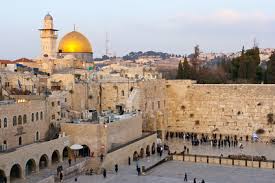
If you’ve been keeping up with world news of late, you may know (or not) that the resurrected Great Sanhedrin, headquartered in Jerusalem, sanctioned a Levitical offering of a previously sacrificed lamb upon a practice altar somewhere in Jerusalem. (Yes, there really is a reconstituted Sanhedrin in Jerusalem today.) Representatives of the Biblical 70-nations of the world were invited to witness this so-called historical event.

Altar Dedication Jerusalem 1

The recent dedication of this altar in Jerusalem by the reconstituted Sanhedrin is said to be linked to the future building of a 3rd Temple.

An altar had been secretly constructed. Cohenim (Levitical Priests of the line of Aaron) have been selected and trained to perform this and all future sacrifices and offerings on the altar. Furthermore, the implements for performing all the ceremonies of the Temple and altar have been constructed and are ready to go at a moment’s notice.

According to an article published by WorldNetDaily on 12/7/2018, entitled, “Israel’s re-established Sanhedrin to dedicate altar for new Third temple; 70 nations invited:”

“The re-established Jewish Sanhedrin is pushing the envelope on the rebuilding of the Temple next Monday, the last evening of Hanukkah, by consecrating a stone altar and reading of a declaration to all nations intended as an invitation to participate in receiving its blessings – leading to an effort to replace the United Nations with a new, God-centered organization.”

Zev Porat Messianic Jewish Rabbi

Messianic Jewish Rabbi Zev Porat gets to the bottom of the recent dedication of an altar in Jerusalem by the reconstituted Sanhedrin.

According to Messianic Jewish Rabbi Zev Porat, the Sanhedrin wants to set up a new god-centered United Nations (a replacement United Nations) to be headquartered in Jerusalem.

Beyond wanting to set up this nebulous replacement United Nations, what is the Sanhedrin’s true motivation? It is purely financial in nature, as confirmed in a recorded conversation between Rabbi Porat and a member of the Sanhedrin.

In terms of uniting with other people in this and future endeavors, the Sanhedrin suggests that it might be interested in uniting with other Faiths such as Protestant Christianity. The Sanhedrin representative, however, was not willing to comment as to how unification with other nations and Faiths would actually look or how it would work.

After some prodding, Rabbi Perot discovered that the unification is first and foremost financially driven. When pressed by Rabbi Perot, the Sanhedrin representative indicated that his organization was not interested in any dialogue of spiritual significance with Messianics and Christians. In the Sanhedrin’s mind, it’s okay for Messianics and Christians to be a part of such a unification, as long as they follow the lead of the orthodox Jewish Sanhedrin. Otherwise, they are not interested in any true relationship with Messianics and Protestant Christians.

Nevertheless, in putting this staged event on, the Sanhedrin, according to the representative Rabbi Porat spoke to via phone, is primarily interested in raising money for their projects. Those projects supposedly are related to the building of a 3rd Temple.

A lot has come out of this story. Some Christians, Messianic and Orthodox Jews have made special note that this so-called dedication of the altar took place on the last day of Hanukkah. For those of you who are not familiar with the true Hanukkah story, the Maccabean Revolt ultimately resulted in an 8-day purification and then rededication of the previously desecrated temple and altar (mid-2nd century BCE). This desecration was, in my opinion, the first iteration of Daniel’s prophesied Abomination of Desecration. The second iteration of this prophecy in my opinion occurred during Titus’ 68-70 C.E. destruction of the Temple and altar. Consequently, I personally do not believe there’s enough evidence in Scripture to support the building of a 3rd Temple and operation of an altar; at least not before the return of Yahoshua our Messiah. But that’s a discussion for another day.

The point to be recognized, however, in Christians, Messianic and Orthodox Jews making note of the dedication of this altar taking place on the last day of Hanukkah, 2018, is prophetically symbolic and significant. These believe that this event signals the imminent return of Messiah—be it Judaism’s version of Messiah or the imminent return of Yeshua.

One fundamental Christian organization took extreme umbrage over this event, especially citing the event’s funding aspect. The Sanhedrin group that hosted and rain this event, apparently somewhere near the Joppa Gate near the Temple Mount, was soliciting money from those who attended and others who did not attend but may have some interest in seeing a 3rd Temple built on the Temple Mount as soon as possible. This Christian Group calls themselves RISE, their seeming anti-semitic video appearing on YouTube, suggested that unsuspecting Christians are being duped into giving money for the construction of the 3rd Temple for purposes of forcing or ushering in the End Times, the Great Tribulation and the return of Christ. The RISE video also suggested that the Sanhedrin group pushing their financial agenda was playing upon certain Christian perspectives of Dominion Theology (ie., the belief that Christians have the responsibility of ushering in the Kingdom of God and so forth by whatever means necessary—so to speak).

Although I agreed with RISE’s take on this whole event, I was terribly offended by the group’s overt disdain for Hebrew Roots and Messianic Jewish believers. RISE suggested that some of the blame for the Sanhedrin’s misleading agenda related to this event can be laid at the feet of Hebrew Roots. So you can see that it doesn’t take much for our name to be dragged in the mud by our cousins in both Christianity and Judaism.

In a later interview of Rabbi Zev Porat by SkyWatchTV’s Derek Gilbert, I learned that the reconstituted Sanhedrin—at least the group that planned and ran the altar dedication ceremony—does not in any way hold the respect and followership of most of the orthodox Jewish leaders and people in the Land of Israel today. In fact, Rabbi Porat reported that a good number of orthodox Jews residing in the Land of Israel were vehemently opposed to the event. Porat suggested that this extreme division and the Sanhedrin’s unpopularity in the Land of Israel may be the reason the organization kept the event so low key.

Another interesting thing came out of this event. The Sanhedrin announced that a full ceremonial sacrifice of a lamb is planned for this coming Passover, utilizing the newly dedicated altar.

Regardless where you stand on this story, it cannot be denied that there’s a lot to be had here: both politically, prophetically and spiritually. The question that we must ask ourselves, however, is whether we as Torah Observant Believers in Yeshua Messiah, should involve ourselves in such things. I know that some prominent Hebrew Roots/Messianic teachers are falling over one another touting how significant this thing is to our immediate future as believers in Messiah. At least two-Messianic Jewish teachers went so far as to predict that the abomination of desolation spoken about in one of Daniel’s great prophecies and the Great Tribulation may occur in 2019.

Really? Really? Did not our Master emphatically state in His Olivet Discourse (Matthew 24) that no man knows the day nor hour that the end times—the return of Messiah will occur; no, not even the angels in heaven (verse 36). Only the Father knows.

My question and comment is this: if Yeshua was not given the 411 on when the End Time events will occur, what makes us think we have the 411; or for that matter, that we can figure out when these things are going to occur? It’s a fool’s quest when we start to throw out dates and time frames of Messiah’s return; even if the quest is innocent speculation.

And this is one of the things that grabbed my attention about this story, and that has to do with the impact it seems to be having on certain segments of our Faith Community. When this story first broke last month, biblical prophecy hunters from both sides of the aisle (ie, Messianics and Christians), were falling all over themselves and one another to attach some End Times—Last Days significance to the story. The general consensus from some orthodox Jewish and some Messianic/Hebrew Roots prophecy speculators is that this event would herald in the End Times which includes the building of a 3rd Temple on the Temple Mount; the Abomination of Desolation written about by the Prophet Daniel; the Great Tribulation; and the advent of the Jewish Messiah, which members of our Faith Community tag as the return of Yeshua HaMashiyach to earth.

My purpose in discussing this event is not to get into any Apocalyptic—End Times—prophetic speculations. The subject in and of itself is just too fraught with scriptural interpretational and idealistic differences for a fair, substantive and biblically accurate discourse. Rather, my purpose is just to throw out to you a word of caution as many prophetic speculators would have us all worked up over this altar event in Jerusalem being the linch-pin to the imminent construction of the 3rd Temple and return of Messiah.

Just because this or that man says a thing is so, doesn’t mean it’s so. Although there’s nothing at all wrong in speculating—something I find myself doing a great deal from time to time. However, when we begin to place so much of our focus and brain space on speculations and we treat those speculations as truth, even at the expense of reading into scripture things that may or may not be in there, we run the risk of doing ourselves a bit of harm.

In fact, Master corrected such speculation that was brewing in the midst of His chosen disciples on the Mount of Olives just prior to His ascension to His Father. When asked by his disciples if He would at that time establish the Kingdom of Yehovah, Master responded:

It is not for you to know the times or the seasons, which the Father hath put in his own power. (Act 1:7 KJV)

As alluring and intriguing as speculations about End Times and Tribulation things may be to some of us, at the end of the day, they are just speculations. These speculations must be kept in their proper perspective. It cannot be something that we default to in order to cause us to do something we would not otherwise have done or otherwise do.

Master Yahoshua gave us enough to worry about as His chosen emissaries: “Go ye therefore and make disciples of all nations…”(Matt. 28:19; NASB)

Paul on Halakhah and Aggadah–Part 4 of the Paul and Hebrew Roots Series

Paul on Halakhah and Aggadah–Part 4 of the Paul and Hebrew Roots Series

Paul on Halakhah and Aggadah--Part 4 of the Paul and Hebrew Roots Series

by Rod Thomas | The Messianic Torah Observer


Paul on Halakhah and Aggadah

Last installment, or Part 3 of this series, I introduced to you the Hebrew concept of Halakhah. In that discussion, I attempted to not only define what halakhah meant, but I also attempted to convey the significance of Halakhah to a great portion of Paul’s teachings and writings.

If you’ve not done so at this point, and are interested in what I had to say about halakhah and Paul, I would humbly ask you to head on over to part 3 of this series and listen or read what I had to say about this concept.

Before I proceed on over to the concept of aggadah today, I want to do a little more exploration of the concept of halakhah. There is indeed a great deal more to halakhah that I feel is vitally important to gaining a firm understanding of many of Paul’s teachings and writings.


The Hebrew concept of halakhah is quite simply the walking out of one’s Faith; how one behaves in accordance with the tenets of one’s Faith; that which one can see that is directly or indirectly associated with one’s Faith commitment.

Halakhah and Aggadah

Uniquely Hebraic Concepts having to do with our walk and inward drive to live God’s ways.

Thus, halakhah is how we walk out our Faith. It’s what others see us do as a result of our commitment to our Faith. And the most prominent representation of Halakhah is found with Torah; that which the Jews refer to as the written Law. For all intents and purposes, Torah is the rawest form of halakhah, for it contains the instructions of how we are to behave and conduct our lives.

As children of the Most High Elohim, our forefathers weren’t simply whisked out of Egypt, ushered into the Sinai wilderness and left to figure this whole Faith thing on their own. Father established a conditional covenant—an agreement–with Israel, that if they would obey Him; walk according to His commands; behave in accordance with the precepts and ordinances and instructions that He passed down to them through Moshe (ie., Moses), then He would be their God (ie., their Elohim) and He would make them a peculiar—a special people—unto Him above any other nation peoples of the earth—with all the privileges and benefits associated therein (Exo. 19:5,6). The stipulation, however, was that Israel would have to halakhah—walk in accordance with His instructions.

As I just mentioned, Yehovah did not simply lead our forefathers out to the wilderness and leave them to figure everything out on their own. Indeed, He not only miraculously and brilliantly delivered Israel from devastating Egyptian slavery or bondage (Exo. 18:10), Abba then gave them His Torah: the governing constitution; instructions for acceptable righteous living; that which would make Israel a light to the nation peoples of the world.

Messianic Jewish teacher Brad Scott brilliantly helped me understand this concept of halakhah from the perspective of a Hebrew father, placing the palm of his hand upon his young son’s head, and then guiding him through all aspects of life. That father would teach his son all the ways of Yehovah and Torah. He would train his young son in the family’s vocational trade. The father would teach his young son how to be a man.

And this was a perpetual handing down from father to son; an unaltered teaching and training throughout every generation.

No Hebrew father in their right mind would think of leaving his son to figure life out on his own. Such a thing would go against everything the Hebrews were taught and instructed to do concerning the rearing of children by Yehovah.

Moses commanded:

“You shall teach them diligently to your sons and shall talk of them when you sit in your house and when you walk by the way and when you lie down and when you rise up” (Deu. 6:7; cf. Deu. 4:9; 11:19; NASB)

Heck, even the Apostle Paul recognized the immense relevance of this illustration of halakhah. Paul wrote to the Assembly of Messianic believers in Ephesus:

“And ye fathers, provoke not your children to wrath; but bring them in the nurture and admonition of the Master” (Eph. 6:4; KJV).

Yet today, we in the west have, for the most part, forsaken this commandment. Most of us have placed the responsibility of teaching and raising our children on the shoulders of our nation’s teachers. We fathers have walked away from our Torah mandated responsibilities of placing our hand upon the head of our children—metaphorically speaking–and teaching them how to walk out their lives as Godly men. And that’s a travesty. Indeed, is there no wonder that our younger generation is in many cases so out of control?

The halakhic concept, as symbolized in how one “walks” out their Faith, is mentioned dozens of times throughout the Tanakh (ie., the Old Testament), as well as the Brit HaDashah (ie., the New Testament).

Gen. 17:1—in speaking to Abraham YHVH instructed him: I am the Almighty God; walk before me and be thou perfect.

Exo. 16:4—that I may prove them, whether they will walk in my law or no.

Lev. 18:4—and keep mine ordinances, to walk therein: I am YHVH your God.

Deu. 5:33—Ye shall walk in all the ways which YHVH your God hath commanded…

Jos. 22:5—and to walk in all His ways and to keep His commandments…

Psm. 119:45—I will walk at liberty: for I seek thy precepts.

Eze. 11:20—That they may walk in my statutes and keep mine ordinances and do them…

We see this same principle of halakhah illustrated in the term “follow,” which not only suggests a physical coming after the one beckoning others to follow; but more so, to become a disciple and to walk in the ways of the one beckoning to follow; that being the Master.

Mat. 4:19—Yeshua speaking:…Follow me and I will make you fishers of men.

Mar. 8:34—Yeshua speaking:…If any who comes after me, let him deny himself and take up his stake and follow me.

Joh. 12:26—Yeshua speaking: If any man serve me, let him follow me; and where I am, there shall also my servant be: if any man serve me, him will the Father honor.

Rom. 6:4—We were buried therefore with him through baptism unto death: that like as Christ was raised from the death through the glory of the Father, so we also might walk in newness of life.

2 Cor. 5:7—(for we walk by faith, not by sight)…

Gal. 5:16—Walk in the Spirit, and ye shall not fulfill the lust of the flesh.

Eph. 5:2—and walk in love, even as Christ also loved you, and gave Himself up for us, an offering and a sacrifice to God for an odor of a sweet smell.

1 The. 2:11—That ye would walk worthy of God, who hath called you unto His kingdom and glory.

1 Tim. 6:11—But thou, O man of god, flee these things; and follow after righteousness, godliness, faith, love, patience, meekness.

Hands down this is an essential element of our Faith. Yet most folks don’t even realize it’s significance.

Think about it: what is the first thing (or one of the first things) that a convert to our Faith inquires about? I can answer that from this ministry’s standpoint: by far, the question I am asked the most is “how do I…”

  • How do I keep Sabbath?
  • How do I keep the Feasts?
  • Is it okay for my son to play sports on the Sabbath?
  • Can I cook on the Sabbath?

These are all halakhic questions. How do I walk out this newly chosen Faith of mine? And the truth of the matter is that there is no shortage of individuals who are standing by at a moment’s notice to tell these converts how to halakhah.

Why is it that the convert to our Faith is faced with so many challenges and questions related to walking out the Faith? Is it not obvious that converts to fundamental Christianity conversely have no issue whatsoever as it relates to walking out or walking in their faith? There’s a difference.

Fundamental Christianity places more attention on aggadah—establishing a relationship with the Almighty—establishing one’s Faith in the Almighty—loving one another—establishing that hope for life eternal—than it places on walking out or walking in Christianity. Christianity is more aggahdic in her approach to faith (and we are just about to get into what aggadah is all about) than halakhic. Hebrew Roots, conversely, is more halahkic in her approach to Faith than it is aggahdic. And it is this inherent imbalance, on both sides of the aisle, that creates so much angst and hostility between the two groups of Messianics/Hebrew Roots and Christianity.

The reason it is so challenging for many converts, and veterans of Faith for that matter, when it comes to understanding how to properly halakah our Faith is that Torah is purposely vague in many of its commandments. I truly believe Father designed His Torah to be vague in many areas. Why? Because He desired the Hebrew to first give Him their hearts—to establish a substance relationship with Him. And it would be that after that relationship has been firmly established that Father’s Spirit, dwelling in them, would lead and guide their halakhah. The vagueness in halakhah—the vagueness of the various commands of Torah would be filled with a joyful seeking out by the Hebrew, of ways that he or she may keep the spirit of every Torah instruction and command. The Hebrew would wake up each day and be driven by his or her love for Yehovah, how they may please Him and how best for them to keep Father’s Laws. No longer will that Hebrew look for ways to get around keeping the commandments of Father’s Torah. Instead, the true, converted Hebrew looks for ways to please their God. Halleluyah.

And this is just scratching the surface of the concept of Halakhah in both the Old and New Testaments.

The Other Side Of Halakhah

In your many studies throughout the days, months and years of your walk with Messiah, you may have come across numerous examples and calls for the people of God to halakah in accordance with the ways of Yehovah our Elohim. You, like me, may not have associated a specific Hebrew term with this principle of walking or following in the ways of our Creator at those early times. But as you can clearly see, halakhah is extremely important to Yehovah and the Apostle Paul recognized this. In many of his writings he is constantly urging his charges to walk or follow in accordance with the traditions and doctrines and teachings he put forth to them:

“Be ye followers of me, even as I also am of Christ” (1 Cor. 11:1).

1 Cor. 4:16—Wherefore I beseech you, be ye followers of me.”

Phi. 3:17—Brethren, be followers of me, and mark them which walk so as ye have us for an ensample.

When Paul wrote this to the Corinthian and Philippian assemblies, he was no doubt pulling extensively from various aspects of his Jewish upbringing. It’s a fair bet that he was raised by his father and taught all aspects of Jewish life by him, including how to be a man as well as the family trade of tent-making.

So Paul then takes this essential principle and applies it to the various Messianic assemblies he oversaw. Paul was treating the members of those assemblies as if they were his children. We can only assume that Paul did not have any biological children of his own. Thus, the members of the various Messianic assemblies he over saw, were in effect his children—his sons. And Paul took very seriously the training he was providing his children. To him, it was his absolute responsibility to ensure that his charges were fully trained and adopted into the Faith.

To the Corinthian Assembly of Messianic Believers in Yeshua, Paul wrote concerning his ties to them:

“For I am jealous for you with God’s kind of jealousy (remember where Father stated that He was a jealous God to Israel?); since I promised to present you as a pure virgin in marriage to your one husband, the Messiah; and I fear that somehow your minds may be seduced away from simple and pure devotion to the Messiah, just as Havah (ie., Eve) was deceived by the serpent and his craftiness. For if someone comes and tells you about some other Yeshua than the one we told you about, or if you receive a spirit different from the one you received or accept some so-called “good news” different from the Good News you already accepted, you bear with him well enough! (In other words, when some bootleg preacher dude comes in your midst with some foolishness he or she calls the Gospel Message directly from Jesus Christ, you don’t seem to have a problem accepting that jacked up message.) (Continuing) For I don’t consider myself in any way inferior to these “super-emissaries.” I may not be a skilled speaker, but I do have the knowledge; anyhow, we have made this clear to you in every way and in every circumstance” (2 Cor. 11:2-6; CJB).

Thus Paul was uber-committed to ensuring that his charges—his children so to speak—learned to walk—to halakhah–in the proper ways of Messiah. Unfortunately, he realized that there were a lot of folks out there delivering to the Corinthian Assembly members a different kind of walk and many of the Corinthian Assembly members easily altered their walks to match the walks being taught to them by these other so-called apostles.

There is indeed another side to halakhah that you may be familiar with and I’m certain you’ve come across indications of this other side of halakhah many times throughout your studies. The other side of halakhah that I am now referring to has to do with walking in ways that are NOT of Yehovah: that is following after other gods; walking in our own ways, according to our own desires and understandings. Needless to say, this is not halakhah that pleases Father.

Now, the thing that should naturally come to the minds of well established Torah Observant Believers in Yeshua Messiah is the fact that any who would truly “halakhah”—walk—follow after the ways of Yah stand to reap tremendous, positive benefits and blessings, especially in this life, and even in the life to come. And over and over we find, especially in Torah, where Father pleads with Israel to walk in His ways which will always “lead to life” and “blessings.”

“I call heaven and earth to witness against you this day, that I have set before thee life and death, the blessing and the curse: therefore choose life, that thou mayest live and thou and thy seed—that is your descendants” (Deu. 30:19).

We can see tucked away in this admonishment directed to wandering nation of Israel to halakhah according to the ways of Yehovah in order that they would live well and receive abundant blessings, that there is another side to halakhah that leads instead to death and curses.

And the simple truth of the matter is that the world with the exception of Father’s chosen and obedient ones, halakhah’s—walks—follows after ways that are not of Yah on a daily basis. Yeshua Himself when describing the unbelieving people He encountered close to the time of His crucifixion in Jerusalem:

“He (speaking of Yehovah, His Father) has blinded their eyes and hardened their hearts, so that they do not see with their eyes, understand with their hearts, and do not t’shuvah (return; repent) so that I could heal them” (John 12:40; CJB).

Part of the reason the world walks in all the various ways that are NOT of Yehovah is because they are blinded and their hearts are hardened. According to Master here in this passage, thus they are incapable of understanding, nor repenting from their evil ways.

The bible is filled with examples of this other side of halakhah. I shall only give just a few for your reference since our focus is on the proper halakhah:

Psm. 1:1–blessed is he who walks (ie., halakhah’s) not in the council of the ungodly…


Jude 18–the mockers shall walk after their ungodly lusts.


1 Joh. 1:6–If we say we have fellowship with Him yet walk (ie., halakhah) in darkness, we lie and do not the truth.


Hos. 2:5—In illustrating the infidelity of Israel with Yehovah, Father borrowed from the life of the Prophet Hosea. In speaking about Gomer, Hosea’s wife, Hosea writes: Yes, their mother is promiscuous; she conceived them and acted shamefully. For she thought, ‘I will go after (I will walk or follow) after my lovers; the men who give me my food and water, my wool and flax, my oil and drink” (CSB).

Lev. 26:21—”And if ye walk contrary unto me, and will not hearken unto me, I will bring 7-times more plagues upon you according to your sins” (KJV). This is indeed clear enough warning that those who walk in walks that are contrary to the ways of Father will suffer problems. This is talking expressly of God’s chosen ones who abandon Father’s ways and walk in ways that are contrary to the ways Father has commanded us to walk.

And so forth throughout the remainder of the bible, we find where there is a form of halakhah that is not of Yehovah and any who chooses to walk in those paths are destined for death and curses.


Aggadah Defined


I want now to spend the remainder of our time together discussing the concept of Aggadah. As with halakhah, aggadah is a uniquely Hebraic concept. You will soon see that aggadah is intricately linked to halakhah, although many Messianic and Orthodox Jews have failed to link them in their lives. What I mean is simply this: there are many folks out there who halakhah, but lack entirely aggadah in their lives. You will see clearly in a moment what I mean.

Brad Scott describes Aggadah as instructions that we cannot see. Aggadah is something born from the heart.

Aggadah

Aggadah–this uniquely Hebraic concept is inwardly based and generally associated with the state of one’s heart that drives one’s actions in the Faith.

When we speak or think about aggadah, we are thinking and speaking about that internal thing that moves the true disciple of Yeshua Messiah to live a righteous life. Aggadah is nascent and cannot be seen, whereas halakhah is clearly seen by all. Aggadah is that which is born or dwells within the disciple’s heart and that which is born or dwells within the heart compels the disciple to walk.

In other words, what we do on the outside has to be born from the inside first. Otherwise, what we do on the outside is nothing more than rote, blind activity that is not genuine: it’s fake; it’s hollow; it’s without substance; and Father can clearly recognize that.

You see, by itself, Halakhah lacks compassion, motivation and commitment. Compassion, motivation and commitment comes from within and is inspired within us by the Ruach HaKodesh.

It is common to see a great amount of walking being done and lived out by people of our Faith Community and of Judaism. Yet many of us find ourselves lacking that compassion, motivation and commitment. We are simply going through the motions of our Faith. We are blindly halakhah’ing-out—walking out the Faith by blindly keeping Torah commandments. Most individuals who find themselves in this situation truly believe they are in a great place. They believe they are doing what they are supposed to do. And before you know it, they start to believe they are purchasing their salvation through their blind, rote obedience to Torah. Next, these same individuals begin to think of ways to get around various Torah commandments—work arounds if you will. They have it all figured out. They follow the teachings of the Jewish sages and start to take on the religion of Judaism. They lack any kind of love for their brothers and sisters in the Faith. Some even turn their noses up on those they deem are not of their elite spiritual status.

Father is not in the least satisfied with heartless Torah-keeping. Yes, it is important to be Torah observant. But being Torah observant must first become a willing giving of the disciple’s all to Father; a desire to please the Father; in so doing, it results in proper keeping of the Creator’s ways—His Torah—the written halakhah.

Recall that although many of the Jews of Isaiah’s time were Torah observant—to a degree—Father saw through Judah’s walk—that they were simply going through the motions in order to stay in God’s good graces if you will. Yet their lives were pure stank. These were evil through and through, although they went through the motions of keeping Torah—of being orthodox—tadah!

What was going on? The people of Judah were going through the motions of keeping the Feasts of Yehovah and the prescribed Temple worship, yet they were at the same time facing east on the Temple Mount and bowing knees to Baal and weeping for Tammuz. The Levitical Priests were corrupt and not carrying out their prescribed duties; mishandling the tithes of the people; committing untold, disgusting acts and forfeiting their reputations as appointed intermediaries between Yah and the people. And there were other iniquities ongoing in Judah at the same time the people were going through the motions of keeping Torah.

This flagrant hypocrisy annoyed Father beyond description. So annoyed was Father over the hypocrisy of His people that He said the following through the Prophet Isaiah:

“’Why are all those sacrifices offered to me?’ asks Adonai. ‘I’m fed up with burnt offerings of rams and the fat of fattened animals! I get no pleasure from the blood of bulls, lambs and goats! Yes, you come to appear in my presence (so-called worship at the Temple); but who asked you to do this; to trample through my courtyards? Stop bringing worthless grain offerings! They are like disgusting incense to me! Rosh Chodesh (New Moons), Shabbat, calling convocations—I can’t stand evil together with your assemblies. Everything in me hates your Rosh-Chodesh (New Moons) and your festivals; they are a burden to me. I’m tired of putting up with them” (Isa. 1:11-14; CJB)!

What can we see here in this compelling passage of Scripture? We can clearly see that Judah had halakhah, as they were clearly walking out Torah: they were acknowledging New Moons; they were offering prescribed sacrifices; they were showing up at the Temple at proper times of the year to worship; they were keeping Shabbat; they were convening or participating in holy convocations; they were keeping the Feasts of Yehovah.

Yet they were cheating on Yehovah. It was like we saw illustrated in the Prophet Hosea’s story. Hosea marries Gomer, a prostitute. Hosea is representative of Yehovah, while Gomer is representative of Israel and Judah. Hosea marries Gomer and rescues her from her life of iniquity. Yet Gomer is not satisfied with the righteous life that Hosea was affording her. So she returns to her life of prostitution. As disgusting as her previous life of prostitution may have been, she was never in to Hosea. Her heart, even after marrying Hosea and living a life away from the filth she came from, she yearned for her past lovers and her former life on the streets.

The book of Hosea is a fascinating read, especially as it relates to the concepts of halakhah and aggadah. What we see beautifully but woefully implanted in the book is the interrelationship that exists between the two concepts. We see in Hosea’s story and prophecy related to Judah and Israel where Father was calling Israel and Judah out for their bad–halakhah—their bad walk, which is an outcropping—which is resulting from—their hearts—their aggadah—being tied or given over to evil. Israel and Judah were the whores (ie., their whoring being their halakhah—their walk in paganism). The hearts of Israel and Judah belonged to the nations that brought them their paganistic ways. Their hearts were not with Yehovah but with the world. Thus they feigned loyalty to Yehovah through their rote, mechanical keeping of the ceremonial commandments of Torah in order to stay within the good graces of Yehovah. Little did they know, however, that Yah does not play that. Yah desired their full commitment. He demanded their hearts (ie., their aggadah) as much as He demanded their obedience (ie., their halakhah). He was not willing to separate the two. It would be both halakhah and aggadah, or nothing at all. And we know from the scriptures and from history that Israel’s refusal to give their hearts to Father (ie., their aggadah) resulted in them being dispersed to the four-corners of the globe, out of the Creator’s sight. Judah, facing a similar plight for similar, but slightly less heinous crimes, would go into captivity in Babylon.

If you’ve not taken the time to do so, I would humbly encourage you to read the book of Hosea in connection with our discussion here on aggadah and halakhah. The content of Hosea will give you a wider perspective on the dual concept of halakhah and aggadah, that I believe will go a long way towards increasing your understanding of these two concepts beyond that which we have already discussed.

And this has always been the problem with a great many of our cousins in modern Judaism: they halakhah—they walk in Torah (the written Law) and in their so-called oral laws, which they claim acts as a wall around Torah. They are steadfast in their commitment to their religion, which they have been persecuted for throughout millennia. Yet like their wilderness wandering forefathers of old, they lack the heart to properly keep—to properly walk in Torah. In fact, many of the precepts of their oral laws are in place to provide them a way around proper keeping of Torah. Their hearts are not for the God of Abraham, Isaac and Jacob. Their hearts instead are solely for their religion.

Yehovah desires to have every Hebrew’s heart; every Jew’s heart; every Messianic’s heart—aggadah. (That’s the one thing that Christianity seems to have gotten right in this equation. They have aggadah, but they lack halakhah.)

In order to have aggadah, the heart for walking—halakhah’ing in the Creator’s ways, one must first have a desire know God. One must know God in order for him or her to then desire to walk in God’s ways properly. One must desire; one must establish a true relation with Father first before developing the desire or heart (aggadah) to walk-in (halakhah) the Father’s ways. Otherwise, one ends up making the same mistake that our Hebrew forefathers made in the Sinai wilderness and in the Land of Promise—they end up turning away from the ways of the Creator and walking-in (halakhah’ing in) their own ways or in the ways of evil. We just saw in Isaiah 1 how Father was scolding the Jews for their hypocrisy, despite their seeming keeping of Torah.

Somehow, humans convince themselves that all they have to do to stay in God’s good graces is to render unto the Creator a handful of platitudes and do a few good deeds and chores, and then they are all okay to live like the hellions they’ve given their hearts over to. And like Gomer, Hosea’s prostitute wife, they never had a relationship with their Master—their husband. Their hearts (ie., aggadah) are really with the other entities they admire and the other ways of life that are contrary to the ways of Yehovah.

Israel has never truly had a relationship with Yehovah. Moshe (ie., Moses) knew God. Second only to Yeshua our Messiah, Moses had the most intense and close relationship with Father. Exodus 33:11 described that relationship as:

“YHVH spake unto Moses face to face as a man speaketh unto his friend…” (KJV)

“And there arose not a prophet since in Israel like unto Moses, whom YHVH knew face to face” (Deu. 34:10).

On the other hand, the Israelites as a nation people only knew of Yehovah. With the exception of just a handful of Hebrews such as Joshua and Caleb, the wandering Hebrews and their descendants in the Land never established a relationship with Yah. And this absence of a relationship with the Creator resulted in their repeated departures from walking-in Yah’s Torah, which in turn resulted in their being subjected to hard penalties and even death.

Father recognized the problem: the people’s hearts were never with Him; their hearts were always somewhere else. Some hearts were with other gods. Others’ hearts were for themselves. Still others’ hearts were after some foreign, made-up principles, beliefs and doctrines that were not of Yehovah and served only to draw the Hebrew away from the Creator of the Universe.

Father’s heart was broken and He acknowledged the problem by saying:

“O that there were such an heart in them, that they would fear me, and keep all my commandments always, that it might be well with them, and with their children for ever” (Deu 5:29 KJV)”

Paul recognized that the Jews propensity for halakhah in Judaism was worthless if they lacked aggadah. To the Roman Assembly of Messianic Believers Paul wrote:

29 But he is a Jew, which is one inwardly; and circumcision is that of the heart, in the spirit, and not in the letter; whose praise is not of men, but of God. (Rom 2:29-3:1 KJV)7


___________________________________________________________________________________________________