No Results Found
The page you requested could not be found. Try refining your search, or use the navigation above to locate the post.

A Case for Holiness
As I was conducting my Torah studies week-before-last, I came to Exodus, chapter 19.
This of course, is a well-known passage of Torah to our community, for it is the place that marks that point in our history that we officially received our Creator’s perfect Law.
We had just arrived at the base of Mount Sinai, just three-months prior, having been freed from our Egyptian taskmasters. Upon our arrival, Father summoned Mosheh to the top of the mountain and it was at this point in our history that Abba laid out the terms of the contract to Mosheh that we would either agree to abide by or reject; the option being entirely ours. It was not a one-way contractual agreement such that we were being forced to become Yahovah’s children. Well, Yah has always worked that way has He not? He has always been the God of choice—choose ye today whom you shall serve(Joshua 24:15).
It is certainly easy to recall that when we were in Mitsrayim (i.e., the land of Egypt), we did not have a choice when it came to serving our Egyptian taskmasters, but here, at the foot of Mount Sinai, we were being exposed to a taste of true freedom where we had the option of saying yes to serving the Creator or no to serving Him.
When I think about this whole thing and reflect upon how we must have felt or viewed things collectively and individually as they were transpiring before us. I can not help but think that most of our mixed company coming out of Egypt had no idea what was in store for us.
Abba was not quick to show us His plan but sought to prove us worthy at every step leading up to the revealing of His plan to us.
I would imagine that many of us believed that we would simply be freed from bondage by this mysterious God who would lead us to a land of great opportunities where we could live out our days as we so chose; similar to the mindset that many in churchianity and even our Hebrew Roots community possess today.
Instead, Sinai for us was a precursor of that narrow gate and straight way that Father swore would lead us to a life that just three months prior, was unimaginable. Life would not be easy for us under the terms of the agreement that Abba was laying out before Mosheh and ultimately before us as a nation. Nevertheless, if we could see beyond and live the nuts and bolts of that agreement without compromise (because Abba is a jealous God and He does not share His glory and authority with any other supposed god or power over our set-apart lives), we would reap the unfathomable benefits of being the Creator of the Universe’s chosen, prized possessions in all the earth. Imagine that!
Of the billions of people who have ever lived on this planet, we stand as the Creator’s chosen few. What an amazing truth.
As we proceed through the chapter, we come to two places where Father severely warns Mosheh and ultimately us as a body, that we are not to invade the established boundaries of the mountain, lest we suffer termination with extreme prejudice—that is, execution by stone and or arrow. The verses where this admonishment is found in verses 12 and 13; 21 through 23.
This admonishment by Yahuah has always intrigued me, given that in chapter 20 of Exodus, it was revealed that when we saw the thunder and the lightning and heard that ear-piercing shofar and saw the mountain in such an infernal state, we stood trembling at a distance from the mountain (verse 18). We even told Mosheh to speak to Yahovah on our behalf because we were outright terrified of our Father’s manifested presence before us.
Let us be honest about this thing here: this was the first-time we’d been formally introduced to Yahovah. Yes, we saw His power and might and authority magnificently manifested in Egypt an along our journey to Sinai, but we’d never had a face-to-face, let’s talk and explain the situation, type meeting with Yahuah, our Redeemer until this time in our history. What happens when one goes out to meet someone special for the first-time? Well, he or she puts their best foot forward. Indeed, Abbah instructed us to prepare ourselves for that meeting by washing and purifying ourselves and readying our hearts and minds. We were to put our best foot forward at this meeting. Yahuah came to our meeting in his great splendor; dressed to impress.
I guess this is a far cry from how we view and treat the presence of our Father today. In many cases, that fear that we had towards Father has been replaced with outright irreverence and disregard by so many, but for now I wish to focus on why Father admonished us to not invade the boundaries of the mountain when He obviously knew that we would not.
So I guess I am mystified that our omniscient Father would pose such a stern warning to Mosheh knowing that we would by no stretch of the imagination violate the boundaries of the mountain. My first inclination was that, hey, Father was just making a rule that we, His children, would have to obey and I went with that for a long time. Yet with this latest read, that curiosity once again hit me like a ton of bricks that I just could not dig myself from under. To me, this admonishment by Abba to Mosheh had to be more than a simple “don’t violate the boundaries of My mountain because I said so.” One thing I am certain of is that our Creator does nothing without a reason. Now some of those reasons may not be readily apparent, or for that matter, not available to us for whatever reason and I want to resist engaging in eisigesis (i.e., reading into the text) for purposes of surmising a reason why. Nevertheless, I will take slight liberty and reflect upon a potential reason for Father prohibiting us from broaching the boundaries of the mountain. Hey, this is Sabbath Thoughts and Reflections by the way.
Apart from Yahuah giving the command (twice given) and us simply obeying it because Father said so and because we did not want to die violating the command, I would submit that Father was intending to teach us a lesson here. I believe that Father gave Mosheh this admonishment for purposes of establishing boundaries between the common and the holy. That’s right, I believe that Yahovah wanted to make it perfectly clear to us that He is our God and our Creator and that which He deems holy we are not to treat as we would everything else in our life or within our sphere of existence. I envision Father saying: “Today, I am establishing a clear line of demarcation that I will expect you to respect and observe; and I am going to make that line of demarcation very clear to you; and for that matter, very easy for you to respect and observe. I know that you will be too terrified to cross the boundaries that I am setting up before you, but I also want you to know that wherever My presence rests and wherever I place My Name, you will respect those places and things or face dire consequences. In this case, you cross over and touch the mountain, you die.”
Separating the common from the holy: now that is a concept that has lost a lot of meaning and respect by us humans over the centuries. As it relates to this particular story and situation, we had just arrived in town (i.e., Sinai), having just a couple months ago, beat-feet out of Egypt and trekking across the desert and we were a green, snotty-nosed, mixed-lot of souls who obviously did not know the things of our God. In fact, we came out of pagan-Egypt with all her idols and false gods and we knew nothing of true holiness. Evil (as in paganism) only begets evil and nothing good ever comes out of evil. Thus, we knew nothing apart from that which we were exposed to in Egypt; years spent in abject servitude and bondage.
In the midst of our servitude and bondage, we picked up paganism, whorshipping the gods of our Egyptian over-lords. When we fled Egypt on eagles’ wings, we did not know anything about Yahovah, the Creator of the Universe, apart from Word being handed down about Him being the God of our father’s Avraham, Yitsak and Yaachob. Obviously this was the case because we quickly returned to the worship of the golden calf when Mosheh went up the mountain for an extended period of time soon after this Sinai encounter (Exodus 32).
Definition of Holy
That which was dedicated to God was conceived of as entering the sphere of the “holy.” This included the various elements of Levitical worship called “holy things” in Lev 5:15-16, the produce of the land (Lev 19:24), personal property (Lev 27:28), and spoils obtained in military action (Josh 6:19). The sacrifices that were to be eaten only by the priests were denominated “holy” by virtue of their absolute dedication to the sphere of the sacred as represented by the priesthood (Lev 19:8).
While the realm of the holy was conceptually distinct from the world with its imperfections, it could nevertheless operate within the world as long as its integrity was strictly maintained. The maintenance of the integrity of the “holy” was a function of the Israelite cultus. The holy God came to man in redeeming love within the context of regulations and proscriptions that were designed to maintain the purity of holiness the characterized God’s essential nature. Even before the establishment of the Levitical system, this principle was recognized (see Exo 3:5). (TWOT Lexicon)
Essentially, that which Yahovah/Yahuah/Yahweh, the Creator of the Universe, has declared sacred or holy, special to Him and His operations, is holy. Otherwise, anything not declared sacred or holy or special to Him is man’s mess; in some cases, it is hasatan’s mess and is essentially profane. God knows how much of hasatan’s mess is mixed in with that which Father has set apart as special and holy and that is not only problematic, it is a no-no.
Yet millions hang on to a religion that is a mixture of the profane and that which is supposed to be holy according to our God, out of a fear and respect for their denomination, faith community, culture and traditions. Unfortunately, Yah does not care for such behavior and His Messiah will ultimately put an end to it all.
Holiness According to the Bible
Yahovah established with us “right off the bat” an uncompromising “holiness factor” that He insisted be honored and observed by us at all times. There was no question as to what was holy/sacred/set-apart then, and for all intents and purposes, there should be no confusion on this subject as it relates to our understanding and observance of the holy things of Yahuah our Elohim today.
Yet I would submit to and ask you: have we not forsaken that “holiness factor” in our Faith Community today? I mean: in certain sects of fundamental churchianity, especially in some of the fundamental Christian sects that I was exposed to growing up, holiness was more of a “man-made factor” than a “God-ordained factor” or biblically supported factor. Outside of the Christian sects that I was exposed to growing up, there was always the Catholics who worked the heck of this holiness thing. Virtually everything related to Catholic edifices and houses of worship, their masses and their various relics strewn around the world, was assigned by the powers to be at the Vatican, a holiness factor. In terms of the Christian sects I grew up around, the holiness factor was assigned to pulpits, traditions, doctrines, preachers, pastors and ministers.
Looking back at this stuff from my current station in life and filtering most things through my Netsarim worldview or lenses, I clearly see that none of these things that were deemed holy were deemed holy by Abba or the bible; in fact, everyone of them was deemed holy by men, plain and simple; and who is man to assign a holiness factor to anything without the Father’s permission or direction? Yet, is that not the way things work in the mundane, common world: man determines what is what and who is who and damn God and His Scriptures for man believes he runs the show here? Oh how it must insult the Creator to know and see that man is running the show (running it badly I might add) that He established and set in operation.
Even in some segments of our Hebrew Roots Community, we have crossed that line from God-ordained holiness over into man-made holiness. Case in point: Torah worship; sacred names; the Talmud; and certain practices and traditions that are germane to Judaism; and members of our community who are tied to these sects will almost go to fisticuffs over these things that they and their sects deem as holy. Yet when it comes down to the things that Father has actually deemed as holy, many in our Faith have crossed over those boundaries and profaned the established things of Yahovah that are truly holy such as Sabbath-keeping; the Feast Days; our perfectly lived Torah-observant lives; the ways of Yahovah; our Master Yeshua Messiah (yes, believe it or not, we have many in our Community who are Yeshua-haters); and the list goes on as delineated in Scripture.
What is Holy to Father?
So needless to say, I went on a search through the Word for that which Abba has deemed holy. It would stand to reason that Father would reveal to us that which He considered and demanded that we observe as holy.
Well, I was taken aback to find that Father has set apart unto Himself a rather broad and large number of things that He has deemed holy. Some of those things no longer are in existence and thus the holiness factor would not be applicable in this day and age. Certainly there are other things that remain as holy elements to our Faith and I have come to conclude these things demand that we honor and respect them as holy unto Yahovah our Elohim.
Allow me to mention some of them; and know that this is not an exhaustive list.
Considerations
Again, this list that I have provided is not intended to be an exhaustive listing of that which Father has deemed holy or that which the writers of the Holy Writ were inspired by the Ruach Kodesh to deem as holy. Instead, I see this list as a primer of sorts, that gave me a sense of the great many things that Father has ordained as holy unto Him.
I also came across some considerations as it relates to this holiness factor that I saw as important to pass on.
To begin with, that which Abba has deemed as holy is not to be worshiped by us as Yahweh’s chosen people. Unfortunately, our Faith community is populated by individuals who have taken on religion to the full extent of the meaning, the most prominent of our lot being those who practice Judaism. Many worship the implements of our Faith that are deemed Holy by Father such as the Torah, the Names of our Creator, tzitzits, the Temple (albeit the temple no longer exists, people worship the land of Israel), and even worship some of our Hebrew Roots leaders. Although Abba set before us a list of the things that He deems as holy, not once did He ever command us to worship these implements. Yet it seems hardwired within man to worship those sacred elements of their chosen religion and Faith. Certainly, there is an inherent temptation to worship that which is set apart, but Yahuah our Elohim is the only being that is to be worshiped by us.
The other thing is our holiness: Father requires that we be holy as He is holy and by far, that delineation is mentioned more times than any other element of our Faith. Over and over we are reminded that we are holy unto Father and that we are to be holy in all our ways.
This issue is driven home a great deal in Leviticus 20: 7,8 where we are reminded that our principles, affections and aims must be holy (Matthew Henry Commentary on the Bible). Matthew Henry continues on as it relates to this passage: “We must then cleanse ourselves from all the pollutions of sin, consecrate ourselves to the service and honour of God, and conform ourselves in everything to His holy will and image…(This is part of the sanctification process). In all our actions and in the whole course of our conversation…” (must be obedient to Torah (i.e., you shall keep my statutes).
It then becomes the criteria by which we are then sanctified when we honour and obey Abba’s Torah. Yet we lack the ability to keep Torah to the extent and manner that Father desires, unless we have the Ruach Kodesh working within us (which we should have)—that His Ruach (i.e., His Spirit) writes His Torah upon our hearts and in our minds (Hebrews 8:10; cf. Jeremiah 31:33). In order for this process to work within us as potentially Abba’s holy people, we must have a cleaned up and purified Temple/Tabernacles that can house the Ruach Kodesh and allow Him to operate within us effectively.
So one reflects: why must we go to such a great extent as it relates to the holiness that Father requires of us? (1) Yahuah our Elohim commands it of us; (2) we want to please our Heavenly Father; and (3) to bring glory to His Holy Name.
Of this concern, Matthew Henry comments: “Yahovah (corrected) sanctifies us through special privileges, laws and favours,” all of which are designed to bring us to that special, “peculiar people” status that Father so desires us to be in this world, as well as bring us to the place where we become Yahovah’s special possession. Henry continues: “ Yahovah’s people are, must be, persons of distinction. Yahovah has distinguished us by His holy covenant” (corrected).
Of this same issue, according to Gill’s Bible Commentary, we are to sanctify ourselves by abstaining from all idolatrous practices and then we are to observe Abba’s Torah. In doing such, we become a holy, set apart people from all others in the world in the manner of our conversation and worship.
Yet many self-professing Netsarim are very open to profane and disgusting converation, even castigating those of us who take exception to their practices and talk. Why are they like that? I have read where some feel that it is just words and that their use of profanity is an organic form of expression that would make no difference to God. Really? The common world freely uses profanity as a means of communicating at all levels and on various things. If we are supposed to be holy in all areas of our existence, why would our conversation (that is our vocabulary) not be included in that holiness factor?
As I have mentioned in prior episodes of Sabbath Thoughts and Reflections, the holiness factor requires a “dying to self” as alluded to in Matthew 16:24,25; Mark 8:34,35; Luke 14:27. It becomes the critical decision that we all must make of deciding upon which side of this thing we are going to settle upon and if we decide that Yahovah’s way is the way we want to go, it then becomes the very difficult process of letting go of the things of this life that do not mesh with the things of Yahovah and then walk out our Faith and our salvation in “fear and trembling” (Philippians 2:12); relying upon Yahovah’s Ruach HaKodesh to empower us to stay within the confines of that narrow way.
Oh how I can attest that this is definitely not an easy thing to pick-up and do. Nevertheless, it absolutely must be done, more sooner than later, by each of us. As we have so clearly seen in the passages discussing the holiness factor, especially those elements of the holiness factor that apply specifically to us as individual Netsarim, Abba requires we be holy as He is holy.
In chapter 20, verse 26 of Leviticus, Father once again reiterates His requirement that we be Holy, more so that that holiness factor will have led to Him actually “setting us apart from the nations of the world to be His special possession.” Despite all the protests and teachings to the contrary, we cannot be His special possession unless we are holy.
The page you requested could not be found. Try refining your search, or use the navigation above to locate the post.
Closing Thoughts and Reflections
Given the extensive treatment of the concept of holiness in the Holy Writ, it is safe to conclude that holiness is not only an important concept to our Father, it must also be an important concept for us—His Children–to understand, discern, guard and of course observe with all the reverence we can muster.
Why? For a few reasons: that which is important to Father must naturally be of importance to us. If we dare call ourselves Children of Yahovah/Yahweh/Yahuah, yet we profane that which Father has deemed holy, we stand the risk of offending Him, marginalizing His Torah and sullying our witness and distinct purpose in this world.
Take for instance the Sabbath, which Father sanctified and separated it as holy and special from the other six-days of the week: when we treat the day as we treat any other day, we have by default violated Abba’s established holiness provision for the day and falsely demonstrated to a profane world that the day is just like any other day. I would submit that the same mindset applies to our observance of Torah, although our observance must be profoundly tempered by the Holy Spirit actively operating in our lives.
I am not in the least advocating Torah worship or any such religiosity that would obviously be a prescription for disaster. What I am advocating, however, is Teshuvah—a heart-felt, zealous, intelligent, uncompromising return to to the ways of our Creator as He originally intended and as our Master taught and modeled for us.
As we grow in the imagine and likeness of our Master, individually and collectively, I look forward, with the greatest of expectations, to being that holy thing that Father has so desperately sought of His people. What an amazing journey we have embarked upon; what an amazing God we serve.
So let us press forward towards that mark of the prize of the high calling of Yahuah in Yeshua HaMashiyach (Philippians 3:14). With the aid of the Ruach Kodesh, bang out and apply this holiness factor in every aspect of our being so that we become that peculiar, holy nation of priests—special possessions of Yah—holy and acceptable to Him—and effectively fulfilling His perfect will in the earth.
Until next time, fellow saints in training, may you be most blessed. Shalom. Shavuatov. Take care.
This is Sabbath Thoughts and Reflections—Episode 85—My Post-Passover-Feast of Unleavened Bread Thoughts and Reflections
Greetings fellow Saints in Training. I am trusting that this episode of Sabbath Thoughts and Reflections finds you, your families and fellowships well and bless.
Hey, how was your Passover and Feast of Unleavened Bread celebration? I hope they were spiritually enriching and that you received the blessings that you were hoping and looking for.
As I am posting this episode, we find ourselves just having entered the second Biblical Month of the Creator’s Calendar Year, with the renewed moon sighted over the land of Israel yesterday, 4/28/2017. Having just concluded Passover and the 7-Day Observance of the Feasts of Unleavened Bread (aka Matzah) less than 2-weeks ago, we now turn our sights to Shavuot (aka Pentecost), the final installment of the Spring Feasts of Yahuwah, which will hit us on 6/4/2017.
As it relates to my Passover and Feast of Unleavened Bread observance this year, Hilary and I stayed local, but we did vacate our home and checked in to a hotel for the week. We realize that we cannot keep Passover and Unleavened Bread the way Torah expressly lays out for us given that the Romans in 70 C.E. destroyed the Temple in Jerusalem and that Yeshua’s sacrifice replaced the animal sacrifices. Nevertheless, the once majestic temple that once stood in Jerusalem is gone but has been replaced by these bodies of ours and it is our bodies that Abba’s Ruach dwells (I Corinthians 3:16; 6:19). Thus we honor the Feasts of Yahuwah as Abba commanded (Leviticus 23) through fellowshipping with other like-minded Believers in Yeshua Messiah as Father provides. It becomes our greatest pleasure, or it should be, to welcome each feast as it comes with joy and great anticipation, for these are Abba’s appointed times—the sacred moedim of Yahuwah. Father did not abolish His feasts as so many of our cousins in Christianity are quick to point out to us. They are to remain in perpetuity and they serve a divine purpose of reminding us of the great things that Father has done for us through His Son Yeshua Messiah and the great things to come for those who are His and await His coming and the establishment of His Kingdom here on earth.
We know for a fact that Yeshua kept the feasts as did the apostles, especially Paul who wrote to the Corinthian Assembly of Believers: “Therefore, let us celebrate the feast, not with old leaven, nor with the leaven of malice and wickedness, but with the unleavened bread of sincerity and truth (I Corinthians 5:8, NAS).’
So who are we to shirk the feasts? While the world is falling apart by its seams, we are blessed to have Yeshua, Torah and the Feasts of Yahuwah. Amein.
With that my beloved, let us get on with some post Thoughts and Reflections on Passover and Unleavened Bread.
In Love With the Feast of Yah!
I am a “down-right,” “bought and paid-for,” fanatic when it comes to the Feasts of Yahuwah/Yahovah/Yahweh. Ever since I officially began observing the feasts back in 2004, I take the greatest joy in their observance and the celebratory opportunities they provide the Torah observant believer in Yeshua Messiah.
Looking Back at the Beginning
When I first began observing them, I, as I am certain any new believer to our Faith has experienced, met each Feast with somewhat of a tense sense of anticipation. What I mean by this is that, we begin our “Feasts-honoring-careers” (if you will) with a deep, heartfelt desire to “do the Feasts” properly (knowing now that there is no Biblical-specifics as to what constitutes “proper” when it comes to 21st-century Feast observances) and in such a manner that it would be pleasing to Abba; we did not want to screw any of these celebrations up.
So at the beginning of my Feasts-honoring-career,” I began to over-do them (the Feasts that is) to such an extent that the Feasts became somewhat burdensome for me and I began to question: were we doing this thing correctly; were we dishonoring Father in the way we were observing the Feasts; what will my family members and co-workers think of me taking off so much time from work and life in general to observe—what?—dead Jewish holidays that even the Jews don’t truly observe anymore; do we have the correct dates for the Feasts; would we be ready in time to begin the observance; what is the point behind the observances anyway? Yaddy…yaddy…yaddy.
Still Concerned About the Feasts
These questions and concerns haunted me in the first couple years back when I first converted, and to a lesser extent, they still haunt me even to this day. Oh, these questions and concerns have somewhat morphed over the years, I’ll be honest to say, taking on more of a deeper, personal concern: will we squander the opportunities the feasts provide by not seeking out every possible opportunity; what does Abba want us to gain from the experience; who are the best persons to observe the feasts with—just Hilary, friends or a particular fellowship-gathering; what is reasonable to spend (money-wise) in order to honor Yah through observing His feasts in the spirit that Abba would justly require?
This Passover a Bust?
This particular Passover celebration season proved a challenging one for me in terms of these and other stated concerns. This particular year was quite odd in that my concerns centered upon what Abba wanted me to gain from the celebration period. (Yes, I know, touching on being a bit inwardly focused in my concerns, but I am giving you my sincerest thoughts.)
I will be honest with you: for much of the 8-day observance period (i.e., the day we identify as Passover, followed by the 7-days of Unleavened Bread), I felt troubled and frankly, empty. I just could not identify what I was supposed to be getting out of the weeklong observance. Oh, I delved into some moderately deep Scriptural studies; some teachings online; and some personal reflections and prayer throughout the week, yet by week’s end, I was still unclear what I gained (spiritually speaking that is) from the celebration week.
Yes, I believe (it’s a quirk of mine) that we are to gain or get something out of each feast observance—that we must leave each feast celebration in a better spiritual place than when we began the feast, otherwise I feel as though I’ve missed what Father would have in store for me. Moreover, I do not want to miss a thing that Father has for me.
Father’s Feasts
These are supposed to be Abba’s appointed times that He established at the very beginning to meet with us (Genesis 1:14; Leviticus 23:4; Psalm 104:19; Daniel 2:21) collectively and individually, especially during the three-pilgrimage Feasts of Unleavened Bread (Leviticus 23), Shavuot (aka Pentecost or Feast of Weeks) and Sukkot (aka Feast of Tabernacles or Booths). I believe that is one of the distinct reasons Father commanded us to pack up and go to where He chose to place his Name and to celebrate these times before Him in joy and in reverence and in anticipation of a spiritual blessing (Leviticus 23; Deuteronomy 12, 14, 16 and 26). These feasts gatherings are “dates” we are privileged to have with the Most High and they should be some of the most memorable, beautiful, spiritually romantic, substantive periods in our lives.
A Date with the Creator
I remember when I was courting my lovely wife, Hilary, back in the day: oh, how I looked forward with indescribable anticipation the dates we would have. Each date we’d set would result in my mind being almost entirely focused upon the plans that we’d made and how I could make those plans even more special for her. When the time came for our date to begin, there was a joy and an anticipation of a wondrous time that I would have with her and how much closer we would become because of the experience. Those were heady and crazy times, looking back 36-years ago. Talk about “first love.”
Somehow, I believe my dates—those set, annual, appointed times with Yahuwah—must exceed the dating experiences I used to experience with Hilary three and a half decades ago.
The question for me becomes–how do I capture that same sense of anticipation and joy in my celebration of the feasts, and for that matter, exceed them?
Not Much Joy this Passover
Sadly, I was lacking that sense of anticipation and joy this year and that has somewhat disappointed me. Do I feel that the entire Passover period was a spiritual bust for me? No, not in the least, but it was not joyous nor inspiring. I will explain in just a second.
Introspective—Testing—Bitter Sweet—Revelatory Type Passover
This Passover for me was more of introspection and a time of testing and spiritual self-inventory; it was more of a bitter experience than a pleasant one. Now this does not mean that the experience was not spiritually good for me. On the contrary, I believe it proved to be a most spiritually beneficial feast for me as a Spirit-Filled Torah Observant Believer in Yeshua Messiah. No, it was not one of those “hang out with the brethren” Feasts this year—it was something else: revelation; introspection; inquiry; concern; regrets are just a few of the descriptors of my time last week. Again, it all came down to what I gained from the experience. It is all about spiritual gain: growth; spiritual development; spiritual and personal insight; fellowship (when available); rest, both spiritually and physically; peace; opportunity; worship; and celebration—celebration of life, who I am as a Son of the Most High, of my redemption, of my tremendous good fortune in Father’s adoption of me as His child. Of course, there is much more.
So what did I come away with—or what did I gain—from this year’s Passover? I came away with the following things that, quite frankly, I’m still working through even as I write this post: first, the “love of the many” has seemingly “waxed cold” in our Faith Community and I’m afraid to say that even I may also be infected with this malady; secondly, the Passover-Unleavened Bread observance was more than just a reminder that sin must be purged from our lives; and thirdly, as much as I prefer introversion as my primary framework for worship, I found that I missed fellowshipping with other like-minded believers apart from Hilary.
I know, a bummer, right? Well, not exactly. What these elements have begun to teach me is that I, Rod, have a ton of work that needs to be completed in my life and that I must decide where my heart, mind and soul truly will lay in my remaining years on this earth before Master returns.
Allow me to reflect upon each of these 3-areas if you don’t mind.
The Love of the Many…in Hebrew Roots
The first of these 3-reflective areas of Passover has to do with my perception—dare I say heartfelt concern—that love is quickly vanishing from the ranks of our Faith Community, if it has not already done so by now.
Despite the reality of our abject preoccupation with Torah, one of the central, dare I say essential criterion of being a member of the Hebrew Roots Community, is that Yahoshua/Yahshua is our Master and we are compelled to obey Him as we obey our Creator Yahuwah. For some odd reason, a huge swath of Torah-keeping believers have all but abandoned Yeshua and have turned their lives almost entirely to a radical form of Judaism or have adopted a Judaistic-like worldview. One believer that I came across in social media aptly dubbed these individuals as “Yeshua-haters;” and indeed, given the excessive venom and vile disdain these individuals have for anyone who doesn’t see the things of our Faith as they do, this title certainly fits these individuals to a tee.
Nevertheless, Master Yeshua and His teachings if ignored will have eternal repercussions.
Shaul (aka the Apostle Paul), in his letter to the Assembly of Believers in Philippi, so eloquently wrote of our Master: “Have this attitude in yourselves which was also in Messiah Yahoshua, who, although He existed in the form of Yahuwah/Yahweh/Yahovah (i.e., having the qualities and characteristics of His Father), did not regard equality with Yahuwah a thing to be grasped (i.e., a thing to take hold of), but emptied Himself (He essentially set aside His favored status with the Father), taking the form of a bond-servant and being made in the likeness of men. Being found in appearance as a man, He humbled Himself by becoming obedient to the point of death, even death on a cross. For this reason also, Yahuwah highly exalted Him and bestowed on Him the name which is above every name (i.e., above every authority), so that at the name of Yeshua every knee will bow, of those who are in heaven and on earth and under the earth (i.e., every created being that has ever existed), and that every tongue will confess that Yeshua Messiah is Master, to the glory of Yahuwah the Father (Philippians 2: 5-11; NAS, amended by me).
So with this knowledge being set firmly in our hearts and minds, it makes undeniable sense that we should do what Yeshua tells us to do; that of course assumes that He is indeed Master over our lives, having been appointed as such by Yahuwah His Father. I would further submit that this point is not up for debate, nor is it optional.
Now, Master gave us a commandment, that He stipulated as a “new” instruction or commandment, and that instruction is found exclusively in John’s gospel, chapters 13 and 15 which reads: “A new commandment I give to you that you love one another just as I have loved you; you also are to love one another” (13:34, ESV); and “This is my commandment: that you love one another as I have loved you” (15:12; ESV).
As an aside, I find it fascinating how this concept of love for one another seemed to resonate so profoundly with John, whom the writing suggests the Master loved exceptionally so. This commandment resonated with John so much that he even referenced it in his first and second general epistles—I John 4:21; 2 John 1:5.
So the question I have for our community today is–where is the love? Why is our Faith Community so devoid of love for one another? Why do we persistently hate on one another? Why do we despise one another over the most innocuous things and cut off fellowship with one another because we interpret elements of our Faith differently from one another? This thing is worse than money and politics in the carnal world, for these are just two examples of things that have the potential to sever most relationships between once respecting and even loving peoples.
For some bizarre reason we have many angry and mean folks attaching themselves to our community who seem quite obtuse to the aforementioned Johannine passages.
Yes, people in our Faith Community can be exceptionally mean and these exceptionally mean people have no problem eating you alive in person or online over the most innocuous Torah topics. I got into, yet, another fight on Facebook the week of Passover, this time over the Biblical validity of what I often refer to as the Lunar Sabbath debacle. That on-line conflict essentially ruined an entire day of the Feast for me; I was outraged at the arrogance of the two individuals who insisted that we Torah-keepers are for all-intents and purposes lower forms of life and, as one of them called me, infidels, for not adopting this evil, baseless doctrine that seems to be setting up shop in our community. How does such a ridiculous doctrine, obviously from the pit of hades itself, find such a zealous home in the hearts of once devout Hebrew Rooters? I just do not get it. Then those very same Hebrew Rooters, now converted Lunar Sabbatarians, take on a sense of brutal arrogance that seeks to shut down those of us who do not agree with it.
Another Facebook conflict happened to me just this week, although I was not a willing participant in this conflict, which involved a long-time Facebook friend (whatever that actually means these days), who posted a scathing retort on my Facebook page over my referring to Abba as—wait, here it comes—God! Yes, I dared to refer to Yahuwah, our Elohim, by the title of God. Okay, since when did it become a crime in Hebrew Roots to use the title God? Honestly, how many of us grew up calling our Creator by what we presume to be His true name today—Yahweh—Yahovah—Yahuwah? I can pretty much guess, not very many of us, and oh, by the way, our best guesses at the Creator’s Name is just that—best guesses. No one alive today truly knows the correct pronunciation of the Creator’s Name. However, there are certain members of this sacred names sect that will cut you down just as quick as the lunar Sabbatarians. Again, where is the love that Master commanded us to show towards one another? Indeed, the love of the many in our community has waxed ever so cold.
Nevertheless, what Father has revealed to me in the midst of my outrage and disappointment (in those who are supposed to be Spirit-filled and possess love for God and for brother/sister) is that the tares and wheat MUST grow together until the time of harvest, otherwise in uprooting the tares to free the wheat, the wheat will be uprooted in the process (Matthew 13:24-30). Furthermore, it’s too bad that my little feelings were hurt as a result of a couple of personal attacks over such non-issues and topics as the Lunar Sabbath debacle or even the Pharisaic attempts by some to stamp out the use of the term God from all Hebrew Rooter vernacular. In addition, I am almost certain that many of you listening to me today have endured such attacks from the ultra-conservative, radical arm of our community. These and other such fights are not mine to wage, as much as my ire towards those who seek to harm our Faith Community with their lies is so easily kindled when they so arrogantly go about their trolling for new converts to their confederacy of evil.
Unleavened Bread—A Time to Embrace Affliction
The second of my three reflective areas for this Passover season has to do with the concept of affliction. Allow me to explain.
This past Passover and Unleavened Bread season was particularly challenging for me on a couple of levels. To begin with, Hilary and I are working through some major life-changes that involve relocating cross-country to attend to ailing family members and initiate a full-time ministry. Can I just say—this is one of the most challenging things we have ever done in our 3-1/2-decades of married life. I will not bore you with the particulars, but suffice to say, this is turning out to be something that I will be happy to see come to a complete end here shortly, Abba willing and the crick don’t rise.
Along with that, the situation back East with my aging and ailing loved ones seems to have taken quite a turn for the worse and I’m having to deal with a great deal of guilt over not being there, and of course, the tremendous anxiety of not getting this whole “relocation” thing over and done with fast enough. I guess it comes down to a “woe is me” situation playing out in my head. It is weighing heavy on it adversely affected, not just and me how I was relating to my beloved Hilary, but it was weighing heavy on my focus during the entire Passover week.
Therefore, I struggled to maintain a positive focus during the week of Passover and Unleavened Bread in the midst of my guilt and worries, while at the same time fighting to identify what it was I was supposed to be learning for the Feast-week.
With all, that I have mentioned that was going on with me during that week, turns out that I did not gain an understanding of what Father had for me in terms of that Passover week until the Last Day of Unleavened Bread. Upon tuning in to House of Israel in Charlotte North Carolina from Hilary and my hotel room (having vacated our home in honor of the Feast week), I received the understanding I was searching for. That understanding was something that I have always known about in the back of my mind, but never thought to apply it to myself, David, a minister at House of Israel, delivered it to me.
David reminded me that most of us place quite a bit of focus on sin as it relates to the Feast of Unleavened Bread; that is, the elimination of sin from our lives. The popular teaching in our Faith Community is that the Feast of Unleavened Bread provides a prophetic-framework that reminds us that Abba’s plan of salvation and His purpose for sending us Master Yeshua was to vanquish sin from our lives—both imputed vanquishing of past sins through Abba’s grace and Yeshua’s sacrifice, and our daily work of eliminating sin from every aspect of our lives through obedience to Torah and the transformative work of the Ruach HaKodesh (i.e., the Holy Spirit) in our lives.
Indeed, this is a crucial aspect of our lives that I believe we must keep in the forefront of our thoughts, and thus we fight the good fight daily of dying to self.
Yet until David’s teaching, I felt as though Abba was shortchanging me this Feast. Oh, how wrong could I have been!
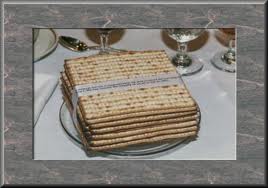
The other aspect of Unleavened Bread we tend to overlook in our Faith Community is the historical link between the consumption of Unleavened Bread during the 7-day Feast week and the years of horrendous bondage that we endured in Egypt. Abba referred to those years of bondage as “affliction” (that is, “oniy”) (Exodus 3:17) and that affliction is memorialized in the leavened bread that we consume during the week and the bitter herbs we cringe to eat during the Pecach meal (Deuteronomy 16:3).
Affliction, the consuming of matzah and the Feast of Unleavened Bread are intricately linked. Unleavened bread is symbolic of affliction. Let us face it, leavened products can be quite pleasing to the pallet and appealing to the eyes; whereas unleavened products tend to appear bland and taste equally so. It is often a challenge to willingly submit oneself to consuming something that is as distasteful as unleavened bread (aka matzah) for seven days, especially when there is so many other options readily available to us.
Have you noticed breads, cakes and cookies seem to find their way in our line of vision annoying so during the week of Unleavened Bread? Fortunately, I love the celebrating this feast more than I care for leavened foods.
What then is the nexus between unleavened bread and affliction? Well, for me, affliction is certainly not something that I relish taking place in my life. Yet I am not so naive to know that bad times come upon us when they come and often there is little that we can do about them. Often times they come as a result of something bad that we’ve done, thus affliction is the reaping of that which we’ve badly sown (Galatians 6:7-9). The Tanakh is filled with examples of affliction brought about through disobedience or evil deeds.
Afflictions come to us at times to prove us and build us up in the areas of our lives that are spiritually lacking and if those areas are not refined and molded properly, we become useless to Father (Job 4, 8, 11, 18), and this my dear friends is one of the areas of affliction that seems to applied to me the most. There are many areas of my life that need refining and strengthening in order for me, and yes you, to be the vessels that Father is desirous of us to work out His purpose in the earth.
Afflictions come to us at times to test us—to show to Father, the world and to us, that we’ve overcome our weaknesses and have died to self and are ready to truly be Yahushua’s disciples (again, see the story of Job).
Afflictions come to us at times to bring Abba glory. I know, how strange to apply such a concept—affliction—to the glory of Yahuwah, but David did a fantastic job pointing out that the Scriptures are filled with examples of people being healed and miracles transpiring all over the place for the express purpose of our God gaining the glory He so justly deserves (John 9:1-5).
Afflictions come to us at times to draw us closer to Father and to put us into “a right relationship with Yahuwah.”
In the case of our Master, afflictions came to Him to atone for the sins of the world. We deserved to be on that execution stake, but our Master took on that penalty for us and thus we’ve been gloriously released from the eternal sin debt that haunts all mankind from birth (Isaiah 53:3-7).
The first thing that comes to my mind whenever I sense affliction has come to my world is that God is out to get me. I recall growing up in Baltimore during the 1960’s and 1970’s, in a Southern Baptist environment, and whenever someone would be afflicted with whatever, the common thinking amongst the holy rollers was that God was getting some payback. In some cases, this may have been true, but the more accurate way of looking at these situations should have been that Father was not intending to destroy those who were being afflicted (as with us today), but was simply working these individuals through any of the above noted situations.
What I came away with this Unleavened Bread season was that afflictions are a big part of our walk with Messiah and as distasteful as afflictions may be (just like the taste of matzah), there is a divine purpose behind them. Our desire should be, then, to readily accept those afflictions and endure them (2 Timothy 2:10), no matter how bad they may get. As the affliction progresses, it then becomes our responsibility to turn fully to Yahuwah and resist the temptation to complain to the world about our issues (Colossians 1:24); to rejoice in Yahuwah for the great things He is presently doing and is going to do in our lives (Philippians 4:4) and give Abba thanks, even though when afflictions hit, it’s often a challenge to do so (I Thessalonians 5:18).
This is the life we signed up for and it took this Unleavened Bread season for me to have this reality revealed to me. Praise Yahuwah for David’s teaching and for delivering to me that missing piece of the Unleavened Bread puzzle that eluded me for most of the Feast this past season.
Missing Fellowship
The last reflection has to do with my missing the joy of formal fellowship this Passover season. This was one of the first years in a few years where we, Hilary and I, celebrated Pecach and the Feast of Unleavened Bread alone, outside of a formal fellowship-type gathering. I must admit that I missed having that formal-fellowship this season. We were blessed to be able to tune into the Michael Rood Passover celebration, broadcasted on the internet for a fee by the Rood organization. I have some personal misgivings about this whole thing that I will save discussing for another time, but we did get some semblance of fellowship through this live-internet broadcast. Additionally, House of Israel broadcasts first and last day of Unleavened Bread teachings and praise and worship services that I found helped lessen my feelings of missing fellowship.
It was not the same, and I am hoping that next year, if Master tarries, Hilary and I will have the blessing of fellowshipping with a group of like-minded Spirit-Filled Torah Observant Believers in Yeshua Messiah.
King David wrote, “Behold, how good and how pleasant it is for brethren to dwell together in unity” (Psalm 133:1, KJV). As convenient and cost effective as on-line programs such as was offered by House of Israel and the Rood organization, I can attest that tuning in to on-line programs during the feasts does not compare to actually being with and in the midst of the brethren.
Concluding Thoughts and Reflections
I’ve shared with you just a few thoughts and reflections that I gained from last week’s Passover/Feast of Unleavened Bread celebration. Looking back to that week, I can honestly say that it was bitter sweet for me. Part of me wished that it would have been different; that it would have been like in years past when we fellowshipped with other like-minded believers in a formal fellowship setting and that things were going along in our lives swimmingly and without the problems that I described to you earlier. Turns out, I did not have such a pleasant experience this go-round.
I should say that I cannot attest for Hilary’s experience this season, but I think she spent a great amount of time putting together some teachings that you might find of spiritual value; and you may find them at www.itsnotasyouperceive.com.
The other part of me, however, is thankful for the week. I can say, without reservation that I’ve gained more spiritually from this year’s Passover/Unleavened Bread season than I’ve gained spiritually in past years. I’m still “feasting,” if you will, from the various elements of this year’s feast, as bitter as those elements turned out to be, and I am seeing myself from the perspective of someone who remains a “work in progress” and who has a long ways to go as it relates to meeting that mark for the prize of the high calling of Yahuwah in Messiah Yeshua.
It is my hope and trust that you too had a blessed Passover/Unleavened Bread season, not just celebratory-wise, but spiritual-wise. I do not know what is going on in your life today nor do I know what transpired in your life during the Feast last week. All I know is that Father is preparing for Himself a people who will finally fulfill the void left behind by our forefathers who chose to follow other elohim. Father is going to fix that problem soon and eventually, all Israel will be saved (Romans 11:26). As it relates to us today, Abba is preparing a nation of priests for this world and it is my sincerest hope that we all find ourselves busy at work doing that which Father has commanded us to do and that we ultimately find ourselves happily and eternally housed in the soon coming Kingdom of Yahuwah.
I would have once said, hasten and come now Master Yahoshua, come now, but after this past feast season, I’m hoping He tarries just a little longer so that I can get my act together and fulfill the mission that He’s given me; there’s just so much remaining that needs to be done.
Nevertheless, may Yahuwah bless you and keep you and may His glorious face shine ever so brightly upon you and that you live in complete shalom. Until next week my dear friends and fellow saints in training.
Faithfully
Rod Thomas
The page you requested could not be found. Try refining your search, or use the navigation above to locate the post.
The Greatest Passover Mystery of the Ages is Found in the Knowledge and Understanding of Who Yeshua HaMashiyach Is.
For some strange reason, a rather sizable chunk of Rooters seem to be more focused upon the mechanical observance of Passover than upon the revealed renewed covenant observance of the event.
What I mean by this is that in so many discussions that I’ve recently seen or read online about Passover, Yeshua is virtually never mentioned in terms of observance and focus. It’s almost as if we are blind to the fact that under the renewed covenant (see the Cepher of Hebrews for a detailed explanation), as Spirit-Filled Torah Observant Believers in Yeshua Messiah, our focus is no longer centered upon the Levitical-based administration of the Feasts of Yahweh/Yahovah/Yahuah. It’s a shocking thing to witness. Many of us have regressed back to a point where we were at Sinai when we worshiped the Creator through mechanical obedience to His written instruction to Mosheh. And this is where our Fundamental Christianity cousins peg us in many cases rather accurately: that we’ve become these legalists who seek to purchase our salvation through works that Shaul (i.e., Paul) seemed to struggle in ad nauseum with first-century Judaizers in the assemblies he was instrumental in founding.
I used to reject that line of thinking and accusation. However, given what I’ve been reading and hearing of late, maybe our cousins are not too far off as it relates to a certain segment of our Faith Community.
Somehow, someway, we must pack our spiritual bags and move from under Mount Sinai before it’s too late. As the redeemed of the Most High, we’ve been called to a life way way beyond that of Sinai living. Sinai served it’s great purpose, and for all intents and purposes, so did Yerushalayim and her Mishkin.
The Renewed Covenant Inbound to a Believer Near You!
Master revealed to the Samaritan woman at the well in Shechem: Woman, believe me, the hour cometh, when ye shall neither in this mountain, nor yet at Jerusalem, worship the Father. 22 Ye worship ye know not what: we know what we worship: for salvation is of the Jews. 23 But the hour cometh, and now is, when the true worshippers shall worship the Father in spirit and in truth: for the Father seeketh such to worship him. 24 God is a Spirit: and they that worship him must worship him in spirit and in truth. (Joh 4:21-24 KJV)
Now many in our crowd would challenge me, asserting that this time that Master is referring to has not arrived yet and that this time in which He speaks is during the latter rain and outpouring of the Ruach HaKodesh (aka, the Holy Spirit). These believe that we should continue in the ways of the Old Covenant until such time when Mashiyach pours out His Spirit on all flesh and reveals His new covenant to the world, regardless in many cases of Torah obedience when taking care of business at the Temple in Yerushalayim was necessary.
I personally believe that thinking to be hogwash. Bognosh. Foolishness. Fodder from the pit of hell.
The Temple—the Mishkin—was destroyed by the Romans in 70 C.E. (and if you’re a Rood follower, 68 C.E.). With the Temple gone and Yerushalayim made a desolate place at that time in history, a huge chunk of how we observe Torah changed. And that changed didn’t just occur because the Temple went bye-bye. It changed because our Older Brother, Yahoshua HaMashiyach, paid the death penalty on our behalf and made a great deal of the Temple rites obsolete.
Yeshua is our New High Priest Superseding the Old Levitical Priesthood
The Book of Hebrews, chapters 9 and 10 go into great detail to spell out for us the changes that came about when Master paid the ultimate price for us. Essentially, the old covenant transitioned from that mechanical obedience to Torah and using the blood of animals as a means of sin propitiation. That sin propitiation did not eliminate the sin for good in the eyes of a Holy God. Nor did that sin propitiation pay in full the debt that we each owed for our sins which is eternal death.
The Old Temple rites served only as a temporary measure to address the sin issue that has haunted each and every human since the fall in the Garden of Eden. This was administered via the Levitical Priesthood through the Temple services and rites.
So along come Master Yeshua, bringing with Him the Gospel of the Kingdom as his primary purpose, but who also assumed the covert mission of dealing with the sin issue once and for all and making available to all men the opportunity to escape eternal death. Master Yahoshua, after His passion on the execution stake, assumed the most central role in all of humanity—the role of the High Priest, not under the old Levitical Priesthood, but under the Priesthood of the Melekzedek (aka Melchizidek).
Worshiping Father in Spirit and in Truth Today!
If we but pay close attention to the words Master spoke to the Samarittan woman, it would seem crystal clear that the enactment of the renewed covenant is not to take place in some obscure time in the unforeseen future, but was happening right around the time Master delivered this news.
Master said: “But the hour cometh, and now is, when the true worshippers shall worship the Father in spirit and in truth.”
And of the type of worshiper Abba is looking for even back then, Master was clear: “for the Father seeketh such to worship Him.”
So I would encourage that we stop this non-sense talk which on serves, in my opinion, to put us back at the base of Mount Sinai and blindly obey Torah, thinking that there is coming a day when the new covenant will alter somehow the way we worship the Creator. That new way is already here and has been here for some 2,000 or so years. It’s already here and in effect! That new covenant and new way that we are to worship Yahuah our Elohim took effect right after Master rose from the grave and presented Himself before His Father in heaven.
Why do we Stay at Sinai?
So my question to the Body of Mashiyach this Passover/Unleavened Bread season is: why do we insist on staying hunkered down at the base of Mount Sinai? What practical purpose does it serve? Why have we ceremoniously relegated Master Yahoshua, after what He greatly accomplished on our behalf, to a tertiary role in our Faith.
Why tertiary? Because first we listen and obey the teachings of the Rabbis and the “jack-legs of our Faith over that which is instructed in the Bible. From there we pay obligatory service, although meager at best, to Torah by reading into Torah that which is no longer applicable.
One sister in the Faith posted a comment to me on YouTube the other day stating that according to Torah, all “Ger” (whatever that means) and Torah Observers must pilgrim over to Jerusalem every Passover, regardless whether there is a Temple standing or no. So I asked her to provide me some biblical support for this Torah commandment. I’m still waiting to receive those support passages. Nevertheless, I believe I know where she’s getting this idea of every believer having to pilgrim over to Jerusalem for Passover. Torah does assign the Feasts of Passover/Unleavened Bread, Shavuot (Pentecost) and Sukkot (Tabernacles) as pilgrim feasts. And when were were assigned to go to the “place where Abba placed His Name,” namely Shiloh and Jerusalem, we did so with clear understanding of what we were to do there and it all had to do with worship of Yahuah via the Temple service and the Levitical Priesthood.
Now commonsense should tell anyone who thinks as this dear sister thinks, that we all must pilgrim over to Jerusalem, that when we get to Jerusalem, what are we supposed to do? How are we to worship the Creator when there is no Temple nor Levites to administer the services of Yahuah? This is where rote, blind obedience to Torah, devoid of commonsense buys us—blind obedience to Laws that we won’t even take the time to examine and understand why we did them in the first place. Typically, this can be accomplished via a detailed study and understanding of the New Testament (i.e., the Brit HaDashah). Unfortunately, that is not something that interests many in our Faith Community. It’s just so much easier to blindly follow what is written in the Book. The problem is: by blindly following what’s written in the book without understanding in these days, one ends up displeasing the Father because we fail to worship Him as He has revealed to us how He wants to be worshiped.
Seek Ye First the Kingdom of God and Abba’s Righteousness
Certainly, there are some things in Torah that we simply do without having to do deep exegetical examinations: don’t steal; keep the Sabbath; don’t commit adultery or murder, and the like. But what about what Master instructed? Did He not tell us to “seek after His Kingdom and the righteousness of Yahuah before we did anything else?” And that by seeking after His Kingdom and His righteousness (that comes only through following Master’s example and teachings) first and foremost, everything else would fall into its proper order? I believe He did instruct that and it’s found in Matthew 6:33.
So many of us have been fed only a diet of Torah, Torah, Torah, but only a meager helping of Yeshua. I get it. For many of us, Hebrew Roots offered us a haven away from religiosity and thus rescued us from Western Christianity. So as part of a survival mechanism, if you will, we’ve developed this pseudo-amnesia as it relates to the renewed covenant, the work of the Ruach Kodesh in believers’ lives, and the sacrifice of Yeshua. We hide in Torah. We do stuff in Torah that frankly doesn’t make sense. But we do them anyway because Torah, in mechanical obedience to what is written and that is devoid of any revelation of the Ruach Kodesh and the teachings of Mashiyach, makes us feel that we are doing what we’re supposed to do. Case in point: traveling over to Jerusalem each year at Passover and hanging out I guess.
Or how about this: One dear Hebrew Roots brother and Torah teacher who I greatly respect and who is quite popular in our Hebrew Roots Community on YouTube, published a post this past week on the subject of Passover. I found virtually all of the content of that post to be spot on in terms of being biblically sound. However, he added one little piece to what otherwise was a brilliant post that essentially ruined the whole thing for me. He proudly declared that he butchers a lamb and applies the lamb’s blood to the door posts of his home each Passover. He cited Exodus 12 as the basis for this act. And Exodus 12 does clearly lay out the first Passover event that included slaying a lamb and applying the blood of that lamb to the lintels and door posts of each Hebrew home for purposes of escaping the “destroyer.” We all know the story.
This brother further supported the reason for his slaughtering a lamb and applying its blood on the door posts of his home by citing 12:24-28, which served to command us to guard the Pecach service as an ordinance forever as Yahuah’s Pecach. But this practice of slaughtering the pecach and applying the blood to our door posts is not explicitly mentioned in Leviticus 23, Numbers 9, nor in Numbers 33, all of which addresses various aspects of the Passover ordinance service, including the aspect of each participant of the ordinance being by necessity in a state of ritual purity.
But in Deuteronomy 16, just prior to our entering the land of promise, the Passover ordinance service changed somewhat and it was the Creator who changed it. And this change was not discussed by this dear brother in his YouTube post. And that change had to do with a prohibition being given against sacrificing the pecach in our gates—within the realm of our homes that is. The pecach, instead, had to sacrificed at the place that the Creator placed His eternal Name. In addition, we were instructed to turn over the whole process of sacrificing the pacech to the Levitical Priests who would administer the rites that were originally given back in Exodus. But this time, those rites would be applied to the alter at the Tabernacle and Temple. From there, the priests would apportion the pecach to our families for consumption and we were of course to consume the portions before sunup and whatever had not been consumed, it would have to be incinerated.
Yeshua is our Passover—Our Pecach
I said all this, not for purposes of brow-beating this dear brother and sister for their respective ideas and religious practices as related to Passover. But more so to provide a plausible example of how we can get ourselves in spiritual trouble.
And please, don’t misunderstand where I’m coming from. I have not in any way arrived. I am constantly searching for the Truth of any matter. I believe that whenever we get to the point that we feel we don’t need to search out matters of Faith anymore (Proverbs 25:2) , we condemn ourselves to the whims and foolish pandering of the rabbis and the crazies that have found homes in our Faith Community. But I’m preaching to the choir I’m sure.
I perceive Passover to be one of the Great Mysteries of the Ages. Passover was foretold to us back in the Garden at the Fall of man: I will put animosity between you and the woman, and between your descendant and her descendant; he will bruise your head, and you will bruise his heel.” (Gen 3:15 CJB). Father, in His infinite wisdom and genius, created Passover from the tragic events of our time in Egypt and our eventual escape from bondage. The artistry of our Father is a thing to behold that I’m afraid most of the world has never stopped to understand and admire. Our bondage in Egypt—that is, a parallel of our life of bondage to sin and the penalty that is associated with that life of sin—coupled with the “destroyer going through the land of Egypt on that fateful night and we who were under the blood were saved from the destroyer, foretells of the Passion of our Master Yeshua some 1,500 years or so later. Every aspect of the Exodus—Passover—service is detailed in the Passion of our Master: from the bondage that we endured in Egypt to the killing of the Pecach; the applying of the blood of the pecach to our homes; to the eating of unleavened bread and the pecach; to the escape from bondage by night; everything Father did on our behalf in Mitsrayim (aka Egypt) translated into the most perfect application of these two events woven into a single tapestry of love—Abba’s love for us, His fallen creation.
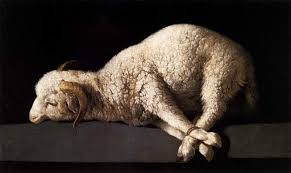
Yochanan Ben Zachariah (aka John the Baptist/Immerser) proclaimed of our Master as Yeshua returned from His time in the wilderness: “Behold the Lamb of Yahuah, which takes away the sin of the world!” (John 1: 29)
When Will We Finally Begin Keeping Passover?
When will we begin to see and keep Passover the way Abba has always intended for us to keep it? I say, let us begin this Passover to keep Passover with the full understanding that Yahoshua HaMashiyach is our Pecach—our Passover. It’s no longer about blindly sacrificing lambs and following the traditions of the so-called sages. It’s about that which Shaul proclaimed to the Corinthian Assembly of Believers in Yeshua:
7 Purge out therefore the old leaven, that ye may be a new lump, as ye are unleavened. For even Christ our passover is sacrificed for us:1 8 Therefore let us keep the feast, not with old leaven, neither with the leaven of malice and wickedness; but with the unleavened bread of sincerity and truth.1 (1Co 5:7-8 KJV)
It’s so easy to get caught up in the rote, mechanical aspects of the Exodus Pecach service and lose clear sight of the big picture that Abba painted on the canvas of time, space and even eternity for us. It’s all about Him and His Son Yahoshua. It’s not about us and how we see things and how we believe things should be done. And that’s the Spirit in which I plan to observe Passover this season.
In Summary and in Closing
In these days of nations rising up against other nations with rumors of wars abounding throughout the 24-7 news media machine; the moral decline of our world’s population; the fear of evil threatening our very existence; and hasatan seeming to have total and complete control over every aspect of life on this planet—let us realize that it is a great time to keep Passover! Why? Because the only stable and firm foundation available to the citizens of this shaken world of ours is Torah the way our older Brother Yeshua taught us.
Yeshua is our Passover and He is the only hope for this world. Yet He’s commissioned us to assist Him in saving the world. So I must ask myself everyday: Rod, what are you doing to assist Yeshua in saving the world today? May I not fail in fulfilling that role—that assigned responsibility–of doing His bidding and following and obeying His instructions.
My simple call to action—my heartfelt admonishment–to you this Spring Feast Season, is for you and your family to keep the Month of the Aviv; keep Pecach and Unleavened Bread as you are so led by the Ruach HaKodesh; that you keep this Feast with as much passion and love that you can muster. Let the world know what we’re doing through our faithfulness, our love for all and obedience. Let the world see Yeshua in us.
Have a wonderful and blessed Pecach and Unleavened Bread. Until next time, may you be most blessed, fellow Saints in Training. Shalom. Pecach Semeach.
Faithfully yours in Yeshua our Master, this is Rod Thomas signing out.
Before moving in to the focal point of this thoughts and reflections episode, I want to first touch upon one housekeeping item if you don’t mind.
Last week on 3/29/2017, we began a new calendar year. We celebrated–or should have celebrated, Biblical Rosh HaShanah which is the Biblical Head of the Year (Exodus 12:2).
Torah requires that we keep–we guard–that we observe this set-apart-time of the year in commemoration of our exodus out of the land of Egypt (Deuteronomy 16:1).
Many reject this month as the head of the biblical calendar year, even some Hebrew Roots sects. Most choose to follow a Rabbinic teaching that places the head of the calendar year in the fall, on the Day of Atonement or Yom Kippur. I believe the Rabbis deem this fall placement of Rosh HaShanah as a so-called “civil new year.”
Such a misplacement of this crucial feast completely ignores what is written in Torah and serves only to place man-made traditions over the instructions of our Creator. Master confronted the sages and Pharisees on this sort of thing–that of placing their traditions above the instructions–the Torah–of Elohim: 9 Indeed,” he said to them, “you have made a fine art of departing from God’s command in order to keep your tradition!…13 Thus, with your tradition which you had handed down to you, you nullify the Word of God! And you do other things like this.” (Mar 7:9-13 CJB)
Torah is clear in that we are to guard this month of the Aviv as the head of our calendar year. And this is some of the problem I have with the use of the Calculated Jewish Calendar in that the Rabbis, in putting this thing together, establish when the Feasts of Yahuah will take place, and in this case, when the head of the new year will occur. Granted, the Jewish Calendar is based upon sound mathematical calculations, nevertheless it still remains a man-made instrument that encourages us to trust man–trust the rabbis over trusting our Creator.
Thus, in determining the new year or Rosh HaShanah, trusted individuals residing in the land of Israel, identified a crop of barley that was in a state of maturation call “aviv” or “abib” on 3/29/2017.
The term “aviv,” when found in the Bible, is only applied to barley and its ripened-state of maturation. We know that the maturation state was relevant in terms of determining the time of year because when we were about to exit Egypt, Torah records that the barley was ripe or in an aviv state (Exodus 9:31).
From there, the renewed moon signals the start of a new month–aka, Rosh Chodesh. The combination of a visual sighting of the renewed moon over the land of Israel and sighting of aviv barley together signal the biblical new year and the kick-off to the Spring Feasts of Yahuah.
It is my hope, trust and prayer that you had a wonderful Rosh HaShanah and will have a blessed and prosperous Passover which is looming right around the corner in less than two weeks.
It’s time to prepare–emotionally, physically and spiritually for this special time–this set-apart time–of the Creator’s Calendar. And Abba knows, there is no time like today that we need to give ourselves fully over to the observance–the guarding–the keeping of Yahuah’s Month of Aviv and Passover (which is comprised of Pesach and the seven-day-Feast of Unleavened Bread) (Deuteronomy 16:1).
Man’s world is being shaken, but the Torah of Yahuah and the Besorah of Yeshua Messiah remains firmly established and eternal. Praise Yahuah!
If you have any questions as it relates to this time of the Biblical Calendar Year and what is expected of all Spirit-Filled Torah Observant Believers in Yeshua Messiah, either leave me a comment in the comment box that proceeds this post on our website www.themessianictorahobserver.org; leave your comment or question on our SpeakPipe feature that hovers off to the rigth side of our website; or email me at perceptionwp@gmail.com. I will be happy to provide you with information that will help you in your understanding of this wonderful time of the Biblical Calendar Year. Don’t allow this time to pass without you understanding what it’s all about and participating in its observance.
Amein.
The Situation Facing Every Individual on the Planet
So here we are in the midst of total and utter chaos in our world:
There is no doubt in my mind that we are in the midst of “perilous times” as described by Paul in his second pastoral epistle to the evangelist Timothy (2:1).
I am not so presumptive to deem these the last days, at least not in the classical sense of our understanding of what the last days is supposed to look like. What I am saying though, is that these days in which we are living are certainly unique and unprecedented. There are so many differing elements, issues and problems plaguing the citizens of this planet such that the average person is completely distracted from the very things that matter the most in life: the relationship we are to have with our Creator and the God-centered and ordered relationship we are to have with one another, including the relationships we are to have with members of our families and of our Faith.
I believe we are seeing a full-frontal assault against the world’s population right now by hasatan and his hand-picked minions. This is occurring in full-hasatan fashion whereby he, in symbiotic-combination, plays upon our individual and collective fears, our likes and dislikes, our lack of faith, our ignorance with a complete and utter distortion of all truths with the express purpose of turning our hearts and minds away from the One True God–Yahuah our Elohim.
Where is the Spirit-Filled Torah Observant Believer in Yeshua Messiah?
So where does all this mess leave us who see ourselves as individual and significant parts of the True Faith once delivered? Apart from our niche enclaves on the internet and in social media and secret-exclusive fellowships, where is our individual and collective voice in the world? With all that is going on in the world about us (as delineated in my opening list of problems to this thoughts and reflections), how are we fairing in our day-to-day walk with Yeshua Messiah? Are we relevant, not just in our Faith community but in the communities of the world? Are we still growing and confirming to the very-splitting image of Master Yahoshua that was part of the benefits package that we all signed up for when we first came in to this Faith? Is our eternal life certain? Are we going to collect when the terms of this spiritual contract of ours is finalized? When Master returns, will we for certain be guests and participants of the marriage supper of the Lamb?
I know that tradition and long-held dogma teach us that we are guaranteed spots in the great world-tomorrow, despite how much we ultimately conform to the image of our Master; despite how much we stay true to the tenets of the True Faith once delivered; despite our steadfast love and obedience to Master and Father’s Torah–or should I say instead, lack thereof.
I don’t doubt for any second of any day that Yahuah exists nor do I doubt that our Master paid the ultimate price for my freedom from the penalty of sin. I don’t doubt for any second of any day that this Faith of ours and the Bible is true and that these two elements contain within their respective existences, the true Word and purpose of Yahuah our Elohim. I don’t doubt for one second of any day that Master Yahoshua is returning for His bride.
I guess the sticking point in this last thing–that is Master returning for His perfect bride–is the perfect state of that bride: what will be the state of the Bride of Mashiyach when He returns? What will be our situation when Master returns? Will He find us ready and perfect and beautiful and good-to-go as a picture-perfect female bride we see depicted on the cover of “Bride” magazine? No, not in the physical sense of physical beauty and good looks, but instead, in the sense of spiritual perfection–blameless in our keeping of Torah and in our walk with Mashiyach.
Paul clearly suggests to us that Master is returning for a bride without spot or wrinkle–blameless and perfect in all aspects of her being (Ephesians 5:27). Yet so many of us have chosen to read into this Pauline passage as nothing more than an allegory–an ideal–something that each of us should strive to achieve, knowing full-well (at least that’s what we’ve been taught to accept) that we will never achieve such a level of perfection. We as a body and as individuals have settled upon an understanding of this concept of perfection and beauty as more of an imputed thing than it is actually something that we must all spiritually and physically achieve before Master returns.
In association with the parable of the widow and the unjust judge, Master asked a poignant question of His inner circle of disciples and a few hanging Prushim just before His passion: when the Son of man cometh, shall he find faith on the earth? (Luk 18:8 KJV)
Why have we in the Faith left this thing to chance? Is it because we’ve taken with us into this Faith provisions of the old Christian “grace” perversion and Calvinism that certifies our inability to attain this stated perfect-blameless-bride status? Or are we simply hoping and gritting our teeth that Master is going to overlook our imperfections and take us in whatever sullied state He finds us when He returns? I’m inclined to think the latter here.
The problem with accepting a shaky belief that Master will overlook our imperfections when He returns sort of negates the concept of being one of His elect–a chosen one. Elect by its nature connotes individuals who have been hand-picked for a specific purpose because they have qualities that separate them from the rest of humanity. (And maybe someday I’ll reflect further upon this concept of being one of Father’s elect.) Now, if we are given that free pass when Master returns such that He overlooks our imperfections and takes us as we are–in a spotted and imperfect state–then we would by default be no different than the rest of humanity and thus we will have forfeited our elect status, right?
Oh, some will default back and defend their position that Master will overlook our imperfections because, one, the perfection Master and His Father desire of us is unattainable by any human (although Master has assured us that it is attainable, given the help of His Ruach HaKodesh); two, we are saved by grace and not of ourselves and that salvation is a gift from Yahuah; and three, when we repent and turn from our life of sin and become disciples of Yeshua Mashiyach, the blood of our Master justifies before a holy God, places us in a right-standing before the Father, and we are, in effect, eligible for eternal life. And indeed, salvation is unattainable through any works that we can ever perform. Salvation is a free gift administered to us by Abba Father through the atoning sacrifice of His Son Yeshua HaMashiyach.
So if we are not obligated to present ourselves to the Bride-Groom as a chaste virgin bride, pure, blameless and perfect, why was Paul so anxious to ensure that the Assembly of Believers in Corinth were not hoodwinked into following the teachings and lies of false teachers who were in that region presenting a false gospel to the masses? Why was Paul so concerned that all the work that he invested into developing the Corinthian Assembly was in peril if he didn’t get the Assembly of Believers back on the right track–back to the true Faith he had delivered to them? Why did he have an all consuming zeal and desire to present this one Assembly of Believers to Master Yeshua as a chaste, perfect, holy and pure bride (2 Corinthians 11:2)? Because Paul took seriously that our Master was returning for a perfect bride: perfect in profession of Faith, belief, works, and obedience to the commands of Yahuah and Master Yeshua.
Master taught: For I say unto you, That except your righteousness shall exceed the righteousness of the scribes and Pharisees, ye shall in no case enter into the kingdom of heaven. (Mat 5:20 KJV). Abba requires that we submit ourselves to His righteousness (Romans 10:3). Although we are justified before a Holy God by the covering of Yeshua’s shed blood, we are still required to submit ourselves to the righteousness of Abba Father. That righteousnesss is achieved only via keeping Abba’s commandments (Matthew 19:17; 1 John 5:2,3; Revelation 14:12). Commandment keeping is the method by which we meet the purity and blameless requirements of the Bride-Groom, Master Yeshua.
And let me just say this: it’s not just rote commandment keeping, for Israel tried to keep Torah through rote obedience, mechanical obedience. The problem with simple-blind obedience to God’s commandments is that our hearts are typically not factored into our efforts. Our hearts must be in the right place first before we can be truly perfect in our keeping of Abba’s commandments, for Father’s desire is: 29 O that there were such an heart in them, that they would fear me, and keep all my commandments always, that it might be well with them, and with their children for ever! (Deu 5:29 KJV)
With all that is going on around us in the world today, even with our hearts being in the right place and with the help of the Ruach Kodesh, it is exceedingly challenging and almost impossible to meet that blameless and perfect mark. Our minds, hearts and spirits are being pulled and pushed in a million different directions virtually each and every day. It’s crazy and often disheartening. There are some days when I am spiritually exhausted and demoralized, knowing that I’ve let Abba down in one way or another. There’s just so many times that we can say I’m sorry Father before it starts to get old.
So it recently came to me how we may be better disciples of Yeshua Messiah and meeting the mark for the prize of the high calling of Yahuah in Yeshua Messiah (Phi 3:14 KJV) especially in these perilous days.
The Apostle John was taken up to heaven in a vision as recorded in the Book of Revelation. Yeshua instructed John to write a letter to each of the seven-assemblies in Asia Minor in anticipation of the perilous times about to come upon each of these assemblies. This story is depicted in the second and third chapters of Revelation and what I see in this passage of the Holy Writ is a prescription for righteous living for the 21st century Spirit-Filled Torah Observant Believer in Yeshua Messiah. And why do I believe this to be so? Well, our Faith community today finds itself all over the place in terms of her appeal to Master Yeshua as His Bride–His elect–His chosen–His disciples. Each of the seven assembles of Revelation two and three had its own set of unique strengths and weaknesses, as well as there were areas of spiritual performance or the lack thereof that seemed to transcend across assembly borders such as paganism and sexual immorality in both the Pergamos and Thyatira assemblies.
What the second and third chaptesr of Revelation offers us beyond a historical record of seven kehilot (assemblies) in Asia Minor is a checklist and or a road-map for meeting that mark for the prize of the high calling of Yahuah in Yeshua Messiah.And I believe that, if we are willing to look beyond the inherent difficulties associated with a sound prophetic understanding of the Book of Revelation, but instead, look at the testimony presented to us about these seven-assemblies by Master Yahoshua, we will discover a gold mine of instructions that will put us on the proper path of righteous living and bring us ever so closer to the image of that blameless, pure and perfect chaste Bride that Master is soon to return for in the end times.
So if you will indulge me for the remainder of this episode and allow me to briefly expound upon the strengths and weaknesses of these seven-assemblies, I believe we will leave our session together are more equipped to operate as effective disciples of Yeshua Messiah than when we began this episode, as well as we will begin our journey towards perfection in Yehoshua Messiah.
Now before we get started, let me just say that I will not read chapters two and three of Revelation. I intend to simply summarize each learning element–each revelation–such that we all may reflect, think, meditate and act upon each element without being bogged down with the Scriptural recitation. I will, however, provide the specific passage for your reference so that after we are done, you can in your own time and wherewithal, pull up these passages and read them in context and with greater understanding.
Secondly, I don’t wish to get into any debates as it may relate to symbolisms or real-life historical applications that may be associated with these 7-Assemblies. The one thing that is certain about these assemblies is that there is no clear agreement among eschatology scholars and teachers as it relates to how they each fall out historically and prophetically. Some contend that these 7-assemblies actually existed and that each assembly had its own unique strengths and weaknesses as portrayed in Yeshua’s revelation to John. Others apply a dispensationalism to their understanding of the 7-kehilot of Revelation, standing firm that each of the assemblies represent clearly defined periods of time in Church history. Still others contend that the 7-assemblies represent areas of concern and spiritual idealisms that believers must be cognizant of in the end times in order to make it and to be part of the rapture. Of course, there are other variations on this theme. Nevertheless, suffice to say that Yeshua’s review of these either mythical or historical assemblies has tremendous learning opportunities for the Spirit-filled Torah Observant Believer in Yeshua Messiah, especially in these perilous times.
Throughout the synoptic gospels, Master repeatedly ushered the phrase: “those who have ears to hear let him hear…” and then for each of the 7-assemblies the same admonishment (Matthew 11:15, 13:9, 43; Mark 4:9, 23; Luke 8:8; 14:35–compared to Revelation 2:7, 11, 17, 29; 3:6, 13, 22). The question then arises: will we “shema” the admonishments of Master Yahoshua while we still can and before it’s too late?
Of our Master, Abba stated: I will raise them up a Prophet from among their brethren, like unto thee, and will put my words in his mouth; and he shall speak unto them all that I shall command him. (Deu 18:18 KJV) I think it’s about high-time that we hearken unto the voice of our older Brother and Master and not leave this life and our walk to chance and happenstance.
So with that, let’s begin this journey:
3. Exercise patience in our day-to-day walk with Mashiyach(2:3,19–addressing Ephesus and Thyatira). When working with those who may not be as committed or mature in the Faith, we must exercise patience. Furthermore, we must learn to endure trial and tribulations patiently. We are operating on Abba’s time and dime. One thing is for sure: like fine wine, that which comes with time is an uncanny property of refinement that works to fashion us into a thing of perfection, which is what we are all striving to achieve, are we not? Of course, failure to exercise insufferable patience, when necessary, leads only to frustration and premature disengagement from situations that would otherwise offer us tremendous growth opportunities.
4. Labor in the Faith without ceasing (2:3,19–addressing Ephesus and Thyatira). Always seek to expand our labors and not shy away from good works. Ever growing; ever increasing our work. This is what I struggle with the most I fear: that of laboring in the fields and making disciples for Yeshua Messiah. As I’ve mentioned in previous episodes of Sabbath Thoughts and Reflections, I have an issue dealing with people. Labor in the Faith requires that we love people, plain and simple. And it’s this issue of dealing with people that I now understand that I must overcome through the help of Master’s Ruach HaKodesh. I doubt I’m the only one with this spiritual deficiency. May we seek Abba’s forgiveness and assistance in pulling down this stronghold that has the potential of keeping us from meeting the mark of the high calling of Yahuah through Yeshua Messiah. People–Yeshua’s love for humanity, is where the true gospel message and work is built.
5. Maintain the love we originally had for Yeshua Messiah and the Faith He delivered to us. That love translates over to the love we originally had for Him when we first came to this Faith (2:4,5–addressing Ephesus). Of all the elements that we’ve discussed thus far, this is by far the most personal of the bunch. This is something that each of us must routinely examine and search out in our respective lives–whether or not we still have that fire in the belly that Master requires from each of us to maintain a vibrant and significant relationship with Him. Do we still have the same zeal that drove us to insane lengths of study, inquiry, sleepless hours searching for His truths; the self-examinations and wondering and desire to be His best friend? Remember when we first stumbled upon and came into this Faith? Think about the parallels to that of when we first fell in love with our spouses (for those of you who are married), how we would do outrageous things in the name of love? Master promised the Ephesian assembly that if they did not somehow find their first love–reacquire their original zeal for Him and the True Faith once delivered, they would simply be removed out of contention for being Abba’s elect. That is serious stuff folks. Yeshua is as jealous as His Father. He demands that we love Him with a love that rivals the stuff that makes for romance novels. Why would Master require us to love Him so? Simply because: when we fail to love Him to the point of insane full-bore preoccupation, we leave open the possibility of another Master coming in and taking His place and that is something that Master does not like to give ground to. So serious an offense was the loss of love for Master Yeshua by the Ephesian Assembly that he threatened to essentially take them out altogether. A sobering prospect that many will gamble away and take for granted.
6. Assess where we are in our walk with Mashiyach frequently (2:5–addressing Ephesus). It becomes imperative that we use these days to determine how far we’ve strayed from the true Faith once delivered; how far we’ve strayed from the love we once held for the Master. This is a brilliant analogy that turns out to be a tacit reference to the silting problem at Ephesus that shifted the city proper some 7-miles inland from its original harborside location. Somehow we must find our way back to the original locale of our calling through an assessment of where our hearts and thoughts are at any given time. For Abba searches the innermost thoughts and the status of our hearts.
7. Endure the struggles that come with walking out this Faith and those who claim to be true disciples of Yeshua but who are not fully there (2:9–addressing Smyrna). Smyrna appears to be yet another haven of Judaizers who sought to enforce their own brand and twist of the Faith which placed insufferable stress and hardships upon true converts. How often do we find ourselves having to deal with those individuals in our Faith community who seek to usurp authority over the rest of us with their own brand of the Faith that is nothing like that which we find in our Bibles? Master described such individuals as being of the assembly of hasatan. Unfortunately, we can’t always control who comes and goes in our community. Yet we must find a way to endure such individuals and the situations they often create. Now that’s not to say that we don’t control as much as we can their access and influence over our assemblies. We are compelled to inhibit their influences as much as we possibly can. But Master likened these individuals as weeds growing among wheat. But in terms of what to do about them, Master gave the following instructions: ‘Allow both to grow together until the harvest; and in the time of the harvest I will say to the reapers, “First gather up the tares and bind them in bundles to burn them up; but agather the wheat into my barn.”‘” (Mat 13:30 NAU) Nevertheless, we must understand that such individuals talk a big talk but their hearts and minds are not right. As with the issue noted with the Ephesians in taking frequent assessments, and that which I’ve spoken to a great deal on this program, Abba is big on hearts and minds. As long as our hearts and minds are in the right place and we’re doing what we’re supposed to do, Abba will take care of the rest. What was it that Paul mentioned regarding these troublesome individuals who profess to be something they are not while insisting that the rest of us follow their biddings: But he is a Jew, which is one inwardly; and circumcision is that of the heart, in the spirit, and not in the letter; whose praise is not of men, but of God. (Rom 2:29 KJV)
8. Learn not to fear those things which are surely to transpire in the near future, for the life we lose here will be eternally gained in the World Tomorrow (2:10–addressing Smyrna). Master went on to warn us that hasatan “will throw some of us into the darkness of the night to test us for a brief period of affliction.” Regardless how terrible that may seem, this is where the proof of our steadfast allegiance to Mashiyach will be aired. Thus, now is the time to get our spiritual workout on and build-up those spiritual muscles that will be required if we are to to successfully make it through this coming tribulation. The reward? A crown of life whereby the second death will not harm us. Is the reward to be had worth enduring present day turmoil and readying ourselves now for the tumultuous times ahead? Each of us must answer that one for ourselves. It’s not an easy question to answer. I can only hope that I find myself worthy to be called His faithful servant when that time comes. So how do we learn not to fear the days ahead? We must seek a greater indwelling of the Ruach Kodesh in our lives such that our old man and all of its baggage is relegated to the abyss. Otherwise, if we hang on to our old nature, we may find ourselves severely lacking in this area. Now is the time to die to self and allow the Ruach to gradually replace our old carnal nature as well as the Ruach Kodesh fully syncing with our ruach. This comes only through a strict, disciplined regimen of prayer and fasting. It’s total commitment to a life of Mashiyach. How do soldiers on a battlefield learn to overcome their fears? They train constantly and they build warfare skills that will cause them to act automatically when the time of warfare comes. They know their weapons inside and out; they maximize their physical abilities; they know a dozen and one strategies; they know their enemy and how they operate; they trust their partners and rely upon them to watch their backs; they are constantly on guard and constantly training for war. Will we be ready? Well, now is the time to prepare while conditions are conducive to building up those spiritual skills and capabilities.
9. Hold fast and persevere in the true Faith once delivered, even in the midst of tribulation and persecution (2: 13, 26; 3:2, 8, 11–addressing Pergamos, Thyatira, Sardis and Philadelphia). This involves keeping master’s commandments without fail. In other words, let us not compromise in our Faith. Secondly, correct those areas in our lives where we are lacking through the aid of the Ruach Kodesh. Strive constantly for perfection (3:2). If we falter, get up and return to where we’re supposed to be. Keep Torah–guard Torah. (3:8)
10. Reject those in our lives who adhere to evil in all its forms, especially paganism and lawlessness (2:14, 15, 20, 21–addressing Pergamos). This is a no-brainer. Yet I fear that this is one area where many of us choose to compromise. How many of us know that lawlessness is transpiring in our midsts yet we do nothing about it? I can’t tell you how many Torah Observing Believers in Yeshua Messiah I’ve run into over the course of time who allow their children to live in their homes and violate Torah without any intervention to the contrary whatsoever by the believing parent. I’m talking allowing their kids to shack up and have sex with others in their own homes; do drugs; curse them out and disrespect them in their own homes; turn a blind eye to criminal activity and the like. In our fellowships, how many of us know of outright sin taking place in our midst yet we do nothing about it. Silence in response to such lawlessness is condoning the lawlessness. I would say, if we are not ones to confront issues with members of our fellowship, then at the very least, maybe it’s time to leave that fellowship. If lawlessness transpires in our homes, we must put a stop to it. That’s not to say that we don’t love our children, but there is a thing called “tough love” that we may be forced to adopt. If they are grown enough to shack up and have sex in our homes, then they are old enough to launch out in to the world and live their own lawless lives. Otherwise, they must adhere to the rules we establish in our homes based upon Torah. If we fail to act upon the evil that is ongoing in our lives, then we have essentially compromised our Faith and given hasatan firm control of that portion of our lives. The penalty for not acting against the evil? We will endure “great tribulation” until such time as we repent and do what we’re supposed to do. Ultimately, those who commit the evil will be eliminated as well in one way or another. This is not something that we can turn a blind eye to as so many of us do throughout our lives. Now is the time to correct these wrongs and eliminate evil in our lives.
11. Repent when we stumble and fall into divers temptations. (2:16–addressing Pergamos) Once again, compromise stands at the heart of much of the problems in the assemblies of Revelation 2 and 3. And if there’s one thing that Abba hates over any evil, it’s adultery, especially spiritual adultery. Abba is a jealous God (cf. Exodus 20:5; 34:14; Deuteronomy 4:24; 5:9; 6:15; Joshua 24:19; Nahum 1:2). We must always be cognizant as to where we are in terms of our fidelity with the Creator and always operate with a repentant spirit. If anything, we must be cognizant of the areas in our lives where we are weak and subject to compromise. Thus, we might want to always be in a place in our day-to-day walk where we take the appropriate precautions and avoid those situations that may cause us to stumble. If we are prone to drinking a little too much alcohol at social events, maybe avoid drinking alcohol at those social events and instead have a bottle of water or dare I say a can of soda. If we, men, are prone to have wandering eyes when it comes to members of the opposite sex, maybe limit those opportunities where we come across women that may catch our eye, or simply focus our attention on Abba and it doesn’t hurt to remember the tzitzits dangling along our sides. If things come out of our mouths that shouldn’t be or we routinely engage in questionable conversation, maybe we need to learn to keep our mouths shut more and let others do the talking for a change. And when we slip up and we find that we’ve compromised on Torah or any of the tenets of our Faith, then we need to get down on our knees, repent, seek Abba’s forgiveness and sin no more. Again, it’s dying to self and living in accordance to the ways in which Master instructed us.
12. Practice being charitable, righteous and a servant to all (2:19–addressing Thyatira). This should be of no secret or shock to anyone. These are foundational elements of kingdom living. It’s all about living in accordance with the principles of Torah (i.e., righteous living) and serving others as we are led by the Ruach Kodesh. Paul describes these elements in Galatians 5:22 and 23 as fruits of the spirit. Unfortunately, too many of us in Hebrew Roots lack these key essential elements. Now is the time to strengthen ourselves in these areas so that we will not be found wanting when Abba searches out our hearts and minds (2:23). In the end, we will be rewarded for our works.
13. Remain watchful–vigilant–stay informed and be responsive for ignorance and laziness breeds contempt (3:2, 3–addressing Sardis) Remember–study–research. In many ways, Sardis is similar to our United States of America. We, like Sardis, possess, when compared to the rest of the world, great wealth and an affluent lifestyle. As wonderful as it may be existing in an affluent lifestyle, which is by the way not a sin, it has the lousy side-affects of making some of us lazy. When we have money and resources and influence, we believe we can simply throw money at a situation and make it go away. This is absolutely evident in our secular lives, but it is even more so evident in our spiritual lives. How many of us, instead of cracking open our dusty Bibles, choose to spend countless dollars on DVD and CD course studies and teachings? We’d rather have someone tell us what they believe we need to know which can often negate any need for our Bibles. I’m in no way saying that DVD and CD teachings have no place in our learning and growing in the Faith. All I’m saying is that we must not be lazy to the point that we rely upon Yah’s anointed teachers and preachers to school us in Bible. We have a responsibility to search out a thing; learn Torah; seek Abba’s will for our lives and the like.
14. Do not compromise our convictions and remain holy throughout (3:4–addressing Sardis). Contrary to fundamental Christian teaching and doctrine, Master requires unwavering commitment and holiness. Here in Sardis at the time John was penning Yeshua’s revelation, only a precious few remained true to this call for holiness and unwavering commitment to the True Faith once delivered. Abba requires nothing short of these things, for in His Torah He commanded: Ye shall observe to do therefore as the LORD your God hath commanded you: ye shall not turn aside to the right hand or to the left. (Deu 5:32 KJV) He repeats this requirement: And thou shalt not go aside from any of the words which I command thee this day, to the right hand, or to the left, to go after other gods to serve them. (Deu 28:14 KJV) Master tells John that those who maintain an uncompromising, holy life earn the opportunity to walk with Him and He with them. Yet Churchianity would have us believe that living a holy and uncompromising life is passe, done away with, irrelevant, a waste of time. How did we get to this point in history where mankind tells us what is relevant in terms of any relationship he/she can have with the Creator of the Universe and His Son? Well, the answer should be pretty apparent. Hasatan has sought from the very beginning to sever or hinder any potential relationship man can have with his Creator. And man has foolishly played into this rouse. Unfortunately, this rouse has resulted in unfulfilled lives and diminished effectiveness among the people of Yahuah. The people of Sardis chose to place their trust in their wealth and security instead of Yahuah. As a result, they suffered various calamities time and time again. Why do we think we have so many problems in our lives despite being the so-called people of God? It’s because we choose to live compromising and unholy lives. This must change if we are to make it to the end and reign with Master in His kingdom. There are no free lunches in this life I’m afraid. There is a price to pay for glory. Yahoshua did His part. Now we must play our part–live holy and uncompromising lives in Yahoshua Mashiyach.
15. Remain zealous for the Faith (3:15, 19–addressing Laodicea). As with the other Kehilot, Master demands unwavering commitment from us in every aspect of our existence. As it relates to our living and walking out this Faith, Master wants us to pay particular attention to the level of attention, excitement and fervor we have for Him and the Faith once delivered. Remember what He warned Ephesus about? Master pointed out to the Ephesian Assembly that they lost their zeal–their first love of Him and the Faith that He delivered to them. Could it be that we are heading down that same road in our Faith Community. Laodicea as an example of what not to be as a Faith Community seems to fit us too close for comfort. I declared at the outset of this exposition regarding the 7-Assemblies of Revelation that I would not read these 2-chapters. However, I feel led to read Laodicea’s account to bring the severity of their deficiencies into the light of day. Master says of Laodicea:
“I know your works, that you are neither hot nor cold. I would desire that you would be either cold or hot. So, because you are lukewarm, neither hot nor cold, I am about to vomit you from my mouth. Because you say ‘I am rich and affluent and have all I need and don’t know that you are helpless and miserable and needy and blind and naked!’ I counsel you to buy of me gold tried in the fire that you may become rich; and white robes to be clothed and that the shame of your nakedness may not be seen. And put eye-salve on your eyes that you may see. As many as I love, I rebuke and discipline. Be faithful emulators therefore, and repent. Behold, I have been standing at the door and I will knock. If any man hear my voice and open the door, I will come in to him and will dine with him and he with Me. And to him that is victorious, to him will I give to sit with me on my throne, even as I was victorious and sat down with my Father on His throne. He that has ears to hear, let him hear what the Spirit says to the assemblies” (Revelation 3:14-22; AENT).
The water that flowed into Laodicea was lukewarm and unfit for quenching thirst. It was known to be of a putrid smell and taste due to its high mineral content. Other surrounding cities were blessed with either cold, refreshing water good for drinking and sustaining health and wellbeing, or hot, suitable for soothing aches, pains and ailments. The waters of Laodicea were good for healing purposes, but as it related to drinking, it was disgusting. This serves as an apt analogy to the state of much of our Faith Community these days. Master is telling us to commit and be zealous for Him, either wise we are good for nothing and eventually He will purge and eliminate us. Abba warned us prior to our entering the land the following: ‘You are therefore to keep all My statutes and all My ordinances and do them, so that the land to which I am bringing you to 1live will not aspew you out. (Lev 20:22 NAU) In other words, if we did not stay true to His Torah, the land would even spew us out. Master is begging us to stay true to Him and to regain the zeal that we once had for Him before we end up losing everything. He may have to chasten us for our obstinacies and for purposes of getting our attention. But we’re either going to do it Abba’s way or Abba’s way. Our way doesn’t matter nor does it count.
16. Focus on Yahuah our Elohim–sell the farm; become a company-man/woman for the faith–in every aspect of our lives–(3: 18–addressing Laodicea). Indeed, none of all that is being revealed about the 7-kehilot can be truly received and applied by us if we are not committed to a focus–a singleness of mind , heart and mind. The world today is pulling and tugging at us from every angle and is vying for our limited attention spans. It doesn’t take much for us to lose focus and veer off and away from the call and requirements of Master. Focus requires discipline and understanding. And maybe if we have difficulty focusing on Him and His Word these days, maybe we need to set some priorities. You see, we do only that which we deem is important to us in life. Otherwise, that which we deem as not important, we won’t do, despite what we may say or espouse to the contrary. Oh, I love the Word. Yet we won’t find the time to read and study His Word. Oh, I know I need to pray more. Yet we won’t parcel out the necessary time each day to enter into a season of prayer. I need to be about my Father’s business. Yet we will always defer over to the business that pays our bills and buys food for us to put on the table over the business of the Kingdom. Somehow, someway, somewhere, we have to regain our focus and orient our lives to be effective disciples of Yeshua Messiah. Otherwise, we stand the risk of being rebuked and disciplined and that’s no fun, now, is it?
17. And lastly, listen for the call and knocking of Master in our lives–do not overlook or ignore even the smallest of opportunities (3:20–addressing Laodicea). With all the distracting noise buzzing about our ears these days, it is often impossible to hear the voice of our Master speaking to and instructing us. Somehow, someway, we must figure out a way to tune out the world’s noise at times so that we may hear the still, small voice of Master Yahoshua. We often err in our lives because we fail to listen and respond to the voice of our Master. And we fail to listen and respond to the voice of Master because the world drowns out His voice. This means that we have to isolate ourselves from the world on a frequent basis. My time for this is in the mornings–typically beginning sometime between 4 and 5 each morning, while the house is still and the world is still finishing up its night of sleep and slumber. And throughout the day, it requires that I stop what I’m doing and just communicate–talk to and listen to Abba. This is the only way that I’ve found for me to open my ears and spirit to hearing His voice. For you it may be an entirely different set-up and that will come with trial and error. Regardless, this has to be done, otherwise, we stand the chance of missing out on what Master has in store for us. Besides, the world doesn’t own us anymore–well, it least it shouldn’t own us anymore. We’ve been bought with a great price and given that we’ve agreed to the terms of that covenant, we no longer should be hearkening to the whims of this world (I Corinthians 7:23). Master promised that if we but answer the door, listen to Him and do what He asks us to do, He will come and dine with us (Revelation 3:20). And I will submit to you today, there is no one else in the world that I would rather sup with than our Master Yahoshua Mashiyach. Halleluyah.
Closing Thoughts
Master deeply desires that we be successful in our walk with Him and in our commitment to Abba Father. He sent His Ruach HaKodesh to inspire His appointed and anointed disciples to record His earthly ministry and revelation of the Gospel of the Kingdom of Yahuah. Then He revealed his Truths to John in His Revelation that foretells of hard but amazing times ahead that His followers must endure. And even today, Master continues to send His anointed teachers and preachers our way to equip us for the times ahead and for the work of the Gospel of the Kingdom.
With all that is going on about us these days, it is imperative that we find our way and search out those things that Master would have us do. In so doing, we must be equipped to handle “life.” Yes, “life.”
Ever heard the phrase: “life happened” or “life happens?” And what does that really mean I’ve always pondered. Well, from a spiritual standpoint, life happens simply means that things occur in our day-to-day lives that distract us from our call and our purpose as Sons and Daughters of the Most High God. Those distractions, if not aggressively dealt with, will result in dire repercussions.
So to sum up, the message that Master had for the 7-Kehilot of Revelation that is undeniably relevant to our day-to-day walk with Messiah is: (1) let us not tolerate evil in our lives; (2) vet those who come to us as teachers; (3) exercise patience when dealing with members of the Body of Messiah; (4) tirelessly work in the fields of our Faith; (5) if we’ve lost hold of the love we first had for the Faith, get it back now; (6) conduct frequent self-assessments of the progress of our walk with Messiah; (7) learn to endure the struggles that come with operating in our Faith; (8) don’t fear the times of today and of tomorrow; (9) hold fast and persevere in the Faith; (10) reject/turn away from those who are evil in our lives; (11) repent when we fall and sin no more; (12) be a righteous, charitable and obedient servant of Yeshua Messiah always; (13) always remain watchful and vigilant, both spiritually and physically; (14) do not compromise in any area of our walk with Messiah; (15) remain zealous for the Faith and our Master Yeshua; (16) remain focused on the Faith once delivered and in remaining in the perfect will of Abba Father; and (17), listen for and to the voice of Master at every opportunity.
My hopes, thoughts and reflections this Shabbat is that we be mindful of the example provided to us by Master Yahoshua as it relates to the 7-Kehilot of Revelation. Much that is contained in the pages of our Bible were lovingly provided to us by the eternal wisdom of Abba for our edification, equipping, knowledge and understanding.
Kefa wrote: But if awhen you do what is right and suffer for it you patiently endure it, this finds 1favor with God. 21 For ayou have been called for this purpose, bsince Christ also suffered for you, leaving you can example for you to follow in His steps, (1Pe 2:20-21 NAS)
And then the Brother of our Master, Jude, ominously wrote: Even as Sodom and Gomorrha, and the cities about them in like manner, giving themselves over to fornication, and going after strange flesh, are set forth for an example, suffering the vengeance of eternal fire.1 (Jud 1:7 KJV)
As I mentioned at the outset of this episode, we are seemingly heading towards perilous times. Now is the time for us to heed the information Master gave to us regarding the 7-Kehilot/Assemblies of Revelation. Now is the time to keep our noses buried in the Book, take that which Master and His Father provided us and apply those lessons to our day-to-day walk so that we may finish the race set before us in the finest fashion, and receive the reward Master promised us if we trust and obey Him.
Comment, opine, question and the like as you are so led by His precious Ruach HaKodesh. Stay blessed, grounded in His Word and in His perfect eternal will.
This Thoughts and Reflections has been faithfully submitted by me, your brother in the true Faith once delivered and fellow saint in training, Rod Thomas–Shabbat Shalom, Shavuatov and have a blessed Passover this coming week.
Calendar: Just 1-1/2-weeks out from Rosh haShanah presuming the barley is Aviv and the renewed moon is sighted over the land of Israel concurrently. Rosh haShanah is the Torah Observant Believer in Yeshua Messiah’s New Year Day! and signals the start of the Spring Feasts of Yahuah.
Barna interviewed some 900-U.S. senior pastors via telephone and online between April and December of 2015 and some 1025-U.S. adults (over the age of 18) via web-based surveys, also between the same months in 2015.
The results of Barna’s survey is as follows:
The report was accompanied by a couple of short videos: one that summarized these findings through graphs and various other animated depictions while the other video was of three-pastors being interviewed about their thoughts on the results of this study.
Rebekah Layton—Pastor of Newsong Los Angeles Covenant Church—believes that pastors must:
Adam Edgerly—Pastor of Cherry Hills Community Church—believes that pastors must:
Mark Deymaz—Pastor of Mosaic Church—believes pastors must:
Not one of the three interviewees seemed at all concerned that they held any viable credibility with Yahuah. Their overriding concern as it related to credibility was the credibility they held with their respective communities and the world at large. Not one of them expressed any concern that they were operating within the will of Abba Father.
Is there no wonder why their is this so-called pastoral credibility crisis in the U.S.?
If pastors were to realize what their true calling was: to do the will of the Father; disciple and equip those in whom Master has entrusted them, then such foolishness as credibility would not be an issue. In the end, credibility with man is irrelevant and without merit.
Is a so-called pastor’s true calling and purpose to please and establish credibility in their respective communities? No. Here’s what Master and the Apostle Paul had to say about what it is they’re supposed to do:
“1aGo therefore and bmake disciples of call the nations, dbaptizing them in the name of the Father and the Son and the Holy Spirit, (Mat 28:19 NAU)
You therefore, my 1ason, bbe strong in the grace that is in cChrist Jesus.
2 And the things awhich you have heard from me in the presence of bmany witnesses, these centrust to dfaithful men, who will be eable to teach others also.
3aSuffer hardship with me, as a good bsoldier of cChrist Jesus.
4 No soldier in active service aentangles himself in the affairs of everyday life, so that he may please the one who enlisted him as a soldier. (2Ti 2:1-4 NAS)
For you yourselves know, brethren, that our 1acoming to you bwas not in vain,
2 but after we had already suffered and been amistreated in bPhilippi, as you know, we had the boldness in our God cto speak to you the dgospel of God amid much 1eopposition.
3 For our aexhortation does not come from berror or cimpurity or 1by way of ddeceit;
4abut just as we have been approved by God to be bentrusted with the gospel, so we speak, cnot as pleasing men but God, who 1dexamines our hearts.
5 For we never came 1with flattering speech, as you know, nor with aa pretext for greed– bGod is witness–
6 nor did we aseek glory from men, either from you or from others, even though as bapostles of Christ we might have 1asserted our authority.
(1Th 2:1-6 NAS)
For am I now aseeking the favor of men, or of God? Or am I striving to please men? If I were still trying to please men, I would not be a bbond-servant of Christ. (Gal 1:10 NAU)
5 For those who are according to the flesh set their minds on athe things of the flesh, but those who are according to the Spirit, bthe things of the Spirit.
6aFor the mind set on the flesh is bdeath, but the mind set on the Spirit is life and peace,
7 because the mind set on the flesh is ahostile toward God; for it does not subject itself to the law of God, for it is not even able to do so;
8 and those who are ain the flesh cannot please God. (Rom 8:5-8 NAS)
I can find nothing in the Holy Writ that even remotely suggests that Abba’s appointed servants and those in whom He has entrusted His truths and message, should be out there attempting to transform their respective communities.
Any concern one has in terms of establishing credibility must always be that of establishing and maintaining credibility with our Creator.
This past week, Hilary and I began to discuss Exodus 35:3 and if you’re not familiar with the verse, allow me to read it for you.
And Moses gathered all the congregation of the children of Israel together, and said unto them, These are the words which the LORD hath commanded, that ye should do them.
2 Six days shall work be done, but on the seventh day there shall be to you an holy day, a sabbath of rest to the LORD: whosoever doeth work therein shall be put to death.1
3 Ye shall kindle no fire throughout your habitations upon the sabbath day. (Exo 35:1-3 KJV)
In terms of our modern English language, the term “kindle” refers to the act of igniting or inflaming, which implies setting something on fire. Thus, to kindle is to cause something to gradually begin burning. The term also has figurative applications.
This verse has often been used to support the contention that Torah-keepers cannot cook nor prepare a meal anytime during the Sabbath simply because the Creator said we are not to kindle or spark or create a fire. Although the passage says nothing about cooking, many Torah-keepers read into the passage and apply reasoning to create laws within The Law–popularly referred to today in Hebrew Roots circles as takanot. But does this passage actually support this contention?
My understanding of the Sabbath is that it is a day that Abba sanctified and blessed—the only day of the week to even be given a name—such that all servile work—labor–is to be discontinued on that day or rather, not performed on that day.
The Sabbath is of course of the foundations of our Faith and one of the identifying marks and practices of the true Israelite.
2 And by athe seventh day God completed His work which He had done; and bHe rested on the seventh day from all His work which He had done.
3 Then God blessed the seventh day and sanctified it, because in it He rested from all His work which God had created 1and made. (Gen 2:2-3 NAS)
8 “Remember athe sabbath day, to keep it holy.
9a”Six days you shall labor and do all your work,
10 but the seventh day is a sabbath of the LORD your God; in it ayou shall not do any work, you or your son or your daughter, your male or your female servant or your cattle or your sojourner who 1stays with you.
11a”For in six days the LORD made the heavens and the earth, the sea and all that is in them, and rested on the seventh day; therefore the LORD blessed the sabbath day and made it holy. (Exo 20:8-11 NAS)
8 Remember the sabbath day, to keep it holy.
9 Six days shalt thou labour, and do all thy work:
10 But the seventh day is the sabbath of the LORD thy God: in it thou shalt not do any work, thou, nor thy son, nor thy daughter, thy manservant, nor thy maidservant, nor thy cattle, nor thy stranger that is within thy gates:
11 For in six days the LORD made heaven and earth, the sea, and all that in them is, and rested the seventh day: wherefore the LORD blessed the sabbath day, and hallowed it. (Exo 20:8-11 KJV)
We were instructed not to perform any physical labor on that day as illustrated in this passage of Jeremiah:
21 ‘Thus says the LORD, a”Take heed for yourselves, and bdo not carry any load on the sabbath day or bring anything in through the gates of Jerusalem.
22 “And you shall not bring a load out of your houses on the sabbath day anor do any work, but keep the sabbath day holy, as I bcommanded your 1forefathers. (Jer 17:21-22 NAS)
When we returned to the land after enduring 70-years exile in Babylon, we had to learn all over again the significance of abstaining from work on the Sabbath as exemplified in Nehemiah:
15 In those days I saw in Judah some who were treading wine presses aon the sabbath, and bringing in sacks of grain and loading them on donkeys, as well as wine, grapes, figs, and all kinds of loads, band they brought them into Jerusalem on the sabbath day. So cI admonished them on the day they sold food.
16 Also men of Tyre were living 1there who imported fish and all kinds of merchandise, and sold them to the sons of Judah on the sabbath, even in Jerusalem.
17 Then aI 1reprimanded the nobles of Judah and said to them, “What is this evil thing you are doing, 2by profaning the sabbath day?
18a”Did not your fathers do the same so that our God brought on us, and on this city, all this trouble? Yet you are adding to the wrath on Israel by profaning the sabbath.”
19aAnd it came about that just as it grew dark at the gates of Jerusalem before the sabbath, I commanded that the doors should be shut 1and that they should not open them until after the sabbath. Then I stationed some of my servants at the gates that no load should enter on the sabbath day.
20 Once or twice the traders and merchants of every kind of merchandise spent the night outside Jerusalem.
21 Then aI 1warned them and said to them, “Why do you spend the night in front of the wall? If you do so again, I will 2use force against you.” From that time on they did not come on the sabbath.
22 And I commanded the Levites that athey should purify themselves and come as gatekeepers to sanctify the sabbath day. For this also bremember me, O my God, and have compassion on me according to the greatness of Thy lovingkindness. (Neh 13:15-22 NAS)
Who defines what constitutes work? Who defines what it means to “kindle a fire on the Sabbath?” The Rabbis? Our leaders in Hebrew Roots? The Pope? Bishops, pastors, ministers or teachers? Scholars?
Work is defined as that which is considered labor—that which is occupational in nature.
When Abba Father concluded his creative work at the end of the 6th-day, Scripture tells us that He rested from his labors. Those labors—that work—is defined in terms of His creative efforts as described in the first chapter of Genesis.
The Scriptures, even the Torah, was written at a time and place that is completely foreign to those of our own. Yet many of us in 21st-century western society ignorantly read through the Holy Writ (generally rendered in Elizabethan English) and blindly adhere to and obey what is literally written on the pages of our Bibles without weighing the facts of the passages in question.
Friends, I will submit further that being a Spirit-filled Torah Observant Believer in Yeshua Messiah is NOT easy. At time, it is down-right impossible.
If we are going to please Yahuah our Elohim, we must devote ourselves to doing whatever it takes to find out and learn what it is He wants us to know and do and not rely upon others to figure all this out for us.
The rabbis would have us believe that work is anything that requires effort or that produces something. Work according to the Rabbis extends beyond one’s day-to-day job/occupation/chores.
Scripture tells us that Abba rested from his work on the 7th-day. That work was comprised of creating the heavens and the earth and all that are therein.
If we look to Abba to define what work is, then there is no mystery as to what constitutes work. In various other passages of Scripture, the term work is given a descriptor—servile—Hebrew: abowdah—which means labor or service.
Master told the woman at Jacob’s well that the true worshipers will be those who’d worship Yahuah in Spirit and in truth. No more would we simply follow-rote commandments as interpreted by man and simply because we’re too lazy to examine what the bigger, spiritual picture is.
I’m in no way advocating that we be disobey or drag our feet in obedience to Torah. I’m talking about keeping Torah as Abba intended us to keep it, not as man intends us to keep it.
As it relates to this passage and the issue of kindling a fire on the Sabbath, the ESV Study Bible opined that the kindling of fire was considered work. The writers linked the story of the man gathering wood on the Sabbath who ended up being executed by stoning as support for the contention that kindling a fire on the Sabbath was prohibited:
32 Now while the sons of Israel were in the wilderness, they found a man agathering wood on the sabbath day.
33 And those who found him gathering wood brought him to Moses and Aaron, and to all the congregation;
34 and they put him in 1custody abecause it had not been 2declared what should be done to him.
35 Then the LORD said to Moses, “The man shall surely be put to death; aall the congregation shall stone him with stones outside the camp.”
36 So all the congregation brought him outside the camp, and stoned him 1to death with stones, just as the LORD had commanded Moses. (Num 15:32-36 NAS)
My question is: was it the prospect or assumption that the man’s gathering of wood would lead to him kindling a fire on the Sabbath? Or was there something more at play here? I would say there is more to this story that is not necessarily or clearly apparent in the verbiage. Was the issue:
The kindlilng of a fire was of such importance to the people that Abba actually called it out as a prohibition.
Roland DeVaux in his work entitled, “Ancient Israel: it’s Life and Instructions,” in addressing the Numbers 15:32-36 passage, it is conceivable that this gentleman may have been a blacksmith working in the camp who, of course, required fire to conduct his work.
DeVaux further elucidates that the kindling of fire as noted in Exodus 35:3, could be referring to pagan fire-offerings and he refers us to Jeremiah as a possible support story for his contention:
18 “The 1children gather wood, and the fathers kindle the fire, and the women knead dough to make cakes for the queen of heaven; and they apour out libations to other gods in order to bspite Me.
19a”Do they spite Me?” declares the LORD. “Is it not themselves they spite, to 1their own bshame?” (Jer 7:18-19 NAS)
Numbers 16 hints at Korah and his band of wayward followers possibly dabbling in worshiping gods via the use of strange fire.
This goes back to an earlier point: when we examine such passages of Torah and the Holy Writ as a whole, we must be careful to consider contextual criticism in our studies. The Numbers 15 and Exodus 35 passages do not provide enough information to make a clear determination as to what the issue truly was. Was it cooking? Carrying a load? Pagan worship via the burning of sacrifices? Or were we simply to shut up and do what we’ve been told which can have extreme ramifications if we blindly follow our ignorance.
We have to start asking questions and not simply kowtow to the various interpretations and imaginations of man. I remember in times past that this passage of Exodus was being used to establish a prohibition against cooking on the Sabbath when it is clearly apparent that nowhere in this mitzvah is cooking or preparing meals on the Sabbath even mentioned. Nor is there any mitzvah to my knowledge in Torah prohibiting cooking or preparing meals on the Sabbath.
According to www.teshuvaministries.net, kindling a fire is “T’va’aru, the root of which is ba’ar, which is to kindle, burn (cf. Numbers 11:1; Judges 15:14; Esther 1:12; Psalm 2:12; Proverbs 6:21). As it relates to fire, in Hebrew the terms is “esh,” which can have literal as well as figurative applications—such as Father’s having a burning anger whenever we disobeyed Him. In terms of when it says in “all your dwellings,” the Hebrew term is “Moshab,” the root of which is “yashab,” which means to sit down as on a seat or in an assembly.
Would “kindling a fire” in a figurative sense, suggest that we are not to kindle the fires of anger, strife, or contention in our assemblies o gatherings?”
The most ultra-conservatives of our lot interpret this verse literally to mean that we are not to kindle or start or burn a fire on the Sabbath.
Ultra-orthodox—rabbinic Judaism and certain messianic Jewish sects of Hebrew Roots interpret this verse beyond the literal and apply Talmudic principles to it. This is where takanot comes into play. Takanot are rules, laws and practices that extend Torah beyond the that which is written by the writers of the Scriptures and the Word of Yahuah. This practice of creating another set of rules that would be used to augment and in many cases, supersede that which is written in the Bible, was created for purposes of erecting a fence around Torah.
Along the lines of ultra-orthodoxy, the rabbis have attributed the kindling of fire to the act of creating or building, which they contend is prohibited on the Shabbat. In other words, to spark or kindle a flame is to create fire, which is a form of work. God rested from His creative work on the Sabbath and passed on the work of creation and building as prohibited activity on the Sabbath. This understanding naturally spreads over to the switching on of light switches; the starting of car-engines; the use of an elevator; starting a computer; and the turning on of a gas stove. The striking of a match produces extreme heat (i.e., esh) which leads to the start of fire. Thus the mitzvah must be viewed from that of it being a “goal-oriented task” which means that one specific action would lead to various outcomes such as cooking. Yet, the rabbis have made provision to preserve the sanctity of life in their ruling that certain Torah Laws can be set aside for those general and specific purposes, e.g., turning on the furnance when it’s cold outside. Yoma 85a-b denotes those situations where Sabbath prohibitions can be suspended to preserve life.
The Mishnah thoroughly addresses the issue of the Sabbath and delineates a multitude of prohibitions, as found in Shabbat 7:2. Herein is found 39-prohibited acts of work which includes the kindling and extinguishing of fire.
Www.hebroots.org, Rabbi Modecai opines that there is to be no food prepared on the Shabbat involving fire whatsoever. Thus, Mordecai sees cooking as work.
In my preferred listing of translations (BibleWorks—the by hands down the best Bible Software product on the market) which includes the YLT AND LXX, the kindle is replaced by the terms “burn,” which translates into the Greek as “ka-u-sete,” the root seeming to be “kauo” which translates into the English as “burn.” The Friberg Lexicon translates translates it into the action verb “to light or ignite something.” The Friberg Lexicon continues: (2) passive be lit, burn (JN 15.6); figuratively, of fervent emotion burn, have strong feelings (LU 24.32); (3) of consuming by fire burn (up); passive be burned; καυθήσομαι in 1C 13.3 is understood as either martyrdom or voluntary burning of oneself .”
Whereas the Louw-Nida consider the term to mean to the process of burning – ‘to burn, burning, to be on fire.’ The Thayer Greek Lexicon sees the term as: 1. to set fire to, light: or 2. to burn, consume with fire: passive, John 15:6; 1 Cor. 13:3. The question that must be asked is: is the prohibition to “kindle a fire on the Sabbath” a prohibition on the act of sparking a flame which creates or leads to a fire; or is the prohibition on the end product which is to simply burn a flame. And if it is the end product, what then is the Father’s reason for doing putting forth such a Mitzvah. I contend that we should not shy away from questioning such things. (What’s the worse thing that could happen in questioning why Abba requires us to do a certain thing versus prohibits us from doing a certain thing? The worse thing could simply be that Father says in response: Because I said so. And that’s Abba’s purview to say so.
I found this interesting piece in Pseudo-Clementine Literature that addressed Jewish customs and was entitled: “The Recognition of Clement.” According to the piece, “…and that on every 7th-day they all rest (speaking of the Jews) wherever they may be, and do not go upon a journey, and do not use fire?” (Pulled from Schaff, Early Church Fathers) This was addressing the question of what the Jews customarily did during the Sabbath.
Commentators on the Book of Jubilees, 2:29, cited a tie in with Exodus 35:3.
So relevant was the subject of the Sabbath that the Cepher of Jubilees devoted almost an entire chapter on it.
Fundamental and charismatic Christians pay no attention to this passage apart from building upon their doctrine and belief that the Law was done away with by the death of Jesus Christ and that such mitzvah’s as the prohibition against kindling a fire on the Sabbath is yet another example of the unreasonableness and irrelevancy of Torah to the would-be Christian.
Many moderate sects of Hebrew Roots do not attribute such a prohibition on the Sabbath. In fact, cooking is big part of the Sabbath observance and celebration such that a great amount of attention is paid to preparing meals for fellowship purposes. Some sects will even go out to restaurants as a group to enjoy each other’s fellowship over a meal where no one in the congregation is burdened with having to prepare meals.
I would say “yes” and “no.”
‘aOn the first day you shall have a holy assembly, and another holy assembly on the seventh day; no work at all shall be done on them, except what must be eaten 1by every person, that alone may be 2prepared by you. (Exo 12:16 NAU)
This passage is addressing Passover and Unleavened Bread. Nevertheless, this verse serves as a comparison to the Exodus 35:3 whereby in this passage, Abba declares that food can be prepared on both side of the Feast of Unleavened Bread and those to ends of that week-long observance are deemed holy convocational days.
We know that the priests worked on the Sabbath as evident in this passage of I Chronicles:
31 And Mattithiah, one of the Levites, who was the first-born of Shallum the Korahite, had athe 1responsibility over the things which were baked in pans.
32 And some of their relatives of the sons of the Kohathites awere over the showbread to prepare it every sabbath.
(1Ch 9:31-32 NAS)
Cooking can be considered work if one is employed as a cook and who engages in cooking as part of their job on the Sabbath. However, I would find it difficult to say anyone who chooses to prepare themselves or the members of their family and even members of their fellowship a meal is work. The Bible never classified cooking as work. It was the rabbis who did that.
If thou turn away thy foot from the sabbath, from doing thy pleasure on my holy day; and call the sabbath a delight, the holy of the LORD, honourable; and shalt honour him, not doing thine own ways, nor finding thine own pleasure, nor speaking thine own words: (Isa 58:13 KJV) Then shalt thou delight thyself in the LORD; and I will cause thee to ride upon the high places of the earth, and feed thee with the heritage of Jacob thy father: for the mouth of the LORD hath spoken it. (Isa 58:14 KJV)
I am cognizant to realize that we must be ever so careful not to use the excuse that certain things such as prohibiting cooking, taking a walk, entertaining, or whatever, robs us of the joy to be had on the Shabbat. Although the Shabbat was made for man and in its observance we find peace, joy, love, instruction, edification, respite, and all the rest, at the end of the day, we must bear in mind that it’s all about him and it’s not about us:
13 “If because of the sabbath, you aturn your foot From doing your own pleasure on My holy day, And call the sabbath a bdelight, the holy day of the LORD honorable, And shall honor it, desisting from your cown ways, From seeking your own pleasure, And dspeaking your own word,
14 Then you will take adelight in the LORD, And I will make you ride bon the heights of the earth; And I will feed you with the heritage of Jacob your father, For the cmouth of the LORD has spoken.”
(Isa 58:13-14 NAS)
If a Torah Observant Believer in Yeshua Messiah is hungry and desires to eat something on the Sabbath and they seek to prepare themselves something to eat, I would say that nothing in Torah prevents such a thing.
It is the glory of God to aconceal a matter, But the glory of bkings is to search out a matter.
(Pro 25:2 NAU)
And without faith it is impossible to please Him, for he who acomes to God must believe that He is and that He is a rewarder of those who seek Him. (Heb 11:6 NAU)
23 But the hour cometh, and now is, when the true worshippers shall worship the Father in spirit and in truth: for the Father seeketh such to worship him.
24 God is a Spirit: and they that worship him must worship him in spirit and in truth. (Joh 4:23-24 KJV)
It would be best, however, to prepare meals before the start of Sabbath. The intent is to focus all of our attention on the Creator and our families and fellowships on the Shabbat and not be distracted by unnecessary tasks such as cooking that could have otherwise been done before the start of Sabbath.
Let us search out that which is revealed in the Scriptures and not be afraid to query, question, meditate, reflect and seek after true understanding through the leading and revelation of the Ruach Kodesh.
Let us avoid falling into the trap of simply accepting the man made traditions and teachings of men over the teachings and truths of Yahuah. When such things as prohibiting cooking on the Sabbath emerges from a simple passage such as Exodus 35:3, when there is no evidence that cooking was the reason or the actual instructions given to us by Abba, then our understanding of the sacred Word is laced and filled with leaven. And we all know what leaven does: 9 A little leaven leaveneth the whole lump. (Gal 5:9 KJV)