by Rod Thomas | Dec 8, 2015 | Podcasts
Hanukkah-The Ultimate Torah Challenge
Torah Living Daily Challenge Episode 32
No better time of the Torah Observant Believer in Y’shua Messiah’s calendar year better exemplifies challenge—that is the daily life of living Torah Y’shua-style that Hebrew Rooters face, than Hanukkah. As I’ve said on a number of occasions, although not one of the seven-mandated feasts of Yahovah, Hanukkah should hold a special meaning for the believer in Y’shua Messiah, as it contains within its history and foundation tremendous spiritual and life applications. Erroneously coined by secular and some rabbinic Jews as the Festival of Lights—due to the mythological story spun by the Jews of old about the lamp in the temple burning for eight-days on just a single day’s supply of oil-the true version of Hanukkah is more aptly coined the Feast of Dedication, or better, Feast of Re-dedication. A similar Feast that focuses our attention on dedication and seeking renewal and forgiveness and setting our purpose for each year would be Yom Kippur or the Day of Atonement. Atonement, the holiest day of the believer’s calendar year, certainly has hints of dedication and re-dedication written all through it by the hands of the Almighty, it tends more to turn our focus to the sin in our lives and of the world, and how the evil one will be bound and put away for a 1,000-years, as Y’shua sets up His millennial kingdom here on earth. But Hanukkah, although it focuses on sin to a certain degree, is more focused on a spirit and mindset of service and dedication to Yahovah, His Holy Temple. To the less-spiritual minded of us and to the Jewish mind, the dedication of the currently defunct Temple holds tremendous significance. However, to the Spirit-filled, Torah Observant Believer in Y’shua Messiah, this season—this eight-day festival, provides the opportunity to focus our minds and hearts on dedicating and re-dedicating the Temples that are our bodies—this temple that we reside in and that we’ve dedicated to the service and purpose of Yahovah. Rav (Apostle) Shaul (Paul) wrote to the Corinthian Assembly, “do you not know that your body is a temple of the Holy Spirit within you, whom you have from Yahovah?” (1 Cor. 6:19) Again, in his same letter to the Corinthian Assembly he wrote: “Know you not that you are the temple of Yahovah, and that the Spirit of Yahovah dwells in you?” (1 Cor. 3:16) And then in his next letter to the same assembly in Corinth, he addressed the issue of idolatry in a believer’s life and the defilement of the temple which is our bodies: he wrote, “And what agreement has the temple of Yahovah with idols? For you are the temple of the living God; as Yahovah has said, I will dwell in them, and walk in them; and I will be their God, and they shall be my people.” (2 Cor. 6:16)
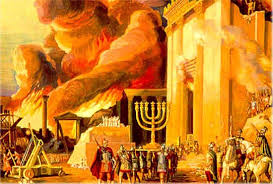
Unfortunately, many of us fail to realize the significance of this truth that comes only via the revelation of the Holy Spirit. Solomon’s and Herod’s Temples in Jerusalem are gone and we can only presume that a third one will be built. But Father wants us to grasp the significance of the destruction of both these temples—the reasons for their destruction and where we go from the point of their destruction to where we are today in our relationship with the Creator of the Universe. Those Temples, once the center of worship for Israel and subsequently the Jew, focused our attentions on the Creator of the Universe. There is a nexus between the Believer of Y’shua Messiah and the Temples of our God.
It was to these sacred edifices that we journeyed three-times each year; that we sacrificed and celebrated before Yahovah; that our security and confidence rested; that our joy was founded upon. But we grew fat and stupid and callous in our minds and hearts and our attentions turned away from true worship of Yahovah—from true focus upon our God. We were so brazen in our being and behavior that we erected idols on the Temple grounds; we allowed dishonest commerce to take place; we abandoned true worship of the Most High and forsook His annual Feasts. Virtually every conceivable violation of Torah was committed either on the Temple Mount and or in the Temple proper. I would lovingly encourage you when you get the next opportunity to crack open the book of Ezekiel and read chapters 8 through 10. I posted a Torah Living Daily Challenge a few weeks ago that addressed this particular historic event and the spiritual significance to be gained from it. Bottom line saints, Father is very sensitive about sanctification and holiness, especially the lack thereof. He required that the place where He chose to put His name and His Spirit be sanctified and holy at all times—perpetually. Thus, when we grew spiritually dull and fat and went awhoring after idols and pagan gods and effectively defiled Yahovah’s dwelling place over and over again, He could no longer inhabit it and he left; and we’ve seen repeated twice in our history the outcome of Father’s protection and covering being removed from the Temple and the city of Jerusalem, resulting in the two Temples being effectively destroyed along with multitudes of our brothers and sisters murdered.
But with the destruction of the second Temple, Father has chosen to place His name and His Spirit within us, these human dwelling places—our bodies—our individual temples. It is indeed an amazing concept and truth that few of us are able and willing to grasp with any appreciable understanding and commitment. By commitment I mean just that: the Believer in Y’shua Messiah’s body has been identified as a temple of the Most High; yet we treat these temples no differently than we treated Solomon’s and Herod’s Temples. We defile our bodies with all sorts of evil and filth—most of us haven’t the slightest inkling that we are in fact defiling our bodies which translates in us defiling Yahovah’s dwelling place. Today, much of what we eat is not food. It is either manufactured foods—that is food that is made in laboratory kitchens and sold to us through various restaurants and grocery stores; or genetically modified foods, where a plant’s or animal’s genetic code has been tampered with for purposes of producing more of that food product or changing it in some way that makes for greater profit for the agricultural industry. And that which has not been altered by scientists in their labs that we’ve adopted as food, many of us compromise and violate Father’s Torah by consuming foods that Father has prohibited us from eating—pork, shell fish; animals and birds that are designed for purposes other than for purposes of being consumed.
And that’s just food. What about the things that we do to our bodies and minds and souls? Drug use/abuse; alcohol abuse; body mutilations such as piercings and tatoos; pornography; inappropriate television shows and movies and videos; inappropriate video games; inappropriate music and books; sex outside of marriage; harboring and taking on anger, hatred, envy, lusts, covetousness; the keeping and telling of lies; and I’m certain there are other things that we place onto and into these temples of Yahovah that effectively defile and make for edifices where Yahovah is not at all content to reside in.
So what does Hanukkah have to do with all this? Well, quite frankly, Hanukkah—the true story of Hanukkah that is—is about the restoration and re-dedication of the Temple after its defilement by Antiochus Epiphanes and his Greek armies. The story of Hanukkah is not just about the restoration and re-dedication of the Temple, however. It is also about the Jews residing in Judah during the Macabbean Revolt, who through the zealous leadership of the Maccabees, re-dedicated themselves to Torah living—effectively hitting the default bottom on their Faith and going back to the beginning and the purity of God’s Word and His Torah. It was returning the nation to its Hebrew Roots—undefiled by Hellenistic influences and assertiveness; back to the one true God—the God of Abraham, Isaac and Jacob. The true story of Hanukkah is not found in a centuries’ old fairy tale whereby a lamp vessel, holding just enough oil to light the interior of the Temple for a single day, but miraculously provided fuel enough to the lamp for the flame to burn 7 additional days. No—that’s not it at all. I remember believing that tale until I actually took the time to read the book of Maccabees and through Yahovah’s teachers learned that the whole oil and lamp story was just that: a story—a fairy tale. And why would men drum up such a tale and distract our attention away from the truths to be gained from the real Hanukkah story?
These temples of the Most High are to be holy and sanctified and pure for our heavenly Father to dwell in. The lives we live must not be compromised as well. Hanukkah is a prime time for us to re-dedicate our bodies, hearts, souls, minds and lives to Yahovah our God. Let us not squander this Feast—this Festival—this season on petty squabbles about the actual dates that Hanukkah fall upon this year; the gift giving; whether or not we should observe it because it is not one of the man-made Feasts of Yahovah or that it has been taken over by secular and rabbinic Judaism. The real spirit of Hanukkah is right there in front of us and provides us the opportunity to hit the default button on our Faith so that we may live for Yahovah with zeal and truth and grace.
Shalom and Happy Hanukkah saints. Until next time—may you be most blessed fellow saints in training.
by Rod Thomas | Dec 7, 2015 | Podcasts
What About Grace Then? Part 10 of the Grace and the Law Series
Sabbath Thoughts and Reflections 39
Calendar
22nd day of the 9th Biblical Month—Kislev
Just 2-days before the start of Hanukkah—sundown December 7th, ending on Sunday the 14th
According to the Calculated Jewish Calendar, Hanukkah begins on the evening of Sunday the 6th of December and ends on Monday the 14th.
“Hanukkah celebrates the re-dedication of the Temple after the first Abomination of Desolation by Antiochus Epiphanes and celebrates our personal deliverance from pagan sun god worship.” (Believed to have been celebrated by Y’shua and as recorded in John9:1-41; Rood)
The story of Hanukkah is actually detailed in the Apocryphal Books of 1st and 2nd Maccabees
Celebrating Hanukkah in Charlotte at the Rood Awakening International Aviv Moon Studios December 11th through 13th.
Featured guest: Egytologist David Rohl
News You Can Use
1. Details are emerging about the couple who opened fire on an office holiday party armed with rifles and explosives, killing 14 people and injuring 23 others. The 27-year-old woman, Tashfeen Malik, had pledged allegiance to an ISIS leader and the FBI said the crime is being investigated as an act of terror.
A close friend of Nicholas Thalasinos, one of the victims of the San Bernardino shooting, said that gunman Sayed Farook had threatened to kill Thalasinos because he was Jewish and asserted that “Islam will rule the world.”
CV Claverie posted the followingFacebook messageon Thursday evening;
“The islamic terrorist who took the Life of my friend & bro in Christ, Nicholas Thalasinos, on yesterday in San Bernadino, CA, had been threatening him, telling him that islam will rule the world, Christians and Jews deserve to die; and that he (Nicholas) was going to die.”
“But, they aren’t reporting that in the “news” …I wonder why …”

The fact that no mainstream media outlet has reported on Claverie’s statement will fuel charges that the press is downplaying the role that Farook’s devotion to Islam played in the massacre.
Claverie’s claim correlates with aCNN reportthat explains how Farook had argued with Thalasinos over the latter’s fierce criticism of ISIS.
“One of Farook’s colleagues killed in the attack, Nicholas Thalasinos, liked to discuss religion and politics. Farook and Thalasinos, reportedly a devout Messianic Jew, had a “heated, passionate” discussion about politics and religion a few days earlier, said Kuuleme Stephens, a friend of Thalasinos, who called him at work while Thalasinos was in the middle of the conversation,” states the report.
Thalasinos’ widow, Jennifer, also said that he was “very upset about what ISIS has been doing and the radicalized Muslims.”
According to the pastorof one of the victims of the attack, Farook also told Thalasinos, “You will never see Israel.”
While the FBI is officially treating the shooting as an act of terror, many analysts and media outlets are still insisting that a “workplace dispute” could have played a role too.
Farook’s wife and accomplice, Tashfeen Malik, praised ISIS on social media immediately before the attack andpledged loyaltyto its leader, Abu Bakr al-Baghdadi.
A pro-Islamic State news outletalso saidthat Malik and Farook were “ISIS followers”. Farook was known to havewatched Islamic State propaganda videoson the Internet.
The FBI announced Friday it is investigating the mass shooting as an act of terrorism. If proven to be terrorism, it would be the deadliest attack by Islamic extremists on American soil since Sept. 11, 2001.
A U.S. law enforcement official said Malik used a Facebook alias to pledge her allegiance to the Islamic State group and its leader just before the shootings.
FBI Director James Comey would not discuss whether anyone affiliated with IS communicated back, but he said there was no indication yet that the plot was directed by any other foreign terror group.
“The investigation so far has developed indications of radicalization by the killers and of potential inspiration by foreign terrorist organizations,” Comey said. He cautioned that the investigation has not yet shown evidence the couple was part of a larger group.
Despite signs of the couple’s radicalization, there “is a lot of evidence that doesn’t quite make sense” at this early stage, he said.
______________________________________________________________________________________________
Commentary
Friends, we’ve always known in the back of our minds that we would have to eventually face some form of persecution. I personally didn’t think it would be this soon, but this is certainly a wake up call for all of us. It’s not a question of “if” we, Yah’s elect, will face persecution and tribulation in some form or another, but a question of when. We’ve seen the first blows cast this against us this past week. And from some of the intelligence I’ve received over the last couple weeks, the Islamists are either coming our way or many of them are already here. They’re targets? The west—financial centers—symbols of democracy and capitalism–for sure. But also, Jews and Christians. Our government no longer has our best interests at heart, I’m afraid to say. Their focus is on climate control and how to control us through legislation and enforcement of established laws that are designed to reduce and or eliminate our freedoms and God-given rights. Unfortunately, we are left to defend ourselves to a lesser or greater extent. Thus in terms of our personal and collective security we, in some cases, have just each other and the providence and wisdom of the Almighty. That’s where faith comes in: a trusting faith; an unshakable faith. A faith that causes us to not fear the terrorists and what they are capable of doing to us here in our home towns and cities. Our God is sovereign and His will shall be done. It’s up to us to trust Him and secondly to rally around one another and prepare one another; love one another; support one another; to stay focused on the Kingdom of Yahovah and His righteousness. Certainly we should be cautious in our day-to-day activities and reduce any chance that we could be a target of the terrorists.
Personally, we’ve made efforts to reduce our being out in public—actually we started reducing our going and hanging out in public—movies, malls and other venues—before these recent threats of home grown terrorists started grabbing our nation’s attention. We get what we need from the stores and return home and home is where we pretty much spend all our time. We try to be as self-reliant as we possibly can.
Now please don’t get me wrong: what happened to our dear brother in the Faith this past week could happen to any of us. In this particular case, it was an innocent “office holiday party” (at least that’s what the news forums are reporting) that was targeted by these terrorists. These satanically influenced and led individuals prey upon those who they know will be unable to defend themselves and thus they scout out opportunities to “terrorize” and kill innocents for the so-called sake of their religion. We saw this in Paris a few weeks ago; we’ve also seen this played out with a Russian passenger plane that was blown out of the sky last month.
So if there’s anything I can say and admonish you with today, my brothers and sisters, is to always be aware of your surroundings. If you don’t have to be out in public, I would say don’t. Avoid public venues as much as possible. All indications are that the terrorists will be targeting public venues and their biggest fear is not being killed by military and law enforcement officials; it’s the fear of failing. Yes, you heard me: failing. They do not want to fail in their mission to kill as many people as they possibly can—especially Jews and Christians. Therefore they are targeting places where there is a reduced chance that someones/officials will be able to repel or stop their attack. Children are also prime targets for them. So I say to you, simply to take precautions each day in your comings and goings, but more importantly, let us build up our trust and reliance upon Yahovah our God and to do His will and give Him the glory He so richly deserves.
Lastly, I would propose to you to prayerfully consider giving a donation on behalf of our dear sister Jennifer, wife of Nick. She’s no doubt going through a hellish time and it is time for Hebrew Rooters to circle the wagons around our dear sister in need, and minister to her. Again, we’re getting to the point in our society that all we have beyond Father and His Spirit is one another. Let us stand with one another and hold up one another as the need is made known. This is a good cause and I believe, a cause that Father would smile upon if we lend our support to it. The direct link to the Memorial Fund is https://www.gofundme.com/apd6bz84.
I’ve never met the Thalasinos, but our heart and prayers go out to Jennifer and her bereaved family. Much love also going out to our dear sister in the Faith, Erena. Thank you for bringing the story of this brother to my attention.
_____________________________________________________________________________________________________________________________
4. NATO foreign ministers invited the small country of Montenegro to join their military alliance even after Russia warned it would be very unhappy if they did so.
5. World leaders gathered for a summit on climate change in Paris, where Obama and Putin met to discuss the growing crises in Ukraine and Syria.

6. ISIS released a video that purportedly showed the beheading of a man that they claimed was a Russian spy.
9. A freight train of storms is expected to hit the northwest this weekend and into next week, dumping feet of rain and snow on the region.
_____________________________________________________________________________________________________________________________
In 2015, tech billionaires pursued anti-aging and cheating death like never before.
Research into surpassing life expectancy norms has become the pet project of tech billionaires, with entrepreneurs from Mark Zuckerberg to Sergey Brin writing out million-dollar checks to fund their quest.

The list of entrepreneurs jumping on the death-defying bandwagon has grown rapidly over the past few years, creating a veritable who’s who of generous donors. Notorious within the ranks are Peter Thiel, PayPal’s co-founder and developer of Breakout Labs, a funding body for radical research into early-stage science geared toward tackling degenerative diseases; Oracle CEO Larry Ellison, who has donated some $430 million to anti-aging pursuits; and Paul Glenn, a venture capitalist who doles out grants to lab researchers at the likes of Harvard and MIT to investigate “the mechanisms of biological aging.”
The pursuit of stopping the clock on corporeal degeneration has become increasingly aggressive in those intervening years, with 2015 proving to be the most dogged yet. The 2045 Initiative—Dmitry Itskov’s life-extension organization seeking to transfer personalities onto non-biological items and, ultimately, immortality—projected that this year could be the first in which such a system was created.
The “brain computer interface” has been slated for launch anytime between now and 2020, dispelling naysayers’ qualms that such technologies only have a chance of existing in the very distant future. And there’s certainly no shortage of money to keep powering this research: Google co-founder Larry Page has diverted $750 million of the company’s funds to Calico, its life extension center; Pierre Omidyar, half of the brains behind eBay, has given millions to investigating disease recovery; entrepreneurs Peter Diamandis and Craig Venter set up Human Longevity Inc. in a bid to find a means of elongating the human lifespan.
What About Grace Then? Part 10 of the Grace and the Law Series
Personal Testimony and Perspective
I had fully intended to bring this series on Grace and the Law to a close with this posting—Part 10 that is. However, it occurred to me that I had not done any appreciable job—at least that’s how I saw it—addressing the concept of “grace.” Certainly, we can not conclude this series on Grace and the Law without a proper treatment of the concept—or should I say concepts—models—doctrines—the issue of grace.
Like so many doctrines and concepts in Christianity—salvation, righteousness, sanctification, the body/soul/spirit, the truth about the Bible, baptism, the Law, the true Gospel, etc.—grace is a huge concept with tremendous importance and relevancy. Many of these concepts are of eternal relevancy for the would-be believer. Thus, gaining a true understanding—that is an understanding that is biblically-based and is devoid of denominational influences and assertiveness—of grace and these other monumental doctrines or concepts of our Faith is crucial if we are to fully and accurately grasp what our primary roles are as Believers in Y’shua Messiah. And to me, this is the crux of the entire situation dear friends. It’s Churchianity’s failure to properly and transparently flesh out what the Bible has to say about these key concepts and doctrines of our Faith that has led millions of well-meaning—sincere believers down a path of destruction and misleading. And I believe that the reason so many souls are exiting Christianity in the huge numbers that are being reported by some of these Christian research groups is because they’ve (the exiting souls that is) not been given the complete, unadulterated truth that sets men free. (Reference Joh. 8:32) We Hebrew Rooters—Netzaris—realize without doubt that it is virtually impossible for us to go back to a life that is devoid of the truth—back to secularism or back to Churchianity. The writer of the Book of Hebrew wrote so touchingly: “For it is impossible, in the case of those who have once been enlightened, who have tasted the heavenly gift, and have shared in the Holy Spirit, and have tasted the goodness of the word of God and the powers of the age to come, and then have fallen away, to restore them again to repentance, since they are crucifying once again the Son of God to their own harm and holding Him up to contempt.” (Hebrews 6:4-6 ESV) The truth of the Gospel and of who we truly are in Messiah is so precious and so profound, I can’t imagine a life without it; I can’t imagine becoming so messed up in my being that I some day, simply walk away from it. What would have to happen to a person to send them packing and to leave the true Faith once delivered? I’m talking about those who are God’s elect—not those who’ve made an emotional commitment to be churched or to follow a Greek Jesus. You see, I believe that was me for most of my life—that is, until I met Y’shua haMashiyach—the Hebrew Messiah—who showed me how I must live and be of service to Him and the Kingdom of Yahovah. Prior to my coming into the true Faith once delivered, I didn’t realize that I could not mesh my Faith with secularism and carnality. To me, all that was important was that my ticket for heaven was punched and that I was good to go for the remainder of my life here on this planet.
But then, I left churchianity because of the cares of life—career, family, pride, etc.—too busy living to live for Christ. The tugs and pulls of my life were more important—more enticing—more relevant to me than my Christianity. So I left Christianity for a few years—well, to be honest, several years. Oh, I dabbled in and then exited out of Churchianity more times than I care to recite over the course of those terrible years—at least I see them as terrible years—being without truth and without a viable relationship with Father is indeed a terrible period in anyone’s life. And let me just say: I believe I had a true love for God and for Jesus Christ in those years that I was “playing” Christian—my word—playing Christian and hanging out in Church. But when I honestly look back to those days, I had no problem compromising my faith. I had a faith that worked splendidly for me on Sundays, and then that same faith I could conveniently put on a shelf during the rest of the week. My commitment to Christ didn’t affect significantly how I lived day-to-day—I still put my job, family and self first—and the order would often change, depending on what perceived crucial thing was going on in my life at the time.
But my story is inconsequential to anything. All I can say is thank Yahovah for His precious grace—His grace that brought me in to the fold, in spite of myself. I can boast of nothing that I’ve done that has led me to the place I’m at today in my walk with Messiah. For it was all through Father’s efforts and His mercy; His long suffering; His love; His grace that rescued me from certain and well-deserved condemnation. All I had to do was answer Father’s effectual call and from there, be obedient to Him in all my ways. And I can tell you, coming in to Hebrew Roots, I fought Father tooth and nail. Even though I was terribly back-sliddened—whatever that truly means as it relates to Christianity—I still held to the fundamental beliefs of Churchianity. Kind of a paradox I would say—I held to the beliefs and doctrines of Christianity, yet I did not live as a Christian should live—or live as one would commonly think a Christian should live—whatever living like a Christian is supposed to look like to the average person on the street. To me, it was heretical and cult-like to take on a life of Torah Living—to actually be obedient to the Bible when my denomination clearly taught me that I was saved through grace alone—saved by my saying the sinner’s prayer and being baptized—my name written in the “lamb’s book of life—destined for heaven. There was nothing more that I could do nor should do in my life, for my salvation was ensured. Looking back to that period of my life, I was only concerned with where I’d spend eternity. I was not at all concerned about having a viable relationship with the Creator of the Universe. And to me, that explains a lot about why others—why Christians as a whole—care so little about establishing and maintaining a true relationship with Father. It’s because the focus is on heaven, not the Kingdom of God coming here to earth; not pleasing and being obedient to Yahovah; not performing those good works that we’ve been destined to perform as the Apostle Paul wrote to the Ephesian assembly: “For we are His workmanship, created in Y’shua Messiah, which Yahovah prepared beforehand, that we should walk in them.” (Eph. 2:10) All of this was what I was fighting against when the Hebrew Roots was first presented to me as the only viable option for a believer in Christ to adopt and walk in. Are you kidding? I have to stop eating bacon and shrimp and not work or shop on Saturdays? Who would come up with something as asinine as that? Indeed, that was me. And to see where I was then in comparison to where I am now, I can not believe it. It is only because of the grace of Yahovah and the working of His Holy Spirit—His Ruach haKodesh—that saved me from the certain destruction that I was heading for as a so-called back-sliddened—Christian. Have I arrived? Absolutely not. Like so many of you, I can only trust that “He who began a good work in me will bring it to completion at the day of Y’shua Messiah.” (Phi. 1:6)
Hey, we all have a story to tell and many of those stories are likely similar to mine. Nevertheless, at the end of the day, the concept of “grace” looms ever so bright; ever so relevant in each believer’s life. The only problem seems to be, however, that the doctrine or concept of grace is grossly misunderstood in Christian circles. The concept/doctrines of grace—yes, there are doctrines (plural) of grace–have been manipulated and fashioned by church leaders over the centuries, to fit a religion that rejects God’s laws and commandments and tells man that he need not worry about anything—that he is too sick to respond to the call of Yahovah and that his/her salvation is assured simply because God has chosen to work things out for mankind that way. That ole pesky sin issue that has plagued mankind since the crisis in the garden, has been taken care of through Jesus’ crucifixion; so all you need to do now is say the sinners’ prayer and await the rapture of the church to come. Thus, in Protestant/Reformed Churchianity, one’s salvation through the grace of God rests entirely upon the sovereignty of God—that is God’s absolute authority over His entire creation. The doctrines of grace as adopted by protestant and reformed Christianity was formed by the five-points of Calvinism—John Calvin being a 16th century French theologian and reformer who broke away from Catholicism in the year 1530. As it relates to Catholic Churchianity, one’s salvation through the grace of God rests in great part upon the sovereignty (my wording) of the Holy Roman Catholic Church and her sacraments and the Holy See—you be a good Catholic, you go to heaven; you mess up, you go to hell—although you can get out of hell if you adhere to the Catholic Church’s various sacraments and protocols. And of course, between Roman Catholicism and Reformed Protestantism—relatively speaking, the two ends of the grace spectrum you might say—there are variations on the grace theme which we’ll look at in future episodes.
What I need to say at this point is that I am not going to finish this series on Grace and the Law with this post. It’s not possible. I realized recently that I’ve not done the concept and doctrine of grace the justice it deserves in this series. I beleive that I will need to expend a few episodes on the topic of grace in order to bring the whole series to a proper close. The one thing I do not want to do is brush off or marginalize the concept of grace and focus all our efforts and mental energies on the Law and Torah, which seems to be the focus of much of our community. Torah is awesome and the lifeblood of our Faith. But Torah without Grace is a lopsided and ineffectual perspective and reality for the Hebrew Rooter/True Believer in Y’shua Messiah. For we know that it is by grace that we are saved through faith; and that our salvation is not the result of any efforts or actions that we drum up in our minds as a means to somehow earn our salvation. (reference Eph. 2:8) Our salvation is a gift of Yahovah that is rendered to us through a trusting of Yahovah. It is Yahovah’s grace that saves us in accordance to Yahovah’s purpose in Y’shua Messiah, which was established before the ages begain. (reference 2 Tim. 1:9) So it has become abundantly apparent to me that I can not shortchange this issue of grace. There actually is a great amount of information on this subject that the Spirit is showing me on grace that I am anxious to share with you, but it’s going to take a little time to do just that. There is an end in sight, friends, and I realize that many of you may be patiently hanging in there with me and I appreciate that—I truly do. Thank you for standing with me.
So what I’d like to do for the next few sessions is to conduct a survey of the various Christian denominations’ views or perspectives on grace. Then I’d like us to look at Father’s perspective on the issue of grace as recorded in the Bible, absent any denominational influence or assertiveness. Lastly, I’d like to bring this whole series to a close by discussing how grace works with Torah observance—the law—to fulfill and complete/perfect the true believer in Y’shua.
Denominationalism and Grace—A Catholic Perspective on Grace
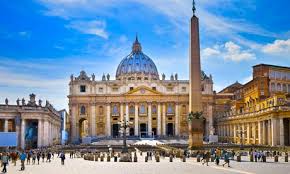
Now let me just state here that I am not an expert on Catholicism nor am I knowledgeable of Catholic doctrines, beliefs and traditions. I know about enough to get me into deep trouble and that’s probably about as much as I really care to take on as it relates to my delving into Catholicism. So what I’m about to cover here as it relates to Catholicism’s perspectives on the topic of grace, I received through internet-based research. And the only reason I’m even bringing this up—the Catholic perspective on grace that is—is because modern-day Christianity, which I so affectionally refer to as churchianity, received much of her heritage and understanding of things related to the Christian Faith from her mother the Catholic Church or the Universal Church—be those beliefs and traditions that Protestant Christianity has retained such as Christmas and Easter and the concept of the immortal soul; or beliefs and traditions that Protestant Christianity has rejected or discarded such as saint worship, the payment of indulgences for release of loved ones from purgatory, or belief in the primacy of the Pope as the Vicar of Christ. The topic of grace is not immune to the treatment of the Catholic theologian and the Holy See, for Catholicism has taken the simple concept of grace and distorted it beyond that which was passed down to us by Y’shua’s anointed apostles. And we must be clear about this thing: Y’shua’s anointed apostles received their understanding of the concept of grace from Y’shua haMashiyach, who taught all of them—the 11-inner circle disciples and the 12th inner circle disciple, Paul, also referred to in our community as Shaul. So the concept of grace is not a principle or concept created or developed by the Apostle Paul, as Churchianity would have us believe. The concept of grace is purely of Yahovah who passed it down to His begotten son, Y’shua haMashiyach, who in turn passed it down to his anointed apostles. But somewhere after the concept was passed down to us by Y’shua’s apostles, it was hijacked by certain individuals who wormed their way in to our Faith and who the Brother of our Lord and Savior, Jude, described as ungodly people who perverted God’s grace into a license for debauchery and disowned our only Master and Lord, Y’shua the Messiah.” (Reference Jude 1:4) And from what I’ve gathered in my research on Catholicism and their handling of the concept of grace, Catholicism has done a bang-up job distorting the purity and truth about grace.
The Catholic understanding of grace is that of the love and mercy of God that is given to mankind. To the Catholic, grace is a spontaneous gift that is undeserved by mankind and it takes the form of “divine favor, love, clemency and a share in the divine life of God.” (Diderot, Denis-1757) Talk about vagueness and a definition that leaves a lot of room for jiggery pokery by the Catholic leadership, which, of course, was done. This definition, which I took from Wikipedia, provides no lead-in as it relates to the responsibility or lack thereof of the receiver of God’s grace. But, I guess that’s okay. You can pretty much guess where we go from here as it relates to how grace works in the Catholic Faith. Essentially, within Catholicism there are a couple forms or doctrines of grace: sanctifying and actual grace. Sanctifying grace makes the receiver pleasing to God, which translates into the receiver effectively becoming sanctified and justified before God. Actual grace, the second form of grace, assists the receiver in leading someone else to God. These two concepts of grace were developed and derived by Thomas Aquinas who lived in the 13th century. He was a Dominican friar, a Catholic priest, a philosopher, theologian and jurist. (Wikipedia)
According to Catholicism, the way grace works is that, upon the believer adopting Catholicism, the sinner is transfored into a holy child of God through the indwelling of the Holy Spirit. This working description of grace was developed and incorporated into the Catholic Faith as a result of the Council of Trent, which was held between 1545 and 1563 in Trento and Bologna, northern Italy. Consequently, grace is viewed as being given or inputted to man. Grace, then, remains permanently with man as long as he/she does not commit a “mortal sin.” In other words, the commission of a mortal sin will result in the receiver losing God’s grace. Bear in mind, nothing has been said at all about grace resulting in the receiver’s eternal life—although I would guess that by “sharing in the so-called divine life of God” one would naturally receive or be eligible for eternal life. Nevertheless, the focus of grace is primarily on the life he or she is living at the time that he or she receives God’s love, mercy and favor.
What is a mortal sin you ask? There is actually a list of mortal sins that, if committed, will result in the adherent/believer losing God’s grace and one would presume also losing their part or share in the divine life of God. The list is found in the Catechism of the Catholic Church. The mortal sins include, and they are not limited to: abortion, adultery, bestiality, blasphemy, contraception, cheating, missing mass, divination, divorce, drug use (assuming drug abuse), envy, euthanasia, extortion, fornication, freemasonry, hatred, homosexality, idolatry, incest, lying, masterbation, murder, perjury, polygamy, prostitution, rape, sacrilege and suicide. The good thing for the faultering Catholic who falls into one or more of these mortal sins is that he or she can enjoy the restoration of sanctifying grace through the Sacrament of Penance. (Catechism of the Catholic Church) I found this to be facinating and utterly troubling at the same time. Where is God and the application of the shed blood of Y’shua in the forgiveness of the commission of so-called mortal sins? The forgiveness of sins by the Creator of the Universe, through the shed blood of Y’shua Messiah, is non-existent according to Catholicism. The Church triumphant assumes responsibility for the forgiveness of mortal sins. How convenient. If man or an organization can forgive sin—especially so-called mortal sins—those men and that organization can quite easily control the masses, wouldn’t you agree?
What about commission of less serious sins you ask? Well, the commission of less serious sins, which the Church calls venial sins—and I tried to find a comparable list of sins that fall within the realm of venial sins, but could not—venial sins are essentially sins that do not show up on the list of mortal sins. The commission of venial sins do not necessarily sever one’s relationship with God, but the commission of venial sins does still offend and wound God’s grace. But as with mortal sins, venial sins should be treated with the Sacrament of Reconciliation, or more commonly referred to as Penance. (Reference the Catechism of the Catholic Church) Again, very interesting and troubling, all at the same time.
Unlike the Calvinistic view of grace—which is based upon the 5-points of Calvinism—and we’ll get into Calvinism in following episodes on the subject of grace—the Catholic treatment of grace seems to give full attention to man’s free will or free agency. According to Calvinism, man can certainly resist and reject God’s grace, although he or she who rejects or dismisses that grace will have a tremendous fight on their hands—it’s going to be extremely difficult for them to resist. The Calvinist on the other hand, asserts that man, if chosen of God to be one of His elect, has no say whatsoever as it relates to God extending grace to whatever man God elects. That is, man’s free will does not come at all into play as it relates to God’s effectual grace. Catholicism defines effectual grace as that which achieves the “intended effect without fail”—whatever that means. I guess it’s saying something to the effect that God who has begun a good work in the sinner or Catholic, will certainly complete that good work in that Catholic or repentent sinner. If we completely dismiss the concept of man having a free will in the process or application of grace, then effectual grace would translate in Calvinism as “Irresistable Grace,” which holds that the individual whom God choses is incapable of resisting God’s grace and upon receiving the application of God’s grace, he or she will never falter or lose God’s grace nor their salvation.
Now, Calvin didn’t just come up, out of the blue, with the concept of “Irresistible Grace.” The whole question of man’s free will in relation to grace was the focus of a number of important debates in the Catholic Church of the 5th, 16th and 17th centuries. However, it was primarily at the Council of Trent in 1547, that the Catholic position on grace began to solidify; contrary to that of Calvin’s view of grace.
The Council of Trent declared that “none of those things which precede justification—whether faith or works—merit the grace itself or justification. For, if it be a grace, it is not now by works, otherwise, as the same Apostle Paul says, grace is no more grace.” (Reference Council of Trent, Session VI) In other words, grace to the Catholic is not received through one’s faith or works—it is a free and spontaneous gift of God. However, the Council went on to propose, however, that eternal life is provided as a “reward” to those “working well unto the end…and rendered (salvation/eternal life that is) to their good works and merits.” (Council of Trent, Session VI) So despite the Church asserting that the grace of God is a free gift that can not be achieved either by the adherent’s faith or their works, eternal life is achieved through one’s efforts—works or merits. It is Jesus Christ’s virtue that is continually infused into the adherent, that affords him/her the ability to perform the good work necessary to receive eternal life.
Now that I’ve thoroughly confused you, just wait till the next episode of this series, where we’ll look at protestantism’s view or perspectives on the issue of grace. I hope that you gained some insight into this very important topic. It is imperative that we have a firm understanding of what grace is and it’s relationship to the Law/Torah.
Shalom and may you be most blessed.
Faithfully submitted with much love in Y’shua Messiah
by Rod Thomas | Dec 3, 2015 | Podcasts
When you have come unto the land which Yahovah your God gives you, and shall possess it, and shall dwell therein; and shall say: I will set a king over me, like all the nations that are round about me; you shall in any wise set him king over you, whom Yahovah your God shall choose; one from among your brethren shall you set king over you;…And it shall be, when he sits upon the throne of his kingdom, that he shall write him a copy of this law in a book, out of that which is before the priests the Levites. And it shall be with him and he shall read therein all the days of his life; that he may learn to fear Yahovah his God, to keep all the words of this law and these statutes, to do them; that his heart be not lifted up above his brethren and that he turn not aside from the commandment, to the right hand, or to the left; to the end that he may prolong his days in his kingdom, he and his children in the midst of Israel. (Deu. 17:14-20)
Torah and Politics
Torah Living Daily Challenge 31
This Torah portion section–parashah 48 section 1–defines for us how a king—a human king—would be selected and placed to rule over us. According to Hertz’ Pentateuch and Haftorahs, “It is legitimate to have a king, but he must be a native Israelite and be a constitutional monarch who governs in accordance with Torah. He was to have no standing cavalry to keep his people in subjection, nor establish a harem; and he was himself to study and obey the laws of the realm.” As with divorce or the dissolution of a marriage union, Yahovah would permit the appointment of a king over us, but with stipulations and governing rules to that effect. In fact we saw earlier that Yahovah required that we have judges to properly dispense justice and the rule of law over us. But at the end of the day, Yahovah was to be our King—that was Father’s preference from the beginning. History bears out that the surrounding nations all had monarchies governing and controlling the peoples of their nations. This set up of having a man over us was never a good idea and Yahovah knew that. But again, like divorce, because of the hardness of our hearts, Father permitted a monarchical system to exist over our nation. (cf. 1 Sam. 8) But again, there was to be stipulations related to the selection of the king, the foremost requirement was of course, that Yahovah would select our king for us and the most brilliant example of this coming to fruition can be seen in the selection of the first king placed over us, Saul, as recorded in 1 Samuel 10:24. In this particular case, Yahovah used Samuel as the agent by which the selection of Saul as king over Israel would be made. Of course, this practice of king selection did not remain in accordance with Torah and it all pretty much came to a bad end, so to speak, especially when the Romans made Herod and his kinsman—”who were of Edomite descent”—kings over Judea. (Reference Hertz) And continuing with Hertz’ treatment of this Torah-based kingly selection process, he notes that the Talmud records an incident involving Herod Agrippa I, who as king over Judea, read this Torah portion and is recorded to have wept and “deemed himself unworthy of kinghood on account of his alien ancestry; whereupon the people reassured him with the words, ‘Thou art our brother, thou art our brother.’” And certainly the books of Kings and Chronicles document how the various kings of Israel and Judah failed to properly adhere to the Torah-based stipulations of kinghood, many of these kings being deemed as evil in the sight of Yahovah. Again, Yahovah knew the problems associated with having men placed over us as rulers while abandoning Father’s perfect rule over us.
The timing of this portion is not entirely spot-on, but timely enough. In the United States, we have entered the 2016 presidential race. Already we’ve endured a number of debates between the candidates of both parties. I’ve heard many commentators and talking heads in and around the national discourse about the 2016 presidential race thus far, bemoan the selection and caliber of candidates we have to choose from this election cycle, with the exception of the democratic party which seems to be bent not only upon ensuring a Hilary Clinton democratic nomination victory; but also ensuring that Hilary Clinton becomes the next president of the United States.
Prior to coming into Hebrew Roots, I was a staunch Republican who consistently voted during each election cycle, regardless if it was a national-general election or just a state or local election. I felt it was my civic responsibility/duty to vote. Granted, even at that low spiritual juncture of my life, I was under no illusion that my single vote would ever make a difference and I always had this sneaky suspicion at the back of my mind that the American election system was rigged; I felt that the powers-that-be set the rules and selected the president and most of our elected officials for us and for purposes of fulfilling those powers’ agendas and purposes. No, I wasn’t a conspiracy theorist at the time—although I tend at this late juncture of my life to lean more than not to the side of conspiracy theorist. I was simply not convinced in my heart and mind that our government was on the “up and up” and that we American voters were simply going through the motions, fooled into thinking that our individual actions would actually lead to someone getting elected. Then when I entered the Hebrew Roots and immediately went into the Churches of God, my negative view on the election system and process was further supported by the church’s doctrine that stood primarily against the democratic election process and system and American governmental system.
Having mellowed a great deal and more importantly, having left the Churches of God system, I’ve moderated my views on the whole concept of voting and elections. This Torah portion does so much to establish my views on voting and elections–or for that matter, dictate my views on politics as a whole. As a Torah Observant Believer in Y’shua Messiah, I strive to be obedient to the commandments and laws and precepts of Torah, as much as I possibly can. Those areas of Torah that I am unable to obey or keep (especially those connected to the Temple and to the Levitical priestly system), I seek Father’s Spirit to reveal to me the spiritual lessons to be learned from those “static Laws” (my phrase for those areas of Torah that cannot practically be kept by us today). For me, the whole thought behind me participating in the election process falls within this “static law” arena.

We Netzari-Americans (Hebrew Rooters) do not live in a “theocracy” nor do we have a God-appointed king over us. A Torah-based political system does not at all mesh with our national constitution and political system, thus we who are living in this country and in many nations of the west are unable to properly keep this mitzvah. However, for me, I do believe there are tremendous spiritual principles to be gained from this mitzvah related to the selection of a ruler over us.
As it stands and as far as we know, we do not have a current leader—nor do we have a presidential candidate—who adheres to God’s Word or His Torah. Essentially, every candidate and political leader has effectively vowed to the public that any religious or spiritual convictions they possess will not influence their governing decisions and practices–maybe with the sole exception of Ben Carson who is an avowed 7th Day Adventist, but not a Torah Observant Believer in Y’shua Messiah. If you ask me, this would disqualify every would be presidential candidate and current world leader from ruling over us from a Biblical perspective. Thus, for me, I have elected (no pun intended) to not participate in the election process.
Now, this is not to say that Father has not placed them in their political or seats of power to serve His purpose in the earth. Father has made it clear that the earth is His and all it contains. (1 Corinthian 10:26) And we, His elect, have been placed here to inhabit this world and live for Him in the midst of the authorities that He—Yahovah—has set in place. Paul writes to the Messianic Assembly in Rome: “Let every soul be subject to the authorities of government. For there is no authority which is not from Elohim: and the authorities which exist are established by Elohim. He therefore who opposes the authority, opposes the establishment of Elohim; and they who oppose them will receive judgment. For judges are not a menace to good deeds, but to evil deeds. Would you then not be afraid of the authority? Do good, and you will have praise from it. For he is the minister of Elohim; but it is to you for good. But if you work evil, be afraid; for he is not girded with the sword in vain; for he is a minister of Elohim and an avenger of wrath to them that do evil things. And therefore, it is necessary for us to be obedient, not only on account of wrath, but likewise on account of our consciences.” (Romans 13:1-5 AENT)
Now many in Churchianity would use this and other like verses to advocate believers in Messiah get in lock-step with this country’s democratic processes. What this verse is NOT saying, however, is that we are to support and condone evil, be it in our homes, our work-places or even our governments. Our governments throughout this nation have persistently shown that they are evil: they advocate gay and lesbian unions; they support and fund abortions; they stand for social injustice for the sake of societal peace and the personal advancement of the political power brokers that have authority over us. Yet Christians are encouraged by their leaders and teachers to participate in the democratic and political process. The argument from those who advocate our participation in the democratic process is that by our not participating in the process—by our inaction—we facilitate the seating of those who do not share our values and beliefs. Of course, this mindset is debatable to say the least. In fact, the traditional leaning of Christians in the United States tends to be that of Republican, while the secular and non-believing public tends to be Democrats. Certainly, this is a generality. I know for a fact that black-Christians tend overwhelmingly to vote Democrat. Why? One could argue that blacks in this country, be they Christian or non-Christian, feel that the democratic party has their best interests at heart—for some it’s their pocket books; for others it’s their rights and opportunities as members of impoverished communities; for others it’s their close affiliation with members of their race. That being the case, then, these individuals tend to place their Faith secondary and even tertiary to that of their personal interests. And certainly, this same principle goes for the White, Hispanic, Asian and Middle Eastern in our society who chose their personal preferences and interests over their Faith and religious convictions.
What Paul is saying in this letter to the Roman Assembly, however, is that we as Torah Observant Believers in Y’shua Messiah, must be a peaceable people who obey the laws of the land and show due respect for those individuals who have been given authority over us in society. That deference and respect goes only as far as that which doesn’t cross the line into the realm of evil. In other words, we are not to be lemmings who subordinate the tenets of our Faith to the common practices and traditions of our society and the whims and rulings of evil men. Father taught us: “You shall not fall in with the many to do evil…” (Exodus 23:2)
Thus, when we’re presented with participation in our nation’s political process and are faced with electing a candidate to rule over us, we must think clearly about the spiritual impact that our participating in such a process might impose upon us as Believers in Y’shua Messiah and our nation. If our selection of candidates do not mesh with our beliefs and our Faith, why would we go out to participate in a process that we hope will put them into positions of leadership over us? If these individuals do not follow Torah; if they advocate or endorse evil practices; if they seek to fulfill their own personal agendas and interests by becoming our leaders, why would we participate in such a process that would potentially lead to their being placed into office and rule over us? Would there ever be a chance that we’d be shooting ourselves in the foot? Of course there’s such a chance. In fact, we may be facing that type of situation in the not so distant future as a result of those who’ve already been placed in government leadership positions.
It troubles me to think that millions of Americans went to the polls in 2008 and 2012 and placed our current–sitting president into office. He has never truly espoused so-called Christian values; he has advocated a reduction or even elimination of our rights to practice our Faith; he has gone out of his way to subordinate Christianity to that of Islam; he has stomped upon several Christian values such as the Christian belief in upholding the rights of the unborn and rejection of gay and lesbian unions. To add insult to injury, these same so-called Christians elected a Congress that has gone out of its way to support the policies and platform of our current president. Why? Why would we, who claim to be the elect of God, ignore that which we’ve dedicated our lives to—the furtherance of the Gospel and being disciples of Y’shua Messiah—and beat feet to the polls to elect such individuals to positions of rule over us? And if all remains as it is today—at the posting of this episode of Torah Living Daily Challenge—we will see a repeat of this very thing in 2016 when our nation will elect Hillary Clinton or someone else of similar political leanings to the highest office in the land.
But I’ve said all that I’ve said, not to advocate that we overtly oppose our governments. I’m just questioning the spiritual prudence in participating in a democratic process that serves only to put into office those who do not share our Faith. I know this will sound off-base and foolish to many of you listening to this episode. But bear in mind Saints, my whole purpose in this ministry in part is to call all who would claim Y’shua as their Messiah, to embrace a life of Torah and reject compromise in all it’s forms—be it in our day-to-day walk with Messiah or in our spiritual Torah-based beliefs. Traditional Churchianity has shown that she is not afraid to compromise—and why should they think any differently? When you, as a Christian, believe that you have no responsibilities as it relates to your Faith because of a misconception you have related to the hijacked doctrines of Grace, then it’s certainly not a stretch nor is it an effort to subordinate the tenets of your Faith to that of your personal comforts and preferences.
But on another level, Peter comments on the believer’s responsibilities as it relates to how we are to deal with those who are placed in positions of authority over us: “And be submissive to all the sons of men, for Elohim’s sake; to kings, on account of their authority; and to judges because they are sent by him for the punishment of offenders, and for the praise of them that do well. For so is the will of Elohim, that by your good deeds you may stop the mouth of the foolish who do not know Elohim: As free men, you are not like men who make their freedom a cloak for their wickedness, but as the servants of Elohim. Honor all men; love your Brothers; fear Elohim; and honor kings.” (Reference 1 Peter 2:13-17 AENT)
Contrary to what churchianity and others may advocate, this Petrine passage does not in anyway stipulate that we are to participate in the election process. Peter advances to us Messiah-like behavior that we should exemplify as a course of normal Torah Living and general behavior as Torah Observant Believers in Y’shua Messiah. Essentially, Peter instructs us that we are to respect those who are placed in positions of authority over us and to behave in a Messiah-like manner before them. This is contrary to some of the radical, so-called Christian groups out there that have taken it upon themselves to do the exact opposite of what this Petrine passage instructs. I recently viewed a video online, of a charismatic-Christian group, the name of which escapes me for the moment, but if I knew it I wouldn’t reveal it as I was disgusted by their behavior. The members of this group in this particular video, numbered somewhere around seven. It turns out that these members went into a department store and incited a disturbance over a really stupid issue I believe was related to the use of a restroom by one of the members and a staff member of the department store. The disturbance in the store resulted in the the physical assault of a department store staff member. The group departed the store and congregated in the store’s parking lot. Now you should know, that this particular group of so-called Christians have essentially declared war upon the governing bodies of this nation and have been known to assault police officers and threaten to harm other government personnel. These individuals have used the judicial system to their personal advantage through a number of well orchestrated law suits, all the while advocating that they are believers in Jesus Christ and their Faith is first and foremost in their lives.
Well, continuing on with this story, two police officers were dispatched to the scene of that department store to investigate the assault that the store manager had called in to their dispatch. Upon arrival, the assault victim was questioned by responding police and upon concluding their in-store inquiry, they turned their sights to the gathered group, still hanging out in the parking lot. As the two officers approached the group—which I should tell you was composed of both men and women—two to three of the males and one of the women in the group as I recall, became belligerent towards the officers and their questioning. The two officer, grossly outnumbered by this group, seemed to attempt to sequester two or so members of the group to question them about the assault incident. Now, all of this was caught on the officers’ dashboard cams and the video has been viewed by thousands on the internet. The group as a whole resisted the efforts of the officers to get to the bottom of their investigations and began to surround the two officers in a threatening manner. As the officers attempted to gain control of this diminishing situation, at least one of the male members of the group, spurred on by a female member of the group, began throwing punches at the officers. Immediately the situation turned to pandemonium and the officers suddenly found themselves in a fight for their lives. As the fight ensued—bear in mind, these two officers had no other back-up and the suspects essentially numbered about three-times their numbers. One of the suspects got a hold of one of the officer’s side arms. Bear in mind that the officers had not drawn their weapons at this juncture in the deteriorating situation. So this suspect was somehow able to wrestle the weapon from the officer’s holster. Now the officer not only had to physically fight off the assailants, but also attempt to regain possession and control of his now stolen weapon. At some point, the suspect that grabbed the officer’s weapon, shot the officer, seriously wounding him. The shot-officer’s partner, still attempting to defend himself from the part of the group that was attacking him, then realized that both him and his partner were in a dire situation. Despite the wounded officer being shot, he was able to hold on to the shooter, still trying to regain possession of his stolen weapon. The shot officer’s partner then managed to draw his weapon and shoot the individual who shot his partner. I believe the shot officer was then able to regain possession of his stolen weapon. At this point, the group was shocked into reality that one of their members had been mortally wounded. The uninjured officer pointed his weapon at the crowd and at the same time pulled his wounded partner—who did by the way survive his shooting—away from the carnage. By then, several responding police units began arriving at the scene and quickly took control of the situation. The wounded officer quickly received treatment, but the so-called Christian fellow who had been shot by the unwounded officer, died on scene.
I told this story because I found it to be a vivid commentary on the jacked-up state of Christianity today. Christianity is all over the place, more so in the United States, than any other region of the western world. What I mean by that is that we have passive Christians who live rather well-to-do lives in their communities; we have moderate Christians who are dedicated to their religion and attend church every Sunday and maybe even participate in various Church activities during the week; other segments of Christianity are violent and cold and callous and are in complete opposition to the tenets of proper Christian behavior that is denoted in the Bible, and these groups hate all levels and forms of government. And of course, there are groups of Christians that fall out along this spectrum: from the passive to the violent aggressive.
In Hebrew Roots, we tend to be conservative, if not ultra-conservative in our political and social views. Many of us have developed a complete distrust and even disdain for our government, the legal system and law enforcement. Many of us have taken to a life of prepping—for lack of a better term—squirreling away food and stocking ammunition and other provisions for the inevitable apocalypse that is certain to come—when that apocalypse will come, only Father in heaven knows (Matthew 24:36) I am not for and I’m certainly not against “prepping” as I see great value in preparing for the hard times ahead. However, I see a downside to having such an anti-government—anti-system mentality as has grown to disturbing numbers in recent days, within and around our Faith. That downside is a loss of perspective; a loss of faith—that is faith in Father’s will for our lives and His provision; a loss of love and a rise in hatred and bitterness. You see, I believe Paul and Peter inherently and spiritually knew that we as believers in Y’shua Messiah, run the risk of falling into a spiritual malaise if we take to a mentality and stand that is anti-government and anti-society. We lose the ability to be effective witnesses for the Faith. We lose the opportunity to effectively evangelize. We become pariahs of society and once that happens, we become enemies of the state and of society. And of course, when that happens, we are doomed to destruction and complete marginalization. Behaving as this group of so-called evangelical Christians that I described above, serves no practical purpose and goes against the teachings of Master’s anointed apostles. Paul wrote to Titus: “admonish them (speaking about Titus’ followers) to be submissive and obedient to princes and powerful leaders; and that they are ready for every good work; and that they speak ill of no man; that they will not be argumentative, but mild; and that in everything they manifest generously towards all men. For we also were formerly reckless and disobedient, and erring, and serving divers lusts, and living in malice and envy, and were hateful and also hating one another. But when the kindness and compassion of Elohim our Life-Giver was revealed, not by works of righteousness which we had done, but according to his mercy, he revived us by the washing of the new birth and by the renovation of the Ruach haKodesh which He shed on us abundantly by Y’shua the Mashiyach our Life-Giver, that we might be made righteous by His grace and become heirs in the hope of eternal life.” (Titus 3:1-7 AENT)
So what does all this have to do with this Torah Portion and the Torah Observant Believer in Y’shua participating in the political-election process? It has to do with the mindset and spirit behind this Torah portion. We as Torah Observant Believers in Messiah have a tremendous responsibility to uphold. We must be first and foremost obedient to Father and His Torah. Secondly, we must walk in the manner that Y’shua Messiah demonstrated and taught us. Thirdly, we must be obedient to the great commission that Master conferred upon us: “Go therefore and make disciples of all nations, baptizing them in the name of the Father and of the Son and of the Holy Spirit; teaching them to observe all that I have commanded you.” (Matthew 28:19,20) And let’s face it, in order to fulfill all these requirements and responsibilities, we have to get along with others and be able to move about freely in our society and communities. We must be accessible to the world for the sake and mission of Messiah and His Gospel. And we can not in any way do this without playing well with others and realizing our place in the world. We are a special people living out unique and special lives. We stand for only that which is good, righteous and holy. We abhor and reject all that is evil and unholy and carnal. Thus, we must maintain lives of purity, unsullied from the carnality of the world in which we live. We must live in this world, but we must not be of this world. Paul wrote to Titus that we must be trained to renounce ungodliness and worldly passions, and to live self-controlled, upright, and godly lives in this present age, waiting for our blessed hope, the appearing of the glory of our great God and Savior Jesus Christ, who gave himself for us to redeem us from all lawlessness and to purify for himself a people for his own possession who are zealous for good works.” (Titus 2:12-14) In other words, we can not compromise our convictions and the tenets of our Faith. Thus, when we have set before us politicians who seek to rule over us, we must ask ourselves, would my support of this candidate indicate a compromise of my Faith. Should we adopt a mentality of “the lesser of evils,” whereby we feel we should simply put in the least evil of the lot? Or should we simply realize that these individuals do not believe or hold to a Torah-based life as we’ve chosen to live. And because of that, why would we beat-feet to a poll to cast a vote for someone who does not possess the same values that we possess? Why would we participate in a political and electoral process that is steeped in carnality and selfishness and evil?
Yahovah, nevertheless, is in control. He places into power those he deems will serve His ultimate purpose and glory. Recall the interaction between Pilate and Y’shua, just after Pilate had our Master scourged in response to the peoples’ demands that Pilate execute/crucify Him. After the scourging was over, Pilate went out to the people and presented our beaten and marred Saviour to them. Pilate formally announced to the heart-hardened Jews that composed that belligerent crowd: “Behold, I bring Him to you (talking about Y’shua) that you may know that I do not find even one cause against Him.” The crowd regardless demanded the death of Y’shua, at which point Pilate literally washed his hands of the situation. But in one last feeble attempt, Pilate attempted to engage Y’shua—out of fear of who He was—a holy man—and reason with Y’shua to renounce His mission and ministry. The conversation went something like this: “…Where are you from? (Pilate speaking to Y’shua). But Y’shua did not give a reply to him. Peelatos (Pilate) said to Him, “You do not speak with me. Do you not realize that I have authority to release you and I have authority to have you executed on the stake?” Y’shua said to him, “You would have no authority over me whatsoever if it had not been given to you from above.” (John 19:10, 11 AENT)
Who are we, then, to get in the middle of that? Frankly, I strongly believe that we have no business getting involved in the political process at any level. Father places those in power whom He choses and we as Father’s elect have nothing to do with that process other than to flourish and thrive in the midst of their—the politicians and power brokers and people of power—and present a holy presence and pay respect to whom respect is to be given. All the while as Y’shua was being scourged and beaten, He did not challenge the power brokers of His time. He endured and showed amazing restraint and holiness. His behavior during the period of His Passion is wondrous at so many levels and is the reason why so many lives from that incident alone were no doubt profoundly affected for the better. We are called to imitate our Master. And there is coming a day when we may have to actually show forth our elect status before men as we are taken and persecuted and tribulated for our Faith. This will be a time of great reckoning and our Messiah-like response to this tribulation and persecution will be the difference between our being the witnesses that Master requires us to be in the earth, or the defiant and self-reliant poor witnesses that Master rejects.
I realize this will not be a popular message to many of our listeners and readers and I’m okay with that. I’m being true to the leading of the Spirit in my life. I’m not here to tell you to vote and I’m certainly not here to tell you NOT to vote. That is a decision that rests between you and Yahovah. I’ve only given you my perspective, based upon my understanding of the Word of Yahovah–His Torah–and Y’shua Messiah’s example to us, His elect.
In any event, we should absolutely stay abreast of what is going on in the political realm, as the ultimate outcome will affect each of us in some way or the other. Being prepared is certainly not a bad thing at all. It’s the wise and prudent thing to do.
Until next time fellow Saints in Training, I bid you Shalom Aleichem.
by Rod Thomas | Nov 26, 2015 | Podcasts
Grace and the Law, Which is it?
Part 9 of the Grace and the Law Series–Sabbath Thoughts and Reflections 38
As I am putting the finishing touches on this Sabbath Thoughts and Reflections, Thanksgiving is at the door. Despite what is typically a joyous time of year, our world remains in upheaval. Terrorism continues to be a primary concern for us in the West; fears of another financial meltdown are ruminating; the globalists are threatening to redefine life on this planet as Agenda 21 and its environmental protectionist theme take center stage in global discourse. This kind of stuff that has been ongoing now for quite some time has the potential to throw us off our game and distract us from our real mission, and that mission is seeking the Kingdom of Yahovah and His righteousness. We have been taught by Master that we were not to be troubled or disturbed in heart and to believe in Yahovah and in Him–Y’shua haMashiyach. That in His Father’s house there are many dwelling places and that He was heading to prepare a place for us in His Father’s house (John 14:1,2) In other words, we are not to be overwhelmed by the events that are ongoing in this world and that our destination is the Kingdom of Yahovah. In reaching that Kingdom, we have a job to do and that is to work in the fields and prepare ourselves for receiving our soon coming king and the establishment of His eternal kingdom on this planet. This program is the basis of this preparation and work for the Kingdom.
As I reflect upon where I need to be in my walk with Messiah and in furthering my relationship with Father, I see that I must become intimately familiar with His Word–His Torah–His way of life. Knowing how Grace and the Law works in our lives is part and parcel of that familiarity with Father’s Word and His Torah and His way of life for every believer in Y’shua Messiah. This is part 9 of the multi-episode series on Grace and the Law. This is Sabbath Thoughts and Reflections–Episode 38–Grace and the Law, Which is it?
Over the last 8-episodes of this Grace and the Law Series, we’ve examined some of the most well-known, seeming anti-Torah passages of Paul’s body of writings. In doing so, we’ve discussed common Churchianity beliefs and teachings, based upon these Pauline passages, related to the misconception of the inferiority and irrelevancy of the Law or Torah, and the supremacy and primacy of the doctrine and concept of Grace. In other words, we considered common teachings of Christianity related to the topic of Grace and the Law as it is believed to have been developed and taught by the Apostle Paul.
It has never been much of a secret that Churchianity despises even the slightest suggestion that the Law (also affectionately known to us as Torah) still applies to believers in Jesus Christ (also known to us as Y’shua Messiah). We in Hebrew Roots have had to either ignore the challenges to our Faith or defend our keeping and honoring of Torah, all based upon these seeming anti-Torah passages of the Apostle Paul (affectionately known to many of us as Rav Shaul). Instead of debunking or nullifying the grand yet hijacked and mostly misunderstood concept of “Grace,” we embraced the true concept of grace as it directly affects each believer in Y’shua Messiah, in proper balance with Torah Living, Y’shua-style. Instead of rejecting grace, we recognized the irreplaceable need for grace in every believer’s life as he or she walks out their Faith each and everyday. We did not drum up Bible passages to refute these seeming anti-Torah passages of Paul, but instead, used these very passages to refute the anti-Torah crowd’s claims against us. We employed sound, exegetical, contextual examination of each disputed Pauline passage and it was not too difficult to see how Churchianity has gotten it wrong all these years and even centuries. Indeed, as it relates to the writings of the Apostle Paul, the beloved Apostle Peter could not have said it any better: “And count the patience of our Lord as salvation, just as our beloved brother Paul also wrote to you according to the wisdom given him, as he does in all his letters when he speaks in them of these matters. There are some things in them that are hard to understand, which the ignorant and unstable twist to their own destruction, as they do the other Scriptures” (2 Peter 3:15, 16)

I find it very interesting that Churchianity (that is fundamental/traditional Christianity essentially rests upon “churching” or indoctrinating their members on that organization’s beliefs and traditions) hardly ever teaches this passage of 2nd Peter. Why would they? Churchianity believes that Paul’s writings, especially on the topic of grace and the law, are crystal clear and not at all difficult or challenging to understanding: that we are saved by grace only, insinuating that the law no longer has any place in a believer’s life (Ephesians 2:8); that we are no longer under the law (Romans 6:14; Galatians 3:23-26); that we have been released from the law (Romans 7:6); that if we continue to obey and honor the law, then Christ’s atoning sacrifice was for naught and that we will have effectively fallen from grace (Galatians 2:21; 5:24); that we who choose to honor and keep Torah are under a curse (Galatians 3:10); and that Christ kept the law for us perfectly, thus we believers no longer have to (Galatians 3:11-13). So for the average Christian, what else is there to be said on this matter. Grace is outrageously wonderful and covers everything ever so nicely having to do with our salvation, our walk with Messiah and how we conduct ourselves in this world and before God. Hilary told me of a conversation she found herself in related to this very subject of grace and the law, and the individual on the other end of the telephone line told her that because of grace (paraphrasing), he had nothing more to do beyond giving his life to Jesus (whatever that really means)—for everything is taken care of. All he, or any other believer, would need to do is await the rapture. What that says to someone like me, however, is that you can live however you choose to live because grace has got you covered. You can violate God’s laws; you can even reject the bible and God Himself, and you’re guaranteed a spot on the express train to heaven because of the outrageousness of grace.
So if you’re a born again, evangelical or fundamental/traditional/orthodox Christian, why would you read these seeming anti-Torah passages of Paul any way other than how it appears written on the pristine pages of the average believer’s Bible? Because if you were, perhaps, to read it the way we in the Hebrew Roots read these same passages, you would actually have to do something about your Faith—something about your religion. You would have to come to a monumental understanding that your pagan-infused, traditional, feel-good, give-me-some of that ole time religion had some serious problems associated with it. You would have to come to the life-changing realization that you’d been lied to by your organization, your religion, the people you trusted so much with your eternal life and your way of life as a Christian believer. You would have to decide whether your commitment to Christ was a real one or simply an emotional response to an alter call one soul-convicting Sunday afternoon. Do you then, buck the system and simply ride it out, trusting that God knows your heart and that you’ll still make it to heaven on that glad morning when this life is over and you fly away? Do you continue to worship (whatever that truly means to the believer in question) in the same sanctuary, with the same brothers and sisters, under the same teachings and indoctrination, while you awaiting the rapture—ever so frightened to challenge those teachings and indoctrinations out of a fear that you might be censured or asked to leave by the organization’s leadership?
Or does the individual who’s life was profoundly changed and he or she has given up everything for the cause of Christ (and yes, I do believe that there are many in Churchianity who are profoundly changed but sincerely mistaken in their understanding of the True Faith once delivered); does he or she upon realizing that what they’d been taught all their Christian lives was wrong, head for the door of their churches, never again to return—abandoning those old beliefs and traditions; willing to be discarded by friends and family upon their revealing to them that they had finally found truth? These are the individuals that we must be ever so ready to come alongside and render spiritual assistance and guidance, as they struggle with the imminent spiritual changes and decisions they are about to make. Many of us Netzari’s—Hebrew Rooters if you will—made this crucial, heartbreaking, yet exhilarating journey as we moved from darkness into Yahovah’s light of truth. But in order to be of proper and effective assistance to those seeking truth and pondering the decision to make that eternal change in their lives, we must—as Paul wrote to the Ephesian assembly—”fasten on the belt of truth along with putting on the breastplate of righteousness” (Ephesians 6:14). And this is one of the driving forces behind the Messianic Torah Observer and her shows Torah Living Daily Challenge and Sabbath Thoughts and Reflections. When I made this long, trying and painful transition, now over a decade ago, I wish there were resources like this available to me. If so, maybe my journeying would not have been so disjointed and uncertain as it was. You see, if we don’t get this right when the opportunity presents itself—that is availing ourselves to spread the true Gospel message and being able to render the truth of the gospel and properly address issues such as grace and the law to truth seekers–there are many potholes and distractions out there such as Messianic Judaism and Kaballah and a million and one versions of Hebrew Roots that only lead truth seekers down roads of confusion and even destruction. As Evangelical, Fundamental, Traditional and Orthodox Christianity faces her greatest falling away of members and supporters in her collective history—and I’ve spoken on this many times on this program—we must be properly positioned to receive and redirect these souls to the true Faith that they’ve been searching, many of them, their entire lives for. I’m telling you fellow saints in training, there has not been such an opportunity to impact a new generation of truth seeking believers as it is today. I encourage you to join me in this effort to bring truth to a dying world. However and whatever way the Spirit is leading you to act, don’t turn a deaf ear; don’t ignore the tug of the Spirit that is directing you to do your part in the Great Commission. As true disciples of Y’shua Messiah, we’ve been uniquely tasked with “going into the world and making disciples of all nations…” (Matthew 28:19). Of course, there are many ways in which one can do such a thing: (1) one may actually embark upon a ministry that seeks to deliver the truth to all who would listen and receive, as we have; (2) join a ministry that seeks to deliver the truth to all who would listen and receive and that prepares you for the work of the Gospel; (3) prayerfully and financially support ministries such as this that seeks to deliver the truth to the world through various means and programs; or (4) simply be a light in your day-to-day lives such that you are fully prepared to deliver the truth to whomever comes seeking and asking. Don’t allow anyone to dis-way you on your quest and responsibility. I’ve run into many self-righteous individuals who run ministries and who judge and criticize those whom they believe are unworthy to be of service to the Kingdom. Don’t allow these pompous-arrogant jerks to tell you that you can’t. The only reason these individuals take such a position against individuals in our Faith who step out on Faith to spread the true message is that they fear their support and following will be adversely impacted. You see, this is not commercialism—this is not a competition for souls—this is not an exclusive club that only the elite can be a part of. Y’shua showed us that the work of the Gospel is to be done by the “salt of the earth…” (Matthew 5:13), not a select group of beautiful, well mannered, charismatic, unique individuals. Master selected “fishermen” and tax-collectors to be key members and players in his ministry. Who are we then to think that only the Joel Osteen’s of this world should deliver the gospel. Such an attitude falls in the category of the “impostor syndrome.” I had and continue to suffer from this very thing: questioning and chastising myself for stepping out and delivering that which the Spirit (the Ruach) leads and directs me to deliver on this program.
The arrogant and pompous attitudes of members of our Faith must never dissuade any of us from the unique ministries and missions that the Father places upon us to do. I see it more times than I care to mention, how just on social media alone, we love to tear one another apart for some of the most inane things related to our Faith. Just the other day, within less than a one-day period or so, I was subjected to a “Facebook” fight—yes; I said Facebook fight. The first incident was one where a female posted a comment where she castigated those who used the name “Yahu” to refer to the Father. This I believe came as a result of a sincere brother in the Faith referred to Father using some form of Yahu, which erupted in this woman’s tirade against him and all who would use that form of name to refer to the Father. I mean the string of back and forth post to each other, in addition to those individuals who felt compelled to join in on the fight, was beyond ridiculously long. My email account was inundated with notices of each post over the period of a half-day or so. It was insane. The other Facebook fight occurred over a concept of our Faith, the particulars I can’t recall at this point: where one fellow belittled another fellow for not having the full understanding of the concept in question. The arrogant one’s statement to the one who originally posted an innocent statement on the concept was: “you did not dig deep enough in your research;” this after numerous back-and-forth posts on this subject. It’s insane folks and we need to put an end to the attacks on one another. This is why churchianity finds us to be such a disjointed and misguided band of of misfits and it’s this type of arrogant and belittling rhetoric against one another that seems to readily support such a negative contention against us, if you ask me.
Now that I’ve gotten that off my chest, we can move on to the topic at hand.
What I’d like to do for the remainder of this episode and concluding, Yah willing, the next episode, is to bring this whole discussion on Grace and the Law in to some form of defining conclusion. As I mentioned at the head of this post, we’ve spent the last 8-episodes of this series examining and attempting to properly interpret some of the most well-known, erroneously perceived, anti-Torah passages in the Bible. And we’ve come to what I believe to be the proper conclusion that Torah has NOT been done away with and replaced by grace as popular Christianity so vociferously contends. We looked at reasons why pop-Christianity holds to such a belief and we concluded that much of the reason for it’s misconception of grace and the law is as a result of a lack of proper understanding—on churchianity’s part–as to what grace and Torah really are, and the relationship that exists between the two.
How should we, the Torah Observant Believer in Y’shua Messiah, respond to such claims that Torah has been done away with and replaced by grace, especially in light of what these seeming anti-Torah passages of Paul would overtly seem to suggest to the unknowing and misunderstanding world? Many I submit, would avoid such conversations or challenges outright; and indeed there are passages in the Bible that some would use to defend their isolationist and avoidance stance to such challenges. But I’m sad to tell those of you who would take such a stance that we can’t simply walk away from every challenge to our Faith. It was the Apostle Peter, no doubt responding to the move of the Spirit in his ministry, wrote: “But even if you should suffer for righteousness’ sake, you will be blessed. Have no fear of them, nor be troubled, but in your hearts honor Messiah the Lord as holy, always being prepared to make a defense to anyone who asks you for a reason for the hope that is in you; yet do it with gentleness and respect, having a good conscience, so that, when you are slandered, those who revile your good behavior in Messiah may be put to shame” (1 Peter 3:14, 15)
This is not to say, of course, that we engage in pointless arguments with contrary individuals over subjects such as the true name of our Father (i.e., Yahweh, Yahuah, Yahovah, Adonai, etc.) or the impracticality of following the Creator’s (Biblical) Calendar when we have a perfectly good Calculated Jewish Calendar we can use to figure out dates. I would concede that such challenges and ensuing arguments serve only to divide and separate and sow seeds of discontent and hatred in the Body of Messiah. What I believe Peter to be saying here, though, is that we must be ready and willing to respond to any who would sincerely seek to know the truth about our Faith and why we do what we do and believe what we believe.
I get it though: many of us may feel unprepared and have a sense of fear that we might not represent our faith in the best light because of our lack of understanding or inability to articulate a proper defense and explanation of our Faith. That’s only natural. The natural instinct when we are unsure about something is to simply avoid discussing it. And I would contend that there is great merit to this perspective. Certainly, you don’t want to make a habit out of talking about something you know absolutely nothing about. You probably end up making a fool out of yourself.
However, there is absolutely no excuse for us to not be prepared to defend our Faith. There is no excuse for us to not get over our fear of defending our Faith. We have the resources (tons of content and reference materials); the Faith (that is the counsel of many brothers and sisters in the Faith and the body of teachings left for us by Y’shua and His anointed apostles); and the Holy Spirit. We must not forget that we have been provided THE gift from Father—the Holy Spirit (aka Ruach haKodesh). We talk about having faith. Yet many of us forget or through our inactions, deny that we have the Holy Spirit or that the Holy Spirit even resides in us. Y’shua taught us: “And I will pray the Father and He shall give you another Comforter (i.e., Ruach haKodesh) that He may abide with you forever” (John 14:16). What we often forget is that one of the things Ruach haKodesh (aka the Holy Spirit) does for us is to charge our memories and understanding so that we may effectively work in the Kingdom of Yahovah. Y’shua taught: “But the Helper, the Ruach haKodesh, whom the Father will send in my name, will teach you everything; that is, He will remind you of everything I have said to you” (John 14:26 CJB).
So the Holy Spirit isn’t just to help us resist the tug of sin and to flourish and thrive in a Torah-based life; it’s also designed to embolden us and bring all our thoughts, understanding and the teachings we’ve received—life and biblical teachings—and bring all that stuff hanging within our being to a place where we can readily use it for the work of the Kingdom. It’s a resource that I, unfortunately, believe we in Hebrew Roots fail to access to any appreciable degree or to any appreciable frequency. In our community we tend to view anything having to do with the Holy Spirit with evangelical and charismatic Christianity and thus many of us want nothing to do with it. But we must be absolutely clear on this folks: Y’shua operated in the Spirit; His chosen apostles operated in the Spirit; the prophets of old operated in the Spirit. Thus, who are we to reject the move and influence of the Holy Spirit in our lives? I rely upon the Holy Spirit each day to guide and teach me; to provide me the content that I am putting forth to you today in this episode and in previous episodes of this program; to form me into the very image of my Lord and Master Y’shua Messiah. Without Ruach haKodesh, I wouldn’t be able to make it in this Faith nor would I be able to maintain this ministry and function in this ministry as I’m doing. Believe me, when I first came in to this Faith I rejected the work of the Holy Spirit in my life (it’s a story that I should tell you sometime in the future) and I can tell you, it was a disaster. I was all over the place in terms of my understanding and beliefs. I couldn’t put all that I was receiving from teachings and readings and the like together and incorporate it into my life without mucking it up. I found myself in such a state of mind that I am embarrassed today to even recall that period in my life. It’s a terrible place to be in, although at the time you wouldn’t necessarily realize how bad it is, especially when you feel that you’ve arrived and are in the right about so many things. But when you go it alone and you attempt to walk this Faith, devoid of the Holy Spirit, you strive unaided and unprotected not against flesh and blood per se, but against principalities, against powers, against the rulers of the darkness of this world, against spiritual wickedness in high places” (Ephesians 6:12) Yes, we strive against all these elements because it serves the enemy well to displace and jack us around and divert our attention from the truth; to distort our understanding; to introduce doubt into our minds and hearts; to lead us to wrong fellowships and churches; to put before our minds literature and teachings that serve not only to confuse us but also to lead us down a road towards destruction. To the enemy, if it can somehow make you an ineffective soldier of the Kingdom, then they’ve successfully completed their mission.
This is why understanding fundamental/foundational concepts such as grace and the Law is so important; and not just understanding them, but being able to defend and explain these concepts to other truth seeking individuals. I’ve said it before in previous episodes of this program, that today we are in a great place in that more and more people are leaving churchianity and are seeking truth and seeking to establish a viable, true relationship with the Creator of the Universe. We in Hebrew Roots have been given a gift that is more precious than anything imaginable: truth. But when the truth that many of us have received becomes so real and powerful to us and that truth has profoundly affected our lives for the absolute betterment, then we do not place that light under a bushel, but on a candlestick such that it gives light to all that are in the house (Matthew 5:15).
So what do we do with all that we’ve received on this subject? Well a few things: (1) learn and fully grasp the significance of the teachings; (2) study even more the material using our bibles as the primary source of our learning; (3) pray and fast for direction and deeper understanding; (4) write out your thoughts and maybe share them with other like-minded believers; and (5) be obedient to the truth and the leading of the Holy Spirit in our lives. In other words, don’t just let these truths find themselves buried in your mind, never to surface again, but petition the Father to reveal to you what He would have you do with the truths that you’ve received. I can’t tell you what you must do. I can only make suggestions. But you got to get out of your comfortable paradigm and do something and that something is between you and the Father.
We’re here to help of course.
Next episode/next week, we’ll look at Pauline passages that support Torah living and finally bring everything to a conclusion. Today, I simply wanted to take a break from the nitty gritty of the subject and reflect on our responsibilities as it relates to receiving truth and understanding about grace and the Law. I will concede, not a very enticing subject all around, but absolutely important to understand and be able to defend and explain. I’m simply delivering that which Father placed on my heart and mind to deliver. I pray that you have been blessed by this content and I look forward to bringing this all home and to a conclusion next week. In the interim, may Yahovah bless you and keep you; may Yahovah’s face shine upon you; may Yahovah lift up His countenance unto you; may Yahovah be gracious unto you and grant you Shalom. Shavu’atov and have a blessed Thanksgiving.
by Rod Thomas | Nov 16, 2015 | Podcasts
Israel Yesterday, Today and Tomorrow
Torah Living Daily Challenge 29
As I came to the end of Parashah 47, I went over to the Haftorah reading that is found in Isaiah 54:11-55:5. What a heart-lifting passage of Scripture. And let me just say before I move forward with today’s Torah Living Daily Challenge: I do follow the course of reading that is outlined in Torah portions, contrary to some in our Hebrew Roots community who rail against this practice or system of Torah reading. Some in our community contend that Torah portions are inventions of Judaism and should be discarded as it was never put in place by the Father. Indeed, the Torah portion system of Torah reading is an invention of the Jew. But we must remember, that not everything the Jew has done that has touched our Faith is wrong or evil. We tend to always through the baby out with the bathwater, especially as it relates to our Faith. Torah portions is simply a system of reading and studying Torah—no different than the system that any naysayer of Torah portions probably employs when they study Torah. I find Torah portions to be an apt system to study Torah and it keeps me on track to go through the Torah systematically. Do I recommend this system of Torah reading to you: sure; I would say give it a try. If it works for you, then I say don’t let anyone judge you on how your study scripture. Those who seek to condemn the use of such systems always have their system off to the side to hand over to you once they’ve convinced you that the system you were once using is invalid or wrong. If Torah portions don’t jive with you, wonderful; Father has another system or format for you to work through His sacred Word. Bottom line Saints, we are compelled to study His Word regardless of the system or means by which we do so. So let us get off our high-horses and get to work on learning about Father and adopting His ways of righteousness. Amein? Amein.
Now back to this wonderful Haftorah passage of Isaiah. This was a familiar passage to me as I’m certain that it will be for many of you who are fans to Scripture. This Haftorah speaks to a time in the future when Israel will re-establish herself in the land of promise and return-or turn-to Yahovah Most High. It’s an inspiring passage that I will read in its entirety:
11 O thou afflicted, tossed with tempest, and not comforted, behold, I will lay thy stones with fair colours, and lay thy foundations with sapphires.
12 And I will make thy windows of agates (that is, rubies), and thy gates of carbuncles (that is, crystal-NAS; that is gem stones other translations) and all thy borders of pleasant stones.
13 And all thy children shall be taught of the LORD; and great shall be the peace of thy children.
14 In righteousness shalt thou be established: thou shalt be far from oppression; for thou shalt not fear: and from terror; for it shall not come near thee.
15 Behold, they shall surely gather together, but not by me: whosoever shall gather together against thee shall fall for thy sake.
16 Behold, I have created the smith that bloweth the coals in the fire, and that bringeth forth an instrument for his work; and I have created the waster to destroy.
17 No weapon that is formed against thee shall prosper; and every tongue that shall rise against thee in judgment thou shalt condemn. This is the heritage of the servants of the LORD, and their righteousness is of me, saith the LORD.
KJV Isaiah 55:1 ¶ Ho, every one that thirsteth, come ye to the waters, and he that hath no money; come ye, buy, and eat; yea, come, buy wine and milk without money and without price.
2 Wherefore do ye spend money for that which is not bread? and your labour for that which satisfieth not? hearken diligently unto me, and eat ye that which is good, and let your soul delight itself in fatness.1
3 Incline your ear, and come unto me: hear, and your soul shall live; and I will make an everlasting covenant with you, even the sure mercies of David.
4 Behold, I have given him for a witness to the people, a leader and commander to the people.
5 Behold, thou shalt call a nation that thou knowest not, and nations that knew not thee shall run unto thee because of the LORD thy God, and for the Holy One of Israel; for he hath glorified thee.
(Isa 54:11-55:5 KJV)
I see in this passage a tremendous future promise, not just for those true Israelis currently residing in the land of Israel (indeed, not all of those residing in the land of Israel are true Israelis—but we won’t get into that in this episode), but for we who are spiritual Israelis (Romans 11:17-24). I say tremendous future promise because much of Isaiah’s writings speak to the pending “wrath of Yahovah” against Judah as we see in chapter 9:19. However, this passage portrays a bright and wonderful future for Israel. By the time of this writing, the northern tribes of Israel had been sacked and invaded by the Assyrian juggernaut. Unfortunately, the same Assyrian juggernaut molested Judah on a few occasions and it was Isaiah who encouraged Hezekiah to resist the Assyrians (reference 2 Kings 18:14-16; Isaiah 36:2-22; 37:8) which ultimately led to Judah defeating Sennacherib’s armies. (Reference 2 Kings 19) But history bears out that Judah, the lesser of the two apostate states, was ultimately besieged and sacked by Nebuchadnezzar’s Chaldean Armies in 598. It was during that siege that the finest of Judah were deported to Babylon, leaving a remnant behind which has often been referred as “the people of the land.” The people of the land suffered in despair, having to endure poverty and famine, while their brothers and sisters—the nobles—in captivity in Babylon, appeared to have faired much better. It appears as though Isaiah may have been addressing the land and the people who would be left behind after the invasion in 597. It was this despair that the Book of Lamentations was based.
We saw this terrible situation somewhat repeated in 68-C.E. (according to Rood) or 70-C.E., when the Romans sacked Jerusalem and exiled the Jews from the land in 135 C.E., never to truly return in any appreciable numbers until 1948. Many contend that the reformation of Israel as a nation in 1948 may be the fulfillment of this prophecy of Isaiah, while other commentators hold this prophecy to be more directed to the Christian Church (e.g., Matthew Henry). I tend to think that anyone who sees this Isaiah prophecy as referring to anyone or anything more than the Hebrew descendants is deluded in a “replacement-type theology.” Yahovah has not eternally forsaken His people and replaced them with us, the grafted in Israelites of the New Covenant. Indeed, Father Himself has stated: “’Briefly I abandoned you, but with great compassion I am taking you back. I was angry for a moment and hid my face from you; but with everlasting grace I will have compassion on you,’ says Adonai your Redeemer.”
As much as the fundamentalists contend that the Hebrews are done away with and they are the replacements of this failed people; or as much as many of us in Hebrew Roots elevate the Jew of today, in the nation of Israel as the end all to be all; I believe that this passage of Isaiah is addressing a different set of people. I see this being more of a redeemed Hebrew people in the future who will come to know the errors of their ways and the ways of their descendants, and come to Yahovah with outstretched arms and broken hearts. Notice that I said Hebrews, not just Jews. More so, Israelis. True Israelis, who Father will gather from all the corners of the world and gather them unto Himself back to the land of promise (reference Jeremiah 16). These will adopt the true Faith once delivered and become the kings and priests to the world that Father has always desired of us to be. As that beacon to the world, Jeremiah prophesied: “…the Gentiles shall come unto thee from the ends of the earth and shall say, surely our fathers have inherited lies, vanity and things wherein there is no profit.” (reference 16:19) As it stands now, the modern nation of Israel is a zest-pool of secularism with a moderate Judaism base that continues to hold on to their man made religion abnd reject the true Messiah. I am all for supporting the nation of Israel, for Yahovah still loves Israel as He always has. Moses wrote of Israel the land: “A land which Yahovah thy God careth for; the eyes of Yahovah thy God are constantly upon it, from the beginning of the year even unto the end of the year.” (Reference Deuteronomy 11:12) Father has always had a problem with the people who have prided themselves as the people of Yahovah, but who have refused to obey Yahovah and His Torah. Father, however, speaks of a time when Israel and Jerusalem will be rebuilt and the people who inhabit the land will be true Hebrews—those who have crossed over to the true Faith once delivered. Israel and Jerusalem will become the mecca of truth as foretold by Zechariah who writes: “Yes, many peoples and powerful nations will come to consult Adonai-Tzva’ot in Yerushalayim and to ask Adonai’s favor. Adonai-Tzva’ot says, ‘When that time comes, ten men will take hold-speaking all the languages of the nations-will grab hold of the cloak of a Jew and say, ‘We want to go with you, because we have heard that God is with you.’” (Reference 8:22, 23)
As it stands now, modern-day Israel is not the mecca for truth. However, it is evident from the prophecies of Yahovah’s prophets of old, that a time is coming when the old guard that includes secular and religious Jews, will have their eyes opened to the truth and the nations of the world will journey to Jerusalem to receive that truth. Could this happen in our lifetime? Possibly. And if it does happen in our lifetime, where will we be? Will we be properly positioned to be a part of the final calling of the nations to come to the truth. We are positioned right now to be a part of a great harvest to come. Our challenge is to stay focused on the task at hand. And that task is to clean ourselves up and ready ourselves to be the vessels by which Father may use us to bring not just the Jew to an understanding of the Truth, but the rest of the world to the True Faith once delivered to the Saints.
May you be most blessed, fellow saints in training. Until next time, shalom.