by Rod Thomas | Oct 27, 2015 | Podcasts
Don’t Eat the Bacon
The Duty of Holiness (Part 2)
You are the sons of Yahovah your God…For you are a holy people [set apart]to Yahovah your God; and Yahovah has chosen you to be a peculiar people to Himself, above all the nations on the earth. (Deuteronomy 14:1, 2)
This is Torah Living Daily Challenge—Episode 19—The Duty of Holiness (Part 2)
In Torah Living Daily Challenge episode 18, we looked at a portion of Torah that addressed the issue of death and grieving and Yahovah’s requirements for us in the way we view and respond to death. Although very brief, the issue being addressed in a single verse, the implications for the Torah Observant Believer in Y’shua Messiah are tremendous. The bottom line of this mitzvah was that we were not to follow the funerary or grieving traditions and practices of the surrounding pagan nations. This was a tall order for us as we were a mix-matched group of wandering folks—not just Hebrews. So many pagan customs and traditions were infused and widely practiced throughout our camp. Of note was the way we dealt with death—how we responded to death. We found that Father has sovereignty over all of creation and that included death. Death is not in the purview of man such that he decides how to treat and behave in response to death. And we found that as Torah Observant Believers in Y’shua Messiah that we had even greater responsibilities as it related to how we must view and deal with death. If you’ve not already done so, please check out episode 18 of Torah Living Daily Challenge to get the full dose of the challenge. Certainly, dealing with death is one of the hardest things that we as humans are at some point in our lives, forced to deal with. And as a holy people—a treasured possession of the Most High—we are still required to behave appropriately when death comes our way. We are to totally rely upon Him and His perfect wisdom and sovereignty. Granted, for some of us, this challenge is not easy—to remain a light to the world in the midst of grief—but with Yah’s precious Ruach haKodesh, we can do all things in Messiah that strengthens us. (Philippians 4:13)

Bacon
But now the focus turns to living holy lives as it relates to our diet. For the remainder of this portion, Father gives us clear instructions as to how we are to view the things in this world that we as the human race consume as food. Notice that I carefully stated—how we are to view the things in this world that we as the human race consume as food.
For many of us, one of the greatest challenges coming into the true Faith once delivered, was learning what things are acceptable to consume as food, and what things are not. For me, as an African American, growing up on the east-coast of the United States; raised on southern cooking and culinary traditions, to say that giving up some of the things I loved to eat as a child and young man was difficult is an understatement. Half of the meat products I consumed in my youth were pork based. Not to mention growing up in Baltimore, at the foot of the Chesapeake Bay, shellfish was an annual favorite that I looked forward to each year. Then I came into the Hebraic Roots Faith, only to find that all these things that I loved to eat as a youth were off-limits and that was devastating.
I had to reason within myself a few things: (1) why was Father being so dogmatic about us not eating pork and shellfish? Was He just being difficult? (2) Was there a way that I could skirt around this mitzvah and not be guilty or for that matter, caught consuming forbidden foods? (3) How do I tell my family that I no longer can consume the pork and shellfish and catfish that would be put on the dinner table whenever I’d visit? For me, it was a real quagmire. And to some extent, even after being in the Hebraic Roots for over a decade now, whenever I visit my family on the east coast, I’m forced to deal directly with this issue. This of course takes me out of my comfort zone, because I was raised to respect parents and elders. It’s easy to tell my brothers that I can’t eat that pork chop or I can’t eat crabs with them. But having to tell my mother and my aunt—both amazing cooks—that I can’t eat their meals of forbidden meats and fish was crushingly difficult.
Well, it took time, but I was able to accomplish it. It wasn’t easy at all. In fact, I found myself on a few occasions compromising the Faith and eating these forbidden foods in order to avoid dealing directly with the issue and the inevitable fallout that would ensue.
I guess the challenge as it relates to folks like me, is to figure out where the line in our lives will be drawn. Should my familial relationships be measured in the same vane as my relationship with Yahovah? For me, rejecting the forbidden foods that my mother and family members would prepare for me during my visits had the potential of leading to damage of my closeness and the overall relationship I’d shared with my parents and family for all of my life prior to coming into Hebraic Roots. In fact, this very thing has happened. I am for all intents and purposes dimly viewed by members of my family because of my Faith and my adherence to Torah Living and rejection of forbidden foods. It has troubled me and caused me a great deal of distress and grief. But then, I look to the relationship that I now have with Father, and my life is infinitely better for staying true to Torah. When I compare how my life would be if I compromised my convictions at the dinner tables of my family and the life I now have with Y’shua Messiah in the true Faith once delivered, I see clearly that the life abundant that Master spoke of (as recorded in John 10:10) is truly found on the side of holiness.
The challenge, then, is fulfilling one’s duty to holiness that Father requires us to perform. Surely, we could rationalize that Father prohibited our consumption of certain animals, fish and fowl, because of the deleterious effects that these things would have on our health. But beyond that; beyond the rational, comes the bigger picture that we are challenged to accept: accepting our identities and purpose—I mean truly embracing our identities and purposes as a chosen—an elect—a treasured people of Yahovah, and living out this reality in every aspect of our lives; including our diet. Yes, experts have shown that long-term consumption of these forbidden foods have the potential of causing us physical harm. But what the experts having shown is how compromising; how disobedience; how rejection of Torah will result in a broken relationship with Father and the health of our relationship with Yahovah must always be our primary focus and concern. He requires holiness in order for us to maintain that close relationship with Him that we all desire and that Father deeply desires to have with us collectively and individually. Indeed, Torah doesn’t make us holy. Y’shua makes us holy. Torah, however, is the instruction for living holy lives. Torah is the fulcrum of our Faith as true believers of Y’shua Messiah.
Thus, our Torah Living Daily Challenge for today dear friends is to fulfill our duty of holiness that Father has commanded us to perform. It is not easy. In fact, in our modern world, it can be downright impossible at times. But we can do all things in Messiah that strengthens us. We have Yahovah’s powerful, but precious Ruach haKodesh to aid us in fulfilling our duty to live holy lives.
Don’t give up. Don’t compromise. Stand on the side of holiness in all you do. In the end, Father will reward us and we will have the most unique relationship with the Creator of the Universe that is beyond the imaginations of men.
Until next time—may you be most blessed fellow saints in training. Shalom.
by Rod Thomas | Oct 26, 2015 | Podcasts
The Duty of Holiness (Part 1)
Torah Living Daily Challenge 18
You are the sons of Yahovah your God…For you are a holy people [set apart]to Yahovah your God; and Yahovah has chosen you to be a peculiar people to Himself, above all the nations on the earth. (Deuteronomy 14:1, 2)
Welcome to Torah Living Daily Challenge. This is episode 18: The Duty of Holiness (Part 1).
I love this Faith that we trace back to the first century and Y’shua’s earthly ministry—the giving of the Ruach Kodesh on Pentecost on the Temple Mount weeks after our Master’s ascension to heaven from the Mount of Olives—and the growth of the assemblies throughout the Roman Empires as the Gospel message was preached and taught by the Master’s handpicked apostles. We even trace our lineage back to when we were wandering in the desert under the leadership of Moshe and subsequently Y’hoshua (aka Joshua). Ever since these epic, monumental days, we had drilled into our heads and hearts that we were a special people who Father selected out of the entirety of the human race. This was our identity, so to speak. We were a to be or become a holy people—a set apart people to Yahovah, chosen to be a peculiar people—also referred to in various translations as a treasured possession of the Creator of the Universe.
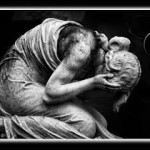
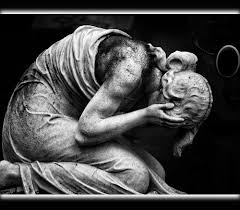
Mourning for the Dead
As I continue my Torah studies, I come upon this portion of Torah that addresses our duty to holiness. Verses one and two of this portion set the stage for instructing us on how we are to behave as Father’s treasured possession. We were instructed over and over that we were not to adapt many of the traditions, religious and pagan practices of the surrounding nations. In this particular portion of Torah, Father focused primarily upon pagan funerary practices and diet.
Verse one addresses death ritual practices of the surrounding pagan nations that we were to reject and outright avoid. These practices included disfiguring our bodies in response to grief over the death of a loved one. The disfigurement included cutting one’s flesh and actually disfiguring one’s body in response to one’s grief. One well known funerary practice of the ancient near east pagan nations was to cut a lock of one’s hair and burying that lock of hair with the body of the deceased as an offering to the dead and pagan diety. Clearly, these practices were drenched in a suspicion and paganistic—ritualistic mindset. The casual observer might take exception to the Father’s position on this subject, insisting that these practices harm no one and make little difference in the end. But as I’ve said in many previous postings, Yah’s large and in charge and He sets the rules for His people to follow. Yes, for the casual observer who has no true relationship with Father, such practices mean little to nothing. But to the truth seeking, Torah observant believer in Y’shua Messiah, observing such practices is tantamount to infidelity as it relates to our relationship with Yahovah. Such funerary practices related to observing or honoring the dead are not of Yahovah but are purely demoniacally-based. The reality of the matter is that Father’s will is done as it relates to the death of anyone, as callous and tragic as that may sound. Thus, how we approach death as a Torah observant believer in Y’shua Messiah is vitally important.
Father demands that we set the example for the world to see as it relates to how we grieve over the passing of a loved one. That’s not to say that when someone who we truly cared about dies that we should not nor can not mourn their loss. Even our Master mourned over premature death of Lazarus in Bethany. (Reference John 11:17-53) There is a time and place for mourning (reference Ecc. 3:4), but mourn within the confines of Torah and understanding of what really happens when we die. When we were wandering in the wilderness, our understanding of death and how we should process it was heavily influenced by regional paganistic societies and cultures. We were a hodgepodge group of people coming out of Egypt, possessing diverse and varied understandings of death and grief. Father had to get our attention, because obviously we had members of our lot, practicing pagan rituals upon the death of loved ones. Father had to put a stop to it and explain to us that your focus my be on me: the Maker and Supreme Ruler of Heaven and Earth…I control everything, including who and how one dies. Death is within the strict oversight of Yahovah. Our response to death must then be within the context of Yahovah’s rulership over the lives of men.
Now I don’t suppose to tell you how anyone should respond to the death of a loved one. Trust me, I don’t want any of that. I deal with grief in one form or another each day at my job. But the one thing I do know is that since Yahshua came and died for our sins and arose and ascended to Father in heaven, a door has been opened for a true relationship with Father; death no longer holds the terrible finality that it once had during our time in the wilderness. With the renewed covenant through Y’shua HaMashiyach, we have the opportunity for eternal life. So now when a loved one who was a true believer in Y’shua Messiah dies, we have the expressed hope of seeing and enjoying them once again—next time for eternity. So with that knowledge and understanding of death tucked away in our hearts and minds, Torah’s handling of grief as it relates to dying, has an expanded significance and truth attached to it. Shaul instructed us as follows: “But I would not have you to be ignorant, brethren, concerning them which are asleep, that ye sorrow not, even as others which have no hope.” (I Thessalonians 4:13 KJV)
Thus, we are not to respond to death in the same manner that the world around us does. Our grieving is to be within the confines of our relationship with the Father and thus, even in the midst of death, our treasured and holy status as a people of Yahovah shines forth to the world around us. People will wonder about us and maybe even be drawn to us to learn about that which separates us from the rest of the world. That is our challenge dear saints—holiness in the midst of death. How we handle and deal with death within the confines of Torah and our relationship with Father will make us shining examples of Yah’s requirement for holiness to a evil and perverse world. May we live Torah Y’shua-style, in the power and might of His Ruach haKodesh. Shalom.
by Rod Thomas | Oct 26, 2015 | Podcasts
What is our Identity and Purpose
Sabbath Thoughts and Reflections 34
- Understanding our Identity–who we are as a people of Faith–is paramount for each of us to grasp
- Our identity defines who we are–in my line of work, one of the most important aspects of my job is to determine the identity of a decedent and we employ many methods to achieve that end
-
- We identify ourselves in many ways
-
- Our sex–male and female
- Our families–what’s in a name
- Our race–black, white, hispanic, asian, middle eastern
- Our culture–Jamaican, Egyptian, Country, Latino
- Our nation–Americans
- Our careers–Sports, law enforcement, educator, entrepreneur, entertainer, writer
- Our religion and Faith–Christian, Muslim, Jewish, Catholic, Buddhist, Hindi, Atheist
- Stuff (the cars we drive, the homes we reside in, the gadgets we own, rich)/Personality (funny, happy, mean, nice, compassionate, scattered)/Appearance (homeless, good looking)
- Our society forces us to identify ourselves (in various and sundry ways and manners)
-
- boy, girl, man, woman, black, white, hispanic, asian, Christian, Catholic, Jewish, officer, teacher, American, successful entrepreneur, average Joe
- Without these identifying aspects, society has no way of compartmentalizing us and understanding how to deal with us
- Some aspects of our collective identities we are comfortable with exploiting them, while other aspects we tend to downplay or even hide–and we learn over time how our identities help us or hinder us in this life
-
- Men–Women relationships
- Influence or lack there of due to finances, careers, knowledge and experience base, appearance, demeanor
- Our identity also defines our purpose in society and in the Faith
- There was a time when one’s Faith was one of THE central identifiers for all peoples of the world
-
- Wars have been fought over religion and Faith
- People have been martyred and executed because of their Faith
- People have received proper treatment from society because of their Faith as well as they’ve received lesser treatment from society because of their Faith
- Often, one’s Faith becomes so infused with culture, race, career and nation, that a people takes on a single identifying trait
-
- As a person of Faith, how do we define ourselves–how do we identify ourselves? (I’m not talking about what we call ourselves–but talking about determining who we are as a people of Faith)
-
- Important to determine because it determines how we behave, live, function, think, view, aspire
- What are the things of our Faith that set us apart from any other people on the planet?

Identity
- My goal today is to help us figure out our identities as it relates to our Faith–after that, all the other identifying factors of our lives will pale in comparison and even become irrelevant, because our Faith becomes our only defining trait
-
- The worse place to be in life is not knowing who or what you are. Because if we aren’t successful in determining our true identity, we will begin to take on the identities of others. We will never be stable and consistent in how we conduct our lives and furthermore, if we get our identities wrong, we might move about our lives improperly.
- Coming in to this Faith of ours can be very confusing and without a proper grounding and understanding of who and what we are, we will inevitably head off in a half-dozen different directions
-
- Christian?
- Jewish?
- Christian Jews?
- How do we function and fit in society; our families; our relationship with Father?
- How do we communicate our Faith and our lifestyles to others whom we come into contact with? Or should we even bother?
- What are our responsibilities in the Faith?
- Where do we go? When do we do? What are we to do?
- What is our reference point?
- Who is our model?
- What is the end-game?
- Does any of this matter?

Purpose
- Assuming an identity comes with (1) responsibilities; and (2) benefits
-
- We tend to focus many on the responsibilities
- Responsibilities
-
- live up to the name
- be obedient to the One whose name and identity we’ve been given
- Benefits
-
- reign with Yahovah for all eternity
- power and authority that comes from the Most High
- peace and assurance
- Where do we find our identity?
-
- The church?
- A religious organization ?
- A denomination ?
- A religious personality or teacher or leader?
- The Internet?
- The Bible?
- And then once we find our identity, what do we do with it?
- The best place to begin any endeavor is to start from the beginning–hit the default button of our Faith
-
- Genesis and the Creation of the world and most importantly–the creation of man and woman–Genesis 1:26-28
-
- Then God said, “Let us make man in our image, after our likeness. And let them have dominion over the fish of the sea and over the birds of the heavens and over the livestock and over all the earth and over every creeping thing that creeps on the earth.” So God created man in His own image; in the image of God He created Him: male and female He created them. And God blessed them. And God said to them, “Be fruitful and multiply and fill the earth and subdue it, and have dominion over the fish of the sea and over the birds of the heavens and over every living thing that moves on the earth.”
- Why was man created in the first place? What was man’s purpose? Does that purpose still remain today?
-
- We have been made to be Yahovah’s children–of His Family
-
- When we have children, they are created in our image
- Adam was created in the image of Yahovah and the line goes on and Father is in a way reproducing Himself (although at a very basic level)
- Father wanted a family
- This earth was made for us–Yahovah’s family–to reside on
- Did the Creator assign man an identity at creation? A purpose? What did He have in mind?
-
- Children of Yahovah
-
- Y’shua said–“Ye have heard that it hath been said, Thou shalt love they neighbor, and hate thine enemy. But I say unto you, Love your enemies, bless them that curse you, do good to them that hate you, and pray for them which despitefully use you, and persecute you, that ye may be the children of your Father which is in heaven…” (Matthew 5:43, 44)
-
- This children thing did not just start with Y’shua
- To reproduce and perpetuate the line of Yahovah in the earth
-
- To worship and praise the Creator of the Universe
-
- For thou shalt worship no other god: for Yahovah, whose name is Jealous (Shem Kannaw), is a jealous God.”
-
- Shem Kannaw=demanding exclusive service
- Has man’s identity changed?
-
- Yes. Sin changed everything
- Instead of being children of Yahovah, we became children of hasatan
-
- “You are of your father the devil, and your will is to do your father’s desires. He was a murderer from the beginning, and does not stand in the truth, because there is no truth in him. When he lies, he speaks out of his own character, for he is a liar and the father of lies.” (John 8:44)
-
- Can man ever get back the identity he lost?
-
- Yahovah provided a means for us to retrieve that identity
-
- But He had stipulations and requirements
- There was a process that man had to go through in order to re-establish His identity
- He selected for Himself a people who would set the stage for bringing mankind back to their former identity
- Y’shua provided for us the means to retrieve our lost identities
-
- KJV Genesis 17:1 ¶ And when Abram was ninety years old and nine, the LORD appeared to Abram, and said unto him, I am the Almighty God; walk before me, and be thou perfect. 1 2 And I will make my covenant between me and thee, and will multiply thee exceedingly. 3 And Abram fell on his face: and God talked with him, saying, 4 As for me, behold, my covenant is with thee, and thou shalt be a father of many nations.1 5 Neither shall thy name any more be called Abram, but thy name shall be Abraham; for a father of many nations have I made thee.1 6 And I will make thee exceeding fruitful, and I will make nations of thee, and kings shall come out of thee. 7 And I will establish my covenant between me and thee and thy seed after thee in their generations for an everlasting covenant, to be a God unto thee, and to thy seed after thee. 8 And I will give unto thee, and to thy seed after thee, the land wherein thou art a stranger, all the land of Canaan, for an everlasting possession; and I will be their God.1 (Gen 17:1-8 KJV)
- Genesis 28:13–And behold, Yahovah stood above it and said, “I am Yahovah, the God of your father Abraham and the God of Isaac, the land on which you lie, I will give it to you and to your descendants.” (Speaking here about Jacob)
- Through Avraham, we had the potential to re-establish our lost identities–but again, there were stipulations and requirements–we had to obey Yahovah (which we failed to do in the Garden) and keep Yahovah’s covenant
-
- Exodus 19:5–Now then, if you will indeed obey My voice and keep My covenant, then you shall be My own possession among all the peoples, for all the earth is Mine (NAS)
- Deuteronomy 7:6–For you are a holy people to Yahovah your God; Yahovah your God has chosen you to be a people for His own possession out of all the peoples who are on the face of the earth (NAS)
- We can see from these two verses a snippet of what our identities would be assuming we met the requirements set forth by Yahovah
-
- Special possessions of the Most High
- A holy people–a set apart people
- Those stipulations and requirements have never changed despite what some would have us believe
- And despite the stipulations and requirements posed to us in order that we may regain our original identities, there was that nasty problem of sin that had to be dealt with
-
- Sin hinders our ability to keep Yahovah’s covenant and obey Him
-
- The heart is deceitful above all things and desperately sick (wicked); who can understand it? (Jeremiah 17:9 ESV)
- Sin places an impenetrable barrier/schism between us and Father–
-
- Father wants a relationship with us–man–
-
- But such a relationship is impossible because of sin
- Yahovah requires holiness
- Sin prevents us from having that true relationship with Father–despite our keeping his covenant and obeying his commandments. Our hearts are corrupted and incapable conforming to the ways of Yahovah
-
- KJV Deuteronomy 5:29 O that there were such an heart in them, that they would fear me, and keep all my commandments always, that it might be well with them, and with their children for ever! (Deu 5:29 KJV)
- Because of sin–man’s natural inclination is to oppose Father
- For the mind that is set on the flesh is hostile to God, for it does not submit to God’s law; indeed, it cannot. (Romans 8:7)
- Sin results in death
-
- Therefore, just as through one man sin entered into the world…(Romans 5:12 NAS)
- For the wages of sin is death…(Romans 6:23 KJV)
- So looking at this thing we have an interesting dilemma
-
- Yahovah created us to be His children and gave us that identity in the Garden
- Yahovah wanted a family and wanted His creation to worship Him and be His special creation
- We sinned and lost that identity
- We became incapable of having a true relationship with the Creator of the universe
- Yahovah reached down and sought to re-establish that relationship through the lineage of Avraham
- Yahovah provided the stipulations and requirements to re-establish that relationship and restore our identities
- But sin had to be dealt with in order to fully restore our identities and provide a means for us to have a true relationship with Father
- How to fix the problem once and for all and fully restore our identity
-
- Y’shua was sent to fully repair and restore that relationship and lost identity
- His teachings and sacrifice repaired the schism between Father and us by once and for all addressing the sin issue
-
- He is the radiance of the glory of God and the exact imprint of His nature, and He upholds the universe by the word of His power. After making purification for sins, He sat down at the right hand of the Majesty on high. (Hebrews 1:3 ESV)
- Titus 2:14–who gave Himself for us (talking about Y’shua Messiah) that He might redeem us from every lawless deed and purify for Himself a people for His own possession, zealous for good deeds (NAS)
- …but the gift of God is eternal life through Y’shua haMashiyach (Romans 6:23)
- Y’shua dealt with the sin problem and thus fully restored our identities
- What is our identity?
-
- Galatians 3:25-29–But now that faith has come, we are no longer under a tutor. For you are all sons of God through faith in Christ Jesus (Messiah Y’shua). For all of you who were baptized into Christ have clothed yourselves with Christ (Messiah). There is neither Jew nor Greek, there is neither slave nor free man, there is neither male nor female; for you are all one in Christ Jesus (Messiah Y’shua). (KJV)
-
- I Peter 2:9–But you are a chosen race, a royal priesthood, a holy nation, a people for Yahovah’s own possession that you may proclaim the excellencies of Him who has called you out of darkness into His marvelous light (NAS)
- Ephesians 2:10–For we are His workmanship, created in Y’shua Messiah for good works, which Yahovah prepared beforehand, that we should walk in them (NAS)
- 11 ¶ For the grace of God that bringeth salvation hath appeared to all men, 1 12 Teaching us that, denying ungodliness and worldly lusts, we should live soberly, righteously, and godly, in this present world; 13 Looking for that blessed hope, and the glorious appearing of the great God and our Saviour Jesus Christ;1 14 Who gave himself for us, that he might redeem us from all iniquity, and purify unto himself a peculiar people, zealous of good works. (Tit 2:11-14 KJV)
- Matthew 5:14–“You are the light of the world: A city set on a hill cannot be hidden.” (NAS)
- The stipulations and requires remain however. If we don’t adhere to those stipulations and requirements, we can once again lose our identities and purpose
- What are those requirements and stipulations?
-
- They are contained in the Bible–Torah
- These are house rules
- Like any relationship, there are rules that must be followed for that relationship to remain a valid one
-
- The sin issue has been dealt with…all we need to do now is meet the requirements set forth by Yahovah so that we may retrain that identity and realize our awesome potential as His elect
-
- Here is the patience of the saints: here are they that keep the commandments of God, and the faith of Jesus. (Revelation 14:12)
by Rod Thomas | Oct 23, 2015 | Podcasts
Your Faith Might Get You Hurt
Torah Living Daily Challenge 17
Blessed are you when people hate you and when they exclude you and revile you and spurn your name as evil on account of the Son of Man! (Luke 6:22 ESV)
I came across a very disturbing articles this week, written by Jake Burman entitled, “Horror as Christian Migrant Brutally beaten with Baton in Refugee Camp.” The article was written on October 21st and reported on the story of a 24-year old former Islamic man who, after declaring his conversion to Christianity, was severely beaten to the point of unconsciousness by an Afghani man with a baton. This incident occurred in Germany at a migrant encampment where other violent incidents have occurred in the past. German authorities are investigating the incident.
Where did this fella get a baton I want to know? Batons are typically one of the defensive and compliance weapons of law enforcement officers. So it would seem that this Afghani fellow somehow got access to this very lethal weapon and boldly set out to punish this gentleman who had converted to Christianity and who was not ashamed to let others know of his new-found Faith. Other migrants in the encampment who witnessed this terrible crime as it unfolded, pulled this violent offender away from the victim until German authorities could arrive and take control of the situation. Obviously, this Afghani would have likely killed this self-professing Christian if his efforts had not been thwarted by bystanders. Praise Yahovah for His mercy and swift intervention in this case. We can only hope and pray that this terrible incident will somehow turn into something for the good of the Kingdom of Yahovah.
Now, if you’ve been listening or reading the news of late, Christians are being horrendously persecuted to the point of death in many cases, all around the world–especially in the Middle East and Africa. We in the west have been insinuated from such persecution and tribulation and frankly, we’ve become quite complacent in many respects as it relates to our personal convictions and behavior. Our Faith has become what? A personal thing that must remain personal. What is the ole saying: never discuss politics and religion. Indeed, that anecdote is ever so true in western society today. We keep our Faith under wraps, almost to the point where many of us compromise for the sake of keeping the peace and not drawing attention to ourselves. Such violence as this former Muslim endured at the hands of an Islamic radical is an absolute foreign concept to us. Oh we all know the stories of the martyrdoms and persecutions endured by the Saints of the first few centuries of the Christian Faith (check out Foxes Book of Martyrs), but we rationalize that those days are long past and nothing like those things will ever happen to us. So strongly do many of us hold to such a belief, that an entire doctrine has been erected around it–the super-secret rapture of the Church. The rapture of the Church doctrine was designed in part to quell the angst of the Church body of impending doom, destruction and death–such that the believer in Jesus Christ need not worry–Christ will come to rapture us away before any widespread persecution and tribulation will come.
But for us in the Hebraic Roots Faith, we know different. We know that because of our Faith, many of us are marked for persecution and even martyrdom. Our Master warned us of this. Nowhere did He feed us a bunch of bull that we will be insulated from the troubles ahead as so many in the Christian Faith have been so cruelly misled. Y’shua told us: “Behold, I send you forth as sheep in the midst of wolves: be ye therefore wise as serpents and harmless as doves. But beware of men: for they will deliver you up to the councils and they will scourge you in their synagogues and ye shall be brought before governors and kings for my sake, for a testimony against them and the Gentiles. But when they shall deliver you up, take no thought how or what ye shall speak, for it shall be given you in that same hour what ye shall speak…And the brother shall deliver up the brother to death, and the father the child: and the children shall rise up against their parents, and cause them to be put to death. And ye shall be hated of all men for my name’s sake: but he that endureth to the end shall be saved.” (Matthew 10:16-22 KJV)
Indeed, this very thing did occur to us in the years after our Master was crucified, rose and ascended to the Father, and so many who would confess our Master as their redeemer have written off these precious ones who suffered and died for the Faith. Why? To them the Bible is closed and nothing more is to be written. But I submit to you, dear Saints, that the Bible is still being written today. The Book of Revelation is a testimony to the times ahead when the true believers of Y’shua Messiah will endure, I believe, even greater persecution and tribulation at the hands of evil men.
I refer you to Revelation 12:17 where Yochanan recorded: “And the dragon was wroth with the woman and went to make war with the remnant of her seed, which keep the commandments of God and have the testimony of Jesus Christ.”
Friends–it’s coming and as I’ve said in several episodes of Sabbath Thoughts and Reflections: we gotta get prayed up; studied up; and armored up for the times ahead. This story of the former Muslim who converted to Christianity to me is a loud wake-up call to those of us in the true Faith once delivered. Now we have peace and the freedom to practice our Faith without fear of persecution. But the evening is descending upon us ever so quickly as we can clearly see more and more of our liberties and freedoms–especially our religious liberties and freedoms–being eroded away by our society and our governments. Let’s band together and prepare for the times ahead. Let us pray for those who are already in and who are coming in to the Faith who are in imminent harms way because they confess Y’shua as their Master and Yahovah as their Elohim.
Have a blessed day in Y’shua haMashiyach dear saints in training. Shalom and have a blessed Sabbath and weekend.
by Rod Thomas | Oct 20, 2015 | Podcasts
Pray for the Peace of Jerusalem
- Greetings
- Why TLDC? Encourage Torah Living Y’shua Style and preparing us for the tough times ahead through pertinent and inciteful discussions on the issues and topics affecting today’s Believer in Y’shua Mashiyach
Useful Information
- Gnosticism–the world was created and ruled by a lesser divinity whom scholar refer to as the demiurge
- Platonic and neopythagorean schools of philosophy–the demiurge is an artisan-like figure responsible for the fashioning and maintenance of the physical universe
- the Demiurge is seen as a “bungling and incompetent fool that creates the world as a spiritual prison.” (www.sullivan-county.com)
- there is a supreme, but unknowable alien god and the creator of the demiurge
- Ignosticism–the term “god” is ambiguous to the ignostic
- those who hold to ignosticism require a good, non-controversial definition of god before arguing His existence
- Agnosticism–challenges truth values such as the existence of God or the supernatural that these values are unknowable
- “an agnostic neither believes nor disbelieves in the existence of God”
- Athiest–total disbelief in the existence of God
News of the Day
1000’s are stranded on borders of a new European migrant route–Amer Cohadzic (AP)–10/19/2015

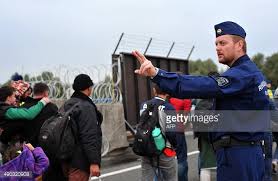
Croatia and the Migration Crisis
- Many Messianics are in alignment with secular mindset that is uncaring about these people
- Fear that radical islamic terrorists are embedded in 1000’s of migrants
- Should we hold an uncaring attitude and feeling towards these people who are simply seeking to escape persecution or war?
- Matthew 25:31-46
- James 1:26,27
- Isaiah 58:7
- The attitudes we have, the compassion we show, to those in need will be handsomely rewarded by our Father in heaven as the above passages seem to suggest. And that compassion and love must come from a good place and not from an obligatory place
- There’s not a whole lot we can do for those people who are struggling to survive but pray. Our time is coming in the not too distant future
Dozens of Jews illegally enter torched West Bank Shrine–Aron Heller–AP–10/18/2015

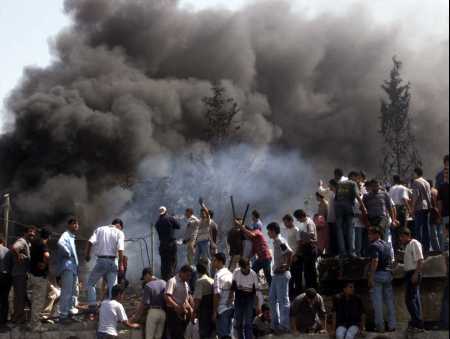
The Torching of Joseph’s Tomb
- Joseph’s Tomb is a funerary monument that is located about 325-yeards northwest of Jacob’s Well on the outskirts of the West Bank city of Nablus
50,000-child witches exorcised–Nick Fagge–Daily Mail–10/19/2015
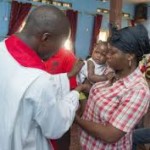
Congolese witchcraft and catholic priests
- Chronological Gospels–Event 124–The disciples arrive in Kfar Nahum and Yeshua teaches–October 1, 27 C.E.
Let’s get studied up, prayed up, fasted up and ready for the times ahead.