Torah Living Daily Reflections-8-The Art of Listening (from a Hebraic/Messianic Perspective)

Continuing with my daily foray in to the Torah, we come to Deuteronomy 4:1 which reads as follows: “Now therefore hearken, O Israel, unto the statutes and unto the judgments, which I teach you, for to do them, that ye may live, and go in and possess the land which the LORD God of your fathers giveth you.” (Deu 4:1 KJV)
Since coming in to the truth Faith once delivered, which I associate directly with being a Messianic believer and with the Hebraic Roots community, I see clearly why we differ from Christianity and Christians. I submit to you that the key to understanding the differences between our two faiths can be seen in the first half of this above cited verse–“Now therefore hearken…unto the statutes and unto the judgments which I teach you, for to do them…” We, the Netzereme; the Torah Observing–Messianic Believers of Yeshua, the Hebraic Roots community, have discovered the meaning of “hearken,” or in today’s modern translation, “listen’ as it relates to our profession and the living out of our Faith. Indeed, there is a difference between the western-Christian concept of listening to the voice of Yehovah and the Messianic-Hebraic concept of listening or hearkening.
 
The term “hearken” as found in this passage translates in the Hebrew to “shama,” which means to (1) hear, (2) to listen, and (3) to obey. The term “shama” has it’s greatest notoriety from Deuteronomy 5:1 which reads, And Moses called all Israel, and said unto them, Hear, O Israel, the statutes and judgments which I speak in your ears this day, that ye may learn them, and keep, and do them. (Deu 5:1 KJV)
 
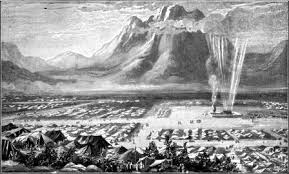
What is it that Israel was to “shama?” It is, according to the cited passage, the statutes (aka: laws) and judgments (rulings) of Yehovah. These statutes and judgments made up the entirety of the “Law.” The Law was taught by Moshe to the nation of Israel. Israel’s purpose was, as the commentator John Gill, D.D., notes in his Exposition of the Old Testament, “not bare hearing, but doing the law.” In other words, this was not a one-way agreement between Israel and Yehovah where Yehovah would simply do the work of providing, protecting and blessing the nation. Indeed, Israel was required, through her contractual agreement with Yehovah at the base of Mount Sinai when He spoke down His Words directly to the Children of Promise, to do all that He (i.e., Yehovah) had spoken to them to do. (Reference Exodus 19:8) We, the grafted in children of Israel (reference Rom. 11:17), are not off the hook, although our Christian cousins would vehemently beg to differ. Our cousins focus more on verse 19 of that same chapter of Romans where Shaul states, “So you will say, ‘branches were broken off so that I might be grafted in'” such that we perceive ourselves to have privilege over and above the Jew to such an extent that we have nothing in common with the Hebraic roots of the Faith. There is nothing in the writings of Shaul, nor in any other Apostolic writing to suggest that we, the redeemed of Yehovah, have no responsibility to “shama.” In fact, we of the true Faith once delivered, have the grace showered over us to “shama” in great style and fashion because we have the person of Yeshua HaMaschiach to show us how to live Torah in Spirit and in Truth. 
 
Our cousins in Christianity and Catholicism, on the other hand, have taken the term “hearken” to mean, specifically, to listen–essentially a passive act of sitting down (or standing if there are no chairs in the room), and hearing what the speaker has to say. Typically what goes with this is the hearer or listener does not interrupt the speaker and gives the speaker his or her full attention. Once the message is delivered, the listerner’s responsibility is complete and both parties (i.e., the speaker and audience) go their separate ways. Generally, in the Christian Church of the last 2,000-years, there is no expectation for the attendees to “shama” the Torah. However, in certain Christian sects and denominations, the attendees are required to “shama” to the words of the speaker as he or she relates to the attendees the judgments and statutes of their denomination. Still other Christian sects have taken the biblical concept of grace and developed a pagan doctrine around it such that there is no “shama-ing” required by the congregates. In fact, these sects insist that one would be remiss by requiring any believer to “do” anything as it relates to their profession  of faith and their eternal destiny, citing that salvation is achieved by grace and faith in the shed blood of Jesus Christ and that there is no need for Christians to do anything more…that is, one is guaranteed their salvation regardless whatever befalls them during this life. In other words, don’t worry about this life, you have a “get out of hell free card, now go and celebrate.” 
 
Consequently, there is no biblical support for the Christian style of hearing or listening to the Word of God-which generally takes the shape of a nice Sunday sermon that makes you feel warm and fuzzy all over and you leave the venue with a much nicer perspective of the world and you in it than you had before you heard the sermon.  The Creator’s worldview, which true believers should ascribe, contends that Yehovah is boss. Not only boss, Yehovah is THE BOSS. Being THE BOSS, Yehovah set sthe rules for everything having to do with living as a human being and being married to Him. Yes, our relationship with the Creator is likened unto a marriage which has definite rules around  that relationship, if that marriage is to remain viable and vibrant. Furthermore, Yehovah, still THE BOSS, has spiritual requirements or rules governing the human-God relationship and those rules are imposed upon man. You see, Christianity got it wrong a long time ago: Yehovah did not stoop down to our level in order to establish a relationship with us. Doing so would require Him to compromise or even nullify His Holiness and He is not about to do that. He didn’t stoop to our level. He implemented a process whereby we–mankind–could be elevated to an acceptable level of righteousness and have a relationship with the Almighty. That process is simply repentance from our old way of life–turning from sin–and turning to Yehovah’s stipulated way of living. That way of living was practiced and perfectly demonstrated by His Son Yeshua HaMaschiach. The life that Yehovah’s son lived was fully Torah and we, Yeshua’s disciples, are required–that is if we love Him–to follow His commandments. (Reference John 14:15) Yeshua instructed that we are to love Yehovah with all our heart, mind and soul, as well as we are to love one another as we love ourselves. (Reference Matt. 22:38 & 39) So what does love of Yehovah and love for one another look like? Why of course, it is stipulated and codified in Torah. Certainly, without Torah as the defining method, your understanding and practice of love for both God and neighbor may be grossly different than mine. Of any word in use today, especially in Western culture, the word “love” has several meanings–ranging from the obscene and grand overt acts to simply a cognitive understanding that certain individuals in our lives are to have a special place on one’s heart. But everyone knows, all things aside, that love–be it love for God or love for a fellow human being–has associated with it actions. My wife will always demand that I not simply tell her I love her, but that I show her that I love her. This same principle can be applied to other areas of life. Love of a person is realized only through actions. No it’s not always in the giving of things such as gifts. In many circumstances it is simply being there for the individual who is in need of another; speaking kind words to a person who has experienced nothing but negativity in their lives of late; physically assisting one in need of assistance; providing a meal for the hungry or even praying for someone who is in dire straits. Again, there are many ways to demonstrate love. However, the gold-standard for believers to understand and exercise love is contained in Torah and in the teachings of Yeshua and His anointed apostles. 
 
Regardless how we slice this one friends, when it comes to our relationship with Yehovah, we are required to “shama” unto His Torah (reference Deut. 4:1a). It is how we “shama” that separates us from those who would wrongly contend that they are a beloved of the Father. That being said, there is an art to listening; for by listening,  or better, by “shama-ing” (especially to the Words of Yehovah), we make things happen in both the physical and spiritual world, and those worlds around us are forever changed and changed for the good.  
 
Thus, our call to action, is to “shama.” May we be faithful to hear, listen and obey His Torah and teach others to do so as well. May you be most blessed, fellow saints in training. Shalom.

Torah Living Daily Reflections 6–The Kingdom of Yehovah (of Yahweh or of God)

Continuing my daily ritual of Torah Study and incorporating Rood’s Chronological Gospels as the dates correspond to the Julian calendar–specifically on August 25, 2014, I came across the passage in Matthew 13:36-43 (recorded as event 86) where Yeshua expounds for His disciples the parable of the tares as it relates to the Kingdom of Yehovah. The passage reads as such:
 
36 Then Jesus sent the multitude away, and went into the house: and his disciples came unto him, saying, Declare [or in ancient Greek, phrazo meaning to explain] unto us the parable of the *tares [which is English for zizanion which is a darnel] of the field.
 37 He answered and said unto them, He that soweth the good seed is the Son of man;
 38 The field is the world; the good seed are the children of the kingdom; but the tares are the children of the wicked one;
 39 The enemy that sowed them is the devil; the harvest is the end of the world; and the reapers are the angels.
 40 As therefore the tares are gathered and burned in the fire; so shall it be in the end of this world.
 41 The Son of man shall send forth his angels, and they shall gather out of his kingdom all things that offend, and them which do iniquity;
 42 And shall cast them into a furnace of fire: there shall be wailing and gnashing of teeth.
 43 Then shall the righteous shine forth as the sun in the kingdom of their Father. Who hath ears to hear, let him hear.
  (Mat 13:36-43 KJV)
 
*Tares is zizanion or a kind of darnel, which is a Eurasian ryegrass. According to Vine’s Complete Expository Dictionary of Old and New Testament Words (if you don’t have a copy, I would encourage you to get one as it is a very handy resource when attempting to understand terms and words such as tares that are not common to our modern-day vernacular), grow in the grain fields as tall as wheat and barley. It resembles wheat in appearance. The Jews considered it degenerate wheat. Rabbis referred to it as “bastard” wheat. Tare seeds can be deadly poisonous to humans and herbivorous animals.Since it naturally tends to become intricately intertwined in the wheat and barley crop, the common practice was for wheat/barley growers to leave the separating of the two till near the time of harvest. Obviously, at the time of harvest, the tares are separated from the wheat/barley and the tares are then burned in a heap.
 
aviv barley
This agricultural situation presents the Messianic Believer with a tremendous spiritual application for the tare represents some very interesting character traits that may be applied to the Body of Messiah:
  •      the son’s of the evil one
  • false teachings
  • false teachers
  • will not be part of the Kingdom
One of the many things that I have become acutely aware of, having come in to the true Faith once delivered, is the huge disparity that exists between the Faith that I am now involved in and Christianity in all its 30,000 plus denominational iterations. In my early years in this Faith of ours, it was so easy for me to look upon my Christian brothers and sisters with pomposity and in many cases disdain and anger because of the “stuff” they believed and professed. In fact, I was more tolerable of the heathens in my life than the Christians I would run across from time-to-time. 
 
I was then fortunate to have embarked upon routine Torah studies and my studies took me on a journey with the Children of Promise as they trekked across the Sinai desert, heading for the promised land that all but a couple adults who began that journey out of Egypt would ever see. In that band of trekking nomads were those who were evil–evil in heart, mind and soul. There were also non-Hebrews who went along for the trek for purposes of simply getting out of Egypt. The evil ones and most of the non-Hebrews created nothing but problems for those few who were true to the call. I began to liken those of us in the true faith once delivered and Christians to the band of individuals crossing the desert. This hodge-podge of people who made up the young nation of Israel, were allowed to travel and live together. It was not until all was said and done and Yehovah’s Torah was set in place, that the entire party of travelers were required to make a decision and cleave to the God of Israel. Yehovah did not separate them as they traveled but let circumstances and obedience to His Word and way of life separate those who belonged from those who did not belong. 
 
As it stands, it is none of our business who professes Jesus, or for that matter Yeshua, as Messiah. Each of us is on our own individual journeys. Consequently, each of us are at any given time, at differing levels of understanding of Scripture, relationship with Yehovah and living out our lives as we believe we should. Many of the 2+ billion individuals who profess Jesus as their Lord and Savior will never come to have a proper relationship with Yehovah (as the true Faith once deliver would consider a proper relationship with Yehovah to be). Others will come close to a realization of the true Faith but fall short somewhere along the line. Still a precious few will have the light come on in their minds, hearts and souls, and they will come to understand the True Faith once delivered in all its grand and beautiful glory; and it will be these individuals who will join us in the Messianic/Hebraic Roots community as fellow Torah observing Believers of Messiah. It thus becomes our job to earnestly contend for the Faith once delivered, all the while praying for our respective family members, co-workers and friends to receive the light of the true Gospel before it’s too late. It is this mindset that we must adopt–one of hope and of compassion for our cousins who are in bondage under Christianity and Judaism. We must see our Faith from the standpoint of the tares growing together with the viable wheat–we must compassionately contend with those who are not of our Faith until such a time the Master deems is sufficient and brings all things to a close. May you be blessed in this knowledge. Until next time-Shalom fellow saints in training.

Torah Living Daily Reflections 5-When Emotions Get in the Way of Service to Yehovah (Yahweh or God)

Continuing my trek through the Torah, I pick up where I’d left off–at Deuteronomy 3: 23-29. I found here a very touching and emotional passage. Despite what most scholars have to say about Deuteronomy not possibly being written by Moshe, my spirit tells me otherwise. Well, at the very least, the content of this Book was somehow relayed from Moshe to whomever for posterity sake and from there it made it to our Bibles. Obviously, we’ll never know who exactly physically penned this Book. Most scholars contend that the actual content was not codified until many centuries beyond Moshe’s death. But the Almighty’s hand was all over this particular situation and Moshe was the primary focus of this passage.

23 And I besought the LORD at that time, saying,  24 O Lord GOD, thou hast begun to shew thy servant thy greatness, and thy mighty hand: for what God is there in heaven or in earth, that can do according to thy works, and according to thy might?
 25 I pray thee, let me go over, and see the good land that is beyond Jordan, that goodly mountain, and Lebanon.  26 But the LORD was wroth with me for your sakes, and would not hear me: and the LORD said unto me, Let it suffice thee; speak no more unto me of this matter.  27 Get thee up into the top of Pisgah, and lift up thine eyes westward, and northward, and southward, and eastward, and behold it with thine eyes: for thou shalt not go over this Jordan.  28 But charge Joshua, and encourage him, and strengthen him: for he shall go over before this people, and he shall cause them to inherit the land which thou shalt see.  29 So we abode in the valley over against Bethpeor.  (Deu 3:23-29 KJV)
moses_water_rock_strike
At this point in the history of the Israelite’s wanderings of 40-years, Moshe had been told by Yehovah that He would not live to see the promised land with his fellow Israelites (cf. Deut. 1:37). The reason why Moshe was denied the privilege of entering  in to the land of promise was recorded in Num. 20:12–And the LORD spake unto Moses and Aaron, Because ye believed me not, to sanctify me in the eyes of the children of Israel, therefore ye shall not bring this congregation into the land which I have given them. This “punishment” if you will, was confirmed later on in Num. 27:13.
So what was it that Moshe did that did “not…sanctify Yah in the eyes of the children of Israel?” The answer is found in Num. 27:13–For ye rebelled against my commandment in the desert of Zin, in the strife of the congregation, to sanctify me at the water before their eyes: that is the water of Meribah in Kadesh in the wilderness of Zin. 
 
The actual incident is recorded in detail in Numbers 20. Certain scholars place this and most of the events as recorded in Numbers around 1405 B.C. The story goes that the Children of Israel had entered the Wilderness of T’zin in the Month of Aviv. (Verse one of the chapter also cites Kadesh as possibly being the same referenced region.) According to bibleatlas.org, the desert or wilderness of T’zin bordered with Judah at the uttermost part of the south as documented in the Book of Joshua (sp. 15:1). The exact location is not truly known. Others have postulated that it lies between the Dead and the Red Seas and could be about 110 miles long and upwards of 15 miles wide. It would have been a region of “waste land, terrible heat in the summer and of great drought.” Verse one also records that Miryam died and was buried in this wasteland. Certainly verse two of this chapter supports the contention of the region existing in great drought and it was as a result of this critical situation that the “edah”(ay-daw) or congregation once again gathered together against Moshe and Aharon. Once again the people complained about their plight and this time instead of wishing they were back in Egypt, the desire was that they would have died as their former associates had died as a result of the Kohath (aka Korah), Dathan and Abiram incident (reference Num. 16:1). If you recall from that incident, Kohath and his cohorts (some 250 princes to be precise) lodged somewhat of an uprising against Moshe and Aharon. Their issue? They had issue with the Yehovah appointed leadership of Moshe and Aharon, citing “…it is enough (or aka: you have gone too far–ESV; you have gone far enough–NAS); for all the assembly, all of them are holy, and Yehovah is among them; and why do you lift up yourselves above the congregation of Yehovah?” 
 
Okay–were these fools kidding? It hadn’t been that long since they were at the base of Mount Sinai and Yehovah showed the assembly His great might and wonders and gave them His commandments. It was this frightening event that prompted the assembly to go to Moshe and demand that he alone speak to Yehovah on the entire assembly’s behalf and never to talk to the assembly directly as they feared the terrible might of Yehovah (reference Exo. 19 & 20). So it goes without saying that this group was speaking out of both sides of their mouths and certainly as this story went, they would regret that demanding confrontation against Yehovah’s chosen and anointed. Well, that challenge did not end well for the challengers, for verses 31-33 of chapter 16 records that “the ground under them split apart and the earth opened its mouth and swallowed them up, and their households, and all the men that belonged to Korah (aka Kohath) along with all their property so that they and everything they owned went down alive into Sheol (aka “pit) and the earth closed over them and their existence in the assembly ceased.” So it baffles me why a group of people who are so concerned with their well being would want to suffer the same plight as their former acquaintances. But then, we’ve all been exposed to individuals in our lives who seemingly exist only to complain and challenge the status quo. What comes out of these folks’ mouths at times is nothing short of astounding. Ultimately, nothing that is ever done to fix or address their complaints is good enough and the complaints and challenges simply take on another form.
 
Well, the community’s challenge was pretty much right in line with previous complaints about their wilderness plight (reference Exo. 14:11; 16:3; 17:3; Num. 16:13). However, this particular uprising focused more on there being no water to quench the thirst of the assembly. Certainly, being in that inferno without water would have prompted even the most disciplined of the assembly to wonder why they left their former abodes to endure their current situation. We are generally creatures of the here and now. We see only what’s in front of us at each moment of our existence and it is only the most disciplined and far-sighted of us who can persevere and muddle through hardship with an eye on the grander and future picture. What was Yehovah doing to and with these people? It would seem that He was fashioning for Himself a holy nation of priests (Exo. 19:6). Yehovah’s method in accomplishing this was to put this assembly through the crucible of the wilderness where their entire being was dependent upon the providence of the Almighty. Thus the people would become a nation of individuals who’s reliance was entirely upon Yehovah: Yehovah would provide; Yehovah would teach and lead; Yehovah would bless. There would be no uncertainties within the borders of this nation; no injustices; no lack; no hurt, harm or danger. No other nation had nor to date has ever had the fullness of this scenario played out in their borders and existence.
 
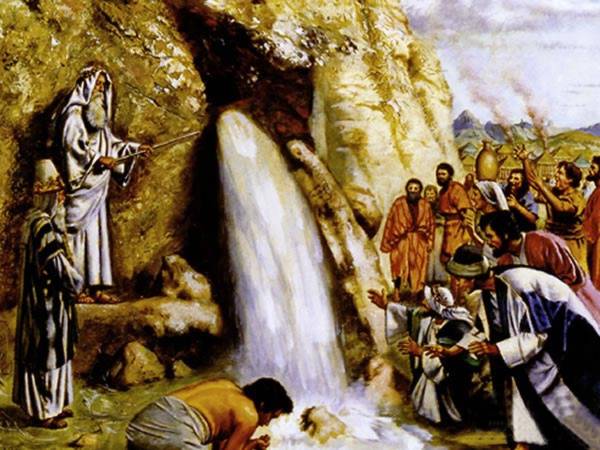
Well, Moshe consulted Yehovah as to how this situation of there being no water for the assembly should be handled. Yehovah instructed Moshe to take that same rod which Yehovah had given Moshe at the beginning of his ministry and service to Yehovah (Exo. 4:17) and assemble the community along with Aharon before what is likely a great rock that was positioned in the assembly’s midst. Moshe was then to speak to that rock and upon speaking to the rock, water would come forth and fulfill the thirst needs of the people. 
 
Question: why did Yehovah instruct Moshe to take the staff (rod) with him when he went to speak to the rock? As the story goes, Moshe did not speak to the rock, but instead, spoke against the assembly as to their rebellious nature and behavior and then took the rod and struck the rock twice in apparent anger to bring forth water. The instructions of the Father were quite clear–Moshe was to speak to the rock and it would bring forth water. Yet Moshe defied that order, but instead struck the rock with the rod–not once but twice. Why? My guess is that Moshe’s emotions got the best of him. More so, why did Yehovah instruct Moshe to take the rod with him to verbally address the rock? Could it be that Yehovah sensed the anger and frustration that was welling up within Moshe and thus Yehovah was testing Moshe? This would seem to be the case since we find in verse 12 of chapter 20 of Numbers that Yehovah addressed the incident in this matter–“Because you did not trust in me, so as to cause me to be regarded as holy by the people of Isra’el, you will not bring this community into the land I have given them.” “Because you did not trust in me.” If indeed this was the case, Yehovah seemed to have been testing Moshe’s trust in him. Sadly, Moshe failed that test.
 
Part of me empathizes with Moshe. Here is a man who was thrust in to the most impossible situation that any man could ever find himself. He was leading a stiff-necked people who had no other care in the known world other than for themselves and most likely had never fully bought in to the covenant that was made between the people and Yehovah at the foot of Sinai as recorded back in Exodus 19. Certainly the people were being pushed to the limits of their physical and emotional endurance as Yehovah sought to create for Himself that holy nation of priests He so much desired. Moshe was always before the people whenever the community faced adversity and lack and it was Moshe that had to endure the brunt of the complaints and challenges. How many times did he go through the roller coaster of lack and full and lack and full as he led this crazy bunch of thankless souls? Moshe was chosen by Yehovah to fill this key position in the history of the Children of Promise. He would be the example set before the people to imitate–sort of a forerunner of Yeshua–one who was holy and a priest to Yehovah. Being such a leader is not at all easy. Despite the difficulty of Moshe’s position, Yehovah’s standards remained high and unchangeable. Yehovah required total and unyielding trust from Moshe, and any personal emotions, biases, perceptions, opinions, thoughts and the like have no place in the true service of the Father. As a consequence, Moshe lost his opportunity to lead the assembly in to the land of promise as I would imagine Moshe desperately desired to do. Of any in that group of desert wanderers, Moshe should have been afforded the blessing of entering the promised land. But that was not to be. Moshe would only see the land from a distance.
 
The realization of this punishment obviously troubled Moshe to no end. He blamed the Children of Promise for his punishment, at least in part he did. Despite Moshe’s constant pleas to Yehovah to allow Moshe to enter the promised land, Yehovah remained unrepentant and unyielding in His decision. Clearly, Yehovah can be swayed in some things, but in others He may not. I can’t blame Moshe for trying to sway the heart and mind of the Father. I likely would have done the same thing. Ultimately, Moshe plead with Yehovah over this matter one too many times and Yehovah had to finally say to Moshe: “Enough from you! Don’t say another word to me about this matter!” Oh how it must have crushed this man…this man who gave up everything to lead such a jacked-up people who could care little to nothing for him. But sometime, being in the service of the Almighty is a loner’s game–a solitary endeavor–and somehow, like Moshe, we have to find sufficiency in our relationship with Yehovah alone and not worry about anything or any body else. We can’t let emotions then rule us and cloud our judgment and actions when it comes to the service of Yah. Besides, it’s not about us…it’s all about Him. Be most blessed, fellow Saints in training. Shalom.

Torah Living Daily Reflections 4–Yehovah Your God will Fight for You-Don’t be Afraid

My daily Torah study foray took me to D’varim (aka: Deuteronomy) 3:1-22. Here Moshe continues to summarize Yisrael’s conquest of the promised land in detail. By now, Moshe is 120-years old. The generation of Israelis that left Egypt in the great Exodus had all but died out–dead in the great wilderness that would and should have served as their refinery to prepare them to take over the land of Canaan and serve the world as priests to Yehovah. Instead, it became a solemn graveyard for 10’s of thousands throughout the 40-years of wandering. At this juncture of the story, the generation belonging to the original Exodus generation, were being shaped and prepared to enter the promised land. Unfortunately, the nation forfeited their chance to become the holy priests that Yehovah had planned for them to become–Exodus 19:6, having broken the covenant at the base of Mount Sinai–Exodus 32. All that was left at this juncture was for Israel to be a kingdom of people who would live according to Torah, having Yehovah as their one and only God, and produce into the world the Lamb of Yehovah “…which taketh away the sin of the world.” (Joh 1:29 KJV)
God and Israel
This early section of Deuteronomy provides us with a retrospective of Yehovah’s dealings with Israel throughout the Exodus (Chapters 1 and in to 2) and through the Sinai desert. In this particular passage she has reconnected with the Creator via the second generation of Israelites after the Exodus and now she has moved forward to claim her promise and inheritance. The primary and overriding theme here of course is Yehovah’s undeniable and irresistible provision and protection of His chosen if they are obedient to His directions and laws. Here the writer details Israel’s exploits in conquering East Jordan. When Israel was obedient to Yah’s commandments, Yah would remind them that He was with them; they did not need to fear; He would fight for them (reference: Exodus 14:14; Deut. 1:30, 3:22; 20:4). Interestingly enough, conquering the land of promise and overcoming their enemies required Israel to simply do as Yehovah directed. The battles were not won by Israel, despite what many secular and liberal Biblical scholars may teach regarding Israel’s conquest of Canaan. Indeed, Yehovah was quite clear in Deuteronomy 3:22 that He would “lacham,” fight for Israel. Not in part. Not in some convenient way as to afford Israel some easy circumstantial wins, but Yah actually fought the battles on behalf of Israel (cf. Josh. 10:14, 42; Neh. 4:14; 2 Chron. 20:29). This is not to say that Israel simply marched in to the land and collected the spoils of war left over by the destructive work of Yehovah. No sir. Israel had her role to play. She had to fight alongside Yehovah, although it was Yehovah who typically softened up the enemy to such a state that Israel more or less simply had to take advantage of the enemy’s dire confusion and mop and clean up. Bauemfeind comments: “Nevertheless, neither their equipment (Jud 7:2ff; 1Sam 14:6; 1Sam 17:45, 47) nor their numbers (Jud 7; 2Sam 24:lff; Exo 30:12) turned the scale. It was Yahweh who went before them (Jud 4:14; Deut 20:4; 2Sam 5:24), gave them courage (1Sam 30:6) and took it from their foes (Exo 15:15-16; Exo 23:27ff) by miracles (Josh 10:11; Josh 24:7; Jud 5:20; by terror, 1Sam 14:15). To him and him alone belonged the praise (Exo 14:4, 18; Zech 4:6)” (TDNT, VI, p. 508).
Why did Yehovah provide such a ready means by which Israel could overtake the land? So that no one Israelite (or for that matter no one in the world) could ever say that it was by the cunning hand and might of Israel that Israel conquered Canaan. No indeed. Every witness of these conquests on Israel’s side and on the side of the enemy knew without a doubt that it was Yehovah that won battles for Israel and that it was no one or set of men to be praised, but it was Yehovah Yireh whom all praise and glory and honor must be given. Even in recent history, Yehovah has fought for Israel. History records that Israel in its early years as a modern nation, stood out-numbered and out-gunned by the nations surrounding her and those who have sought to do her great harm. Time after time, Yehovah has shown that He stands for Israel, despite Israel’s reprobate and almost Godless existence. When will she ever learn that her ultimate destiny is found only in the hands of the Almighty God of the Universe? The Bible does seem to suggest that there is coming a day when Israel’s blindness and stiff-neck nature will be lifted and she will finally come to know Yehovah and His chosen son Yeshua HaMashiach as her one and only True God and Messiah respectively.

When I reflect on this journey as I had been so blessed to follow in my continuing studies of this Torah, I am somewhat heartbroken over the epic failures of the first generation of these people of promise. The unbelievable things of Yehovah that they witnessed as they trekked across the desert would never be seen by human eyes ever again. Despite these awesome wonders and the perpetual providence of Yehovah for His beloved, this original generation constantly turned their backs to the Father. Oh how that must have hurt the Father to His very core. How unimaginable it is to think that for a people to have witnessed such things over the course of time in the wilderness, they still did not willingly and humbly and lovingly bow the kne to the will of the Most High.
Yet, are we no different? I can only attest to my failures as a spiritual Israeli, trekking through this wilderness of modern day, 21st century America. Although I have not experienced the wonders that nascent Israel had under the leadership of Moshe, I’ve experienced a number of wonders throughout my walk with Messiah. If not for anything else, my miraculous receiving and acceptance of the True Faith once delivered should be sufficient evidence enough of the mighty hand of Yehovah in my life. I was hell bent on proving my spouse and brother-in-law wrong about their new understanding of the Faith. Neither of them could sway me over to their understanding of Scripture and the Faith, despite the clarity of these truths that screamed at me from the pages of my Bible. Yet it was the grace of Yehovah that patiently, over time, opened my eyes and mind and heart to the truth. That stoniness that accompanies every orthodox Christian believer who is indoctrinated into the Christian Faith, after so many cracks were inflicted against that wall that had developed in my life, finally broke into pieces. I was finally freed from the bondage of religion that had for so many years held me prisoner. Yet despite this and other wonders, I continue (in many cases even today), to doubt the Father’s leading over my life; or I simply get too caught up in the cares of this life to fully give my all to Him as we are all called to do. I guess the good news in all of this is that I am working on it and the Ruach Kodesh is helping clear the cobwebs in my mind and glazed over my spiritual eyes so that I may see clearly my role in conquering the land–that is making it in to the Kingdom of Yehovah. Yes, there is some trepidation and doubt that remains and often usurps authority over my mind. But I have the assurance of the Father that He will be with me to conquer the inhabitants of my carnal nature–that is those impediments that keep me from fulfilling my purpose in Messiah. Fortunately, we have the great shadow picture of Israel here in our Bibles. Even though the original generation failed in their Yah-given purpose, they succeeded in revealing to each of us lessons and shadow-pictures of the life that we must lead. They succeeded in showing us–showing me–that we–I–need not be afraid or hesitant to go forth and do the will of Yehovah. Why, because Yah, as He revealed to Moshe and through him, the second generation of wilderness travelers, that Yehovah our God–our Elohim–will fight for us! Hallelujah. With that, may you be most blessed fellow Saints in training.

Torah Living Daily Reflections 3–Following Messiah is not for Everyone

Continuing my foray into the life and 70-day ministry of Yeshua HaMashiach through Rood’s Chronological Gospels, today’s corresponding passage or event was found in Matthew 8:18-27 (also mark 4:35-41 and Luke 8:22-25). The passage reads as follows:

“When Yeshua saw great multitudes about Him, He gave the command to depart to the other side of the Kinneret. There a certain scribe came to Him and said, ‘Master, I will follow you wherever you go. ‘Yeshua said to him, ‘The foxes have holes and the birds of the air have nests, but the Son of Man has nowhere to lay His head.’ Another disciple said to Him, ‘Master, let me first to go and bury my father.’ But Yeshua said to him, ‘Follow me, and let the dead bury their dead.’ When He entered into a boat, His disciples followed Him. A great tempest arose in the sea, so that the ship was covered with the waves, but Yeshua was asleep. His disciples came to awaken Him, saying, ‘Master, save us, or we will die!’ He said to them, ‘Why are you so fearful, O you of little faith?’ Then He arose, and He rebuked the winds and the sea; and there was a great calm. The men marveled, saying, ‘Who can this be? Even the winds and the sea obey Him?’
It would seem from following Rood’s Chronology these past few days, that Yeshua’s ministry at this point in the overall time-line was in high swing. Commensurate to that, however, was the press of people that were constantly hounding the Master for His attention and the likely continuous demands of would be followers and disciples. The Master in these passages was still in the region of Kfar Nahum (which Rood considers to be the temporary headquarters and abode of the Master during this time period). Mashiach over the previous days had been besieged by seeming legions of would be “interested and disinterested” parties as He taught them using parables from His temporary home. I noted interested and disinterested for good reason of course. Certainly, the vast majority of adherents here were drawn to the Master’s teaching prowess and His amazing miracles, but were never interested in the foundational message that the Master brought. I imagine the life of most Jews during this period in history was mundane and difficult and Yeshua’s appearance and charisma and His associated miracles brought to the region tremendous fervor and release from that mundane and difficult life. Despite the many healing miracles wrought by the Master during this time, the greatest miracle was and should have been His message regarding the Kingdom of Yehovah. Consequently, the vast majority of would be followers were  disinterested in His seemingly strange and hard if not impossible messages to understand. Many of these folks were looking for entertainment and maybe even a free meal. Some, believing Him to be the long-prophecied Messiah, sought to hear a message that would spark a rebellion against the Roman occupation of their nation. When such messages failed to emerge, many of these individuals departed in utter disappointment. The Master of course, filled with the Ruach Kodesh, had the fullest gift of discernment and had absolutely full understanding of the hearts and intentions of these hangers-on.

Yet there were those precious few who latched on to every word that came from the Master’s mouth. These few realized the unparalleled treasure that flowed from Yeshua’s mouth. These few would likely later compose the 70-disciples that were sent out on the very first missions trip as recorded in Luke 10:1. Many of these same disciples would later find themselves in Yerusalayim on Sunday, June 20, 28 C.E., all in one place on the Temple Mount on that great day of Shavuot (aka Pentecost) and would receive the Ruach Kodesh and seed the renewed covenant Church. I believe this sends a tremendous message to those of us in the Hebraic Roots and Messianic community. As disappointed as I often become over the relatively small numbers of adherents to our Faith–which I truly believe to be the closest of any to that True Faith that was once delivered to the first century saints by Yeshua and His appointed Apostles–reading passages such as this serve to solidify in my mind and heart that this Faith is not for everyone. Jesus Christ seems to get top billing these days and is a rock star, especially in our Westernized Christian society where stadium sized Churches, pop-music praise and worship and kick-back-don’t worry be happy messages have become the religion of choice. Conversely, Yeshua haMashiach and His message of the true Gospel which is Torah-based is imperceivable to most everyone in the world and the demands associated with being a part of His movement does not appeal to the vast majority of the world’s population.
This particular passage details the well-known story of a scribe who was so taken by the Master’s message and His works that He made an emotional response to follow Messiah as He spread the Gospel throughout the region. Yeshua obviously discerned this seemingly well meaning adherent’s enthusiasm as superficial and basically called him out on his desire and commitment to become part of His movement. That scribe’s impediment seemed to be more related to life-stability which is not always compatible to the work of the true Gospel. The same thing applied to another would be follower who was more concerned about inconveniences that would affect his life and that was associated with the call to follow the Master.
What this says to us is quite clear. The true Hebraic Roots and Messianic Faith, if it is to remain viable and relevant to the work of the True Gospel, must never water down its requirements and adherence to the principles and teachings of Yeshua and its inextricable and insistence that her members observe and obey Torah and the commandments of the Master. This life, couple with any obedience on our part to fulfill the great commission, is not going to have any significant following or attention. However, the race is not given to the swift or the strong but to those who endure to the end (reference 2 Tim. 4:7 & 8).