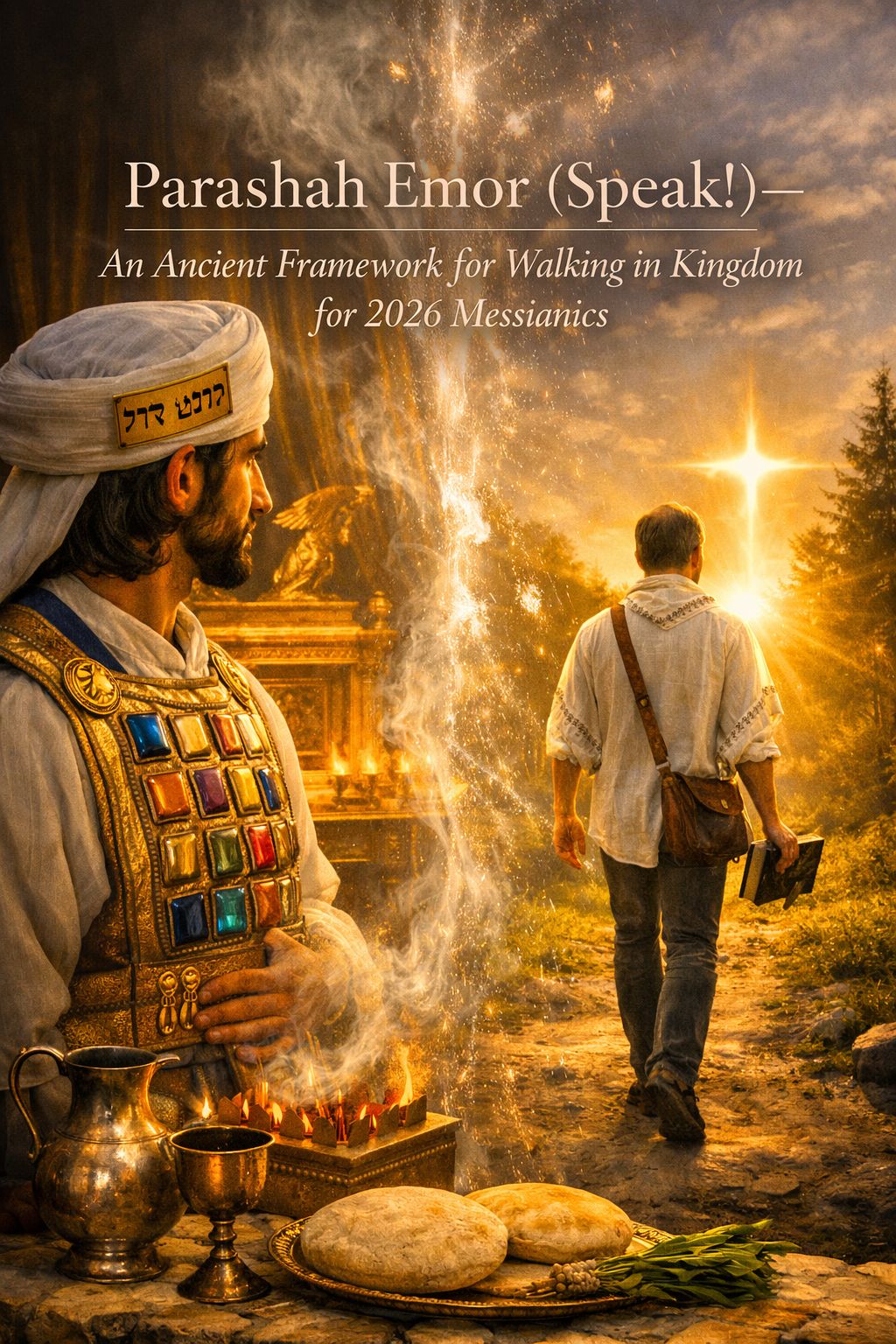
Episode summary: In this installment of The Messianic Torah Observer, we take a walk through Parashah Emor (Leviticus 21:1–24:23), highlighting the Torah’s holiness expectations for the priesthood, the danger of profaning Yehovah’s Name, and the enduring relevance of the Moedim/Feasts of Yehovah. From ritual purity and votive (qodesh) offerings to the Menorah oil, the Shewbread, and Torah principles surrounding justice, this teaching emphasizes “Spirit and Truth” applications for Kingdom living in 2026.

In this episode, you’ll learn

  • How Emor organizes into major subject blocks (Levitical priesthood, offerings, Moedim, sanctuary operations, and Torah principles of justice).
  • What it means to profane Yehovah’s Name—and why the issue is conduct and covenant faithfulness more than pronunciation.
  • How the Moedim function as Yehovah’s appointed times, and why Messianic believers should still take them seriously today.
  • Why Emor’s priesthood material still speaks to New Covenant identity (a kingdom of priests/royal priesthood) even without a functioning Temple.
  • Practical ways to honor Yehovah through worship and offerings that are “without blemish” in spirit, motive, and integrity.

Key themes

  • Holiness (set-apart living): Yehovah’s standards for those who represent Him.
  • Priesthood responsibility: Leadership accountability and “always-on” Kingdom service.
  • Profaning vs. honoring the Name: The witness of the people of Elohim before the world.
  • Worship integrity: Qodesh offerings (material and spiritual) treated as holy.
  • Appointed times: The Moedim as a yearly framework for communion and covenant rhythm.
  • Spirit-and-Truth application: Extracting enduring spiritual principles from Temple-era Torah.

Scripture focus

  • Primary Torah reading: Leviticus 21:1–24:23 (Parashah Emor).
  • Key Emor passages highlighted: Leviticus 21 (priesthood holiness); Leviticus 22 (qodesh offerings); Leviticus 23 (Moedim); Leviticus 24:1–9 (Menorah oil and Shewbread); Leviticus 24:10–23 (blasphemy and justice).
  • Supporting/cross-references used in the teaching: Leviticus 10:3; Exodus 19:4–6; John 4:23–24; Hebrews 10:1; 1 Corinthians 15:46; Titus 2:11–15; 1 Peter 2:9–10; 2 Corinthians 6:14; 1 Peter 1:16; Romans 1:5; Matthew 7:21–23; Hebrews 12:1; 1 Thessalonians 5:19; Revelation 1:6; 5:10; 20:6; John 6:33–51.

Moedim quick reference (as covered in Leviticus 23)

  • Weekly Shabbat (Lev 23:3): set-apart day of complete rest; sacred assembly.
  • Pesach (Passover) (Lev 23:5): 14th of Aviv, at twilight; Pesach meal time.
  • Feast of Unleavened Bread (Matzah) (Lev 23:6–8): 15th–21st of Aviv; holy assemblies on day 1 and day 7.
  • Firstfruits (Yom HaBikkurim) (Lev 23:10–16): day after the weekly Sabbath during Unleavened Bread; wavesheaf; begins the Omer count.
  • Shavuot (Pentecost) (Lev 23:17–21): 50th day from Firstfruits; sacred assembly; offerings.
  • Care for the needy/alien (Lev 23:22): leave gleanings; practice covenant compassion.
  • Yom Teruah (Lev 23:24–25): 1st day of the 7th month; memorial of trumpet blasts; rest.
  • Yom HaKippurim (Day of Atonements) (Lev 23:26–32): 10th day of the 7th month; deny self/fast; no work.
  • Sukkot (Booths/Tabernacles/Ingathering) (Lev 23:33–36; 37–44): 15th–22nd of the 7th month; rejoicing before Yehovah; sacred assembly on day 1 and day 8.

Discussion highlights

  • Priesthood is leadership under scrutiny: Emor portrays priests as consecrated representatives—set apart in conduct, relationships, and service because they serve before Yehovah and the people.
  • “Profaning the Name” is a life-witness issue: The teaching emphasizes that profaning the Name is chiefly about treating the Holy as common through disobedience, hypocrisy, and disrespect—not merely about how a person pronounces the Name.
  • Offerings reveal the heart: Qodesh/votive offerings must be treated as holy and rendered with integrity—whether material gifts, service to others, or “fruit of the lips.”
  • The Moedim belong to Yehovah: The episode stresses that the appointed times are Yehovah’s set-apart convocations, proclaimed at their appointed times as part of covenant rhythm.
  • Temple-era instructions still teach Spirit-and-Truth: Even without an operating Temple and Levitical priesthood, Emor provides enduring spiritual applications for Messianic/Notsrim discipleship.
  • Menorah oil and Shewbread as spiritual pictures: Oil evokes the ongoing work of the Ruach haKodesh; Shewbread points to continual presence before Yehovah and Messiah as Bread of Life.

Practical takeaways for Kingdom living (2026)

  • Audit your witness: Identify habits or patterns that make the holy seem common, and repent/realign before they become “profaning the Name” in public view.
  • Strengthen priestly readiness: Treat your discipleship as “always on”—practice cleanliness of heart, mind, and relationships, especially if you lead or teach.
  • Upgrade your offerings: Offer Yehovah the “best”—excellence, sincerity, and consistency—whether in giving, serving, prayer, or encouragement.
  • Re-center around the Moedim: Mark the appointed times on your calendar, plan rest/convocation where possible, and prepare your household to honor them.
  • Don’t quench the Ruach: Make space for prayer, Scripture, and obedience so that the Spirit’s “oil” continues to burn steadily.
  • Pursue justice and covenant ethics: Let Torah’s seriousness about violence, restitution, and accountability shape your responses to conflict.

Reflection questions

  • Where might I be treating the holy as common—time, speech, relationships, or attitudes—and what would obedience look like this week?
  • In what ways has my conduct (online or in-person) either honored or diminished the Name I bear?
  • Which Moedim do I keep well, and which ones need more intentional planning and preparation?
  • What “offering” (time, resources, service, repentance, reconciliation) is Yehovah prompting me to bring without blemish?

Resources mentioned

  • Feast teachings archive: Visit themessianictorahobserver.org and use the site’s search icon to find teachings on each Feast/Moed by name (e.g., “Pesach,” “Shavuot,” “Yom Teruah,” “Yom Kippur,” “Sukkot”).
  • Related teaching note: The manuscript references earlier material connected to Tazria–Metzora in relation to impurity/uncleanness concepts.

Call to action

If this teaching encouraged you, consider sharing it with a friend or your fellowship, and make time this week to read Leviticus 21–24 slowly and prayerfully. Let Emor challenge you to honor the Name, elevate the quality of your worship, and embrace your priestly calling in Messiah.
  • Subscribe/follow so you don’t miss future installments of The Messianic Torah Observer.
  • Share this episode with someone exploring Torah faithfulness through a Yeshua-centered lens.
  • Explore more teachings at themessianictorahobserver.org (search by Torah portion or Feast name).
  • And if you’re so led, support this ministry with you financial gifts and your prayers.

Biblical Illiteracy Behind the Anti-Hebrew Roots Agenda

Is Biblical Illiteracy behind the Anti-Hebrew Roots Agenda these days. In this post I reflect upon a recent experience I had on Facebook that suggested to me that Biblical Illiteracy may, in part, be behind the animus Christians have towards our Hebrew Roots/Messianic...

read more

A Call for Unity in the Body of Christ/Messiah

    By virtue of our role as disciples of Yahoshua Messiah (Jesus Christ), we are called to be a united and unified body of believers in every respect. Just as Master was united with His Father, we too must be united with the Father, our Master and with one...

read more

When Tradition Eclipses Torah

  My Torah Portion Observation of the Week I was profoundly moved by the section of this week’s Torah portion that recorded what on the surface seemed the very harsh and violent encounter we had with YHVH. It was Parashah 26: Sh’mini, Eight and I wish to briefly...

read more

Day of Firstfruits and Keeping the Sabbath Holy

    Keeping the Day of Firstfruits The Day of Firstfruits is a little known or publicized feast in our Faith Community. Firstfruits is also referred to as Yom haBikkurim (Hebrew) and the Wave Sheaf Offering. It is sandwiched into the week of...

read more

Select Your Passover Lamb

I'm Reminded I’m reminded when looking over our copy of the Hebrew Observational Calendar that today is the day that we would select the unblemished animal of the first-year that would serve as our paschal lamb. Choosing a Lamb Today Certainly, today, the vast...

read more

Torah Portions and the Body of Christ (Messiah)

My Love and Concern of Torah Portions I personally love the Torah Portions system for a number of reasons, including reasons associated with connecting with other like-minded Messianic believers who appreciate the Torah Portion system as well. Certainly, there are few...

read more