|
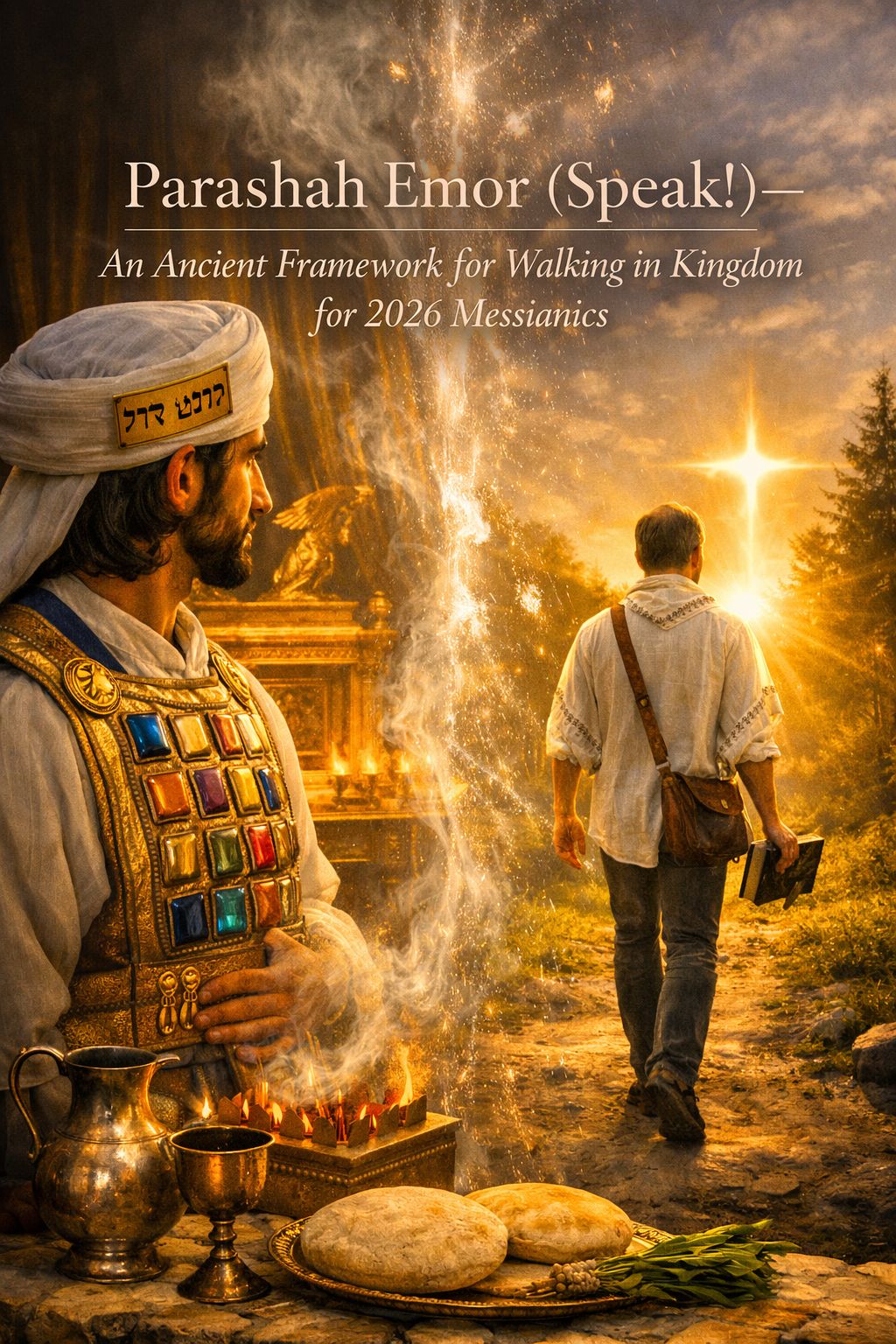
Episode summary: In this installment of The Messianic Torah Observer, we take a walk through Parashah Emor (Leviticus 21:1–24:23), highlighting the Torah’s holiness expectations for the priesthood, the danger of profaning Yehovah’s Name, and the enduring relevance of the Moedim/Feasts of Yehovah. From ritual purity and votive (qodesh) offerings to the Menorah oil, the Shewbread, and Torah principles surrounding justice, this teaching emphasizes “Spirit and Truth” applications for Kingdom living in 2026.
In this episode, you’ll learn
Key themes
Scripture focus
Moedim quick reference (as covered in Leviticus 23)
Discussion highlights
Practical takeaways for Kingdom living (2026)
Reflection questions
Resources mentioned
Call to actionIf this teaching encouraged you, consider sharing it with a friend or your fellowship, and make time this week to read Leviticus 21–24 slowly and prayerfully. Let Emor challenge you to honor the Name, elevate the quality of your worship, and embrace your priestly calling in Messiah.
|
Every Nation Will Come: Sukkot, Zechariah 14, and Yeshua Tabernacling With Us
Episode Summary Chag Sameach Sukkot, beloved of the Most High. In this installment of The Messianic Torah Observer, we turn our attention to Sukkot, aka the Feast of Tabernacles; the Feast of Booths; and the Feast of Ingathering to consider what this appointed time...
Ha’azinu and Shabbat Shuva: The Song of Moses, Teshuvah, and Yom Kippur
Ha’azinu: The Song That Knew the Future—and the Shabbat That Stands Between You and Yom Kippur Greetings, Saints of the Most High Ahlohim, and welcome to another installment of The Messianic Torah Observer. In this teaching, we turn our attention to Parashat...
The Hidden Feast: Yom Teruah, the New Moon, Hannah’s Prayer, and the Return of the King
Beloved, in this installment of The Messianic Torah Observer, we turn our attention to one of the most mysterious and prophetically charged moedim on Yehovah’s sacred calendar: Yom Teruah, the Day of the Blowing of Trumpets. It is a feast that Father commanded, yet...
How Should We Evaluate Prophetic Voices? A Biblical Framework — With Jonathan Cahn as Our Starting Point
Opening This morning — Tuesday, September 8, 2026, the 25th day of the 6th Biblical Month, conceivably four or 5 days before Yom Teruah, a significant fact-checking analysis of Jonathan Cahn's prophetic claims was published. (Reference: “What Prophecies Has Jonathan...
The King Is in the Field: Elul, Yeshua, and the Meeting Your Jewish Cousins Are Still Waiting For?
Beloved, in this installment of The Messianic Torah Observer, we step into one of the most tender and spiritually rich traditions associated with the traditional Jewish month of Elul: the teaching that the King is in the field. Our Jewish cousins have long understood...
Yeshua and Ki Teitzei: The Torah Fulfilled Through Mercy
Episode Focus In this installment of the Messianic Torah Observer, I revisit this week’s Torah Reading, Ki Teitzei, and bring it into conversation with the words of our Master Yeshua in the Sermon on the Mount. And what we discover, Saints, is that Moshe and Yeshua...
What the Greek Mindset Stole from Our Bible Reading and How We Get It Back
Beloved, this teaching is about recovering the lens we were never supposed to lose. Most of us were discipled, trained, and conditioned to read a Hebrew Bible through a Greek and Hellenistic framework, and many of us never realized that this inherited lens was shaping...
Parashat Ki Teitzei: Cursed on a Tree and the Covenant of Peace: Called to War, Comforted by God, and Drawn Near Through Messiah
Episode Overview Beloved, in this installment of The Messianic Torah Observer, we take up Parashat Ki Teitzei, one of the most commandment-rich portions in the entire annual Torah reading cycle. At first glance, Ki Teitzei may appear to be little more than a long...
Righteous Judges and True Prophets: Shoftim’s Call to a Spirit-Led Elul Generation
Righteous Judges and True Prophets: Shoftim’s Call to a Spirit-Led Elul Generation August 14, 2026 | 30th Day of the 5th Biblical Month 6026 | Parashat Shoftim "Righteous Judges and True Prophets: Shoftim's Call to a 6th Biblical Month Generation" Parashat...
UFOs, UAPs, and the Unseen Realm: A Messianic Response to a World Looking Up
Shalom and greetings, beloved Saints of the Most High. In this installment of the Messianic Torah Observer, we stepped into a subject that many in our Faith community either avoid altogether, casually dismiss, or hand over to the secular world to define for us: UFOs,...