Post Sabbath Reflections for August 16–Faith, Spiritual Gifts and Personal Testimony

* Shabbat Night Live–Michael Rood and The Ark of the Covenant–Into the Wilderness

Shabbat Night Live

Shabbat Night Live

* Michael continues on the subject of discovering the location of the Ark of the Covenant–sets the foundation of His coming in to the truth about the end times. He picked up from last week and gave his personal testimony

* House of Israel and Arthur Bailey–Now Concerning Spiritual Gifts, Part 5
Arthur Bailey
* Arthur picked up where he left off regarding the spiritual gifts–specifically the gift of Faith

* Commentary on belief systems based on teachings and lazy believers tend not to research issues themselves
* Our actions are synonymous with our Faith
* Faith-1 Cor 12:9, the gift to believe with extraordinary confidence in Yehovah promises, power and presence in order to honour YHWH, inspire others, and build up the messianic community. Heb. 11:1, 6; Phil 3:9; Luk 17:5; Rom 10:17
*
* Now faith is the substance of things hoped for, the evidence of things not seen. (Heb 11:1 KJV)
* 5 And the apostles said unto the Lord, Increase our faith. 6 And the Lord said, If ye had faith as a grain of mustard seed, ye would say unto this sycamine tree, Be thou rooted up, and be thou planted in the sea; and it would obey you. (Luk 17:5-6 ASV)
* So faith comes from hearing, and hearing by the word of Christ. (Rom 10:17 NAS)

* Yehovah is supposed to be in each of us, but we can’t see Him. The challenge is being able to see Yehovah in us when there are no other believers in the room
*
* 4102-pistis; from(3982) persuasion, ie credence; moral conviction(of religious truth, or the truthfulness of God or a religious teacher), especially reliance upon Christ for salvation; abstract constancy in such profession; by the extensive system of religious(Gospel) truth itself:-assurance, belief, believe, Faith, fidelity
* Also derived from aman is emunah meaning firmness, something or someone that is firm in their actions. When the Hebrew word emunah is translated as Faith, misconceptions of its meaning occur. Faith is usually perceived as a knowing while the Hebrew emunah is a firm action
*
* but the just shall live by his faith. (Hab 2:4 KJV)–a human character that leads to righteousness (Prov. 12:17) Thus as Psalm 33:4 points out, one’s faith is shewn in his or her works–For the word of the LORD is right; and all his works are done in truth [or emunah or faith]. (Psa 33:4 KJV)

* Thus: BIBLICAL FAITH IS ACTION
* To have faith in God is not [just] knowing God exists or knowing that he will act. Rather it is that the one with enumah will act with firmness toward God’s will. Ancient Hebrew word meaning Faith by Jeff A. Brenner
* Of all the gifts mentioned, none is written about, spoken of or taught more than faith. Faith is the foundation on which all gifts are operated. You can not operate in the spirit without the gift of faith
* The first time the Word is used in a positive sense is during a time when Yehovah is giving a word to the prophet Habakkuk concerning the captivity of Israel by the Chaldean/Babylonians
* Yehovah is not subject to our likes or dislikes. We often act like we are our own God. We tend to be concerned about things that please us over what concerns God.
* Hab 1:5–>2:4–>; Yehovah is raising up an evil nation to overtake His people [Chaldeans]. Yahovah always has a people of faith–the just shall live by their faith. This likely influenced Daniel and the 3 Hebrew boys. These endure persecution because of their exercised faith. These words also inspired Shaul as evidenced in Rom 1:16-17 (cf Joh 3:36)
* Faith is a gift from Yehovah-Eph 2:8; our belief is a gift . Faith is a powerful force given to us by Yehovah. Yahovah gave us faith that we might please Him for with our Faith we can’t please Him. Thus we’ve been given the ability to please Father thru faith
* Heb 11:6. It is impossible to please Yehovah without the gift of faith
* You can use your Faith to work for you or use your Faith to work against you. Faith is seen in actions and in words. Do we speak Faith or fear or doubt? Are we in the flesh or in the spirit. Our words become a confession of our Faith or lack thereof. Our words justify or condemn us. Mat 12:36, 37
* Religious people don’t take the Word seriously. Instead, they take the preacher seriously
* The things that come out of our mouths can cause life and death. Gossipping and the like are considered terrible behavior by Father. We need to cease speaking negativity over and in our lives
* Walking by faith can be a painful ordeal. You can not confess to operate in Faith but confess oppositely (ie talk must match our walk). We must watch/guard our tongues
* Rom 14:23-whatever is not of faith is sin
* Rom 10:17
* We build ourselves up by praying in tongues
* Mar 11:22-26– 17 So then faith cometh by hearing, and hearing by the word of God. (Rom 10:17 KJV)
* We should surround ourselves with people who operate in Faith.
* Faith comes by hearing and hearing by the Word

Main Discourse

* Are the Gifts of the spirit applicable to Messianics/the Hebraic Roots Community today?

* The Messianic community as a whole seems to reject the spiritual gifts

* Abuses

* Lies

* Affiliation with churchianity
* Affiliation with Messianic community

* There is no clear understanding of the applicability of the gifts

* Ignorance-focus on Torah

* Fear
* Arrogance

A Case for Eating Out on the Sabbath or Not

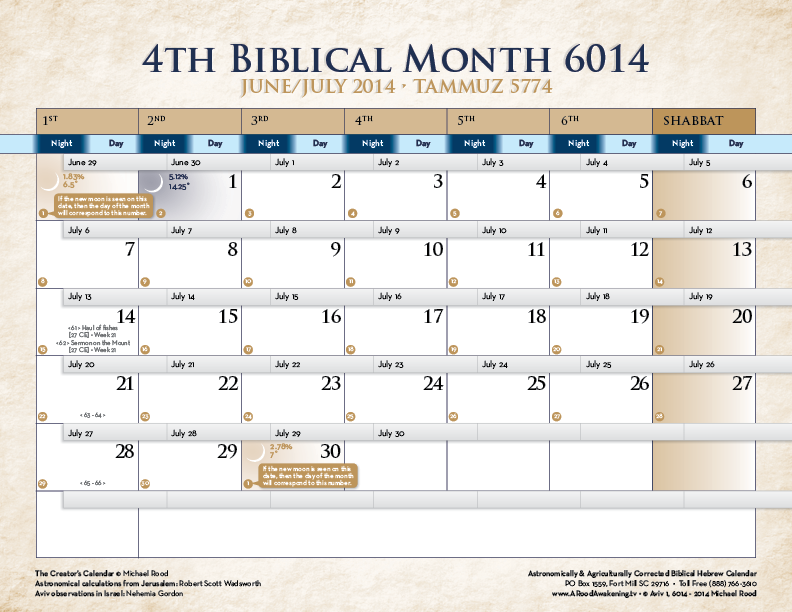
A practice that I’ve begun following of late is incorporating the Michael Rood Chronological Gospels into my regimen of Torah Study. I do this following the Rood Astronomically & Agriculturally Corrected Biblical Hebrew Calendar and looking at the corresponding events based upon Rood’s presumed calendar dates. Those of you who haven’t and are so led, I would highly encourage you to get your hands on a copy of the Chronological Gospels and the Creator’s Calendar. These two tools work together to provide perspective in terms of the time frames that each Gospel event occurred. The time frames, of course, are highly connected and embedded in the Feasts of Yehovah, the Sabbath and Torah. Michael’s commentary on key events also illuminates the issues being addressed through the sighted events in the light of Torah, Judaism, history and the Hebrew language. This perspective has taken my study to a whole new level; beyond anything that I’ve ever experienced, just in the past year. I can’t recommend this invaluable tool enough.
ChronoGospels
ARA_Calendar2014-4th
Being transparent, I can’t say emphatically whether or not the events exactly correspond to every assigned date as Michael assigns in his Bible, but I truly believe at the very least, the dates and events as assigned are reasonable. I had the great privilege to speak to Michael last year, at an event launching the Chronological Gospels, regarding this very question about assigning dates and time frames. I expected Michael to provide me with some type of nebulous answer. However, I was highly impressed and surprised to learn from him that a great deal of research and study was placed in the assignment of dates/time frames to every event. In some cases, the events could be assigned to specific dates simply by correlating obviously-associated feasts and known documented history. Other, less than obvious events, required Michael to actually extrapolate distances and cultural practices in association with various historical markers–the biggest marker being the miraculous feeding of the 5,000, which Michael used as a primary reference point for much of the Chronological Gospels construction.
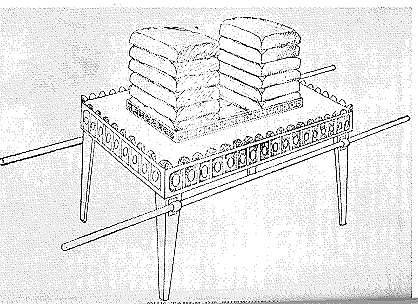
The most recent event correlation was 68–“Yeshua and His disciples ‘harvest, winnow, and grind’ grain on the second Sabbath after the first of the month, incurring the wrath of the Pharisees.” This event, as recorded in Matthews 12:1-8; Mark 2:23-28; and Luke 6:1-5, is believed to have occurred on the Shabbat, 10th day, of the 5th Biblical month which certain computers have been used to extrapolate back in time to specific dates, assigns this day to August, 2, 27 of the common era. This is a well-known story. Yeshua and His disciples happen to have been traversing a wheat field on the second Sabbath of the 5th Biblical month when certain religious leaders witness them plucking wheat and eating grains of wheat to cull their hunger. The religious leaders attributed the act of plucking wheat and extracting the kernels as violating Sabbath laws; specifically the Pharisees accused the group of conducting work on the Sabbath. Yeshua’s response to the accusation was one of outrage in that the violation of the Sabbath laws as seen by the Pharisees was in no way Torah-based. The fact of the matter was that the oral tradition in this and virtually every other commandment, law and precept of the Torah was refashioned by the religious leaders to create a form of righteousness that was not of Yehovah but of man. To get His point across, Yeshua referred the Prushim to the story of David while hiding from King Saul who sought to kill him, took Shewbread for him and his men from the tabernacle to eat (1 Samuel 21:14-16). The showbread, by Torah, was restricted to the consumption by the Tabernacles priests (Exodus 25:30 and Leviticus 24:5-9). The showbread was considered to be holy (Leviticus 24:9) and only to be eaten by Aaron and his sons. In general. The letter of Torah would indicate that consumption of the shewbread by anyone other than the Levitical priest was out of the question. Yet Yehovah never instructed that this was emphatically the case. Consequently, David, hiding from King Saul, hungry, and in need, found a source of provision through the grace and providence of Yehovah. If this David and the shewbread situation were to have been played out by the Prushim who rebuked Yeshua, likely David would have been sent away without sustenance and we can only surmise what would have become of him afterwards. Interestingly, the attending priest who provided the showbread to David, although having a degree of angst over the entire situation, capitulated and provided the bread to David with the understanding that David and his men were in a state of purity. Also interestingly, Yehovah, who enjoyed a close relationship with David, seemed to have not had any issue with David taking the shewbread for emergency sustenance.
 Shewbread1
Letter of the Law, without any consideration for the spirit of the Law, can be problematic, especially as it relates to our Hebraic Roots/Messianic Faith. I recall coming in to this Truth going on 10-years ago and having to work through the many challenges and questions regarding the Sabbath. The Torah is clear on there being no work conducted on the Sabbath. But the questions that floated around us constantly was, what constitutes work? Thus, we went through a million and one permutations and adjustments regarding the observance of Sabbath. In our home, we went from one extreme to the next because we didn’t fully grasp what the expectation was regarding the Sabbath and the whole concept of what we can and can’t do on the Sabbath. I’m certain that many of you have faced the same situation. I can tell you, this very situation had a tendency to create a lot of turmoil in our home during the early days of our transitioning to Sabbath observance. Very early on, we swung heavily over towards total, systematic, shutdown on the Sabbath. I mean, absolutely NO television watching allowed; no preparation of meals; prayer beginning at sundown and again at the end of Sabbath; no running of appliances; and there were other things implemented that escapes me at the moment. Well, the pendulum swung from extreme conservative to more liberal, especially after we affiliated with United Church of God and then Rock Valley Christian Church. Being in these fellowships, we experienced working hard to facilitate the conduction of weekly Sabbath services as well as eating out in restaurants and other peoples homes during the Sabbath. So, it was indeed interesting how things can change in terms of how we as humans apply Torah to our lives, especially as it relates to something as foundational as the Sabbath.
As it related to this particular event, the Torah by this point in history had become nothing more than a broken egg shell (my wording and description) whereby the whole egg (i.e., the Torah as given by Yehovah to the children of Israel) had been cracked open by men and the contents spilled out into a skillet. The purity of the egg was then comprised by the heat of the stove and the extra “stuff” (i.e., seasoning, butter, etc.) that is added to suit the taste of the one who is cooking it. The Law as known to the Jew in first century Palestine was not Torah. The original 613 laws, commandments and precepts that were stipulated in the five books of Torah had morphed into 1000’s of additional laws and rules, all designed according to the Prushim, to keep the Jew from violating the original 613 laws. This erecting of a fence around Torah by these man made laws (as it has come to be known in Judaism) was never intended nor sanctioned by Yehovah and it was this system of laws (i.e., the Talmud; takanots; ma’hasim) that enraged the Master and ultimately resulted in His crucifixion. The instance of Yeshua’s disciples plucking wheat and rubbing the kernels in their hands to strip away the chaff as they traversed that wheat field that August day in 27 C.E. was deemed a violation of the Law, when in fact it was only a violation of Jewish law. The Prushim’s interpretation of Torah through the lenses of Judaism regarding the Sabbath was in many cases absolutely ludicrous. Instead of a people (specifically Jews) experiencing freedom from sin through the keeping of Torah, the people instead experienced an intense form of bondage to religion. I recall reading something a few years ago that certain sects of Judaism weren’t allowed even to tear toilet paper to take care of their personal toilet needs on the Sabbath. Thus, the toilet paper had to be torn into prepared strips on Friday so as to not incur the work of tearing a piece of toilet paper on the Sabbath. I mean, how silly is this. One can only surmise that hasatan and his imps have over the centuries fallen over themselves laughing at the absurdity of some of these rules.
Picking Wheat
As it relates to us: the redeemed and elect of Yeshua HaMaschiach, our observance and keeping of Sabbath must be done within a healthy and proper perspective. Indeed, Torah is clear that we must not do any work. Most will agree that work would refer to servile activity–especially activity that we do on a daily basis to provide financial support for our families. This work would be considered income. But then, what about the work of cleaning up the house, mowing a lawn, washing clothes, preparing meals, baby sitting, and the like? I guess the best way to look at this is, there is absolutely no reason to do any of these tasks on the Sabbath when there are six other days in the week in which to complete this tasks. These tasks may not be activities for which we earn a living, but they could be classified as servile work. Then what about those who work in socially critical positions such as paramedics, firemen, policemen, doctors, nurses and soldiers–these professionals keep our society safe from the dangers of everyday life? Surely Yehovah would be okay if a believer who happens to be one of these critical professionals was required to fulfill the tenets of their profession (i.e., work) on the Sabbath.  I think most would concede that the believer in Messiah is compelled to honor the Sabbath by not fulfilling the tenets of His profession on the Sabbath. I believe that it comes down to one who finds themselves in such a situation to petition Yehovah to provide the right organization that would grant him or her the Sabbath off. I found myself in a similar situation and it was the grace of Yehovah that worked a wonder and I was promoted to a position that did not require me to work on Sabbaths. Yehovah can do wonders if we seek Him and never doubt Him. It’s a trust issue. And if we aren’t able to make headway in the company or organization in which we are employed, then maybe Yehovah has another, even better, opportunity out there for us that does not require us to work on the Sabbath. Nevertheless, this is an individual issue that one must face alone and make the decision of what to do about the Sabbath. True believers must make a stand. However, true believers must keep Torah real and not fall pray to personal perceptions and ideals as to what constitutes proper Sabbath observance. The Torah is clear as to what justifies generally the proper observance of the Sabbath–that is there will be no work. The minute details, however, rests with the leading of the Holy Spirit and common sense. If you’re hungry on the Sabbath and your options are limited, by all means find something to eat. Next time, maybe you might want to be more prepared so as to not find yourself in the same situation. Just saying.

Torah Living Episode 28–The Israel-Arab Conflict and the Disciple of Yeshua

If you have been keeping up with news of late, you should be aware of the conflict that wages on between the Palestinian peoples and Israel. You may recall that this all started about a month ago–June 12th to be exact–when 3 Israeli teenagers were abducted by militants as they made their way home by foot in the West Bank. A few days later, after worldwide appeals were made, the bodies of the 3 teenagers were found–July 2nd. They had been brutally executed by their captors. The next day, July 2nd, a Palestinian teen was abducted and his body was found an hour later. Shortly thereafter, suspects were arrested and the abduction and murder of the Palestinian was deemed to be a revenge killing by the Israeli authorities. Meanwhile, rocket attacks from Gaza in to southern Israel began in earnest. In response Israel carried out air-strikes targeting militants in Gaza.  (Reference:http://www.cnn.com/2014/07/10/world/meast/israel-gaza-timeline/). Needless to say, since July 2nd, the conflict has broadened and many lives have been lost. Let me provide you with an an update on this week’s events:
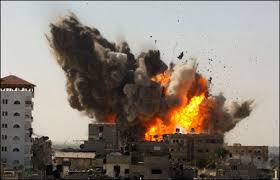
Israel-Palestinian Conflict 2014
  • July 23–According to Washington Times Dave Boyer, Hamas had rejected the United States Secretary of State’s call for a cease fire. As news of the conflict reaches many destinations throughout the Middle East, fears grow that other Jihadists will join Hamas to fight the Israelis. According to one Jihadi cleric in Syria, he and his fighters in Syria wished to join the battle in Gaza. At this point in the conflict, estimates placed the death toll at some 680 Palestinians and 34 Israelis. Israeli troops backed by tanks and aerial drones are attacking Hamas fighters that are reported to be armed with RPG’s (rocket propelled grenades) and assault rifles on the outskirts of Kan Younis. In a recent conflict here, 8 militants were killed. The Palestinian Red Crescent has been trying to evacuate a couple hundred people from the area but are hampered by Israeli airstrikes and shelling
  • July 24–According to the Associated Press, Secretary General Ban Ki-moon condemned a deadly attack on a U.N. school for Palestinian refugees in Northern Gaza. That attack killed many Palestinians  and some U.N. personnel, who’ve sought refuge from Israeli shelling. The secretary demanded that Israel and Hamas abide by International humanitarian law during this conflict and “respect the sanctity of civilian life, the inviolability of U.N. premises, and protect humanitarian workers. As of July 24th, the circumstances surrounding this incident remained unclear. The United Nations has been busy attempting to arrange a “humanitarian pause in hostilities so that civilians could be evacuated.” The  secretary went on to say that “Today’s attack underscores the imperative for the killing to stop and to stop now.”
  • July 24–You probably also heard about the United States government banning flights in to Tel Aviv as a result of the violence going on in the region. Well, the stoppage in flights went beyond the United States it would appear. According to Michael Wilner of The Jerusalem Post, Turkey would not allow El Al to land at is airports for purposes of airlifting out its citizens who have been stranded in that country during the last week of violence. Turkish airlines have extended its ban on flights in to Tel Aviv to July 31st. This means that some 4000 Israelis remained stranded in Turkey as they await outbound flights. This poor souls are likely to incur some hefty expenses as their stays are extended.
  • The most compelling news to make the international press has to do with the Israeli discovery of a large number of sophisticated tunnels throughout Gaza that are believed to be used by Hamas to traverse Gaza undetected, quickly pop up out of no where, erect and launch missiles in to Israel. Not to mention, these tunnels provided Hamas with hidden storage for weapons and other equipment. According to Paul Alster of Fox News, Israeli ground forces were investigating these underground tunnels in what they call Operation Protective Edge. This operation has netted the discovery of 60 access shafts leading to 28 tunnels. Israeli forces have found weapons, maps, and IDF uniforms in some of these tunnels. The IDF says that these tunnels weave their way through much of Gaza. Access points are found in homes, mosques and public buildings. Recently, there were 2 discoveries of missile caches in UNRWA schools. Some of these missiles after being discovered were handed over to Hamas by UNRWA officials
  • July 27–USA Today reported that a 24-hour humanitarian cease-fire occurred on Saturday the 26th. Immediately after the 24-hours ended, the rocket launches resumed and Israeli military actions resumed.
The Palestinian–Israeli conflict is not by any stretch of the imagination, an easy conflict to understand. One must dig in to the last 2,000-years and even beyond to get a full sense of who started the mudslinging in the first place. Even when one dissects the known history of the region they still find no real defining point where one could attach responsibility to the years of conflict between these two peoples. Many editorials and books line the shelves of libraries and book stores and most point the finger of responsibility at Israel, citing Israel’s occupation of Gaza, West Bank, East Jerusalem and much of the Golan Heights. Modern history tells us that Israel occupied these territories during the Six-Day War of 1967. In this war, Israel miraculously triumphed over the overwhelming invading forces of Egypt, Syria and Jordan. Israel, however, will tell you that she no longer occupies Gaza after 1982, yet the Palestinians would beg to differ.
The point of this Torah Living episode is not to debate or discuss per se whether or not Israel or the Palestinians are  responsible for all the violence, death and destruction that is going on in that region of late. For purposes of this episode, I wish to look at what believers are compelled to do about this terrible situation. Initially, the tide of human opinion and compassion swung over on the Israeli side. But once the media began to post images of children and families being innocently decimated by the IDF, the tide has swung fully it would seem over towards the Palestinians. My Google+ pages is festooned with images of innocent (seemingly) Palestinian victims with emotionally charged comments casting horrible judgments upon the Israelis. It breaks my heart to see these images. Despite my pro-Israeli stance on this matter, I still hurt for the thousands of innocent Palestinians who are caught in the middle of this conflict. We know that the conflict is not between the Palestinian peoples and Israel per se. It conflict is really between Hamas and its evil militants and Israel.
The world believes that the conflict is about the necessity of a homeland for the Palestinian peoples. Throughout the last century, indeed, the biggest issue stoking the flames of conflict between the Palestinians and Israel has been the Palestinians’ desire and even demand for a portion of Israel property that they can call their home. The most extreme of the Palestinians has even gone so far as to insist that Israel completely leave the land entirely to them and go elsewhere (which we know will never happen). So in response, Israel has embarked on many discussions and deals that would swap land for peace. These endeavors seem to have royally failed. Whenever extremists see an opportunity to take advantage of the Palestinian situation, Israel is forced to be a responsive aggressor in order to secure the safety of the Jewish nation. When Israel reacts to such agitation by groups like Hamas, the Palestinian peoples become the central victims, more so than Israel.
In one form or another, the Palestinian peoples have resided in the land of Israel (aka Canaan) even before Israel came to occupy the land. Israel when she was sent to finally take the land as Yehovah had promised and led them to do so, failed to wipe the land free of her indigenous inhabitants, both physically and spiritually. This failure on the part of the children of Israel has proven over the centuries to be the proverbial “thorn” in their sides and they remain so to this very day. Yehovah was very clear about what was going to happen if the Israelites failed to do as He’d directed them to do. I refer you to Judges 2: 1-5 and 3:1-7: “And the Angel of Yehovah came up from Gilgal to Bochim, and said, I made you to go up out of Egypt, and have brought you to the land which I swore unto your fathers; and I said, I will never break my covenant with you; you shall make no covenant with the inhabitants of this land; you shall throw down their altars: but you have not hearkened unto my voice. Why have you done this? Wherefore I also said, I will not drive them out from before you; but they shall be [scourges] in your sides, and their gods shall be a snare unto you. And it came to pass, when the Angel of Yehovah spoke these words to all the children of Israel, that the people lifted up their voice and wept. And they called the name of that place Bochim; and they sacrificed there to Yehovah…And these are the nations that Yehovah left, to prove Israel by them, all that had not known all the wars of Canaan; only that the generations of the children of Israel might know war by learning it, at the least those who before had known nothing thereof: five lord ships of the Philistines, and all the Canaanites, and the Sidonians, and the Hivites that dwell on mount Lebanon; from mount Baal-Hermon unto the entering into Hamath. And they were to prove Israel by them, to know whether they would obey the commandments of Yehovah, which He commanded their fathers by the hand of Moses. And the children of Israel dwelt among the Canaanites: Hittites and Amorites and Perizzites and Hivites and Jebusites; and they took their daughters as wives, and gave their  daughters to their sons, and served their gods. And the children of Israel did evil in the sight of Yehovah, and forgot Yehovah their God, and served the Baals and the Asherahs.”
Indeed, the land of Israel, originally name Canaan, was promised to Abraham and his descendants. Many bumps along the way delayed the progeny of Abraham, Isaac and Jacob from receiving this promised land, but ultimately the land was given to them. In the most inspiring opening to his Truth and Tradition telecast, Michael Rood describes the sum of the territory promised to Israel as From the Euphrates to the Nile belongs to the sons of Israel”–reference: Numbers 33:50-34:12.
Israel forfeited the land as a result of her continued disobedience, despite Yehovah giving Israel chance after chance, prophet after prophet and warning after warning. The nation of Israel ultimately split into 10 northern tribes that retained the name of Israel and 2-southern tribes that took the name of Judah. Because of her refusal to obey Torah, Israel (the northern tribes) were uprooted from the land by the Assyrians in 722 BC. Judah followed in Israel’s shoes and by 586 B.C. she was riped from the land and taken into captivity but eventually over time she returned under the rule of Cyrus II (538 B.C.) who commissioned the rebuilding of the then destroyed Temple by Nebuchadnezzar a half-century earlier. Judah was given many more chances to retain the promised land but ultimately lost it in 135 A.D. when Simon Bar Kochba led a rebellion against the occupying Romans, resulting in what Ian Carroll in his book “Israel Palestine–A 4000 Year History called “the punishment that wiped the Jewish territory off the map. Jerusalem was renamed Aelia Capitolina and a shrine to Jupiter was built where the Jewish temple had stood. The names of Judea and Samaria, synonymous with the Jewish presence, were abolished and the area renamed Aelia Palestina. Many Jews fled to the hills of Galilee and they were forbidden from entering Jerusalem and were not allowed to recruit to their religion. They had no place to pray, they were banned from the Holy City, and their homeland had been renamed after their greatest enemies, the Philistines.”
For all intents and purposes, Israel as a nation was estranged from the land until she formally became a nation once again on May 14, 1948, although throughout the preceding decades Jews immigrated to the land in varying numbers and began to establish homes, all the while cohabiting in the land with her Palestinian neighbors. Over time and leading up to Israel being established as a nation, the Palestinians who were mostly poor and without much in the ways of political clout in the post 2nd war world, became displaced as more and more Jews arrived and began to buy up and establish permanent homes on the land once held by the Palestinians. The Palestinians after a while began to fight back–violently–over their seemingly systematic expulsion from the land. And so the battle continues to wage to this very day as the pendulum of the world’s support and compassion alternates between the two.
So then, what is a believer suppose to do about this situation? Who should the believer support in this situation? Should the believer remain neutral and wait for the Lord to sort it all out? What are our responsibilities as the light of the world and the salt of the earth? Is it appropriate for true believers to engage in incendiary discussion about who is right and who is wrong in this conflict?
To begin with, I believe strongly that we must side with our spiritual brothers the Jews in this conflict. Indeed, the Israelis are human and they will not always do the right thing. Certainly, the methods the Israelis are using to address this conflict from time to time may be questionable, although in a broad sense, Israel’s hands are seemingly tied.
One commentator I watched on youtube said something to the effect that we’ve engaged throughout the last several years with the Palestinians this land for peace thing. However, when the Palestinians are awarded land, there remains no peace to be found. More and more land is awarded and still there is no peace. So what’s this land for peace all about then?
To answer that commentator’s question, it would seem perfectly clear to me that the issue is only in a small part about the land. The bigger piece of this pie seems to be more in line with the Palestinians and their Arab supporters desiring to wipe Israel off the map. Thus the land for peace seems only to be a distraction for the real purpose behind all the violence. The hope is to incite Israel to such eggregious retaliation against the Palestinian peoples that the world along with the Arab federation of states will engage Israel politically and ultimately militarily and eliminate once and for all the scourge of the Jew from the world. Indeed, hasn’t this been one of the goals of hasatan from time immemorial?
So siding with Israel would seem to be the appropriate and right thing for the believer to do. Yehovah promised the land to the sons of Israel and that promise has not been lifted, despite Israel’s poor record of obedience to the Almighty–Yehovah was emphatic that He would never break the covenant with Israel as stated in Judges 2. That essentially remains a matter between Yehovah and Israel. Regardless, if Yehovah stands with Israel, no matter what the world’s so-called experts opine on this matter, I say we better side with Israel. Probably the most compelling reason why a believer must stand on the side of Israel is given by the Father Himself as he addresses Abraham–“I will bless those who bless you, but I will curse anyone who curses you, and by you all the families of the earth will be blessed”–reference: Genesis 12:3.
 
Some believers for whatever reason have shunned the Jew, giving way to some degree of anti-Semite tendencies. The reasons vary, but probably the biggest reason goes back to the hasatan perpetrated complaint that “the Jews killed our Savior Jesus Christ.” Well, any believer with a modicum of Biblical knowledge will know that actually the Romans crucified Yeshua, although the crucifixion was instigated by several individuals who made up the Jewish leadership of the day. Other believers will contend that the Jew has lost his or her chance at salvation because they’ve failed to acknowledge Yeshua as their Messiah while the Gentile, through the evangelistic work of Shaul, usurped the Jew’s place so-to-speak. If these and other reasons are clouding any believer’s opinion about the Jewish people or the nation of Israel, I have to say that this is a very dangerous perspective to maintain. The Bible contains a ton of reasons why any believer and disciple of the Master must hold Israel and the Jew in proper perspective. To begin with, the Apostle Shaul, who of anyone in the history of mankind had so many daily challenges dealing with his Jewish counterparts, made it clear why the Jew is important to the believer. In response to a question that obviously was posed to him, most likely from a member of the Roman congregation of believers, about the significance of the Jew to the believer and to the Faith: “What then [is] the superiority of the Jew? or what is the profit of the circumcision? Much every way: and first, indeed, that to them were entrusted the oracles of God.”  (Romans 3:2) Thus the Jew must be respected by believers because Yehovah has entrusted unto them His Word–His Torah!
Moving forward, the Jew and or the nation of Israel, is currently not in tune with the True Faith once delivered. They continue to reject Yeshua as their Maschiyach. But this was anticipated and foretold by the Spirit through Shaul–“…blindness in part is happened to Israel, until the fullness of the Gentile has come in; and so all Israel shall be saved”–Romans 11:25, 26. Who are we to turn our backs on the Jew and on Israel? Yehovah has an active covenant with her and beyond that He intends to bring the Nation to Him through Yeshua HaMaschiyach. The time of the Gentile seems to have an expiration date so to speak; then Israel will have her time. Those of us who are chosen of Yehovah will have a job to do in the future and that is to disciple the children of Israel. Interestingly, Zechariah tells of a time in the future when the Jew will fully accept Yeshua as their Maschiyach and nations will flock to them for spiritual guidance–Thus saith Jehovah of hosts: In those days shall ten men take hold, out of all languages of the nations, shall even take hold of the skirt of him that is a Jew, saying, We will go with you; for we have heard that God is with you.  (Zec 8:23 DBY)  Indeed, the day of the Jew is in no way over and we believers in Messiah must stand by the nation of Israel in any way that we possibly can. (Other related passages tell of a time when Israel will awaken from their spiritual slumber–Isaiah 29:20; 62:1-7; Romans 11:7; 12:16; Luke 21:24; 2 Corinthians 3:14.
 
So what then should a believer do about this terrible situation? Well, indeed, the Scriptures provide us with a very clear instruction– 6 Pray for the peace of Jerusalem: they shall prosper that love thee. 7 Peace be within thy walls, and prosperity within thy palaces. 8 For my brethren and companions’ sakes, I will now say, Peace be within thee. 9 Because of the house of the LORD our God I will seek thy good. (Psa 122:6-9 KJV) Then there’s Jeremiah 29:7– 7 And seek the peace of the city whither I have caused you to be carried away captives, and pray unto the LORD for it: for in the peace thereof shall ye have peace. (Jer 29:7 KJV) 
 
So it would seem that the one thing that all believers can and absolutely should do in support of Israel is pray. Indeed, a psalmist and a major prophet was moved by the Spirit to encourage the true Believer to pray for the security of Israel. The Psalmist goes even to the point of saying that a benefit to be had by any believer who prays for the peace of Jerusalem is prosperity. What that prosperity will be is not entirely clear, but Yehovah is not void in His promises and whatever prosperity is to be had will be indeed worth every moment a believer falls to his or her knees and seeks the face of the Father on behalf of Israel. 
 
Secondly, it would seem a Godly way to support Israel would be in some form of assistance. Although the Scriptures do not come right out and say so, Yehovah made it clear to Abraham that He would bless those who blessed his progeny (reference: Genesis 12:3). I know of a charity that is providing financial and material assistance to Messianics in the state of Israel as resources are made available. I would encourage you to check this organization out and see if it is something that you would be led to covenant with and support our suffering brothers and sisters in Israel. The name of the charity is The Lydia Project. Not only is the Lydia Project helping those Messianics living in Israel who are suffering through some of the conflict with the Palestinians, the project also aids Messianics who are oppressed and rejected by Jews as a result of their profession of Yeshua as Maschiyach. I will vouch for the integrity of the Lydia Project. Additionally, there are several other charitable organizations who are out to assist Israelis such as “Stand by IDF Soldiers,IFCJ.org,” and “Stand with Israel” which I can not vouch for personally but would only encourage you to research and see which organization you are led to covenant with.
 
Lastly, and this will seem lame to some, but I wholeheartedly support this because I done this myself: embark upon a self-education and immersion in the land of Israel and its people. Psalms 102:15 states: “For your servants love her very stones; they take pity even on her dust.” Indeed, Jerusalem is the future home of every elect-believer of Yehovah. The Book of Revelation tells of a time in the seeming near future when Yeshua will return to this earth along with His spiritually converted Saints, and establish His kingdom to be headquartered in Jerusalem. John records in the most brilliant prose all that he witnessed on that great day:
 
“Then I saw thrones and those who sat upon them. Authority to judge was given to them. I also saw the souls of those who were beheaded for the witness of Yeshua, and for the word of Yehovah–those who had not worshiped the beast, nor his image; neither had they received his mark upon their foreheads or in their hands–and they lived and reigned with Messiah a thousand years. But the rest of the dead lived not again until the thousand years were finished. This is the first resurrection! Blessed and holy is he who has part in the first resurrection. The second death has no power over them. They shall be priests of Yehovah and of Messiah–and they shall reign with Him a thousand years!” (Revelation 20:4-6). 
 
How can we be certain that Jerusalem/Israel will be Yeshua’s millennial headquarters? Verses 9 and 10 clarify: “They went up from the far reaches of the earth and compassed the camp of the saints, the beloved city (always a reference to Jerusalem), and fire came down from Yehovah out of heaven and consumed them all. Then hasatan who deceived them was cast into the lake of fire and brimstone, where the beast and the false prophet were cast, and hasatan shall be tormented day and night, from age to age.”
 
Indeed, the believer is connected not only the Jew of Israel; he or she is connected to the land itself. Our destiny lies within the confines of Israel. Thus, we have jobs to do to address the current crisis that has gripped our beloved land. I therefore encourage each and every reader of our blog and listener of our podcasts to pray for Israel and the peace of Jerusalem. I would even encourage those of you who are even more invested in this that you consider as I am planning to do, and that is to fast and pray over this situation. Tremendous movement in the spirit realm happens when we pray and inflict our souls and give in to the leading of the Holy Spirit. Additionally, I would encourage you to consider supporting one of the many organizations that are out there that are in place to provide support for those in need in Israel. Lastly, let us look forward to that day when Yeshua will split the sky and we accompany Him down to this earth and serve Him and the billions remaining on the earth in the Master’s millennial Kingdom. 

Vows–Where Should a Believer Stand on this Issue? (Torah Living 26)

taking an oath I bet you’ve heard this before: I swear to God I did or didn’t… How about: I solemnly swear to tell the whole truth and nothing but the truth…so help me God. Hilary tells me of this one from her youth: truth that God loves? (simply saying, are you telling the God’s honest truth?) Keeping one’s word and being perceived and seen as an honest and truthful person has been a virtue that mankind has valued throughout every age; yet for the most part, a truthful and honest character has been a rare commodity since the Garden of Eden. Everyday people throughout the world are required or coaxed in to making statements that are interpreted and taken as vows or promises, of which the individual making the vow is expected to keep or make good his or her promise. When an individual fulfills or makes true his/her promises, they typically earn the respect of others. When an individual fails to fulfill their promises or vows, they typically lose the respect of others and they must then work extra hard to regain that lost trust. Yet, in most cases, lying, not fulfilling a vow, misspeaking, neglecting to make good on one’s promises; all have little to no associated consequences in our modern society. As disappointing as it may be to most, our society has gotten use to people not keeping their word or worse, making frivilous promises and vows that they have no intention of ever keeping. There is more to this whole thing about keeping one’s word and being truthful and honest. It really comes down to a question about one’s name. What do I mean by this? Well, it goes without saying that the greatest thing a human can own is not material possessions or even good health. As awesome and wonderful as material possessions and good health are to possess, there would seem to be a greater possession that one should seek after, obtain, maintain and cherish over any other: and that is a good name. Now some of you may scoff at this and I’m okay with that. But just bear with me a bit on this. I’m not talking about your legal name, although you really can’t separate your legal name from your good (or even bad name). People know us by our legal and sometimes nick names. However, when our legal or nick names are attached to certain charater traits such as honesty, truthfulness, caring, compassion, generosity, holiness, etc., that one enjoys favors with those within his/her sphere of influence. He/she is respected in their community and in some cases, throughout a region or even the world. Equally so, when one’s name is attached to evil such as lies, mistrust, dishonesty, meanness, viciousnous, and the like, the respect that is garnered is of a negative bent. These individuals are typically villainized and not trusted. Yet our world finds itself in a drought; a drought of individuals holding good names. It’s quite frustrating indeed, especially when our world is filled with sin and evil. Consider our so-called leaders in government: the overwhelming number of them are politicians through-and-through and they will tell you a lie and make promises they have no intention of ever keeping. Yet our nation has come to expect this and will even elevate these individuals to rock-star status while granting them life-time jobs as leaders in our society. In other words, in that arena, we’ve set our expectations extremely low, have we not? What about the world of business and corporations: how many businesses and corporations have lied and done their customers wrong, all for the purposes of gaining more revenue. How many people have lost their hard-earned moneys to company executives that have no conscience? What about companies that have ensured that their products were safe, all the while knowing there products posed their customers danger, resutling in the injuries and even deaths of their customers. Then there are of course the rest of us, who must contend with the dishonesty and ruthlessness of certain elements of our society that don’t even blink when they are trying to perpetrate a fraud on us, outright steal our property or even do us harm. Indeed, a good name is hard to come by these days. What is more troubling than anything, however, are those who call themselves believers (be they of Jesus Christ or Yeshua HaMaschiach) who by their inherent sinful nature are prone to not keeping for themselves a good name? Of any souls upon this planet, believers are expected to know better wouldn’t you think? I tell you: some of the worse people on the planet who are quick to lie, cheat, steal, and everything in between are believers. Conversely, the individuals who can hurt us the most in life are those who call themselves believers. How many so-called believers throughout history have done their communities and worse their fellow believers wrong by not holding fast to the commandment of our Master?

33 Again, ye have heard that it hath been said by them of old time, Thou shalt not forswear thyself (do no break an oath; do no swear falsely), but shalt perform unto the Lord thine oaths (keep your vows to Adonai; fulfill your vows to the Lord): 34 But I say unto you, Swear not at all; neither by heaven; for it is God’s throne: 35 Nor by the earth; for it is his footstool: neither by Jerusalem; for it is the city of the great King. 36 Neither shalt thou swear by thy head, because thou canst not make one hair white or black. 37 But let your communication be, Yea, yea; Nay, nay (let what you say be a simple Yes and your No a simple No): for whatsoever is more than these cometh of evil. (Mat 5:33-37 KJV)

Yeshua, in verse 33 was referring to the following passages of Torah–

Exodus 20:7 You are not to use lightly the name of Adonai your God, because Adonai will not leave unpunished soneone who uses His name lightly. Lev 19:12 And you shall not swear falsely by My name, so as to profane the name of your God; I am the LORD. Num 30:2 “If a man makes a vow to the LORD, or takes an oath to bind himself with a binding obligation, he shall not violate his word; he shall do according to all that proceeds out of his mouth. Deu 23:21 “When you make a vow to the LORD your God, you shall not delay to pay it, for it would be sin in you, and the LORD your God will surely require it of you.

Yehovah’s Torah provides direction to us in terms of the making and keeping of vows. It’s super-easy to understand and follow: if you promise to do something, by all means make sure you do it and do it promptly as described in Deu 23:23–but if a vow passes your lips, you must take care to perform it according to what you voluntarily vowed to ADONAI your God, what you promised in words spoken aloud. Interestingly, Yehovah provided for the use of His name when making vows as discussed in Deuteronomy 6:13–Jehovah thy God thou dost fear, and Him thou dost serve, and by His name thou dost swear. Thus, swearing by the name of Yehovah holds tremendous relevance and reverence. Typically, when an issue comes down to one swearing upon the name of Yehovah, that issue is a big deal. Any believer with common sense should know that one must not go around swearing here and there on things and using the name of the Father in a frivilous manner. Indeed, the importance of the matter is sealed with the attaching of the name of the Creator to it. Such important issues would be treaties and covenants with other nations. No other name must ever be used to swear upon, even when dealing with the peoples of other nations and their gods. What this directive does is that it highlights the insurpassable name of Yehovah in the working of the affairs of men here upon this planet. In context, this verse of the sixth chapter of Deuteronomy was given just as the Children of Israel were preparing to enter and possess the promised land. The name of Yehovah was to be extolled above any names and above all the names of the other nations’ gods. The next verse of that chapter, verse 14, brings to full the point of verse 13: You shall not follow other gods, any of the gods of the peoples who surround you…and the next verse talks about the jelousy of Yehovah in terms of Him being supplanted by these other gods–be it by worship or be it by swearing a vow. Even though Yehovah made provision in that men could use His name to make vows, Exodus 20:7 and Deuteronomy 5:11 makes it clear that one must not simply throw around the holy name of the Creator in the spirit of making vows and swearing. Mankind has a tendency of taking something holy and quite serious and over time tarnishing that very thing. Certainly, the use of the name of Yehovah to swear a vow would over time lead to a misuse of the sacred name of the Father. It’s to be expected and via the infinite wisdom and omniscience of Yehovah, He sought to make sure that He nipped this in the bud before the diluting of His name got too far out of hand. Interestingly, the use of the name of the Father was used in day-to-day transactions during the periods of the Tanakh and the Brit Hadashah throughout many regions of the middle east. It was an exceptable and even expected thing to do. In terms of the nation of israel, swearing a vow in the name of Yehovah was as Hebraic as law suites and cell phones are to Americans today. But again, the concern was the diminishing of the name of Yehovah for benign vows, more so, those vows that stood a great chance of never being fulfilled or that were meaningless and pointless in the first place. Thus Yeshua, who came to make full the Torah, simply said: Look, just don’t swear at all–Matthew 5: 33, 34. Instead of swearing, why not just be honest and straight forward with others and let your yes be yes and your no be no. One then does not need to place the name of our Father in the middle of frivilous issues that can easily go sideways and thus diminsih and tarnish the name of our God. Many times when we make promises or vows, there are mitigating factors that enter the equation and thus prevent us from ever fulfilling the original promise. When that happens, not only have we misused the name of the Father, but we’ve also damaged our reputations. It’s simply better to be straight forward and a man or woman of our word. This goes a long way towards supporting who we are as believers of Messiah, as we are held to the highest of highest standards as Torah Observing Believers in Messiah. Even James, the Brother of our Lord directed, “…stop swearing oaths…let your “Yes” be simply “Yes” and your “No” simply “No,” so that you won’t fall under condemnation” (James 5:12). Consequently, there are denominational organizations out there that require their members to never swear, above all, never to swear using the name of God. The billion dollar question is: if God is not the name of the Father (for we know that God is a title), can one really use His name in vain? I’ve grappled with this question, especially having come out of denominational churchianity and during those years never knowing the true name of God. I remember growing up and being told never to use the name of God in vain. Years later I came into contact with other denominations that required that you not swear at all. I believe there are organizations that do not allow their members to even swear under oath in a court of law because it is believed by those denominations that by doing so, they are using the name of the Creator in vain. Well, knowing a lot more than I did back then, I’ve come to understand that those denominations’ directives to their members is foolish and to some degree go against the Torah provision which permits one to do so. I get that the leaders of these denominations are resting their edicts upon the passages found in Matthew, James and other books that encourage believers to avoid making vows in the first place. However, being Torah observing people of the Most High, we have the privelege of swearing vows by the name of Yehovah. Is it wise to engage in this activity as a common practice? Absolutely not. But if one finds him or herself in a situation whereby they are compelled to swear an oath, we can rest in the assurance that the Father does allow us to do so with His blessing. Not only will the one who makes and fulfills the vow shore up his or her reputation, the name of Yehovah will be magnified in the midst of the involved parties. But back to the central question: can one who does not know or utilize the true name of Yehovah take the name of the Father in vain? Further more, if one were to swear a vow using “God” as the name of the Father, should he or she be held responsible for fulfilling that vow? I believe the answer to these questions is: it depends. Is the individual in question making such a vow using God as the name of the Father making their vow in good faith, fully intending to fulfill the tenets of the vow? Further more, does that individual understand what they are saying when they make a vow using “God” as the name of Yehovah? Whether or not we know the true name of the Father, which is Yehovah (or for some, Yahweh), we have been instructed by the Master to do the right thing each and every time and to not look for excuses as to why we couldn’t fulfill our vows. Our yes must be yes and our no must be no. Plain and simple. Whether we use the name of Yehovah in vain when we make frivilous vows and not fulfill them using God in the place of the Father’s name, I believe, is a heart thing. Where is our heart in all of this swearing the vow? If our heart is evil with intentions of not keeping the vow, then we have only proceeded to diminish our standing before men and above all before Yehovah. If our hearts are pure and just and we make such vows using God instead of Yehovah, we can be assured that Yehovah knows about whom we are referring. In closing, part of being true believers in Messiah is to be honest and forthright in our dealings with our fellow man. In doing so, we will not have to resort to making vows using the name of Yehovah. Certainly, if we do use the name of Yehovah, we have the opportunity of magnifying His name above every name when we fulfill that vow. It is so easy for us to act as the rest of the world acts whereby we make certain promises and then renig or neglect to fulfill those promises. The world at large doesn’t villainize us too much when we falter in our promises. So we are quick to make promises and even swear vows when we really don’t have to. Regardless, it is Yehovah whom we let down when we don’t keep our word. We have been called to a higher standard and if we are to live the abundant life; if we are to be numbered among those who are known as Kingdom kids; if we are to conform to the very image of our Master Yeshua HaMaschiach, we have to man up and woman up and ensure that our yes’ are yes’ and our no’s are no’s, even if it takes a pound of flesh to fulfill that vow. We must from this day forward do what we have vowed to do, especially when and if the vow was made in the name of Yehovah. We trust and pray that you’ve gotten something out of this Torah Living episode. If you have, we ask you to pay it forward and refer this program to other believers in Messiah. We ask that you subscribe to this podcast either via Stitcher or iTunes. We’ve made it super easy for you to subscribe to either of these podcast platforms simply by clicking on the appropriate icon to the right side of our webpage at themessianictorahobserver.org. From there, simply follow the prompts. Again, give us your feedback and your comments either by calling 714-353-4043, or leaving a comment in the comments section that follows this post. We can not know for certain how much this message is impacting your walk with Messiah if we don’t hear from you. Until next time dear Saints, we bid you Shalom.

[contact-form-7 id=”225″ title=”Contact form 1_copy”]

Torah Living 25–Freedom

Having observed (to some slight degree) the U.S. holiday of Independance Day this past 4th of July, the concept of “freedom” came to my mind. Indeed, the U.S. celebrates its freedom from British rule every 4th of July and has done so since the year 1776. We all know historically about the hardships the American forefathers endured as a result of being under direct subjection to British rule during the early years of this nation. Many early Americans lost their lives in pursuit of life that was free from British subjugation. In fact, the earliest forefathers came to this country to be free to worship God as they had been so led and thus freedom from the Church of England and the Holy Roman Catholic Church. Since earning her freedom, this nation has been the destination of countless millions of souls, longing and searching for freedom in one form or another. In the last 5-10-years I’ve heard repeated by some that Torah Observance is not a requirement because Christians have freedom in Christ. Typically, the context in which this doctrine of “freedom in Christ” is used is centered around believers not being bound to anything, and that includes men, sin and of course Torah. Indeed, the Bible clearly describes the freedom that believers enjoy in the context of being free from sin and being free from our old sinful nature and life. But is this all to this conceptually amazing spiritual truth? By now you should know that nothing that comes from this website and this ministry settles for just the subtle gloss over that is common to denominational churchianity. This is Torah Living–What’s the Full Meaning of Being Free in Messiah? The one key piece of reality that we all learn very early on in our walk with Messiah is that human beings are not free agents. As much as we’d like to think that we are, and indeed, many people throughout the world will beat their chests and atest that they are free agents and that they are not bound to any individual or entity. But those of us who are spiritually in the know, realize that humans by nature are bound to something or someone. On a micro-level, men are bound to multiple things: habits (some good, some bad); governments (some good, some bad); jobs (some good, some bad); relationships (some good, some bad); the cares of life; health; and religion. On a macro-level, everything that binds men can be summed up as being in 2-realms or camps: one is either bound to sin or one is bound to the Yehovah. In other words: in this world, there are 2-masters: satan and Yeshua. Now this two-sided model (for lack of better descriptor) can be further broken down in to the physical and the spiritual. In other words, whether one is bound to sin or one is bound to the Master, he or she experiences the ramifications of this in their day-to-day physical living or they realize this reality in their spirit life. If we are bound to sin, it is reflected in our day-to-day experiences–in how we think, talk, and carry ourselves. Equally so, if we are bound to sin, it is reflected in our relationship, or better, the lack thereof, with the Father. You see, Yehovah will not foster or maintain any relationship with us if we are not in an acceptable spiritual state. Now I realize that this flies in opposition to the teachings of denominational churchianity that contends that one simply needs to “come” to Jesus “just as they are.” Well, the plain and simple truth of the matter is that our Father has established standards whereby man must meet and maintain if any substantive relationship is to be had between God and man. This concept that one can live according to the way he or she prefers to live and at the same time maintain a substantive relationship with Father is utterly rediculous and quite frankly a lie from the pit of hell. Here’s a news flash dear Christian: we are the created beings. We are His children. We have been purchased with a price (reference 1 Cor. 6:20; 7:23). Thus we are not our own (reference 1 Cor. 6:19). We have absolutely no right to call the shots here, especially as it relates to our relationship with the Father. We are so fortunate to have received such truths and promises. Thus it is with a humble, willing heart, we are required to submit to the ways of Yehovah. But going back to this issue of being bound to one master or another: denominational chuchianity has done a brilliant job of minimalizing the significance of this crucial concept. Essentially, a simple formula emerged from the depths of Calvanism that has led millions of believers in the Jesus of popular Christianity over the centuries to secure their perceived salvations and relationships with the Almighty through a response to a calling made by a preacher or someone who introduces them to Christianity and then a recitation of the “sinners’ prayer.” Note that I did in fact say perceived salvations and relationships. I said perceived because there is no Biblical support for such a formula nor does Yehovah in anyway suggest that one can have a true relationship with Him going through this formula. In fact Yeshua made it pretty clear that our concepts of salvation and relationships with the Father do not jive with that of the Father: 21 Not every one that saith unto me, Lord, Lord, shall enter into the kingdom of heaven; but he that doeth the will of my Father which is in heaven. 22 Many will say to me in that day, Lord, Lord, have we not prophesied in thy name? and in thy name have cast out devils? and in thy name done many wonderful works? 23 And then will I profess unto them, I never knew you: depart from me, ye that work iniquity. (Mat 7:21-23 KJV) Everything must come down to the central question at hand: who do we serve? Yes, there is that servant aspect that is tied to this question and there is no getting around it, many people are adamantly opposed to being considered a servant or slave to anyone and that includes Messiah. Why? Because being a servant–a true servant–requires one to be obedient to their master. In the case of believers, being a servant requires that we obey Yeshua HaMaschioch– 15 If ye love me, keep my commandments. (Joh 14:15 KJV) The irony of the matter is that the vast majority of people on this earth do not want to be servants or slaves to anyone and many will fight to the death to be freed from any oversight by other men. Yet, each of these are unwittenly servants to satan and they are easily loyal and obedient to satan. Some even obey and are loyal to satan with gusto and pride. Why? Because our flesh agrees with the ways of the enemy. Yet it is that same flesh that is in vehement opposition to the ways of Yehovah.- 7 Because the carnal mind is enmity against God: for it is not subject to the law of God, neither indeed can be. (Rom 8:7 KJV) Being bound and being free have always been primary concerns for men throughout the ages. Slavery and bondage are positions in life that are feared and avoided while freedom is reverred and praised–and this bears true throughout every culture and age. So these two concepts are very powerful in their meanings and ramifications for the individual in question. Indeed, being bound to someone or something has negative conotations associated with it. Often, the life of the one under bondage is miserable and at times even dire. No good comes out of being under bondage. Interestingly, men have over the ages freely bound themselves to others and to things. Additionally, men have over the ages become bonded to a person or a thing unwittenly. Thus the Jews of Yeshua’s day were forcefully subjected to Roman occupation while being freely subjected to their state’s religion: Judaism. Most of the Jews of Yeshua’s day were proud of and loyal to their faith; yet they were unwittenly under bondage to their faith. Additionally, the Jews of Yeshua’s day were mercilessly bound to sin, for Judaism was not a cure for sin as many of their sages and leaders asserted that it was. Yet the Jews persisted in their faith–often living lives of lies as depicted in the following passage: 27 Woe unto you, scribes and Pharisees, hypocrites! for ye are like unto whited sepulchres, which indeed appear beautiful outward, but are within full of dead men’s bones, and of all uncleanness. 28 Even so ye also outwardly appear righteous unto men, but within ye are full of hypocrisy and iniquity. (Mat 23:27-28 KJV). And so it is with many of us today who are under bondage to religion. So many have placed their all in denominations and have been told and promised by their religion’s leaders that their eternal destinies are guaranteed and that they are inputted holy. I was in that boat. No one could tell me any different. And so I lived a life of lies, thinking I was in the ark of safety. Was I bonded to anyone or anything? I would have likely told you yes and no–that I wasn’t bonded to sin but I was bonded to Christ. The truth of the matter was that I was bonded to sin and I was not bonded to Messiah. If I was truly bonded to Messiah I would be obedient to Him and thus I would be free from sin and hasatan. This reality came only after I learned that I was bonded to my denominations, churches, preachers, doctrines, my home, my job, my lifestyle, my ambitions, and everything else but the true Master. I had been sold the bill of goods that promised that all of the things that I was bonded to were holy and acceptable to Christ. Yet I was in bondage to the wrong masters and that meant I needed deliverance and an understanding of what it meant to be free in Messiah. I needed to learn what it truly meant to have liberty in Messiah. While I was living under these false pretenses, I figured I had it good. But looking back, I really didn’t. I had no relationship with the Father apart from occasional readings of the Bible and occasional prayers that lacked sincerity and understanding. I still harbored anger and hatred and other sins in my life because I felt it was covered by the blood and thus I didn’t need to worry about it. Besides, God knew my heart. Right? It wasn’t until Yeshua came on the scene and introduced the Jew of His day to the truth that many were able to see the error of their ways. It wasn’t until Yeshua introduced to those who would listen and receive the truth, that those who would follow only Him would be able to discern a need to be free from the teachings of the Jewish leaders and from a life of sin. Torah is the only true guide for understanding what is sin and what is Godly. It was Yeshua who came to bring to the full Torah and thus free us from sin and from religion that to this day continues to grip much of the world. Yeshua said: And ye shall know the truth, and the truth shall make you free…Verily, verily, I say unto you, Whosoever committeth sin is the servant of sin…iIf the Son therefore shall make you free, ye shall be free indeed. (Joh 8:32-36 KJV) Yeshua’s purpose from coming to this earth the first time was to set men free–consider Yeshua’s own words as He read from the sacred text that described Him: The Spirit of Adonai Yehovah is upon me, because Yehovah has anointed me to preach good tidings unot the meek; He has sent me to heal the brokenhearted, to proclaim deliverance to the captives and recovering of sight to the blind; to set at liberty those who are bound. (Luke 4:18) Prior to Yeshua’s coming, most Jews saw their lives as burdensome and miserable. Many were and even to this day are resentful. I vividly recall one of my supervisors, upon learning that I celebrated Passover and observed Unleavened Bread, bemoaned the season and having to abstain from certain foods that he loved. He went on to bemoan how God had placed upon him and his people such a hardship, insinuating that wasn’t it enough that they were in bondage in Egypt for so many years and then all of the other misfortunes suffered by his forefathers. I felt bad for Him. I told Him that I treasure the Feasts of Yehovah and I observe the Feast of Unleavened Bread with joy. I can only imagine that there are countless others who hold the same sentiments. Indeed, this man and others like him are enslaved in tradition and religion. What kind of life is that? Yeshua said that He came that we might have life and have it more abundantly. (Reference John 10:10) What this gentlemen and all others like him are missing is that the Talmud or Judaism is a law of sin and death. On the contrary, Torah is Spirit Life and it was Messiah that brought Torah to this ultimate reality. (Reference Rom. 8:2) Thus the true follower of Messiah is freed from tradition and religion, even though he/she is forever bonded to Yeshua. The Apostle Shaul taught–Stand fast therefore in the liberty wherewith Christ hath made us free, and be not entangled again with the yoke of bondage. (Gal 5:1 KJV) Man is a created being and thus is subject to one thing or another. Thus, if man is freed from sin, he must become bonded to something other than sin–it is a spiritual rule that can not be broken. If any man desires to be free from sin (or anything else for that matter), then he or she must be bonded to or become a servant of Yeshua. Continuing in this line of reasoning then, upon becoming bound to Yeshua, we are obligated to be obedient to His direction and the Father’s way of life. Once again I take a passage from the writings of Shaul–18 Being then made free from sin, ye became the servants of righteousness. 19 I speak after the manner of men because of the infirmity of your flesh: for as ye have yielded your members servants to uncleanness and to iniquity unto iniquity; even so now yield your members servants to righteousness unto holiness. 20 For when ye were the servants of sin, ye were free from righteousness. 21 What fruit had ye then in those things whereof ye are now ashamed? for the end of those things is death. 22 But now being made free from sin, and become servants to God, ye have your fruit unto holiness, and the end everlasting life. 23 For the wages of sin is death; but the gift of God is eternal life through Jesus Christ our Lord. (Rom 6:18-23 KJV) Here’s where the rubber meets the road dear friends. This whole servant/bondage or doulos thing comes with a price. I’m not talking about the blood that Yeshua shed to purchase our salvation. Indeed, that was the greatest price ever paid for any soul in the history of this world. I’m talking about the price that comes with us abandoning our former lives for a life in Messiah. Churchianity would have her adherents live their lives with the belief that everything good and holy is automatically imputted to the believer. But as nice and warm and beautiful as that line of thinking may seem, it is horrendously misleading and false. Shaul eloquently spells the truth out for us: being free from sin but then servants of righteousness, we are obliged to yield ourselves to the life that the Father has always wanted for His human creation. The servant’s life in Messiah is fruit driven unto righteousness. It is not a life of liesure whereby a believer simply hangs out and awaits the rapture and from there to live out an eternal life in heaven as some type of angel like being. Indeed! The journey begins in the here and now. We hear and obey. We live according to the pattern established for us by Yeshua. The ensuing bondage that Believers have is not as normal men would reason: that life is a life of freedoms that empower us to live the abundant life that Yeshua spoke of in John 10:10. It is an awesome life. Not only is Yehovah served and made happy through the righteous deeds and life of His children, but mankind is served through our many acts of compassion, love, peace, servitude and our being a light to this dark world. (Reference Matt. 5:14) No one can place a price on this freedom apart from the price paid by Yeshua. We’ve come to learn from Eastern traditions of old that when a slave completed his/her mandatory time in his/her master’s home and oversight, they have the legal right to go free and make a life for themselves. They no longer are required to serve their master. However, there are provisions whereby that same released and now freed slave has an option to return to his former master and commit the remainder of his/her life in servitude to his master. There is a ceremony or tradition whereby that slave’s ear is then pierced to the door post of the master’s home and it is there that the slave pledges to freely serve his master. Blood is spilled and pain is inflicted, but both the spilling of blood and the inflicted pain is submitted to willingly. Then that servant or bond slave is forever in service to his master. We in similar fashion have given over our lives to our Master Yeshua and we become His bond servants. Instead of shedding blood and induring pain however, Yeshua took our place in that. Yet, we are obliged to serve and obey without reservation. Does our obedience and service earn us salvation? Absolutely not. However, because we are bond slaves of Messiah, we are obliged to serve accordingly. Failure to obey and serve disqualifies us from the status of being His bond servant. Any bond servant who fails to please and properly serve His master is subject to harsh punishment and in extreme cases, death. So it remains with us: failure to do what we have committed to do can lead to eternal death. I know this goes against everything that churchianity teaches…I get that. However, we made the choice to subject ourselves to Yeshua and to Yehovah’s way of life. We do not have the liberty to call the shots here or go through our lives believing that we can get over on the Father because He knows our hearts. Indeed, the Father knows our hearts and those hearts are filled with sin. It’s just simpler to submit and give our all to the Master. T+he life to be had in the Father’ house is so much better than any life that one could envision anywhere else in the world. It is a life of liberty that is free from the penalty of sin and freedom to worship the Father without a human or institutional intermediary. We have the freedom to go to the throne of grace and state our case. How marvelous is that!? Since coming in to the true Faith, I have a different view of what it means to be free. I understand clearly the concept of freedom as it relates to Americans and their country: we have freedom to worship as we see fit; we have freedom to pursue our dreams and aspirations; we have freedom to carve out a life that is fitting to us. Granted, those freedoms have over the years eroded somewhat. Nevertheless, we still live in the greatest country on the planet. Yet, with all these freedoms, the vast amount of citizens in this country are under bondage. The great thing is, that no one has to remain in that bondage.

[contact-form-7 id=”225″ title=”Contact form 1_copy”]