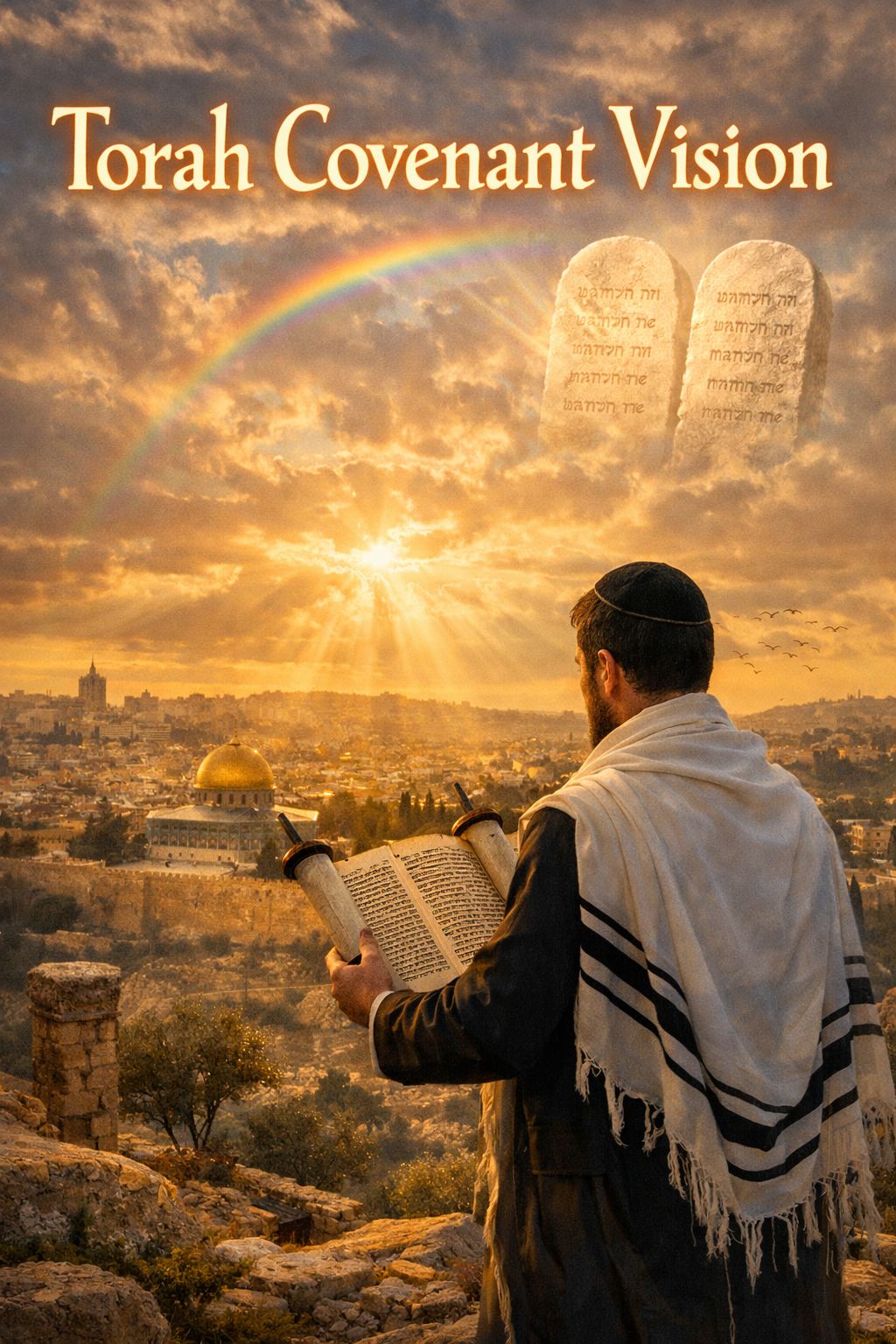
Shabbat Chazon: The Sabbath God Shows You the Temple You Lost

Episode Title: Shabbat Chazon: The Sabbath God Shows You the Temple You Lost

Series / Format: The Messianic Torah Observer — Messianic-Hebraic Shabbat Teaching

Primary Torah Portion: Parashat Devarim — Deuteronomy 1:1–3:22

Haftarah Reading: Isaiah 1:1–27 — the vision of Yeshayahu ben Amotz

Messianic Anchor Passage: John 2:19–21 — “Destroy this Temple, and in three days I will raise it up.”

Episode Overview

Beloved, in this installment of The Messianic Torah Observer, we step into Shabbat Chazon — the Sabbath of Vision — with the sobriety, reverence, and inward posture that this particular Erev Shabbat calls for. This is not a loud teaching. This is not a triumphalistic teaching. This is a teaching that invites Yah’s set-apart people to slow down, look again, and ask what the Father may be showing us concerning what was lost, what sin has damaged, and what He alone is able to restore.

Our discussion sits inside Parashat Devarim, the opening reading of the fifth and final Sefer of Moshe, where Moshe stands east of the Jordan and speaks final covenant words to the generation preparing to receive the Land. But because this parsha is read on Shabbat Chazon, we also sit beneath the prophetic weight of Isaiah 1, where Yah calls heaven and earth to witness His indictment against His people, and yet still extends that stunning invitation: “Come now, and let us reason together.”

And for we who are Yeshua-focused Torah keepers, this Sabbath of Vision does not end at the sight of stones, ruins, and historical grief. It leads us to Master Yehoshua Messiah, who identified Himself as the true Temple of His Father, who was destroyed according to the hidden intentions of men, and who was raised in three days according to the eternal purposes of Yehovah. Halleluyah.

What This Teaching Is About

This teaching explores the intersection of three sacred realities: Moshe’s final address in Devarim, the solemn tradition of Shabbat Chazon before Tisha B’Av, and the Messianic revelation of Yeshua as the Temple that was raised in three days.

We consider how Moshe’s words were not merely historical review, but covenant memory. We examine how the Sabbath of Vision functions as a sacred pause before the grief of Tisha B’Av. And we allow John 2 to reframe our understanding of Temple, presence, restoration, and resurrection in the Person and ministry of our Master.

Key Themes

  • Shabbat Chazon as the Sabbath of Vision: A solemn Shabbat where Yah allows His people to see what was lost, not to crush them, but to awaken longing and repentance.
  • Devarim as covenant memory: Moshe rehearses the wilderness journey so that the second generation will not enter the Land forgetful, careless, or spiritually dull.
  • Truth wrapped in mercy: Moshe rebukes indirectly, naming places and events rather than shaming the generation standing before him.
  • Tisha B’Av and spiritual clarity: The season invites Yah’s people to look honestly at the cost of sin, rebellion, faithlessness, and stiffneckness.
  • Yeshua as the true Temple: John 2 reveals that the dwelling place of Yehovah’s presence is ultimately embodied in Yehoshua Messiah.
  • Restoration through resurrection: The Temple raised in three days changes how Messianic believers understand ruin, grief, loss, and covenant hope.
  • Isaiah 1:18 as divine invitation: Yah, though offended and wronged, invites His covenant people to reason with Him and be cleansed.

Detailed Show Notes

1. Cold Open — The Sabbath of Vision

The teaching opens by identifying Shabbat Chazon as the Sabbath of Vision — the Shabbat immediately before Tisha B’Av. The focus is not on celebration, but on holy perception. What if Yah is showing us something we once possessed, something damaged or lost, not as punishment, but as mercy? What if He is allowing us to see the ruin so that longing, repentance, and restoration may be awakened within us?

This opening question sets the tone for the entire discussion: Yah does not show His people loss simply to leave them in grief. He shows them loss so they may finally desire restoration on His terms.

2. Welcome and Context — Erev Shabbat, Devarim, and the Three Weeks

Rod welcomes the saints of the Most High and situates the teaching on Erev Shabbat, the 2nd day of the 5th month of Yah’s set-apart calendar year, corresponding to Friday, July 17, 2026 on the Roman calendar. The installment is framed as a slower, more devotional Shabbat teaching rather than a standard midweek instruction.

The discussion takes place within the Three Weeks of mourning, the period associated with the breach of Jerusalem’s walls and the destruction of the Temple, culminating in Tisha B’Av. Because Shabbat Chazon falls just before Tisha B’Av, this Sabbath carries unusual spiritual weight and demands a more solemn posture from Yah’s covenant people.

3. Parashat Devarim — Moshe’s Final Covenant Words

Parashat Devarim begins the fifth and final book of Moshe. Devarim means “Words,” and that is fitting because the book functions as Moshe’s long final address to the generation preparing to enter the Land of Promise. Moshe is no longer simply legislating or administrating. He is exhorting. He is remembering. He is preparing the people to receive what Yah had promised.

Standing on the plains of Moab east of the Jordan, Moshe rehearses the wilderness journey, including the appointment of judges, the catastrophe at Kadesh Barnea, the bad report of the spies, and the unbelief that caused the first generation to forfeit its entrance into the Land. Yet Moshe’s rebuke is gracious. He speaks truth, but he wraps that truth in dignity, love, and pastoral restraint.

The tenor of Devarim is therefore truth delivered in love by one who has earned the right to speak. That makes it especially fitting for Shabbat Chazon, a Sabbath where Yah’s people must face what sin has cost, without losing sight of the mercy that still calls them forward.

4. What Is Shabbat Chazon?

The name Chazon comes from the opening word of the Haftarah reading attached to this Shabbat: “Chazon Yeshayahu ben Amotz” — “The Vision of Isaiah son of Amoz.” Because of that opening word in Isaiah 1:1, the Sabbath before Tisha B’Av is known as Shabbat Chazon, the Sabbath of Vision.

According to Jewish tradition, this Sabbath is connected to the Temple that was lost. The teaching explains the rabbinic idea that Yah shows His people the Temple so they may mourn it rightly. The point is not punishment, but longing. Yah’s people cannot mourn what they cannot see, and they cannot pray for restoration with urgency if the loss does not feel real.

For that reason, Shabbat Chazon becomes a Sabbath of clarity. It is a time to sit with the cost of sin and covenant failure, whether communal, historical, or personal, and to call the ruin what it is before calling upon the One who alone rebuilds.

5. Yeshua, the Temple, and the Resurrection Promise

The teaching then turns to John 2:19–21, where Master Yehoshua declares, “Destroy this Temple, and in three days I will raise it up.” The leaders misunderstood Him as speaking only of the physical Temple complex, but His disciples later understood that He was speaking of the Temple of His body.

This Messianic connection changes the way we approach Shabbat Chazon. For followers of Yeshua, the Temple is not merely a structure of stone and gold in Yerushalayim. The true dwelling place of Yehovah’s presence is embodied in Yehoshua Messiah. He is the place where Heaven and earth meet, where forgiveness is secured, where holiness is embodied, and where the nations are ultimately invited to draw near.

Thus, when Shabbat Chazon invites us to see the Temple, we look not only to ancient ruin, but to the broken body of our Master on the execution stake — and beyond that, to the resurrection promise. The Temple was raised in three days. And because He lives, our grief is not without hope, and our mourning is not without restoration.

6. Moshe’s Devarim and Yeshua’s Upper Room Discourse

The teaching draws a midrashic connection between Moshe’s address in Devarim and Yeshua’s final words in John 13–17, often called the Upper Room Discourse. Both are delivered at the end of the leader’s earthly mission. Both look backward over what Yah has done and forward to what the covenant people must carry next. Both include instruction, warning, comfort, promise, and blessing.

Moshe prepares Joshua son of Nun to carry the nation forward, while Yeshua promises the Ruach HaKodesh to empower His disciples to carry the Gospel of the Kingdom forward. Moshe stands across from the Land he will not enter. Yeshua stands on the threshold of suffering, knowing He must drink the bitter cup before entering the exalted reign appointed to Him.

This is the spirit of Devarim and Shabbat Chazon: final words, covenant memory, solemn clarity, and hope rooted in Yah’s promises.

7. Matthew’s Presentation of Yeshua as the New Moshe

The teaching also notes how Matthew frames Yeshua as a Moshe-like figure through narrative patterning rather than a single isolated declaration. The flight to Egypt, Herod’s slaughter of the children, Yeshua’s wilderness testing, His mountain teaching, and the transfiguration all invite the reader to see Yehoshua as Prophet, Redeemer, Teacher, Mediator, Miracle Worker, and Covenant Leader — like Moshe, yet greater than Moshe.

In the transfiguration account, Moshe appears with Eliyahu, and Yehovah declares: “This is My beloved Son, with whom I am well pleased. Listen to Him.” This echoes Deuteronomy 18:15–18, where Moshe foretells a prophet like himself whom Yah’s people must hear.

Beloved, this is not coincidence. This is the beauty of Scripture’s unity. Moshe’s final words and Yeshua’s final words are not isolated moments. They are covenant echoes, calling Yah’s people to remember, obey, trust, and move forward in the purposes of the Kingdom.

8. Isaiah 1:18 — The Great Invitation

The final movement of the teaching returns to Isaiah 1, the Haftarah for Shabbat Chazon. Isaiah 1 is a severe prophetic indictment. Yah calls heaven and earth as witnesses. He names rebellion, bloodguilt, corruption, desolation, and empty worship. Yet in the midst of that indictment, Yah speaks one of the most merciful invitations in all of Scripture: “Come now, and let us reason together.”

Here, the offended party becomes the One who invites the offender to the table. Yah does not call His people near merely to condemn them, but to cleanse them. Though sins be as scarlet, they shall be as white as snow. Though red like crimson, they shall become as wool.

For those of us in Mashiyach, we know Who made that invitation possible. Our Master took the scarlet stain upon Himself. The Temple was bruised, scarred, and broken — and then raised. Therefore, Shabbat Chazon is not merely about seeing what was lost. It is about seeing the One through whom Yah restores what sin could never repair.

Main Takeaway

Shabbat Chazon is the Sabbath where Yah shows His people what was lost so they may rightly mourn, repent, long, and return. But for we who follow Yehoshua Messiah, the vision does not terminate at the ruins of a Temple. It carries us to the broken and resurrected body of our Master — the true Temple of Yehovah — through whom restoration, cleansing, and covenant hope are made possible.

Reflection Questions

  • Beloved, what might Yah be showing you on this Sabbath of Vision?
  • Is there something in your walk, your family, your fellowship, or your obedience that has suffered loss and needs to be rightly mourned?
  • Have you allowed the weight of sin, rebellion, faithlessness, or spiritual dullness to become ordinary?
  • Are you willing to let Yah show you the ruin without turning away too quickly?
  • Do you believe that what Yah shows you, He is also able to cleanse, rebuild, and restore through Yehoshua Messiah?
  • How does seeing Yeshua as the true Temple change the way you understand grief, repentance, and hope?

Scripture References

  • Deuteronomy 1:1–3:22 — Parashat Devarim, Moshe’s opening address east of the Jordan.
  • Isaiah 1:1–27 — Haftarah for Shabbat Chazon, the vision of Isaiah son of Amoz.
  • Isaiah 1:18 — “Come now, and let us reason together.”
  • John 2:19–21 — Yeshua identifies His body as the Temple that would be raised in three days.
  • Numbers 20:2–13 — Moshe strikes the rock at Meribah.
  • Joshua 5:8–12 — Israel’s transition into covenant life in the Land around Pesach.
  • John 13–17 — Yeshua’s Upper Room Discourse.
  • Matthew 2 — Yeshua’s flight to Egypt and Herod’s slaughter of the children.
  • Matthew 4; Exodus 24:18; Deuteronomy 10:10 — Yeshua’s forty days in the wilderness and Moshe’s forty days before Yehovah.
  • Matthew 5:1–7:29; 9:36–10:42; 13:1–52; 17:22–18:35; 23:1–25:46 — Matthew’s five major discourse blocks.
  • Matthew 17:5 — “This is My beloved Son, with whom I am well pleased. Listen to Him.”
  • Deuteronomy 18:15–18 — The prophet like Moshe whom Yah’s people must hear.

Referenced Works and Scholarly Sources

  • Matthew S. Harmon, The Servant of the Lord and His Servant People: Tracing a Biblical Theme through the Canon, ed. D. A. Carson, New Studies in Biblical Theology, Apollos / IVP Academic, 2020.
  • John Kampen, Matthew within Sectarian Judaism, Anchor Yale Bible Reference Library, Yale University Press, 2019.
  • Patrick Schreiner, Matthew, Disciple and Scribe: The First Gospel and Its Portrait of Jesus, Baker Academic, 2019.
  • Hall Harris III et al., eds., The Lexham English Bible, Lexham Press, 2012.

Closing Exhortation

Beloved, as you enter this Shabbat rest, do not rush past what Yah may be showing you. Sit with the vision. Let the Word search you. Let the weight of Devarim, the grief of Isaiah, and the resurrection promise of John 2 do their righteous work. And if Yah reveals ruin, loss, dullness, rebellion, or grief, do not despair. The One who shows the ruin is also the One who says, “Come.”

Come reason with Him. Come return to Him. Come behold the Temple He raised. And may this Shabbat Chazon awaken in each of us a holy longing for the fullness of what Yah intends to restore in Yehoshua Messiah. Shabbat Shalom, beloved.

TMTO Update and Biblical Rosh HaShanah Announcement

Rosh HaShanah 6026 Passover - Sunset 4/2/2026-Sunset 4/3/2026 Feast of Matzah or Unleavened Bread - Sunset 4/3/2026 through Sunset 4/10/2026 Day of Firstfruits - Sunset 4/4/2026 - Sunset 4/5/2026 (Day 1 of the Counting of the Omer) Personal Update House Dynamics...

read more

Why Tisha B’Av Is the Day Yeshua Wept — And Why Every Believer Should Know It- Part 1

Why Tisha B’Av Is the Day Yeshua Wept — And Why Every Believer Should Know It

Episode Type: Messianic-Hebraic Teaching | Series: Part 1 of 2 | Topic: Tisha B’Av, Yeshua’s lament over Yerushalayim, the destruction of the Temples, and the recovered discipline of covenant lament.

Episode Summary

Beloved, in this installment we take up a Gospel moment that most believers have read, but precious few have stopped long enough to understand. Yeshua draws near to Yerushalayim during that charged final week of His earthly ministry. The crowds are rejoicing. The palm branches are waving. The cries of Hosanna are filling the streets. But the Master is not swept up in the excitement of the moment. He sees the city, He beholds the Temple Mount, He looks upon the people of covenant promise, and Luke tells us that He wept over it.

And this was no sentimental tear. This was not a quiet emotional pause. The word Luke uses points us toward audible grief — the kind of lament that takes hold of the whole person. Master Yeshua was not simply reacting to rejection. He was looking ahead to the Roman siege, the leveling of Yerushalayim, the destruction of the Temple, and the covenant consequences that would fall upon a people who did not recognize the time of their visitation.

That grief brings us to Tisha B’Av — the ninth of Av — the day on the Jewish calendar set apart for mourning the destruction of the First and Second Temples, the fall of Betar, the plowing of the city, and other calamities that have marked Jewish history. This teaching argues that Tisha B’Av is not merely a Jewish memorial day for our cousins to observe at a distance from us. It is a day that every covenant believer should understand, because the grief of this day is bound up with the grief of our Master.

Why This Teaching Matters

The broader Body of Messiah has become very good at celebration, but not always faithful in lament. We know how to sing. We know how to clap. We know how to declare victory. But we often do not know how to sit with sacred loss, covenant failure, historical judgment, and grief that has not yet reached its appointed comfort. Tisha B’Av helps us recover that missing discipline.

This is not a call to empty tradition. This is not a call to bind upon the saints a man-made requirement. Rather, it is an invitation to consider whether the tears of Yeshua over Yerushalayim should shape the way we look at the ninth of Av, the destruction of the Temple, the Book of Lamentations, and the grief of our Jewish cousins.

Key Themes Covered

  • Yeshua’s lament over Yerushalayim was connected to the coming destruction of the city and Temple.
  • Tisha B’Av means “the ninth of Av” and is treated in Jewish tradition as the most grief-saturated day of the year.
  • The Mishnah records five national calamities associated with the ninth of Av.
  • The destruction of the First and Second Temples is central to the meaning of the day.
  • Lamentations, or Sefer Eka, gives covenant language to sacred grief.
  • Lament is not a failure of faith; it is faith telling the truth before Yehovah.
  • Messianic and Netsari believers should not approach Tisha B’Av as tourists in Jewish history.
  • The sorrow of Tisha B’Av prepares the heart to receive the comfort of Shabbat Nachamu.

Primary Scripture Passages for Study

  • Luke 19:41–44 — Yeshua draws near to Yerushalayim and weeps over the city, prophesying the siege, destruction, and covenant blindness connected to the failure to recognize the time of visitation.
  • Matthew 23:37–39 — Yeshua laments over Yerushalayim, mourns the city that kills the prophets, and declares that her House is left desolate.
  • Lamentations 1:1–3 — The opening grief of Sefer Eka: “How desolate the city sits that was once full of people.”
  • Lamentations 5:20–22 — The unresolved closing plea: “Turn thou us unto thee, O YHVH, and we shall be turned; renew our days as of old.”
  • Zechariah 7:2–3 — The question concerning mourning and fasting in the fifth month, pointing toward the fast associated with the destruction of Yerushalayim.
  • Zechariah 8:19 — The promise that the fast of the fifth month will one day become joy, gladness, and appointed seasons of blessing for the House of Judah.
  • Numbers 14:26–38 — The wilderness generation’s unbelief after the report of the spies, traditionally associated with the beginning of weeping on the ninth of Av.
  • 2 Kings 25:8–11 — The burning of the House of Yehovah, the king’s house, and the houses of Yerushalayim by the Babylonians.
  • Jeremiah 52:12–16 — Jeremiah’s account of the Babylonian destruction and deportation connected to the fall of Yerushalayim.
  • John 2:14–21 — Yeshua’s declaration concerning the Temple and His body: “Destroy this Temple, and in three days I will raise it up.”
  • John 10:22–23 — Yeshua in Yerushalayim during the Feast of Dedication, showing His presence within Jewish communal and calendar life.
  • Matthew 5:3–12 — The Beatitudes, especially “Blessed are those who mourn, for they shall be comforted.”
  • Isaiah 40:1 — “Comfort ye, comfort ye my people,” the prophetic opening that stands behind Shabbat Nachamu, the Sabbath of Comfort following Tisha B’Av.
  • Deuteronomy 28 — The covenant blessings and curses that frame Israel’s national consequences for obedience and disobedience.

Historical and Rabbinic References Mentioned

  • Mishnah Ta’anit 4:6 — Records five calamities connected with the ninth of Av: the decree that the wilderness generation would not enter the Land, the destruction of the First Temple, the destruction of the Second Temple, the capture of Betar, and the plowing of the city.
  • Babylonian Talmud, Ta’anit 29a — Expands the tradition around the ninth of Av, including the idea of a night of weeping for generations and the discussion of the Temple burning.
  • Midrash Tanchuma, Shelach — Preserves the tradition that Israel’s unnecessary weeping after the spies’ report became a day of weeping for generations.
  • Josephus, The Jewish War — Describes the Roman siege and destruction of Yerushalayim and dates the burning of the Second Temple in relation to the fifth month.
  • 2 Baruch 10 — A Second Temple-era Jewish witness to the grief surrounding the destruction of Yerushalayim and the sanctuary.
  • Rood’s Chronology — Used in the teaching for Gospel chronology and harmonized renderings connected to Luke 19 and Matthew 23.
  • The Lexham English Bible — Used for cited renderings of several biblical passages, including Lamentations and the Kings/Jeremiah destruction accounts.
  • Complete Word Study Dictionary of the New Testament, Spiros Zodhiates — Referenced for the meaning and force of the Greek term connected with Yeshua’s weeping in Luke 19.
  • New Interpreter’s Bible, Kathleen M. O’Connor on Lamentations — Referenced for the meaning of Eka as the Hebrew opening word of Lamentations, conveying “how” or “alas.”

Historical Events Connected to Tisha B’Av

  • The decree against the wilderness generation — Rabbinic tradition connects Israel’s unbelief after the spies’ report to the ninth of Av.
  • Destruction of the First Temple — The Babylonian destruction of Shlomo’s Temple is dated in the biblical record to the fifth month, with 2 Kings and Jeremiah preserving closely related but not identical date details.
  • Destruction of the Second Temple — Roman forces under Titus destroyed the Second Temple in 70 CE, an event central to Jewish mourning on Tisha B’Av.
  • Fall of Betar — The final stronghold of the Bar Kochba revolt fell to Rome, traditionally associated with the ninth of Av.
  • Plowing of Yerushalayim — The city and Temple area were desecrated and reconfigured under Roman power after the crushing of Jewish resistance.
  • Expulsion from England, 1290 — King Edward I issued the Edict of Expulsion against the Jews of England, a tragedy later associated with Tisha B’Av.
  • Expulsion from Spain, 1492 — The Alhambra Decree ordered unconverted Jews to leave the kingdoms of Castile and Aragon, with the deadline falling in the season of Tisha B’Av.
  • World War I, 1914 — Jewish tradition commonly notes the war’s outbreak in connection with the ninth of Av and sees in it a prelude to later devastation in Jewish history.

Terms and Concepts for Listeners to Know

  • Tisha B’Av — Hebrew for “the ninth of Av,” the fast and mourning day associated with the destruction of the Temples and other Jewish calamities.
  • Av — The fifth month of the Jewish calendar, a name adopted during or after the Babylonian exile.
  • Yerushalayim — Jerusalem, the covenant city over which Yeshua wept.
  • Sefer Eka — The Book of Lamentations; Eka means “how” or “alas,” the stunned opening cry of sacred grief.
  • Eklausen — The Greek term connected to Yeshua’s weeping in Luke 19, carrying the force of audible grief or wailing.
  • Beit HaMikdash — The Holy House, or Temple.
  • Shabbat Nachamu — The Sabbath of Comfort following Tisha B’Av, anchored in Isaiah 40:1.
  • Covenant lament — Grief that is brought before Yehovah in truth, repentance, remembrance, and hope.

Suggested Study Path for This Week

  1. Read Luke 19:41–44 slowly. Do not rush past the tears of the Master. Ask what He saw when He looked upon Yerushalayim.
  2. Read Matthew 23:37–39 beside Luke 19. Listen for the shared language of rejected visitation, desolation, and grief.
  3. Read Lamentations one chapter at a time. Let Sefer Eka do what it was preserved to do. Do not explain it away. Sit with it.
  4. Read Zechariah 7 and 8 together. Notice that Yah does not merely address the act of fasting; He addresses the heart and covenant intent behind the fasting.
  5. Read 2 Kings 25 and Jeremiah 52. Compare the destruction accounts and allow the historical weight of the fifth month to settle upon you.
  6. Read Isaiah 40:1 after Lamentations. Do not reach for comfort too quickly, but when the time comes, receive it as a word from the God who restores.

Questions for Reflection and Fellowship Discussion

  • Why do you think Yeshua wept while others were celebrating His entry into Yerushalayim?
  • What does Luke 19 teach us about recognizing the time of visitation?
  • How has modern worship culture trained believers to avoid lament?
  • What is the difference between religious performance and covenant remembrance?
  • How does Lamentations help believers grieve without losing faith?
  • Why should Messianic and Netsari believers care about Jewish grief connected to the Temple?
  • What might it look like to stand in solidarity with our Jewish cousins without pretending to be what we are not?
  • How does Shabbat Nachamu help us understand the biblical movement from sorrow to comfort?

Listener Takeaway

Beloved, the great takeaway from this teaching is not simply that Tisha B’Av exists, nor that terrible things have happened to our Jewish cousins on or around the ninth of Av. The takeaway is that our Master wept over the very grief this day remembers. And if Yeshua wept over Yerushalayim, then we who follow Him should not be indifferent to the ruins, the exile, the covenant warnings, and the sacred sorrow tied to that city.

Lament does not cancel hope. Lament prepares the heart to receive hope rightly. We do not mourn as those who have no promise. But neither do we rush past the ashes to get to the comfort. Tisha B’Av teaches us to sit where Scripture sits, to weep where the prophets wept, and to let the tears of Yeshua correct the shallow places in our faith.

Recommended Call to Action

If this teaching informed, challenged, or blessed you, share it with someone who has never considered why Tisha B’Av matters to followers of Yeshua. Then, before the fast begins, take time to read through the Book of Lamentations. Read it prayerfully. Read it slowly. Let it trouble you where it needs to trouble you. And then, when the Sabbath of Comfort comes, may you hear the voice of Yehovah say, “Comfort ye, comfort ye My people.”

Cited Reference List for Further Study

  • The Holy Scriptures: Luke 19:41–44; Matthew 23:37–39; Lamentations 1:1–3; Lamentations 5:20–22; Zechariah 7:2–3; Zechariah 8:19; Numbers 14:26–38; 2 Kings 25:8–11; Jeremiah 52:12–16; John 2:14–21; John 10:22–23; Matthew 5:3–12; Isaiah 40:1; Deuteronomy 28.
  • Mishnah Ta’anit 4:6.
  • Babylonian Talmud, Ta’anit 29a.
  • Midrash Tanchuma, Shelach.
  • Flavius Josephus, The Jewish War, especially material concerning the siege and destruction of Yerushalayim in 70 CE.
  • 2 Baruch, chapter 10.
  • Spiros Zodhiates, The Complete Word Study Dictionary: New Testament.
  • Kathleen M. O’Connor, “The Book of Lamentations,” in The New Interpreter’s Bible, edited by Leander E. Keck.
  • Hall Harris III et al., eds., The Lexham English Bible.
  • Michael Rood, The Chronological Gospels / Rood’s Chronology references used in the teaching.
  • Sefaria Library, Mishnah Ta’anit 4:6 and related rabbinic texts.
  • org, Tisha B’Av 2026 date and historical overview.
  • Judaism 101, Tisha B’Av overview and historical notes.
  • com, discussion of the dating of the First and Second Temple destructions.
  • The National Archives, resources on Jews in England and the 1290 expulsion.
  • Historical materials on the Alhambra Decree and the 1492 expulsion from Spain.

Persia in Ezekiel 38: What the Death of Khamenei Means for Prophecy Watchers

Episode Title: Persia in Ezekiel 38: What the Death of Khamenei Means for Prophecy Watchers

Episode Summary: In this installment of The Messianic Torah Observer, we take a sober, text-first look at Ezekiel 38 and the prophetic place of Persia, or modern-day Iran, in Gog’s end-times coalition. The recent death of Iran’s Supreme Leader, Ali Khamenei, has stirred renewed speculation among prophecy watchers, denominationalists, and not a few Messianics and Netsarim. But beloved, this discussion is not about sensationalism, date-setting, or chasing headlines. It is about opening the Word, rightly dividing the prophetic text, and asking what Yehovah has actually revealed through His prophet Ezekiel.

We examine the historic and geographic identities of Gog, Magog, Meshech, Tubal, Persia, Cush, Put, Gomer, and Beth-Togarmah; consider the Russia-centered and historical-geographic interpretive frameworks; and return again and again to the stated purpose of the prophecy: that the nations may know that He is YHVH. The point, saints, is not that we become experts in prophetic charts. The point is that we become faithful watchmen, prayer warriors, witnesses, and imagers of the God of Yasharal in these troubling and prophetic times.

Main Discussion Points

  • The danger of prophetic sensationalism: Every major Middle East development seems to awaken the prophecy machine. This teaching urges us to slow down, open the text, and resist turning prophetic shadows into rigid doctrines.
  • Ezekiel’s prophetic setting: Ezekiel ministered from Babylonian exile in the sixth century BCE, writing as a Levitical priest and prophet during one of the most traumatic seasons in Israel’s history.
  • Gog and Magog examined carefully: Gog is treated as a title or ruling designation, while Magog is traced back to Genesis 10 and ancient peoples north and northeast of the Black Sea.
  • The debated meaning of Rosh: The Hebrew term rosh can mean “chief” or “head,” though some interpreters take it as a proper place name. The teaching acknowledges the Russia connection without making it the entire prophecy.
  • Persia named plainly: Unlike some of the other nations in the coalition, Persia is not difficult to identify. Persia is modern Iran, and Ezekiel names it directly.
  • The coalition’s broader geography: The text includes Persia, Cush, Put, Gomer, and Beth-Togarmah, pointing toward a coalition that may include Iran, parts of Africa, Libya/North Africa, Turkey, Armenia, the Caucasus, and northern regions.
  • Two interpretive frameworks: The episode contrasts the Russia-centered view with the historical-geographic view and cautions against forcing ancient names into modern headlines without humility.
  • Yehovah’s stated purpose: The prophecy repeatedly declares that the nations will know that He is YHVH. That is the theological center of the Gog-Magog conflict.
  • The watchman’s calling: Watching is not passive waiting. The biblical watchman warns, prays, prepares, and calls the people of Yah to covenant faithfulness.
  • What Khamenei’s death may mean: His death does not remove Persia from the prophetic map. It may contribute to instability and realignment, but it does not give us permission to set dates or declare certainty where the text does not.

Key Takeaways

  • Do not let the headlines interpret the Bible for you. Let the Bible interpret the headlines.
  • Persia in Ezekiel 38 is not symbolic guesswork. It refers to the ancient nation known today as Iran.
  • The identity of Gog, Magog, Rosh, Meshech, and Tubal requires interpretive humility.
  • The Gog-Magog prophecy is ultimately about Yehovah making Himself known to the nations.
  • The death of a political or religious leader may be significant, but it does not authorize prophetic certainty beyond the text.
  • Faithful prophecy watching should produce prayer, discernment, obedience, and readiness—not fear, arrogance, or speculation.
  • The watchman does not sit on the wall to be entertained. The watchman sees, warns, prays, and prepares the people.

Scripture References Noted in This Teaching

  • Ezekiel 38:1–3 — Yehovah commands Ezekiel to prophesy against Gog of the land of Magog, the chief leader of Meshech and Tubal.
  • Ezekiel 38:5–6 — The coalition is named: Persia, Cush, Put, Gomer, Beth-Togarmah, and many nations with them.
  • Ezekiel 38:15 — Gog comes from the far northern regions with many peoples and a mighty army.
  • Ezekiel 38:16 — Yehovah declares that He will bring Gog against His land so that the nations may know Him.
  • Ezekiel 38:18–22 — Yehovah’s fury is aroused, and He intervenes with earthquake, sword, pestilence, bloodshed, flooding rain, hailstones, fire, and brimstone.
  • Ezekiel 38:23 — Yehovah magnifies Himself, sanctifies Himself, and makes Himself known in the eyes of many nations.
  • Ezekiel 39:1–6 — Gog is judged and defeated in the mountains of Israel, and fire is sent upon Magog and the coastlands.
  • Ezekiel 39:6 — The nations will know that He is YHVH.
  • Ezekiel 3:17 — Ezekiel is appointed as a watchman to the house of Israel.
  • Ezekiel 33:6 — The watchman who sees the sword coming and fails to warn bears responsibility for the blood of the people.
  • Genesis 10:2 — Magog, Meshech, Tubal, Gomer, and related peoples are listed among the descendants of Japheth.
  • Ezekiel 27:14 — Beth-Togarmah is associated with trade in horses and mules, giving a geographic clue to the Armenian and Turkish highlands.
  • Jeremiah 46:9 — Cush and Put are referenced among warlike peoples.
  • Nahum 3:9 — Cush, Egypt, Put, and Libya are named in connection with strength and support.
  • Ezekiel 30:5 — Cush, Put, Lud, and others are named in judgment language.
  • Isaiah 11:11 — Cush is listed among the lands from which Yehovah will recover the remnant of His people.
  • Psalm 68:31 — Cush stretches out her hands to Elohim.
  • Exodus 7:5 — Egypt will know that He is YHVH when He stretches out His hand against them.
  • Joshua 4:24 — The peoples of the earth will know the hand of YHVH is mighty.
  • 1 Samuel 17:47 — David declares that the battle belongs to YHVH.
  • Revelation — Mentioned as part of broader end-times discussion, though this teaching remains centered on Ezekiel 38.

Extra-Biblical and Scholarly References Noted

  • Flavius Josephus — Cited for identifying the Magogites with the Scythians, a fierce nomadic people associated with regions north and northeast of the Black Sea.
  • The Septuagint — Mentioned because it treats Rosh differently than many modern English translations, contributing to the debate over whether Rosh should be read as a proper name or as “chief.”
  • Wilhelm Gesenius — Noted as an influential nineteenth-century Hebrew scholar whose work contributed to the popular association of Rosh with Russia.
  • Keil and Delitzsch Commentary on the Old Testament — Referenced as a classical Tanach commentary that recognizes the complexity of identifying Rosh, Magog, Meshech, and Tubal.
  • Arnold G. Fruchtenbaum, The Footsteps of the Messiah: A Study of the Sequence of Prophetic Events — Referenced in connection with the Russia-centered interpretation and the prophetic sequence surrounding Gog and Magog.
  • John P. McTernan, As America Has Done to Israel — Referenced in connection with the Russia-centered view of the Ezekiel 38 coalition.
  • Michael Rydelnik and Michael Easley, Understanding the Arab-Israeli Conflict: What the Headlines Haven’t Told You — Referenced in connection with cautioning against reading modern geopolitics too quickly into ancient tribal names.
  • 2011 Iranian census — Mentioned in connection with self-professing Christians and Jewish communities living in Iran.

Watchman Application

Beloved, the faithful watchman does not consume prophecy as entertainment. The watchman stands upon the wall, sees the danger approaching, and sounds the alarm with sobriety, compassion, and covenant responsibility. If Ezekiel 38 teaches us anything, it teaches us that Yehovah is sovereign over the nations, that He knows the end from the beginning, and that He will make Himself known when arrogant powers gather against His covenant purposes.

So our response is not panic. It is not pride. It is not timeline-building. Our response is to read the text, pray for Iran, pray for Yasharal, pray for the nations, pray for the Body of Mashiyach, and live in such a way that the coming revelation of Yehovah’s glory finds us faithful, obedient, and ready.

Listener Reflection Questions

  • Am I allowing headlines, social media, or favorite prophecy teachers to shape my reading of Scripture more than the text itself?
  • Have I confused watching with speculating, or readiness with date-setting?
  • Do I pray for Iran and the Iranian people, or do I only view them through the lens of geopolitical hostility?
  • Do I understand the purpose of Ezekiel 38 as Yehovah making Himself known to the nations?
  • If I claim to be a watchman, am I warning, praying, preparing, and living faithfully before Yah?

Suggested Episode Description for Podcast Platforms

In this episode of The Messianic Torah Observer, we examine Ezekiel 38 in light of the death of Iran’s Supreme Leader, Ali Khamenei, and the renewed speculation surrounding Persia’s prophetic role. We identify the nations in Gog’s coalition, consider the Russia-centered and historical-geographic interpretive views, and return to the central purpose of the prophecy: that the nations may know that He is YHVH. This is a sober, text-first teaching for saints who desire to watch, pray, discern, and live faithfully in prophetic times.

Call to Action

If this teaching blessed you, beloved, I invite you to open Ezekiel 38 for yourself and conduct your own careful, prayerful study. Do not take my word for it. Search the Scriptures. Test what is being taught. Pray for discernment. Pray for Iran. Pray for Yasharal. And above all, determine in your heart that you will be found faithful as a watchman, a witness, and a covenant servant of the Most High.

Every Stop Is Recorded – The 42 Stations, Yeshua’s Genealogy, and Your Desert Season

Beloved, in this installment of The Messianic Torah Observer, we slow things down and take a careful, Spirit-led look at one of those passages in Torah that many of us have either read past or simply endured: Numbers/Bemidbar 33. At first glance, this chapter may appear to be nothing more than a travel log of our wilderness sojourning years — a listing of places, stations, and encampments. But when we allow Torah to speak, and when we refuse to rush past the text, we find that Yah commanded Moshe to write these goings out down by His command. And that, saints, changes everything.

This teaching explores why Abba Yah would devote an entire portion of Holy Writ to the forty-two wilderness encampments of His covenant people. We consider what those stations reveal about Yah’s faithfulness, our failures, our forward movement, and the loving record our Heavenly Father keeps of our journey. We then draw out a Messianic connection between the forty-two stations in Numbers 33 and the forty-two generations in Matthew 1 that lead us to Yehoshua HaMashiyach. The conclusion is simple, but it is powerful: nothing in our covenant journey is wasted, and no encampment in our Faith walk is forgotten.

Primary Teaching Texts

  • Numbers/Bemidbar 33:1-49 — the recorded journeys, stations, and encampments of the children of Yasharal from Rameses to the plains of Moab.
  • Numbers/Bemidbar 33:1-2 — Moshe records the goings out of the people by the command of YHVH.
  • Matthew 1:1-17 — the genealogy of Yehoshua HaMashiyach, structured in three sets of fourteen generations, totaling forty-two generations.
  • Matthew 1:17 — the summary statement that frames the generations from Avraham to David, from David to the Babylonian exile, and from the exile to Messiah.

Opening Thought: Yah Told Moshe to Write It Down

The discussion opens with the simple but profound statement of Numbers 33:2: Moshe wrote their goings out according to their journeys by the command of YHVH. This was not Moshe taking personal notes for future reference. This was not an administrative record created merely for logistics or tribal tracking. This was Yah commanding that the wilderness journey of His people be preserved. Every stop. Every departure. Every encampment. Every place where we pitched our tents and pulled them back up again.

And this is where the teaching begins to press upon us, beloved. If Yah commanded Moshe to record every wilderness stop of our forebears, then what are we to understand about the stops, delays, disappointments, failures, seasons of waiting, and forward movements in our own covenant journey today? We are not wandering aimlessly when we are walking in covenant with Yah. We may not always understand the encampment we are in, but Yah knows where we are, why we are there, and where He is taking us.

Numbers 33 Is More Than a Travel Log

Numbers 33 can easily look like a tabulated GPS log if we are not careful. The chapter lists place after place: Rameses, Succoth, Etham, Pi-Hahiroth, Marah, Elim, Sinai, Kibroth-Hattaavah, Hazeroth, Rithmah, Kadesh, Mount Hor, and ultimately the plains of Moab. Some of these locations carry dramatic biblical memories. Others are obscure, and we are not given much detail about what happened there. But the absence of drama does not mean the absence of meaning.

The point made in this teaching is that Yah did not waste ink. If the stops are recorded in Torah, they matter. They matter historically. They matter theologically. And they matter spiritually for every disciple of Yehoshua who is trying to make sense of his or her own wilderness season. The chapter testifies that Yah remembers the places that shaped His people, even the places they would probably prefer to forget.

Rashi, Midrash Tanchuma, and the Father’s Loving Record

The teaching references Rashi’s comment on Numbers 33:1, where he draws upon Midrash Tanchuma, Masei 3. In that midrashic parable, a king takes his sick child on a journey for healing. When they return, the father recounts the places along the way: here we slept, here we cooled off, here your head hurt. The point is not that the father forgot nothing because he was keeping sterile data. The point is that love remembers. A father remembers the journey he took with his child.

Now, as stated in the teaching, we do not submit ourselves to the rabbis, the sages, or the traditions of men as our authority. Torah and the testimony of Yehoshua are our authority. Nevertheless, when historical Jewish commentary helps illuminate the text without contradicting the written Word, we can receive the meat while spitting out the bones. In this case, the parable helps us see Numbers 33 as a fatherly record. Yah was not merely documenting Israel’s movement. He was preserving the testimony of His covenant people and the journey He took with them.

What the Forty-Two Stations Teach Us

1. Yah Includes the Failures in the Record

One of the first things we discover is that the recorded stations include places of shame, rebellion, craving, fear, and judgment. Kibroth-Hattaavah — the graves of craving — is in the record. Kadesh, the place connected to the bad report of the spies and the refusal to enter the Land of Promise, is in the record. Hazeroth, the place of family conflict and Miriam’s judgment after speaking against Moshe, is in the record.

Beloved, Yah did not sanitize the itinerary. He did not remove the embarrassing stops. He did not redact the places where His people failed. And this is a profound Kingdom reality. Our failures, when brought under repentance, correction, and continued covenant walking, become part of the testimony. They do not have to be the end of the journey. Your Kibroth-Hattaavah is in the record, but it is not the final destination. Your Kadesh is in the record, but Yah is still able to move His people forward.

2. Yah Marks Progress Even When It Does Not Feel Like Progress

Some of the wilderness movement may have felt like circling, delay, or even going backward. Yet the record simply says that the people set out from one place and camped in another. No dramatic commentary is given for every movement. No explanation is always provided. But the record remains faithful.

This speaks directly to the saint who feels stuck. The one who thought the next opportunity would be a breakthrough, only to find himself in another obscure place. The one who thought the ministry door would open, the relationship would be restored, the calling would be confirmed, or the promise would finally come to pass. But instead, he finds himself in a place like Rithmah, Libnah, or Tahath — obscure places that may not seem to carry much meaning in the moment.

The encouragement is this: just because the encampment feels uneventful does not mean Yah is absent. Just because the station feels repetitive does not mean the journey is pointless. Sometimes we are not lost. We are simply between encampments, still under the watchful eye and sovereign leading of our Heavenly Father.

3. Yah’s Journey Has a Cumulative Direction

When we isolate each station, the wilderness journey can look confusing. But when we step back and read the whole record, we see movement from Rameses in Mitsrayim to the plains of Moab, across from Yericho. The journey had direction. It moved from bondage to the threshold of inheritance. From Egypt to the edge of the Land of Promise.

And so it is with us. Our lives may look random when viewed one chapter at a time. But Yah reads the whole book. He sees the movement. He sees the shaping. He sees the correction. He sees the wilderness as preparation for inheritance. The saint in training must learn to trust that the encampments are not disconnected events, but part of a directed covenant journey toward the Kingdom of the Heavens.

The Messianic Connection: Numbers 33 and Matthew 1

One of the central movements of the teaching is the connection between the forty-two stations of Numbers 33 and the forty-two generations listed in Matthew 1. Matthew opens his Gospel with a genealogy that many readers are tempted to skip. But Matthew is not wasting words any more than Moshe was wasting words in Numbers 33. Matthew tells us that from Avraham to David are fourteen generations, from David to the Babylonian exile are fourteen generations, and from the exile to Messiah are fourteen generations. That gives us forty-two generations leading to Yehoshua.

Beloved, this is where we must have eyes to see and ears to hear. The same number that marks our wilderness stations also marks the covenant genealogy that brings us to Messiah. Matthew, writing to a Hebrew audience, opens his account in a way that signals covenant movement, Kingdom expectation, and the arrival of the One in whom the journey finds its meaning. Yehoshua is not merely tacked on to the end of Israel’s story. He is the fulfillment, the goal, and the living presence of Yah’s redemptive journey with His people.

Yeshua does not bypass the wilderness. He enters into it. Matthew 4 records our Master’s forty days in the wilderness, where He succeeds where Israel failed. He knows what it means to be tested between promise and fulfillment. He knows what it means to walk the lonely road of obedience. And because of that, He is not simply waiting for us at the destination. He is present with us in every encampment.

Personal Application: Name Your Current Encampment

The application turns the teaching toward the listener’s own Faith walk. Where are you encamped right now? Not where do you wish you were. Not where do you hope to be in five years. But where are you today in your covenant journey with the Great I Am?

  • Maybe your encampment is called Waiting — where you have been looking for a door to open, a calling to be confirmed, or a promise to be fulfilled.
  • Maybe your encampment is called Starting Over — where something ended that you did not expect to end, and now you are trying to discern what Abba is doing next.
  • Maybe your encampment is called Unnamed — a blank-space season where nothing seems to be happening, and you are not even sure how to pray.
  • Maybe your encampment is called Correction — where Yah is lovingly confronting habits, fears, cravings, or rebellions that cannot cross the Jordan with you.
  • Maybe your encampment is called Almost There — where the promise is in view, but the crossing has not yet happened.

The encouragement is that Yah records even the unnamed places. Dophkah gets written. Alush gets written. Libnah gets written. The stops that seem obscure to us are not obscure to Him. If Yah commanded Moshe to preserve those encampments in Torah, then we can trust that He is not careless with the stations of our lives.

Key Takeaways for the Listener

  • Yah commanded Moshe to record Israel’s journeys, which means the wilderness record is intentional and theologically rich.
  • The forty-two stations show that Yah remembers every stop in the covenant journey of His people.
  • Our failures are part of the record, but they do not have to be the end of the journey.
  • Progress does not always feel like progress while we are in the encampment.
  • The journey from Mitsrayim to Moab had a cumulative direction toward inheritance.
  • The forty-two generations in Matthew 1 point us to Yehoshua as the fulfillment and goal of the covenant journey.
  • Yeshua is not only the destination; He is the One who walks with us through every wilderness station.
  • Your present desert season is not wasted if you remain faithful, obedient, and Kingdom-focused.

Reflection Questions for the Saints

  • What would you call the encampment you are in right now?
  • Are you tempted to view your present season as wasted time, or can you begin to see it as part of Yah’s recorded journey with you?
  • What failure, disappointment, or place of craving has Yah moved you through that now forms part of your testimony?
  • Where might Abba be calling you to trust Him even though the next move has not yet been revealed?
  • How does the reality of Yeshua walking with you through every encampment change the way you view your desert season?
  • Are you preparing to cross the Jordan, or are you resisting the correction and formation that must take place before inheritance?

Referenced Passages and Sources

  • Numbers/Bemidbar 33:1-2 — Moshe records the journeys of the children of Yasharal by the command of YHVH.
  • Numbers/Bemidbar 33:1-49 — the forty-two wilderness stations from Rameses to the plains of Moab.
  • Numbers/Bemidbar 11:31-35 — Kibroth-Hattaavah and the graves of craving.
  • Numbers/Bemidbar 12:1-16 — Miriam and Aharon speak against Moshe; Miriam is struck with leprosy.
  • Numbers/Bemidbar 13-14 — the spies, the bad report, and Israel’s refusal to enter the Land of Promise.
  • Numbers/Bemidbar 20:23-29 — the death of Aharon at Mount Hor.
  • Deuteronomy/Devarim 1:46 — Israel’s extended stay near Kadesh.
  • Matthew 1:1-17 — the genealogy of Yehoshua HaMashiyach.
  • Matthew 1:17 — three sets of fourteen generations from Avraham to Messiah.
  • Matthew 4:1-11 — Yehoshua’s forty days in the wilderness and His victory over testing.
  • Matthew 23:2-3 — Yeshua’s teaching regarding the scribes and Pharisees sitting in Moshe’s seat, with discernment regarding what is truly from Torah.
  • Midrash Tanchuma, Masei 3 — the parable of the king recounting the journey of his sick child.
  • Rashi on Numbers 33:1 — traditional commentary explaining why the journeys were recorded.
  • Degel Machane Ephraim, Parashat Masei — referenced for the traditional Jewish idea of the forty-two journeys as stages in the soul’s journey.
  • Traditional Arizal/Lurianic teaching on the forty-two journeys — referenced only as historical Jewish interpretive background, not as doctrinal authority.

Suggested Closing Exhortation

Beloved, do not despise your present encampment. Do not assume that because you do not understand it, Yah has abandoned you in it. If He recorded the wilderness stations of our fathers, then He is not careless with the stations of our lives. Keep on keeping on. Remain faithful. Continue to walk in covenant obedience through Yeshua our Master. The Jordan may be closer than you think, and the encampment that feels like your hardest stop may very well be the threshold of what Abba has been preparing you to enter.

One-Sentence Episode Summary

Yah records every stop in our covenant journey, and Yehoshua HaMashiyach walks with us through every wilderness encampment until we reach the Kingdom inheritance prepared for the faithful.


Parashat Mattot-Massei: Israel’s Prophetic Hour and the Narrow Places of our Generation

Shalom and welcome, beloved, to this installment of The Messianic Torah Observer. In this discussion, we find ourselves standing at a sobering prophetic intersection: the closing chapters of Bemidbar, the double Torah Reading of Mattot–Massei, the season known as Bein HaMetzarim — the narrow places — and a world that appears increasingly unstable, increasingly hostile to the things of Yehovah, and increasingly desperate for covenant clarity from the Word of Elohim.

This week’s Torah Reading is not merely an ancient record of vows, tribal obligations, warfare, wilderness movements, and land allotments. It is our story as Yah’s covenant people. It reminds us that heaven takes note of what proceeds from our mouths, that compromise in the camp is never harmless, that every wilderness station has purpose, and that the boundaries Yah establishes are not subject to the shifting opinions of men, governments, or nations.

Episode Theme: Walking faithfully through the narrow places of our generation with covenant conviction, prophetic awareness, guarded speech, and steadfast trust in Yehovah through the Person and ministries of our Master Yeshua Messiah.

Beloved, if there was ever a time for Yah’s chosen and elect to be sober-minded, discerning, and rooted in the whole counsel of Scripture, that time is now. The noise of the world is loud. The pressure upon Israel is mounting. The divisions within the Body are real. And yet, in the midst of it all, Torah still speaks. The prophets still testify. And our Master still calls His people to overcome, endure, and walk uprightly before the Great I Am.

In this episode, we examine:

  • The covenant weight of vows, oaths, and the words that proceed from our mouths.
  • Why Master Yeshua’s instruction to let our yes be yes and our no be no must govern the speech of Yah’s covenant people.
  • The commanded war against Midian and the sobering reality that spiritual compromise carries consequences.
  • The 42 journeys of Israel and how Yehovah uses wilderness seasons to prepare His people for inheritance.
  • The covenant boundaries of the Land and why Yah’s assigned borders still matter in this anti-Yah, anti-Yisra’el world.
  • Israel’s present prophetic hour in relation to Iran, Hezbollah, Judea and Samaria, and the uncertainty of international support.
  • Current Messianic, Hebraic, Notsari, and Hebrew Roots community debates concerning Torah, Messiah, identity, unity, and doctrinal drift.
  • The significance of Bein HaMetzarim as a season of reflection, sobriety, guarded speech, covenant preparation, and prophetic training.

Parashat Mattot–Massei — The Covenant Weight of Words, Warfare, Journeys, and Boundaries

Mattot opens with a matter that many modern believers have unfortunately minimized: the weight of our words. Torah teaches that when a man makes a vow unto Yehovah or swears an oath binding himself, he must not profane his word. He must do according to all that proceeds from his mouth. In other words, beloved, heaven takes note when Yah’s people speak covenantally.

This is especially important in a generation drowning in opinions, reactions, careless speech, broken commitments, and idle words. Our Master Yeshua warned that every idle word would be brought into account. Thus, covenant people must be careful, deliberate, honest, and faithful in what they say. We must resist the cultural impulse to speak first and repent later. Let our yes be yes, and our no be no.

Rod also points listeners to his earlier teaching, “Sacred Oaths and Vows — The Wages of Sin — The Spoils of War,” for those who desire a deeper dive into the Torah principles surrounding vows, oaths, covenant speech, and accountability before Yehovah.

From there, the Reading moves into the war against Midian. This was not a war of ambition or conquest for conquest’s sake. It was a commanded response to the corruption Midian helped introduce into the camp of Israel through Baal-peor. That episode reminds us that spiritual compromise is never harmless. The enemy does not always come against Yah’s people through frontal attack. Sometimes he seeks to weaken the camp through seduction, mixture, deception, and divided allegiance.

The discussion also clarifies that Midian as a whole was not inherently evil. Moshe’s own relationship with Yitro and the Midianite connection shows that the matter is more nuanced. Yet certain Midianite clans aligned themselves with Moab, Balaam, and the Baal-peor seduction, thereby positioning themselves as enemies of Yehovah and enemies of Yisra’el. Their political and spiritual allegiances brought devastating consequences.

Massei then records the 42 journeys of Israel. Every station, every stop, every movement through the wilderness was preserved by the Spirit for our learning. Not one campsite was wasted. Not one difficult place was forgotten. Yah records the journey because the journey shaped the inheritance. And so it is with us. The narrow places we walk through are often the very places Yah uses to refine us, discipline us, mature us, and prepare us for what He has promised.

Finally, Yah draws the boundaries of the Land. These boundaries were not inventions of kings, empires, political bodies, or international agencies. They were covenant boundaries established by the Most High Himself. And in a world that increasingly argues over Israel, Judea and Samaria, and the legitimacy of Yah’s chosen people in Yah’s assigned land, this matters greatly. The land question is not merely political. It is covenantal. It is prophetic. And it is inseparably tied to the promises of Yehovah.

Israel’s Prophetic Hour and Current Events

The episode then turns to Israel’s present prophetic moment. The world continues to wrestle with Iran’s nuclear ambitions, Hezbollah’s aggression along Israel’s northern border, uncertainty in American support, and mounting international pressure against Israel’s claim to the covenant heartland of Judea and Samaria.

Beloved, we must be careful not to view these matters simply through the lens of politics. Certainly, politics are involved. Military strategy is involved. Diplomacy is involved. But for those with eyes to see and ears to hear, something much deeper is taking place. The nations are not merely debating land, borders, security policy, or international agreements. They are contending, knowingly or unknowingly, with the purposes and promises of Yehovah.

The world calls the region the West Bank. Scripture calls it Judea and Samaria. It is the heartland of Avraham, Yitschaq, Ya’achov, Dawid, and the prophets. It is not merely disputed territory. It is covenant territory. And when the nations rage against Yah’s covenant purposes, they do so to their own peril.

Israel may increasingly find herself standing alone. But the Word repeatedly reminds us that when Israel stands alone, Yehovah stands with her. The help of presidents, nations, and political coalitions may shift, weaken, or disappear. But the covenant faithfulness of Yah does not change. As Jeremiah records, cursed is the man who trusts in humankind and makes flesh his strength, but blessed is the one whose trust is in Yehovah.

Rod frames these events not as fear-mongering, but as sober prophetic awareness. The point is not to stir anxiety among the saints, but to remind Yah’s covenant people that the nations may rage, alliances may falter, and the enemies of Yisra’el may posture themselves for war, yet Yehovah has declared the end from the beginning. He will defend His purposes. He will vindicate His Word. And He will hold accountable those who curse what He has blessed.

Messianic, Hebraic, Notsari, and Hebrew Roots Community Concerns

In this episode, I also address matters stirring within the Messianic, Hebraic, Notsari, and Hebrew Roots communities. One of the questions before us is whether Torah is being elevated above Messiah in some circles. This is not a small question, nor is it one that should be handled carelessly or with knee-jerk reactions.

Torah is holy, righteous, good, and eternal in its purposes. But Torah was never given to replace Messiah. Yeshua is the living, walking, talking Torah. He is the center of Yah’s redemptive work, and He is the One who shows us how Torah is to be lived out in Spirit and in Truth. So the question must be asked honestly: Is Yeshua the center of our Torah walk, or has Torah become the center of our Yeshua?

The discussion also considers the distinction between Messianic Judaism and the Hebrew Roots movement. One emphasizes Jewish identity, continuity, and Yeshua as Israel’s Messiah. The other emphasizes returning to the ancient paths, Torah obedience, and recovering the first-century apostolic faith. Both streams contain truths worth recognizing. Both also face the same danger: fragmentation, pride, doctrinal drift, and failure to walk together as one new man in Messiah.

Beloved, unity does not mean uniformity. But unity is commanded. We must be careful that our zeal for labels, traditions, camps, teachers, or movements does not overshadow our covenant responsibility to walk faithfully before Yehovah through Yeshua Messiah. Our identity must be anchored first and foremost in the Kingdom and in the Person of our Master, not in man-made divisions or movement branding.

Bein HaMetzarim — Between the Narrow Places

We are also presently walking through Bein HaMetzarim, the season traditionally known as the Three Weeks leading up to Tisha B’Av. Although this season is not Torah-mandated, it has long been remembered by Jewish observers as a time associated with tragedy, loss, reflection, and national sorrow.

For those of us in Messiah, however, the narrow places need not be approached merely as a season of mourning. They may also serve as a season of training. A time to guard our tongues, guard our unity, guard our hearts, examine our walk, and learn how to remain faithful when pressures increase.

Narrow places test what is really in us. They expose where our trust lies. They reveal whether we will cling to the arm of flesh or anchor ourselves in the faithfulness of Yehovah. And in this prophetic hour, we must learn to pass through narrow places without surrendering our calling, our witness, or our covenant identity.

Key Scriptures Discussed or Referenced

  • Numbers/Bemidbar 30.2–36.13 — Mattot–Massei
  • Numbers 25.6–18 — Baal-peor, Kozbi, and Midian’s corruption of Israel
  • Matthew 5.33–37 — Let your yes be yes and your no be no
  • Matthew 12.36 — Every idle word brought into account
  • Genesis 12.3 — Blessing those who bless Avraham and cursing those who curse him
  • Jeremiah/Yermiyahu 17.5–8 — Cursed is the man who trusts in man; blessed is the one who trusts in Yehovah
  • Jeremiah/Yermiyahu 6.16 — Returning to the ancient paths
  • Ephesians 2.15, 20 — One new man and the foundation of the apostles and prophets
  • Zechariah 12.8–9 — Yehovah defending Jerusalem
  • Zechariah 14.3 — Yehovah going forth to fight against the nations

Key Takeaways for Yah’s Covenant People

  • Our words are not casual before heaven; covenant people must speak with integrity.
  • Spiritual warfare is part of covenant life, and compromise must not be tolerated in the camp.
  • Yah does not waste wilderness journeys; He uses them to shape His people for inheritance.
  • The Land and its boundaries are not merely political issues; they are tied to Yah’s covenant promises.
  • Israel’s isolation does not mean Israel’s abandonment; Yehovah remains faithful to His Word.
  • Torah must never be separated from or elevated above Yeshua Messiah, who embodies and rightly teaches Torah.
  • Unity among Messianic and Hebrew Roots believers must be pursued without sacrificing truth.
  • The narrow places of life can become seasons of covenant training, refinement, and deeper trust.

Related Resources Mentioned

  • Sacred Oaths and Vows — The Wages of Sin — The Spoils of War
  • What Torah Can and Cannot Do for Us teaching series
  • Teachings on the prophetic significance of Israel and the covenant promises of Yehovah
  • Teachings related to Messianic identity, Hebrew Roots restoration, and walking in Torah through Yeshua Messiah

Closing Exhortation

So as we approach this Shabbat and consider the prophetic weight of this week’s Reading, let us do so with sobriety, humility, and hope. Mattot–Massei reminds us that Yah is attentive to our words, present in our battles, sovereign over our journeys, and faithful concerning His covenant boundaries.

And as we walk through the narrow places of our generation, may we be found faithful — not fearful; alert — not anxious; discerning — not deceived; unified — not fragmented; and firmly anchored in Yehovah through the Person and ministries of our Master Yeshua Messiah.

Shabbat Shalom. Shavu’atov. Until next time, take care.