No Results Found
The page you requested could not be found. Try refining your search, or use the navigation above to locate the post.

Calendar: Just 1-1/2-weeks out from Rosh haShanah presuming the barley is Aviv and the renewed moon is sighted over the land of Israel concurrently. Rosh haShanah is the Torah Observant Believer in Yeshua Messiah’s New Year Day! and signals the start of the Spring Feasts of Yahuah.
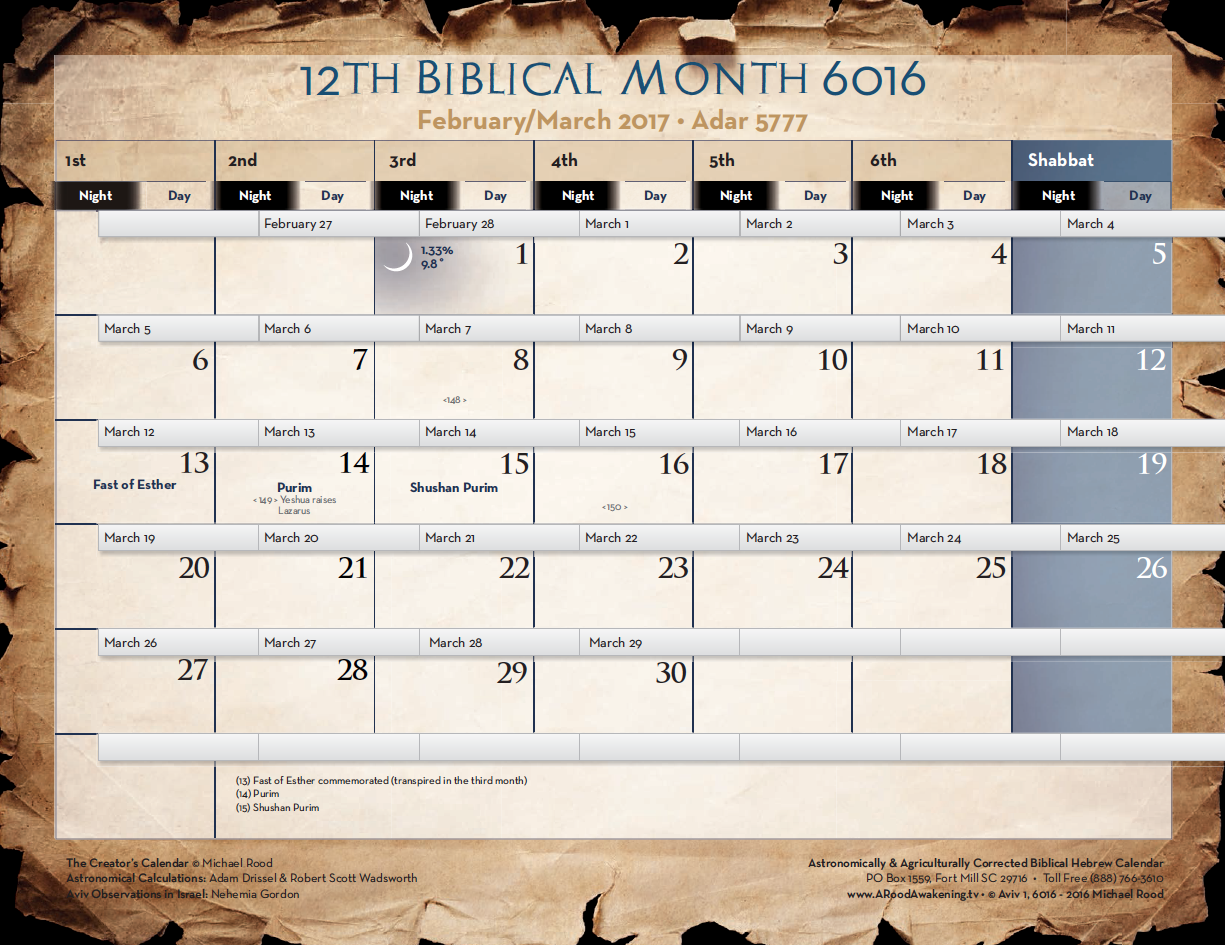
The 12-Biblical Month–Hebrew Calendar
Barna interviewed some 900-U.S. senior pastors via telephone and online between April and December of 2015 and some 1025-U.S. adults (over the age of 18) via web-based surveys, also between the same months in 2015.

Barna’s Pastor’s Credibility Crisis
The results of Barna’s survey is as follows:
The report was accompanied by a couple of short videos: one that summarized these findings through graphs and various other animated depictions while the other video was of three-pastors being interviewed about their thoughts on the results of this study.
Pastors in a Credibility Crisis
Rebekah Layton—Pastor of Newsong Los Angeles Covenant Church—believes that pastors must:
Adam Edgerly—Pastor of Cherry Hills Community Church—believes that pastors must:
Mark Deymaz—Pastor of Mosaic Church—believes pastors must:
Not one of the three interviewees seemed at all concerned that they held any viable credibility with Yahuah. Their overriding concern as it related to credibility was the credibility they held with their respective communities and the world at large. Not one of them expressed any concern that they were operating within the will of Abba Father.
Barna’s State of Pastors Study
Is there no wonder why their is this so-called pastoral credibility crisis in the U.S.?
If pastors were to realize what their true calling was: to do the will of the Father; disciple and equip those in whom Master has entrusted them, then such foolishness as credibility would not be an issue. In the end, credibility with man is irrelevant and without merit.
Is a so-called pastor’s true calling and purpose to please and establish credibility in their respective communities? No. Here’s what Master and the Apostle Paul had to say about what it is they’re supposed to do:
“1aGo therefore and bmake disciples of call the nations, dbaptizing them in the name of the Father and the Son and the Holy Spirit, (Mat 28:19 NAU)
You therefore, my 1ason, bbe strong in the grace that is in cChrist Jesus.
2 And the things awhich you have heard from me in the presence of bmany witnesses, these centrust to dfaithful men, who will be eable to teach others also.
3aSuffer hardship with me, as a good bsoldier of cChrist Jesus.
4 No soldier in active service aentangles himself in the affairs of everyday life, so that he may please the one who enlisted him as a soldier. (2Ti 2:1-4 NAS)
For you yourselves know, brethren, that our 1acoming to you bwas not in vain,
2 but after we had already suffered and been amistreated in bPhilippi, as you know, we had the boldness in our God cto speak to you the dgospel of God amid much 1eopposition.
3 For our aexhortation does not come from berror or cimpurity or 1by way of ddeceit;
4abut just as we have been approved by God to be bentrusted with the gospel, so we speak, cnot as pleasing men but God, who 1dexamines our hearts.
5 For we never came 1with flattering speech, as you know, nor with aa pretext for greed– bGod is witness–
6 nor did we aseek glory from men, either from you or from others, even though as bapostles of Christ we might have 1asserted our authority.
(1Th 2:1-6 NAS)
For am I now aseeking the favor of men, or of God? Or am I striving to please men? If I were still trying to please men, I would not be a bbond-servant of Christ. (Gal 1:10 NAU)
5 For those who are according to the flesh set their minds on athe things of the flesh, but those who are according to the Spirit, bthe things of the Spirit.
6aFor the mind set on the flesh is bdeath, but the mind set on the Spirit is life and peace,
7 because the mind set on the flesh is ahostile toward God; for it does not subject itself to the law of God, for it is not even able to do so;
8 and those who are ain the flesh cannot please God. (Rom 8:5-8 NAS)
I can find nothing in the Holy Writ that even remotely suggests that Abba’s appointed servants and those in whom He has entrusted His truths and message, should be out there attempting to transform their respective communities.
Any concern one has in terms of establishing credibility must always be that of establishing and maintaining credibility with our Creator.
This past week, Hilary and I began to discuss Exodus 35:3 and if you’re not familiar with the verse, allow me to read it for you.
And Moses gathered all the congregation of the children of Israel together, and said unto them, These are the words which the LORD hath commanded, that ye should do them.
2 Six days shall work be done, but on the seventh day there shall be to you an holy day, a sabbath of rest to the LORD: whosoever doeth work therein shall be put to death.1
3 Ye shall kindle no fire throughout your habitations upon the sabbath day. (Exo 35:1-3 KJV)
In terms of our modern English language, the term “kindle” refers to the act of igniting or inflaming, which implies setting something on fire. Thus, to kindle is to cause something to gradually begin burning. The term also has figurative applications.
Kindling a Fire Prohibited in Torah
This verse has often been used to support the contention that Torah-keepers cannot cook nor prepare a meal anytime during the Sabbath simply because the Creator said we are not to kindle or spark or create a fire. Although the passage says nothing about cooking, many Torah-keepers read into the passage and apply reasoning to create laws within The Law–popularly referred to today in Hebrew Roots circles as takanot. But does this passage actually support this contention?
My understanding of the Sabbath is that it is a day that Abba sanctified and blessed—the only day of the week to even be given a name—such that all servile work—labor–is to be discontinued on that day or rather, not performed on that day.
The Sabbath is of course of the foundations of our Faith and one of the identifying marks and practices of the true Israelite.
2 And by athe seventh day God completed His work which He had done; and bHe rested on the seventh day from all His work which He had done.
3 Then God blessed the seventh day and sanctified it, because in it He rested from all His work which God had created 1and made. (Gen 2:2-3 NAS)
8 “Remember athe sabbath day, to keep it holy.
9a”Six days you shall labor and do all your work,
10 but the seventh day is a sabbath of the LORD your God; in it ayou shall not do any work, you or your son or your daughter, your male or your female servant or your cattle or your sojourner who 1stays with you.
11a”For in six days the LORD made the heavens and the earth, the sea and all that is in them, and rested on the seventh day; therefore the LORD blessed the sabbath day and made it holy. (Exo 20:8-11 NAS)
8 Remember the sabbath day, to keep it holy.
9 Six days shalt thou labour, and do all thy work:
10 But the seventh day is the sabbath of the LORD thy God: in it thou shalt not do any work, thou, nor thy son, nor thy daughter, thy manservant, nor thy maidservant, nor thy cattle, nor thy stranger that is within thy gates:
11 For in six days the LORD made heaven and earth, the sea, and all that in them is, and rested the seventh day: wherefore the LORD blessed the sabbath day, and hallowed it. (Exo 20:8-11 KJV)
We were instructed not to perform any physical labor on that day as illustrated in this passage of Jeremiah:
21 ‘Thus says the LORD, a”Take heed for yourselves, and bdo not carry any load on the sabbath day or bring anything in through the gates of Jerusalem.
22 “And you shall not bring a load out of your houses on the sabbath day anor do any work, but keep the sabbath day holy, as I bcommanded your 1forefathers. (Jer 17:21-22 NAS)
When we returned to the land after enduring 70-years exile in Babylon, we had to learn all over again the significance of abstaining from work on the Sabbath as exemplified in Nehemiah:
15 In those days I saw in Judah some who were treading wine presses aon the sabbath, and bringing in sacks of grain and loading them on donkeys, as well as wine, grapes, figs, and all kinds of loads, band they brought them into Jerusalem on the sabbath day. So cI admonished them on the day they sold food.
16 Also men of Tyre were living 1there who imported fish and all kinds of merchandise, and sold them to the sons of Judah on the sabbath, even in Jerusalem.
17 Then aI 1reprimanded the nobles of Judah and said to them, “What is this evil thing you are doing, 2by profaning the sabbath day?
18a”Did not your fathers do the same so that our God brought on us, and on this city, all this trouble? Yet you are adding to the wrath on Israel by profaning the sabbath.”
19aAnd it came about that just as it grew dark at the gates of Jerusalem before the sabbath, I commanded that the doors should be shut 1and that they should not open them until after the sabbath. Then I stationed some of my servants at the gates that no load should enter on the sabbath day.
20 Once or twice the traders and merchants of every kind of merchandise spent the night outside Jerusalem.
21 Then aI 1warned them and said to them, “Why do you spend the night in front of the wall? If you do so again, I will 2use force against you.” From that time on they did not come on the sabbath.
22 And I commanded the Levites that athey should purify themselves and come as gatekeepers to sanctify the sabbath day. For this also bremember me, O my God, and have compassion on me according to the greatness of Thy lovingkindness. (Neh 13:15-22 NAS)
Who defines what constitutes work? Who defines what it means to “kindle a fire on the Sabbath?” The Rabbis? Our leaders in Hebrew Roots? The Pope? Bishops, pastors, ministers or teachers? Scholars?
Work is defined as that which is considered labor—that which is occupational in nature.
When Abba Father concluded his creative work at the end of the 6th-day, Scripture tells us that He rested from his labors. Those labors—that work—is defined in terms of His creative efforts as described in the first chapter of Genesis.
The Scriptures, even the Torah, was written at a time and place that is completely foreign to those of our own. Yet many of us in 21st-century western society ignorantly read through the Holy Writ (generally rendered in Elizabethan English) and blindly adhere to and obey what is literally written on the pages of our Bibles without weighing the facts of the passages in question.
Friends, I will submit further that being a Spirit-filled Torah Observant Believer in Yeshua Messiah is NOT easy. At time, it is down-right impossible.
If we are going to please Yahuah our Elohim, we must devote ourselves to doing whatever it takes to find out and learn what it is He wants us to know and do and not rely upon others to figure all this out for us.
The rabbis would have us believe that work is anything that requires effort or that produces something. Work according to the Rabbis extends beyond one’s day-to-day job/occupation/chores.
Scripture tells us that Abba rested from his work on the 7th-day. That work was comprised of creating the heavens and the earth and all that are therein.
If we look to Abba to define what work is, then there is no mystery as to what constitutes work. In various other passages of Scripture, the term work is given a descriptor—servile—Hebrew: abowdah—which means labor or service.
Master told the woman at Jacob’s well that the true worshipers will be those who’d worship Yahuah in Spirit and in truth. No more would we simply follow-rote commandments as interpreted by man and simply because we’re too lazy to examine what the bigger, spiritual picture is.
I’m in no way advocating that we be disobey or drag our feet in obedience to Torah. I’m talking about keeping Torah as Abba intended us to keep it, not as man intends us to keep it.
As it relates to this passage and the issue of kindling a fire on the Sabbath, the ESV Study Bible opined that the kindling of fire was considered work. The writers linked the story of the man gathering wood on the Sabbath who ended up being executed by stoning as support for the contention that kindling a fire on the Sabbath was prohibited:
32 Now while the sons of Israel were in the wilderness, they found a man agathering wood on the sabbath day.
33 And those who found him gathering wood brought him to Moses and Aaron, and to all the congregation;
34 and they put him in 1custody abecause it had not been 2declared what should be done to him.
35 Then the LORD said to Moses, “The man shall surely be put to death; aall the congregation shall stone him with stones outside the camp.”
36 So all the congregation brought him outside the camp, and stoned him 1to death with stones, just as the LORD had commanded Moses. (Num 15:32-36 NAS)
My question is: was it the prospect or assumption that the man’s gathering of wood would lead to him kindling a fire on the Sabbath? Or was there something more at play here? I would say there is more to this story that is not necessarily or clearly apparent in the verbiage. Was the issue:
The kindlilng of a fire was of such importance to the people that Abba actually called it out as a prohibition.
Roland DeVaux in his work entitled, “Ancient Israel: it’s Life and Instructions,” in addressing the Numbers 15:32-36 passage, it is conceivable that this gentleman may have been a blacksmith working in the camp who, of course, required fire to conduct his work.
DeVaux further elucidates that the kindling of fire as noted in Exodus 35:3, could be referring to pagan fire-offerings and he refers us to Jeremiah as a possible support story for his contention:
18 “The 1children gather wood, and the fathers kindle the fire, and the women knead dough to make cakes for the queen of heaven; and they apour out libations to other gods in order to bspite Me.
19a”Do they spite Me?” declares the LORD. “Is it not themselves they spite, to 1their own bshame?” (Jer 7:18-19 NAS)
Numbers 16 hints at Korah and his band of wayward followers possibly dabbling in worshiping gods via the use of strange fire.
This goes back to an earlier point: when we examine such passages of Torah and the Holy Writ as a whole, we must be careful to consider contextual criticism in our studies. The Numbers 15 and Exodus 35 passages do not provide enough information to make a clear determination as to what the issue truly was. Was it cooking? Carrying a load? Pagan worship via the burning of sacrifices? Or were we simply to shut up and do what we’ve been told which can have extreme ramifications if we blindly follow our ignorance.
We have to start asking questions and not simply kowtow to the various interpretations and imaginations of man. I remember in times past that this passage of Exodus was being used to establish a prohibition against cooking on the Sabbath when it is clearly apparent that nowhere in this mitzvah is cooking or preparing meals on the Sabbath even mentioned. Nor is there any mitzvah to my knowledge in Torah prohibiting cooking or preparing meals on the Sabbath.
According to www.teshuvaministries.net, kindling a fire is “T’va’aru, the root of which is ba’ar, which is to kindle, burn (cf. Numbers 11:1; Judges 15:14; Esther 1:12; Psalm 2:12; Proverbs 6:21). As it relates to fire, in Hebrew the terms is “esh,” which can have literal as well as figurative applications—such as Father’s having a burning anger whenever we disobeyed Him. In terms of when it says in “all your dwellings,” the Hebrew term is “Moshab,” the root of which is “yashab,” which means to sit down as on a seat or in an assembly.
Would “kindling a fire” in a figurative sense, suggest that we are not to kindle the fires of anger, strife, or contention in our assemblies o gatherings?”
The most ultra-conservatives of our lot interpret this verse literally to mean that we are not to kindle or start or burn a fire on the Sabbath.
Ultra-orthodox—rabbinic Judaism and certain messianic Jewish sects of Hebrew Roots interpret this verse beyond the literal and apply Talmudic principles to it. This is where takanot comes into play. Takanot are rules, laws and practices that extend Torah beyond the that which is written by the writers of the Scriptures and the Word of Yahuah. This practice of creating another set of rules that would be used to augment and in many cases, supersede that which is written in the Bible, was created for purposes of erecting a fence around Torah.
Along the lines of ultra-orthodoxy, the rabbis have attributed the kindling of fire to the act of creating or building, which they contend is prohibited on the Shabbat. In other words, to spark or kindle a flame is to create fire, which is a form of work. God rested from His creative work on the Sabbath and passed on the work of creation and building as prohibited activity on the Sabbath. This understanding naturally spreads over to the switching on of light switches; the starting of car-engines; the use of an elevator; starting a computer; and the turning on of a gas stove. The striking of a match produces extreme heat (i.e., esh) which leads to the start of fire. Thus the mitzvah must be viewed from that of it being a “goal-oriented task” which means that one specific action would lead to various outcomes such as cooking. Yet, the rabbis have made provision to preserve the sanctity of life in their ruling that certain Torah Laws can be set aside for those general and specific purposes, e.g., turning on the furnance when it’s cold outside. Yoma 85a-b denotes those situations where Sabbath prohibitions can be suspended to preserve life.
The Mishnah thoroughly addresses the issue of the Sabbath and delineates a multitude of prohibitions, as found in Shabbat 7:2. Herein is found 39-prohibited acts of work which includes the kindling and extinguishing of fire.
Www.hebroots.org, Rabbi Modecai opines that there is to be no food prepared on the Shabbat involving fire whatsoever. Thus, Mordecai sees cooking as work.
In my preferred listing of translations (BibleWorks—the by hands down the best Bible Software product on the market) which includes the YLT AND LXX, the kindle is replaced by the terms “burn,” which translates into the Greek as “ka-u-sete,” the root seeming to be “kauo” which translates into the English as “burn.” The Friberg Lexicon translates translates it into the action verb “to light or ignite something.” The Friberg Lexicon continues: (2) passive be lit, burn (JN 15.6); figuratively, of fervent emotion burn, have strong feelings (LU 24.32); (3) of consuming by fire burn (up); passive be burned; καυθήσομαι in 1C 13.3 is understood as either martyrdom or voluntary burning of oneself .”
Whereas the Louw-Nida consider the term to mean to the process of burning – ‘to burn, burning, to be on fire.’ The Thayer Greek Lexicon sees the term as: 1. to set fire to, light: or 2. to burn, consume with fire: passive, John 15:6; 1 Cor. 13:3. The question that must be asked is: is the prohibition to “kindle a fire on the Sabbath” a prohibition on the act of sparking a flame which creates or leads to a fire; or is the prohibition on the end product which is to simply burn a flame. And if it is the end product, what then is the Father’s reason for doing putting forth such a Mitzvah. I contend that we should not shy away from questioning such things. (What’s the worse thing that could happen in questioning why Abba requires us to do a certain thing versus prohibits us from doing a certain thing? The worse thing could simply be that Father says in response: Because I said so. And that’s Abba’s purview to say so.
I found this interesting piece in Pseudo-Clementine Literature that addressed Jewish customs and was entitled: “The Recognition of Clement.” According to the piece, “…and that on every 7th-day they all rest (speaking of the Jews) wherever they may be, and do not go upon a journey, and do not use fire?” (Pulled from Schaff, Early Church Fathers) This was addressing the question of what the Jews customarily did during the Sabbath.
Commentators on the Book of Jubilees, 2:29, cited a tie in with Exodus 35:3.
So relevant was the subject of the Sabbath that the Cepher of Jubilees devoted almost an entire chapter on it.
Fundamental and charismatic Christians pay no attention to this passage apart from building upon their doctrine and belief that the Law was done away with by the death of Jesus Christ and that such mitzvah’s as the prohibition against kindling a fire on the Sabbath is yet another example of the unreasonableness and irrelevancy of Torah to the would-be Christian.
Many moderate sects of Hebrew Roots do not attribute such a prohibition on the Sabbath. In fact, cooking is big part of the Sabbath observance and celebration such that a great amount of attention is paid to preparing meals for fellowship purposes. Some sects will even go out to restaurants as a group to enjoy each other’s fellowship over a meal where no one in the congregation is burdened with having to prepare meals.
I would say “yes” and “no.”
‘aOn the first day you shall have a holy assembly, and another holy assembly on the seventh day; no work at all shall be done on them, except what must be eaten 1by every person, that alone may be 2prepared by you. (Exo 12:16 NAU)
This passage is addressing Passover and Unleavened Bread. Nevertheless, this verse serves as a comparison to the Exodus 35:3 whereby in this passage, Abba declares that food can be prepared on both side of the Feast of Unleavened Bread and those to ends of that week-long observance are deemed holy convocational days.
We know that the priests worked on the Sabbath as evident in this passage of I Chronicles:
31 And Mattithiah, one of the Levites, who was the first-born of Shallum the Korahite, had athe 1responsibility over the things which were baked in pans.
32 And some of their relatives of the sons of the Kohathites awere over the showbread to prepare it every sabbath.
(1Ch 9:31-32 NAS)
Cooking can be considered work if one is employed as a cook and who engages in cooking as part of their job on the Sabbath. However, I would find it difficult to say anyone who chooses to prepare themselves or the members of their family and even members of their fellowship a meal is work. The Bible never classified cooking as work. It was the rabbis who did that.
If thou turn away thy foot from the sabbath, from doing thy pleasure on my holy day; and call the sabbath a delight, the holy of the LORD, honourable; and shalt honour him, not doing thine own ways, nor finding thine own pleasure, nor speaking thine own words: (Isa 58:13 KJV) Then shalt thou delight thyself in the LORD; and I will cause thee to ride upon the high places of the earth, and feed thee with the heritage of Jacob thy father: for the mouth of the LORD hath spoken it. (Isa 58:14 KJV)
I am cognizant to realize that we must be ever so careful not to use the excuse that certain things such as prohibiting cooking, taking a walk, entertaining, or whatever, robs us of the joy to be had on the Shabbat. Although the Shabbat was made for man and in its observance we find peace, joy, love, instruction, edification, respite, and all the rest, at the end of the day, we must bear in mind that it’s all about him and it’s not about us:
13 “If because of the sabbath, you aturn your foot From doing your own pleasure on My holy day, And call the sabbath a bdelight, the holy day of the LORD honorable, And shall honor it, desisting from your cown ways, From seeking your own pleasure, And dspeaking your own word,
14 Then you will take adelight in the LORD, And I will make you ride bon the heights of the earth; And I will feed you with the heritage of Jacob your father, For the cmouth of the LORD has spoken.”
(Isa 58:13-14 NAS)
If a Torah Observant Believer in Yeshua Messiah is hungry and desires to eat something on the Sabbath and they seek to prepare themselves something to eat, I would say that nothing in Torah prevents such a thing.
It is the glory of God to aconceal a matter, But the glory of bkings is to search out a matter.
(Pro 25:2 NAU)
And without faith it is impossible to please Him, for he who acomes to God must believe that He is and that He is a rewarder of those who seek Him. (Heb 11:6 NAU)
23 But the hour cometh, and now is, when the true worshippers shall worship the Father in spirit and in truth: for the Father seeketh such to worship him.
24 God is a Spirit: and they that worship him must worship him in spirit and in truth. (Joh 4:23-24 KJV)
It would be best, however, to prepare meals before the start of Sabbath. The intent is to focus all of our attention on the Creator and our families and fellowships on the Shabbat and not be distracted by unnecessary tasks such as cooking that could have otherwise been done before the start of Sabbath.
Let us search out that which is revealed in the Scriptures and not be afraid to query, question, meditate, reflect and seek after true understanding through the leading and revelation of the Ruach Kodesh.
Let us avoid falling into the trap of simply accepting the man made traditions and teachings of men over the teachings and truths of Yahuah. When such things as prohibiting cooking on the Sabbath emerges from a simple passage such as Exodus 35:3, when there is no evidence that cooking was the reason or the actual instructions given to us by Abba, then our understanding of the sacred Word is laced and filled with leaven. And we all know what leaven does: 9 A little leaven leaveneth the whole lump. (Gal 5:9 KJV)

Now then, if you will indeed obey My voice and keep My covenant, then you shall be My own possession among all the peoples, for all the earth is Mine; and you shall be to Me a kingdom of priests and a holy nation…But you are A CHOSEN RACE, A royal PRIESTHOOD, A HOLY NATION, A PEOPLE FOR Yahuah’s OWN POSSESSION, so that you may proclaim the excellencies of Him who has called you out of darkness into His marvelous light…You have made them to be a kingdom and priests to our God; and they will reign upon the earth.
The 12-Biblical Month–Hebrew Calendar
With all that is going on in our nation and in the world these days, there is no time like the present to get our act together as self-professing Torah Observant Believers in Yeshua Messiah. Unfortunately, the forces of darkness are overshadowing and over-shouting our message, even the message of the Church–both Christianity and Hebrew Roots have become irrelevant in the world of today. We have not been called to sit on the sidelines and watch the world fall apart and observe people’s lives be destroyed–we have a purpose that we must fulfill in this world. That purpose will also define who and what we are.
If Master were to return tomorrow, would we hear Him say to us, well done my good and faithful servant? (Matthew 25:21) Are you satisfied with your walk with Mashiyach? Do you feel that you’ve done all that Abba has intended for you to do?
Master told the Samaritan Woman at the well that our Creator is a spirit and that those of us who worship Him must worship Him in Spirit and in Truth.
In episode 80, I discussed that Master was identifying who the true members of our Faith Community and Movement would be–those who are Spirit-filled and Torah Observant (John 4:23, 24)
“But an hour is coming, and now is, when the true worshipers will worship the Father in spirit and truth; for such people the Father seeks to be His worshipers. God is spirit, and those who worship Him must worship in spirit and truth.” (NAS)
Communing with Abba from a spiritual perspective as opposed to a mechanical, insincere, rote manner–that includes worship/communicating with Him through the Ruach Kodesh that should be operating in our lives–our hearts and minds renewed such that we worship Abba as an act of pure love and unrivaled reverence.
We are supposed to be living lives that are steered by Yahuah’s instructions–His Torah–which defines the Truth part of this equation.
The life we’ve chosen to live is defined, not in how the world sees and defines us, but in how we commune and interact with our God and how we commune and interact with our neighbor. We’ve chosen to love Yahuah our Elohim with all our hearts, souls and minds and to love our neighbors as we love our selves–thus we’ve chosen to be Torah Observant Believers in Yeshua Messiah, for on these elements–love of Yahuah and love of our fellow man–does the whole of Torah and the prophets rest.
Christianity in part endorses this thinking and encourages its adherents to adopt such a lifestyle. But what does loving God and loving neighbor look like? Loving God and loving neighbor is defined exclusively through Torah. Yet man has taken it upon himself to define what love of God and love of man looks like. Man has dummied-down much of this down to the two sides of love being nothing more than a cognitive-emotional construct that can easily be manipulated and be not of Yahuah.
In order to fulfill this commandment, we must adopt the formula that Master gave the Samaritan woman: operating in Spirit and in Truth–both are required and both are not man-made constructs–they both are purely and wholly of Yahuah our Elohim.
We are thus compelled to adopt a Spirit-Filled-Torah-Life which defines what a Torah Observant Believer in Yeshua Messiah is. Unfortunately, most Hebrew Rooters reject the Spirit side of this equation despite Master insisting that it is a requirement.
Zachary Bauer contends that the Ruach will not be poured out upon Torah Observant Believers in Yeshua Messiah until the time of the Greater Exodus–I categorically reject this thinking and teaching. The absence of the Ruach in our Faith Community is what I believe to be part of the reason why we have such a pervasive identity and purpose crisis and why our Faith community is so scattered and all over the place; why we have so many gurmudgeon and ineffective folks wasting away in our Faith; why we have so much head knowledge on some of the most inane topics and issues but no heart for worship and evangelism; why we are so despised and rejected by not just the secular and Christian world, but even members of our own community.
We don’t know what and who we are because we don’t fully realize what are purpose is on this planet and in the Body of Messiah. We’ve become in many circumstances, as reeds shaking in the wind–putting out a bunch of stuff that has no direct impact or relevance to the lives of those who Abba has placed in our lives. (Matthew 11:7)
Indeed, our meat; our drink should be to do the will (Gr. thelema) of Abba Father as Yeshua told the Samaritan woman at Jacob’s well:
“My food is to do the will of Him who sent Me and to accomplish His work.” (John 4:34; NAS)
We should not settle for being nothing more than a group of wacky rebels who’ve decided to reject Christianity and take up a life of Torah–at least that’s what we should be. Yet most of us have done only that. And in so doing, we’ve made ourselves insignificant–irrelevant.
We don’t know who we are and we certainly don’t have a clue what our purpose is. Are we simply to meet together on Shabbat and talk Torah? Are we simply to debate nuances of Torah and bad mouth Christianity? Are we to do anything but occupy till Master returns?
Before one can even entertain such questions, one has to understand just who and what we are and what purpose we serve in the earth and to Yahuah.
* Everything ever created by either Yahuah or man has a purpose and identity. Some identities and purposes can not readily be understood until some set and appointed time.
Like Abba, man has taken on the task of identifying and purposing things, people and events.
* Man determines who we are in terms of other people on this planet
* Man determines what purpose we serve on this planet
* Man determines whether our identity and purpose are acceptable
* But does man’s concepts of identity and purpose matter
* Christianity identifies us as heretics and the purpose that we serve is only to pull or push the true body of Christ off track/to distract; the secular world sees us as having no true purpose but identifies us as right-wing religious zealots who pose a threat to the democracy of this country.
The Christianity has NOT done a good job defining who they are and what purpose they serve apart from the nebulous talking points of being “saved” individuals who are purposed to “win souls” and do “do good things”

Nationally renown Pastor and Author Rick Warren authored “The Purpose Driven Life.”
Rick Warren’s book and teaching series: “The Purpose Driven Life” for the first time in history put before the consciousness and conscience of Christians around the globe that believers must determine what their purpose is and after determining that purpose, to go forth and fulfill that purpose.His work became one of the most influential extra-biblical works in the history of Christianity and it placed him on the national map as one of the most influential Pastors/Ministers in this country in the past half-century or so.
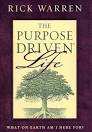
Rick Warren’s Highly Successful Book “The Purpose Driven Life.”
Regardless what one thinks about Rick Warren and this work, it posed one of the most relevant questions ever posed by any Christian pastor or minister; it actually challenged so-called Christians to take stock in themselves and understand that they were made for a purpose and that each of them has a purpose to fulfill.
There are a lot of crazy ideas floating around out there as it relates to the purpose that Christians serve and their identity.
* Some contend that Christians are God’s replacements of the Jews and to evangelize the world to this end.
* Some contend that Christians are future citizens of heaven who will sing praises to the Trinity for all eternitty.
* Some believe that we are missionaries who are sent to the darkest places on the planet to evangelize the heathen to the Gospel of Jesus Christ.
Unfortunately, that message; that challenge–has not reached over to the Hebrew Roots Community and Movement, that it is imperative that we come to a firm understanding of who we are and what our purpose is. Failure to understand identity and purpose will result in:
* Our living wasted and pointless lives
* Never fulfilling our God-given potential (not man’s given potential)
* Succumbing to the whims of the enemy
* Becoming misled in our God-given purpose
* Having the mind of the enemy instead of the mind of Mashiyach
* Going after our own agendas instead of Yahuah’s agenda
Who are we? What is our identity?
I’ve heard at least one person in our Faith community preach against boxing ourselves/labeling ourselves, which I believe to be a horrendous mindset to adopt. We’ve been designed by the Creator to identify/to label/ to purpose things–such as Adam in the Garden.
This is how we determine what a thing is and what it’s used for. We are called to discern the difference between the pure and the impure; the holy and the unholy; the good and the bad.
Will not Master label us in the end? The sheep and the goats? Those who keep His commandments and those who don’t? The redeemed versus the not redeemed?
If we don’t define who we are and establish what are purpose is, not just for ourselves, but for the world, then we are no good to Abba.

What is our purpose?
Do we know who we are? Do we know what our purpose is? Our focus is too much on Torah. Certainly Torah observance is vital to our walk in Mashiyach, but Torah observance does not define our purpose. We do not define ourselves to the world appropriately. We do not have defined goals and intent that would spell out what our purpose is as Torah Observant Believers in Yeshua Messiah–we are simply a fallen, heretical offshoot of Christianity that seeks to obtain our salvation through the keeping of Torah.
Nothing we say, do or teach, however, defines who we truly are and what our purpose is. The worse thing any of us can do is to not have a purpose in life, especially not have a realized and workable purpose in the Body.
* Has our purpose changed since we began as a nation?
* If so, what was our purpose before and what is it now?
I contend that there is no one purpose that defines who and what we are. I also contend that there is at least one over arching purpose that defines who and what we are as a people, but then, there are individualized purposes that define our roles as members of the Body of Mashiyach. I would further contend that those individual purposes are simply off-shoots of the overarching purpose.
The overarching purpose: We are purposed to be a kingdom of priests and a holy nation (Exodus 19:6; I Peter 2:9; Isaiah 61:6)
We are to be servants of the Most High God here on this planet; here on this plain: to be lively stones built upon a spiritual house; a holy priesthood to offer up spiritual sacrifices acceptable to Yah (I Peter 2:5); to be kings unto Yahuah to reign here upon this earth (Revelation 1:6; 5:10); to be holy unto Yahuah (Leviticus 19:2; Deuteronomy 7:6).
Shaul’s purpose was to be a minister and a witness of Yeshua Messiah to the Goyim (i.e., the nations of the world) (Rom. 8:28, 29). Even those who are not Yahuah’s own serve a purpose: in Pharoah’s case, his purpose was to shew Yahuah’s power to to Israel, and that His name be declared throughout the earth (Romans 9:17). Yeshua’s purpose was to destroy the works of the devil (I John 3:8).
What is your individualized purpose in the Body of Messiah?
* To exhort?
* To intercede?
* To serve the body as an apostle, prophet, evangelist, pastor, teacher for the equipping of the saints for the work of service, to the building up of the body of Messiah (Ephesians 4:11, 12)?
We are Servants of the Most High God whose purpose is to be a king and priest to the nations of this world and to serve the Body of Mashiyach to that ultimate end which is to glorify the Creator of the Universe (Acts 16:17). Thus when we factor in all that Abba has put forth to us about who and what we are and what are purpose is in the earth, we learn that we are to be Spirit-Filled-Torah Observant Believers/Disciples of Yeshua Messiah.
Our global purpose is to serve Abba Father as a unique kingdom of Priests on and to this earth (as Master is our priest in heaven).
As it relates to us as individuals, we all have unique callings on our lives that we must immediately identify and put into play
Time is of the essence. Master is counting on us to do that which the Ruach leads and equips us to do to the glory of Yahuah our Elohim. The Body of Messiah is also counting on us to build and exhort and share the spiritual load and to carry the message of the Kingdom of Yahuah to a lost and dying world.
* Do we turn to the Church?
* Do we turn to our Pastors and our Ministers?
* Do we pick out our own purpose and hope that it sticks?
* Do we pray and seek Yahuah’s guidance?
* Do we turn to the Bible?
To Be Continued
The page you requested could not be found. Try refining your search, or use the navigation above to locate the post.
Let’s reflect upon the topic of worshiping Abba in Spirit and in Truth as it relates to our Hebrew Roots Faith. This will be part 3 of my multi-episode series on operating and walking out this walk in the Spirit. If you’ve not already done so, I would humbly ask you to check out Sabbath Thoughts and Reflections episodes 78 and 79 where I lay some of the ground work for this episode.
I would submit that probably the biggest hurdle that most of us have to work through in this Faith of ours is the age-old battle that exists between the physical and the spiritual. Master, when speaking to the Samaritan woman at the well, presented to her one the most profound bits of vital information ever given to mankind on this planet. Yet that “bit of information”–as vital and essential as it is–has either been grossly misused because of gross misunderstanding, or it has been completely ignored because of complacency and or misinterpretations by some of our Bible teachers. The statement and information I’m referring to is found in John’s Gospel and reads as follows:
“God is a Spirit and they that worship Him must worship Him in spirit and in truth.” (John 4:24; KJV)
Now, I ask you: how much attention has been given to this crucial instruction and revelation? Who and how many teachers dare to tackle the what’s and the how’s of this essential truth, especially in Hebrew Roots? Our cousins in Christianity, especially our charismatic friends, love this and related passages. Why? Because it fundamentally embodies the charismatic mindset that everything having to do with God and Bible is spiritual. You see, we in Hebrew Roots have gone way too far over to the Torah side of things while the Charismatics have gone way too far over to the spiritual side of things. In both the Hebrew Roots and Charismatic side of things, we’re guilty of severely neglecting the other side of the equation: the Charismatics the Torah and the Hebrew Rooters the spiritual. And the funny thing about this dilemma is that the Charismatics have gone so far over to the spiritual end of the spectrum that they have essentially created an entirely independent religion that is not biblically supported in many aspects. While we in Hebrew Roots, we have gone so far over to Torah that we, in many many cases, have become pharisaic or rabbinic in appearance and practice.
The key point of this whole thing that I believe we must take into consideration is that Spirit and Truth must go together. In fact, the two are inseparable, especially as it relates to our worship of and relationship with the Almighty. Going back over to my Charismatic–Hebrew Roots comparison: the Charismatics must bring into their lifestyle Truth–Biblical Truth; while we Hebrew Rooters must bring into our lifestyle the spiritual. I would say that we are, in at least one aspect, no better than some of charismatic/fundamentalist cousins as it relates to relationship with and worship of Abba Father.
I’ve never really given much credence or attention to the story of the Samaritan woman at Jacob’s well until just recently. Prior to my recent examination of this story and it’s tremendous implications to our individual and collective walks in Messiah, I saw this story as simply our Master revealing Himself to a Gentile woman and an example of how our Faith must overcome racism in the world through the Gospel message. And yes, I’ve read many times over the years the verse that talks about God being a Spirit and us worshiping Him in Spirit and in Truth. But I always sort of just read over it and never gave it much thought, especially after coming into Hebrew Roots. Why is that? Well, my early years in this Faith movement were met with teachings and warnings against spirituality–especially anything having to do with the Holy Spirit.
It wasn’t until I began listening to some of Arthur Bailey’s teachings that I began to realize that it is vital that every believer–every disciple of Yeshua Messiah–walk and operate in the Spirit. I began to see for myself that there was an ingrained cultural bias against everything and anything having to do with the Ruach Kodesh (the Holy Spirit). An overwhelming number of Hebrew Rooters simply reject the workings of the Holy Spirit in one form or another. It’s not that they don’t believe the Ruach Kodesh exists, it’s that they don’t want anything to do with speaking in tongues, healings, praying in the Spirit and talk and teachings on this subject. And I’ll be honest with you: I was right there with them early on in my walk.
But then at the end of the day, this and other related passages on the subject of operating in the Ruach (the Spirit) don’t go away. Oh, many in our Faith community will explain them away as being the Spirit of God operating in the world and making things happen in accordance with the will of Yah; that we don’t need to worry about the Holy Spirit; that all we need to worry about is obeying and keeping Torah–keeping the Feast Days–keeping the Sabbath–not eating pork–making sure we don’t interact with those Christians–supporting the big Hebrew Roots ministries with our tithes and offerings–attend those dry and boring Hebrew Roots Conferences from time-to-time–buy the latest teachings of various Messianic Torah teachers, and the likes. Essentially, we are encouraged not to operate independently in the Spirit and, for that matter, not fulfill our calling and commission as disciples of Yeshua Messiah–unless the various ministries sanction it.
I attended a Michael Rood Conference in the fall of 2015, and during a round table session, one of the conference attendees asked Michael Rood: if something were to happen to him, what in the world should we do? How will we function? What are we to do? Oh my, oh my, the sky is about to fall down upon us! Save us Michael Rood! I was sensitive to this brother’s concerns, but I was concerned that this believer’s concerns were indicative of a much greater problem in our community and movement: that we are nothing more than followers of men and ministries–that our individual and collective walks and our talks and our worldviews are so shallow and lacking true substance; that we need a man to tell us how and when to breathe, walk, talk, use the restroom, eat, pray, read our bibles, etc.
I was encouraged at the reply that Micheal gave this gentleman: Michael essentially told him that he must never base the future of his or anyone else’s walk on him and his ministry; that we are individuals who must operate in our individual callings; and that we must prepare ourselves for our respective ministries. I thought that was a pretty good response to a rather concerning question.
Clearly, there are many in our Faith community who are just like this gentleman–basing their entire walk on individual Hebrew Roots teachers and ministries. Oh, there’s nothing wrong with following the teachings of Abba’s anointed–in fact we are encouraged to hearken to the teachings of those whom Father sends–Romans 10:14, 15. Nevertheless, our trust and our sustenance must come solely from the Almighty. We are not to place our spiritual trust in men, but trust Yahuah our Elohim (Proverbs 29:25; Psalm 146:3; Psalm 118:8). It is the Spirit of Yahuah that leads, guides, and empowers us to do that which we are commissioned to do, not man.
All too often, and I’ve seen this in my own life growing up in the Baptist Church, we place so much reliance upon our pastors, preachers and teachers that we begin to worship them and to place them and their teachings and doctrines above that of even Abba Father. It’s a shame to see. And I can attest that this sort of worship of men comes along so subtly at first that most of us don’t even realize that we have fallen into man/teacher worship. And before you know it, we become just like that dude at the Rood Conference who was fretting that we as a community would be without a shepherd if something were to happen to Michael Rood. I guess, it’s expected. We pour so much of our souls and our trust and our finances into some of these ministries and teachers. Some of these teachers teach us how to think and see the world about us through their particular mindsets and we begin to conform to the image of the ministries we follow, instead of conforming to the image of our Master Yeshua HaMashiyach as true disciples would be expected to do.
I believe that’s why it’s so important that we embrace the power and might and leading of the Ruach Kodesh in our lives so that our focus is upon Abba and His will for us.
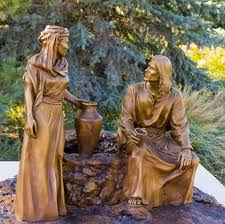
The Samaritan Woman and Yeshua at Jacob’s Well
I now see from the story of the Samaritan Woman, a a classic reminder and lesson of how the flesh, religion and culture, all work in concert to enslave us and keep us from ever having a true and substantive relationship with the Creator of the Universe. I further see from this story a warning to us in Hebrew Roots that if we’re not careful, we will find ourselves in a similar situation as that of the Samaritan woman–isolated from the world around us; ineffective in our witness of the true Faith; following doctrines of men; going through the motions of worship, but never truly understanding the God we profess to know or experiencing the true power and might of Yahuah in our lives.
The woman in this story lived in a very challenging societal, religious and cultural construct–probably one of the most challenging that our Master had to deal with during His brief earthly ministry.
To begin with, the woman was a Samaritan, which put her at a particularly challenging disadvantage. She was a woman–second mark against her. She had been married and divorced five-times and was now likely shacking up with another fellow–mark three. I guess one would call her, in today’s pop-culture parlance, a “hot mess.”
Several teachings have emerged over the years regarding who and what Samaritans were and are today. Michael Rood, in many of his teachings, as well as in his Chronological Gospels, classify the Samaritans as Gentiles. In fact, Michael has even developed a doctrine around the story of the Samaritan woman and her encounter with Master–that the two-days that He and his disciples spent in Samaria preaching the Gospel to the Samaritans, was a “prophetic picture of the time of the gentiles” as depicted in Leviticus 23:22. According to Michael, “…the time of the gentiles, the 2,000-year duration between the fulfillment of the Spring Feasts and the fulfillment of the Fall Feasts, is when the blindness “in part” that happened to Israel is accompanied by the opening of the eyes of the gentiles so that they can be properly grafted into the root of Israel and hopefully by bearing good fruit, they too will not be “cut off” as some of Israel was because of unbelief and blatant disobedience of the Torah.” (Rood, The Chronological Gospels, page 85)
Now, Michael is not alone in his contention that the Samaritans were and are gentiles. it is a common teaching and belief among orthodox and reformed Jews and I believe certain Messianics that the Samaritans were and are gentiles.
But is that belief and teaching accurate? Were and are the Samaritans gentiles in the classic sense of what we understand gentiles to be? I would challenge that contention and I believe there is biblical and extra-biblical support for my assertion that the Samaritans were not “gentiles” in the classical sense, but more so, they were actually of Israeli descent.
To begin with, Master told the Canaanite Woman, as recorded in Matthew 15:24, that
“I was sent only to the lost sheep of the house of Isra’el.”
So by Master spending two-days with the Samaritans, preaching and teaching the Gospel to them: was He in violation of His own stated agenda? If we were to abide by a “Samaritans are gentiles” teaching and doctrine, then I would say yes. But I don’t believe Master would place His credibility on the line by hanging out and teaching the Gospel to Gentiles when He clearly stated that His mission was to the “lost sheep of the house of Israel.”
Secondly, biblical, extra-biblical and the stated history of the Samaritans themselves, support that the Samaritans were Jews, if not as Matthew Henry, Biblical Commentator, “mongrel Jews,” or more accurately, mongrel Hebrews. The Samaritans contend that they are descended from Ephraim and as we saw, the woman at the well went so far as to assert to Master that she identified herself as a descendant of Jacob. But Matthew Henry writes of the Samaritans:
“They were the posterity of the colonies which the King of Assyria planted there after the captivity of the 10-tribes (as noted in 2 Kings 17), with whom the poor of the land that were left behind, and many other Jews afterwards, incorporated themselves. They worshiped the God of Israel only, to whom they erected a temple on Mount Gerizim, in competition with that of Jerusalem.”
The Jews of course take issue with the Samaritans and their stated contention that are of Hebrew descent, and to a certain extent, the Jews have good reason for some of their biases against them–the main one being the Samaritan’s man-made religion that departs from Torah (John 4:20-22)
Master knew of the true identity of the Samaritans and thus He preached the Gospel to them over the course of two-days. Did this represent, as Michael teaches, a prophetic picture of the Gentile’s 2,000-years of grace, I don’t know; I doubt it actually. But what I do know, is that the story of the Samaritan was one of the first introductions of the concept of worshiping our Creator in both Spirit and Truth; a concept that Michael, in his chronology ignored.
I find it so apropos that Master would get into a debate with the Samaritan woman over the issue of the inappropriateness of our Master seeking to satisfy His thirst with her assistance. When this thing went down, something amazing took place; something earth shattering. Not only would Master use this awkward situation to introduce to the woman the way things were heading in terms of the worship of the One True God of Abraham, Isaac and Jacob, but Master would reveal his secret identity to the most reviled and rejected people in the community. Master would reveal to the woman, and subsequently to the other members of the Samaritan community, that yes, He was indeed the long awaited Messiah. He had not directly revealed His identity to any other group prior to this encounter. Yet He chose this unusual occasion in which to unveil to the world just who He truly was.
Master described water that was living and would satisfy our thirst forever.
Yes, in those two-brief days, a season of grace fell upon those Samaritans. It was indeed the day of their visitation. It was a day in which the Son of the Creator of the Universe, came to a people who had been rejected by their cousins for centuries, and received directly from the redeemer’s mouth the Gospel message that could freed from their cultural, religious and spiritual bondage.
Although racial and cultural biases ran rampant in the region during this time, Master had no problem in reaching out to those most in need of his message of freedom. The woman, recognizing that she was considered impure and unclean by her cousins the Jews, saw our Master’s outreach to her for a drink of water as nothing more than a joke and another potential insult to her and her community. One can only speculate how much abuse and bigotry she and her fellow Samaritans had endured over the course of their lifetimes. Thus, it is no wonder that her shields went immediately up when Master asked her for a drink of water.
The woman’s immediate response to the request for a drink from Jacob’s well was:
“How is it that You, a Jew, ask for a drink from me, a woman of Samaria? (For Jews have no dealings with Samaritans.).” (John 4:9; ESV)
It is a well accepted fact that the Jew’s considered the Samaritans ritually impure and unclean and that any Jew using a drinking vessel after a Samaritan touched it would become ceremonially unclean. (NET) Funny thing is, Master made it His life’s mission to overturn the man made rituals and doctrines of Judaism that served only to make the commandments of Yahuah of none effect. (Matthew 15:6) So when He was confronted by the Jewish established on numerous occasions, over the issue of why He did not follow the traditions of the so-called Fathers, Master would school and scold them over the fact that they were nothing more than a bunch of hypocrites. (Matthew 15:7) So Master was a bit of a revolutionary–a maverick if you will. No other Jew in His day would have done what Yeshua did in asking the woman for a drink of water, seizing upon the opportunity to minister to this woman. John records the Master’s disciples having a bit of a meltdown and experiencing a bit of confusion over this encounter:
“At this point His disciples came and they were amazed that he had been speaking with a woman, yet no one said, “What do you seek? or, “Why do You speak with her?” (John 4:27)
But praise be to Yahuah that Master was not afraid to challenge the cultural and religious norms and biases of His day. Otherwise, we would be in a world of hurt. The only reason we are where we are today is because of Master’s revolutionary stance.
So the woman called Master out on His behavior. I can only guess that Master’s reply to her call-out was something that she would never ever have expected to receive in her entire life. In fact, she probably thought, at first, that this was a crazy man. If such an encounter were to happen to any of us today, we’d probably gather our belongings and move along as quickly as we could, because most of us aren’t too keen on crazy. At least I’m not.
But Master seizes control of the conversation and begins to speak to things that don’t make any sense to the carnal mindset. He talks to her about Him being someone who is special and who has the ability to provide her “living water.” Crazy huh? Indeed. But the woman, like so many of us today, blinded by and enslaved by a fleshly mindset that can not see beyond the here and now; that can rationalize such talk of “living water;” that sees such talk as crazy talk. So the obvious response from the woman was carnal in nature. Her response brought the conversation immediately back down to the carnal–the Master didn’t have anything to fetch the water in and thus He was likely out of luck in getting water from her; and that, hey, you are no better than us–we’re all descendants of Jacob. (John 4:11, 12) So the woman was essentially waving Master off and telling Him to get a life.
Master brings the conversation back to the spiritual, lifting it from the carnal:
“…Everyone who drinks of this water will thirst again; but whoever drinks of the water that I will give him shall never thirst; but the water that I will give him will become in him a well of water springing up to eternal life.” (John 4:13, 14; NAS)
As I was reading this passage, I became intrigued by the concept of “living water.” What is this “living water” that Master speaks of. The ESV identifies two-meanings to the phrase: (1) fresh spring, running water that we used in various Torah-directed purification rituals:
“He shall take the live bird with the cedarwood and the scarlet yarn and the hyssop and dip them and the live bird in the blood of the bird that was killed over the fresh water.” (Leviticus 14:6; ESV) Other passages include Deuteronomy 21:4 and Leviticus 14:50-52.
Interestingly enough, the concept of Baptism (or as popularly coined today in certain segments of our Faith, Mikveh), did not originate with John the Immerser. The concept of immersing one’s body in water–mind you, running, living water–hearkens back to Leviticus 15:13:
“And when the one with a discharge is cleansed of his discharge, then he shall count for himself seven days for his cleansing and wash his clothes. And he shall bathe his body in running water and shall be clean.”
Thus living water, also referred to as running water, bears with it the concept of one’s impurities being washed away and we becoming pure again. Such a thing is not possible with standing water. Thus when we contemplate baptism, we should seek out bodies of water that are running or living, so to speak. Of course, we do the best we can in this respect.
The second aspect of “living water” has to do with the indwelling of the Holy Spirit, the Ruach Kodesh, in each of us. John records the words of Master:
“Whoever puts his trust in me, as the Scripture says, rivers of living water will flow from his inmost being! (Now He said this about the Spirit whom those who trusted in Him were to receive later–the Spirit had not yet been given, because Yeshua had not yet been glorified.)” (John 7:38,39′ CJB)
And it is this aspect of “living water” that Master was speaking to the Samaritan woman about. The Bible Commentator Matthew Henry writes of this “living water”:
“Yeshua (my adjustment) gives us the living water if we but ask. He received it mightily from His Father (our Father) and thus He freely makes it available to us.” (Matthew Henry)
The one other aspect of this story that I want to also reflect upon is the incident at Horeb and Paul’s commentary on that incident and what it means to us as Netsarim. The event at Horeb may be found recorded in Exodus 17:1-6, and it reads:
“All the congregation of the people of Israel moved on from the wilderness of Sin by stages, according to the commandment of the LORD, and camped at Rephidim, but there was no water for the people to drink. Therefore the people quarreled with Moses and said, “Give us water to drink.” And Moses said to them, “Why do you quarrel with me? Why do you test the LORD?” But the people thirsted there for water and the people grumbled against Moses and said, “Why did you bring us up out of Egypt, to kill us and our children and our livestock with thirst?” So Moses cried to the LORD, “What shall I do with this people? They are almost ready to stone me.” And the LORD said to Moses, “Pass on before the people, taking with you some of the elders of Israel, and take in your hand the staff with which you struck the Nile, and go. Behold, I will stand before you there on the rock at Horeb, and you shall strike the rock, and water shall come out of it, and the people will drink.” And Moses did so, in the sight of the elders of Israel. (ESV)
Paul seized upon this event from an amazing spiritual perspective–such that the event had tremendous prophetic significance to all of us. Paul wrote:
“…and they all drank the same drink from the Spirit–for they drank from a Spirit-sent Rock which followed them and that Rock was the Messiah.” (I Corinthians 10:4; CJB)
The tie in to our present story of the woman at the well in Samaria is that Master was offering the woman the gift of living water that only He was in a position to give her. Master Yeshua was likened to a rock–that rock in Horeb–strong–permanent–ageless–the source of lifesaving water that can change our lives forever. It’s unlike the physical water that we all need to sustain our physical life. It is the Ruach Kodesh, that stokes the fires within our very core and reveals, admonishes, convicts, reminds, encourages, emboldens, teaches and confirms us into the splitting image of our Master Yeshua Messiah. If that “living water”–that Spirit–that Master spoke to the woman at the well is actually dwelling within us, then we stand to never thirst again. Master told us:
“We who hunger and thirst after righteousness shall be filled.” (Matthew 5:6)
The Word is food, but it can’t sustain us alone. We need water–spiritual water–the Ruach Kodesh, to help us and sustain us. The woman, whom I believe still did not understand what Master was talking about, sought to take this conversation a bit further by asking him:
“Okay, I’ll bite: give me this water so I will not be thirsty nor come all the way here to draw.” (John 4:15; NAS)
It wasn’t because she was interested in receiving the gift of the Ruach Kodesh that the woman asked Master for the everlasting water, but she was simply tired of having to go down to the well to fetch water every day no doubt. Thus, Master still had not moved the woman from the carnal, as so many of us find ourselves today. So He sought to seize upon something within her that would get her attention and shake her to her very core, which would then afford her the opportunity to transition from the carnal to the spiritual. So he asked her to go and fetch her husband. As the story goes, and irrelevant to this reflection, Master used this very power–that living water–the Ruach Kodesh, to slice into the woman at the very place she lived–her personal life–her love life. Master has an uncanny way of finding the very thing in each our lives that He can exploit in order to get our attention.
As the story goes, she’d been married five-times and was likely shaking up with another fellow in one form or another. Whether all of her husbands died or she had been divorced from each of them five times, or a combination of both death and divorce, is not readily apparent here. Yet when we drill down to the heart of this matter, the issue is not divorce or remarriage or shacking up that Master was trying to get at. Her revealed marital history was just an opener to get this woman’s attention. It would seem that Master was saying to this woman and to us:
“Listen, I’m not just some schmuck, loony, nut case, trying to disrupt the cultural, religious status quo of our bankrupt, man made, Yah’less system. On the contrary, I am someone you never imagined you’d meet in this lifetime. Oh, you’ve heard about me, and so have all of the members of your community and all of your forefathers. Yet none of you have ever met me until this very moment in time. This is the time of your visitation my dear. Allow me to present my credentials to you just so there is no confusion as to whom I am. In fact, I’m going to provide you my credentials by simply telling you about your past and present marital life without ever having spoken to you or to have met you before. In other words, allow me to display for you and all your community, one of the aspects of my ministry, long ago foretold to you of me by Mosheh:
“Yahuah your Elohim will raise up for you a prophet like me from among you, from your brothers—it is to Him you shall shemah—just as you desired of Yahuah your Elohim at Horeb on the day of the assembly, when you said, ‘Let me not hear again the voice of Yahuah my Elohim or see this great fire any more, lest I die.’” And Yahuah said to me, ‘They are right in what they have spoken. I will raise up for them a prophet like you from among their brothers. And I will put my words in His mouth and He shall speak to them all that I command Him. And whoever will not listen to my words that He shall speak in my name, I myself will require it of him.” (Deuteronomy 18:15-18; ESV, adjusted for Hebrew Roots)
Upon hearing of her past and present marital life from a man she’d never met before, she starts to realize that she is not having just some ordinary encounter with another kook off the street down by the watering hole. No indeed. This was something special. Something different. Something powerful This was some form of visitation unlike something she never imagined she would experience in her lifetime. A rare visitation from a prophet. But not just any ole prophet. Prophets were a shekel a dozen throughout the region during the first century of the common era and most of them were bona fide kooks trying to make a name for themselves, having no connection whatsoever with the God of Abraham, Isaac and Jacob. They were essentially impostors and they would pray upon the most unsuspecting and ignorant of the community.
But recognizing and acknowledging to Master that he was a prophet of a particularly unique pedigree, she sought to take advantage of this opportunity by bringing up one of the most divisive issues separating Samaritans Jews from their Orthodox Jewish cousins: that being the issue of the place of worship being in Jerusalem versus Mount Gerizim. (verse 20)
Well, Master was more concerned about exploring with this woman and her community, the issue of the Gospel of the Kingdom of Yahuah than that of the supposed center of Jewish worship. But since she asked, Master wanted to quickly set the record straight: (1) your system of worship is not of Yahuah; (2) true worship of the Creator of the Universe is practiced by orthodox Jews. I, Yeshua, am an orthodox Jew and being an orthodox Jew, salvation comes from the orthodox Jewish system—not the Samaritan, Gentile-influenced system of man made religion—and certainly not the Pharisaic system. But since I’m here in Samaria speaking to you, let’s just get this one sticking point out of the way. Samaritan Judaism is a bunch of crock and always has been. (Verse 22)
Master continues on: But I will tell you this much: in just a short time, worship of Yahuah our Elohim, will not be based on the physical location of the worship center. (verse 21) You see, something is coming and something big is about to happen that will turn the religious world upside down on its head. Worship of the Creator of the Universe will take on a form unknown to man up to this point, but certainly foreseen and prophesied by some of Yahuah’s most anointed prophets of old. (Ezekiel 11; 36; Jeremiah 31) Worship is going to transition from that of rote-mechanical adherence to a set of ordinances, regulations and statutes; away from a physical location on this planet; over to the individual worshiper. (verse 23) No longer will the true worshiper of Yahuah be required to worship in any one location. There’s coming a day when the true worshiper can go into his or her closet and worship the Father directly, without need for all the trappings of a temple and the intercession of men acting as priest. Worship will transition from an outward show reverence and praise and petition and penitence to that of an inward, genuine show of love, reverence, peace, praise and the seeking of forgiveness. This new form of worship will be energized and driven by the Spirit of the Creator of the Universe that will be deposited into each worshiper’s heart, mind and soul. No longer will the worshiper have to seek forgiveness from the Creator by going through a frail, sinful man who offers up the life of an animal each time you sin. No longer will it be impossible for you resist sin which puts up a barrier between you and Abba. For Abba is going to perform a work in every genuine believer that will elevate him and her to a place where true worship can happen—not some dead, meaningless attempt at communing with the Creator. But true worship. Face to face with the Creator of the Universe.
No longer will someone have to write-up prayers for us to recite and vainly attempt to communicate with the Creator. No longer will we have to struggle blindly in the dark, reaching out to an illusive God, hoping to touch His Face, but never coming close enough to Him to do so. No longer will thousands of lambs, goats and bulls need be killed because you can’t stop sinning. No longer do you have to show up smelling like a fire sale before the nostrils of the Creator. You will be cleaned up, you will be able to commune with me on a level that makes the old way seem as though it never existed.
No doubt flummoxed by all that Master revealed to her, she sense that this prophet that sat before her at Jacob’s well was not just any prophet. This was a visitation unlike any she could ever conceive of. “Maybe all that which you’ve just spoken to me is true,” she responds to Master. “But it is well known that Mashiyach is coming some day. And when Mashiyach comes, He’s going to sort all this stuff out as it relates to the true place of worship of Yahuah. He will set everything straight.” (verse 25)
And this is where the story peaks: Yeshua says to her—My dear, who do you think you’re speaking to? It’s me! I’m Mashiyach. I’m the one you’re referencing. Yes, I’m here to set all things straight. Woman, rejoice. Indeed, this is the time of your visitation. Your life will never be the same from this point forward. (verse 26)
When will we realize and embrace our visitation? When will we ever leave the base of Mount Sinai: struggling to understand the Creator of the Universe; haughty; stiff-necked; carnal; inwardly focused; stuck in the flesh; unable to live Torah the way Father always intended us to live it.
Friends, I believe we should have spiritually left Mount Sinai when Master Yeshua initiated the renewed covenant and ushered in the Gospel of the Kingdom. Yet, so many of us never left that mountain. We are stuck, focused on a mechanical, rote obedience to Torah less any power and workings of the Holy Spirit.
Master revealed to the Samaritan woman that because our Creator is a Spirit, it is essential that believers worship Him in Spirit and in Truth. What is Spirit? It’s the Spirit of the Most High, operating in our lives and molding our spirit to be in complete sync with the Spirit of Yahuah. The writer of Hebrews reiterated the prophecy that was given to the Prophet Jeremiah regarding the renewed covenant and it reads as follows:
“For finding fault with them, He says, “Behold, days are coming, says Yahuah, when I will effect a new covenant with the House of Israel and with the House of Judah; not like the covenant which I made with their fathers on the day when I took them by the hand to lead them out of the land of Egypt; for they did not continue in my covenant, and I did not care for them, says Yahuah. For this is the covenant that I will make with the House of Israel after those days, says Yahuah: I will put my laws into their minds, and I will write them on their hearts, and I will be their God and they shall be my people. And they shall not teach everyone His fellow citizen and everyone His brother, saying, “Know Yahuah; for all will know me, for the least to the greatest of them. For I will be merciful to their iniquities and I will remember their sins no more.” (Hebrew 8:8-13; NAS adjusted)
This is speaking to the Houses of Judah and Israel specifically. However, we have ready access to the benefits of this renewed covenant whereby Abba’s Word can be written in our minds and upon our hearts. But there’s little evidence of this having ever taken place among many of the members of our community. We should not be so worried about one another in terms of how we keep Torah and splitting hairs about the nuances of Torah. We should not be harboring hatred and anger towards one another if indeed the Ruach Kodesh is dwelling within us. We have been freed from the cold, lifelessness of religion and carnality. Sickness should not be named among any members of our body; poverty should not be plaguing the members of the body; peace and joy should be the mainstay between members of the body; many sons and daughters should be flooding into the body on a regular basis. Why isn’t this stuff happening in the true Body of Messiah? I’ll tell you why: because we’re still stuck at the base of Mount Sinai to this very day. We’ve not left the base of that mountain and we’ve not embraced the indwelling, the power and the might of Abba’s precious Ruach HaKodesh.
What is this Truth that Master spoke to the woman at the well about? Truth is the Word of Yahuah—specifically Torah. The writer of Psalm 119: 142 wrote:
“Thy righteousness is an everlasting righteousness, and thy law (i.e., thy Torah) is the truth.” (KJV)
So what then is Master saying in His statement regarding the true worshipers worshiping Yahuah in Spirit and in Truth? Essentially Master is saying that true worship comes through Spirit-filled Torah-living—plain and simple. That’s it. It is now time that Hebrew Roots embraces Spirit-filled-Torah-living and stop pussy-footing around. We’ve wasted enough time as it is. And there is no more crucial a time such as this whereby we absolutely must adopt full on spirit-filled-Torah-living.
With that, I will bid you a warm and blessed Shalom. Until next time fellow Saints in Training.
“Finally my brethren, be strong in Yahuah and in the power of His might. Put on the whole armor of Yah that you may be able to stand against the wiles of the devil. For we wrestle not against flesh and blood, but against principalities, against powers, against the rulers of the darkness of this world; against spiritual wickedness in high places. Wherefore take unto you the whole armor of yah, that you may be able to withstand in the evil day. And having done all, to stand. Stand therefore, having your loins girt about with truth and having on the breastplate of righteousness. And your feet shod with the preparation of the Besorah (the Gospel) of peace. Above all, taking the shield of faith wherewith you shall be able to quench all the fiery darts of the wicked. And take the helmet of yeshu’ah (salvation), the sword of the Ruach (the Spirit), which is the Word of Yahuah: praying always with all prayer and supplication in the Ruach and watching therefore unto with all perseverance and supplication for all qodeshiym.” (Ephesians 6:10-18, Cepher, adjusted by me)

Many believers have placed their trust in President Donald J. Trump over Yahuah.
I found parallels to last week’s historic installation/inauguration of the 45th-president of these United States, Donald J. Trump and something that has become very near and dear to me over course of the last week–searching after Abba’s power in my life to overcome some personal challenges (in other words, I needed a transference of power from Abba to me).
With the swearing in of President Trump this past Friday (and even weeks and months prior to his inauguration), we in the public kept hearing talk about “a peaceful transference of power” being a fundamental and essential aspect of our democratic system.
Talk of the spiritual is often viewed as an affront to many in our Faith community. I suspect it is likely the result of charismatic churchianity’s heavy emphasis on the spiritual and their perverted doctrine of grace.
My point here is not to advocate that we Netsarim adopt such charismatic practices as slaying folks in the Spirit, laughing uncontrollably or making animal sounds. Such practices do not appear to be biblically sound at all.
We’ve entered into an unprecedented time of spiritual activity, almost exclusively from the evil end of the spiritual spectrum. This is clearly seen in the high degree of:
Many in our Faith community, even throughout large segments of churchianity, have placed a great deal hope and future trust in President Donald Trump. Is this hope and trust misplaced? According to Scripture it most certainly is.
“Trust not in princes nor in the children of men in whom there is no safety.” (Psm. 146:3, LXX)
“It is better to trust in Yahuah than to put confidence in humans.” (Psm. 118:8, QBE, adjusted by me)
Why am I reflecting upon the topic of “Spiritual Transfer of Power?”
I’ve experienced some recent personal attacks that I believe to be of supernatural origin. Furthermore, I have concerns for the future of our nation and our Faith community. Why? I’m seeing what’s going on in the world today (i.e., the violence, hatred, evil and divisiveness).

We are at war. We require the power of Yahuah to effectively wage this war.
We are in a war. I believe that we’ve been in a war for quite some time. That war is ramping up and is only going to get worse in the days, months and if Master tarries, years to come.
Our war–our true fight–is not against humans/men/flesh and blood. Our war is against unseen powers that are spiritual in nature.
The enemy is obviously ramping up his assault on the elect. He is doing something in the world today, the knowledge of which is unknown to mankind. Nevertheless, the enemy has a purpose and an endgame in mind. That purpose and endgame is anti-man and anti-Messiah and anti-Creator. Whether we want it or not, we have been drafted into the armies of Messiah. We are at war against an unseen enemy.
How do we defeat the enemy when the enemy is spiritual in nature? How do we survive the present and future onslaught of the enemy? There is a lot at stake in this war:
Unfortunately, our Faith community is sorely ill-prepared for spiritual warfare for the reasons stated above. Why?
“Finally my brethren, be strong in Yahuah and in the power of His might.” (Cepher)
I contend that we need Yahuah’s strength–His power–in our lives. We need Father’s Strength and His Power in order to properly walk this walk and to defend ourselves against the enemy. It’s not a stretch to think that we need Father’s power to wage an assault against the enemy (if and when we are instructed to do so by the Ruach.
The questions then become: why (why do we need it?); what (what is this power that Paul/Shaul speaks of in his letter to the Ephesian Assembly?); where (where do we find this power?); how (how do we harness this power?).
This reflection is the result of my journey through Scripture as it relates to this topic. It is NOT based upon any past or present popular dogma or denominational positions on spiritual warfare.
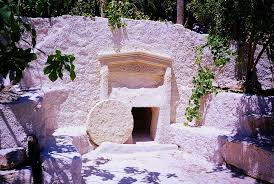
The power we have access raise Master from the dead.
Let’s start with what: what is this power?
It is the same power/force that swept us up on eagles’ wings, rescuing us years of bitter bondage in Egypt .
Exodus 19:4–“You have seen what I did unto the Mitsriym (i.e., the Egyptians) and how I bore you on eagles’ wings and brought you unto myself. Now therefore, if you will obey my voice indeed, and guard my covenant, then you shall be a peculiar treasure unto me above all people: For all the earth is mine: and you shall be unto me a kingdom of priests, and a holy nation. ” (Cepher)
“…that the law of Yahuah may be in your mouth, for with a powerful hand Yahuah brought you out of Egypt. Therefore, you shall keep this ordinance at its appointed time from year to year.” (Exodus 13:9, 10; NAS)
Here Yahuah is referring to the Feast of Unleavened Bread/Matsah. The point in this is that we were instructed to pass on to our posterity why we kept Unleavened Bread throughout every generation. The reason should include that the power of Yahuah freed us from the mightiest miliatary nation on the earth at that time. It was not by our own hand that we were freed from hard bondage.
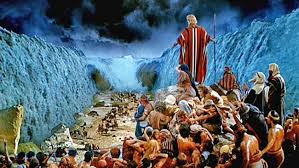
Yahuah’s power delivers us from bondage unto salvation.
As we are today: many of us are in bondage to sin, strongholds and various life situations. That same power that freed us from Egyptian bondage can free us from the bondage of sin that besets us and hinders our walk with Messiah.
“And Moshe entreated (he besought; he implored; he pleaded with Father) Adonai his God and said, “O Yahuah, why does your wrath burn hot against your people whom you have brought out of the land of Egypt with great power (in Hebrew: koach) and with a mighty arm?”” (Exodus 32:11, QBE)
“Yet they are your people and your inheritance which you brought out by your great power and by your outstretched arm.” (Deuteronomy 9:29, QBE)
“He (Yahuah) showed us the power (i.e., the koach; the power conferred by Yah according to BDB Lexicon) of His works.” (Psalm 111:6, NAS)
It is that same power/force that Yeshua tapped during His earthly ministry where He spoke with authority (the exousia of His Father), healed the sick, fed the hungry, prophesied and raised the dead, etc. (reference: Matthew 9:8; 10:1; 28:18; Mark 2:10; 3:15; 6:7).
Yeshua was imbued with both exousia (authority) and dunamis (power and strength) that comes only from Abba Father (reference Mark 14:62; Luke 1:35; 4:14, 36; 5:17).
Yeshua passed along that power and authority to His disciples. In doing so, Yeshua’s disciples were able to achieve the greatest of exploits
“Then He called His twelve disciples together and gave them power (dunamis) and authority (exousia) over all devils and to cure diseases.” (Luke 9:1, KJV)
With the dunamis of Yahuah comes the added bonus of authority. Why? Because you can’t ply His power in the earth (His dunamis) without His authority (His exousia).
“Behold, I give you authority (exousia) to tread on serpents and scorpions and over all the power (the dunamis) of the enemy…” (Luke 10:19; NAS)
It is that same power/force that raised our Master from the grave and exalted Him in heavenly places, high above all earthly, and even heavenly, powers (Philippians 2:9-11).
“I pray that He will give light to the eyes of your hearts so that you will understand the hope to which He has called you; what rich glories there are in the inheritance He has promised His people and how surpassingly great His power (His “dunamis”) working in us who trust Him. It works with the same mighty strength He used when He worked in the Messiah to raise Him from the dead and seated Him at His right hand in heaven, far above every ruler, authority, power, dominion or any other name that can be named, either in the olam hazeh (that is: this world) or in the olam habah (that is: the world to come).” (Ephesians 1:18-21; CJB)
This is the power we need to overcome the enemy and this evil and perverted world.
The power of Yahuah will raise us up to meet Master at the last trump.
It is that same resurrecting power that will raise us up in the end times as Shaul has taught:
“Yahuah raised up the Master, and He will raise us up too by His power (His dunamis).” (I Corinthians 6:14; NAS)
Later on Shaul comments about the resurrecting power of Abba:
“It is sown (speaking of this mortal body being placed in the grave) in dishonor, it is raised in glory; it is sown in weakness, it is raised in power (in dunamis).” (I Corinthians 15:43; NAS/ESV)
All indications are that our new bodies will be permanently infused with this same dunamis that took us out of Egypt; empowered Yeshua to do His work; and that raised Him from the grave. Why do we shy away from that power today? Why do we in Hebrew Roots reject anything having to do with the workings of the Ruach and the dunamis of Yahuah? Clearly, with such awesome power at our disposal, I can’t help but think demons stand no chance against us.
And it is that same power/force that empowered and filled the apostles and saints on the Temple Mount that Pentecost morning, 2,000-years ago, and effectively turned the world upside down from that point forward in history.
“And behold, I am sending the promise of My Father upon you. But stay in the city until you are clothed with power (dunamis) from on high.” (Luke 24:49; ESV)
Why? Why should we concern ourselves with seeking a transference of power from Yah to our lives?
“For now I will stretch forth my hand and smite thee and kill thy people, and thou shalt be consumed from off the earth. And for this purpose hast thou been preserved that I might display in thee my strength (My “koach”), and that my name might be published in all the earth.” (Exodus 9: 15-17, LXX)
“Then he (an angel conversing with Zechariah) answered and spake unto me saying, “This is the word of Yahuah unto Zerubbabel saying, “Not by might, nor by power (koach), but by My Spirit (My Ruach) saith Yahuah of Hosts (tsaba’ot).”” (Zechariah 4:6; KJV, adjusted by me)
Our natural, physical and cognitive powers (or koach) are totally ineffective against the enemy and the world. Most times, the problems facing us require the Ruach of Yahuah and His associated power (His koach) in order to over them.
The enemy possesses great power as well and in our carnal selves, we are absolutely no match to stand up to him and his minions. Master instructed and informed us:
“If you love me, guard My commandments. And I will pray the Father and He shall give you another comforter that He may abide with you forever. Even the Ruach of Truth, whom the world cannot receive because it sees Him not, neither knows Him: but you know Him. For He dwells with you (He already dwells within those of us who are His)–He dwells with you and shall be in you. I will not leave you comfortless: I will come to you.” (John 14:15-18; Cepher)
Shaul warned of the enemy:
“The coming of the lawless one is by the activity of hasatan with all power and false signs and wonders.” (II Thessalonian 2:9; ESV, adjusted by me). (Further references: Revelation 13:2)
If not to defend against assaults from the enemy or assault the enemy in spiritual warfare, we still have a job to do. That job requires power from on high if we intend to be effective in our call:
“…the Ruach Koesh will come upon you and you will be my witnesses...” (Acts 1:8b, ESV)
The apostles were given great power (dunamis) from the Master though the infilling of the Ruach Kodesh such that they would become the most effective witnesses of the Gospel ever to walk this planet (Acts 4:33; 6:8; 8:10)
Regarding the work, mere words are often insufficient to deliver the gospel. When it comes to the spiritually oppressed and the enemy inhibiting the spread of the true gospel, Father’s power is necessary to accomplish the mission set before us:
“…my message and my preaching were not in persuasive words of wisdom, but in demonstration of the Ruach and of power (dunamis) so that your faith would not rest on the wisdom of men, but on the power (dunamis) of Yah.” (I Corinthians 2:4, 5; NAS, corrected by me)
Shaul comments on work of the Gospel:
“For the kingdom of God does not consist of words but in power.” (I Corinthians 4:20′ MAS)
It’s all spiritual in nature
The great Bible scholar Matthew Henry, in his commentary on the whole Bible wrote concerning the need for Yah’s spiritual power:
“…constancy in our Christian course and to encourage in our Christian warfare…for we struggle with the common calamities of human life…we struggle with the opposition of the powers of darkness, and with many enemies who would keep us from Yahuah and heaven. We have enemies to fight against, a captain to fight for, a banner to fight under, and certain rules of war by which we are to govern ourselves. Finally, my brethren, it yet remains that you apply yourselves to your work and duty as Christian soldiers.”
We can’t fully do this walk on our own strength–I can surely attest to that. And anyone who tells you that you can, is probably not quite with it in terms of a clear understanding of what they’ve signed up for in this walk of ours. Without Father’s help through His Ruach and the power that He has made available to us, we stand a great chance of faltering time and time again. Not to mention, getting our individual clocks cleaned by the enemy every time the opportunity comes for them to reek havoc in our lives from a spiritual perspective. We are all soldiers in a war unlike any that mankind has and will ever know: spiritual warfare. We cannot stand on our own against the supernatural and go toe to toe with the enemy. We are weak and feeble. Thus, we must rely completely upon the strength of Yahuah’s might.
Matthew Henry continues:
“Our natural courage is as perfect cowardice and our natural strength as perfect weakness; but all our sufficiency is of Yah…By the actings of faith, we must fetch in grace and help from heaven to enable us to do that which of ourselves we cannot do, in our Christian work and warfare.”
Speaking of why he left a life of privilege and influence to pursue and deliver the gospel, Shaul wrote to the Philippian Assembly:
“Yes, I gave it all up in order to know Him, that is, to know the power (dunamis) of His resurrection and the fellowship of His sufferings as I am being conformed to His death.” (Philippians 3:10; CJB)
Most of all, we need Father’s power to endure these present times. Shaul taught his apprentice, the young evangelist Timothy:
“For men shall be lovers of their own selves (sound like today?); cov etous, boasters, proud, blasphemers, disobedient to parents, unthankful, unholy, without natural affection; truce breakers (i.e., irreconcilable; unappeasable; implacable), false accusers; incontinent (i.e., without self-control); fierce, despisers (i.e., haters) of those that are good (again, sound familiar with what is going on out in our nation’s streets?). Traitors, heady, highminded, lovers of pleasures more than lovers of God; having a form of godliness but denying the power (the dunamis) thereof; from such, turn away.” (2 Timothy 3:2; KJV)
Where? Where do we find this power?
“Both riches and honor come from You and You rule over all and in Your hand is power (koach) and might; and it lies in Your hand to make great and to strengthen everyone.” (I Chronicles 29:12, NAS)
“O Yah. You are awesome from Your sancturay. The God of Israel gives strength and power (taatsumah–strength and abundant might; vigor) to the people.” (Psalm 68:35, NAS)
“The One who gives might (koach) to the faint (yaeph, to mean weary) will make power (otsmah, meaning full power) abound in those without strength (on, meaning the powerless)” (Isaiah 40:29, QBE)
“I have made the earth, the men and the beasts which are on the face of the earth by my great power (koach) and by My outstretched arm, and I will give it to the one who is pleasing in My sight.” (Jeremiah 27:5, NAS)
Would it stand to reason that Yahuah gives His power to those who possess an obedient, pure and contrite heart and spirit? Are not such the individuals who get Yahuah’s attention and who please Abba the most?
The source of this power is the Ruach Kodesh that Master promised:
“But you will receive power (dunamis) when the Ruach Kodesh has come upon you…” (Acts 1:8; ESV)
Many come into the Faith once delivered as a result of the workings of Yahuah’s power and might as did Shaul, which He beautifully shared with the Thessalonian Assembly. For Shaul, his acceptance of the gospel was much much more than mere words, or an exercise in cognitive reasoning, or for that matter, a leap of faith:
“For our gospel did not come to you in word alone, but also in power (dunamis) and in the Ruach Kodesh and with much conviction…” (I Thessalonian 1:5; NAB, adjusted by me)
If not to wage war against the enemy, delivering the gospel to a sick, dying and perverted world often requires supernatural abilities as Shaul taught his apprentice, the young evangelist Timothy:
” For Yah gave us a Spirit who produces NOT timidity, but power, love and self-discipline.” (2 Timothy 1:7; CJB)
How? How do we harness this power in our lives
In her “It’s Not as You Perceive” podcast program, as it relates to accessing and harnessing Abba’s power, my wife Hilary Thomas stated:
“When you move from self to the realm of Yah, you experience His strength.”
When we are at a point in our relationship with Father that we start to chip away self from our life-equation, and start to build upon a firm foundation of Yahuah’s Spirit taking over our lives; and that Spirit starts infusing every fiber of our being, then we can fully access and harness that power. An example of this can be seen in the writings of Paul to the Assembly in Corinth. In that epistle, Paul speaks of a time when He approached Master on 3-occasions to be healed of his infirmities. Master responded to Shaul’s petition:
“My grace is sufficient for you, for My power (my dunamis) is made perfect in weakness (Greek for “astheneia” meaning infirmity). Therefore, I will boast all the more gladly of my weaknesses so that the power (dunamis) of Messiah may rest upon me.” (2 Corinthians 12:9; ESV)
Self-denial; total reliance upon Father and the work of Yeshua HaMashiyach is a prerequisite in receiving the Father’s power (dunamis) and authority.
I would say also, although Shaul does not actually say so in this cited passage, that we harness Abba’s power through the following:
(1) stay on the straight and narrow and warn those who are heading down the path towards destruction;
(2) comfort those who don’t know any better and who are in need of our help in matters where we may be of assistance to them;
(3) we exercise the patience of Job when it comes to relationships with one another;
(4) that we do not render evil for evil;
(5) we always seek after that which is good, in every aspect of our lives;
(6) rejoice in Yahuah always–in good times and in bad times;
(7) pray without ceasing;
(8) give thanks to Yahuah in all things;
(9) that we not ever stifle/extinguish/make sad the Ruach Kodesh operating in our lives;
(10) that we not reject prophesyings;
(11) we stay buried in the Word such that we are able to prove all things and hold fast to that which is of our heavenly Father; and
(12) that we avoid at all costs any appearances of evil in our lives (I Thessalonian 5:14-22).
Then What? When we find this power, what do we do with it?
“But as for me, I am filled with power (filled with koach) by the Spirit (the Ruach) of Yahuah, and with judgment and might; to declare unto Jacob his transgression (his pesha or his rebellion) and to Israel his sin.” (Micah 3:8, QBE)
We must be poised to deliver the Gospel to a dying, sick, perverted world and making disciples for Yeshua Messiah. We thus require Abba’s power to effectively carry out this responsibility.
As it relates to resisting temptations and overcoming strongholds, Yahuah’s power is crucial. Matthew Henry wrote:
“Resist temptations through a reliance of Yah’s all sufficiency and the ominipotence of His might.”
This is most eloquently stated by Shaul in his writings to the Corinthian Assembly where he declared that which Matthew Henry declared:
“For though we walk in the flesh, we do not war after the flesh: For the weapons of our warfare are not carnal, but mighty through Yah to the pulling down of strongholds;) casting down imaginations and every high thing that exalts itself against the knowledge of yah and bringing into captivity every thought to the obedience of HaMashiyach. And having in a readiness to revenge all disobedience, when your obedience is fulfilled.” (2 Corinthians 10:3-6; Cepher)
This is crucial to our mission; to our spiritual health; to our very lives and being. We must seek after, find, take possession of and employ Yahuah’s power in our lives.
With Father’s power now operational in our lives, we must then put on the whole armor of God and stand (Ephesians 6:11, 13)–stand against the wiles of the devil and don’t let the enemy take one inch of territory. He is a liar and a loser and his end is certain. As Yahuah’s elect, we should be the biggest problem the enemy faces here on earth. In part, that is why he is going to wage a final frontal assault upon us (Daniel 7:21; Revelation 13:7).
At some point, the enemy, contrary to popular teaching, will prevail against us. Many of us will lose our heads (literally) for the sake of the gospel and at the hands of the enemy. But I say: not before we give him hell! We can achieve that through Abba’s power. In the end, Father will avenge us and we will be raised victorious and reign with Master Yahoshua for a 1,000-years.
Faithfully Submitted
Rod Thomas
The page you requested could not be found. Try refining your search, or use the navigation above to locate the post.

UN Security Council voted on Resolution 2334 requiring Israel to turn over land to the Palestinians

Nehemia Gordon comments on the most recent UN Security Council Resolution 2334

Are the inhabitants of the State of Israel real Jews?
The Black Israelitism Movement contends the Jews and Hebrew were originally black.
The Khazars–today’s Ashkenazim–are believed to be the forefathers of those inhabiting the land of Israel today.
The Day Modern Israel became a nation state.
In my mind, it all can be traced back in great part to modern day Israel’s inception. On May14, 1948, David Ben Gurion, an executive of the Zionist Organization and president of the Jewish Agency for Palestine, decllared “the establishment of a Jewish state in Eretz Israel, to be known as the State of Israel.”” (https://en.wikipedia.org/wiki/israel) This declaration of statehood by Ben Gurion did not specify borders, but a 1947 United Nations General Assembly Partition Plan stipulated borders that would facilitate an Arab and Jewish state and an area of Jerusalem that would be “administered by the UN.” (wikipedia)
Thus, with the May 14th declaration of statehood by Ben Gurion, the State of Israel essentially assumed full control and occupancy of the borders that were stipulated in that 1947 Partition Plan. Needless to say, the nation from that point on faced several military and political challenges to that declaration of statehood.
In the same day Yahuah made a covenant with Abram, saying, Unto your seed have I given this land, from the river of Egypt unto the great river, the river Euphrates: (Gen 15:18 KJV, corrected by me)Now after the death of Moshe the servant of Yahuah, it came to pass, that Yahuah spake unto Yahoshua the son of Nun, Moshe’s minister, saying, 2 Moshe my servant is dead; now therefore arise, go over this Jordan, you, and all this people, unto the land which I do give to them, even to the children of Yisrael.
3 Every place that the sole of your foot shall tread upon, that have I given unto you, as I said unto Moshe. 4 From the wilderness and this Lebanon even unto the great river, the river Euphrates, all the land of the Hittites, and unto the great sea toward the going down of the sun, shall be your coast. (Jos 1:1-4 KJV, corrected by me)
9 Remember the former things of old: for I am Yahovah, and there is none else; I am Yahovah, and there is none like me,10 Declaring the end from the beginning, and from ancient times the things that are not yet done, saying, My counsel shall stand, and I will do all my pleasure: (Isa 46:9-10 KJV, corrected by me)
Yahuah Sabaoth hath sworn, saying, Surely as I have thought, so shall it come to pass; and as I have purposed, so shall it stand: (Isa 14:24 KJV)
26 This is the purpose that is purposed upon the whole earth: and this is the hand that is stretched out upon all the nations. 27 For Yahovah Sabaoth hath purposed, and who shall disannul it? and his hand is stretched out, and who shall turn it back? (Isa 14:26-27 KJV, corrected by me )
Now Yahweh had said unto Abram, Get out of your country, and from your kindred, and from your father’s house, to a land that I will shew you: (Gen 12:1 KJV, corrected by me)
For all the land which you see, to you will I give it, and to your seed for ever. (Gen 13:15 KJV, corrected by me)
And I will give to you, and to your seed after you, the land wherein you are a stranger, all the land of Canaan, for an everlasting possession; and I will be their God. (Gen 17:8 KJV, corrected by me)
Elohiym spoke unto Moshe and said unto him, I am Yahuah: And I appeared unto Avraham, unto Yitschaq, and unto Ya’aqov, as El Shaddai, but by my name Yahuah was I not known to them. And I have also established my covenant with them, to give the land of Kena’an, the land of their pilgrimage, wherein they were strangers.” (Exodus 6:1-4, Cepher)
Benjamin Netanyahu-Prime Minister of the State of Israel
Well, what about the other 11-Tribes Mr. Prime Minister?
According to the United Nations’ own website, there are 115 members of the U.N. Security Council. Of that 115 members, 5 are permanent members, each of the 5 possessing veto power. The 5-permanent members include: China, France, the Russian Federation, the U.K., and the U.S. The non-permanent members are elected for a 2-year term by the General Assembly. (www.un.org/en/sc/members/)
Needless to say, news of the passage of resolution 2334 enraged the Israeli government. Israel’s Prime Minister, Benjamin Netanyahu, “accused the U.S. of colluding with the Palestinians in drafting this resolution.”
To add insult to injury, U.S. Secretary of State John Kerry was set to outline a peace settlement between Israel and the Palestinians. Additionally, in January of 2017, France is set to host an international conference of 70-countries to hammer out a “framework for Mideast peace.” (Daniel Estrin, Associated Press, 12/28/2016)
21 And he changeth the times and the seasons: he removeth kings, and setteth up kings: he giveth wisdom unto the wise, and knowledge to them that know understanding: 22 He revealeth the deep and secret things: he knoweth what is in the darkness, and the light dwelleth with him. (Dan 2:21-22 KJV)
Let every soul be subject unto the higher powers. For there is no power but of God: the powers that be are ordained of God. 2 Whosoever therefore resisteth the power, resisteth the ordinance of God: and they that resist shall receive to themselves damnation. 3 For rulers are not a terror to good works, but to the evil. Wilt thou then not be afraid of the power? do that which is good, and thou shalt have praise of the same: 4 For he is the minister of God to thee for good. But if thou do that which is evil, be afraid; for he beareth not the sword in vain: for he is the minister of God, a revenger to execute wrath upon him that doeth evil. 5 Wherefore ye must needs be subject, not only for wrath, but also for conscience sake. (Rom 13:1-5 KJV)
8 God brought him forth out of Egypt; he hath as it were the strength of an unicorn: he shall eat up the nations his enemies, and shall break their bones, and pierce them through with his arrows. 9 He couched, he lay down as a lion, and as a great lion: who shall stir him up? Blessed is he that blesseth thee, and cursed is he that curseth thee. (Num 24:8-9 KJV)
6 Pray for the peace of Jerusalem: they shall prosper that love thee. 7 Peace be within thy walls, and prosperity within thy palaces. 8 For my brethren and companions’ sakes, I will now say, Peace be within thee. 9 Because of the house of the LORD our God I will seek thy good. (Psa 122:6-9 KJV)
38 And a mixed multitude went up also with them; and flocks, and herds, even very much cattle. (Exo 12:38 KJV)
34 But the stranger that dwells with you shall be unto you as one born among you, and you shall love him as you’d love yourself; for you were strangers in the land of Egypt: I am Yahovah your Elohim. (Lev 19:34 KJV, corrected by me) Corresponding passages of Torah regarding those outside the genetics of Israel are Deuteronomy 10:19; Exodus 22:21; 23:9.
28 For he is not a Jew, which is one outwardly; neither is that circumcision, which is outward in the flesh: 29 But he is a Jew, which is one inwardly; and circumcision is that of the heart, in the spirit, and not in the letter; whose praise is not of men, but of God. (Rom 2:28-3:1 KJV)
28 And Jesus said unto them, Verily I say unto you, That ye which have followed me, in the regeneration when the Son of man shall sit in the throne of his glory, ye also shall sit upon twelve thrones, judging the twelve tribes of Israel. (Mat 19:28 KJV)
19 But I say, Did not Israel know? First Moses saith, I will provoke you to jealousy by them that are no people, and by a foolish nation I will anger you. (Rom 10:19 KJV)
The burden of the word of the LORD for Israel, saith the LORD, which stretcheth forth the heavens, and layeth the foundation of the earth, and formeth the spirit of man within him. 2 Behold, I will make Jerusalem a cup of trembling unto all the people round about, when they shall be in the siege both against Judah and against Jerusalem. 3 And in that day will I make Jerusalem a burdensome stone for all people: all that burden themselves with it shall be cut in pieces, though all the people of the earth be gathered together against it. 4 In that day, saith the LORD, I will smite every horse with astonishment, and his rider with madness: and I will open mine eyes upon the house of Judah, and will smite every horse of the people with blindness. 5 And the governors of Judah shall say in their heart, The inhabitants of Jerusalem (doesn’t stipulate that they are to be biologically pure Jews does it?) shall be my strength in the LORD of hosts their God. 6 In that day will I make the governors of Judah like an hearth of fire among the wood, and like a torch of fire in a sheaf; and they shall devour all the people round about, on the right hand and on the left: and Jerusalem shall be inhabited again in her own place, even in Jerusalem. 7 The LORD also shall save the tents of Judah first, that the glory of the house of David and the glory of the inhabitants of Jerusalem do not magnify themselves against Judah. 8 In that day shall the LORD defend the inhabitants of Jerusalem; and he that is feeble among them at that day shall be as David; and the house of David shall be as God, as the angel of the LORD before them. 9 And it shall come to pass in that day, that I will seek to destroy all the nations that come against Jerusalem. 10 And I will pour upon the house of David, and upon the inhabitants of Jerusalem, the spirit of grace and of supplications: and they shall look upon me whom they have pierced, and they shall mourn for him, as one mourneth for his only son, and shall be in bitterness for him, as one that is in bitterness for his firstborn. 11 In that day shall there be a great mourning in Jerusalem, as the mourning of Hadad-Rimmon in the valley of Megiddo. (Zec 12:1-11 KJV)
7 And it was given unto him to make war with the saints, and to overcome them: and power was given him over all kindreds, and tongues, and nations. (Rev 13:7 KJV)