Torah Portion ‘Ekev–On the Heel Of–Because

Torah Portion ‘Ekev–On the Heel Of–Because

Torah Portion 'Ekev--On the Heel Of--Because

by Rod Thomas | The Messianic Torah Observer

This week’s Torah Portion (i.e., Reading/Parashat) was entitled, ‘Ekev–On the Heel Of–Because. It is found in Deuteronomy 7:12-11:25. [If you follow the Torah Portions or Readings, I invite you to check out my post entitled, “Hebrew Roots and Torah Portions–Are They Still Valid for Today’s Believer?“]

Outline of Today’s Post


In this week’s Torah Portion / Reading), we:

Torah Portions

Torah Portions is simply a system by which the entire Torah is read annually.

  • We receive a rehashing of the Hebrews’ 40-year sojourn in the wilderness, leading up to their conquest of the Land of Promise.
  • We receive shadow pictures of the Renewed Covenant and the Kingdom of Yehovah that Yahoshua Messiah brought us.
  • We learn the benefits of keeping Torah as well as the penalties associated with not keeping Torah.
  • We learn exactly what Father expected of the Hebrews and we consider what our Master Yahoshua expects of us as His disciples.
  • We discuss where all this will end.

So What About Father’s Law or Torah?


Moshe (i.e., Moses) instructed that if the Hebrews would willingly and purposely listen (Hb. shama), keep (shamar) and do (asah) Father’s Torah (Hb. in this case it is: mishpat): then He would honor the eternal covenant He swore to their forefathers. (7:12) 

Mishpat are decisions and instructions that Father rendered to the Hebrews in His Torah, which the Christian world refers to as the Law.
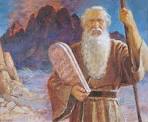
 

Moses with Tablets of Stone

Moses delivered Torah to the Hebrews. This Torah Portion-Eikev–teaches the benefits of Torah -keeping and offers a shadow of the renewed covenant and the Gospel of the Kingdom.

What I am seeing here is a somewhat blurry yet clear understanding of what our responsibilities as Torah Observant Believers in Yahoshua Messiah must be as it relates to keeping Father’s instructions.

Here, in this Torah Portion passage, Father is reiterating to the Hebrews prior to entering the Land of Promise, that if they but keep His Mishpat (essentially, hear, guard and do His Torah), He would in return keep His covenant and extend His lovingkindness toward them which He swore to their forefathers: 

Now, if you will pay careful attention to what I say and keep my covenant, then you will be my own treasure from among all the peoles, for all the earth is mine; and you will be a kingdom of cohanim for me, a nation set apart…(Exo. 19:5,6; CJB).


So, if this particular passage is applied to the Hebrews going into and living in the Land of Promise, how should we as Torah Observant Believers in Yeshua Messiah view and apply it in our daily walk with Messiah?

Don’t Forget to Focus

First and foremost, let us not forget that our focus must always be on the RENEWED covenant whereby Father’s ordinance/judgments/Mishpat, or simply His Torah, is to be written on the fleshly tablets of our hearts (Jeremiah 31:31-33). 

A common trap of the Hebrew Roots/Messianic Faith movement is being overly consumed with the rote keeping and obedience of Torah and having a worldview that does not have our Master Yahoshua Messiah as the focus of our Torah observance. It’s so easy to be focused on the tenets of the original covenant (i.e., the Old Covenant) through rote-keeping of Torah, and fail to realize the bigger picture associated with living under the renewed covenant. 

How many of us in Hebrew Roots have heard teachings given by prominent and respected Messianic teachers who fail to acknowledge the instructions of our Master Yahoshua? Indeed, without a proper Messiah-centric worldview, it can be quite easy to lose sight that: 

…The goal at which Torah aims is the Messiah, who offers righteousness to everyone who trusts (Rom. 10:4; CJB). 

The renewed covenant, which we are currently under, is the basis upon which the Gospel of the Kingdom is built. 

Look, the days are coming, Yehovah declares, when I shall make a new covenant with the House of Israel and the house of Judah, but not like the covenant I made with their ancestors the day I took them by the hand to to bring them out of Egypt (cf. Exo. 19:5), a covenant which they broke, even though I was their Master, Yehovah declares. No, this is the covenant I shall make with the House of Israel when those days are come, Yehovah declares. Within them I shall plant my Law, writing it on their hearts. Then I shall be their God and they will be my people (Jer. 31:31-33; cf. 2 Cor. 3:3; Heb. 8:8-10; NJB).

 The Focus of the Renewed Covenant as Opposed to the Original or Old Covenant

For all intents and purposes, this renewed covenant is no longer just about being a special possession and most favored nation in the eyes and heart of Yehovah.

The renewed covenant is about establishing a one-on-one, intimate and personal relationship with the Creator of the Universe–something that only a few people in all of history have ever truly experienced and enjoyed. It is about a profound change of heart and mind, whereby the desperately wicked, sinful heart of a manor woman is changed to one of purity, permitting the establishment of a true, substantive and above all, personal relationship with the Creator.

Under the original covenant, we would enjoy peace and prosperity and favor with the God of our forefather. However, our relationship with Father would be limited to one of rote obedience of His Mishpat (ref. Deut. 7:12). 

Thus, by us being under the grace-based renewed covenant, we keep Abba’s Mishpat (i.e., His Torah) because we love Him and desire to please Him and because we have been instructed to do so by our Master Yahoshua. We clearly recognize our place and identity in the Kingdom of Yehovah and as proper, loyal and dedicated servants and children of the Most High.

As citizens of the Kingdom and children of Yehovah, we act the part with joy and thanksgiving and obedience to Father’s eternal instructions. No longer is our obedience enacted out of fear of incurring pestilence, sickness, poverty and death. Instead, our obedience is enacted from the depths of a pure and loving heart towards Father.

We realize that our destiny as citizens of the eternal Kingdom and as children of Yehovah rests in the hands of our Master. We are no longer our own. We belong to Master Yahoshua, who is our High Priest, intercessor and example. This is the basis upon which the Gospel of the Kingdom is built.

Shaul (i.e., the Apostle Paul) wrote to the Corinthian Assembly of Messianic Believers:

19 What? know ye not that your body is the temple of the Holy Ghost which is in you, which ye have of God, and ye are not your own? 20 For ye are bought with a price: therefore glorify God in your body, and in your spirit, which are God’s. (1Co 6:19-20 KJV) 

Has Torah Been Done Away With?

Am I saying that Torah is done away with or that a Hebrew Rooter or Messianic should dismiss Torah altogether? Absolutely not! To the contrary indeed! 

Torah will always be our constitution. It serves to keep us in check and remind us what sin truly is. Torah-honoring and observance also results in our living abundant and blessed lives on this earth as outlined in the succeeding verses of this week’s Torah Portion. 

Torah, along with the work of the Holy Spirit, serves to humble and fashion us into a people of Yehovah our Elohim (Deut. 8:3). Our obedience of Torah pleases the Father and He extends His mercies and grace upon us as we walk out our Faith daily.

 The Old is the New on Steroids

Just because we are under the auspices of the renewed covenant doesn’t mean that the overriding principles and promises embedded in Torah and the old covenant don’t apply to the Torah Observant Believer in Yeshua Messiah today. Simply put: I see the renewed covenant as the old covenant on steroids. The renewed covenant has benefits added to it that the original covenant could only point to: 

For the Torah has in it a shadow of the good things to come, but not the actual manifestation of the originals. Therefore, it can never, by means of the same sacrifices repeated endlessly year after year, bring to the goal those who approach the Holy Place to offer them (Heb. 10:1; CJB).

The Benefits of Keeping Torah

Although the promises outlined in this week’s Torah Portion (i.e., Torah Reading) were given to the Hebrews on the cusp of their entering the Land of Promise, Torah observance and honoring for Torah Observant Believers in Messiah must still be followed. As en-grafted citizens into the commonwealth of Israel, we are required to keep Torah. In so doing–that is, ‘Ekev–we naturally realize the promises associated with keeping Torah:


  • Father will abundantly bless us as individuals as well as our families (Deut. 7:13, 14).
  • Father will remove all illnesses from us (7:15).
  • Father will fight our battles for us and deliver unto us that which He has promised us (7:16-24).
  • Abba will use us to destroy the works of the enemy (7:25-26).
  • That which we own will last beyond its expected useful life (8:4).


Complacency Breeds Disobedience and Indifference Towards Father

Unfortunately, we learned from the example of the Hebrews that complacency often breeds disobedience and indifference toward Yehovah and that may lead to our alienation from Him (8:12, 19,20). We are compelled to think about Yah’s Word each day, throughout the day. Furthermore, we are compelled to discuss Father’s Word with one another as often as the opportunity presents itself. Even more important, we are compelled to teach the Word to our children. All of this is repeated throughout Father’s Torah. 

If anything, Torah serves to remind us that everything we receive in this life that is good comes from Yehovah our Elohim: 

But you shall remember Yehovah your Elohim, for it is He who is giving you power to make wealth, that He may confirm His covenant which He swore to your fathers, as it is this day (Deut. 8:18).

Shadow Picture Revealed

In chapter 10 of this week’s Torah Portion, we see beautifully portrayed a shadow picture of the renewed covenant. 

Moshe was instructed to cut out and bring to Father 2-tablets of stone. The first time that the covenant was etched in stone and given to Moshe, Yehovah provided the stone tablets (Exo. 31:18). This time, Father instructed Moshe to bring 2-stone tablets to Him where He re-wrote that which He originally wrote on the 2-tablets of stone that He provided Moshe and which Moshe destroyed in response to the Hebrews worship of the golden calf (10:1,2). 

This new set of tablets were then placed in the ark of the covenant (10:2-5). 

This foreshadowed a time in the future that Israel (which includes us today) will bring the tablets of their hearts to Yehovah and He will inscribe on them His Word and His Covenant (Jeremiah. 31:31). His Word would then dwell within us (symbolized by the tablets being placed into the ark). That Word is embodied in the Holy Spirit (i.e., the Ruach HaKodesh) that dwells within every true believer: 

I [Yahoshua Messiah] will ask the Father and He will give you another Helper, that He may be with you forever that is the Spirit of Truth, whom the world cannot receive, because it does not see Him or know Him, but you know Him because He abides with you and will be in you (John. 14:16,17; NASB). 

Another beautiful shadowing that we see brought out in this week’s amazing Torah Portion is the example of the Levites, who Father separated out from the rest of the nation to serve Him (10:9). Here, Moshe is reiterates and rehashes the 40-year wilderness sojourn of the nation and how the Levites were not given any physical inheritance. 

Why were the Levites not given any physical inheritance? They were not given any physical inheritance because Father established that He alone would be their inheritance. 

Indeed, under the renewed covenant, we as a kingdom of priests unto Yehovah, seek not after physical possessions. Our possession is Yehovah, our God (i.e., our Elohim): 

And hath made us kings and priests [speaking of Yahoshua] unto Yehovah and His Father…(Rev. 1:6; KJV, adjusted).

And hath made us unto our Yehovah kings and priests: and we shall reign on the earth (Rev. 5:10; KJV, adjusted).

Blessed and holy is he that hath part in the first resurrection on such the second death hath no power, but they shall be priests of Yehovah and of Messiah, and shall reign with Him a thousand years (Rev. 20:6; KJV, adjusted). 

From the very beginning, one of the focal points of the original covenant, was that Father aimed to have selected unto Himself a special people (i.e., the Hebrews) and whom He would fashion into a royal priesthood that would serve Him before the nation peoples of the earth. This royal priesthood would serve help draw the pagan nations of the world into a saving knowledge of the True and Living Yehovah our Elohim. Unfortunately, the Hebrews failed to effectively carry out this plan and they of course defaulted on the original covenant. 

The good news is, however, that Father recognized from the very beginning that the hearts of His chosen people would prevent them from carrying out the full tenets of the original covenant. However, Father still had embedded from the beginning in His eternal plan, the advent of His Son–the Prophet–who would usher in the Renewed Covenant that would serve to bridge the gap that separated all humans from the Creator as a result of sin. Yeshua’s efficacious work established an opportunity for every man, woman and child to have a true and substantive relationship with the Creator, and become children of the Most High. Yahoshua is now and forever more our High Priest under the Melchezedekian-order (Heb. 2, 3, 4, 5, 6, 7, 8, 9 10).


Were the Hebrews Set Up For Failure?

Did Father set up His people for failure? No, not in the least. Although He knew beforehand that the Hebrews would fail to fulfill the tenets of the original covenant, He was compelled by His righteousness and holiness to extend to the Hebrews His grace and the opportunity to serve Him as a peculiar and treasured people. Even though the Hebrews faltered in their keeping of the orginal covenant, Father’s mercy has continued to be extended to them and to us. 

The one thing Father has always insisted upon as it relates to humans being loyal to Him–obeying His Word–is that every individual must maintain his or her own free will. Each person must make up in their own minds and purpose in their own hearts to serve and obey the Almighty. Father would never force any individual to love Him. 

We see this exemplified in the Torah instruction related to Hebrews owning slaves, whereby in the time that a slave was to be released, that slave had the opportunity to stay with His master. And in making that major life decision, that slave would be subjected to pain and the shedding of blood to secure that loyalty and pledge to serve his master for the rest of his life (Exo. 21:5,6). 

So what then did Father expect from His sin-prone, stiff-necked people? It was simple: 

And now, Israel, what does Yehovah your God ask of you? Only this: to fear (Hb.=yare or to reverence) Yehovah your God with all your heart and all your soul, to keep the commandments and laws of Yehovah, which I {i.e., Moshe] am laying down for you today for your own good…Yehovah your Elohim is the one whom you must fear and serve; to Him you must hold firm; in His name take your oaths. Him you must praise, He is your Elohim…You must love Yehovah your Elohim and always keep His observances, His laws, His customs, His commandments…Let these words of Mine remain in your heart and in your soul; fasten them on your hand as a sign and on your forehead as a headband. Teach them to your children and keep on telling them, when you are sitting at home, when you are out and about, when you are lying down and when you are standing up. Write them on the doorposts of your house and on your gates. (10:12, 13, 20, 21; 11:1; 18-20; NJB, adjusted). 

Essentially, Father was simply asking His people to be obedient to His Torah: nothing more, nothing less. In so doing: 

…you may live long in the land Yehovah swore to give to your ancestors and their descendants, a land flowing with milk and honey (11:9; CJB, adjusted). 

Back when this was written, the emphasis was on the Hebrews living lives according to the way Yehovah required in order for them to flourish in the Land of Promise (11:9, 14, 15; 11:21; 22-25).

Held to a Higher Standard of Torah Living

Let us, however, not think that that’s all that is required of us as disciples of Yahoshua. We are being held to a much higher standard. The standard that we are being held to was taught and modeled for us by our Master. That which Master taught and modeled for us, He expects us to go and do likewise (cf. Luk. 3:11). On top of that, Master expects us to go out and make for Him disciples: 

Go. Teach all nations to carry out all the things that I have commanded you–forever (Matt. 28:19; Rood). 

Sadly, too many of us in Hebrew Roots today are so focused on keeping Torah as written in the Pentateuch of our dusty Bibles–even down to those ceremonial aspects of Torah that we can no longer keep–that we ignore the life of Torah that Master Yeshua came to teach us. 

Even in Torah, Father instructed the Hebrews to not focus on blind and rote obedience of His Torah. Instead, Father instructed the Hebrews to: 

Circumcise your heart and stiffen your neck no longer (10:16). 

It become a heart thing. Without a change of heart, it is difficult, if not impossible, to truly keep Torah the way Father intended it be kept from the very beginning. [See my post entitled, “A Broken Heart and Contrite Spirit Gets God’s Attention“] This is THE TORAH (the Good News–the Gospel of the Kingdom) that Master Yahoshua came to deliver to us.  

We Have a Rich Heritage and Big Sandals to Fill

As 10:15 shows, let us rejoice and be glad in the fact that we have been selected to be a part of Father’s grand Kingdom. We are following in the footsteps of giants and we have been en-grafted into a rich and treasured heritage. 

Father intervened into the affairs of men and found a man, Abraham, upon whom He would ultimately reconcile unto Himself all mankind, reclaim and restore the earth to its former glory, and establish His eternal kingdom on earth. It was through Abraham’s lineage that Master Yeshua would come and fulfill all of these things and we are the beneficiaries of this work. 

We are picking up where the Hebrews of old left off. However, we are not just picking up and carrying on as they should have. We are taking this thing to its fullest potential in Yeshua Messiah.[See my post entitled, “When Tradition Eclipses Torah“}


________________________________________________________________
 

Torah-Keeping–When it is Practiced in Sin

Torah-Keeping–When it is Practiced in Sin

When Torah-Keeping is Practiced in Sin

by Rod Thomas | The Messianic Torah Observer

This Week’s Torah Reading–D’varim

This week’s Torah Reading was D’varim. A section of it addressed our eventual abandonment of Father’s Torah after we were established in the land. As a result of our abandonment of Torah, the land would be overrun by Gentiles and we would suffer a panoply of hardships, including death, illnesses and destruction.
The accompanying Haftorah was contained in Isaiah 1:1-27. In this Haftorah Reading, Isaiah highlights our pending judgment that was coming as a result of the very thing we were warned about by Father and Moshe just before our conquering and possessing the Land of Promise.

The Prophet Isaiah

The Prophet Isaiah

The Prophet Isaiah was sent by God to warn Judah of the dangers associated with sinning while falsely keeping Torah.

Isaiah served as a prophet during the reigns of 4-kings (i.e., Uzziah, Jotham, Ahaz and Hezekiah) of Judah in the 8th century B.C.E. Biblical experts (whatever that truly means today) suggests that the Book of Isaiah was penned entirely by the Great Prophet, but was also likely penned in in two periods. These two periods seem to have taken place between 740 and 686 B.C.E with roughly 15-year separation period in between.

From what little we know historically of this period in Judah’s history, coupled with what Isaiah and his contemporaries wrote, Isaiah seems to have begun his ministry just a few years before King Uzziah’s death (`740’s B.C.E.). The prophet appears to have lived up to the 14th year o King Hezekiah’s reign (`698 B.C.E.). It is conceivable that Isaiah functioned in his prophetic office for the better part of 60-years.
I found the possibility that Isaiah’s spouse being a “prophetess” absolutely fascinating and exciting. No one can legitimately deny that our forefathers were a bit on the misogynistic side. Little is ever mentioned about women prophets although Scripture gives the identities of some 9-such women of the Most High (i.e., Miriam, Deborah, Huldah, Noadiah, Isaiah’s wife, Elizabeth, Anna, Daughters of Philip, and Jezebel). [There is also evidence emerging in mainstream Christianity that there were even female apostles and evangelists, the subject of which goes outside the realm of this post.] In addition to Isaiah being married to a prophetess, the couple had a son, Maher-shalal-hash-baz. One other interesting tradition that has been attributed to Isaiah was that he was a vegetarian (reference: Mark Braunstein, 1980; “Vegetarianism in Art”). Sadly, and what seems to be a common end to most of Father’s anointed prophets, Talmudic tradition [Yevamot 49b] holds that this Isaiah suffered martyrdom at the hands of King Manasseh, who ordered that Isaiah be sawn in two. (Reference: Wikipedia-Isaiah articles.)
So, under what circumstances and time frame did Isaiah pen his prophecies? It appears that this portion of the book of Isaiah was written around 700 B.C.E., about the time of the Assyrian invasion of the House of Israel (which occurred about 722 B.C.E.). We can surmise from Isaiah’s writings that his ministry to the Hebrews began sometime around 740 B.C.E., as he was called by Yehovah “in the year that King Uzziah died” (6:1). Although Assyria was an imminent threat to House of Israel, she also posed an existential threat to Judah. The people leaned toward self-reliance and defense against Assyria as opposed to divine protection and deliverance by Yehovah. Although House of Israel was doomed due to fall before Assyria, House of Judah was secure in the promise of Father’s conditional protections. Yet Judah kings Ahaz and Hezekiah, respectively, sought human alliances to stave off the Assyrian onslaught. And although Hezekiah eventually relented and trusted Yehovah, Judah would eventually fall before the coming Babylonian juggernaut.

Isaiah Delivers the Indictment Against Judah

Isaiah starts off his cepher delivering a crucial message given to him by Yehovah. This message is of a recurring theme as it relates to the Hebrews: “I raised and brought up children, but they rebelled against me” (vs. 2; NET). Interestingly, Father is declaring this message to both the inhabitants of heaven and earth (cf. Mic. 1:2). For the message to be declared before the inhabitants of both realms, it must be important.
The N.E.T. reference Bible places an even more ominous tone to this declaration. Here we see, in a personified sense, the Creator’s courtroom assembled. The heavens and earth are summoned to the “Creator’s courtroom as witnesses against Yehovah’s covenant people.”
So the question is thus begged: why has Father assembled this courtroom against Yehovah’s covenant people? Was this a mere confluence of unfortunate circumstances that led us to this point in the Jew’s history? Not exactly. This was all foretold to us and recorded centuries prior to Isaiah taking up his prophetic office. I refer you to the following:
 25 “When you become the father of children and children’s children and have remained long in the land, and act corruptly, and make an idol in the form of anything, and do that which is evil in the sight of the LORD your God so as to provoke Him to anger,  26 I call heaven and earth to witness against you today, that you will surely perish quickly from the land where you are going over the Jordan to possess it. You shall not live long on it, but will be utterly destroyed. 27 “The LORD will scatter you among the peoples, and you will be left few in number among the nations where the LORD drives you.  28 “There you will serve gods, the work of man’s hands, wood and stone, which neither see nor hear nor eat nor smell.  29 “But from there you will seek the LORD your God, and you will find Him if you search for Him with all your heart and all your soul. (Deu 4:25-29 NAU)
 17 “But if your heart turns away and you will not obey, but are drawn away and worship other gods and serve them,  18 I declare to you today that you shall surely perish. You will not prolong your days in the land where you are crossing the Jordan to enter and possess it.  19 “I call heaven and earth to witness against you today, that I have set before you life and death, the blessing and the curse. So choose life in order that you may live, you and your descendants,  20 by loving the LORD your God, by obeying His voice, and by holding fast to Him; for this is your life and the length of your days, that you may live in the land which the LORD swore to your fathers, to Abraham, Isaac, and Jacob, to give them.” (Deu 30:17-20 NAU)
 28 “Assemble to me all the elders of your tribes and your officers, that I may speak these words in their hearing and call the heavens and the earth to witness against them.  29 “For I know that after my death you will act corruptly and turn from the way which I have commanded you; and evil will befall you in the latter days, for you will do that which is evil in the sight of the LORD, provoking Him to anger with the work of your hands.”  (Deu 31:28-29 NAU)
 “Give ear, O heavens, and let me speak; And let the earth hear the words of my mouth.  2 “Let my teaching drop as the rain, My speech distill as the dew, As the droplets on the fresh grass And as the showers on the herb.  3 “For I proclaim the name of the LORD; Ascribe greatness to our God!  4 “The Rock! His work is perfect, For all His ways are just; A God of faithfulness and without injustice, Righteous and upright is He.  5 “They have acted corruptly toward Him, They are not His children, because of their defect; But are a perverse and crooked generation. (Deu 32:1-5 NAU)
In other words: centuries before Isaiah assumed his prophetic office, Father warned us in these 4-passages that we would end up in this position if failed to do what He instructed us to do in His Torah. Father was essentially saying to us: “Hey guys, look, I’m telling you today, with heaven and earth as my witnesses, you will be uprooted out of the Land of Promise and destroyed because of your corrupt nature. Your only hope of survival is to stay the course with me and do not follow after your own ways.

The Affects of Sin on the People of Yehovah

Sin has a deleterious effect on individuals as well as upon a nation. Let’s consider from Isaiah’s prophetic perspective what some of those effects are.
  1.  Sin causes a people to become stupid and foolish in terms of their responsibilities and the repercussions of their actions. In verse 3, Father expresses that simple-minded animals understand the natural order of things. However, sin has caused His people to “not understand” (i.e., biyn {bene} that is to discern, understand, consider).  The prophet Jeremiah echoed a similar refrain when He wrote: “Yea, the stork in the heaven knoweth her appointed times; and the turtle and the crane and the swallow observe the time of their coming; but my people know not the judgment of Yehovah. In other words, initially the people of Yehovah may realize that the wages of sin is death and they may attempt to keep themselves from sin. However, once sin does take hold of the people, over time, they forget that sin leads to death and destruction and no matter how hard the emissaries of the Most High attempt to warn and sway Yah’s people to turn from their wicked ways, the people are too dense to understand the emissaries’ messages.
  2. Sin causes a people to become corrupt in all their ways. Verse 4 describes the weightiness of sin and how it corrupted His people so that they simply abandoned their Elohim.
  3. Sin brings with it penalties. In verse 5, Father asks His people, ” Why do you want more beatings?” No healthy-minded human being desires to be hurt or beaten. Yet sin has the pervasive nature of deadening one to pain and hurt, or at the very least, as in item 1 above, being so stupid and foolish that one does not realize that they are reaping the wages of their sin. Indeed, Father is trying, through Isaiah, to reason with His people by asking them: why do you insist on getting beat down? You can stop the continuous beat downs you are experiencing if you simply turn from sin and return back to me. The Prophet Jeremiah described this process as the people refusing to receive their correction. Instead of relenting to the scourging that sin brings them, the people of Yehovah harden their faces and their resolve to continue living as they’ve grown accustomed to living–the sinful, idolatrous, Torahless life.
  4. Sin ultimately takes over the entire body leaving nothing good; nothing redeemable. Father laments in verse 6 that from the sole of the foot even to the head, no spot is uninjured–wounds, welts, and festering sores not cleansed, bandaged, or soothed with oil” (CSB). Do we not see such a thing happening in our nation today? Is not the very fabric of this nation’s republic becoming so corrupt and hateful that there’s little hope for healing?
  5. Sin brings destruction to people’s property. In verse 7 Father points out to the people that their nation, cities and real properties are overtaken by destructive elements. The nation was warned that this would happen if they abandoned Abba’s Torah (Deuteronomy 28). In that warning, Father warned that the fruit of their land and all their labors would be consumed by others who were not of their nation. These marauding nations and people would consume all their produce and oppress and crush them. These oppressors will leave Yehovah’s people nothing behind. They will take everything. How many of us have abandoned Torah and given ourselves over to sin, only to see everything that we have worked so hard for dissolve away before our very eyes? Sin has that destructive effect. Eventually, nothing is left behind and our lives become desolate and barren (verses 8). We become as the people and land of Sodom and Gomorrah (verse 9).

Father Eventually Has His Fill of our Foolishness

If any lesson is to be had by us who are Torah Observant Believers in Yahoshua Messiah is that eventually, Father reaches a point where He has had enough with our foolishness. For us, the stakes are even higher. It’s one thing for the Creator of the Universe to endure the sinful ways of this unbelieving and lawless world in which we live. It is an entirely different thing for us, who go about keeping rote aspects of Torah (whatever that actually looks like), but continue to allow sin to reign in our lives.
Isaiah writes:

“What are your endless sacrifices to me? says Yahweh. I AM SICK of burnt offerings of rams and the fat of calves. I take no pleasure in the blood of bulls and lambs and goats. When you come and present yourselves before me, who has asked you to trample through my courts [at feast gatherings]. Bring no more futile cereal offerings , the smoke from them fills me with disgust. New Moons, Sabbaths, assemblies–I CANNOT ENDURE SOLEMNITY COMBINED WITH GUILT. Your New Moons and your meetings I utterly detest; to me they are a burden I am tired of bearing” (Isa. 1:11-14; NJP).

Oh dear God: can you hear the glee in the voices of the anti-Torah crowds at the reading of this passage of Isaiah. I personally have come across some teachings from traditionalists and fundamentalists who have hijacked this writing to support their anti-Torah agenda. For these anti-Torah teachers, Isaiah is passing along Yehovah’s sentiments that they claim show that He did away with His own Torah–even as far back as Isaiah’s day. And certainly, if one were to simply read these verses out of its proper context supported by one’s anti-Torah worldview, then of course it would appear that Father was circling back and telling the Hebrews that He really didn’t care too much for His own Law and instructions.
Come on! Context, context, context. Context is always king when delving into the immeasurable riches of Father’s Word. When this passage is read and studied in its truest context, we see quite clearly that He despised Judah’s disingenuous ways. Verse 13 of this chapter puts this whole thing into its proper perspective:  “I CANNOT ENDURE SOLEMNITY COMBINED WITH GUILT (i.e., iniquity; evil).”
In other words: some of us may pride ourselves as being of Hebrew Roots or of the Messianic Faith. However, if we are practicing the True Faith once delivered while boldly practicing sin, then “Houston, we have a problem.”

Father’s Response to Solemnity with Guilt

As reported by Isaiah in this passage, when we go about practicing our Hebrew Roots/Messianic Faith that is combined with guilt (i.e., Hebrew=aven which means iniquity or evil), Father refuses to hear our prayers. In fact, Father refuses to even look at us (CSB). Why, because our hands are covered in blood (verse 15). Is there no wonder why so many of us in our Faith Community are weighed down by poverty, sickness and family problems?
Father further warned that if the Judaeans chose to ignore the words of Isaiah, they would be “devoured by the sword” (verse 20). Indeed, Father warned of this in His Torah when He stated through Moshe:
“And I will bring a sword upon you that shall avenge the quarrel of my covenant. And when ye are gathered together within your cities, I will send the pestilence among you; and ye shall be delivered into the hand of the enemy…And I will scatter you among the heathen and will draw out a sword after you: and your land shall be desolate and your cities waste” (Lev. 26:25, 33).
Additionally, Father warned the Judaeans that their money would become worthless and their produce diminished (verse 21).
Father sealed this prophecy by His own Name:
“I Yehovah have spoken it” (verse 20).
Does Father’s Name carry with it any true meaning? Indeed, Moshe wrote of Father:
“God is not a man that He should lie; neither the son of man that He should repent. Hath He said, and shall He not do it? Or hath He spoken and shall He not make it good” (Num. 23:19; KJV).
Why do we ever doubt that which the Father states in His Word? What does it take for men to come around and actually recognize that our God is not a liar; He is not some myth; He is not fallible; He is not bipolar; He is not confused; He is NOT human. He means what He says and He always does what He says He is going to do.

The Fix for the Solemnity with Guilt Problem

Fortunate for us, as it would have been fortunate for Judaeans if they would have heeded Isaiah’s words in that day, there is an easy fix to this dilemma:
“Wash yourselves. Cleanse yourselves. Remove your evil deeds from My sight. STOP DOING EVIL. Learn to do what is good. SEEK JUSTICE by correcting the oppressor and defending the rights of the fatherless and by pleading the case of the widows” (verses 16-17).
Could there be no simpler solution to their problem? Could there be no simpler solution to many of our problems. If we simply were to stop sinning and keep Torah in “Spirit and in Truth” (John 4:23) the way Yahoshua our Messiah taught us, then Father will cleanse us from our unrighteousness. Isaiah beautifully writes:
And this is Father actually speaking through Isaiah–“Come now and let us talk this over. Though your sins are like scarlet, they shall be white as snow; though they are red as crimson, they shall be like wool” (verse 18). And “if you you have a willing attitude (Heb. “abah;” to willingly consent to something) and obey (Heb. “shamah;” to hear and do that which Father instructs us to do), then you will again eat the good crops of the land” (vs. 19).
Could it be any simpler? If the Judaeans were simply to adopt a change of heart that was fundamentally in-tune to Father’s Way of Life; and if they were to “Shamah,” listen and obey Father’s instructions, then they would flourish in total and uninterrupted safety in their land. (See my post “When Tradition Eclipses Torah.”)

A Shadow Picture Revealed

As He was teaching a handful of his disciples in the Dead Sea Valley in the winger of 27 C.E., a likely female disciple, in joyous and reverent response to what the Master was teaching proclaimed a thankful blessing upon Yahoshua’s mother. In response to that thankful blessing, Master countered with a Truth that remains true today as it was true in the day it was delivered:
“Even more blessed (Gr.=markarios, or happy; fortunate) are those who HEAR THE WORD OF YEHOVAH AND KEEP IT” (Luke 11:27, 28).
This was a recurring refrain in Master’s earthly ministry.
It was during a period of intense activity during Master ministry, this time near His home in Kfar Nahum (i.e., Capernaum). His family, seemingly having not seen Him in some time, desired to see Him in the midst of the crowds that routinely assembled to hear His teachings. In the midst of one of His teaching sessions, someone informed Yeshua that His mother and brothers were standing outside the venue and desired to see Him. Master, in a surprising response to receiving this news, stated:
“My mother and my brothers are those who hear the Word of Yehovah and do it” (Luk. 8:21).
Nevertheless, some will say, well, what does that have to do with the Isaiah Haftorah Reading? Well, I’d say this that Master taught–that being hearing and keeping the Word of  Yehovah–has a great deal to do with this Isaiah passage. It’s not the rote keeping of Torah that keeps us from harm’s way and in a right relationship with the Creator of the Universe. It’s the keeping of Torah the way Master Yahoshua modeled for and taught us. It involves a profound and permanent change of heart that seeks to keep Torah because we love Yehovah our Elohim. It involves a profound and permanent change of heart whereby we seek to live sinless lives. For when we hear and obey the Torah of Yehovah our Elohim with a pure heart that is not influenced or tainted by pervasive sin, then we will be blessed–markarios–happy and fortunate.

All is Not Lost–A Bright Future Ahead

We learn that Father will make right all that was wrong in Judea. He declared that He would “take vengeance of His adversaries and avenge Himself on His enemies” (verse 24; QBE). In addition, Jerusalem will get her reputation back as being a righteous and just city (verses 25-27).
Now, this is likely a prophecy set to take place in the End Times. Malachi the prophesied of such:
“But who may abide the day of His coming? And who shall stand when He appeareth? For He is like a refiner’s fire and like fullers soap. And He shall sit as a refiner and purifier of sliver; and He shall purify the sons of Levi, and purge them as gold and silver that they may offer unto Yehovah an offering in righteousness (3:2, 3; KJV; adjusted).
Indeed, the gist of this Haftorah, as sobering and ominous as it may appear to us today, is really a message of hope. Isaiah laid before the Judaeans, and for us today, the reality of our seemingly hopeless situation. The Judaeans (and in many circumstances, our negative situations even today) are the result of our disobedience and refusal to shamah the Words of our Father and the teachings of Yahoshua our Master. We can forestall any impending doom upon us that is as a result of our insolence if we but:
“Seek first Yehovah’s Kingdom and His Righteousness” (Matt. 6:33). If we make this our primary focus each and every day, everything in our lives will fall wonderfully and happily in line.
Let us seek His Kingdom with as much zeal and fervor as we can possibly muster and then we can truly enjoy the abundant life that Master Yahoshua promised we’d have. (Reference John 10:10) (If you zealously desire to know about living such a Kingdom-seeking life, check out my post entitle: “Living a Life Beyond the Norm.”)
Faithfully


Yeshua the Light of the World (Torah Living Episode 24)

So this past Sabbath while listening to some great Messianic teachings from some of the world's best Messianic teachers, I was taken by the passage in John where the Master described Himself as being the "light of the world." John records the Master as thus: "I am the...

Israel’s Indiscretions with Moab–Moses Intervenes

Greetings Fellow Saints! Today is the 30th day of the 2nd Biblical Month and the 41st Day of the Counting of the Omer. May this great day of preparation be of most blessing to you and your family. My Torah studies today took me to a most profound place in the Children...

The God Who is Evergreen

Greetings Fellow Saints in Training! Today was the 28th Day of the 2nd Biblical Month and the 39th day of the counting of the Omer. We trust that you have a blessed day in Messiah. My Torah studies today took me to Numbers 23: 13-26. Those of you who are Torah buffs...

The Samaritan Woman at the Well and Our Salvation

Greetings Fellow Saints in Training. Today was the 27th Day of the 2nd Biblical month and the 38th day of the counting of the omer. I trust you had a lovely day in Messiah. This morning prior to going to work and as part of my daily Torah studies, I happened upon...

Look and Live

Today is the 21st Day of the 2nd biblical month and the 32nd day of the counting of the omer. I trust this brief post finds you and yours well and blessed. Shalom. My #Torah study today provided a prophetic shadow picture of the Master and His sacrifice at Calvary. In...

Am I Clean or Unclean Before the Father?

Today is the 19 day of the 2nd Biblical Month and the 30th day of the counting of the Omer. In my Torah study this morning I came across Numbers 19. This chapter dealt with the issue of cleanliness and uncleanliness; more specifically how must Israel (more so...

Tzitzit Wearing

Greetings to you all this 23rd Day of the #CountingoftheOmer and the 12th Day of the 2nd Biblical Month on the Creator's Sacred Calendar. Today's #Torah reading marked the commandment by the Almighty to His people to wear #Tzitzits on each corner of their garments....

Hebrew Roots and Torah Portions–Are Torah Portions Valid for Messianics

Hebrew Roots and Torah Portions–Are Torah Portions Valid for Messianics

I have always been one to think: if one person has a question on a particular topic or issue that I have posted on this program, it stands to reason that there are others out there who have the same question. Recently I received feedback from a dear listener of this program who had heard me comment or reference Torah Portions during a recent post. That listener requested more information about Torah Portions and wanted to know the role Torah Portions played, if any at all, in the lives of Torah Observant Believers in Yeshua Messiah. In other words, what are Torah Portions and are they valid for Messianics today? That being said, I wanted to take a brief moment and share with you my perspectives on Torah Portions and Hebrew Roots and the Messianic Community. (I invite you to read or listen to our post entitled, “Torah Portions and the Body of Christ.”)

What Are Torah Portions?

Torah Portions have, what I believe to be, a beautiful and meaningful tradition and even history attached to them. Although they are of a man-made construct, designed for the systematic and timely reading of the entire Torah each sacred calendar year, Torah Portions are built upon the foundation of the Torah.

What do I mean by a man-made construct? Well, we essentially have the five-books of Moses which we in Hebrew Roots and the Messianic Community refer to as the Torah (aka: the Pentateuch consisting of Genesis, Exodus, Leviticus, Numbers and Deuteronomy). As Torah Observant Believers in Yahoshua Messiah, we view Torah as our constitution; the foundation upon which we live our lives. The Torah contains the Words of the Creator of the Universe. It is the Creator’s instructions, rules, commandments and regulations intended for all the peoples of the world to live by. This of course, is contrary to the standard teachings of Judaism and even Christians worldwide. Yet Father clearly stated that Torah was intended for all:

One law shall be to him that is homeborn, and unto the stranger that sojourneth among you. (Exo 12:49 KJV)

Lev 24:22 Ye shall have one manner of law, as well for the stranger, as for one of your own country: for I am the LORD your God.

Num 15:15 One ordinance shall be both for you of the congregation, and also for the stranger that sojourneth with you, an ordinance for ever in your generations: as ye are, so shall the stranger be before the LORD.

Num 15:16 One law and one manner shall be for you, and for the stranger that sojourneth with you.

And then as Torah Observant Believers in Yeshua Messiah:

Gal 3:28 There is neither Jew nor Greek, there is neither bond nor free, there is neither male nor female: for ye are all one in Christ Jesus.

Now, Father sees this “One Law fits all” as being of the utmost importance. So important is this principle, that He sent us His only begotten Son. Sadly, Christianity places the focus of Yeshua’s earthly ministry upon the Master’s death, burial and resurrection. As vitally important as the death, burial and resurrection of Yahoshua is to the world, the Gospel of the Kingdom message that He brought, taught and modeled for us is also vitally important. Torah was, is and remains the fulcrum of the Gospel of the Kingdom message.

Once Torah was delivered to us in the Sinai Wilderness, we were instructed to have it read to us in its entirety every seven-years at the Feast of Tabernacles (aka: Sukkot):

 10 And Moses commanded them, saying, At the end of every seven years, in the solemnity of the year of release, in the feast of tabernacles, 11 When all Israel is come to appear before the LORD thy God in the place which he shall choose, thou shalt read this law before all Israel in their hearing. 12 Gather the people together, men, and women, and children, and thy stranger that is within thy gates, that they may hear, and that they may learn, and fear the LORD your God, and observe to do all the words of this law: 13 And that their children, which have not known any thing, may hear, and learn to fear the LORD your God, as long as ye live in the land whither ye go over Jordan to possess it. (Deu 31:10-13 KJV)

Was the reading of Torah only to take place at Shemitah during the Feast of Tabernacles every seven-years? No. It is safe to conclude that Torah was to be read annually at every sacred assembly of the nation (reference: Deuteronomy 12:5; 16:16; Joshua 8:34, 35; Jeremiah 36:6; Nehemiah 8:1).  In fact, it became the responsibility and practice of the righteous of YHVH to dwell upon Torah day and night:

Blessed is the man that walketh not in the counsel of the ungodly, nor standeth in the way of sinners, nor sitteth in the seat of the scornful. 2 But his delight is in the law of the LORD; and in his law doth he meditate day and night.3 And he shall be like a tree planted by the rivers of water, that bringeth forth his fruit in his season; his leaf also shall not wither; and whatsoever he doeth shall prosper. 4 The ungodly are not so: but are like the chaff which the wind driveth away. 5 Therefore the ungodly shall not stand in the judgment, nor sinners in the congregation of the righteous. 6 For the LORD knoweth the way of the righteous: but the way of the ungodly shall perish. (Psa 1:1-6 KJV)

Indeed, it was not a common thing for the average Israelite to possess Torah Scrolls, at a minimum as recently as the first millennium C.E. Torah Scrolls in ancient Israel were kept primarily in the possession of the Levitical Priests and the Kings and royal houses of Israel. Beyond this period, owning or having direct access to Torah was the privilege of the Jewish elite of society that possessed the influence and financial resources to commission a scribe to produce a set of Torah Scrolls. Even then, it took many months for scribes to complete their copying of the 305,000 letters that are said to make up the whole of Torah (reference chabad.org). Otherwise, we would have to await the assembling together of ourselves in a public forum, such as a Feast Day, or more so, on the weekly Shabbats. And this reading of Torah on the weekly Shabbat is what Torah Portions is somewhat all about.

Torah Portions

Torah Portions is simply a system by which the entire Torah is read annually.

I stated earlier that Torah Portions for all intents and purposes is a man-made construct for the systematic and timely reading of the entire Torah each sacred calendar year. Our present day Torah Portion system is apportioned into 54-separate, or what Jews refer to as parshas or parashot. This apportionment was done in accordance with the Calculated Jewish Calendar.

Now if you’ve been following me on this blog and podcast program for any length of time you would know that I follow the “observational calendar” which differs somewhat from the Jewish Calendar. (Read or listen to our installments entitled “When Tradition Eclipses Torah” and “Living a Life Beyond the Norm–Lessons Learned From the Levitical Priesthood” for more discussion on the calendars if you are interested.) For purposes of this thoughts and reflections, I will forgo any discussion on the calendars.

Each of the 54-separate parshas or parashahs were designed to be read in sequence each Sabbath in synagogues throughout the world. There is only one Torah Portion, so regardless where any Jew may find him/herself in the world at any given time during the sacred calendar year, if they are attending synagogue services on the Shabbat or during the week, they will hear the same portion of Torah read as would be heard by their counterparts around the world.

Yes, Torah Portions are a uniquely Jewish tradition and practice. As best as I can trace, Torah Portions seem to have its start around the time of Nehemiah and Ezra, just after we returned to the Land after being in Babylonian Captivity for 70-years. During those 70-years of captivity, the overwhelming majority of Israelites had lost much of their language, and worse, had forgotten most, if not all, of Torah. Thus, when we were repatriated to our Land of Promise, it fell to Nehemiah and Ezra to get us back on track in terms of being a People of the Book. And some of the most stirring pros you’ll ever come across in the Tanach you find in this chapter. Allow just a few verses to be read of the 8th Chapter of Nehemiah:

And all the people gathered themselves together as one man into the street that was before the water gate; and they spake unto Ezra the scribe to bring the book of the law of Moses, which the LORD had commanded to Israel. 2 And Ezra the priest brought the law before the congregation both of men and women, and all that could hear with understanding, upon the first day of the seventh month.  And he read therein before the street that was before the water gate from the morning until midday, before the men and the women, and those that could understand; and the ears of all the people were attentive unto the book of the law. 4 And Ezra the scribe stood upon a pulpit of wood, which they had made for the purpose; 5 And Ezra opened the book in the sight of all the people; (for he was above all the people;) and when he opened it, all the people stood up: 6 And Ezra blessed the LORD, the great God. And all the people answered, Amen, Amen, with lifting up their hands: and they bowed their heads, and worshipped the LORD with their faces to the ground…and the Levites, caused the people to understand the law: and the people stood in their place. 8 So they read in the book in the law of God distinctly, and gave the sense, and caused them to understand the reading. 9 And Nehemiah, which is the Tirshatha, and Ezra the priest the scribe, and the Levites that taught the people, said unto all the people, This day is holy unto the LORD your God; mourn not, nor weep. For all the people wept, when they heard the words of the Torah. 13 And on the second day were gathered together the chief of the fathers of all the people, the priests, and the Levites, unto Ezra the scribe, even to understand the words of the law. 14 And they found written in the law which the LORD had commanded by Moses, that the children of Israel should dwell in booths in the feast of the seventh month: 15 And that they should publish and proclaim in all their cities, and in Jerusalem, saying, Go forth unto the mount, and fetch olive branches, and pine branches, and myrtle branches, and palm branches, and branches of thick trees, to make booths, as it is written. 16 So the people went forth, and brought them, and made themselves booths, every one upon the roof of his house, and in their courts, and in the courts of the house of God, and in the street of the water gate, and in the street of the gate of Ephraim. 17 And all the congregation of them that were come again out of the captivity made booths, and sat under the booths: for since the days of Jeshua the son of Nun unto that day had not the children of Israel done so. And there was very great gladness. 18 Also day by day, from the first day unto the last day, he read in the book of the law of God. And they kept the feast seven days; and on the eighth day was a solemn assembly, according unto the manner. (Neh 8:1-18 KJV)

Indeed, after reading this and other passages of the Cephers of Ezra and Nehemiah, it is not too much of a stretch, if you ask me, to point to Nehemiah and Ezra as the originators, or at the very least, we can see the inspiration for the development of Torah Portions through their story.

According to www.jewishencyclopedia.com, Torah was divided into 153 parts to read over a 3-year cycle. This system “prevailed in Palestine proper till the exiles from Spain brought this custom into the Holy Land.” Over succeeding centuries, the Torah was broken into 54-weekly lessons known as “Parashah” (plural “Parashiyyot) to be read in annual cycles. Each Parashah is marked in Hebrew Bibles by the particular number of the portion for the week and is entitled by the “names which are taken from the first word (e.g., 1, “Bereshit”) or from the first striking word (e.g., 2, “Noah”), or sometimes from two words (e.g., 3, “Lek Leka”; 50, “Ki Tabo”) (ibid).

How Torah Portions Work

The way it works in orthodox Jewish churches today is that the first parashah of the week is read on the afternoon of the preceding Shabbat on which the whole portion is read. Additionally, the first parashah of the week is read also on Mondays and Thursdays before the Shabbat on which the entire portion is to be read, unless a new moon, feast or fast falls upon those appointed days. The whole Torah Portion cycle begins and ends and begins anew on Simchat Torah according to www.hebrew4christians.com. In case you are unaware, Simchat Torah generally occurs on the day after Shemini Atzeret, or the Last Great Day. Shemini Atzeret is the day after the 7th day of the Feast of Tabernacles or Sukkot, which occurs in the 7th month of the sacred calendar year. The Feast of Tabernacles or Sukkot and Last Great Day round out the year’s mandated Feasts of YHVH. Many of us in our Faith Community, like that which is done with Passover and Unleavened Bread where we combine the two holidays into simply one 8-day celebration we reference as Passover, we combine Tabernacles and Last Great Day to be referred to as the Feast of Tabernacles or Sukkot, an 8-day celebration. Throughout the year, the portions are read (or even chanted) in Jewish synagogues and in some Messianic services around the world. Yes, leap years are factored into the annual apportionment of the Torah, but the assigned readings are made clear in the annotations of Jewish Bibles.

I get it, a lot of rules hang around the use of Torah Portion in Rabbinic Judaism today. But what else is new? Rabbinic Judaism is designed to put a fence around Torah, and this is just one more fence that the rabbis have erected. Nevertheless, in the Messianic realm, we do not tend to follow these strict rules (for the most part that is). We are simply interested in using the system that has been put in place for communal reading of Torah each week.

Yeshua and Torah Portions

I contend that our Master, Yahoshua Messiah participated in the reading of an early version of Torah Portions. The reference for this is found in Luke 4:15-19 which reads:

15 And he taught in their synagogues, being glorified of all. 16 And he came to Nazareth, where he had been brought up: and, as his custom was, he went into the synagogue on the sabbath day, and stood up for to read. 17 And there was delivered unto him the book of the prophet Esaias (likely the Haftorah for that particular week’s portion. Haftorahs are generally established passages from the prophets and history books of the Tanach or Old Testament). And when he had opened the book, he found the place where it was written, 18 The Spirit of the Lord is upon me, because he hath anointed me to preach the gospel to the poor; he hath sent me to heal the brokenhearted, to preach deliverance to the captives, and recovering of sight to the blind, to set at liberty them that are bruised, 19 To preach the acceptable year of the Lord. 20 And he closed the book, and he gave it again to the minister, and sat down. And the eyes of all them that were in the synagogue were fastened on him. (Luk 4:15-19 KJV)

I am not dogmatic about this as an example of our Savior using Torah Portions. I am simply pointing out the possbility.

Cons to Using Torah Portions

In terms of the cons associated with the use of Torah Portions by Torah Observant Believers in Yeshua Messiah, I will say that we have been called to worship YHVH in Spirit and in Truth. The reading and even study of Torah is an important element of our worship. When we rely upon man-made systems to aid us in our worship of YHVH, we run the risk of failing to worship Him in Spirit and in Truth. We become reliant upon a man-made system. Although the use of Torah Portions does NOT entirely bar the move of the Spirit in our worship and study, Torah Portion may not give the move of the Spirit the room to work . Instead of relying upon the Spirit’s timing, we become reliant upon man’s timing. We also run the risk of worshiping the Torah Portion. What I mean by worshiping Torah Portions is that we place so much emphasis upon getting that Torah Portion reading in at the prescribed time and in the prescribed manner, that we run the risk of completely losing sight of what Father is trying to say to us in His Word for that Portion. In other words, we run the risk of putting the Torah Portion system above the content of Torah. And lastly, the use of Torah Portions may impact a member’s study of Torah. Certainly, it is a must for Torah Observant Believers in Yeshua Messiah to study Torah, not just read it. Unfortunately, Torah Portions for the most part, have been designed for use in organized assembly worship. Therefore, those who would become dependent upon Torah Portions as their only exposure to Torah and the Tanach in general, may not find it convenient or even palatable to actually delve deep into study of the various elements of each week’s portion. The Torah Portions become more about reading than study of Scripture.

Pros to Using Torah Portions

In terms of the benefits or the pros associated with the use of Torah Portions, the thing that attracts me to Torah Portions is the connection aspect that it offers. What I mean is that I know each week there are thousands of believers around the world reading and studying the same passages of Torah that I am studying and reading. There is a sense of community and communion that takes place when we use Torah Portions. Torah Portions also provide a great means of facilitating worship and study in fellowship gatherings and congregations. And there is the uniqueness of tradition and history that lends a sense of reverence to the reading of Torah at a set time with like-minded believers of our Faith Community.

Torah Portions and the Messianic

Indeed, some Messianics take exception to the use of Torah Portions citing as reasons some of the cons I provided previously. A lot of animus aimed at Messianic Torah Portion use seems to stem from its Rabbinic Jewish Roots. I get that. There are a lot of problems associated with Rabbinic Judaism. And certainly, all of the rules that have been placed around the Torah Portions by the rabbis and its close association to Rabbinic Judaism have certainly made it less palatable for many in our Faith Community. Therefore, I would not ascribe the use of Torah Portions, per se, by Hebrew Rooters. For me, the use of Torah Portions is strictly a personal thing and I would never push my personal practices upon anyone. I use Torah Portions mainly for the communal and regimental aspects that the system affords.

Do I believe Torah Portions are valid for Messianics today? When kept in proper context and perspective (i.e., the system does not supersede the Torah itself–that is, the system does not run or dictate how and when we study the Word of the Most High), I believe Torah Portions can be of great use to Hebrew Rooters and Messianics today.

What I Do With Torah Portions

I personally begin my reading of the week’s portion on the first-day of the week and I read a segment of the portion each day leading up to Shabbat. By Shabbat, I find one or two elements of the portion that resonated with me that week and I then do a deep study on those elements that I extract out of the week’s portion. If the Spirit so leads, I will share my thoughts and reflections with you on those elements that resonated with me out of that week’s Torah Portion.

Now, I tend to go to www.hebrew4christians.com to sync with the correct Torah Portion reading for that week on the first day of the week. I generally reference David H. Stern’s “Complete Jewish Bible” as my general guide for that week’s overall Torah Portion. I prefer Stern’s Bible because it not only outlines each week’s parashah, it also breaks down the parashahs into 7-segments (i.e., 7-days if you will) that breaks my reading of that week’s portion into 7-separate days. From there, I pull out the passages of that week’s portion and allow the Spirit to lead my studies of those particular passages.

Again, it’s what I do. I realize that this may not be the best thing for you in terms of your Torah studies. And I’ll be quite honest with you: there are some weeks when I do not follow the Torah Portions. There are some weeks when I’m led by the Spirit to study topics and issues that are not contained in that week’s Torah Portion. First and foremost, I stay obedient to the leading of the Holy Spirit when it comes to my reading and study of the Word. At least I try.

So I hope this puts any confusion as it relates to Hebrew Rooters and Messianics using Torah Portions into a proper perspective for you. Remember, the use of Torah Portions by Messianics and Hebrew Rooters is NOT a salvation issue, and certainly we are not in the least commanded to use them by Master Yeshua nor by Torah. Torah Portions provide a wonderful option for Torah Observant Believers in Yahoshua Messiah to read and study Torah on a frequent and regular basis. But at the end of the day, it is simply an option.

Faithfully submitted,

Rod


Hebrew Roots and Torah Portions--Are They Valid For Messianics Today?

by Rod Thomas--The Messianic Torah Observer | Sabbath Thoughts and Reflections

Messianic Lessons From The Revolt of Korah

Messianic Lessons From The Revolt of Korah

Messianic Lessons From the Revolt of Korah

by Rod Thomas--The Messianic Torah Observer | Sabbath Thoughts and Reflections

The Players of this Torah Portion

The players of this passage are: Moshe, Aharon (Cohen Gadol); Korah (a Levite of which he and his family and lineage served with the Aaronic Levitical Priesthood–he was not a priest but a most blessed assistant and servant to YHVH); Dathan and Abiram (of the lineage of Reuben) and the Children of Israel. (Listen to or read my post on Torah Portions.)

Reuben and the Lost Birthright

Reuben once held but lost her birthright as a result of Reuben sleeping with Jacob’s (i.e., Israel’s) concubine Bilhah (Gen. 35:22). Jacob, Reuben’s father, in his parting words cited:

Reuben, though art my firstborn, my might, and the beginning of my strength, the excellency of dignity, and the excellency of power: unstable as water, thou shalt not excel; because thou wentest up to thy father’s bed and defilesdst thou it: he went up to my couch (Gen. 49:3, 4; KJV).

Now it would appear that the Reubenites, under the leadership of Dathan and Abiram sought now to regain it (Num. 16:1-4).

Enter Korah the Levite

Korah, a Levite, was aggrieved with Aharon and his family who had been elevated to the priesthood. Korah was Moshe and Aharon’s cousin.

According to Hertz’ Torah and Haftorah, the Reubenites and Korah’s Levite tribes marched side by side and likely conspired jointly against Moshe and Aharon. This is confirmed by ESV Study Bible and Num. 2:10, 11; 3:29, which could explain their collaboration. However, Father diminished both: One became incorporated into the inner most circle of the nation. The other was placed on the outskirts of the land, ultimately doomed to a Bedouin tribal life. (Rabbinic tradition) The example of Korah, along with Dathan and Abiram is illustrative of the dangers associated with personal motives.

The Revolt Composition

This cabal collected 250 princes (KJV)/leaders (NASB)/key members (CJB)/chiefs (ESV) of Israel to confront and challenge the authority and leadership of Moshe and Aharon. The point of contention was that the nation as a whole was holy. That Moshe and Aharon were illegitimately usurping authority over a nation of holy people (16:2, 4). It’s almost as if we would have chosen members of Congress going up to the White House and challenging the President and Vice President of the United States. (Would never happen in a million years though, right?)

The Jude–Korah Connection

This rebellion prefigures false teaching in the Body of Messiah (ESV Study Bible), which happens to be highlighted in Jude, which also happens to be the B’rit Hadashah reading for this portion this week. Indeed, we see tucked away in the Body of Messiah, False Teachers, which I prefer the term opponents of Messiah (because they teach nothing; they only bring discord and dissension in the Body). The Jude passage describes these false teachers as being led astray by “relying on their dreams” which the ESV extrapolates as “mistakenly following subjective experiences that they claim are from Yah but that lead them to disobey Torah.” These are following “ungodly passions” as described in verse 18 of Jude. These same souls are sexually immoral (i.e., defile the flesh); they reject authority (i.e., Yah-designated authority); and they blaspheme the glorious ones (i.e., a probable reference to angels with an additional reference to the disputation of Michael with Hasatan over the disposition of the remains of Moshe).

There’s always going to be disagreements within any organization, even within the Body of Messiah. Despite there occasionally being points of disagreement, there is an order that must be reverently respected at the end of the day. That respected order must remain intact, regardless how much the disagreement may infringe upon our sensibilities. Even Michael respected the order that Yah put in place. Instead of causing a horrendous scene, Michael simply pronounced a rebuke of hasatan (reference: Zech. 3:1-5).

The Opponents of Messiah and of YHVH Refuse to Submit to Authority

Bottom line: the opponents of Messiah, as foreshadowed in the example and persons of Korah, Dathan and Abiram, reject the power and authority of Yahoshua and they simply refuse to submit to that rightful authority. They understand nothing apart from their bodily instincts and feelings. “They flout God’s moral standards…follow subjective feelings and desires” and failing to have a disciplined and governed Godly mind, they lead others to “ultimately be destroyed by their own sinful compulsions.” These types, (such as Jude cited of Korah, along with Cain and Balaam) were motivated by greed. Why greed? They were dissatisfied with “the place they occupied, so they engaged in rebellion against YHVH.” Their aim was to seek after personal gain and do so at all costs.

Opponents of YHVH and Messiah Are As Hidden Reefs

The Korahs of the Body are likened, by Jude, as “hidden reefs.” Such hidden reefs in the real nautical world have this devastating tendency of suddenly appearing and destroying ships that come too close to them. Such are the Korahs of the Body: they will participate in the Feasts and in the Master’s Supper, acting the part of a Torah Observant Believer in Yeshua Messiah. They could care less for their brethren. Jude describes them further as waterless clouds, promising rain that never comes; promising fruit but are as fruitless trees; as wandering stars that give misleading guidance to travelers. These are in “spiritual darkness” (ESV). Like Korah and his cohorts, their fate awaits them in “the gloom of utter darkness which is reserved for them forever” (ESV).

A Question of Authority

The ESV suggests that Dathan and Abiram enlisted Korah to be their chief spokesman. Korah spoke against and questioned Moshe’s and Aharon’s authority. This question of holiness on the part of Aharon was contrasted with the supposed holiness of the whole congregation. Korah’s contention was a foolish rationalization that was fueled only by his personal lust for power and authority. As noted above, Korah was not content with his place in the Congregation of Israel. He wanted to be seen and over everything and everybody. His argument had nothing to do with holiness and serving Abba and doing the will of the Most High. It was all about him.

Dathan, Abiram and their cohorts focused upon the same ole sad song and dance of the miserable conditions the nation was suffering under sojourning in the wilderness. These malcontents went on to dredge up the whole thing about returning to Egypt once again.

YHVH Does Not Take Well To Rebellion

Father does not tolerate rebellion in His Body, especially when that rebellion is directed towards His appointed leaders such as Aharon. Ultimately, Korah’s and the cohort’s rebellious acts sealed their doom. Judgment was rendered upon them by Yah. The earth opened up and swallowed them, along with their tents and their co-conspirators.

After the cabal state their positions against Moshe and Aharon, Moshe and Aharon fall on their faces (16:4). By now, after seeing how Father operates when it comes to challenges to His commandments, instructions and established institutions such as the Levitical Priesthood, you would think that Korah, Dathan and Abiram would have immediately thought to themselves: ‘Oh my, what have we done?!’ And then they themselves would fall on their respective faces and seek YHVH’s mercy through the intercessions of Moshe and Aharon. Yet these fools were too deluded in their own personal agendas and consumed by their greed and hatred of the things of YHVH.

Moses–A Leader With True Caring Love For People

But here’s where the True leaders and people of Yah shine through: instead of engaging the cabal in verbal and physical conflict, Moshe in great wisdom simply turned this whole thing over to YHVH. Moshe told the group: “In the morning YHVH will show who is His and He has brought whomever is holy near to Himself. The one whom He has chosen He will bring near to Himself” (16:5).

This foreboding, yet awesome statement from Moshe foreshadowed that which Shaul (i.e., the Apostle Paul) wrote to his young mentee, Timothy:

…solemnly charge them in the presence of Yah not to wrangle about words (i.e., quarreling; contend; dispute; engage in word-battles), which is useless, and leads to the ruin of the hearers. Be diligent to present yourself approved to Yah as a workman who does not need to be ashamed, handling accurately the Word of Truth. But avoid worldly and empty chatter, for it will lead to further ungodliness, and their talk will spread like gangrene…Nevertheless, the firm foundation of Yah stands, having this seal, YHVH knows those who are His,’ and ‘let everyone who names the name of YHVH abstain from wickedness (2 Tim. 2:14-19; NASB).

No Need For Debate or Argument

You see, there’s no need to debate or contend with one another over anything, both within and without the purview of our Faith. We see this commonly played out on social media. And I was once one who would regularly engage others who I felt were engaging in improper and ungodly discourse. It took some growth on my part, conviction by the Holy Spirit and repentance to come out of such behavior. And when I look back upon those social media battles, I can honestly say that no good came out of those fights. All it did was take glory away from Yah and fuel an ungodly fire that spread like gangrene amongst the brethren. The mature believer realizes, as Paul counseled, that Father knows who are His and it is not our role, purpose or even business to involve ourselves in pointless word battles. Nothing is ever gained.

So we see here that Moshe chose not to engage the Korah-Dathan-Abiram cabal. Instead, Moshe instructed Korah and his men to take unto them their censers, initiate fires within them and put incense atop the fires the very next morning and then allow Father to single out in the sight of the entire nation who are His (16:6, 7).

The Real Reason for the Uprising of Korah-Dathan-Abiram Revealed by Moses

Moshe did render a warning to Korah’s and his cohort. Moshe stated the obvious fact that it wasn’t enough that Korah and his family were chosen out of the nation to serve alongside the Levitical Priests. No. Korah and his family wanted to succeed the Aaronic Priests in position and service. No other family nor tribe possessed such a blessed position of service and place in the congregation (16:8-10). Sadly enough, Moshe brilliantly pointed out to Korah that his argument was not against Aharon, but was really against YHVH, the one who appointed Aharon and his family to the priesthood (16:11).

When Moshe turned to address Dathan’s and Abiram’s cohort, they refused to deal with Moshe, citing that Moshe’s authority has served only to cause them misery in the wilderness. The cohort cited that they had a good life in Egypt and now Moshe was using the people who were taking away from their once privilege lives in Egypt (huh? they were slaves remember?), only to lord over them and subject them to misery (16-12-14).

A Date That Will Live In Infamy

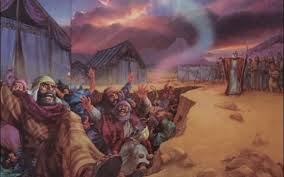
Korah's Rebellion

Korah’s-Dathan’s-Abiram’s-revolt led to the deaths of over 15,000 people. Personal ambitions and greed can be extremely dangerous to the Body of Messiah.

The next morning, Korah and his family brought their lit censers and stood outside the door to the Tent of Meeting. YHVH’s presence appeared to the congregation (16:18, 19). Oh, oh, Daddy’s home!

Needless to say, Daddy’s NOT happy. He instructs Moshe and Aharon to “separate themselves from among the congregation so that Yah could consume them with His wrath (16:21). Yet true to Moshe’s compassion for the who of the nation, He intercedes and reasons with Father. Moshe reasons that the nation as a whole should not be held responsible for the misdeeds of Korah, Dathan and Abiram, which Father conceded (16:22-24). The whole of the nation would not be punished for the Korah, Dathan and Abiram revolt.

I found it fascinating that Moshe isolated the Korah, Dathan and Abiram, along with their families and possession, from the rest of the tribes. And instead of just having the punishment handed down upon the offenders surely and swiftly, Moshe ensured that He and Aharon’s authority would first be cemented in the minds of the people by prophecying on the pending demise of the offenders. Moshe described exactly what was going to happen to Korah, Dathan and Abiram, and all that belonged to them. He added a disclaimer, however: if the offenders perished by any other means other than that which He prophecied, then Father has not appointed them overseers of Israel, as was originally challenged by the offenders (16:29). But if the earth happened to open its mouth and swallow the offenders and all that belonged to them up, then He was Yah’s man (16:30, 31).

Needless to say, the demise of the offenders came just as Moshe prophecied (16:31-33). Furthermore, the 250-leader-co-conspirators were consumed by fire. This harkens back to two-previous incidents where Father punishes problem children by consuming them with fire (Lev. 10:2; Num. 11:1). When would the people ever learn one wonders?

One of Aharon’s sons, Priest Eleazer, was instructed to gather up the censers of the offenders, discard the coals abroad the camp, but hammer the censers into sheets to cover the altar (17:2 NJB;; 16:37-40). Indeed, the censers were still considered holy by YHVH, having been previously used in the sanctuary service. This would serve as an “object-lesson” for the nation (NJB). The object-lesson being that that which Father has esteemed as holy and set apart for His purpose, is not to be trifled with nor challenged by anyone.

The Rest of the Story

Well, the story doesn’t end here with this object lesson. The nation as a whole confront Moshe and Aharon, accusing them of murdering their fellow Israelites (Num. 16:41). Moshe killed no one: Father punished the offenders. And as we’ve seen played out a number times in the past, the presence of YHVH descends upon the Tent of Meeting in response to this revolt (16:42). As they always do, Moshe and Aharon immediately respond themselves to the front of the Tent of Meeting. As we just saw happen during the Korah uprising, Father instructs Moshe and Aharon to separate themselves from among the rabble-rousers in anticipation of Father’s wrath consuming them for their revolt (Num. 16:45). This time we have no indication in the text that Moshe nor Aharon fell on their faces to plead the people’s case before YHVH. Instead, this time, Moshe instructs Aharon to quickly make atonement on behalf the people in anticipation of a plague that was then coming upon the nation for their revolt (16:46). It was as a result of Moshe’s quick instruction in response to the revolt that saved the nation from being entirely destroyed by the plague. Aharon stood between the living and the dead with his lit censer, making atonement on behalf the people, and the plagued was halted (16:48; CSB).

15,000 People Dead Because

In total, over 15,000 people died that day as a result of the selfish ambitions of a small handful of malcontents. Indeed, a sobering story that has tremendous applications even for every Torah Observant Believer in Yahoshua Messiah today. It takes very little to incite troubles and problems within the Body of Messiah. Yet those troubles and problems can easily be assuaged and avoided simply by respecting that which Father has put into place and the plans that He has set into motion. Father knows what He’s doing. All we need to worry about and focus upon is to behave ourselves and as Paul instructed:

⦁ Pursue after righteousness.
⦁ Refuse to participate in debates and quarrels–“The Master’s bond-servant must not be quarrelsome, but be kind to all, able to teach, patient when wronged, with gentleness correcting those who are in opposition…”(2 Tim. 2:23, 24; NASB).
⦁ Focus on preparing ourselves for the service of the Kingdom and of Yah, by being workmen and workwomen who do not need to be ashamed of our profession, accurately handling the Torah of YHVH (2 Tim. 2:15).
⦁ Let us become vessels for honor, sanctified, useful to our Master and prepared for every good work (2 Tim. 2:20, 21).

If we but take our eyes off what other people are doing and what other people have going for them, and instead, focus our attention on being the best servant we can be, then we will serve the Master well. We simply must give ourselves over fully to His service. We must simply empty ourselves of self and allow the Holy Spirit (i.e., His Ruach HaKodesh) to direct and guide our walk and lead us unto all understanding–all Truth (Joh. 16:13).

Faithfully Submitted,

Rod

Impediments to our Faith-Absence of Discipleship and the Holy Spirit Operating in the Lives of Believers (Part 2)

Impediments to the Faith--Lack of Discipleship and the Holy Spirit Operating in our Lives

by Rod Thomas with Hilary Thomas | Sabbath Thoughts and Reflections

It goes without saying that many of us have a difficult time grasping the things of YHVH, especially when we first transition into our Faith Community. It’s one thing to decide to give up pork and shell fish and to start worshiping on Sabbaths as opposed to Sundays. But once we fully make that transition into the Faith, we begin accumulating more questions about our newly found Faith than we are ever able to find answers to.

Thus, many of us struggle:

  • In our understanding of how we are to properly walk out this Faith.
  • In our understanding of how to properly apply Torah to our day-to-day lives.
  • In our understanding of keeping Torah in accordance with the example and teachings given to us by Yeshua our Master (e.g., how does grace truly fit in with Torah-keeping? Why does Paul seem to teach in his writings that Torah was done away with? Do I circumcise my son(s)? How do I properly keep the Feasts and the weekly Sabbath? Am I doing this Hebrew Roots/Messianic thing right?
  • We struggle in our understanding of Father’s will for our respective lives? Are we supposed to evangelize the world/Christians/Jews? Or are we to focus all our energies on a vertical relationship with the Almighty?
  • We struggle in our understanding of scripture and spiritual matters in the midst of so many conflicting teachings, both within and without our Faith Community.

Indeed, there are a variety of reasons why so many of us struggle in our understanding of the things of YHVH. When we fail to accurately understand the things of Yehovah, which I truly believe are fully embodied in the Hebrew Roots/Messianic Faith, we become easy prey for the enemy. The enemy, according to Yeshua our Master, comes only to steal and kill and destroy (John 10:10). It is that catastrophic failure to understand the things of our Faith that the enemy uses to side-line us and cause us to doubt; to sin; to sully our witness; to give in to that old nature that is just waiting to spring back into action and rob us of the victory we are suppose to have as Disciples of Yeshua Messiah and Children of the Most High Elohim. And it is that lack of understanding that often gets in our way of making any substantive advancement in our walk with Messiah.

Many of us find ourselves in religious and spiritual traps at various points in our journey. As a result of our lack of understanding of the things of YHVH, we find ourselves in places we have absolutely no business being in. Those places include:

  • Rabbinic Judaism.
  • Kabbalah.
  • Fringe groups such as black Israelitism and other racial and culturally exclusive groups.
  • Other fringe groups that perpetuate extra-biblical doctrines and teachings designed to deter our attentions away from the teachings of Yeshua and of Torah. Such groups include: the flat-earthers; the lunar sabbatarians; the Enochian calendar followers; and so many others.
  • Dubious ministries highlighting the teachings of self-serving preachers and teachers.
  • Isolationism, whereby we feel no one else has Truth out there (or has Truth that will satisfy us) and we choose to go it alone and keep the Faith in isolation.
  • Back in Fundamental/Traditional/Charismatic Christianity.

For those of us who are experiencing an overall lack of understanding of the things of this Faith and who are going through a particularly tough period of confusion, isolation, uncertainty, regret, resentment, and the like, there is hope and there are indeed answers to our many questions. However, we must understand that there is no true course of study; there is no true outline; there is no sanctioned protocol out there that defines how we are to walk out this Faith. Unlike most every other man-made system in existence today, Hebrew Roots/the Messianic Faith has no true prescribed walk. And many of us who come into this Faith have an extremely difficult time adapting to this seeming lack of organized way of life.

Contrary to outward appearances, our Faith is not disorganized at all. Yes, we are divided in various areas of our Faith—in our understanding of the Creator’s and Master’s revealed names; in our understanding of the Feast Days and a few others. Nevertheless, most of us realize that the general tenets of the Faith are firmly established and we practice them to the best of our understanding and ability. Consequently, it would appear that Father is fine with this current situation. I believe Father is looking to see the state of our hearts and the level of our faith and commitment to Him. This life that we’ve chosen surpasses any faith and commitment to man-made systems and religions.

The absence of an established method for walking out this Faith serves as a natural shield against the blight of religion. Religion by its very nature seeks to control its members by establishing protocols, traditions and rules that every member of that body is required to follow. We saw this very thing played out in Yeshua’s day with Rabbinic Judaism. As a religion, Judaism was foisted upon the Jewish nation. Originally developed by the so-called sages, Judaism was developed to be a wall/fence around Torah. Thus, it served to control virtually every aspect of every Jew’s life. The focus is shifted from YHVH and His commandments and instructions, to that of the religion’s instructions, traditions and protocols. It goes without saying that Father would not be pleased with this set-up.

Yeshua railed against Judaism’s control over the minds, hearts and souls of the people. He proclaimed that part of His mission was to deliver us from such systems. So it stands to reason that Master did not deliver unto us this Faith so that we would be subject to another iteration of Judaism. He came to bring us into an abundant life (John 10:10), free from religion, authoritative traditions and burdensome rules. The basis of that Faith is love: love of Father and love for our sisters and brothers. And contrary to conventional thinking, Torah was Yehovah’s love gift to fallen mankind. We, Abba’s chosen, have the sobering responsibility of demonstrating that life and love to the world through our obedience to Torah the way Master Yahoshua taught and live it.

Our chosen life is not one of man made rules, protocols and traditions, although at the core of our existence as humans, we desire to be ruled over by something or someone greater than ourselves; to be subject to something or someone greater than ourselves. It’s just that those things or persons that we look to be ruled by and subject to is not Yah.

The Apostle Paul taught that the mindset of the flesh is naturally hostile to God because it does not submit itself to Elohim’s Torah (Romans 8:7). We don’t mind being subject to the Christian Pastor or Bishop; subject to our bosses; subject to the organizations we pledge our allegiance to; subject to our spouses, our desires, our habits, our hopes and dreams, our friends and so many other things. But the things of Yah, we naturally tend to resist with every fiber of our being.

So the reason many of us struggle so in our understanding of the things of Yah—in our understanding of the Faith—has nothing to do, necessarily, with things or persons beyond our control. The reason we struggle so is because of us—our nature—our mindsets—our inability to let the former life go—and oh so many other reasons. I would have us consider just 5 of the innumerable impediments that cause us to struggle in our understanding of the Faith. In identifying those 5-reasons or impediments our understanding, if you will, I would have us consider potential solutions to overcoming those impediments.

The point in going over this rather obscure subject/topic is my desire that we as a community find freedom, restoration, peace, happiness and the greatest faith possible in our walk. If we can identify the reason for the difficulties that so many of us experience in our walk and understanding of the Faith, then just maybe we can search out and implement proper fixes to our uncertainties and confusions.

Now, this is not meant to be an exhaustive discussion on the topic. It is meant to get us on the right track to receive proper direction from Yah’s Spirit for our lives. For many of us right now, there is just too much noise that is preventing us from hearing Yah’s voice and from understanding His way of life and this Faith.

So what do you say we consider two common impediments that can get in the way of our understanding things of the Faith and of YHVH? (If you’ve not already done so, read or listen to the first installment of this two-part series: Impediments to our Understanding Things of the Faith and God–Part 1–Understanding the Bible.) (Read or listen to my post entitled: Operating effectively as a Disciple of Yeshua Messiah.)

We Were Never Properly Discipled

Discipleship

Discipleship training is essential to our effectively walking out this Faith and understanding the things of YHVH.

Probably one of the greatest tragedies we see happen so often to new members coming into our Faith Community is that they are not discipled. Most of us transition into this Faith Community of ours—wide-eyed and bushy-tail—ready to live Torah the way Yeshua taught us—only to be left to figure this whole Torah versus Yeshua versus Christianity versus the world thing out for ourselves. Unlike Christianity, Hebrew Roots/Messianic ministries, for the most part, are not geared to disciple people coming to Faith. Most of them are in the business of delivering Truth (e.g., teaching on the Feast Days, the weekly Sabbath, and a whole host of other Messianic topics). But rarely, if at all, do we find Messianic ministries willing to devote their resources to discipling incoming members to our Faith.

Discipleship is not necessarily the same thing as delivering and receiving teachings, although part of the discipleship process must involve the giving and receiving of teachings.

Master instructed His disciples turned apostles:

“Go therefore and make disciples of all the nations…” (Matthew 28:19).

A disciple (in the Greek is matheteuo) is a pupil or student. A pupil or student is taught the ways of their master or teacher. There is a systematic and progressive course of training that is provided to the disciple by their master.

Yeshua systematically taught and modeled the Gospel of the Kingdom to His pupils who we’ve come to know simply as His disciples. Yahoshua systematically taught His disciples every aspect of living a life of Torah (i.e., the way Father originally meant for it to be understood and lived by His people) as well as living life in the Spirit. It was an intense time of training and preparation that culminated in the disciples being sent out and tested by Master (i.e.,. The 70). It was after Master ascended to Father that the process of discipling the nation peoples of the world became the ultimate responsibility and purpose of every disciple of Yeshua Messiah. That mandate has not changed in 2,000+-years.

Therefore, it goes without saying, that one of the top reasons so many in our Faith Community struggle in their understanding of the things of YHVH and of the Faith is that they’ve never been properly discipled. I was fortunate. When I first came in to this Faith walk, I was discipled for a short time by my brother-in-law. His guidance and instructions helped steer me in the proper direction and establish the basis upon which I was able to grow in my understanding of the Faith with minimal confusion and uncertainty. I’ve since come to realize that a great many converts to this Faith are not as fortunate as I was to have someone they trust disciple them. This is a serious problem that must somehow be remedied, more sooner than later.

Solutions to the Lack of Discipleship

It goes without saying that our Faith Community needs to assume the responsibility of discipling our newly transitioned members. When we are personally the conduit by which someone enters this Faith, it becomes our responsibility to get that individual discipled. It is irresponsible to leave that newly converted disciple to fend for themselves. The Messianic/Hebrew Roots landscape is filled with spiritual minefield and booby-traps, illusions, misinformation and false teachings and doctrines. If left alone, we stand to condemn our young to certain failure. It’s time that our community veterans step-up and provide the necessary discipleship.

Those of us who have never been properly discipled and who are still struggling in our understanding of the things of YHVH and of the Faith, must seek out competent discipleship training. We can approach responsible, doctrinally sound Messianic/Hebrew Roots ministries and ask if they have members who would help in our discipling and getting us up to where we need to be in the Faith. Or simply petition the Father to send the individual He has chosen to disciple us.

Now, it is certainly not unheard of to be discipled, I guess, by the Holy Spirit. Depending on the path that our respective journeys are taking, it is quite possible that Father will not have individuals in place to disciple us, at least not at the time we would prefer to have them at our disposal. In this case, it behooves us to give ourselves fully to the leading of the Holy Spirit, who will direct our path of discipleship.

We Don’t Have the Holy Spirit Operating in our Lives

The Holy Spirit

The Holy Spirit helps us understand and recall to memory the things of the Faith.

This is the big one. I dare say that the Holy Spirit is not operating as it should or could in our Faith Community today. And part of the reason for this Holy Spirit drought, if you will, is that we tend to focus all our energies on accumulating knowledge. The other side to this is that many of us outright reject the things of the Spirit (e.g., some reject miraculous healings and other powerful manifestations of the Spirit in our lives). As a result of that rejection (or denial), we effectively cut ourselves off from revealed Truth and intervention by the Holy Spirit. We then lean to our own understanding of Scripture and the things of the Faith. We become no different than religious leaders and followers of first-century Judaism, dependent upon the traditions and rulings of the sages. We become cold and dismissive of those who we feel don’t measure up to our level of understanding. Some of us become odd-balls and outcasts in the Body of Messiah because we don’t possess the Spirit of Truth nor are we operating in the Spirit. In these cases, we are operating on our own and are distant from the Spirit of Truth.

Master promised us the gift of the Holy Spirit that is also known as the Spirit of Truth (John 14:17; 15:26). The Spirit of Truth, according to Master, would guide us into all truth; unto all understanding (John 16:13).

We should realize that Master Yeshua operated 24/7 in the Spirit as it was prophesied that “the Spirit of YHVH would be upon Him;” and indeed it was (Luke 4:18; cf. Isaiah 61:1). And it was because Yeshua exclusively operated in the Spirit that He knew the Truth and was able to rightly divide and deliver that Truth like no other before or after Him (Mark 1:27; Luke 4:36).

If Yeshua operated in the Spirit 24/7, and we are supposed to conform to His image (Romans 8:29; 1 John 3:2), why would we even consider NOT living in the Spirit? Refusing or denying the things of the Spirit is committing spiritual suicide (Luke 12:10).

When we do not have the Holy Spirit—the Spirit of Truth–operating in us, it becomes virtually impossible at times to understand the things of YHVH and of the Faith. The things of YHVH are beyond the carnal man’s ability to properly process and appreciate. The things of YHVH and of our Faith are Spirit-driven (John 4:23, 24).

Father revealed of Himself through the Prophet Isaiah:

“For My thoughts are not your thoughts, nor are your ways My ways,” declares YHVH. For as the heavens are higher than the earth, so are My ways higher than your ways and my thoughts than your thoughts” (Isaiah 55:8,9; NASB).

The things of YHVH are foreign to our carnal sensibilities. Therefore, it only stands to reason that we must figure out the means by which to make sense of the things of YHVH and of the Faith.

Solutions to not Having the Holy Spirit Operating in our Lives

It goes without saying that each of us must seek the infilling and revelatory power of the Holy Spirit so that we may understand the things of YHVH and of our Faith. Otherwise, we will continue to struggle in our understanding of a great many things of the Faith.

We must get on our knees and seek the infilling of the Ruach HaKodesh. We must also resolve to walk in the power and might of the Holy Spirit. Somehow we must get over the lie that the things of the Spirit are not for Messianics/Hebrew Rooters. It’s simply not true. If our Master operated exclusively in the Spirit, and His hand-picked disciples turned apostles operated in the Spirit; and we’re told to imitate Messiah, it then becomes a “no-brainer” that we have to somehow get the Holy Spirit working full-force and perpetually in our lives. Yeah, we are going to have to, once again, die to ourselves in order to make that happen I’m afraid.

If we have not already done so, we need to be baptized and receive the infilling of the Holy Spirit sooner than later. If this has not been done or if we have no idea how we would be baptized (e.g., logistically or circumstantially) and receive the Holy Spirit, even with the laying on of hands by true disciples of Yeshua Messiah, we simply must ask and trust YHVH to make provisions for that to happen. It may not happen in our time, but it will happen, if we trust and are obedient to Him. Let us allow Father to guide us where He would have us go or to whom He would have us contact, so that we may receive the Holy Spirit. Then let us walk and operate in the power and authority of Father’s precious Holy Spirit, His Ruach HaKodesh, at all times and not grieve the workings thereof in our lives (Ephesians 4:30).

Faithfully submitted,

Rod Thomas